Shannon Knight popped into my email inbox last week (technically, it was an email from Shannon, not Shannon herself) with a Guest Post. This was great news for me–I love Shannon’s Guest Posts, and I appreciated the night off from writing. Then I read this post, and it deals with one of my favorite aspects of her new novel. What could be better? I really appreciate this post for several reasons, and I hope you enjoy it. Also, be sure to check out the books mentioned–you’ll be pleased that you did.
Chronic Illness in Death Rights
by Shannon Knight
So, I write action-adventures. Therefore, cerebral essays like this run the risk of giving readers the wrong idea. Thus, the cautionary intro wherein I explain that my stories are meant to blow your hair back, but I also believe in depth. Let’s be real—it makes the story more fun.
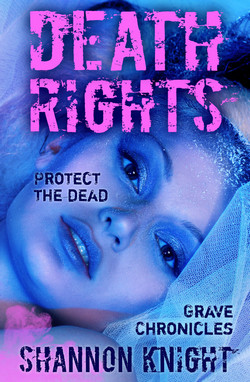
Death Rights, my latest, has the misfortune of being a middle book. That’s right, folks. You’ve got to read book one first, or what’s even the point? And yet, I’ve discovered that I’m the type of writer who likes to make something really new with each book, and being in a series didn’t stop me. Death Rights has quite a bit of civil rights focus, which I wrote about in another article. For you all, I’d like to talk about disability and chronic illness instead.
Like a lot of people, I got Covid in 2020. Like a lot of people, I never returned to health. I spent about two and half years mostly bedbound. Now I’m mostly housebound. Along with Long Covid, I gained a couple other diagnoses, including myalgic encephalomyelitis, which is quite a mouthful, so people like to call it ME (just say the two letters). ME is classified as a neurological disease with medical history associated with the name beginning in the 1930s. ME appears post-trauma, most commonly after a viral infection. Therefore, the Covid pandemic is creating a significant number of new ME patients. ME is incredibly debilitating and comes in a spectrum of mild to severe, with “mild” being immensely rough and “severe” being so bad that people not experiencing it tend to be unable to even believe that something so awful is possible. This spectrum, interestingly, creates more problems as the differences between cases can be so profound as to make them seem like entirely different illnesses.
 When I spent those years in bed, I had a support group of other people with the same sickness. The group chatted and shared experiences using Slack, so I could talk with them in my bed by typing into my phone. I found and shared an article about these Chinese women, best friends, who had bought a house together. They had each been renting apartments, but for the same money, they could own and share a full house with a garden and gazebo. We started daydreaming about this prospect. Wouldn’t it be lovely? When you become seriously ill, you tend to lose your income, which often means losing your housing. You also tend to lose your friends and even family. Spouses, especially men, quickly abandon their sick partners—so much for “in sickness and in health.” People were selling everything they owned. They were moving back in with elderly parents. Often, family that they moved in with were not understanding. They thought that if they just tried a little harder, they could stand or walk or participate in some gathering. The group talked about wishing they could pool money and live together somewhere where they didn’t have to explain their sickness to someone who couldn’t comprehend it. They imagined how well they might heal or simply live without added stressors.
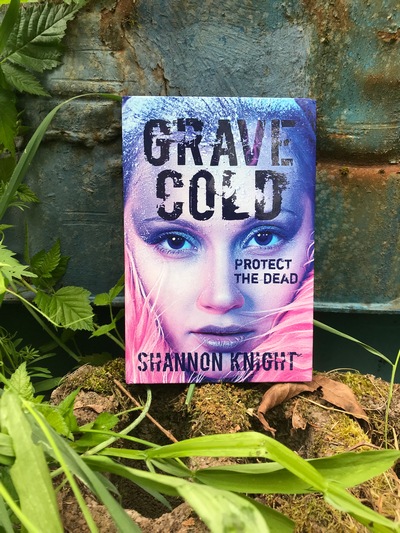
I created a home that exists in Grave Cold, book one of Grave Chronicles, but features in Death Rights, book two, where a group of people with ME live together. We meet three members of the household. The set-up of the household was something I had daydreamed. When your immune system is not functioning properly and a virus has devastated your life, the very last thing you want is a new viral exposure. Yet, the Covid-19 pandemic showcased how very ready other people are to expose a vulnerable person. Psychology reports explained that people would hide their own positive status as a viral carrier for personal convenience. Additionally, asymptomatic carriers accounted for 60% of the cases, so anyone who felt and appeared healthy, could also be an active carrier. On top of that, people who had felt their own Covid experiences were not difficult decided that it wasn’t important if they exposed other people to Covid. They felt they had the right to choose what level of viral exposure another person should experience. Therefore, the house setup included a carriage house, or separate house structure, so all deliveries could be dropped there, all visiting could happen there, and the main house could remain a safe refuge for a vulnerable group of people. Similarly, a backyard space allowed for gathering or outdoor activities for the residents able to step outside, and a beautiful space for those able to look outside. All of the floors and paths were designed to accommodate wheelchairs and walking aids.
As Grave Chronicles is science fiction, I was able to include a variety of positive technology meant to clean the air. I believe upgraded systems of this sort will be a true part of our future. Just as we have learned to clean the water, we must clean the air. We have learned the lesson, but we still need to follow through on the widespread implementation. However, I didn’t want the updated technology to exclude the need for additional protective gear, such as respirators, because it was important to show characters taking small steps to protect and care for each other. Let’s normalize care and empathy. Let’s accept that it’s right and good to take steps to benefit people, even if the advantage is entirely for others.
Elise Wilson and Neha Patel are the two characters with ME that we spend the most time with. People associate the ill and disabled with poverty, homelessness, and a wide swath of negative ideas meant to blame them for their situation. If we blame them, then we can feel comfortable that this difficult situation will never happen to ourselves. This is part of ableism. When we blame and separate, then we give ourselves a reason to disassociate and rescind our good will and help. However, in order to have this lovely property with not one but two houses, lots of money had to be involved! As illness and disability can happen to anyone, then that includes those with wealth. Elise is the homeowner and primary person behind supporting the household. Neha had been a lawyer prior to becoming chronically ill. The story provides glimpses of each of them as real people. Neha likes gardening and decorates her rollator with anime stickers. Elise is protective and aims her energy at studies related to research and treatments for those suffering from ME.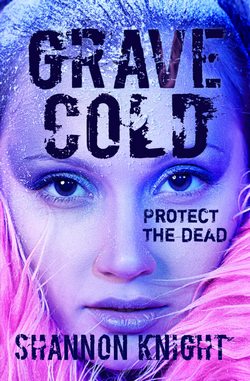
In Grave Chronicles, ravens are long-lived people who send the dead to eternal rest. They’re a type of psychopomp. For their long lives to work, they have incredible self-healing powers, which become central to elements of the plot within the series. Self-healing also highlights a different angle of ableism, because there’s an idea that those who are superior do not get sick or will always recover from sickness. This connects with eugenics and ugly ideas that a person’s worth is tied to their abilities or contributions and not an inherent quality. Grave Cold includes some dark scenes in which the sick are seen as not trying hard enough. Death Rights builds off that notion, asking if those who don’t know and experience the desperate struggle of illness, disability, and old age are missing a core component of what it means to be human.
I hope readers of Death Rights are entertained by a thrilling adventure, but I also hope they feel moved by various moments in the story, and that after they’ve finished reading, some thoughts linger regarding chronic illness, how society treats the ill and disabled, the value of research and treatments for the chronically ill, and the inherent value that we all have simply by being alive. As you’re dwelling on these ideas, I hope you’ll do your best in your personal ways to help us all make this world a better place. Small actions can have ripple effects. The choices of a single person, even you, can change this world. We may not live long enough to see the full impact of the choices we’ve made in our lives, but that doesn’t mean we can’t strive even for the tomorrows that we ourselves will never see.
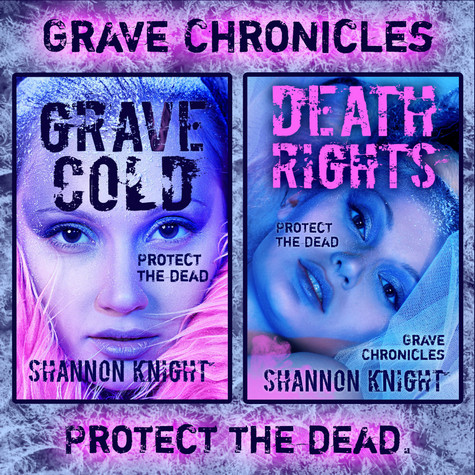
Find your copies!
Grave Cold (Grave Chronicles #1) https://books2read.com/GraveCold
Death Rights (Grave Chronicles #2) https://books2read.com/DeathRights
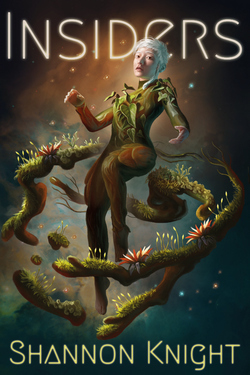
Shannon Knight lives in the Pacific Northwest with her most excellent cat. Their adventurous lives include coffee, reading, ribbon games, and K-dramas. Shannon graduated summa cum laude with a Bachelor’s in English. She is the author of Death Rights, Domestication, Grave Cold, Insiders, and Wish Givers. Sign up for her newsletter at https://shannonknight.net/.