Tag: Mystery/Detective Fiction/Crime Fiction/Thriller Page 50 of 61

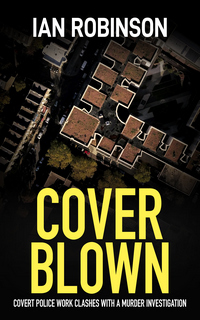
Cover Blown by Ian Robinson: DI Nash’s Professional Worlds Collide

Cover Blown

Cover Blown

by Ian Robinson
Series: DI Nash and DS Moretti, #2

Kindle Edition, 185 pg.
The Book Folks, 2021

Read: February 24-25, 2021

What’s Cover Blown About?

Fresh off the events of Latent Damage DI Nash’s team dives into a new murder case. Two women have been murdered in clearly connected events, sadly, that’s the only thing that seems to connect them (well, that and they’re cat owners, but does that count?). Nash and Moretti are quickly stymied by the strange circumstances around the cases.

Meanwhile, Nash is helping out an undercover unit on the side. She’s as disciplined as possible with this, keeping her priority on the homicides, but she occasionally has to step away, leaving Moretti to direct the team’s efforts. At some point (and I’m only saying this because it’s in the publisher’s description), evidence is uncovered that indicates DI Nash had been in communication with both victims.

A Thought About DI Nash

I like Nash—watching her juggle the murder cases and the undercover operation is something you don’t get to see often in procedurals (particularly from someone of her rank). We haven’t (so far) gotten too deep with her and what makes her tick—but I like what we’ve seen so far, she’s an interesting character. Which is all I’m looking for—an interesting and compelling character.

That said, I wouldn’t want her as a boss. She’s mercurial, she seems to manage primarily through threats, and while she’ll come through or her team when the chips are down, it’d be good to see her do that before I got to that stage (she’s also better at looking out for them with outsiders than among themselves).

Basically, I like reading about her but wouldn’t want to work for/with her. There’s part of me that hopes she grows into a better manager as the series progresses—but I also enjoy seeing someone successful and flawed.

So, what did I think about Cover Blown?

While this is the Nash and Moretti series, in the first book, there was a definite emphasis on Moretti. This book focused on Nash—I really hope this balancing act continues (think Lydia Chin/Bill Smith books by S. J. Rozan, but in the third person), it’s a good way to tell the duo’s story (and the team’s) without the perspective becoming stale or allowing one character to take over.

The dialogue issues I had in the first book were either absent or so rare in this installment that they never bugged me—and that goes for some of the other stumbles I thought were made in Latent Damage—it feels like Robinson’s more comfortable in this new voice, this new world, and that’s good news for the reader.

The procedural element of this novel is one of the strengths, the sheer effort involved in making the slightest progress in a murder inquiry is something to behold. With these books, Robinson is blending the murder team, the work of those who handle informants, and an undercover unit, which is another layer of difficulty to portray well, and Robinson nails that. I can’t remember if I talked much about it in the post about the last book, but this team spends a lot of time and effort on avenues that don’t ultimately lead where they want to go. I love seeing that—particularly (and I expect realistically) when they end up turning up other criminal activity.

Good characters, fascinating cases, a couple of exciting moments, and an all-around entertaining novel. I’d encourage you to grab hop on to this series here at the beginning—this is a keeper.


4 Stars

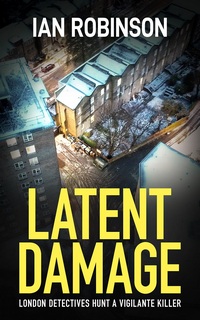
Latent Damage by Ian Robinson: A Compelling Series Debut

Latent Damage

Latent Damage

by Ian Robinson
Series: DI Nash and DS Moretti, #1

Kindle Edition, 199 pg.
The Book Folks, 2021

Read: February 16-17, 2021

What’s Latent Damage About?

Being awakened at 5 in the morning on a Saturday morning to come to a crime scene is not what DS Nick Moretti had planned. He’s got a vacation—sorry, holiday—coming up in a couple of weeks, and a homicide investigation could derail that. All part of the fun in the Met’s Homicide and Serious Crime Command.

When he arrives at the crime scene, Moretti discovers that the victim is a Muslim man whose throat was cut just across the street from his mosque. Automatically, the assumption is this is some sort of right-wing group acting out Anti-Muslim sentiment.

Moretti’s DI, Pip Nash spent some time in an undercover unit and still has a lot of contacts there—she’s able to use some of them to help once they get a direction to look in, but first they need to get a motive and some suspects.

While they’re still struggling to get some momentum for the investigation, another body shows up—with his throat cut in a similar fashion—this time, however, it’s an Anglican priest who was the victim.

Now, the team has two members of religious communities murdered in December—this is a PR nightmare in the making for the Met. Will these detectives and the rest of their team be able to stop the killer before another corpse shows up?

DI Nash and DS Moretti

DI Pip Nash is career-oriented, by the book type. She knows what she wants out of members of her team and isn’t afraid to demand it. Her background with the UC team adds a fun twist to things, and watching both the informants’ team and the UC team work with the homicide team is a nice change of pace—I’m used to seeing one of these entities at work, watching them cooperate (to whatever degree) is a great way to start a series.

DS Nick Moretti is less career-oriented (it seems), he’s definitely less by the book (he’s lucky if his alarm gets set in the morning). But he seems to do a good job of rallying the troops and putting the pieces of the murder together. His personal life is in an interesting state (although he has one, and it doesn’t seem that Nash does), and seems like it will prove fertile ground for drama in the future.

I’ve seen versions of both of these characters in books here and there—rarely as a team sharing the name of the series. I think watching their dynamic grow and develop over the next few books will prove just as interesting (maybe more so) than the crimes they investigate.

A Couple of Misgivings

So much of the dialogue in this book was awkward—some was even painful. The characters were trying to joke around or banter and it came off as stilted or excessively wordy—and it’s just off-putting. There were also a few instances of “I’m going to explain my job duties as I carry them out, despite the fact that everyone I’m talking to already knows this is my job.” The latter happens a lot with procedurals, so it’s easy to shrug off (even if these were some egregious examples). The former, however, is another matter. These are supposed to be friends or at least close colleagues, banter should feel natural. I’m going to chalk this up to Robigins just getting used to this world, and (if you count the works under his pen name) this is at least his fifth novel, and the first that I know of where practically every character wasn’t lying to everyone they talk to—it’s possible he doesn’t know how to write for people who aren’t deceiving.

So, what did I think about Latent Damage?

One thing that I’ve always really enjoyed about a good police procedural is the procedure. Watching a team go through the steps, grinding away to get the desired result is a pleasure. Sure, the procedure is dramatized, and usually only bears a passing resemblance to reality. But you can generally get a feel for what authors skew toward authenticity (few of these would be U.S.-based procedurals). And that’s pretty much what Robinson gives us—naturally, that’s helped by his years of actual experience. As such, there are investigative paths that go nowhere, and some that lead to unexpected places—and the amount of effort that goes into making small progress is a great realistic touch.

Yes, the ultimate reveals about the way the killer went about things seems a bit on the outlandish side*—but the way the team came up with his identity wasn’t. Nor was his motive, which seemed very grounded in reality.

* not unforgivably so, I’m not reading True Crime here, I don’t want a dramatized police blotter.

This is a solid, entertaining novel with a few stumbles along the way. But I’m recommending it, and am planning on coming back for at least a couple of more installments in this new series. Nash and Moretti are both the kind of characters you could build a series around, put them together and you’ve got a great foundation; the procedural element was well done, and the ending was as satisfying as you could ask for. Also, under his pen name, Robinson has crafted some of the best Crime Writing of the last few years—this series is going to improve, I know it (and even if it stayed at the same level, it’d still be worth coming back for).


3 Stars

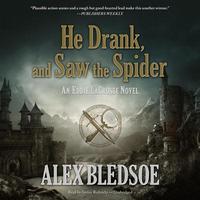
He Drank, and Saw the Spider (Audiobook) by Alex Bledsoe, Stefan Rudnicki: LaCrosse’s Break from His Vacation Changes History

Like with the previous Eddie LaCrosse audiobook, The Wake of the Bloody Angel, I can’t think of much more to say than I did in 2014 when I read the book. But, this is the last one in the series, and I can’t just let this pass unremarked. So I shuffled it a bit, cleaned a couple of things up, and added bit here and there. That’s not cheating too much, is it?


He Drank, and Saw the Spider

He Drank, and Saw the Spider

by Alex Bledsoe, Stefan Rudnicki (Narrator)
Series: Eddie LaCrosse, #5

Unabridged Audiobook, 9 hrs., 6 min.
Blackstone Audio, 2014

Read: February 16-19, 2021

Grab a copy from your local indie bookstore!

I felt that little knot in my belly that meant a mystery was taking its irrevocable hold. Usually this was a good thing, because usually I got paid for it. But here and now I was on vacation, and the last thing I wanted to do was spend it unraveling the truth of the strange prince, his rotund protector, and the girl I’d once saved from a bear. But damn it, I knew that’s exactly what I was going to do.

What’s He Drank, and Saw the Spider About?

After a couple of adventures that aren’t quite typical in their nature, Eddie La Crosse gets back to basics with a fairly straightforward case. Well, that’s not exactly true—it’s just that the last was more grand-adventure-y, less LaCrosse-as-sword-jokey, and the one before that took on this epic nature by the end. This is Eddie doing what he does best. But still, there’s magic and monsters, and all the other trappings that keep this from being something that Sue Grafton or Dennis Lehane would’ve written.

Sixteen years ago, Eddie promised a dying man on the run that he’d take care of the baby that the other man was running to protect. He found a seemingly-trustworthy family willing to take the infant in, and went on his merry way, and actually forgot all about the incidents surrounding that. Years later, Eddie and his girlfriend, Liz, are on vacation in that area and suddenly it all comes back to him and he decides to try and track down the (now) young woman and see how she’s doing.

Naturally, things start to go poorly about there. He does find her—pretty easily, too—it is a small community, with an economy largely-based on sheep-herding and farming, so it’s not really a bustling metropolis where no one knows anyone else. But there’s a whole lot of interesting things happening around the young woman—royalty in disguise, a meddling sorceress, an untrustworthy mercenary-type, an over-protective mother, a dose of sibling rivalry, and some sort of articulate and super-strong inhuman creature with a healthy interest in the girl.

Even though he was just supposed to check on her and not interfere with her life—he had no intention of even introducing himself to her. Eddie can’t help himself, and before you know it, he’s neck-deep in intrigue and danger.

Biggest Magic Yet

When you think about Fantasy novels (or maybe I should just say “I”, who knows what you think) you think about magic all over the place. But if it’s really that ubiquitous, that takes away some of the special-ness of magic. In LaCrosse’s world, almost no one believes in magic. Eddie sure wouldn’t if magic, deities, and supernatural creatures hadn’t rubbed their existence in his face on repeated occasions.

That’s certainly the case here—most of the people that Eddie is around in this novel (and by most, I mean an overwhelming majority) refuse to admit that what they are seeing—some of them on multiple occasions—has anything to do with magic. I think this is a great choice—it’s another hurdle for Eddie and Liz to get over, it adds some real tension when you’d be tempted to think we’re done with tension, and it keeps the magic mysterious.

Rudnicki’s Narration

I think this is probably Rudnicki’s best work in the series. he nails every character—particularly the character of Billy Cudgel (the aforementioned untrustworthy mercenary-type). He captures the humor, the drunkenness, the misery, the madness, and everything else. I thought the choices he makes in the narration (he and/or the director) and tone were spot-on. He’s definitely a narrator I’m going to seek out in the future.

So, what did I think about He Drank, and Saw the Spider?

On the whole, this is a fun, brisk novel—a lot of humor, some good action, nice banter, and interaction between the characters (especially Eddie and Liz). Yet, even as the answers to the questions surrounding the girl’s mysterious origins become obvious, and some of the characters get to the point where they seemed irredeemable, Bledsoe (as he can every so well) keeps you completely drawn in and even tugs the heartstrings a bit as the truth is revealed to the characters. Just really, really well done.

There’s a lot of nice little touches along the way. For example, towards the end of the book, Eddie and those he’s traveling with encounter a preteen who joins their little band for a while. She’s pretty new to swearing and tries to get in as much practice as she can while with them. At first, I thought she was an odd (but entertaining) and pointless distraction. It didn’t take too long to see she was a perfect tension-breaker, just what that part of the novel needed to keep from being too tense and so much more serious than what had come before.

Eddie’s narration has never been better—humor-tinged and hard-boiled, a medieval Philip Marlowe or Elvis Cole. I liked all of these characters, and really wanted to spend more time with each of them—I don’t know how Bledsoe could’ve pulled that off without getting the whole thing too slow and ponderous (which would’ve sucked the fun out of 60-70% of these characters). This is really such a well-done and fully realized series.

Either Bledsoe or his publishers decided that was enough, and it doesn’t look like we’re going to get any more adventures from our favorite sword-jockey, but man, I’m glad we got what we did.


4 Stars

2021 Audiobook Challenge

This post contains an affiliate link. If you purchase from it, I will get a small commission at no additional cost to you. As always, opinions are my own.

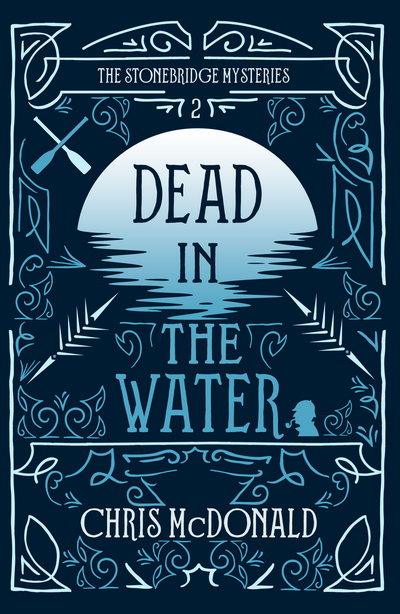
COVER REVEAL: Dead in the Water (Stonebridge #2) by Chris McDonald

Welcome to The Irresponsible Reader’s part in the Cover Reveal for Chris McDonald’s Dead in the Water! If it doesn’t grab your attention, you should get your eyes checked. But before we get to the cover down below, but before the picture, I’ve got a few words to share about the book.

Book Blurb

The Stonebridge Regatta is looming. The town’s annual face-off against neighbouring Meadowfield is usually a weekend filled with sunshine, laughter and camaraderie.

This year is different.

A week before the race, the body of Stonebridge team captain Matthew Henderson is found dead in the water. The police file his passing as a tragic accident however, his grieving widow disagrees and suspects foul play is involved. She enlists the help of Adam and Colin, the town’s amateur (self-proclaimed) private detectives to unearth the truth.

Did Matthew simply slip and fall into the water, or is there more to his death below the surface?

Date of publication: March 27, 2021

About the Author

Chris McDonaldOriginally hailing from the north coast of Northern Ireland and now residing in South Manchester, Chris McDonald has always been a reader. At primary school, The Hardy Boys inspired his love of adventure before his reading world was opened up by Chuck Palahniuk and the gritty world of crime. A Wash of Black is his first attempt at writing a book. He came up with the initial idea whilst feeding his baby in the middle of the night, which may not be the best thing to admit, considering the content. He is a fan of 5-a-side football, heavy metal and dogs. Whispers in the Dark is the second installment in the DI Erika Piper series, and Chris is currently working on his latest series, The Stonebridge Mysteries, published by Red Dog Press in 2021.


And now…

The Cover

Dead in the Water
The cover designers at Red Dog have done it again.

Again, this book comes out on March 27th, but you can pre-order this now at: Red Dog Press or Amazon (but you should absolutely order from Red Dog directly, the Bezos retirement fund is big enough, help out the publisher).


My thanks to Red Dog Press for the invitation to participate in this reveal and the materials they provided.

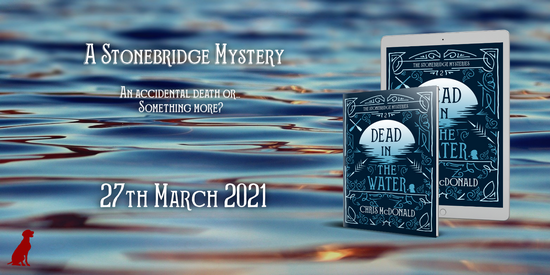
Dead in the Water Cover Reveal Banner

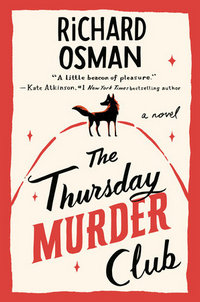
The Thursday Murder Club by Richard Osman: Well, I Know What I Want My Retirement to Look Like

The Thursday Murder Club

The Thursday Murder Club

by Richard Osman
Series: Thursday Murder Club, #1

Hardcover, 351 pg.
Pamela Dorman Books, 2020

Read: February 22-23, 2021
Grab a copy from your local indie bookstore!

“So, we were all witnesses to a murder,” says Elizabeth. “Which, needless to say, is wonderful.”

What’s The Thursday Murder Club About?

Britain’s first seventh “Luxury Retirement Village,” Coopers Chase is built on the remains of a Roman Catholic convent. On Thursdays, the Jigsaw Room is booked for “Japanese Opera: A Discussion,” during the two-hour slot between Art History and Conversational French. This isn’t actually what happens then, but it’s a great way to dissuade people from dropping in.

What actually happens is that a group of four residents get together to look over cold cases and see if they can make any progress with them. One of the group’s founders was a detective in the Kent Police, and it’s her cases they started going through. When necessary, or when the opportunity presented itself, they’d bring in various experts to consult. Shortly before the book opens, they’d had a change in membership, the former detective’s health had put her in the hospital ward, and when they’d asked a retired nurse for some input, she’d been curious enough to attend the meetings.

At that point, the roster consisted of a socialist activist of some renown, a retired therapist, and a well…we’re never told precisely what Elizabeth did, but The Official Secrets Act and a lot of foreign travel was involved.

Then one of the owners of Coopers Chase, the man who did the actual building, is murdered. Suddenly, they’re not that worried about cold cases, when they have a current case to help the police with (whether the police want/need their help isn’t a consideration).

How the Story is Told

Primarily, the book is told from a variety of third-person perspectives—focusing on most of the Club, a police constable, a Detective Chief Inspector, and others involved in Coopers Chase. It’s a great way to tell this story, you get to know all the characters, see everything going on, and get a real feel for this world. But what makes this better—what helps the reader get into this world, is the retired nurse, Joyce. As she gets into the Club as a whole, and especially as she becomes friends with Elizabeth (in less charitable moments, you might say she’s becoming Elizabeth’s sidekick—and I’m not certain Joyce would mind that), she starts keeping an electronic diary, and Osmund will insert an entry between chapters as a way of breaking up the text and helping the reader to focus on certain elements of the third-person narration.

Through this diary we see her joy in finding something to do, in making friends, in pursuing a romance, in skirting trouble with the police. It’s not really clear how involved Joyce was in the overall Coopers Chase community until this case, but this gives her a spark and opens new worlds and possibilities for her, and it’s heart-warming (at least) to read the progression of this. I will say, in bed with limited light, the typeface that is used for her diary entries (at least in the American Hardcover) wasn’t that easy for me to read—but it was absolutely worth the effort.

Initially, that’s all I wanted to talk about, but I realized the other way to interpret “how” could use some discussion. Osman writes with warmth, gentle humor, heart, and charm. Joyce’s diaries are delightful and the this-person narration is close to that, too. This is a book of dark things—murder, secrets, depravity, scandal, declining health, dementia, grief, loneliness, and death are everywhere. But there’s also community, friendship, and hope—and those latter three so characterize the book that the darkness seems surmountable and something you can be carried through because of the warmth and community. It’s hard to pull that off while being honest about the human condition—but Osman pulls it off with aplomb.

A Pond’s Worth of Red Herrings

I don’t remember the last time I read a mystery novel so full of red herrings—in terms of clues or viable suspects. I loved that—sure, some were easy to spot as being a red herring. But more than once I had to admit to myself that Osman had fooled me.

I love a smart mystery, one that makes me think, one that tricks me (without cheating too much), one that surprises me—and that’s exactly what we get here.

So Many Confessions

Part Two of the novel is called, “Everyone Here Has a Story to Tell,” and man, is that descriptive. There are, by the time all is said and done, several criminals in this book—and some people who aren’t criminals, yet carry a terrible weight of guilt (both deserved and not). And we get all of their stories—sometimes through the narration, but largely from their own dialogue. Secrets are laid bare—primarily for the Club and the reader, but some for a larger audience. Not all of them help anyone get closer to the killer (killers?)—but they all help tell the story.

Some confess because they’ve been waiting for the opportunity (as well as dreading it), some because they’ve been forced into it, some because it just doesn’t matter anymore. Ultimately, it doesn’t matter why they do it, only that they do.

So, what did I think about The Thursday Murder Club?

It is this kind of thing that keeps me reading Crime Fiction—as much as I might read police procedurals and PI (or PI adjacent) novels by the handful, you give me a clever assortment of characters doing interesting things and getting results from a combination of work and smarts and I’m in hog heaven.

A moment ago, I mentioned the title of Part Two. Part One is called, “Meet New People and Try New Things.” For Joyce and Donna (the Police Constable), that’s plainly what this book holds—Donna’s first homicide case and something that puts a spring in Joyce’s step and a twinkle in her eye. But it’s actually true for just about all the characters, and who doesn’t like the idea of a group of septuagenarians (give or take a couple of years) having new experiences to try?

On the off-chance my mother reads this in the next couple of days, I’m going to spoil her birthday and tell her that this is going to be waiting for her on her e-reader. I mention this publicly to illustrate how much I like this book—while I still had over one hundred pages to go, I was already planning on getting it for her (unless the ending was a mess).

A smart mystery, told well, with characters that are just as smart and well-told. I can’t think of a thing about this novel I didn’t like—it was touching, amusing, honest about the circumstances that these characters found themselves in, but life-affirming, too. There’s a lot of profundity mixed in with the amusement—and a clever mystery, to boot! This is not one to pass up.


5 Stars


2021 Library Love Challenge
This post contains an affiliate link. If you purchase from it, I will get a small commission at no additional cost to you. As always, opinions are my own.

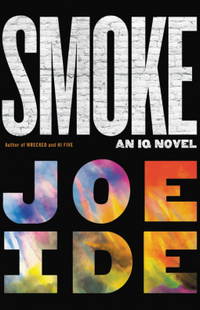
Pub Day Repost: Smoke by Joe Ide: What Happens When Isaiah Quintabe Leaves LA?

Smoke

Smoke

by Joe Ide
Series: IQ</a, #5

eARC, 336 pg.
Mulholland Books, 2021

Read: February 8-12, 2021
Grab a copy from your local indie bookstore!


Not that any of the previous IQ novels have been cookie cutters of the rest, but this really feels less like an IQ novel than I was ready for. In fact, it felt* like this was more of a Juanell Dodson novel for most of it. When Isaiah left town at the end of Hi Five, he left his friends behind. But their problems didn’t leave with him, they all have to step up and take care of things now without him. But the way they go about taking care of these problems is heavily influenced by Isaiah—he might not be playing an active role in most of the storylines in this book, but this is still his book.

* Yes, I said “felt like,” I could be wrong. This isn’t the kind of blog where you’re going to find me doing word counts to prove things like this.

The LA Stories

Grace is trying to get over Isaiah and focus on her art. She’s got a show coming up and needs to get some more paintings ready—that’s all that matters.

But while she and Isaiah know they’re over—most people don’t (and some of those who do know, believe it’s temporary). When someone that Isaiah helped put away gets back to town and is looking for a little payback, he only hears that Grace is Isaiah’s girl. Which puts her right in the cross-hairs.

Deronda’s life is going great—she’s getting some media attention for her success (which is only serving to build that success), her food trucks are doing great, and her son is fantastic (just ask Deronda, she’ll tell you). But then someone comes along to help himself to a share of that success and uses Janeel as his tool. Deronda goes nuclear and tries everything she can think of to stop this.

Grace tries to help—and gets one of Isaiah’s former clients involved, too. And even Dodson gets in on it. There’s nothing about what they try or the solutions they come up with that Isaiah would have done. In fact, I’m pretty sure he’d have seen some of the problems with her theories and stopped Deronda before she tried to act on them. But for fear of repeating myself, without Isaiah’s influence on the three of them, none of them would’ve tried anything like they did.

Cherise has had enough of Dodson’s bouncing around from opportunity to opportunity, trying to make some money, but with no stability. He needs to grow up and get a real job, and to help with that, she’s arranged for an internship at a local advertising agency. Dodson isn’t interested at all in this, but she’s not negotiating.

So he shows up for the first day, and something clicks. He thinks about the way Isaiah had approached goals in his life and applies it in his way to this situation. It wasn’t quite a “What Would Isaiah Do?” thing, more of a “How Would Isaiah Do This?”

Now there is zero percent of the Dodson storyline that is Crime Fiction. It’s about character development, character growth—it’s a transition point for Dodson. Yet this is my favorite part of this Crime Novel. Because it’s Dodson going through all this. Also, as Dodson pops up in their storylines to help Grace and Deronda, he gets plenty of Crime Fiction action.

There’s a fun part of this storyline where Dodson, who started as Isaiah’s Dr. John Watson, now becomes an Eliza Doolittle figure. Cherise’s mother, Gloria, who tries to equip him into someone who could make it in the Corporate World. On the one hand, I felt bad for poor Dodson—this wasn’t easy for him—but man, it was funny. We also got Dodson’s commentary on Pop Music and TV—which is not to be missed.

The LA stories interweave, Grace helps Dodson, Dodson helps Grace, Dodson chips in with Deronda…and so on. IQ is mentioned, he’s talked about and he even converses with some of them—but not about the challenges they’re dealing with (and vice versa) in this novel. He’s as removed from their stories as possible. Yet, without him, without his influence in their lives—none of this would’ve happened. So it absolutely was still part of an IQ novel, even if it was for all intents and purposes IQ free.

Isaiah’s Story

Isaiah’s trying to be IQ-free, too. He’s pulled up stakes to get away from the enemies he made in Hi-Five, and away from everything else, too. He’s decided he wants a new life. He wants nothing to do with the violence, the depravity, the danger that has so characterized the last few years of his life.

Which, of course, means that despite his best efforts—and really by dumb chance—he’s brought into a hunt for a serial killer by one of the least likely, least credible people we’ve encountered in this series.

While I did say this felt like Dodson’s book most of the time, at one point the Isaiah/Serial Killer story took over—and we see heroism and depravity on display (not quite in equal parts, but we get an excess of both). As much as Isaiah has said he wants away from this life—when the chips are down, he finds a way to try to stop another murder, at great risk to himself.

The final confrontation can be seen as darkly comic or as intensely human and maybe even realistic to an extent you don’t usually see. There’s a visceral desperation to it—everyone involved seems to believe on some level that they’re doomed, but they press on anyway. It’s harrowing really.

So, what did I think about Smoke?

This really feels like a transition novel—probably for the series as a whole, and definitely for all these characters. In a book or two, it’ll be easier to see (not that it’s difficult now) exactly what role this is going to play in things, but choices are made, steps are taken that insure wherever Isaiah ends up, he’s going to be a different man than he was in Hi-Five, ditto for everyone else. I’m particularly looking forward to seeing where Dodson is. Hopefully, he’s still going in the direction he started to move in here.

But that’s for 2023. What about the 2021 novel? While Ide seemed to be writing with an eye to the 2022 and 2023 novels, he also produces a fine read in Smoke. There are a lot of balls in the air, a lot of Point of View characters (those we know and those we only meet here). There are blasts from the past and new characters that we could be seeing in the future.

And while we get some very strong resolution to just about everything in the novel, there’s a cliffhanger at the end that makes it difficult for me to say most of what I want to say. It’s a complete novel, this isn’t just a book that you read so that you have to read the next. But I tell you what, when you finish you want that next IQ novel now.

I think it says a lot about the kind of world that Ide has created that his main character can only show up in 50±% of a novel/its stories and the novel to still be as strong as any of the others. The series isn’t about Isaiah (and other characters) now. It’s about Isaiah, Grace, Dodson, and Deronda—and their families, no matter what the series is called. I love that evolution, that development.

I think existing fans will find their enthusiasm for this series rewarded. I think new readers are going to want to grab the earlier novels to fill in how the characters got to where they are. Either way, people who pick up Smoke are in for a treat.

Disclaimer: I received this eARC from Mulholland Books via NetGalley in exchange for this post—thanks to both for this.


4 Stars

This post contains an affiliate link. If you purchase from it, I will get a small commission at no additional cost to you. As always, opinions are my own.


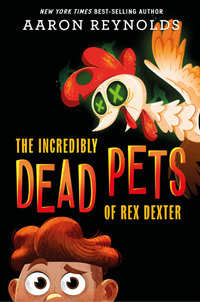
The Incredibly Dead Pets of Rex Dexter by Aaron Reynolds: A Wonderfully Ridiculous Adventure

The Incredibly Dead Pets of Rex Dexter

The Incredibly Dead Pets of Rex Dexter

by Aaron Reynolds
Series: The Incredibly Dead Pets of Rex Dexter, #1

Hardcover, 213pg.
Little, Brown Books for Young Readers, 2020

Read: February 19-20, 2021
Grab a copy from your local indie bookstore!

There’s a hum from the game and it roars to life…The Grim Reaper inside starts to move. He puts his bony hand near a small chute and my quarter falls into his palm.Behind him, a little sign spins into place:

PLAY AGAINST THE GRIM REAPER
WIN AND YOUR WISH IS GRANTED
LOSE AND SUFFER THE REAPER’S CURSE!

“Whoa!” cries Darvish in realization. “This is just like that old movie from the eighties.”

“What movie?” I ask.

“You know,” he persists. “The one with Tom Hanks.”

“Never heard of him.”

“He wishes to be tall,” Darvish says. “Or grown. What was it called? Tall? Large?”

“No idea,” I tell him. “Unlike you, I do not spend my time on ancient movies from a bygone era.”

What’s The Incredibly Dead Pets of Rex Dexter About?

Rex Dexter is a sixth-grader who desperately wants a pet. Well, no. He wants a dog—and considers all other kinds of pets as beneath him. A Chocolate Lab in particular, or he’d settle for a Yellow Lab. Even a Black Lab. Or, if he must, a Golden Retriever. The kid has standards.

Due to a mishap a few years earlier with a Goldfish and, well, his entire personality, his parents have decided he’s too immature for a dog, but they do get him a rooster for his birthday to see how he handles that. Sure, this makes no sense—who gives a rooster as a pet? But don’t worry, the chicken dies in a strange mishap hours later. (That’s not a spoiler, he’s literally dead on the book’s cover).

It’s about this time that Rex plays the Reaper’s game, and loses. Soon after that a very flat chicken starts talking to him—but no one else can see or hear the chicken, but Darvish is able to see the Rooster move things, so he believes Rex. So, the Reaper’s curse has something to do with seeing dead animals. Rex and Darvish barely get the chance to start believing that when a Rhino’s ghost shows up, too. It had died in a fire at the local zoo.

The Rhino (Rex calls him Tater Tot) tells Rex she needs help finishing something on Earth before he can move on—Drumstick (the rooster) has no intention of leaving. Rex and Darvish need to figure out who killed Tater Tot to help her move on. While they’re trying, more dead zoo animals arrive—making quite the mess in Rex’s room and making it difficult for him to focus on school (never a strength in the first place).

Their age and inexperience are a couple of the biggest strikes against their success, but there are bigger obstacles. Starting with the fact that their Sixth Grade Teacher, Ms. Yardley, keeps trying to educate them, and then there’s a research project looming on the horizon, as well as the Evening of Enchantment dance. That’s just a whole lot to go up against, but these ghosts need his help.

Rex and Darvish

Rex is the kind of over-confident (arrogant-adjacent) and not all that bright hero that MG books seem to love filling themselves with lately–Greg Heffley and Timmy Failure are the two examples that jump to mind. He’s got attitude to spare, opinions on everything under the sun, and a blind spot to his own strengths and weaknesses that’s larger than himself.

Where Timmy has that Polar Bear, Rex has Drumstick. And where Greg has Rowley, Rex has Darvish. Darvish is a lot like Rowley—upbeat, considerate, and pretty clever. Also, they’re much better friends to Greg/Rex than Greg/Rex are to them. Both of them would be better off getting a new best friend, but neither do. It’s a fun dynamic to see, but man…I feel for them, you know?

So, what did I think about The Incredibly Dead Pets of Rex Dexter?

First off, thanks to The Bookwyrm’s Den for letting me know about this book and making it sound fun enough to look into.

This is a ridiculous book, a goofy premise, and an outlandish execution of that premise. And I loved it. There’s a higher joke-density to the text than The Wimpy Kid books or Timmy Failure‘s adventures. Maybe it’s too much, honestly, I had to take a couple of breaks because I just needed a break from the relentless barrage of jokes. I don’t see anyone in the target audience doing that, but it was at over-dose levels for me (like you get when you get near to the end of a package of Double-Stuff Oreos if you eat the entire thing at one sitting).*

It’s ridiculous, it’s hilarious, the story holds up, and the characters (living and dead) are just great. I think this works for all ages, there’s just enough story to keep you invested and even if all the jokes don’t land, just wait for the sentence and you’ll get another one.

It’s been a while since I just read a book for fun, with no other expectations or goals. That’s all that Reynolds offers and that’s exactly what he delivers.


3.5 Stars

2021 Library Love Challenge
This post contains an affiliate link. If you purchase from it, I will get a small commission at no additional cost to you. As always, opinions are my own.

A Few Quick Questions with…Matthew Iden

I posted about the eighth Marty Singer novel, Chasing the Pain earlier this morning, and now I have a Q&A with the author, Matthew Iden to share with you. I had a harder time than I’m used to coming up with spoiler-free questions for this book, but think I pulled it off. I enjoyed this, hope you do, too.


Help us get to know you a bit—could you sketch out your path to publication and where the Marty Singer series came from?

After several frustrating years scaling the walls of traditional publishing only to be pushed off the parapet, I turned to self-publishing when it was still just a gleam in Jeff Bezos’s eye, about 2010 or so. I was lucky enough to have some immediate success with sales, but more importantly I realized what the important stuff was: connecting with readers, getting feedback, telling my story. It was empowering to see people who were not my mother actually appreciate my writing—this is the core piece of advice I give writers on the fence about self-publishing: as corny as it sounds, reaching readers is its own reward.

After three or four years, I’d done well enough to catch the eye of Thomas & Mercer—Amazon Publishing’s mystery and thriller imprint. They picked up all of my Marty Singer books (six at the time) and contracted for two standalone thrillers, which became THE WINTER OVER and BIRTHDAY GIRL.

The blush eventually came off the romance, but we parted amicably. I regained the rights to my Marty Singer series and self-published them, then added two more to the pile (THE BITTER FIELDS and CHASING THE PAIN).

The idea for Marty as a character came from my desire to write about a “real” individual. I love the Jack Reachers of the literary world, but I have a very hard time writing about them. I identify much more with Henning Mankell’s Kurt Wallander: solid, unvarnished, relatable.

I imagine that bringing back a character from a previous novel (at least one not designed to be a recurring character) is a tricky proposition—what came first, the desire to write more about Karl and this storyline lent itself to that, or the idea to do something with the “rehab industry” and he was a convenient way into that?

I really wanted to return to Karl. I make a few passing comparisons to him in CHASING THE PAIN as a King Pellinore-type figure: an aging, knight-errant who can’t seem to catch up with his own reason for being. Presenting him as someone with a substance abuse problem helped me solidify that framework; showing him dealing with his vices and corresponding fallout gave his story more substance.

I like to ask about supporting characters, and have at least a dozen things I’d enjoy asking about Madame Cormier (starting with: when can we expect a spin-off?), but something tells me that we can’t do that without ruining something for the readers. So, let’s go with Don D’Amelio instead. Where did he come from? He has certain, shall we say, sanguinary impulse that a lot of writers wouldn’t have given him—was that a little fun to write?

Watching Don come to life was a hoot. He started out fictional life as a sad-sack wasting his golden years sipping espresso and reading the sports page. Originally, his only function was to give Marty some more info about the rehab industry—what we call a “spear carrier” in the writing biz. But when I realized I needed a side-kick for my side-kick, I just went all-in and couldn’t stop laughing at how, uh, sanguinary I could make him.

Regarding Madame: you’re like the fourth person who’s wanted more. I think I might take the hint! I had a great time watching him come to life.

You’ve written in a handful of genres—are there any you wouldn’t want to try? What is it about Crime Fiction that brings you back to it?

I don’t have an interest in writing romance. Not because it isn’t a “real” genre, because the romance writers I know are some of the sharpest, hardest-working writers in the business, but just from a simple interest perspective: the stories don’t click with me and I can’t write what I don’t read.

Actually, my first love is fantasy, then science fiction, then crime fiction, but the world-building required of F/SF can be quite intimidating; my first attempts were dismal. Now that I have some writing experience under my belt, I have plans to go back and try my hand at a trilogy or three, but I’ve also come to love what I can do with crime fiction and won’t be abandoning it.

Let’s play “Online Bookstore Algorithm” (a game I’ve recently invented). What are 3-5 books whose readers may like Chasing the Pain?

I’d be lying if I said I wouldn’t want CHASING THE PAIN sitting next to Elmore Leonard’s GOLD COAST on someone’s bookshelf. CTP is not as caper-ish as Gold Coast, but I think there’s a similar flavor and not just in the setting.

Robert B. Parker’s Spenser is really the ur-private investigator so many of us try to emulate, not just for the tough guy persona, but the humor. LOOKING FOR RACHEL WALLACE would probably please the same kind of reader.

And, as long as I’m getting too big for my writing britches, I might as well throw in James Lee Burke’s BLACK CHERRY BLUES and James Crumley’s THE LAST GOOD KISS.

What’s next for Matthew Iden?

I’m about two-thirds done with a standalone spy novel (working title: SCIMITAR) set in modern-day Paris that occurred to me during a vacation there. I’ve struggled with it for almost two years now while I’ve written other things, but it’s time to get this one done. I’m pretty excited to see how it wraps up…because then I’ll feel free to write Marty #9 or Madame #1.

Thanks to Matthew Iden for his time and these answers!


Chasing the Pain by Matthew Iden: A Missing Addict (or two), a Missing Friend, and the Ex-Cop Out to Find Them

Come back in the next hour for a Q&A with the author!


Chasing the Pain

Chasing the Pain

by Matthew Iden
Series: Marty Singer, #8

eARC, 274 pg.
Life Sentence Publishing LLC, 2021

Read: February 3-4, 2021

The Set-Up

Once upon a time, it seemed like at least 40% of the P.I. novels/TV shows I read started out with an old friend (usually that the reader/viewer had never heard of) coming to the P.I. for help—or getting word to him that they were in trouble. It was a quick and effective way for the P.I. to get involved in the case without all the bother of interviewing a prospective client and worrying about money and whatnot. Obviously, it was better if it was someone the reader/viewer knew so we’d be invested, too.

And that’s what we have here, Marty Singer gets a visit from the ex-wife of a man he’d worked with not that long ago (Book 6, Once Was Lost, for the reader). He’s gone missing, leaving a note for his ex that reads:

If you’re reading this, then you haven’t heard from me in three weeks, maybe more. If that’s the case, call Marty Singer. He’ll know what to do.

Marty, a former DC Homicide detective, really has no choice (not that he wants one). He needs to find the retired US Marshall, Karl Schovasa, and bring him home—and helping Karl out however he needs to in order to get him able to come home.

The Protagonist

So, I’m coming into this series late (this is Book 8), but here’s what I picked up about Marty. He’s a retired detective and a cancer survivor. He now does favors for people, acting like a P.I. without a license (for undoubtedly a good reason). Think Matthew Scudder without the alcoholism.* He’s got a great girlfriend and there’s a young woman in their life that might as well be an adoptive daughter**. Drawing on his experience and contacts, he seems to be fairly successful at what he does.

* This is just my impression at this point, I could be way off.

** Think Spenser and Paul Giacomin.

I didn’t get to spend a lot of time with his girlfriend or daughter-figure, but they seemed like the kind of characters you’d want to spend more time with, and the interaction between the three of them served to make the reader like Marty.

The Victim

Karl Schovasa ran into Marty when they were on opposite sides of a case a couple of years back—but at some point, they realized they weren’t really on opposite sides and combined their efforts, forging a friendship. In the meantime, Karl’s addictions became worse—although Marty sees signs of him sobering up (and signs that the sobering didn’t last).

It looks like Karl befriended a young woman in a treatment group and decided she was in trouble. She’d ended up in a treatment center in Palm Beach, and it looks like Karl followed her there. Then he disappeared.

So, it’s off to Palm Beach for Marty to look for Karl—and probably the girl, too—and then the trouble really starts. And I’m going to leave it there.

A Refreshing Take on Violence

Like any good P.I. (or P.I. adjacent) novel, there’s a little violence—really 4 incidents of it. There’s nothing all that dramatic or over-the-top with them, they’re pretty straightforward. The biggest one—in terms of importance, and I think word count—is a fistfight. This is about as far as you can get from a Jack Reacher kind of fight. It’s nasty, brutish, and short.

Usually, in fiction—even among the more “realistic” works—a fistfight is something that the protagonist/their allies can shake off pretty quickly. Not this one. It really wasn’t that entertaining (the way that a Reacher or Spenser fistfight typically is), but it comes across as how things actually go down when someone is attacked from behind by someone swinging a piece of lumber against their head.

I loved that. I need to see more of that.

I Demand a Spin-Off!

Being a fish out of water as he is in Palm Beach, Marty needs to make some allies—and he does that with a little help from an old contact. I really liked all the allies we meet, Iden knows how to quickly get you to like a supporting character (he does it 3-4 times effortlessly). There are some characters that you encounter in various novels that basically steal every scene that they’re in. In this book, that character is Madame Cormier. I can’t say anything more than that without diminishing your experience in meeting Madame (but, boy howdy, I want to). All I can say is that I didn’t get enough, and I’m certain the character is worth a novel—if not a series—without Singer or the rest around.

Iden talks a little about this in the Q&A I had with him. (which will post a little later today)

The Real-Life Crime

Like so many Crime Writers do, Iden took the central idea for the crimes at the center of this novel from the news. I’d never heard of the way that these unscrupulous addiction treatment centers were gaming the system using the Internet and Insurance Payments to make a ridiculous kind of money. Iden provides links to his sources (at least some of them) at the end of the book—they made my blood boil and almost took away from the pleasant experience I had with the book.

I mention this just to say, while you read Chasing the Pain and you think, “this is preposterous, no one can get away with this…” Just know that it’s not. John Rogers would frequently say they had to tone down the crimes they based Leverage‘s crooks on because no one would believe what had actually happened. Something tells me Iden did something similar.

Also, I mention this all to say: if you’re someone who gets mad when they read news stories? Maybe skip the research at the end.

So, what did I think about Chasing the Pain?

First off, this book has a nostalgic feel for me—this feels like the Crime Fiction that I cut my teeth on back in Junior High/High School (both in books and on TV). Both the way Iden tells the story and the character of Marty Singer just takes me back to that time. So I like it for that alone.

But the story he’s telling isn’t really the kind of thing that anyone was telling in the 1980s (and not just because of the technology involved). And that is just as appealing to me, if not more so.

There’s something about this book that was just fun to read–I sat down to read about 10% on the first night, just to get the book started and get a feel for it. Before I knew what had happened, I was about one-third of the way in. I just didn’t want to stop reading—I could’ve easily finished it in that sitting, if I didn’t have a list of things to get to. It was still early in the book, so I hadn’t got hooked by the story or anything yet. It was just a pleasant read—I’m not sure I can put it into words, but everyone reading this knows what I’m talking about. A book like that gets me to come back to the series.

I liked this enough that I’ve purchased the first Marty Singer book, A Reason to Live, and am looking forward to catching up with this series. I bet I’m not the only one who reacts that way to this book.

This is a fast, easy read with characters you’ll like and believable conflicts for Marty to resolve. Marty himself has a strong, engaging voice that’s a pleasure to read. I recommend this novel and expect I’ll recommend the rest.

Disclaimer: I received this book from the author in exchange for this post and my honest opinion. I appreciate the opportunity, but, as always, my opinions are my own.


3.5 Stars

Smoke by Joe Ide: What Happens When Isaiah Quintabe Leaves LA?

Smoke

Smoke

by Joe Ide
Series: IQ, #5

eARC, 336 pg.
Mulholland Books, 2021

Read: February 8-12, 2021
Grab a copy from your local indie bookstore!


Not that any of the previous IQ novels have been cookie cutters of the rest, but this really feels less like an IQ novel than I was ready for. In fact, it felt* like this was more of a Juanell Dodson novel for most of it. When Isaiah left town at the end of Hi Five, he left his friends behind. But their problems didn’t leave with him, they all have to step up and take care of things now without him. But the way they go about taking care of these problems is heavily influenced by Isaiah—he might not be playing an active role in most of the storylines in this book, but this is still his book.

* Yes, I said “felt like,” I could be wrong. This isn’t the kind of blog where you’re going to find me doing word counts to prove things like this.

The LA Stories

Grace is trying to get over Isaiah and focus on her art. She’s got a show coming up and needs to get some more paintings ready—that’s all that matters.

But while she and Isaiah know they’re over—most people don’t (and some of those who do know, believe it’s temporary). When someone that Isaiah helped put away gets back to town and is looking for a little payback, he only hears that Grace is Isaiah’s girl. Which puts her right in the cross-hairs.

Deronda’s life is going great—she’s getting some media attention for her success (which is only serving to build that success), her food trucks are doing great, and her son is fantastic (just ask Deronda, she’ll tell you). But then someone comes along to help himself to a share of that success and uses Janeel as his tool. Deronda goes nuclear and tries everything she can think of to stop this.

Grace tries to help—and gets one of Isaiah’s former clients involved, too. And even Dodson gets in on it. There’s nothing about what they try or the solutions they come up with that Isaiah would have done. In fact, I’m pretty sure he’d have seen some of the problems with her theories and stopped Deronda before she tried to act on them. But for fear of repeating myself, without Isaiah’s influence on the three of them, none of them would’ve tried anything like they did.

Cherise has had enough of Dodson’s bouncing around from opportunity to opportunity, trying to make some money, but with no stability. He needs to grow up and get a real job, and to help with that, she’s arranged for an internship at a local advertising agency. Dodson isn’t interested at all in this, but she’s not negotiating.

So he shows up for the first day, and something clicks. He thinks about the way Isaiah had approached goals in his life and applies it in his way to this situation. It wasn’t quite a “What Would Isaiah Do?” thing, more of a “How Would Isaiah Do This?”

Now there is zero percent of the Dodson storyline that is Crime Fiction. It’s about character development, character growth—it’s a transition point for Dodson. Yet this is my favorite part of this Crime Novel. Because it’s Dodson going through all this. Also, as Dodson pops up in their storylines to help Grace and Deronda, he gets plenty of Crime Fiction action.

There’s a fun part of this storyline where Dodson, who started as Isaiah’s Dr. John Watson, now becomes an Eliza Doolittle figure. Cherise’s mother, Gloria, who tries to equip him into someone who could make it in the Corporate World. On the one hand, I felt bad for poor Dodson—this wasn’t easy for him—but man, it was funny. We also got Dodson’s commentary on Pop Music and TV—which is not to be missed.

The LA stories interweave, Grace helps Dodson, Dodson helps Grace, Dodson chips in with Deronda…and so on. IQ is mentioned, he’s talked about and he even converses with some of them—but not about the challenges they’re dealing with (and vice versa) in this novel. He’s as removed from their stories as possible. Yet, without him, without his influence in their lives—none of this would’ve happened. So it absolutely was still part of an IQ novel, even if it was for all intents and purposes IQ free.

Isaiah’s Story

Isaiah’s trying to be IQ-free, too. He’s pulled up stakes to get away from the enemies he made in Hi-Five, and away from everything else, too. He’s decided he wants a new life. He wants nothing to do with the violence, the depravity, the danger that has so characterized the last few years of his life.

Which, of course, means that despite his best efforts—and really by dumb chance—he’s brought into a hunt for a serial killer by one of the least likely, least credible people we’ve encountered in this series.

While I did say this felt like Dodson’s book most of the time, at one point the Isaiah/Serial Killer story took over—and we see heroism and depravity on display (not quite in equal parts, but we get an excess of both). As much as Isaiah has said he wants away from this life—when the chips are down, he finds a way to try to stop another murder, at great risk to himself.

The final confrontation can be seen as darkly comic or as intensely human and maybe even realistic to an extent you don’t usually see. There’s a visceral desperation to it—everyone involved seems to believe on some level that they’re doomed, but they press on anyway. It’s harrowing really.

So, what did I think about Smoke?

This really feels like a transition novel—probably for the series as a whole, and definitely for all these characters. In a book or two, it’ll be easier to see (not that it’s difficult now) exactly what role this is going to play in things, but choices are made, steps are taken that insure wherever Isaiah ends up, he’s going to be a different man than he was in Hi-Five, ditto for everyone else. I’m particularly looking forward to seeing where Dodson is. Hopefully, he’s still going in the direction he started to move in here.

But that’s for 2023. What about the 2021 novel? While Ide seemed to be writing with an eye to the 2022 and 2023 novels, he also produces a fine read in Smoke. There are a lot of balls in the air, a lot of Point of View characters (those we know and those we only meet here). There are blasts from the past and new characters that we could be seeing in the future.

And while we get some very strong resolution to just about everything in the novel, there’s a cliffhanger at the end that makes it difficult for me to say most of what I want to say. It’s a complete novel, this isn’t just a book that you read so that you have to read the next. But I tell you what, when you finish you want that next IQ novel now.

I think it says a lot about the kind of world that Ide has created that his main character can only show up in 50±% of a novel/its stories and the novel to still be as strong as any of the others. The series isn’t about Isaiah (and other characters) now. It’s about Isaiah, Grace, Dodson, and Deronda—and their families, no matter what the series is called. I love that evolution, that development.

I think existing fans will find their enthusiasm for this series rewarded. I think new readers are going to want to grab the earlier novels to fill in how the characters got to where they are. Either way, people who pick up Smoke are in for a treat.

Disclaimer: I received this eARC from Mulholland Books via NetGalley in exchange for this post—thanks to both for this.


4 Stars

This post contains an affiliate link. If you purchase from it, I will get a small commission at no additional cost to you. As always, opinions are my own.
Page 50 of 61

Powered by WordPress & Theme by Anders Norén