Tag: Non-Fiction Page 27 of 31

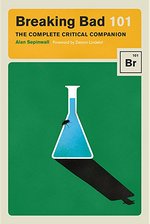
Breaking Bad 101 by Alan Sepinwall

Breaking Bad 101Breaking Bad 101: The Complete Critical Companion

by Alan Sepinwall

Hardcover, 281 pg.
Abrams Press, 2017

Read: November 15, 2017


So, I’m pretty sure I don’t need to explain what Breaking Bad is, do I? One of the greatest TV dramas of all time, Mr. Chips turns into Scarface, et cetera, et cetera. This book is a collection of brief essays about each episode, a critical companion, fan resource, and all around handy book.

Most of these chapters started out as episode recaps on Alan Sepinwall’s blog generally posted a day or two after the original airing — a couple were written just for this book because he didn’t recap each episode in season 1 and a later episode deserved a better recap (for reasons Sepinwall explains) — although the original version is included as well. He does take out some of he speculation and whatnot from the original posts to provide a nice, clean look at each episode. It’s more than just an episode recap, he looks at the arcs, the acting, writing, cinematography; in just a few pages he gets to the heart of the episode and helps you see all things that Gilligan et. al. were doing. The real gems are the footnotes and sidebar pieces that dive in a little further to the nitty-gritty details — why was this decision made, where’d actor X come from, and so on. Seriously, fantastic footnotes.

This is a quick and wonderful read if you do it start to finish — or you can just thumb through, stopping at random points to read up on an episode. The book works both ways. I imagine the best way to read it is with a remote in one hand, a DVD/Blu-Ray disc in your player and the book in the other hand. Watch an episode, read the chapter — skipping around in the episode to re-examine shots/sequences, etc. I haven’t done that, but man, I’m tempted to.

A few other things worthy of note: Damon Lindelof wrote a very amusing foreword; Max Dalton provided 12 black and white illustrations that are just perfect; the dust-jacket design is great; but more than that, the actual cover is even better; and lastly, the whole book is so well-designed and pleasing to the eye, it’s nice just to look at without reading. I don’t mention those kind of things enough, and need to get better about it.

Now, I’ve been a fan of Sepinwall’s recaps/writing since the days he posted about NYPD Blue on Usenet. I also read all these posts from Season 2 on within a few hours of their original posting (I didn’t start watching until after the season 1 finale — so I read all of those in a couple of days, still pretty fresh). So I was pretty predisposed to enjoy this book, but I’m pretty sure I would have anyway.

Sepinwall is a fan of Breaking Bad, most of the stories, most of the performances, etc. But he’s a thoughtful fan, not a mindless one — he is critical of some things, this isn’t just someone being a fanboy. I heartily encourage fans of the show to pick this up — or people who’ve been meaning to watch it, but haven’t (this book would be a much better companion than your friends who will be patronizing about you finally getting around to watching it).

—–

4 Stars

Henry by Katrina Shawver

Henry: A Polish Swimmer's True Story of Friendship from Auschwitz to AmericaHenry: A Polish Swimmer’s True Story of Friendship from Auschwitz to America

by Katrina Shawver
eARC, 381 pg.
Koehler Books, 2017
Read: October 11 – 13, 2017

Looking for something for her Arizona Republic column, Katrina Shawver found and interviewed Henry Zguda, a octogenarian, who’d been a competitive swimmer in Poland who’d spent three years in Auschwitz and Buchenwald. The interview struck a chord with her and she soon returned to his home to propose they write a book about his experiences.

This book is the result of a series of interviews Shawver conducted with Henry, her own research (including trips to the original sites), and some letters, photographs, etc. that Henry provided (some of which Henry pilfered from Auscwitz’ records some time after the war!). We get an idea what life was like in Poland before Hitler invaded and began to destroy the nation and its citizens — then we get several chapters detailing his life in the camps. Following that, we get a brief look at his life in Poland after the war and when the Communists took over, followed by his life in America after that — meeting his wife and living a life that many of us would envy. The bulk of the book is told using transcripts (with a little editing) of interview tapes with Henry, so the reader can “hear” his voice telling his stories. Shawver will stitch together the memories with details and pictures, as well as with bits of her trip to Poland and the camps there. We are also treated to a glance at the friendship that develops between Henry, Shawver and Henry’s wife through the production of the book.

More than once while reading it, I thought about how much I was enjoying the read — and then I felt guilty and wrong for doing so. This was a book about someone who lived through Auschwitz and Buchenwald, how dare I find it charming and want to read more (not for information, or to have a better idea what atrocities were committed). I’ve watched (and read the transcript) Claude Lanzmann’s Shoah (for one example), and never once thought about cracking a smile. I certainly never wanted to spend more time with the subjects. This is all because of the way that Shawver told Henry’s story, and Henry’s own voice. I did learn a lot — I should stress. For example, there was mail back and forth between the prisoners and family (for those that were willing to give the Nazis an address for their family), Henry at one point looks at some letters from prisoners online, checking not for names, but numbers he recognizes. Or the idea that there were light periods in the labor duty — not out of mercy, compassion or anything, but because the guards got time off, and there was no one to make the prisoners work.

The subtitle does tell us that it’s a story of friendship — several friendships, actually. Without his friends, Henry’s story would have likely been much shorter, with very different ending. It’s easy to assume that others could say that because of Henry, as well. There’s also the story of the brief friendship of Henry and Shawvver, without her, we wouldn’t have this book. There were some moments early on that I thought that Shawvver might be giving us too much about her in the book, but I got used to it and understood why she chose that. In the end her “presence” in the book’s unfolding helps the reader learn to appreciate Henry the man,not just Henry the historical figure.

This is a deceptively easy read, the conversational tone of Henry’s segments, particularly, are engaging and you’re hearing someone tell you great stories of his youth. Until you stop and listen to what he’s talking about, then you’re horrified (and relieved, sickened, inspired, and more). Shawver should be commended for the way she kept the disparate elements in this book balanced while never undercutting the horrible reality that Henry survived.

This is something that everyone should read — it’s too easy to hear about the Holocaust, about the concentration camps, and everything else and think of them as historical events, statistics. But reading this (or books like it), helps you to see that this happened to people — not just people who suffered there — but people who had lives before and after this horror. If we can remember that it was about people hurting people, nothing more abstract, maybe there’s hope we won’t repeat this kind of thing.

Disclaimer: I received a copy of this book from the author in exchange for my honest opinion.

—–

4 Stars

Pub Day Repost: How to Think by Alan Jacobs

How to Think: A Survival Guide for a World at OddsHow to Think: A Survival Guide for a World at Odds

by Alan Jacobs
Uncorrected Proof, 156 pg.
Convergent Books, 2017

Read: October 3, 2017

I haven’t read any of them, but over the last few years I’ve seen a pretty good number of books about human thinking processes — how it works, how it can/can’t be changed, and how this can/may/should change the way we approach decision-making, etc. (it’s not that I’m uninterested, there’s only so much time). Unlike me, Alan Jacobs has read many of these — and one thing he notes, that while these books are great on the science of human cognition, there’s also an art to it. Enter this book.

The sub-title is “A Survival Guide for a World at Odds.” Now, while it’s clear that our society is quite divided, I honestly don’t think that the world is really all that much more divided than we’ve been before — even in this society. However, I think it’s safe to say that we’re much more open and aggressive about the divisions that exists, and far less inclined to listen to the other side(s). Jacobs’ writing can help his readers bridge some of the divisions with those they interact with (not every one will want to, I’m sure, but they could try if they want to). I almost think that this book could be called How to Disagree instead, because so much of the book (but not all of it) is about how to disagree with others like civil, empathetic, adults, looking to change minds (or have our own be changed); not simply to attack someone or win an argument.

Jacobs begins by showing what strategies, devices, etc. we all already use in our thinking (taken largely from common sense/experience or all the science-y books mentioned above), and then as we’re aware of these, he shows how we can improve them. Building on ideas from one chapter to the next and showing how something we learned already can inform what he’s discussing now, these are not individual essays, but a cumulative case. I find it difficult to give examples for just that reason — his is a carefully laid out argument, and summarizing some of my favorite components would do little justice to those parts and not work that well out of context. So, I’ll keep it vague. He addresses how the idea of “thinking for oneself” is impossible, how it’s problematic to have an “open mind” always, the importance of waiting, of not having to address everything, and how it’s vital to keep a diverse selection of thoughtful people in your life.

Jacobs doesn’t only draw from social sciences and philosophers (but he does, and frequently — in an accessible way), he cites and draws from Robin Sloan, Walter White, C. S. Lewis, George Orwell and many others. He does so in a way that illustrates his points, strengthens and furthers his arguments. (I point this out, because I just finished a book that seemed only to do this kind of thing to lengthen chapters — no light was added, just space taken up). While readers from High School on up can feel as if the ideas are stretching their minds, the writing will not — Jacobs (as always) is good at convincing the reader they can handle bigger ideas.

Frankly, I wish this book (or one much like it) was required reading for anyone wanting a social media account — I’ve been telling all sorts of people to read it for a few days now, and I probably won’t stop anytime soon. How to Think is helpful, insightful, entertaining, wise, and — dare I say? — thought-provoking. Go get it.

Disclaimer: I received this copy from a Goodreads Giveaway.

—–

4 Stars

How to Think by Alan Jacobs

How to Think: A Survival Guide for a World at OddsHow to Think: A Survival Guide for a World at Odds

by Alan Jacobs
Uncorrected Proof, 156 pg.
Convergent Books, 2017

Read: October 3, 2017

I haven’t read any of them, but over the last few years I’ve seen a pretty good number of books about human thinking processes — how it works, how it can/can’t be changed, and how this can/may/should change the way we approach decision-making, etc. (it’s not that I’m uninterested, there’s only so much time). Unlike me, Alan Jacobs has read many of these — and one thing he notes, that while these books are great on the science of human cognition, there’s also an art to it. Enter this book.

The sub-title is “A Survival Guide for a World at Odds.” Now, while it’s clear that our society is quite divided, I honestly don’t think that the world is really all that much more divided than we’ve been before — even in this society. However, I think it’s safe to say that we’re much more open and aggressive about the divisions that exists, and far less inclined to listen to the other side(s). Jacobs’ writing can help his readers bridge some of the divisions with those they interact with (not every one will want to, I’m sure, but they could try if they want to). I almost think that this book could be called How to Disagree instead, because so much of the book (but not all of it) is about how to disagree with others like civil, empathetic, adults, looking to change minds (or have our own be changed); not simply to attack someone or win an argument.

Jacobs begins by showing what strategies, devices, etc. we all already use in our thinking (taken largely from common sense/experience or all the science-y books mentioned above), and then as we’re aware of these, he shows how we can improve them. Building on ideas from one chapter to the next and showing how something we learned already can inform what he’s discussing now, these are not individual essays, but a cumulative case. I find it difficult to give examples for just that reason — his is a carefully laid out argument, and summarizing some of my favorite components would do little justice to those parts and not work that well out of context. So, I’ll keep it vague. He addresses how the idea of “thinking for oneself” is impossible, how it’s problematic to have an “open mind” always, the importance of waiting, of not having to address everything, and how it’s vital to keep a diverse selection of thoughtful people in your life.

Jacobs doesn’t only draw from social sciences and philosophers (but he does, and frequently — in an accessible way), he cites and draws from Robin Sloan, Walter White, C. S. Lewis, George Orwell and many others. He does so in a way that illustrates his points, strengthens and furthers his arguments. (I point this out, because I just finished a book that seemed only to do this kind of thing to lengthen chapters — no light was added, just space taken up). While readers from High School on up can feel as if the ideas are stretching their minds, the writing will not — Jacobs (as always) is good at convincing the reader they can handle bigger ideas.

Frankly, I wish this book (or one much like it) was required reading for anyone wanting a social media account — I’ve been telling all sorts of people to read it for a few days now, and I probably won’t stop anytime soon. How to Think is helpful, insightful, entertaining, wise, and — dare I say? — thought-provoking. Go get it.

Disclaimer: I received this copy from a Goodreads Giveaway.

—–

4 Stars

I Am Not Posting About How to Think by Alan Jacobs Today

If I was posting about it, below the pilcrow, you’d see a few paragraphs about the book:

How to Think: A Survival Guide for a World at OddsHow to Think: A Survival Guide for a World at Odds

by Alan Jacobs

Uncorrected Proof, 156 pg.
Convergent Books, 2017

Read: October 3, 2017


But now, I just can’t. I’m really surprised I read this all in one day, but there’s something very engaging about this book that you can’t put it down. It’s much more fun than you’d think from the title. But one of the things Jacobs stresses is taking time to think — and this is one of those books I have to ponder about before putting down any thoughts.

(which works out nicely, because I’m beat, and this helps to justify taking a night off — but really, I need to think about it).

(and yes, I also realize that this isn’t exactly the point he’s making — but you’ll have to read the thing to see how much I’m twisting his point)

I’ll try tomorrow, but for the time being: go order this before it comes out and give it a read. Whatever I end up posting will be very positive.

Jamarr’s Promise by Kristin I. Morris & Joseph J. Zielinski, Ph.D

Jamarr's PromiseJamarr’s Promise: A True Story of Corruption, Courage, and Child Welfare

by Kristin I. Morris, Joseph J. Zielinski, Ph.D.

ePUB, 160 pg.
Wisdom House Books, 2017

Read: August 31, 2017


Here’s a book that should apply to a wide variety of people — others who believe that Child Protection Services (using that as a generic term for all sorts of states’ services); those who are convinced that the system will work if we trust it and have the right people in it; those who are convinced that New Jersey’s state government is impossibly corrupt; those who like True Crime; and many others. Sadly, what all these different potential readers get is a poor book.

Jammarr Cruz was a nine-year-old whose Division of Youth and Family Services case worker was unable to keep his mother and her boyfriend from exercising their legal right to take the boy home. She fought it as hard as she could, but ultimately she was thwarted by those over her — the boy went home and died a few months later. Kristin Morris, the caseworker, despite a total lack of evidence of her culpability, lost her job because of it. The book details her efforts to clear her name, get her job back, and make changes to prevent this from happening again. Meanwhile her family suffers, her finances suffer, as does her health (mental and otherwise).

Now, I’m supposed to be talking about the book, not about the events in it. Which is a shame, because I’d much rather talk about that.

The book is told in the present tense — which is a choice that I do not understand. I rarely understand that as a choice in fiction, but in a book that is detailing past events in an actual person’s life? It just makes no sense.

The biggest problem with this book is the length — 160 pages is not enough space to do it justice. 260 may have worked, 350 would’ve been better — I’m guessing on page length, but I know that 160 just didn’t do it. Too much of the book has to be told in summary form, where things had to be compressed and details had to be discarded. Sometimes, it made it hard to follow the sequence, sometimes it made it hard to sympathize with her because months would be brushed aside in a line or two. If they’d taken the time to fully explain how things happened, the reader would have a better sense of the chronology after Jamarr’s death, would better be able to understand what she went through, and how this all had a horrible impact on her family.

Oddly, even given space limitation, there’d be a conversation that would recap the narrative we’d just read (or vice versa). Something else that didn’t make sense to me.

Given the lack of details, the who so much is summed up and the reader is left to fill in many of the blanks themselves, this frequently comes across as a series of Facebook statuses from that friend who is always going on about how difficult their life is — not the reasoned defense of actions made my a competent and caring professional — which is what i think the book was intended to be, and I do think that’s what she is. Also, much of what she says seems more open to criticism and doubt since we’re just given a brief glimpse from a pretty biased source.

This book could’ve been so much better. The tragedy it describes, the injustices it describes deserve something more than this. Morris herself should’ve had a better representation to the world at large than this. But all we’re given is this synopsis of a book, not the book itself (or at least what should be the synopsis of the book).

Disclaimer: I was provided with a copy of this novel in exchange for this post, my participation in a book tour and my honest opinion. I think it’s clear that my opinion wasn’t swayed by that.

—–

2 Stars

Book Spotlight: Jamarr’s Promise by Kristin I. Morris & Joseph J. Zielinski, Ph.D


Check back later for my thoughts about this book.


Book Details:

Book Title: Jamarr’s Promise: A True Story of Corruption, Courage, and Child Welfare
​Category: Personal Memoir; 160 pages
​Genre: Family & Relationships / Abuse / Child Abuse / True Crime / Murder
Publisher: Wisdom House Books
Release date: May 1, 2017

Synopsis

A True Story of Corruption,
Courage, and Child Welfare

Jamarr’s Promise is the shocking personal memoir of social worker Kristin I. Morris’ fight to protect a nine-year-old child, Jamarr Cruz, that ended in his tragic murder and New Jersey’s Division of Youth and Family Services (DYFS)’s denial of its responsibility in the case.

As a caseworker for DYFS, Kristin helped many children and families; it was her life’s passion. Nine-year-old Jamarr was living with his grandparents after his mother’s boyfriend, Vincent Williams, beat him repeatedly. Jamarr told Kristin it was not safe for him to return home. Kristin urgently tried to keep Jamarr safe with his grandparents, but was told by superiors that Latino children are kept in the home at all costs. This time, the cost was Jamarr Cruz’s life. In 2009 after Jamaar’s return to Omayra Cruz and Vincent Williams, Vincent beat Jamarr to death. Not only did Kristin’s superiors at the DYFS block her efforts to help Jamarr, but when he was killed, they blamed Kristin for his death.

Jamarr’s Promise is a call to end corrupt loyalties in New Jersey’s DYFS. It is a call to protect children from Jamarr’s fate and promote child welfare. It is a call for justice for Kristin Morris, who did the right thing and was punished unjustly for it.

The Authors

Kristin I. Morris is an activist who volunteers her time with organizations for women, children and families, including Toys for Tots, She’s Got a Name, and Urban Promise. She has been with her husband Benny since she was nineteen and they have four very active children. She always wanted to help people, by working with the church teaching CCD, pro-life club, soup kitchen, and through charity work.

Kristin earned her bachelor’s in Psychology from Rowan University. After school, she began to work as a social worker for the State of New Jersey’s Division of Child Protection and Permanency, formerly Division of Youth and Family Services. As part of the child welfare system, she found herself watching over New Jersey’s most vulnerable citizens: abused children. She was extremely excited and naïve, wanting to save the world. Working in the city of Camden among the people that needed the most help was extremely eye opening, but revealed the corruption of the inner systems of the Division. Jamarr’s Promise is the true story of Kristin’s battle with the State over the murder of a child she tried desperately to save.

Kristin’s dream is to open and run a foster care organization as a safety net for abused children, and to eliminate the politics and hidden agendas of larger organizations.

Joseph J. Zielinski, Ph.D. is a New Jersey licensed psychologist board certified in both Clinical Psychology and Clinical Neuropsychology. He completed his undergraduate in Psychology at the University of Pennsylvania and earned a Ph.D. in Clinical Psychology at Rutgers University, New Brunswick. He has been in private practice for forty years as a psychologist, often working concurrently for public schools in special education, in a headache clinic, and in a management consulting firm. He has published in professional journals. He most enjoys working as a practitioner and seeing patients of all backgrounds and experiences.

For seventeen years, Dr. Zielinski has spearheaded the Committee for Prescriptive Authority, a group of pioneering psychologists, to pass legislation allowing trained psychologists to prescribe psychotropic
medications. This is an effort to help the dire shortage of psychiatrists in New Jersey and around the country. Their efforts to help the people of New Jersey are near to fruition.

Dr. Zielinski has been married for forty years, has two grown children and two grandchildren. He is an avid landscaper and is particularly fond of evergreens. He is a fitness enthusiast and a former marathoner.

He enjoys classic rock and live concerts at local venues and attending professional sporting events with his daughter. He enjoys writing screenplays and has pitched a few to Hollywood professionals.

Luck Favors the Prepared by Nathaniel Barber

Luck Favors the PreparedLuck Favors the Prepared

by Nathaniel Barber

Kindle Edition, 204 pg.
Take the Stairs Publishing, 2017

Read: July 22 – 24, 2017


If the title is true, Nathaniel Barber was/would have been one of the worst Boy Scouts in the world. You don’t have to read many of these non-fiction short stories to decide that luck and Barber are, at best, passing acquaintances. Which is probably good — they make for better reading that way (Barber, might disagree about the “good” there — it is his life).

These stories don’t detail his life, they give you glimpses into experiences that have stuck with him for one reason or another, and largely they resonated with me. For example, his first (disastrous) experience with being a landlord. His goals for it were pretty much what I’d envisioned the time or three I thought about trying it. How it turned out for him, is pretty much what I feared would happen to me. A lot of what happened to him as a band geek made me think of what it was like when I was one (thankfully, it was a little tamer for me). I’ve never had a coworker like Dale Kendrick, but I can name one or two individuals that easily could’ve been.

Not all of his stories are those the reader will be able to identify with — but there’s something in his telling of them that will allow you to see yourself in that situation, and feel the humanity.

There is one important difference between his life experiences and mine — or most readers’ — his are funny. Or at least the way he’s able to present them is (probably more the latter than the former). Not always in a laugh-out-loud way, sometimes it’ll just be a wry smile, or shake of the head. But Barber’s been able to mine the humor in most of these situations — frequently at his expense.

Each story has a different feel to it, so even though they’re all about the same central character, they’re individual stories. They don’t all flow chronologically — he jumps back and forth though his life, you won’t walk away with a “life story” or anything, you’ll just get a good understanding of various points in his life. It’s like sitting around a table with an old friend, “Did I ever tell you about the time . . . ”

Barber’s writing chops are evident throughout this, whether he’s going for economy of words:

Against the advice of my lawyer and stern warnings from my therapist, I accepted Elsbeth’s invitation to lunch.

or if he’s going for a visual that will stick with you:

Mr. Millson was a short, puggish man. He was skinny except for a cantaloupe gut he not only ignored but allowed to lend heft to his wagging swagger. He was short and compensated for this with a simmering, constant temper, always fired up and red-faced. Even when he was just trying to schmooze an extra scoop of Jell-O from the lunch lady. His lips were not lips, but the absence of lips. Sweaty flaps, really. Fleshy bits of face he pursed to a thin, kissy embouchure under a bulbous, alcoholic nose.

you get exactly the idea he was going for — this isn’t some sort of arty-ambiguity here, it’s a precise brushstroke. He wants you to feel what he felt, he wants you to see what he saw — and he wants you to at least grin about it. Sometimes he’s not that subtle; infrequently, he could be more skillful about it — but he’s hitting his targets, he’s evoking memories about embarrassments of our youth, empathy over similar struggles of young adulthood, or a slight feeling of dread knowing that’s exactly how you’d react in that situation. Thankfully, he generally wants that to be followed with a chuckle.

Creative, distinctive, amusing — this collection will leave you wanting to see more from Nathaniel Barber, while being very glad you have this.

Disclaimer: I received a copy of this book in exchange for my honest opinion and participation in this book tour. I appreciated the book, but my opinions expressed are my own.

—–

4 Stars

A Few Quick Questions With…Nathaniel Barber

Like many things in this Book Tour stop, getting this Q&A together almost didn’t happen — but Barber stepped up and got some good A’s together for the Q’s a I threw at him. All while prepping for a book release party. Couldn’t have been easy, but it’s much appreciated.

There was a good deal of jumping around in time in your arrangement here, why did you choose not to start with young Nathaniel and move forward? Was there a strategy (that you care to share) behind the arrangement?

I’m aware that jumping around the timeline could seem like a gimmick. I understood that was a risk but it was a risk I felt was worth taking.

Chronology is a tool. It is very useful. It sets the pace and sometimes, when there’s a lot of messiness and moving parts, chronology can be the only thing that holds a narrative together.

Arranging these stories in chronological order demanded segues between the chapters. They just didn’t read right without them. Maybe it was somehow possible, but I was having a bear of a time trying to make them flow. These segues were lengthy and distracting. You can imagine, for example, the acrobatics required to naturally transition between hosting an exchange student from Paris, to an obsession about pants.

“Time passed. The days grew into weeks and my thoughts turned to pants…” and so on. No thank you.

I admire brevity. While these stories could use a bit more economy of language, the subject matter is very tight. The scope of the story is singular and isolated. These stories stand on their own. I like that about a short story. It demands so much from the reader: they must put the pieces together themselves. A short story reader is a smart reader. With barely enough information, they’re able to carry the weight. It’s participatory. A shared experience.

Similarly — what led to you choosing the events to write about?
Really, the stories chose me. I know that sounds glib. I can’t help but roll my eyes when I hear authors say things like, “The stories chose me.” But it’s true. As I mentioned, I struggled with these stories to an obscene length. They simply would not let me alone. Many of them were not easy to tell. I would have preferred something witty and artful, but instead I got stuck with these plain-jane stories. They’ve grown on me since though. I’ve developed a great appreciation for banality, thanks to these stories.
What was the biggest surprise about the writing itself? Either, “I can’t believe X is so easy!” or “If I had known Y was going to be so hard, I’d have skipped this and watched more TV”.
The biggest surprise for me was that there would be an end to working on these stories. Writing and editing a story is a suffocating experience. Sometimes it seems they will never be finished. Their arc, the characters and the concepts that are juggled around a story are sometimes so nebulous and scattershot it seems like a game of whack-a-mole. But I kept working on them, and eventually, story by story, I wrote that last sentence. It’s quite a thing, when you know you wrote the last sentence, even if it still needs to go through a number of edits—it’s a thrilling process, to fine-tune that last sentence.
A lot of what makes a writer are the books that he’s read — what books in particular do you think made you the writer you are/the book the book it is?
Kurt Vonnegut’s Galapagos and Pat Conroy’s The Death of Santini and Harper Lee’s To Kill A Mockingbird and Alice Munro’s Dear Life.
You’re leading quite the interesting life — is there another book in you? (or are you waiting to see how this goes?)
Yes, I contain multitudes (to quote Whitman). Luck Favors The Prepared is a way of asking for permission to write more. I have so much more in me, I can’t wait to get it out there. There’s two books of rhyme and meter poetry on the way. One is a book of childish poems for adults, and the other is a book of grown-up poems for children. What could go wrong? Also, soon I’ll have another collection of nonfiction short stories (and some fiction short stories) as well as as novel which I’ve begun but I hate. I hope I fall in love with this novel soon because so far, the outlook is grim. It doesn’t seem very funny, it deals with a lot of awful, horrible characters. There is violence, there are some terribly graphic scenes I don’t know how to write yet. And worst of all, I have no idea what will redeem the story. So, the jury’s out on that one.

Guest Post: The Delicacies of Writing Non-Fiction by Nathaniel Barber

The Delicacies of Writing Non-Fiction:
What to Leave In or Omit and Why Asking Permission Is the Greatest Hurdle to Telling a Great Story

Luck Favors The Prepared is a collection of nonfiction short stories. But, that ‘nonfiction’ part has been a tricky business. Nonfiction is rarely flattering. Seldom does its characters move about as gracefully or as tactfully as we believe we move about our own lives. Most people long for privacy—while the goal of nonfiction (as is the goal of any writing) is the opposite of privacy, to reach an audience. Additionally, the claim (and the sting) of nonfiction is that these are stories which have actually happened, concerning people who actually existed—people with feelings and, possibly, access to legal counsel.

What if I get it wrong? What if I muddy up the dates or fail to nail the dialogue verbatim? These, while valid points, were the least of my concerns. The ultimate hang-up was whether a person would be not flattered by the character I’d made of them.

The conclusion I always reached (which was no) held up the writing of these stories for many years, until, at long last, I was able to call a truce with my inhibitions and get to writing.

What explains the shift?

For starters, these are good stories so they were not easily dismissed. Given time and pressure, eventually their persistence forced me to reconcile this seeming insurmountable hurdle to nonfiction: the spectre of fairness.

Readers of Luck Favors The Prepared will notice I traffic in some incredibly unsavory characters. Was it fair of me to write them so? Probably not. People, however, have had more than enough time to get along without fairness. Indeed, we’ve lived in a dearth of fairness since time immemorial. It is audacious of my characters to demand fairness would make a historically rare visit just to save their hide.

The best we can do is be proactive, and behave ourselves. If you’re good, most assuredly, nobody will write about you.

We’ve developed many ways to live well, even in this absence of fairness. Chances are you’ve had a brush with Christianity, the founding tenets of which warn we should (to paraphrase a number more eloquent passages) watch our ass. If you feel exempt from the offerings of Christianity, the scientific community has an equally potent formula coined by Newton’s third law: every action has an equal and opposite reaction. There are some still who feel left behind by both Christianity and science, for them I can only hope they have a magnanimous sense of humor. After that, you’re S.O.L.

The idea is, in a world where what goes around, comes around—fairness is a red herring.

It took me longer than it should have to come to this conclusion. When I did, it was like a fresh breath of air. Which is why I am now gleefully submitting Luck Favors The Prepared for publication, just under the wire, during this lapse in the Universal Calendar when fairness seems to have checked-out.

If nothing is fair, what then, will keep the world from coming apart?

In this supreme absence of fairness, Christianity, science or humor implores us to act with kindness, beauty and grace. It is, you could say, a last-ditch stopgap to prevent everything from going to pot. This is an idea I can get behind in a major way. It has allowed me to finally locate my voice—and write nonfiction to my heart’s content. But to do so compassionately, in spite of appearances to the contrary.

In the spirit of kindness it is important to note: while I have not shied away from capturing a character at their very worst, that unfortunate snapshot is strictly happenstance. I am not aiming, specifically, to capture a character at their worst. Though, to be fair, I am not straining to capture a character at their finest either. One should not aim to catch a character behaving any which way. They should only aim to capture the story. Kindness should be, above all else, a commitment to the story.

While many of my characters found themselves illuminated in such a harsh light, kindness suggests that (hopefully) they were just going through a rough spot. Their only real crime (in the universal sense) was they experienced a fevered lapse of judgement in the company of someone with such an impeccable memory.

Kindness forces us to consider the angels of our better nature, that people are great, complex creatures. We are brimming with contradictions. Sometimes we are terrible and evil. Other times, we are beautiful and reaffirm all of the wonderful things.

How does one know when they’re writing from a place of kindness? Crap stories are usually unkind. We’ve all heard an embittered divorcee seethe about their poisonous ex-wife or husband. It’s nothing you would treat yourself to after a day’s work. That’s what red wine is for.

Nonfiction without kindness reads flat and vindictive. Any too-thin story is so obviously a sad revenge-vehicle to facilitate a tantrum. It is painfully uninteresting. Yes, sometimes unkind nonfiction is fun to read. But it’s a dirty, bitter pill and should be enjoyed sparingly.

Are the stories objective?

Just because I am the narrator, doesn’t mean I am exempt from the critique of these narratives. To lean faithfully on the story’s foundation means I should just as freely throw myself on the same pyre to which I’ve thrown these poor characters. Could I have been more critical of myself, the character? Maybe, but that’s above my paygrade.

Writing nonfiction is to shoulder into unfairness. So the very least a nonfiction author can do is make well and sure they’re writing from a place of kindness and objectivity. Or, at least, try real hard to do so. This is why I still write with boundaries. Very strict boundaries in fact. There’s much more I could write, but it’s a waste of time if there’s no redeeming story.

I am forty years old now. Does an inability to understand and reconcile the dueling perspectives of fairness and kindness explain why it’s taken me so dang long to offer Luck Favors The Prepared? Probably not. But lay off, I’m short on time. I suppose I could try harder, to completely throw myself at producing books, which is a lot like working a second job without pay. Try explaining that to a wife and a daughter.

Page 27 of 31

Powered by WordPress & Theme by Anders Norén