Tag: Science Fiction Page 6 of 39

The Irresponsible Reader On…Self-Published Science Fiction

(updated 7/257/24)
Self-Published Author Appreciation Week '24 Banner

From the first moment that people did the strange thing of asking me to talk about their books on my blog, I’ve been impressed by the quality of a lot of what’s been published by authors going out on their own, taking all the risks, shouldering all the responsibility and doing all the work to get their words, their dreams, their blood, sweat, and tears. This should be celebrated—it’s definitely appreciated, as we’re trying to show this week.

In addition to the Q&As and Guest Posts I have this week, I’m also continuing my habit of highlighting the self-published works that I’ve blogged about over the last few years—just a sentence or two.  Hopefully, this’ll be enough to make you click on the link to the full post. Beyond that, it’d be great if I inspired you to add a few of these to your TBR. Also, be sure you check out the other posts over at the SPAAW Hub.

Today we’re going to be looking at Self-Published Science Fiction. Old tropes in new garb, fresh ideas, and a creativity that astounds. These authors are well worth your time and money.

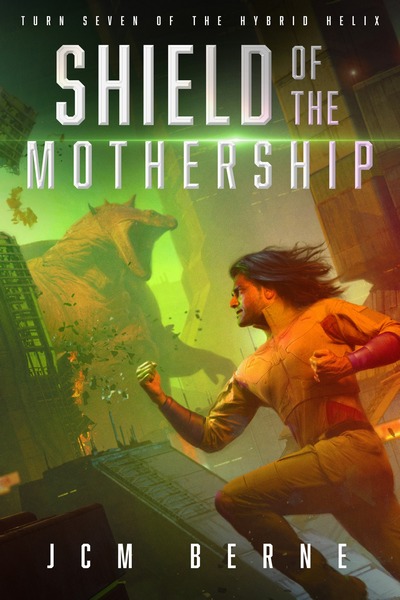
bullet Wistful Ascending by JCM Berne—if I start talking about this, I’m not sure how to stop. There’s a retired super-hero/super soldier working a menial job on a space station. There’s a revenge story. There are aliens that look like talking bears. It’s just so much fun. (my post about it)
bullet The MOST Powerful Christmas by JCM Berne—Rohan and friends save Christmas for Santa (my post about it)
bullet Return of the Griffin by JCM Berne—Rohan has to return to Earth to battle monsters that might be too much for him and the collective might of Earth’s superheroes. Rohan also has to battle the legacy he left behind when he left. (my post about it should be posted soon)
bullet The Elites by Matt Cowper—a Batman-esque figure rebuilds a government-sponsored team of heroes. They take on super-villains of all stripes and even an alien invasion.
bullet The World Savers (my post about it)
bullet Rogue Superheroes (my post about it)
bullet Nightfall (my post about it)
bullet Children of the Different by S. C. Flynn—a very different kind of YA take on post-apocalypse life in Austrailia. (my post about it)
bullet Full Metal Superhero by Jeffery H. Haskell—a young technical genius who lost the use of her legs in the accident that cost her parents their lives creates an Iron Man-esque suit and starts fighting crime in the hopes to be recruited into an Avengers/Justice League-type team. I’ve frequently talked on the blog (and even in this series of posts) about being frustrated that I haven’t caught up with a series. This one really gets to me. There’s also a spin-off series that looks great.
bullet Arsenal (my post about it)
bullet Unstoppable Arsenal (my post about it)
bullet Super Powereds: Year 1 by Drew Hayes—The first in a series about a group of freshmen in a college-level Super-Hero Training program. (my post about it)
bullet Darkside Earther by Bradley Horner—this is a series about a privileged group of teens trying to get through school and into adulthood while on a space station orbiting Earth. Their parents are the elite of humanity and are trying to mold their children into very different types of leaders.
bullet Darkside Earther (my post about it)
bullet Degrading Orbits (my post about it)
bullet Saul by Bradley Horner—a professor of nanotech tries to save his daughter in the middle of a global catastrophe. (my post about it)
bullet Billy in Space by Harry L-B—Billy has been given telekenetic abilities, and instead of becoming the government agent he’d aspired to, he’s become a human forklift in a spaceship’s warehouse. Not glamorous at all, but it’s a job. Then an alien race attacks his ship. Then space pirates do, too. And then things get bad. You’ll also witness a really bad first date. I should stress that this is a comedy. (my post about it)
bullet Proxies by James T. Lambert—Jair Howard has some big challenges ahead of him–he has to deal with his mother, he has to fix his relationship with his girlfriend, he has to prove someone hacked into the military’s computers, then he has to prove it wasn’t him–oh yeah, and prevent interstellar war. His mother might be the biggest problem, really. I just finished reading the book and haven’t finished my post, but you’ll want to give it a look.
bullet Duckett & Dyer: Dicks For Hire by G.M. Nair—This story felt like the love child of Dirk Gentley’s Holistic Detective Agency (the Douglas Adams version) and Comedy Central’s Corporate, but sweeter. A pair of old friends-turned multi-dimensional P.I.s tackle a missing persons case. (my post about it)
bullet Serengeti by J.B. Rockwell—a damaged warship—and the AI who operates it—attempts to rejoin the fleet.
bullet Serengeti (my post about it)
bullet Dark and Stars (my post about it)
bullet AI Theist by Michael J. Svigel—The world’s most advanced and powerful AI struggles with its(?) conscience and gets religion. (my post about it)
bullet Please Return to the Lands of Luxury by Jon Tilton—an MG Dystopian thriller. There’s a fantastic world here—a very plausible one, too. The story is hard to sum up in a sentence or two, but this would be a great read for an MG reader who’s able to read some unpleasantness (and a lot of wholesome and hope-filled moments, too). (my post about it)
bullet The FATOFF Conspiracy by Olga Werby—Americans have lost the war on obesity and all but the elitist of the elite are dangerously obese (while tucking away a good portion of that fat into a pocket dimension), in pain, struggling, dying young, and yet eating almost constantly. (my post about it)
bullet Genrenauts by Michael R. Underwood—Parallel to our world are various worlds populated by fictional characters in a wide variety of genres (Western, SF, Romance, etc), and when things go wrong in the stories, things go wrong in our world. n this world, there are a number of teams of story specialists who shift to the other worlds to fix the stories and set things back on course here. The first two novellas in this series were published by Tor, but after that, Underwood took it over himself.
bullet The Cupid Reconciliation (my post about it)
bullet The Substitute Sleuth (my post about it)
bullet The Failed Fellowship (my post about it)
bullet Genrenauts: The Complete Season One Collection—a compendium of all the novellas/stories in Season 1. (my post about it)
bullet The Data Disruption—a Season One Prequel (my post about it)
bullet The Wasteland War—Season Two kicks off (my post about it)


If you're a self-published author that I've featured on this blog and I didn't mention you in this post and should have. I'm sorry (unless you're this guy). Please drop me a line, and I'll fix this. I want to keep this regularly updated so I keep talking about Self-Published Authors.

Self-Published Authors Appreciation Week Footer

The 2024 Self-Published Authors Appreciation Week Logo was made by Witty and Sarcastic Book Club

Howl by e rathke: Postapocalyptic Monsters and Those Who Hunt Them

Cover of Howl by e rathkeHowl

by e rathke

DETAILS:
Series: The Howling Earth, #1
Publication Date: December 5, 2022
Format: eBook
Length: 177 pg.
Read Date: June 11, 2024

We’d give until nightfall or the first howls before we gave them up for lost. Lost to never be spoken of again. Those ghosts trapped in meat who would become monsters to haunt us, to hunt us.

What’s Howl About?

That’s the end of the first chapter—and it tells you all you need to know about how warm and fuzzy this world isn’t.

This novella takes place in some sort of postapocalyptic future, and the world is in a very confusing place. It could be filled with the sufficiently advanced technology indistinguishable from magic or, it could be filled with sufficiently ordered magic indistinguishable from technology. Or maybe in the overlap of the Venn Diagram of the two. Eh…it doesn’t matter—one or both, it’s a cool world (for the reader, anyway, not so great for the residents).

In this harsh world, a young man and woman are kicked out of their tribe, their names taken from them—they’re left to try to survive as long as they can in the wilderness (yes, I’m glossing over important things). Following an encounter with some beasts that no one wants to come across, they meet a woman powerful enough to help them. She’s a monster hunter who has recently lost her team. This pair are a team in need of shelter, food, identity, and purpose. She takes them in, starts to teach them about the world outside all they’ve known and gives them those things they need.

And then…well, as you expect from monster hunters—they run into something nasty.

So, what did I think about Howl?

The writing was solid throughout—with moments that surpassed that and approached “good.” This isn’t necessarily a book that requires good writing—it’s got an inventive setting, strong characters, a propulsive storyline, and strange magic/science. Solid, capable writing is enough to keep you engaged and turning the pages—it’s enough to bring you back for more in the series. But good writing? The parts where you really can tell that craft has gone into a sentence or more? That’s icing on the cake—and rathke brushes up against that on a few occasions. Enough to make you realize he’s capable of it–and that maybe he’ll deliver more of that soon.

That said, there were a few moments where I wondered if he was trying too hard to make some of the emotional beats hit hard. If he’s backed off a bit and let them impact the reader with their own gravity, rather than giving an extra “oomph,” I think it might have been more effective. One of those moments was tied to a big reveal for a couple of the characters—or at least they acted like it was a big reveal. All I could think at the moment was, “Were you not paying attention a few pages back? I was.” Having paid that kind of attention, the (second) revelation didn’t make much of an impact on me, so the characters’ reactions seemed a bit off.

But let’s ignore those points (or at least rush past them), they’re not all that important.

What is important is the action, the worldbuilding, the characters—and the promise that we’ll learn a lot more about everything we see in this novella.

Once it gets moving (and it takes just a little while to get there), things happen quickly and intensely. The action scenes are great, the dashes of humor are fun—and I want more of all of this.


3 Stars

20 Books of Summer

REPOSTING JUST CUZ: The Kaiju Preservation Society by John Scalzi: Delivers Everything the Title Promises

Things are afoot at Irresponsible Reader HQ that made posting today impossible. However, I started the audiobook for this just for something to do. I remember thinking it was great, but I’d forgotten just how ridiculously fun this book is. Incidentally, Wil Wheaton is a fantastic choice to read this.


Kaiju Preservation SocietyThe Kaiju Preservation Society

by John Scalzi

DETAILS:
Publisher: Tor Books
Publication Date: March 14, 2022
Format: Hardcover
Length: 258 pg.
Read Date: April 1-4, 2022
Support Independent Bookstores - Visit IndieBound.org

You have no idea how difficult it was for me to not say, ‘Welcome to Jurassic Park!’ to all of you just now.”

Jurassic Park didn’t end well for anyone in it,” I pointed out. “Book or movie.”

“Well, they were sloppy,” Tom said. “We’re not sloppy. And, they were fictional. This is real.”

What’s The Kaiju Preservation Society About?

Jamie Gray drops out of his Ph.D. program (writing a dissertation on utopian and dystopian literature) thanks to a quarter-life crisis that gets him to want to make a lot of money. So he goes to work for a tech startup, starts to make decent money, and gets fired just as COVID lockdowns start. He starts scraping by on his savings and meager work for a food-delivery app.

Until he delivers shawarma to Tom one day—the two were acquaintances in college, and they have a brief conversation where a couple of things come out—Jamie hates delivering food, and the NGO that Tom works for has an immediate need of someone on his team. He doesn’t give Tom a lot of information, but that the work involves travel and large animals. His team is set to depart soon, and they can’t without a full team. They just need someone who can, and is willing to, lift things. Tom points out his nice condo as proof that they pay well. Jamie signs on.

A few days later, Jamie and a few other new people on the team find out what the initials in KPS stand for—after it’s too late for them to back out. They’ve traveled to a parallel Earth populated by Kaiju for a six-month stint at one of the human bases.

Obviously, like the book and movie referenced above, things go wrong. They just have to for the sake of a novel, right? (but up until then, I think I could’ve made a case for this being an entire novel without that—it exists as one for longer than I expected—and I would’ve liked it just as much as the one Scalzi delivered).

The Science Fiction-y bits

Given Tom’s work, and Jamie’s, Scalzi’s able to gloss over a lot of the how-they-eat-and-breathe (and other science facts…la! la! la!) stuff, but he does reference things like the square-cube law when it comes to enormously big creatures. Jamie’s new friends include scientists who can deliver some of the biology, chemistry, etc. that are needed for the story—but when it’s needed, they’re always explaining it to the liberal arts guy on their team, so the reader doesn’t have to wade through the heady stuff (something Michael Crichton could’ve used, for example).

It’s not a perfect way to deal with these things, but it sure works well, and Scalzi feeds it to the reader in his usual charming way, so I embraced it.

Pop*.* Fiction

In his Author’s Note, Scalzi states:

KPS is not, and I say this with absolutely no slight intended, a brooding symphony of a novel. It’s a pop song. It’s meant to be light and catchy, with three minutes of hooks and choruses for you to sing along with, and then you’re done and you go on with your day, hopefully with a smile on your face. I had fun writing this, and I needed to have fun writing this. We all need a pop song from time to time, particularly after a stretch of darkness.

I’d been describing it as a popcorn movie in a book. He says pop song. It’s pop-something.

It’s the movie you escape to in the middle of a heatwave and forget about the oppressive weather, the sun, and everything else to enjoy the heat and some pure entertainment. It’s the song you find yourself overplaying because it’s just so catchy until you get sick of it (although you can’t help singing along) and abandon it for years until it comes up on some random mix and you become obsessed with it again for a couple of weeks.

What I found striking about Scalzi saying that is that it reminds me of Seanan McGuire’s comments about the last Toby Daye novel—she needed to write something like that (and I enjoyed it for similar reasons to this one). Are we going to see more books like this from other authors soon? Did 2020/2021 gift us a slew of authors writing happy books as a way to shake it off? (I wonder if Winslow’s Free Billy fits here).

Frankly, I hope so.

So, what did I think about The Kaiju Preservation Society?

“Why isn’t he eating us?” I asked. We were now close enough to Edward that this was not an entirely irrelevant question.

“He’s asleep,” Satie said.

I glanced over at him. “Asleep?”

“They sleep, yup.”

“How can you tell when he’s asleep?”

“He’s not eating us, for one,” Satie said. “You can’t see his eyes, for another.”

I love popcorn movies, I love pop songs like that…and well, you can probably see where that’s going. I’m not the world’s largest Kaiju fan (don’t actively dislike them, either), but it really doesn’t matter, this book skips all that and jumps right to the pleasure center of the brain the same way a catchy tune can.

Reading The Kaiju Preservation Society reminded me of the first time I read Ready Player One (before the movie, distance, and the sequel made me take a second/third/fourth look at it). Or Snow Crash (a wise reference for Scalzi to make early on). It sort of reminded me of the first time I read High Fidelity, too. The catchy, irreverent narrative; the snappy dialogue; the first-person narrator you click with right away*…it just took me a few pages to know that I was going to find nothing but joy in these pages.

*or probably never.

And really, I don’t have a lot to say about the book beyond this. It brought me joy for a couple of days. Thinking about it now is doing the same thing. Go get your hands on this text-based dopamine hit in your preferred medium (I bet Wheaton’s audiobook narration is perfect), sit back, and enjoy yourself.


5 Stars

This post contains an affiliate link. If you purchase from it, I will get a small commission at no additional cost to you. As always, opinions are my own.

PUB DAY REPOST: Moonbound by Robin Sloan: The White Stripes Save the World (but not really)

MoonboundMoonbound

by Robin Sloan

DETAILS:
Publisher: MCD
Publication Date: June 11, 2024
Format: eARC
Length: 432 pg.
Read Date: May 21-27, 2024
Buy from Bookshop.org Support Indie Bookstores

Let’s Get This Out of the Way Right Now

This is not like the Robin Sloan books you may have read. This is not Mr. Penumbra’s 24-Hour Bookstore (even if everything I’ve seen from the publisher says it’s part of the Penumbraverse) and this isn’t Sourdough. If you’re looking for something like that, I can’t help you by talking about this book.

And yet…some of the same themes, the same kind of ideas, the same oddball ways of thinking, the same characters that will fascinate and (sometimes) frustrate you, the same quality of writing are present. So it is like the Robin Sloan books you may have read. But not really.

What’s Moonbound About?

Maaaannnn….I don’t know, I really don’t know. In case those semi-contradictory paragraphs above didn’t give you a clue. Also, to really talk about it would involve a few pages on my part and several spoilers.

Let’s start with this: the events of the book begin in the year 13777. The number of things that the human race has gone through—cultural, technological, societal, scientific, and political changes (revolutions, really) are impossible to describe. Civilizations have come and gone—the planet Earth looks little like it does now, and humanity isn’t much like it is now (except humans are going to be human—it’s like Doctor Who‘s far future episodes that way—just without the space travel). Even the Moon—the Moon, for crying out loud—isn’t the same.

In William Goldman’s The Princess Bride (and the movie does something very similar), Goldman talks about his father coming in while he’s sick to read him a book by S. Morgenstern.

“Does it have any sports in it?”

“Fencing. Fighting. Torture. Poison. True Love. Hate. Revenge. Giants. Hunters. Bad men. Good men. Beautifulest Ladies. Snakes. Spiders. Beasts of all natures and descriptions. Pain. Death. Brave men. Coward men. Strongest men. Chases. Escapes. Lies. Truths. Passion. Miracles.”

“Sounds okay,” I said and I kind of closed my eyes.

Similarly, let me tell you a little about what Moonbound contains:
Knights. Brothers. Talking swords. Dragons. Friendship. Robots. Bogs (which are very different than swamps). Raiders. Wizards. Bees that give direction. Gleaning coffee shops. Climate Warrior Beavers. Constructive debates (literally). Genetic engineering. Legendary warriors. Forty-three million dimensions.* Pizza rolls. Trash-pickers.

* Not really like Marvel’s Multiverse, more like the mathematical concept of three-dimensional or four-dimensional space, but much, much more expanded.

I’m not sure that’s helpful, but it’s something.

We begin when our protagonist, a boy named Ariel de la Sauvage, finds the remains of one of the greatest warriors in human history. This discovery ends up starting a chain of events that will lead to Ariel being on the run from the Wizard who rules the valley Ariel and his brother have grown up in—not just grown up in, but have never left. They have no knowledge of anything outside this valley—if anything exists beyond it, really. But to overthrow the Wizard and save his brother, Ariel will have to go into the wider world and learn about it. He needs experiences that his valley cannot give him. Equipped with this education and experience, Ariel should be able to confront the wizard and rescue his brother and the rest of the people he grew up surrounded by.

Oh, and he’s guided throughout this by an AI who has the accumulated knowledge of most of human history and is currently residing in a microorganism that has implanted itself in Ariel’s body.

Clear as mud, right?

Story

More than anything else—and there’s a lot of “anything else”—this is a novel about Story. The power of story to shape reality, to shape our expectations, the way we go about our lives, and the way we need others to go about their lives. The stories we tell ourselves about ourselves. The stories we tell others about ourselves. The stories that others tell us about themselves—and us. The stories that societies, governments, and other groups tell us and others about themselves and us.

Lastly, and maybe most importantly, Moonbound about the way we can re-write our stories, the way we can take control of them (once we realize the story being told) and change things.

So, what did I think about Moonbound?

That’s a great question, and one I’ve been chewing on for more than a week now. I want to read this at least two more times before I think I’ll be ready to answer that. Maybe the fact that I want to read this at least two more times in the next year or so gives you and me both a hint about what I think about it.

I haven’t been able to stop thinking about this book since I started reading it two weeks ago. Part of that is to think about what I read and decide what Sloan was doing and what I thought about it. Another part of that thinking is just reveling in just how strange and wonderful it was.

While reading, when I was able to stop thinking things like, “what is going on here?” or “What is Sloan trying to accomplish?” and just enjoy it and get caught up in the story—I was able to lose myself in the book. And that got easier the further into the book I got. But I also spent an awful amount of time just trying to suss things out and overthinking things.

I don’t think that’s a bug when it comes to this book—it’s a feature. Sloan has given the reader so much to take in, that if you’re not chewing on almost every idea, you’re doing the book and yourself a disservice. But it’s also the kind of book you can relax with and enjoy. At a certain point in the book, Ariel learns to lay back and float in water—which is both one of those things that takes effort and can be incredibly relaxing at the same time. Like him, the reader has to learn how to “float” in this book. And when you do, you’ll be rewarded. How greatly you’ll be rewarded, I’m not sure—but you will be.

I’m not going to give this a star rating—sorry if that’s what you’re looking for. I just don’t know (in case I haven’t used that phrase enough yet in this post)—I can both defend every rating from 3-5 Stars, and I can wage a better argument against each of those. I encourage readers who find anything I’ve rambled about above intriguing, fans of Sloan, or people who read what the Publisher’s site says to give it a shot. And then let’s get together and talk about it, because I’d love to bounce some spoilery ideas off of someone.

Disclaimer: I received a copy of this book from Farrar, Straus and Giroux via NetGalley—thanks to both for this.

This post contains an affiliate link. If you purchase from it, I will get a small commission at no additional cost to you. As always, the opinions expressed are my own.

Irresponsible Reader Pilcrow Icon

Moonbound by Robin Sloan: The White Stripes Save the World (but not really)

MoonboundMoonbound

by Robin Sloan

DETAILS:
Publisher: MCD
Publication Date: June 11, 2024
Format: eARC
Length: 432 pg.
Read Date: May 21-27, 2024
Buy from Bookshop.org Support Indie Bookstores

Let’s Get This Out of the Way Right Now

This is not like the Robin Sloan books you may have read. This is not Mr. Penumbra’s 24-Hour Bookstore (even if everything I’ve seen from the publisher says it’s part of the Penumbraverse) and this isn’t Sourdough. If you’re looking for something like that, I can’t help you by talking about this book.

And yet…some of the same themes, the same kind of ideas, the same oddball ways of thinking, the same characters that will fascinate and (sometimes) frustrate you, the same quality of writing are present. So it is like the Robin Sloan books you may have read. But not really.

What’s Moonbound About?

Maaaannnn….I don’t know, I really don’t know. In case those semi-contradictory paragraphs above didn’t give you a clue. Also, to really talk about it would involve a few pages on my part and several spoilers.

Let’s start with this: the events of the book begin in the year 13777. The number of things that the human race has gone through—cultural, technological, societal, scientific, and political changes (revolutions, really) are impossible to describe. Civilizations have come and gone—the planet Earth looks little like it does now, and humanity isn’t much like it is now (except humans are going to be human—it’s like Doctor Who‘s far future episodes that way—just without the space travel). Even the Moon—the Moon, for crying out loud—isn’t the same.

In William Goldman’s The Princess Bride (and the movie does something very similar), Goldman talks about his father coming in while he’s sick to read him a book by S. Morgenstern.

“Does it have any sports in it?”

“Fencing. Fighting. Torture. Poison. True Love. Hate. Revenge. Giants. Hunters. Bad men. Good men. Beautifulest Ladies. Snakes. Spiders. Beasts of all natures and descriptions. Pain. Death. Brave men. Coward men. Strongest men. Chases. Escapes. Lies. Truths. Passion. Miracles.”

“Sounds okay,” I said and I kind of closed my eyes.

Similarly, let me tell you a little about what Moonbound contains:
Knights. Brothers. Talking swords. Dragons. Friendship. Robots. Bogs (which are very different than swamps). Raiders. Wizards. Bees that give direction. Gleaning coffee shops. Climate Warrior Beavers. Constructive debates (literally). Genetic engineering. Legendary warriors. Forty-three million dimensions.* Pizza rolls. Trash-pickers.

* Not really like Marvel’s Multiverse, more like the mathematical concept of three-dimensional or four-dimensional space, but much, much more expanded.

I’m not sure that’s helpful, but it’s something.

We begin when our protagonist, a boy named Ariel de la Sauvage, finds the remains of one of the greatest warriors in human history. This discovery ends up starting a chain of events that will lead to Ariel being on the run from the Wizard who rules the valley Ariel and his brother have grown up in—not just grown up in, but have never left. They have no knowledge of anything outside this valley—if anything exists beyond it, really. But to overthrow the Wizard and save his brother, Ariel will have to go into the wider world and learn about it. He needs experiences that his valley cannot give him. Equipped with this education and experience, Ariel should be able to confront the wizard and rescue his brother and the rest of the people he grew up surrounded by.

Oh, and he’s guided throughout this by an AI who has the accumulated knowledge of most of human history and is currently residing in a microorganism that has implanted itself in Ariel’s body.

Clear as mud, right?

Story

More than anything else—and there’s a lot of “anything else”—this is a novel about Story. The power of story to shape reality, to shape our expectations, the way we go about our lives, and the way we need others to go about their lives. The stories we tell ourselves about ourselves. The stories we tell others about ourselves. The stories that others tell us about themselves—and us. The stories that societies, governments, and other groups tell us and others about themselves and us.

Lastly, and maybe most importantly, Moonbound about the way we can re-write our stories, the way we can take control of them (once we realize the story being told) and change things.

So, what did I think about Moonbound?

That’s a great question, and one I’ve been chewing on for more than a week now. I want to read this at least two more times before I think I’ll be ready to answer that. Maybe the fact that I want to read this at least two more times in the next year or so gives you and me both a hint about what I think about it.

I haven’t been able to stop thinking about this book since I started reading it two weeks ago. Part of that is to think about what I read and decide what Sloan was doing and what I thought about it. Another part of that thinking is just reveling in just how strange and wonderful it was.

While reading, when I was able to stop thinking things like, “what is going on here?” or “What is Sloan trying to accomplish?” and just enjoy it and get caught up in the story—I was able to lose myself in the book. And that got easier the further into the book I got. But I also spent an awful amount of time just trying to suss things out and overthinking things.

I don’t think that’s a bug when it comes to this book—it’s a feature. Sloan has given the reader so much to take in, that if you’re not chewing on almost every idea, you’re doing the book and yourself a disservice. But it’s also the kind of book you can relax with and enjoy. At a certain point in the book, Ariel learns to lay back and float in water—which is both one of those things that takes effort and can be incredibly relaxing at the same time. Like him, the reader has to learn how to “float” in this book. And when you do, you’ll be rewarded. How greatly you’ll be rewarded, I’m not sure—but you will be.

I’m not going to give this a star rating—sorry if that’s what you’re looking for. I just don’t know (in case I haven’t used that phrase enough yet in this post)—I can both defend every rating from 3-5 Stars, and I can wage a better argument against each of those. I encourage readers who find anything I’ve rambled about above intriguing, fans of Sloan, or people who read what the Publisher’s site says to give it a shot. And then let’s get together and talk about it, because I’d love to bounce some spoilery ideas off of someone.

Disclaimer: I received a copy of this book from Farrar, Straus and Giroux via NetGalley—thanks to both for this.

This post contains an affiliate link. If you purchase from it, I will get a small commission at no additional cost to you. As always, the opinions expressed are my own.
Irresponsible Reader Pilcrow Icon

COVER REVEAL: Cosmic Widow by Jonathan Nevair

I’m very pleased to welcome the Cover Reveal for Jonathan Nevair’s Cosmic Widow to The Irresponsible Reader this morning! This novel is the third in this series of stand-alone SF adventures. Incidentally, the other two books in the series, To Spy a Star and Stellar Instinct are on sale .99c on April 2nd for the Cover Reveal. Before we get to revealing the cover, let’s learn a little bit about the book and author, shall we? It’ll just take a moment, and then we can all feast on the cover.

Book Details:

Book Title: Cosmic Widow by Jonathan Nevair
Series: Agent Renault Adventures, Book 3
Genre: Adult Science Fiction
Publisher: Cantinool Books
Release date: November 19, 2024
Preorder Date: September 1, 2024

About the Book

A deadly race to recover a priceless portrait.

When the legendary Cosmic Widow vanishes from the galaxy’s premiere art museum, Agent Lilline Renault delves into a shadowy underworld to hunt down the missing masterpiece.

Her only clue: the thief’s enigmatic calling card. Following a scant trail of evidence, Lilline crosses paths with shady art dealers, eccentric university professors, and elusive forgers in a tangled search for the stolen work of art.

But the robber’s end game is more sinister than mere theft. Sleeping secrets stir inside the Cosmic Widow… If they wake, an arcane mystery locked away for ages could spell disaster across the stars.

About the Author

Jonathan NevairJonathan Nevair is a science fiction writer and educator originally from Long Island, NY. After two decades in the classroom, he finally got up the nerve to write fiction. His character-driven space operas and spy-fi thrillers have been nominated for multiple awards, including the National Fantasy Fan Federation Laureate Award (Stellar Instinct) and the Indie Ink Awards (Wind Tide and Stellar Instinct). Jati’s Wager was a 2022 Indie Ink Awards finalist and runner-up for the category, Writing the Future We Need: Nonbinary Representation. His short fiction is published in sci-fi journals, including Simultaneous Times.

Jonathan lives in southeastern PA with his wife and rambunctious mountain feist, Cricket. When not writing and teaching, he spends his time chasing his dog through the woods and stargazing with dreams of walking in space.

Website ~ Instagram ~ Twitter ~ Facebook ~ Amazon Author Page ~ Goodreads ~ Indie Story Geek ~ Bookbub

and now…

The Cover

Cosmic Widow Cover

This eye-catching cover is the handiwork of Cover Artist/Designer: MIBLart.

Be sure to preorder this in September—and get the first books in the series, To Spy a Star and Stellar Instinct on sale .99c on April 2nd

Irresponsible Reader Pilcrow Icon

Kay-9 The Robot Dog by J.M. Gulmire: The Name Says it All

Be sure to come back later this morning for a Q&A with the Author.


Kay-9 The Robot Dog Kay-9 The Robot Dog

by J.M. Gulmire

DETAILS:
Publication Date: September 2, 2023
Format: eARC
Length: 160 pg.
Read Date: September 16, 2023

What’s Kay-9 The Robot Dog About?

Ryan is having a rough time. His dad is overseas with the military—and Zoom calls just aren’t cutting it (actually, they may be making it worse). His mom’s allergies prevent them from getting a pet—and all Ryan really wants in the world is a dog.

So, he gets the idea of making one. Not in a bio-chem laboratory or editing genes to create a truly hypo-allergenic canine or something. But a robotic dog. His friend/neighbor Marcus helps out when he can—and Marcus’ little sister, Mariah, pushes her way into the project, too (and actually has some good ideas and contributions).

It’s not long before Ryan has moved beyond making a toy—between experimentation, online research, spare computer parts, and a little luck—he’s on his way to creating a real artificial pet.

Gulmire Zags Where Others Zig

It was in the 1980s that I first discovered stories where a kid/young person created computers, robots, androids, or spacecraft far beyond the capabilities of most professional computer engineers/corporate entities.* And while I rarely seek those out, I keep stumbling across them in various media to this day. I typically enjoy them—and have little trouble disengaging my disbelief for them, too.

* True, it was in the 1980s that I discovered pretty much everything, but that’s beside the point.

On the surface, Kay-9 The Robot Dog is one of a long line of those stories. But there’s something different about Gulmire’s approach to the creation of the Robot. Typically, most of the creation-stage happens off-screen (with maybe some comedic moments of trying it out in real life). But not here, the focus of this novel is on the creation. Trial and error. Going back to the drawing board. Thinking of a new feature and figuring out how to add it. Learning about processes necessary to get from Point A to Point B—and then beyond.

Sometimes, Ryan has to ask for help—and typically, that’s just a nudge in the right direction for research, not someone telling him what to do. The book could be titled “How to Build Your Dog” or something like that—it’s that focused on the process. I was perfectly fine with the “oh, I’ve seen this before” feeling—Gulmire was doing a good job with the usual pattern—but then when it became clear that he was taking the road less traveled, I became strongly invested.

Parenting

One of the big questions that every Middle Grade author has to deal with is “What do I do about the parents?” Often, they’re written out of the book somehow—the protagonist is at camp, or boarding school, lost in the woods, or whatever. Maybe they’re so busy at work that the protagonist rarely sees them (but generally in that case there’s some other authority figure to contend with). Sometimes, they’re written as witless or befuddled people who have to be avoided (which isn’t difficult), or they’re overbearing to one degree or another.

Ryan’s mom, however, is just a good mom. She’s involved, she makes sure he eats reasonably well, does his homework, and whatnot. They can enjoy a little back-and-forth in their conversation, but at the end of the day, she’s his mother, and he will act accordingly. She’s supportive and understanding of Ryan’s desire to have a dog, his difficulty without his father around, and then for his Kay-9 project. She’s his biggest cheerleader—but she makes sure to communicate the limits she’ll tolerate.

Marco and Mariah’s mom is also a great example of what a mom should be. The two of them together could be the focus of a TLC reality show.

So, what did I think about Kay-9 The Robot Dog ?

There’s this strong theme of a community supporting Ryan, running throughout this—and it only builds as the novel goes on. It’s understated, for the most part, but it’s there—and it generates more heart-warming energy than it should for the space it takes. I really appreciated that.

I also really appreciated the way that Gulmire addressed Ryan’s dad being overseas with the military and the stress it puts on everyone in the family. Like with so many of the things he succeeds with in this book, the depiction is strong and relatable. He never dips the toe into a “very special episode” kind of feel. But we see Ryan struggle with it, we see his mom struggle, too (we can imagine Dad’s struggle, but it’s not something the reader gets first-hand). Most importantly, this was dealt with honestly and compassionately.

This is a quick, light read (particularly for those not in the intended 7-12 year old audience). It’s full of joy and heart, with some good (and subtly delivered) life lessons. It’s a celebration of imagination, grit, and experimentation—all things we need more of. It’s also a tribute to the power of a kid-sister (your own or your friend’s) in getting things done. Best of all, it’s a fun way to spend an afternoon.

Check it out—or at least help the kid in your life give it a peek.


3 Stars

Irresponsible Reader Pilcrow Icon

A Quantum Love Story by Mike Chen: Mike Chen + Time Travel + Love = A Real Winner

A Quantum Love StoryA Quantum Love Story

by Mike Chen

DETAILS:
Publisher: Mira Books
Publication Date: January 30, 2024
Format: Hardcover
Length: 346 pg.
Read Date: February 14-17, 2024
Buy from Bookshop.org Support Indie Bookstores

…it’s never changed. Nothing does.” Their eyes met, a sudden weariness to his pupils. “Except me.”

“And now me.”

“Yeah. It’s…” he bit his lip “…nice to not be alone. Everyone’s living their lives, and I’m just here.” He turned, the light catching his eyes enough to show a glisten. “It’s almost like playing a video game. You can do a few things differently, but everyone just returns back to start. You can scream and yell at the world, but everything snaps back. No one is aware. They just resume their lives. And then it repeats.” He bit his lip again, eyes scrunched as he shook his head. “It just repeats. Nothing matters. Nothing changes.”

What’s The Jacket Copy Say?

I’ve spent a month tossing out my summaries of the plot/setup to the book. I give up—I either make this bland (and that’s a crime), I get too detailed in trying to describe something (another crime, I’m dull at it, and Chen’s not), or it’s so sketchy on details that it’s pointless. So, let’s turn it over to the professionals:

Grieving her best friend’s recent death, neuroscientist Mariana Pineda’s ready fo give up everything to start anew, even her career—after one last week consulting at a top secref particle accelerator.

Except the strangest thing happens: a man stops her…and claims they’ve met before. Carter Cho knows who she is, why she’s mourning, why she’s there. And he needs Mariana to remember everything he’s saying.

Because time is about to loop.

In a flash of energy, it’s Monday morning. Again. Together, Mariana and Carter enter an inevitable life, four days at a time, over and over, without permanence except for what they share. With everything resetting—even bank accounts—joy comes in the little moments: a delicious (and expensive) meal, the purr of a tiny cat, a tennis match, giving a dog his favorite treat.

In some ways, those are all that matter.

But just as they figure out this new life, everything changes. Because Carter’s memories of the time loop are slowly disappearing, And their only chance at happiness Is breaking out of the loop—forever.

The Everyday Lifeness of it All

Mariana is not good at living in the day-to-day. She’s always been goal-driven, more focused on her dreams and plans and how to achieve them than about enjoying the journey. Her friend’s death has rattled her, yes, but she’s still essentially the same.

Carter, on the other hand, is great at living in the moment. Sure, he was (and could be again) good at the goal-driven life, too—but he chose a path his parents didn’t choose for him. He’s able to get Mariana to stop and smell the metaphorical roses–as well as the literal food in front of her. He shows her how to enjoy a good meal for the sake of a good meal, to take pleasure in the little things—not just to consume enough fuel to keep her going.

In the midst of trying to figure out what caused the time loop, what the effects of that flash of energy that sends them back to Monday are on the rest of the world, and how to stop it all, a real friendship develops—Carter and Mariana bringing out the best in each other.

The Groundhog Day/Time Travel

Now, if Chen’s Here and Now and Then taught us anything, it’s that Chen can write good Time Travel fiction—he gets the strengths and weaknesses of the ideas, the pitfalls to avoid, the way to keep it compelling. Adding in a Groundhog Day-like twist doesn’t change that, it just makes it better (and keeps this from being just a variation on his first novel).

This is a different kind of Time Travel than his previous book—and (as always) Chen gives us just enough of the science to make it believable, but not so much that you could go out and test it (or pick it to death in the details). The Time Travel aspect is important, but it’s not the core of the novel—that’s the stuff I talked about before.

What I personally found fascinating is how close Chen’s science-ish Time Travel resembled Gareth Brown’s magic-ish Time Travel, both in how it works and how it’s used. Two very different novels, with very different goals—but the overlap is fascinating. (at least to me)

So, what did I think about A Quantum Love Story?

I probably grinned through most of this book—particularly after the first loop for Mariana. I absolutely loved the friendship between the two—and then when it started to become more (not a spoiler, it’s literally the title), I was fully on board.

Chen was at his best here with his character design (the whole backstory about Mariana and her dead friend was so good…the kind of thing that other writers would devote a whole novel to) and the plot of the novel was even better. The best material happens so late that I don’t even know how to tell you about it without spoilers abounding—so I’ll be vague, once Carter’s memories start going, what was a great, heart-warming yet strange story becomes a dynamite emotionally-rich story with some of crazy turns.

No surprise for anyone who’s ever heard me talk about Mike Chen novels for the past six years—I strongly recommend that you pick this up. It’ll be one of those novels you relish and think about fondly for a long time to come.


4 1/2 Stars

This post contains an affiliate link. If you purchase from it, I will get a small commission at no additional cost to you. As always, the opinions expressed are my own.
Irresponsible Reader Pilcrow Icon

Crocodile Tears Didn’t Cause the Flood by Bradley Sides: It’s the End(s) of the World As We Know It…

Crocodile Tears Didn’t Cause the FloodCrocodile Tears Didn’t Cause the Flood

by Bradley Sides

DETAILS:
Publisher: Montag Press
Publication Date: February 6, 2024
Format: eARC
Length: 142 pg.
Read Date: February 23-26, 2024
Buy from Bookshop.org Support Indie Bookstores

What The $#*! Did I Just Read?

This is a selection of short—sometimes very short—stories that the publisher describes as “magical realism.” Which I guess is fitting—some seem more like SF, Fantasy, or somewhere in-between, than what I think of as “magical realism.” But I’m not going to be finicky about the label—call it whatever you want, as long as “strange” fits into the definition. Because “strange” is the best word to describe every story (even if other words would do better for specific entries). And I truly mean that in the best of ways.

The other element element that characterizes these stories is “Southern Fiction.” This is incredibly apt—even when a story doesn’t mention a locale, or use a colloquialism or slang to show that this is Southern, there’s something about them that just screams Southern Fiction. You know it when you see it.

Economy Of Words

Other than “strange,” “weird,” and so on, the word that comes to mind when describing this book is “Economical.” How anybody can create a tone/tenor, voice, world, and characters in so few words time and time and time again is beyond my ken.

Sure, there are a handful of apocalypses in this book—but they’re distinct. The stories don’t feel like they’re talking about the same World-Ending Event (and they’re not, but you’d halfway expect them to feel similar). The monsters in Story X wouldn’t fit into Story Y, and probably wouldn’t even be noticed as all that monstrous in Story Z.

Bradley Sides is a skilled and gifted writer and you can see that on pretty much every page.

* I think “every page” would be a better way to put it, but let me understate it just in case there are 1-3 that miss.

So, what did I think about whatever that $#*! was?

The question that I started this post with is something I put in my notes more than once. And with maybe one exception, I followed it with “But I’m glad I read it.”

So, the collection started roughly for me—I liked the writing, but the story did nothing for me, but the second? “The Guide To King George” knocked my socks off. Most of the rest did, too. The titular story seemed like a miss to me, too (but what a great title).

Some of these made me laugh and/or chuckle—like the story of the young vampire girl who is desperate to leave her family farm, or the Choose Your Own Adventure story about a Father and Son during an apocalypse—but I stopped chuckling soon and shifted into something else. The setup to “Nancy R. Melson’s State ELA Exam, Section 1: The Dead-Dead Monster” was delightful, even if I felt guilty for being delighted by the end.

Then there are the sobering stories, the heart-wrenching stories. So many captivating, unnerving, and something-in-the-neighborhood of hopeful ways to look at death.

I really can’t explain this collection, as I think I’ve demonstrated pretty well here. I’m sure others can, and you should look for their comments. But I’ll tell you this, you’re not going to find many collections that are as pound-for-pound good as this one. Even when the story doesn’t quite strike you as successful or entertaining as the rest, you’re not going to forget it soon, or regret the experience.

Go grab a copy.

Disclaimer: I received this eARC from the author and Lori Hettler of The Next Best Book Club in exchange for this post—thanks to both for this.


4 Stars

This post contains an affiliate link. If you purchase from it, I will get a small commission at no additional cost to you. As always, the opinions expressed are my own.

Irresponsible Reader Pilcrow Icon

BOOK SPOTLIGHT: Secrets of PEACE by T. A. Hernandez

I’m very pleased today to welcome The Write Reads Blog Tour for the first book in T. A. Hernandez’ Secrets of PEACE! If you take a look at the feed for https://twitter.com/WriteReadsTours over the next few days, you’ll see a lot of bloggers who did find the time to write interesting things about it. Secrets of PEACE was aone of fifteen finalists for the 2023 Book Blogger’s Novel of the Year Award, so you know there’s a lot of good to be said about it–but before getting to this Spotlight, let’s start with a word about BBNYA. But in the meantime, let me tell you about the book.

BBNYA:

BBNYA is a yearly competition where book bloggers from all over the world read and score books written by indie authors, ending with 15 finalists and one overall winner.

If you want some more information about BBNYA, check out the BBNYA Website https://www.bbnya.com/ or take a peek over on Twitter @BBNYA_Official. BBNYA is brought to you in association with the @Foliosociety (if you love beautiful books, you NEED to check out their website!) and the book blogger support group @The_WriteReads.

Secrets of PEACE Tour Banner

Book Details:

Title: Secrets of PEACE
Genre: Science Fiction, Thriller
Age Category: New Adult
Format: Paperback/Ebook/Audiobook
Length: 273 pages
Publication Date: July 24, 2016
Secrets of PEACE Cover

About the Book:

Open your eyes. See the truth. Make a choice.

Nearly 30 years ago, the PEACE Project rose from the ruins of a global war to take power over a new America. Providing stability in exchange for absolute authority, the Project controls every aspect of citizens’ lives through each of its five units:

Protect
Enforce
Advance
Control
Eliminate

Raised in the Project since infancy, eighteen-year-old Zira has been trained as an assassin under the stern guidance of unit E-2’s Chairman Ryku. After she makes a careless mistake on an assignment, the chairman partners her with Jared, the best operative in her unit. Their partnership transforms into friendship as they work together and learn to rely on each other. But when misinformation causes a solo mission to backfire, Zira’s deepest loyalties and strongest relationships are tested in a place where even a hint of doubt can be perceived as treason.

The life she knows is falling apart, and nothing will ever look the same again.

Book Links:

Amazon UK ~ Amazon US ~ Amazon Canada ~ GoodreadsThe StoryGraph

About the Author:

T. A. Hernandez is a science fiction and fantasy author and long-time fan of speculative fiction. She grew up with her nose habitually stuck in a book and her mind constantly wandering to make-believe worlds full of magic and adventure. She began writing after reading J. R. R. Tolkien’s The Lord of the Rings many years ago and is now happily engaged in an exciting and lifelong quest to tell captivating stories.

She is a clinical social worker and the proud mother of two girls. She also enjoys drawing, reading, graphic design, playing video games, and making happy memories with her family and friends.

Author Links:

Website ~ Instagram ~ TikTok ~ Twitter/X


My thanks to The Write Reads for the invitation to participate in this tour and the materials they provided.

Page 6 of 39

Powered by WordPress & Theme by Anders Norén