Tag: SF Page 1 of 31

51% by Matt Witten: The SF-ish Mystery I Wish I Could Get Everyone to Read

Cover of 51% by Matt Witten51%

by Matt Witten

DETAILS:
Publisher: Level Best Books
Publication Date: April 28, 2026
Format: eARC
Length: 370 pg.
Read Date: May 4-5, 2026
Buy from Bookshop.org Support Indie Bookstores

What’s 51% About?

NYPD, Inc. detective Juke O’Keefe is assigned the case of a woman who was the victim of a murder and left in the street. He wants to find the killer. His partner, a crime marketing consultant, Haylee Navarro, isn’t so sure it’s the right case to take. If for no other reason, she doesn’t think they’ll be able to get much money for the investigation, and given the state of the victim, there are probably not many people who will care that much about finding the killer. Particularly when they find a chip embedded in her, signifying that she’s 51% owned by the syndicates.

If almost every word in that paragraph seems wrong, that just means you’re paying attention. Also, welcome to the dystopia depicted in this book.

Juke’s investigation (because Haylee’s just not that convincing compared to the uncompromising standards he holds himself to) brings the pair into contact with the upper echelons of NYC’s economy, to the poorest corners, working against an AI, and even across the path of a resistance movement on the verge of a significant move.

The Worldbuilding

It’s just exquisite. You could easily just read this for the worldbuilding alone, paying no attention to the plot or characters (outside of how both reveal the world). I remember early cyberpunk being defined as being fifteen minutes in the future—assuming I remember that correctly, Witten has set this novel 7 minutes into the future.

Gen Delta’s sensibilities rule (informally) societal mores, almost(?) everything that is government-provided for us has been privatized, and corporate syndicates “own” percentages of people indebted to them. If you need medical care, go to college, etc. you need to take out a loan which represents a certain percentage of you. If you’re a police officer wanting to investigate a crime, you essentially need to crowd-fund the money necessary for forensics and the investigation. So each detective is partnered not with another detective, but a PR agent who will shoot and promote videos about your case to capture the attention and emotions of viewers to raise that money.

Witten does a great job of explaining this process better than I just did in a non-infodump way.

From the slang to the tech to the finances and beyond—this world feels real, lived in, like a nigh-inevitiable future we’re heading toward.

Why did I pick this up? Why did I keep reading?

When Witten sent me the description, I was hooked. Particularly in his hands—I just didn’t see how it couldn’t be good.

I kept reading because the execution lived up to the premise—the worldbuilding was great, and the story was just as good. You read just a little bit of this, and you’re going to need to keep going.

What does this book tell us about humanity?

I’m not sure that I have a good answer to this. There’s a lot of ugliness in the book—both corporately and individually. But the one thing that came up time and time again is people realizing how they’ve messed up (in big and small ways), and resolving to try to make a difference to make things better for others. Some do this in little ways—just feeding neighborhood cats. Others put their future at risk to protect an innocent person from wrongful arrest. Things like that. There’s just enough of that to keep you from utter despair as you walk through this world.

Or maybe the message is that Canada is the place to go in North America—as it has been for decades.

So, what did I think about 51%?

At its core, 51% is a murder mystery—yes, there’s a lot of futurism noise, political and social commentary, and the rest. But Juke’s hunt for a killer, the red herrings, the leads that don’t work out, and the race against other factors to make sure the right person is arrested—that’s the focus. And, as Jacked and Killer Story have capably demonstrated that Witten knows his way around a crime thriller.

I think the characters—even those on the side of the syndicates that own people—are well-written and complex (although there are some that are little more than stereotypes, but they’re well executed representatives of the type, so it’s hard to complain about them). There are no wholly straightforward motives; everyone has some shading about them.

The reveal of the murderer was well done, and the way the storylines are resolved is very satisfying.

I had a real blast with this one. I really relished the experience of being in the world and watching Juke’s crusade and Haylee getting pulled along in his wake (but also really not doing that). 51% is the kind of book that makes me wish I had a bigger audience so I could tell more people about it. Go read this thing, you’ll be glad you did.

Disclaimer: I received this eARC from the author in exchange for this post, which contains my honest opinion—which worked out well for both of us, I think.

This post contains an affiliate link. If you purchase from it, I will get a small commission at no additional cost to you. As always, the opinions expressed are my own.

Irresponsible Reader Pilcrow Icon

Murder by Memory by Olivia Waite: A Cozy Murder Mystery in Spaaaaaaaaace.

Cover of Murder by Memory by Olivia WaiteMurder by Memory

by Olivia Waite

DETAILS:
Series: Dorothy Gentleman, #1
Publisher: Tordotcom
Publication Date: March 18, 2025
Format: Hardcover
Length: 100 pg.
Read Date: March 26, 2026
Buy from Bookshop.org Support Indie Bookstores

What’s Murder by Memory About?

Dorothy Gentleman is a ship’s detective on a ship called Fairweather on a centuries-long voyage. After one of her lives ended, Dorothy asked not to be put into a new body, but for her data/personality to stay “on the shelf” for a bit. But she finds herself awakened in someone else’s body.

A security protocol revived her and put her in the nearest body in order to investigate a murder.

Dorothy sets out on a series of conversations/interviews over several cups of tea, to not only find out who the murderer was (that was actually pretty easy), but why the murder happened (that’s the tricky bit in this case).

Why did I pick this up? Why did I keep reading?

I grabbed this from the library because I saw something about the sequel, Nobody’s Baby, and that sounded great. But I have developed an allergy to reading series out of order.

I kept at it because of the narrator’s voice, I was curious about the world, and it moved so fast that I really didn’t have a chance to think about dropping it (I wouldn’t have, I should stress, but I didn’t have the time).

What does this book tell us about humanity?

There’s a good deal to question about if who a person is can be reduced to software that can be uploaded and downloaded. This book isn’t the place for that—but I can’t help thinking of other books that made me ask the same question. This is sort of the sanitized version of Altered Carbon in that way—you just have to accept it unquestionably, or the book doesn’t work.

There’s a lot about grief, loss, inevitability of aging, and what betrayal and (a twisted version?) of love can drive a person to, here as well. But again, it feels like trying to dig deeper than this novella invites you to in order to ask this. It really just seems like it wants you to kick back and enjoy the ride uncritically. Just to have some fun.

And that’s 100% okay. It’s even welcome. It just makes finding something to write about difficult, you know?

So, what did I think about Murder by Memory?

The balance between worldbuilding, character, and the mystery seems off. Worldbuilding and explaining that world takes an inordinate amount of space. However…that’s not true; it’s key for this particular mystery to have the worldbuilding (the tech, the social structure, and behavior of the ship) explained.

I do think that the characters get swallowed up a bit in everything, and could be better fleshed out. The mystery itself was…fine, but your investment in the investigation hinges on learning about the ship and the technology behind the transfer of consciousness from one body to another.

That was enough for me—and enough for me to suggest that you give this a shot—but I hope for better in the next book.

This post contains an affiliate link. If you purchase from it, I will get a small commission at no additional cost to you. As always, the opinions expressed are my own.

Irresponsible Reader Pilcrow Icon

REPOST (and a note): The Long Way to a Small, Angry Planet by Becky Chambers: A charming, earnest and frequently delightful space opera that pretty much matches the hype.

We talked about this at Book Club last night, so I thought I’d dust this off and run it again. I think I get what I was going for in the 8th/ante-penultimate paragraph back in ’18, but I wouldn’t write it today, or anything like it, really. I’m also pretty sure that I’d rate it higher, if I were still rating things with stars–at the very least, I wouldn’t dither about it like I did. Still, this is close enough to what I’d say now that I don’t feel like redoing it.


The Long Way to a Small, Angry PlanetThe Long Way to a Small, Angry Planet

by Becky Chambers
Series: Wayfarers, #1Paperback, 443 pg.
Harper Voyager, 2018
Read: July 18 – 20, 2018

We are all made from chromosomes and DNA, which themselves are made from a select handful of key elements. We all require a steady intake of water and oxygen to survive (though in varying quantities). We all need food. We all buckle under atmospheres too thick or gravitational fields too strong. We all die in freezing cold or burning heat. We all die, full stop.

Ohhhh boy. One of yesterday’s posts was easy — I state the premise, say the book lived up to the premise, and there ya go. A finished post. Today? I’m not sure I could succinctly lay out the premise in 6 paragraphs, much less say anything else about the book. It’s deep, it’s sprawling, it’s fun and full of heart. What isn’t it? Easy to talk about briefly.

So I’m going to cut some corners, and not give it the depth of discussion that I’d like to.

So you know how The Hitchhiker’s Guide to the Galaxy starts off with the Vogon Constructor Fleet constructing a hyperspace bypass right through our Solar System? Well, if the Vogons were the megacorp doing that, the crew of the Wayfarer is your mom & pop-level company doing the same kind of work. But there are no Vogons, and it’s not a hyperspace bypass they’re constructing, but the metaphor works — the Wayfarer is building/cutting/creating ways for spaceships to make it from point A to point B faster — I’ll leave the detailed explanation to Sissix or Kizzy to explain when you read it (I think it was Kizzy, but I could be wrong — my copy is in another state, so it’s hard for me to check things like that).

The Wayfarer is made up of a mix of species — including human (some of which were raised on a planet, others not), the others? Well, they’d fit right in with the customers in the Mos Eisley Cantina (with names like Sissix or Kizzy) — too difficult to explain, but they’re all radically different from pretty much anything you’ve seen or read before. Chambers’ imagination when it comes to their physiology, culture, mannerisms, beliefs is just astounding. Really it’s fantastic. And the crew is a family — when a new crew member joins, they’re greeted with “welcome home.” And that’s just what they mean.

This new crew member is Rosemary Harper, our entry point into this world, too. She’s never been off-planet before, doesn’t understand the science behind the work they do, really only has textbook knowledge of most of the species they run into. As she learns, so does the reader. Phew. Essentially, the plot is this: the captain of Wayfarer gets a chance to make history and make more money than he’s used to — he jumps at it, but his crew has to take a freakishly long trip to get to the (for lack of a better term) construction site (see the title). This long trip is filled with dangers, encounters with family members no one has seen in ages and old friends. And pirates. Even when they get to the construction site, the challenges are just beginning and everyone on board is going to be put through the wringer just to survive.

In the midst of all this is laughter, love, joy, pain, sorrow, and learning. Rosemary becomes part of the family — by the actions of the crew bringing her in, and through her own reciprocal actions. Now, many parts of this book seem slow — but never laboriously slow — it’s the way that Chambers has to construct it so that we get the emotional bonds between the characters — and between the characters and the reader — firmly established, so that when the trials come, we’re invested. I was surprised how much I cared about the outcomes of certain characters at the end — it’s all because Chambers did just a good job building the relationships, nice and slow. The book frequently feels light — and is called that a lot by readers — but don’t mistake light for breezy.

I want to stress, it’s not laboriously slow, it’s not boring. It’s careful, it’s well-thought out. It’s your favorite chili made in the slow cooker all day, rather than dumping the ingredients in a pot an hour or so before dinner. It occasionally bugged me while reading, but by that time, I was invested and had a certain degree of trust for Chambers — and by the time I got to the end, I understood what she was doing in the slow periods and reverse my opinion of them.

I frequently felt preached at while reading this book. There were agendas all around and these characters did what they could to advance them. Most of the speechifying and preaching worked in the Wayfarer Universe, but not in ours. When I read it, I had no problem with it — but the more I think about it, the less I agree and the more annoyed I get. The opening quotation was one of the themes pushed, another had to do with family and/or brothers — but the best lines about those involve spoilers or need the context to be really effective, so go read them yourselves. I don’t want to get into a debate with the various characters in the book, so I’ll bypass the problems I have with just the note that I have them. But in the moment and in the context of the novel, the writing behind the characters’ points/values, the emotions behind them are moving, compelling and convincing — and that’s what you want, right?

It is super, super-easy to see why this won buckets of awards — and probably deserved most (if not all) of those awards. This is one of the better space operas I’ve read in the last few . . . ever, really. It’s easy to see why it got the hype and acclaim it did, and while I might not be as over-the-moon as many readers are with it, I understand their love. I heartily enjoyed it, and can see myself returning to this universe again soon.

As far as the star rating goes? I’ve vacillated between 3-5 a lot over the last week or so (including while writing this post), usually leaning high — so take this one with a grain of salt, it’s how I feel at the moment. (that’s all it ever is, really, but I’m usually more consistent)

—–

4 Stars

Jump by D. L. Orton: Second Verse, Same as the First (which is not a knock)

I’m tempted here to take 90% of post about Hive from last May, switch out the titles and say, “good enough.” Because…it really would be. I won’t, because that feels like cheating. But…if things sound eerily similar, there’s probably a reason. I plagiarize myself all the time in real life, I might as well do it here, too.
Jump Tour Banner

Cover of Jump by D. L. OrtonJump

by D. L. Orton

DETAILS:
Series: Madders of Time, Book Two
Publisher: Rocky Mountain Press
Publication Date: November 4, 2025
Format: Hardcover
Length: 406 pg.
Read Date: February 14-16, 2026
Buy from Bookshop.org Support Indie Bookstores

What’s Jump About?

This picks right up from the end of Hive, but we get to see a more global scale—it’s not just around the Denver area that things are bad all over the world. And getting worse. There are a handful of efforts to save the world—more efforts to save portions of humanity (read: powerful and rich, with a few smart ones to keep things running)—and, of course, our rag-tag group of scientists and dimension-travelers.

And, I really don’t know what to say without getting way too complicated (it ain’t easy recapping multiverse stories and all their varying apocalypses). What’s Jump about? It’s about what happens after Hive, and before Dome (coming soon from D.L. Orton). While the world races past dystopia toward chaos, mass starvation, and general devastation—some people try to save it. Or at least another universe from falling into the same hole.

Why did I pick this up? Why did I keep reading?

I picked this up because I was curious about where Orton was going to go with things.

Why did I keep reading? That’s simple—once you read a few pages, you can’t help keep going—I could probably come up with a list of things I could fault Orton’s writing for if I wanted to (I don’t want to, see no need to, etc…I’m just saying I could). But getting the reader to keep turning the pages as fast as they can wouldn’t show up anywhere near that list. Her writing is like that old Pringles slogan, “Once you pop, you just can’t stop.”

What does this book tell us about humanity?

Nothing good, sadly. Well…let me take that back. Before I get too far with the thing that has really captured my mind over the last day, something I thought about while reading is just how immutable certain things in the multiverse may be: Diego and Isabel (in whatever variants of spelling/language/nicknames they may be known by) are gaga over themselves. Have the same interests and pursuits—and name their kids the same thing (although they don’t all have them, they plan on using the same ones). Dave is an evil, manipulative, scumbag everywhere (with some minor variation of degree possible). Matthew is basically Matthew wherever.

Compare that to the multiverses in Fringe for example—some parts of Olivia are the same on both sides, but not nearly as much. The Walters are freakishly different. And so on. Or even the variations in the Spider-Mans in the last movie—differences in powers, Mary Janes, villains, life experiences (only one has been to space!).

Whatever minor variations Orton does show, they are so small as to be negligible. I just think that’s strange.

Now back to the nothing good—there are essentially three groups of people we see in this book (more than Hive).

First, you have the overwhelming mass of humanity—they’re starving (and it’ll get worse), their access to electricity, heat, medicine, is severely limited. It’s a barbaric existence for them—and it’s about to get so much worse. It’s all about survival from one day to the next for them.

Then you have the “Elite”—they’re rich, they’re powerful, they use government resources (and then pretty much ignore all the governments that are helping them) to “save humanity.” As long as that humanity helps them get richer (because that’s important), can give them access to the disappearing resources of Earth, and/or can keep things running. They couldn’t care less about the people outside of the Domes, and will do horrific things to preserve said Domes.

Even our “good guys” who are—to be the one to travel. Period. End of discussion. So what does he do? He takes off on a risky mission for the sake of the woman he loves—and (no offense, Isabel) she really doesn’t seem to have a role to play in the “saving the world” bit. I’m not saying let her die, or anything—but we’re talking about the fate of humanities, here. Also—the princess can save her self, thank you very much.

You still like them, you’re still rooting for them, you still smile at their jokes—but, when the book is done and you can breathe and reflect? They may end up saving multiple realities (or even just one!), but I’m not sure they’re heroic. Which is not necessarily a bad thing, you just prefer them to be a bit more so.

So, what did I think about Jump?

It’s exactly the kind of escapist read that helps you unwind after a long day.

It moves, it’s fun—yes, it’s full of existential despair, but it keeps the focus on the non-despair inducing/horrific things—the characters and situations are compelling. And there’s part of you (well, part of me, and hopefully I’m not alone in this) that keeps thinking “if I just stick with it, I’ll actually understand all the various multiverse strands.” That part isn’t quite as important, but if I tried to diagram it all, it wouldn’t be pretty. It’d also be pretty inaccurate.

I’d love for Orton to show us all how she kept everything straight.

The tech is very cool—particularly the “baby” version of the old AI we meet in Hive. Orton gives you enough to understand how it all works and to visualize it clearly without bogging down the pace with paragraphs and paragraphs of details. The plausibility of it all? Eh, it’s SF, it’s plausible enough if you come with a standard level of suspension of disbelief needed for time travel/multiverse travel.

Because of the pacing, Orton’s able to get away with a few things that maybe she couldn’t in a slower-moving book. The depth of the characters that could be brought out are merely nodded to, or you have to assume them. You have to assume there’s something about the tech elites that got them where they are, despite being horrible people who can miss a whole lot of things their underlings are doing—and to keep working together despite the clear animosity.

I thought this last time, and I’m more certain of it now, most of my problems can be laid at the feet of the pacing—to keep things moving, she can’t develop these things with much more than a nod. I’m not necessarily wild about how things work out because of that, but I understand the reasoning, and can sit back and enjoy it.

I want to stress, however, in the moment, you don’t think about this (and if you do, you brush it off because you don’t want to step out of the movement). Everything works, everything clicks while you’re reading and speeding off to the next twist/revelation. It’s only after you get to the ending that leaves you holding onto the cliff’s edge with your fingers that this might occur to you if you stop and think about it. Mostly, you’re going to be thinking about how long it will be until you can get your hands on the next book, Dome.

It’s easily enjoyable, engrossing, and entertaining. You should give it a try.

This post contains an affiliate link. If you purchase from it, I will get a small commission at no additional cost to you. As always, the opinions expressed are my own.
Irresponsible Reader Pilcrow Icon

BOOK SPOTLIGHT: Jump (Madders of Time #2) by D.L. Orton

I’m very pleased today to welcome The Write Reads Ultimate Blog Tour for Book Two in D.L. Orton’s Madders of Time series, Jump! If you take a look at the feeds https://twitter.com/WriteReadsTours and https://bsky.app/profile/thewritereads.bsky.social, you’ll see what several other bloggers have had to say about it. My $.02 will be coming along later today.

Jump Tour Banner

Book Details:

Title: Jump by D. L. Orton
Genre: Madders of Time, Book Two
Genre: Science Fiction
Age Category: Adult
Format: Hardcover/Paperback/Ebook
Length: 406 pages
Publication Date: November 4, 2025
Jump by DL Orton Cover

About the Book:

The multiverse is collapsing. The time machine is broken. And humanity’s last hope? Might already be dead.

Seven months after the EMPs brought the world to its knees, a handful of scientists are racing against extinction—and each other. Somewhere in a flooded skyscraper lies a wormhole generator that might be able to undo the apocalypse. If they can find it. If it still works. If it doesn’t kill them first.

Meanwhile, Diego Nadales wakes in a cell, his face bloodied and his memories fractured. He’s being accused of terrorism, treason, and time travel. The last one, at least, is true.

Isabel is trapped inside a biodome ruled by the man she once trusted. But her bees—microscopic drones designed to save the planet—have been hijacked and weaponized. If she doesn’t find a way out soon, her creation will wipe out the last threads of life on Earth.

Old friends return. New enemies rise. And somewhere in the chaos, one small spark of hope just might be enough to ignite a revolution.
The clock isn’t ticking. It’s blowing up.

Book Links:

Amazon Canada ~ Amazon US ~ Amazon UK ~ Goodreads ~ The StoryGraph

About the Author:

DL Orton

The BEST-SELLING AUTHOR, D. L. ORTON, lives in the foothills of Colorado where she and her husband are raising three boys, a golden retriever, two Siberian cats, and an extremely long-lived Triops. Her future plans include completing the books in the BETWEEN TWO EVILS series followed by an extended vacation on a remote tropical island (with a Starbucks).

When she’s not writing, playing tennis, or helping with algebra, she’s building a time machine so that someone can go back and do the laundry.

Ms. Orton is a graduate of Stanford University’s Writers Workshop and a past editor of “Top of the Western Staircase,” a literary publication of CU, Boulder. The author has a number of short stories published in online literary magazines, including Literotica.com, Melusine, Cosmoetica, The Ranfurly Review, and Catalyst Press.

Her debut novel, CROSSING IN TIME, has won numerous literary awards including an Indie Book Award and a Publishers Weekly Starred Review. It was also selected as one of only 12 Great Indie Stars by BookLife’s Prize in Fiction.


My thanks to The Write Reads for the invitation to participate in this tour and the materials they provided.

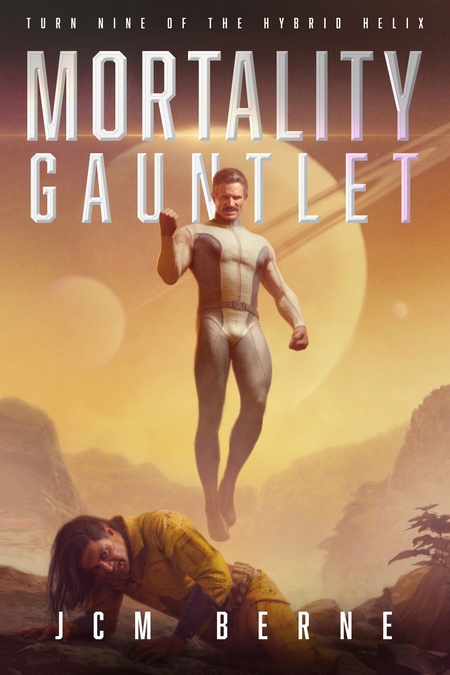
Cover Reveal: Prey of Angels by JCM Berne

I’m very pleased today to welcome the Cover Reveals for the Eighth Turn in JCM Berne’s The Hybrid Helix series, Prey of Angels! For a lot of us, a new Rohan adventure is an autobuy anyway. But I can’t imagine people look at this cover and not get curious. But before we get to that, let’s learn a just a little bit about the book and author, shall we? It’ll just take a moment, and then we can all take a peak at the cover.

About the Book:

Rohan has been building alliances and solidifying his abilities, all to keep his friends, his family, his homeworld, and the Empire safe from anything that threatens them, from anywhere in the universe, whether from inside the sector or from a distant galaxy.

He thought he was doing a pretty good job.

He thought he had a pretty solid handle on what he needed to worry about.

He was wrong.

Book Link:

Amazon Preorder


About the Author

JCM BerneJCM Berne has reached middle age without outgrowing the notion that superheroes are cool. Code monkey by day, by night he slaves over a hot keyboard to prove that superhero stories can be engaging and funny without being dark or silly.

Author Links:

Website ~ Bluesky ~ Twitter ~ Instagram ~ Facebook ~ YouTube

and now…

The Cover

cover for Prey of Angels by JCM Berne

Kudos to these fine folk for their work on this eye-grabber:
Cover Art by Chris McGrath
Cover design by J Caleb Design

Go and do the right thing–place your orders now. This comes out on February 17, and you’re going to want to get to it ASAP.

Irresponsible Reader Pilcrow Icon

Cover Reveal: The Re-Emergence by Alan K. Dell

I’m very pleased today to welcome the Cover Reveals for Alan K. Dell’s Bounty Inc! This year is the fifth anniversary of this SFINCS finalist space opera novella, so Dell made a brand new cover to the celebrate the occasion. Nothing against the original cover, but the new one is worth a little fanfare.

I’ll show you this cover below, but first let’s learn a little bit about the book and author, shall we? It’ll just take a moment, and then we can all take a peak at the cover.

About the Book:

‘IT WAS JUST A MYTH. JUST A DAMN LEGEND PASSED DOWN FROM CORRUPTED DATABANKS…’

A mysterious probe from a long-forgotten satellite network appears in the heart of the Maldaccian Empire, warning about the return of a mythological evil.

After being downloaded by the plucky but inexperienced crew of the imperial flagship, the consciousness of the ancient satellite, Unit-17, embarks on a galactic adventure to bring the empire back from the brink of an interstellar war they are not equipped to fight.

The Qesh’kal’s aging commander, Da’kora Corasar, trusts Unit-17’s intel implicitly, but not everyone aboard agrees. Tensions rise and loyalties are tested as they are thrust into conflict with an enemy of unimaginable power and malice.

A finalist in the first annual Speculative Fiction Indie Novella Championship (SFINCS)!

Book Links:

Universal Book Link ~ Itch-io ~ Goodreads


About the Author

Alan K. DellAlan K. Dell is a British sci-fi author and creative person with far too many hobbies. He writes science fiction described as “by, and for, sci-fi geeks” and loves to explore interesting high-tech concepts in his work.

Outside of writing, he is a book blogger and reviewer, avid videogamer, archer, photographer, musician, husband, and father.

Author Links:

Website ~ Bluesky ~ Threads ~ Instagram ~ Facebook

and now…

The Cover

Covers for The Re-Emergence by Alan K. Dell

The Complete Cover Wrap:
Covers Wrap for The Re-Emergence by Alan K. Dell
Click to embiggen the wrap.

Go and do the right thing–place your orders for this now, celebrate the anniversary in style.

Irresponsible Reader Pilcrow Icon

Mushroom Blues by Adrian M. Gibson: The Future is Fungal

I keep getting distracted from working on this post, but when I saw this on the schedule for BBNYA Spotlight posts, I figured it was about to time to force myself to write something. If I’m doing one post about this novel today, I might as well do two, right?


Cover of Mushroom Blues by Adrian M. GibsonMushroom Blues

by Adrian M. Gibson

DETAILS:
Series: The Hofmann Report, Book One
Publisher: Kinoko Book Co.
Publication Date: April 2, 2024
Format: Paperback
Length: 371 pg.
Read Date: August 20-26, 2025
Buy from Bookshop.org Support Indie Bookstores

What’s on the back cover of Mushroom Blues?

In addition to glowing blurbs from people who know what they’re talking about, we get this description:

BLADE RUNNER, TRUE DETECTIVE, AND DISTRICT 9 meld with the weird worlds of JEFF VANDERMEER, PHILIP K. DICK, AND CHINA MIÉVILLE in Adrian M. Gibson’s award-winning fungalpunk noir debut.

TWO YEARS AFTER a devastating defeat in the decade-long Spore War, the island nation of Hōppon and its capital city of Neo Kinoko are occupied by invading Coprinian forces. Its fungal citizens are in dire straits, wracked by food shortages, poverty, and an influx of war refugees. Even worse, the corrupt occupiers exploit their power, hounding the native population.

As a winter storm looms over the metropolis, NKPD homicide detective Henrietta Hofmann begrudgingly partners up with mushroom-headed patrol officer Koji Nameko to investigate the mysterious murders of fungal and half-breed children. Their investigation drags them deep into the seedy underbelly of a war-torn city, one brimming with colonizers, criminal gangs, racial division, and moral decay.

In order to solve the case and unravel the truth, Hofmann must challenge her past and embrace fungal ways. What she and Nameko uncover in the midst of this frigid wasteland will chill them to the core, but will they make it through the storm alive?

The Worldbuilding

My biggest—probably only (or only worth writing down)—complaint about this book is that we just don’t get told enough about the Hōpponese/Human relations before the war. I’m having a hard time understanding what things were like, what kind of cultural/technological/commercial relationships/understandings existed. I also have a hard time believing that there wasn’t anything worth talking about before the war started.

Now, let’s set that all aside for a moment—I don’t want to spend more time on it, it’s not worth it, and if the novel itself can, I can. The rest of the worldbuilding, the Hōpponese culture, the despicable way that the humans are treating them, the way the Human-Occupier mini-culture is operating, the Hōpponese resistance (s), the Hōpponese themselves, the way that humans risk some kind of infection every time they breathe the air, the…yeah, the list is getting out of hand. So let’s just sum it up with “everything I didn’t mention in the above paragraph” are close enough to perfect that you can’t tell me not to consider it.

As you read this book, you can see the city, you can smell the environs, taste some of the food described, feel the atmosphere, you can hear the language, and you can viscerally sense the non-humanness of the Hōpponese and just how off-putting it is. Gibson utterly nailed this.

I’ve Just Gotta Say This…

I know I haven’t read everything out there about this book—even if I ignore Goodreads, online retailers, The Story Graph, etc.—so maybe I missed this. If I did—I’ll happily eat my hat and credit others. But I haven’t seen anyone talk about Alien Nation in relation to this book—the movie, the TV series, the tie-in novels (and, yes, I watched and read them all). I don’t get it—other than age (we’re talking late 80s/early 90s), these are the perfect comparisons to this work.

Sure, Gibson’s book is so much better—if only because the Fungal people don’t get drunk off of something as silly as spoiled milk. But the prejudice, the cultural mixes, the attitudes (both within the police and both races) toward the non-human partner, and the attitude of the human detective about the whole partnership…these works are of a piece.

Anyway, I just had to say something about it because I couldn’t stop thinking about it for a moment.

So, what did I think about Mushroom Blues?

Just by talking about it as little as I have already, I want to set everything (book, employment, family obligation, writing project—including this post) aside for the next few days and re-read the book; it’s got its hooks in me that deeply. Something I didn’t realize until now.

Most of the time, I don’t really think about how unnerving it has to be for a human to walk around in a fictional world and encounter an elf, a Vulcan, an orc, or a…whatever it was that Rocky from Project: Hail Mary was. At least after the first encounter. But there’s something about a mushroom-person that gives me the willies—Gibson has filled this species with a lot of facts and theories about how mushrooms on our planet live and communicate, just put them in humanoid bodies capable of speaking English (or Common).

The other-ness, or non-humanness, of the Hōppon is as much part of the atmosphere of the book as is the tobacco smoke that Hofmann fills the air around her with. And I do feel a little speciesist just saying that. And then once you learn what it is—beyond bringing some diversity to the force—that Koji does for the police? It’s worse. But I don’t for a second lose any affection for or curiosity about Koji. It’s just one more reason that I feel unnerved by the Hōppon.

I had guessed the who—but not most of the why—behind these crimes pretty early on—and I’m not sure that Gibson’s herrings were of a red-enough color to capture my attention. But the way that Koji and Hofmann go about their investigation and slowly reveal the truth—and what that truth means? Gibson was near-perfect again on that front.

I really just want to keep going on about all the things about this book that I loved—note how I haven’t talked about the characters, because that’d be another few hundred pages just to start.

The mystery/police procedural part of this was great. The alternate world was outstanding. The worldbuilding is top-notch. The primary and secondary characters were drawn so wonderfully. The motives for the crimes (and the crime fighting) were complex and messy—and almost entirely understandable. The genre-hybrid of this feels entirely natural to an extent that you can almost wonder why anyone hasn’t been approaching these genres in a similar fashion for decades.

I’m just babbling now—I don’t have anything coherent to say anymore (assuming I started that way). If you haven’t taken the plunge with this book, you really should. That’s all I’ve got to say.


4 1/2 Stars

This post contains an affiliate link. If you purchase from it, I will get a small commission at no additional cost to you. As always, the opinions expressed are my own.
Irresponsible Reader Pilcrow Icon

BOOK SPOTLIGHT: The First Sin by Cheyenne Brammah

I’m excited to talk about Cheyenne Brammah’s The First Sin today as part of The Write Reads Tour! You should go to https://twitter.com/WriteReadsTours feed to see all the great things that are being said about the book. But before you do that, let me tell you a little about this novel.

The First Sin by Cheyenne Brammah Tour Banner

Book Details:

Title: The First Sin by Cheyenne Brammah
Genre: Science Fantasy
Age Category: Adult
Format: Hardcover/Paperback/Ebook
Length: 668 pages
Publication Date: October 23, 2025
Cover of The First Sin by Cheyenne Brammah

About the Book:

In the sweeping expanse of the Årdrakin Empire, the people fight and die for honor as elite warriors of the galaxy. But long ago, a prophecy was spoken that presaged the apocalypse. Everyone knows and fears the truth: one day, the empire will fall.

Tårik is a guard for small, independent Clan Tsinna. Instead of pondering the end of his civilization, Tårik’s greatest concern is maintaining his honor while escorting a group of impertinent dignitaries across the treacherous Barren Gale. When the Mother Goddess speaks a passage from the prophecy to him, he has the good sense to be frightened, but he doesn’t heed the significance of Her visit.

Then disaster strikes, and Tårik is branded as an exile, leaving him with no home, no honor, and no future. Forced into a desperate struggle for survival, all Tårik can focus on is living just one more day until luck—or maybe fate—gives him the opportunity to join a new clan. But even this is fraught with danger and uncertainty, and it takes him to an inhospitable world far from the empire where survival seems all but impossible.

Faced with new challenges, including trying to navigate first contact with the low-tech locals, Tårik believes the prophecy can’t reach him. Yet it continues to loom, signaling that his fate and the fate of the empire are irrevocably entwined.

This is a dark, spicy, adult science fantasy set in a world that includes war, violence, and other mature themes that some readers may find disturbing. Reading guidance can be found at the beginning of the book or on the author’s website.

Book Links:

Amazon UK ~ Amazon US ~ Amazon CA ~ Goodreads ~ Storygraph

About the Author:

Cheyenne Brammah, also known as Iron Dragon, is a Canadian science fiction and fantasy author who “torments her characters in ways reminiscent of George R R Martin”. She’s had a pen in hand for most of her life and loves character-driven stories that are epic in scope and complexity. The All Our Sins Saga features her debut novel, The First Sin, and will be the first stories told in the Akrodaxis universe.

When she’s not writing or reading, Cheyenne dyes yarn, crochets, knits, plays video games with her wonderful husband Mathew, and dabbles in nature photography. She lives in beautiful Cochrane, Alberta, in the foothills of the Rocky Mountains.

Cheyenne can be found online at: https://akairondragon.ca/

Author Links:


My thanks to The Write Reads for the invitation to participate in this tour and the materials they provided.

BBNYA SEMI-FINALIST SPOTLIGHT: Transference by Ian Patterson

I’m very pleased today to welcome The BBNYA Semi-Finalist Spotlight Tour for Ian Patterson’s, Transference! So, this book has made it to the semi-finals, so you know there’s something good going on–but before getting to this Spotlight, let’s start with a word about BBNYA.

BBNYA:

BBNYA is a yearly competition where book bloggers from all over the world read and score books written by indie authors, ending with 15 (17 in 2025) finalists and one overall winner.

The Book Bloggers’ Novel of the Year Award 2025 badge

If you want some more information about BBNYA, check out the BBNYA Website https://www.bbnya.com/ or take a peek over on Twitter @BBNYA_Official.

Pilcrow

Book Details:

Title: Transference by Ian Patterson
Genre: Science Fiction, Fantasy
Age Category: Adult
Format: Paperback/Ebook
Length: 238 Pages
Publication Date: October 1, 2024
Cover of Transference by Ian Patterson

About the Book:

Nicholas Fiveboroughs is a Sicko, someone that takes on others’ illnesses. In a city where diseases can be transferred, the rich buy longer lives without pain, and the poor get a short life of constant sickness. Maybe it was fate, or maybe someone is looking out for him, but after Nicholas barely survives his latest affliction, he gets the chance to try and change things. To finally stop the whole disease transfer network.

Tensions escalate as Nicholas infiltrates a higher society he doesn’t understand, and starts to fall for the very person he needs to manipulate to be successful. And between run-ins with a talking animal and genetically modified humans, the world around him just keeps getting stranger. Can Nicholas tear down the disease transfer architecture? And can he do it without losing his own humanity along the way?

Book Links:

Amazon Canada ~ Amazon US ~ Amazon UK ~ Goodreads ~ The Story Graph

About the Author:

Ian PattersonIan Patterson is many things. Importantly here, he’s the author of The Narrator Cycle. He’s also an engineer, cyclist, foodie, coffee lover, cat dad, human father, and reader of books. Preferably, thick books that deal with strange things and big ideas. He’s dreamed of being an author for decades, but finally began the journey with the birth of his first daughter. This is an objectively terrible time to start work that requires quiet concentration, and he knows it, but he loves the chaos nonetheless. He lives in Colorado with his wonderful family.

Substack ~ Instagram ~ BlueSky


My thanks to The Book Bloggers’ Novel of the Year Award for the invitation to participate in this tour and the materials they provided.

The Book Bloggers’ Novel of the Year Award 2025 Semi-Finalist badge

Page 1 of 31

Powered by WordPress & Theme by Anders Norén