Tag: SF Page 27 of 30

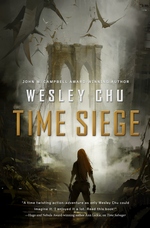
Time Siege by Wesley Chu

Time SiegeTime Siege

by Wesley Chu
Series: Time Salvager, #2

Hardcover, 341 pg.
Tor Books, 2016

Read: August 15 – 16, 2016


This is, in a sense, one of the most pointless posts I’ve done. If you’ve read Time Salvager, then I can’t imagine you needing to be convinced to read Time Siege, maybe you need convincing to move it up on your TBR, or just a reminder that this is out there. If you haven’t read Time Salvager, you shouldn’t read Time Siege yet because it won’t make all that much sense. But I’ll try to say a little about the book.

This book really could just be the next chapters of Salvager. It’s just taking the story to the next step — yes, there are distinct plot and character arcs, but on the whole, it’s just what should come next. Making it hard for me to know what to say. Some things that I thought were pretty well resolved in Siege are dealt with again, and hopefully resolved (or closer to it) now. Some characters come back in ways that I couldn’t have expected, some in ways that were exactly what I expected.

One thing that’s crystal clear now — and has been evident all along, really — is that Wesley Chu can write a fight scene. Whether it’s single combat or larger forces, he delivers. The scenes are suspenseful, intense, and believable. He captures what I imagine both the chaos and order of a battle would be like for those involved and those behind the lines.

Somewhere along the line, I got the impression that this was a duology, not a trilogy. So I spent most of the book thinking that this could be a dark, yet satisfying ending. Definitely not an “Everybody Lives happily every after” ending, but one that wraps things up well. Then the satisfying part became untenable (possible, but not likely) . . . and thankfully, it quickly became clear that it was going to be a trilogy. That said, everything is hanging in the balance here at the end of Time Siege, and it’s going to take a lot of heroics for there to be even a chance for an ending that doesn’t involve the doom of humanity. Even with a lot of heroics, that’s a distinct possibility — part of me wants that to happen, just to see how Chu pulls it off.

I remember liking Salvager more than I did, but whatever — the sequel did everything it needed to do to push the story forward into the third book, with heightened action, more investment in the characters and what happens to them. Chu accomplished everything he needed to here and more. I could really use a time machine now to get my hands on the concluding volume.

—–

4 Stars

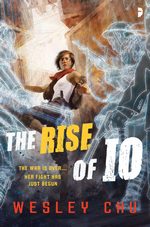
The Rise of Io by Wesley Chu

The Rise of IoThe Rise of Io

by Wesley ChuA
Series: Io, #1

eARC, 352 pg.
Angry Robot, 2016

Read: September 27 – 29, 2016

“Stick with me, kid ,” he said. “We’ll introduce you to a bigger world with all sorts of new people who will want to kill you.”

Let me start by saying that while this is a sequel to the Tao Trilogy (taking place a couple of decades after The Rebirths), you don’t have to have read them to enjoy this. You’ll miss some nuances, not understand some references and will spoil events in books that you’ll end up wanting to have read. But, it’s not essential — and this would be a great jumping-on point. If you’ve read the Tao Trilogy, let me assure you that this is a worthy successor, just as fun — a part of the same series, but it feels fresh enough that you don’t feel like you’ve read this book before.

Ella Patel lives in an Indian slum — in part of the world hardest hit by the war between the Quasing factions and their human allies (while I feel bad for these fictional Indians, I’m so glad to see alien combat not centered in the U.S.). She lives on her own, orphaned by circumstance and a Gengix attack — between her small size, quick wit and almost all-consuming greed she lives life on her own terms, two steps ahead of the law and one step ahead of criminals she’s wronged. I could’ve read at least 100 pages more of her antics before we introduced a single Quasing from either side and been entirely content (not a complaint about when we got Quasings, however), Ella’s just instantly likeable in a way that no one in these series has been (with the possible exception of Cameron).

Io’s host is in India doing some off-the-books investigating into one of the Gengix’s most ambitious projects yet. That investigation doesn’t go so well and suddenly Io needs a new host — there’s the impetuous woman who tried to help her host nearby (and a much better option than anyone else), so Io makes a choice and the Queen of the streets becomes so much more. Their relationship defines rocky initially (see Tao and Roen, but worse).

It should be obvious (but isn’t) that not every Quasing will have had as illustrious existence as Tao — Io’s haven’t developed a martial art, conquered legendary kingdoms, etc. Which isn’t to say that Io didn’t leave her mark on history — for example, I trust the name “The Maginot Line” rings a bell.

As the minutes ticked by, Io clarified some of the dreams of her glorious career inhabiting humans. If anything, it comforted Ella that the Quasing weren’t all-knowing and powerful, that they were just as culpable and mistake-prone as any human.

Nevertheless, just by having existed for a few millennia on earth, Io’s got a lot of wisdom and experience to pass on to her new host. Slowly — and with several appeals to her mercenary streak — Io convinces Ella to begin training to become a Prophus agent. Eventually, Ella begins to make a sort of peace with her new life partner and something approaching friendship begins to develop.

Incidentally, Ella’s not the only one comforted by a not-all-that-perfect Quasing.

Meanwhile, a couple of Gengix Adonis agents are vying for control over India — with the citizenry of the slum (and the nation, really) acting as pawns. Shula is one of the more lethal women you’ll come across — both politically and physically. She’s not one you want to cross in almost any situation — but that doesn’t stop many.

At some point, Prophus agents come to town and everything gets turned upside down — Ella finds a desire to help the Prophus, Shula seized the opportunity for personal power, and Io has her chance at doing something that’ll leave her mark on history.

The fight scenes (training and otherwise) are up to Chu’s pretty high standards, the humor is crisp, the characters (including a couple of old friends) are just right, and the plots are among his best — I just don’t know how else to put this. The book was a solid winner and had me eager for the next installment, and then Chu hits us with one of the best Epilogues that I can remember, making me more than eager for whatever’s next (not really sure what the word for “more than eager” is, eager squared?).

Great characters, twists, suspense and grins — I dug this one so much. He keeps the magic of the Tao books, reinvigorates it and expands it. I expected Chu to deliver just what fans wanted without it being a case of “second verse, same as the first,” I just didn’t expect it’d be this good. Get on this one, folks.

Disclaimer: I received this eARC from Angry Robot via NetGalley in exchange for this post — thanks to both for this.
N.B.: As this was an ARC, any quotations above may be changed in the published work — I will endeavor to verify them as soon as possible.

—–

4 Stars

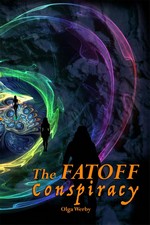
The FATOFF Conspiracy by Olga Werby

The FATOFF ConspiracyThe FATOFF Conspiracy

by Olga Werby

Kindle Edition, 317 pg.
2015

Read: August 29, 2016


This is a pretty creepy dystopian tale about a culture on the brink of disaster (self-caused, it should be stressed). Americans have lost the war on obesity and all but the elitist of the elite are dangerously obese (while tucking away a good portion of that fat into a pocket dimension), in pain, struggling, dying young and yet eating almost constantly.

Cindy Rella (and yeah, it took me until the 27% mark to figure out why that name rang a bell) comes up with a long-shot scheme to get herself government assistance to restore her to her formerly thin and healthy self). Cindy’s plan falls apart in a very dramatic (and embarrassing) fashion. Her life falls apart soon after — thankfully she has a couple of friends.

One of whom is involved in an underground movement to restore the place of actual food in the world and remove the whole food industry that is slowly killing the populace. Cindy starts exercising a bit, eating better — nothing extreme, just basic weight-loss stuff: eat less, move more — focusing on real food, not the SF foodstuff they’re all eating. The diet stuff was worked in pretty well — Werby doesn’t beat you up with it.

Most novels of this type would’ve spent a chapter or two explaining the Tech better, explaining how society got to where it was (who in their right mind starts this?) and is in. Werby just dives in to the problems, to the Tech breaking down and leaves the past in the past. Maybe in other books, I’d want more explanation, I’d want the background, but it works here. Honestly, I’m not sure that I want to know how society got to this point, because I’d like to eat sometime this month, and I might not be able to if she got into it.

The characters were okay. I liked Cindy and just about everybody else — there were a couple of villains who could’ve been better developed. Actually, this is one of the weaknesses of the book — everyone could’ve been a bit better developed. It’s like she took the cake out of the oven 5 minutes early (okay, not the best metaphor for the book, maybe I should’ve said she had us sit down when the bench’s new paint job was allllmost dry). Outside the basic plot and worldbuilding, everything needed just a bit more nuance, filled out a bit.

I enjoyed this book, but it could’ve been a little better. It was enjoyable and kept me interested — and a little horrified once all the pieces were revealed.

Disclaimer: I received a copy of this from the author in exchange for my honest — and belated thoughts. I got it in under the wire for September, but it was supposed to be in August. Ugh. Sorry!

—–

3 Stars

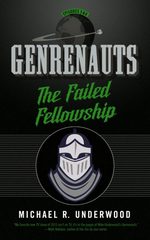
The Failed Fellowship by Michael R. Underwood

The Failed FellowshipThe Failed Fellowship

by Michael R. Underwood
Series: Genrenauts, #5 & 6

eARC, 181 pg.
2016

Read: September 16 – 17, 2016

Her job was to fix the story, not right every little wrong in the entire world.

But was that really enough? If you force someone to work with shoddy equipment and they get hurt every week, eventually, shouldn’t you fix the tool instead of sending them to the doctor? She’d spent the last several months playing the doctor, applying spot fixes along with the team, keeping to the shadows. Help the real hero, delay the problems until the real hero came back.

I want to come back to talk about Leah’s continuing difficulties adopting the right attitude as a Genrenaut, but we’ve got some work to get through first.

A band of intrepid warriors, in possession of a magic artifact carried by the one person capable of stopping a great evil enters a castle and fights through untold numbers of warriors through magic and feats of strength and skill. Only to have the Chosen One killed before they can challenge the leader of the forces of evil. Clearly, not the way this story is supposed to go — which creates problems on Earth Prime, and a need for Angstrom King’s team to come to Fantasy World, get the band back together, and fix the story.

The first thing the team does when they get to the world is track down Ioseph, the wizard who assembled the failed heroes. Leah describes him as:

Gandalf if Gondor had already fallen, Dumbledore facing a fascist wizard state under Voldemort.

Which is a great descriptive line, wholly genre-appropriate. This is Underwood at his best — not that he’s not great in SF or the other genres we’ve seen this season — but in Fantasy, he’s at his strength (see the Ree Reyes series for further examples).

It’s not just Underwood being comfortable, either — one of the first things we learned about Leah is that she’s a big Fantasy Fan. So her being here was is just what she’s been waiting for — and she makes the most of it. She jokes, she fights, she sings (her character is a bard), performs heroic deeds and she eats a lot of stew (while making the requisite snarky remarks about the stew). Everything you want in an epic fantasy novel or game, it’s celebrated and commented on at the same time. It’d be very easy to do a quick edit to remove all the references to other worlds/Genrenauts/etc. and come up with a decent novella-length story here — with a pretty good twist. Thankfully, we don’t have to read that hypothetical edit — we get Leah and the gang guiding us through it.

In addition to the pretty fun story — we get to see these Genrenauts function like a fully formed team — which is not to say they’re perfect, part of it is Leah’s rookie status, part of it comes from the length of time they spend in this world (as we learned last time), and part of it is the uncertainty that the tall woman they’ve been chasing brings to the story. There’s at least one other part, but you have to read the book to learn about it. Roman gets to tell Leah where he came from and what that means, which helps him a lot (the rest of the team, too). King’s and Shirin’s part of the story is the more straight-forward, if for no other reason than their temperaments and experience. Which is not to say that their parts are dull — in fact, one of the best characters from this world (with the obligatory annoying ‘ in his name) comes from their portion of the story.

The focus is, of course, on Leah — she loves being surrounded by a fantasy story and lets the setting get to her. Also, as the opening quotation shows, she’s struggling with her role as a Genrenaut in various worlds. Much like Kirk bristling under the constraints of the Prime Directive, Leah has a hard time adapting her sense of right and wrong to the world and culture she’s in — and I’m not sure she’s getting better about it, maybe she’s getting worse the more comfortable she is with the team. Frankly, I’m glad to see her struggle here, and I’m not sure what side I want her to come down on.

Leah’s now at the end of her probationary status — and if any of the Genrenauts were analyzing their own story, they’d clearly see that this was the end of a narrative arc and that something big was about to happen — enough to close this chapter and lead into a new one. It does, and it’s a doozy. Man, I hope things went well enough on the sales front for Underwood to be able to bring us a second season (if not seven) — I’m more than ready to support the next Kickstarter.

Underwood seemed more confident, a little more willing to have fun with the genre in these entries than he has with the others (not that he’s been all that restrained before). I loved this. When (for example) Leverage was on the air — there were better shows on, but few that I enjoyed as much. Similarly, I’ve read better books this year than The Failed Fellowship or any of the others in this series, but not that many and none have made me as happy reading these. There is one line towards the end of this that made me laugh out loud (and groan, too — Leah has no shame) and if I read an interview where Underwood said he wrote the previous 5 books in this series just to set up this line? It’d be justified.

Disclaimer: I received this eARC from the author in exchange for this post — I thank him for it (and for releasing the cover image in time for me to post this without my lousy placeholder).

—–

5 Stars

As Wings Unfurl by Arthur M. Doweyko

As Wings Unfurl Book Tour Banner

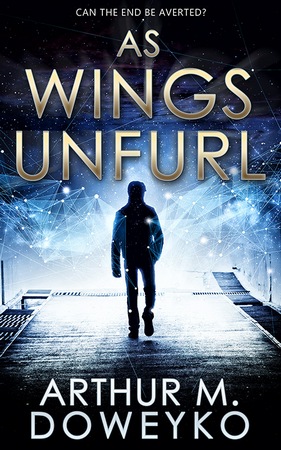
As Wings Unfurl As Wings Unfurl

by Arthur M. Doweyko

Kindle Edition, 280 pg.
Red Adept Publishing, LLC, 2016

Read: September 19 – 20, 2016


Apple Bogdanski is a morphine-addicted Vietnam vet still having trouble re-acclimating himself to civilian life. The re-acclimation becomes more difficult when the small Book Store he works at is broken into by some pretty nasty guys. There’s some fisticuffs, some gunplay and some damaged books. What keeps Apple from being as damaged as the books is a mysterious stranger, Angela. She’s a stranger, yes, but one that Apple is convinced he’s known for years — maybe his whole life — but he can’t put his finger on the “how” and “where” of such knowledge. What’s more important to Apple at the moment is that she’s saved his bacon from these thugs and is pretty attractive — a winning combination to be sure — he’s just not sure how she saved him, the explanation defies belief.

These events plunge Apple into a plot involving multiple intelligent races on Earth, a group of guys somewhere in outer space, a corrupt and powerful Roman Catholic Church, more beings like Angela and a good deal to chew on. Oh, and multiple threats to Apple’s life.

Aside from Apple, there are some pretty interesting characters here. We don’t ever really learn what kind of creature/being that Angela (or any of her kind) actually are — we do learn a lot about them, don’t worry, just not everything. Outside of battle, their abilities are a little to hard to get a real handle on. I was intrigued and wondered a lot — there’s evidence to support at least one interpretation, but it’s just a guess, so I’ll spare you. Shilog and Yowl are pretty interesting characters and one of them becomes pretty important to how things are moving through the later part of the book. I’m not going to fill you in on the details about them, because watching it be revealed is one of the most satisfying parts of the book.

There are some really painful anachronisms here — probably due to poor editing — they don’t ruin any plot points or anything, but they take you out of the moment enough to say, “Oh come on,” or something like that and make you doubt Doweyko’s idea to place things in ’75. Other than denying everyone around the action cell phones/cell phone cameras and surveillance cameras on every street corner, I don’t see the point in that setting, honestly. Again, it’s nothing to kill the story, but it’s enough to detract from it because you spend far too much time trying to figure it out.

This got the job done, and that’s about it, it was entertaining enough to keep you moving. But there’s nothing here that made me sit up and pay attention. I liked Apple as a character, and Angela really started to grown on me by the end. I do suggest picking it up if you have the means, but I wouldn’t urge you to rush into it.

Disclaimer: I received a copy of this novel from the author in exchange for my honest thoughts.

—–

3 Stars

As Wings Unfurl Book Tour

As Wings Unfurl Book Tour Banner
Coming up: We’ve got my post about the book. But first, about the book and the author:

As Wings Unfurl

About As Wings Unfurl:

Applegate Bogdanski returns from Vietnam with a missing leg, a Purple Heart, and an addiction to morphine. He stumbles through each day, looking forward to nothing and hoping it will arrive soon. When he attempts to thwart a crime, he is knocked unconscious and wakes up to discover that people are once again calling him a hero, though he feels undeserving of the praise.

Apple returns to work and meets Angela, a mysterious woman who claims to be his guardian. Immediately, he feels a connection to her, which morphs into an attraction. But he soon discovers that Angela is much more than she seems.

Apple and Angela are swept up in a conspiracy that stretches through time and space. Together, they must fight to save everything they hold dear from an alien race bent on destroying humanity.

About Arthur M. Doweyko:

After retiring in 2009, Arthur M. Doweyko took up writing fiction. His novel Algorithm garnered a 2010 Royal Palm Literary Award. He has also published a number of short stories, many of which have been selected as Finalists in the Royal Palm Literary Award contest, and two Honorable Mentions in the L. Ron Hubbard Writers of the Future Contest.Arthur M Doweyko Author Photo

Arthur was awarded the 2008 Thomas Alva Edison Patent Award for his contribution to the discovery of Sprycel, a novel anti-cancer drug successfully brought to the marketplace in 2009. He has authored over one hundred publications (papers, abstracts, patents, book chapters) and has been an invited lecturer in a number of drug-discovery and computational venues.

Arthur lives in Florida with the love of his life, Lidia. When he’s not writing, he’s happily wandering the beaches.

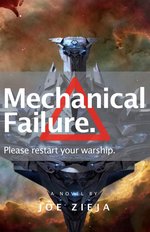
Mechanical Failure by Joe Zieja

Mechanical FailureMechanical Failure

by Joe Zieja
Series: Epic Failure, #1

Hardcover, 343 pg.
Saga Press, 2016

Read: August 17 – 18, 2016

No duty was too great that R. Wilson Rogers couldn’t find a way to shirk it.

This is the essence of R. Wilson Rogers (don’t ask what the R. stands for) compressed into one sentence — an engineer for the Galactic Navy during the longest peacetime in Galactic Memory. As a result of all the peace, there’s not a whole lot for a Naval ship to do — nor for the men assigned to it. So, Rogers and his fellow crew members got up to a lot of nonsense — drinking, gambling and worse. Eventually, Rogers finds himself leaving under less than auspicious circumstances. Not long after that, under even less auspicious circumstances (which I’ll leave for you to read about and chuckle over) he finds himself back on the appropriately named Flagship which has transformed in his brief absence in to a serious-minded place, full of random inspections, wartime preparations (despite centuries of peace), and odd assignments.

Before long, Rogers finds himself getting promotions, leading a group of battle droids, and seriously considering suicide and desertion (favoring the latter, I assure you) — and that’s when things really start to get interesting.

This is pretty decent Military SF with a twist of humor, a dollop of irony, a pinch of satire, and so on — I don’t want to compare it to Adams. But I’ll compare it to a mix of Scalzi, Harry Harrison, Jack Campbell, Grant Naylor and Peter David. There’s a sense of play, even when he’s not going for the comedy, which makes the whole thing fun to read.

Best ‘droid since Marvin, best malfunctioning human personality software since Marvin (or Lore — but not as creepy or murderous), funniest ‘droids since Kryten. I could keep those comparisons going — essentially, I really liked all of the Droids on Flagship (especially Deet). The CO reminded me of some sort of hybrid between the pointy-haired boss and Douglas Reynholm is great comic relief, but there’s more to him than that.

Honestly, I could go on and on, Zieja assembled a great cast of characters — real enough that you can like them, outlandish enough that you don’t take them terribly seriously. Not just the obviously comedic characters either, there are a few “straight (wo)men” characters scattered throughout, keeping the rest grounded. Rogers is the best of the bunch – there’s a little personal growth to him (no one’s more surprised and dismayed by that than him), I enjoyed seeing that come out. I liked how despite himself he learns to set aside prejudices, take things seriously, and even act a little heroically. I as amused by (and occasionally disturbed by) his attraction to/fascination with the Amazonian Marine Captain. Rogers’ way of looking at the world is pretty relatable (I’m not saying that he’s the kind of guy you spend time with, he’s the guy you want to spend time with), and he’ll win you to his side pretty quickly.

One thing that I really appreciated was the respect that Zieja showed to the military personnel throughout this — too often everyone (with a maximum of a couple of exceptions) in a book like this is depicted as a moron — think of Richard Hooker’s classic for a moment. It’s just one example, but it’s a good one. You’ve got Jones, the Painless Pole, Hawkeye, Trapper, Duke, and a couple of nurses here and there who are competent, if not great, doctors. Who else? Everyone else is a “regular Army” schmuck ho shouldn’t be allowed in an operating theater or near anything where life and death decisions come into play.

Zieja doesn’t play it this way — these Navy and Marine men and women (with one or two exceptions, because there are always exceptions) are treated as competent, equipped and dedicated people whose greatest problem is that they have nothing to do, so things get a little loopy from time to time. But you give then an enemy, you give them a goal, you give them some way to target their talents and energy — good things happen. Even the really incompetent turn out to be quite competent when put in the right spot, doing what they’re good at (even if that’s not what they want to be good at). Problems are solved, crises averted, and enemies thwarted. That’s just not seen often enough, and I appreciate Zieja doing that.

That doesn’t mean he can’t find ways to make fun of the dedicated, the competent, and equipped — but he doesn’t make them into buffoons to do so (mostly).

I knew that I was going to like this book by page 3, I was audibly chuckling by page 4. The rest was just gravy. I laughed, chortled, and grinned my way through this — practically from beginning to end. The story as pretty good, the story plus the comedy made this gold. If I could think of stronger words to use to endorse this, I’d probably slap them here. But I can’t — just get your hands on this one. Meanwhile, I’m already looking forward to the sequel.

Disclaimer: I received a copy of this from the Publisher in exchange for my honest comments on it — sorry for the delay, I greatly appreciate the book.

—–

4 Stars

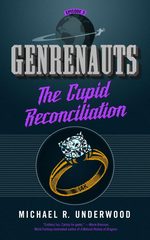
The Cupid Reconciliation by Michael R. Underwood

What? Another Genrenauts/Michael R. Underwood post? Yup. Don’t worry, I’m going to slow down a bit (well, after this and then next week’s post, “What’s in Underwood’s Sock Drawer?”) — but trying to get the word out about the Kickstarter and the series takes some repetition.

I’m pretty sure that there’s a paragraph missing from this — I just don’t know what it was supposed to be about. I may end up revising this tomorrow.

The Cupid ReconciliationThe Cupid Reconciliation

by Michael R. Underwood
Series: Genrenauts, #3

eARC
2016
Read: May 17, 2016

This is my life, Leah thought . . . My amazing, confusing, totally screwed-up life.

Just as Leah is getting to the point that she’s starting to feel comfortable, maybe even a little confident, in her new job — her new life — things get shook up a little. Mallery, the member of the team whose injury led to Leah’s recruitment, is back from her convalescence. That alone will change the team dynamic in the field, and maybe even effect Leah’s standing in the team. The fact that they’re headed to Romantic-Comedy world, Mallery’s specialty, doesn’t help Leah’s spirits (particularly because she’d like that to be her specialty, too).

Speaking of the various worlds, I don’t know if we’d ever been given insight into how life in a Genre World would start to change a person after awhile. Or if we were, it wasn’t explained the way it was here. That was just a cool touch.

While Leah continues to be our point-of-view character, our entry into this world, this is really Mallery’s book. The rest of the team are there, and contribute but the major non-Leah narrative weight is all carried by Mallery. Which I’m fine with, she seems to be a fun character (maybe a little hard to take in real life, but that could just be her nerves about getting into the field/dealing with a probie) and we need to get to know her, but she’s a force of nature.

Mallery beamed, which Leah was realizing was pretty close to the woman’s resting face. Some women had resting bitch face, but Mallery glowed. It was impressive. A little annoying, but impressive.

There was something in the “Coming Next” page in the last episode that made me worry about the relationship between these two not getting off on the right foot — thankfully, it seemed to get off on a decent (if not the right) foot — but nothing’s perfect. The two characters are going to have to fumble a bit to get a strong working relationship.

Don’t get me wrong — King, Roman, and Shirin all had their moments and made their presence felt — but they were bit players in this one. I did appreciate getting to see Roman’s softer side on display, he’s a deeper thinker than you might take him for and his efforts to help the “male lead,” were borderline sweet.

Straightaway when they get to the world, they come up with a strong candidate for the couple causing the breach — and the team is wrong, they have to work harder than the last two times to find where the problem is. I appreciated that move — and didn’t realize until then how smooth that step had gone in the previous adventures.

Maybe it’s because this particular world so closely resembles our own, but Leah got a bit of insight into how the Genrenauts’ activities might seem to one of the people from that world — and it’s not that pretty. The Genrenauts violate the Prime Directive more than Kirk ever did (to put it in genre-terms). And Leah’s not so sure that their particular brand of meddling is all that ethical. And I have to admit, she may have a point. Mallery shuts down that kind of thinking/talk — at least until they’re safely back home. I trust that Leah’s doubts and questions will be all dealt with in a way that’s honest in the near future. Regardless, Leah’s ethical qualms add a good dimension to things.

I enjoyed seeing this world through Genrenaut eyes — the availability of fantastic (and cheap) apartments with amazing views, how easy it is to get a cab, the fact that there’s a romantic scene seemingly everywhere in the background — happy couples everywhere.

. . . Leah walked up to a double-wide window facing the park. The leaves were changing, making for a sea of rich oranges and yellows beside a crystal-clear lake. The view was postcard-perfect. And as a cherry on top, there was a couple rowing a boat in the lake, one carrying a parasol. And Leah could even make out a picnic basket. The energy of the place was contagious. Western world was cheesy and scary. Science Fiction was cheesy and a bit confusing. Rom-Com world was cheesy and delightful.

There’s sort of a happy ending montage at the end (or the narrative equivalent of one, anyway) that was just perfect. Once I realized what exactly Underwood was up to there, I couldn’t help grinning. I know it’s part of the series premise for him to play with, celebrate, comment on genre tropes, clichés, conventions and so on — but sometimes what he does seems to capture the essence of the particular genre in a way that just feels like he did it better than usual. This is one of those times.

If you’ve been reading this series already, you’re going to really enjoy this. If you haven’t started — go back to Episode 1 and start fresh, you won’t be sorry. Underwood has a good thing going here, and it’s just getting better. Fun, yet thoughtful; action-packed, but pretty restrained in use of force. A great balancing act that should inspire more to do this.

Disclaimer: I received this book from the author as part of his promotion of the Season One Kickstarter.

—–

4 1/2 Stars

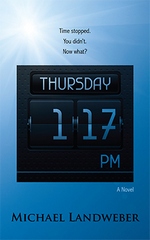
Thursday, 1:17 PM by Michael Landweber

Thursday, 1:17 PMThursday, 1:17 PM

by Michael Landweber

Kindle Edition, 208 pg.
Coffeetown Press, 2016

Read: May 18 – 19, 2016

Towel Day is tomorrow, so it seems apropos to start with a couple of Douglas Adams lines that I’d imagine Duck quoted to himself, assuming he read the book: “This must be Thursday . . .I never could get the hang of Thursdays.” and “Time is an illusion. Lunchtime doubly so.” Now, if anyone could empathize with Arthur and Ford, it’s Duck.

(like I need an excuse to quote Adams, really, but I’ll take one)

And you never know, maybe he had read Adams, after all:

We’d read Fight Club in Mr. Lorenzo’s Anarchy in Modern American Fiction class . . . And Lord of the Rings in Ms. Tutwell’s Geography of Fictional Lands seminar, which somehow got me Social Studies credit. Damn, I went to a really questionable high school.

So, earlier today, I posted something from the publisher with the idea behind this one. Basically, Duck’s head is nowhere near where it should be as he walks the busy streets of D. C. and he steps out in front of a car that doesn’t hit him. Not because of lightning-fast reflexes of the driver, nor because of fantastic brakes, or because some hero pulled/pushed/tackled him out of the way. Nope, none of those — but because faster than you can say “Rod Serling,” time stopped.

Now our 17-year-old protagonist has to figure out: what happened (if he can); how to survive in this Frozen World (if he can); and most importantly — how can he get things moving again (if he can).

Simple enough premise, right? Yup. One that seems like you’ve probably read/seen it a few times (seems that way, but I can’t remember once) — but Landweber executes it like he’s the first. It feels fresh, new and innovative — while being an old stand-by, figure out how he pulled that off and I’ll probably end up talking about your book, too.

As we talked about a little while ago, there are very strict rules governing this reality and Duck figures them out pretty fast (at least fast enough to survive awhile).

Now seems like a good place to explain what people feel like in the frozen world. Skin feels like skin, hair like hair, lips like lips. It’s one of those things that is almost normal. When no one moves, you expect them to feel like molded plastic, like mannequins, limbs swiveling on set pivots without much range. A secondary possibility was that everyone would feel rubbery, like the well-preserved fetal pig [Duck’s friend] Grace dissected for me. Wrong on both counts.

The inert water hung down from the showerhead like strands of silk caressing his body. I touched one and it came away from its cohorts, wet and liquid on my fingertips.

And, yes, that sounds kind of creepy going around touching skin, hair, lips, some dude’s shower water — but don’t worry, that’s only because it is creepy. And Duck would be the first to admit that (probably while blushing). One reason I liked the paragraphs I quoted was because, yeah, molded plastic is exactly how I’d have figured it to feel.

Duck composing a “Guidebook” to how to live in this kind of reality ticks off a few boxes: lets us see his personality, lets him talk about his experimentation to discover the rules in a slightly more objective way than the rest of his narration, and lets him give the readers an info dump — several, actually — without it feeling like one. A very nice move there.

Landweber gives us a few details a little at a time about this reality, what Duck’s been going through in the days/weeks/months leading up to stepping in front of the car (like where that nickname comes from — a tale that’s both tragic and funny). As little as he’s been paying attention to the outside world, it might as well have stopped. So one of the things he does during this time is figure out what’s been going on with his friends — between family crisis and adolescent male hormones, he’s missed a lot. He just hopes that he can make up for this time.

For the most part, this book comes across as light entertainment — but there are (at least) two big dramatic stories at play here in addition to the fun and games. There’s death, the nature of love (and reality of lust, teenage style), growing up, friendship, hurting others . . . and Duck coming to grips with all of these, and coping with them isn’t done in a heavy-handed, or overly serious manner. On the whole, while you’re chuckling about something he’ll slide right into a consideration of one of the heavier themes. Over and over again, Landweber does this seamlessly so you barely notice it. No mean trick to pull off.

In addition to that, Duck deals with some pretty deep ethical questions (and doesn’t always come up with the right answer). His father, a philosopher, had posited that:

there is no good or evil without time. Empirically, he argued, man’s actions in themselves are not right or wrong. It is only the interaction of those deeds with the passage of time and the judgments of others that leads to morality. If you were to freeze time at the instant of the act, and never allow for there to be recriminations or regret or accusations or revenge, then the act itself becomes a meaningless one. No matter what that act is. Merely a moment detached from all other moments. A moment without consequence.

Duck’s got more than enough of these detached moments, moments without consequences, to deal with. And watching him deal with these ideas and try to be moral (frequently) is a really nice touch that I don’t think I expected from the premise.

It’s told in a light tone — and never gets spooky or too tense, but that doesn’t stop what Duck is dealing with from being serious — and dealt with seriously (much of the time). Landweber balances that pretty well most of the time — while keeping Duck as believable as possible in this situation. It is a compelling read, a fun read, and a moving read. Breezy enough to keep the YA crowd engaged, and thoughtful enough to make it worthwhile.

You really want to go get your hands on this one, readers, you’ll enjoy it.

Disclaimer: I received a copy of this book from the author in exchange for an honest review.

—–

4 Stars

A Few Quick Questions With…Michael Landweber


For our third post on this Blog Tour stop, the author of Thursday, 1:17 PM, Michael Landweber was gracious enough to A some of my Q’s. As is typical, I kept it short and sweet, because this dude is busy and he doesn’t need to take up too much time with lil’ ol’ me. There are two questions here about the book we’re focusing on, and then we move on to more general questions. Hope you enjoy.

Michael LandweberMichael Landweber lives and writes in Washington, DC. His short stories have appeared in literary magazines such as Gargoyle, Fourteen Hills, Fugue, Barrelhouse and American Literary Review. He is an Associate Editor at Potomac Review and a contributor to Washington Independent Review of Books. Michael has a soft spot for movies about talking animals and does not believe he would survive the zombie apocalypse. His first novel We was published in 2013.

There are so many questions that I’d like to ask about some of the details of this book, but I’m going to have to settle for something about the process: did you have the rules for the Frozen World set up before beginning the book, or was that something you felt out along the way?
The rules were pretty simple and set from the beginning. Nothing moved unless it was affected by Duck. He would be the only force in the universe capable of changing anything. Otherwise, everything remained in exactly the state it was in when the world froze. Simple, right? Making up the rules was easy; following them was hard. There were many times while I writing when I would decide to do something and realize it didn’t fit in with this world. For example, in an early draft, I thought about shooting someone with a gun. But in order to fire, a gun required more than just Duck power. Similarly, I found myself realizing that he couldn’t cook anything; he could only eat food that was edible at the time the world froze. He couldn’t start a car, but he could ride a bike. So it was never a question of changing the rules. It was a constant struggle forcing myself to not cheat. Hopefully, I policed myself reasonably well. One of the reasons that I had Duck write a guidebook was because it was a great way to share everything about the frozen world I had spent so much time figuring out. That’s why you’ve got multiple pages about how to flush a toilet (and of course because I find details like that amusing).
How hard was it to get into the headspace of an almost 18 year-old (even one of above-average intelligence/thoughtfulness)? Once there — was it as much fun as it seemed?
It is always a challenge to get into a new character’s head. Or maybe the challenge is getting out of your own head. With a teenager, I did have the advantage that I was once 17 years old. However, it is true that when you become an adult, you forgot how desperate everything feels at that age. As adults, we learn to repress some emotions. It’s a survival skill. So, to write Duck, I tried to remember what it felt like when every emotion was on the surface and raw. I think that immediacy is what we lose as adults. Once I got in that mindset, it was fun to write Duck. Anytime I started to think that Duck shouldn’t be doing something, I usually put it in the book, figuring if I thought it was a bad idea then a teenager probably wouldn’t.
What’s the one (or two) book/movie/show in the last 5 years that made you say, “I wish I’d written that.”?
There are so many books and TV shows that I enjoy. I’d love to have written any of them. Of course, the flip side of that is that if I had written them, then I wouldn’t get to experience them the same way. I do surprise myself sometimes when I’m writing, but that’s not the same as the visceral thrill that you can get from watching or reading someone else’s work when the unexpected hits you with a perfectly timed twist. That said, there are two very different works that I wish I could have written. First, The Martian by Andy Weir. I would love to have written something that was so meticulously researched and incredibly readable at the same time. You get to the end of the book thoroughly entertained while somehow convincing yourself that you could now survive on Mars if you had to. Second would be Breaking Bad. The entire series. I admire how strictly it stuck to its vision from the beginning. The writers didn’t seem to care how popular it got. They weren’t trying to make anyone happy. It was unflinching to the very end.
Is there a genre that you particularly enjoy reading or watching, but could never write?
I could never write a good mystery. I don’t watch or read a lot of them, but I do enjoy them when they are well done. As a reader, I never know who committed the crime. Ever. I’ll always think that it is someone who was innocent. I admire the writers who are able to put that puzzle together and keep me guessing to the last piece. But as a writer, my mysteries would probably be more like a pre-schooler’s giant floor puzzle with only four pieces and no irregular edges.
I’ve often heard that writers, or artists in general, will forget hundreds of positive reviews but always remember the negative — what’s the worst thing that someone’s said about one of your books, and has it altered your approach to future books?
There was one reader review posted on a website about my first novel that stuck with me. He said that after reading it he had to bleach his brain and encouraged everyone to keep the book away from children. Actually, now that I think about it, maybe that was one of my good reviews. Seriously though, there are always going to be readers who don’t like certain things I write. So far, it hasn’t changed what I decide to write next.

Page 27 of 30

Powered by WordPress & Theme by Anders Norén