Tag: SF Page 29 of 30

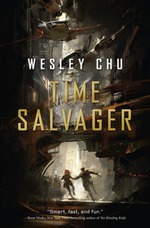
Time Salvager by Wesley Chu

Time SalvagerTime Salvager

by Wesley Chu
Series: Time Salvager, #1
Hardcover, 380 pg.

Tor Books, 2015

Read: September 12 – 15, 2015


Guess I should start with this: there’s nothing in these pages that’ll remind you of Chu’s Tao books. They could be written by completely different authors. Which is a combination of good news and bad news. The good news is that the reader doesn’t get a deja vu feeling reading, Chu’s ability as a writer and worldbuilder is displayed, and we get to see that he’s not a one-trick pony. The bad news is, the Tao books were better.

Not that this is bad, it’s just not Tao.

Chu is really smart about the way that he introduces us to the world, to the concept of Time Laws, and ChronoCom and all the rest of the things that you can read about in the jacket copy (or at the link above). Maybe it shows that I read too much bad SF as a kid, but I’m still really impressed by SF writers who are able to blend things into dialogue and story rather than just resorting to info dumps.

This is a Time Travel story where the Time Travel’s not really all that important. It’s just a tool. Like a cell phone — something that people use, but don’t really understand. No one (well, one person) here understands how it works, but they can use it. Ditto for all the nifty future-gadgets. So it makes it easy for us to not worry about it, too, and just go with the flow.

When you clear away all the bells and whistles this is a pretty straight-forward story about corporate greed, ecological/societal collapse, and a few people trying to do the right thing with the cards stacked against them (even if that pits them against each other). The bells and whistles turn this into a SF/Time Travel/Dystopian Love Story.

Not the best thing I’ve ever read by Chu, but interesting enough to make me glad I read it, and I’ll be back for #2. Maybe with is he can do something to make the series something I can get excited about.

—–

3 Stars

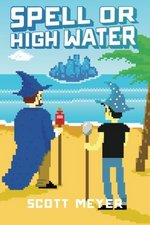
Spell or High Water by Scott Meyer

 Spell or High WaterSpell or High Water

by Scott Meyer
Series: Magic 2.0, #2

Kindle, 443 pg.
47North, 2014
Read: August 1 – 7, 2015

“It was an act of stubbornness, not intelligence.” Vic nodded . “Sadly, I find that stubbornness often beats intelligence eventually. Stubbornness will beat anything eventually. That’s the whole point of stubbornness.” Martin didn’t like that idea. He agreed with it, but he did not like it.

This was not as impressive or surprising (or even funny, despite bits like the above) as Off to Be the Wizard. But it was probably a better novel. It’s not as fun, but it’s a better quality read.

It’s been a couple of months since Philip assumed the leadership of the wizards in Medieval England, and he’s getting bored. When the invitation to a summit of all the magic users in the world comes, he and Martin agree to represent their group. The women of Atlantis are the organizers, and they bring 2 of every group — all over the world and from all sorts of times. Turns out a lot of people have figured out how to tap into the computer program, and they’ve come up with unique ways of interacting with it. The summit is to come up with some rules to govern the use of magic (or whatever the groups call it) and how to stop/punish people like Jimmy (more on him in a bit) who abuse it. Before they can get into the meat of the summit, these two have to deal with a murder mystery, political intrigue, romance, romantic problems, and questions of free will/determinism (because who doesn’t think that sounds fun?).

Naturally, there’s a heckuva surprise waiting for them when they get back. But that’s not for me to get into.

Atlantis is run by sorceresses, and is really the only place on Earth (throughout history) that they’ve felt safe and comfortable — which is a pretty big indictment of the rest of the world, really. This is not to say it’s the land of the Amazons or anything — there are plenty of men around. Someone has to do the non-magical work around the city, right? The male culture that has arisen is the source of plenty of cheap jokes as well as a little cultural criticism for Meyer. Atlantis as a whole — the city and how it’s made, the political structures, the male/female roles, the culture — this is the best thing that this book has to offer. Meyer really had to put the thinking cap on to come up with this — and to keep it entertaining.

I realize the previous book ended with a strong indication that the vanquished foe wasn’t down for the count. But I’d hoped that we wouldn’t see too much of him anytime soon. So much for that. Jimmy, the Wizard formerly known as Merlin, was around for a major role in this book. A larger role, really, than he played last time. Now, I didn’t really like Jimmy as a character — I know we’re not supposed to “like” him because he’s the bad guy, but that’s not what I mean. As a character, he was okay enough for one book (especially a book focused on introducing us to the other characters and world), but I didn’t want/need more of him. I’m still not crazy about him, even after the events of this book that make him a better rounded character.

There’s probably fewer jokes per inch here than in its predecessor. But those that are there were solid, the voice of the narration is light and humorous enough that you don’t miss jokes. I’m not saying there aren’t jokes — there are entire scenes that are little more than extended jokes (most of them worth it). Like its predecessor, there are bits of this book that are just great, are worth going through the whole book for, even if the book isn’t your thing. For example, the conversation that Martin has with Gilbert and Sid, who are magic users who make a living doing stage magic. That conversation hits a sweet spot for me that little else can. You may not react that way to that conversation, but there’ll be similar moments for you (that don’t work that way for me). Actually, almost every conversation between Gilbert, Sid and Martin are pretty good, particularly where the former two explain to Martin why they don’t get along.

It’s the same world as Off to Be — same kooky guys, unique magic system and plenty of chuckles; but with a richer, better developed plot, and a more expanded world. Fans of the first will definitely want to check this one out.

And, hey, learning who it was on the grassy knoll? You can’t pass that up.

—–

3 Stars

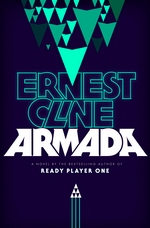
Armada by Ernest Cline

ArmadaArmada

by Ernest Cline

Hardcover, 349 pg.
Crown Publishing, 2015
Read: July 10 – 11, 2015This was fun, loads of fun. Not as good as Ready Player One — not sure it could’ve been, so let’s just take that off the table. But, it taps into the same vein of pop culture, gaming, and a desire for something that’s missing — family, father, social acceptance, etc. You take these elements, add a sense of humor and an adventure-driven plot and you get a winning read.

Now, Zack Lightman isn’t Wade Watts — he has friends, he has a great Mom (good grandparents, too, it seems), and some sort of a future. Okay, his life is a lot better than Wade’s. But, it’s not perfect. Especially when he — and he alone –sees a space ship from a video game outside the window of his High School. He figures he’s losing his marbles. And, you have to admit, the evidence is pretty convincing.

Until the next day, when another spaceship from the game lands at school — and others see it. It’s from the Earth Defense Alliance, and they’ve come for Zack. Not just Zack — all over the globe, they’re recruiting the best players of a couple of games (one flight combat-based, one ground-war based) to join a global force to defend the planet from an immanent alien invasion.

On the one hand, this is a dream come true for a die-hard gamer, SF nut, and daydreamer — a chance for glory, a chance to save the world, a chance to…meet a hot programmer-slash-gamer. On the other hand, did I mention the immanent alien invasion and near-certain death of all humanity (including Zack)?

Cline doesn’t give us anything new here – he takes every movie/novel/game about battles in space, alien invasions, First Contact, and so on that he’s seen/read/played (and actually tells you in the narrative which are the major influences); mixes them up and gives us one, big, gooey SF mishmash. I could read that all day long. Actually, I did. And I’d gladly do it again.

Ready Player One had a very limited cast — but Cline doesn’t repeat that. Zack has a couple of friends in high school, an ex-girlfriend, an old enemy, a mom, a boss. And then there’s everyone in the EDA that he meets — some higher ranking officers, his teammates and a new love interest. There are common bonds between all of them, but they’re not all just variations on Zack (like RPO‘s Wade and co.). I liked every character — even the less noble ones. These folks had heart, they had style — each one of them made me smile in a different way.

It’s easy to write-off Cline’s stuff as a litany of pop culture references with a thin veneer of plot. But that’s a mistake. His strength is the soul he puts into these characters. It’s in the interpersonal relationships, emotions, stakes — that’s where he shines. Even when you know something’s going to happen, even when you can see it coming 10 miles away, Cline still nails it. The ability to get to the emotional core — what some might call the emotional truth — of a scene, of a connection between characters? That covers up for a lot of shortcomings.

The worst thing about this book? I’ve read every Cline novel in existence. So the wait begins for whatever’s next.

I won my copy of this from the nice folks over at Read It Forward, if you’re not checking into that site on a regular basis, you’re missing something.

—–

5 Stars

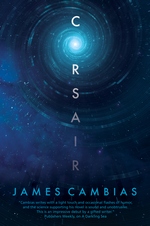
Corsair by James L. Cambias

CorsairCorsair

by James L. Cambias

Hardcover, 336 pg.

Tor Books, 2015
Read: May 27 – 30, 2015A rollicking good SF adventure story set in the very near future.

When I saw that this involved Space Piracy, I had visions of space battles, landing teams shooting things out with scrappy defenders, and so on. But, pardon the pun, this is more grounded. On earth, a team of hackers and engineers take over satellites. While not as intrinsically exciting, it’s a lot easier to wrap your head around (and a little less standard fare).

Instead, the action comes from two fronts: 1. on Earth, with guns, etc. and 2. where it counts — with people. It’s watching Schwartz squirm under the thumb of his employers, try to weasel out of repercussions of his actions; or seeing Santiago try to deal with the new realities of her career, or her efforts to find a way to capture Schwartz while keeping said career. It’s also the explosions, guns, knives and hand-to-hand combat that surround these two.

Cambias keeps things light and steady moving. His style is engaging, he makes you care about both the good guys and the bad — well, most of the bad. Not the really bad guys. There’s some good action, decent characters, the requisite amount of twists and turns — a splash or two of suspense. Corsair‘s technical enough to believe that it’s feasible, but not enough that anyone would confuse it with realistic — or a Clancy novel.

It’s a good, solid, entertaining read — not the best SF I’ve read this year — or even in the last month — but it did its job, and I was satisfied with it. I’ll keep an eye out of more from Cambias.

—–

3 Stars

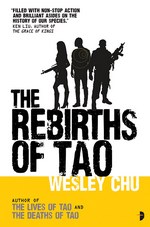
The Rebirths of Tao by Wesley Chu

The Rebirths of TaoThe Rebirths of Tao

by Wesley Chu
Series: Tao Trilogy, #3

Mass Market Paperback, 506 pg.
Angry Robot Books, 2015
Read: June 15 – 20, 2015That was satisfying.

Really, that’s about all I have to say about this one. But let’s see if I can’t expand a bit. Overall, I enjoyed The Lives more than this, and this one engaged me more throughout than The Deaths did, but The Rebirths brought the Tao Trilogy to a satisfying conclusion, wrapping up what needed to be wrapped up, dealing with all the arcs that needed to be concluded and generally leaving things in a place where we can say goodbye to these characters (not that we necessarily want to, but we can) — oh, and was a solid SF adventure in its own right.

One personal note, a large part of the action takes place in Ontario, Oregon. Most people reading this book aren’t going to think much about that at all, but I grew up about 10 minutes away from Ontario — so I thought that was pretty cool. On the other hand, now I know how Bostonians feel when reading Robert B. Parker or Dennis Lehane, or a life-long Chicago resident when reading Jim Butcher. The geography is bad, and if you wanted to buy a nicer car, you wouldn’t bother driving to Boise, you’d get the same car (probably cheaper) in Ontario.

But that matters so little to the book as a whole, that those four sentences are at least two too many.

So, anyway, this book (like The Deaths) takes place a few years after we’d left Roen and the rest. His son, Cameron, is a teenager — with all the stubbornness, rebellion, and hormone-addled fun that entails. Of course, his rebellion takes the form of wanting to join in the war against the Genjix, while his parents do all they can to steer him away.

It’s safe to say that very few (if any) of the Quasing are happy with Jill’s little revelation at the end of The Deaths — Genjix or Prophus — which puts them in the same boat as humanity. Governments all over the world are attempting to hunt down any and all Quasing. Which hasn’t done any favors for the Prophus, but at least seems to have hurt the Genjix effort more.

Which is not to say they’re down for the count by any means. Enzo, the Adonis, is still out there strutting like a peacock and working to bring about the end of humanity. We finally get to see the Genjix plan in full, and I’ve got to say, reading about their plan for re-making Earth makes me really glad that this is fiction.

Right?

So, we’ve got the Ontario storyline — which looks like a pretty routine mission for Roen and Marcos (yeah, not quite Felix & Oscar, but close enough), until it gets bad. And then worse. There’s a conflict in the leadership of the Genjix (so nice to see that even some of them don’t like Enzo). And then there’s a major breach in security which leaves the rest of our Prophus friends on the run — our focus is on Cameron, but not exclusively here. I was a little surprised how Chu concluded the Ontario storyline — which is what made it effective, really. These three threads, ultimately, naturally, converged into one big battle — like the two books before.

Once again, what Chu did with Roen between the books isn’t exactly what one expects, but it fits his character. Ditto for Jill. We didn’t know Cameron enough for me to say. Tao? Sure — Tao’s the same, being centuries old helps him stay consistent. When it comes to the machinery of the Genjix, Prophus and the US Government (and/or everyone else) — things didn’t go the way I figured they would following The Deaths — but I think I liked it more that way. It’s because of the fallout from Jill’s revelation that most of the character changes happened the way they did. Chu really was effective here.

There are some great fight scenes, if that’s your kind of thing (and if it’s not, why are you reading these books?). The final scene is as epic — yet personal — as you want from the end of a third book in a trilogy. Part of that battle are back-to-back hand-to-hand combat scenes featuring an Adonis vessel and people near and dear to us. By this point, I had no idea what Chu was going to give us and I was hanging on every hit. I’m so glad that Chu sprinkles so much humor through these books — after these fights were over, I needed the joke that followed.

It may not work for everyone, but I really liked where everything was left off. Particularly for Enzo.

A really solid novel, a satisfying conclusion — making the Tao trilogy a keeper. I’m very much looking forward to what Chu’s got in store next.

—–

4 1/2 Stars

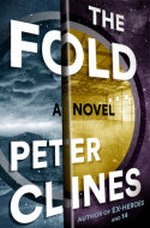
The Fold by Peter Clines

Sigh. Vacation took more out of me than I thought, it took me far too long to get this written. I really hoped that I could get caught up this week. Oh well…

The FoldThe Fold

by Peter Clines

Hardcover, 372 pg.
Crown, 2015
Read: June 4 – 5, 2015
If you’ve ever wanted an episode of Fringe with more contemporary pop-culture references and a more obvious sense of humor — yet with all the mind-bendy science and disturbing images, this just might be the book for you.

Reggie Magnus is in a bind — he’s some muckety-muck in DARPA and a secret project he’s been funding to develop teleportation has diverged a bit from its original design and started generating unbelievable results. At the same time . . . he knows something’s just not right out there at the development facility — he has no idea what’s wrong, but he knows something is. What’s a guy to do? Well, considering that he’s spent billions (yup, with a “b”) on this project, he needs to make sure he delivers something. Thankfully, Reggie’s got a genius friend with a few months free to send out to California, see what’s going on — hopefully fix the problem and help Reggie to justify the budget for this program.

Enter Mike (Leland Erikson, actually, but he answers to Mike — long story). He is a genius, with a photographic memory (a frighteningly detailed one), a curious streak a mile wide, and….three months off to do this since he’s a High School English teacher just done for the summer. So, he goes to California, meets some legendary scientists (and a few others no one has head of), and then excitement ensures.

While I was reading the second chapter, I scrawled the note: “The tonal shift between chaps 1 & 2 was enough to give me Whiplash (and I’m talking the kind where J K Simmons slaps you repeatedly, not the kind you get a TV lawyer to help with). Think it bodes well for the book.” And it did. After the jarring sensation between the first two chapters (think of the typical NCIS/Bones/etc. type opening wherein someone going about their routine, daily life stumbles on to a body before we join our heroes bantering around the office), things calmed down. The plot unwinds at a good pace — building up a good head of steam until everything goes cuckoo bananas. Eventually, all the pieces come together — but the explanation doesn’t end things, it only sets up a action-packed, mind-scrambling conclusion.

Like Mike, we get a nice orientation to the research facility and its team. Most come thi-i-i-i-s close to being right out of Central Casting, but Clines tweaks them just enough to keep them from being a frightening cliché. Ditto for Reggie, actually. This is not to say that Clines spends all that much time fully developing these characters — he comes close with Dr. Arthur Cross and Jamie Parker.

Jamie’s your basic attractive blond with severe emotional issues, when she’s not being a ultra-professional uber-computer scientist, that is. Dr. Cross is the 4th most popular scientist in the world — behind Neil deGrasse Tyson, Stephen Hawking and Bill Nye. He writes books for popular audiences and heads up research projects like this one (to over-do the Fringe comparisons, he’s William Bell). When he’s not being dark and mysterious, he’s the kind of scientist you want to learn from, dropping lines like: “Almost any concept or idea in the world can be expressed through comparison with a classic Warner Bros. cartoon,” and then goes on to demonstrate just that.

Actually, it may not be character development. Those two might be the characters we spend the most time with. This sounds like a criticism, but it’s not really. It’s not that type of book, all it requires are characters to move the plot along, not people you get too invested in.

Now, Mike is another story, he’s fully fleshed out. He is sort of a Robert Langdon type character — brilliant, in the right place at the right time, driven, and courageous enough to jump into danger, yada yada yada. — but with one significant difference: I liked Mike from the moment I met him, and I never, not for one sentence (over two books) liked Langdon. He’s charming, down-to-earth (in his own way), and is desperate just to be a regular guy. It’s hard not to respond to that.

It’s an engaging story, told well, filled with likeable characters doing out-of-this-world things. Solid SF work. Give this one a shot.

Disclaimer: I received this book from the nice folks over at Blogging for Books for this review. Not sure they got their money’s worth, but I came out pretty good on the deal.

—–

4 Stars

Ready Player One (Audiobook) by Ernest Cline, Wil Wheaton

Ready Player OneReady Player One

by Ernest Cline, Wil Wheaton

Unabridged Audiobook, 15 hrs and 46 mins
Random House Audio, 2011
Read: March 19 – 27, 2014

As much as I enjoy a good audiobook, I rarely have time for them, and I usually only listen to books that I’ve previously read. When my family needed something to listen to on a road trip last month, this was an automatic top contender — the printed version of this was probably my favorite book of 2011, and I was due for another read.

I’m so glad we picked this one, it was long enough (an important consideration for a road trip) and it was marvelously done. Wil Wheaton was an inspired choice to read this — not only is he an experienced, and accomplished audiobook performer (is that the right word?); but being who he is — an Internet/Nerd icon and a 1980’s child star — he adds a layer of authenticity and authority to the book.

I’m not going to talk about the book, I can’t. I’ve tried it before, and failed. But it’s just about perfect — funny, adventurous, immersed in pop culture (particularly from the 80’s, my formative years), smart, with heart — a lot of it.

So when you add one of the best performances of Wheaton’s career to that, you’ve got something worth spending 15 hours with. If only for his Sean Connery impression.* Wheaton captures the flavor, the pathos, the charm of the book and the characters that inhabit it. Go grab the book and give it a read. The audiobook’s almost as good. If you’ve read it, the audiobook’s a good way to revisit it.

—–

* There are several other “if only”s I could’ve used there, that’s just the first that came to mind. As Alan Sepinwall would put it, Deyanu!

—–

5 Stars

Shovel Ready by Adam Sternbergh

Shovel ReadyShovel Ready

by Adam Sternbergh

Hardcover, 256 pg
Crown, 2014
Read: May 1 – 3, 2014

It’s the near future, NYC has been rendered nearly uninhabitable by terrorist attacks and most of those that are still there aren’t really in NYC — they’re permanently jacked in to a virtual reality, kept alive by IV feeding bags. (think of a dystopian vision of Ready Player One‘s OASIS)

One of the few not hooked to the VR world is Mr. Spademan, a hitman. He doesn’t care who, he doesn’t care why, as long as the money’s right and he’s given a name, he’ll take the job. Once he’s taken the job, you might as well consider it done, he never fails, he never quits.

Well, until this job. Otherwise, it really wouldn’t be much of a story now, would it? Something happens that keeps Spademan from doing what he does — and the aftermath is pretty deadly. Spademan, his friends/allies, and those around them will be fighting for their lives before long as they plunge into a world of the ultra-rich, ultra-pampered and pseudo-religious.

The voice that Sternbergh employs is strong — you want to hear this guy tell his story. It’s a little heavy-handed from time to time — particularly at the beginning. But there’s a purpose for it, I think — at first I thought it was just a product of this being his first novel, but that’s condescending, and blind. Sternbergh knew exactly what he was doing — persevere through the heavy-handedness and you’ll understand why it was there.

A great mix of noir, SF, and suspense — with a little extra thrown in. It’d be easy to just chalk up this book to a fun combination of style, setting, and premise. But it’d be a mistake, there’s real heart here. Heart, genuine suspense, and a good story (yeah, and style, setting, and premise).

—–

3.5 Stars

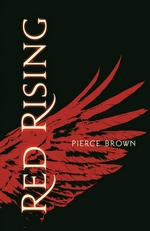
Red Rising by Pierce Brown

Red Rising (Red Rising Trilogy, #1)Red Rising

by Pierce Brown
Series: Red Rising, #1

Hardcover, 382 pg.
Del Rey, 2014
Read: Feb 26 – Mar 6, 2014

I’m having a hard time deciding what to say about this one. To really talk about it would require me spoiling every plot point that I loved (most of which I didn’t see coming). So I won’t. I’ll just say that I really, really dug this book.

I don’t want to just compare this to The Hunger Games, as much as reviews/blurbs/etc. make a guy want to. There are some surface-level similarities, yeah. And you could make the case (as I did when just starting the book) that Brown’s Mars was just the place for people who thought Collins’ Panem was a bit easy. In fact several parts of this feel like >The Hunger Games dialed up to 11. The working/living conditions for Darrow and his family are more severe, what Darrow has done to him to prepare him for what’s to come makes what Cinna et al. do to Katniss look like child dress-up, Darrow plays a deadly game on a larger scale than Katniss, and so on. But Darrow’s motivation is different than Katniss’ — she’s trying to survive, he’s trying to do far more (and much of the time, survival’s pretty low on his list) — the stakes he’s playing for are greater, and he will go to lengths that Ms. Everdeen doesn’t have to.

There are a few moments when things seem too slow, or meandering, or even redundant — but each time, I was wrong, and Brown made it all pay off. Visceral was the word that kept coming back to me as I read the book. I had almost visceral reactions to some of the horrors depicted, I could feel the grime and muck (literal and metaphorical) that Darrow crawled around in.

This shows every indication of leading to something epic in the next volume, leaving Mars behind and moving to other planets and/or the space between. As well as seeing if Darrow can retain his self and purpose — and how far will he be willing to go to carry it out.

There is a classic SF reference in Part IV that made me giggle with delight (in the middle of a pretty grim part of a fairly grim book, so I appreciated the placement). I won’t spoil it, but Pierce Brown has bought a lot of loyalty from me with two simple words.

Go grab this one.

—–

5 Stars

Chimera by Kelly Meding

Chimera (MetaWars, #4)Chimera

by Kelly Meding
ePub, 242 pages
Pocket Star, 2013
Read: Feb. 14-25, 2015


    • Let’s see here,

Chimera

    gives us:

  • a first-person account of super-hero life from an under-represented type of Super-Hero — Check!
  • Personal conflicts, Personal demons, general turmoil — moreso than most X-Men, even — heroes that carry emotional scars in addition to those earned in battle — Check!
  • Impending Government Persecution of Super-Heroes — Check!
  • A sex scene that goes on far too long for comfort — but is thankfully easily skippable — Check!

Yup. Chimera is a MetaWars book. It carries all the marks.

Renee Duval, aka Flex, is the focus this time around. She and a notorious ex-Bane have been dispatched to investigate a series of thefts that have to be being carried out by one or more teen Metas. With the threat of officially sanctioned internment of Metas hovering over them, the last thing the Rangers need is some punk kids bringing down the heat on them and any other law-abiding Meta. So Renee and Chimera have their work cut out for them — particularly considering that Renee’s doing her best to hang on to her anti-Bane sentiment, far after the rest of her team is softening. What they discover is unsettling for them, and doesn’t exactly fill the reader with a sense of joy, either.

One the one hand, I get Meding’s motive for varying P.O.V. characters in each book — and in many ways, I prefer this to the books that jump P.O.V. every chapter or so. But it’s also a weakness — for example — Trance was our entry into this world, we saw it all through her eyes. But we don’t get a whole lot of Trance any more — and what we do is just in brief bursts of conversation, and we don’t get the same impression of, knowledge of, experience of her. Still, Flex is a strong, yet flawed character, and it was nice to get in her head.

Plenty of action, some solid character growth, good plot advancement — Chimera is another good installment in a very satisfactory series. For a dystopian future, there’s something welcoming about this world, and I enjoy any time I get to spend in it. This book took me a freakishly long time to finish. That’s not a reflection on the character(s), the story, or the author — I was apparently busier and more tired than I realized until I saw just how long I’d spent reading the book (I’m not so unaware to not notice it was taking me awhile, just didn’t see how long I was taking). It was a good read, an engaging read.

—–

3.5 Stars

Page 29 of 30

Powered by WordPress & Theme by Anders Norén