Tag: Theology Page 9 of 22

Grandpappy’s Corner: God Never Changes by Carine MacKenzie, Derek Matthews (Illustrator) ★ ★ ★ Small Words About a Big Idea

Grandpappy's Corner Logo

God Never Changes

by Carine MacKenzie, Derek Matthews (Illustrator)

DETAILS:
Series: Learn About God 
Publisher: CF4Kids
Publication Date: September 2015
Format: Board Book
Length: 12 pg.
Read Date: April 22, 2023

What’s God Never Changes About?

This is a quick and yet thorough (at least for the Board Book audience) look at the Immutability of God. Each page starts off by saying, “God Never Changes,” and then comparing Him to various aspects of life and nature that a child can understand and appreciate. And learn from.

Let’s Talk about the Art for a Minute

It’s simple, it’s cute, it’s bright, and attractive. It does the job. I liked it—and can see kids liking it, too.

How is it to Read Aloud?

Very simple. There’s no rhyming or anything (which is good, I think it’d be annoying for this subject matter). It works well for reading aloud and then stopping to talk about the ideas, too.

So, what did I think about God Never Changes?

I picked this one out of the handful from this series sitting on our shelves because I’m in the middle of the discourse on The Immutability of God in Charnock’s The Existence and Attributes of God, and I figured I’d stay on theme. It works remarkably well in conjunction—in fact, Mackenzie uses some of the same argumentation and explanations as Charnock does when it comes to this topic. Just much simpler. My inner geek loved that bit.

I don’t know that this is the kind of thing a child will clamor to have read to them again and again—but you never know. I do think it’s good for teaching at a young age, and that’s the whole point of this series. I do recommend it and look forward to using it with my grandcritter soon.


3 Stars
Grandpappy Icon

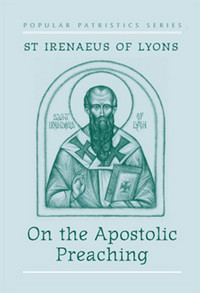
On the Apostolic Preaching by Irenaeus of Lyons: A Timeless Survey of Redemptive History

On the Apostolic PreachingOn the Apostolic Preaching

by Irenaeus of Lyons , John Behr (Translator)

DETAILS:
Series: Popular Patristics Series, #17
Publisher: St Vladimir's Seminary Press
Publication Date: September 01, 2003
Format: Paperback
Length: 101 pgs.
Read Date: April 2-9, 2023

What’s On the Apostolic Preaching About?

This is one of the two surviving works we have from the Second-Century theologian, Irenaeus. In this work, he simply recounts the Biblical storyline about the promised and coming and then Incarnate Messiah, His Earthly ministry, death, resurrection, and the spread of the Gospel.

I’m really not sure what else to say—he basically summarizes the Scriptures with a focus on Jesus.

Readability

I said essentially the same thing with the last book in this series that I blogged about, but I think it bears repeating.

For just about every reader (at least we non-scholars) the idea of reading Patristics is fairly daunting—even if you’ve done it before and emerged relatively unscathed (and maybe even learned something or enjoyed it). And it probably shouldn’t be that daunting on the whole (am more than sure that there are plenty of examples of intimidating texts).

There’s a reason that this work has endured through the centuries—it’s not just for its historical significance (although I’m sure that’s a lot of it), but this is something that has benefitted believers through the years from all levels of education and experience. There’s no one who can’t read and learn from this.

So, what did I think about On the Apostolic Preaching?

I started off a little annoyed by one of the introductory essays that stated that the first reading

will probably result in surprise and perhaps disappointment. Irenaeus does not present Christianity, in the way we have come to think of it, as a system of theological beliefs. Moreover, very little place is given to the ecclesiastical or sacramental dimensions of Christianity, nor does he describe the mystical life of prayer.

One, I didn’t know what to expect from this—I really only knew “Irenaeus” and “Popular Patristics” when I bought and then opened the book. Secondly, when I discovered what it was, I wasn’t disappointed. This is exactly what I want to see out of a 2nd Century writer—because it’s the kind of thing I appreciate in a 21st Century Writer. It’s reassuring to see that the central idea of what Apostolic Preaching ought to be is pretty much the same for both eras—yeah, some of what Irenaeus wrote could use some fine-tuning (and he’d likely say the same of what shows up in one of the Essential Studies in Biblical Theology volumes I’ve discussed). But their modus operandi are so similar, that it’s clear that they’re walking in the same direction.

I found this to be a quick, approachable read—as relatable today as it had to have been centuries ago (although I guess it’d be safe to say that many of his readers might not be ready to hear what he said in the same way I was). I was very encouraged by this and wish I’d read it years ago so I could be on my fifth or sixth reading now.

Highly recommended.


5 Stars

This post contains an affiliate link. If you purchase from it, I will get a small commission at no additional cost to you. As always, the opinions expressed are my own.

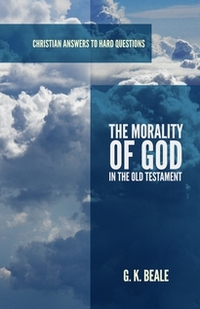
REPOSTING JUST CUZ: The Morality of God in the Old Testament by G.K. Beale

This is a lot shorter of a work than I usually talk about, but I needed a short read to break up longer, heavier reads. So now I guess I get to talk briefly about it before I talked about longer, heavier reads. (not that this is lightweight by any means)


The Morality of God in the Old Testament

The Morality of God
in the Old Testament

by G.K. Beale
Series: Christian Answers to Hard Questions

Booklet, 43 pg.
P&R Publishing and Westminster Seminary Press, 2013

Read: November 21, 2021
Grab a copy from your local indie bookstore!

What’s The Morality of God in the Old Testament About?

Believers and unbelievers alike stumble over some of what seems immoral in the Old Testament. Particularly what seems to be evil on the part of God. For example: God’s commands to exterminate the Canaanites and the imprecatory (cursing) Psalms.

How ought the believer to respond to their own questions about this, much less the questions from those outside the faith?

Beale looks briefly at a couple of popular responses to this and finds them wanting. In their place, he suggests a “plausible fivefold approach.”

There seems to be a better way to look at this problem. We will explore it from five different angles, which will help us to understand it more thoroughly. First, how does the killing of the Canaanites demonstrate God’s justice and righteousness? Second, how could Israel’s unique commission as a “kingdom of priests” (Ex. 19:6) shed light on the extermination of the Canaanites? Third, how does God’s sovereignty over all things help us to better understand that he can be considered blameless in all that he does, despite the problems just mentioned above? Fourth, how does the idea of God’s judgment of unbelieving humanity at the end of time shed light on this problem? Finally, how does the law of loving one’s neighbor now and at the end of time help us to better apprehend the issue about the Canaanites and the psalmist’s cursing of his enemies (though this last point has some overlap with the fourth point)?

Each question gets a couple of pages of explanation before moving on, so that the reader is given the complete fivefold approach along with some idea of how the ideas are worked out.

So, what did I think about The Morality of God in the Old Testament?

Not surprisingly, my main concern is length. I want to see each of these points better developed–I don’t think this has the makings of a 200+ page book or anything, but I think it could easily be twice as long to really flesh out some of the points.

The brevity works against itself primarily in that I don’t get to see the ideas examined thoroughly, or tested. The reader is given enough to understand the fivefold approach, enough to chew on it. But I’d like to see it worked out. I’d like to see Beale work through one of the difficult passages, or one of the Psalms in question and show “here’s where we see this and over there is where you see that aspect in action,” etc.

But the point of this series, the point of this being a booklet is for a short introduction to the idea. It’s supposed to be enough to show the reader that there are answers to the hard questions, just not enough to convince them. So I have to take it on its own terms–as such, it’s fine. Even more than fine. And I think there’s something to that fivefold approach, I just want to be convinced. I’m just going to need to look elsewhere for that.


3.5 Stars

This post contains an affiliate link. If you purchase from it, I will get a small commission at no additional cost to you. As always, opinions are my own.

This Is the Word of the Lord: Becoming Confident in the Scriptures by Daniel R. Hyde: A Sound and Basic Defense of Scripture

This Is the Word of the LordThis Is the Word of the Lord: Becoming Confident in the Scriptures

by Daniel R. Hyde

DETAILS:
Publisher: Christian Focus Publications
Publication Date: January 17, 2023
Format: Paperback
Length: 121 pg.
Read Date: February 26, 2023

As yearly surveys and our own experience shows, we are living in a time of famine of the true Word of God. The ancient prophet Amos spoke of such a coming famine in his day: “Behold, the days are coming, declares the Lord God, when I will send a famine on the land—not a famine of bread, nor a thirst for water, but of hearing the words of the Lord’ (Amos 8:11). How true is this still? We are living in that day. This is why when we find the Word, we need to mine it for its riches, cultivate it for its food, and drink from it like a well in the desert. Sadly, Amos says in those days that ‘they shall wander from sea to sea, and from north to east; they shall run to and fro, to seek the word of the Lord, but they shall not find it’ (Amos 8:12). This describes our time. The apostate church blindly wanders from the sentimentality of Protestant Liberalism to the so-called authoritative and immovable word of Rome or Orthodoxy, to the relativistic Emerging Church, to the skeptical Bart Ehrman, to the happy Joel Osteen, and the list goes on. There is a lot of searching but no finding. Yet in the Word written, our searching turns to resting as the silence of our hearts is filled with His living voice.

What’s This Is the Word of the Lord About?

Very simply, the book is Hyde’s response to that quotation—that’s the book’s thesis—everything else is the details. The primary concern of the work is to build and establish the reader’s confidence in the Scriptures—and that from that confidence the reader would build their life, faith, and sanctification on those Scriptures.

He covers topics like the revelation, inspiration, authority, canonicity, sufficiency, and perspicuity of Scripture—largely the typical points focused on in books about the Doctrine of Scripture. His last chapter, “Experiencing the Word,” tackles something I haven’t often seen in this kind of book, however. He calls his reader to “consider how the presence and power of the Spirit works causing us to experience the Word.” This is done particularly “to effect my recognition of in my life,” “to effect my reception of the Savior,” and “to effect my realization of sanctification.” Knowing everything in the previous nine chapters is all well and good—but if it remains an intellectual exercise, it’s pointless—the element of the Scriptures impacting your life—causing you to see your sin, need of a Savior, and resulting in sanctification (roughly the outline of the Heidelberg Catechism, to the surprise of no one), is essential.

So, what did I think about This Is the Word of the Lord?

As much as I appreciated the tone and urgency Hyde displays through the book, his obvious earnestness, the much-needed emphasis in the last chapter, and the overall soundness of every point he makes…I found the book to be adequate. But not much more than that.

Perhaps I’ve just read too many books written on this level for this general purpose, so it feels like so much of a retread for me.

I liked it but wanted and expected more. Hyde generally delivers that for me, but here he didn’t. Would I recommend this to anyone wanting a good foundation in the doctrine of Scripture? Absolutely. But for me, it fell a little flat.


3 Stars

This post contains an affiliate link. If you purchase from it, I will get a small commission at no additional cost to you. As always, the opinions expressed are my own.

Crossway Short Classics: Selected Sermons by Lemuel Haynes: A Great Collection

Selected SermonsSelected Sermons

by Lemuel Haynes, Jared C. Wilson (Foreword)

DETAILS:
Series: Crossway Short Classics Series
Publisher: Crossway
Publication Date: February 21, 2023
Format: Paperback
Length: 139 pg.
Read Date: February 26, 2023

Some Thoughts on the Series as a Whole

The point of this series is to take classic short works—sermons, tracts, articles—package them attractively, edit a bit (modernize language, eliminate footnotes, tweak grammar, etc.), and make them widely available. Each is given a short introduction to help the reader get the context and a bit of information about the author.

They published seven books in this series last year, and I discussed them here. Two have come out this year (so far), but I’m hoping for more.

What’s Selected Sermons About?

As is obvious from the title, this is a collection of sermons by Lemuel Haynes. Born in 1753, Haynes is known as the first African-American ordained to the ministry.

The foreword serves as an introduction to Haynes as well as the included sermons, and we also get a quick biography of him before diving in.

The four sermons cover the idea of Universal Salvation, a sermon on John 3:3, a description of ministers, and a sermon against slavery.

So, what did I think about Selected Sermons?

The middle sermons—on the necessity of being born again and ministers were good examples of latter-Puritan-ish sermons, along the lines of Edwards and Whitfield. They were good, and solid, but not necessarily the kind of thing I’m coming back to.

The other two, however? Wow.

Sure, it’s easy from our vantage point to shake our heads and wonder how so many Christians could be comfortable with American slavery—it’s good to remember that it wasn’t true of them all. With “Liberty Further Extended,” Haynes delivered a powerful sermon against the practice, and you can only wish that more people were exposed to it—there’s a lot to be appreciated from this sermon, even if it’s not as timely as it once is (thank God).

“Universal Salvation,” the first sermon in the collection, blew me away (and may have set my expectations too high for the rest). The rhetoric was dynamite (there’s probably a better way to put it, but this is the most appropriate), the doctrine sound, and the conclusions were important. When you take the comments by Wilson into account, this must’ve created quite a stir when he preached it. I’d have paid the purchase price for the volume for this sermon alone.

I don’t know that everyone will agree with my evaluation—actually, I’m pretty sure many won’t—but I don’t see that anyone with an affinity toward Puritan-ish sermons, (First) Great Awakening sermons, or just good sermons not appreciating this little gem of a book.


4 Stars

This post contains an affiliate link. If you purchase from it, I will get a small commission at no additional cost to you. As always, the opinions expressed are my own.

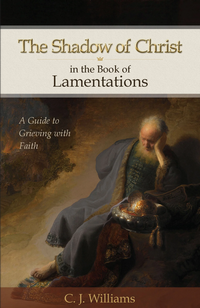
The Shadow of Christ in the Book of Lamentations by C.J. Williams: Finding the Hope of the Gospel in the Laments

The Shadow of Christ in the Book of LamentationsThe Shadow of Christ in the Book of Lamentations:
A Guide to Grieving with Faith

by C.J. Williams

DETAILS:
Publisher: Crown & Covenant Publications
Publication Date: November 25, 2022
Format: Paperback
Length: 172 pg.
Read Date: February 5-12, 2023

The people had been warned about this day of judgement for centuries, but as God pleaded with them through the prophets, they became more stubborn in their sin. Now the day had come. If there was ever an “I told you so” moment, this was it. But the speaker does not stand aloof; he gives a voice to the sorrow and suffering of the people. He wept with them and for them with sympathy that arose from the depth of his soul. Although the people had brought this terrible day upon themselves, they were met with compassion and “a spirit of gentleness” with which we are to minister to those who are overtaken in any trespass (Gal. 6:1).

What’s The Shadow of Christ in the Book of Lamentations About?

Based on a series of sermons, Williams walks the reader through the book of Lamentations—in a careful manner. He doesn’t avoid technical points, nor does he dwell on them, moving the book in an esoteric direction. At the same time, he doesn’t keep it so simple that there’s not a lot to learn, to think about, or to meditate on.

As the back of the book says,

The book of Lamentations counsels us on how to:

  • respond to hardships with faith,
  • grieve with hope,
  • and find the renewal of grace during the trials of life.

and Williams is careful to draw out each of these points more than once.

But that’s not the focus of his book—and, Williams would argue, it’s not the focus of Lamentations. The focus is on how Christ is displayed and revealed through this short Old Testament book. This comes through loud and clear and proves comforting and inspiring.

Christ-Centered Perspective

When seen in this light, a book that technically has no direct speech from God comes alive with the voice of the Son whom he would send.

Starting in the introduction and carrying on through the end, Williams makes it clear that this is going to be a Christ-centered book because the role of this book is to reveal Christ to his people. There is a speaker throughout the book, referring to himself as “I.” Williams argues that this is the voice of Christ—he is the lamenting one alongside the other voices in the book.

I’m not going to try to echo his arguments—I don’t have that kind of space. But when he started to enfold it, I was captivated—and as he returned to it throughout the book, I kept being captivated and wanted to spend more time examining these points.

So, what did I think about The Shadow of Christ in the Book of Lamentations?

When believers experience hardship or the chastening of God, asking this blunt question awakens us to the truth: Has God utterly rejected us? To ask the question is to answer it. You may not know how any hardship will end, but as a child of God, you know how it will not end. Nothing can Separate us from the love of God that is in Christ Jesus our Lord (Rom. 8:39).

The conclusion of Lamentations shows us that there js always a path forward when we walk with faith.

Of all the prophetic books, Lamentations is the one that has always resonated with me the most—but I always knew I was missing something about it. Starting in Chapter 2 (where he begins his argument for the Voice of Christ in this book), so many lightbulbs turned on—I know Christ was revealed in this book (as he is everywhere), but I didn’t understand how thoroughly the book did that.

I’m not for one second suggesting that this is an exhaustive treatment of the book, nor that Williams is the final answer when it comes to this idea—but it’s a fantastic place to start.

The rest of the book was just as good—I walked away from every chapter with a better understanding of or refreshed appreciation for the text.

If you’re looking for a trustworthy guide to this dark portion of Scripture (that is also full of light and hope), you’d do well to look to C.J. Williams.


4 Stars

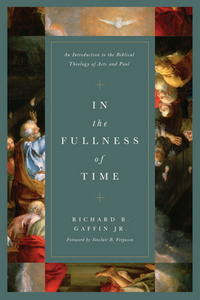
In the Fullness of Time: An Introduction to the Biblical Theology of Acts and Paul by Richard B. Gaffin Jr.: One of the Best Things I’ve Read in Years

I can’t put this one off any longer—if I could, I promise you I would. I’m out of my league here, but I’ve got nothing else to write about. And I really need to write something about this.


In the Fullness of TimeIn the Fullness of Time: An Introduction to the Biblical Theology of Acts and Paul

by Richard B. Gaffin Jr.

DETAILS:
Publisher: Crossway
Publication Date: May 3, 2022
Format: Hardcover
Length: 419 pg.
Read Date: September 4-December 25, 2022

Support Independent Bookstores - Visit IndieBound.org

What’s In the Fullness of Time About?

First, let’s look at what was on the Publisher’s Website:

An Exegetical Study of the Book of Acts and Pauline Theology

Christians often skip a crucial starting point when studying the apostle Paul: the foundations of his deeply nuanced theology. Some studies on the book of Acts attempt to touch on every major theme in Paul’s letters, making them difficult to understand or prone to leaving out important nuances. Christians need a biblical, theological, and exegetically grounded framework to thoroughly understand Paul’s theology.

In this book, Richard B. Gaffin Jr. gives readers an accessible introduction to Acts and Paul. Building on a lifetime of study, Gaffin teaches on topics including the redemptive-historical significance of Pentecost; eschatology; and the fulfillment of redemptive history in the death and resurrection of Christ. In the Fullness of Time is an exegetical “textbook” for pastors, students, and lay leaders seeking to learn more about Acts and Paul from a Reformed and evangelical perspective.

  • Explores the Foundations of Paul’s Theology: Offers a nuanced look at the core of Paul’s thinking
  • Wide-Ranging Audience: A valuable study for pastors, theology students, and lay leaders
  • Thorough Yet Accessible: An in-depth look at Pauline theology that’s accessible to readers

After reading the book, however, I’d offer a tweak or two to that description. For example, I’d add to that “for pastors, students, and lay leaders” lay people in general (or just swap out “leaders” for “people”).

Also, I’m not sure I’d include eschatology alongside those other topics. It seemed to me (on first read, anyway) that this was a book about Eschatology as presented by/understood through the New Testament—with a focus on understanding Pentecost and the fulfillment of redemption (and a couple of other topics) in light of that eschatology. That may seem like splitting hairs, and really, I’m guessing the good people at Crossway understand the book a bit better than I do. Still, I didn’t get the impression that the book thought of those ideas as equal (unlike the description).

The chapters in this book came from lecture notes for the class that Gaffin taught for years on Paul and Acts—a class I’ve heard several people mention over the years, and really wish I could’ve taken. Getting that material in written form is a blessing I didn’t expect and was more than happy to receive.

The Centrality of Eschatology

In Chapter 2, Gaffin writes:

for much Christian theology and preaching seeking to be faithful to the Bible as God’s inscripturated word, the rediscovery of eschatology can be seen as having a corrective significance that has resulted in laying hold of biblical teaching in a way that has not been fully appreciated in the past.

For instance, in a standard volume on systematic theology, “Eschatology” is the last chapter. More significantly, coming at the end of the volume, eschatology tends to be defined exclusively in terms of the “last things” having to do with what is still future for the church—Christ’s return and matters concomitant with his return, perhaps including as well some treatment of what occurs at death and the so-called intermediate state. Even more significantly, very often little, if any, attention is given to the relationship with what has preceded, to the integral connection between the future hope of the church and its present life and the practical relevance of the former for the latter.

What has become more and more clear is that in an overall presentation of biblical teaching, eschatology is not properly compartmentalized at the end. In particular, the New Testament teaches, as our own work will show, what is often termed a “realized eschatology.” Biblical eschatology is to be defined in terms of the first as well as the second coming of Christ. New Testament eschatology has a dual focus. In that respect it is elliptical, defined by two foci, present and future, the proverbial already-not-yet.

It’s this dual focus that characterizes so much of this book, and grounds the arguments Gaffin puts forth.

The Exegetical Portions

Throughout the book, Gaffin offers a lengthier exegesis of a particular passage as either a foundation for a chapter’s position or to show how something from earlier in a chapter is worked out through Paul or Luke’s work. These are the best parts of this book.

Period. It’s not even close.

For example, he uses a little more than two pages to exegete Philippians 2:12-13 while considering the indicative and imperative in Paul. I don’t remember a better example of writing leading to doxology recently.

I get—between this being based on the course, where he only had so much time and the design of the book—that he couldn’t have given us similar treatment for several more passages that he touched upon. But man, I wish he had. But that brushes up on the next section, so I guess it’s time to transition.

Could Use A Little More

In addition to wanting more exegetical portions, there’s something else I could use more of.

I think that despite the length of the book, it should’ve been longer—too much needs to be fleshed out a little more. Not much, but almost every point could be expressed more fully. More than once, Gaffin does a better job of clarifying what he’s not addressing or not saying than he does in making it clear what he is trying to say.

So, what did I think about In the Fullness of Time?

I read a chapter (or just a half of one) a week for a few months to carefully work through the book—and I’m sure I need to do the same (or slower) once or twice more to really get a handle on Gaffin’s arguments. But what I got this time around was about as good as anyone could ask for.

Reading this felt like I was sitting in a lecture hall featuring my favorite professor—in a strange way. I felt like I was a beginning student—almost like looking at some of these passages for the first time. Yet, while reading I simultaneously felt like I was understanding texts with a depth I’m not accustomed to. Reading Gaffin you’re frequently running into thinking more subtle and profound than a lot of what you’ve encountered previously—and that’s certainly the case here. Still, I thought this work was a bit easier to work through than some of his shorter works.

For me, this is the kind of work that you want to read alongside one or more others, so you can pause and talk things through from time to time—just to make sure everyone is understanding everything. Or at least you’re stupified with company.

Anyway, I don’t think I have anything else to say at this point—maybe on the eventual reread, I’ll be able to say something more substantive than this. Basically, you want to read this, wrestle with it, study it, and do it again.


5 Stars

This post contains an affiliate link. If you purchase from it, I will get a small commission at no additional cost to you. As always, the opinions expressed are my own.


The Nature and Work of the Holy Spirit by Ra McLaughlin: A Broad and Capable Introduction to the Holy Spirit

The Nature and Work of the Holy SpiritThe Nature and Work of the Holy Spirit

by Ra McLaughlin

DETAILS:
Series: Christian Essentials 
Publisher: P & R Publishing
Publication Date: April 26, 2022
Format: Paperback
Length: 153 pg.
Read Date: January 29, 2023
Support Independent Bookstores - Visit IndieBound.org

What’s The Nature and Work of the Holy Spirit About?

As I said about the second volume of the Christian Essentials series, one of its advantages is that I can largely recycle what I said about the others.

This is a basic and broad introduction to Pneumatology—the doctrine of the Holy Spirit from a broadly Evangelical perspective. There’s a good mix of foundational theology and application of it to the Church and the individual believer. The book is adapted from curriculum using language that’s easy to translate—particularly into languages that don’t have a well-developed theological vocabulary—so the English is kept basic, too. There’s almost no academic or technical theological language used, and those that are used are well-defined (including in a handy glossary).

The chapters are short (most around fifteen pages) and well-organized. Each contains a handful of side-bars consisting of a paragraph or two with the contents of interviews with pastors and theologians on the topic under discussion. These interviews were with people from a variety of theological perspectives helping broaden the text so that it’s not exclusively from a reformed perspective.

The Organization of the Work

One thing that really jumped out at me while reading this book is that it wasn’t organized the same way as similar works are—which is refreshing because you get tired after a while of reading remixes on a topic. But mostly refreshing because I thought this was a really good way to approach the subject.

We start with the role of—and revelation of—the Spirit as a member of the Trinity—as seen in the Old Testament, then the New, and then as it was worked out in Church History. Those are three quick chapters that should probably be longer but did the job for the scope of this book.

Then we get chapters dealing with the Spirit’s work in the world—providence, creation, revelation, and common grace. Followed by His work in the Church—through special revelation, covenant grace, and gifts. The last two chapters focus on His work in individual believers—in conversion and sanctification.

So, what did I think about The Nature and Work of the Holy Spirit?

Solid teaching, an effective and helpful organization, all in all, a good book.

Like the rest of this series—the big problem with this book is that it works so hard to not take a particular position that it gives a watered-down presentation on areas of controversy. If they’d only taken a firm stance on (for example) cessationism, and then went on to give a fair presentation of non-cessationist views, that’d be different. Instead, we’re given descriptions of the views written in a way to explain them, but with the aim to avoid particulars and the offense they may carry—and really leads to it being almost useless.

When it’s not discussing intra-mural debates or disagreements, it’s a very useful and helpful work (like the other two books in this series). It’s good on the essentials—although exactly how “essential” is defined might be quibbled with.

For the series, I think this might have been the strongest entry. For just an introduction to the doctrine of the Spirit, it’s a pretty solid one. There are better books about Him and the theology surrounding Him, sure—but they’re of a nature and depth that this doesn’t want to achieve. Like the rest, I’d happily pass this volume on to someone who is just getting their feet wet.


3.5 Stars

This post contains an affiliate link. If you purchase from it, I will get a small commission at no additional cost to you. As always, the opinions expressed are my own.

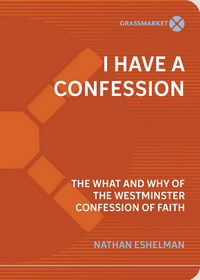
I Have a Confession: The What and Why of The Westminster Confession of Faith by Nathan Eshelman: You Get More than Your Money’s Worth in this Small Book

I Have a ConfessionI Have a Confession:]
The What and Why of the
Westminster Confession of Faith

by Nathan Eshelman

DETAILS:
Series: The Bedrock Series 
Publisher: Grassmarket Press
Publication Date: December 12, 2022
Format: Paperback
Length: 136 pg. 
Read Date: January 15, 2023

What’s I Have a Confession About?

This is an introduction to the Protestant practice of confessions—specifically The Westminster of Confession of Faith.

Eshelman starts out by describing the need for confessions, and what the ecclesiological landscape in the US is like without them. Chapter two lays out “the pillar of confessionalism”—the Scriptures themselves. It’s those Scriptures that give the warrant (chapter 3) for the development and use of confessions. This is what I expected from the book, and when that ended just a little past the halfway point, I was more than a little surprised.

What comes next is truly impressive—Eshelman gives a quick, yet thorough, review of the English Reformation from Henry VIII to the 1640s and the composition of the Westminster Confession of Faith. Then he gives a very brief overview of the contents of the Confession—chapter by chapter.

So, what did I think about I Have a Confession?

Let me start with a minor and really unimportant point—I really like the look and feel of this book. It’s like a field notebook in size, weight, and feel. It works really well for the series.

I’d intended on kicking off this year by rereading R. Scott Clark’s Recovering the Reformed Confession, but a couple of things derailed that (hopefully by the year’s end), but if I couldn’t get into that work, this is a good replacement.

The design of the series is to provide “clear, concise” works on faith and life from a Reformed perspective. Eshelman gives the reader precisely that—clear and concise. Concise, easy to read, and surprisingly thorough for a book of its size.

I was very impressed with this little book—it was everything I expected and more. I’d quibble with a point or two (a couple of his illustrations made me wonder), but only minor things. This is something I’d pass out to people without a second look—and would encourage anyone looking into the idea of Protestant confessions to give it a read.


4 Stars

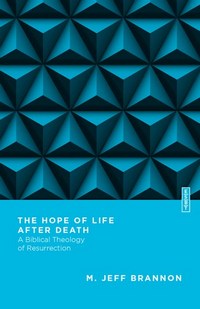
The Hope of Life After Death: A Biblical Theology of Resurrection by M. Jeff Brannon: A Good Intro to an Oft-Neglected Area

The Hope of Life After DeathThe Hope of Life After
Death: A Biblical Theology
of Resurrection

by M. Jeff Brannon

DETAILS:
Series: Essential Studies in Biblical Theology
Publisher: IVP Academic
Publication Date: November 14, 2022
Format: Paperback
Length: 172 pg.
Read Date: December 18-25, 2022
Support Independent Bookstores - Visit IndieBound.org

…the resurrection of Jesus changes every other day, from now and into eternity. For those who are united to Christ, their future is the future of their Savior, and this reality changes everything.

What’s The Hope of Life After Death About?

Unlike most books about the resurrection from the dead—this isn’t an apologetic work, nor does it focus on Paul’s theology of resurrection, instead Brannon states (fitting with this series) that he wants to take a look at the idea of resurrection from Genesis to Revelation, looking at the shadows, prophecies and promises contained in the Old Testament and the reality demonstrated and guaranteed in the New.

He’s primarily thinking of the resurrection of the believer—although that involves (and is grounded upon) the resurrection of Christ. The resurrection of the believer is such a vital doctrine, that believers should have a better understanding of it—but the amount of literature (both on the academic and popular levels) about it pales in comparison to other areas of Christian doctrine.

One of the hallmarks of biblical theology is the progressive revelation of God’s redemptive plan, which unfolds throughout the Old Testament. In Genesis 3:15 God’s promise that the offspring of the woman will crush the head of the serpent represents an implicit promise of resurrection. In Psalm 49:7-15 the psalmist is convinced that God will redeem his people from death and take them to himself. Isaiah prophesies that God will swallow up death forever (Is 25:7-8) and that there will be a bodily resurrection for God’s people (Is 26:19). All of this reaches its Old Testament climax with Daniel’s prophecy of physical resurrection for both the redeemed and the unredeemed, one to everlasting life and the other to shame and everlasting contempt (Dan 12:1-3). The Old Testament teaching on resurrection sets the stage for God’s revelation in the New Testament, when the lights are turned on.

The Old Testament

The best part of this book was the survey of the Old Testament material—over five chapters—Creation, the Fall, the Pentateuch and Historical Books, the Writings, and the Prophets—Brannon spends about half of the book examining the part of the Bible that’s less-often considered for our understanding of the doctrine.

I don’t know how many times I’ve read or heard that the Old Testament is silent or vague on the idea of bodily resurrection. Brannon puts that assertion to rest easily.

But more importantly, this survey is a great cause for comfort and reassurance for the believer. This idea, this hope, has been before believers of all ages and we can cling to it as believers have for centuries. We have this hope explained in clearer terms—with the lights on, to continue Brannon’s metaphor—so it’s easier to cling to that hope.

So, what did I think about The Hope of Life After Death?

My focus in this book has been on the themes of creation life, death as the result of the fall, and the hope of resurrection life in redemption. The resurrection of Jesus means that the new age, the age of resurrection, has been inaugurated. While life had been promised, prophesied, and pictured in the old covenant, the resurrection of Jesus marks the beginning of the fulfillment of the curse of death being undone through resurrection life.

That’s the argument of the book in a nutshell, and what a great argument it is—one to really relish and depend on.

Brannon is clear and helpful here, and these are ideas we all need to spend time with and have a better understanding of. This is a solid way to start with that.

I do wonder if he could’ve gone a little deeper with a few chapters—I thought it was the easiest book in this series to read, and that’s not just Brannon’s style, I think it was that his approach didn’t require as much thought as others in the series did. I’m not certain about that point, however—and I don’t mean to complain about it. It was just the sense I had while reading the book

It was a good, helpful, and useful book about important and neglected teachings—maybe I wanted it to be a little better, but it’s definitely good. I do recommend it.


3 Stars
This post contains an affiliate link. If you purchase from it, I will get a small commission at no additional cost to you. As always, the opinions expressed are my own.

Page 9 of 22

Powered by WordPress & Theme by Anders Norén