Tag: YA/MG Page 18 of 24

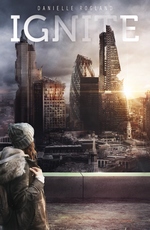
Ignite by Danielle Rogland

IgniteIgnite

by Danielle Rogland

Kindle Edition, ? pg.
Inkitt, 2017

Read: March 2 – 4, 2017

Something pretty bad happened to the world (at least Europe) — we’re not really told what precisely, but it was fairly significant. From the rubble of society a man named Donovan raises and restores some order and stability — it doesn’t take long for him to become some sort of horrible despot, and becomes Emperor Donovan.

We come into New London some decades after this and meet a young pickpocket named Jacks. She’s been living on the streets for years now, after Donovan’s agents have killed her parents. She’s confident, scrappy and strong — but she knows her limits. One day, she’s trying to help some people from her neighborhood and encounters the legendary group The Flames. The Flames are known throughout New London (and further, actually) for standing against the Emperor and his agents. Where they strike, the leave burning candles behind — a symbol of hope — a literal light in the darkness.

Jacks can’t believe that she’s run into them and actually aids them. Slowly, she’s brought into their confidence and becomes one — just in time for The Flames to uncover a large new initiative about to be launched to eliminate Donovan’s enemies. The only question is: Are they too late?

In the midst of this, the Flames have to grow and evolve both as they bring Jacks into the fold, but as that results in secrets and weaknesses come to light. It’s not just Donovan’s troops that are a threat to the group, but problems from within could actually destroy The Flames. When Rogland is dealing with the relationships, the backstories and what those mean for the characters futures that she really shines.

We don’t get a clear picture just what makes Emperor Donovan worthy of being overthrown — other than bringing some sort of stability to the post-disaster world, we learn nothing about how he runs things as a whole. We do know that he’s horrible (at best) to the people that live and work in his household, and that he has his goons publicly execute dissenters. The Flames uncover an even worse solution that Donovan has for dissenters/protestors/rebels, too. But that’s all we’re given — I’m not saying that’s not horrible, but it’s not exactly a hugely oppressive general environment (that we know about).

The other thing we don’t know is how The Flames actually accomplish much — yeah, they have heart, they have a strategic whiz of a leader (I guess), and a heckuva computer guru — but beyond that, without getting into details, it’s hard to believe that the group you read about can be as effective as we are told they are. And really, we don’t know what The Flames (or any of their allies) are really for — we just know they’re anti-Donovan. But there’s nothing they’re rallying around, no principles, or guiding philosophy or anything.

Still, in the moment you don’t notice any of that much (if at all) — what you do notice is Jacks finding a place in the world — a place where she’s not alone, trying to scrape by. Rather, she has a family of sorts, people who care, people looking out for her, and who need her in return, people she can help. Moreover, she has a purpose, she’s part of something bigger than herself. I could say the same for most of the people in The Flames, actually. The flaws of the book fade into the background in the midst of the characters and their lives.

Could this book be better? Yeah — the plot, the internal logic, etc. could use some real work. But I’m not sure that Rogland could give us that while maintaining the experience of this book. Would I have preferred something more developed? Sure — but I really can’t complain about what we have here. It’s a very satisfying read, with a strong emotional hook, and that’s good enough for me. The ending begs for another volume or two, hopefully they’re forthcoming. But, unlike others of the type, it doesn’t demand a sequel, it could work as a stand-alone. I just hope it isn’t one. 

Disclaimer: I received this novel from Inkitt in exchange for this post — thanks!

—–

3 Stars

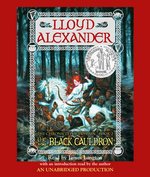
The Black Cauldron (Audiobook) by Lloyd Alexander, James Langton

The Black CauldronThe Black Cauldron

by Lloyd Alexander, James Langton (Narrator)
Series: Chronicles of Prydain, #2
Unabridged Audiobook, 5 hrs, 28 min.
Listening Library, 2004

Read: March 15 – 16, 2017


Of the five books in the Chronicles, this is probably my least favorite installment, still I enjoyed reliving it with this audio. Why Disney chose this one to make a movie out of, I’ll never know (and have never seen).

Prince Gwydion has called a council at Cair Dalben — bringing warriors, royalty and others from across the land to discuss something of urgency. Taran is included as well, thanks to the Prince’s experience in the previous book. One of the attendees, Prince Ellidyr, is a young, proud twit who might as well have been named William Zabka — if he doesn’t remind you of the quintessential 80’s movie antagonist, you’re not reading him right. He and Taran clash immediately, and are predictably assigned to work together.

We also meet the son of Taliesin, the chief bard, Adaon. Adaon is one of those characters that comes out of nowhere, every character loves and so do the readers. He’s wise, kind, and probably a decent fighter. Taran is possibly more taken with him as friend and role model than he was with Gwydion — partially because he’s not a prince, and so is more approachable; but also is just that kind of guy. Thankfully, Taran and he are also assigned to work together so it’s not all about the jousting with Ellidyr.

There were other characters introduced — several actually, but those two are the ones to focus on now. I’m not going to tell you anything about Gwystyl and Kaw, because I’ll not do them justice. But you’ll enjoy both. Gurgi was Gurgi, and Eilonwy was perfect — seriously just perfect. I always liked the character, but maybe never as much as I am this time through the series.

I got distracted by talking about the characters, the purpose of the council is to go hunting for the Black Cauldron, the source of the Cauldron Born warriors of Arawn. These are basically zombies with swords, doing anything their master calls for — and were the source of a good deal of apprehension when I was a kid, and now just seem like a great foe. Their numbers are swelling, making Dalben and Gwydion certain that something bad is on the horizon — now seems like a good time to raid the Dark Lord’s domain and destroy the Cauldon. Which may not derail the plans in motion, but will at least make them easier for the good guys to survive.

So after the Council, the heroes head out. As soon as they launch their strike, they discover that someone has beaten them to it — the Cauldron is gone and they’ve got to regroup before hunting it down. Things go bad there, the companions are separated from each other and on the run from those the Cauldron has already produced.

Taran, Ellidyr, Adaon, Gurgi and Fflewddurr get a lead on the Cauldron and decide to follow it up immediately rather than let their foes get it while they’re off looking for Gwydion. This takes them to the swamps of Morva — one of my favorite places in the series — and to the hut of Orddu, Orwen, & Orgoch. They will chill younger readers and entertain readers of all ages. From there peril, betrayal, redemption, grief and more ensue as the companions try to destroy the titular MacGuffin.

The Lloyd Alexander introduction to this one was better than the previous — I’m such a geek that listening to little bits of Alexander was one of the highlights of my day. I don’t think I have anything to say about Langton’s performance here that I didn’t say last time. It was good, nothing spectacular, though. He kept me engaged, even if he paced it slower than I’d like. Whoever transferred this from audiotape to digital format had an odd approach to dead space between tapes/tape sides — there are times that I feared the file had stopped unexpectedly, either from a corruption in the file or a glitch in the app, and just as I’d grab my phone to check the Langton’s voice would start again.

A needed part of the story, if only for Taran’s growth, and for what it sets up in books to come. It was never my favorite growing up, still isn’t now, but it was still an entertaining few hours.

—–

3 Stars

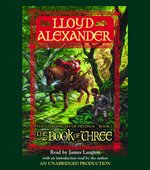
The Book of Three (Audiobook) by Lloyd Alexander, James Langton

The Book of ThreeThe Book of Three

by Lloyd Alexander, James Langton (Narrator)
Series: Chronicles of Prydain, #1
Unabridged Audiobook, 4 hrs, 56 min.
Listening Library, 2004
Read: March 6 – 9, 2017


I’m pretty sure that I’ve mentioned once or twice before here that The Chronicles of Prydain were the books that got me into fantasy. The Chronicles of Narnia made me a fan of Narnia, but really didn’t carry over to anything outside of Narnia (at least until I got older and tried Mere Christianity). But Prydain got me appreciating the tropes, conventions and characters that’d get me into Brooks, Weis & Hickman, Eddings, etc., etc. Listening to the audiobooks seemed like a nice way to revisit the series.

Taran, the Assistant Pig Keeper to Hen Wen (an oracular pig), dreams of glory to be found with a sword on the battlefield. His charge is frightened by something and escapes from her pen — Taran chases after her, leaving the only part of Prydain he’s ever known behind in the process. This hunt for the pig takes him to the far reaches of Prydain, where he encounters the son of the High King, Gwydion; Princess Eilonwy — about his age, and a fantastic foil and friend for Taran; Fflewddurr Fflam, an unofficial bard; Gurgi — some sort of simple-minded Sasquatch-like being; and others. Taran also encounters the forces of evil — the Horned King; Archen the enchantress; and other minions of the Dark Lord Arawn.

The themes of true nobility, heroism and what it means to be a man are prevalent (and Alexander maybe gets a little didactic here) — nothing I object to, just it seems a little thick by contemporary standards. Taran learns (for the first time) that there’s as much honor to be found in doing your everyday work well as there is on the battlefield. It probably feels a little old-fashioned to many, but there’s value here. Taran begins to mature here, but it takes (as I recall) all but the last 30 pages of the fifth book for it all to come together for him.

There’s a little audio recording of Alexander before the book kicks off as an introduction — that was pretty cool. Langton’s narration was okay — the narration was okay, maybe a little slow. His interpretation of Taran and Gwydion didn’t do much for me (and actually made me realize how clunkily Alexander wrote their dialogue), but they slowly grew on me. I really couldn’t find anything to like about Gurgi (one of my favorite characters ever). But I really liked everything else — his Eilonwy and Fflewddurr were perfect and a lot of fun. He deserves kudos for his Hen Wen alone, really.

This isn’t the greatest writing you’ll encounter — for the age group or genre. But it’s effective, there’s so much to appreciate here (and not just for nostalgia’s sake). I remain a big fan of the series, and do appreciate the audiobook.

—–

4 Stars

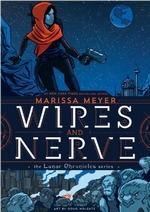
Wires and Nerve, Volume 1 by Marissa Meyer, Douglas Holgate

Wires and Nerve, Volume 1Wires and Nerve, Volume 1

by Marissa Meyer, Douglas Holgate (Art)
Series: Wires and Nerve, #1

Hardcover, 238 pg.
Feiwel & Friends, 2017

Read: March 1, 2017


So, in the months following Winter, life has progressed as one would expect — Cinder has strengthened her position on the Moon, Scarlet’s returned to the farm with Ze’ev Kesley, and Cress and the Captain are touring Earth. One of the loose strings that Meyer left hanging was the fate of the Lunar military troops all over Earth. They’re still out there, causing trouble.

Cinder can’t send any troops down — in the aftermath of a failed invasion, the optics alone would be bad. But . . . she can send a single operative, and Iko nominates herself for that. She spends weeks taking out pack after pack, helping local authorities take them into custody.

But they’re not just going to roll over, there are some that are preparing to strike back against Iko — and Cinder.

Throw in a love story, an examination of Iko’s true nature, and some nice catch-up with our old friends, and you’ve got yourself a fun story. It’s fun, but it’s light. If it were prose instead of a graphic novel, it might take 40 pages to tell this story. Which doesn’t make it bad, just slight.

The art was . . . oh, I don’t know — cartoonish? Not in a bad way, but I see why some people I know weren’t impressed. Once I got used to it (after about 30-40 pages), I even kind of liked it.

Basically, I’m saying that the book was okay — I enjoyed it, but man, I wanted more. At the same time, I think it delivered everything that Meyer and Holgate were looking for, so I can’t complain. Fans of the series may enjoy it, but it’s not a must read. People who haven’t read the books had best avoid it — but should probably go back and read the novels.

—–

3 Stars
2017 Library Love Challenge

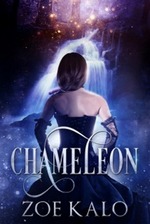
Chameleon by Zoe Kalo

ChameleonChameleon

by Zoe Kalo

Kindle Edition
Zoe Kalo, 2017

Read: January 27 – 28, 2016


Paloma is a few months shy of turning 18, graduating high school, and moving on with her life when people at her old school have had enough — she’s expelled from school and home. Her mother and step-father deposit her in a convent school with a mix of the privileged and orphans. Isolated, rejected, and defiant, Paloma determines that she’ll endure the experience no matter what it takes.

At that time however, she hadn’t considered the types of nuns she’ll meet, the kind of peers she has — and the very real possibility that she’ll meet a ghost (and maybe more than one). The nuns are a mix of judgmental and prejudiced against her; and welcoming and encouraging Her peers are largely a different assortment — some seem to be conscientious and studious, spiritual and compassionate, or spiteful and catty; most turn out to be everything they seem not to be. Paloma quickly (and despite herself becomes part of a group and finds that to be both a comfort and a source of distress. The ghost seems to be . . . well, that would be telling, wouldn’t it?

Paloma’s life up to this point hasn’t been that easy — there are some dark things in her past, and your idea of what some of those are is constantly evolving and you understand her better and she reveals more about herself. As you learn about her, she learns about her friends and “friends.” There’s more going on at the convent than many would guess, and many of those things will be exposed in one way or another before the reader finishes Chameleon.

My wife and kids have been watching a lot of Chopped lately, so you’ll have to forgive me for this metaphor: but Chameleon does a good job of using all the ingredients in the basket — paranormal elements (or are they?); complex female characters; even more complex relationships between them; a handful of mysteries; complicated family dynamics; and so on — combines them in some interesting ways, but the end result is a little undercooked. Yeah, it’s a stretch, but as I’ve thought about this book the last few days, that’s what kept coming to mind — if Kalo had given this another revision or two to smooth out some of the rough spots, better develop a few scenes, characters and relationships, this could’ve been much better. It’s a good, enjoyable book — but it’s not as good as it could have been.

I’m not sure what the point of setting the story in 1973 was — other than it being safely on the other side of PCs, the Internet, etc., I guess. It doesn’t hurt or help the story — I just think that for a setting as specific as that, there should be a clear advantage.

It’s a touch melodramatic for me with characters that need a little more time in the oven — but it did what it set out to do. Chameleon tells the story of this group of girls in a way that keeps you guessing, on your toes and turning pages. I anticipate the target audience will respond to things I didn’t here, but even for those of us a couple of decades past that target, this is an enjoyable read.

Disclaimer: I received this novel from the author in exchange for this post — thanks Ms. Kalo.

—–

3 Stars

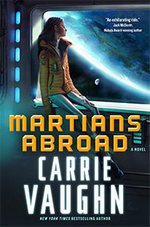
Martians Abroad by Carrie Vaughn

Welcome to Part II of the Book Tour for Martians Abroad by Carrie Vaughn — if you missed the first part, go check it out and enter the giveaway for a free copy.
—

Martians AbroadMartians Abroad

by Carrie Vaughn

eARC, 288 pg.
Tor Books, 2017

Read: January 11 – 12, 2016


There are so many things that I want to say about this book, I don’t know if I’ll be able to get to them all — seriously, I have a checklist that’s daunting — but let’s give it a shot.

I remember while growing up back in the 20th century that SF was fun. Maybe fun isn’t the right word, but stick with me — sure, the stories were serious, there were real stakes (usually), not every ending was happy, and so on — but there was an overall sense that the future would be okay, that space travel and aliens (at least the ones not trying to kill us/take over the world) were positives, and that there as something in humanity that made it all worthwhile. But more and more that went away, and the future became (when not downright dystopian) a grim place with people struggling to survive. By and large, who wants to live in the future depicted in SF now? Sure, there are exceptions, but most of those are in the Douglas Adams’ tradition (Scalzi and Clines would be good exceptions to this) — “light” or humorous SF. I’m not saying that I want an end to those stories, or that I don’t enjoy the darker SF. But I wouldn’t mind more SF that makes me feel okay about the future, rather than wanting to return to the carefree days of the end of the Hoover administration instead of getting to 2040 and beyond.

Enter Carrie Vaughn and Martians Abroad — an update of Heinlein’s Podkayne of Mars (not unlike Scalzi’s take on Little Fuzzy in Fuzzy Nation). Now, I’ve not read Podkayne, but I assume that it could use a little update and some tweaking. Not necessarily to improve it, but to make it “fit” the readers of today. Like a good cover song, such an update can revitalize an older work, showing different aspects of it, without having to replace it (see Parton and Houston’s “I Will Always Love You”). Since I didn’t read the original, I have no real idea how much of the plot of this book came from Heinlein and how much is straight from Vaughn herself — and I really don’t care outside of some vague curiosity. What I do know, is that Vaughn took some classic ideas and did something that only she could do with them. She gives us a vision of the future that’s not perfect, but seems like an okay place to be. This doesn’t make it better (or worse) than other SF works — just a refreshing change of pace.

From Lowood Institution to Trinity High School to Welton Academy to Hogwarts (and many others), there’s something about boarding school stories that just works. You get a little bit of a fish out of water story, usually an oppressive administration, some unofficial traditions shaping actions (frequently at least brushing up on bullying), and a heckuva story ensues. Sure, as a kid (and even now) I always wondered why anyone would attend/send their kids to one, but apparently it’s a thing. Add the Galileo Academy to the list — it’s a school for the children of Earth’s elites, as well as those of a few select space stations and colonies. Charles and Polly Newton are the first students from Mars to matriculate there — by “from Mars” I mean that they’re from the human colony on Mars, not some sort of fully alien life.

But really, in so many ways, they might as well be wholly alien — ditto for the students form various space stations or the Moon, etc. Due to differences in gravity, having to breathe pumped-in air, etc., their muscle structure bone density — and even digestive systems — have adapted to their environments to the extent that it’s easy to tell an offworlder by sight. How serious are these changes? Let’s put it this way — the non-Earth born kids can’t eat bacon. I know, I said this wasn’t a grim or dystopian view of the future, but that one fact makes me rethink that whole idea.

Now, the last thing Polly wants to do is come to Earth — she has a plan for her future, and this isn’t anywhere near it. It fits right in with her mother’s plans (Polly just doesn’t know how), Charles convinces his sister to go along with his mother’s plan without much fuss — it’s not like they could stop things, anyway. The trip from Mars to Earth isn’t as bad as she expects and she begins to have a little bit of hope – only to have that crushed as soon as she starts to meet students and administrators from the Academy. Basically offworlders are seen as lower-class/working-class, not as sophisticated or healthy as those born and raised on Earth. Polly, Charles and the other offworlders find themselves grouping together, and the target of harassment of varying degrees of seriousness and intensity from the rest. It’s tough to tell how much of this is in their minds and how much this is real — at times it feels like Polly’s exaggerating how bad things are, but typically, her perceptions are substantiated.

Before long, some accidents or other dangerous situations start occurring that put Polly and her classmates in jeopardy –and it’s not long before the students begin to wonder if there’s something other than chance at work here. While Polly seeks to integrate herself better into her new community — and she makes some pretty good strides at it (and some stumbles) — she, Charles and her friends try to figure out just who is targeting their class and why.

Polly is a great character — strong-willed, fallible, smart, impulsive, brave, socially awkward — very real. Incidentally, you may have noticed that we share a last name — I’m claiming Polly Newton as my great-great-ellipses-great-granddaughter right now, and welcome her to the family. The rest of her classmates are just as well-drawn. I could’ve used a little more on the adult front — the teachers and administrators are largely absent, and are vaguely drawn. I do think that’s a function of Vaughn’s focus being on the students, not necessarily a flaw with the book — I just would’ve liked a bit more of adult presence.

There is some real honest humor here — some of it comes from the situations, some of it is from Polly’s snark. But better than her attitude is the sheer awe she feels at Earth — the colors, the life, the non-greenhouse plants, the sky, the air. Her initial impressions of Earth were great — and they only got better from there — each time she left the confines of school, she discovered something new about this planet and the way it was described was better than the last. Polly’s a human, but from her perspective she’s an alien to this planet, she’s seeing it with fresh eyes.

There are some villains (of a sort), some real opponents to be faced, but really, there’s no one evil. There’s some misguided people, some . . . unthinking/wrong-thinking characters. But there’s no Voldemort figure, no true evil. Just conflicting agendas, different priorities, unrepentant snobbery — it feels real. Again, a refreshing change of pace.

Yes, this book is about teenagers, but it’s not a YA book. It is, like the SF I talked about at the beginning, YA-friendly, though. A book that I can recommend to friends as well as my kids and their friends — and, of course, you, whoever you are. The book was exciting, entertaining, filled with real situations in an appealing future. Vaughn’s to be thanked for such a pleasant change of pace, a breath of fresh air — and I hope we get to revisit this world (but if we don’t, that’s okay, this is a complete story as is).

Disclaimer: I received this eARC from Tor Books via NetGalley in exchange for this post — thanks to both for this. Also, thanks to Tor for the opportunity to take part in the Book Tour.

—–

4 1/2 Stars

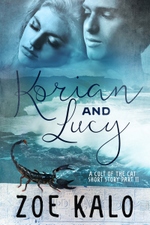
Korian and Lucy, Part II by Zoe Kalo

Korian and Lucy, Part IIKorian and Lucy, Part II

by Zoe Kalo
Series: The Cult of the Cat, #.06

Kindle Edition, 35 pg.
2016

Read: November 29, 2016


I’m not sure how to go about this — this makes no sense if you haven’t read Part 1 of this tale — and neither would really make that much sense without the novel, Daughter of the Sun. So if you haven’t read either — skip this, really. Go read Kalo’s novel (or at least my take on it) instead of this post.

Still, I want to say something — and not just because I said I would. I liked this a whole lot better than Part I , which is just about the fainted praise possible. And, like with the novel, Kalo is starting to win me over — she has a certain charm, no doubt about it. I liked Lucy more after this book — her mother. too — and I’m a tad more interested in the story. All good — and well done, Kalo.

Here’s the problem: I’m less convinced than I was after Part I that Kalo’s readers need this story. We haven’t gotten anything we couldn’t and wouldn’t have assumed from what we learned in the novel about this period. I don’t need to know anything about Trinity’s mother, or her romance with Trinity’s father, to be invested in Trinity. Also, I’m not sure that Part II actually accomplishes anything other than letting us know that time passed and that the pregnancy progressed — oh, and it charms curmudgeonly readers like myself. But the story needs to do more than that to justify itself, doesn’t it?

Now, will Part III be able to change my mind about this entire story? Sure. I truly hope it does. But at the present, I don’t see why she bothered with this installment.

Still, I enjoy this world — I like Kalo’s writing (which was better here than in Part I, but not as good as in Daughter of the Sun, Kalo’s one of those writers that needs space), so I’m glad I read this, as will most of her readers be. I’m looking forward to Part III (and truly hope that it wraps things up) — but even more, I’m looking forward to the sequel to Daughter of the Sun.

Disclaimer: I received a copy of this from the author in exchange for this post and my honest opinion.

—–

3 Stars

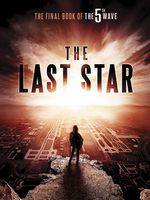
The Last Star by Rick Yancey

The Last StarThe Last Star

by Rick Yancey
Series: The 5th Wave, #3

Hardcover, 338 pg.
G.P. Putnam’s Sons Books for Young Readers, 2016

Read: November 3 – 5, 2016

Since the Arrival, I’ve been beset by more cravings than a women pregnant with triplets, and always for things I’ll never taste again. Chocolate ice cream cones. Frozen pizza. Whipped cream in a can. Those cinnamon rolls Mom made every Saturday morning. McDonald’s french fries. Bacon. No, bacon was still a possibility. I would just have to find a hog, slaughter it, butcher it, cure the meat, then fry it up. Thinking about the bacon — the potential of bacon — gives me hope. Not all is lost if bacon isn’t.

Seriously.

And there’s the best that this series can do — when there’s no reason for hope, no reason to keep going — Yancey’s characters find a reason (other than inertia) to keep struggling, to keep walking, to keep surviving, to keep hoping.

Sadly, I pretty much needed that same kind (not extent, kind) of perseverance. I thought The 5th Wave rocked, and I enjoyed The Infinite Sea, but not as much — but the wheels really came off this time. It’s not an Allegiant-level disappointment, but it was closer than anyone should want.

The writing was skillful — I liked a lot of what the book had to say about humanity, enlightenment, and teddy bears (no, really). Yancey nailed the character beats, moments, observations — but he utilized this great writing and surrounded these strong elements with a story that just wasn’t worth telling. Somehow in the end, the whole was <iLless than the sum of its parts (anyone know the German for that?).

I’m going to skip the plot summary because it’s just the next stage in the series, leading up to the final confrontation between the survivors we’re following and Humanity’s foes. That’s really all you need to know — and everyone who’s been reading the series knew that already.

This is the 10th book I’ve read by Yancey, and it’s so clearly the weakest link. I’d still recommend this book for those who’ve read the first two — but on the whole, I’d tell those who hadn’t started the series to skip it. I’m more than ready to give whatever Yancey does next a chance, if for no other reason than to get the taste of this out of my mouth.

—–

3 Stars

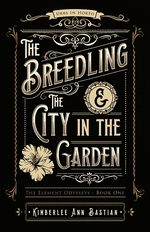
The Breedling and The City in the Garden by Kimberlee Ann Bastian

Now for the last post on The Breedling and The City in the Garden book tour.
—

The Breedling and The City in the GardenThe Breedling and The City in the Garden

by Kimberlee Ann Bastian
Series: The Element Odysseys, Book 1

Kindle Edition, 280 pg.
Wise Ink Creative Publishing , 2016

Read: October 24 – 25, 2016

The immortal soulcatcher Bartholomew (soon to be known as Buck) comes to 1930’s Chicago to track down someone and repay a debt. He comes looking like a young teen and is taken under the wing of a homeless orphan who seems to be a year or two older. The two have to deal with challenges and obstacles both mundane and other-worldly to survive, much less complete.

I’m not really sure how to describe the book beyond that, quite honestly. Maybe go back and check the main Book Tour post for a better description.

This book is all about what you think about Buck — and Charlie, to a lesser extent. Buck/Bartholomew has an eccentricity, a naivety that can make him endearing, ditto for Charlie’s street-smarts coated with his tough (yet tender) exterior. Better yet, if you find yourself invested in their friendship’s ups and downs. If you like these two, are interested in what happens to them, pretty much every problem with the book can be ignored. I wanted more from both of those characters, and I’m not sure I can ignore the problems with the book just because to them. Still, I can see where many people would love these two and find my issues shallow.

There are some real problems with this — for example, it’s hard to tell just how much of Bastian’s world is “our” world and how much is her mythology. Which might not make much sense, so let me try to explain: there are priests (I assume, Roman Catholic), but it’s hard to tell if that worldview is true/a true world here; Eden means one thing to Roman Catholics, but pretty much it seems to indicate the mortal world in this book. Also, too often I think Bastian goes for mysterious or suspenseful and ends up being vague, opaque or ambiguous. She’s done some great world-building here, I’m just not convinced that she’s great at explaining that world to the reader.

Technically there was a narrative arc to this novel, with an actual ending and a place to jump off to the next novel. But only technically, this is part of a story at best, the first installment in a series that really just serves to propel the reader for the forthcoming book. There’s some odd vocabulary sprinkled through the narrative occasionally — its one thing for Bucks/Bartholomew to have antique words and phraseology due to his origin, but for the narrative to throw those in every now and then it just doesn’t work it’s jarring, drawing attention to it self

There’s an earnestness to the writing, a clear effort on Bastian’s part, and you want to root for her and her creation — I’m not entirely certain she succeeds with this book, but man, you want her to. Those who like steampunk, but aren’t tied to the tech; those who don’t mind mixing fantasy with history; and/or those who like seeing children/child-sized characters in life-or=death situations, this could work for you.

—–

3 Stars

A Few Quick Questions With…Kimberlee Ann Bastian

So, for the second post on The Breedling and The City in the Garden book tour, we got a few questions with the author, Kimberlee Ann Bastian. As usual, I kept it short and sweet, because I’d rather she work on her next book than take too much time with me.

I see that this is being billed as a “reboot” of the novel — what does that mean for you and the book?
All it really means is that my first attempt was a dress rehearsal. I learned a great deal of what not to do when self-publishing and really it boils down to not cutting corners where your book is concerned. Not that I meant to cut corners. I just didn’t have the proper funds. You’re either all in or you’re not and though my first intentions were good and I had the drive, it wasn’t quite what I imaged it would be. Now, with the brilliant team at Wise Ink Creative Publishing, I have an extraordinary team to work with and all the tools an indie author needs to realize his or her vision. The Breedling and the City in the Garden is now, after eight years of trial and error, the way it was always meant to be with all the professional bells and whistles included.
Most authors have dozens of ideas bouncing around their craniums at once — what was it about this idea that made you say, “Yup — this is the one for me.”?
The idea for the Element Odysseys came to me at a time when I actually had no other ideas running through my head. I put all my energies into the concept and it really helped me write my way out of a trialing situation and once I started, I couldn’t stop.
What kind of research — if any — did you have to do for this? Uncover any nuggets that were so great that you had to rework the story just to fit some of your research into things?
The research journey for this book and for the series in its entirety has been fascinating. I have tapped into every vital online database, read countless books and articles. Watched a few documentaries and I went above and beyond the scope of what has made it into the final version of the story. I have even visited the sites of Chicago where the story takes place, or what’s left of them. For The Breedling and the City in the Garden, the greatest historical nugget I found came during my second round of editing when I was working on changing the title. I came across the Great Seal of Chicago, which on the seal the Latin phrase Urbs In Horto is present. Upon learning the translation Garden City or City in the Garden, I knew I had to reference it in the story and ultimately it became the second half of the title.

Who are some of your major influences? (whether or not you think those influences can be seen in your work — you know they’re there)
I think for this first book I pulled a great deal of inspiration from Charles Dickens’ Oliver Twist, Irene Hunt’s No Promises in the Wind and Mark Twain when creating the historic feel of the story. For the mythology elements of the story, I did draw a little from HBO’s Carnivale in how to blend the historical with the fantastical. Although for those familiar with the series, I’m not nearly as abstract. Subconsciously, I probably took some inspiration from Harry Potter as well, for I have already been told the opening chapter is reminiscent of Dumbledore and McGonagall in the beginning of The Sorcerer’s Stone (The Philosopher’s Stone).
What’s the one (or two) book/movie/show in the last 5 years that made you say, “I wish I’d written that.”?
This is the hardest question by far—haha. (pauses to contemplate) In the book category, I’d have to say Erin Morgenstern’s The Night Circus. I’m also going to go a little rogue and choose a musical, Lin Manuel-Miranda’s Hamilton: An American Musical, it is my current obsession.

Thank you kindly for letting me swing by The Irresponsible Reader, H. C. It has been a blast chatting with you! Happy Reading.

Thanks for your time, Ms. Bastian, I wish you and the release the best.

Page 18 of 24

Powered by WordPress & Theme by Anders Norén