Month: September 2013 Page 3 of 4

Blood Work: How the Blood of Christ Accomplishes Our Salvation by Anthony J. Carter

Blood Work: How the Blood of Christ Accomplishes Our Salvation
Blood Work: How the Blood of Christ Accomplishes Our Salvation by Anthony J. Carter
My rating: 3 of 5 stars

Um, yeah. This was okay. This is a brief survey of the New Testament’s usage of Christ’s blood — both literal and metaphorical — essentially looking at the question, what does the Atonement do for the believer?

Carter’s answer would be: quite a lot. The blood of Christ purchases, propitiates, justifies, redeems, cleans, sanctifies, ransoms and frees the believer who is brought near to other believers by the blood, are given peace by it and are elect in it. In addition to looking at key texts supporting or explaining each of these aspects of the atonement, Carter brings in historic catechisms and confessions to help understand his point, and then invokes song lyrics to demonstrate (in part) that this is what people have believed for generations — or to help the reader apply the lessons to themselves.

Carter writes with a very personable style and obvious passion — it is easy to “hear” a lot of this book being preached, and done so with great efficacy and application to the individual. It’s this that kept me going through the book after it became pretty clear that this was going to be a survey at best, and not an in-depth examination of anything. While I did admire his ability to quote a historic catechism in one breath and hip hop lyrics in the next, I wonder if he wasn’t too reliant on quoting lyrics (rap or hymnody) to seal his points. A minor quibble at best, but one that stuck with me.

Ultimately, I was a little disappointed, I wanted more. I can’t put my finger on anything and say “This could’ve been made better, here.” But there were several places that could’ve been true. It’s certainly not shallow, but it’s nowhere near deep. Nor particularly insightful. But it is solid, it is passionate, it is focused on the essentials — and for many people that’s exactly what they need. Maybe if I’d read this a week or so later (or earlier), I’d have had a different reaction.

View all my reviews

Indexing, Episode 9: Whiteout by Seanan McGuire

—-

IndexingIndexing by Seanan McGuire
Series: Indexing, #1.9

My rating: 3 of 5 stars

Episode 9: Whiteout
Wait? That’s it? It’s over?

Sort of a let-down, honestly, after Episodes 7 and 8. But it makes sense, the story and the characters need a break to regroup, to refocus, to make sure that they (and the readers) grasp what’s going on. The pieces are moved around a bit and the stage is set for 2 chapters of rockin’ action, and I’m betting 1, or maybe half of one for dénouement.

And really, my initial reaction wasn’t fair — there was a fair bit of action, it just wasn’t as dazzling. The choice that Henry makes to save her team — and to allow them to move on and stop Mother Goose — is just as dramatic as anything that happened earlier, it just didn’t look that way. The realizations that she comes to as result of that choice, about the nature of the Narrative are really what everything’s been driving toward and will likely prove to be the key to stopping the tumult the agency finds itself in the midst of.

This episode was all Henry’s, and we didn’t get enough of Sloane, Andy or Jeff. We didn’t need a lot Demi time here, particularly when McGuire got as much mileage out of her brief appearance as she did.

Not the most obviously good episode of this serial, but a solid one, and a necessary one. Bring on the action in 10!

Saturday Miscellany 9/14

Odds ‘n ends over the week about books and reading that caught my eye. You’ve probably seen some/most/all of them, but just in case:

    This Week’s New Releases I’m Excited About and/or You’ll Probably See Here Soon:

  • Fangirl by Rainbow Rowell — Rowell’s taken a firm hold on my “read ASAP” list with her first two books, really looking forward to this one
  • Robert B. Parker’s Damned if You Do by Michael Brandman — 5 years ago, if you’d told me I’d be apprehensive about opening a new Jesse Stone, I’d have looked at you like you were crazy. Yet here we are. Still, Paradise, MA calls, and I answer.
  • The Sound and the Furry by Spencer Quinn — I litterally hopped in my chair a little bit when I realized this book was released this week. This is going to be fun!

YOU by Austin Grossman

You
You by Austin Grossman
My rating: 4 of 5 stars

Let’s admit something about video games. They are boring. They induce a state of focus that is totally absorbing but useless — like the ghost of work or creative play, but without engaging the world in any way. They are designed to focus attention but don’t train you to overcome the obstacles to being focused. They are fun but don’t tend to make a person more interesting. The rewards are false coin — they are rarely satisfying or moving. More often, the offer something like a hunger for the next game, promising a revelation or catharsis that they never quit fulfill, that they don’t even know how to fulfill. They work in a single small corner of the emotional world, stirring feelings of anger or fear or a sense of accomplishment; they don’t reach for any kind of fuller experience of humanity.

But when I thought about story, I felt I couldn’t really be wrong.

Because when I lay awake at night I wanted to be in a story; I wanted it so badly it was an ache in my bones. Anything story but the story I was in, of early disappointment and premature world-weariness. I wanted to feel like I was at the start of a story worth being in, instead of being twenty-eight and feeling like my story was already over, like it was the most boring, botched story imaginable.

I used to love books in which somebody from our reality got to go to another world. The Narnia books, the Fionavar books. Isn’t that what we could do, take people into another world? If not, why not? Why couldn’t that be what we did?

There’s the central focus of YOU: A Novel. Can someone — genius programmer or rookie game designer — take this difficult-to-vocalize aim for video games and run with it? What stands in the way — technology or human ability or maybe human frailty?

If you take the love of video games and late 20th Century American pop culture from Cline’s Ready Player One; the ability of Michael Chabon in The Amazing Adventures of Kavalier & Clay to tell a compelling story while also giving a history of a creation of a medium; and mix them with Lev Grossman’s Magician series’ sense of disillusionment that comes from childhood loves and obsessions meeting with the real world — you might get something like this.

One word kept popping up in my notes: bittersweet. And in checking around on the Internet a bit, I saw that I’m not the only one who thought that way — on the one hand, nice to see that I got the same read on the book as many/most. On the other hand, it would’ve been nice to have an insight all to myself. Whether it was in the flashbacks, or the contemporary plot — none of the successes where wholly positive, there was always something wistful about it. Very few of the losses were without some measure of victory, either, it should be said. But the measures were typically small. There’s a lot of missed opportunities — years’ worth — a lot of regret and sadness over them, especially the ones that can’t be recreated.

The other novels I mentioned earlier all share a thread with YOU about friendship — particularly that kind of friendship that develops early in life, the kind that continues through the years, and really shapes your future: your personality, loyalties, loves — for good or ill. How in many cases your adult life is a reaction to, or development of, these friendships. And that’s where Grossman is his sweetest, and probably his woeful.

That’s not to say this is a depressing book — there’s a lot of fun, there’s a challenge, there’s personal growth, and an element of hope throughout. The protagonist, Russell, finds his roots, finds comfort and a place to grow. Other characters do, too. There’s a sense of history being made here, looking at the rise of FPS games, the early days of E3, remembering the first computers introduced in public schools and the general lack of ability of the faculty to know what to do with them. The nostalgia factor, for even people like me that were on the fringes of this culture is high. I’m not much of a gamer (though I’d like to be — just don’t have the time), but the game — or the series of games — is as incredible as it is impossible (especially given the technology available at the time, but I think even if the first installment came out now, it’d be impossible.) I’d play this — or I’d watch my 15 year-old son play it/obsess over it.

There are little observations and asides sprinkled throughout the text that add so much personality and flavor to the narrative — like this in the middle of this paragraph:

After ten weeks of work, we could play out an altercation between an eighteenth-century French mercenary with a short sword and buckler (a saucer-size shield with a pointed spike — as Eskimo language is to snow, so archaic English is to “metal objects designed to cause harm”) and a Roman legionnaire from the age of Marius, with his gladius, Vae victis!

That made me chuckle aloud, showed me a lot about these characters and the game. Passages like this are what elevate this book.

Review: North! or Be Eaten by Andrew Peterson

North! or Be Eaten
North! or Be Eaten by Andrew Peterson
My rating: 3.5 of 5 stars

It is true the Shining Isle is smoke and ashes and that darkness is wide over the land. But your long memories have failed you. Of all creatures, you should know that the darkness is seldom complete, and even when it is, the pinprick of light is not long in coming — and finer for the great shroud that surrounds it.

This quotation is from the closing pages of this volume, and sums things up pretty well. This is the second book in a fantasy series — and certain things have to happen in a second book — namely, things get dark and bleak, almost completely so as stated above. Peterson makes sure that North! or Be Eaten fulfills that role just fine. It got a little darker than I expected, more than many contemporary children’s authors would be willing to go. But Peterson doesn’t go too far, he’s actually honest with his readers — no matter their age — things look dark, but there’s the pinprick of light. That’s always present.

To match the tone and events of this book, the sense of whimsy and play that was so prevalent in the first book is almost gone. There are hints and traces, but it doesn’t go as far as it did before — which is good, it wouldn’t have fit this time. It was appropriate in On the Edge of the Dark Sea of Darkness, and it will be again, but it’s not now.

The Igibly family — Wingfeather, actually — has had to leave their home and strike out trying to survive the Fangs. So the world of the novel has to expand — as does the cast of characters. More villains, more Fang-victims, more monsters, more betrayal, more close calls and trouble in general for the family. More friends and allies, too — more wonders of a fantastic world, more chances for heroics (obvious and not so much), more opportunities for kindness.

The characters are forced by circumstance to grow up quickly, and they do so — but not to the extent it feels forced or unnatural. These are diamonds being formed by intense pressure, and on the whole, they do so well.

I know most readers of this won’t pick up on it, but I caught some echoes of the Song of Ice and Fire in this book — for example, Janner and his new friend, Maraly, remind me a lot of Jon Snow and the wildling, Ygritte — so much so that I kept waiting for her to turn around and say, “You know nothing, Janner.” The geography and climate of the North here also struck me as very Westerosian. I can’t imagine that Peterson was tipping his hat in that direction, but you never know.

Not as fun as the first book, but still a well-told story, consider me ready for more.

Q Is For Quarry by Sue Grafton

Q Is For Quarry
Q Is For Quarry by Sue Grafton
Series: Kinsey Millhone, #17

My rating: 4 of 5 stars

This 17th novel in the Kinsey Millhone series is the most satisfying yet — in character, mystery, and the ongoing family story, not a mis-fire anywhere. I honestly am not sure what to say beyond that.

But let me try…

Kinsey was her typical self — a little uncertain of some personal choices, proudly defiant in them though she may be; has some good moments with Henry and the other regulars. We got to spend a lot of time with Lt. Con Nolan, and his mentor (a new character) Detective Stacey Oliphant in this investigation. I’ve always liked Nolan, and just about every time Grafton deals with another cop, I’ve wanted it to be Nolan. Oliphant was fun to get to know, and I hope she teams up with them again (maybe not in “R”, but maybe by “T”).

Okay, then we got a healthy dose of the whole long-lost family thing that’s been going on for a few books. I’m about fed up with the bickering with Kinsey and the cousins. But she meets another family member this time, and has a great conversation with her. I’ve always understood the anger that informs her interaction with the family, but she doesn’t seem to do anything with the naval-gazing it brings up. This time, there’s a touch of anger, but she moves on to something else — really appreciated that.

Okay, the mystery itself was just great. I mean really great. Watching the pieces come together, like a satisfying puzzle…perfect. On the one hand, it was just a well-written Millhone mystery. But it seemed more, it seemed (frequently) like the case was more complex than usual. There’s a mental “click” I get when clues start coming together and you can start to see what happened — and this is horribly subjective, and hard to explain, but — the “click”s this time felt more like a Harry Bosch novel than a Kinsey Millhone. Maybe it was the cold case-nature of this one. And I’m not trying to knock Grafton saying her best book (so far) is more like someone else than herself. Yeah, I think Michael Connelly crafts a better mystery, that’s not saying Grafton can’t.

To top it all off, there’s the Author’s Note at the end that tells us that this was based on an actual unsolved case, and that Grafton hoped the book and the pictures of the facial reconstruction of the actual victim in the back of the book (funded by Grafton), would help turn up new leads in the investigation. Icing on a really good cake. For details, see, “Who Was Jane Doe? True Life Subject of Sue Grafton’s Q Is for Quarry Still a Mystery” by Barney Brantingham.

Superman: The Unauthorized Biography by Glen Weldon

A briefer (and less self-indulgent) version of this appears on Goodreads.

—–

Superman: The Unauthorized Biography
Superman: The Unauthorized Biography by Glen Weldon
My rating: 3 of 5 stars

I was five years old when Superman: The Movie was released, and while I can’t remember much of the experience — by gum, when I left the theater with my parents, I believed a man could fly. I don’t know if that was my introduction to the character, it’s certainly the one that I remember. He was certainly around for the rest of my childhood — action figures, in SuperFriends, coloring books, the sequels, clothing, and, of course, in comics. He was never a favorite the way that Robin (later Nightwing), Cyborg, Changeling, or Spider-Man were, but he was a constant, an ideal. The cover of Crisis on Infinite Earths #7 is burned into my brain. I can’t tell you how many times I read John Byrne’s Man of Steel. Even after I stopped collecting comics, he was around — I watched most of Lois & Clark‘s episodes, and every one of Smallville‘s. My older sons and I spent who knows how many hours with the Justice League cartoons. I even own Superman Returns on DVD (as I recall, I purchased it the same day as I got the Donner Cut of Superman II, a far better use of my money).

In other words, this was a book written for people just like me.

Glen Weldon, NPR’s Comics Critic, has given us a great cultural history of Superman — from his prototypes and then genesis in the early work of Shuster and Siegel up to The New 52 and looking forward to the release of Snyder’s Man of Steel — and all points between. At once entertaining and pedantic, Weldon examines The Last Son of Krypton, the state of comics as a medium, and what both say about American culture through the decades.

He begins, as he ought, with Jerry Siegel and Joe Shuster growing up, reading and (even as kids) writing comics, their struggles along the path to publication and eventual establishment in the field. Shortly after this, they came up with their most famous creation, which was essentially the inception of the dominant genre in comics. Weldon focuses on this period in painstaking detail — giving detailed descriptions of the early stories (panel by panel sometimes), their reception and sales.

Following this, he moves into decade by decade summaries — in these chapters Weldon looks at the predominant themes in the stories, power changes and development, new characters, and so on. Special attention is given to Lois Lane (both as an individual and in her relationship(s) to Clark/Superman), tweaks to his origin, and depiction of Krypton. I thought there were too many reboots, resets, etc. today — glad to see it’s not a novel development. Superman’s appearance in other media is also discussed — comic strips, radio, television, cartoons, movies, and even merchandising — how that affects Superman, Clark and the rest. As interesting as that was, I was most interested in seeing how cultural movements, politics and wars impacted the character.

Weldon spends a lot of time discussing Superman: The Movie, the ups and downs along the path to its production. I laughed out loud at the lengthy list of actors considered for the role — so, so few of them should’ve been in the running. Everyone so up-in-arms about the recent Affleck-as-Batman casting should read this list, it might help them see how good he might be in comparison. The list for Lois was shorter, but no less interesting. In light of how far-reaching movie cross-promotion goes today, it’s amazing to see how little DC Comics did to capitalize on this movie (or the sequels).

I think he went lighter on Superman in the comics from this point on, focusing on the Reeve films, the Superboy TV series, Lois & Clark, Smallville, and Singer’s movie. Well, except a really good and thorough look at The Death of Superman saga from the 90’s. Still, fascinating on the whole — sometimes the level of detail can get overwhelming and hard to wade through, but it was worth it. It’s not encyclopedic — however close it feels — there were stories and creators that I thought got short shrift from the last couple of decades. For example, I was disappointed in the lack of any discussion of It’s Superman by Tom De Haven — 2005’s best depiction of the character, although as it wasn’t sanctioned by DC, I understand it.

I would’ve liked to see a more consistent tone — he never steps over the line in to fanboy territory, but generally he’s positive about the characters and universe — but from time to time, he seems snide and like he’s looking down on the franchise and its fans. That said, his take on the character as a whole, and why he’s still a force in popular culture today expressed in the Introduction was great — almost perfect. I wish that Nolan and Snyder had more in common with that take than they seem to have. My major complaint was the utter lack of any images whatsoever — as thorough as some of his descriptions of the art may be, it’s no replacement for the Real (reprinted) McCoy. Licensing those images would be a nightmare (and likely an expensive one), so again, I understand it — I just would’ve liked to see it.

For fans, for those who like the character but wouldn’t go so far as to call themselves that, those interested in the medium — this is a recommended read on this slice of American history.


Dusted Off: Emperor Mollusk versus The Sinister Brain by A. Lee Martinez

Emperor Mollusk versus The Sinister BrainEmperor Mollusk versus The Sinister Brain by A. Lee Martinez
My rating: 4 of 5 stars

What a fun read (not hilarious, as the cover implies–and I believe, Martinez tweeted he didn’t like the word)!

This tale of our solar system’s biggest supervillian, conqueror (and would-be conqueror) of planets, destroyer of armies, and uber-mad scientist reads like a semi-serious Douglas Adams book. All of the wit, all the imagination, all the “where did he get that loopy (and great) idea from?”, none of the compulsion to go for the laugh every x number of paragraphs. It’s a great look at what makes a supervillian of the evil-scientist variety tick.

I’ve read about half of Martinez’ works, and he seems to go out of his way to make each significantly different than the last–but there are certain hallmarks–they’re clever, very enjoyable, and they display an essential humanity in characters you wouldn’t normally sympathize with/think of in this way. Such a treat.

Dusted Off: Chasing the Moon by A. Lee Martinez

Chasing the MoonChasing the Moon by A. Lee Martinez
My rating: 3 of 5 stars

It’s so hard to write anything about Martinez’ work, because it’s just so weird. And I mean that in a good way. Comic, but rarely laugh-out-loud; SF/Fantasy/Supernatural-ish, but approachable for those who prefer to stay away from that; books that feel like they’re the start (or middle of) a series, but are all stand-alones. One thing that connects them all is the humanity of the characters–particularly the protagonists, but not entirely reserved for them. Whether we’re dealing with supernatural creatures (vampires, werewolves, etc.), witches, aliens, robots, extra-dimensional creatures, monsters, cult leaders, or just Average Joes/Janes caught up in all of the madness–his characters have heart and humanity that shine through like nobody’s business.

In this particular tome, Diana finds the perfect apartment for her needs and budget, almost too good to be true, and jumps at it. Then she finds out that the catch to this deal is that she’s just signed on to be the one thing that stands between the world at large and a monster named Vom the Hungering, who will (one day) devour everything in sight. Hilarity ensues.

To say more would ruin this light (but not too light), engaging and very fun read. Do yourself a favor and give it a shot.

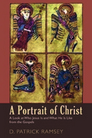
A Portrait of Christ: A Look at Who Jesus Is and What He Is Like from the Gospels by D. Patrick Ramsey

A Portrait of Christ
A Portrait of Christ: A Look at Who Jesus Is and What He Is Like from the Gospels by D. Patrick Ramsey
My rating: 4 of 5 stars

Taking a page from B. B. Warfield, Ramsey considers our Lord from a different angle than is usually taken — rather than look at the Person of Jesus Christ, or His Work — Who He is and What He has done/is doing/will do — this book focuses (not to the exclusion of the Person or Work) on considering, what is Jesus Christ like?

Ramsey begins on looking at The Promised Christ — why we need a Savior, how God providentially protected the line of the promised Savior throughout history from His foes (human and otherwise), and once He was born his struggles against Satan. He looks at the humanity as well as the Divinity of Jesus — briefly explaining the concepts — as well as why Jesus had to be both human and divine.

That established, he then moves on to consider the question “What is Jesus like”? He started by talking about Jesus’ compassion towards those physically and spiritually oppressed, and then to the special kind of compassion He showed His people — in His prayers and desires, in the midst of His suffering, in how He loved His people. Then at how Jesus befriended children and scandalous sinners. In a chapter that more than one person I know would stumble on, Ramsey looks at another side of Our Lord — His anger.

He concludes with a look at the

one characteristic or attribute that I think nicely sums up the kind of life Jesus lived here on earth. Interestingly enough, it is the one character trait that Jesus himself mentioned he had. He brought attention to it, at least in part, because of its attractiveness and appeal. . . . humility, or lowliness of heart, which is closely associated with meekness and gentleness.

A fitting conclusion, one that shows us the character of God as it draws us to Him.

More than once, Ramsey says something like, “In Jesus, we see how a human being is to act and live before God and before other human beings.” Therefore, he’s careful to apply his observations to his readers, which keeps this book from being only a series of meditations, but prompts for action and change in our lives.

There’s a straight-forwardness, language that’s easy to understand, illustrations that aid understanding that speaks well of Ramsey’s preaching (I should mention that this book is based on a series of sermons). More than once while reading, I paused and read bits out loud to whatever family member was handy. I was moved, encouraged, convicted — this would make for good devotional reading for a Lord’s Day afternoon.

Page 3 of 4

Powered by WordPress & Theme by Anders Norén