Month: April 2017 Page 1 of 4

Saturday Miscellany – 4/29/2017

Odds ‘n ends over the week about books and reading that caught my eye. You’ve probably seen some/most/all of them, but just in case:

    A Couple of Book-ish Related Podcast Episodes you might want to give a listen:

  • On the latest Crime Time Podcast, Lee and Eddie end the show with the beginning (I hope) of a discussion on writers focusing on the gory parts of murder scenes — particularly featuring female victims.
  • This week’s Two Crime Writers and a Microphone has an interview with novelist, and first-time Crime writer, Harry Brett. Brett also teaches in MFA programs and hearing his thoughts on the genre is thought-provoking (and the kind of thing I want to shove down the throats of all my “don’t you read real literature” friends?).

    There was only one New Release This Week that caught my eye, but next week has a bumper crop — don’t despair:

  • A Rare Book Of Cunning Device by Ben Aaronovitch and Kobna Holdbrook-Smith — an audio-only Peter Grant/Rivers of London short story. I listened to it yesterday and thought it was pretty fun.

Lastly, I’d like to say hi and welcome to passmethatbook (am sure with a moniker like that there’s a blog attached, but I didn’t get a URL with the follow notification) and Tannat for following the blog (in one form or another) this week.

Down Don’t Bother Me by Jason Miller

Down Don’t Bother MeDown Don’t Bother Me

by Jason Miller
Series: Slim in Little Egypt, #1

Paperback, 270 pg.
Bourbon Street Books, 2015

Read: April 26 – 27, 2017

She was about my age, early forties, though I had to look at her hands to tell it. She was good-looking, too. Good-looking is putting it mildly, maybe. I looked around vaguely for a priest to strangle. She was tall and lean, with the kind of green eyes a lazy novelist would describe as “piercing.” Her copper hair was pulled back from her face with a strip of brown cloth. I imagined that its more honest self was touched here and there with gray, but that was just a guess. . . . I put down the picture. She looked at me and it and frowned the kind of desperate, exhausted frown that turns the room upside down and shakes the sympathy from its pockets.

Yeah, the spirit of Raymond Chandler is alive and well in the Midwest.

I first heard about Jason Miller through this episode of Mysterypod and thought his conversation with Steve Usery was fascinating. I finally got the chance to read his first book this week — We spend the first 3 and change pages with Slim in a coal mine in Little Egypt, Illinois. There were so many things in those pages I just didn’t understand — but somehow, Miller still created a fantastic sense of place. Claustrophobic, dark, dirty, and dangerous. I was hooked almost immediately. Then we started meeting people — and it got better.

Slim works in the Knight Hawk — one of the remaining coal mines in the area — he’s known for tracking down a couple of people that no one else seemed capable of finding, and was willing (and able) to get violent as necessary. More importantly, Slim’s a single father to a 12 year-old named Anci. He’s dating a teacher and has a best friend named Jeep, who’s sort of a Joe Pike-figure.

Matthew Luster is the owner of the Knight Hawk — and probably just as ethical as you’d expect. Just as rich, too — at least by small-town standards (and then some). He talks Slim into looking for a newspaper photographer who went missing about the same time as the reporter he worked with was found dead inside the mine. Roy Beckett, the photographer, is married to Luster’s daughter — and it doesn’t really seem like they’re really close. Why Luster wants him found is a bit murky, too — primarily, he seems curious about the story that Beckett and the photographer are working on.

The top contender is a blossoming meth trade in Knight Hawk and another mine in the area. But there’s an environmental group making noise, too. Throw in Beckett’s reputation as a womanizer, and you have any number of potential reasons why he’s scarce. Slim makes a token effort in tracking him down — when bodies start piling up, and bullets fly near Slim, his girlfriend and daughter. Which just makes him buckle down and get to work.

Overall, it’s a pretty standard PI tale from this point out. Entertaining enough in and of itself, a solid story that will keep mystery fans reading. But what makes this book shine and stand out is Slim and his perspective — like any good PI novel, it’s about the narrator primarily. And Slim is, right out of the gate, right up there with Spenser, Walt Longmire, Patrick Kenzie, and so on. Right there, Miller’s given people a reason to enjoy this book and come back for a sequel or three.

But it gets better — the way most of these people talk. I loved it — I’m not saying Little Egypt is full of Boyd Crowders, but it’s close. A ritzy-subdivision’s security guard, one of Beckett’s mistresses, Slim, and others — I made notes to quote them all, but I won’t — just a sample of the dialogue (and narration, which is pretty much just internal dialogue):

  • That old man is so bad, they’ll have to come up with a new definition of the term just so ordinary bad men won’t get all full of false piety.

  • You ever see one of these Taurus Raging Judge Magnum things? . . . I know it sounds like a gas station prophylactic, but let me tell you, it’s enough gun to kill the Lincoln on Mount Rushmore.

  • …the public defender system is a good thing–but you got the feeling that, in this guy’s hands, you could walk into to donate to the policeman’s fund and end up tied to a metal table.

  • Anci, I have to say, is the coolest kid in Crime Fiction today — that’s not saying a whole lot, I grant you. But she is. I like Maddie Bosch, but she’s no Anci (and Bernie Little’s and Andy Carpenter’s sons are okay, too — but we don’t get that much time with them). She’s smart, she’s brave, she’s vulnerable, funny, well-read . . . and more mature than Flavia de Luce (and doesn’t seem to go looking for trouble). All without being too cute and therefore annoying — she’s a kid, but an important part of Team Slim.

    The novel ends making it clear that there are more stories about Anci and Slim to tell. There’s another novel and a short story in this series — hopefully with more to come. I had so much fun reading this and totally dug this one and can’t wait to read the others. Give this a shot, folks.

    —–

    3.5 Stars

    2017 Library Love Challenge

    The Best of Adam Sharp by Graeme Simsion

    The Best of Adam SharpThe Best of Adam Sharp

    by Graeme Simsion

    eARC, 352 pg.
    St. Martin’s Press, 2017

    Read: April 17 – 18, 2017

    If my life prior to February 15, 2012, had been a song, it might have been “Hey Jude,” a simple piano tune, taking my sad and sorry adolescence and making it better. In the middle, it would pick up—better and better— for a few moments foreshadowing something extraordinary. And then: just na-na-na-na, over and over, pleasant enough, but mainly because it evoked what had gone before.

    That’s the first paragraph, and I’m betting 80% of reviewers will be quoting that — how can you not? You get a sense of Adam, his musical taste, how much music means to him/the way he thinks — and you get the novel’s mood. In the next few pages, you get an idea what Adam’s life is like in February 2012 — his relationship, his relationship with his mother, the nostalgia (and maybe more) he feels towards a country he lived in while he was young and his first great (greatest?) love.

    Then we end the introduction with this paragraph that pushes us into the novel:

    No matter now. I would soon have more immediate matters to occupy my mind. Later that day, as I continued my engagement with the past, scouring the Internet for music trivia in the hope of a moment of appreciation at the pub quiz, a cosmic DJ—perhaps the ghost of my father—would lift the needle on the na-na-na-nas of “Hey Jude,”say, “Nothing new happening here,”and turn it to the flip side.

    “Revolution.”

    On the flip side is an email from The One Who Got Away (“got” isn’t necessarily the best term — “slipped away”, “blindly walked away from”, “made the greatest mistake of your life with” — come closer). Angelina was a night-time soap actress that Adam had an affair with while he lived in Australia while working on a contract job in 1989. Over the next couple of chapters Adam reminisces about his time with Angelina — it’s a heckuva love story. It’s an even better doomed-love story since we all know it’s coming to an end, and he’s able to tell it that way.

    This email is the first communication she’s attempted since she informed Adam that she was getting married before he had a chance to come back.

    We also get a compressed history of Adam and Claire (his might-as-well-be wife), their 15+ year relationship — the ups, downs, and obvious commitment. Even if the romance is largely gone, there’s something strong under-girding their bond. Right? Maybe? Probably? And I do mean compressed — their decade and change is given less space than the few months Angelina and Adam have. We also see what’s going on in the Spring of 2012 with their relationship, and how this new email correspondence fits in with Adam’s life.

    Part II of the book is focused on what happens when Adam and Angelina reconnect in person for a few days months later. Which is really all I can say about that. Well, it takes almost the same amount of space as the first part (ecopy, so I can’t do page counts, so these are just estimates) — so it’s obviously a lot more detailed.

    I loved Part I — totally. The feel of it, seeing the changes for the better that Adam goes through thanks to the confidence boost that emailing Angelina gives him. Watching his relationship with Claire improve at the same time. All the while enjoying the 1989 story, too, sharing that feeling of nostalgia and more with him. It’s just so well done.

    But Part II? I had serious problems with. I cannot detail them without ruining the book for you all. But people just don’t act the way most (if not all) of our primary characters do here. There are just too many psychological, emotional, spiritual and moral problems with what happens, how people react (both in the heat of the moment and in the cool light of day) — people, real people, just can’t do this and survive in any meaningful fashion.

    We also do meet Angelina’s husband, Charlie, and I have so many conflicting opinions about him — on the one hand he appears to be good guy, generous, gracious (and other positive adjectives that don’t start with “g”) . . . but he’s dishonest with everyone (possibly including himself), manipulative, cold, calculating . . . I want to state that he’s not physically or mentally abusive, because my description of him almost sounds like it. Things would be less murky if he was.

    Angelina is equally troubling — both in how she acts toward Charlie, her children and Adam. I’m not incredibly certain that I’m pleased with the way she treats herself (or if she’s true to her chosen vocation or character). I can understand a lot of how Adam comports himself, but at some point, I needed him to call the whole thing off (anyone else could’ve, but it wasn’t in their character at the moment).

    The whole thing at the point became the car wreck you pass by on the Interstate and try to not gawk at.

    I can’t find the exact quotation, but Nora Ephron said something about Sleepless in Seattle not being a love story, but a story about movie love (Rosie O’Donnell’s character says something similar in the film). About the only way I can handle huge portions of this book is thinking of it in similar terms — Part II isn’t about actual love, romance/commitment between two human beings — but it’s about love in fiction, romance/commitment between two fictional characters. If I think of Adam and Angelina (and Charlie and Claire) as actual people, I feel a mix of pity and repugnance for all involved (well, no repugnance for one of them, but I’ll leave it at that) — along with a strong desire to get a pastor and/or psychologist to their doorsteps. But if I think of them as fictional characters — which, I guess is what they are, as much as one doesn’t like to admit that — I can feel that revulsion and sympathy and just hope that they’re able to have decent lives.

    But the writing? Simsion’s craft here is what kept me going through my distaste — and what’s going to compel me to give it a higher rating than I initially thought I would. Everything I thought/hoped he was capable of after The Rosie Project is on full display here — and, honestly, Adam Sharp is probably a better novel than it’s predecessors. Yes, there are comic moments, but this isn’t as funny as the Rosie books, so don’t look for a similar experience. But the emotional palate is richer, more varied — deeper.

    The use of music throughout — as Adam’s refuge and outlet, the way that he bonds with people, and the songs used for various purposes — is just dynamite. Well, almost dynamite — Cher’s “Walking in Memphis” rather than Marc Cohn’s? Really? (both in the playlist and novel) One of the problems with musicians in novels who write their own material (Alex Bledsoe’s Tufa, Andy Abramowitz’s Tremble, Hornby’s Tucker Crowe, etc.) who use other’s songs, is that you have to imagine the music, imagine the skill, imagine the feeling. But with Adam (or Doyle’s The Commitments) you can take a shortcut through that and know exactly what feelings, sounds, rhythms, and so on are to be conjured up (Simsion gives us the exact album version sometimes so we can’t get it wrong). I’m sure there are articles to be written about the music here and how it serves, propels, shapes the plot — but I don’t have that kind of time.

    Oh, I can’t forget to mention — the official playlist for this is killer. I wish I’d have had an Internet connection available while I was reading it, I’m sure it’d have been a bonus. It’s definitely helping while I write — but there’s some good stuff there for just good listening.

    I was genuinely excited to read this book — while I wasn’t especially taken with The Rosie Effect, I loved The Rosie Project — I’m pretty sure it made my Top 10 that year, and I recommended it to everyone I could think of online and in person. So when a new book by Simsion was announced — and not another Rosie book — I preordered it, and jumped on the opportunity when I saw it on NetGalley. And then that Introduction hooked me hard. Part I was wonderful. But man . . . I just couldn’t handle Part II. Which leaves me in a pickle when it comes to this post, you know?

    I admired this book more than I enjoyed it — though I need to stress I really enjoyed parts of it. I’d love to heartily recommend this, I wish I could — but I can only do so with reservations. There’s so much I object to going on in these pages that I can’t, while I can respect Simsion’s work — and I know this book achieved everything he wanted. I’ll give it 4 Stars on merit, not my own enjoyment.

    Disclaimer: I received this eARC from St. Martin’s Press via NetGalley in exchange for this post — thanks to both for this.
    N.B.: As this was an ARC, any quotations above may be changed in the published work — I will endeavor to verify them as soon as possible.

    —–

    4 Stars

    Traveller – Inceptio by Rob Shackleford

    Traveller – InceptioTraveller – Inceptio

    by Rob Shackleford

    Kindle Edition, 822
    BookBaby, 2017

    Read: April 19 – 22, 2017


    There’s part of me that wants to go off on this novel describing all the problems I had with it — the uninspired writing, the bland characters, the unnecessary plotlines, the preposterous nature of so much of the story — after all, I did spend days stuck in this mire. But I just don’t care enough — and it’d just be mean.

    So let me keep this brief, something Shackleford could try. There are few sentences that couldn’t be at least 1/3 shorter — the novel as a whole could be 1/3 shorter and would be much more effective. On any number of episodes of The Once and Future Podcast host Anton Strout has talked about young writers over-sharing their world building — this is a perfect example of it. I can’t tell you how many pages are devoted to the accidental invention of this time machine — how much drama surrounds it, how questionably the term “research” is tossed around, etc. — and beyond the fact that a time machine that can only transfer people 1000 years to the past and back is accidentally created, we don’t need any of it. Nothing else in the first part of the book (I’m guessing 200+ pages) devoted to that matters. At all.

    The worldbuilding is the best part of the book, and it’s overdone. That’s all I’m going to bother with on this one — it’s just not worth it. This was clearly a labor of love, but sadly, not an affection that I can share at all.

    Disclaimer: I received a copy of this book from the author in exchange for this post.

    —–

    1 1/2 Stars

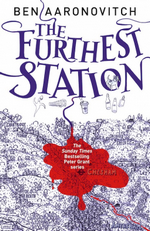
    The Furthest Station by Ben Aaronovitch

    The Furthest StationThe Furthest Station

    by Ben Aaronovitch
    Series: The Rivers of London, #5.7

    eARC, 144 pg.
    Subterranean Press, 2017

    Read: April 24, 2017

    He asked if we were really ghost hunting, and I said we were.

    “What, like officially?”

    “Officially secret,” I said because discretion is supposed to be, if not our middle name, at least a nickname we occasionally answer to when we remember.

    This novella hit the spot — a short, but fully developed, adventure with our friends from the Rivers of London series — full of action, a bit of snark, and seeing Peter in his element (and far out of it, too). Would I have preferred a full novel? Sure — but if I can’t have one, this is more than adequate.

    Peter Grant, apprentice wizard and Police Constable, is investigating several reports of a ghost terrorizing people on the Underground during the morning commute. Naturally, even when interviewed immediately following a sighting the witness would only be able to remember details for a few moments before they forgot and/or rationalized them away. Which makes it pretty difficult to ask follow-up questions. As Peter continues to investigate, he ends up finding a very non-supernatural crime that he needs to deal with, even if he goes about it in a pretty supernatural way. While there’s little in this series that I don’t like, but Peter doing regular policework is one of my favorite parts.

    Along for the ride (and looking for trouble) is his cousin, Abigail Jumara, acting as a summer intern for the Folly. Honestly, I barely remembered her when she shows up here — but I eventually remembered her, and I was glad to see her back. I’m not necessarily sure that I need to see her all the time, but seeing more of her would definitely be pleasant.

    In addition to the subplot about Abigail’s future, there’s a subplot revolving around another personification of a river — not one of Mama Thames’, either. I enjoyed it, and thought it fit in nicely with the rest of the novella, while giving us the requisite dose of a body of water.

    There’s not a lot to sink your teeth into here — but the novella length doesn’t leave you wanting more (like a short story would). It’s good to see the Folly involved in smaller cases. Not just the serial killing, major magical threat, etc. kind of thing — but the “smaller” stuff, too.

    For any fan of the Folly/Peter Grant/Rivers of London series, this is one to get. It’d even make a pretty good introduction to the series for someone who hasn’t yet discovered this fun UF series.

    Disclaimer: I received this eARC from Subterranean Press via NetGalley in exchange for this post — thanks to both, I needed something like this.
    N.B.: As this was an ARC, any quotations above may be changed in the published work — I will endeavor to verify them as soon as possible.

    —–

    4 Stars

    The High King (Audiobook) by Lloyd Alexander, James Langton

    The High KingThe High King

    by Lloyd Alexander, James Langton (Narrator)
    Series: Chronicles of Prydain, #5
    Unabridged Audiobook, 7 hrs, 24 min.
    Listening Library, 2005

    Read: March 29 – 30, 2017


    Arawn-Death-Lord has managed to get his hands on Dyrnwyn, Gwydion’s sword, which has emboldened him to move his forces to launch an all-out assault on the Kingdom of Prydain. Gwydion and his allies move quickly to assemble the forces necessary to stand against him — basically, it’s an Armageddon-type situation, and all hands are needed.

    Taran is sent to the Free Commots, where he spent so much time recently to gather their support — and he does so, almost without trying to, becomes the leader of the assembled forces (such as they are) of the rather libertarian people. Before you know it, Taran’s leading his band into battle at the side of Gwydion and the other warleaders. It’s a stretch to believe, but at this point, you go with it. The forces marshaled against the High King are strong enough to make this an uphill battle, but when treason rears its ugly head and the forces of Prydain are divided against themselves, it really seems that all hope is lost. Eventually, Gwydion and his forces head off on a last-ditch effort to stop the Death Lord, while Taran, his companions, allies, followers and Glew take on a vital, but smaller task that will allow Gwydion’s hail Mary to work.

    And frankly, that whole treason storyline bugs me — not just because it’s evil, but because it’s futile, stupid, and pointless. I think this was Alexander’s biggest error in the series. It serves no real purpose but to stack the odds against the armies of Prydain.

    Finally, we get final battles — The Death Lord and his forces are defeated (spoiler, children’s fantasy written in the 60’s features good guys winning); the future of Prydain is settled; other Tolkien-esque things take place as is fitting in the conclusion to a fantasy series (actually, Tolkien was probably following the same older rules and tropes as Alexander, but we now associate them with Tolkien, not his predecessors).

    Taran finally grows up into what Alexander’s been holdig out for him all along — it takes the whole novel, but it happens. Gwydion is probably the least interesting he’s ever been here, which is a shame. Eilonwy? Oh, Eilonwy — she’s just so perfect (as a character, probably annoying in real life — still, someone you want in your corner). I loved everything about her in this book. I wish Gurgi had a little more to do, and that Glew had far, far less. Fflewddur Fflam remains the unsung hero of this series — the sacrifices he makes, the efforts he makes, his wisdom, etc., are all overshadowed by his comedic use. What he goes through moved me more this time through than any of the deaths. As an aside, the first time I saw a picture of Lloyd Alexander, I shouted — Fflewddur! I don’t know if it was intentional, or if I just had a strange imagination, but he looks exactly like a Fflam.

    Oh, and there are many, many deaths — mostly nameless soldiers on both sides, but there are quite a few named people, too. Some get great heroic moments, others are just named in a list of the fallen. I remember the first time I read this book being very upset by just one of them — it was quite possibly the first time in my young life that anyone other than a dog, an ailing elderly person or a villain had died in a book I read. I still get sad when I read that particular one, but it doesn’t get to me as much.

    James Langton’s performance here is consistent with what he’s done for the last few books. If you liked him before, you’ll like him now. If not . . .

    I remember liking this more than I did, even just a few years ago when I read this with my kids. Still, a great way to wrap up this series — Alexander ties up everything that needs tiring up, he rewards all the surviving characters in a fitting way and sends our heroes off on new adventures. There’s still a bit of fun, a little adventure, and character growth throughout, with all things ending up just where they need to satisfy readers. It’s really easy for adult-me to see where kid-me fell in love with the genre thanks to this series. Still, a fitting conclusion to this series — which I still recommend for young and old (primarily the young).

    —–

    4 Stars

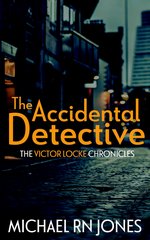
    The Accidental Detective by Michael RN Jones

    The Accidental DetectiveThe Accidental Detective

    by Michael RN Jones
    Series: The Victor Locke Chronicles, #1

    Kindle Edition, 252 pg.
    Fahrenheit Press, 2017

    Read: March 23 – 30, 2017


    I have this section of my Kindle, a corner area, where I put Fahrenheit Press titles to gather dust after I buy them (I imagine the drive like a big patch of land — I know that’s not how things work, but I like it). Only Jo Perry and Charles Kriel have managed to avoid that area (Duncan MacMaster’s Hack never ended up there, because FP gave it to me to read — his other book, however . . . ). There are a handful of books there, and on adjacent plots, that I was going to actually read in January of this year, but well, that didn’t work. Maybe by July? (feel free to pause for laughter here).

    I bring this up because The Accidental Detective was purchased on release and placed their next to the other titles and was only FP’s releasing of HER: The 1st Victor Locke Story back in March that got me to read this one so quickly. I didn’t realize at the time that HER was the first story in this collection, I thought it was more of a prequel to this novel. Whoops. Still, HER was a fun story and I had to find out more about Victor Locke and his buddy, Dr. Doyle quickly, so I was able to rescue this from FP corner.

    Essentially, this is a short story collection — or a very episodic novel, depending how you want to look at it — about a convicted hacker and his formerly court-mandated psychologist solving mysteries. The stories are very much in the updating-Sherlock Holmes vein. Basically, the stories are a Sherlock-like update featuring a Holmes (Locke) with a demeanor more akin to Elementary‘s Holmes while living a Mr. Robot lifestyle (at least early Season One Mr. Robot — look, don’t go examining these comparisons too far, all right?). Some of the ways that the Locke stories are updates of/tributes to/etc. the Holmes canon are obvious, some are subtle, and some are blatant — and all work wonderfully. I’ve read most of the Holmes stories and all the novels at least once, but I’m not an expert by any means; still, I’m familiar enough to catch most of them without work. I laughed hard at this version of Mycroft in his first appearance.

    All that’s background — now to the book itself, HER kicks off the collection with Locke (and his not-sidekick Doyle) being drafted into working for the FBI. The story doesn’t end the way the FBI agents would like, but it seems to give Locke the idea that he could do more of this detecting thing. Unofficially, of course. So he goes looking for further opportunities like this. Most of his work is for friends and acquaintances from his neighborhood, but he does get pulled into doing some work for the police.

    Locke’s personality pretty much demands that he will have conflict with whatever authority/official-types he encounters, but, like every good Sherlock, most will recognize his talents and let him get away with it. Doyle is more than a sidekick and chronicler of his adventures, but he’s no Joan Watson. Yet. I don’t think Brown will leave him in his current role. Doyle is brilliant, he’s a great observer of people and things, he thinks and talks fast and doesn’t suffer fools gladly (unless he likes them). This doesn’t mean that he won’t have a blind spot or two, that he can’t use some help from others occasionally, either. He usually knows when he needs the help, too.

    Few of the stories result in any public success — Locke gets the solution, but sometimes he can’t do anything with it, or has to keep it under wraps. I love this — it’s be so easy to make him some publicity-seeking type. Or someone who doesn’t seek it, but gets it nonetheless. But Jones lets his hero have public failures pretty regularly, keeping him as a struggling detective, not a superstar of deduction.

    Fast-paced, clever, charming, funny, clever, and I should repeat clever. I thoroughly enjoyed these stories and gobbled them up pretty quickly. I know Volume 2 is on the way, and it won’t end up in the dusty and ignored FP corner. You should go grab this one if you’re a fan of Holmes or any of his modern incarnations. Even if you’re not a fan of Holmes, you might find yourself changing your mind after reading Jones’ take on the character.

    —–

    3.5 Stars

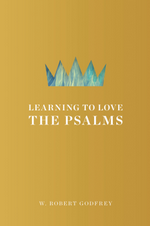
    Learning to Love the Psalms by W. Robert Godfrey

    Learning to Love the PsalmsLearning to Love the Psalms

    by W. Robert Godfrey

    eARC, 263 pg.
    Reformation Trust Publishing, 2017

    Read: April 2 – 16, 2017


    Godfrey’s Afterword begins:

    In our study, we have made a beginning of learning to love the Psalms. We have looked at some of the attractions and difficulties of the Psalter. We have summarized the great themes, subjects, and emotions of these songs. We have examined some of the forms and uses of the Psalms. But this book is at best an introduction and invitation to growing in an appreciation of the Psalter. You need to carry on with what we have started together.

    That right there is a great 80 word summary of the book — both in intention and execution. If that summary appeals to you, you’ll dig the book.

    Godfrey starts with a few short chapters talking about the Psalter as a whole. He discusses his own personal history with the Psalms and what attracted him to them and the benefit he’s gained — then a very quick look at Psalms in Church History (notably their impact on the Reformation). Then he discusses why people are discouraged from getting into them, how to overcome that, how to approach the Psalms and some basic things to think about why studying them/using them for yourself. He gives 10 questions to use when coming to any Psalm that are easy enough for any rookie to put to use and also for any one who had studied the Bible for years to benefit from.

    Following that he looks at each of the 5 collections or books or whatever you want to call the groupings of the Psalms that make up the whole Psalter. These would be:

  • BOOK ONE – THE KING’S CONFIDENCE IN GOD’S CARE: Psalms 1– 41
  • BOOK TWO – THE KING’S COMMITMENT TO GOD’S KINGDOM: Psalms 42– 72
  • BOOK THREE – THE KING’S CRISIS OVER GOD’S PROMISES: Psalms 73– 89
  • BOOK FOUR – THE KING’S COMFORT IN GOD’S FAITHFULNESS: Psalms 90– 106
  • BOOK FIVE – THE KING’S CELEBRATION OF GOD’S SALVATION: Psalms 107– 150
  • THE CONCLUSION OF THE PSALTER: Psalms 146– 150
  • In these parts, Godfrey explores the structure and themes of each and then looks at at least 5 psalms in that book — opening them up for the reader, seeing how they work together with the other around them, in some cases how they don’t fit the theme of the rest of the book. All of these are brief, but thorough, chapters (an overview chapter and then individual chapters on each Psalm) — insightful and helpful on their own — much more so when combined with the other chapters in that section or the book as a whole. But really, if you wanted help with, say, Psalm 78 (to choose at random) as a refresher for something — the chapter on that from this book would be a great way to start. Godfrey explains:

    The intention of this study is not to provide an exhaustive exegesis of each psalm considered, but rather to open a way to a growing understanding of the Psalms. God gave His people the Psalter so that we could more and more be defined by it, so that we could find our identity in it. We as the people of God today need to learn for ourselves what it means to live in the Psalms. In a real sense, they give us words to express what it means to live as a Christian. We should live in and out of the Psalms.

    “They give us words to express what it means to live as a Christian ” I love that line — as I have really started to explore the Psalms for myself over the last couple of years, that’s really what I’ve been seeing and will immediately start using that phrase to describe it.

    These sections of the book are the heart of it — as helpful as the initial chapters are. It’s not a commentary, as he states, but it does do a great job of jump-starting your individual study. I probably jotted down more quotations from these sections than I have from others lately, and the temptation to list them all is great. I’m going to limit myself to three, just so you can get a taste of Godfrey’s language and the variety of topics/themes he addresses:

    The difference between this praise song [based on Psalm 103] and the actual psalm [103] is striking. The song is repetitive in vague terms: He has done great things. The psalm, by contrast, is specific about the various blessings received. Taking the psalms as our standard of praise should warn us against the repetitiveness of many contemporary songs and lead us to praise that is much more pointed and specific. Genuine gratitude reviews in detail the wonderful gifts of our God.

    — Both a pointed critique and a challenge/encouragement for how to go express our gratitude biblically.

    From Psalm 73:

    Pictures that reconstruct the temple almost invariably misrepresent the scene as very clean and tidy. In fact, the altar must have been a rather horrible sight of blood and charred remains. It was surrounded with the odors of blood, burnt flesh, and death. Flies probably swarmed around. What the psalmist saw was what God intended His worshipers to see: that the wages of sin is death in all its horror. The altar testified that sin leads to destruction, and the only way to avoid the just consequences of sin is to find a substitute and sacrifice. The altar testified that the blood of a spotless substitute was necessary for sin to be forgiven. . .The altar and the sacrifices point to Jesus and His saving work. He is the true sacrifice and substitute for His people.

    From his discussion of Psalm 74:

    Here is a concern often repeated in the Psalter: Why does the Lord not act more promptly in response to the needs and prayers of His people? Why? First, we should notice that this questioning by the psalmist stands against the advice offered today by some well-meaning Christians who say that we should never ask why. Such advisers voice a kind of Christian stoicism, teaching that we must just grin and bear it. The psalmist, by contrast, gives strong expression to the depths of his emotions. Indeed, God, by the example of the psalmist, encourages His people to a refreshing honesty in prayer, including honesty in expressing our emotions. Fear, anger, frustration—all are emotions that we find poured out in the Psalter. But we must remember that they are emotions expressed by a believer who still trusts his God. It is immediately after these questions that the psalmist asserts his faith in the words of verse 12.

    Again, I could keep going, but I’m going to force myself to stop. But we have here gratitude, sacrifice, mercy, despair, fear, faith and that’s just in 3 Psalms — only bits of his explorations of 3 Psalms, actually. Godfrey’s guide to the Psalter touches on almost as many aspects of the Christian life as the Psalter itself does.

    I should note that this one of those books whose end-of-chapter discussion questions are actually worth reading and using. It’s such a rarity, that it needs to be pointed out when you do see it.

    I’m not going to say that this is a flawless work, there are a few places where my notes consist primarily of question marks or “that seems like a stretch.” But most of those are on comments about the structure of the Psalter as a whole, about the organization of the “books” of the psalms and that sort of thing — which isn’t to say I disagreed with anything he said there, it’s just that he didn’t convince me. But given my lack of study on this sort of thing, it’s very possible I just need to think about it all some more. Mostly my notes are along the lines of “excellent,” “great point,” or “why didn’t I have this book years ago to help me with topic/discussion X?”

    Earlier, I quoted from the Afterword, which could’ve been longer (most of the book could’ve been longer, really — but it would’ve become imposing, intimidating and less attractive for its target audience if it had) but was a great way to sum up the book and spur the reader on for further study, reflection and devotion in the Psalms. It served as a good call to action with some very handy tips.

    Now, I must admit I didn’t read this one the way I should’ve — it would’ve taken me a couple of months to do so and I really figure that Reformation Trust wanted something a bit more timely than that from a NetGalley offering. This is the kind of book to read with a Bible and notebook within reach and to use both of them frequently. It’s a book that takes study and time to get everything out of — and I fully intended to return to this book soon for just that purpose — which isn’t to say that it’s not approachable or that it’s difficult to read. Not at all, this is one of the least technical books I’ve read in a long time when it comes to Bible Study. There’s nothing here stopping anyone from profiting from the book. But to get everything out of the volume, you need to put in the time to read what Godfrey says and reflect on it while reading (or singing) the Psalms discussed and working through them on your own.

    All in all, this is a very helpful book — a good study, a good aid for individual/group use (I think it’d be great for family worship/devotions/whatever you call it), and an encouragement to dig into one of the more intimidating yet wonderful books of the Bible in order to find those “words to express what it means to live as a Christian”. I heartily recommend this book.

    Disclaimer: I received this eARC from Reformation Trust Publishing via NetGalley in exchange for this post — thanks to both for this, I benefited from this greatly.
    N.B.: As this was an ARC, any quotations above may be changed in the published work — I will endeavor to verify them as soon as possible.

    —–

    5 Stars

    Saturday Miscellany – 4/22/16

    Another long week — so this is late again. Hopefully back to normal last week. Maybe even with more things to read for you here. Still, here are the ddds ‘n ends over the week about books and reading that caught my eye. You’ve probably seen some/most/all of them, but just in case:

      This Week’s New Release that I’m Excited About and/or You’ll Probably See Here Soon:

    • Lois Lane: Triple Threat by Gwenda Bond — not only does this look good, but it reminds me that I never got around to reading Double Down last year. Oops. YA Lois Lane is back in action — and maybe gets to meet SmallvilleGuy in the flesh.

    Lastly, I’d like to say hi and welcome to roamingwanderlusts for following the blog this week.

    I’m Curious: Recommending books in a long series

    So here we are with me out of energy and too many books to write about, so I’ll tell a little story and ask a couple of questions instead.

    A couple of days ago, I was chatting with some guys, and as frequently happens, one asks, “What’s the best book you’ve read recently?”

    It took me about .5 seconds of thought to reply, “Bound by Benedict Jacka.” As you readers all know, from the really long post that I haven’t written yet about it.

    Anyway, a moment or two later, I followed that up with, “Of course, that’s actually a recommendation for 8 books, because you need the set to get the impact of Bound. So, the best stand-alone recently is Deep Down Dead . . .” and went out to give them a summary of my blog post on that book (yes, I actually wrote that one).

    So, here’s my question: how do you handle recommending an installment in a long-running series? Or, how do you take recommendations for the latest book in a series that’s been going on awhile?

    Page 1 of 4

    Powered by WordPress & Theme by Anders Norén