Month: October 2018 Page 3 of 4

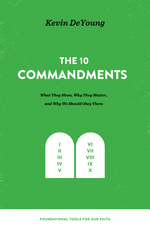
The Ten Commandments by Kevin DeYoung: A Warm, Engaging Study of God’s Revealed Will

The Ten CommandmentsThe Ten Commandments: What They Mean, Why They Matter, and Why We Should Obey Them

by Kevin DeYoung

eARC, 208 pg.
Crossway, 2018
Read: September 23, 2018

My initial thought when I saw this book was: do we need another popular-level work on The Ten Commandments? We’ve got so many already, like: Ryken’s Written in Stone, Horton’s The Law of Perfect Freedom, Packer’s Growing in Christ. We’ve got Douma’s, Watson’s and Durham’s (newly republished) on the heavier end of the spectrum, too. Why bring out a new book by DeYoung? Still, I was intrigued, so I requested a copy.

Not too surprisingly, I’m glad I did. This is typical DeYoung: a strong, affectionate, orthodox take on the Law delivered in a very accessible and affable manner. He made me think, he made me reconsider a thing or two, and he reminded me of a few things I needed reminding of.

He begins this work against the framework of the secular “anything goes” point of view, where everything certainly does not go — as much as we as a culture might rail against an external source of morality — there are things that simply cannot be said or done. Giving us a choice between humanity’s unwritten, assumed code — or God’s revealed will. DeYoung then goes on to list reasons for the study as well as the following of God’s Law.

The other important groundwork comes from the midst of his very strong chapter on the First Commandment in which he describes the role of the Law for New Covenant believers. It’s still applicable, still binding — just in a different manner. I think this could’ve been developed more — maybe in its own chapter, but what we got here was good. I do particularly appreciate his metaphor of transposition. The Law in the New Covenant is the same for believers as it was in the Old, it’s just in a different key.

Following the introduction where he lays out his framework, DeYoung turns to consider the commandments individually. This is the bulk of — and the heart of — the book, with a chapter devoted to each commandment. If the book has any value, it’ll be found here, and there’s a lot of it to be found. I briefly considered summarizing each chapter, but why steal his thunder. Also, he’s not carving out anything new here, so there’s little need. What’s new is his expression of the timeless truths, his way of explaining and applying them. If you want a quick summary of what he’ll say about each commandment read The Heidelberg Catechism questions 92-115 or the Westminster Shorter Catechism questions 39-85, and you’ll get a pretty good idea.

Instead, I’ll just comment on a few highlights and a couple of problems I had (your mileage may vary). I found his comments regarding the Fourth Commandment to be helpful, but hesitant — in his effort to not be legalistic, or overly dogmatic, he comes across as wishy-washy. I appreciated most of what he had to say about the Second Commandment, but again, he’s hesitant enough in some of his application to stumble a bit. Which is not to say that the bulk of those chapters weren’t good and helpful — they were. I think he could’ve been more consistently so.

Conversely, the chapters on the Eighth and Tenth commandments were incredibly helpful. If you ask me, these two are where the American Church and American Christians stumble more often than we realize (or care about). Publicly, Protestants are expounding so much energy on certain applications of the Sixth and Seventh commandments that one would be tempted to think that 8-10 are concerns of the past. DeYoung doesn’t let the reader think that for an instant, and if you don’t come away from these chapters with a good dose of conviction of your own sin, you probably didn’t read it too closely.

The chapter on the Third Commandment was invaluable also. It’s far too easy for Western Christians to reduce this to “don’t be a potty mouth” and far too hard for us to really get what the importance of “name of the Lord” is. DeYoung does a yeoman’s job on both fronts and does a good job expounding the meaning of this commandment.

You’ll never walk away from any of these chapters thinking that DeYoung is writing a hellfire and brimstone jeremiad against the Church, you, or anyone. He’s sharply critical of a lot of general culture, and individual inclinations, but that’s to be expected. There’s conviction and inspiration both to be found in these pages — all delivered in DeYoung’s warm, almost conversational, style — a strong blend of wit and charm with the steel in his words. I won’t get into it, but his chapter on the Third Commandment contains one of the funniest anecdotes (more in the telling than the story) I’ve read from him. Ignoring his content for a moment, his writing style is what will keep me coming back to DeYoung’s books for years to come.

I think I’ve said before, I’m not a big one for study/discussion questions in books — I like to think the engaged reader doesn’t need them and someone leading a discussion/study of a book will be clever enough to come up with their own. But, I’m obviously swimming against the tide on this because publishers keep printing them. That said, on the whole, this is a pretty good set of questions and would help someone who likes those kind of questions for their own use or for those using the book in Family Worship, Sunday School, or Bible Study.

In the end, my question, do we need another popular-level book on The Ten Commandments? Is answered yes: we need frequent — constant — reminders of the revealed will we’ve been called to obey, so we never stop striving for that perfection and never cease calling on the Spirit’s assistance. We also need to remember how great our sin and misery are so that we constantly live lives of repentance. So bring on DeYoung’s good summary. And others as well — and we need to read them, as well as the older popular-level works. And then we need to push ourselves and read some of the less-popular level ones as well.

This is a good, short set of meditations and reflections on the perfect law, the law of liberty for a contemporary audience. It’s approachable, it’s warm, it’s pointed, and it’s Gospel-centered. It’s not perfect, but it’s good. It functions well as a refresher for those who need one, and a good starting point for their own study of The Ten Commandments. I’m buying a copy (at least one) for my personal library and will be encouraging my household to read it — and anyone else who asks.

Disclaimer: I received this eARC from Crossway via NetGalley in exchange for this post — thanks to both for this.

—–

4 Stars

Saturday Miscellany – 10/13/18

Odds ‘n ends over the week about books and reading that caught my eye. You’ve probably seen some/most/all of them, but just in case:

    This Week’s New Releases I’m Excited About and/or You’ll Probably See Here Soon:

  • Wrecked by Joe Ide — IQ is back for his third novel — and I can’t wait to see what Ide has in store for him.
  • The Blue Kingfisher by Erica Wright — Kat Stone, undercover cop turned PI with identities to spare investigates an apparent suicide. Here’s what I had to say about it.

A Few Thoughts on Changes (Audiobook) by Jim Butcher, James Marsters

Changes (Audiobook)Changes

by Jim Butcher, James Marsters (Narrator)
Series: The Dresden Files, #12

Unabridged Audiobook, 15 hrs., 28 mins.
Penguin Audio, 2010
Read: October 4 – October 10, 2018

Spoilers to follow. This isn’t one of my typical posts, so my typical rules don’t apply.

After starting a few months back, I’ve pretty much stopped posting about listening to the Dresden Files audiobooks — there are only so many ways to say, “I’d forgotten how much I like this story” and “Wow! James Marsters did a fantastic job!” Not only does it get dull to read, it gets pretty dull to write. (okay, there is a challenge on finding a new way to say it, but . . . I’m too lazy to find that enticing).

But I listened to Changes this week and how can I not talk about that?This is one of my favorite novels ever — Top 10, Deserted Island Must-Have kind of thing — highs, lows (and things lower than lows), laughs, tears, anger, shock, joy. Changes has it all (at least for those who’ve been with Harry for a few books — preferably 11).

Listening to the book was a great way for me to experience it again — if for no other reason, I couldn’t race through it and accidentally skim over things in my haste to get to X or Y plot point.

It’s silly as I’ve read everything that comes after this a couple of times, but seeing all the compromises and deals Harry made as his life is dismantled piece by piece really hit me hard. Yet, Harry makes his choices freely and for the best reason imaginable. All for Maggie. The ramifications of his choices and agreements are wide, huge and so-far we don’t know all of them — and Harry’d do it all again, and there’s not a fan in the world that would blame him.

And Marsters? He gets better and better with every book — and this was fantastic. I loved where Mouse got to “talk” — it was the next best thing to reading it for the first time. And, when he got to those lines? You know the ones I’m talking about:

And I . . .I used the knife.

I saved a child.

I won a war.

God forgive me.

I had to hit pause for a couple of minutes before I could keep going.

Sometimes as a book blogger, you get wrapped up in numbers, ratings, book tours, promotion, and all the other stuff — but every now and then it’s great to remember what it is about fiction that gets you into it in the first place. This treat by Butcher and Marsters did just that for me — I was entertained, I was moved, I was a little inspired.

—–

5 Stars5 Stars

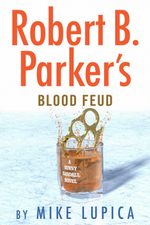
Blood Feud by Mike Lupica: Sunny Randall’s Back in this Promising Reintroduction

Blood FuedRobert B. Parker’s Blood Feud

by Mike Lupica
Series: Sunny Randall, #7
eARC, 352 pg.
G. P. Putnam’s Sons, 2018
Read: October 5 – 9, 2018

I have a complicated relationship with Sunny Randall. Readers of this site have been frequently exposed to my love for Robert B. Parker’s Spenser and Jesse Stone novels, both by Parker and the continuations by Ace Atkins and Reed Farrel Coleman (let’s overlook Michael Brandman’s contributions for the moment). I enjoyed his stand-alone works, and I thought the first couple of Virgil Cole & Everett Hitch books were fun (I haven’t tried the Robert Knott continuations). Which leaves us with Sunny.

Sunny Randall, the story goes, was written to be adapted into a film series for Parker’s chum, Helen Hunt (incidentally, I’ve never been able to envision Helen Hunt in a single Sunny scene, but that’s just me). She’s a private investigator; a former cop; part-time painter (art, not house); emotionally entangled with her ex-husband, but can’t live with him; lives in Boston; and enjoys good food. But she’s totally not a female Spenser — she doesn’t like baseball, see? I’ve read all the books — some multiple times — and while I enjoyed them, I’ve never clicked with Sunny the way I have with others. Including every other Parker protagonist. Most of her novels are mashups and remixes of various Spenser novels, entertaining to see things in a different light — but that’s about it. Frankly, the most I ever liked Sunny was in the three Jesse Stone novels late in Parker’s run (but both characters are better off without each other).

So when it was announced that Mike Lupica would be taking up the reins of this series I was intrigued but not incredibly enthused. I only know Lupica from having bought a few of his books for my sons when they were younger. I didn’t get around to reading any of them, so he’s really a new author for me. And sure, I was a little worried about a YA/MG author taking the reins of a “grown-up” series. But not much — if you can write a novel, you can write a novel, it’s just adjusting your voice and language to be appropriate for the audience.

Enough blather — let’s talk about Blood Feud. Since we saw her last, Sunny has had to move, Richie (her ex-) has gotten another divorce (giving them the chance to date or whatever you want to call it) and has replaced her late dog, Rosie, with another Rosie. Other than that, things are basically where they were after the end of Spare Change 11 years ago (for us, anyway, I’m not sure how long for her, but less time has passed you can bet).

By the way — does anyone other than Robert B. Parker, Spenser and Sunny really do this? Your dog dies, so you go and get another one of the same breed and call him/her the same name? Is this really a thing?

Then one night — Richie is shot. It’s not fatal, but was done in such a way that no one doubts for a moment that it could have been had the assailant wanted it to be. For those who don’t know (or don’t remember), Richie is the son of an Irish mob boss, although he has nothing to do with the family business. He’s given a message for his father — his shooter is coming for him, but wants him to suffer first. This kicks off a race for the shooter — Sunny, the Burke family and the police (led by Sgt. Frank Belson) are vying to be the one to find the shooter.

Before long, the violence spreads to other people the Burkes employ — both property and persons are targeted by this stranger. It’s clear that whoever is doing this has a grudge going back years. So Sunny dives into the Burke family history as much as she can, so she can get an answer before her ex-father-in-law is killed. Not just the family history — but the family’s present, too. As much as the roots of the violence are in the past, Sunny’s convinced what the Burkes are up to now is just as important to the shooter.

Richie’s father, Desmond, isn’t happy about Sunny sticking her nose into things. Not just because of the crimes she might uncover — but he really wants to leave the past in the past. But as long as someone might come take another shot at Richie, Sunny won’t stop. This brings her into contact with several criminal figures in Boston (like Parker-verse constants Tony Marcus and Vinnie Morris) as well as some we’ve only met in Sunny books.

There are a couple of new characters in these pages, but most of them we’ve met before — Lupica is re-establishing this universe and doesn’t have time to bring in many outsiders, but really just reminds us who the players are. Other than the new Rosie, I can’t point at a character and say “that’s different.” He’s done a pretty good job of stepping into Parker’s shoes. Not the pre-Catskill Eagle Parker like Atkins, but the Parker of Sunny Randall books, which is what it should feel like (I wouldn’t have objected to a Coleman-esque true to the character, just told in a different way). I think some of the jokes were overused (her Sox-apathy, for one), but it wasn’t too bad. Lupica did make some interesting choices, particularly toward the end, which should set up some interesting situations for future installments.

The mystery was decent enough, and fit both the situations and the characters — I spent a lot of the novel far ahead of Sunny (but it’s easier on this side of the page). I enjoyed the book — it’s not the best thing I’ve read this year, but it’s a good entry novel for Lupica in this series, a good reintroduction for the characters/world, and an entertaining read in general. If you’re new to this series, this would be as good a place to hop on as it was for Lupica.

I want better for Parker’s creation (but I think I’d have said that for most of Parker’s run with the series), and Lupica’s set things up in a way that we could get that in the near-future. He’s demonstrated that he has a good handle on the character he inherited, the question is, what can he do with her from here? I was ambivalent about this series coming back, but I can honestly say that I’m eager to see what happens to it next.

Disclaimer: I received this eARC from Putnam Books via NetGalley in exchange for this post — thanks to both for this.

—–
3.5 Stars

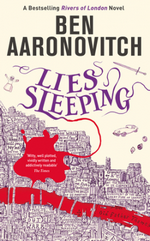
Lies Sleeping by Ben Aaronovitch: Things get Intense in the Ongoing Conflict between The Faceless Man and The Folly.

Lies SleepingLies Sleeping

by Ben Aaronovitch
Series: The Rivers of London, #7

eARC, 304 pg.
Daw Books, 2018
Read: October 3 – 5, 2018

I’ve got to say, I’d much rather be talking about this book in detail with someone else who had read the series than talking about it in spoiler-free form, so much of what I feel strongest about with this book cannot be discussed. Aaronovitch has outdone himself this time — it’s the best book of the series thus far, and that’s no mean feat.

It’s easy — far too easy — when thinking about this series to think of the lighter aspects — the humor, the heart, Peter’s growing pains, the snark, the pop culture references, and whatnot. That’s typically where my mind goes, anyway. But time after time, when picking up the latest novel, or even rereading one, I’m struck by how carefully written, how detailed everything is, how layered the text is — and I feel bad for underestimating Aaronovitch. Not that I have anything against breezy, jokey prose — but there are differences. Nor am I saying these books are drudgery — at all — the stories are fun, the voice is strong, and the narration will make you grin (at the very least, probably laugh a few times, too). In Lies Sleeping part of that care, part of the thoroughness of this novel is how there is a tie — character, event, call-back, allusion — to every novel, novella, comic arc involved in the Rivers of London up to this point — if you haven’t read everything, it won’t detract from your understanding of the novel — but if you have read them all, if you catch the references — it makes it just that much richer.

So what is this novel about? Well, after years of chasing The Faceless Man (and The Faceless Man II), Peter Grant (now a Detective Constable) and Nightengale have his identity, have several leads to follow to track him down — or at least his supporters and accessories (willingly or not). Better yet — the Metropolitan Police Force have given them the manpower they need to truly track him down and interfere with his funding and activities.

During this operation, Peter, Guleed and Nightengale become convinced that Martin Chorley (and, of course, former PC Lesley May) are preparing for something major. They’re not sure what it is, but the kind of magic involved suggests that the results would be calamitous. How do you prepare for that? How do you counter the unexpected, but dangerous? There are two paths you follow: thorough, careful, borderline-tedious policework; and bold, creative, innovative thinking. The two of those employed together lead to some great results — and if Peter Grant isn’t the embodiment of both, he’s . . . okay, he’s not perfect at the former, but he can pretend frequently (and has colleagues who can pick up the slack).

Not only do we get time with all our old friends and foes — we meet some new characters — including a River unlike anyone that Father or Mama Thames as yet introduced to. Mr. Punch is more involved in this story than he has been since Midnight Riot, but in a way we haven’t seen before. Most of the character things I want to talk about fit under the “spoiler” category, so I’ll just say that I enjoyed and/or loved the character development and growth demonstrated in every returning character.

There’s more action/combat kind of scenes in this book than we’re used to. I couldn’t be happier — Peter’s grown enough in his abilities and control to not need Nightengale to bail him out of everything. Nightengale and Peter working together in a fast-paced battle scene is something I’ve been waiting to read for 7 years. It was worth the wait.

As I said before, Lies Sleeping is the best and most ambitious of the series — the richness of the writing, the audacity of the action, the widening scope of the novel, the Phineas and Ferb reference, the epic battle scenes, the growth in Peter, Bev, and Guleed (and maybe even Lesley), the ending rivals Broken Homes‘ — all add up to a fantastic read. Yeah, I’m a fanboy when it comes to this series, and Lies Sleeping made me a happy fanboy. I have no idea how Aaronovitch moves on from this point with these books, but I cannot wait to find out.

—–

5 Stars
Disclaimer: I received this eARC from Berkley Publishing Group via NetGalley in exchange for this post — thanks to both for this.

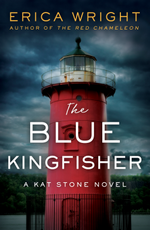
Pub Day Repost: The Blue Kingfisher by Erica Wright: Kat Stone — and her wonderful wigs — are back for more danger

The Blue KingfisherThe Blue Kingfisher

by Erica Wright
Series: Kathleen Stone, #3
eARC, 320 pg.
Polis Books, 2018
Read: August 1, 2018

So, Kat Stone, private investigator, is trying something new — she’s being herself. No disguise, no wig, no fake name (well, most of the time). There’s no need, the person she was hiding from has found her. He hasn’t done anything about it — but there’s no need to go to extra effort. But she’s not used to just being Kat Stone anymore — and that’s going to take a little work.

One morning, Kat finds a body — a body in horrible shape in the shadow of the George Washington Bridge. While waiting for the police, she recognizes the body — the maintenance man from her apartment building, Tambo Campion. The police are quick to dismiss the death as a suicide, but Kat’s unconvinced. Why would someone trying to kill themselves miss the water so completely?

This, of course, isn’t enough. So she ignores paying customers for a bit to launch her own investigation, trying to find more evidence. She doesn’t necessarily have to find the murderer, she just needs more evidence to get anyone in the NYPD to take her seriously enough to investigate his death. She plunges into Tambo’s life — partially driven by guilt that she didn’t pay him enough attention in life. It turns out that Tambo is a kingfisher, someone who finds jobs for people who aren’t in the country legally or who are wanting to stay off-the-radar, for a fee. This alone provides several avenues of investigation. But there are others, too, don’t get me wrong. All of these take her into all sorts of corners of NYC society — and gives her an excuse to dabble in different identities.

The NYPD requirement of “more evidence” is a trigger of sorts for her. It reminds her of the constant refrain from her superiors during her undercover days at the NYPD. They always wanted more evidence — even when she becomes concerned for her own safety, they say she hasn’t done enough, she needs more evidence to bring down Salvatore Magrelli. Between the Magrelli knowing where she is now, and this requirement, Kat spends a lot of time ruminating on the times she felt most threatened by Magrelli — and the things she didn’t provide enough evidence on. While she has several other things going on in her life, these are the thoughts that dominate her attention.

As interesting as the murder case is, obviously, it’s the Magrelli (past and present) stories that provide the major emotional hook for this novel. Even while she’s meeting with success at Kat Stone, even when she finds evidence of a crime — multiple crimes, actually. She can’t get out of the shadow of her past or the threat of the present.

I failed to get around to reading the first book in this series, after reading The Granite Moth, which really bugs me, so I can’t really comment between the ties between it and this book, but I’m reasonably certain there are some. Characters from The Granite Moth show up here and events from it are discussed as well, which is always nice, too many PI novels ignore what happened before. I don’t know (but I can’t imagine) that too many people from The Blue Kingfisher will show up down the road, but I’ll be happy to see any of them that do. But several events from this book will show up soon.

I remembered liking Kat Stone – I didn’t remember how much or why I did, and I’m very glad I got to rediscover her. Kat is clever, very clever when she’s not distracted. She’s resourceful. She may not have the skills of Lori Anderson or even Charlie Fox when it comes to weapons or hand-to-hand, but she’s got a mental toughness that’s hard to beat. And I really hope to see how she moves forward — because there’s just no way that what comes next is going to look too much like what’s come before, and I’m very curious about that. The New York she travels in isn’t the one I’m used to seeing (it’s not so different that I don’t recognize it) in Crime Fiction, and the way she sees the world is a fresh perspective.

The writing in this one — and this is not a knock on The Granite Moth — feels more disciplined, the plot more controlled. I took it as a sign of growth, that whatever Wright intended to accomplish in this book was clear to her and she executed things to that end. I’m almost more curious about what she’ll do next than what Kat will do next. Almost.

This isn’t a criticism, this is more of a wonderment: There is a lot of time spent on Kat’s affection for New York City. Do people spend a lot of time doing that, really? Thinking about how much they love/appreciate the town they live in (assuming they do)? Her leaving town was brought up once — indirectly — but it wasn’t like anyone was really suggesting that to her — and even after she made it clear that it wouldn’t happen, there it is again, her love for NYC. I could see it fitting in if people were actively trying to get her to move, or if she’d just returned after some time away (on a job, in self-appointed exile, etc.) — but given her situation, it felt forced. Now, I liked the way she expressed it, and I can understand her affection (theoretically, anyway, I’ve never been there). It just seemed out-of-place and/or unnecessary.

This is a good, satisfying PI novel with a protagonist that you will definitely enjoy. Like its predecessor, it’s a decent jumping on point for a new reader, and a welcome return to the world for someone who’s met Kat before. I’m eagerly awaiting the next book in this series already.

Disclaimer: I received this eARC from Polis Books via NetGalley in exchange for this post — thanks to both for this.

—–
3.5 Stars

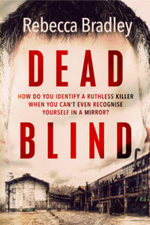
Dead Blind by Rebecca Bradley: A gripping thriller featuring a uniquely disqualified hero

Dead BlindDead Blind

by Rebecca Bradley

Kindle Edition, 358 pg.
2018
Read: August 9, 2018

There are two gripping stories in this novel — the primary one isn’t the crime story (odd for a work of crime fiction), but it is the better executed of the two. Which isn’t a slight to the secondary story, at least not intentionally.

Let’s start with the crime — DI Ray Patrick and his team are investigating an international organ smuggling ring. Every time I’ve run into this kind of story — in print or on TV — it has always been effective. Something about the idea of harvesting organs from people (who may or may not survive the process for at least a while) to transplant into people who may or may not survive (given the less than ideal facilities for such activities) has always disturbed me. Then when my son was diagnosed with renal failure and we were told he’d need a kidney transplant, these kind of stories became more nightmarish for me. So yeah, basically, this was right up my alley.

Thankfully, he’d received his kidney a couple of weeks before I read this one, so it didn’t end up costing me sleep. Incidentally, the facts and figures about transplants, the need for them and the lack of donors, etc. all lined up with everything we’d been told. Yes, there are differences in protocols between the two medical systems, but on the whole, what Patrick and the rest learned matched what I’d learned. When it comes to this kind of thing in novels, I’m always wondering how much the author fudged and how much came from research — I’m happy to say that Bradley got this right.

So this story — from how the ring operates to how Patrick and the rest investigate is very satisfying.

Which leaves the primary story. Patrick comes back to work from a nasty automobile accident, mostly recovered from his physical injuries. But that’s not the only injury he sustained. Patrick now is dealing with prosopagnosia, aka “face blindness.” Through some clever guesswork, and a whole lot of luck, he’s never revealed it to anyone other than his ex-wife (so she can help him with his kids). Now back at work, Patrick is attempting to hoodwink everyone into thinking he’s okay, because he doesn’t want to risk not losing his job.

On the one hand you want to see him pull off his silly scheme, on the other, you want to see him be the man of integrity everyone thinks he is and be honest with his colleagues and friends. Especially when Patrick’s inability to discern or remember faces jeopardizes the investigation.

Watching Patrick try to remember people via other means while trying to lead an investigation, and deal with the ramifications of the disorder in his personal life gives the book its emotional weight. And it delivers that in spades.

Patrick’s team is full of some pretty well-drawn characters, which also applies for the other people in his life — grounding the more outlandish flavorings of the other stories. I enjoyed the read and found it gripping — looking forward to seeing more from Bradley.

—–

3 Stars

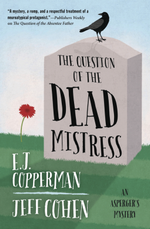
Pub Day Repost: The Question of the Dead Mistress by E. J. Copperman, Jeff Cohen: Samuel Answers a Question a G-g-g-g-host

The Question of the Dead MistressThe Question of the Dead Mistress

by E. J. Copperman, Jeff Cohen
Series: Asperger’s Mysteries, #5
eARC, 288 pg.
Midnight Ink, 2018
Read: June 26 – 27, 2018

“Is my husband having an affair with a dead woman?”

That doesn’t seem to be the kind of question that Samuel and Ms. Washburn would tackle as Questions Answered. They typically take on things that require esoteric research, problem solving, and occasionally something that takes some investigation that looks a lot like the kind of thing a P.I. would do. Paranormal investigation is not in their wheelhouse. Samuel is almost reflexively dismissive of the idea — but his associate, Ms. Washburn makes him listen to the prospective client’s story. And then he tries to reflexively dismiss the question, but she won’t let him. While Samuel is convinced there’s nothing supernatural afoot — in fact, the notion is impossible — Ms. Washburn had an experience she can’t explain as a teenager, and refuses to rule it out.

So Samuel let’s her try to come up with an answer to the question and goes back to whatever he was doing before. Before she can get very far into her research, the husband is murdered. Suddenly, the question doesn’t matter as much as the replacement question, “Who killed my husband?” Given Ms. Washburn’s involvement, Samuel gets interested in things again — and the two get involved in a very twisty and complicated mystery. As far as twisty-turny-keep you guessing-mysteries go, this is the best that the duo has encountered and will easily satisfy the most puzzle-obsessed of readers.

What makes this even better — is that given the supernatural/supernatural-adjacent nature of the instigating question, the two are approaching things in very different ways and decide to operate largely separately. Samuel interviews people with assistance of other to drive him places or via the Internet, while Ms. Washburn goes on her own, trying to use Samuel’s methods. This change in modus operandi is refreshing for the characters and the readers, and will lead both Samuel and Ms. Washburn to re-evaluate the way they do business in the future.

The danger level in this one is great — and there are direct threats made against Ms. Washburn and Samuel’s mother and father. Which just makes Samuel more determined to come up with definitive answers quickly. The possible supernatural elements stay with the story throughout and it’s only near the end that all the characters come to the same conclusions about it. This novel features a great puzzle and the solution is very satisfactory — and one I didn’t see coming (but in retrospect makes complete sense).

So much for the mystery — there’s also plenty going on in Samuel’s personal life. On the whole I thought they dealt with it well, but…

I appreciated Samuel pointing out that Asperger’s is no longer a diagnosis, but he still claims it s a shorthand way to describe the way he acts/thinks to others. Which is just a great — and realistic — way to handle the change in status for the label. Let me follow that observation with this one — what frustrated me about this one — and I will admit I was very frustrated at times — is how little Samuel’s mother seemed to understand him. Ms. Washburn, too, but she hasn’t known Samuel as long — or as well as his mother. Dealing with the father who abandoned his family decades ago suddenly reappearing and trying to merge back into his life, would be difficult, complicated and messy. For someone like Samuel? Well, I’m guessing it’d be just as difficult and complicated — but he’d tell you exactly what’s going on with him. And Samuel does so — repeatedly. His father doesn’t believe him; Ms. Washburn seems to try to believe him, but doesn’t; neither does his mother. His mother has been with him every day of his life, devoting more of her life and energy to her son than most parents do — how does she not know him well enough to not double-guess his emotions? If Samuel says he feels “X,” then that’s probably exactly what he feels — unless you force him to look at things another way. Over and over again, his mother shows less awareness of Samuel’s reactions to things than almost anyone. It just didn’t ring true. Samuel’s Asperger’s isn’t new to her (or Samuel) — she shouldn’t act like this.

I should add — the authors know a whole lot more about all of this than I do, and their depictions of this are probably spot-on, I guess they just didn’t convince me about those depictions like they usually do. Also, in the overall-scheme of things, this was a relatively minor quibble and didn’t detract a lot from the pleasure I had in the book — it just took a lot of space to describe.

The trick to Samuel is to give him a little personal growth, a little greater awareness, a little understanding of himself and the emotional needs of others. Yet, only a little bit. I do think this is depicted faster (possibly unrealistically so) in the books — because outside of Nero Wolfe, Sherlock Holmes, or other Golden Age/Golden Age-like characters who don’t grow and evolve by design, we expect some sort of noticeable personal growth in our series characters (particularly the central characters) from book to book. Samuel shouldn’t give us much in that way — his evolution/growth/whatever you want to call it is going to happen on a glacial pace. And over the last three books (I really need to double back and read the first two in the series), he’s taken significant steps forward — so much so it’s like Ms. Washburn has slipped into forgetting that he’s not neurotypical a few times here. That makes sense, because their relationship (in every sense) is pretty new. Thankfully, she catches herself and deliberately attempts to accept that — and generally does – and recognizes when he’s trying. Because we readers get a direct pipeline to Samuel’s thoughts, we might have an easier time with it than she does, but she does a decent job (and his mother usually does, too). It’s a heckuva trick to pull off narratively, and Copperman/Cohen nails it, time and time again.

Another clever mystery, well-told with one of Crime Fiction’s most original and convincingly written characters (not a detective, just someone who can easily be mistaken for one) — this series is a consistently pleasant and rewarding read. The Question of the Dead Mistress is a great jumping-on point, and a welcome-return read for those who’ve spent time with the crew from Questions Answered before.

Disclaimer: I received this eARC from Midnight Ink via NetGalley in exchange for this post — thanks to both for this. My opinions are my own, however.

—–

3.5 Stars

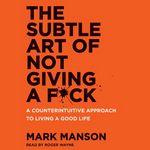
The Subtle Art of Not Giving a F*ck (Audiobook) by Mark Manson, Roger Wayne: A Mix of Common Sense, Cynicism, Self-Aggrandizement, Clever Writing, and a Great Narrator

The Subtle Art of Not Giving a F*ck (Audiobook)The Subtle Art of Not Giving a F*ck: A Counterintuitive Approach to Living a Good Life

by Mark Manson, Roger Wayne (Narrator)

Unabridged Audiobook, 5 hrs., 17 min.
HarperAudio, 2016

Read: October 1, 2018

I’d seen this book around, and let my eyes slide right off given the title. Clearly, it wasn’t for me. Then a couple of months ago, I heard it referenced in a couple of podcast interviews (no, I don’t remember who talked about it — but at least one of them said something thoughtful about it) and my cubicle-mate listened to it at the same time and seemed to enjoy it. So I figured I’d give it a shot. I’m very glad I did, really.

I’m also glad that HarperCollins’ website gives such a thorough blurb about the book, which will save me so much time — so let’s take a moment to read what they said:

           In this generation-defining self-help guide, a superstar blogger cuts through the crap to show us how to stop trying to be “positive” all the time so that we can truly become better, happier people.

For decades, we’ve been told that positive thinking is the key to a happy, rich life. “F**k positivity,” Mark Manson says. “Let’s be honest, shit is f**ked and we have to live with it.” In his wildly popular Internet blog, Manson doesn’t sugarcoat or equivocate. He tells it like it is—a dose of raw, refreshing, honest truth that is sorely lacking today. The Subtle Art of Not Giving a F**k is his antidote to the coddling, let’s-all-feel-good mindset that has infected modern society and spoiled a generation, rewarding them with gold medals just for showing up.

Manson makes the argument, backed both by academic research and well-timed poop jokes, that improving our lives hinges not on our ability to turn lemons into lemonade, but on learning to stomach lemons better. Human beings are flawed and limited—”not everybody can be extraordinary, there are winners and losers in society, and some of it is not fair or your fault.” Manson advises us to get to know our limitations and accept them. Once we embrace our fears, faults, and uncertainties, once we stop running and avoiding and start confronting painful truths, we can begin to find the courage, perseverance, honesty, responsibility, curiosity, and forgiveness we seek.

There are only so many things we can give a f**k about so we need to figure out which ones really matter, Manson makes clear. While money is nice, caring about what you do with your life is better, because true wealth is about experience. A much-needed grab-you-by-the-shoulders-and-look-you-in-the-eye moment of real-talk, filled with entertaining stories and profane, ruthless humor, The Subtle Art of Not Giving a F**k is a refreshing slap for a generation to help them lead contented, grounded lives.

Sure, some of that is overblown — its point is to sell you the book, right? But, by and large, that’s a good summary of the book’s highlights. Manson’s point isn’t to stop giving a f*ck period, it’s to give fewer f*cks in general and to make sure the f*cks you give are for the right/important stuff in life. That’s pretty basic, but pretty easily ignored advice: everything seems important, but not everything is. Focus on the important stuff, care about that, and let the rest go — if it works out, great. I’m not sure if this is different from Carlson’s book Don’t Sweat the Small Stuff — but it probably has more laughs and profanity.

Manson is entirely too impressed with himself (or at least he comes across that way), and he never convinces me that there’s a reason to heed his advice over anyone else’s. But on the whole, what he says makes a lot of sense. Do I think that ultimately, this is all a house of cards that won’t stand intense scrutiny? Yup. But I think that of every bit of man-made advice — Manson’s is more amusingly delivered than most, and won’t get the devotee into too much trouble if they apply this recklessly.

Roger Wayne’s narration elevates the entire thing — there’s not a moment that I don’t confuse his voice for Manson’s. It felt like I was attending one of the most intense self-help seminars in history and that Manson got going and just wouldn’t stop (not that anyone tried to make him). Wayne added voices (his Disappointment Panda voice is the best character I’ve heard in an audiobook since Luke Daniel’s take on Hearne’s Oberon), flair and a sense of passion to the text. When Manson approached poignancy, Wayne made it all the more so. Fantastic work.

I’d probably give this 3-stars if I’d read the text — amusing, thought-provoking, with some good advice. But, you add in Wayne’s narration? I’ve got to bump it up to 4. Seriously, he’s just that good. This isn’t a book for everyone (I know several readers of this blog that should avoid it just for the language), but for those who are capable of sorting out the wheat from the chaff — this is a fun and potentially helpful read.

—–

4 Stars2018 Library Love Challenge

Voyage of the Dogs by Greg van Eekhout: An All-Ages SF that is a sure-fire crowd-pleaser

Voyage of the DogsVoyage of the Dogs

by Greg van Eekhout

Hardcover, 208 pg.
HarperCollins, 2018
Read: October 1, 2018

           Of course, the humans couldn’t go alone. There had to be dogs. Because wherever humans went dogs came along. Like rats, only more helpful. Dogs would herd livestock. Dogs would keep watch against the unknown. And, more importantly, dogs would keep the human crew company during the long spaceflight, and on their new home, far away from Earth.

But first they had to get there.

I guess this is technically a “Middle Grade” book — but forget about that. Call it All-Ages instead — that way, adults and YA readers and . . . everyone can enjoy this SF guilt-free. I should also include this line from The Big Idea post Van Eekhout wrote on Scalzi’s blog: “Spoiler: I don’t kill off any of the dogs in this book. Why not? Because I’m not a monster, that’s why not.” It’s important to get that out of the way.

Let’s start with this: the rationale to bring dogs along on a spaceship. It’s brilliant. It also points to one of the biggest problems with Starfleet, the Colonial Battle Fleet, the Serenity, etc. A lack of animals. Sure, NCC 1701-D had pets (not that we saw them often), but they were sealed up in cabins. And Firefly‘s episode “Safe” had cattle, but that was an oddity. The animals aboard Laika are there for purposes — like the main character, Lopside. He’s there to hunt rats — where there are humans and cargo, there are rats. Something small and fast — and with a good nose — is needed to hunt rats down.

The book will do a better job explaining the roles of the other three dogs and what advances in breeding have led to dogs being capable of being more than the dogs we have today — while still remaining dogs — to become Barkonauts.

These poor, brave dogs go into the hibernation state just before the humans do to complete the voyage to a nearby star system as part of human exploration and colonization, the first mission like this humanity has tried. But when the dogs wake up, they notice something’s wrong — part of the ship is missing, as is the crew.

They’re too far into the mission to turn around, too far away for a rescue mission to reach them. At this point, Lopside and the others have to try to salvage what they can and limp along to their final destination.

Lopside is a terrier mix, he’s brave, he has (understandably) abandonment issues — which are not helped at all by the absence of the humans. He’s a little scatter-brained (like a good terrier) and he’s incredibly loyal and has a great heart. The other barkonauts are as well-drawn and lovable.

Van Eekhout is clearly a dog-lover and it comes out in his characters. He’s also a pretty good story-teller, because even with that spoiler, I was invested in the outcome and really wasn’t sure how he was going to pull things off in a way that was satisfying and that wouldn’t reduce semi-sensitive 5th-graders across the globe to quivering balls of tears (a lesson Wilson Rawls could’ve used, I have to say — no, I’m not still torn up about Old Dan and Little Ann, why do you ask?). He does succeed in that — although some might get a bit misty at a point or two. It’s a fun and creative story, and takes some oft-repeated SF tropes and deals with them in a refreshing way.

Ignore the stars — I can’t bring myself to give it more, I don’t know why. Pay attention to what I have said above and this: read the book. It’ll warm your heart, it’ll make you make you a little sad, it’ll give you something to grin about — and it tells a good story, too. What more do you want?

—–

3.5 Stars

2018 Library Love Challenge

Page 3 of 4

Powered by WordPress & Theme by Anders Norén