Month: January 2019 Page 3 of 5

Saturday Miscellany — 1/12/19

Just a few odds ‘n ends over the week about books and reading that caught my eye. You’ve probably seen some/most/all of them, but just in case:

Lastly, I’d like to say hi and extend a warm welcome to Hannah, workwithlapo and salmanalfarisi for following the blog this week.

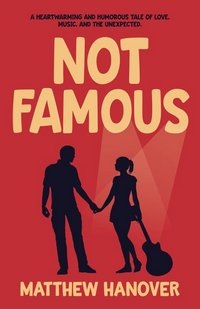
Not Famous by Matthew Hanover: A Sweet bit of Lad Lit that’ll fill your Heart with Song.

This is now available for pre-order at a discounted price! Take advantage of it while you can!

Not FamousNot Famous

by Matthew Hanover
Series: Wallflowers, #1

eARC, 382 pgs.
2019

Read: December 3 – 4, 2018

We meet Nick a couple of months after one of the most embarrassing experiences of his life — a marriage proposal that goes awry. He’s still reeling from that when he meets a very cute, and comparatively young, barista at his favorite Seattle-based Coffee chain shop. Alli’s not just a barista, she’s also a musician — a solo act, just a girl with a guitar — so Nick goes to one of her shows. He falls in love with her music right away, and somehow convinces her to go to dinner with him.

Which is just the beginning of their story. Alli’s a very private person with no romantic past. At all. Which seems hard to believe when you read it here, but when she tells Nick that, you have no problem believing it. Unless she’s singing, she seems nervous, uncertain, and shy. But on stage . . . she’s a different person. And while she seems like a shrinking violet, she has a will of iron when it counts. One of the places it counts surrounds her past — it’s a closed book — and it doesn’t seem likely that she’ll open up until and unless she truly trusts someone. Although she’s put up enough walls to protect herself that it’s going to take quite the guy to get her to let her defenses down.

Now, on the other hand, Nick has some kind of romantic past, but it’s hard to believe it sometimes as he fumbles his way through this relationship. It’s kind of fun to watch him act like he’s an expert on romance, someone guiding Alli through this new territory for her, and then frequently doing and saying the wrong things — almost sabotaging the relationship more times than he’d care to admit. Some of this comes from general ineptitude, some comes from the damage done to him in his last relationship (much of which he doesn’t realize happened).

Now, I don’t want to take any thing away from Nick or Alli — they’re they heart and soul of the novel. But, I want to talk a little bit about Nick’s sister, Lacy. Her father was their mom’s second husband, and about ten years younger. They’re not close, but their mother keeps trying to get Nick to be involved — after his step-father died, Nick’s really the only male influence in her life. Lacy, like their mom, wants them to be close. She sees him as her big brother, even if he only sees her as his much younger step-sister. As the book goes on, Nick’s maturity can be gauged by his relationship to his little sister. Naturally, like just about everything that’s not work in his life, Alli’s influence and action improves things — the friendship between Lacy and Alli forces Nick to play a larger role in his sister’s life. And before long, he doesn’t need Alli’s efforts to want that closeness himself. I thoroughly enjoyed Lacy as a character, and watching how Nick changes in relation to her — she was the added something that made this book more than just a sweet love story. She’s not around much, actually, and there are characters that have a more obvious impact on the plot — but she’s the non-Nick/Alli character that sticks with you.

She’s also the one character whose main role isn’t to serve the Nick/Alli relationship in some way. Now, she does serve that — don’t get me wrong. But that’s not the chief purpose for her. I have nothing against Alli’s Starbucks coworkers, or fellow musicians who only show up to encourage the romance. Or Nick’s roommate, or friend/partner who give him reality checks and the prodding her needs. But they really don’t do much else. But little sister does. If I ever get to interview Hanover, we’re going to spend a lot of time talking about her.

I would have appreciated having a better sense of who Nick is outside the relationship. I do have a sense of him as a single guy, as a friend, as a professional — but I’d have liked a bit more of that. It’s really hard to have much of a read on Alli outside their romance, as it’s all told from Nick’s POV. But you do get hints — I’d have liked a few more. But since this is the story of Nick and Alli, it’s appropriate (and enough) that we get a really strong idea about them as individuals relating to each other and them as a couple, and how that dynamic functions. I’m just a reader who almost always wants a little more than an author gives me.

At the end of the day — and long before that, actually — what you think about this book boils down to one thing: Alli. Do you like her as a character — do you fall under the same spell that Nick does? (or can you see why someone would?) Moreover, her secret — do you care? And is that caring based on this struggling artist trying to make her way in the world, or do you care because you’re curious? Nick, his struggles, his ineptitude, Lacey, etc. — you’re appreciation of the book will be flavored by your appreciation of those, but it’s all about Alli when it comes to the question of, “Do you like this book?” And Nick, at least, would have it no other way.

Not Famous is almost as much a tribute to Nick Hornby as it is a story in the same vein as his work. There are nods to Jonathan Tropper and Matthew Norman, too — probably Mike Gayle as well, but it’s been so long since I’ve read him, it’s hard for me to recognize that. This is not a bad thing — in fact, I quite appreciate it, and enjoyed the process of seeing how Hanover reflects his influences in his writing.

At some point, I can’t tell you where, I stopped thinking about Not Famous as something that I was going to post about, or something I was going to provide feedback on. I just got wrapped up in the story and the fate of these two characters (and his sister, actually). I stopped thinking about how Hanover wrote and was only concerned with what he wrote (not that I didn’t notice the former, I just didn’t care). It’s always a good sign when I disengage the critical part of my brain and simply read.

Not Famous — it’s cute, it’s amusing, it’s charming, it’s sweet. It’s the kind of book that you want to bring home to mother (okay, that line’s borderline cheesy, I know — but my mom would really enjoy this book) — and even bring it home to your daughter. I hope this book is successful enough to warrant future novels from Hanover, because I would love to read more.

Disclaimer: I was given a copy of this ARC by the author in exchange for this post. Which gave me something to opine about, but otherwise didn’t influence my opinion.

—–

4 Stars

Flashback Friday: The Theory of Opposites by Allison Winn Scotch

The post I’m working on just isn’t going to be finished on time — at least not while leaving me capable of working today. So here’s a post from the past about a book that I’ve thought about lately.

The Theory of Opposites

by Allison Winn Scotch
Paperback, 306 pg.
Camellia, 2013

The Theory of Opposites starts off with a bang — a Rube-Goldberg of verbal and physical slapstick. Raised by a self-help guru, raised in an atmosphere saturated with and run by her (best-selling and almost universally acclaimed) father’s theories, Willa Chandler-Golden’s life is about to fall apart the way that her day falls apart before she even leaves the apartment this fateful day.

She loses her job, learns that she’s not pregnant after all, learns that her parents are both in the midst of a late-life crisis, learns that the twelve-year-old son of her husband’s dead friend will be spending the summer with them, her husband may be stepping out on her. Oh, yeah — and then a couple weeks later her husband decides they need a break from each other. He’ll be moving across the country, sharing custody of his “nephew.”

So, Willa does what anyone finding themselves in this situation — she agrees to help her best friend write a self-help book that ties into her favorite Reality TV Show. As an added bonus, their book will flatly contradict her father’s near-Nobel Prize winning work.

During this break, catastrophe strikes Willa’s father and brother, her mother’s life turns upside down, and The One Who Got Away comes back into her life.

Somewhere in all this, Willa tries to figure out just what she wants in life, what she believes about life, and what kind of person she’s going to be. The question The Theory of Opposites tries to answer.

There’s fun to be had in the reading, but it’s not as if there’s a denial of the seriousness of it all. Scotch deals with some pretty serious issues with the same light, deft touch she brought to her past novels — breezy enough that you can let the uncomfortable details slip by, but honest enough that they’re in front of you all the time. I don’t think this was quite as satisfying as her The Song Remains the Same, but it was good enough to keep me looking for whatever comes next.

—–

3 Stars

Flashback Friday: Fate Ball by Adam W. Jones

The post I’m working on just isn’t going to be finished on time — at least not while leaving me capable of working today. So here’s a post from the past about a book that I’ve thought about lately.


Welcome to Part One of our participation in the Fate Ball Book Tour — a brief interview will follow in a couple of minutes. Hope you enjoy both of these posts half as much as I enjoyed this book.

Fate BallFate Ball

by Adam W. Jones
PDF, 279 pg.
Wisdom House Books, 2016
Read: April 14 – 15, 2016

Parents always seem to think that saving the day is a good thing, but really it just postpones the inevitable. Sometimes, they should just let their kids crash and burn, so they learn their lesson the hard way. Parents can be the biggest enablers of them all when they’re acting out of love and kindness, but that usually just makes things worse.

That’s not the most dazzling piece of writing in Fate Ball, nothing catchy or inherently memorable, like I try to start with — but this is the heart of the book. People trying to help an addict not ready to be helped, and inadvertently making things worse.

In the prologue, Able Curran receives news that Ava Dubose has died — Chapter One takes us back 14 years to 1980 to meet her. In Chapter Two (one of the best chapters I’ve read this year), Able meets her — and falls for her almost instantly (and many readers will, too). Over the next few chapters, you see the two falling deeper and deeper in love — one of the cutest couples you’ve read.

All the while, you know that things are leading to the fateful phone call Able receives in 1994. We start to see some signs of trouble (well, those started before this) long before Able does. When he finally gets clued it, it destroys him — and they don’t see each other for some time. From there we watch these two lives intersect from time to time over the next 15 years (usually, Able trying to help her), as well as getting glimpses of their lives between the intersections.

This is really the story of two addicts — one who lets their dependency control and destroy them. The other who learns how to live with the problem, controlling and eventually overcoming. And even as you know it’s happening, you still hold out hope for Ave to shake things off, to achieve the serenity — or at least the contentment that she so desperately needs. Things get worse and worse — yet Jones is able to keep things from despairing, there’s a lightness to the prose that keeps things moving. While things fall apart for Ava, they move on for Able and their friends — success, new love, children, life.

In some hands, you’d be beaten over the head with the contrast, Jones doesn’t do that however. It all spools out naturally, easily (the kind of ease that takes work to pull off). You like everyone here enough that you’re pulling for them, no matter what stupid choices they make. Jones as come up with a perfect blend of humor, romance, drama, and tragedy.

There are plenty of little touches along the way to keep things light, to immerse you in the world — which is good because the book could become too fixated on Able and Ava.

His mother was always asking, then answering her own questions. That’s why she was always right. She could have a whole conversation with herself, even a fight depending on the subject matter, and no one had to say a word. All Able needed to do was just nod his head once in a while and she would take care of the rest.

This is not the best book I’ve read — not even the best novel on addiction. But it works well enough that it doesn’t matter. I’m not saying it’s a bad book, or there are glaring problems — but objectively, I just think it could be better. But when you’re reading it? It delivers everything you want, and some things you don’t expect. I really enjoyed this and think you will, too.

Disclaimer: I received a copy of this book from the kind folks at Wisdom House Books in exchange for an honest review.

—–

4 1/2 Stars

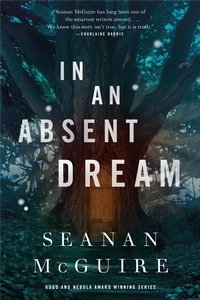
In an Absent Dream by Seanan McGuire: Another Wayward Child’s story — magical, enchanting, heartbreaking. You know the drill.

In an Absent DreamIn an Absent Dream

by Seanan McGuire
Series: Wayward Children, #4

Hardcover, 204 pg.
Tor Books, 2018
Read: January 9, 2019

           …the worst she was ever called where anyone might here was “teacher’s pet,” which she took, not as an insult, but rather as a statement of fact. She was Katherine, she was the teacher’s pet, and when she grew up, she was going to be a librarian, because she couldn’t imagine knowing there was a job that was all about books and not wanting to do it.

Here’s a quick recap of this series for those of you who haven’t heard about it yet/have ignored everything I’ve said about the series these last few years: Imagine Children who go off to a magical kingdom for a bit from our world — Narnia, Fillory, the Lands Beyond, Neverland, Lyrian, whatever you call that land on the other side of the fourteenth door in Coraline, etc. — and then return home. Some will go on to live “normal” lives — others can’t forget or outgrow their attachment to the magical world — some of those, those who want more than anything to return to whatever was on the other side of the door wind up at Eleanor West’s Home for Wayward Children. This series is about some of those children.

There’s a basic outline to these books — McGuire introduces you to a Child and a new world. Her language will be lyrical, playful and enchanting. She’ll draw you in with the awe and wonder and while you’re not looking, she’ll set the hook, and you will be as emotionally tied to her characters as you are close family members*. Then something devastating will happen to those characters, and you will feel horrible, yet love the experience. No matter what kind of resolution is found in the book (death, rescue, brokenness), when you close the book you’ll almost instantly start waiting until the next book comes out, because McGuire is just that good.

In this book we meet Katherine — Katherine’s never been good at making friends her age (there are justifiable reasons for this), but she likes talking to adults more, she likes rules, and she loves reading. There’s something about each Wayward Child that readers can identify with, but Katherine is more relatable to readers than the others have been. One day, Katherine comes upon a tree that hadn’t been there before. This tree had a door in it, and before she realized what was happening — she was on the other side of the door, walking down a hall, on her way to a Goblin Market. In the last book, we saw a nonsense world — this is a logic world, through and through. There are rules, enforced by everyone who lives there — and somehow, by the world itself.

Unlike that (mostly) tongue-in-cheek outline above, each of these books are so different from the rest, it’s hard to compare them — so I’ll try not to. But the structure of this seems more different than the others have. So I’m not going to tell you any more about the plot than I have — I’ll just say it’s a great story, incredibly well told — and even when the narration tells you the ending is not going to be “kind”, you keep expecting/hoping/wanting for things to work out for Katherine and her loved ones.

I’ve made the ending sound bad — it’s not “happy,” but I’m not complaining, I’m not criticizing, I’m most definitely not warning a reader away. It’s the right ending for this story, it’s absolutely how things needed to go — but this is not the Feel-Good Novella of the Year. It is wonderfully written, beautifully written, imaginative, awe-inspiring, delightful, and eventually heartbreaking. McGuire’s one of the best at work today — and this is proof of it.

Yes, you can read these out-of-order — but I don’t recommend it. And hey, were talking 200 pages or less each, you’ve got time for that. You’ll be glad you did (once you stop feeling horrible)


  • That might be a bit hyperbolic.

—–

5 Stars

The Impossible Dead by Ian Rankin: Malcolm Fox Uncovers Corruption both Past and Present

The Impossible DeadThe Impossible Dead

by Ian Rankin
Series: Malcolm Fox, #2

Hardcover, 391 pg.
Reagan Arthur Books, 2018
Read: December 24 – 26, 2018

Detective Paul Carter has been found guilty of some pretty clear-cut criminal activity. Fox and his team have been brought into investigate a neighboring force, Carter’s own, to see who might have been involved with him — or at the least covered up for him. They weren’t involved with the original investigation, but that doesn’t keep anyone from hating them as they come in for the follow-up.

Not too surprisingly, they’re getting nowhere fast. So they go fishing — not talking to the detectives they’re looking into, but witnesses and others. One of them ends up dead not long after Fox talks to him. There’s enough hinky in the crime scene, what the witness had told Fox — and the fact the detectives in charge are the same ones that Fox and his team are looking into, that Fox determines he needs to look into things.

There’s a tie between this murder and an old cold case involving a firebrand politician tied to the more militant wing of Scottish Nationalism. Fox is convinced that the two crimes are linked and he sets about proving who killed one man as a way to finding the killer of the other. This two-pronged focus of the book keeps Fox, his partners, and the readers on their toes.

Despite all the differences between the two characters (which will become even more obvious, it seems in the next Rebus book), they ultimately operate best in the same way, as lone wolves. But when Rebus goes off on his own and causes trouble, it’s just par for the course. When Fox does it, it’s out character — he’s a team player (at least he wants to be), so there’s a lot of mechanics involved in getting him off on his own. In The Complaints it took a conspiracy to isolate Fox, here, it takes one detective Fox crossed to take advantage of his tenuous link to a crime.

But on his own, Fox will do more to uncover the facts not just of the murder he’s wanting to investigate, the investigation he’s supposed to be running, and a very cold case. Yes, he does work with his friends who are still on the inside, to confirm or deepen his knowledge (and he does feed information back to them), but he’s very much on his own.

There’s a good amount of family drama again for Fox — grounding Fox and giving a dimension to the character that is good to see (even if it doesn’t always bring out the best in him).

I very much enjoyed watching Fox work — and try to stay near the system, if he can’t stay in it. The solutions to the crimes are well done — by both Fox and Rankin. We even get a little bit of a cameo-like appearance of good ol’ Rebus. Nothing about this really blew me away, but I was gripped throughout, and entertained by the whole thing. Rankin’s good enough that he doesn’t have to dazzle you as a reader to be very aware that you’re in the hands of a master. Fox would be worth following on his own, and I’m glad we got to see him for a couple of books before he comes park of the greater universe surrounding Rebus.

—–

4 Stars
2018 Library Love Challenge

GUEST POST: Action! by Anmol Singh

Sing was kind enough to give me some excerpts from his book to share, this is 4 of 4. I don’t think anyone would take me seriously if I gave my take on this book, if anyone’s going to convince you to read this book, it’s going to be Singh himself, so I’m going to let him — make sure you read them all!

Are you acquiring the patience, self-discipline, and knowledge we’ve talked about in previous blogs? Those qualities are critically important to your success But the truth is, all the self-discipline, knowledge, and patience in the world won’t get you to the finish line. Only action can do that. Are you ready for action?

It’s such a simple concept. And yet people resist taking action on even the smallest of things. Why? Mainly, it’s the Fear Factor. Fear of what, you ask? Think about how many of these fears are getting in the way of your success every single day.

Fear of:

  • Looking bad in the eyes of others
  • Being rejected
  • Making an irreparable mistake
  • Creating even bigger problems
  • And above all, fear of failure

The fear of failure is the #1 cause of failure. Think about that for a moment. You have a goal. But you never get started working toward that goal because you are so afraid you’ll never make it. It’s easier to do nothing. Well, guess what? You failed before you even started!

(If any of these ideas sound like concepts you’d like to explore further, you’ll find an in-depth discussion in my new book, Prepping for Success, available on Amazon on (date).

Here’s the big takeaway: your inbred fear of failure demonstrates itself in your life every single day. It’s called overthinking or “analysis paralysis.” Do you notice that you continually have difficulty making the decisions that will move you toward the success you seek? You’re getting bogged down in the swamp of decision fatigue. It’s exhausting to keep researching, analyzing, and thinking and never arriving at a conclusion. Not only does this decision fatigue inhibit your ability to clearly assess your career and business decisions, it also makes you more likely to sink into bad personal habits, like eating unhealthy foods, skipping the gym, and scanning Facebook or the Internet news feed rather than working on a pet project or learning a new skill. In other words, over-analyzing a decision makes it much more difficult to make high-quality, long-term choices later on.

If you know that analysis paralysis, overthinking your decisions, is an issue for you, consider the impact this tendency is having on your overall success and happiness.

  • Overthinking impairs your performance. You’re putting too much time and energy into analysis. There’s no room left for action.
  • Overthinking stifles creativity. Creativity demands freedom. If you’re stuck in analysis, you’re not free.
  • Overthinkers are less happy. Of course they are. When you consider the lack of creativity, the information overload, the poor performance we’ve described, it’s not a happy picture for the compulsive analyzer.

People think it’s intelligence that separates the successful from the unsuccessful. However, that is not the case. Action is what separates them, and this is easy to prove. Let’s pretend I have an IQ of 100. Can anyone have 10 times my IQ ? History has shown the highest ever recorded IQ to be around the 240 range. So that proves it’s impossible for anyone to have ten times my IQ or even five times. So how do some people achieve ten times the success that others have? How do some people make ten times as much money as others? One simple reason: the leaders of this world, the successful people of this world TAKE ACTION ! Are you ready?

This was an excerpt from the Book Prepping For Success: 10 Keys for Making it in Life by Anmol Singh, Learn more about the book and get a Copy at www.Preppingforsuccess.com/book

GUEST POST: Life-Long Learning by Anmol Singh

Sing was kind enough to give me some excerpts from his book to share, this is 3 of 4. I don’t think anyone would take me seriously if I gave my take on this book, if anyone’s going to convince you to read this book, it’s going to be Singh himself, so I’m going to let him — make sure you read them all!

Invest in yourself. That’s what you are doing when you make knowledge acquisition a top priority in your life. There’s a billboard-size sign hanging in the workout room at my local gym. It says: “Never Stop Moving.” We should all have a similar sign hanging somewhere, even if it’s just in our minds: “Never Stop Learning.”

(Want to explore this topic in specific detail? We’ll show you how in Chapter 3 of my upcoming book, Prepping for Success).

As you consider your own lifelong learning status, ask yourself these questions:

  1. Am I curious and anxious to explore new territory?
  2. How do I find out what I need to know?
  3. How do I organize information?
  4. Do I understand the recurring patterns and themes in my life?
  5. Am I a creative problem-solver?

For now, let’s focus on Question #1. Real learning demands a certain curiosity. How curious are you, really? If you want to enhance your level of curiosity, spend a lunch hour or two visiting a neighborhood playground. There’s nothing more curious than a child. How come the slide is crooked? Can I make the swing go higher? Why is the tree losing its leaves?

Somewhere along the line, that unfettered curiosity was bred out of us. Maybe there is a point where we think it’s not grown up or cool to ask questions. That point of view is totally out of sync with lifelong learning. Start now to get your curiosity back. Find a spot in your calendar right now and plan a visit to a neighborhood playground or the children’s reading room at your local library.

Then start asking questions. People like it when you question them. Most people love to share what they know. They feel flattered that you would bother to ask. So ask away. And listen to the answers.

Questioning is the first of seven qualities that you need to cultivate in order to become a successful lifelong learner. The second is to crave knowledge. In order to acquire knowledge, you have to want it more than you want other things. Your learning must take priority over Sunday night football, or a weekend of golf (unless golf is what you crave to learn, of course.)

Third, you must practice. Richard Branson, founder of Virgin America, still works to perfect his listening skills. “Listen more than you talk,” he advises. Bill Gates practiced his perseverance skills when others said he couldn’t do it and he founded Microsoft when he was barely 20. Steve Jobs practiced daily creativity and took Apple public when he was 25.

(If you really want to make progress on the path of lifelong learning, you’ll want to know the other four qualities. Find them in my new book, Prepping for Success)

Once you get started on the knowledge path, you will find resources everywhere. There are blogs, books, webinars, community college courses—the list goes on. As you begin to implement your plan, commit at least one hour every day to studying, listening to CDs or podcasts, writing down your ideas.

In addition to the time you spend with yourself, which is important, reach out. Network with groups in your profession. Attend Chamber of Commerce meetings and look for online meetups. Find someone who has done what you want to do and ask them to mentor you.

Wherever you are in life right now, you can get where you want to go if you are willing to invest in yourself. Invest in your health, your relationships, and your education. Believe in yourself because you are worth it.

This was an excerpt from the Book Prepping For Success: 10 Keys for Making it in Life by Anmol Singh, Learn more about the book and get a Copy at www.Preppingforsuccess.com/book

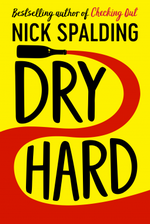
Pub Day Repost: Dry Hard by Nick Spalding: Who needs to drink when you can have this much fun reading?

Dry HardDry Hard

by Nick Spalding
eARC, 293 pg.
Amazon Publishing UK, 2019
Read: November 19, 2018

Kate Temple’s in PR, Scott Temple’s a marketing director for a distillery. Both of them rely on alcohol to get through their days (and nights). They used to have each other to rely on and curb their use, but as they’ve become more successful, they have to do more things away from each other and they really don’t have anyone to watch out for them. Also, because they spend less time with each other, both have a hole they need to fill throughout their days — which usually involves more drinking.

Things are getting bad enough that they both endanger their jobs (not to mention the property and safety of others) thanks to drunken escapades. But this doesn’t give either of them much pause — if anything it drives them to the bottle even more. Their teenaged daughter, Holly, can’t understand why these two can’t see how bad their drinking is, how much it’s hurting their marriage, how much it’s affecting her life. So, at Christmas, she decides to secretly film them at their drunken worst (which starts pretty early in the evening) and then she shows it to them, hoping this video intervention will awaken them to their problem.

It doesn’t work — her parents defend their drinking, downplay the mortifying things they do on video and generally blow her off. So in a fit of adolescent pique, she uploads the video to YouTube so her friends can see it. But the video catches the attention of a couple of popular YouTube celebrities and next thing they know, Kate and Scott are a viral sensation.

This very public shaming convinces them that they need to make some changes, and decide to cut out drinking totally. Holly tries to get them public support by uploading videos chronicling their efforts to live dry for a year, attaching the hashtag #DryHard. Things do not go well — well, maybe well, but not smoothly.

Now, here’s where Spalding distinguishes himself from almost every other writer on the planet — he makes all of that hilarious. Yes, Holly’s going through a lot because of her parents, but even in the way that Spalding describes it, her hardships are funny. At the 14% mark, I wrote in my notes “I have no idea if he can tell a story, but Spalding can make me laugh!”

I can thankfully report, he can tell a story — and still makes me laugh. The comedy comes from the situations, from the slapstick-y way his characters navigate the situations, and just the way he narrates (typically through the protagonists’ voices). It’s not just one thing that he does well — he can bring the laughs through multiple channels. Yes, the couple are careening toward rock bottom, but you laugh about it; yes, they’re dealing with very serious life and death issues — but Spalding makes you find the humor in the situations; they have monumental struggles that don’t go away just because they sober up, but you’ll ber chuckling and chortling while watching them flounder.

Oh, also, this has nothing to do with the plot, but Spalding’s description of Gin Fawkes — a flavored gin using orange peel and cinnamon produced by Scott’s distillery — is enough to make me consider becoming a teetotaler. Fantastic stuff. Funny and horrifying in equal measures.

This is the story of a family in crisis and the great lengths they go to to preserve that family. That right there sells me on the book — everyone wants the same thing — Kate and Scott’s marriage to recover. There’s not one person in the family thinking of pulling away, there’s not one more committed than the rest — both spouses are flawed and fallible, even Holly makes mistakes and loses her way, however briefly. No one’s blameless, no one’s to blame, Scott and Kate have got themselves to this point together, and together they’ll make it out. Too many books like this will take the “side” of one spouse — one is committed, one is faithful, one is stupid and blind to their own faults and one is the bigger/wiser person, etc., etc. Spalding doesn’t do that — he presents the Temples as mutually dysfunctional, mutually aspirational, and human.

Unlike a lot of similar authors, if Spalding had the opportunity for an honest, heartfelt emotional scene or a series of laughs — he’d pick the laughs 99 times out of 100. Thankfully, if he could go for a fairly honest and quite heartfelt scene with laughs, he’d go for that too. If he’d gone for fewer laughs and more of the honest and heartfelt moments, he might have a more complex, realistic, and substantive novel. Something more akin to Jonathan Tropper or Nick Hornby at their best. Instead, Spalding produced an entertaining, funny and frequently hilarious novel. The substance is there — but it’s hidden and easy to miss between the chuckles.

If you take the time to look for the substance/depth — you’ll find it and appreciate its presence. If you don’t and just laugh, you’ll be fine and have a good time — either way, you win.

This was my first Nick Spalding book — it will not be my last. Fast and funny — I had a blast reading this and laughed out loud more than I can remember doing in a long time. Read this. You’ll enjoy it.

Disclaimer: I received this eARC from Amazon Publishing UK via NetGalley in exchange for this post — thanks to both for this.

—–

3.5 Stars

GUEST POST: Self-Discipline by Anmol Singh

Sing was kind enough to give me some excerpts from his book to share, this is 2 of 4. I don’t think anyone would take me seriously if I gave my take on this book, if anyone’s going to convince you to read this book, it’s going to be Singh himself, so I’m going to let him — make sure you read them all!

Self-discipline. Sounds hard. Boring. Takes forever. Maybe all of the above are true on occasion. But self-discipline is one of the necessary keys to your success in life. So what exactly is it and how do we acquire it?

Speaker/comedian Andy Andrews defines it like this: “Self-discipline is the ability to make yourself do something you don’t necessarily want to do, to get a result you would really like to have.” So it is, in every sense of the word, an inside job. Nobody can do it for you or to you. Rather, it is a combination of commitment and hard work, often over a long period of time, to get where you want to go. It all starts with your ability control your thoughts and actions through discipline. This means managing your thoughts, your behavior, your personal habits, and your emotions. You must keep all of them in check. Does that make you into some kind of unfeeling robot? No, definitely not.

Your self-discipline starts when you learn how to create a personalized set of habits that will enable you to keep moving ahead when the going gets rough. Is it easy? No. If it were easy, everyone would be doing it and everyone would be ragingly successful. As you look around you, you are well aware that’s not happening.

Consider this contrast: in one month, 2,800 people searched the Internet for “self-discipline.” More than 200,000 searched for “fun.” So most people would rather have fun, that quick hit of instant gratification, than go through the lengthy and sometimes painful process of controlling their thoughts and actions and sticking to a job until it is complete. Because after all, isn’t it easier on a cold, dark morning to hit that snooze button and catch an extra hour of sleep that to roll out of bed, make a cup of coffee, and do some inspirational reading? The choice is yours.

Most successful people are long-range planners. Consider these contrasts.

  • Short term: grab that beautiful outfit on sale at your favorite boutique. Long term: pay off your credit card debt.
  • Short term: grab a cigarette to help you relax. Long term: breathe deeply and get healthy.
  • Short term: join the office gang for happy hour after work. Long term: save a few bucks and fatten your savings account.

You get the picture. And you probably know which actions you would be most likely to take.

Whether or not you choose to develop self-discipline is strictly up to you. But before you decide on your next move, consider what NOT having it could be costing you. Listed below are just a few areas of your life where having self-discipline brings success and not having it leads to discomfort, unhappiness, and possibly outright failure.

Self-discipline means looking at the various aspects of your life and quitting activities or habits in those areas that are producing unhappiness and outright dysfunction. Consider how you are functioning in each of these areas of your life right now.

  • Finances
  • Physical health
  • Mental health
  • Important relationships
  • Job and career
  • Spiritual life

It’s entirely possible that you are functioning at peak performance in some places and not in others. For example, many people are so focused on their job, their career, building a business, producing an income—that they are neglecting their health and their important relationships. Right now you can choose to bring things into better balance. You can see the areas where you need to change and begin to develop habits that will bring your whole life picture into clear focus.

The secret to successful change and habit-building is to begin with micro-changes. Let’s say you know your work is consuming the majority of your energy and you’re neglecting your significant other. A micro-change might be to sit down together for a glass of wine one evening a week. Devote all your attention to the other person. Don’t discuss your work, or theirs. And here’s the REAL secret: be consistent. If you’ve promised yourself to do this once a week, do it no matter what. Don’t do it once or twice and then go back to your old ways. That is not habit forming!

An organized life is a disciplined life. Do one small thing each day to improve your personal and business environment, your health, your relationships. That’s all it takes. Before long, you will have become a self-disciplined success.

This was an excerpt from the Book Prepping For Success: 10 Keys for Making it in Life by Anmol Singh, Learn more about the book and get a Copy at www.Preppingforsuccess.com/book

Page 3 of 5

Powered by WordPress & Theme by Anders Norén