Month: February 2019 Page 4 of 7

A Few Quick Questions With…Jo Perry

One of the first things I did when I decided to participate in Fahrenbruary was to see if Jo Perry would participate in one of these Q&As (and thankfully she displayed poor judgment and agreed). I decided to post this today to commemorate the publication of the fourth book in her fantastic series, Dead Is Beautiful. It’ll be the next book I start and I’m hoping to have my post up about the book itself on Monday. I know the positive reviews are already popping up out there on teh IntraWebz. In the meantime, I hope you enjoy this.

What was your path to publication? What did you do to prepare yourself to this career in fiction?
I don’t believe anything prepares a person for writing fiction except writing and reading. My father’s formal education ended at fourth grade. He educated himself by reading and became a comedy writer. My mother had been a teacher. Both read relentlessly. Words, especially jokes were serious business: One wrong word and the joke’s punch evaporates.

I always wrote—mostly poetry, studied literature in college, got a Ph.D. in English, taught literature and writing, wrote episodic television and some other stuff. But despite all that I am very late bloomer when it comes to fiction. My first novel, Dead Is Better was published in 2015.

As for a “career in fiction,” I’m not there yet, but I’m very lucky that my husband, novelist Thomas Perry demonstrated how that’s done. This year he published his 26th novel, The Burglar.

Whatever one might think about Charlie (your protagonist we know best), there’s no denying that Rose is what most of your readers connect to. You recently posted something brief to Facebook about Rose’s origin — can you talk a little more about that?
During the scorching summer of 2008, I came upon a dusty, thirsty, exhausted, frightened dog that someone dumped in crowded home improvement store parking lot. I drove her home (she fell asleep immediately on the front seat of the car) and––after some listless attempts to find a home for her because we were strictly cat people––we were hers and we named her Lucy.

From the first moment she met me, Lucy upended my life, revealed new worlds and introduced me to people who have become deep, cherished, important friends. Lucy’s constancy, her sweetness despite being neglected and abused, her patience with me, a total dog-novice idiot, her sense of humor, her wisdom and her benevolence changed me completely. I experienced the bottomless, endless goodness dogs give us, and witnessed the casual and not so casual cruelties which human beings visit upon dogs hourly and daily.

The experience of knowing/experiencing Lucy, and Lola, the second dog who appeared to us, is the basis for Dead Is Better and the other books in the series—so yes, in general ways, Lucy is the model for Rose.

Outside some pretty extreme — and rare — circumstances, Charlie and Rose do little more than watch events unfold in front of them. What was the reasoning behind that choice? What are the special challenges behind that kind of protagonist for the writer?
I wanted my protagonists dead, which means that they would be ghosts. But I wanted none of the traditional ghostly machinery, telekinetic movement, special effects or general creakiness. So I set up some rules: In the afterlife the dead can touch each other, see each other and of course hear each other.

But in living world only the dead can see the dead.  They cannot be heard or felt or seen. The dead cannot affect anything directly.

The challenges are huge but fun and in some ways a relief from guns, computers, traditional violence, cell phones of crime fiction.  And ghosts are perfect voyeurs. They can spy all they want. They can float through walls. Through people. They can go anywhere at any time. And they are fearless because they cannot be killed.

Most of the time these limitations are liberating and inspiring. Other times they are a pain.

Is there a genre that you particularly enjoy reading, but could never write? Or are you primarily a mystery/suspense/thriller reader?
I love nonfiction. I don’t think I could write it well. Nonfiction demands meticulous, massive research and an ability to organize all of it into a compelling, graceful narrative.

I have become mystery/suspense/thriller reader now and love it.

What’s the one (or two) book/movie/show in the last 5 years that made you say, “I wish I’d written that.”?
TV: I wish I’d written Fauda, and The Method.

Books (short list) I wish I’d written Nikki Dolson’s All Things Violent, Grant Nicol’s A Place To Bury Strangers, Denial by Paddy McGrane, James Craig’s A Slow Death and A Shot At Salvation, Timothy Hallinan’s Pulped, For The Dead and Crashed, Saira Viola’s Jukebox, Fidelis Morgan’s The Murder Quadrille, Seth Lynch’s Salazar novels, Thomas Perry’s novels, esp. the Butcher’s Boy novels, the Jane Whitefield novels, and Strip; Derek Farrel’s Danny Bird mysteries, David Keenan’s This Is Memorial Device.

This one’s not about you directly, but what is it about Fahrenheit Press that seems to generate the devotion and team spirit that it does (or at least appears to)? I don’t know that I’ve seen as many authors from the same publisher talk about/read each other’s books — or talk about the publisher — as much as you guys seem to. Is it simply contractual obligation, or is there more?
In no way do F13Noir/Fahrenheit Press require their authors to, as they might say, flog their publishing house. The truth is that their writers and readers rave about them because they love them. They’re funny, they’re honest, they’re daring, and they take risks.

Too often publishers avoid risk entirely and busy themselves with policing genre boundaries to make the selling of books easier, i.e. so they can say, “This luminous thriller is Girl On A Train meets [insert name of best seller here].  Any book that violates genre norms or bends genres or or that is too weird is a no-no. An example: A publisher liked Dead Is Better except for one small thing—the dog. I was told that I couldn’t have a “dog detective.” That a dog protagonist in a mystery was not permitted. Was a rule breaker. That if I removed the dog, they’d look at the book again. Which means either that they didn’t like the dog, which is fine, or that they didn’t know how to sell the dog because a dead dog protagonist was too different, too weird, maybe too upsetting for some.

Fahrenheit Press/F13Noir don’t play that game or any games––which is extraordinary. They look for crime fiction that (and I cannot speak for them, but I infer this from their list) makes the reader feel something, that’s exciting, daring, fresh, brave. They look for powerful voices. They don’t try to tame crime fiction, they like it wild, unapologetic, unadulterated. In fact, they kind of dare writers to produce the most courageous books they are capable of writing.

That is miracle and I am endlessly grateful to them because of it.

Thanks for your time — and thanks for Charlie and Rose. I hope you enjoy continued success with them (and not just because that would guarantee me more of them to read).

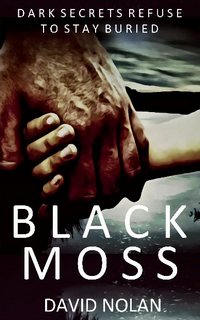
Black Moss by David Nolan: A Mystery that will Haunt You in a Stunning Debut Novel

Black MossBlack Moss

by David Nolan
Series: Manc Noir Book 1


Kindle Edition, 291 pg.
Fahrenheit Press, 2018

Read: Febryary 11 – 12, 2019

           Danny had never been out here before. He’d heard the moors were bleak, but he wasn’t prepared for the sheer unrelenting nothingness of the area. It was like the world had been horizontally cut in two –sky at the top, moor at the bottom, with nothing to provide any form of relief from the two themes. Not even a tree. Not one. In any direction. Bleak.

David Nolan’s debut novel is one of those that I’m having a hard time gauging how much to say about the plot. If I don’t keep a foot on the brake pedal, I know I could easily go on and on and quickly give away everything — and where’d the fun be in that for you?

Not that “fun” is a good word for about 96% of the experience of this book. This isn’t one of those books (not that there’s anything wrong with that).

Half of this book is told in April of 1990. Rookie radio reporter Danny Johnston is assigned to cover a murder miles away from the story that he wants to cover (and that just about every other reporter in the Manchester area is covering), the real-life riot at Strangeways prison. As Danny is watching the police fight the wind, he sees the body they’re trying to cover with a tarp. It’s a young boy, clearly the victim of murder. A few days later, he’ll learn just how brutal the killing is — but it doesn’t matter. From the moment he saw the body, Danny was committed to making sure the killer is caught.

The other half takes place in 2016, when noted television report Daniel Johnston wraps his car around a tree. He’s drunk — he usually is, it turns out — and this is the last time. The iPhone video of his exit from the car and the drunken ranting and falling that ensues doesn’t do his image any favors. He’s facing criminal charges, the collapse of his career and therapy. Between some great medication, someone to listen and a lot of free time, he makes some progress on putting himself back together and decides to go back to Manchester to try to complete the quest he started so long ago. He also explores some of his own demons along the way — we don’t spend that much time with that, but enough to get a better idea what’s behind a lot of his own behavior.

In addition to Danny/Daniel, there’s a small-town newspaper reporter, three police detectives, several Radio Manchester employees, an MP and some residents of a children’s home and the woman who runs the place that serve as the major characters in 1990. In 2016, we still see most of these characters — just at new stages in their lives. Some of them have moved past this crime, others remember it as much as (if not more than) Danny. None of these characters are the kind of splashy or obviously entertaining individuals that many mystery novels are peppered with — they’re simply well-rounded people. Flawed, with obvious issues and strengths.

From the first chapter (see the quotation above) to the end — there is a bleak feeling pervading this work. Between the geography, the situation, and the weather that’s the best word for it. I don’t describe the feel of books often enough — but this is one of those books that the adjective “atmospheric” was invented for. There’s an atmosphere, a mood, an undercurrent running through this book. Hopelessness surrounds the so many of these characters. Wretched also works to describe the feeling.

Which isn’t to say that this is a book you trudge through — you don’t. You really don’t notice the time you spend in this book, it swallows your attention whole and you keep reading, practically impervious to distractions. Yes, you feel the harsh and desolate atmosphere, but not in a way that puts you off the book. You want to get to the bottom of things with Danny and his friends/allies.

The mystery part of this book is just what you want — it’s complex, it’ll keep you guessing and there are enough red herrings to trip up most readers. As far as the final reveal goes, it’s fantastic. I had an inkling about part of it — but I didn’t see the whole thing until just a couple of pages before Nolan gave it to us. Yet when the reveal is finished you’re only left with the feeling of, “well, of course — what else could it have been?”

And then you read the motivation behind the killing — and I don’t remember reading anything that left me as frozen as this did in years. There’s evil and then there’s this.

This is a stark, desolate book (in mood, not quality) that easily could’ve been borrowed (or stolen) straight from the news. Nolan’s first novel delivers everything it promises and more. You won’t be sorry if you give this one a shot, you’re not going to read a lot of books better — or as good — anytime soon.

—–

5 Stars

Fahrenbruary Repost: Dead is Good by Jo Perry

One more Charlie and Rose book for you this week — and it’s a doozy. I hope you’re enjoying this stroll through these books as much as I am — I’m enjoying them so much, that for the last two days I’ve forgotten to mention something incredibly important — the fourth book in this series, Dead Is Beautiful comes out tomorrow — Fahrenbruary 14th! Go — click and buy. Then come back tomorrow for a special treat.

Dead is GoodDead is Good

by Jo Perry
Series: Charlie & Rose Investigate, #3

Kindle Edition, 282 pg.
Fahrenheit Press, 2017
Read: August 3, 2017

Oh, and after all this time I learned something else about being dead.

Death is failure.

Death is loss.

Everything—who you are, what you know—goes.

Whoever you thought you were, you weren’t and you’re not.

When he was alive, Charlie Stone was married multiple times to pretty horrible women (if we’re to believe him — and we might as well, he seems pretty upfront and honest about this kind of thing), not that he was any catch, either. But he really only loved one person, Grace Morgan. Grace broke things off with Charlie and moved on with her life, but apparently after hearing about his murder, she was moved to change her approach to art — deciding to challenge the audience, forcing them to realize how close to death they are.

Yeah, it sounds pretty silly and pretentious to me, but hey…that’s not the important part of the story. Maybe if we got more examples of her art, I’d care more and maybe even understand. What is important about Grace, for our purposes, is that her life is in danger, it’s because of this danger that Charlie and Rose have been brought from their afterlife-limbo back to Earth.

The book opens with one of the more blatant suicide-by-cop scenes you’ve ever read, which is intended to serve as protection for Grace. It doesn’t work out, or the book would be really short. Powerless to do anything but watch and hope things turn out okay, Charlie and Rose travel around L.A. discovering for themselves what it was that endangered Grace in the first place — which brings them into a world of drugs, sweatshop workers, deceptive piñatas, and smuggled birds.

This is a very tangled story, it takes Charlie quite a while to put the pieces together — Rose has her own priorities in this mess and spends some time away from Charlie, unwilling to turn her focus on his behalf. The way that this criminal enterprise is eventually revealed to work not only seems like something that really exists, but is revealed in a way that is narratively satisfying.

Charlie will tell his readers over and over that there’s no character growth in death — that’s nonsense. Post-mortem Charlie is a much more emotionally mature and self-sacrificing kind of guy than pre-mortem Charlie was. In this book we see him come to — or at least acknowledge — a greater and deeper understanding of what love is, and what he allowed his previous relationship to become. It may not do him any good in the afterlife, but Charlie is better for it, and in someway we can hope that Grace is better off having gone through all this, so that whatever life has in store for her can be tackled face-on.

I love these characters — even while we readers don’t fully understand their circumstances, how they know where to go, what brings them to this world at certain times. Even while they don’t have much better of an idea than we do (at least Charlie doesn’t). I love how while they can’t interact with their environment, the people they see and events they watch unfold, they are driven to find answers, driven to care about what’s happening. There’s something about that compulsion — and success they have in figuring things out — that matters more than when Bosch or Spenser or Chin and Smith put all the pieces together to thwart someone.

This wasn’t as amusing as previous installments, but it was just as satisfying — maybe more so. For a good mystery with oddly compelling characters, once again, look no further than Jo Perry.

The L.A. County Department of Medical Examiner-Coroner has a gift shop?? Why isn’t anyone investigating this? It may be real, it may be popular and legal. But surely that’s a crime against tact, right?

—–

4 Stars

Fahrenbruary Repost: Dead is Best by Jo Perry

I like this post better than I liked my post on the first of the Charlie and Rose books (that we saw yesterday), but I still think I could’ve done better. Nevertheless, I agree with almost everything I said back in 2016 — especially the main point: get this book.

Dead is BestDead is Best

by Jo Perry
Series: Charlie & Rose Investigate, #2

Kindle Edition, 296 pg.
Fahrenheit Press, 2016

Read: May 2, 2016

You’d think that having given up the ghost I’d be beyond the grasp of my ex-stepdaughter, the parasite.

Sure, Charlie’s less-than-charitable assessment, doesn’t make it sound like death has mellowed him at all — or that we really want to spend a novel looking into the trials and tribulations of his ex-stepdaughter, Cali. (a quick aside: I loved Charlie’s rant about the pretentious names given to Cali and her peers, “Truth, Canyon, Druid, Turquoise, Vanilla and Road. Don’t tell me those are names–– they’re brands. “) But last time we learned that 1. Charlie has actually mellowed a bit, we just need more time to see it; 2. He’s generally right about his family; and it won’t take long before the reader will actually care about Cali. As difficult as she’ll make it.

Textbooks will tell you that Cali is a “troubled teen.” Which is a pretty vague, and a likely outdated, term. She’s a drinker, a drug user, defiant daughter (although once you meet her mother and current stepfather, you kind of get that) in trouble with the law. But it doesn’t take long once Charlie and Rose start to follow her for her to end up in more trouble than she — or anyone — deserves.

Once again, there’s very little that Charlie and Rose can do other than watch what’s happening and put two and two together in the almost vain hope that Charlie can do something about it. Rest assured, they do, and it doesn’t involve another near death experience (I was a little afraid they’d just be hanging around Surgical Centers waiting for the next opportunity to talk to another ghost). It’s hard to believe that a mystery series where no one knows that the main characters did anything works. But this does.

What can I say about Rose? She’s at once one of the most realistic dog characters I can remember reading lately (she doesn’t talk, narrate, have a point of view chapter, or communicate telepathically), and yet, as a ghost, is the hardest to believe. She’s such a good influence on Charlie, I’m glad whatever or Whoever brought them together after their deaths.

Charlie said something in the last book about death not being about learning anything or insight or growth, that he stays the same. I don’t believe it, he’s not the same guy. But it’s probably a good sign that he doesn’t realize it.

Something I should’ve mentioned when I talked about the previous novel, these chapter epigraphs are great. They represent a truly impressive collection of quotations about death, some funny, some thoughtful, just about all of them keepers. The book is worth the effort just to read these (but you should really focus on the rest of the book).

Perry’s freakishly short chapters make you think Robert Parker was prone to be long-winded and rambling, but they work. You could probably make the case that they’re a commentary on the transient nature of human life or something (if you wanted to, and I don’t). They keep things moving, really keep anything from dragging, and help you get how Charlie and Rose can jump from place to place with ease.

Funny, poignant, all-around good story-telling. Plus there’s a dog. You really can’t ask for more than that. It’s easy to see why people as diverse as Cat Warren and Eric Idle commend these books. I strongly recommend this one (and the predecessor).

—–

4 Stars

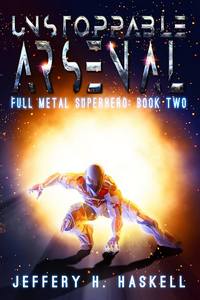
Unstoppable Arsenal by Jeffery H. Haskell: Well, that escalated quickly . . .

Unstoppable ArsenalUnstoppable Arsenal

by Jeffery H. Haskell
Series: Full Metal Superhero, #2

Paperback, 286 pg.
2017

Read: January 28, 2019


This book is just pure entertainment — it’s not trying to be anything else. You’ve got a super-genius whose inventions and investments have made her super-rich (to fund further inventions, primarily) who has used this genius to turn herself into an Iron Man-like superhero. She’s pretty much done all this to enable her to find her parents — which she did at the end of the last book. She starts this book by going to retrieve them from their imprisonment.

But they’re not prisoners — they’re content, happy, hard-workers in a lab with utterly no memory of a daughter. Kate, Amelia’s friend and telepath determines their minds have been altered and the only one who can restore their memories is the one who altered them. Launching Amelia’s next big quest.

She soon discovers that there are a lot of powerful telepaths who are unaccounted for and maybe the conspiracy she’s been theorizing about isn’t a bunch of evil masterminds undermining the super-heroes of the US. Maybe, there’s some mind control shaping the questionable decisions.

As if all this isn’t enough, Amelia meets an actual, no fooling, mythological figure who forces her to realize there’s more than just science afoot in the world, and she’s told that literally the future of the human race depends on choices she’s making.

All this is told in the same fast, dynamic and engaging voice and style that characterized this first book. Haskell can tell a story in a way that seems effortless, which is too easy to overlook and take for granted. I put this down and had to fight the impulse to grab the next installment right away and not stop until I’d run out of books in this universe to read.

Oh, and there’s a killer last line, and I’m excited about what that development is going to bring.

I don’t have a lot to say really — this is just a fun series. Period. Great super-hero action, with just enough depth to satisfy, without going so far that it slows things down. I don’t know what Haskell’s long-term plans are, but I could read another half-dozen of these books, easily.

—–

3.5 Stars

LetsReadIndie Reading Challenge

Fahrenbruary Repost: Dead is Better by Jo Perry

We continue our trip down memory lane in Fahrenbruary with the first of Jo Perry’s books about Charlie and Rose. Looking back, I’m not sure I like my take on the book. I don’t dislike it, but I could’ve done better. Still, it’s a good book and these are the thoughts I had about it.

Dead is BetterDead is Better

by Jo Perry
Series: Charlie & Rose Investigate, #1

Kindle, 282 pg.
Fahrenheit Press, 2016
Read: March 12 – 14, 2016

In its young life, Fahrenheit Press has put out some great looking titles, not your typical mystery fare. I’ve only read 2 (bought 1 other), so far — but they’ve shared the off-kilter flavor that the Press’ twitter feed/publicity displays (and descriptions for the other books indicate). I don’t typically talk about publishers when I’m talking about books, but there’s something about Fahrenheit’s project — and the books they put out — that draws your attention. Dead is Better is typical of FP — a mix of darkness and light, unlikely protagonists, unlikely crime-solvers, and atypical crimes (at least as far as crime fiction goes).

Charles Stone is our protagonist, but he’s not really the character that will grab your imagination. That’d be Rose — but we’ll get to her in a moment. Charles is dead — very dead, shot several times. His ghost carries the wounds, as well as the clothing, even the hospital ID bracelet, from the time he died. He can’t remember the shooting however, and can’t think of a reason why he’d be shot. He’s (to his reckoning) no one important, and it doesn’t seem anyone around him even cares enough to kill him/arrange for his killing. After a little bit, he starts to come up with a possible motive or two. But his murder doesn’t seem to be the thing he’s most curious about. What he’d really like to know is, why does he have a constant companion?

Rose is a dog. Well, technically, she was a dog, now she’s the ghost of one. We don’t know why she’s alongside Charles, but she’s been with him the entire time he’s been a ghost. It seems that she had a really unpleasant life; and at last, in Charles, has someone caring for her. Rose is not going to challenge Crais’ Maggie, Quinn’s Chet, or Hearne’s Oberon anytime soon as the greatest dog in fiction — which is not a dig. Rose is great, she’s just not legendary. Rose does have one thing going for her that the other’s don’t — she’s pretty realistic (not that the others don’t have their moments — but even Maggie gets Point-of-View chapters), she can only communicate through suggestion — and even then, the people around her have to guess. Sometimes, they guess wrong.

The two begin investigating Charles’ murder — with the occasional glance at his family and former life. But before long, Charles becomes convinced he’s not around to look into his death, but something else. Rose, somehow, seems to know more about what’s going on than Charles, but he’s the one who needs to do the work. The pair do uncover some answers — and others uncover some others (I’m not convinced that all the answers the readers/Charles are given about anything beyond the main crime are correct, but . . . ).

More importantly, Charles finds a measure of redemption — sure, it might be too late, but nevertheless, there is some. You get the idea that if he maybe had a dog while living, he might’ve turned out to be a better person. Sure, that describes most of humanity to me, so I responded to that, but I think Perry sells it well enough that just about anyone would.

I’ve often thought of trying to do an Urban Fantasy for NaNoWriMo featuring a ghost, but I’ve never figured how to bridge the communication gap between the living and the dead without it feeling like a cheat. I liked Perry’s solution to this (I worry about the sequel repeating it — but that’s not my problem, is it?). I’m not convinced that the police could’ve/would’ve used the information that Charles got to them, but in the moment — you don’t care, you’re just glad that someone did something.

This is a fast and lean read — Perry doesn’t waste a word (actually leaves a couple of them out, but nothing too distracting). You’ll grow to like Charles, you’ll want to adopt Rose, and you’ll want to finds out what happens to them next. Thankfully, their story will continue in Dead is Best.

—–

4 Stars

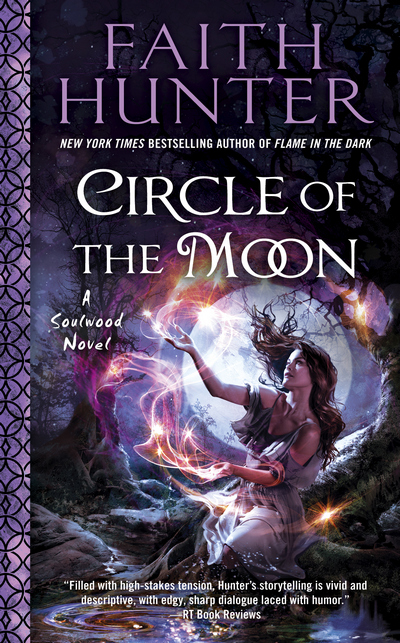
Circle of the Moon by Faith Hunter: PsyLED Fights its Biggest and Most Dangerous Foe and Troubles from Within

Time to wrap up our Tour Stop for this book — I hope you’ve enjoyed it half as much as I have. I get a little long-winded below, sorry — but when I like a book as much as I did this one, it happens.
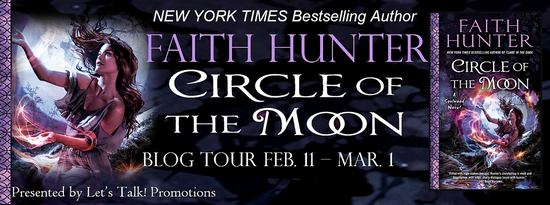
Circle of the MoonCircle of the Moon

by Faith Hunter
Series: Soulwood, #4

eARC, 400 pg.
ACE, 2019

Read: February 6 – 8, 2019


I’m going to have to talk about the events at the end of the previous book, Flame in the Dark, a little bit. If you haven’t read that — sorry. You may want to use the time you were about to spend on this post to purchase that/get it from your library instead.

So, with any of these Soulwood books there are three main threads to follow: 1. The PsyLED case(s) and storylines associated with the team; 2. The developments with God’s Cloud of Glory Church and Nell’s family; 3. Nell’s personal evolution as in independent woman and her supernatural development. These will all intertwine and effect each other — particularly the private lives of the PsyLED team and Nell’s own development. I want to touch on all these briefly to give you a good idea what to expect with this book.

Let’s start with God’s Cloud of Glory, which gets a lot less ink than we’re used to. But when they show up, it counts. It’s unclear how much of the church is really in favor of the changes occurring within it — it’s probably not as uniform as I’d been thinking. Which makes sense, any reformation is slow and complicated — and won’t be a straight line of progress, humans are messier than that. Whether this group will actually stumble into orthodoxy is hard to say, and it’ll definitely take years. We get to see a little of the pushback to the reforms here, but it’s nothing severe. I expect in a book or two, something will happen because of what we see in this book. The Vampire Tree on the Church’s land takes a different role in this book than we’ve grown accustomed to — and it’s probably the most important and intriguing development having to do with the Church in Circle of the Moon (possibly the most important in the book as a whole, too — time will tell).

We do learn some interesting things about Nell’s family and how they acted before Jane Yellowrock and the feds upended everything, too. I shouldn’t forget that…

As far as Nell goes, it’s been just a few weeks since she stopped being a tree and started being a human-ish person again. As you can see from the excerpt I posted earlier, things are going well for Nell and Occam, and things are moving quickly on the Mud coming to live with Nell front. But both are bringing their share of challenges for Nell. Her life is definitely not looking anything like what she’d envisioned and the changes aren’t easy for her — she mentions at one point her mixed feelings about coming into the twenty-first century. As much as she relishes some of these changes, none of them are easy.

Nell is forced to confront and re-evaluate her ideas about love, commitment, what it means to be in a romantic relationship. So much of her thinking is still that of a “churchwoman” as she’d put it. She knows other women, other men, don’t think of things in those terms and while she’s rejected her upbringing, she hasn’t yet replaced everything she wants to (she probably hasn’t even figured out everything she wants to change).Occam is the best person for her to be involved with right now (the cynic in me wants to say that he’s too perfect, but I like him too much to listen to my inner cynic) — his patience, kindness and understanding are what’s going to help her the most now.

I’m not gong to say anything else about Mud — but I’m a fan. I don’t think Hunter hit a false note with her character or any scene she was in. Mud’s a great character and knows exactly what she wants in this life (at least for now) and what she needs to do to get it. Primarily that involves manipulating and/or convincing her sister to do a few things — and Mud’s an expert at both of those.

As far a Nell and her powers go? Just wow. If you think the tree thing in the last book was revolutionary, just wait. There’s nothing as cataclysmic this time (thankfully — I’m not sure we readers could take it), but the implications of some of what Nell does in this book that aren’t yet known or seen, and the reverberations from them will be felt for a while.

So that brings us to PsyLED. Rick LaFleur wakes up in the middle of a very strange witch circle with no idea how he got there. He’d been called there somehow — as his cat. There’s a dead cat near and Nell picks up traces of vampires in the circle, too. Clearly, black magic is involved — but how and why, no one knows. It doesn’t take long before there are other circles being discovered — new and made in recent weeks. Rick and some of Ming’s vampires alike being called to them. Either of those happenings would be concerning — but the combination of them is mysterious and troubling. Also, why is Rick being called and nothing happening to the team’s other werecat? The questions and mysteries pile up quickly.

Some trouble in Knoxville law enforcement doesn’t help, either. Supernatural crimes/events — things like strange witch circles — aren’t being reported to PsyLED as they ought to be. The FBI and one particular agent (the witch that Nell met last time) are hovering on the fringes of the investigation in a way that speaks of more than mild curiosity. Changes and upheaval in the local vampire government — Ming of Glass is now a MOC, for example — feeds into some of the confusion.

It’s one of those situations where the more Nell and the team learn, the less they know. Everything points to big trouble, they just can’t figure out what kind of trouble — or even its source. Rick is going to have to explain a lot about things he’s previously been reluctant to discuss, for starters. And still, they may not figure out what kind of black magic is involved — and why — before it’s too late to save innocent/not-so-innocent lives.

This is the best PsyLED story this series has yet given us. Nell running off on her own isn’t going to crack this, solid procedure, a real team effort and some quick thinking (and a few lucky breaks) are the key to things working out. It’s probably the most exciting story, too. There’s a lot of action, there are more guns fired in this book by law enforcement than possibly in the first three books combined. Lainey and her magic, JoJo’s computer wizardry (legitimate and less than), Occam’s cat and trigger finger, Tandy’s abilities, plus Nell’s abilities (including offensive capabilities we haven’t previously seen) are going to have to work more in general and in combination with each other than they have in the series so far just to keep the team in the game — but for them to actually close this case and get some answers, they’re going to need extra help. I loved this part of the book and want to keep talking about it, but I’m going to hold back. I’ve often wondered if the team wasn’t wasting time in the past — not this time. Everything clicked for me with this story and I couldn’t be happier about the whole thing.

I’m pretty sure that I can’t say anything about the people behind the circles without ruining something. There’s some real evil afoot, I tell you what. There’s also a damaged soul (well, a few of them), some well-intentioned moves in the past that result in trauma and worse in the present, a mixture of aligned entities that don’t necessarily have the same ends in mind. You combine those things and you get a lot of damage, heartbreak, and death being dealt. Not only is this the best PsyLED story, it’s got the most compelling opponent(s) for the team yet.

I know that Rick has his detractors going back to early on in the Yellowrock books up until his involvement in this series. I haven’t checked as much as I should have to see if some of them have come around to him or not. I’ve never been as anti-Rick as others have been, but he’s never been a character I liked. As soon as he and Jane split, I would’ve been content to never think of him again — but Hunter had other ideas. I liked him in this role, but I’ve always preferred everyone else on the team (except Paka), and really hoped he’d be in the background for some time. Yeah, well, that’s absolutely not the case in this book. I won’t say that this book wholly rehabilitates the character for me — and I can’t imagine that the extreme anti-Rick contingent will be satisfied. But, I will say that it’ll be hard for people to not soften their opinion of him after this book. Hunter did a lot of good to his character in this book. For people who liked Rick and/or were positively-inclined toward him? You’re going to love this book.

Tandy does a couple of things in this book that intrigued me. Nell’s not the only paranormal on this team whose powers are developing in ways that may prove troubling. I wonder if it’s a coincidence that these two (and maybe others?) are changing, or if there’s another explanation — they’re changing each other, one is changing the other while they evolve themselves — or is there an outside party up to something? It’s also possible I’m reading too much into things.

This is largely an aside for people who are Yellowrock fans. Throughout this book, we brush up against Jane Yellowrock and what happened in Dark Queen, which seems to have happened while Nell was a tree (I think Dark Queen started about the same time as Flame in the Dark, but DQ ended a lot sooner than FitD), and Nell’s not really up on what’s going on with her friend yet. She knows a couple of the bullet points, but doesn’t really have the full picture. According to FaithHunter.net’s Reading Order, this novel actually happens after the next Jane Yellowrock novel. So, we’re about as confused as Nell is. Now, does this impact any of the interaction Nell, JoJo and the rest have with Jane, Alex or any of the vampires in Tennessee? No. But man, it makes me even more curious about what happens after Dark Queen — I didn’t think I could be more curious about that than I was, but man…this book has really intensified all that for me.

Okay, back to Circle of the Moon. I’ve given the first three books in the series 4 1/2 Stars each. I think this time I have to give in and toss that missing half star to the rating. The PsyLED story was great, we didn’t get bogged down in the Church/cult business too much, Mud just made me smile, and while I’m not comfortable with every choice Nell made in her personal and professional life (and a couple of the choices worry me long-term) — I like the fact that she’s making them. I can’t think of a single problem with this book, it satisfied every fan-impulse/desire I had, was a step up from previous installments in many ways, and told a solid and complete story that still drives the reader to want more. I can’t imagine a Hunter fan not liking this book — and it’s the kind of book that should get her some new readers, too.

Disclaimer: I received this eARC from Berkley Publishing Group via NetGalley in exchange for this post — thanks to both for this. My opinions remain my own and are the honest reactions of this particular reader.

—–

5 Stars


My thanks to Let’s Talk Promotions for the invitation to participate in this tour and the materials (including the book via NetGalley) they provided.


EXCERPT from Circle of the Moon by Faith Hunter

I’m happy to give you a little tease of an excerpt from Circle of the Moon‘s first chapter. When I read it, it grabbed my attention right away, I can tell you. Thankfully, I had the rest of the eARC to satisfy me — you’ll have to wait until Feb. 26 to see where Nell and Occam go from here. I almost feel bad about leaving you where this does. Almost.

For those who are interested, I can absolutely “hear” Khristine Hvam’s voice as I read the last line, incidentally. Should be a fun audiobook.


The night sky was a wash of cerulean blue over the trees and the roofline, with a trace of scarlet and plum on the western horizon. A silver wedge of moon would rise soon, no longer full, an important consideration when eating a picnic with a were-creature. Other than the stars, our only light came from an oil lantern propped on a flat-topped rock, casting shadows over the blanket and used paper plates and the half-empty bottle of Sister Erasmus’ muscadine wine, and even that would get snuffed as soon as the meteor shower began.

I was safe on Soulwood land, even in the full dark, and had no need to worry about my surroundings. I was primarily concentrating on the danged wereleopard lounging in human form on the picnic blanket beside me, looking amused, and maybe just a bit smug. Dang cat. “Take. Off. Your. Shirt,” I demanded again.

“Why, Nell, sugar, if you were so desirin’ of seeing me in my naked glory, all you had to do was ask.”

I blushed, which didn’t show, not with my new coloration, but I knew Occam could smell my reaction and hear my suddenly galloping heart. But we had been over this conversational ground on two separate evenings. Two official dates. This was our third and I wasn’t taking no for an answer. I inhaled a steadying breath and leaned in until my face was an inch from his, wiping out the horizon. He had no choice but to focus on me. Quietly, almost a whisper, I said, “This ain’t my first rodeo, cat-man. I been fighting recalcitrant males for mosta my life. You died. You’re still scarred and mostly hairless and moving slow. Now. Take off the shirt. Lemme see the scars so I’ll know what to do to help heal them.”


Lousy place to leave, but that’s all I was given to share. Be sure to place your orders now so you can read what comes next.

My thanks to Let’s Talk Promotions for the invitation to participate in this tour and the materials (including the book via NetGalley) they provided.
BOOK SPOTLIGHT (and Giveaway): Circle of the Moon by Faith Hunter

Today I welcome the Book Tour for the fantastic new Soulwood novel, Circle of the Moon by Faith Hunter. Along with this spotlight post, I have an excerpt to share that’ll whet the appetite of anyone who knows Occam and Nell — and hopefully anyone who doesn’t. Then, I’ll be giving my take on the novel a little later. Those links’ll work when the posts go live in an hour or two.

Oh, and don’t forget to scroll down to the bottom of this post to enter a Giveaway for some Soulwood books to help you get caught up.

Book Details:

Book Title: Circle of the Moon by Faith Hunter
Publisher: Ace Books
Release date: February 26, 2019
Format: Paperback/ebook
Length: 400 pages
ISBN: 0399587942
ISBN-13: 978-0399587948

Book Blurb:

Nell can draw magic from the land around her, and lately she’s been using it to help the Psi-Law Enforcement division, which solves paranormal crimes. Joining the team at PsyLED has allowed her to learn more about her powers and the world she always shunned—and to find true friends.

Head agent Rick LaFleur shifts into a panther when the moon calls him, but this time, something has gone wrong. Rick calls Nell from a riverbank—he’s naked, with no memory of how he came to be there, and there’s a dead black cat, sacrificed in a witch circle and killed by black magic, lying next to him.

Then more animals turn up dead, and the team rushes to investigate. A blood-witch is out to kill. But when it seems as if their leader is involved in the crime, the bonds that hold the team together could shatter at any moment.

About Faith Hunter:

Dreda Say MitchellFaith Hunter is the New York Times and USAToday bestselling author of the Jane Yellowrock series, the Soulwood series, and the Rogue Mage series, as well as the author of 16 thrillers under pen the names Gary Hunter and Gwen Hunter. She has 40+ books in print.

Faith collects orchids and animal skulls, loves thunder storms, and writes. She likes to cook soup, bake homemade bread, garden, and run Class III whitewater rivers. She edits the occasional anthology and drinks a lot of tea. Some days she’s a lady. Some days she ain’t.

For more, see www.faithhunter.net
To keep up with her, like her fan page at Facebook: https://www.facebook.com/official.faith.hunter

Faith Hunter’s Social Media:

Official Faith Hunter Facebook fan page ~ Goodreads ~ Twitter ~ Website

Purchase Links for Circle of the Moon:

Amazon ~ Barnes & Noble ~ Books-a-Million ~ iBooks ~ Google Play

Giveaway!

Five winners will receive the first two Soulwood novels! Contest runs Feb. 11th until Mar. 7th.
a Rafflecopter giveaway https://widget-prime.rafflecopter.com/launch.js

(in case the Rafflecopter widget doesn’t appear, just click here)

My thanks to Let’s Talk Promotions for the invitation to participate in this tour and the materials (including the book via NetGalley) they provided.
Baptism: Answers to Common Questions by Guy M. Richard: A Solid and Encouraging Introduction to a Complicated Topic

Baptism: Answers to Common QuestionsBaptism: Answers to Common Questions

by Guy M. Richard


eARC, 129 pg.
Reformation Trust Publishing, 2019
Read: February 3, 2019

It’s been awhile since I’ve read a book on baptism — it’s been awhile since I’ve seen a new one published, too (but maybe I stopped paying attention), so when I saw this on NetGalley, I had to take a chance. I’m very glad I did. Richard discusses in his introduction that questions about this sacrament are some of the most frequently asked to Presbyterian (and, I assume, Reformed) pastors. Sadly, they’re usually asked when pastors can’t give the kind of answers they should — at least based on his experience.

He begins looking at the meaning of Baptism — both the Greek terms translated as “baptism” and the sacrament. He does so very well, covering all the bases. Following that he moves to the method of baptism — how should the water be applied? Once he’s finished with these matters he moves into the more complicated question — who should be baptised? He begins with the “household” baptisms in the New Testament before turning to the objections and arguments of Baptist and baptistic brothers. He not only examines and explains them fairly well, he responds to them in an irenic manner, but not giving an inch to them.

The conclusion, “What Can We Take Away from All This” is just fantastic. Richard’s meditations on how our baptisms should shape our lives and our faith, to build our faith and give us assurance. It’s easily worth half of whatever you pay for the book, and maybe more.

This is probably not a book that will convince any detractors. It may not be enough to convince the earnest seeker. But it will explain the basics for each topic considered. It will demonstrate the systematic and biblical basis for Richard’s positions exists and they aren’t mere tradition. These are outlines to be filled in with further reflection, reading and research by the reader.

Along those lines, each chapter could really use a “For Further Reading” to help the reader get deeper into the topics covered — or one at the end of the book. But I do think as each chapter is so topic-focused, it’d be very helpful. As good as each chapter is, they are just an overview. Not every reader is going to want to go deeper into, say, the mode/method of baptism but they might want to spend more time on the meaning of Baptism, or his response to Baptist interpretations of Jeremiah 31. For example, I think I agree with his differing from Murray on the former — but I’d like to read more about that, if it’s possible.

Richard’s tone throughout is gracious, kind, yet unbending. It’s not easy to putt off in print, especially on a topic like Baptism. There were many times he could’ve gone for the jugular, rhetorically speaking. He never did, trusting that the arguments would carry the day. And, in my not so humble opinion, he’s right to trust that.

Gracious, encouraging, thorough and easy to read — this introduction to “the waters that divide” Christians is just what you want in a book on this topic. But more than those, it’s deeply biblical in nature. Richard’s focus in bringing the light of the canon to this topic, and he succeeds there. I strongly encourage you to read it.

Disclaimer: I received this eARC from Reformation Trust Publishing via NetGalley in exchange for this post — thanks to both for this.

—–

4 Stars

Page 4 of 7

Powered by WordPress & Theme by Anders Norén