Month: February 2019 Page 5 of 7

Saturday Miscellany — 2/9/19

So the lateness today is intentional, I had to take care of Main Bad Guy‘s post (which you should read, not because I think the post is so good, but the book I’m talking about is). Busy week around here — but good, on the whole. Hope yours is as well. Getting our first real snow of the season right now — odd for it to come so late, but I’m glad we finally got some (I’ll be less glad when I have to leave the house in a couple of hours, but . . . )

On with things — here are the odds ‘n ends over the week about books and reading that caught my eye. You’ve probably seen some/most/all of them, but just in case:

    This Week’s New Releases I’m Excited About and/or You’ll Probably See Here Soon:

  • The Bone Keeper by Luca Veste — yeah, it was published last year, but the U. S. Edition is available for people who don’t like ordering books from the UK. Neat new cover, too. I talked about it here last year.
  • Stranger Things: Suspicious Minds by Gwenda Bond — The true story about what happened to Eleven’s mother. I had this in my hand and put it down today. I’m very curious, but not sure I want to try this. I’m going be looking for reviews on this one. Feel free to point me at some — especially your own!
  • One Fatal Mistake by Tom Hunt — another one that I’m curious about, it could be really good. A mother and son cover up an accidental killing, and then things get out of control…

Lastly, I’d like to say hi and extend a warm welcome to Kara Skinner, Blood Rose Books, libarah and Matilde Mbulo for following the blog this week.

A Few (more) Quick Questions With…Nick Kolakowski

Nick Kolakowski’s back for another round of questions (feel free to check out the last round while you’re here), to commemorate the kick-off to Main Bad Guy (which I just posted about), the conclusion to his trilogy of Love & Bullets Hookups.

Since we covered a lot of the basics last year, I dove deeper into this trilogy than I usually do. I hope you enjoy this as much as I did and that it spurs you to check these books out.

Was A Brutal Bunch of Heartbroken Saps always supposed to kick-off a series, or did that idea come during/after writing it? It’s not your everyday way to start a trilogy about a couple, why this approach?
“A Brutal Bunch of Heartbroken Saps” was originally going to be a standalone. After it was finished (but before publication), I found myself still jotting down bits of Fiona and Bill—scraps of dialogue, the outline of an action scene, etc. So I realized I wasn’t done with either of them, at least on a subconscious level. But where to take the story next? I didn’t want it to become an open-ended series, so I needed to figure out a way to climax it, to resolve all the dangling plot threads I began weaving in “Brutal Bunch.” And that meant taking Fiona and Bill back to New York City, where everything began.
Why the Elvis suit? It was absolutely a great idea — but I’ve spent weeks coming back to this question, why did you pick that?
The suit is iconic and ludicrous, but it’s also (to me, at least) a symbol of courage. Can you imagine what it took for Elvis to suit up in that thing every night, step in front of hundreds of people, and belt out something like “Suspicious Minds”? In any case, the suit has so much power, it felt like the perfect thing for a character who’s emotionally wounded and more than a little insane to slip into—he draws enough from it to keep going.

I (very) briefly considered making it a John Wayne thing, and having him put on a vest and a cowboy hat, but that didn’t really work—as a costume, it didn’t pack the same ludicrous punch as a sparkly Elvis jumpsuit.

Two things in particular made me realize that Main Bad Guy was going to be the best of the trilogy early on — Fiona’s “origin story” and Walker. I love it when we get a mysterious figure like him and are given juuuuuuust enough information to buy into the character, but are left with a billion questions. Where did Walker come from, and have you considered doing more with him?
“Aging Badass” is a noir/thriller trope that I particularly love—the older guy who’s seen and done too much to get particularly bothered over anything that happens, even if what’s happening is really ludicrous and bloody and crazy (think James Caan in “Way of the Gun,” or Jonathan Banks in “Better Call Saul”). I’ve wanted to do my own variation on that type of character for years, but I needed him to be a bit more flawed and human. Walker is a badass but his skills are rusty; he’s a tactical genius but he has a certain impulsiveness—mirrored by his daughter—that leads him to do things that get him into trouble.

I do want to do more with Walker in the future. Writing him was an enormous amount of fun, especially the scene in “Main Bad Guy” where he walks into his favorite bar and finds it’s been converted into a hipster hellhole, complete with paintings of pugs on the walls. Maybe I’ll do a novella where he comes back and wrecks it.

There’s this great thread running throughout the trilogy, chronicling the rise and evolution of The Rockaway Mob. Some authors would devote a novel or three to this saga, you make it something that can be overlooked. How intentional was that, and what was your reasoning?
It was pretty intentional. I wanted the books to be as fast as possible, and as much as I loved (briefly) tracing out the rise and fall of this very weird gang (and its very weird leaders), I felt it would distract a bit from the core of the story, which is the incredible flight of Fiona and Bill.
Is there a genre that you particularly enjoy reading, but could never write? Or are you primarily a mystery/suspense/thriller reader?
I’ve wanted to write a historical novel for years, but haven’t quite had the courage (or the time to plunge into extensive research). Maybe I’ll get to it—I just need to really commit myself to such a massive effort.
Thanks for your time — and thanks for these Hookups.

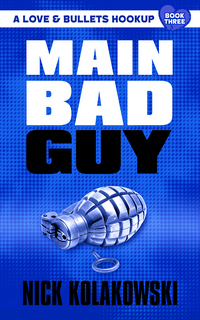
Main Bad Guy by Nick Kolakowski: A Blast of an Ending to this Trilogy

Yeah, weird day for me to post something like this, but it’s what Kolakowski asked for — and he wasn’t a jerk about it like the last guy who wanted a Saturday post.

Main Bad GuyMain Bad Guy

by Nick Kolakowski
Series: A Love & Bullets Hookup, #3

Kindle Edition, 152 pg.
Shotgun Honey, 2019
Read: January 28 – 29, 2019

           Bill could tell you all about things going haywire.

Like Fiona’s plan, for instance.

How the hell had he agreed to this insanity?

The answer was obvious: They had no choice.

It had to come down to this, didn’t it? After being on the run for a book to a book and a half (depending on the character), Bill and Fiona have to face off with the Dean, the Rockaway Mob leader who put out the hits on them both. They really don’t much choice, the whole starting over quietly thing didn’t work too well. Or at all.

This picks up right after Slaughterhouse Blues, the pair are having a difficult time getting out of New York, and ultimately find themselves locked in a panic room at the top of a skyscraper, surrounded by Crow Man — “a stellar chemist, and a better botanist” — his crew, and his product. Which is a pretty awkward place to be. Unsurprisingly, Crow Man works for the Dean (don’t you love these names?). The Dean had been having a pretty lousy day up until this point — and when the Dean has a bad day, a lot of people suffer. Then things start looking up, and the Dean is handed two of his most wanted on a silver platter.

Meanwhile, a mysterious figure named Walker is making his way from Canada to New York. He’s seen that the pair found some trouble in Oklahoma and assumed Fiona wold need help. By the time that word got out that they were in New York, he was already on the way, knowing that’d be the case. Walker is one of those classic aged “been there, done that” characters. The old pro who’s tried to retire and ends up having to get back into action one more time — which is good, because they really don’t do well with the quiet life anyway. I’d sign up for a series focusing on him in a heartbeat. I’d almost say this is worth reading just for Walker — even if you know nothing about Bill, Fiona, the Dean, etc. Eh, I’ll go ahead and say it, read this just for Walker. But you’ll like it more if you’ve read the others.

Walker’s travel is beset by trouble from uneasy allies, his age, and just how much the city has changed. One of the best scenes with him starts with Walker revisiting a favorite dive bar that had been “gentrified into a monstrosity” where he felt like he was “attending a wake for someone that nobody in the room had liked” in the middle of the velvet art, sky-blue walls and pop music. Kolakowski grounds this with reflections on September 11 and the effect it had on the City and its citizens — making it more than just a fun moment in the book. The intelligence he picks up in the bar justifies his brush with gentrification and enables him to come to Fiona’s aid. Hopefully in time.

Bill and Fiona are great together, their dialogue crackles. Watching these two try to get out of Dodge is so much fun, you find yourself wishing that Kolakowski had figured out way to stretch this into a quatrology. One of the problems I had, I now realize, with Slaughterhouse Blues was how little Bill and Fiona were together. They spent a lot of A Brutal Bunch of Heartbroken Saps apart, too — but that was different. Bill’s a better character with her around, and Fiona works better too — if for no other reason than she has to be a bad-ass and watch out for him, instead of just being pure bad-ass all the time. I’m not sure that makes sense to anyone not living in my head. Hopefully it does.

There’s excitement, there’s gunplay, there are explosives, violence, witty dialogue and a whole lot of bad-ass characters facing off with each other (and Bill’s around, too). This is the literary equivalent of a Martin McDonagh film (when he’s in a more playful mood) — or, if that doesn’t work for you, think Fargo meets Tarantino, but not as long-winded. Kolakowski ties this to A Brutal Bunch so well (and in ways you won’t expect), providing a perfect ending to this saga. There are so many quote-worthy lines in this brief novella that it’s driving me crazy that I can’t work more of them into this.

A lot of novella-series can be read in a clump, like one big novel. This is not one of them. Each novella has its own feel, its own themes and structure — while being one story. Last year, Kolakowski impressed me with his novel, Boise Longpig Hunting Club, this series has shown me that wasn’t a fluke at all and that I need to read anything I can by him.

I can’t tell you what’s holding me back from making this a full 5 Star, but something is. It’s close enough, though (and on Amazon/Goodreads, I round up), so I don’t feel too bad about chopping off that half-star here. But focus on the important things here — it’s a great read, a great conclusion and about as much fun as you’ll have in a thriller this year. Bill and Fiona are a great couple (at least in fiction, they’d probably crash and burn in real life) — and a lot of fun to read about.

Disclaimer: I received a copy of this book from the author in exchange for my honest opinion.

—–

4 1/2 Stars

2019 Cloak & Dagger Challenge
LetsReadIndie Reading Challenge

A Few Quick Questions With…Russell Day

Yesterday I reposted a couple of personal highlights from 2018 (I’m talking about what I read, not what I said) — Not Talking Italics and Needle Song. Today, I get to share some A’s to my Q’s behind the brilliant writer behind them, Russell Day.

Without further ado…

What was your path to publication? What did you do to prepare yourself to this career in fiction?
I don’t think I ever consciously prepared for a career as a fiction writer (my default setting is pretty much: wing it). I started writing when I was a teenager, but it’s only been the last five years or so that I’ve taken it seriously. Before that, I’d make a lot of good starts but then get bored or, worse, sit around waiting until I was in ‘the mood’. That’s a recipe for a drawer full of unfinished manuscripts. Now I just sit and write and if it’s crap, I rewrite.

Getting published, for me, has largely been down to competitions. The first piece of fiction I ever had published appeared in Writer’s Forum Magazine, where it had won second prize in their monthly short story contest. It was a Doc Slidesmith story, called The Tattooist, the Tarot and Bang-Bang the Clown. Fahrenheit might be releasing a collection of my short stories this year, and hopefully The Tattooist will be included in it. I’ve got a lot of affection for that piece, it was the first time I saw my stuff in print and it was doubly exciting that it featured Doc.

The book deal with Fahrenheit Press came my way because of their Noirville competition. I entered two pieces for that, The Icing on the Cake and Not Talking Italics (another story about Doc). Both stories struck a chord with the judges, and Chris McVeigh offered me a two book deal on the strength of them. The Icing on the Cake, was included in the anthology and Not Talking Italics, was offered up as a teaser to introduce people to Doc.

What first hooked me with your story “Not Talking Italics” was the way you told that particular story — all dialogue, practically an extended monologue. Was there anything in particular that drove that choice, or did it just “happen”? Would you/have you consider writing a novel in that manner?
We’re back to competitions again. I wrote Not Talking Italics with a view to entering it into a competition that wanted stories told entirely in dialogue. In the end I couldn’t keep to the required word count, but I liked the story and thought it might be a good fit for the Noirville competition. One of Doc’s main features his the-gift-of the gab, so he lent himself to the style.

I don’t have any plans to write a whole novel using just dialogue. I wouldn’t rule it out, but I think that technique is best suited to pieces that can be read in one sitting. That said, I like my characters to talk a lot and I sometimes slip ‘transcripts’ into the plot. I do that in Needle Song in a couple of places and do it again in Ink to Ashes, the second Slidesmith novel.

Liking to hear the characters ‘talk’ is why I often write in the first person, I try to give the impression that the reader is being ‘told’ the story.

Doc Slidesmith has quite the interesting and varied résumé/CV — he’s clearly not your everyday fictional detective (amateur or not). Psychologists have been done, tattoo shop owners — not so much. Definitely no one’s put them together before — and then throwing in the Tarot reading has to make him even more distinctive. How did you stumble across that particular combination, and why would you go looking for it?
Just before I started writing Needle Song, I’d met a woman who practiced Voodoo and it caught my interest.  Doc’s connection with Voodoo and Tarot stemmed from that. After that I sort of built Doc, bit by bit, around the scene where we first see him reading the Tarot. Once I’d established him as a freak, albeit a clever one, I had to ask myself how he’d make a living. It had to be something that fitted his aesthetic and suggested a certain depth. Tattooist was an obvious choice.

The psychologist angle was almost accidental. I’d wanted a name that had a Voodoo flavour to it. For a while I thought about calling him Papa Slidesmith, but that made him sound too old. Doctor Slidesmith had a certain ring to it and, of course, someone would have to ask why he called himself ‘Doc’. Giving him a full-fledged PhD was a good way to show his intelligence and it also muddied the waters as to whether he’s reading the Tarot cards or the people around him.

(that’s one of my favorite answers I’ve ever received from an author . . . )

I’ve often heard that writers, or artists in general, will forget hundreds of positive reviews but always remember the negative — what’s the worst thing that someone’s said about one of your books, and has it altered your approach to future books?

I’ve been very lucky in terms of reviews and haven’t been roasted … yet. I don’t know how, or even if, harsh criticism will affect my writing. I’m pretty well tuned into my own sense of what does or doesn’t work, so I’ll probably stick with that.
Is there a genre that you particularly enjoy reading, but could never write? Or are you primarily a mystery/suspense/thriller reader?
I read many genres, but my first port of call is mystery/crime. I couldn’t write a historical novel, I’m just not good enough at research to get the details right.
This one’s not about you directly, but what is it about Fahrenheit Press that seems to generate the devotion and team spirit that it does (or at least appears to)? I don’t know that I’ve seen as many authors from the same publisher talk about/read each other’s books — or talk about the publisher — as much as you guys seem to. Is it simply contractual obligation, or is there more?
A lot of it’s down to Chris McVeigh’s enthusiasm. If you talk to the man for a few minutes it’s clear he wants Fahrenheit to publish books he believes in. Yes, it’s a money making venture but that’s not all it is to him, not by a long way. Another thing that makes Fahrenheit different is simply the selection of books.

Fahrenheit doesn’t think like a mainstream publisher. It doesn’t want to publish a reworked version of last year’s best seller. It wants to publish something else. And if that means colouring outside the lines a bit then so be it. THAT implies a certain trust in both the writers and the readers. That trust makes you a part of Fahrenheit. We’re not just numbers being told what to write this year or told what we’re going to read. With Fahrenheit we’re all in it together.

And they sell cool mugs.

Can’t argue with that last line — love my Fahrenheit mug. 🙂

Thanks for your time, sir. Can’t wait to see what you’ve got coming next.

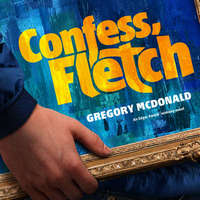
Confess, Fletch (Audiobook) by Gregory Mcdonald, Dan John Miller: Fletch, Flynn, A Murder or two and a Heist. What more can you want?

Confess FletchConfess Fletch

by Gregory Mcdonald, Dan John Miller (Narrator)
Series: Fletch, #2 (#6 Chronologically)

Unabridged Audiobook, 6 hrs., 23 min.
Blackstone Audio, 2018
Read: January 25 – 30, 2019

           Fletch dialed “0”.

“Get me the police, please.”

“Is this an emergency?”

“Not at the moment.”

The painting over the desk was a Ford Maddox Brown – a country couple wrapped against the wind.

“Then please dial 555-7523.”

“Thank you.”

He did so.

“Sergeant McAuliffe speaking.”

“Sergeant, this is Mister Fletcher, 152 Beacon Street, apartment 6B.”

“Yes, sir.”

“There’s a murdered girl in my living room.”

“A what girl?”

“Murdered.”

Francis. Xavier. Flynn.

Those three words are really all I have to say. This is a clever book, with a few good mysteries and Fletch doing his thing. There are antics galore, witty dialogue, yada, yada, yada. As much as I love I. M. Fletcher, Gregory Mcdonald’s greatest creation was Flynn — Blackstone Audio will be releasing those soon and I’ll talk more about him then — but for now, let’s just say that I loved meeting him again and Dan John Miller nailed the character. I was worried about Flynn, really, but I was so relieved that the character came to life as he should.

But let’s put Reluctant Flynn aside for a minute. Fletch is visiting Boston — taking part in a home-share kind of program, staying in a nice apartment while the owner is staying in Fletch’s Italian villa (you know there’s a story behind that, but we don’t really get it at this point). He comes home from dinner the first night to find body lying on his rug. She’s very naked and very dead.

Naturally, Fletch is the prime suspect.

Meanwhile, Fletch is trying to track down some stolen art work on behalf of his fiancé, the daughter of a recently kidnapped and (apparently) murdered near-destitute Count. His recently stolen art collection is the only real inheritance she’ll get. Assuming her current step-mother isn’t named in the will. Fletch is working with the owner of a private gallery to track down what he can of this collection while his fiance and her step-mother wrangle. Fletch’s interest in, affinity for and expertise in art is established here and will show up again a few times in the series.

Of course, Fletch is also busy investigating the murder and reconnects with a former editor of his, from before he worked for Frank Jaffe. He uses this connection to dig u information on the man whose apartment he’s in, the gallery owner, and just about everyone else he comes across in Boston. Inspector Flynn of the Boston PD makes plenty of investigative headway, too — but he and the rest of the police are too focused on Fletch as suspect to do much beyond that. So Fletch uncovers the other viable suspects, if for no other reason than to give Flynn someone else to look at.

This is the first mention of I.M. being from Seattle, incidentally. I never remember that.

It’s a great plot, with all the twists that you can want. There’s so much to enjoy in this book — Fletch’s observations, odd way of approaching his investigation, and banter with Flynn, his editor-friend and anyone else he cares to befuddle is the kind of thing that led me to read this book a few dozen times before now.

As I said, Miller does a great job — he’s good with every character, with the narration and everything. I do think he’s a bit slow, but at 1.25 speed his rhythms match what I expect from Mcdonald. This guy is rapidly becoming one of my favorite audiobook narrators — I expect by the end of this series, he’ll be near the top.

—–

5 Stars

2019 Cloak & Dagger Challenge

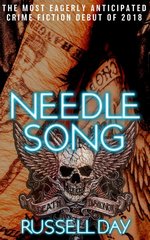
Fahrenbruary Repost: Needle Song by Russell Day: Great characters, strong writing, and a clever solution to the mystery made this one of 2018’s best.

Could. Not. Put. This. Down.
And now I get to repost this — one of my Top Ten from last year. This is what Fahrenheit does best: unusual protagonists, a great deal of panache, and a crime that’ll make an impression.

Needle SongNeedle Song

by Russell Day
Series: Doc Slidesmith, #1

Kindle Edition, 380 pg.
Fahrenheit Press, 2018
Read: July 2 – 4, 2018

He’d changed again in some way. Like he had the night in The Jericho putting out The Jive. But this was different again. The Jive was showmanship. The good Doctor Slidesmith in full sail. This was more intense. I’d see him like thus on occasion in the shop, absorbed in the ink and the song of the needle. I wouldn’t say lost in what he was doing. Lost implies lack of control.

For the first time that evening, it struck me he needed an audience, not to watch him but for him to watch. Like a dial on a machine, not part of the process, just a way of monitoring it.

Back when I posted about the short story featuring Doc Slidesmith, Not Talking Italics, I said that if Needle Song was anything like it, “I’m going to have to go down to the superlative store this weekend to stock up before I write anything about it.” I’m fully stocked (now) and ready to go.

I was disappointed — somewhat — and relieved to see that the all-dialogue, no narration, no other description approach of Italics was nowhere to be seen. I could’ve read 380 pages of that (see my love for Roddy Doyle), but I know it’s not that approachable and will turn off some readers.

Now, I don’t know if anyone but Karen E. Olson has envisioned a tattoo shop as a hotbed of crime fighting — or the staff of such to be the source people would turn to for help with legal difficulties. But it works — all because of the owner of the shop, former psychologist, current Voodoo practitioner and Tarot reader, Doc Slidesmith. On the surface, you see a rough-looking — striking, I think, bordering on handsome — but your basic leather-glad biker type, covered in ink — and will underestimate him. Only those who’ve been in conversations with him, those who’ve given him a chance will see the charm, the intelligence, and the indefinable characteristic that makes people come to him for help in times of trouble. In many hands, Doc’s…peculiar resume, shall we say, would end up this cartoonish mish-mash of quirks. But Day is able to make it work — there’s a reason that Doc ended up where he is, we don’t need to know it, but it makes him the man (and armchair detective) that we want to read about.

Andy Miller — known to many as “Yakky” (he’s not a chatty type, his tattoos are all placed so that he can hide them all with this clothing, like a member of the Yakkuza), is the tattoo apprentice to Doc Slidesmith. He lives with his father — a thoroughly unpleasant and manipulative man, that Yakky feels obligated to care for. While clearly appreciative for Doc’s tutelage, and more in awe of his mentor than he’d care to admit, he’s also more than a little skeptical of Doc’s interests, beliefs and practices that aren’t related to his tattooing. He’s our narrator. He’s not your typical narrator — he’s too frequently angry at, dismissive of and unbelieving in the protagonist for that. Which is just one of the breaths of fresh air brought by this book. Yakky is singularly unimpressed by Doc’s playing detective — but in the end, is probably as invested (maybe more) in the outcome.

Jan is brought by Chris Rudjer (a long-time client and friend of Doc’s) for a Tarot reading, which brings her some measure of comfort/reassurance. So that when, months later, her husband kills himself, she comes looking for another reading — which turns into seeking help in general. Not just for her, but for Chris, with whom she’d been carrying on a not-very-secret affair for months. While it seemed obvious that her husband had taken his own life when she found his body, there were some irregularities at the scene. When the police add in the affair Jan was having with someone with a record for violent crime, they get suspicious. Slidesmith does what he can to help Chris prepare for the inevitable police involvement, and enlists Yakky to help, too.

Yakky takes Jan home to stay in his spare room. She can’t stay at home — the memories are too fresh, there are problems with her husband’s family, and (she doesn’t realize it yet) there are people following her and Doc and Yakky are worried. The dynamic between Jan and Yakky, and between Jan and Yakky’s father, end up providing vital clues to her character and psychology. This will end up proving vital to their case.

As Doc and Yakky begin digging around in Jan’s life, it’s immediately obvious that very little is as it seems. Now, if you’re used to reading Crime Fiction featuring serial killers or organized crime, you’ll think a lot of what they uncover is pretty small potatoes. But it actually seems worse — it’s more immediate, more personal — serial killers have their various pathologies, mobster’s are after profits and power — these people are just about hate, cruelty and control. Maybe it’s just me, but it seems worse in comparison.

There’s a depth to all of these characters that I could spend a lot of time thinking/writing/reading about — for example, our narrator, Yakky. I have at least a dozen questions that I feel I need answers to about him. At the same time, I think at least eleven of those answers could ruin the character for me. Ditto for Doc, Gina (another artist in the shop), or Chris. It’s a pretty neat trick — one few authors have been able to pull off, creating a character that you can tell has a compelling backstory, but that you don’t really want to know it (see Parker’s Hawk or Crais’ Pike — or the other mercenary Crais has had to create now that we know too much about Pike). I know who these people are now, and look forward to seeing what happens with them — and that’s good enough. It’s hard to tell, always, just why Doc’s working on this — is it for fun, is it out of a sense of obligation to Chris, does he feel bad for Jan, is it some of all three? Yakky will frequently talk about The Jive — the showmanship that Doc brings to Tarot readings, conversations, and dealing with difficult witnesses — it reminds me frequently of B. A. Baracus’ complaining about Hannibal’s “being on The Jazz.”

The plot is as intricate as you want — there are twists, turns, ups, downs — both with the investigation and in the lives of those touched by it. This doesn’t have the flair of Not Talking Italics, but the voice is as strong, and everything else about the writing is better. It’s a cliché to say that Day paints a picture with his words, so I won’t say that. But he does etch indelible patterns with the tattoo-gun of his words — which isn’t a painless process for all involved, but the end result is worth whatever discomfort endured. Day doesn’t write like a rookie — this could easily be the third or fourth novel of an established author instead of someone’s talented debut.

I’m torn on what I think about the details of the ending, wavering between “good” and “good enough, but could have been better.” It’s not as strong as the 94% (or so) before it, but it’s probably close enough that I shouldn’t be quibbling over details. I’m not talking about the way that Doc elicits the answers he needs to fully explain what happened to Jan’s husband (both for her closure and Chris’ safety), nor the way that everything fits together just perfectly. I just think the execution could be slightly stronger.

Whether you think of this as an amateur sleuth novel, a look into the depravity of the suburbanite, or an elaborate Miss Marple tribute/pastiche, the one thing you have to see is that this is a wonderful novel. I’m underselling it here, I know, this is one of those books that you best understand why everyone is so positive about it by reading it. You’ve got to expose yourself to Doc, Yakky and Day’s prose to really get it. One of the best books I’ve read this year. My only complaint with this book? After reading so much about the “song of the needle,” the shop, the work being done there — I’m feeling the pressure to get another tattoo myself, and soon.

—–

5 Stars

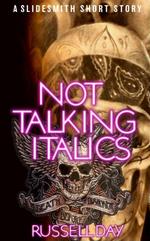
Fahrenbruary Repost: Not Talking Italics by Russell Day: This Short Story contains enough entertainment value to carry a novel.

One of the best short stories I can remember in the last few years — had so much fun with this one. Just revisiting this via this repost brought a smile to my face.

Not Talking ItalicsNot Talking Italics

by Russell Day
Series: Doc Slidesmith

Kindle Edition
2018, Fahrenheit Press
Read: May 7, 2018
In a couple of months, I’ll be taking part in a book tour for Russell Day’s debut novel, Needle Song, and I’m really looking forward to that (and am having a hard time not reading it now). But today, we’re going to look at a short story featuring the protagonist of the book, Dr. James Slidesmith. A little something to whet our collective appetites.

I know very little about Slidesmith after reading this short story, and I can’t wait to find out more. Here’s what I do know — 1. He has a PhD in Psychology, and is touchy about those who don’t consider him to be a “real” doctor; 2. He owns and runs a tattoo parlor/shop; 3. he plays poker; 4. He’s very smart; 5. He has the gift of gab.

All five of these are important, but in this short story, that last one is essential. Everything in this is dialogue — no dialogue tags, no narrative, no descriptive passages — just characters talking. Which will involve all that other stuff, but that’s not how the story is told. It takes place in a police interrogation room — you’ve got a Detective Constable, a Detective Sergeant and Dr. Slidesmith talking about an incident at a poker game earlier that night. Things got nasty and two men died, given the small number of people at the game, the Police are looking to quickly identify the killer(s) and wrap this up quickly.

But first they’ve got to get past the silver-tongued Slidesmith. That won’t be easy. He offers a detailed explanation of the night’s events — including doing some educating on Texas Hold-’em, the ins and outs of betting in the game (and how to manipulate betting). There are a couple of characters that we only learn about from questions and answers in the interrogation, and I feel like I ahve a pretty good handle on them, without seeing them speak for themselves. That’s a nice move.

As it’s just dialogue — and well-written dialogue, at that — this is a fast, breezy read (so fast, you might miss a thing or two the first time through). It’s not so much a book that you read, it’s one you hear with your eyes. I’m not certain that makes a lot of sense, but it’s the best way I can put it. These are fast-moving conversations, they have a certain rhythm, a certain feel — and you just want to keep reading more and more of it. This could’ve been twice as long and I don’t think my attention would’ve wavered an iota. Imagine your favorite scene written by Aaron Sorkin, then imagine it changing into an interrogation in a British Police Station — that’s what this story is.

This is good stuff, my friends — better than good. There’s an extent to which the reveal seems “oh, sure, I should’ve seen that coming” — and it wouldn’t surprise me if many readers get there before Day wants you to (I was not one of them) — but it’s so satisfying, so well-executed, I can’t imagine a soul complaining about it. If Needle Song is anything like this, I’m going to have to go down to the superlative store this weekend to stock up before I write anything about it.

Stop whatever you’re doing — including reading this — and click the links at the top of the page to go get this story. You’re welcome.

—–

5 Stars

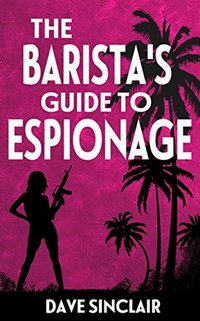
The Barista’s Guide to Espionage by Dave Sinclair: A Bond Girl à la Amy Sherman-Palladino leads this entertaining action story.

Finally, some original Fahrenbruary content!

The Barista’s Guide to EspionageThe Barista’s Guide to Espionage

by Dave Sinclair
Series: Eva Destruction, #1

Kindle Edition, 306 pg.
Fahrenheit Press, 2016
Read: February 4 – 6, 2018

All her adult life, she’d dated men who were bad for her. Men who treated her dreadfully and undervalued her worth. She knew that, she’d always known that, and yet she failed to break the cycle. There had only been one man who’d treated her with respect and as an equal. It was a shame he’d also threatened every government on Earth and drawn UN condemnation.

Eva ran her finger around the rim of her pint. Why were all the best kissers hell-bent on tearing down the world?

This is just your typical story of a feminist, stripper-turned-barista, who falls for an super-rich aspiring super-villain, and ends up holding the fate of the world in her hands. I’m going to stop right there — my attempts at synopsizing this just aren’t paying off. Here’s some of the back of the book blurb:

Meet Eva Destruction, the only thing quicker than her mouth is her talent for getting into trouble. It’s true she’s always had an eye for a bad boy but when she falls for billionaire super-villain Harry Lancing, it seems that even Eva may have bitten off more than she can chew.

Eva hurtles headlong into terrorist attacks, assassinations, car chases and the occasional close encounter with a dashing spy who seems as determined to charm Eva into bed as he is to thwart Lancing’s plans to bring down every government on earth.

As the odds begin to stack up in Lancing’s favour the fate of the world lies in Eva’s hands. Luckily for the world, Eva Destruction isn’t the type of girl to let a super-villain ex-boyfriend with a massive ego, unlimited resources and his own secret island get the better of her.

Eva, Horatio Lancing and the MI6 agent are entertaining characters — the action scenes are exciting. There’s a car chase that’s remarkably good. But the banter, verbal sparring and jokes are where the real fireworks are found. It’s almost like Amy Sherman-Palladino wrote an action film.

A few caveats I should issue for some of the regulars around here: Early on, there’s a sex scene that is entirely too graphic, and unnecessarily so. I liked what Sinclair achieved with it and the aftermath. But He could’ve achieved the same (or practically the same) result with a little less detail. There are further references to sex if you can get past this one, but nothing that comes close to the detail of this one scene. It’s probably PG-13 afterwards, actually. Additionally, Evan utilizes some of the more creative swearing you’ve read. It’s not anything you’d care to repeat anywhere near a mother armed with a bar of soap mind you. But creative nonetheless.

Eva is smart, witty and determined — it’s easy to see why men are fawning over her (even without the looks). She’s the kind of character you like reading — she’s sure of herself, and yet really, really not. I love reading about someone who is just awesome with zero self-confidence in certain instances. But when push comes to shove, she comes through in a way worthy of Jason Bourne or Frank Martin.

This book is essentially a cartoon — it’s over the top, exaggerated, and entertainingly hyperbolic. But Lancing . . . I tell you. For a would-be global dictator, there’s something appealing about him. He’s described as “Snowden with an agenda and Assange with charisma,” and truly (often) seems to only want to hold governments/government officials to their word. “You promised the voters X,” he essentially says, “deliver X, or I’ll release the videos of you in a compromising situation with a 14-year old.” A motivation that many people would agree with, and a capability that doesn’t seem that outlandish — especially compared to the rest of the story, Lancing seems realistic — realistic-ish, anyway.

There are so, so many quotable lines in this book — it’s practically impossible to pick one to focus on. This is like early Evanovich — just with the sex, swearing and violence turned up a bit. I think it went on a bit too long, and could use maybe 50 fewer pages. But it was so much fun, I don’t want to complain too much. The Barista’s Guide to Espionage is a big explode-y ball of entertainment and Dave Sinclair is someone to keep an eye out for.

—–

3.5 Stars

Fahrenbruary Repost: The Song of The Swan by Michael RN Jones: Locke and Doyle’s triumphant return is sure to please

The Song of The SwanThe Song of The Swan

by Michael RN Jones
Series: The Victor Locke Chronicles, #2

Kindle Edition, 306 pg.
Fahrenheit Press, 2017
Read: September 13 – 14, 2017

On ending the sentence, his face dropped. “Oh,” he exhaled, “that’s it. I’ve just had one of those TV detective moments.”

“What d’you mean?”

“You know. When some tiny and unrelated fact, like a car door slamming or an answerphone machine flicking on, makes the whole case drop into place. It happens to Jonathan Creek and Adrian Monk all the time…”

In The Accidental Detective, we met Victor Locke and his court-appointed psychologist, Dr. Jonathan Doyle — a modern-day Holmes and Watson in a collection of stories that were partially a tribute, partially a pastiche, partially an update and entirely entertaining. This second episodic novel/short story collection continues in that vein.

This book opens with Doyle and Locke being arrested for bank robbery, which is not really what I’d expected. It’s, as is the case with many of the stories in this book, a chance for Doyle to stretch his investigatory skills and do a lot of the work. The two are not equal partners in any sense, but it’s nice to see that Doyle is more than just the sidekick (see Archie Goodwin and Joan Watson for other examples of this kind of relationship).

Not only is Doyle on his way to becoming a proper investigator, his write-ups of the cases are gaining him a greater degree of notoriety. I particularly enjoyed watching various characters go out of their way to fawn over him — or try to work their way into his writings.

At the same time, Doyle is wondering how well he actually knows his friend — and frequently discovers the answer is, “not that well.” At the same time, everyone (including Locke himself) regards him as the world’s expert on Victor Locke. Locke is just fun to watch in the varied situations he places himself in. As much as I appreciated Doyle’s larger role in things, I missed Locke when he wasn’t “on screen.” There’s a greater depth to the character than we’ve seen previously (or maybe I just missed it last time — that’s possible)

I’ve talked a lot about the characters and not much about the cases — there are two reasons for this, primarily, you read things like this for the characters. Secondly, Jones can tell you about the cases in a much more interesting way than I can. I’ll just say that they’re clever, enjoyable and Holmesian (in the best sense).

I’ve gotta say, I didn’t like the ending. I thought it was well done, it flowed organically from the events leading up to it, it fit the characters, it was earned — and so on. I just didn’t like it.

I enjoyed The Accidental Detective and if The Song of the Swan had been more of the same, I’d have been satisfied. But, Jones kicked everything up a notch — Locke was stranger, more clever, and funnier; Doyle was a better version of the guy we’d met previously, and the crimes were more interesting. All in all, a fun read, a great way to spend a few hours and one of those sequels that delivers on the promise of the first. Heartily recommended.

—–

4 Stars

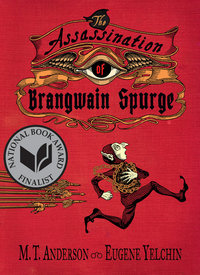
The Assassination of Brangwain Spurge by M.T. Anderson and Eugene Yelchin: A wildly imaginative and creative MG Fantasy

The Assassination of Brangwain SpurgeThe Assassination of Brangwain Spurge

by M.T. Anderson and Eugene Yelchin


Hardcover, 523 pg.
Candlewick Press, 2018
Read: January 24 – 25, 2019

Let me start with a hat-tip to Paul at Paul’s Picks for putting this on my radar. Thanks, Paul.

For a MG book, I’m surprisingly intimidated by the prospect of trying to give a synopsis. That’s probably a clue about the book. Brangwain Spurge is an elfin historian of moderate renown — when (as far as he knows) an ancient goblin relic is found in his land, he’s dispatched to present it to the goblin’s king. No elf has survived being in — much lest returning from — goblin territories in more than a century, but the conventional wisdom is that a historian should be safe — even if he is also spying.

The goblins and elves have spent centuries fighting each other, and are in a rare season without warfare — and no one expects it to last for long. Each side distrusts the other in ways that make relations between the USA and USSR in the 1960’s seem warm and cordial. So this mission of Brangwain’s is an unexpected and welcome overture of peace. Or so many people think.

Brangwain’s host is a goblin names Werfel — who’s also a historian. Werfel is a very odd, but seemingly pleasant, person living in the midst of pretty odd, and apparently pleasant, people. Every goblin he meets goes out of their way to welcome Brangwain and try to make him feel comfortable, while celebrating elfin culture. Brangwain’s a nervous guy, who has spent most of his life (going back to childhood) being insulted, bullied and overlooked — he doesn’t really see the efforts of the goblins for what it is. Besides, he’s too busy trying not to get caught while spying on his hosts.

Now, how does this elf — who most people expect is on a suicide mission — get his information back to the elves? I’m glad you asked — this is an ingenious move by Anderson and Yelchin — while alone and resting, Brangwain uses elfin magic and imagines what he’s seen which is transmitted to a device in the office of his king’s military intelligence, that takes these transmissions and “prints” them out. These would be the illustrations that make up a significant portion of this book.

Ultimately, things go awry and Brangwain and Werfel are on the run together, trying to survive and hopefully keep the peaceful overtures alive. A friendship will rise between the two as they depend on each other and realize how much they have in common.

There’s some great commentary on the power of perspective when it comes to history. Werfel and Brangwain differ greatly in their understandings of the same event/person, wholly dependent on their backgrounds. It’s all about who writes the history — even if it’s an obscure scholar — when it comes to establishing “fact.”

A little bit more about the art. First, it’s just great. This isn’t a book directed at the picture book crowd, but the art might as well be for people who can’t read the text — it’s as much of the story telling as the text. Yelchin actually saves them a couple hundred pages telling the more dramatic portions of the story in his pictures. Interestingly enough, the events described in the narration and the events depicted in the art/Brangwain’s reports differ significantly, and part of the fun of the book is comparing them. Yelchin’s art reminds me of Jules Feiffer’s from The Phantom Tollbooth, which is possibly the biggest selling point for me. Well, except the picture of a spider-creature that makes Shelob and Aragog look tame.

It’s a fun story, a little wry, and it will appeal to grade schoolers who have an off-kilter sense of humor. I really enjoyed reading it and recommend it for middle graders and their parents/older siblings alike.

—–

3 Stars
2019 Library Love Challenge

Page 5 of 7

Powered by WordPress & Theme by Anders Norén