Month: September 2019

Saturday Miscellany—9/7/19

Not a big crop this week, but some good stuff. Here are the odds ‘n ends over the week about books and reading that caught my eye. You’ve probably seen some/most/all of them, but just in case:

    This Week’s New Releases I’m Excited About and/or You’ll Probably See Here Soon:

  • The Unkindest Tide by Seanan McGuire—Toby, the Luidaeg, and Selkies—what more could anyone want out of the 13th Toby Daye? It’s been sitting on my shelf since Tuesday, and I’ve been kicking myself for agreeing to post about things so I can’t get to it yet. I need to plan better.
  • The Nobody People by Bob Proehl—Proehl’s second novel looks like a literary version of the X-Men. Looks good.

Lastly, I’d like to say hi and extend a warm welcome to Isabelle @ BookwyrmBites, KATO NASHIF, William Johnson, tourinfonepal and AKidneyStory (I’ve been reading their stuff for a few months, and really appreciate this blog) for following the blog this week.

Opening Lines: Laser House on the Prairie by David W. Barbee

We all know we’re not supposed to judge a book by its cover (yet, publishing companies spend big bucks on cover design/art) (also, this has a great cover). But, the opening sentence(s)/paragraph(s) are fair game. So, when I stumble on a good opening (or remember one and pull it off the shelves), I’ll throw it up here. Dare you not to read the rest of the book.

from Laser House on the Prairie by David W. Barbee:

Lasers everywhere. In the water. In the sky. They flashed and strobed and shined in every color of the spectrum. Lasers that sizzled beneath the ground and erupted through volcanic fissures. Lasers that saturated the clouds and struck the earth with bolts of perfectly straight lightning.

There was laser energy in the plants and flowers, flowing through the blood of animals, and it would be beautiful if everybody wasn’t killing each other for it.

Anything as powerful as lasers would be fought over, and so there was a war, started long before anyone could remember, and probably still being waged to this day.

Catch Up Quick Takes: Shattered Illusions by J. C. Jackson; The Queen Con by Meghan Scott Molin, A Plague of GIants by Kevin Hearne

It’s been a while since I’ve done something like this, but it’s pretty overdue (and only way I’m going to catch up). I’ve started (and re-started) posts on all three of these, but for some reason, I just can’t get something I’m satisfied with, and I don’t think I’ll get to it, and I really want to say something about them (if for no other reason, I won’t let myself read the next installment until I do). So here’s a few nutshell versions of what I wanted to say.

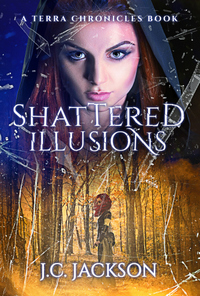
Shattered Illusions

Shattered Illusions

by J.C. Jackson
Series: Terra Chronicles, #2

Paperback, 252 pg.
Shadow Phoenix Publishing LLC, 2017

Read: January 31, 2019

Read the Official Synopsis here.
I love this world, this take on fantasy in a modern setting—I think I might keep reading these just to spend time in this world even if Jackson’s stories weren’t that great. Thankfully, I don’t have to make that call, because Jackson can tell a compelling story.

I don’t appreciate the way that many (most?) of the characters treat our protagonist, Katayl. They treat her with the kind of care usually reserved for glass on the verge of shattering, they only tell her as much of the truth as they want—all the while, wanting the benefit of her intelligence, abilities, and magic. It feels condescending and manipulative. And for that to be the way those closest to her to treat her? I can’t stomach it. There’s a decent contingent of characters that do treat her with respect, will tell her as much of the truth about things as they can, and allow her the agency anyone else would enjoy, and I trust those numbers will grow. I’m sure there’s a decent reason the others treat her like an unstable suitcase bomb, but it rankles me to see it.

The blossoming friendship/partnership between Katayl and Silver is great, and I’m really enjoying it. I found this look into her past quite intriguing. And the end of the book? There’s really a lot to unpack there, and I can’t wait to see what the fallout from it all.
3 Stars

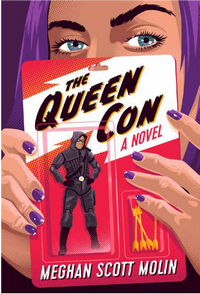
The Queen Con

The Queen Con

by Meghan Scott Molin
Series: The Golden Arrow Mysteries, #2

Kindle Edition, 336 pg.
47North, 2019

Read: July 11 – 12, 2019

Read the Official Synopsis here.
I was really looking forward to this follow-up to The Frame Up, and even listened to the audiobook to prep myself for the release. And while I really liked it, I did think it was a little bit of a let-down. It felt a little rushed, and not fully cooked.

There were some strange continuity problems (wondered about some continuity when listening to The Frame Up, too) that niggled the back of my mind throughout. MG’s narration felt too much like it was trying to rehash the previous book rather than allowing MG to move on a little bit. And Molin seemed to be hinting at one of the reveals of this book so hard that I thought it had to be a red herring, because she seemed more subtle than this.

Nevertheless, these books have so much charm, that I can’t help but smile while reading them. MG is one of my favorite protagonists of the last couple of years. Matteo is a great character, too and I can’t get enough of MG’s friends and/or colleagues (including the new ones). The story itself is a lot of fun, and that covers a multitude of problems.

I do think Volume 3 can—and likely will—win me back, and I did like this one, just not as much as I expected to.
3.5 Stars

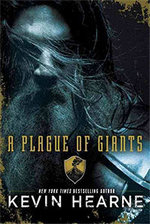
A Plague of Giants

A Plague of Giants

by Kevin Hearne
Series: Seven Kennings, #1

Hardcover, 624 pg.
Del Rey Books, 2017

Read: October 19 – December 30, 2017

Read the Official Synopsis here.
There’s just so much about this book that I loved, and so little that I had issues with, I couldn’t piece together anything coherent. I think the idea of the kennings is brilliant (yes, common to other fantasy series, but Hearne’s approach sells it). Most of the point-of-view characters are so well-drawn and developed that I can’t find fault with any of them.

This has all the strengths of The Iron Druid Chronicles (and maybe a couple of the minor weaknesses), which is enough to get me solidly on board for the series, but there’s more to it than just that.

The best thing, the most inspired idea is the way the bard tells the story, how we get each different POV. It’s a brilliant stroke.

The whole book is great—the magic system, the characters, the stakes, the big mystery about the source of invading giants, and the very human responses to the invasion. A great start to a fantasy trilogy that’s surely going to be one of my favorite trilogies. I just wish I could be a bit more articulate about it.

It does move maddeningly slow. But it has to—you can’t establish this fantastic world at a fast pace. You can’t take the time for all the tiny character moments that are just pure gold if you’re driving towards big action moments. But when the pace does pick up occasionally, you get a hint at how dynamic parts of book 2 and most of book 3 are going to have to be.
5 Stars

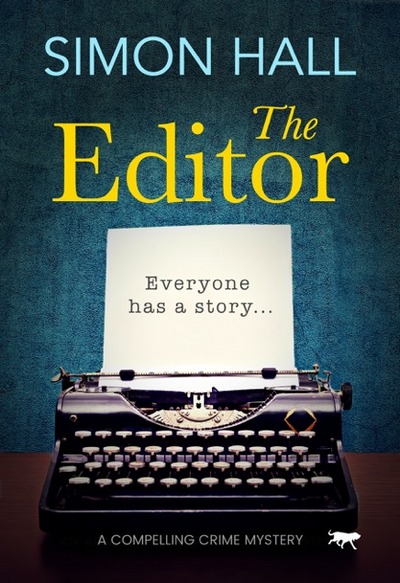
The Editor by Simon Hall: Even after the best of intentions lead to disastrous consequences, there’s hope.

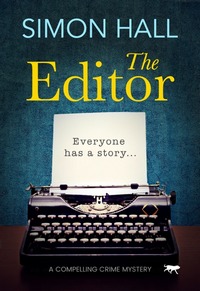
The Editor

The Editor

by Simon Hall

eARC, 352 pg.
Bloodhound Books, 2019

Read: August 30 – September 2, 2019

Hope is the true immortal in life. It never leaves us and it never dies. Sometimes, hope’s gentle voice might be drowned out by all the noise in our lives. But find a hidden corner, listen hard, and you will always hear the quiet song of hope.

A man known only as Ed gathers a large number of people with only a small newspaper advertisement about hope. From that meeting, four strangers embark on a campaign to restore hope to others and themselves via an unusual startup enterprise. Then what starts off as a search for a compelling human interest story, becomes a heartfelt search for a neighborhood’s missing pets, and then turns into something with life and death consequences for a handful of people and something that stirs a nation.

I don’t want to say more about the plot than that brief paragraph—the details of Hall’s story need to unfold slowly for you as you read the book. I spent a lot of time wondering how this qualified as Crime Fiction at all. I didn’t really care about the answer, because I got sucked into the narrative right away and was thoroughly enjoying the book, no matter what genre it ended up being. It does end up as a very compelling Crime Novel, but it takes its time getting to that point. The Editor is a book better experienced and read than explained, so I’m going to be a lot briefer than normal.

Hall’s typically an engaging author, with characters that you like despite not liking the way they always act, and can really tell a story. But in The Editor he pulls out all the stops and adds some extra “writerly flair” to the text. Lines like:

That small hiccup overcome, however, the story not only settled in their laps but purred happily in the process.

And Florence, despite her sad experience of how life could always find a way to confound her, smiled. Optimism was always one of the toughest drugs to quit.

add that je ne sais quoi that elevate this novel.

And then he’ll make you smile with things like this reaction from an elderly woman:

‘What do you think should happen to whoever might have taken George, and the other cats?’

‘Death!’ Elizabeth declared, with all the certainty of her soul. ‘I never understood why we abolished the death penalty in the first place. Here now, if ever there was one, is surely a case for bringing it back.’

There’s a very real sense in which you won’t (and cannot) figure out what’s really going on in The Editor until the end when Hall tells you. It’s frequently an annoying trait/trick when it’s pulled. But if it’s done correctly, it can be very satisfying—and Hall does it perfectly. But I’ve gotta say, even when the curtain is drawn back and the metaphoric Wizard is exposed, I was far more interested in the stuff that didn’t have to be revealed—the story itself, prima facie, is what matters most. It’s what’s going to leave a lasting impression on the reader. The other stuff is interesting and (again) well-executed, but it’s not as important as the rest.

And really, when is the central theme of this book not something that you can use?

“There’s still hope. Of course there’s still hope. There’s always hope. Feel it. Live it, breathe it…”

I think Hall’s TV Detective series is a lot of fun, and one of the things that’s bugged me most about 2019’s reading is that I haven’t made more of an effort to catch up on that series. But this? This is a special kind of book that bears almost no resemblance at all to the other Hall works I’ve read—it’s effective and affecting, inspirational and singular, wholly unexpected. You’ve gotta grab this one.


4 Stars


My thanks to Bloodhound Books for the invitation to participate in this tour and the materials (including the novel) they provided.


BOOK SPOTLIGHT: The Editor by Simon Hall

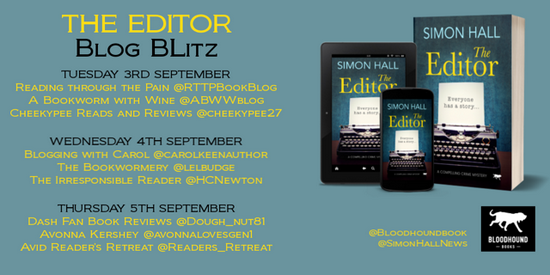
Today I’m pleased to welcome the Book Tour for the unexpected and unconventional The Editor by Simon Hall. Along with this spotlight post, I’ll be posting my take on the novel here in a bit.

Book Details:

Book Title: The Editor by Simon Hall
Publisher: Bloodhound Books
Release date: September 2, 2019
Format: Paperback/ebook
Length: 352 pages

Book Blurb:

A mysterious advert in a newspaper promising to restore hope to the hopeless brings together four strangers.

None realising they will end up investigating a twisted and troubling crime that threatens their very futures.

Mitch, a former Crime Scene Investigator, Olivia, a brilliant PhD student, and Florence, a middle-aged solicitor, find themselves working with an enigmatic newspaper editor who refers to himself only as Ed.

But when Maddie, a teenage girl, disappears in sinister circumstances, the team are drawn into the hunt for her. And when a neighbour’s body is discovered in a pool of blood, they realise they must use their unique skills in a race against time.

But can they solve the mystery before it’s too late? And before Ed’s shadowy past overcomes them all?

About Simon Hall:

Simon HallSimon Hall is an author, journalist, communications consultant, and business coach.

He was a broadcaster for twenty five years, mostly as a BBC Television, Radio and Online News Correspondent, covering some of the biggest stories Britain has seen.

He now lectures, and coaches companies at the Judge Business School, part of the University of Cambridge, working on presentation skills, branding, pitching, websites, and media profile, both conventional and social.

Simon has had seven books in his tvdetective series published. They focus on a television reporter who covers crimes and gets so involved in the cases he helps the police to solve them.

He has also contributed articles and short stories to a range of newspapers and magazines, written plays, and even a pantomime.

Alongside his novels and stories, Simon is a tutor in media skills and creative writing, teaching at popular Writers’ Summer Schools such as Swanwick and Winchester, for the National Association of Writers’ Groups, at universities including Cambridge and Exeter, on cruise ships and overseas.

Simon has also become sought after as a speaker, appearing at a variety of prestigious literary festivals. His talks combine an insight into his writing work, along with some extraordinary anecdotes from the life of a television reporter, including the now notorious story of What to do when you really need a dead otter.

He began a broadcasting career as a DJ on the radio and in nightclubs, then moved into radio and TV news. He worked in Europe, London, Ireland, and the south west of England, before settling in Cambridge.

Simon is married to Jess, Director of Libraries at the University of Cambridge, and has an adopted daughter, Niamh. She’s an army officer, which makes her father both very proud and very nervous.

Simon also lectures on careers in the media at Cambridge University, and in schools and colleges. Amongst his proudest achievements, he includes the number of young people he has helped into higher education and jobs in broadcasting, and aspiring writers into publication.

As for his likes, Simon lists beer – he judges at real ale festivals – running, cycling, solving cryptic crosswords, composing curious Tweets (find him @SimonHallNews) and studying pop lyrics.

For more on Simon, see his website – www.thetvdetective.com.


My thanks to Bloodhound Books for the invitation to participate in this tour and the materials (including the novel) they provided.

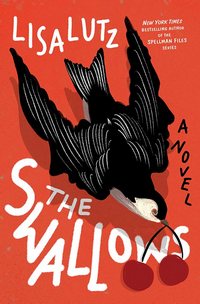
The Swallows by Lisa Lutz: Hilarious and Harrowing Account of Destroying the Status Quo because the Status is Not Quo

The Swallows

The Swallows

by Lisa Lutz

Hardcover, 399 pg.
Ballantine Books, 2019

Read: August 21 – 22, 2019

As I gazed at my students, I had the same thought I always had on the first day. They looked so young and innocent. Then I found a dead rat in the bottom of my desk drawer and remembered the tenet I had learned over the last eight years. The young may have a better excuse for cruelty, but they are no less capable of it.

For someone looking for omens, it’s odd how many exit signs I chose to ignore.

If a century of tradition were the only thing my time at Stonebridge brought to an end, I’d be okay with that. It’s the two deaths that keep me up at night.

How can I talk about The Swallows without ruining the experience? Not easily, and verbosely. Let’s see if I can manage it.

Structurally, it’s a boarding school book—a bunch of well-off (and/or scholarship) kids livingly largely without parental supervision and guidance, getting away with all sorts of things while the adults responsible for the supervision turn a blind eye, are honestly oblivious, or are complicit in the goings-on. At the end of the day, the real power is wielded by the students—a small sub-set of them, anyway—and there’s a split between those wanting to exercise their power for their own pleasure and benefit (largely male at the expense of female empowerment, self-respect, self-esteem, and dignity) and those, well not wanting that.

Largely the book focuses on a small group of female students sick and tired with the status quo (offended and angry, actually) who set out to expose the cabal and the horrible games they play with people in a way to salt the earth so it can’t be repeated. This seems like a tall order, but what choice do they have? They also have male students sympathetic to their cause and are willing to help out.

But also, there’s a teacher (or more) not willing to go along with this, and who knows something’s going on, so she does what she can to track it down to find ways to stop it (either herself or via student/faculty proxies). Her name is Alex Witt and she’s just arrived at Stonebridge Academy following an ignominious departure from Warren Prep. It takes her very little time to determine that something is rotten at Stonebridge and that a couple of her students are trying to do something about it. Instinctively in agreement with them, Alex does what she can to encourage the individuals to find one another and use the strength their numbers and collaboration can bring. One student described her as:

…my friend, my ally, my confidante. She charmed, teased, amused, incited, and befriended us.

Alexandra Witt was the pied piper of Stonebridge Academy.

Chapters are told from the perspective of Alex or some of the other faculty or various students—primarily from the perspective of Gemma Russo (the student quoted above). Gemma was well on her way to a time as a firebrand, but with nudges and aid from Alex, her crusade picks up momentum until upheaval comes to the existing conditions and then all bets are off (see that last line of the opening quotation). Essentially, Alex is John Keating without the stand-up or poetry, making Gemma Neil Perry, I guess.

The book starts off as offbeat, with Gemma as this strange instructor in an alien environment, trying to escape her legacy and to maybe find a little peace while the students are running around pretending to be revolutionaries. But it shifts at a certain point, and while still occasionally comic and never anything but fun to read, it sheds the comedy in favor of earnest emotions and motives and dangerous situations. You don’t notice it happening, but after a certain point, you’ll notice the ground has shifted. Lutz pulls that off really well.

There’s a lot of subtle work to the plot and the prose, and some that’s pretty obvious. But even the obvious is done well. There’s a reveal toward the end of the book that caught me so off-guard, but was so perfect I think I laughed out loud. I think this is technically streets ahead of Lutz’ previous work.

It’s a very different kind of humor than we got in The Spellman Files, but it’s probably as funny as Lutz has been since the third book in that series—but it’s mixed with the harsh realities of The Passenger and the feel of How to Start a Fire. Lutz puts on a clinic for naturally shifting tone and using that to highlight the important stories she’s telling.

There’s not a poorly designed or written character—I can’t say I liked all of them, or even most of them (many of them could use a few days in a pillory while fellow students threw rotten fruit or whatever at them)—but as players in this particular drama, they’re great. I was repeatedly torn between things happening too quickly, and yet not quickly enough—which I take as a sign that she nailed the pacing.

Because I’m really nervous about oversharing here, I’m going to wrap things up—but this is one you really should be reading. If it’s not on one of my Top 10 lists of 2019, I’ll be pretty shocked. I can’t think of many that I’ll put ahead of it at the moment.

From the funny and dark beginning, to the perfect and bitingly ominous last three paragraphs The Swallows is a winner. Timely and appropriate, but using tropes and themes that are familiar to readers everywhere, Lutz has given us a thriller for our day—provocative, entertaining, and haunting. This is one of those books that probably hews really close to things that could or have happened and you’re better off hoping are fictional. Lisa Lutz is always a very good author, The Swallows is Lutz at her best.


5 Stars

August 2019 in Retrospect: What I Read/Listened to/Wrote About

August in a Thumbnail: 7294 pages (500 more than July), 24 books (same as July, and given the amount of time Dark Age took I’m happy about that), Average Rating of 3.9—which is not shabby. But 6 5-Star books??!?!? I’m either getting really soft, or I had an incredible month (my reflex is to guess I’m getting soft, but I’d defend every one of those).

Here’s what happened here in August.
Books Read/Listened to

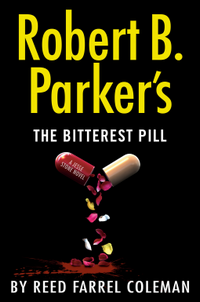
Teen Titans: Raven The Bitterest Pill Not Home Yet
3 Stars 4 Stars 3 Stars
The Lord's Supper: Answers to Common Questions Chances Are . . . A Dangerous Man
3.5 Stars 4 Stars 4 1/2 Stars
Heaven on Earth Shady Characters Dark Age
3 Stars 3 Stars 5 Stars
Harry Potter and the Deathly Hallows Life of Christ Black Summer
5 Stars 3 Stars 5 Stars
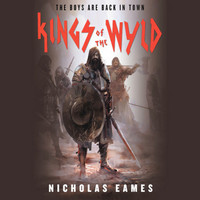
Kings of the Wyld (Audiobook) Fletch, Too The Swallows
5 Stars 3 Stars r5 Stars
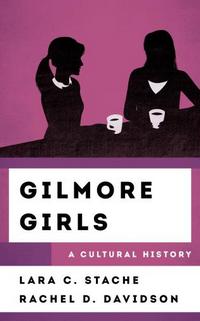
Gilmore Girls: A Cultural History Finding God in the Ordinary Reformed Dogmatics, Volume 4: Soteriology
3.5 Stars 3 Stars 5 Stars
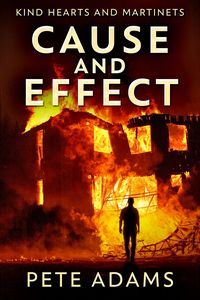
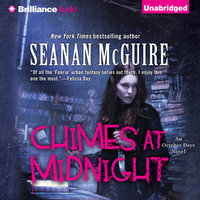
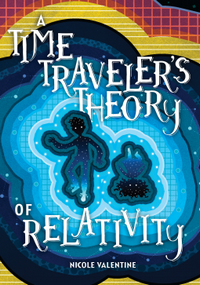
Cause and Effect: Vice Plagues the City Chimes at Midnight A Time Traveler's Theory of Relativity
3 Stars 4 1/2 Stars 3.5 Stars
Son of Fletch Brotherhood of the Worm
3.5 Stars 4 Stars

Still Reading

The Blade Itself The Editor

Ratings

5 Stars 6 2 1/2 Stars 0
4 1/2 Stars 2 2 Stars 0
4 Stars 3 1 1/2 Stars 0
3.5 Stars 4 1 Star 0
3 Stars 8
Average = 3.89

Reviewish things Posted

TBR
Physical Books: 7 Added, 4 Read, 27 Remaining
E-Books: 1 Added, 0 Read, 21 Remaining
Audiobooks: 1 Added, 3 Read, 3 Remaining

2019 Book Challenges

2019 Library Love Challenge

2019 Library Love Challenge

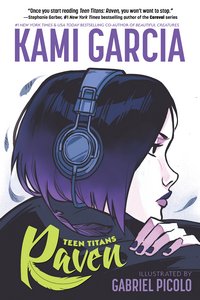
  1. Teen Titans: Raven by Kami Garcia, Gabriel Picolo (Illustrator): An Updated Look into the Empath’s Past
  2. Chances Are . . . by Richard Russo: Russo almost writes a Crime Novel, but manages to avoid it.
  3. Shady Characters by Keith Houston: This geeky look at symbols and punctuation is as informative as it is fun.
  4. Dark Age by Pierce Brown: The blood-dimmed tide is loosed… / The best lack all conviction, while the worst / Are full of passionate intensity.
  5. Harry Potter and the Deathly Hallows by J. K. Rowling, Jim Dale
While I was Reading Challenge

While I Was Reading 2019 Challenge

Nothing this month. I’ve got the rest of the list picked out, just need to find/make the time.

LetsReadIndie Reading Challenge

#LetsReadIndie Reading Challenge

    Finding God in the Ordinary

  1. Cause and Effect: Vice Plagues the City by Pete Adams: It’s some effort, but readers will be amused by this
  2. Brotherhood of the Worm by M. T. Miller (link forthcoming)
2019 Cloak & Dagger Challenge

2019 Cloak & Dagger Challenge

  1. Cause and Effect: Vice Plagues the City by Pete Adams: It’s some effort, but readers will be amused by this
  2. A Dangerous Man by Robert Crais: A Routine Errand leads to a Rescue Mission for Joe Pike
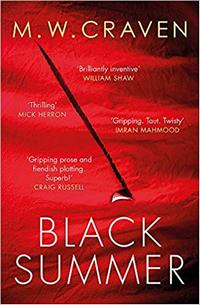
  3. Black Summer by M. W. Craven: A Good Detective Faces Off with a Brilliant Criminal for the Second Time
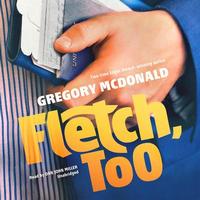
  4. Fletch, Too by Gregory McDonald, Dan John Miller (link forthcoming)
    Bitterest Pill
  5. Son of Fletch by Gregory McDonald, Dan John Miller (link forthcoming)
Humor Reading Challenge 2019

Humor Reading Challenge 2019

    Nada.
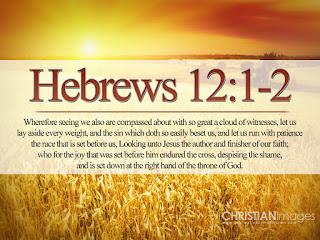
2019 Cloud of Witnesses Reading Challenge

2019 Cloud of Witnesses Reading Challenge

  1. Heaven on Earth by Thomas Brooks (link forthcoming)
  2. Life of Christ by J. Gresham Machen
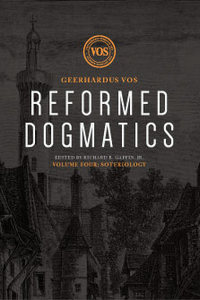
  3. Reformed Dogmatics: Soteriology by Geerhardus Vos, Richard B. Gaffin Jr. (Translator) (link forthcoming)

How was your month?

August 2019

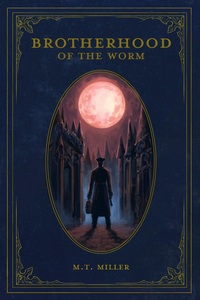
Brotherhood of the Worm by M. T. Miller: A little Sam & Dean, a little more Van Helsing, a lot of Monster Killing

Brotherhood of the Worm

Brotherhood of the Worm

by M. T. Miller
Series: The Culling, Book 1

Kindle Edition, 332 pg.
2019

Read: August 28-29, 2019

The door leading to the hallway and the rooms upstairs slammed open without warning, and in came the missing patron. He was tall, thin, and wide in the shoulders. He had been lodging upstairs for the last three days, and always wore the same grey coat and cocked hat. In his gloved left hand was a heavy-looking leather bag that he never let anyone else touch. Apparently, he even took it to the outhouse.

“Listen to me!” he bellowed after letting the bag down and shutting the door. “And listen well. Until the sun rises, no one may leave this inn!”

Having just emptied a goblet down his throat, Moritz gave the man a look of dull surprise. “What is this? A robbery?”

“I’m afraid not,” the strange patron said. “If it were, we’d all have a better chance of getting through it alive.”

The inn is in an 18th-Century(ish) Germany(ish) country. The strange patron is Conrad Shast, the last member of a noble household turned monster hunter. That’s about as friendly as he gets. He goes from town to town, wherever he’s called to go to eliminate any one of a multitude of monsters on behalf of a shadowy organization that, well, let me let Shast tell it:

“Few refer to it by name, but it is called the Culling, and it’s been protecting the world from monsters and witches for as long as history remembers. From time to time, others have tried their hands at monster hunting, but it never lasted. In the long run, only the Culling has survived the test of time.

“Officially, no noble is under obligation to aid a hunter. But the consequences of rejecting a plea for help far outweigh their potential cost.”

The Culling is a busy group, it seems, there are monsters everywhere in this world (even overrunning some continents), and, as the man said, they’re the only game in town. Generally, they send one or two people to any particular place, but if there’s a big enough problem, they will send out reinforcements. During the course of this novel, Shast ends up working with two other hunters. It’s clear that no two hunters are alike—there’s a variety of approaches, specialties, backgrounds, and personalities (I was a little afraid it’d be armies of Shasts, Miller might have been able to pull it off, but I like this approach better).

Shast is a classic loner, a wandering knight à la Jack Reacher or TV’s David Banner (but with less of a sense of humor). He comes to down, gets his prey and the money he (and The Culling) is owed for that service and moves on. No friends, no family, no entanglements. The particular hunt he’s on when he takes over the inn is a little trickier than most (and will end up being a lot trickier in the end)—he eliminates the monster, but not the source of the infestation. The source has moved on and has likely infested at least one more city by this point. So he has to hit the road to track down the source.

One woman in the inn was so changed by her exposure to the monster that she can detect the hidden creature (not that she wants to), so Shast brings her with him to expedite the hunt. The city guard also dispatches a knight old enough to be her father to act as chaperone and guard. Eventually, they cross paths with another hunter after the same target. She’s into poisons, explosions (Shast prefers a good knife) and making sure her enemies suffer. She joins this grim band as they continue to track down the source, eventually reaching the capital city and discovering things are worse than they thought.

It’s not a smooth journey, and there are distractions and obstacles (both monstrous and human) along the way. The group is not united in any way, and most aren’t that willing to be participating, but there’s not a lot of choice offered any of them. Putting this in an 18th-Century(ish) setting is a great idea—you get a little bit of technology (guns, primarily), but not enough that swords, horses, traveling on foot and slow modes of communication aren’t the flavor of the day. You get a shifting prominence of nobility, a rising middle class, and a church struggling to survive in a hostile world, also. It’s a tumultuous time, not helped at all by the creatures plaguing the citizenry. It’s also a great change from the post-apocalyptic wasteland of Miller’s previous series.

And I wish I had time to give good descriptions of these monsters—and you’d be better to read them for yourselves anyway. The first one we see is simply disgusting and disturbing (and, boy howdy, am I glad we don’t get a bunch of them). Some aren’t that bad (relatively speaking, anyway), but a lot of them could be nightmare fodder is Miller used them a little differently. None of them are easy targets for the Hunters, but it’s only in large numbers that they’re a giant threat. We don’t seem to get anything that you’ve seen before (at least nothing I’ve seen before), which is great. Nothing against trolls, orcs, vampires, wights, etc.—but I appreciate seeing something new.

A common thread, it hit me this weekend, to all the books I read—Crime Fiction, SF, Fantasy, Urban Fantasy, even General Fiction, Non-Fiction or Theology—is that the worst enemies, the greatest predators, the most dangerous threats to humans aren’t aliens, monsters, demons, or whatever external threat you can think of. It’s humanity, our neighbors, our leaders, those like us. And as horrible as the creatures that The Culling targets may be, there’s something hundreds of times worse. Miller using that reality, reflecting that in his fantasy, is my favorite part of this novel (the competition for that was stiff), it’d have been easy and understandable to make a parasite that can control its host—or some other creature—to be the ultimate evil that Shast and the rest contend with. But Miller took the better—and harder—road. Which speaks good things for this new series (and bodes ill for how things are going to go in future installments).

Speaking of future installments, I know he’s already getting things ready to release the sequel in a few months. I can see a lot of options for what that sequel will hold—Character A’s next hunt, or Character B’s hunt/attempt at redemption, Character C & D going forward (together or separately), or a completely new batch of characters in the same world. All of which are pretty appetizing—I’d prefer A or C and/or D to another group or B—but I can see any of those working. Miller’s earned my trust at this point, and I’ll take whatever eagerly.

This is the sixth work I’ve read from Miller (you can read about the four novels and one novella of The Nameless Chronicle here), and I love watching him grow and develop—he’s learned a lot from that last series, and is applying those lessons well. This is more assured and better executed than those—and I had few complaints about them! Jump on to this one at the beginning of what promises to be a great ride.

Disclaimer: I was given a copy of this novel by the author in exchange for my unbiased opinion.


4 Stars
LetsReadIndie Reading Challenge

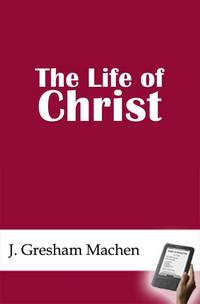
Life of Christ by J. Gresham Machen: Short, Helpful, to the Point

Life of ChristLife of Christ

J. Gresham Machen

Kindle Edition, 50 pg.
Monergism Books, 2015
Read: August 18, 2019

This short work is extracted from the 1922 work A Brief Bible History: A Survey of the Old and New Testaments by Machen and James Oscar Boyd, and it felt similar to portions of Machen’s New Testament Introduction: An Introduction to its Literature and History. I think I’ve heard of the former, I’ve read the latter a couple of times. So, that took a little bit away from the experience for me.

But that doesn’t take away from the value of it—a concise summary of the Life of Christ (harmonized) and the beginnings of the Church in Jerusalem. I’m guessing this was some of the Sunday School curriculum material written by Machen while teaching at Princeton Seminary, and it includes study questions. There’s not a lot of interpretation or application (except in the questions), it’s largely just a boiled down run-through of the gospel accounts.

Machen’s possibly my favorite twentieth-century theologian — he’s definitely the clearest and crispest (with the possible exception of R. C. Sproul). All the things people like to say about C. S. Lewis’ popular apologetics apply to Machen (without the stumbling into troublesome weirdness), and his more academic apologetic work still holds up. This isn’t Machen at his best, but it still displays his style and approach (even if only a little).

Really not much to say about this, so I’ll just recommend it for a nice refresher.

—–

3 Stars
2019 Cloud of Witnesses Reading Challenge

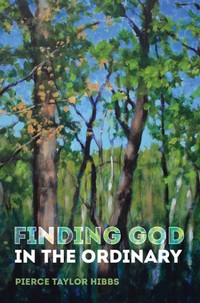
Finding God in the Ordinary by Pierce Taylor Hibbs: Essays to Inspire Devotion

Finding God in the OrdinaryFinding God in the Ordinary

by Pierce Taylor Hibbs
Paperback, 73 pg.
Wipf & Stock Publishers, 2018

Read: August 25, 2019

In the greatness of God, the smallest of things is given tremendous weight.

Hibbs, the associate director of the Theological English Department at Westminster Theological Seminary, has given us a great collection of thirteen essays (semi-inspired by an interview Hibbs heard with Karl Ove Knausgard on NPR but from a very different perspective) based on that idea. As you can guess from the title, Hibbs looks at the minutiae of life and sees how it testifies to the Triune God of the Christian Scriptures.

Some of the everyday, ordinary, common things that he muses on include:

  • dust particles
  • his son’s laugh
  • swirling coffee
  • light
  • wind
  • shadows
  • falling snow

Not your everyday subjects for short essays—particularly not from a theologian, are they? From these everyday things, Hibbs goes on to mediate and wax lyrically on God’s nature, being, truth, care, light, providence, and grace (and other things). These are not theological treatises, but musings on small things around him. Yes, they are theologically-inclined and theologically-informed (and he slips in enough nuggets to make me want to check out his other work). I can’t think of anything else to compare it to, which annoys me, because it’d help explain the volume.

I wondered from time to time if he was going to dance close to pantheism, but he never got that close, really. But he was clearly aware of the hazard, and addressed it in his Epilogue.

The prose is frequently poetic (and there are the occasional bits of actual verse), and gorgeously written. It’s not often that you read theologically-inclined books that possess beautiful language—the ideas are often wonderful, sure, but the language typically fails to live up to it. Not Hibbs—he knows how to phrase things to make an impression, not just impart ideas.
Not only are these essays well-written and thought-provoking, they ought to train the reader to start to find God in the ordinary around them—which is probably the best use of the book. It’s a little on the thin side, honestly, but I don’t know if you could read more than this in a sitting (if you manage to only do one sitting of it) without it losing some power. An interview I heard with him seemed to suggest there might be further collections like this, if there are, I will jump on them. Recommended.

—–

3 Stars

Page 4 of 4

Powered by WordPress & Theme by Anders Norén