Month: February 2021

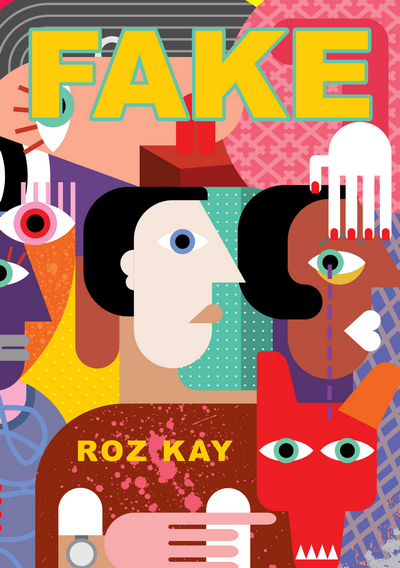
BOOK SPOTLIGHT: Fake by Roz Kay

Today I welcome the Book Tour for Fake by Roz Kay. Following this spotlight post, I’ll be giving my take on the novel here in a bit. But let’s start by learning a little about this here book, okay?

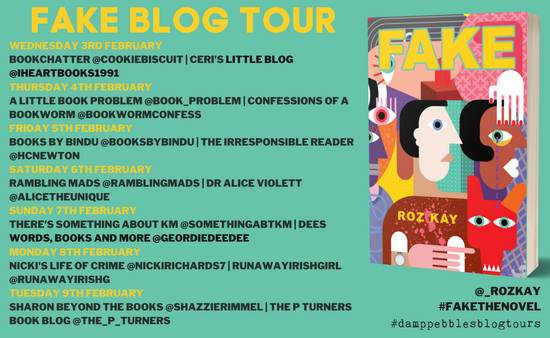
Fake Tour Banner

Book Details:

Book Title: Fake by Roz Kay
Release date: September 21, 2020
Format: Paperback
Length: 285 pages

Book Blurb:

James Cowper-art dealer, gambler, thief-is going straight and on the brink of redeeming himself with his disillusioned wife, Imani. He’s still broke, but all he needs to take care of that is a rare art find. Then trouble arrives in the shape of a scheming landlord and an unwelcome dinner party with his boss. As events spin out of his control it appears that nobody, including Imani, is what they pretend. And over everything looms one make-or-break question for James: can he get a grip on his exploding life?

About Roz Kay:

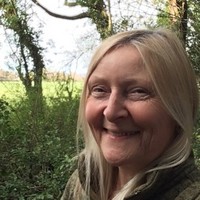
Roz KayRoz Kay is a writer and former journalist. Her debut children’s novel, The Keeper of the Stones, was published in March 2020 by Hayloft Publishing and she’s had literary short stories published under the name Roz DeKett. Roz, who now lives in Wiltshire, England, has lived in Ghana, Canada, Malaysia, Brunei, and the United States—including nearly six years in Philadelphia where Fake is set. Fake is her debut novel for adults.

Social Networks:

Twitter ~ Facebook ~ Website ~ Instagram

Purchase Links:

Amazon UK Waterstones ~ Bookshop.org

My thanks to damppebbles blog tours for the invitation to participate in this tour and the materials (including a copy of the novel) they provided.

Blacktop Wasteland by S. A. Cosby: Entertaining. Stunning. Devastating.

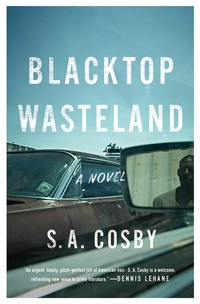
Blacktop Wasteland

Blacktop Wasteland

by S. A. Cosby

Hardcover, 385 pg.
Flatiron Books, 2020

Read: January 28-February 1, 2020
Grab a copy from your local indie bookstore!

Meet Beauregard Montage

The secret ain’t about the motor. That’s part of i it, yeah, but that ain’t the main thing. The real thing, the thing most people don’t want to talk about, is how you drive. If you drive like you scared, you gonna lose. If you drive like you don’t want to have to rebuild the whole engine, you gonna lose. You gotta drive like don’t nothing else matter except getting to that line. Drive like you fucking stole it.

Beauregard heard his Daddy’s voice every time he drove the Duster.

The first thing we learn about Beauregard (nicknamed “Bug”) is that he is both a great mechanic and a great driver. We see that at the start as he wins a street race to help pay his monthly bills. The second thing we learn is that he’s capable and willing to give a man a beating—both efficient and effective—if he’s crossed (read: cheated out of winnings).

Beauregard runs an auto-repair shop in a small Virginia town. He was doing okay for himself until a few months back when a new, better-financed shop opened up in town. Now he’s losing customers by the handful, and may not be able to stay open for more than three months.

He’s deeply and madly in love with his wife and is a devoted father to two great sons (one complaint—possibly my only one is that we don’t get more time with the boys). But one of them needs braces. His wife works too hard, and he’d like to lighten her burden—and provide a nicer home. His daughter (from before he was married, and he never had any kind of custody) can’t afford college and plans on working for a while before she can afford it (the reader knows, and I think Beauregard does, too, that she’ll never make enough to get there). His mother’s in a nursing home, and there’s some sort of financial problem there, too.

He’s got all that he needs, and it’s all about to slip through his fingers.

The “Life”

Beauregard thought about the clichéd scene in every crime movie where the main character who has gotten out of the “Life” buries his weapons under a hundred pounds of concrete only to have to dig them up when his enemies come knocking at his door.

He understood the appeal of the symbolism for filmmakers. It was just unrealistic. You were never out of the Life completely. You were always looking over your shoulder. You always kept a gun within reach, not buried under cement in your basement. Having a gun nearby was the only way you could pretend to relax.

It wasn’t all that long ago that Bug* received the bulk of his income from illicit means. He was part of a crew, he was a wheelman for them—among other things. He’s a meticulous planner, has an eidetic memory, and can do mental math at a speed I can only envy. He planned whatever the crew was going to do—and woe to anyone who did not stick with his plan to the T, or gave him bad information while planning.

* Beauregard tends to think of himself as “Bug” when he’s thinking of the reckless, thrill-seeking lawbreaker side of him, and “Beauregard” when he’s living the way he should. I’m following that.

But he decided he needed to be a better father than his own (who never left the Life and left home when it became too dangerous for him to stay). He’s been living straight since then. He misses the rush, he misses the work—mostly the driving. But he has better things to focus on now, and he’s largely successful.

But is he at the end of that? There are just too many things he needs to pay for and only so much money.

The Temptation of Bug

One of his last jobs, before he went straight, was with Ronnie Sessions—he had an idea, Bug came up with the plan, did the elaborate work necessary to pull it off. And then because Ronnie had faulty intel for him, the job fell apart and Bug was out thousands in expenses—and he didn’t get the payday. He hasn’t seen Ronnie since.

But now Ronnie’s back, at just the right time (or wrong, depending on how you look at it). He’s got a juicier target. One that will erase most of Beauregard’s immediate needs, and will make things more comfortable for a while into the future, too.

After some thinking, some waffling, (this isn’t a spoiler, the book needs something like this), he agrees and takes over the operation.

Car Chases

I am not a car guy. I know almost nothing about cars, I can do basic maintenance (or I could a long time ago, I’m not sure I’m capable anymore). I’m an adequate driver. I can correctly identify maybe 40% of the cars I see on the road.

However. I am a red-blooded American male. I love car chase/driving scenes.* Like in Blues Brothers, half the TV (and a good number of movies) I grew up watching in the 80s, Bourne Identity, Baby Driver (I could watch the opening sequence on a loop for hours)—the only positive memory I have of the second Matrix movie was the elaborate car chase scene. I could keep going, but you get the point. They’re harder to pull off in a book than they are on-screen, but when they work, they really work.

* I realize people who aren’t red-blooded American males frequently love them, too, I’m not arguing against that. It just seems more definitional of RBAM.

S. A. Cosby could give everyone lessons on how to do it properly. I don’t know that I’ve read any as good as his. So yes, there’s a lot that he has to say about class, race, fatherhood, and more. This novel is beautifully written, with a lyrical nature to some passages that will make you want to reread the paragraphs a few times just to take it all in. But also? It has great car scenes in case you’re worried about it being too highbrow and artsy.

Oh, It’s That Kind of Book

Men like your Daddy, like me, like you used to be, we don’t die in hospital beds. Ant wasn’t perfect. He loved driving, drinking, and women, in that order. He lived life at 100 miles per hour. Men like that, well, they go out on their own terms, usually with a bang.

Fairly early, I decided I knew what kind of book I was reading—we’d see Beauregard and his situation, we’d get a little backstory about his criminal history and why he got out of “the Life,” we see the pressures making him think of returning to it (however briefly he intends on it), the temptation to do so, the planning and execution of the robbery, and so on. I was into the idea.

And then the (supposed) central crime is over in a few pages. Which surprised me. And then I noticed I wasn’t even halfway done with the book—which meant that the bulk of the book is about what happens as a result of the robbery. And given the tone of the book, we’re not talking hijinks and good times. My notes say, “Oh, it’s going to be that kind of book.

I’m not going to spoil anything and tell you why it was a mistake for Bug and his fellow thieves to rip off the place they rip off. But, it was a colossal mistake. And the repercussions are big.

Because Cosby had done such a good job making me care about Bug and his family, and the way he wrote the characters who objected to this robbery—I had a really hard time finishing this book. I’d literally have to read a chapter or two and then put the book down for 30+ minutes while I did something else. I just didn’t want to know how bad things got for the Montage family.

Still, there was no way I wasn’t going to finish the book. I had to know. So, I’d read another chapter or two, and then it’d get too much for me, and I’d start the cycle again. I added a day or two to my reading because of this (I did read the last 50 or so pages without a break, but I wanted one…). I don’t react this way to books, I just don’t. But, man, this got under my skin and I couldn’t do anything else.

So, what did I think about Blacktop Wasteland?

Is there any doubt?

Early on, this made me think of She Rides Shotgun by Jordan Harper. It had a similar sensibility, a book about a father throwing away a chance at…everything…so his kid(s) would have a shot at a decent life. I’d even started jotting down notes for a paragraph or two about that. And then I noticed that the last quote on the back cover is from Harper. So I was definitely not the first reader to see the link. Still, if you read Harper (or wanted to), you’ll want to get your hands on this. The converse is true as well.

But let’s focus on Blacktop Wasteland. From the first paragraph that made me sit up and say “Oh, this explains the hype,” to the devastating last line—and all points in between, Blacktop Wasteland is one of those books that a guy can’t describe without seeming hyperbolic.

Fantastic car chases. Great action. Compelling and moving family moments. Race as a deterministic factor in success. Class, too. What does it mean to be a father? Human depravity on display in a variety of ways from criminals small-time and Organized. Human frailty and striving for greatness, too. Blacktop Wasteland has it all. You’re not supposed to cry over a Crime Novel—and I didn’t. But it wouldn’t have taken much to push me over that line.

You’re not a Crime Fiction reader? I get that—and don’t worry, you can just think of this as General Fiction/Literature and you’ll be fine. I’m repeating myself. This is a great novel, go read it.


5 Stars

This post contains an affiliate link. If you purchase from it, I will get a small commission at no additional cost to you. As always, opinions are my own.


WWW Wednesday, February 3, 2021

The first WWW Wednesday of Febrary, I know I said something similar last week, but I’m really stuck on how not ready I am for it to already be February. But it sure seems to be here.

This meme was formerly hosted by MizB at A Daily Rhythm and revived on Taking on a World of Words—and shown to me by Aurore-Anne-Chehoke at Diary-of-a-black-city-girl.

The Three Ws are:

What are you currently reading?
What did you recently finish reading?
What do you think you’ll read next?

Easy enough, right?

What are you currently reading?

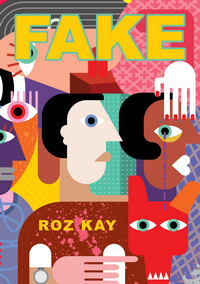
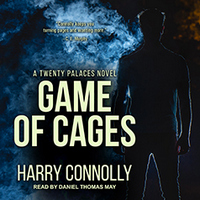
I’m reading Fake by Roz Kay for a Tour on Friday and am listening to Game of Cages by Harry Connolly, Daniel Thomas May (Narrator) on audiobook (I’ve failed for 3 days out of the last 5 trying to come up with a blog post about the first two in this series, yet I push on with another).

FakeBlank SpaceGame of Cages

What did you recently finish reading?

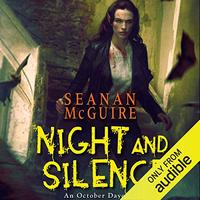
I just finished (and was devastated by) S. A. Crosby’s Blacktop Wasteland and Night and Silence by Seanan McGuire, Mary Robinette Kowal (Narrator) on audio, I’ve almost caught up with this series on audio and am picking up such more this time around (obviously).

Blacktop WastelandBlank SpaceNight and Silence

What do you think you’ll read next?

My next book should be Chasing the Pain by Matthew Iden—looking forward to dipping into this series—and I have no idea what audiobook is up next.

Chasing the PainBlank SpaceQuestion Mark

Hit me with your Three W’s in the comments! (no, really, do it!)

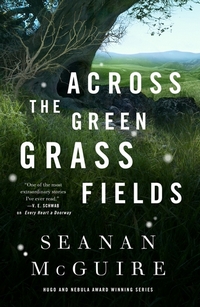
Across the Green Grass Fields by Seanan McGuire: The Sixth Wayward Children Novel is a Let-Down

Across the Green Grass Fields

Across the Green Grass Fields

by Seanan McGuire
Series: Wayward Children, #6

Hardcover, 174pg.
Tor, 2021

Read: January 25-26, 2021
Grab a copy from your local indie bookstore!

Regan slowed again, suddenly eager for her journey to take as long as possible. Maybe that was why the shape in the nearby growth caught her eye, and she stopped abruptly, sending a pebble clattering into the creek as she cocked her head and blinked at what was surely a trick of the light.

Two trees had grown around each other, branches tangling and twisting like the wicker of a basket. They looped in and out of one another’s embrace, until they formed what looked almost like a doorway. That was interesting, but not unique; branches often grew together, and the shapes they made in the process could be remarkably architectural. She’d seen castles in the trees when she was little, castles and dragons and all manner of fabulous things.

But she’d never seen a doorway before.

What’s Across the Green Grass Fields About?

Regan is ten-years-old when she finds this doorway, but we meet her when she’s a little younger. We see her making regrettable, entirely predictable (and understandable) mistakes when it comes to friendship, the kind of mistakes that shape her social future in ways she can’t imagine. We readers cringe, hope she’d make better choices, and then just wait to see how bad the damage is going to be when she realizes (probably too late) that she’s befriended and trusted the wrong sort of person. Other than that mistake, she seems like a sweet girl, she loves horses and riding, her family, and her friend.

The day after she learns something devastating from her parents, she learns that lesson about trust the hard way and runs away from school into the less-developed area between her school and home.

As children do in this series, she walks through that doorway and finds herself in a new world. The first person she meets (a centaur) tells her it’s called The Hoooflands. And she is excited to find a human. Humans arrive in The Hooflands when something is about to happen—when something that is plaguing their society will be confronted and defeated by the human (who have thumbs and can fit in places a centaur can’t, so there are two big advantages for the human).

But first, the centaur takes Regan to meet her family. And then years pass. She matures, she sees the errors she made in trusting the wrong people on Earth. She picks up skills, she learns who she is. Yes, she misses her family, but this is home to her and she’s content.

The Hooflands

…and there were people. Centaurs like the ones Regan knew. More delicate centaurs with the lower bodies of graceful deer and the spreading antlers to match. Satyrs and fauns and minotaurs and bipeds with human torsos but equine legs and haunches, like centaurs that had been clipped nearly in half. It was a wider variety of hooved humanity that Regan could have imagined.

On the one hand, I really like this world—of all the worlds on other sides of doors that we’ve visited in this series, it seems more viable than any of them (except maybe for maybe The Goblin Market), it takes a little less suspension of disbelief to see how the world works (once you accept the population, anyway).

At the same time…there’s something about this society that I don’t understand how it functions at all given the way that other species see each other. Obviously, this is a not-at-all-thinly-veiled metaphor for our society, but even metaphors should have some sort of air of believability. Maybe it’s just me, but every time that came up, it took me out of the story for a bit, because I couldn’t understand how the world functions (set aside justice and morality, I’m talking just in terms of practicality). It’d take too long to flesh this out, so I won’t. But it bugged me.

The individual people we spend time with in The Hooflands? Loved ’em.  They’re the best characters we’ve met in this series that weren’t connected to the School. I resented how much time McGuire let pass between chapters because I wanted to spend more time with them and to understand the Centaur culture a bit more.

So, what did I think about Across the Green Grass Fields?

It had been more than five years since Regan ran away from school on purpose and ran away from home by mistake.

So begins the endgame for this particular novella, Regan heads off to meet the Queen and do what she was brought to the Hooflands to do once and for all, and then (she assumes) to get her door back home. She doesn’t really want to leave the Hooflands, but circumstances are forcing her hand.

This is the crux of probably my biggest problem with the book—she’s spent five years telling anyone who’ll listen (primarily herself) that she doesn’t believe in Destiny, she won’t bend to Destiny. But in the end, that’s exactly what she does. I’m not going to get into a debate about determinism here, but Regan would be a great Exhibit A for my case if I wanted to.

This is not a subtle book, McGuire has things she wants to say about destiny, about the choices that others make on behalf of others that are just as binding as the choices they make themselves. And she goes about it in a blatant, almost ABC After School Special* manner. And this series is better than that. Or it usually is.

* Readers of a certain age might want to consult with a parent to fully understand that reference

I liked Across the Green Grass Fields, but this is not up to either McGuire’s standard or the standard of The Wayward Children series, and it was far enough short of those high marks that I’m having trouble generating much enthusiasm for it. The language, the storytelling style, the imaginative world were there. But they were overshadowed too frequently for my taste by the rest.

I was disappointed. Hopefully, you’re not, or if you were, it doesn’t put you off from trying the rest of this really wonderful series.

I fully expect (and hope) to see Regan at Eleanor West’s School for Wayward Children in the future and look forward to seeing what happens after she makes her way back home (even if I don’t think it’ll go well for her long-term). I’ll be back for the 2022 novella in this series, eager for what McGuire has in store, confident it won’t be like this.


3.5 Stars

This post contains an affiliate link. If you purchase from it, I will get a small commission at no additional cost to you. As always, opinions are my own.

GUEST POST: Here are the Worst Words by Curtis Honeycutt

As part of the Tour for Curtis Honeycutt’s Good Grammar Is the Life of the Party: Tips for a Wildly Successful Life, he was kind enough to supply me with this Guest Post to give us all a little taste of his work. Hope you enjoy. For more about the book and the giveaway, see the Spotlight post I put up a bit ago.

No one likes the word moist. I also find the following words to be particularly icky: cyst, pus, dipthong, dongle, ointment, seepage, yeasty, analgesic, succulent, kumquat, and goiter. There’s even a relatively-new word for the disgust of certain words: logomisia. This word is so new that it’s not in moist—I mean, most—dictionaries. Perhaps the pencil-pushers over at the big dictionary companies have logomisia for the word logomisia.

Speaking of hating certain words, I’m afraid you’re not going to like this.

I love to ask people what their least favorite word is (for the record, mine is supple). By far, according to my informal surveying tactics, the word that gets the most votes is irregardless.

I’m sorry to break it to you, but irregardless is technically a word.

Yes, irregardless is a word. Depending on the word processing tool you use, it sometimes gets the red squiggly underline treatment—but not always. And if you look up irregardless in a dictionary, you’ll find it there along with all of the other officially-sanctioned words.

When people jokingly use irregardless, they are doing it wrong. Those who utter it accompanied by an ironic smirk simply use it instead of regardless, to the frustration of word purists.
Many have dismissed the word irregardless because they view it as redundant; regardless is all we need, they argue. Adding ir- in front of regardless downright irritates people.

But that’s the wrong way to use irregardless. You see, irregardless is a way to drop the mic on an argument after someone has already used regardless. Here’s an example:

Robin: Batman, will you let me pick the music on the Bat Radio next time we’re in the Batmobile? I promise not to sing along.

Batman: Absolutely not. Regardless, your taste in music is terrible.

Robin: Holy supple salamanders, Batman! I won’t play any Creed or Nickelback. Can I pick the music, please?

Batman: Irregardless, my answer is “no.” To the Batcave.

In this scene, Batman shuts down the argument by putting extra emphasis on regardless by saying irregardless. Batman knows how to use irregardless properly. Also, he’s the one who wears the pants in the Dynamic Duo (okay, technically they’re tights, but Robin only wears green underwear).

Most of the time irregardless is used, it’s misused, probably in a knowingly tongue-in-cheek manner. And its intent comes through; people either get bothered by their friend’s usage of irregardless or they think it’s funny. Either way, unless you’re using irregardless like Batman, you’re doing it wrong.

Batman once said “It’s not who I am underneath, but what I do that defines me.” I say: leave the defining up to the dictionary; we can all do a better job of improving our grammar and word usage to make our lives more awesome.

—Curtis Honeycutt is a syndicated humor columnist. He is the author of Good Grammar is the Life of the Party: Tips for a Wildly Successful Life. Find more at curtishoneycutt.com.


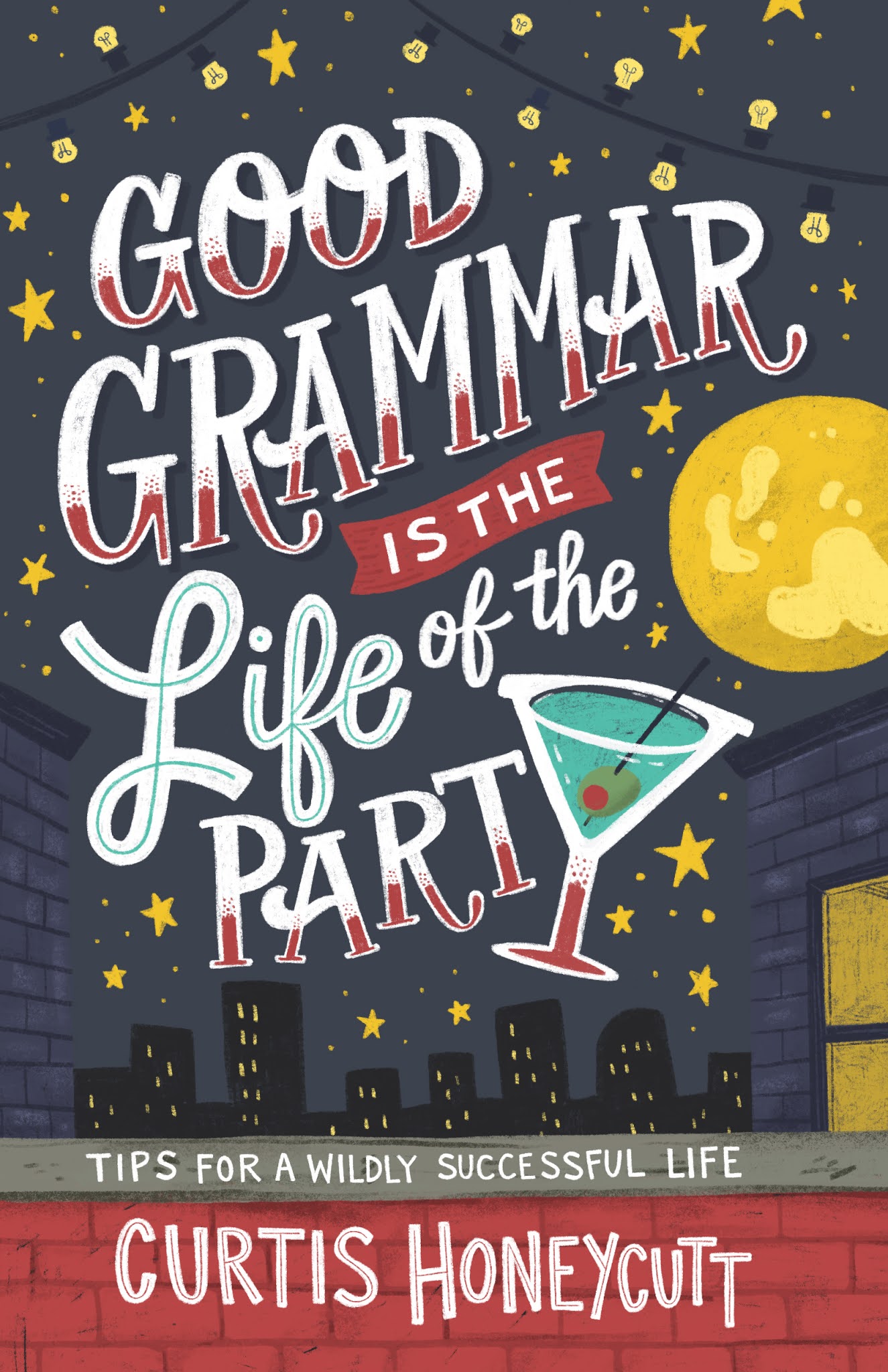
BOOK SPOTLIGHT: Good Grammar is the Life of the Party by Curtis Honeycutt

Welcome to a Spotlight Tour for Good Grammar Is the Life of the Party: Tips for a Wildly Successful Life by Curtis Honeycutt. After learning a bit about this book, be sure you look into the Giveaway at the bottom of this post and then check back in the next hour for a fun Guest Post from Honeycutt!

Book Details:

Book TitleGood Grammar Is the Life of the Party: Tips for a Wildly Successful Life by Curtis Honeycutt
Category:  Adult Non-Fiction, 18 yrs +, 244 pages
Genre:  How-To, Humor, Grammar and Writing Reference
Publisher:  The County Publishing
Release date:   May, 2020
Content Rating:  PG-13: “I write “hell,” “damn,” and “shit” a few times. Maybe “ass.” .”

Book Description:

Grammar rules! Good Grammar is the Life of the Party: Tips for a Wildly Successful Life will convert grammar goofballs into bonafide word nerds. As the writer of the award-winning humor column “Grammar Guy,” Curtis Honeycutt’s grammar advice appears in dozens of newspapers every week. His debut book—filled with witty word wisdom—is designed to make
your life more awesome by improving your grammar. Do you love language, but sometimes get tripped up by confusing grammar rules? Good Grammar is the Life of the Party is like a cheat code for your social life. Level up your grammar game to become a linguistic legend—from romantic relationships to job promotions to getting invited to fancy roof parties. Climb the corporate ladder, convince people you’re smart, and win at life with dozens of helpful tips on how to master the English language.

Buy the Book:
Amazon
B&N ~ Apple ~ IndieBound ~ Kobo

Add to Goodreads


Meet the Author:Curtis Honeycutt started writing about grammar in his local newspaper. His column, Grammar Guy, has since won multiple awards and now appears in newspapers across the U.S. Originally from Oklahoma, Honeycutt now lives in Indiana with his wife, Carrie, and their two children, Miles and Maeve.

connect with the author:  website ~ twitter ~ facebook ~ instagram ~ goodreads

Enter the Giveaway:

a Rafflecopter giveaway


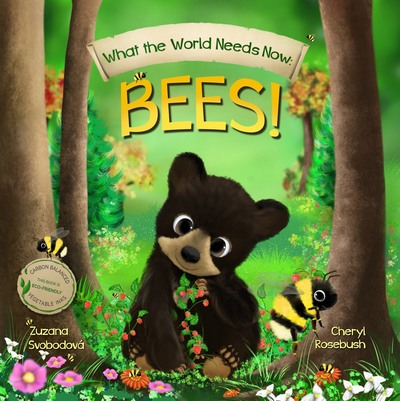
BOOK BLITZ: What the World Needs Now – Bees! by Cheryl Rosebush

Today I’m pleased to welcome the Book Blitz for What the World Needs Now – Bees! by Cheryl Rosebush.


Book Details:

Book Title: What the World Needs Now – Trees! by Cheryl Rosebush
Publisher: YPD Books
Format: Ebook/Paperback

Book Blurb:

Inside the sprawling forests of Ontario, Canada lives a friendly black bear named Melly. One of Melly’s favourite things to do is EAT! And many of the delicious fruits she snacks on wouldn’t grow without the help of some very important little forest creatures.

What the World Needs Now: Bees! explores the vital role busy, busy bees play in helping plants to grow the food people and animals love to eat.

About the Series:

What the World Needs Now is an environmental children’s book series for ages 4-8 that aims to connect the world’s youngest book lovers to the importance of nature, and our place in it.

Each book in the series follows a friendly animal through its habitat, helping kids learn about one thing the world needs now, be it more trees or bees or less plastic, to maintain a healthy planet.

The series is designed to help parents and educators lay the foundation for future learning on the world’s most pressing environmental challenges. But for our littlest kids, the connection starts at a much simpler point: their first job is to fall in love with nature – because you don’t protect what you don’t love.

The books support engaging with our kids on how we can better respect and care for the only planet we have.

About the Author:

Cheryl RosebushI was born and raised in Southern Ontario, Canada in the cities of Burlington and St. Catharines. Long before the internet and mobile phones (now I’m aging myself!), my childhood was spent in forests and parks, on bike rides, and playing hide and seek until the streetlights came on. My family did comical Griswold-style road trips in wood-paneled station wagons. We spent summers swimming in friends’ backyards. These are my very fortunate roots.

I knew from an early age that my destiny would take me far from Southern Ontario. I graduated high school and moved to Montreal to study international politics at McGill University. The subject fascinated me, but as graduation approached, I realized I didn’t know what I wanted to do with a degree in international politics. I didn’t want to become a lawyer. I didn’t want to become a politician or civil servant. The media industry, on the other hand, intrigued me.

The West Coast of Canada also intrigued me. So, after graduating McGill, I packed up again, moved to Vancouver and took the first media job I could get at a local Top 40 radio station (Z.95.3) in Vancouver. Best job. Great bosses. I learned so much. But after a couple of years there, the winds of change came calling again.

September 11, 2001. In a heartbeat, Z95.3 went from playing Britney Spears to reporting up-to-the-minute information on the local, national and international fallout of the terrorist attacks in New York and Washington. In that moment, I knew I had found my calling. I wanted to do something that was needed on a good day, and needed even more on a bad day. I wanted to become a full-time journalist.

So, I packed my bags again (a running theme in my life), and moved to Ottawa, Ontario to do my Masters of Journalism. Another incredible two years culminated in me getting a research internship with the Canadian Broadcast Corporation (CBC) in London, England. That position helped me land back in Montreal for a second chapter there as local news reporter for the CBC. While I was there, I wore just about every hat you could in CBC’s radio and TV newsrooms. Depending on the day, I was a researcher, producer, reporter, or online writer. I even filled in for the weather reports every once in a while.

https://www.cherylrosebush.com/

My thanks to Love Books Group for the invitation to participate in this tour and the materials they provided.

Love Books Group

January 2021 in Retrospect: What I Read/Listened to/Wrote About

2021 got off to a slow start for me—17 books down, 5,281 pages (or the equivalent). But it’s a good start, with 3.8 average rating.

I really dislike the way it sounds like I’m whinging at the beginning of these posts lately. But 13 lousy review-ish posts? That’s just not good. Still, it’s better than last Fall, and the only way to go from here is up, right? Also, this isn’t my job, it’s not like anything bad is going to happen if I don’t keep up (Right? Right? Please tell me I’m right…)

I’m looking forward to the books I know I’m going to read in February, and to those I’m hoping to get to, too. I hope to be chippier on March 1.

Anyway, here’s what happened here in January.
Books Read

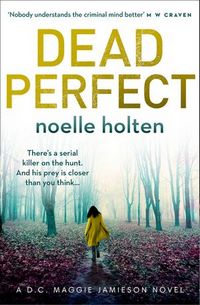
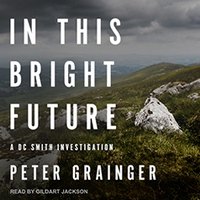
Dead Perfect Highfire This Bright Future
4 Stars 4 Stars 4 Stars
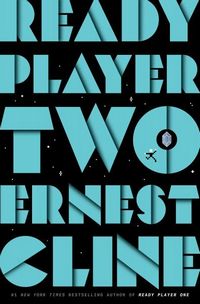
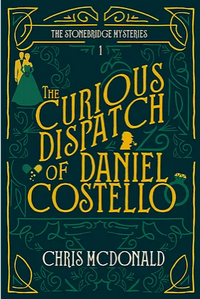
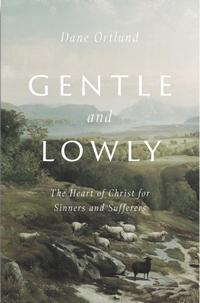
Ready Player Two The Curious Dispatch of Daniel Costello Gentle and Lowly
3.5 Stars 4 Stars 3 Stars
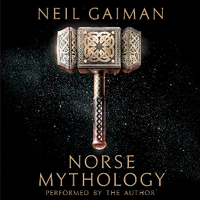
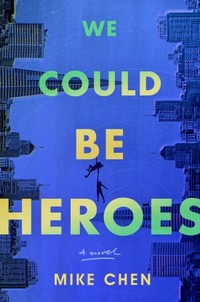
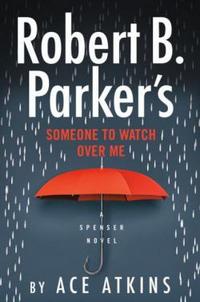
Norse Mythology We Could Be Heroes Someone to Watch Over Me
3 Stars 4 Stars 4 1/2 Stars
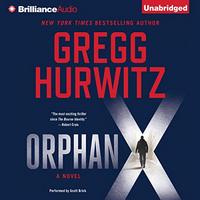
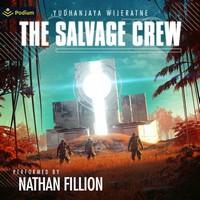
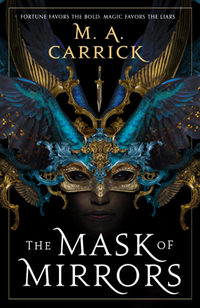
Orphan X The Salvage Crew The Mask of Mirrors
3.5 Stars 4 Stars 4 1/2 Stars
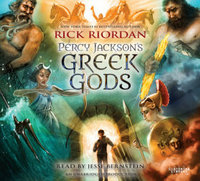
Percy Jackson's Greek Gods Across the Green Grass Fields White Trash Warlock
3 Stars 3.5 Stars 3.5 Stars
Night and Silence The Trinity
4 Stars 5 Stars

Still Reading

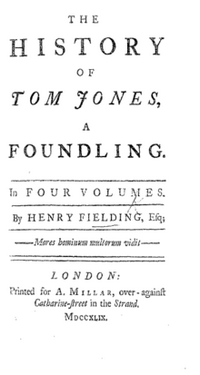
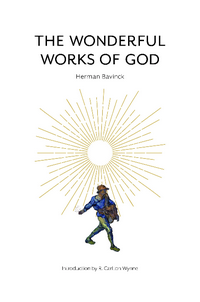
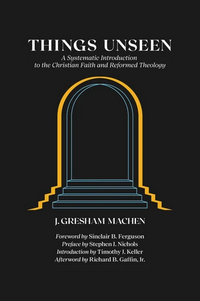
Tom Jones Original Cover The Wonderful Works of God Things Unseen
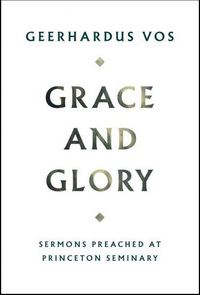
Grace and Glory (BoT Edition) Blacktop Wasteland

Ratings

5 Stars 1 2 1/2 Stars 0
4 1/2 Stars 2 2 Stars 0
4 Stars 7 1 1/2 Stars 0
3.5 Stars 4 1 Star 0
3 Stars 3
Average = 3.8

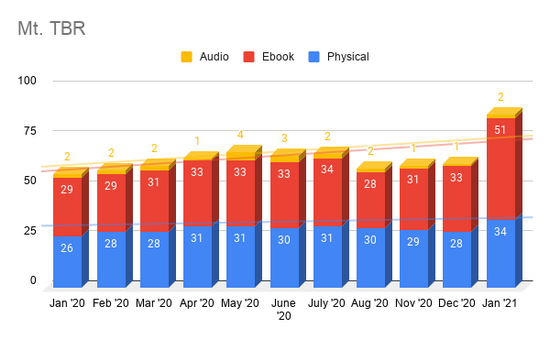
TBR Pile
(yes, this looks much worse, I recounted at the beginning the year, and things are a bit more accurate—I’m not sure where the E-Books got quite so off, but…man, that’s an intimidating number)
Mt TBR January 21

Breakdowns
“Traditionally” Published: 12
Self-/Independent Published: 5

Genre This Month Year to Date
Children’s 0 (0%) 0 (0%)
Fantasy 4 (24%) 4 (24%)
General Fiction/ Literature 0 (0%) 0 (0%)
Horror 0 (0%) 0 (0%)
Humor 0 (0%) 0 (0%)
Mystery/ Suspense/ Thriller 5 (29%) 5 (29%)
Non-Fiction 1 (6%) 1 (6%)
Science Fiction 3 (18%) 3 (18%)
Steampunk 0 (0%) 0 (0%)
Theology/ Christian Living 2 (12%) 2 (12%)
Urban Fantasy 2 (12%) 2 (12%)
Western 0 (0%) 0 (0%)

Review-ish Things Posted

Other Things I Wroteotherwriting
Other than the Saturday Miscellanies (2nd, 9th, 16th, 23rd, and 30th), I also wrote:

How was your month?

Image by OpenClipart-Vectors from Pixabay, with some minor edits by me.

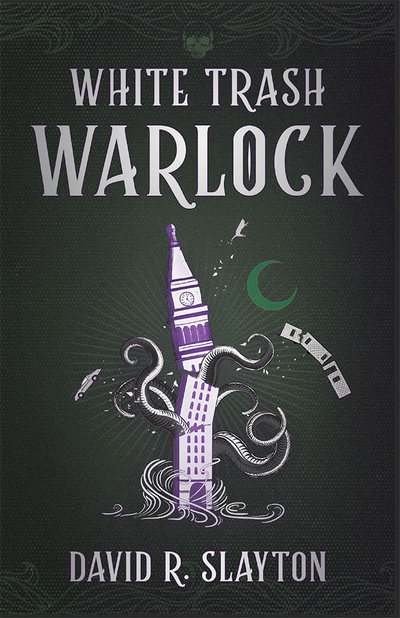
White Trash Warlock by David R. Slayton: A Broken Family is at the Center of a Battle for A City

For the first part of this Tour Stop, we looked at the novel, White Trash Warlock from a distance, now it’s time to dive in.

White Trash Warlock

White Trash Warlock

by David R. Slayton
Series: The Adam Binder Novels, #1

Paperback, 307 pg.
Blackstone Publishing, 2020

Read: January 26-27, 2021

What’s White Trash Warlock About?

Adam Binder has the Sight. He can see mystical/magical beings, forces, phenomena. He can’t do much beyond that—he’s pretty lightweight in magical terms. But it’s enough that it messes up his childhood—he’s always looking at and responding to things that only he can see. A family that can’t—won’t?—see what he says worries for him and tries to get him to abandon this. After his father deserts the family and his brother becomes “The Man of the House,” they try to get him help and eventually put him in a treatment facility.

We don’t learn a lot about the facility, but it seems to be something right out of Cuckoo’s Nest. However, he does meet someone there who teaches him how the magical world works and how to use his meager abilities. He leaves the facility when he turned eighteen and now scrapes by doing car repairs for neighbors while he scours the area for items that seem to be produced by a Warlock. He’s convinced that the Warlock is—or will lead him to—his father, and then will understand how he got these abilities.

Meanwhile, his brother, Bobby, having done his duty for his brother got out of their small Southern town, went to college, and is now Robert J. Binder, M.D. in Denver. Robert’s wife has had a couple of miscarriages and isn’t coping well with them—he’s a shell of her former, vibrant self—and really should be getting professional treatment (I’m not sure why Robert has lost confidence in the profession). It wouldn’t have done any good, mind you, but he still should’ve tried—but as the book opens, Robert Sees something attached to his wife. Realizing he’s out of his depth, he calls Adam and asks for help.

Adam’s clues to the Warlock are also leading him to Denver, so he goes—killing two birds and one transcontinental drive, you could say. Once he arrives in Denver, he Sees that Annie is possessed by some sort of magical being that’s running amok through the city. We learn after a bit that this 98 lb. magical weakling is just the David necessary to take down this magical Goliath (yeah, it seems counter-intuitive, but that’s part of what makes it work).

He has to make alliances with some of the local Guardians (magical beings tasked with guarding an area) for aid, but ultimately it’s Adam versus the Big Bad for the safety of Denver.

Adam and Robert

This relationship is the most interesting thing in the book to me—there’s plenty of competition for that, I should add—the Guardians, the nature and origin of the Big Bad, Adam’s abilities, are a few examples. But it’s the brothers that captured my attention.

To start with, locking your brother up and never once visiting him to see how miserable the conditions were and how lousy the treatment was going, is not a great way to endear yourself to him. Robert would say he just wants what’s best for his brother, and was (and is) just looking out for him. He doesn’t understand why Adam just doesn’t get an education, find a respectable job and settle down to start a family—you know, be normal.

They grew up poor. Their father physically abused them and did not provide for the family at all. Their mother managed to keep them alive, but that’s about it—she was more than ready to let Bobby take over when it was time—and only signed the papers committing Adam because Bobby told her to.

Their horrific childhood left scars on both of them (physical—I assume—and mental). What happened to Adam made things worse for him, and the relationship is apathetic at best, and downright antagonistic at its worst.

Still, Robert knows who to call when he needs help. And Adam responds. They won’t admit it, but they need each other. Just neither is willing to pay the price to admit it, or do the work to restore the relationship in any way.

Yes, defeating the Big Bad seems to be what the book is about, but it all hinges on this relationship. I loved the dynamic, the dysfunction, and how that played out.

The Worldbuilding

I’m not going to describe it, it wouldn’t be fair to the novel (and I wouldn’t do that great a job at it). Ditto for the magic system.

The magic system reminds me of others I’ve encountered (more in traditional Fantasy than in Urban Fantasies), but Slayton’s take on it is pretty intriguing and fresh. His worldbuilding is very developed, it’s been a long time since I saw something this well-thought-out and constructed in the first book of a series. Both are commendable.

The Spoiler-y Things I’m Not Going to Talk About

So, the things I most want to discuss about this book are all things that are either spoilers or I’d have to spoil something to talk about. Which is pretty annoying. A couple of examples:

There’s someone I fully expected to develop and/or reveal magic abilities from the moment we meet them up until the point it’s clear that won’t happen. I’m happy that Slayton zagged there when I was waiting for him to zig. Also, I thought the way he pulled it off was really well done.

There’s a supernatural being that we’re introduced to—but don’t really get to see at work. I’ve seen this type in multiple TV series and books over the years. I’ve never, ever, ever, ever found it done successfully. Most of the time, I want to throw a shoe at the TV or the book across the room (timing has denied me the temptation to hurl one of these books at a fitting TV show—probably saving me from having to replace something). Slayton’s approach just might be the exception to the rule. It has good potential, but it’ll take at least one more book to know this for sure.

The Things that Frustrated Me

The fact that the most interesting part of the book (see above) was the least developed and explored. One honest conversation—or even a half-way honest conversation that gets cut off shortly before it finishes—and we could’ve seen some really strong development in these two as people and their relationship. Sure, it’s probably realistic that we didn’t get it. It’s a narrative choice to push it further to help with tension. I see and accept that, too. I can probably come up with a couple of other reasons to not give the reader that. That doesn’t mean I wasn’t frustrated by not getting it. It’s just not anything to hold against the book.

The romance on the other hand? Yeah, I think I’m going to. I’ve seen some references to it being a triangle (which would be reason enough to not be interested), but I think it’s more of someone not letting go of something that’s over than it is a viable option. On the other hand—the viable option . . . how do I say this? Adam himself wonders if it’s an organic, natural interest in each other, or if it’s magically-induced. I think the text is pretty clear that it’s the latter. Which makes it less a love story and more of two people coming to accept something that’s a fait accompli (even if they’re both not aware that’s the case).

Lastly, the way the book ends—both in stopping The Big Bad and launching into the second novel. I’m not complaining about what happens, just the way that Slayton told it. It felt to me* like as Slatyon’s gearing up to start the endgame portion of the novel, he’s continuing to plant the seeds for the second book/an ongoing arc that takes more than just two books to resolve, and gets so interested in that arc that he rushed the final 25-30% (or so) of the novel so he could get on to writing the stuff he was really interested in.

I was reading a hard copy, so I knew exactly how many pages were left in the novel, and my reaction was still, “Wait, what? That’s it?”

* I want to stress that I don’t think Slayton actually did this, it just felt like it.

So, what did I think about White Trash Warlock?

At this point, it may sound like I’m down on the novel. I’m not. As I’ve noted before, it takes more words to talk about a problem/frustration than it does to say something complimentary. Which really bothers me, but such is language, I guess. “The way that ____ hides among the humans and gets Adam the access to ____ that he needs to figure things out is pretty entertaining and cleverly done.” Especially without filling in those blanks, it’s hard to make that as large as the paragraph about the love story.

I liked the book. I didn’t like it as much as I wanted to. I didn’t like it as much as many other people did, based on the blog posts I’ve read since I finished. But I liked it.

I’m also plenty curious as to what happens next and I’m curious about Slayton’s development as a writer—does he figure out a better way to pace a novel and to wrap things up? (I’m betting he does). I liked the world he set up and the magic system (systems?) at work, and would like to see them both explored more—I really want to see more Guardians. There’s a rawness to the writing that makes it feel more natural than a lot of UF. There’s a brokenness—as well as a resiliency—to the characters that is compelling and draws you in. There’s nothing but potential for growth here and the series has a strong foundation.

I kept flashing back to last year’s Burn the Dark while reading this, they seem to come from a similar place and have a similar aesthetic. I’m glad to see Urban Fantasy like this (I’m sure there are precursors that I’m not thinking of at the moment), it makes me think that the genre is going to stay interesting.


3.5 Stars

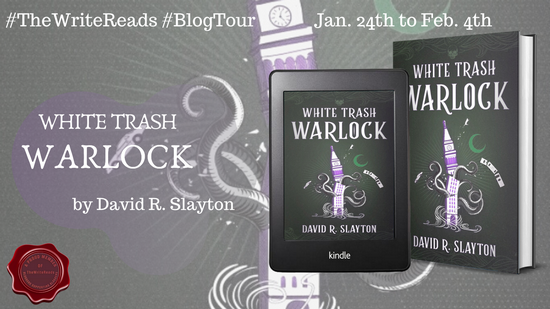
My thanks to The Write Reads for the invitation to participate in this tour and the materials they provided.

BOOK SPOTLIGHT: White Trash Warlock By David R. Slayton

I’m very pleased and excited today to welcome The Blog Tour for the first in a new Urban Fantasy Series White Trash Warlock by David R. Slayton. This Tour Stop consists in this little spotlight post and then my take on the novel coming along in a bit. Let’s start by learning a little about this novel, okay?

Book Details:

Book Title: White Trash Warlock by David R. Slaton
Publisher: Blackstone Publishing
Release date: October 13, 2020
Format: Ebook/Paperback/Audiobook
Length: 307 pages

Book Blurb:

Guthrie was a good place to be from, but it wasn’t a great place to live, not when you were like Adam, in all the ways Adam was like Adam.

Adam Binder hasn’t spoken to his brother in years, not since Bobby had him committed to a psych ward for hearing voices. When a murderous spirit possesses Bobby’s wife and disrupts the perfect life he’s built away from Oklahoma, he’s forced to ask for his little brother’s help. Adam is happy to escape the trailer park and get the chance to say I told you so, but he arrives in Denver to find the local magicians dead.

It isn’t long before Adam is the spirit’s next target. To survive the confrontation, he’ll have to risk bargaining with powers he’d rather avoid, including his first love, the elf who broke his heart.

The Binder brothers don’t realize that they’re unwitting pawns in a game played by immortals. Death herself wants the spirit’s head, and she’s willing to destroy their family to reap it.

Purchase Links:

Amazon ~ Barnes & Noble ~ Bookshop ~ Apple Books ~ Indiebound ~ Audible

About the Author:

David R. SlaytonI grew up in Guthrie, Oklahoma, where finding fantasy novels was pretty challenging and finding fantasy novels with diverse characters was downright impossible. Now I live in Denver, Colorado and write the books I always wanted to read.

My debut fantasy, WHITE TRASH WARLOCK, is available now from Blackstone Publishing in paperback, ebook, and audio.

In addition to writing, I have taught workshops and appeared on panels at Denver Pop Culture Con, the Pikes Peak Writers Conference, the League of Utah Writers Quills Conference, and the Seymour Agency Winter Retreat. By day I’m a software implementation consultant.

I love connecting with readers, librarians, and booksellers.

My thanks to The Write Reads for the invitation to participate in this tour and the materials they provided.

Page 5 of 5

Powered by WordPress & Theme by Anders Norén