Month: February 2021 Page 4 of 5

These Dog Days Aren’t Over

These Dog Days Aren't OverThis was a hard post to come up with a name for*, essentially this post came from a comment not too long ago about being hesitant to read books about animals if the reader doesn’t know if they survive the book. I get that, I absolutely do. I still bear the scars of Where the Red Fern Grows and Marley and Me (sure, that wasn’t that long ago, but the wound still stings). So, for readers like my correspondent, here are some perfectly safe books prominently featuring dogs!

I plan on updating this when I can remember to, so by all means, chime in with comments about Dogs I’ve forgotten about/haven’t yet!

Non-Fiction

bullet Olive, Mabel & Me by Andrew Cotter——Cotter’s charming book describes his life with the two dogs that rocketed to international stardom (and brought him along). (my post about it)
bullet My Life as a Dog by L. A. Davenport—Davenport’s short little book about the relationship between the author and his dog, Kevin, a black and tan, pure-bred dachshund. It focuses on what the two of them did over two days and then a weekend selected from the years they spent together. (my post about it)
bullet What the Dog Knows: The Science and Wonder of Working Dogs by Cat Warren—Warren basically covers three topics: there’s the science and history of using working dogs (of all sorts of breeds, not to mention pigs(!), birds, and even cats) to find cadavers, drugs, bombs, etc.; there’s the memoir of her involvement with cadaver dogs via her German Shepherd, Solo; and anecdotes of other cadaver dogs and trainers that she’s encountered/learned from/watched in action. (my post about it)
bullet What the Dog Knows Young Readers Edition by Cat Warren, Patricia J. Wynne—The above book adjusted for younger readers, with some great illustrations. It’s not dumbed-down, just adjusted. (my post about it)

Fiction

bullet The Finders by Jeffrey B. Burton—A Dog Trainer/Cadaver Dog Handler on the hunt for a serial killer in this series launch. (my post about it)
bullet Suspect by Robert Crais—One of my all-favorite books, a cop with PTSD gets assigned to the K-9 Unit and works with a dog fresh from Afghanistan combat. (my post about it) The pair also plays a major role in The Promise.
bullet
Stepdog by Nicole Galland—A love story where the major impediment to happily ever after is her dog (a gift from her ex). (my post about it)
bullet Oberon’s Meaty Mysteries by Kevin Hearne (Audiobooks narrated by Luke Daniels)—Oberon, the scene-stealing Irish Wolfhound from The Iron Druid Chronicles narrates this series of novellas (my posts about them).
bullet Neah Bay series by Owen Laukkanen—Lucy is a dog who is trained by prisoner Mason Burke, who has to track her down when he gets out. She’s a service dog for Marine Vet Jess Winslow. Lucy connects the two humans in her life and helps to keep them safe when a corrupt deputy comes after Jess. (my post about them)
bullet I Thought You Were Dead by Pete Nelson—I’m not sure how to sum this one up in a sentence. It’s a pretty typical novel about a troubled writer with a romantic life and family in shambles. But his dog is the thing that makes all the difference. (my post about it)
bullet Chet and Bernie books by Spencer Quinn—Bernie Little is a PI in Phoenix. Chet’s his four-legged partner and the series narrator. It’s too fun to miss. (my posts about them)
bullet The Right Side by Spencer Quinn—”a deeply damaged female soldier home from the war in Afghanistan becomes obsessed with finding a missing girl, gains an unlikely ally in a stray dog, and encounters new perils beyond the combat zone.” (my post about it)
bullet Woof by Spencer Quinn—The beginning of an MG series about a with a penchant for trouble and her dog. (my post about it)
bullet Andy Carpenter books by David Rosenfelt—Andy Carpenter is New Jersey’s best defense lawyer and a devoted dog owner. He helps run a rescue shelter, too–and almost every client he takes as some sort of connection with a dog. These books aren’t dog-centric like the others on this list, but they’re dog-heavy. (my posts about them)
bullet Voyage of the Dogs by Greg van Eekhout—SF for all ages about a team of dogs on a long-distance space flight. (my post about it)

Supportive Roles

These dogs aren’t as significant a presence in their books as the prior group, but they’re important enough to mention.
bullet Mouse from The Dresden Files by Jim Butcher. (my posts about them)
bullet The Midnight Plan of the Repo Man by W. Bruce Cameron and the sequel Repo Madness by W. Bruce Cameron(my posts about them)
bullet Edgar from the Washington Poe books by M. W. Craven. (my posts about them)
bullet Rutherford from The TV Detective series by Simon Hall (my posts about them)
bullet Oberon from the Iron Druid Chronicles by Kevin Hearne. (my post about them)
bullet Ruffin from the I. Q. series by Joe Ide. (my posts about them)
bullet Dog from the Walt Longmire books by Craig Johnson(my posts about them)
bullet Trogdor from The Golden Arrow Mysteries by Meghan Scott Molin. (my post about them)
bullet Mingus from The Drifter by Nicholas Petrie. (my post about it)

Books with paws on both sides of the line

Some books that belong on this list, but might be a bit too close to not fitting on it for some readers
bullet Lessons From Lucy by Dave Barry—there’s a strong “my beloved dog is old and will die soon-vibe throughout this (it’s the whole point), so some may want to avoid it. But the focus is on what Barry is learning from his aging but still full-of-life dog. (my post about it)
bullet Dead is … series by Jo Perry—the canine protagonist in these mystery novels is a ghost, so there’s a dog death involved. But we meet her as a ghost, so she won’t die (again) in the series. (my posts about them)
bullet Lessons from Tara by David Rosenfelt—Inspired by the death of their dog, Tara, the Rosenfelt’s now operate a no-kill shelter for senior dogs. This is the story about the origins and day-to-day of that life. There’s discussion of Tara’s death, and he has to cover the end of days for dogs, but it’s not the focus of the book. One some will want to avoid, but you probably shouldn’t. (my post about it)


  • I brainstormed this a bit with my family, and wanted to share some of those titles that didn’t make the cut, just because I enejoyed their creativity:
    bullet These Dogs Didn’t Go To Heaven/Not All Dogs Go to Heaven implies these dogs aren’t wonderful creatures, and that’s a solid loser
    bullet No Kleenex Required too vague, and not necessarily true, they’re just not required because of a death
    bullet The Best Bois
    bullet Books Where the Author isn’t A Heartless Bastard (Looking at You, Marley and Me) too long, and boy howdy, does it seem my son has bigger issues with the book than I did
    bullet Books that Even PETA Would Be Okay With
    bullet Books for the Vegan in You suggests the dog books I don’t mention are in favor of eating them…
    bullet Paw Patrol I’m almost confident my daughter’s boyfriend suggested as a joke, for his sake I’m assuming it was
    bullet Pawfect Dog Stories I refuse to resort to that kind of joke

(Images by S K from Pixabay and josmo from Pixabay

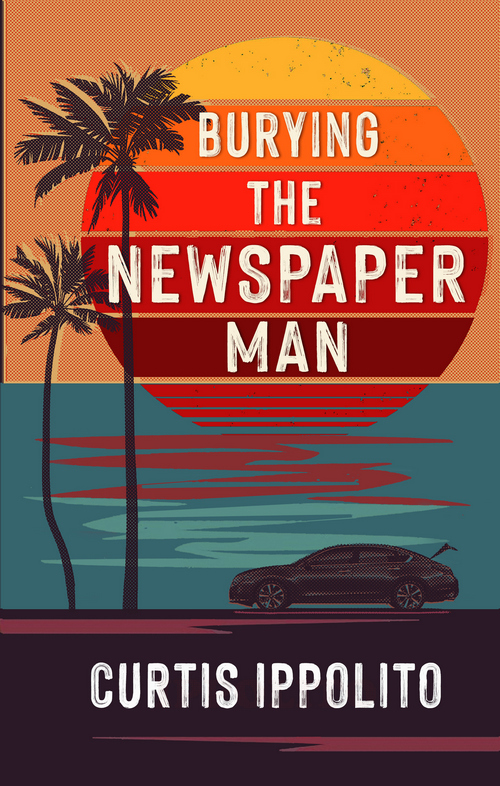
COVER REVEAL: Burying the Newspaper Man by Curtis Ippolito

Welcome to The Irresponsible Reader’s part in the Cover Reveal for Curtis Ippolito’s Burying the Newspaper Man! It is eye-catching! But before we get to his great cover down below, but before the picture, I’ve got a few words to share about the book.

Book Blurb

A dead body. A dark past. An ordinary man with everything to lose.

Marcus Kemp is a regular beat cop living a normal life in San Diego, California. Until the day he makes a shocking discovery: a dead body in the trunk of a stolen car. Worse, the victim turns out to be the man who abused him as a child.

Marcus instinctively wants to help the killer get away with murder and, disregarding his police oath, will stop at nothing to make it happen. With both his job and freedom in jeopardy, his investigation leads him to an unexpected killer, and Marcus is soon faced with an impossible decision.

Can he finally bury the past before it drags him under?

Date of publication: March 16, 2021

About the Author

Curtis IppolitoCurtis Ippolito lives in San Diego, California, with his wife. He is a communications writer for a nonprofit biological research facility. He has previously been a writer in the health care industry and is a former newspaper reporter. Follow him on Twitter @curtis9980.


And now…

The Cover

Burying the Newspaper Man
That just jumps out at you, doesn’t it? (it also makes me want to check my fingers for newsprint smudges) Another winning cover from the people at Red Dog.

Again, this book comes out on March 16th, but you can pre-order this now at: Red Dog Press or Amazon (but you should absolutely order from Red Dog directly, the Bezos retirement fund is big enough, help out the publisher).


My thanks to Red Dog Press for the invitation to participate in this reveal and the materials they provided.

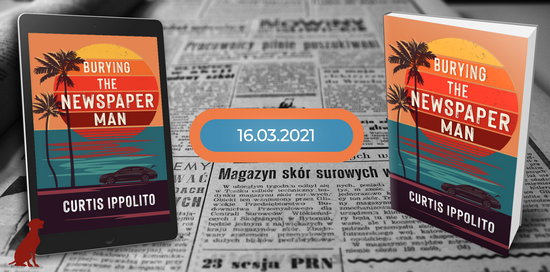
Burying the Newspaper Man Banner

In This Bright Future (Audiobook) by Peter Grainger, Gildart Jackson: A Stranger in a Strange Land

This Bright Future

In This Bright Future

by Peter Grainger, Gildart Jackson (Narrator)
Series: A DC Smith Investigation, #5

Unabridged Audiobook, 9 hrs., 18 min.
Tantor Audio, 2017

Read: January 7-8, 2021
Grab a copy from your local indie bookstore!

It’s Time to Wrap up Some Things

We’ve known for some time, that someone connected to DC Smith’s time in Belfast has been trying to get in touch with him. We know almost nothing about what he did, and he’s in no rush to think about it as whoever makes these attempts. But that’s done with now.

While recuperating from knee surgery, Smith finally confronts/is confronted by (you could make the case either way) with that person and ends up using his convalescence time going to Belfast to look into something that happened (probably) the day after he left.

Smith is brought face-to-face with friends and adversaries for the first time in decades. He has to come to terms with many consequences of his actions. And he looks into a killing from that time that he didn’t even know had happened until he made the trip.

So we learn who has been looking into him/trying to communicate with him. We learn a lot about his backstory that we’d only got glimpses of shadows of before. For fans who want to know more about DC Smith, here’s the place.

There’s another plotline that gets some resolution, too—in a very pleasant way. But I’m not going to get into it.

Never Fear, There are Still Some Storylines Alive

We don’t have any resolution when it comes to this author friend and her book (and digging up all sorts of horrible memories with it). And there’s a new one introduced in the closing moments, one that will probably shake up a lot of Kings Lake…

Jackson Nails It Again

Gildart Jackson makes sure that you get what DC is feeling, how the past is coming back to haunt him while confronting him with his failures, his missed opportunities, the what could have been. This is a lonely book for Smith, and Jackson ensures the listener experiences it.

So, what did I think about In This Bright Future?

Overall, this was strange. Still good, but strange. As much as we all pick up these books for DC, it’s DC in relation to his fellow officers. Here, he’s fairly isolated—he has his ghosts, his memories, and people he hasn’t seen for decades (some he’s tried not to think about since)—but he doesn’t have his team. The fact he can’t give any tutorials, he doesn’t have anyone around to amuse with his commentary, the fact that he’s constantly on his guard, all combine to heighten the emotional impact of this one.

But man, I want to get back to King’s Lake.

This was as good as the previous entries—probably better in some ways—but in a different way. I’m all for that, let’s keep this series from getting stale. You can read/listen to this without the rest, and enjoy it. But it’s a lousy way to sample the series. If you want to know what this winning series is like, grab book 1 or 2. But if you grab this? You’re in for a very pleasant experience.


4 Stars

2021 Audiobook Challenge

This post contains an affiliate link. If you purchase from it, I will get a small commission at no additional cost to you. As always, opinions are my own.

Parting Shadows by Kate Sherran Swed: Vengeance, A Heartbroken AI and some Bad Parenting Characterize this SF Novella

Parting Shadows

Parting Shadows

by Kate Sheeran Swed
Series: Toccata System, #1

Paperback, 135 pg.
Spells & Spaceships Press, 2019

Read: February 5-6, 2021
Grab a copy from your local indie bookstore!

What’s Parting Shadows About?

We’ve all read variations on this story before. You’ve got a brilliant scientist who convinces a sentient AI to break her programming by falling in love with him, then her to break his true love out of prison, ends up marrying the person and not the AI. This drives the AI to a decades-long-vendetta where she kidnaps a baby, molds the child into an assassin to exact her revenge for her. Okay, maybe we haven’t read that story before, thankfully we can now.

Based, to some extent, on Dickens’s Miss Havisham, SATIS is a tragic figure. I wavered between feeling sorry for it/her and being angry for the way it manipulated and abused Astra (the kidnapped baby). Okay, I didn’t waver too much.

Astra, it turns out, is pretty well-adjusted for someone that a deranged AI programmed from infancy to be a killer. She definitely has a better moral compass than you’d expect. Better. Not perfect. I grew to really like her.

So, what did I think about Parting Shadows?

There are a few other aspects of the book I’d like to talk about, but I think I’m going to hold my fire until book two or three when I have a better idea of how things go.

On the one hand, I’d like this to get a full novel-length treatment, there are a few things I think really need developed more (well, maybe not need, but it’d make me happier). But, this concise, punchy length is just what this story needs, who cares that I want to see some things expanded.

Now, everything I know about Miss Havisham comes from her appearance in the second Tuesday Next novel, and a vague sense from general cultural references, so I’m not how great a job she does at capturing that essence. But the way she talks about it, I’m betting she did it justice.

What I can say, is that she told a fun story, one that left me guessing and one that left me eager for the sequels. Which is more important than her take on her inspiration (if she’d nailed the Havisham, but told a dull story? That would’ve been crossing the line).


3 Stars

This post contains an affiliate link. If you purchase from it, I will get a small commission at no additional cost to you. As always, opinions are my own.

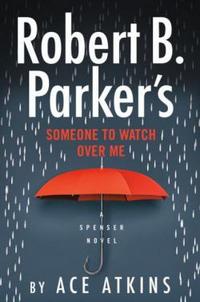
Someone to Watch Over Me by Ace Atkins: Spenser Battles Mortality, An Old Foe, and a Sex-Trafficking Ring.

Believe it or not, this is the trimmed-down version. The original draft was too long even for me, so I tabled it for a week or so and came back with something more concise. More concise, I said, not concise. Hopefully coherent.


Someone to Watch Over Me

Robert B. Parker’s Someone to Watch Over Me

by Ace Atkins
Series: Spenser, #48

Hardcover, 306 pg.
G.P. Putnam’s Sons, 2020

Read: January 15-16, 2021
Grab a copy from your local indie bookstore!

It was early evening and early summer, and my bay window was cracked open above Berkeley Street. I had a half-eaten turkey sub on my desk and the sports page from The Globe splayed out underneath. Dan Shaughnessy proclaimed Mookie Betts to be overrated. I’m sure many said the same thing about me. But I was pretty sure being overrated was better than being underrated. A mistake few made twice.

I contemplated Mookie’s situation as I heard a knock on the anteroom door.

And just like that, I’m back in one of my favorite fictional universes, and it felt so great. Among the many, many things wrong with 2020 (and I want to stress that this is far down the list) was that there was no new Spenser novel. Thankfully, Atkins and his publisher have addressed that problem here in the early days of 2021 by bringing us the 48th entry in this fantastic series.

It All Starts with a Favor…

Mattie Sullivan, who’s been doing some work for Spenser lately, tried to do a favor for someone from her neighborhood, and now needs Spenser to help her. It’s a pretty simple task, but the story behind it is troubling. It doesn’t go much better for Spenser than it went for Mattie, but once he starts to ask questions, he ends up pulling the proverbial thread that unravels a sweater. And by “sweater”, I’m referring to an international sex-trafficking ring catering to the wealthy and powerful who like to prey on the young.

Yeah, basically, Atkins is going for a ripped-from-the-headlines Jeffrey Epstein kind of story.

Mattie Sullivan

One of my few complaints with the Spenser novels by Atkins is that he hasn’t used Mattie Sullivan since his first one, Lullaby. There’ve been a reference or two, but that’s it. But I got the impression that, like Zebulon Sixkill or Paul Giacomin, Mattie’d be around. But it never materialized. That’s fine. I get where (especially as Atkins was establishing himself) that there’d be some resistance to bringing in a young girl as a regular—it’d be tantamount to introducing Cousin Oliver.

But she’s here, and we’re to believe she’s been a presence in his life, and he in hers. More importantly, she needs a little help from her mentor. She’s on the verge of starting a career, and the way this works out will have a lot to say about her next steps.

Boston Homicide Captain Lorraine Glass

The Captain has been antagonistic toward Spenser since she showed up a few books back, a little more than Quirk was in the early books in the series. Sure, she’ll let Belson do his thing and will eventually listen to what Spenser has to say.

And that hasn’t changed. However…years ago, she tried to stop the same man. She worked with two victims, but the charges went away after someone (probably multiple someones) that he had leverage over had exerted their influence. Glass hasn’t gotten over it. If Spenser’s truly trying to bring him down, she’s in.

She doesn’t give a lot of help, but she gives some—and given what little Spenser has to work with it’s something. This doesn’t mean things are going to be chummy between Glass and Spenser any time soon. But it’s still nice to see.

Pearl Again, Naturally

On the backside, we found two cars parked outside. One was the Mercedes I’d seen drop off Debbie Delgado. The other was a light blue Rolls-Royce Phantom. Pearl and I noted the license tag on the Rolls. Or at least I hoped she did. She was still a detective-in-training.

Susan and Spenser’s second Pearl has died. This time, Spenser replaced her with a puppy German Shorthaired Pointer. I think I mentioned when Lupica’s first Sunny Randall had her do the same thing, I find the practice of replacing one dog with another of the same breed and using the same name odd (more than odd, but let’s stick with that). Susan seems to balk at the practice this time, which is odd. She seemingly had no problem with it for their second Pearl, but now she puts her foot down?

This does, however, provide Atkins with the opportunity to get Spenser to explain himself. I’m not sure that it helps. But at least he tried.

Still, Puppy Pearl is cute, so I’ll shut up about it.

Ruger? Really?

I feel bad bringing this up, but it’s right there in the Publisher’s description, so I guess it’s fair game. But Atkins brings back The Gray Man. I was stunned—almost as stunned as Spenser, Hawk, and Susan were—because I haven’t read a blurb for this series since Atkins’ first installment (and it had been probably decades before that).

I think it’s a risky move to bring someone like this back. You don’t want to use someone like Ruger too often. Once was probably enough, any more than that and you risk humanizing the character, making him seem less threatening, more mortal, more defeatable. I thought that when Parker did brought him back, and I think that now. Parker pulled it off. Atkins did it better. I love it when something so risky pays off.

Momento Mori

The three plane rides hadn’t been kind to me. I could feel every old break, bruise, and irregularity in my body. It had been eight years since I’d first met Mattie. Now she was a grown, successful person. And I was still doing what | do, none the wiser, not finding a better line of work. Maybe someday I’d retire to a place like this… Few get out of our livelihood by being politely asked. One day all the push-ups, wind sprints, and sparring wouldn’t save us. At this point in my life, I’d been doing this for many more years than I had not.

Both Ruger and the new Pearl (in different ways) make much of this book a meditation on mortality (Spenser’s in particular, while Hawk insists he “youthens”). This is something that Atkins has really highlighted in various ways since he took the helm, but not to this extent.

I don’t have time (or that much desire) to re-read it so I couldn’t say this definitively, but I don’t think Ruger’s second appearance brought with it this level of angst and apprehension on the part of Spenser, much less Hawk or Susan. But Atkins hits the notes that he should. The Grey Man about killed Spenser, reduced him to a shadow of the man we knew before, and he should make Spenser—reflexive confidence or not—fearful. As he should be. Because that’s the kind of guy that Ruger is, smart people are afraid of him. Smart people who’ve barely survived going up against him should really be afraid of him.

So, what did I think about Someone to Watch Over Me?

I loved it. I always enjoy being back in this world. Getting to see another part of Hawk’s life than we’ve ever seen before just makes it better.

I do wonder a little about what this novel says about Ceremony, the most problematic Spenser novel (still a good read, don’t get me wrong, but come on). I think Spenser’s actions and attitudes in this are defensible without casting doubt about what he did in Ceremony. And maybe it could be argued that Spenser’s attitudes changed after seeing what happened to April Kyle. I don’t think it’d be convincing, but maybe you could do that.

This gives the long-time fan plenty of stuff to think about, if they want to. There’s a decent amount for a new reader to chew on, too. But more than anything—it’s a solid Spenser novel written by the man who’s been keeping the legend alive for almost a decade, with hopefully many more years to come.


4 1/2 Stars

This post contains an affiliate link. If you purchase from it, I will get a small commission at no additional cost to you. As always, opinions are my own.

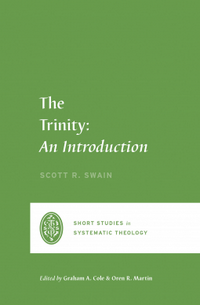
The Trinity: An Introduction by Scott R. Swain: A Brief but Deep Study

The Trinity

The Trinity: An Introduction

by Scott R. Swain
Series: Short Studies in Systematic Theology

Paperback, 133 pg.
Crossway, 2020

Read: January 17-31, 2020
Grab a copy from your local indie bookstore!

What we find in later Trinitarian creeds, confessions, and doctrinal summaries are not improvements upon a latent or undeveloped biblical Trinitarianism but, rather, the church’s attempt to fathom the depth of the riches of biblical Trinitarianism for the sake of various liturgical, pedagogical, and polemical ends. Some of the church’s creeds, confessions, and doctrinal summaries represent such faithful expressions of scriptural teaching and enjoy such wide-ranging ecclesiastical consensus that we dare not transgress the lines they have drawn. Rather, taking them on our own lips, we gladly join the church’s chorus of Trinitarian praise.

What’s The Trinity: An Introduction About?

It’s kind of there in the title, right? This is an introduction to the classical Christian doctrine of The Trinity. He’s not trying to re-invent the wheel, he’s definitely not trying to innovate, but to provide a concise (it’s a Short Study, after all) jumping-off point into deeper studies by providing a solid foundation.

He spends two chapters looking at the primary Biblical texts demonstrating the Doctrine. Chapter 3 is about the Simplicity of God—something too many overlook in a discussion of The Trinity. The following three chapters each focus on a Person of the Trinity. The final chapters are about the “external works” of the Trinity, the “appropriation” of specific works to particular persons, the beneficiaries of God’s work, and assorted topics.

All of that is a lot to ask of 133 short pages. Swain pulls it off by being concise, but he never seems to be leaving out details or avoiding the complicated ideas (although he obviously has to).

Touching on Controvery

This isn’t a polemical work—Swain is here to inform and educate, not combat. Still, he does talk about some Christological errors, including the contemporary dust-ups over EFS/ERAS—Eternal Functional Subordination/Eternal Relations of Authority and Submission.

Swain briefly (again, it’s a Short Study) addresses this error. He’s calm, he’s fair, yet he’s firm. It’s one of the best short treatments of the controversy I’ve seen, and in the context of the larger discussion of the Person of the Son as well as the larger discussions of each of the Persons, it’s incredibly helpful. It also fits where he put it and doesn’t seem like Swain used the opportunity as a digression just to beat a pet theological peeve.

Helpful Supplemental Material

Maybe it’s just me, but I rarely find the post-text material all that helpful. This book was one of the pleasant exceptions—there’s a brief glossary of some of the technical terms. Also, the “Further Reading” suggestions look great and my “To Buy” list grew a bit.

So, what did I think about The Trinity: An Introduction?

Because the persons of the Trinity are internal to God’s life, not external works of God, we can know the persons of the Trinity, as well as their ultimate plan for creation (Eph. 3:9), only if they stoop down and open up the depths of their inner life to us. Only the persons of the Trinity know the persons of the Trinity. Therefore, only the persons of the Trinity can make known the persons of the Trinity. The revelation of the Trinity is a matter of divine self-revelation, divine self-presentation, divine self-naming.

While this is a theological book, drawing on the teaching of the Church, Swain is careful to never lose sight of the source of this Doctrine, the Word of God. We know this, we understand this (as much as we do) because it is revealed to us. That’s vital to an understanding of the doctrine, and vital to the teaching of it. Swain doesn’t let his readers stray from the text.

This is one of those books where my notes keep saying “Chapter X is likely the highlight of the book,” “the section on X is likely the most valuable in the book.” It appears 60-70% of the book is a highlight—and I may not have written all of those parts down. Which is to say, there’s a lot of gold here, very little (if any) dross.

Helpful, insightful, and useful—it also achieves its end for leading on to further study for me. It’s accessible, but not easy, reading. At the same time, it’s a challenging, but not difficult, text.

Also, I like the looks of this series as a whole, I’ll most likely be grabbing more/all of them if they’re all about this quality.


5 Stars

This post contains an affiliate link. If you purchase from it, I will get a small commission at no additional cost to you. As always, opinions are my own.

Saturday Miscellany—2/6/21

I really thought I had a decent list of things for the week, but when I opened my Pocket this morning, all I saw was stuff I posted last year, things I had no idea why I saved and…four other pieces. What did I spend all week doing?

Oh well, I’ll make this short and sweet and then go lock myself away for awhile to finish some in-progress posts and work on taxes. Fun day, eh?
Odds n ends about books and reading that caught my eye this week. You’ve probably seen some/most/all of them, but just in case:
bullet Fran Lebowitz’s One-Star Amazon Reviews—Lebowitz is one of my favorites, I love this lady’s humor and there are pieces by her I can read over and over. Now I see she spends time writing 1-Star Reviews for Amazon? I’m in danger of losing hours here…
bullet The Future of Police Procedurals: What is the responsibility—and the path forward—for authors writing crime fiction about police?—Michael Kaufman describes the challenge of writing a police procedural after the Summer of 2020.
bullet Is an Audible subscription still worth it?
bullet I did my first Twitter poll this week, At what point do you decide to DNF a book of it’s not working for you?—the results are about what I’d predict. What about you?

Lastly I’d like to say hi and extend a warm welcome to MCG who followed the blog this week. Don’t be a stranger, and use that comment box, would you?

The History of Tom Jones, a Foundling by Henry Fielding: BOOK XV., vii. – x.

Fridays with the Foundling
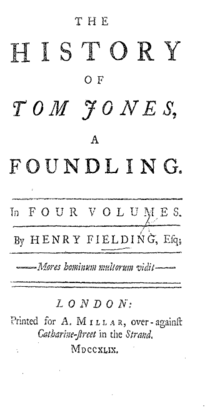
Tom Jones Original CoverAnd now we’re caught back up to where we were at the end of the last book (seven chapters back)—Mrs. Honour has shown up at Mrs. Miller’s and dropped a bomb on Tom. The news that Sophia is with her father and bound to be married to Blifil—and that Hounour has lost her job—is bad, to be sure, but the way she was carrying on, Tom thought it was worse news. She’s a tad annoyed he’s not as distraught as her.

Naturally, at this point, Lady Bellaston shows up to see Tom—who forgets he’s supposed to be sick. She flirts a little, Tom doesn’t respond as he ought. Bellaston begins to push things and a very drunken Nightingale shows up. How drunk was he? He was “in that state of drunkenness which deprives men of the use of their reason without depriving them of the use of their limbs.” One more Fielding line I need to remember.

Anyway, Bellaston and Honour end up talking, the former assuring the latter that she can probably help with the job situation (so Honour forgets running into her). Bellaston then leaves.

Nightingale got away from his uncle because he had to leave town to attend to things when his daughter got married without warning. Which leaves the door open for Nancy to become Mrs. Nightingale the next day. Which is just what happens in an aptly named chapter, “Short and sweet.” Still, Fielding wraps it up saying that some readers:

will perhaps think this short chapter contains abundance of matter; while others may probably wish, short as it is, that it had been totally spared as impertinent to the main design, which I suppose they conclude is to bring Mr Jones to the gallows, or, if possible, to a more deplorable catastrophe.

The next day, Nightingale talks turkey with Tom. He’s not the first guy that Bellaston has done this to, and he’s not going to be the last. But he still needs to extract himself, and Nightingale has the plan for that: propose. The last thing she wants is to get tied down, no matter what airs she puts on.

It works, but before they can celebrate, Mrs. Miller comes in with bad news. Allworthy and Blifil are coming to town and they need her rooms—it’s a standing deal, and she’s distraught about what to do. Tom is happy to move out to relieve her of her stress (he also calls Nancy “Mrs. Nightingale.” It’s the first time she’s heard that and it brings her such joy). But that just means that this wedding is imminent, he’s going to have to do something soon. Mrs. Honour can’t help because she’s working for Bellaston now. It’s not going well for Tom, and Fielding leaves us on this note:

While Jones was terrifying himself with the apprehension of a thousand dreadful machinations, and deep political designs, which he imagined to be at the bottom of the promotion of Honour, Fortune, who hitherto seems to have been an utter enemy to his match with Sophia, tried a new method to put a final end to it, by throwing a temptation in his way, which in his present desperate situation it seemed unlikely he should be able to resist.

.

So, so, so much happens here. Wow. Things are lining up for fireworks—with the original core characters in London. We’ve got nine weeks to go before we wrap up this book, and I think we’ll be at full speed ahead for it. Back next week to see just what this temptation is—will Fortune finally put an end to things for Tom and Sophia?

The Friday 56 for 2/5/21: Parting Shadows by Kate Sheeran Swed

The Friday 56This is a weekly bloghop hosted by Freda’s Voice

RULES:
The Friday 56 Grab a book, any book.
The Friday 56 Turn to Page 56 or 56% on your ereader. If you have to improvise, that is okay.
The Friday 56 Find a snippet, short and sweet.
The Friday 56 Post it

from page 56 of:
Parting Shadows

Parting Shadows by Kate Sheeran Swed

Astra would never be a hero. Heroes had hearts.

She wrenched her hand away from Henry’s. “Stay away from me, and you’ll be fine,” she said, straightening away from the glass wall. Someone passing brushed by her shoulder and murmured an apology. She was vaguely aware that the braided guard had returned to Conor’s door. She could feel the woman’s eyes locked on her, as though Astra might pull a battering ram out of her pocket and attempt to rush the fortress.

She ignored them. She ignored everyone.

“I’m not worried about me,” Henry said.

Astra forced herself to turn away, nearly forgetting the cactus and swiping it off the wall at the last moment. “Then you’re even more of a fool than I thought.”

Fake by Roz Kay: 3 Horrible Husbands, 3 Wives Who Deserve Better and One Disastrous Dinner Party

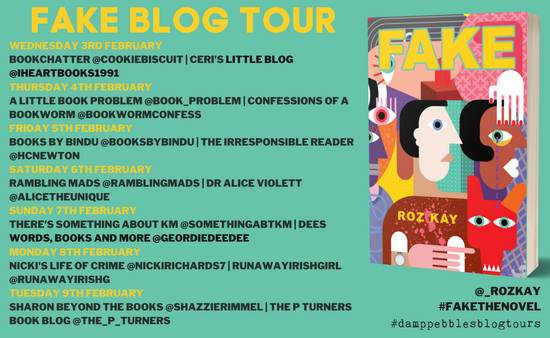
Fake Tour Banner

Fake

Fake

by Roz Kay

Kindle Edition, 285 pages
Darley Press, 2020

Read: February 1-3, 2020


This is essentially the story of three couples (with a primary focus on the husbands) and one of the worst dinner parties this side of an event hosted by Frasier and Niles Crane in the few days leading up to it and its aftermath. Let’s meet the couples (building in order of importance to the book) before we look at the night.

Couple 3: Nick Lombardo and Pumpkin Number 4

The first thing we see Nick do is to demand a debt to be repaid by his employee and our narrator, James. He then proceeds to invite himself to dinner at James’s new home so he can introduce his new wife to James and his wife.

He makes a very poor first impression on the reader—he’s demanding and a little demeaning about the debt. Then he’s rude about the invitation. And then we get to know him, and we understand we were too kind in our initial impression. The wife he’ll introduce to James is his fourth wife, they just got back from their honeymoon, and one week into his marriage his small office staff is already wondering if he knows who his fifth wife will be. It escapes no one’s notice (except maybe his wives) that he calls them all “Pumpkin.” Ostensibly, this is to prevent him from using the wrong name/endearment.

We don’t actually meet—or learn the name of—his wife until they arrive at James and Imani’s door, around the sixty percent mark. In a way Stephanie’s not that major a factor in the events of the novel—at the same time, it’s her presence and actions during the party that guarantees it will be a disaster. Stephanie is, however, one of the few completely sympathetic characters in the novel.

Couple 2: Bruce and Davorka Miller

Bruce and Davorka have been married for 15 years, they met when Davorka (an Eastern European refugee) took Bruce’s ESL class. Bruce is a very selfish man and has a hard time thinking of anything above his comfort and ease (which he assumes will be for Davorka’s benefit, too, even if she doesn’t agree). A few weeks ago, Bruce and Davorka retired to Fort Lauderdale. Bruce had sunk all his savings into the purchase and renovation of the home (he didn’t let Davorka know this), planning on staying there for the remainder of his days, what did he need money for anything else for? (also, he bought the house on an online auction and didn’t know how bad it was inside until it was too late and he had to spend all his money on getting it liveable).

Another thing he didn’t tell Davoka was that he didn’t see the point in disaster insurance—hurricanes are a rare thing, really. Why bother insuring the house against them? Reader, don’t shake your head at me, this was Bruce’s thinking, not mine.

They’re barely settled in their new home before it’s destroyed by a Hurricane. The Millers decide to go visit Davorka’s daughter in Philadelphia while they figure out their next move. Bruce and Mira don’t get along really (mostly it’s Bruce and Mira’s husband, Alex), and she has the flu, so they need to stay somewhere else. Bruce knows he can’t afford a hotel, so he calls the couple that rented their Philadelphia home to inform them they’ll be staying with them for a while, doing so in a way that poor Imani doesn’t realize what he’s done until he’s hung up.

Couple 1: James and Imani Cowper

This is our main couple, really. Most of the book is told from his first-person perspective. Imani is a nurse who treated Mira for some recent illness. The two became friends and when James and Imani lost their previous home, Mira connected them with her mother and step-father.

They lost their housing because of James’s gambling, which ruined them financially. Then he effectively stole from his employer (Nick) to help get them back on their feet, which wasn’t that successful. Nick didn’t prosecute or fire him, for reasons which are eventually hinted at but never stated.

These issues almost ruined their marriage, but they’re working on it and are seeing a Marriage Counselor (James frequently cites the Counselor and does what she’s suggested, but doesn’t seem to get the meaning of the actions, just the actions). One of the main questions I had throughout the book was why she stayed with him, and even when she answered that to a friend, I didn’t buy it. Maybe she doesn’t know why she stays, either. But she is for now.

I have a lot more I’d like to say about them, but it all would take too long and involve spoilers—it’s probably best if you hear it from James anyway.

Imani let the Millers invite themselves to stay (and they are horrible guests, as you might expect). James let Nick invite the Lombardos to dinner. Their marriage isn’t in a good place already and this stress isn’t doing anyone any favors.

The Dinner Party

For reasons of his own (which Imani makes clear she neither approves of or understands), James doesn’t want Nick to know they’re only renting. He doesn’t want anyone to talk about their son in college. He doesn’t want the Millers to know their financial situation. And there are a couple of things he doesn’t want anyone knowing. And that’s before anyone shows up for dinner.

The Millers have had a bad day with Mira and are antagonistic. Nick and Stephanie are drinking heavily (Stephanie in particular). James is afraid one of his lies or secrets will be exposed. Imani knows he’s up to something and is suspicious. The oven isn’t working well so dinner’s late. No one has anything in common to talk about and tensions are high.

And then things start to fall apart…

So, What Did I Think About Fake?

Well, I spent a lot of time sketching out the setup to the book—and I left a lot out. That’s essentially what Kay does, too. The dinner party doesn’t start until 62% or so of the way in. Which is a whole lot of setup.

I honestly don’t think she did enough to make anything interesting enough to keep reading until that point—when it becomes quite interesting. Your results may vary (and probably will), but I kept waiting for something to grab my attention—it did come, but by that time my patience had worn thin. Still the thing that piqued my interest paid off with many dividends.

I absolutely get why Kay had to spend so much time setting up the dominoes of this dinner party—and when she tips the first one over you start to see what she was doing, and as the dominoes topple one by one your understanding of what she was doing grows—as does your appreciation of it. It was truly a skillful job there.

It’s being marketed as a satire—I’m not sure I see that, I’d describe it as a farce instead. This is neither the first or last time that I’m quibbling with marketing on things like that. Maybe it’s a satirical farce (I just don’t know what it’s satirizing). Maybe I should ask for a refund on my lit courses. Whatever you want to call it, the dinner party and the disaster it becomes is almost perfectly executed. This is a dish that simmers for a long time before it’s ready to serve, but once you taste it, you understand why it took so long to cook.

I guess Kay could be satirizing the idea that there are any worthwhile males in the world—you won’t find any in these pages. The women, on the other hand—even the ones it may take you most of the novel to decide what you think about—are as commendable as people as they are as characters. They all deserve better spouses, that’s for sure.

My thanks to damppebbles blog tours for the invitation to participate in this tour and the materials (including a copy of the novel) they provided.

Page 4 of 5

Powered by WordPress & Theme by Anders Norén