Month: April 2021 Page 2 of 5

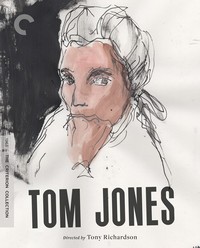
Tom Jones (1989) Director’s Cut

Fridays with the Foundling
You didn’t think I was done, did you?

Tom Jones

Tom Jones

Director’s Cut, 121 min.
1989 (Theatrical Release 1963)

Heroes, whatever high ideas we may have of them, are mortal and not divine. We are all as God made us, and many of us much worse.

The film adaptation of Tom Jones (Oscar winner for Best Picture), directed by Tony Richardson (who won Best Director) and written by John Osborne (Best Adapted Screenplay) was my first introduction to Fielding’s work.

As adaptations go, it’s okay. Osborne and Richardson, took all the essential moments from the novel and discarded the rest. Then they compressed the moments they took, excised some characters (Nightingale and all of Mrs. Miller’s family, for example). Then they played up the humor in every scene as much as they could (editing and the score helped with that).

There are a lot of little things about this that I love–characters–most notably Tom and Mrs. Waters–will give the camera knowing looks to play up a joke. Think John Krasinski in The Office or Adam Scott in Parks and Recreation. Finney has some great physical comedy, but perhaps mugs a bit too much.

Of course, you can’t talk about the movie without taking about thatscene. After Tom saves Mrs. Waters, they share a meal. It’s one of those scenes that you may have watched without ever having seen the movie. It’s sensual, it’s hilarious, it’s a little disturbing. It’s a great cinematic moment.

It’s odd that when Director’s Cuts are synonymous with lengthening the film (especially watching this a few weeks after Snyder’s jumbo-sized Justice League is released), this Director’s cut trimmed seven minutes. Yet, there’s still a lot of fat that could be cut–there are a lot of crowd scenes that are just not necessary (there’s a hunting scene, in particular, that goes on for 4-5x as long as it needs to).

This isn’t anywhere near as good as the novel–it couldn’t be. But it’s a fun, heightened, take on the story with some great performances (and a few “meh” ones, too).

The Friday 56 for 4/21/21: Dead Secret by Noelle Holten

The Friday 56This is a weekly bloghop hosted by Freda’s Voice

RULES:
The Friday 56 Grab a book, any book.
The Friday 56 Turn to Page 56 or 56% on your ereader. If you have to improvise, that is okay.
The Friday 56 Find a snippet, short and sweet.
The Friday 56 Post it

from Page 56 of:
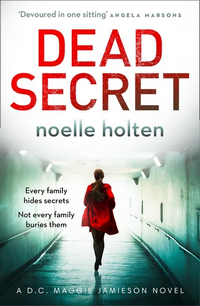
Dead Secret

Dead Secret by Noelle Holten

(a little long, but couldn’t see a way to shorten it)

When the steam came out of the spout, Ronnie picked up the kettle and then poured the boiling water on her arm.

What the hell?

Ronnie didn’t even flinch. It was like she didn’t feel any pain. She placed the kettle back, used a tea towel to dry her arm, and covered it up with the sleeve of the cardigan. Vicki turned and looked at Lucy. They waited until they saw Ronnie leave the kitchen, and Lucy stood and headed to the kitchen.

Maybe I was wrong.

At the counter she touched the kettle.

Ouch!

She sucked her index finger and turned on the cold tap, holding the sore digit beneath the running water. Lucy looked up at the camera and raised a brow. She knew Vicki would be watching.

Prodigal Storm by Kate Sheeran Swed: The Toccata System Trilogy Wraps Things Up Satisfactorily and Entertainingly

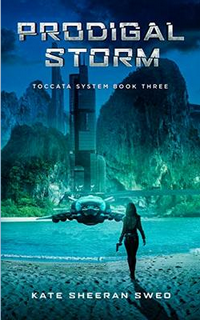
Progigal Storm

Prodigal Storm

by Kate Sheeran Swed
Series: Toccata System, #3

Paperback, 179 pg.
Spells & Spaceships Press, 2019

Read: April 5, 2021
Grab a copy from your local indie bookstore!

If you’ve read what I had to say about the first two books in this trilogy and have yet to make up your mind about starting them, skip down to the “What did I think” heading, because there’s just no way to explain the setup to this without ruining the first book for you (and possibly the second).

What’s Prodigal Storm About?

A little over two weeks ago, Astra, the assassin raised by the revenge-driven AI, SATIS, had failed to carry out her mission to kill Conor. Conor is the child of the man who broke SATIS’s heart (after giving her the ability to have a broken heart). But because SATIS was careful, she had a large number of assassins as backups—including the woman acting as Conor’s bodyguard.

LJ (known to Astra and Conor as Laura), had carried out the mission, even though she loved Conor. She’s now holed up in a bar, trying to move on with her life. Her closest friend is Viv, SATIS’s liaison to humanity, who’d been a person of contact for nearly all the assassins. Now, Viv is trying to bring them to the bar she manages so they can get help in getting over SATIS’s death and hopefully find a way to live normal lives from here on out.*

* I got a real Orphan Black-sestra vibe from this gathering.

Little did any of them know that Conor had been saved by SATIS before she “died.” Now he’s on their planet, on a mission to take down his father’s AIs before they take over the Toccata system. The “sisters” band together to help him with this—even if several of them remember all too well that they’d been raised to kill him, and now they’re working with him. It’s not an easy transition.

I hope that made sense, it’s hard to summarize in a few paragraphs—I assure you, it makes a lot of sense when Swed spends several pages describing it.

A Broken Trend

Parting Shadows was inspired by Miss Havisham, Phantom Song was influenced by The Phantom of the Opera, but if Prodigal Storm is based on a classic work of literature, I didn’t recognize it (so I’m really hoping it wasn’t, I don’t want to be announcing my ignorance like this). I get that the needs of the story matter more than keeping up the literary allusions, but I missed that.

So, what did I think about Prodigal Storm?

I’ve had a really difficult time deciding what to say here, because it feels like I’m giving too much away about any/all of the books in the series—particularly this one.

The ending to the AI storyline was good—there were some good battle scenes, some interesting character development, and some fun new characters. I’ve got no complaints there. But what’s even better is seeing the “sisters” come together, building on the damaged (at best) childhoods that almost all of them had, thanks to SATIS), and turning it into something positive.

That’s not an easy road to travel by any means, and there are more than a couple of setbacks in these pages But there’s reason to hope throughout, too. This is a book about healing—even when it’s hard. It’s a story about forgiveness (and seeking it). It’s about the power of family (natural or adoptive*). And it’s about cleaning up the messes our parents have created.

* Again, see Orphan Black.

All in all, a solid conclusion to this series and reason enough to keep an eye out for new works by Swed. You should give the series a try.


3 Stars

This post contains an affiliate link. If you purchase from it, I will get a small commission at no additional cost to you. As always, opinions are my own.

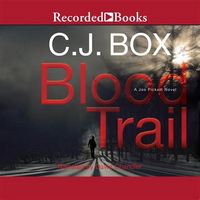
Blood Trail (Audiobook) by C. J. Box, David Chandler: Who Hunts the Hunters?

Blood Trail

Blood Trail

by C. J. Box, David Chandler (Narrator)
Series: Joe Pickett, #8

Unabridged Audiobook, 9 hrs, 5 mins.
Recorded Books, 2008

Read: February 10-12, 2021
Grab a copy from your local indie bookstore!

What’s Blood Trail About?

Since Governor Rulon re-hired Joe Pickett and made him sort of a Game Warden-at-Large, his life has improved—he and Marybeth have their own home, no longer living in State housing, or at his father-in-law’s. Nor is he really as subject to the whims of Randy Pope, his director. But there’s a price to be paid for this: he’s pretty much at Rulon’s beck and call.

This time, thankfully, he’s called to his former territory—a hunter has been found dead. It’s the beginning of Elk Season, so it’s not that surprising. But…this isn’t your typical dead hunter. This man has been shot and field dressed like an elk. Joe’s garnered a reputation for stumbling into a solution for things like this, and Rulon needs that quickly—people are getting antsy about the killings and pressure is mounting to cancel Elk Season (which would have horrible consequences on Wyoming’s economy). Joe’s been named to a task force with the FBI, and the local sheriff. Not only are they out to preserve hunting season, but they also need to head off a mounting anti-hunting protest movement that is taking advantage of this situation.

Randy Pope decides that this is important enough that he comes to supervise Joe personally—and takes an oddly active and proactive role in fieldwork (which no one has ever accused him of being fit for). I don’t know about anyone else who reads this series, but there isn’t a time that Randy Pope has been around when I haven’t wanted Joe to punch him in the nose (or Marybeth, or Sheridan even), and that’s taken to the nth degree for most of this book.

So not only does Joe have to find a killer (not really his job, ubt he seems good at it) for political and social reasons, he has to put up with antagonism from local law enforcement who resent his role, get micromanaged by an officious twerp who is even less suited for this than he is, and he ends up having to deal with two individuals from his past that he’d rather expected never to have to deal with again over the course of the investigation. I’m not going to identify these people, but neither Joe or Marybeth are prepared to have them in their lives again, frankly, I wasn’t ready either.

We Should Talk About Nate

I get into a spoiler in a vague way here. Feel free to skip to the next header.

For various and sundry spoilery reasons, Joe decides that he needs Nate Romanowski’s tracking help. Now, Nate’s been in FBI custody for a few months, ever since the FBI double-crossed Joe at the end of Free Fire. Given the urgent nature of things, Rulon is able to finagle a release into Joe’s custody.

And then Nate ditches Joe for days. Joe, the good friend, covers for him (he’s also covering for himself and his own ability to maintain custody). Sure, he ultimately comes back and pitches in. But it’s pretty clear he didn’t need that much time to do his thing—I get that Nate has his own way of working and that Nate isn’t that terribly concerned with people who aren’t him (what does he care if someone’s killing hunters?)—but he should care about his friend and the deal that got him out of custody, right?

I lost a lot of sympathy for Nate here. And a good deal for Joe, too, later in the book when it comes to Nate.

A Low-Stakes Antagonist

Now that Joe lives in town, in a normal house with a yard and no need to consult a government budget officer for upkeep on his home, it falls to Joe to take care of things. He has a neighbor now (I forget his name, one of the hazards of audiobooks is that I can’t look it up easily). This man is retired and is far too concerned with his own yard and upkeep, and carries that over to Joe’s.

We don’t spend a lot of time with him, but it’s easy to see that he’s a burr in Joe’s side—a constant problem, a constant annoyance. Sure, Joe’s off working for the governor and trying to stop a killer, but surely he could take the time to mow his lawn, like a decent citizen.

This book needed a little lightness, and this crank delivers it.

A Word About the Narration

At this point, I really don’t know what to say about David Chandler, he’s great at this.

However, ,I have one thing to say. For most of the book, I assumed the killer was one of two people. And despite the fact that we get the killer’s POV frequently, it was still pretty unclear which one of the two it was (assuming I was right). Until about halfway through in one scene, Chandler makes 1 choice when he reads one line. And we “hear” the character in a voice Chandler would use for that character, not just the generic Killer’s POV voice he’d been using throughout. And then I knew exactly who it was.

I understand why he made that choice. But, man. It ruined things a little bit for me.

So, what did I think about Blood Trail?

This was, hands down, my favorite entry in the series. The tension, the huge character events, the motive for the crime, and the way it ended…I can’t explain all my reasoning without ruining the novel.

But man…this is the standard I’ll be judging books in this series by. Is it going to be that impactful for new readers? No, but it would work as a jumping-on point if you’re not in the mood to read the seven previous books.

Blood Trail is a great entry in this solid series, with entries like this, it’s easy to see why it’s lasted for twenty-one (so far) books. Check it out.


4 Stars

2021 Library Love Challenge 2021 Audiobook Challenge

This post contains an affiliate link. If you purchase from it, I will get a small commission at no additional cost to you. As always, opinions are my own.

WWW Wednesday, April 21, 2021

Due to technical difficulties, I missed last week’s post, but now I’m back with a fresh WWW Wednesday. Missing one underscored for me how I’ve come to lean on this as a way to organize and plan.

This meme was formerly hosted by MizB at A Daily Rhythm and revived on Taking on a World of Words—and shown to me by Aurore-Anne-Chehoke at Diary-of-a-black-city-girl.

The Three Ws are:

What are you currently reading?
What did you recently finish reading?
What do you think you’ll read next?

Easy enough, right?

What are you currently reading?

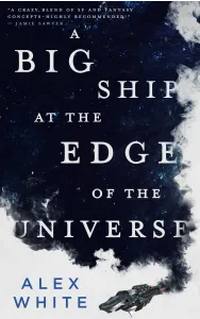
I’m reading the space opera A Big Ship at the Edge of the Universe by Alex White and am listening to the mystery Sworn to Silence by Kate Burkholder, Kathleen McInerney (Narrator) on audiobook.

A Big Ship at the Edge of the UniverseBlank SpaceSworn to Silence

What did you recently finish reading?

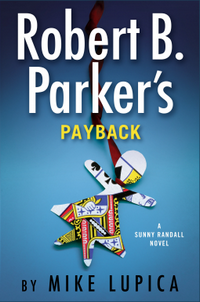
I just finished Mike Lupica’s Robert B. Parker’s Payback and Skinwalker by Faith Hunter, Khristine Hvam (Narrator) on audio.

Robert B. Parker's PaybackBlank SpaceSkinwalker

What do you think you’ll read next?

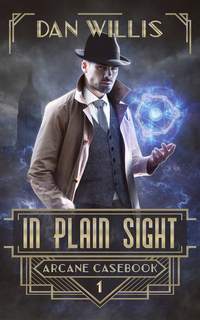
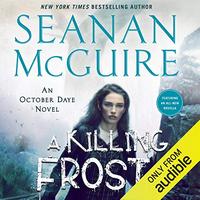
My next book should be In Plain Sight by Dan Willis–the start of a promising-looking series–and my next audiobook should be A Killing Frost by Seanan McGuire, Mary Robinette Kowal (Narrator)–catching me up on that series.

In Plain SightBlank SpaceA Killing Frost

Hit me with your Three W’s in the comments! (no, really, do it!)

Down the TBR Hole (27 of 29+)

Down the TBR Hole

I only managed to cut one book last week–I managed to do a little better this week. I also managed to confuse myself a bit by some of these selections making it to my “To Read” list in the first place. It’s like I don’t know me. Let’s get into it shall we?

This meme was created by Lia @ Lost in a Story—but Jenna at Bookmark Your Thoughts is the one that exposed me to this, and as my Goodreads “Want To Read” shelf is scarily long, I had to do this.

The Rules are simple:

  1. Go to your Goodreads to-read shelf
  2. Order on ascending date added.
  3. Take the first 5 (or 10 if you’re feeling adventurous) books.
  4. Read the synopses of the books.
  5. Decide: keep it or should it go?
  6. Keep track of where you left off so you can pick up there next week! (or whenever)

What distinguishes this series from the Mt. TBR section of my Month-end Retrospectives? Those are books I actually own while Goodreads contains my aspirational TBR (many of which will be Library reads). The Naming of the two is a bit confusing, but…what’re you going to do?

(Click on the cover for an official site or something with more info about the book)

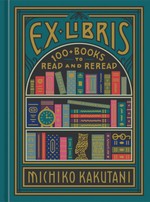
Ex Libris Ex Libris: 100+ Books to Read and Reread by Michiko Kakutani, Dana Tanamachi (Illustrator)
Blurb: “Pulitzer Prize–winning literary critic Michiko Kakutani shares 100 personal, thought-provoking essays about books that have mattered to her and that help illuminate the world we live in today—with beautiful illustrations throughout.”
My Thoughts: This is the second or third book called Ex Libris that I’ve talked about in this series, the subtitle is the key, I guess. Sounds like it could be something I could get into, but the publisher’s site goes on to say that readers “will discover novels and memoirs by some of the most gifted writers working today; favorite classics worth reading or rereading; and nonfiction works, both old and new, that illuminate our social and political landscape and some of today’s most pressing issues.” It loses me there. I just don’t see me wanting to do more than argue with half of it.
Verdict:
Thumbs Down
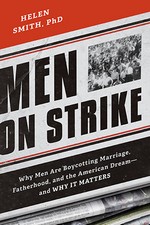
Men on Strike Men on Strike: Why Men Are Boycotting Marriage, Fatherhood, and the American Dream – and Why It Matters by Helen Smith, PhD.
Blurb: “American society has become anti-male. Men are sensing the backlash and are consciously and unconsciously going “on strike.” They are dropping out of college, leaving the workforce and avoiding marriage and fatherhood at alarming rates…men aren’t dropping out because they are stuck in arrested development. They are instead acting rationally in response to the lack of incentives society offers them to be responsible fathers, husbands and providers. In addition, men are going on strike, either consciously or unconsciously, because they do not want to be injured by the myriad of laws, attitudes and hostility against them for the crime of happening to be male in the twenty-first century.”
My Thoughts: A reviewer I typically trust spoke favorably about this last year, so I put it on the list. Reading the description now, I don’t see the appeal. However true that premise might partially be, I can’t imagine this book is all that helpful.
Verdict:
Thumbs Down
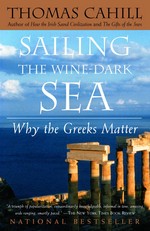
Sailing the Wine-Dark Sea Sailing the Wine-Dark Sea: Why the Greeks Matter by Thomas Cahill
Blurb: “The Greeks invented everything from Western warfare to mystical prayer, from logic to statecraft. Their achievements in art and philosophy are widely celebrated while others are unknown or underappreciated. In Sailing the Wine-Dark Sea, Thomas Cahill explores their legacy, good and bad.”
My Thoughts: I loved Cahill’s How the Irisih Saved Civilization (longer ago than I care to admit). I bet his take on Greek civilization from The Bronze Age through AD 310 is fascinating.
Verdict:
Thumbs Up
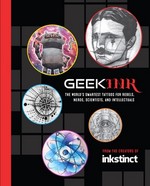
Geek Ink Geek Ink: The World’s Smartest Tattoos for Rebels, Nerds, Scientists, and Intellectuals by Emanuele Pagani
Blurb: “This tattoo inspiration sourcebook and ultimate coffee table book presents mind-blowing tattoos on themes from science fiction and fantasy, as well as a wide range of topics across science, mathematics, literature, fine art, cult cinema, and philosophy.”
My Thoughts: Sounds like fun to flip through, but I just don’t see me shelling out the bucks for it. Also, it doesn’t appear to be available in the States. So, you know…
Verdict:
Thumbs Down
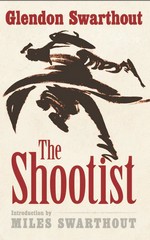
The Shootist The Shootist by Glendon Swarthout
Blurb: “The Shootist is John Bernard Books, a gunfighter at the turn of the twentieth century who must confront the greatest Shootist of all: Death. Most men would end their days in bed or take their own lives, but a gunfighter has a third option, one that Books decides to exercise…As word spreads that the famous assassin has incurable cancer, an assortment of human vultures gathers to feast on the corpse—among them a gambler, a rustler, a clergyman, an undertaker, an old love, a reporter, even an admiring teenager. What follows is the last courageous act in Books’s own legend.”
My Thoughts: My father made me watch the movie a few times as a kid, I saw the book mentioned somewhere and had to give it a shot.
Verdict:
Thumbs Up
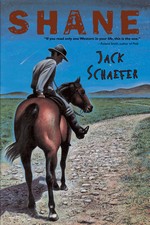
Shane Shane by Jack Schaefer
Blurb: “The Starrett family’s life forever changes when a man named Shane rides out of the great glowing West and up to their farm in 1889. Young Bob Starrett is entranced by this stoic stranger who brings a new energy to his family. Shane stays on as a farmhand, but his past remains a mystery. Many folks in their small Wyoming valley are suspicious of Shane, and make it known that he is not welcome. But dangerous as Shane may seem, he is a staunch friend to the Starretts—and when a powerful neighboring rancher tries to drive them out of their homestead, Shane becomes entangled in the deadly feud.”
My Thoughts: I’m not a big Western reader. But there are some things that seem essential. It’s also pretty short, which helps. Between this and The Shootist, I wonder what I was doing that put classic Westerns on my radar (maybe something involving True Grit, I remember doing some reading about that last year).
Verdict:
Thumbs Up
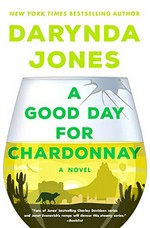
A Good Day for Chardonnay A Good Day for Chardonnay by Darynda Jones
Blurb: “AllvSunshine really wants is one easy-going day. You know, the kind thatstarts with coffee and a donut (or three) and ends with take-out pizza and a glass of chardonnay (or seven)…Before she can say iced mocha latte, Sunny’s got a bar fight gone bad, a teenage daughter hunting a serial killer and, oh yes, the still unresolved mystery of her own abduction years prior.”
My Thoughts: I had more fun with the series debut last year than I expected, the only reason I haven’t read this yet is that it’s not out.
Verdict:
Thumbs Up
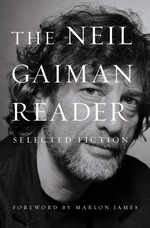
The Neil Gaiman Reader The Neil Gaiman Reader: Selected Fiction by Neil Gaiman (obviously)
Blurb: “An outstanding array—52 pieces in all—of selected fiction from the multiple-award-winning, #1 New York Times bestselling author Neil Gaiman, introduced with a foreword by Booker Prize-winning author Marlon James Spanning Gaiman’s career to date, The Neil Gaiman Reader: Selected Fiction is a captivating collection from one of the world’s most beloved writers.”
My Thoughts: Just not feeling it. My guess is that this collection would be very frustrating–every time I’d start to get into whatever world he’d be playing in, the story would be over.
Verdict:
Thumbs Down
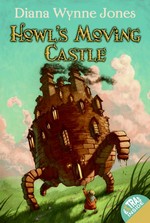
Howl’s Moving Castle Howl’s Moving Castle by Diana Wynne Jones
Blurb: “Sophie has the great misfortune of being the eldest of three daughters, destined to fail miserably should she ever leave home to seek her fate. But when she unwittingly attracts the ire of the Witch of the Waste, Sophie finds herself under a horrid spell that transforms her into an old lady. Her only chance at breaking it lies in the ever-moving castle in the hills: the Wizard Howl’s castle. To untangle the enchantment, Sophie must handle the heartless Howl, strike a bargain with a fire demon, and meet the Witch of the Waste head-on. Along the way, she discovers that there’s far more to Howl—and herself—than first meets the eye.”
My Thoughts: Based on the publication date, my kids (and, by extension, I) should have been all over this. Somehow, we missed it. Looks like it could be a fun ride…Another one Bookstooge made look appealing
Verdict:
Thumbs Up
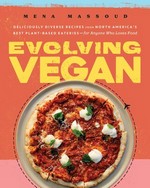
Evolving Vegan Evolving Vegan: Deliciously Diverse Recipes from North America’s Best Plant-Based Eateries—for Anyone Who Loves Food by Mena Massoud
Blurb: This “cookbook celebrates both flavors and stories from a wide array of plant-based eateries all across North America, proving that a plant-friendly diet is truly accessible to all!…Containing recipes from many different countries and cultures, and including helpful tips for lifelong vegans or flexitarians looking to expand their repertoire of vegan dishes, Evolving Vegan takes you on a food-based road trip to explore the vibrancy of veganism across North America.”
My Thoughts: I’m trying to get closer to a Plant-Based Whole Food diet, looks like I should be able to get a few things out of this.
Verdict:
Thumbs Up

Books Removed in this Post: 4 / 10
Total Books Removed: 148 / 290

Anyone out there read any of these books? Did I make the right call with any of them?


(Image by moritz320 from Pixabay)

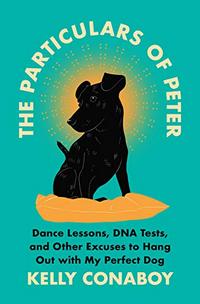
The Particulars of Peter by Kelly Conaboy: Adventures of a Woman Obsessed with her Dog

The Particulars of Peter

The Particulars of Peter:
Dance Lessons, DNA Tests,
and Other Excuses to
Hang Out with My Perfect Dog

by Kelly Conaboy

Hardcover, 232 pg.
Grand Central Publishing, 2020

Read: March 30-April 1, 2021
Grab a copy from your local indie bookstore!

I think once a person has a dog the idea of not having one quickly becomes absurd. I know there are other ways a person can fill their time—golf, et cetera. I know you can Hula-Hoop. You can pan for gold, or “do some work at a café.” I know a person can exist without the ability to make a creature they love thrash with uncontrollable joy, wild-eyed and ecstatic, at the mere mention of din—; hush, that’s enough, they’re already excited. I know you can watch TV without a dog resting his paws and head on your leg, breathing quietly, warming you and allowing you to feel like you’re having a real human experience rather than idly ingesting The Sopranos, I know you can go to sleep without a dog in your bed and wake up without a little face staring down at you, whiskers in your eyes, and a nose dripping onto your skin, waiting for you to take him outside so that he might urinate. But… why? Why even wake up at all?

What’s The Particulars of Peter About?

It is, quite simply, about Peter. Well, it’s more about Conaboy’s obsession with Peter and the things she’ll do to foster the relationship between them as well as all the things she’s willing to do with/for him for the sake of her writing.

She begins by talking about how Peter came into her life, going to Woofstock with him, trying to get into agility training, dance classes, and so on. She gets a DNA test, goes ghost hunting, consults a pet psychic, and more.

Each chapter is filled with jokes, amusing anecdotes, and useful information on a particular subject/experience, told with a lot of humor (some-self deprecating).

Some Highlights

It’s probably easier to think of this as a collection of essays rather than a cohesive book, and as such, there are going to be some chapters that stand-out above the others. I think the first two chapters—about adopting Peter and getting a DNA test were the best—with the chapter on where the dog should sleep as a close third.

The chapter on Dog Dancing was, on the whole, not that interesting for me until she dropped the jokes and got to a hard story about Peter and a medical problem. It probably became the strongest chapter in the book at that point.

On the other end of the spectrum

There were a couple of chapters that did nothing for me—training Peter for Ghost Hunting and then trying to communicate with him using pet psychic just bored me. I couldn’t get into them, but I could see where someone would find it interesting.

The rest of the chapters were a good mix of things I thought were great and then a page later made me wonder why I tried the book.

So, what did I think about The Particulars of Peter?

There was something in the preface, that made me wonder if I’d made a mistake and I was going to end up annoyed with this book, but I wasn’t quite sure. Then I got to the paragraph I quoted above—the third in the book, and realized that yeah, this book was for me.

I’m not going to tell you that this is the best book about living with a dog that you’re ever going to read. I’m not saying that every chapter was worth the time. But there’s just so much heart displayed in every chapter, that you can’t help but cut her a lot of slack for whatever shortcomings may appear.

And it’s a funny book. I chuckled and laughed a few times, I enjoyed an eye-rolling smile a few times, a more than a few times I grinned and made not of a fun line. I fell in love with her habit of writing a parenthetical remark to get a punchline into something, and then immediately following it with another parenthetical joke—naturally, I didn’t write down any examples of that, because why should I make it easy for me to explain the quirk.

Basically, this was a fun book about one of my favorite topics—of course, I’m going to recommend it.

2021 Library Love Challenge

This post contains an affiliate link. If you purchase from it, I will get a small commission at no additional cost to you. As always, opinions are my own.

PUB DAY REPOST: Blood and Treasure by Bob Drury, Tom Clavin: A Look at Dream Come Truers

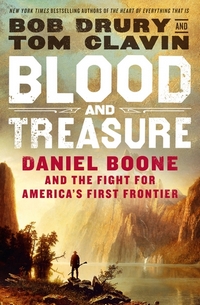
Blood and Treasure

Blood and Treasure: Daniel Boone and the Fight for America’s First Frontier

by Bob Drury, Tom Clavin

eArc, 400 pg.
St. Martin’s Press, 2021

Read: April 5-14, 2021
Grab a copy from your local indie bookstore!

What’s Blood and Treasure About?

It’s pretty much in the subtitle—this book is about 2 things—Daniel Boone and the fight (literal and metaphoric) for America’s first Frontier—with a focus on what we now know as Kentucky, but pretty much everything on the Western edge of the American colonies/states.

It’s not a biography of Boone (I’ll tell you now, I wrongly expected this to be more of one), it’s more like he’s the organizing principle for the book, as we learn about Boone’s roots, early life, and adulthood the authors talk about the conflicts with the Indians on the edge of white civilization’s expanse. We’d get a chunk of a wide-view of history over a period, and then we’d focus on Boone’s life around that time. Then the focus would widen a bit and we’d look at another period of time—and so on.

Two significant ingredients in “the Fight” for the Frontier were what’s called The French and Indian War and the American Revolution. There’s the French and Indian War (and conflicts that led up to it and sprang from it) to begin with, paved the way for the latter conflicts—we see the pressure put on various tribes from the expansion of settlers, the resistance those settlers faced (from shifting alliances of Indians between themselves, and varying alliances between Western powers and the Indians).

As for the Revolution—while most histories/documentaries/etc. about it will acknowledge the fighting in the South and West, few take any time to focus on it. Instead, we casual history readers just get repeated retellings of the stuff we learned in elementary school—Washington*, the Continent Army, Benedict Arnold, Nathan Hale, the Green Mountain Boys, and whatnot—and whatever expansions on some of those topics that Hamilton has taught us in the last few years. This book is a great corrective to that showing how the Indians were largely pawns for the British to use against the colonies, to distract from the larger skirmishes as well as to try to open up another front on the war—another way to steal power and influence from the colonies. You see very clearly how easily the entire War could’ve changed if not for a couple of significant losses suffered by the British and their Indian allies.

* Washington is also featured pretty heavily in the earlier chapters, too—even if he maybe only briefly met Boone on one occasion.

Language Choices

I know this sort of this is pretty customary, but I really appreciated the Note to Readers explaining the authors’ language choices—starting with the tribal designations they used—the standard versions accepted today (there are enough various entities mentioned throughout that if they’d gone with contemporary names and spellings, I—and most readers—would’ve been very confused).

At the same time, they did preserve the varied and non-standard spellings for just about everything else. For example, there were at least three variant spellings for Kentucky: Cantucky, Kanta-ke, and Kentucki (I think there was one more, but I can’t find it).

I was a little surprised that they stuck with the term “Indian” as much as they did—but their explanation for it seemed likely and understandable.

An Image Shattered—or maybe just Corrected

Yes, I know that the Fess Parker TV show I saw after school in syndication was only very loosely based in reality. And that the handful of MG-targeted biographies I read several times around the same time were sanitized and very partial. Still, those are the images and notions about Boone that have filled my mind for decades. So reading all the ways they were wrong and/or incomplete threw me more than I’m comfortable with.

His appearance was particularly jarring—the actual Boone eschewed coonskin caps because they were flat-topped and preferred a high-crowned felt hat to look taller. THat’s wrong on so many levels. “Tall as a mountain was he” is about as far from the truth as you can get.

The fact that he spent most of his life bouncing between comfort and/or wealth and massive debt is both a commentary on his strengths and weaknesses as it is the volatile times he lived in—he lost so much thanks to colonial governments being mercurial. It was reassuring to see the repeated insistence that he was an honest man, who worked to repay his debts even if it took too long.

In the end, Boone seemed to be a good guy trying his best to get by and provide for his family—who accidentally stepped into some degree of celebrity, that magnified some good qualities and replaced the man with a legend.

So, what did I think about Blood and Treasure?

The writing itself? There are moments that were fantastic. On the whole…., but from time to time, when Drury and Clavin wanted to drive an image or description home, they could be stunning. I would have preferred things to be a bit more even—a bit more balanced and consistent on that front. But the topic and scope didn’t really allow for that. So I’ll just enjoy those moments of it that I got.

As for the book as a whole? It was impressive, entertaining (generally), and informative. When it was at its best, it didn’t feel like reading dry history but a compelling look at that portion of US History. At its worst, it was a litany of names, dates, and ideas that didn’t do much for me. Thankfully, those moments were few and far between. It’s not a difficult read at any point, just pretty dry on occasion.

There are so many other things I’d like to have mentioned or discussed—but it would make this post unwieldy. The notes about hunting (both the good and the horrible), Boone’s heroics, his character, and family; various aspects of the Indian customs discussed and so much. There’s just so much in this book to chew on that I can’t sum it up.

I liked this—I liked it enough to look at a few other books by this duo to see what they can do with other topics, people, and eras. I think anyone with a modicum of interest in Boone will enjoy this and be glad for the experience.

Disclaimer: I received this eARC from St. Martin’s Press via NetGalley in exchange for this post—thanks to both for this.


3.5 Stars

This post contains an affiliate link. If you purchase from it, I will get a small commission at no additional cost to you. As always, opinions are my own.

Robert B. Parker’s Payback by Mike Lupica: Sunny Does Some Dangerous Favors for Some Dear Friends

Payback

Robert P. Parker’s Payback

by Mike Lupica
Series: Sunny Randall, #9

eARC, 352 pg.
G.P. Putnam’s Sons, 2021

Read: April 14-15, 2021
Grab a copy from your local indie bookstore!

What’s Payback About?

Sunny’s closest friend, Spike, has got himself in trouble—he needed some financial assistance to keep the doors of his restaurant open (like just about every restaurant in 2020) and let a long-time customer and friend, a hedge fund manager, loan him the money. But when Spike tried to pay off the loan, he learned the hard way that Alex Drysdale wasn’t so much a friend as he was an opportunistic toad, and thanks to clever work on the contract, Spike had defaulted on the loan almost immediately.

Spike has already let his fists do the talking (and broken Drysdale’s nose), but oddly enough, that didn’t help. So, Sunny decides she’s going to figure out a way to get Drysdale to release him. Financial crimes aren’t really Sunny’s forte—much less shady, but not criminal, financial deals—but Spike is family and she figures she can learn as she goes.

She’s barely begun digging into Drysdale and his practices when she gets a call from Lee Farrell who needs a favor. His niece, a student at Taft*, was assaulted and she refuses to talk to the police or Lee. Can Sunny help? Sunny tries to talk to her, but Emily keeps saying it was just a misunderstanding and refuses to explain anything. Lee’s worried about her, Sunny’s concerned and nosy. So while Lee deals with a major homicide investigation, Sunny starts digging into Emily’s life.

* Yup, Taft, the Parker-verse’s all-purpose university for people who don’t go to Harvard.

Before Sunny can really get anywhere with the Drysdale investigation, she’s warned off. THat warning quickly becomes direct threats against her, Spike, Richie’s son, and her father. You have to admit, that’s really not the most clever approach. Sunny warns them all to be careful and works harder to find something. One of the biggest things she finds is a link between the two cases.

Ahh, a Little COVID-19 Fiction

Early on, we’re told that this starts shortly after the pandemic is over and life has gone back to something akin to normal. But vaguely so, especially when this was written, no one had an idea when exactly this would be, so Lupica left things vague.

Also, Spike’s is in trouble because of the impact that COVID has had on restaurants.

I lost count of how many times that Sunny talked about the world falling apart and getting worse. Clearly, this is a product of 2020 (and 2021). I remember hearing and reading authors last year talking about not being sure how to address COVID in their works—if they were even going to. This is probably the best way to do it—acknowledge it happened, look at the changes/difficulties it brought about—and don’t get into the details.

Poor Lee Farrell

This is my biggest beef with the novel—and the more that I think about it, the more it bothers me.

So, Lee’s got a big case that he’s dealing with and a family member in trouble—and he’s still not in the book that much. Belson plays a bigger role than Lee does in the book, which is fine because it’s not like Belson gets a lot of use in the Atkins novels, and he shouldn’t be put out to pasture. But this was a chance for Lee to get to shine and Lupica let it pass by.

I like Lee, and have since Paper Doll (he was one of the few good things in that novel), but Parker never used him all that much—and Lupica does the same. It’s time for Lee Farrell to really get a moment.

Sunny and The Men in Her Life

There are two other things that Lupica inherited from Parker that he’s maintained—but I’d like him to move on. From Family Honor on, there’s been this tension between Sunny’s independence, being able to make it as a female in a male-dominated world/industry and her being dependent on men like Richie and Spike (and a couple of others) to help out when things get dangerous. I can see revisiting the issue from time to time, but the authors have spent so much time on it, the reader has to wonder—why doesn’t Sunny do something about it? Either step up her fitness and martial arts training, or partner up with a female who can handle the shooting and hand-to-hand stuff. They exist.

Similarly is her seemingly everlasting tie to Richie, being unable to let him go—even as it’s clear she needs to, for at least his son’s sake. Her level of commitment to Jesse Stone could use some definition as well, but that’s not going to happen as long as Richie’s around (and, I’m not sure Jesse’s capable of it). Coleman was able to get Jesse to the point where he was able to let go of Jen (a move that was more overdue than Sunny and Jesse). I’d like to see Sunny do something similar, all that therapy she’s received should be enabling her to make some tough choices.

All that said, again, these are inherited themes, ideas, and characteristics. I’m not holding them against Lupica for maintaining it (he can only do so much without getting the fans to rebel). I just think it’d be nice to see.

So, what did I think about Payback?

Lupica is locked-in on this series, he’s got a handle on the characters and the stories he wants to tell and gets it done confidently, smoothly, and with just enough flair to keep the reader hooked and turning pages. This was his best yet. I’d describe his first two novels in this series as “good, for a Sunny Randall novel.” Payback. is doesn’t get the modifier. It’s good, period.

* I’ve got both hardcovers on the shelf next to me, after getting the eARCs from NetGalley. So if that sounds a little more back-handed than I mean that to be, maybe the fact that I shelled out for them takes a bit of the sting out of it.

The prose is crisp. It’s engaging and filled with a Parker-esque clarity and wit. The story is compelling and an interesting reaction to things in the zeitgeist, and the characters are as solidly drawn and executed as they were over two decades ago when Sunny debuted. New readers or established Sunny fans alike will find enough to entertain them and will likely come back for more—just like me. I recommend Payback to you.

Disclaimer: I received this eARC from PENGUIN GROUP Putnam via NetGalley in exchange for this post—thanks to both for this.


3.5 Stars

This post contains an affiliate link. If you purchase from it, I will get a small commission at no additional cost to you. As always, opinions are my own.


Just a Spoonful of Sugar—Non-Fiction to Smile With and Learn From

(Updated and Revised)
Just a Spoonful of Sugar—Non-Fiction to Smile With and Learn FromI stumbled onto my notes from Funny, You Don’t Look Autistic: A Comedian’s Guide to Life on the Spectrum the other day (and yeah, I forgot almost all of them in my post about the book). But it got me thinking about McCreary’s approach—taking a hard-to-talk about subject and adding a touch of humor (or at least a light-hearted voice) to it to make it palatable. It’s a great way to get someone to look at the subtleties of what the Autism Spectrum Disorder can be, how individuals can fall somewhere on that spectrum (and therefore have many things in common), and yet be very different from one another.

Now, I realized that some would point to our cultural inability to discuss difficult subjects with the sobriety and seriousness they deserve as a significant problem. And there’s something to that. More than something, probably. Still, I don’t like to think I enjoy these books and their approach because I’m shallow, but I guess I shouldn’t rule that out.

Shallowness aside, there’s something to that approach—whether it’s technical issues, trauma, socially awkward topics, disease, disorders, or other things people try to avoid discussing—doing so in a light-hearted manner or with plenty of laughs, tends to make the audience receptive. It takes a lot of skill to blend the difficult topic into an entertaining package. But it’s a great way to gain a new perspective, a deeper understanding, or learn something.

Some of the others that I’ve read/posted about in the last few years that entertain while informing/giving insight:
bullet Wishful Drinking by Carrie Fisher—Fisher addresses her addictions and mental health problems (and the extreme solutions) in this frequently laugh-out-loud memoir
bullet Everything is Normal by Sergey Grechishkin—Grechishkin’s memoir of growing up in 1980’s-era Soviet Russia brings the grins (and a chuckle or two) while not letting us forget how hard and terrifying it could be.
bullet Kasher in the Rye: The True Tale of a White Boy from Oakland Who Became a Drug Addict, Criminal, Mental Patient, and Then Turned 16 by Mose Kasher—Kasher’s account will make you smile, break your heart, and help you understand addiction
bullet Gluten Is My Bitch: Rants, Recipes, and Ridiculousness for the Gluten-Free by April Peveteaux—on the one hand, this seems the slightest of the issues addressed. Ask any person with Celiac Disease how hard it can be to find food that doesn’t make you violently ill—and just how violent that illness can be. But Peveteaux will make you laugh, while offering hope and help.
bullet Henry by Katrina Shawver—even in a Nazi work/death camp, friendship helps, people can find some release.
bullet Funny, You Don’t Look Autistic: A Comedian’s Guide to Life on the Spectrum by Michael McCreary—I realize I started this post talking about the book, but when I revised things, it felt like a bad list if it wasn’t on it. This Comedian talks about growing up with Autism Spectrum Disorder and how he became a comedian—he works to dispel some myths, and offer some real insight while entertaining.
bullet You’ll Never Believe What Happened to Lacey by Amber Ruffin, Lacey Lamar:—Amber Ruffin and her sister, Lacey, recount various racist things that people have said (or done) to Lacy on an almost daily basis in her professional and personal life. It may not sound that funny, but it frequently is.
bullet And Then You’re Dead: What Really Happens If You Get Swallowed by a Whale, Are Shot from a Cannon, or Go Barreling Over Niagara by Cody Cassidy and Paul Doherty—the publisher describes this as, a “gleefully gruesome look at the actual science behind the most outlandish, cartoonish, and impossible deaths you can imagine.”

Help me expand this list—what are some other works along these lines that I should read?

Page 2 of 5

Powered by WordPress & Theme by Anders Norén