Month: April 2021 Page 3 of 5

Saturday Miscellany—4/17/21

  1. It’s weird to look off to the right there and not see History of Tom Jones, a Foundling by Henry Fielding listed there.
  2. My ISP went down for a day-and-a-half this week, making it a real challenge to get anything posted, but it did help me catch up on reading. But I’m super-behind on blog-hopping, commenting, and everything. I’m looking forward to catching up and seeing all the fun stuff I missed this week.
  3. I’m apparently in a list-making mood today.
  4. I came across a thing I did for a bit on an old blog and then Facebook years ago, and decided I’d try to resurrect it on these posts. If you still see it in a month, I guess we’ll call it a success.

Odds n ends about books and reading that caught my eye this week. You’ve probably seen some/most/all of them, but just in case:
bullet In honor of today being the 124th Anniversary of the play, LitHub posted Watch Spalding Gray perform Our Town’s legendary opening monologue.—First off, Our Town is my favorite play, full stop. I’ve read better, but none affect me the at it does. I cannot make it through the third act dry-eyed (I’ve seen high school drama departments stumble through it, ditto for college and amateur troupes, several filmed versions—and in print). I also loved the part of Gray’s monologue, Monster in a Box this post mentions about his role and the reaction to it. I’m rambling now—just read and watch.
bullet Lauren Hough Vs The World—For the 4% of you that didn’t watch this trainwreck live, this is a good summary.
bullet Turns Out It’s Pretty Good: Reading First Thing in the Morning
bullet How Would the Publishing World Respond to Lolita Today?: Jenny Minton Quigley on the Novel Her Father Published
bullet Rare book burial brings a little-known Jewish custom to Naples (Hat tip: Jo Perry)
bullet 10 of the worst sentences found in literature—Thoughts: I don’t know how they ever settled on one from The Da Vinci Code; the New Moon selection as great; and I don’t know how I managed to read the rest of The Killing Floor (much less the 25 following novels) after that sentence.
bullet What makes you pick up a book?
bullet Amanda’s Book Format Battle
bullet My first reads!—this was a fun read and sent me down a fun trip down memory lane.
bullet @HiuGregg gives some handy advice in this thread

This Week's New Releases That I’m Excited About and/or You’ll Probably See Here Soon:
bullet Okay, I’ve got nothing for this. Which is happening a lot lately—have I gotten that picky?

Things I learned from reading this week (that I can’t imagine finding a use for)bullet
bullet At least 80% of all cars in Afghanistan are various years of Toyota Corollas, mostly brought into the country used.
bullet Daniel Boone didn’t like flat coonskin caps, but preferred high-crown felt hats so he’d look taller. (yeah, I know I mentioned this in my post about the book, but it was so ingrained my mind from childhood on that I have to mention it again). Also, I’m taller than Daniel Boone was, and I’m not tall, definitely not “tall as a mountain.”
bullet The American custom of having race tracks constructed to run widdershins comes from a “rabid revolutionary,” William Whitleywho built one of the first horse tracks in Kentucky, who deliberately wanted to do so contrary to the British custom.
bullet My new word for the week is, “Funt” which looks like a misprint when you come across it in a book. But after a quick internet search, you find out that it’s not and kind of wish that you didn’t know what you now do.
Sources: The Lore of Prometheus by Graham Austin-King (verified because it made me curious); Blood and Treasure: Daniel Boone and the Fight for America’s First Frontier by Bob Drury, Tom Clavin (for the next two items); Robert B. Parker’s Payback by Mike Lupica.

Lastly I’d like to say hi and extend a warm welcome to bookish_renee who followed the blog this week. Don’t be a stranger, and use that comment box, would you?
>

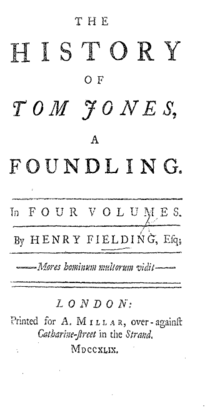
The History of Tom Jones, a Foundling by Henry Fielding: BOOK XVIII., xii. – Chapter the last.

Fridays with the Foundling
Tom Jones Original CoverAfter the hopeful note that we ended on last week, everything goes to pieces in the last two chapters—Mrs. Miller’s daughter/Nightingale’s wife dies in childbirth; Sophia can’t get over everything that Tom put her through, and dies lonely and miserable; Tom joins the Navy and dies of scurvy somewhere around Australia; Partridge becomes a successful playwright, Allworthy drinks himself to death, and Blifil becomes Prime Minister.

Okay, no. That’s not even close to it. Instead, we get something akin to Wayne’s World‘s “Mega Happy Ending.”

We start with Allworthy and Tom going to call on Sophia with her Father. Straight away Allworthy and Western leave the two alone. It takes the two a while to start speaking, eventually, Sophia breaks the silence and calls him most fortunate thanks to being freed. Tom rejects that, saying he can’t be fortunate as long as she’s upset. The ice broken, words start flowing.

Tom ensures she understands what happened with that letter—she gets it, but wants him to prove his devotion. But, she assures him,

You will now want no opportunity of being near me, and convincing me that your mind is altered too.

He wants to know how long it’ll take, she guesses maybe a year (but implies it might take longer). He calls that an eternity. She tells him to back off and not pressure her, and he does so and insists he will keep not pressuring her.

Which leads the two of them to kiss. Naturally, that’s when Western comes back in. He’s overjoyed to see this and asks when they’ll get married. Tom tries to get him to stop this, but Sophia overrides that. She’s an obedient daughter, she says—what does her father want her to do? Marry Tom the next day? Well, okay.

Tom’s stunned, Western demands Allworthy’s presence. Allworthy makes sure that she feels no constraint and then gives his blessing. The four of them go off to meet with NIghtingale and his father, but Sophia wants to keep the engagement quiet.

NIghtingale’s father and uncle trade war stories about their offspring’s impetuous and ill-advised marriage? Allworthy’s counsel works its magic and the two fathers accept the new spouses. The next day Sophia and Tom are married in a small, private ceremony.

And just like that,

Thus, reader, we have at length brought our history to a conclusion, in which, to our great pleasure, though contrary, perhaps, to thy expectation, Mr Jones appears to be the happiest of all humankind; for what happiness this world affords equal to the possession of such a woman as Sophia, I sincerely own I have never yet discovered.

But Fielding doesn’t leave us like that—like in those movies that at the end give you a freeze-frame of a character or two with a chyron summing up the rest of their life in a sentence or three, Fielding tells us what happens to the major characters—Blifil never sees his uncle again, becomes a Methodist (so he can court a woman) and plans on buying a seat in Parliament; Partridge marries good old Molly Seagrim and opens another school; Western becomes a doting grandfather to his two grandchildren (particularly his granddaughter); and so on.

Whatever in the nature of Jones had a tendency to vice, has been corrected by continual conversation with [Allworthy], and by his union with the lovely and virtuous Sophia. He hath also, by reflection on his past follies, acquired a discretion and prudence very uncommon in one of his lively parts.

To conclude, as there are not to be found a worthier man and woman, than this fond couple, so neither can any be imagined more happy. They preserve the purest and tenderest affection for each other, an affection daily encreased and confirmed by mutual endearments and mutual esteem. Nor is their conduct towards their relations and friends less amiable than towards one another. And such is their condescension, their indulgence, and their beneficence to those below them, that there is not a neighbour, a tenant, or a servant, who doth not most gratefully bless the day when Mr Jones was married to his Sophia.

So, that’s that. The ending—all of Book 18—felt rushed. But I’m not sure I could’ve taken much more. After all this, it was really just a simple story about an unlikely guy getting the girl—with a lot of insane twists, turns, and hoops to jump through along the way.

I should have more to say. And probably will soon. I’m not quite done with this series yet—see you next week.

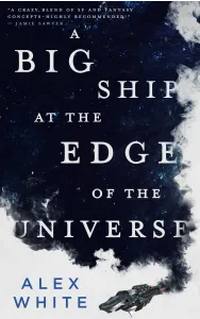
The Friday 56 for 4/16/21: A Big Ship at the Edge of the Universe by Alex White

The Friday 56This is a weekly bloghop hosted by Freda’s Voice

RULES:
The Friday 56 Grab a book, any book.
The Friday 56 Turn to Page 56 or 56% on your ereader. If you have to improvise, that is okay.
The Friday 56 Find a snippet, short and sweet.
The Friday 56 Post it

from page 56 of:
A Big Ship at the Edge of the Universe

A Big Ship at the Edge of the Universe by Alex White

“She’s awake,” noted the technician, his rich voice filling the bay. “Mostly uninjured, too.”

Boots nodded to him. May as well get acquainted with the rest of Cordell’s cronies. “I haven’t met this one yet, Cordell.”

Cordell stopped and gestured to the man in the med bay. “Oh, my mistake. Boots, this is Malik Jan, our ship’s doctor.”

Malik came to them in the hall and took Boots’s hand. His palms were soft and warm, if a little dry. “It’s a pleasure. I hope you slept well.”

“Great. Now you’ve met,” said Cordell, placing a hand on Boots’s shoulder. “Doctor Jan, Boots is a prisoner, and if she tries to escape, you’re to shoot her.”

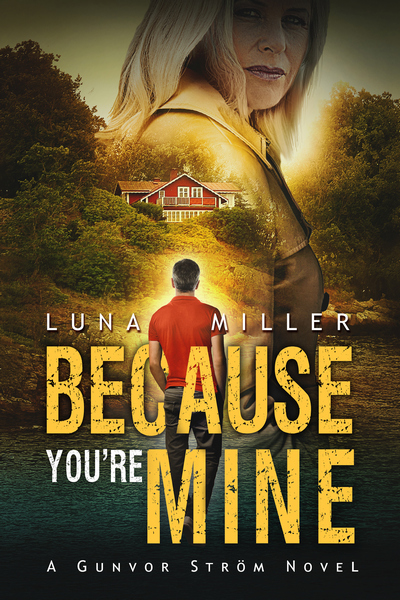
Because You’re Mine by Luna Miller, Ludvig Christensen Parment (Translator): Another Missing Person Case for Gunvor Ström and Friends

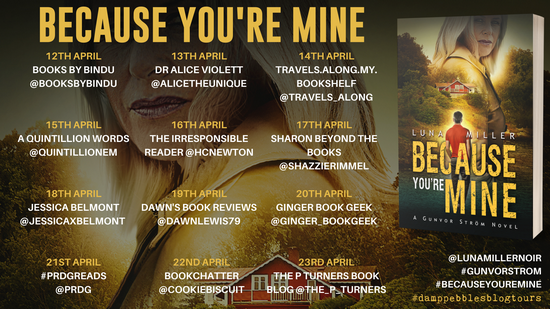
Fake Tour Banner

Because You're Mine

Because You’re Mine

by Luna Miller, Ludvig Christensen Parment (Translator)
Series: The Fruängen Bureau, #2

Kindle Edition, 277 pg.
Publishing Authority, 2021

Read: April 13, 2021

A Little Bit about Gunvor Ström

Two years ago, I posted about the first book about Gunvor, The Lion’s Tail*. I started off by saying, she’s “a rookie Private Investigator, forced to leave her career and changing her life after a divorce, she signs on to a Private Investigative Agency and mostly does grunt work—but does get the opportunity to do some investigative work. As much as she misses her old life, she relishes this new one (although she might like joints that are a little less painful).”

* In case you go looking for it, it has been repackaged as Looking for Alice—probably a more commercial title, even if it’s lacking the panache of the original.

She has a neighbor, Aidan, who serves as a drinking buddy (and they drink a lot), driver, and sounding board. During the case detailed in that book—her first major investigation—she ends up recruiting a couple of older teens/young adults from the neighborhood to help. The four of them somewhat jokingly dub themselves The Fruängen Bureau, and end up exposing some serious criminal activity in the course of what should have been a pretty simple inquiry.

What’s Because You’re Mine About?

It’s a few weeks later, and Aidan’s taking a friend to a nightclub to help blow off some steam after a recent breakup. While the friend is off flirting and dancing, Aidan strikes up a conversation with a woman who seems to be in a distress (he’s also attracted to her, but let’s focus on his chivalrous side—which does seem to be preeminent). She’s looking for a friend that seems to be missing—they’ve spoken almost daily for years and she hasn’t heard from him.

Aidan pretends to be much more of an investigator than he is (he’s surely picked up a few things from Gunvor, and anyway, she’ll be around soon and he can enlist her help if he needs it), asks a couple of questions, and arranges to meet the woman the next night to resume the search.

Meanwhile, Gunvor has a new client—a woman whose husband has gone missing. She insists he’s gone, she worried about his depressive bouts. His father (and employer) insists he took a two-week leave of absence. Everything Gunvor can find lines up with his father’s explanation, but the client doesn’t want to hear it.

Gunvor and Aidan end up working both disappearances together and bring in the rest of The Fruängen Bureau for assistance. Between the four of them (and a couple of new allies), they learn a few things about the two men they’re searching for—things that no one expected, but can’t seem to find either of them. Both the friend and the wife are insistent that the men be found but aren’t really forthcoming with information about themselves or the men they’re looking for. Which is strange, but the team doesn’t let that deter them.

The Fruängen Bureau

Gunvor Ström is supposed to be the protagonist of these books, but I’m not sure I see that. The first book in the series focused on her two young friends, Elin and David, at least as much as it did on her. Aidan gets the spotlight in this book—with Elin and David coming in second.* I’m utterly fine with this, it’s just odd when you have the entertaining and dynamic character that Gunvor is to set her aside.

* As always, I don’t have a word/page count or anything to back up this kind of observation. It’s the impression I walk away with.

It’s not so much the case with Aidan, but with the younger two, you see Gunvor as a catalyst for change in their lives—the events of The Lion’s Tail/Looking for Alice have changed their lives, their behaviors, attitudes, and futures. The people they encounter in this book do the same. Gunvor and Aidan seem pretty set in their identities and outlooks—but Elin and David are still works in progress. I wonder if that’s more interesting to write about, and that’s why they seem to overshadow the ostensible central character.

This isn’t a criticism, just an observation—sure, I’d like more focus on Gunvor, just because she’s interesting. But so are David and Elin, so I’m fine with that.

The Translation

This book has a different translator than the previous volume—I don’t know why. Ludvig Christensen Parment ends up capturing the same tone and feel as the previous translator did, they really feel like they were written by the same person. Which, I guess, is the point—and shows that it’s a pretty good translation. Also, on the whole, it’s really hard to tell that this wasn’t originally written in English. I think that counts as another sign that Parment did the job right.

So, what did I think about Because You’re Mine?

I spend a lot of time wondering if this was going to be how every book in this series went—Gunvor is hired to find a missing husband, only to discover that something else is going on —something possibly worse than a missing man (and probable adulterer). If so, at a certain point, I’d think that wives would stop coming to her (and/or she’d stop taking those cases). But in the meantime, it’s a perfectly decent formula for the books—and both have worked well.

Early on, I guessed what was going on in the missing person cases—and I was close to right. But what Miller did with those explanations—and the serious crimes tied to those explanations (so hard not to spoil anything there) caught me pretty off-guard. The last 20% or so of the novel really stepped up intensity and quality—it was a fine novel up to that point, then it became a good one.

I recommend this (probably more than the first, which you don’t need to read to appreciate this one, but you might as well) for a solid character-driven mystery and am very curious about what the future holds for David and Elin (and Gunvor, too).


3.5 Stars

My thanks to damppebbles blog tours for the invitation to participate in this tour and the materials (including a copy of the novel) they provided.

BOOK SPOTLIGHT: Because You’re Mine by Luna Miller

Today I welcome the Book Tour for the second Gunvor Ström/The Fruängen Bureau novel, Because You’re Mine by Luna Miller. Following this spotlight post, I’ll be giving my take on the novel here in a bit. But let’s start by learning a little about this here book, okay?

Because You're Mind Tour Banner

Book Details:

Book Title: Because You’re Mine by Luna Miller
Publisher: Publish Authority
Release date: April 12, 2021
Format: Paperback/Ebook
Length: 277 pages

Book Blurb:

Gunvor Ström, a Swedish surgeon who had to retire because her hands weren’t steady enough to perform operations, accepts a position as a private detective and enters a new and surprisingly dangerous career.

In Because You’re Mine, she accepts her second assignment. Is it always for the best to look for a missing person? Gunvor is not entirely sure as she believes there are those who don´t want to be found. Despite this, she takes on a case. A wife needs help to find her husband, Per Cedergren. A simple case at first glance. Gunvor is convinced that he has sneaked off on an adventure with a mistress and soon will return voluntarily.

Gunvor’s good friend Aidan also makes his debut as a private detective when he helps a new acquaintance look for her missing friend.

When Gunvor and Aidan take the help of their young friends, Elin and David, the two parallel cases meander closer each other. But how do they relate? And what do the disappearances have in common with the murders that at first glance appear to be hate crimes.

Soon they find themselves in the eye of the storm, not knowing where the danger lurks.

Because You’re Mine is the second book in the series of private detective Gunvor Ström.

About Luna Miller:

Luna Miller

Swedish author Luna Miller (pseudonym) specializes in Nordic Noir. She is the writer of the international best-seller Three Days in September and is one of the authors of the international anthology Love Unboxed 2.

In mid-life, after experiencing life and adventure throughout Europe, India, China, Pakistan, Iran, Thailand and a host of other countries, with her studies, children and work, Luna found quality time to write her debut novel Three Days in September followed by Den som ger sig in i leken – the original Swedish precursor of Looking for Alice and the first book in the series of private detective Gunvor Ström.

Gå vilse, hitta hem – the sequel in Swedish to Three days in September was published in May 2020.

Because you´re mine – the second book in the series of Gunvor Ström will be published April 12, 2021.

Luna Miller was born in Sundsvall, Sweden 1962.

Social Networks:

Twitter ~ Facebook ~ Website ~ Pinterest

Purchase Links:

Amazon UK ~ Amazon US ~ Kobo ~ Waterstones ~ Barnes & Noble

My thanks to damppebbles blog tours for the invitation to participate in this tour and the materials (including a copy of the novel) they provided.

Down the TBR Hole (26 of 29+)

Down the TBR Hole

My first thought when I saw the ten books on the chopping block today was, “Well, the List isn’t going to lose a lot of entries this week.” I think four or five of them came from the same list of “new PI novels to try” or something and all look too intriguing to cut (even if I figure I’m only going to really like half of them—I just don’t know which half).

But I didn’t expect these results.

This meme was created by Lia @ Lost in a Story—but Jenna at Bookmark Your Thoughts is the one that exposed me to this, and as my Goodreads “Want To Read” shelf is scarily long, I had to do this.

The Rules are simple:

  1. Go to your Goodreads to-read shelf
  2. Order on ascending date added.
  3. Take the first 5 (or 10 if you’re feeling adventurous) books.
  4. Read the synopses of the books.
  5. Decide: keep it or should it go?
  6. Keep track of where you left off so you can pick up there next week! (or whenever)

What distinguishes this series from the Mt. TBR section of my Month-end Retrospectives? Those are books I actually own while Goodreads contains my aspirational TBR (many of which will be Library reads). The Naming of the two is a bit confusing, but…what’re you going to do?

(Click on the cover for an official site or something with more info about the book)

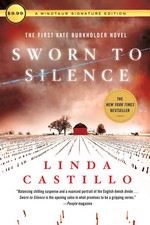
Sworn to Silence Sworn to Silence by Linda Castillo
Blurb: A woman who left her Amish community comes back to the area after many years away as Chief of Police. Soon, a murder pits her family and past against her duty.
My Thoughts: Recommended by a friend, and while “Amish Mystery” doesn’t necessarily scream my style, she hasn’t led me wrong yet.
Verdict:
Thumbs Up
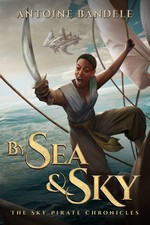
By Sea & Sky By Sea & Sky: An Esowon Story by Antoine Bandel
My Thoughts: There’s some sort of magic and pirates inspired by “the West Indies, The Swahili Coast, and Arabia”, and some sort of airship. Magic pirates in the sky=a combination that I’ve got to try.
Verdict:
Thumbs Up
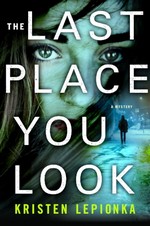
The Last Place You Look The Last Place You Look by Kristen Lepionka
Blurb: An emotionally troubled PI is on the hunt for a murder victim who might actually be alive in order to save the man convicted of her murder.
Verdict:
Thumbs Up
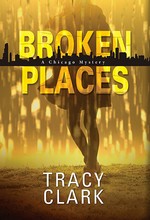
Broken Places Broken Places by Tracey Clark
Blurb: “former Chicago cop turned private investigator looks into a suspicious death as a favor to a friend—and makes some powerful enemies.”
Verdict:
Thumbs Up
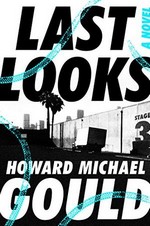
Last Looks Last Looks by Howard Michael Gould
Blurb: There’s a former LAPD detective living in solitude as some sort of penance for failure in a case. He’s brought back to LA by his former love to help an eccentric actor suspected of a murder
My Thoughts: That’s a lousy 2 sentence summary, but the blurbs are too long for this space. I like the idea of the damaged cop back to try to navigate through the case, his personal baggage, and other problems. John Michael Higgins does the audiobook, and I am incredibly curious about him as a narrator. Not curious enough to buy it, but curious. I wonder if that says something abou the tone of the book, too. It may be unfair, but I don’t see Higgins doing a great job on a dead-serious crime novel.
Verdict:
Thumbs Up
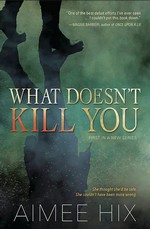
What Doesn't Kill You What Doesn’t Kill You by Aimee Hix
Blurb: “Willa Pennington thought that becoming a PI would be better than being a cop. She thought she’d never have to make another death notification or don a bulletproof vest again…But she couldn’t have been more wrong, because Willa’s real problem is that she’s always sticking her nose where it doesn’t belong…Now, agreeing to do a simple favor has netted her a dead body, a missing person, and an old friend who just may be a very bad guy. If whoever is trying to kill her would lay off she could solve the murder, find the missing girl, and figure out if the person she’s trusted with her life is the one trying to end it.”
My Thoughts: I think it was the “becoming a PI would be better than being a cop. She thought she’d never have to make another death notification or don a bulletproof vest again” part of the blurb that gets the hooks in me. Because you know it’s going to go wrong, and with that as the baseline, it’s going to be very wrong.
Verdict:
Thumbs Up
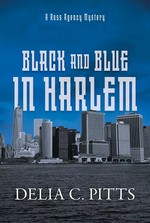
Black and Blue in Harlem Black and Blue in Harlem by Delia C. Pitts
Blurb: “Rook came to Harlem to re-build a life. You hit bottom, the only way out is up, right? Nice home, nice job, nice girl. With a few breaks, a hard-luck private eye can land on his feet, even if his balance is still shaky. But now that cozy home has turned deadly. With his pal NYPD Detective Archie Lin working the case, Rook joins the investigation into the death of his neighbor. Nomie George was a gentle, unassuming city bureaucrat, with few friends and no apparent enemies. Minding her own business, following government rules, and hoarding her skimpy paycheck were Nomie’s chief pleasures. But a frosty fifteen-story plunge ended her life. Could her lonely death be a suicide? Or might a brutal murderer be on the loose?”
My Thoughts: The premise of this makes this a slam dunk for me. But I see that it’s the third in a series. Reading it would probably bug me, so I’m going to give it the ax (and we’ll just ignore the fact that I’ve just added the first in the series to the list, because I need to cut something in this post).
Verdict:
Thumbs Down
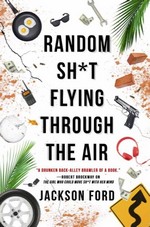
Random Sh*t Flying Through the Air Random Sh*t Flying Through the Air by Jackson Ford
Blurb: Teagan Frost, “psychokinetic operative” for the government seems to have her life about on track for the first time in ages, and then a “young boy with the ability to cause earthquakes has come to Los Angeles – home to the San Andreas, one of the most lethal fault lines in the world. If Teagan can’t stop him, the entire city – and the rest of California – could be wiped off the map.”
My Thoughts: I thought the first Teagan Frost book was a blast and have been looking forward to digging into this one. Not sure why I haven’t. With book 3 coming out at the end of this month, I’d best get to it.
Verdict:
Thumbs Up
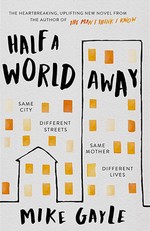
Half a World Away Half a World Away by Mike Gayle
Blurb: When they were children, siblings Kerry and Noah, ended up in the UK equivalent of the foster system, and ended up in very different places as adults. Kerry cleans homes and barely makes ends meet. Noah is a very successful barrister. When they reconnect, everything changes.
My Thoughts: Years ago, I tore through my local library system’s collection of Gayle books in a few weeks and couldn’t find any more. I’m not sure why I stopped looking. I saw a reference to this somewhere last year and it brought back a lot of good memories, I need to start reading Gayle again and I might as well start with this.
Verdict:
Thumbs Up
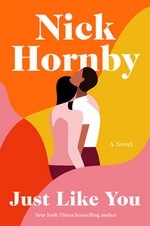
Just Like You Just Like You by Nick Hornby
Blurb: Lucy is “a nearly divorced, forty-one-year-old schoolteacher with two school-aged sons, and there is no script anymore. So when she meets Joseph, she isn’t exactly looking for love—she’s more in the market for a babysitter. Joseph is twenty-two, living at home with his mother, and working several jobs, including the butcher counter where he and Lucy meet. It’s not a match anyone could have predicted. He’s of a different class, a different culture, and a different generation. But sometimes it turns out that the person who can make you happiest is the one you least expect, though it can take some maneuvering to see it through.”
My Thoughts: It’s Hornby. The only reason I didn’t read it last fall (and probably have it on a best-of 2020 list) is that it fell victim to that time and money crunch that was my unexpected move.
Verdict:
Thumbs Up

Books Removed in this Post: 1 / 10
Total Books Removed: 144 / 290

Anyone out there read any of these books? Did I make the right call with any of them?


(Image by moritz320 from Pixabay)

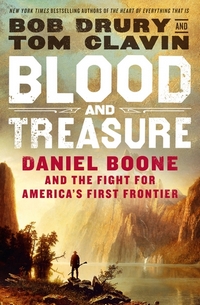
Blood and Treasure by Bob Drury, Tom Clavin: A Look at Dream Come Truers

Blood and Treasure

Blood and Treasure: Daniel Boone and the
Fight for America’s
First Frontier

by Bob Drury, Tom Clavin

eArc, 400 pg.
St. Martin’s Press, 2021

Read: April 5-14, 2021
Grab a copy from your local indie bookstore!

What’s Blood and Treasure About?

It’s pretty much in the subtitle—this book is about 2 things—Daniel Boone and the fight (literal and metaphoric) for America’s first Frontier—with a focus on what we now know as Kentucky, but pretty much everything on the Western edge of the American colonies/states.

It’s not a biography of Boone (I’ll tell you now, I wrongly expected this to be more of one), it’s more like he’s the organizing principle for the book, as we learn about Boone’s roots, early life, and adulthood the authors talk about the conflicts with the Indians on the edge of white civilization’s expanse. We’d get a chunk of a wide-view of history over a period, and then we’d focus on Boone’s life around that time. Then the focus would widen a bit and we’d look at another period of time—and so on.

Two significant ingredients in “the Fight” for the Frontier were what’s called The French and Indian War and the American Revolution. There’s the French and Indian War (and conflicts that led up to it and sprang from it) to begin with, paved the way for the latter conflicts—we see the pressure put on various tribes from the expansion of settlers, the resistance those settlers faced (from shifting alliances of Indians between themselves, and varying alliances between Western powers and the Indians).

As for the Revolution—while most histories/documentaries/etc. about it will acknowledge the fighting in the South and West, few take any time to focus on it. Instead, we casual history readers just get repeated retellings of the stuff we learned in elementary school—Washington*, the Continent Army, Benedict Arnold, Nathan Hale, the Green Mountain Boys, and whatnot—and whatever expansions on some of those topics that Hamilton has taught us in the last few years. This book is a great corrective to that showing how the Indians were largely pawns for the British to use against the colonies, to distract from the larger skirmishes as well as to try to open up another front on the war—another way to steal power and influence from the colonies. You see very clearly how easily the entire War could’ve changed if not for a couple of significant losses suffered by the British and their Indian allies.

* Washington is also featured pretty heavily in the earlier chapters, too—even if he maybe only briefly met Boone on one occasion.

Language Choices

I know this sort of this is pretty customary, but I really appreciated the Note to Readers explaining the authors’ language choices—starting with the tribal designations they used—the standard versions accepted today (there are enough various entities mentioned throughout that if they’d gone with contemporary names and spellings, I—and most readers—would’ve been very confused).

At the same time, they did preserve the varied and non-standard spellings for just about everything else. For example, there were at least three variant spellings for Kentucky: Cantucky, Kanta-ke, and Kentucki (I think there was one more, but I can’t find it).

I was a little surprised that they stuck with the term “Indian” as much as they did—but their explanation for it seemed likely and understandable.

An Image Shattered—or maybe just Corrected

Yes, I know that the Fess Parker TV show I saw after school in syndication was only very loosely based in reality. And that the handful of MG-targeted biographies I read several times around the same time were sanitized and very partial. Still, those are the images and notions about Boone that have filled my mind for decades. So reading all the ways they were wrong and/or incomplete threw me more than I’m comfortable with.

His appearance was particularly jarring—the actual Boone eschewed coonskin caps because they were flat-topped and preferred a high-crowned felt hat to look taller. THat’s wrong on so many levels. “Tall as a mountain was he” is about as far from the truth as you can get.

The fact that he spent most of his life bouncing between comfort and/or wealth and massive debt is both a commentary on his strengths and weaknesses as it is the volatile times he lived in—he lost so much thanks to colonial governments being mercurial. It was reassuring to see the repeated insistence that he was an honest man, who worked to repay his debts even if it took too long.

In the end, Boone seemed to be a good guy trying his best to get by and provide for his family—who accidentally stepped into some degree of celebrity, that magnified some good qualities and replaced the man with a legend.

So, what did I think about Blood and Treasure?

The writing itself? There are moments that were fantastic. On the whole…., but from time to time, when Drury and Clavin wanted to drive an image or description home, they could be stunning. I would have preferred things to be a bit more even—a bit more balanced and consistent on that front. But the topic and scope didn’t really allow for that. So I’ll just enjoy those moments of it that I got.

As for the book as a whole? It was impressive, entertaining (generally), and informative. When it was at its best, it didn’t feel like reading dry history but a compelling look at that portion of US History. At its worst, it was a litany of names, dates, and ideas that didn’t do much for me. Thankfully, those moments were few and far between. It’s not a difficult read at any point, just pretty dry on occasion.

There are so many other things I’d like to have mentioned or discussed—but it would make this post unwieldy. The notes about hunting (both the good and the horrible), Boone’s heroics, his character, and family; various aspects of the Indian customs discussed and so much. There’s just so much in this book to chew on that I can’t sum it up.

I liked this—I liked it enough to look at a few other books by this duo to see what they can do with other topics, people, and eras. I think anyone with a modicum of interest in Boone will enjoy this and be glad for the experience.

Disclaimer: I received this eARC from St. Martin’s Press via NetGalley in exchange for this post—thanks to both for this.


3.5 Stars

This post contains an affiliate link. If you purchase from it, I will get a small commission at no additional cost to you. As always, opinions are my own.

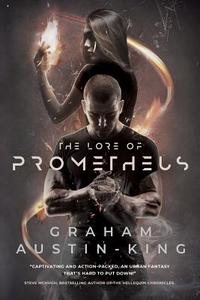
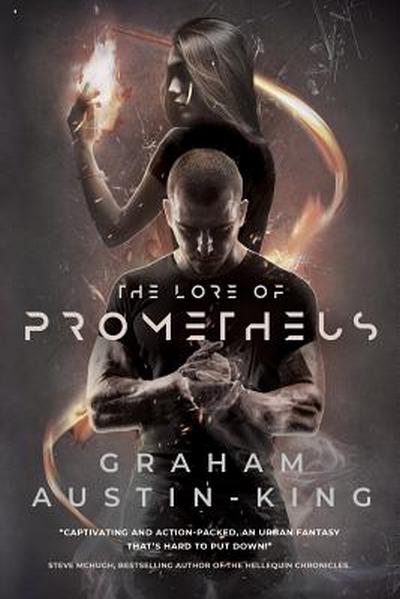
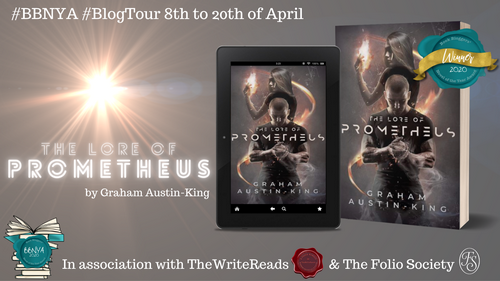
The Lore of Prometheus by Graham Austin-King: Don’t Make Him Angry. You Won’t Like Him When He’s Angry


The Lore of Prometheus

The Lore of Prometheus

by Graham Austin-King

Kindle Edition, 287 pg.
Fallen Leaf Press, 2018

Read: April 9-12, 2021
Grab a copy from your local indie bookstore!

What’s The Lore of Prometheus About?

Not that long ago John Carver was in Kabul as part of a Special Reconnaissance Regiment squad. As is too often is the case, a mission went awry and Carver watched his comrades die in front of him—he alone survived due to circumstances he could not explain.

As the book opens, he’s in London and isn’t dealing with his PTSD in any constructive or healthy way. Again, as is too often the case, he’s trying to numb himself with alcohol, gambling, and other self-destructive acts. Like taking out a significant short-term loan from a loan shark. The loan needs to be repaid soon, and there’s no way that Carver can do that.

He may be self-destructive, but there are limits. So he cashes in a favor and gets a job for a private security firm. His first assignment is to return to Kabul and train a government official’s security team. The last place he wants to go is where he’s known as “The Miracle of Kabul.” But it’s that or meeting a very painful end in London.

Carver doesn’t want to think of the incident—and will put in the effort to distance himself from it. But there’s a group more determined to find out exactly what happened. They’re well-funded, organized, and single-minded. They want to be able to explain people like Carver and the abilities they seem to have—and will take extreme measures to find that explanation and hopefully replicate those abilities.

Reality Check

The early chapters have Carver in London and then in Kabul. Those chapters have a gritty realism that I’m not used to in Urban Fantasy. In terms of setting, atmosphere, and characters—it’s like they stepped off the pages of a top-notch military thriller. More than once I had to ask myself, “We’re getting to the fantasy elements, right? Did I forget the blurb—this is fantasy, isn’t it?”

And sure, at a certain point, there’s no question—this is a Fantasy novel. But up until that right turn into Fantasy, Austin-King could’ve turned left and given us a perfectly serviceable (possibly very good) thriller full of true-to-life details.

You don’t see that very often and I wish I did.

Embracing the Ambiguity

I took several Creative Writing courses and workshops in college, in the decades since I’ve forgotten almost everything that my instructors or fellow students said about my workshopped pieces. But some of those comments I’ll carry until I’ve run down the curtain and joined the choir invisible. One of those concerned a supernatural event in one of my stories, a student (who was 50x the writer I was) argued that I should leave it ambiguous as to what happened, let the audience decide what the nature of the event was—it would be more effective. I saw his point about that scene, but the story hinged on that being a supernatural event—the rest was meaningless if that scene had a naturalistic explanation.

That came to mind as I was thinking about part of what Carver experiences. To keep it as vague as possible, we know that he can do certain things and that other characters can do other inexplicable things. But there are some things that could be an expression of his PTSD or could be paranormal in origin. It is far more effective, like the man in my workshop would say, that we don’t know what’s going on there. The scenes in question are very different depending on how you interpret those experiences. And I’ve enjoyed debating the interpretation with myself, I imagine I’m not alone.

Along those same lines, there are a couple of explanations given for the rest of what Carver (and just about everyone else) experiences—magic or “fringe” science thing worthy of Walter Bishop (and the door is open to other explanations, too, I think). Not only does Austin-King not give us an answer, he really doesn’t even explore the idea, debate the issue, or anything. It’s almost as if the text doesn’t care—it certainly doesn’t matter for what we need to know. That’s the way to do it.

I’m certainly not saying that McGuire, Hearne, Butcher et. al are wrong to say “magic” or that those like Jackson Ford who have a more science-y take on it are making a misstep—like me, their stories depend on a certain take on the idea. The Lore of Prometheus on the other hand shines in the lack of certainty.

Why I Almost DNFed This

There was a significant portion of this book that focused on people other than Carver and those in his immediate sphere of influence.

The theory embraced by those who are trying to understand his abilities is that those abilities are first and most easily manifested at emotional extremes, at the point of exhaustion where the subject’s mental barriers are most likely at their weakest. We’ve all seen things like this in various guises. To get the subjects to that point, they’re isolated, caged, only given the barest essential food and drink—essentially tortured.

And there’s a lot of that depicted. And not only did I not enjoy those portions of the novel, they just about drove me to stop reading. If I’d bought the book or checked it out of the library, I probably would have. But I’d agreed to this post, and that only comes through reading the book.

The first several chapters were fine, the last few chapters were better than fine. But I’m just not sure about that large middle section. Act II, if you will*. Was Act III worth working through that? I’ve had at least five answers to that in mind as I wrote this post. I think I’m going to leave the question unanswered. Some readers will think Act III pays off well enough to justify the second act. Others will absolutely disagree. Others will think I’m over-reacting and Act II isn’t that bad.

* I’m not entirely certain that this fits the three-act structure, but let’s use that for the sake of argument, okay?

As for me? It surely might have been worth pushing through. But I just don’t know.

So, what did I think about The Lore of Prometheus?

Well, I’m just not sure.

Can I see where a lot of people would like the novel and Austin-King’s writing? Absolutely. I’ve talked about some of the reasons for that above. Can I see where people wouldn’t enjoy the novel? Absolutely. But I’ve spent most of a week trying to decide what I think of the novel and I’m not sure. I’m probably going to spend a few more days wrestling with that. Maybe the fact that I’m spending this much time on the question rather than just shrugging it off and moving on says more than a definitive answer reached immediately after finishing.

It’s an interesting premise, well-executed, with compelling characters, gripping action, and a very satisfying ending. I’m sure of that. I’m confident most readers will see that. I’m just not sure what I think about the novel as a whole. If you find this intriguing, you should give it a chance.

I received this book from the BBNYA tours organized by the @The_WriteReads tours team, and thank them for the opportunity. As always, all opinions are my own.

BBNYA is a yearly competition where book bloggers from all over the world read and score books written by indie authors.

If you are an author and wish to learn more about the 2021 BBNYA competition, you can visit the official website (https://www.bbnya.com/) or our Twitter account, @BBNYA_Official. If you would like to sign-up and enter your book, you can find the BBNYA 2021 AUTHOR SIGN UP FORM HERE. Please make sure to carefully read our terms and conditions before entering.

If you are a book blogger or reviewer, you can apply to be part of BBNYA 2021 by filling out this form (also remember to read the terms and conditions before signing up)!

BBNYA is brought to you in association with the Folio Society (If you love beautiful books you NEED to check out their website!) And the book blogger support group TheWriteReads.

BOOK SPOTLIGHT: The Lore of Prometheus by Graham Austin-King

I’m very pleased today to welcome The Blog Tour for the winner of the inaugural Book Bloggers’ Novel of the Year Award. The Lore of Prometheus by Graham Austin-King. This Tour Stop consists in this little spotlight post and then my take on the novel coming along in a bit. Let’s start by learning a little about this novel, okay?

Book Details:

Book Title: The Lore of Prometheus by Graham Austin-King
Publisher: Fallen Leaf Press
Release date: December 9, 2018
Format: Ebook/Paperback/Audiobook
Length: 320 pages

Book Blurb:

John Carver has three rules: Don’t drink in the daytime, don’t gamble when the luck has gone, and don’t talk to the dead people who come to visit.

It has been almost five years since the incident in Kabul. Since the magic stirred within him and the stories began. Fleeing the army, running from the whispers, the guilt, and the fear he was losing his mind, Carver fell into addiction, dragging himself through life one day at a time.

Desperation has pulled him back to Afghanistan, back to the heat, the dust, and the truth he worked so hard to avoid. But there are others, obsessed with power and forbidden magics, who will stop at nothing to learn the truth of his gifts. Abducted and chained, Carver must break more than his own rules if he is to harness this power and survive

About the Author:

Graham Austin-King was born in the south of England and weaned on broken swords and half-forgotten spells.

A shortage of these forced him to consume fantasy novels at an ever-increasing rate, turning to computers and tabletop gaming between meals.

He experimented with writing at the beginning of an education that meandered through journalism, international relations, and law. To this day he is committed to never allowing those first efforts to reach public eyes.

After spending a decade in Canada learning what ‘cold’ really means, and being horrified by poutine, he settled once again in the UK with a seemingly endless horde of children.

To date he is the author of five novels, drawing on a foundation of literary influences ranging from David Eddings to Clive Barker.

Website ~ Twitter

I received this book from the BBNYA tours organized by the @The_WriteReads tours team, and thank them for the opportunity. As always, all opinions are my own.

BBNYA is a yearly competition where book bloggers from all over the world read and score books written by indie authors.

If you are an author and wish to learn more about the 2021 BBNYA competition, you can visit the official website (https://www.bbnya.com/) or our Twitter account, @BBNYA_Official. If you would like to sign-up and enter your book, you can find the BBNYA 2021 AUTHOR SIGN UP FORM HERE. Please make sure to carefully read our terms and conditions before entering.

If you are a book blogger or reviewer, you can apply to be part of BBNYA 2021 by filling out this form (also remember to read the terms and conditions before signing up)!

BBNYA is brought to you in association with the Folio Society (If you love beautiful books you NEED to check out their website!) And the book blogger support group TheWriteReads.

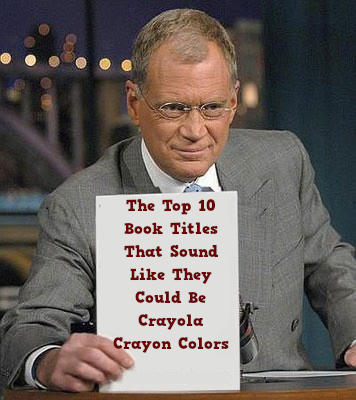
Top Ten Tuesday: Ten Book Titles That Sound Like They Could Be Crayola Crayon Colors

Top Ten Tuesday
The topic for this week’s Top Ten Tuesdays is Book Titles That Sound Like They Could Be Crayola Crayon Colors.

It’s been 11 months since I’ve done one of these (for no real reason), but this topic was so…strange that I had to try it. I’d like to say that I could describe what these particular crayons would look like, but if I could describe subtle nuances of color, I’d be writing things for book blogs to talk about, not writing about books for my blog. I got some input from my daughter, but I probably should’ve asked for more, this is her area.

Book Titles That Sound Like They Could Be Crayola Crayon Colors
(in no order whatsoever)

10
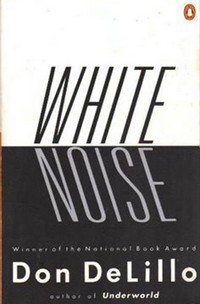
White Noise by Don DeLillo
I’m thinking this is a white with little specks of gray/black, like a TV tuned to a dead channel (for those who are of a certain age), or maybe Cookies and Cream ice cream. A fitting visual depiction of the variety of external stimuli and odd notions that combine into the titular white noise.
9
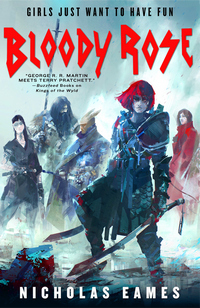
Bloody Rose by Nicholas Eames
Maybe this is too on-the-nose, but I’m thinking the deepest, darkest red—almost black. Like if you took a red rose and super-saturated it with, well, blood. I haven’t read it yet (don’t ask me why, I don’t have a good reason), but I’m thinking that Rose spends a good deal of time pretty saturated with blood.
8
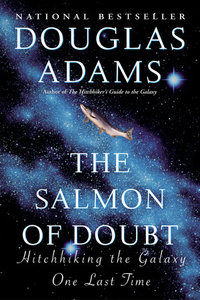
The Salmon of Doubt by Douglas Adams
So salmon is sort of a pinkish-orange, right? So start with that and then add a little gray for doubt. Which, I guess sounds like fish that’s been left in the fridge for too long and you no longer want to cook with it. A pretty unappealing idea, but that’s a fairly specific color. An odd enough idea, that it might appeal to Dirk Gently, the protagonist of the incomplete novel that lends its title to the book.
7
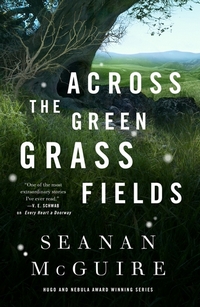
Across the Green Grass Fields by Seanan McGuire
It’s right there in the name, isn’t it? Green Grass Fields. Don’t think I could improve on it. (well, maybe the mixers at Crayola could figure out how to add a dew-like glisten, I think that’d be a nice touch).
6
Jade City by Fonda Lee
What would concrete made with jade as the aggregate look like? That’s what comes to mind here. That’s not what the novel makes you think of at all, but it fits for a crayon, I think.
5
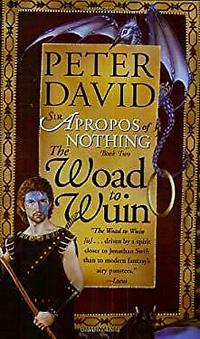
Woad to Wuin by Peter David
Obviously, you start with a good blue woad (yeah, that’s a tautology, shhh). But then the wuin, sorry, ruin brings up ideas of browns or grays. Leaving me with a muddy blue, I guess. It’s been a couple of decades, but I believe that’s a decent description of ol’ Apropos of Nothing: muddy blue.
4
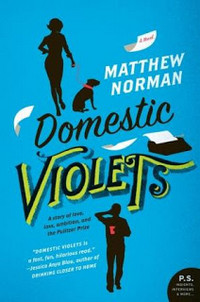
Domestic Violets by Matthew Norman
I’m thinking this is a nice, comfortable violet. Which is not really in the spirit of the book, but it fits the name.
3
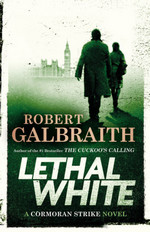
Lethal White by Robert Galbraith
Part of me wanted to try to look up the description of the horse that described this way in the book, but as anyone who’s read it knows, that’s just too much effort for a jokey post. So instead, I’m leaning toward a white. A bright, intense, burn-your-retina white. Except safe for kids and their crayons.
2
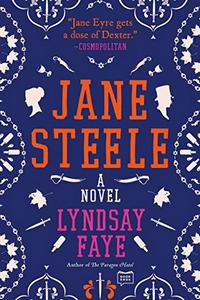
Jane Steele by Lyndsay Faye
Steel-gray is your base, but I was stuck after that. My daughter offered, “The color you’re missing from Jane Steele is a red. Idk why but Jane makes me think of some sort of red.” I don’t get a red off of Jane (maybe because there’s no way that “plain Jane Eyre” would go for red). But, Jane Steele is a murderer, I remembered. Nothing says murderer like red (except, I guess, a fancy prose style).
1
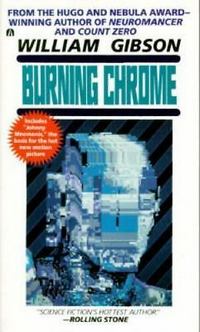
Burning Chrome by William Gibson
A gleaming, bright orange chrome is what my minds-eye conjures up here. Shiny and bright (and hot), like most of the stories in that book.

Page 3 of 5

Powered by WordPress & Theme by Anders Norén