Month: October 2021

Back to the Past by Jeff Quest

Strolling Down Amnesia Lane

Back to the Past

by Jeff Quest

I would love to say I was the 19-20-year-old who read Proust and Pynchon with regularity and could quote from the oeuvre of Whitman and Wordsworth; but I wasn’t then, and still am not now.

Instead, where I found myself in the year 1996 was that for the first time I was within walking distance to three bookstores, had access to a university library with tons of books/scripts, and more time to dedicate to reading than I can even imagine currently. That time of my life was when my reading options began to expand beyond the low-hanging fruit.

I was very much into the branded sci-fi/fantasy of the time so the Star Wars X-Wing novels and various Star Trek books loomed large in my reading. For all of my fantasy reading of the time, I managed to skip the book released that year that would come to dominate the fantasy world over the past ten years—A Game of Thrones.

My mystery/thriller/espionage fandom hadn’t fully formed yet. I would pick up the likely suspects you’d find in the drug store spinner rack, Cussler, Clancy, Ludlum, but I hadn’t yet tried some of the more challenging authors that now top my favorites list like Eric Ambler, John le Carré, or Len Deighton. I’d read Sherlock Holmes and other mysteries, but I’m happy that my mystery reading has broadened to include fun series authors like Rex Stout, SJ Rozan, and Will Thomas plus a recent class has introduced me to several authors whose work has been translated into English.

I did find one enduring read that I can trace back to that particular year – P.G. Wodehouse. His Mr. Mulliner omnibus introduced me to an unknown world of vicars, broadway producers, movie stars and writers who proceed to get into more zany situations than you can shake a stick at. He’s a writer that I love to return to, especially any time when life gets stressful and I need to shift to a different world where the stakes are low.

1996 also found my reading including a lot of plays and I discovered one of my favorite playwrights – David Ives. Although it’s almost always preferable to watch theater rather than read it, in Ives’ case the reading is just as pleasurable. His beguiling short play The Universal Language, about a con man that “teaches” his students how to speak his “universal language” made up of nonsense words, is one of my favorites. Back in ‘96 I was dying to perform in one of his short plays and I pledged to will a production of his work into existence, something I eventually succeeded in doing five years later. That show was also how I started dating my wife, so the seeds of my life now were truly planted back in 1996.


Jeff Quest is a reader with less time to read than he’d prefer. He writes about spy fiction at SpyWrite.com and podcasts on Nero Wolfe at LikeTheWolfe.com, Mick Herron at BarbicanStation.com and spies at Spybrary.com.

Header image by jplenio from Pixabay

1996: The Year a Book Turned Things Around by K.R.R. Lockhaven

Strolling Down Amnesia Lane

1996: The Year a Book Turned Things Around

by K.R.R. Lockhaven

In 1996 I was a junior in high school with an ever-growing urge to drop out.

The shitty thing was, I had always been good at school up to that point. Earlier in my academic career, I had been given a chance to join this gifted program, but I had spurned it because all I wanted to do was drink, talk to girls, and steal everything that wasn’t nailed down. The change had been sudden.

I could try to blame this change on hanging with the “wrong crowd,” which was definitely a part of it, but the blame was mostly on me. I had very little self-confidence back then, and even less purpose in life. Looking back, I can see that a big part of it was the fact that I had given up on a very important part of my life to that point.

I had given up on fantasy books, both reading them and writing them.

Throughout middle school and into high school I had been an avid reader of the Dragonlance series, and I had started writing a fantasy series of my own. My books were so close to the Dragonlance books in content they probably could have been considered plagiarism, but I absolutely loved writing them. I would lovingly draw each character and make detailed maps of my made-up worlds. I wish I still had them, but nearly all of it has been lost over the years.

I was extremely nerdy, but I didn’t have any nerdy friends. So once I became aware that my interests weren’t cool, I began to hide them from people. What once brought me joy slowly became something shameful. Eventually, I abandoned the whole idea of writing and began to fill that void with all the wrong things.

Anyway, back to 1996, the year I picked up the book The Sirens of Titan by Kurt Vonnegut. At this point I was no longer an avid reader, but I still had reading assignments from time to time in school. I wish I remembered the circumstances, as it ended up being such a pivotal moment in my life, but I don’t. What I do remember is how that book completely floored me. It brought back all that love of stories I used to have, and although it took a while to fully realize it, it sparked the idea that would soon give my life the purpose I had been missing.

I don’t want to spoil the book at all, but I think it’s safe for me to say a few things about it. For example, its explanation for the purpose of all human life is one of the darkest and funniest things I’ve ever read. It’s hard to explain how that changed my way of thinking, though. I guess the idea that there was no ultimate purpose in life, or that such things could be joked about,  was very freeing. My teenaged mind hadn’t really contemplated such things before, but Vonnegut’s wisdom and satire had brought so many new ideas to the forefront. One of those ideas came from the following line: “I can think of no more stirring symbol of man’s humanity to man than a fire engine.” This one line in a book I just happened to pick up in 1996 led me to where I am today, sitting in a fire station, writing a blog post about reading and writing. The goal of becoming a firefighter, although vague at first, helped to keep me on track through some tumultuous times.

I’m currently working as a firefighter while pursuing my middle school dream of being a fantasy author. My writing is nothing like Dragonlance, or Vonnegut, but I can definitely see their influences in everything I write.


K.R.R. LockhavenMy book, The Conjuring of Zoth-Avarex: The Self-Proclaimed Greatest Dragon in the Multiverse can be found here here and the follow-up, a Choose Your Own Adventure-style novella, can be found here here.

You can find me on Twitter—@Kyles137 or at my website krrlockhaven.com.


Header image by jplenio from Pixabay

Authorial Aspirations? Not So Much by Robert Germaux

Strolling Down Amnesia Lane

Authorial Aspirations? Not So Much

by Robert Germaux

Okay, first, authorial? Really cool word, one I’d never come across until H.C.’s email giving me the outline for this guest post. You learn something new every day, right? And speaking of this guest post, travel with me back to 1996, when I was a tender lad of 50. Wait, no need to reach for the old abacus. I’ll save you the trouble. I’m old.

Getting back to the title of this piece, no, I had no authorial aspirations at that time. I was still three years away from taking advantage of an early retirement offer from the Pittsburgh Public Schools System, so the bulk of my “writing” that year consisted of the comments I wrote on the approximately 1500 student compositions I graded for my 9th and 11th grade English classes. Some of my students were very good writers, so the comments I wrote on their papers came pretty easily. On the other hand, many of my kids struggled with the process of transferring thoughts to paper, so after gently pointing out a few of their more egregious errors in spelling, grammar, syntax, etc., I also tried to add a positive note or two, which at times involved a certain degree of creativity on my part.

What was I reading in 1996? Well, that’s an entirely different situation. No matter how busy I was with my “schoolwork,” I always found time for recreational reading. I particularly enjoyed the detective series by Robert B. Parker, Michael Connelly, Sue Grafton (I think 1996 was M is for Malice) and Robert Crais, but I also loved reading P.G. Wodehouse’s Bertie and Jeeves stories, which my father had introduced me to when I was just sixteen or seventeen. Beyond books, I read magazines: Sports Illustrated, Time, People, Life, Ladies Home Journal (the only periodical my dentist had in his waiting room), TV Guide, etc. Basically, if you wrote it, I’d read it. And, of course, I always glanced through Pittsburgh’s two daily newspapers. (Sadly, today, the ‘Burgh, like so many other cities in this country, is a one-paper town.)

So, no writing back in ’96, other than the aforementioned composition comments. But shortly after I retired, my wife urged me to give writing a try. As usual, Cynthia’s suggestion was a good one, because now, here I am twelve books later, and although I didn’t realize it at the time, all that reading and grading of papers written by teenagers in 1996, along with the time I spent putting eyes on books, magazines, newspapers, heck, even billboards on drives across Pennsylvania to visit my wife’s family, all of that definitely played a part in preparing me for my post-teaching career as a writer. Of course, it wasn’t just 1996. It was also all the years before and since. It’s an ongoing process for all of us who write. It’s who we are. It’s how we’re hard-wired.

Twenty-five years from now, in 2046, when H.C. and his wife are celebrating their 50th wedding anniversary (I recommend a cruise of the Mediterranean) and I’m turning 100, I’m sure I’ll still be reading and writing, maybe even submitting the occasional Senior’s Perspective guest post to The Irresponsible Reader.


Robert GermauxRobert Germaux and his wife, Cynthia, live outside of Pittsburgh. After three decades as a high school English teacher and now more than twenty years into retirement, Bob is beginning to have serious doubts about his lifelong dream of pitching for the Pirates. While waiting for that call from the team’s GM, Bob has written five books about Pittsburgh private detective Jeremy Barnes, two books about Pittsburgh police detective Daniel Hayes (who hunts serial killers in the Steel City), and two stand-alone books: The Backup Husband (a romance with a twist) and Love Stories (a semibiographical novel based on the six weeks Cynthia spent in Europe when she was seventeen). In addition, with tongue planted firmly in cheek, Bob has written what he likes to call his Grammar Sex Trilogy, three collections of humorous essays.

You can find links to all of Bob’s books (and download free samples) at his Amazon Author Page.

Header image by jplenio from Pixabay

Strolling Down Amnesia Lane—An Introduction to This Week’s Series

Strolling Down Amnesia Lane
I have never had a week’s worth of posts scheduled before today. I’m excited for the series for that alone. I did that because I’m out of town for the week with my wife and as a gift to her, I’m not going to work on the blog. I”ll look in on things from time to time, I’m sure, but I won’t be doing anything until Saturday (and I’m only halfway sure I’ll bother with a Saturday Miscellany). It’s our 25th Anniversary this week, and I’m not thinkng about work or this blog.

So I put out a call to readers of this space to chip into a different kind of Guest Post series. The pitch was:

Think back to 1996. What were you reading? What were you writing—did you have authorial aspirations at that point? If you weren’t a reader/writer at that point, can you point to why? What were you doing at time that prepared you to become the reader/writer you are today? Basically, you and the written word in 1996—do with it what you will (heck, if you’re in the mood to write an alternate history about what could’ve been, go for that).

Obviously, 1996 was picked as the theme, because that’s the year I’m thinking a lot about this week. I didn’t expect it to be as pivotal for every contributor as it was for me, but one of my assumptions is that for pretty much any year, we can find some things going on that are part of the foundation for where we are now. And I thought it’d be fun to explore that a bit.

So that’s what we’re going to do this week. Yes, so we have writers at various stages of their careers, bloggers and a podcaster–but our common thread is the written word. And the influence of what we’ve read has shaped us into what we are now (usually without us realizing it at the time).

We’ll start things off later this morning with Robert Germaux, indie crime writer. Tuesday we’ll hear from K.R.R. Lockhaven, firefighter/fantasy author. On Wednesday blogger and podcaster Jeff Quest is up to bat. On Thursday, Ian Patrick Robinson—one of the best Crime Fiction writers around—will wrap up the guest contributions. And then on Friday, I’ll hopefully not bring down the average quality of the series too much.

I really want to thank everyone who expressed interest in this series—and for the couple of people who weren’t able to come up with something, I still thank you for the time (and don’t blame you—I almost didn’t contribute anything myself). But for those four who persevered? I cannot thank you enough—this was not an easy task. Each contribution made me smile and I can.

To everyone else who’s read this far, I hope you enjoy our looks back to twenty-five years ago as we stroll down Amnesia Lane…

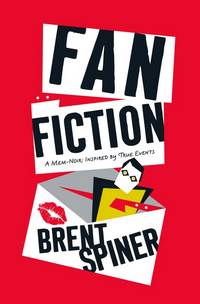
Fan Fiction by Brent Spiner: The Previously Untold Story of Lt. Cmdr. Data’s Stalker

Fan Fiction

Fan Fiction
A Mem-Noir: Inspired
by True Events

by Brent Spiner

eARC, 256 pg.
St. Martin’s Press, 2021

Read: September 29-30, 2021
Grab a copy from your local indie bookstore!

What’s Fan Fiction About?

During the filming of Season 4 of Star Trek: The Next Generation, Brent Spiner starts receiving threatening (and disturbing) packages and letters delivered to his trailer. They’re purportedly from “Lal” (Data’s daughter from episode 3.16 “The Offspring”).

Those aren’t the only interesting letters he’s receiving, there are also a series of letters from someone claiming to speak to Spiner on the phone at night while her husband is out of town on business. These conversations are apparently quite graphic and sexual in nature, while the letters that are in response to them are very benign, and maybe a little tragic.

Spiner gets help from the LAPD, the FBI, a personal bodyguard, and fictionalized versions of his ST:TNG costars as the threats increase in intensity. This assistance bounces from comical to incredibly effective, while Spiner’s worry and stress (and increasing lack of sleep) start to spiral out of control and his grasp on sanity starts to slip.

Fan Connection

When it comes to his stalker, the late-night phone call recipient, a law enforcement officer/would-be-TV-writer, a pizza delivery man—and a few others, the relationship between fan and performer is clearly unhealthy.

But throughout there is a thread of meaningful connections being made through Spiner’s performance to the audience. There were a couple of really sweet moments we see because of this—in the midst of the satiric madness, they really ground the work and help you remember that Spiner was more than someone suffering from a sleep-deprived paranoia.

I’m Likely to be The Only One Bothered By This, But…

We spend a lot of time with ST:TNG and have references to other parts of Spiner’s career before that, but not one single nod to Bob Wheeler?

That’s the role that made me a fan of Spiner—probably would’ve found another 1/2 Star or so if there’d been a quality joke about him.

So, what did I think about Fan Fiction?

I don’t remember the last time I had this much fun reading a book—it was just a blast. I laughed and/or chuckled frequently, cringed a couple of times (in a good way), and couldn’t turn the pages fast enough.

That starts with the characters: Spiner’s antics and reactions to his situation were great. The comically-exaggerated versions of the ST:TNG cast were fantastic—I wouldn’t mind reading a series of Spiner’s adventures just to see those again. The Bodyguard and FBI officer rounded out the cast of characters in an entertaining way that also provided the lethal abilities required to keep Spiner alive in the face of the threat.

The stalker’s actions in other settings would be hair-raising and chilling—but given the comic tone, they become ridiculous. And you can’t wait to see what extreme “Lal” will go to next.

Spiner’s humanity (depicted as very flawed) shines through in the midst of the madness. When that’s combined with the heartwarming fan connections, they make this surprisingly sweet as much as it is comically dark. All in all, a real winner.

Fans of Star Trek or Hollywood satires need to get their hands on it.

Disclaimer: I received this eARC from St. Martin’s Press via NetGalley in exchange for this post—thanks to both for this.


4 Stars

This post contains an affiliate link. If you purchase from it, I will get a small commission at no additional cost to you. As always, opinions are my own.

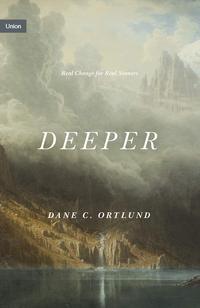
Deeper by Dane C. Ortlund : Ends Up a Bit Too Shallow and Vague

Deeper

Deeper: Real Change for Real Sinners

by Dane C. Ortlund
Series: Union

Kindle Edition, 144 pg.
Crossway, 2021

Read: October 26, 2021
Grab a copy from your local indie bookstore!

What’s Deeper About?

The goal of this book is to call believers to grow in Christ, to experience a deeper kind of Christian life. Ephesians 4:15 and 2 Peter 3:18 call for the Christian to grow, and that’s where Ortlund wants to focus.

He eschews the typical calls for greater discipline, certain acts/habits, intellectual pursuits, or behavioral changes for this aim. Instead, Ortlund wants to pursue this through a focus on Christ we are changed as we look to Him and his benefits.

Growing in Christ is not centrally improving or adding or experiencing but deepening…deepening is that you already have what you need. Christian growth is bringing what you do and say and even feel into line with what, in fact, you already are.

To point the believer to looking to Christ, he focuses on nine different aspects of that action—with one chapter per aspect (that I’ll gloss over because I get into it later).

Sources/Influences

Early on, Ortland makes several references to Henry Scougal’s The Life Of God In The Soul Of Man, which just made me happy. Introducing contemporary readers to Scougall’s classic is a great thing—also, it reminded me that I need to dust off my copy. I’m far overdue for a re-read of that.

I also assumed that the whole book was going to be along those lines. Instead, he seemed to lean primarily on Martin Luther, C. S. Lewis, Francis Schaeffer, and Dietrich Bonhoeffer—not a slouch among them, but none of them are really all that well-known for their work on sanctification.

I’m not saying that’s bad, I’m just wondering if his influences led to some of my ambivalence about the book as a whole.

So, what did I think about Deeper?

I do not have nine things to say. I have one thing to say. Look to Christ. You will grow in Christ as you direct your gaze to Christ. If you take your eyes off of Jesus Christ and direct your gaze to your own growth, you will prevent the very growth you desire…

The nine chapters of this book are not sequential steps in growing; they are different facets of the one diamond of growth. In order to grow, we need to see who the real Jesus is (chap. 1), collapsing into his arms and continuing to do so all our lives long (chap. 2) as those united to him (chap. 3), drinking down his undeserved love (chap. 4) and full legal exoneration on the basis of his own finished work (chap. 5), being therefore freed up to walk in the light (chap. 6) and receive the anguish of this life as the gentle hand of God to help us rather than to punish us (chap. 7), seeing the love of Christ by inhaling the Bible and returning our love to him in exhaled prayer (chap. 8), and actually experiencing the love of heaven through the indwelling Spirit (chap. 9).

It is, no question about it, better than the previous volume in the Union series. But for a book called Deeper, it really leaned toward the shallow, he needed to expand every one of those facets—if for no other reason than to do a better job of showing how they’re facets of the one idea. Because as much as he claims he had one idea in the book, not nine, I really never got that impression. Like the Reeves book on Fear of God, if this is intended to be the “full treatment” of the idea for pastors and other leaders, it falls short.

I liked everything that he had to say, I appreciated the wisdom of it, and I agree these things, as they are rooted in the gospel, need to be emphasized in the believer’s attention and life. But…I always felt like something was missing. Both in his thinking and his presentation—it’s likely just the latter, but without the more thorough presentation, it seems like it’s his logic.

I think most people will find some benefit to this book—not as much as Ortlund aimed for, perhaps–and I’m glad I read it. I just wanted something deeper.


3.5 Stars

This post contains an affiliate link. If you purchase from it, I will get a small commission at no additional cost to you. As always, opinions are my own.

Saturday Miscellany—10/2/21

Odds n ends about books and reading that caught my eye this week. You’ve probably seen some/most/all of them, but just in case:

bullet Indie Presses Have to Partner Up—Indie Presses (as well as Indie Booksellers) have got to look for ways to survive, this Op-Ed from Publishers Weekly has some good ideas.
bullet Upcoming Book Shortage and How to Help
bullet The digital death of collecting—not strictly about books, etc. But close enough…
bullet Charlie and Lola author Lauren Child says children’s books should be taken seriously—I admit, I don’t do as good of a job on this front as I think I should (definitely not as Child thinks I should), but I don’t think she’s wrong.
bullet Up Close: Lee Matthew Goldberg—A nice feature on Goldberg, with a focus on his latest, Stalker Stalked.
bullet From Pen Stroke to Key Stroke: On Slander in Suspense—how some crime writers are approaching a world in which “All crime is cyber crime”—at least a bit.
bullet Celebrating the Librarians of SFF—sure, the list is missing a few. But it’s got a lot of good ones.
bullet The Libraries of Who We Are—once again, Templeton knocks it out of the park (a good companion read to the earlier essay about collecting)
bullet Ace Atkins asked authors to post ugly covers to their books a couple of days ago, and got some truly bizarre results.
bullet 5 Benefits of Listening to Audiobooks!
bullet The Benefit of Glossaries in Fantasy Novels!—I must be reading the wrong fantasy books, because i’d love this feature…
bullet I’m a Reader, Get Me Out of My Reading Slump!—a miserable experience, for sure. But sounds like Lois is finding a positive takeaway.

This Week's New Releases That I’m Excited About and/or You’ll Probably See Here Soon:
bullet Teen Titans: Beast Boy Loves Raven by Kami Garcia, Gabriel Picolo—the third in this series of reworked origins brings the two together in their search for answers.
bullet Under Color of Law by Aaron Philip Clark—A black HRD detective investigates the murder of a black LAPD Academy student to kick off a promising looking series.

Lastly I’d like to say hi and extend a warm welcome to davidlonan1 and //Anannya// (I love the tag line for her blog, “One Stop for Your TBR Extension”) who followed the blog this week. Don’t be a stranger!
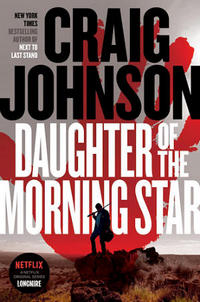
The Friday 56 for 10/1/21: Daughter of the Morning Star by Craig Johnson

The Friday 56This is a weekly bloghop hosted by Freda’s Voice.

RULES:
The Friday 56 Grab a book, any book.
The Friday 56 Turn to Page 56 or 56% on your ereader. If you have to improvise, that is okay.

The Friday 56 Find a snippet, short and sweet.
The Friday 56 Post it

from Page 56 of:
Daughter of the Morning Star

Daughter of the Morning Star by Craig Johnson

I pounded again.

After a moment, I heard footsteps, and the door was snatched open by the same skinny guy I’d seen enter. He no longer wore the jacket with his name on it, but I took a leap of faith. “Jimmy Lane?”

He stared at me, and I had time to study the face on his oversize head, acne scarred with a withered Fu Manchu and limp dark hair that slithered over his shoulders. Oddly, his body parts were all oversize—not only his head but also his hands and feet—almost as if he’d been assembled from parts that didn’t quite match. He had the look of somebody who had taken a lot of questionable chances in life and had paid for every single one of them in spades.

I hadn’t thought it was a particularly difficult question but asked again, this time mixing it up in an attempt to jog something loose. “Lane, Jimmy Lane?”

September 2021 in Retrospect: What I Read/Listened to/Wrote About

September has come and gone, and what’s happened here? Well, I completed 30 books—8,240 pages (or the equivalent)—with a 3.7 average (thanks to a lot of 5-Star reads). I posted something every day, too. NOt necessarily something good, but something—and that’s a start. I did not accomplish my big goal of the month, which was to finish posting about my 20 Books of Summer books, I’ve got to get going on that (if only so I can read a sequel or two). But basically, it looks like a pretty good month.

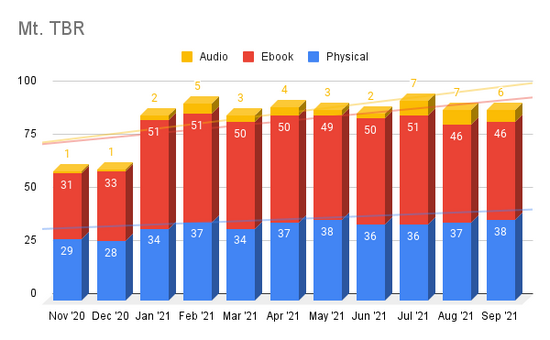
I was really looking forward to looking at how far Mt. TBR had shrunk this month—I knew I’d done good work on that front. Annnnnd…it’s exactly the same height—one smaller in Audiobooks and one larger in hardcopy. Maybe in October?

Anywho…now for what happened here in September.

Books Read

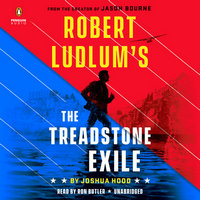
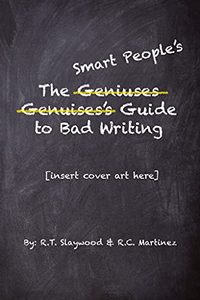
True Dead The Treadstone Exile The Genius' Guide to Bad Writing
4 1/2 Stars 2 Stars 3.5 Stars
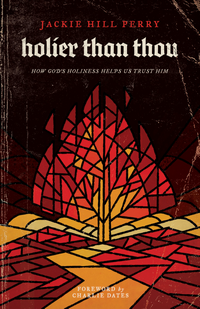
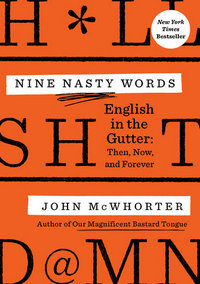
Holier Than Thou Headphones and Heartaches Nine Nasty Words
3 Stars 5 Stars 3 Stars
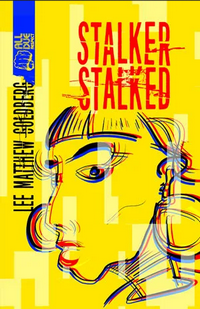
Stalker Stalked Yearbook Suburban Dicks
4 Stars 3 Stars 5 Stars
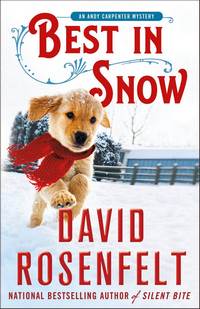
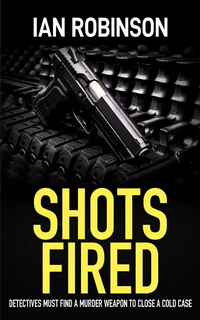
Bound Best in Snow Shots Fired
5 Stars 4 Stars 4 Stars
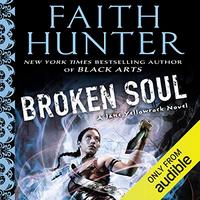
It's a Wonderful Woof Broken Soul How to Slay a Dragon
4 Stars 4 Stars 2 1/2 Stars
When Sorrows Come In Conclusion, Don't Worry About It Meadowlark
5 Stars 3 Stars 3 Stars
The Path of Faith Word by Word The Chronicles of Iona: Exile
4 Stars 3.5 Stars 3 Stars
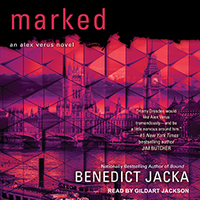
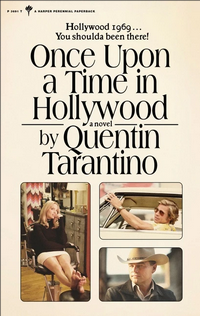
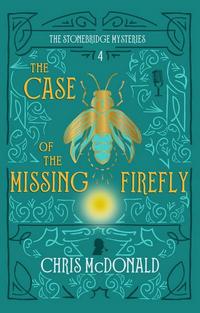
Marked Once Upon a Time in Hollywood The Case of the Missing Firefly
4 Stars 3 Stars 4 Stars
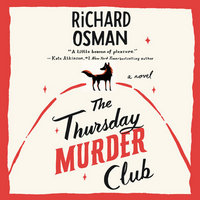
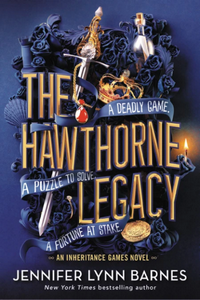
Deeper The Thursday Murder Club https://www.hachettebookgroup.com/titles/jennifer-lynn-barnes/the-hawthorne-legacy/9780759557642/
3.5 Stars 4 1/2 Stars 3.5 Stars
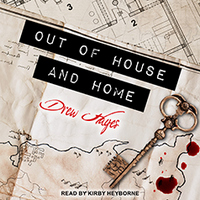
Daughter of the Morning Star Out of House and Home Fan Fiction
4 Stars 3.5 Stars 4 Stars

Still Reading

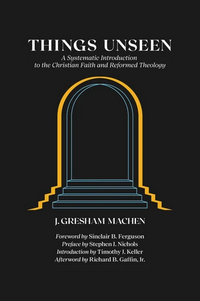
Things Unseen See Her Die Blank Space

Ratings

5 Stars 4 2 1/2 Stars 1
4 1/2 Stars 2 2 Stars 1
4 Stars 10 1 1/2 Stars 0
3.5 Stars 5 1 Star 0
3 Stars 7
Average = 3.7

TBR Pile
Mt TBR September '21

Breakdowns
“Traditionally” Published: 23
Self-/Independent Published: 7

Genre This Month Year to Date
Children’s 0 (0%) 2 (1%)
Fantasy 0 (0%) 16 (7%)
General Fiction/ Literature 3 (10%) 13 (6%)
Horror 0 (0%) 0 (0%)
Humor 1 (3%) 5 (2%)
Mystery/ Suspense/ Thriller 12 (40%) 87 (39%)
Non-Fiction 4 (13%) 15 (7%)
Science Fiction 0 (0%) 15 (7%)
Steampunk 0 (0%) 0 (0%)
Theology/ Christian Living 3 (10%) 26 (12%)
Urban Fantasy 6 (20%) 41 (18%)
Western 0 (0%) 0 (0%)

Review-ish Things Posted

Other Things I Wroteotherwriting
Other than the Saturday Miscellanies (4th, 11th, 18th, and 25th), I also wrote:

How was your month?

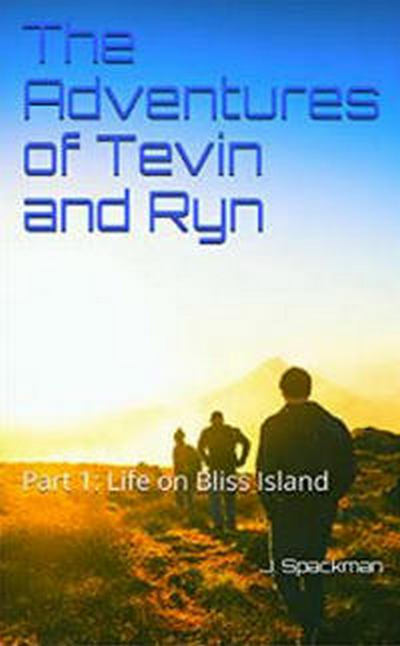
BOOK SPOTLIGHT: The Adventures of Tevin and Ryn – Part 1 by J. Spackman

I just don’t have time to read every book that comes my way, but I’d like to do my part to expose them to as many eyeballs as I can. So, from time to time, I’ll post a Spotlight to lend a hand. If SF novellas filled with dystopian tech are up your alley, you should jump on it.


Book Details:

Book Title: The Adventures of Tevin and Ryn – Part 1 by J. Spackman
Release date: June 25, 2021
Format: Kindle
Length: 66 pages

Book Blurb:

The Adventures of Tevin and Ryn is a series of fast-moving short novels of a futuristic world filled with dystopian technology. In Part 1, Tevin, a teenage orphan and young first-year professor, learns that Bliss Island has a dark side run by Damian, an evil tycoon. Ryn, pretending to be his student assistant at the university, joins him on many adventures that take them across Bliss Island and the neighboring Ghost Island. Throughout the series, they find themselves in situations where many friendships are formed and tested, love blossoms, mysteries are solved, family secrets are revealed, sporting events are hacked, revolutions are started, children are rescued, treasure is found and lost, and a new society is born of an ancient legend.

About the Author:

Back in 2010, I met with Dr. Stephen Yanchar in the Instructional Pyschology & Technology department of Brigham Young University to talk about my dissertation. The major thought rattling around inside my head centered on treating students like humans with agency rather than like programmable computers or trainable animals. If we were to treat students as humans with agency, then what kind of learning opportunities would be ideal? Dr. Yanchar and I published “Learning as Embodied Familiarization” as our learning theory.

Then I finished my dissertation “Exploring the Narrative-Oriented Qualities of the Learner’s Encounter with Unfamiliarity” and received my PhD.

Following my dissertation, I decided to begin work on creating an example of the type of learning opportunities I initially set out to find where students were treated as humans with agency. In my spare time, that example turned into a six-book series of fast-moving short novels about the adventures of Tevin and Ryn. The main characters exemplify learning as embodied familiarzation and also explore narrative or storytelling as the medium.

Social Media

LinkedIn ~ Facebook

Purchase Links

Amazon

Page 5 of 5

Powered by WordPress & Theme by Anders Norén