Month: December 2021 Page 5 of 6

Mistletoe and Crime by Chris McDonald: Adam and Colin Get Called Back into Action

This is going up a bit later than intended because I cut out about 30-40% of what I’d written—you can only go on so long about a novella before you’re competing with the length of the material. Hopefully, it’s still coherent.
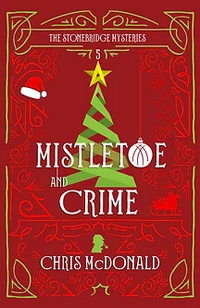

Mistletoe and Crime

Mistletoe and Crime

by Chris McDonald
Series: The Stonebridge Mysteries, #5

Kindle Edition, 115 pg.
Red Dog Press, 2021

Read: December 7, 2021
Grab a copy from your local indie bookstore!

The Intervening Year

So, it’s been a year since The Case of the Missing Firefly. Colin and Adam have seemingly retired from the jobs they never really had. They haven’t been in the wrong place at the right time to stumble upon a corpse or haven’t been recruited by loved ones frustrated by the police’s inaction, so they’ve been able to focus on things like Adam’s business and relationship, Colin’s job, and their ongoing PlayStation FIFA rivalry.

We’re given a little nugget about part of the reason for their inactivity:

After a number of embarrassing blunders, there was an investigation into the Stonebridge police force, which resulted in them taking crimes in the town a bit more seriously. This meant that the kinds of miscarriages and oversights that Adam and he had looked into had reduced in number, rendering the amateur detective duo obsolete.

I think it’s charming that protests, marches, and scandal are what lead to changes/potential changes in policing in series like Goldberg’s Eve Ronin or Connelly’s Renée Ballard, in Stonebridge’s universe, it takes a couple of guys who’ve spent too much time watching Sherlock to get the police in line. Of course, this is also a town where the “bad side” is characterized by “vegan food stores and hippy clothing bazaars.” If I can’t move to Stars Hollow, CT, maybe I can emigrate to Stonebridge…

Thankfully, in the Real World, Chris McDonald had plans for the duo, so their retirement is short-lived:

What’s Mistletoe and Crime About?

After watching a cheesy Holiday Rom-Com at the theater (and, no, Adam, did not cry at the ending, thank you very much), Adam and Helena take a shortcut through an alley to get to the car. Along the way, they come across an obviously dead body. Adam’s well-documented queasiness around blood rears its head (not before his subconscious notices something is wrong) while Helena’s nurse-reflexes lead her to snap a quick picture of the scene and before jumping to ensure that the man doesn’t need assistance.

The police quickly decide the homeless mana well-known Stonebridge fixturewas inebriated, slipped on the snowy ground, and died of the resulting injury.

A man approaches Adam and Colin soon after this asking the duo to look into the deathhis testimony isn’t unimpeachable, but it’s enough to move them into looking into things. The man’s claim is buttressed by the photo Helena took which shows a footprint suggesting that someone left the scene after the man was on the ground. So we’re off to the races…

The Boys Are Growing Up

In the year away, Adam and Colin have continued to mature. The impression I had during The Curious Dispatch of Daniel Costello was that these two would be the stereotypical 20-somethings who still lived with their mothers, jumping from entry-level gig to entry-level gig for quite a while (even if Colin seemed on the cusp of leaving that description behind when we meet him). But almost immediately, McDonald used their success as a catalyst for personal growth. One advantage of having them take a year off is that we can see the result of twelve months of incremental growth.

After a year away, Adam’s business has established itself pretty well. He’s doing well enough that at this time of year when there’s not a lawn to be cared for, he’s able to not have to worry about money. His relationship is going well enough that he and Colin don’t spend that much time together, and most of their gaming is done online.

Colin’s doing very well at his job and has been acting as a manager. He’s realizing that it’s time he finds a good relationship and is looking.

So, what did I think about Mistletoe and Crime?

No surprise hereI liked it. I liked it a lot. The first thing I did yesterday was to download it so I could spend my spare time in Stonebridgewhich made for a perfectly entertaining day.

In addition to the typical Stonebridge fun, McDonald takes full advantage of the seasonal setting. There are any number of nice little holiday touches and jokes, for example: have we known the mayor’s name before? If not, it’s the perfect subtle joke. If we have had it before, I’ve fallen into the classic English major blunder of reading too much into things.

But more than just for fun, McDonald is able to tap into the spirit of the seasonfamilies and friends coming together for festive fun, the general bonhomie brought on by the traditions, not to mention the consumer-madness too-often seen in department stores.

This is the fifth novella in this series that I’ve talked about this yearI don’t have a fresh way to express my appreciation of them. It’d help me as a blogger if McDonald would stumble a couple of times with this series so that I’d have the opportunity to talk about him returning to form after wondering if the magic was gone. But no, he has to be consistently good so that I sound like a broken record.

A clever mystery, characters that display a good amount of development, situations that are appropriately amusing/sweet/tense, and the kind of prose that welcomes you in and makes you feel at home. In other words, a cozya well-written and executed one.

As is to be expected, McDonald delivers, you’re missing out if you don’t join in the fun (this would be a fine jumping-on point, I should addbut go back to the beginning while you’re at it)!


4 1/2 Stars

This post contains an affiliate link. If you purchase from it, I will get a small commission at no additional cost to you. As always, opinions are my own.

WWW Wednesday, December 8, 2021

This was supposed to look a little different, I’m supposed to be tearing myself away from the final book in the Alex Verus series, Risen, to put this together. But I don’t have Risen yet. Because someone with the initials HCN forgot to order it. I’ve been planning for months—revisiting the series on audio so that I was primed for the release day—planning the last week and a half of reading to clear the deck for it.

And I forgot to order it.

There are times I’m really really disappointed in myself.

Still, it’s time for WWW Wednesday, so let’s get on with that.

This meme was formerly hosted by MizB at A Daily Rhythm and revived on Taking on a World of Words—and shown to me by Aurore-Anne-Chehoke at Diary-of-a-black-city-girl.

The Three Ws are:

What are you currently reading?
What did you recently finish reading?
What do you think you’ll read next?

Easy enough, right?

What are you currently reading?

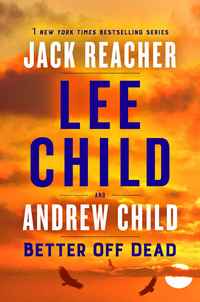
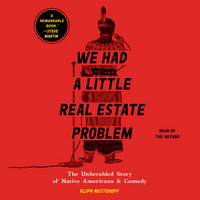
I’m reading the second Jack Reacher 2.0 novel, Better Off Dead by Lee Child and Andrew Child, and am listening to We Had a Little Real Estate Problem: The Unheralded Story of Native Americans & Comedy by Kliph Nesteroff on audiobook.

Better Off DeadBlank SpaceWe Had a Little Real Estate Problem

What did you recently finish reading?

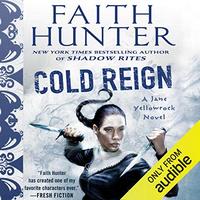
I just finished Chris McDonald’s Mistletoe and Crime—it feels a little strange to read a Christmas-themed mystery in December after a couple of years of getting ARCs for them in September. I also just finished Cold Reign by Faith Hunter, Khristine Hvam (Narrator) on audio.

Mistletoe and CrimeBlank SpaceCold Reign

What do you think you’ll read next?

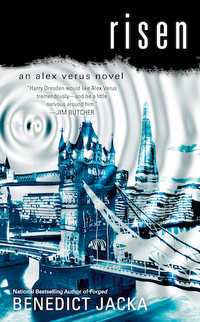
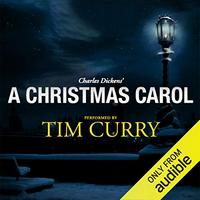
My next book should be Risen by Benedict Jacka (or I’m firing my purchasing department). My next audiobook should be A Christmas Carol: A Signature Performance by Tim Curry by…well, if you read that title, you should be able to figure it out. Since I saw Bookstooge talking about this, it’s been in the back of my mind. I think it’ll be a good palate cleanswer when I finish my current listen.

RisenBlank SpaceA Christmas Carol: A Signature Performance by Tim Curry

Hit me with your Three W’s in the comments! (no, really, do it!)

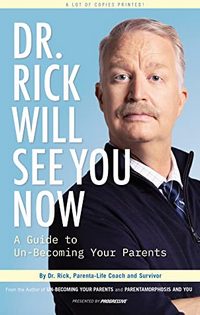
Dr. Rick Will See You Now by Dr. Rick is a Thing that Actually Exists (and I chuckled at)

Dr. Rick Will See You Now

Dr. Rick Will See You Now

by Dr. Rick

Kindle Edition, 119 pg.
Eleven Letter Press, 2021

Read: December 6, 2021

What’s Dr. Rick Will See You Now About?

I don’t know if my out-of-the-U.S. readers will have been exposed to these commercials, but I assume that everyone in the U.S. has seen these advertisements from Progressive Insurance–Dr. Rick is an expert in “parentamorphisis,” and advises his clients on how to beat it.

What is parentamorphisis? That’s when doing things like owning your first home turns you into your parents and gets you started doing things like making dad jokes, talking too much about parking, giving unsolicited advice at a hardware store, printing out directions for driving, and so on.

This book is a collection of quizzes and tips on how to avoid becoming your parents–a few items are similar/the same as the commercials, but most aren’t. There’s a combination of text, photos, and simple drawings to illustrate

“Dr. Rick”

I didn’t see anywhere in the book (I may have overlooked it) where the author(s) were identified as other than the Dr. Rick character–Progressive Marketing Department, or something like that, I guess. I’d like to give them the credit due, but…I guess that’s not to be.

So, what did I think about Dr. Rick Will See You Now?

This is cute. I find these advertisements pretty amusing, and this is just like sitting down and watching a series of them.

And, hey, it’s free. Free chuckles and something to do for a little bit. That’s a pretty good deal.


3 Stars

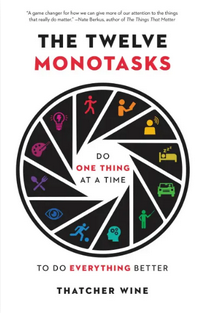
PUB DAY REPOST: The Twelve Monotasks by Thatcher Wine: A Guide to Living a More Focused Life

The Twelve Monotasks

The Twelve Monotasks:
Do One Thing at a Time
to Do Everything Better

by Thatcher Wine

eARC, 272 pg.
Little, Brown Spark, 2021

Read: November 22-23, 2021
Grab a copy from your local indie bookstore!

What’s The Twelve Monotasks About?

We live in a society that celebrates the multitaskers, those who seemingly do a half-dozen things at once—while posting about it on Twitter/Instagram/etc. We feel inadequate if we’re not at that level—and if we are, we should be pushing for more. Thatcher Wine wants to call us back—at least some of the time, not necessarily all the time–to a more straightforward, more focused (remember focus?) way of life and work. Arguably, this would be a healthier and less stressed way of life as well.

Using research from Neuroscience, Psychology, and insights from mindfulness practices, Wine outlines Twelve things to focus on—monotasks—Reading, Walking, Listening, Slppeing, Eating, Getting THere, Learning, Teaching, Playing, Seeing, Creating, and Thinking. After making his case of “The Art and Science of Monotasking,” Wine spends one chapter on each monotask, describing and defining it, showing its benefits, and giving some exercises to help the reader start practicing the task. He then gives a couple of wrap-up chapters—encouragements to practice these (and other monotasks) and reminders of the benefits.

A Few Highlights

I really like this idea—I know I need to focus more and this approach seems like a good way to build that ability.

Some of the chapters seemed more attractive to me, as well as easier to fit into at least my life—the Walking, Eating, Seeing, and Playing chapters really stood out. Oh, and, obviously, the Reading chapter—that’s a given, right? It was a great way to start that part of the book. I’m not saying I thought the others were a waste of time or anything, but I read these chapters and immediately identified how I could easily make that part of my life and what the benefits would be. I bet most readers will have a few chapters like that, too—ones that jump out at them as being good fits—their lists will vary from mine, but they’ll have theirs.

The chapters laying out the individual monotasks are arranged the same—by the third you know where you’re going to find what—the explanations, the benefits, the challenges, the practical exercises. It’s a firm outline and easy to use.

Overall, for me, one of the biggest selling points of the book is that it provides a different vocabulary for what’s likely a good idea. I’ve read a few books and taken a few classes on dealing with stress, emotional wellness, etc. lately—one recurring idea was mindfulness, being present, and so on. There was something about the language that bothered me. I liked the concepts, but the pseudo-spirituality/pseudo-psychological terms it was couched it didn’t sit right with me. I always felt like I was being silly in not being comfortable with them, but it was a real stumbling block for me. Now, Wine’s monotasking isn’t the same idea—but they’re compatible, really compatible. But his approach, his terminology comes without the touchy-feely connotation—making it more palatable to many readers (I can’t imagine I’m the only one).

A Few Problems

While there were a few chapters that jumped out at me as being easily useful and adopted, there were a few that didn’t seem that easy to work into my life—and I’m not sure that Wine convinced me would be that helpful for me: Travel, Thinking, and Teaching. It’s possible—maybe even likely—that once I do the exercises, I’ll change my mind.

For some of the monotasks (and those three are good examples, again, your results may vary), I really had to wonder how universally adoptable they’d be. For example—I commute alone, in the dark (one way)—I can’t do a lot of what he suggests in the Travel chapter. Some of the others seem more geared toward people like Wine—the self-employed, business owners, or managerial types—all with a degree of affluence. People who are at the low end of the corporate ladder, don’t have the freedom or ability to do a lot of this. It doesn’t take down the whole system, but it’s a chink in the armor.

On the more nitty-gritty end of things, there’s a lack of variety in personal anecdotes that Wine uses. There are three formative events in his life that he uses as the basis for observation, for personal examples, etc. Were I him, I’d probably base most things I say off of those same events/experiences. It just makes the reading seem repetitive. This isn’t an attack or a problem with the system he’s proposing, it just makes the reading a bit duller.

So, what did I think about The Twelve Monotasks?

As always, I’m trying not to evaluate the arguments or thesis—my goal is to talk about the reading experience. That said, if I was going to evaluate Wine’s arguments and proposed methods—it’d be a pretty positive assessment. This is definitely the kind of book I’m likely to return to, but more on that in a minute.

The problem with evaluating the reading experience is that I didn’t read it the way Wine intended. Once you get to Part II, “The Twelve Monotaks,” the reader is supposed to take them one chapter at a time. Read about the task, take in the guidance and practice it before moving on to the next. I didn’t have that kind of time between the publicist and today (even if I waited until release day, I wouldn’t have). But I can imagine how that would work—and it’d be better than plowing through it as I did.

But even plowing through without the breaks take each in turn with some practice, I got a pretty good idea of how it should work. It seems like a solid approach, one that’s not overwhelming either—rather than trying to work in 12 or so new disciplines into your life, go for one. And then another. It’s the camel nose in the tent approach. I can see that when I return to this in the coming months, slowly bringing in each task to my life is going to work much better than diving in and trying to add all twelve at once.

A lofty goal—helping people learn/relearn/recapture the ability to focus in a world full of distraction—and a common-sense approach to pursue it. It’s the makings of a good read—whether the method is successful or not is probably up to the reader. But Wine gives the tools in an attractive, easy-to-read manner.

Disclaimer: I received this eARC from Little, Brown & Co. via NetGalley in exchange for this post—thanks to both for this.


4 Stars

This post contains an affiliate link. If you purchase from it, I will get a small commission at no additional cost to you. As always, opinions are my own.
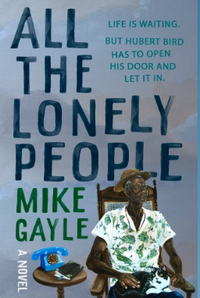
All the Lonely People by Mike Gayle: Extraordinary things can happen to ordinary people

All the Lonely People

All the Lonely People

by Mike Gayle

Hardcover, 371 pg.
Grand Central Publishing, 2021

Read: November 24-29, 2021
Grab a copy from your local indie bookstore!

What’s All the Lonely People About?

In the 1950’s Hubert Bird left his home and family in Kingston and went to London in search of work. When we meet him, he’s been a widower for over a decade and has been living shut-off from just about everyone (other than those he runs into doing food shopping, etc.) with only his cat to keep him company.

Until one fateful day (of course, or this’d be a boring book)…

We learn about Hubert’s life in alternating chapters—one in the present and one from his past.

Then

Since arriving in England, Hubert had felt out of place in a whole host of locations in the mother country, everywhere from the streets around Mayfair to the pubs of east London and beyond. But as he stepped off the 9:20 from London Victoria that Saturday morning, all previous experiences paled in comparison to how he felt standing on platform two of Bromley South Station.

He felt like a character from one of the Westerns he enjoyed seeing at the pictures—not the hero, cowboy, or sheriff, but rather the stranger in town. The man who walks into a bar full of life, music, and chatter, only for the whole room to fall into a complete and uneasy silence the moment they notice his presence.

We get glimpses of Hubert’s life from when he decided to leave home, to the early troubles he had finding regular work—employers and fellow employees didn’t exactly welcome “The Windrush Generation” (to put it more than mildly). In the midst of the harassment, undisguised prejudice, and meager wages—Hubert meets and falls in love with a white woman—who falls for him, too, despite her family’s clear wishes. They marry, have a couple of kids, and build a life for themselves—it’s hard and slow going, but they get there.

Eventually, the kids move out and Hubert’s wife dies, and he soon starts living alone.

Now

Hubert talks to his daughter—now a professor in Australia—weekly. He’s ashamed to tell her that he’s cut ties with the outside world, so he invents some friends and spends time each week inventing activities that they’ve been doing so he can have something to tell her when she calls.

Then one day, a new neighbor, Ashleigh, drops by to introduce herself—which just flummoxes Hubert and he cuts the conversation short, he’s so out of practice in interacting with people. Ashleigh’s one of the friendliest, most hopeful characters I’ve encountered recently. After running into him briefly a couple of times, she shows up at Hubert’s door in a panic—she has a job interview and her babysitter just bailed. Can Hubert watch her daughter while she interviews?

“Look, me see you in a pickle. Really, me see that. But have you lost your mind? You can’t just ask a complete stranger to look after your child. Don’t you watch the news?”

“Of course I do,” said Ashleigh. “And yes, I know sometimes the world’s a horrible place, but not always. Sometimes it’s a lovely place where nice things happen for no reason and I’d much rather…” She began to get upset. “I’d much rather live in that world than the other one!”

Hubert gets sucked in—he helps out, and the trio ends up spending more and more time together. Slowly

Meanwhile, Hubert’s daughter is due to come for a visit—his fictional life is about to be exposed. It’s about time for him to actually make some friends. Thankfully, Ashleigh’s been reminding Hubert that life is better when he opens himself up to others and he starts to do just that. Maybe he can have something to tell her after all (after ‘fessing up to the deception). And then Ashleigh gets an idea that ensures he’s going to have a lot to report.

So, what did I think about All the Lonely People?

“It’s easy to waste a lot of time trying to think of a perfect solution to a problem. But sometimes the only thing you can do is cross your fingers and have a go.”

I haven’t read a Mike Gayle book for something like 15 years (just couldn’t find them for a while, and then forgot to look), in that time he went from what I remember as Hornby-esque, but maybe with more jokes. In this book? He reminded me of Fredrik Backman, just with a different accent.

It was just as heartwarming, just as tragic, and with a similar kind of almost impossibly happy ending tinged with sadness that Backman’s noted for. And you don’t care how realistic it is, because you just loved everything that led to that point

I almost instantly liked Hubert and was quickly drawn into his story. You get invested through him (and if you don’t like him by midway through chapter two—just DNF this, it’s not a book for you). I liked Ashleigh almost as much as him, but when it comes to everyone else, you like them/care about them for Hubert’s sake.

For example, when his wife died—it hit me hard (which is odd because I knew about when she’d die even when we met her). But I didn’t feel too bad for her, but my heart broke because of what it did to Hubert. The same goes for the rest of what happens–you care because of Hubert, you’re invested in the story and the antics of his friends because of Hubert, you want things to go well in the end for Hubert’s sake. And you get intensely happy about the last chapter or two because of Hubert. Picking up a theme?

Gayle’s writing was warm and inviting—you get sucked in and carried along because of how it makes you feel, more than because of the plot or even the characters. I’m not always crazy about that kind of writing, but when it works well, it’s really effective (as it is here).

There’s one thing Gayle does that made me mad, and I came close to starting to outline a rant about it—but in the end, I got over it. I thought about DNFing the book! I could still go on a rant about the authorial decisions about it (this is so tricky to talk about in the abstract), because I am still mad, but the end product justified it.

Sure, I said the emotional weight of the story is more important overall to this than the story or characters–but I’ve got nothing against either of them. I liked and admired Hubert. I would love to hang out with Ashleigh and her kid (and her new Significant Other). The story of Hubert’s life feels so real—and is likely freakishly close to so many lives—and the world could use novels about lives like these.

This is such a heartwarming novel, if you get to the end and aren’t in some way cheering over the Capraesque ending? You should try and schedule an electrocardiogram—stat. And you just have to love that epilogue that shows that Hubert isn’t Eleanor Rigby, no matter what the title suggests.


5 Stars

2021 Library Love Challenge
This post contains an affiliate link. If you purchase from it, I will get a small commission at no additional cost to you. As always, opinions are my own.

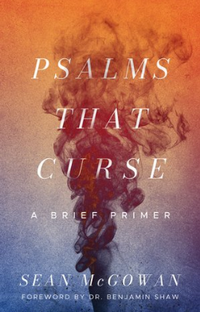
Psalms that Curse by Sean McGowan: A Primer on Controversial Prayers

Psalms that Curse

Psalms that Curse

by Sean McGowan

Kindle Edition, 90 pg.
Reformation Zion Publishing, 2021

Read: November 28, 2021

What’s Psalms that Curse About?

Simply put:

…in our modern day some psalms have seemed to not “make the cut.” To say it another way, some would argue that not all the psalms should be sung or prayed today, particularly the ones that speak out harshly against enemies. Some popular approaches would say that these psalms were for a different time, or only to be used by the old covenant people of God. But the burden of proof rests on them to demonstrate why some of these psalms cannot be sung or prayed today, while the others can. Should the psalms that present “harsh language” and make us uncomfortable at times still be considered relevant for the church today? Should we still be able to sing, and specifically pray, these kinds of prayers today?

McGowan first sketches out the role of the Psalms and then ends with the question above, then he spends a chapter focusing on the imprecatory psalms and various views about them floating around the Church. He then focuses his attention on Psalm 137 and uses the exegesis of the psalm to establish his view on the purpose of imprecatory psalms. Then he spends a chapter on the use of them in the New Testament—or are they even compatible with a New Testament ethic? (short answer: yes)

This is short work, and the depth of each chapter reflects that—but McGowan covers the essentials in each.

Comparing This to Others

I don’t typically do books on similar topics back-to-back like this, but I saw this talked about on a couple of podcasts I listen to after I read The Morality of God in the Old Testament, and was curious about another take on it.

McGowan’s take is different from similar works I’ve read here in the past—like The Morality of God in the Old Testament and War Psalms of the Prince of Peace—he quotes the latter, labeling it “inadequate” (along with other views, he didn’t single it out). McGowan’s thesis is more straightforward and less nuanced than Beale’s (not superior or inferior, just more direct).

This is a primer—as McGowan reminds the reader—so he doesn’t spend time analyzing or critiquing differing views, he mentions them briefly to distinguish his—but the focus of this short book is on his take.

Would I have preferred analysis and critique? Seeing how his views match up against others? Yes. But I’m not going to fault a guy for writing the book he wanted to rather than the one I wanted (at least until I’m wealthy enough to act as a patron).

Besides, this gives me a chance to chew on the ideas myself.

So, what did I think about Psalms that Curse?

We are not saying that the only way to respond to intense persecution is to call down God’s vengeance. In fact, the normative response should be to pray for God to convert them…what we are arguing for is a recovery of the prayer of imprecation. We are arguing for the category. We are arguing that the prayer of imprecation should have a seat at the table, not for it to be the only thing at the table.

Hard to argue against that.

I don’t know that McGowan convinced me with his position about the—but he impressed me with the argument. It’s a short work, but he does the work. First, he established his thesis from a noteworthy example of an imprecatory psalm, and then after showing his thesis at work he tactfully and pastorally lays out how the believer ought to apply it. Hard to ask for more.

I really appreciated the chapter exegeting Psalm 137 and the concluding chapter, focusing on the way the Christian ought to pray imprecatory prayers. It was an important chapter and one that I hope many encounter. I think there’s some good overlap there with some of what Adams suggested in his work, too.

Not a perfect book, but a good one, a helpful one, and a thought-provoking one. A work that should lead the reader back to the psalter for study and reflection.


3.5 Stars

Saturday Miscellany—12/4/21

Odds n ends about books and reading that caught my eye this week. You’ve probably seen some/most/all of them, but just in case:
bullet Resurfacing Of A Book; A 110-Year-Old Story—a local library has hit news sites around the world after someone turned in a book that was 110 years overdue, it’s a great story. The Library’s Facebook page has some good pictures of the book, it is in remarkable shape.
bullet What We’re Reading: Help, I’m lost in a maze of books about books
bullet Interview: Benedict Jacka, Author of the Alex Verus series—FanFiAddict interviews Jacka as his UF series comes to a close
bullet Author Interview : K. R. R. Lockhaven—a nice interview with a new favorite around here
bullet It’s that time of year, Best of lists are rolling out, a couple that have caught my eye:
bullet Best books of 2021 that should be on your bookshelf—from Owl Book World
bullet 21 Best Science Fiction Books of 2021—According to Books, Bones & Buffy
bullet The #R3COMM3ND3D2021 series over at Damp Pebbles, had some great recommendations this week. Check out the three books these people recommended:
bullet BookBlogger Ceri Evans
bullet BookBlogger Jen Lucas
bullet BookBlogger Kerry Parsons
bullet Bookstagrammer Dee
bullet BookBlogger Lisa
bullet BookBlogger Lindsey
bullet BookBlogger Cathy Johnson
bullet I guess the flip-side of the best reads of 2021 would be: A Year in Books Not Yet Read
bullet The Influences of Early Commercial Epic Fantasy Authors
bullet 5 Simple Ways To Fully Appreciate Reading

This Week's New Releases That I’m Excited About and/or You’ll Probably See Here Soon:
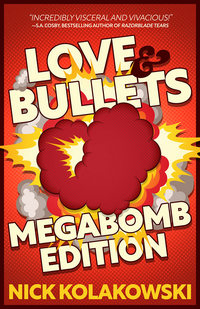
bullet Love & Bullets: Megabomb Editionby Nick Kolakowski—Kolakowski’s Love & Bullets Hookup novellas combined into a novel. I’ve mentioned it a few times over the last couple of weeks, but here is where I talked about it.

The Friday 56 for 12/3/21: Love & Bullets: Megabomb Edition by Nick Kolakowski

The Friday 56This is a weekly bloghop hosted by Freda’s Voice.

RULES:
The Friday 56 Grab a book, any book.
The Friday 56 Turn to Page 56 or 56% on your ereader. If you have to improvise, that is okay.
The Friday 56 Find a snippet, short and sweet.
The Friday 56 Post it

from 56% of:
Love & Bullets: Megabomb Edition

Love & Bullets: Megabomb Edition by Nick Kolakowski

His eyes rolled from side to side, trying to lock on me, but I made a point of standing directly behind him.

“What now?” he asked.

I scanned the empty corridor. “Where’s your partner?”

“What?”

“The guy you’re on shift with.” He shook his head. “Had to leave.”

I would choose to believe that for the moment. “Where’s that FBI guy?”

“He had to leave, too.” Another swallow. “Somebody called something in. Something big.”

What was bigger than me wiping out most of this county’s police force, along with its corrupt sheriff and probably a few townies? Suddenly I understood how Elvis must have felt when he heard about the Beatles for the first time, overshadowed by something far bigger. I was tempted to ask about the nature of the emergency, but my soul would have been crushed if he’d said my infamy was eclipsed by a shootout at the local meth lab.

Book Blogger Hop: My Book Blogger Origin Story

Book Blogger Hop


This prompt was submitted by Julie @ JadeSky:

Why did you start a book blog?

Well, one day I was taking a tour of a lab and was bitten by a radioactive pilcrow…

No? Not buying that?

Okay, there was a period, slightly over a decade ago, when I was just reading too quickly, without any reflection, or really thinking about it. I was practically binging non-stop. I’d end up checking out the same book from the library multiple times and wouldn’t understand why it felt so familiar (that’s when I started keeping a log). I didn’t like that. Authors deserved a reader who would take a beat and think about the book, who’d really appreciate their work. Also, what was the point of reading like I was just going through them like Pringles? What was the benefit to me (other than keeping me occupied)?

So I plunged into Goodreads, resolving to post something about every book I read, as a way to force myself to ruminate at least a little on what I was consuming. I wanted to soak it all in. But I largely didn’t have any Friends or Followers there and wasn’t good about finding people to interact with, so it was easy to take breaks from it and fall into old habits.

I’d been blogging for over a decade in a few places—some related to theology and whatnot, and I had a personal blog about everything—I thought about putting my Goodreads reviews there, but no one seemed to read/care about any blog post I had about books. So why go to the trouble?

But I’d heard about book bloggers. It’s important for me to say this—I had never read a book blog at this point. But I liked the idea. If I’m just one voice in thousands on Goodreads, who notices if I don’t say anything. But if I’m the voice on a blog (even if only 3 people see it), it’ll be noticed that I stop.

I played around with a few templates, copied over a handful of my most recent Goodreads posts, and dug in. After posting pretty regularly for a month or so, I started to tell people that I’d done it. But not many—I think I was up and running for about three months before I showed my wife! I just wanted to make sure I could do it regularly.

8 1/2 years and 3,500+ posts later, here we are.

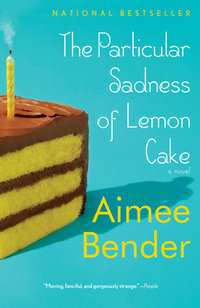
The Particular Sadness of Lemon Cake by Aimee Bender: A Gorgeously Written Let-Down

The Particular Sadness of Lemon Cake

The Particular Sadness of Lemon Cake

by Aimee Bender

Hardcover, 292 pg.
Doubleday, 2010

Read: November 30-December 1, 2021
Grab a copy from your local indie bookstore!

What’s The Particular Sadness of Lemon Cake About?

I don’t think I have it in me to do a decent job of this, so I’m just going to use the text from the flap of the dust jacket.

On the eve of her ninth birthday, unassuming Rose Edelstein, a girl at the periphery of schoolyard games and her distracted parents’ attention, bites into her mother’s homemade lemon-chocolate cake and discovers she has a magical gift: she can taste her mother’s emotions in the slice.

She discovers this gift to her horror, for her mother—her cheerful, good-with-crafts, can-do mother—tastes of despair and desperation. Suddenly, and for the rest of her life, food becomes a peril and a threat to Rose. Anything can be revealed at any meal. She can’t eat her brother Joseph’s toast; a cookie at the local bakery is laced with rage; grape jelly is packed with acidic resentment.

Rose’s gift forces her to confront the secret knowledge all families keep hidden—truths about her mother’s life outside the home, her father’s strange detachment, Joseph’s clash with the world.

Yet as Rose grows up, she realizes there are some secrets that even her taste buds cannot discern.

Particularly Sad

By page 15 of the novel, I’d already decided the title was pretty descriptive of the book. That impression never left off. Every page drips with sadness—even the most joyful moments of the characters’ lives are draped in it. There’s no joy, no happiness—the best is some contentedness and satisfaction that Rose finds in the last twenty pages. I’m not sure I remember a novel so consistent in the emotional tone.

So, what did I think about The Particular Sadness of Lemon Cake?

This is a split decision for me. The Bender’s prose and language deserve at least 4 stars, maybe more. But for my reaction to the book? It’s probably a 2.

Aimee Bender can write—her language is fantastic. The prose is as delicious as the food described isn’t. This is the kind of writing that demands attention (maybe it demands a bit too loudly on occasion). If not for what comes in the next paragraph, I’d be requesting every one of her books from the library as soon as I publish this post.

But I found the style off-putting, I didn’t care about a single one of these characters and their various plights. I wasn’t that curious about Rose’s “special skills” (or any others displayed by characters). I didn’t care about the story, or anything else. While the writing was dazzling, it seemed distant and detached (a neat trick for a first-person narrative)—and it kept me distant and detached.

I absolutely expect to be the exception to the rule here, that just about everyone else fawns all over this. But…oh, well. For my money, if you want something written like this but with characters/situations/writing that engages you, you’re better off picking up a Tiffany McDaniel novel.


3 Stars

2021 Library Love Challenge
This post contains an affiliate link. If you purchase from it, I will get a small commission at no additional cost to you. As always, opinions are my own.
Page 5 of 6

Powered by WordPress & Theme by Anders Norén