Month: March 2023 Page 1 of 6

AMENDED: Book Blogger Hop: Are Books a Must-Have in Your Home?

My sister’s 2¢ arrived after I posted this, but I didn’t want to leave her out (I left her out of enough things when we were kids, I need to stop that*).

* That’s a joke obviously—my little sister was the cool one, I was the one with the books.
Book Blogger Hop


This prompt was submitted by Billy @ Coffee Addicted Writer:

Are books a must-have in your home?

This seemed like a no-brainer of a question to answer, but I was fairly certain that whatever I ended up saying would sound a lot like something I’ve said before, so I decided to crowdsource the answer and reached out to family and friends asking them to respond to, “Are books a must-have in my home?” Here are their responses:

Steve
I’ve heard of a Chinese proverb, something like “never ask a fish about water.”

I would suppose that’s because a fish doesn’t know how important water is until it’s removed from it.

I pray you never have to be removed from printed words and their life-giving nourishment.

Steve’s known me longer than anyone who doesn’t share my last name or DNA, he knows whereof he speaks

Rosemarie
My first inclination is to go full Sicilian with my answer. I’ll be polite though and ask you, “Che cavolo dici?

Must-have…are we talking defined as an essential or highly desirable item? Let me ask you these questions in return. Does Stephanie Plum need Janet Evanovich? Is Charles Portis essential for Reuben J. Cogburn? How about Atticus, Jem, and Scout? Was Harper Lee essential to them? Would Mr. Darcy be desirable if not for Jane Austen? Would Lucy and Mr. Tumnus ever meet if not Lewis? What would H.C. have named his children if not for the books in his home?

Yes, I would say books are essential in H.C.’s home. But then I have always had a flair for the obvious.

Victor
Home? I thought he lived in a library branch!

Nicole
Initial reaction to this question
Obviously

Paul
“Are books a must-have in your home?” Does a fish need water? Car need gas….or electricity?? A camel need a hump? Or 2?? Peanut butter need jelly?? Elvis need Pike? Spenser need Hawk?? Quinn need Lily?? Rebus need Shiv?? A house of yours without books would be like the vacuum of space, nothingness hurtling at the speed of light in all directions, nothingness in chaos with nothingness…utter senselessness, utterly!!

Nisha
Yes!!

(I really hoped to have a paragraph or two, especially since I like to poke fun and be rotten. However, time and creativity escaped me!)

I was hoping for something more, honestly, but so were they. Figured Nisha would bring the funny, as they rarely pass up the chance to be rotten to their uncle–but I’ve been there, time and creativity are harsh and finicky mistresses. And, hey, “Yes!!” is accurate.

Carleigh, my daughter
Obviously

I’m sensing a theme.

Owen, my oldest
He just sent me this FB screenshot from when we were preparing to move a couple of years ago:
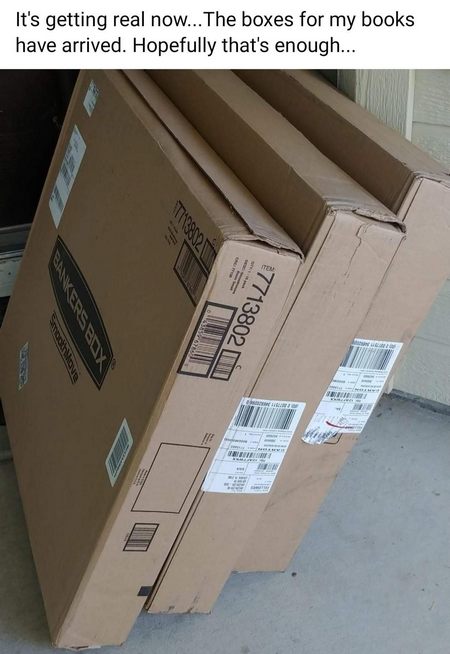
Obviously

A long day of work and being the family IT tech got the better of him, and he had to go with a practical answer.

My Sister
Are marshmallows a must-have for s’mores?
Is water a must-have for fish?
Is a flame a must-have for a fire?
Is oxygen a must-have to breathe?

I’m no expert on any of these things except s’mores and maybe breathing. But, I’m pretty sure books are as essential in H.C.’s home as any of these!
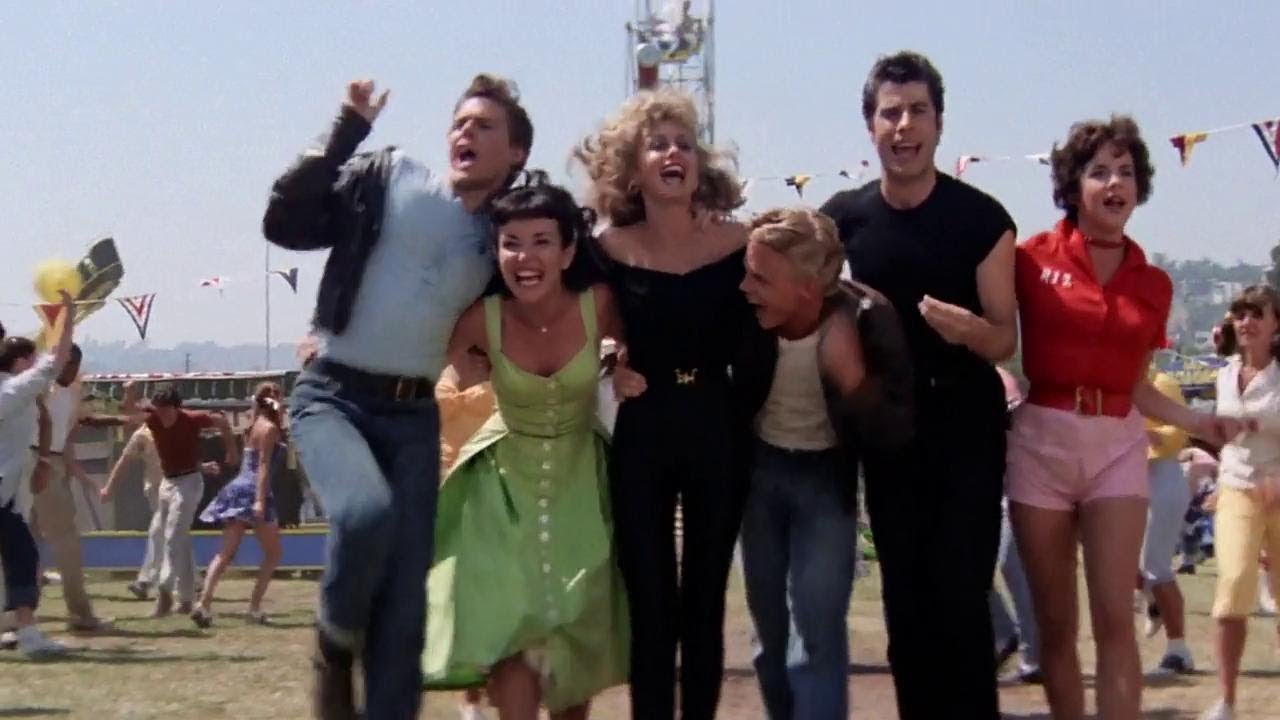
rama lama lama ka dinga da dinga dong
I would say they go together like rama lama lama ka dinga da dinga dong.

Be grateful that I’m not a BookTuber or a podcaster, no one wants to hear what that would’ve sounded like.)

My Dad
Q: Are books a must-have in H.C.’s home?

A: Absolutely! Yes, unless H.C. can totally reinvent himself and his home, family, and life. What kind of book? Probably doesn’t matter that much.

My Wife
That’s like asking if food, water, and clothing are must-haves.

My Mom (who goes last because she got serious and earnest about it)

H.C. has never lived without books in his home. He was read to and told stories from the time he was born.

At age 3 his readers weren’t always able to read to him when he wanted so he began reading on his own. He proved that he was truly reading, not just reciting books that had been read to him, when he began reading the local newspaper to himself. His appetite for books has continually grown. As his mother, I learned that I needed to read whatever books he was reading at the time so I could continue to talk to him about topics that were important and interesting to him. I ended up reading different genres (is that the right word?) of books than I would have on my own and found interesting topics and styles of writing. He outgrew me in High School with reading and requiring books to keep exploring and learning and enjoying. Fortunately, he had access to libraries since there were only so many places to shelve books in his home. He reads and re-reads books because he enjoyed them so much the first time. He remembers who wrote what book/s. He remembers the content of books he read yesterday, last month, and 30 years ago. He knows what books to recommend to or give to family members based on their interests. He treats books and their authors with respect and awe. He sees books as friends, as pathways to learning, and as entertainment. He shares books and his love of books with people he cares about as well as with people he doesn’t know. He thrives on books challenging him. The question of books being a must-have in H.C.’s home is not even a question. Makes as much sense as asking if H.C.’s body needs air, water, and food.

Oh, look, another theme.

What about you—is a house a home without a book?

You Took the Last Bus Home by Brian Bilston: Do I Dare Eat Some Kale?

You Took the Last Bus HomeYou Took the Last Bus Home:
The Poems of Brian Bilston

by Brian Bilston

DETAILS:
Publisher: Unbound
Publication Date: April 13, 2021
Format: Paperback
Length: 226 pgs.
Read Date: March 1-29, 2023

Do I need my usual disclaimer about not being a poetry reader here?

Probably not, but I’ll throw it up anyway. This is the fourth time in about 10 years of blogging on this site that I’ve posed about a book of poetry. There’s a reason for that. I typically don’t like them.

There’s also a reason that I had to buy, read, and post about this one—after Facebook’s algorithm inexplicably started showing me his poems for a stretch back in January, I had to read more of them. So I bought this book, and now I have to talk about it. Because I try to do that about every book I read, but primarily because I want more people to have the opportunity to have fun with him.

What’s You Took the Last Bus Home About?

This a lengthy collection of poems (well, maybe not—it’s the lengthiest I own outside of textbooks, anyway) about love, loss, politics, and “everyday places and situations” (as he describes them in the Introduction—which I somehow skipped over until just now). Everyday situations like—someone wanting to borrow a phone charger (and being denied), beards, search engines, playing with a dog, and so on.

Bilston closes the Introduction by saying

I suppose these are not traditionally regarded as being teh stuff of poetry. But there is poetry to be found in anything if you look hard enough.

And Bilston looks that hard.

Playing with Form

One of the best things about poetry is the ability to use form to communicate. To play with the placement of the words on a page, and how they’re presented to get the meaning across—sometimes more effectively than the words used.

Bilston is a master of this.

From decreasing the type size in “Unforseen Consequences” to rotating the text in “Ode to a USB Stick” or something as simple as embracing the traditional shape of a Christmas tree in “Needles” (and then tweaking it), the visual impression of each page got you in the right frame of mind before you started reading.

See also his use of Flow Charts, Org Charts, Excel worksheets, etc.

So, what did I think about You Took the Last Bus Home?

I remember in college classes about poetry there’d be a certain tone of voice used with the phrase, “light verse.” It was eerily similar to the audible sneer used for the term “genre fiction.” And I get that—it’s the same reason that comedies are almost never nominated for an Oscar. It’s not right, but I get it.

But to brush this collection off because Bilston frequently brings the funny is a mistake. This is some really clever work–when he’s funny and when he’s not. The fact that he’s so frequently amusing (to one degree or another) means that when he drops that and goes for serious, earnest, or thoughtful—those are even more powerful (for example, “Refugees”). It shouldn’t be overlooked that he frequently is thoughtful and humorous in the same poem.

I like the creativity, I adore the wordplay, and—as always—I’m a sucker for anyone who makes me laugh/chortle/giggle/smile on the majority of the pages. I audibly laughed at the ninth poem—and several after that. My favorite haiku ever is to be found in these pages (and probably most of the top ten of that list, too*)

* A list that I didn’t realize I’d need/want/have until I started this book.

Did I love every poem? No. Did I skim a few? Yup. But in a collection this size, that’s to be expected, right? Particularly when it comes to someone who isn’t particularly a fan of poetry in the first place. The overwhelming majority of them absolutely worked.

This is a book to spend time with—open it up randomly, or read from cover to cover—whatever. Don’t do it all in one sitting, obviously—although I think it’d be easy to do, I typically read at least two more poems than I intended to per session (usually more than two). But it’s hard to appreciate them if you gorge yourself.

You’re not just going to want to read these yourself—you’re going to want to share these. I also couldn’t help but read a poem to whoever happened to be in the room with me—or make someone else read one that I really appreciated (especially if you needed to see it for full impact). My daughter received several messages from me that consisted of a quick photo of a page or two almost every time I sat down to read this volume.

I can’t say enough good things about this. I’ll be buying more of his work soon.


4 1/2 Stars

This post contains an affiliate link. If you purchase from it, I will get a small commission at no additional cost to you. As always, the opinions expressed are my own.

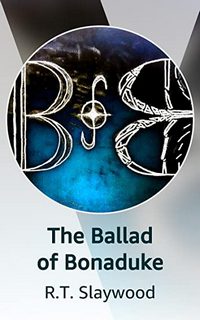
The Ballad of Bonaduke—Episode 19: The Station by R. T. Slaywood: It’s Time to Slow Down Again

The Ballad of BonadukeThe Ballad of Bonaduke—
Episode 19: The Station

by R.T. Slaywood

DETAILS:
Series: The Ballad of Bonaduke, #19
Format: Kindle Vella Story
Read Date: March 17, 2023

The Story So Far…

A drunken Michael Bonaduke decides to use a grift (with maybe some sort of magic/magic-like “help”) to win on a scratch-off lottery ticket so he has money to buy more to drink. He pulls off whatever he did, gets his money and some booze and stumbles off into the darkness to drink himself into oblivion so he can start again the next day. He’s hit by dark memories (probably what’s driving him to the drinking) of fire, pleading, and screaming. There’s going to be a price to pay for his grift, and he’s trying to be ready.

Before then, he gets himself drunk and we get some of his tragic backstory. As he ponders this, he decides to use some of his ill-gotten-gains to buy more booze and walks into a liquor store robbery. He foils it in some sort of magical fashion, gets some more to drink, and heads off to the park to drink until he’s arrested (probably for the failed robbery). At least that’s his plan, but it gets interrupted by being hit by a car. He wakes up on some sort of short, metal bed and is unsure what’s going on. It turns out that some group is subjecting him to a test—if he passes, everything will be explained to him (and hopefully the reader, too). He passes—and is brought somewhere for answers, or maybe training, or maybe another test. Time will tell (or things are going to get really annoying). Answers aren’t quick to come—but the mysteries and questions keep piling up.

Things get hairy and Bonaduke leaves and finds himself back in the neighborhood he started from. Taking refuge in a homeless encampment, Bonaduke has to make some decisions. He starts to get his thoughts in order when the police begin a raid at the camp. During the raid, he’s apprehended by…well, we need to find out.

What’s The Station About?

The pair that Bonaduke had determined weren’t police detectives in the last episode drive him to a police station and bring him inside. Maybe he was wrong after all?

They pass some of those arrested from the camp as they’re being processed and dump Bonaduke in an interrogation room.

Then the questioning begins–but not where he (or the reader) expects.

So, what did I think about The Station?

This is a good step in the right direction, but it’s difficult to have the patience I want to possess. If I knew that episode 20 would advance things, I’d be okay with this. But I’m afraid we’re on the verge of another 2-3 episode standstill.

I did like the last paragraph, though. It’s enough to keep me going.


3 Stars

The Friday 56 for 3/31/23: Hacked by Duncan MacMaster

The Friday 56This is a weekly bloghop hosted by Freda’s Voice.

RULES:
The Friday 56 Grab a book, any book.
The Friday 56 Turn to Page 56 or 56% on your ereader. If you have to improvise, that is okay.
The Friday 56 Find a snippet, short and sweet.
The Friday 56 Post it.

I’ve been reading a lot of ARCs lately, so nothing I can quote from, but MacMaster talking about editing book 3 in this series got me thinking about it. Ergo…

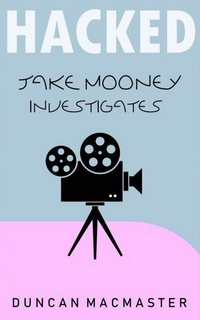
from Page 56 of:
Hacked

Hacked by Duncan MacMaster

“Let’s change the subject.”

“Well,” she said, “the rumours about you being kidnappig have really given interest in your books a big shot in the arm.”

“At least it was good for something,” I said.

I ordered breakfast, Geetha told me she already ate, so I only ordered for myself. I ordered big, waffles and Sausages with real maple syrup, coffee, and orange juice. I normally didn’t eat this big in the morning, but kidnappings really worked up an appetite.

A Few Quick Questions about…The Mrs. Covington’s Kickstarter

I posted about the novel earlier, and now I have the wonderful opportunity to talk about the Kickstarter campaign and the novel with the author, K.R.R. Lockhaven. Lockhaven is no stranger to the readers of this blog (and I anticipate that will continue to be the case). I hope you enjoy this and decide to contribute. This is a selfish request on my part–I want this cover on my shelves. Even if you’re not that interested, kick in for my sake, will you?

Here’s another quick look at the camptaign

And now…a few quick questions about The Mrs. Covington’s Kickstarter:


I think the big question that everyone who’s read your twitter feed and/or your last two books has—and the curiosity will only grow once they’ve read this one—what’s with your fascination about the capybara?
The easy answer is that I just love them. But the deep, philosophical answer delves into how capybaras behave, and how they can be seen as examples that people might want to emulate. You may be shocked to hear this, but I’ve never actually seen a capybara in real life (yet!). But from what I can gather, they are the kindest animals on the planet. I love seeing pictures of a monkey riding a capybara’s back or a bird standing on a capybara’s head. Capybaras have a very chill vibe and seem to get along with everyone who isn’t trying to eat them. I just really dig that vibe and think it has a ton of crossover potential with the cozy fantasy genre.

You’ve talked in various places lately about cozy fantasy, but what I don’t think I’ve seen is you talk about why you wanted to write one now? Is the draw toward cozy for you as a writer different than the draw for you as a reader?
I’m currently in the middle of writing a fantasy series called The Azure Archipelago. There are two books out now, with the third to be published early next year. Those books have been described as having cozy elements, but not being cozy stories, and I totally agree with that assessment. I found while writing the series that I got the most enjoyment out of writing the cozier parts. I love writing characters getting along and being nice and supportive to each other. So, like many writers, I started formulating an idea when I probably should have put it on the backburner until the series was finished. But the idea grew and grew and forced its way to the front of my mind, so I wrote it.

I think the draw toward cozy is the same for me as a reader or a writer. There’s just something about characters being decent to each other that checks some kind of box for me.

It’s got to be quite the balancing act trying to decide what parts of contemporary “bar culture” (for lack of a better term) to import into your fantasy world, and what would be a step too far. I’m only going to mention nachos as an example because you’re using them in your pitch for the book—were there things you thought about and then rejected because it would be a step too far? Similarly, why were nachos used? I’d think part of it would be from how low-tech they are—really easy for any generic fantasy world to make. Are you just a big nacho eater in the first place? (I hope so, because I’m pretty sure you’re going to have to be in the future, they’re part of your brand now)
The Occam’s Tortilla Chip explanation is that, yes, I just like them. And if I have a brand, I’m glad it includes capybaras and nachos! But, yeah, I find that the balancing act is always difficult in my writing. I have a silly side that just doesn’t care if a fantasy world could possibly have nachos and/or karaoke, but my more serious side wants to make sure that, at the very least, the things in my books are believable. Walking that line is tough, but my editor on this project, Nathan Hall, really helped me ground the story. There were several things that he found to be a step too far in terms of silliness, but as far as innovations in a fantasy world, I stuck to just nachos and karaoke. He helped me show these things being invented organically and believably.

This is similar to my first question, but far-less-tongue-in-cheek. I know (and am relieved by it) that I wasn’t the only reader who had to look up ciguapa when you introduced the species to your Azure Archipelago series. Of all the various fantasy races out there to choose from, what about them made you want to feature them? Now that you’ve started using them, are they going to be around as much as the capybara?
Because my books are set in a very Caribbean-like world, I wanted to have a fantasy race based on Caribbean folklore. I loved the name “ciguapa,” but the actual ciguapa of folklore ended up being far from the ciguapa people you’ll see in my books. My writing often has a multiverse element to it, and originally, I wanted to have ciguapa as a misunderstood race from another world that interacted with Earth from time to time. This evolved over time until the beautiful ciguapa people I write about were born. If I ever write something that isn’t in the same world, I’ll probably leave the ciguapa behind to live in peace.

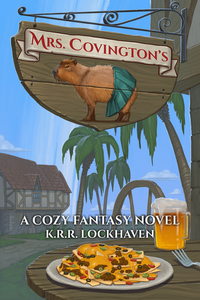
Can you take a minute to talk about the cover art for this book and the artist behind it? You’ve always had good covers in the past, but…wow. This is a giant leap forward.
The cover artist is Daniel Wekellis, who I met at my one and only book signing when he attended with his wife, Lilly from the Fiction Fans Podcast. My wife and I hung out with them that night. They gave us two bottles of wine from their little home operation that had these wonderful labels that we came to find out Daniel had made himself. I either asked him about doing cover art sometime during that night, or after they had gone home. My memory of our night out is a little fuzzy. He agreed and I couldn’t be happier with the result!

The whole point of this Q&A was to help promote the Kickstarter campaign, so we’d better talk about it a little — How’s the campaign going (especially compared to what you’d expected/hoped)? What do you want people to know about the campaign that you haven’t already said?
At the time of this interview, it’s sitting at 57% funded with 75 backers and 18 days to go (72% with 92 backers and 13 days to go when I put the last touches on this post). To tell the truth, I really didn’t know what to expect. I hoped it would be one of those Kickstarter projects that gets funded in a matter of hours, but it appears I’m going to have to grind this one out. I’m optimistic, though. In the coming weeks, it’s going to be featured on several blogs and a local newspaper, so I hope that can build a little momentum. The main thing I want people to know is that there are many different options available—from eBook to naming a capybara in the story—and that I don’t think they’ll be disappointed if they join me on this journey. I am SO thankful to the 75 backers who have joined so far and look forward to getting across the finish line with them!

Why did you decide to go with Kickstarter this time around? Are you thinking about using it in the future (or does that depend on how the next couple of weeks go?). What have you learned about crowd-funding that you wish you knew a month ago?
I’ve wanted to try a Kickstarter project for a while. I think it’s a good idea to diversify as much as possible, and running a Kickstarter seemed like a good way to put my work out there where it may not have been before. I figure if people like Mrs. Covington’s, they might be interested in my trilogy, and vice versa. When (I’m using the power of positivity) this project gets funded, I think I’ll have to strongly consider doing another one someday.

I wish I would have prepared a little better. I wish I would have fought the relentlessly positive, don’t-worry-this-will-get-funded-in-a-matter-of-days side of my brain a little harder. I didn’t reach out to book bloggers/YouTubers/podcasters (besides the people I knew really well, like you) until the campaign was 10 days in! That kind of air-headedness is probably best avoided. I also thought that the “Project We Love” label was the golden ticket to success. It turns out, unfortunately, that it isn’t. When I got that news, I was jumping up and down thinking that I had been blessed by the Kickstarter gods and that it would be smooth sailing from there on out. It’s hard to determine how much of a boost it gave me, but it didn’t catapult me to the finish line quite yet.

Thanks for your time—and I do hope to see that campaign reach the magic number so we can see Mrs. Covington out in the wild!
Thank you for this interview and the wonderful continued support you’ve shown me throughout my writing career! I really can’t express enough gratitude to you


Mrs. Covington’s by K.R.R. Lockhaven: Friends, Nachos, Friendly Rodents, and an Utter Absence of Crow Noodle Soup. What More Could You Want?

When I took part in the Cover Reveal for this novel, I warned you that I’d be talking a lot about it (and have lived up to that). I’m putting a big push in today. I’ve got this post about the book as well as a Q&A with K.R.R. Lockhaven coming up about the Kickstarter campaign and the book itself (you really need to check it out. I might have another post about the book to come today, too—but no promises, I’m running into a creative issue. Keep your eyes peeled, though.

Before I blather on a bit, let’s focus on the main thing: to get this book funded.

And now…let me blather:


Mrs. Covington'sMrs. Covington’s

by K.R.R. Lockhaven

DETAILS:
Publisher: Self
Publication Date: TBD
Format: Beta Version
Read Date: March 6-16, 2023
Kickstarter Page

First things first

I read a Beta copy of this—but a late-stage one, I think—so not a lot will have changed between what I read and what you’ll hopefully read. Still, there’s a chance that some things will have improved by the time you get to it.

What’s Mrs. Covington’s About?

This is a cozy fantasy, and as holds true for most of them, the plot could be summarized in a sentence or two. So I’m going to try to do that in a way that leaves some mystery.

Jacob is the son of one of the wealthiest businessmen in the Archipelago*, and is being pressured to join the family business, groomed to take it over, and so on. But he wants his own life. He wants something more than just carrying on his father’s work. Possibly even adventure. A life at sea perhaps?

* Yes, it takes place in the same world as the Azure Archipelago series, but it’s independent of that series and you don’t need to know anything about it to read this.

He’s dissuaded from pursuing that by someone he respects and looks for a new way to establish his own path. While doing so, he stops by a quiet pub in the city he’s visiting for a drink. While there the owner (mostly) jokingly offers to sell him the place. After thinking it over a bit, Jacob does that.

The bar is named for its resident capybara—Mrs. Covington—at sea, the capybara is supposed to bring good luck. She hasn’t seemed to do much for the pub yet, but maybe soon.

The first thing he has to do is find a way to make a profit—he offers the two employees there (a human, Tadrick, and a cigupa, Cora) full partnerships if they help him get this place in shape. Together they come up with a new business plan, redecorate, and start to devise new ways of bringing in customers (not all at once and not necessarily in that order, but I’m trying to summarize). The other thing Jacob does is befriend his neighbor, a widowed faun trying to raise two children and run a restaurant.

These four become friends and start to collaborate in a handful of ways.

When he bought Mrs. Covington’s, Jacob also received the parchment describing a local treasure hunt that belonged to the pub. People have been looking for the treasure for a while, and there’s no reason to think that Jacob and his new friends will have more success than anyone else. But like Wade Watts and his chums, they might as well try, right?

Platonic Relationships FTW

There are plenty of romantic relationships in this book, but none of them are the focus (as much as Cora’s parents try to steal focus with theirs). There’s even a nice past romance and the promise of a potential future one by the end of the book. But the relationships between the core characters are entirely platonic.

I don’t mind romantic stories or arcs—I think they’re a great way to show character, develop character, advance a plot, etc. But a good platonic friendship is one of those things that I admire more and more all the time—particularly between people who’d likely be coupled up in other books.

If the studies and stories I read hold true, friendships between adults are less and less common, and (American, at least) adults are more and more lonely and isolated. So maybe books about good friends are a new form of aspiration/fantasy? We don’t need to read books about swooning over someone we fancy anymore, just stories about falling into deep like?

Whatever lies at the root of it—I liked these friendships. All of them—the mutual support and encouragement in whatever configurations of characters were solid. Mrs. Covington’s sounds like a great place to hang out—maybe if you can’t hang out there with your own friends, reading about others doing it is a handy substitute?

Interludes

Something I should’ve mentioned in my beta feedback are the Interludes.* Three times we walk away from the story to get a glimpse of what’s going on with good old Mrs. Covington.

* Whoops. Sorry, K.R.R.! I’ll make it up to you next time.

These don’t advance the plot, give insight into the other characters, or anything like that—I’m not even sure they give insight into Mrs. Covington, because that would require a level of self-awareness that the rodent doesn’t seem to possess.

They are simply interludes. Nice, short, and quiet breaks from the novel. They’re the literary equivalent of taking a brief break to watch nature videos on Youtube or something. I’m just theorizing here, but it wouldn’t surprise me to find that they’re largely inspired by Lockhaven taking writing breaks to watch capybara videos.

I’m not sure why I used the term “quiet” there, it’s not like I’m talking about an audiobook here, but it fits. I guess it felt to me like there’s a film score playing quietly in the background (except when the band, Bilge Rat, is performing), and then the music dies for these interludes and all you get is crickets in the background or the sound of birds in the distance.

I’ve spent far more time than I originally intended to trying to describe the effect of these breaks. All I meant to say is that they’re an unexpected (unless you just read this) and thoroughly pleasant little addition to this book—and the kind of thing that most authors wouldn’t have thought to throw in.

I doubt that Lockhaven would be able to find enough of a story to justify a novella or novel along these lines. But a collection of scenes/episodes/random days in the life of the titular capybara would be something I’d jump on and probably return to often. Especially if he could get a great illustrator on board.*

* There’s your next Kickstarter, K.R.R. You’re welcome. Maybe this evens the score?

So, what did I think about Mrs. Covington’s?

I joked earlier about the plot being minimal—although it’s true. That’s not to say that the plot is inconsequential or bland. It’s a fun little story–Treasure Hunts have been a tried and true story engine since at least the time when Jason and his pals went on that cruise. And who can’t relate to a group of friends coming together to build something special? There’s enough plot to get your teeth into even while it’s not likely to be what you focus on.

I’ve made it this far and haven’t even talked about the villain of the piece. Ugh. You can tell how much importance I put on him. Think Charles Durning’s Doc Hopper from The Muppet Movie or Chris Cooper’s Tex Richman from The Muppets, or a good number of the men behind the masks in the original Scooby-Doo series. I’m not sure why I’m stuck on examples like them instead of something more highbrow, but that’s the frame of mind I’m in. He’s mean (actually, I don’t think he cares enough to be mean…maybe spiteful?), he’s power- and money-hungry, and doesn’t like anyone not acceding to his whims. He’s perfect for this story—and not that important ultimately. Yes, he’s standing in the friends’ way, so they have to do something—but he’s not as present as other obstacles.

I do have some quibbles about the timing of some of the elements. I think some of the relationships develop too quickly, and I wonder about the timeline for a couple of things. I don’t know if Lockhaven’s able to massage that a bit before the final version comes out, but I do think it needs some tweaking. That said—they’re only quibbles. I liked where every relationship went, how they developed, and so on. And all the events that happen too suddenly for my comfort? I enjoyed them all and understand why he put them where he did. So ultimately, I don’t care if that kind of thing works well because I enjoyed the results. To paraphrase Joel Hogson, “repeat to yourself, “It’s just a book, I should really just relax.”

And it’s easy to relax with this book—because it’s such a pleasant, comfy atmosphere. A treasure hunt with the staff of the friendliest bar this side of Cheers! might be the plot of this cozy fantasy novel. But the book’s core is kindness, community, optimism, and helping. Brought to you in a great fantasy world with a light and engaging voice, Mrs. Covington’s will leave you snug and content.

The book delivers on what it promises—comfort. Warm fuzzies. Kindness. Good times. It’ll brighten your day, and make the world feel like a better place for a bit.

Read it when you can. And pitch in to the Kickstarter before April 13!


4 Stars

This post contains an affiliate link. If you purchase from it, I will get a small commission at no additional cost to you. As always, the opinions expressed are my own.

Book Blogger Hop: Are Books a Must-Have in Your Home?

Book Blogger Hop


This prompt was submitted by Billy @ Coffee Addicted Writer:

Are books a must-have in your home?

This seemed like a no-brainer of a question to answer, but I was fairly certain that whatever I ended up saying would sound a lot like something I’ve said before, so I decided to crowdsource the answer and reached out to family and friends asking them to respond to, “Are books a must-have in my home?” Here are their responses:

Steve
I’ve heard of a Chinese proverb, something like “never ask a fish about water.”

I would suppose that’s because a fish doesn’t know how important water is until it’s removed from it.

I pray you never have to be removed from printed words and their life-giving nourishment.

Steve’s known me longer than anyone who doesn’t share my last name or DNA, he knows whereof he speaks

Rosemarie
My first inclination is to go full Sicilian with my answer. I’ll be polite though and ask you, “Che cavolo dici?

Must-have…are we talking defined as an essential or highly desirable item? Let me ask you these questions in return. Does Stephanie Plum need Janet Evanovich? Is Charles Portis essential for Reuben J. Cogburn? How about Atticus, Jem, and Scout? Was Harper Lee essential to them? Would Mr. Darcy be desirable if not for Jane Austen? Would Lucy and Mr. Tumnus ever meet if not Lewis? What would H.C. have named his children if not for the books in his home?

Yes, I would say books are essential in H.C.’s home. But then I have always had a flair for the obvious.

Victor
Home? I thought he lived in a library branch!

Rosemarie
Initial reaction to this question
Obviously

Paul
“Are books a must-have in your home?” Does a fish need water? Car need gas….or electricity?? A camel need a hump? Or 2?? Peanut butter need jelly?? Elvis need Pike? Spenser need Hawk?? Quinn need Lily?? Rebus need Shiv?? A house of yours without books would be like the vacuum of space, nothingness hurtling at the speed of light in all directions, nothingness in chaos with nothingness…utter senselessness, utterly!!

Nisha
Yes!!

(I really hoped to have a paragraph or two, especially since I like to poke fun and be rotten. However, time and creativity escaped me!)

I was hoping for something more, honestly, but so were they. Figured Nisha would bring the funny, as they rarely pass up the chance to be rotten to their uncle–but I’ve been there, time and creativity are harsh and finicky mistresses. And, hey, “Yes!!” is accurate.

Carleigh, my daughter
Obviously

I’m sensing a theme.

Owen, my oldest
He just sent me this FB screenshot from when we were preparing to move a couple of years ago:
Obviously

A long day of work and being the family IT tech got the better of him, and he had to go with a practical answer.

My Dad
Q: Are books a must-have in H.C.’s home?

A: Absolutely! Yes, unless H.C. can totally reinvent himself and his home, family, and life. What kind of book? Probably doesn’t matter that much.

My Wife
That’s like asking if food, water, and clothing are must-haves.

My Mom (who goes last because she got serious and earnest about it)

H.C. has never lived without books in his home. He was read to and told stories from the time he was born.

At age 3 his readers weren’t always able to read to him when he wanted so he began reading on his own. He proved that he was truly reading, not just reciting books that had been read to him, when he began reading the local newspaper to himself. His appetite for books has continually grown. As his mother, I learned that I needed to read whatever books he was reading at the time so I could continue to talk to him about topics that were important and interesting to him. I ended up reading different genres (is that the right word?) of books than I would have on my own and found interesting topics and styles of writing. He outgrew me in High School with reading and requiring books to keep exploring and learning and enjoying. Fortunately, he had access to libraries since there were only so many places to shelve books in his home. He reads and re-reads books because he enjoyed them so much the first time. He remembers who wrote what book/s. He remembers the content of books he read yesterday, last month, and 30 years ago. He knows what books to recommend to or give to family members based on their interests. He treats books and their authors with respect and awe. He sees books as friends, as pathways to learning, and as entertainment. He shares books and his love of books with people he cares about as well as with people he doesn’t know. He thrives on books challenging him. The question of books being a must-have in H.C.’s home is not even a question. Makes as much sense as asking if H.C.’s body needs air, water, and food.

Oh, look, another theme.

What about you—is a house a home without a book?
WWW Wednesday, March 29, 2023

Much of what I put in the post last week got derailed by cold-induced cognitive impairment, so you’re not imagining things—a lot of this is a rerun. But my cognition is back to my typical level of impairment—I’ll leave it to you to gauge how bad that is—so things should start moving here soon.

This meme was formerly hosted by MizB at A Daily Rhythm and revived on Taking on a World of Words—and shown to me by Aurore-Anne-Chehoke at Diary-of-a-black-city-girl.

The Three Ws are:

What are you currently reading?
What did you recently finish reading?
What do you think you’ll read next?

Easy enough, right?

What are you currently reading?

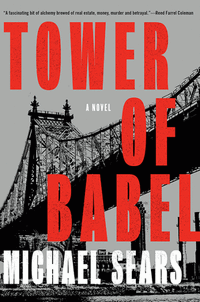
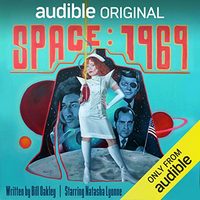
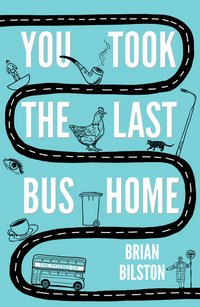
I’m reading Tower of Babel by Michael Sears, and am learning how much I can care about real estate shenanigans (a lot). I’m about to finish the delightful You Took The Last Bus Home: The Poems of Brian Bilston by Brian Bilston. I’m also listening to Space: 1969 by Bill Oakley, narrated by Natasha Lyonne and a lot of other people on audiobook.

Tower of BabelBlank SpaceYou Took The Last Bus HomeBlank SpaceSpace: 1969

What did you recently finish reading?

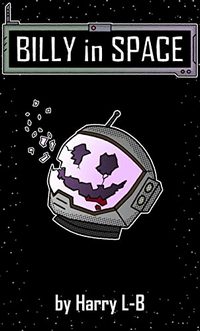
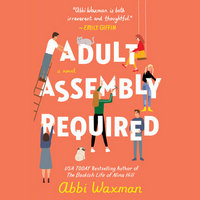
I just finished Harry L-B’s Billy in Space and Adult Assembly Required by Abbi Waxman, Emily Rankin (Narrator) on audio.

Billy in SpaceBlank SpaceAdult Assembly Required

What do you think you’ll read next?

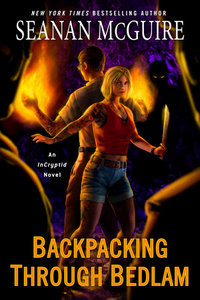
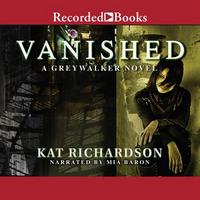
My next book should be Backpacking Through Bedlam by Seanan McGuire and my next audiobook should be Vanished by Kat Richardson, Mia Barron (Narrator).

Backpacking Through BedlamBlank SpaceVanished

How are you ending the month?

LITERARY LOCALS: A Q&A About Writing in Idaho with Hilarey Johnson

Literary Locals logo
I really want to thank Hilarey Johnson for stopping by to take part in this–especially as she had to take time from fighting technological calamity to do so. She’s got some thoughtful things to say, and I hope (slash-expect) that this won’t be the last time we hear from here here.


Before we get into things, why don’t you give the reader a brief introduction to you and your work.
My name is Hilarey Johnson. I bought my website long before I realized most writers would use their full name. So you can normally find me at Hilarey.com because of the unique spelling. However, I recently had a technical mishap. I probably will not have the website rebuilt until summer 2023. Additionally, I am not active on social media and deleted most accounts several years ago. I have six novels. I wrote a coming of age literary fiction series called Breaking Bonds. The three novels complement each other, but you don’t need to read all of them to understand the stories. They have elements of faith and suspense, and a tiny bit of romance. The first two, Sovereign Ground and Heart of Petra, won several awards including Idaho Author Awards, Christian Writers Guild, and Meridian Writes from the public library. The last one is titled Sworn to the Desert.

I also have a historical fantasy series set in Idaho, 1865. Because I met my husband through martial arts, and we taught a Korean martial art called Tang Soo Do many years in Meridian, I was often encouraged to write a book with those elements. Dance of the Crane Series is a single story, told in three parts. The individual titles are Stone of Asylum, The Reckoner’s Blade, and Heiress of Coeur d’Alene. Most people who’ve seen Kung Fu Panda understand that martial arts forms are patterned after animal characteristics. My idea was that not all who came here during the gold rush were argonauts. Some were looking for the rare Idaho Star Garnet so they could transform into animals through its power and the practice of martial arts. The antagonists in my story found a way to harness the power and tattoo the pulverized stone onto others, causing them to transform into animals against their will. It’s a retelling of The Count of Monte Cristo, sort of in the vein of The Forbidden Kingdom, which is a Jackie Chan movie I like. I had a lot of fun researching that. I traveled to the Chinese Historical Museum in San Fransisco, as well as museums in Coeur d’Alene.

A question for you: Your website is very expansive. How long have you been writing your blog? Have you written anything else? Also, you’re a pretty eclectic reader. Is reading your main focus?
I started this back in 2013 (oh, I should start planning something for the 10th anniversary!). Definitely! I’ve dabbled in short stories and novels since childhood—have produced very little that I liked/wanted to work with long enough to get in publishable form. Yeah, “eclectic” is a pretty good term to use—far more complimentary than “always chasing a new shiny” or something. And yeah, reading is my main non-work focus, at this point, it’s a hobby that’s really gotten out of hand.
Writers love readers! I’m glad you used the word “work.” It’s easy to romanticize the idea of writing, but the actual work is re-writing. I don’t know that chasing a shiny something is bad. I just finished What about the Baby? by Alice McDermott, and her experience following the muse instead of the book she had contracted to write worked to her benefit. Her editor liked more as well. Sometimes that is part of finding your voice, too.

What brought you to Idaho in the first place? What is it about Idaho that keeps you here?
We came here for my husband’s job. I was born in California and graduated from high school in Lake Tahoe. I went to school in northern California and then lived in Eastern Europe the first year we were married. We moved back and forth over the California/Nevada border several years and landed in Idaho in 2003. We lived in Twin Falls five years, and moved to Boise in 2008. Because I’d moved so much in my life, I was eager to grow roots. I try not to say what I will and will not do—but I hope to stay in the area. I love the access to natural resources and bumping into people I know at the grocery store. I have a strong community here.

Are you tied into some sort of local author/bookish group/culture? If so, tell us about it and how it helps you as an author. If you’re not, is there a reason for it?
My local community and critique group are the main reason my novels became available instead of rotting in a drawer. I had written alone for many years. In fact, it took me ten years to complete my first 50,000 word novel. Then I spent five years seeing if I could do it again. The second novel landed closer to 75K. Both experiences were valuable to finish a something with continuity and a story arc. But they also helped me develop my voice. At that time, I still introduced myself as a “wannabe writer” even though I had two finished novels, written for newspapers, and had short stories published. That’s a difference community makes. In 2005, I joined a nationwide writers group called American Christian Romance Writers. I didn’t write romance but went to a conference and started attending their local chapter, Idahope Christian Writers. Most of the local members did not write romance exclusively. The next book I finished (Sovereign Ground) was completed in one year and I chose to self-publish in 2014. I remained involved in Idahope several years. They have since become inactive, but I have a secret to tell you: One of the previous presidents and I, along with a few board members, are planning to relaunch as ICW in October 2023. I’m very excited to rekindle the fellowship of writers in the valley who feel faith is an essential part of their creative process, whether they write “Christian” books or not.
I have two follow-ups to this answer (and one could probably launch a separate conversation). Beyond helping you finish “something with continuity and a story arc” and developing your voice, did these groups push you to do anything other than put the books in the drawer? Or were you just looking for something good enough to avoid the drawer in the first place? If so, how did they help you?
I think the greatest help was the shared experience of sending to editors/publishers and getting rejected, but trying again. Seeing other people be brave makes you braver. And of course just the practicality of asking advice and questions from people a step ahead of you. Some people can go to writers’ groups for years and never finish more than that first (perfected) chapter (which is perfectly fine!) but there is usually a call to step forward which you hear a little clearer when you are in a group who is also pursuing it.

Secondly, how do you see faith as an essential part of your process? (this probably belongs in a different Q&A since we’re shifting topics, but I don’t care)
I kind of hoped you would just let that slide by… First, I don’t think writing as a believer in God means you replace “the muse” with “the divine.” You still have to wrestle with The War of Art. Second, it doesn’t mean you just write about God. I have read beautiful novels by people who probably would not have considered themselves believers in God—yet they are real, raw, etherial and eternal. So for me, my faith being an essential part of the creative process includes one: I feel like I am spending time with the creator when I create, coming alive to be who he made me. Two: there is a sense of something beyond me and bigger than me at work/play. (I know people who don’t consider themselves religious also experience this. I just attribute it to God.) And three: I have a call to submit myself. This doesn’t mean just that I “have to write,” but I will flourish when I write with honesty and obedience. I think those three apply whether you write for a living or you write for yourself.

What kind of events in the area do you attend—either to sell/promote your books or to network with authors? Are there any outside of this area that you hit regularly and wish we had something like it here?
Right after I published the Dance of the Crane Series, I sort of disappeared. I didn’t promote it, I pulled back from all social media and fiction writing. It was a season of rest and repair while I figured out some personal things. So, I have been inactive in the larger writing community for many years. When I was ready to write again, I felt a stronger pull to back to nonfiction, so I spent time ghostwriting near death experiences for Guideposts. Last year, in 2022, I blogged weekly about faith, wrestling religious assumptions, mandated righteousness, mental health and authentic community. I called it “Intimacy with God for the Over-Churched.” I’d blogged for more than a decade prior, but that was an important experience, both doing it weekly and learning to record and edit audio. Of course, I recently deleted the entire thing…

During the shutdown I recorded my first novel and loved the experience. I’m working on my second right now. I hope my future in storytelling will have more to do with audiobooks. Also, this year I intend to put more energy into ICW. As I said, our goal is to connect people who specifically feel faith in God is part of their creative process. Our particular hope is to create a safe place for all forms of story. The first group I ever joined emphasized romance, but that was hard for me because even though I think a little romance sweetens every story, it isn’t my go-to genre. In ICW, we want to foster all forms of fiction, poetry, nonfiction, screenwriting, narration, podcasting… storytelling. We are so new, I don’t even have a website to send potential members. But when it is ready you will find us at idahopechristianwriters.org. Hopefully you’ll have me back in the late summer when it’s time to announce ICW.
Audiobooks aren’t something I’ve really talked about with anyone for this series—I’m assuming you self-produce the whole thing? That’s a whole different level (or seven) of complication to the publishing process. How is your first being received? Or…is it?
I read the first book but paid Audio Lab Recording Studios to produce it. I will produce the next one, which means I can spend more time perfecting it…and also means I can get lost in “never good enough, try once more” land. It’s available at the library, Audible, Spotify. It has been well received, and I am confident the next one will be better.

What’s the breakdown of your audience—do you have a strong local base, or are your readers from other parts of the world?
I sold so few books last year that I wouldn’t say I currently have a fan base—other than the cheerleaders in my life who’ve already read my books. The thing about writing fiction for a living is that you need to continue to produce. It’s also wise to pick a genre and foster that community. My second series was very different, and darker, than my first. I lost readers through that shift. I had a very loyal following on my blog. I think I will reject my own advice and publish nonfiction in line with that, next.

Do you think there are particular challenges or advantages to being a writer in the Treasure Valley? (possibly both)
There’s the assumption that you need to live in Hollywood to produce screenplays, and on the East Coast to access big publishing houses. I think the challenge or advantage would be in your personal goals. You can definitely live on less money here than in either of those two places. Also, I think it’s essential to really know the place you set your books. A strong setting can be a character, and I honestly don’t know that most of the US is interested in Idaho. Our wild lands and independent spirit are fine for westerns. But it seems that people are really drawn to the sass of southern fiction, powerful urban settings, or the charm of quaint mid-west towns. I would be curious to hear other opinions about that though.

Do you bring Idaho (or some sort of Idaho-sensibility, assuming one exists (you mean any sensibility 🙂 ?) to your work? Whether or not anyone else sees it, can you look at some aspect of your writing and think “That’s Idaho” or “I would do ____ differently if I was a Kentuckian or from Illinois?”
I certainly bring my northwest-sensibility to writing. I didn’t realize this though, until I met writers from east of the Mississippi at conferences. We don’t wear gloves to church and it isn’t an unspoken requirement for pastor’s wives flat-iron their hair out here. We have less propriety in the Northwest, and I love that—even if I don’t usually realize it. Your entire experience is consciously or unconsciously woven into your writing. My first series was set in Reno, Nevada because that’s where I lived when I started hearing their voices in my head. The heroine was a dancer and we drove by strip clubs and the Mustang Ranch regularly—it was the best place to set it because of the culture.

When I wrote my series set in Idaho, I spent lots of time in the car between Twin Falls and Boise imagining the canyons, rivers, hot springs and ridges during the 1800s. It fostered a great love of our landscape inside me. Some of the sentiments, prejudices and lore of the time came from research. Research and imagination make it possible to write about places you haven’t been. Otherwise we wouldn’t have books about other planets. But I think my Idaho-sensibility definitely affected the final story. A sentiment I found researching said that people landed here only if they were out of money or options. That still intrigues me.

One final question, is there a book (or two…or 18, if you get really carried away), that embodies Idaho/the Idaho spirit to you to recommend to my readers?
This is interesting because “spirit” is more than “setting.” When we first moved here we listened to an audiobook called Monster, by Frank Peretti. It’s about a woman who has a stutter (it’s relevant to her story) and gets kidnapped by a female Sasquatch who recently lost a baby. She and her family group (a big male and another female with a living offspring) are running from something. I think it comes to mind first because we didn’t know the area and Idaho was new and exciting to us. Uncharted wilderness is very romantic to me, in theory—I’m not a survivalist. The way the character yelled at God about the unfairness of her situation was a pivotal moment in my reading/writing journey. I hadn’t yet read something which talked about faith in God with anything other than blissful acceptance. I think it captured Idaho for me because of the honesty, the wilderness, and because some people here are hiding, or running, from monsters.
Most respondents to this have either gone super-literal “this takes place in Idaho” or have gone with the “spirit” angle like you. I read Monster a long time ago, and don’t know if I’d have characterized it as Idaho-ish, but you’re absolutely right. That’s a great way to think about the answer.

Thanks for your time and participation! Hope you enjoyed it!


Literary Locals logo

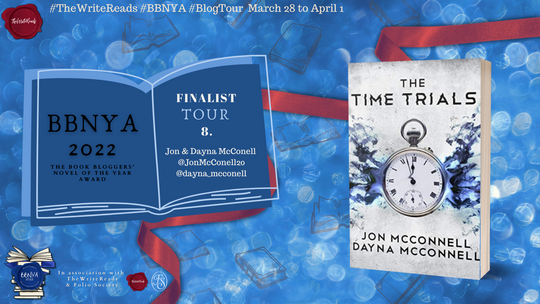
BOOK SPOTLIGHT: The Time Trials by Jon McConnell and Dayna McConnell

I’m very pleased today to welcome The Write Reads Blog Tour for Jon McConnell and Dayna McConnell’s The Time Trials. Be sure to watch https://twitter.com/WriteReadsTours over the next few days to see a lot of bloggers write interesting things about it (I wish I’d had the time to be one of them). The Time Trials was a finalist for the 2022 Book Blogger’s Novel of the Year Award, so you know there’s a lot of good to be said about it–but before getting to the spotlight for it, let’s start with a word about BBNYA.

BBNYA:

BBNYA is a yearly competition where book bloggers from all over the world read and score books written by indie authors, ending with 15 finalists and one overall winner. If you are an author and wish to learn more about the BBNYA competition, you can visit the official website http://www.bbnya.com or Twitter @bbnya_official. BBNYA is brought to you in association with the @Foliosociety (if you love beautiful books, you NEED to check out their website!) and the book blogger support group @The_WriteReads.

The Time Trials Tour Banner

Book Details:

Publisher: Tiny Fox Press
Genre: Science Fiction
Age Category: Young Adult
Release date: September 21, 2021
Format: Hardcover/Paperback/Ebook
Length: 358 pages
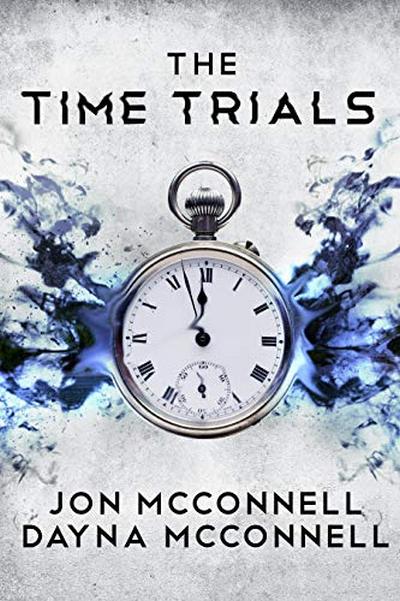
The Time Trials

About the Book:

“Four players. It’s in the rules.”

“Is this like, some sort of academic decathlon or something?”

“Something like that.”

Walkman-toting, guitar-playing Finn Mallory blames himself for his parents’ deaths and would do anything to turn back time and set things right. So, when he’s recruited into a secret club at his new school that specializes in competitive time travel games, Finn sees a world of opportunity open before him.

The games, however, are far from benign.

Competition is cutthroat.

Scenarios are rigged.

And the mysterious timekeepers who organize it all have no qualms about using-or disposing of-players to suit their own sinister plans.

Now Finn must decide who he can trust while making peace with his past if he’s to have any hope of leading his team to victory and surviving his junior year.

Book Links:

Amazon.ca ~ Amazon US ~ Amazon UK ~ Goodreads

About the Authors:

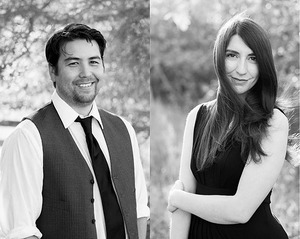
Jon McConnell and Dayna McConnellDayna is a fourth grade teacher and California history nerd. When she isn’t writing, she’s reading historical fiction, obsessing over music or stewarding her family’s Little Free Library. Her favorite parts of writing are developing character arcs and relationships and playing with permeating themes and symbols.

Jon is the “pantser” of the duo. He is a fan of science-fiction, horror, and post-apocalyptic epics. He is also an avid Tampa Bay Buccaneer fan, a Magic the Gathering enthusiast, and lover of anything zombie.

IG: @mcconnellsquared

My thanks to The Write Reads for the invitation to participate in this tour and the materials they provided.

Page 1 of 6

Powered by WordPress & Theme by Anders Norén