Month: May 2023 Page 5 of 6

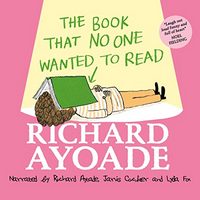
The Book That No One Wanted to Read by Richard Ayoade, Tor Freeman, Jarvis Cocker, Lydia Fox: In Print or Audio, It’s Just Delightful

I am fully aware that the following post overuses the word “delightful.” I wanted to use it at least a dozen more times. This is both a sign that my working vocabulary needs expansion and that this book is a delight. More the latter than the former.
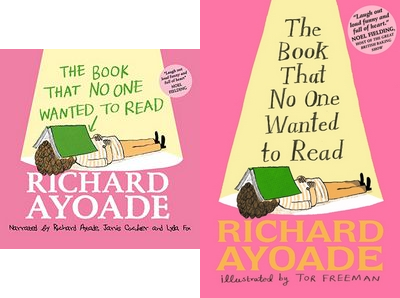

The Book That No One Wanted to ReadThe Book That No One Wanted to Read

(Hardcover/Audiobook)
by Richard Ayoade
Narrated by Richard Ayoade, Jarvis Cocker, Lydia Fox
Illustrated by Tor Freeman

DETAILS:
Publisher: Walker Books US (hardcover); W.F. Howes, LTD. (audiobook)
Publication Date: March 14, 2023
Format: Hardcover/Audio
Length: 108 pg./49 min.
Read Date: April 4, 2023


What’s The Book That No One Wanted to Read About?

This is tricky without giving the whole thing away…but I think I can get close to it. Maybe more idea of the flavor?

We’re told at the very beginning that this book isn’t like others—other books are written by authors, while this book is written by a book. A book with opinions. For example, about authors:

Take it from me, authors can be quite annoying. They go on and on, filling up up page after page, but they have no idea what it’s like to be a book.

or these parts of Top Five Things That Grate My Gears (I’m only giving selections, but I want to give the whole thing):

1. People who fold the corner of the page to save their place.Have these savages not heard of novelty bookmarks? Or paper?…Which part of your body would you most like to have folded back on itself?*

2. People who underline certain words. ALL THE WORDS ARE IMPORTANT!

3. People who skip to the end. If the end was meant to come sooner, it’d be called “the middle.”

and don’t get it started on Ipswitch.

* The accompanying illustration of examples of ways to fold a body is delightful.

This book then goes on to tell a story in the second person about someone (presumably a middle-grade child, but really it could be anyone) who is going through a very large library and comes across the shelf holding The Book That No One Wanted To Read. That book then begins having a telepathic conversation with the “you” about being a book, the book’s plight as being so ignored, and how “you” can help it.

I’m not sure that makes sense—but it should give you an inkling of what you’re in for.

The Narration

Jarvis Cocker handles the bulk of the narration—he’s the voice of the opinionated Book telling the story, and as such is the voice that describes the “you” walking around. I could listen to his portions on repeat for a few hours at a time and be quite content (when I wasn’t laughing).

Richard Ayoade is the voice of the titular book and brings his distinguishing style to that narration. If you don’t smile listening to him as this character, you’re doing something wrong.

Lydia Fox provides the voice for the middle grader in conversation with the book. She’s just as fantastic as the others, and I only mention her last as I went in order of appearance.

This is one of those multi-narrator audiobooks where all the narrators are equally good—capturing the spirit and tone of the text and bringing it to life. I’d say that Cocker is the best narrator of the three, unless you asked me in the middle of one of Ayoade’s lines. Or while Fox was reading. I just loved all the audio aspects of this book.

The Illustrations

Oh, wow. I love the illustrations—they are absolutely great. It’s a sketchy kind of art, immediately relatable (think Jules Feiffer). They grab you right away and are just delightful—as funny as the text, without overshadowing it. They have the same voice, the same kind of humor, but don’t just retell the jokes in the book—sometimes they riff off them, expand them, and sometimes the humor is just adjacent to the jokes in the text.

I don’t normally recommend this kind of thing, but you can pick up the book and just look at the pictures (and read the captions) and have a good time without bothering with anything The Book is trying to convey.

So, what did I think about The Book That No One Wanted to Read?

When I heard about the book a few months ago, I was intrigued and made a mental note to look into it when it was released. Then I promptly forgot about it until I saw it on my library’s app. I’d intended on getting the text version, but I needed something short, so I jumped on it.

I was charmed instantly and loved the experience so much that I ran out to get the Hardcover so I could see the text, re-read portions—and check out the pictures. I haven’t found the time to read the whole book yet—but I have looked at every illustration and read bits of it a few times. This is why I’m giving you this strange hybrid format post.

If you’re going to encounter this book without the vocal stylings of Fox, Cocker, or Ayoade, you need the illustrations to make up for them. If you’re going to read the book without the benefit of the illustrations, you need narrators as strong as those three.

In case you haven’t noticed, I’m doing much better at conveying my reaction to the book than I am the book itself. The voice and tenor of the book are great—it’s goofy and strange, the humor is occasionally dry, it’s imaginative, it’s affirming and encouraging, it wraps you in a blanket of fun and makes you feel good. The characters all three of them—”you”, The Book That No One Wanted to Read, and the Book telling the story—are the perfect way to convey the contents. You don’t want a lot of characters wandering in and out of this one—keep it simple. But you don’t want this to become a monologue or an essay (although judging by the first and final chapter, it’d be great as one of those), so you need the three voices.

The best thing that comes to mind to compare it to is The Phantom Tollbooth. But shorter. And with the humor dialed up by a factor of 50.

I have one reservation. I’m not sure that the style of humor or the content of all the jokes are going to land right with an American Fifth Grader. It feels, perhaps, too British for that. But then again, American Fifth Graders are exposed to more than I was. Also, this could be the kind of thing that trains an 11-year-old’s sense of humor in the same way that stand-up albums I didn’t fully understand did mine. So what do I know?

Bookish adults are going to have a blast with this. Middle-Grade readers who are into slightly off-kilter books will really enjoy this. Most middle-graders, as far as I know, are slightly off-kilter themselves, so maybe they’re all the right audience. Just give them this book in their preferred format and you’ve likely got a winner.

I adore this book—and think it’s going to be a favorite of mine for years to come. I can’t wait to introduce my grandson to it—and frankly, a few older friends and relatives, too.


4 1/2 Stars

This post contains an affiliate link. If you purchase from it, I will get a small commission at no additional cost to you. As always, the opinions expressed are my own.


WWW Wednesday, May 10, 2023

I’ve finished 4 print books in 4 days (probably not going to make it 5 in 5), which is a great feeling—it’s been too long
since I’ve done something like that. It’s even better that I’ve enjoyed all the books I’ve been finishing—tis a good roll to be on.

This meme was formerly hosted by MizB at A Daily Rhythm and revived on Taking on a World of Words—and shown to me by Aurore-Anne-Chehoke at Diary-of-a-black-city-girl.

The Three Ws are:

What are you currently reading?
What did you recently finish reading?
What do you think you’ll read next?

Easy enough, right?

What are you currently reading?

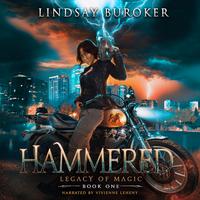
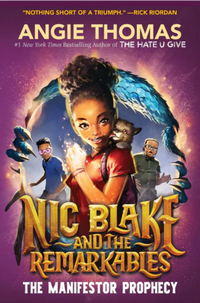
I’m reading Nic Blake and the Remarkables: The Manifestor Prophecy by Angie Thomas—which is about as far from her previous work as I can imagine. I’m listening to Hammered by Lindsay Buroker, Vivienne Leheny (Narrator) on audiobook.

The Manifestor ProphecyBlank SpaceHammered

What did you recently finish reading?

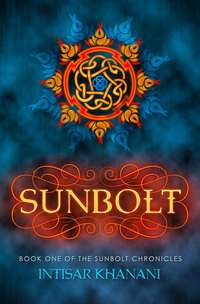
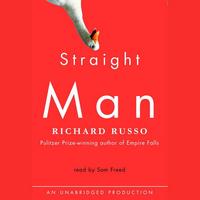
I just finished Intisar Khanani’s Sunbolt (and had to fight the impulse to move right on to the sequel). Last week, I finished Straight Man by Richard Russo, Sam Freed (Narrator) on audio. It’s as good as I remembered but hits a little differently now that I’m the same age as Hank.

SunboltBlank SpaceStraight Man

What do you think you’ll read next?

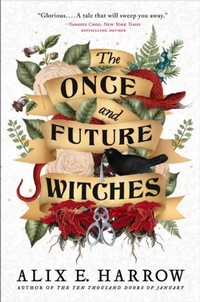
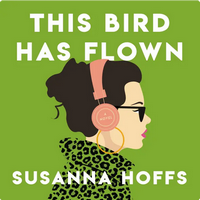
My next book should be The Once and Future Witches by Alix E. Harrow (after spending more than a month on my “On Deck” list) and my next audiobook should be This Bird Has Flown by Susanna Hoffs, narrated by Susanna Hoffs and Juliet Stevenson.

The Once and Future WitchesBlank SpaceThis Bird Has Flown

How’s your reading going lately?

A Few Quick Questions With…Michael Sears

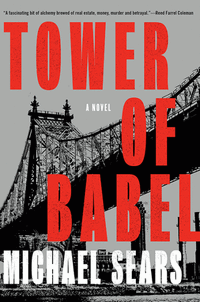
Earlier today, I posted my overdue take on Michael Sears’ novel Tower of Babel, and now I have the chance to share this Q&A that Sears was gracious enough to participate in. Thanks to Wiley Saichek for facilitating this.

I’d sent these questions during Release Week for Tower of Babel, so I appreciate his edit to question 6 so it still works. I love these answers, hope you enjoy them, too.

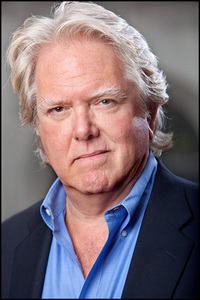
According to his website, “Until 2005, Mr. Sears was a Managing Director for two different Wall Street firms, where he Michael Searsworked in the bond market for twenty years and, earlier, in foreign exchange and derivatives. Prior to returning to Columbia University for his MBA, he was, for eight years, a professional actor appearing at the Shakespeare Theatre of Washington (Folger Theatre), Playwright’s Theater of Washington, New Jersey Shakespeare Festival, The Comedy Stage Co., and, in the course of a single year, every soap opera shot in New York City.

He is married to the artist and poet, Barbara Segal. Together with the not-altogether-domesticated cat, Penelope, they live in Sea Cliff, NY, within sight of the towers of New York.”

Could you take a moment or two to introduce yourself to my readers? What set you on the path to writing, describe your path to publication, genre choices, and so on?
My name is Michael Sears. I’ve been fortunate in my life that my hard work paid off. I now get to write books and have them published. This is the best of all possible worlds.

When I left Wall Street, I gave myself the gift of a creative writing course – which lead to another, and another, dreaming all the while that I might get a short story published someday. I had two books out before my dream came true.

I have been a reader – a fan – of crime writing from an early age. Freddy the Detective (Walter Brooks) was an early favorite. My mother encouraged my reading and I was soon devouring Sherlock Holmes, Rex Stout, Dashiell Hammett, Agatha Christie, and so on.

Assuming you can answer this without spoiling anything—why walk away (however temporarily it may be) from your Jason Stafford series to launch a new one? What was it about Ted Molloy that made you want to tell his story? Or did you have the story and have to build Ted to fit it?
I began the Jason Stafford series with the idea of following the arc of this man’s journey as his autistic son leads him to a greater appreciation for life beyond making money. Jason made the trek. And I discovered that I had written him into a corner. It was no longer okay for him to put his life at risk. More people depended on him. He’d found love and duty and a responsibility to both. He may come back some day – certainly the Kid’s arc is nowhere near done – but I’m busy right now with another man in need of some humanizing.

A question I had running through my mind a lot while reading is that this feels like a very New York kind of story. Do you think about how to make something like this work for audiences in, say the Pacific Northwest or the Plains States, where it’s hard to relate to so much of the story and real estate concerns? Is it actually possible to make a living like Ted does doing this kind of thing?
Real Estate is the religion of New Yorkers. It binds everyone with a common language, and set of experiences, yearnings, disappointments, and successes. There is a shared sense of what each individual needs to feel fulfilled. I don’t know that this feeling is easily transported to another city. I was born in Manhattan and lived there for many years and this sense is in my blood.

And, yes, it is possible to eke out a living along the periphery of New York’s real estate industry. The big sharks leave plenty of crumbs behind. A diligent worker will make a buck or two; a lucky one can earn a good bit more.

There were great secondary and tertiary characters throughout this book. Do you spend a lot of time and energy on them before introducing them to the story, or do they just pop up and you run with them? Specifically, let’s focus (almost at random) on The Preacher and Mohammed—there’s some comic relief to them, but more, too. Are they as fun to write as it seems?
Secondary characters support the main characters. They can provide a sounding board, some humor, and opportunities to explore the depth of the main characters. Lester is a great example. Tertiary characters provide specific functions like muscle or messenger but a writer has the latitude to play a bit. These folks can be ciphers or flamboyant and memorable figures. When in doubt, I go for the latter. And yes, they are fun to write. While I want readers to enjoy Ted’s explorations of right and wrong, I know they’ll get a kick out of Mohammed. As they serve the plot, rather than carry it, I feel free to let them lead me. And that’s fun. Sometimes surprising. I liked Mohammed so much, I made his story the main plot line of the sequel. (Tentatively titled, LOVE THE STRANGER, I expect this book to be out sometime in 2024.)
I was going to read the sequel already, but if Mohammed is the focus? I’ll rearrange my schedule.

The relationship between Jill and Ted worked on so many levels—I could probably do a Q&A focused solely on it. The way it adds layers to Ted and humanizes him is fantastic, it’s also not at all what I expected to find in this kind of book. Can you talk a little bit about why their relationship (particularly focusing on its status early on) was important to the novel outside of the later plot complications? I realize it’s dangerous to equate a fictional character’s politics/religion/tastes with the author, but especially in the contest of these two, I have to assume you share their sentiments when it comes to the Mets?
I am a lifelong Yankees fan. But the Mets offer a writer much more nuance and that plays to Ted’s history and his future.

Jill is such a great foil for Ted, revealing much about his character. Jill, like Ted, doesn’t know exactly who she is because she has tried so hard to be someone else. She begins her journey of discovery first, but Ted surpasses her. We’ll have to see where they each end up as the series progresses.

My process is more exploratory than structured. I am a pantser. at least for the first half of the book – or more. At some point I have to come up with an outline, just so I can put the plot in some kind of order. But I get to try out characters and see where they take me without a lot of pre-thought or judgment. Jill was a happy discovery. And she kept demanding to stay in the limelight.

Tower of Babel has been released for a while. Do you have anxiety when a new book is released? How did it compare to the previous novels?
I’m the guy who refuses to acknowledge my own anxiety – a trait that drives my wife nuts. I try to stay busy as pub day approaches. I don’t get much done, but the distractions give me the illusion of progress.

Tower of Babel won the 2022 Nero Award, as someone who’s been re-reading that series for decades, I have to ask—outside of that award, do you have much of a connection to Nero Wolfe as a fan/reader? What about the series grabs you? Can you see an influence of Stout on your writing (whether or not anyone else can)?
I read Rex Stout before Agatha Christie. My mother suggested I try him after I read all the Sherlock Holmes. I’m guessing I was in 6th or 7th grade at the time. Maybe that was too young because it was a long time before I came back to them.

I like that Wolfe solves crimes with his brain. Archie provides evidence – and often gets the significance all wrong – and Nero Wolfe puts it all in proper order. But it’s the trappings of the stories that keep bringing me back. I most enjoy when Wolfe is dragged out of his home – it’s rare, I know. Too Many Crooks is one of my favs. It takes place at The Greenbrier and I was once at a conference there.

There’s a game we play around here, called “Online Bookstore Algorithm”. What are 3-5 books whose readers may like Tower of Babel?
That is the most positive way I have been asked this question. I usually duck it because I try hard to be unique. But your method has swayed me. Charmed me.

A reviewer once said of a book of mine that it read like a combination of Ian Fleming and Woody Allen. If they’d also said I looked like George Clooney, I couldn’t have been happier.

Donna Leon’s Venice series comes to mind. The human interactions are as important as the plot. And the ends are always sad. Evil escapes unscathed all too often.

Another series, which we all know from PBS, is Morse. The books are quite good too. And here again, the innocent often are served worse than the guilty.

WHAT YOU BREAK, by my good friend, Reed Farrell Coleman for sense of place and the noir mood.

I think of TOWER OF BABEL as a love story. SOMETHING TO HIDE by Elizabeth George comes to mind.

Again, the issue of place is important. And so THE DEAD OF WINTER by my fellow Soho author – and Nero Award winner – Stephen Mack Jones.
I didn’t think of What You Break, but that’s absolutely the same kind of feel! I’m tempted to go re-write my post about Tower of Babel now discussing the relationship between the two.

What’s next for Michael Sears, author?
A sequel to TOWER OF BABEL is making its torturous way through the publication process, which means I have turned in a complete book to my Soho editor and now await a round or two of edits before we set a pub date – which will most likely be next spring.

And as I am writing all the time, there may be more. Stay tuned.

Thanks for your time—and thanks for Tower of Babel. I really enjoyed it, and hope you have plenty of success with it.


Tower of Babel by Michael Sears: Concrete Jungle Where Dreams Are Made Of

Come back this afternoon for a Q&A with the author, Michael Sears, it’s a good one.

Tower of Babel was published a month ago, and I was trying to get this posted in that first week. I missed significantly, and I wanted to start things off by apologizing to Michael Sears and Wiley Saichek, the publicist that connected me with Sears, for that.


Tower of BabelTower of Babel

by Michael Sears

DETAILS:
Series: Ted Molloy, #1
Publisher: Soho Crime
Publication Date: April 6, 2023
Format: ARC
Length: 394 pg.
Read Date: March 27-29, 2023


What’s Tower of Babel About?

I really don’t like not providing my own synopsis/tease for a novel. But I’m overdue with this post, and a lot of that has to do with stumbling on this section. So I’m going to appropriate it from Soho Press’ site:

Queens, New York—the most diverse place on earth. Native son Ted Molloy knows these streets like the back of his hand. Ted was once a high-powered Manhattan lawyer, but after a spectacular fall from grace, he has found himself back on his home turf, scraping by as a foreclosure profiteer. It’s a grubby business, but a safe one—until Ted’s case sourcer, a mostly reformed small-time conman named Richie Rubiano, turns up murdered shortly after tipping Ted off to an improbably lucrative lead.

With Richie’s widow on his back and shadows of the past popping up at every turn, Ted realizes he’s gotten himself embroiled in a murder investigation. His quest for the truth will take him all over Queens, plunging him into the machinations of greedy developers, mobsters, enraged activists, old litigator foes and old-school New York City operators.

Haaaaave You Met Ted?*

* Sorry, I couldn’t resist. Not that I tried all that hard.

Ted’s a good example of a very familiar type of Crime Fiction protagonist. At one point in the not-too-distant past, he’d been very successful for his age with a bright future ahead of him. Then he hits a personal and professional rough patch, and all that success and future vanishes. He’s now had to recalibrate his life, his legal career in ruins and so begins a new—albeit somewhat related—career, with new routines, a new home, new allies, and so on to restart his life.

Like most of this type, he’s moved on, but not really. He still misses his old life, still laments it, regrets the things that happened (unjustly) to bring down his house of cards, and would go back if he could. He’s given chances over the course of Tower of Babel to revisit that life, to see how green the grass is on that side of the fence, and his response to that really tells the reader more about who he is than anything else in the book can.

In a New York State of Mind

I love when a novel hits me with a great sense of place—and Tower of Babel did that to me. Sears doesn’t spend that much time describing the city or its landmarks or anything like that. But the city permeates everything. Travis Bickle drove the same streets as Mohammad did (and probably in a safer manner). Sherman McCoy struck deals with the same kinds of people. Det. Denny Malone would be known to the detectives on the murder.

This is a novel that has to take place in New York.* I just don’t see it working anywhere else—are there shady real estate deals, corrupt politicians, organized crime, and entities with too much power in Chicago, Miami, L.A., Boston, London, etc.? Absolutely. Do other major cities have teams that have a fanbase as devoted and as constantly disappointed as the Mets? Absolutely (although most of them don’t have to share a city with the Yankees). Ethnic diversity and economic disparity might have different mixes and present in different ways from metropolitan to metropolitan, but they’re there just the same. But I just don’t see how this novel works in Miami or Boston. The organized crime of it all would be different in Chicago. There’s something about shady real estate antics that seems quintessentially NYC (it shouldn’t, but it does).

* Granted, I’m just some dude from Idaho, what do I know?

Any book that transports me so convincingly is worth the time and effort (not that this took much of the latter).

Ted and Jill

Ted is still friends with his ex-wife, Jill. They’re obviously very important to each other and spend a good deal of time together—primarily because of the NY Mets and Ted’s season tickets. I absolutely loved this version of divorced adults interacting with each other (there were no kids involved, which likely helped). Early on, when I wasn’t as sold as I eventually would be on the murder storyline (and was still trying to understand the real estate angle), I put in my notes that I’d have enjoyed the novel more if it was just about them spending time together. By the novel’s end, I’d changed my mind—but I’d still take a novella just about the two of them.

It’s a healthy friendship, supportive and challenging—and just fun. (then again, this is a noir-ish Crime Novel, so I make no promises that the way things start is the way they will end).

So, what did I think about Tower of Babel?

I stumbled a little in the beginning trying to understand the way that Ted’s making his money now and the antics involved in all the real estate transactions (ethical, legal, and otherwise), but that’s primarily because my brain doesn’t do well with that sort of thing. I ultimately gave up trying and just accepted it in the same way I do with Asimov’s worldbuilding or things along those lines. By the end of the novel, I (am pretty sure that) I understood it all because I’d stopped trying to decipher it (I still can’t totally explain psychohistory or Asimov’s take on superluminal flight, for what’s it’s worth). The details are both not as important to the novel as everything else and not as difficult as I was making it.

I can see Sears settling into this character and this world and turning Molloy into a typical scrappy lawyer character in the vein of Mickey Haller or Eddie Flynn. But I don’t think that’s the direction this is going—would I read that version? Absolutely, but I already have Haller, Flynn, et al. It feels to me that this is headed in a more David vs. Corporate Goliaths tack, maybe with some murder, etc. thrown in, sure—but my money is on this series focusing on corporate crimes, and corruption (both political and economic). Either way, I’m in for at least one or two more books—and I expect most readers will feel the same way.

This is not your typical Legal Thriller, and Sears sucks you into the story in ways you won’t expect—actually, I think you’ll end up expecting very little about the story and characters as you go along. But in the end, you’ll realize that just about everything had to go the way it did. I love that feeling of being taken unaware and then seeing that there was no other way for this jigsaw to be put together. It’s so satisfying when you can look at the whole thing (and a great ride along the way).

Crimes you’re not accustomed to reading about—crimes you’re very familiar with—a cast of characters you don’t see every day, and an ethically dubious protagonist (or is he?). Tower of Babel is a great entryway into a series that should garner a fanbase, and you should think about hopping on before the bandwagon builds up too much speed.

Disclaimer: I received this ARC from the author via Wiley Saichek and Saichek Publicity in exchange for this post—while I appreciate that, the opinions expressed are wholly mine.


4 Stars

This post contains an affiliate link. If you purchase from it, I will get a small commission at no additional cost to you. As always, the opinions expressed are my own.
Book Blogger Hop: Excessive Number of Books

Book Blogger Hop


This prompt was submitted by Billy @ Coffee Addicted Writer:

Have you ever been told that you have an excessive number of books? If so, what was your reaction?

Just about any time someone sees my collection—or asks how many books I own. And those people don’t even see my ebooks or audiobooks!! I should probably print up a graphic representation of those just so they really know what they’re commenting on.

My wife used to say that frequently—especially when she’d think about downsizing, or wondered where I’d put the next shelf. In the last couple of years, she hasn’t said anything like that. She’s either given up on me or accepted who I am. Becoming empty nesters probably helped with that, as my books aren’t competing with the kids for space anymore. She even got me a nice “It’s not hoarding if it’s books” sign for my office door.

When someone says that to me I generally agree, because it’s true—I have an unreasonable number of books for someone who isn’t Belle’s Beast. But then I’ll go on to say that I still need more. Because that’s also true. I may add something about how many books I currently have ordered and am waiting to arrive, just to elicit an eye-roll or sad shake of the head over my incorrigibility for my own amusement.

Yes, it will be a burden on my children (or whoever they hire) to go through them all when I’m bereft of life and resting in peace. But that’s not really my problem, is it?*

* That took a dark turn there, didn’t it? That’s what I get for going for stream-of-conscious responses on these posts.

How do you react to comments about your library size?

Highlights from April: Lines Worth Repeating

Highlights from the MonthThere are more audiobooks than print books in this month’s selections. That has more to do with me reading more ARCs than usual, and I don’t have access to final versions of those to quote from. Or the book being so good that I just don’t know what to quote from (thanks, Ozark Dogs). As always, when it comes to audiobooks, I’m guessing the best I can at the punctuation, etc.
Backpacking Through Bedlam

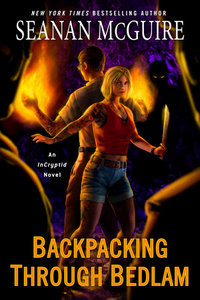
Backpacking Through Bedlam by Seanan McGuire

Family is complicated. Peach cobbler, on the other hand, is refreshingly simple.

“The laws of physics aren’t negotiable.”

Darius laughed, and the sound was loud and joyous as he set his hands back on the wheel. “Sure they are. There’s no law that’s not negotiable, if you know how to get your shoulder against it and push.”

Always be polite to she shapeshifting super predator. It’s a simple rule of life, but a good one all the same.


All Systems Red

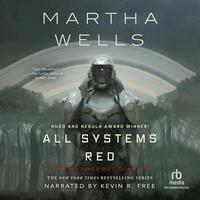
All Systems Red by Martha Wells

I liked the imaginary people on the entertainment feed way more than I liked real ones, but you can’t have one without the other.

You may have noticed that when I do manage to care, I’m a pessimist.


The Book That No One Wanted To Read

The Book That No One Wanted to Read by Richard Ayoade

Might I suggest getting on good terms with the capybara? This is just about the friendliest mammal you could meet. Native to Central and South America, they eat grass, weigh up to 150 pounds, and look like someone pushed a kangaroo’s head through a squirrel’s tail. They have dry skin and swim to a high standard.

Us books need to be seen. We need to be held. We need to be heard. I think that’s why children make the best readers, because they know that these things are also true of them.

Problems with invisibility include people bumping into you, and not coming out well in photos.


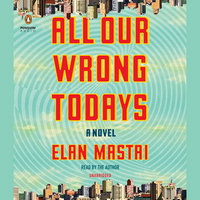
All Our Wrong Todays

All Our Wrong Todays by Elan Mastai

People talk about grief as emptiness, but it’s not empty. It’s full. Heavy. Not an absence to fill. A weight to pull. Your skin caught on hooks chained to rough boulders made of all the futures you thought you’d have.

The problem with knowing people too well is that their words stop meaning anything and their silences start meaning everything.

That’s all science is. A collection of the best answers we have right now. It’s always open to revision. Yesterday’s fact is today’s question and tomorrow has an answer we don’t know yet.

So he did what you do when you’re heartbroken and have a time machine—something stupid.

…time travel is very bad at fixing mistakes. What it’s very good at is creating even worse mistakes.

That’s what love can do for you if you let it: build a person out of all your broken pieces. It doesn’t matter if the stitches show. The stitches, the scars just prove you earned it.

This is how you discover who someone is. Not the success. Not the result. The struggle. The part between the beginning and the ending that is the truth of life.

Is there a word for a thing you know you absolutely shouldn’t do, that would be wrong in every way that matters to you, but that you’re pretty sure you’re going to do anyway? Or is that just—human?


The Widower's Two-Step

The Widower’s Two-Step by Rick Riordan

His eyebrows went up. His mouth softened. His eyes cast farther afield for something to latch on to. Nostalgia mode. I had maybe five minutes when he might be open to questions.

Not that drunks have predictable emotional cycles, but they do follow a brand of chaos theory that makes sense once you’ve been around enough of them, or been made an alumni yourself.

You could hear the stereo from the downstairs neighbors just fine. They were playing Metallica. Playing isn’t really the right verb for Metallica, I guess. Grinding, maybe. Extruding.

We zipped along with the front trunk rattling and the left rear wheel wobbling on its bad disc. I patted the VW’s dashboard.

“Not this trip. Break down on the way home, please.”

Of course I told the VW that every trip. VWs are gullible that way.


The Deal Goes Down

The Deal Goes Down by Larry Beinhart

Trees fight for life. If you climb to the high, rocky places, where the soil’s been stripped by the beating of the winds, day and night, you’ll see the pines hanging on, their roots crawling into the splits between the stones and wrapping tight around them, like the crew of a ghost sailing ship, desperately clinging forever to the lines as they ride through an eternal storm.

This love of life that we go on about, how precious it is and such, is just a mechanism. Spiders and flies, blades of grass, and bacteria have it. Any form of life that doesn’t have it gets wiped out. Ipso facto, it’s built in, like spark plugs in an internal combustion engine. We spend endless hours wondering if our life will be short or long, good or bad, worthwhile or worthless, then death comes, and we have no idea at all.

It was a 9mm. I didn’t know the brand. I knew it could kill me. The name of the manufacturer didn’t make much difference. They were all sufficiently reliable that I wouldn’t bet my life on a malfunction. Whichever one of them this was, it would kill me as dead as any of the others. For that matter, the fact that it was an automatic rather than a revolver and that it was a 9mm rather than a .38, a .44, or a 45 was irrelevant in the immediate context.

I felt I had to say something, some explanation of the distance that remained. That we—that I—retained. “Young men run on passion. Old men are filled with broken shards of memories. As if we’ve been looking at our lives in mirrors, all along, through all those years, lots of them forgotten, some lost, most of them broken, nothing really true or completely whole is left, just all those bits and pieces, sharp edges, and silver peeling off the backs. That’s all there is.”


The Mostly True Story of Tanner & Louise

The Mostly True Story of Tanner & Louise by Colleen Oakley

“Why is it called a grandfather clock and not a grandmother clock?” her eldest granddaughter, Poppy, asked once. “Because only a man would find the need to announce it every time he performed his job as required,” Louise replied.


Morning Star

Morning Star by Pierce Brown

Much as I enjoy using four hundred million credits’ worth of technology make me into a flying human tank, sometimes warm pants are more valuable.

“You tell anyone I cried, I’ll find a dead fish, put it in a sock, hide it in your room, and let it putrefy.”

In war, men lose what makes them great. Their creativity. Their wisdom. Their joy. All that’s left is their utility. War is not monstrous for making corpses of men so much as it is for making machines of them. And woe to those who have no use in war except to feed the machines.

Justice isn’t about fixing the past, it’s about fixing the future. We’re not fighting for the dead. We’re fighting for the living. And for those who aren’t yet born.

“I always think about how life would have been if Eo never died. The children I would have had. What I would have named them.” I smile distantly.

“I would have grown old. Watched Eo grow old. And I would have loved her more with each new scar, with each new year even as she learned to despise our small life. I would have said farewell to my mother, maybe my brother, sister. And if I was lucky, one day when Eo’s hair turned gray, before it began to fall out and she began to cough, I would hear the shift of rocks over my head on the drill and that would be it. She would have sent me to the incinerators and sprinkled my ashes, then our children would have done the same. And the clans would say we were happy and good and raised bloodydamn fine children. And when those children died, our memory would fade, and when their children died, it would be swept away like the dust we become, down and away to the long tunnels. It would have been a small life,” I say with a shrug, “but I would have liked it.”


(Image by DaModernDaVinci from Pixabay)

What is Love? by Kyle Borg: A (too?) Brief Look at a Deep Topic

What is Love?What is Love?

by Kyle Borg

DETAILS:
Series: The Bedrock Series 
Publisher: Grassmarket Press
Publication Date: December 20, 2022
Format: Paperback
Length: 135 pg.
Read Date: February 26, 2023

…deep down we know that love isn’t all we need. We also need to love well. We need to love rightly. So who gets to define that? Which voice is worth listening to, and which voices should be ignored? Is philosophy right? Is psychology right? Sociology? Biology? Politics? Economics? Literature? Hollywood? Music? Social media? Porn? Who gets to tell you what love is?

In the midst of these noisy voices, we need a louder voice. We need a voice that can break through the chatter and clearly, authoritatively, conclusively define for us what love is.

What’s What is Love? About?

This is Borg’s attempt to show what the Bible’s authoritative and conclusive definition of love is. He looks and several texts from all over the canon—spending (naturally) a substantial time in 1 Corinthians 13.

It’s a multi-faceted look at love. Borg considers the love of God demonstrated between the persons of the Trinity as well as toward His creation. But he also looks at the love that humans are to show each other as well as that we’re supposed to show to God.

The seventeen chapters are brief (in 135 pages, they have to be), but he doesn’t shy away from going deep into the topic of the chapter.

So, what did I think about What is Love??

There’s a lot of good material here—helpful, persuasive, and Biblical. But…it seemed to miss the intended goal of the book of giving a strong definition for love. Don’t ask me what was missing, but it just felt to me like Borg fell a little short.

I’ve been listening to Borg for a few years now on a couple of podcasts, and really appreciate his insights and explanations for various topics. So I was a little surprised that I didn’t connect with this the way I expected. I halfway expect that he tried to do too much in such a brief book, and if his goal hadn’t been so lofty, he’d have done better.

The writing is clear and concise—it’s as approachable as you could hope for, no matter your age or groundedness in Christian teaching. This seems to be the intent of the books in the Bedrock series, and Borg succeeded there.

I do recommend the book and think readers will benefit from reading it—I did. While I’m not sure Borg delivered the conclusive definition he intended to, he gave a lot of clear teaching on what the Bible says to lead to that definition, and that’s a good enough place to start.


3 Stars

Saturday Miscellany—5/6/23

Teeny-tiny list today, but I make up for it in the New Releases…

In case you missed it earlier this week, I’m collecting questions to answer as part of my upcoming 10th Blogiversary commemoration. I’ve got some great ones already, but I could use some more! (I’ve received a couple of less-than-great ones, too—they’re just as welcome, so there’s no pressure to ask something compelling)

Odds ‘n ends about books and reading that caught my eye this week. You’ve probably seen some/most/all of them, but just in case:
bullet The Big Idea: What if censoring books only makes them more popular?
bullet Please Eat in the Library—I could get behind this
bullet Reading books is not just a pleasure: it helps our minds to heal—a look at bibliotherapy
bullet What Tone Peat Likes—The last installment in this series

A Book-ish Related Podcast episode (or two) you might want to give a listen to:
bullet The Thriller Zone Episode 130 Season 4: New York Times bestselling author Don Winslow of City of Dreams—a great conversation with Winslow that I didn’t want to end.

This Week’s New Releases that I’m Excited About and/or You’ll Probably See Here Soon:
bullet Chain-Gang All-Stars by Nana Kwame Adjei-Brenyah—what if instead of executing murderers, we made them gladiators? A stunning read that I tried to describe this week.
bullet Swamp Story by Dave Barry—Another strong and zany novel about Florida from Barry. I had a great time reading it.
bullet Miles Morales Suspended by Jason Reynolds—Miles has to serve in-school suspension and save the day. Should be a challenge. Reynolds’ previous YA novel about Miles was my (I know this is wrong) first introduction to the character and made me a fan. I’m excited to jump back into things here.
bullet Something Bad Wrong by Eryk Pruitt—a true-crime podcaster tries to solve the 50-year-old murder that her grandfather, a sheriff’s deputy, couldn’t.
bullet Little Ghost Audiobook by Chris McDonald, Robert G. Slade (Narrator)—McDonald’s American PI novel is now in audio. I really liked the print version, and am looking forward to giving this a listen.

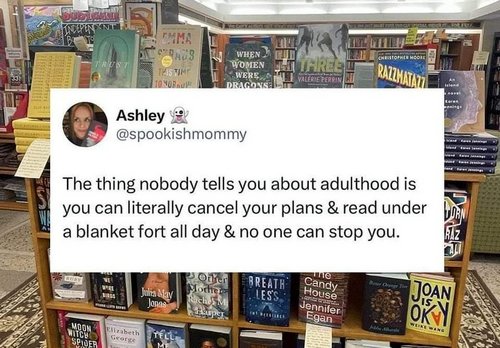
The thing nobody tells you about adulthood is you can literally cancel your plans & read under a blanket fort all day & no one can stop you. - @spookishmommy

The Ballad of Bonaduke—Episode 21: Turn Around by R. T. Slaywood: The Aftermath

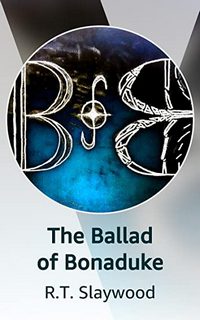
The Ballad of BonadukeThe Ballad of Bonaduke—
Episode 21: Turn Around

by R.T. Slaywood

DETAILS:
Series: The Ballad of Bonaduke, #21
Format: Kindle Vella Story
Read Date: April 20, 2023

The Story So Far…

A drunken Michael Bonaduke decides to use a grift (with maybe some sort of magic/magic-like “help”) to win on a scratch-off lottery ticket so he has money to buy more to drink. He pulls off whatever he did, gets his money and some booze and stumbles off into the darkness to drink himself into oblivion so he can start again the next day. He’s hit by dark memories (probably what’s driving him to the drinking) of fire, pleading, and screaming. There’s going to be a price to pay for his grift, and he’s trying to be ready.

Before then, he gets himself drunk and we get some of his tragic backstory. As he ponders this, he decides to use some of his ill-gotten-gains to buy more booze and walks into a liquor store robbery. He foils it in some sort of magical fashion, gets some more to drink, and heads off to the park to drink until he’s arrested (probably for the failed robbery). At least that’s his plan, but it gets interrupted by being hit by a car. He wakes up on some sort of short, metal bed and is unsure what’s going on. It turns out that some group is subjecting him to a test—if he passes, everything will be explained to him (and hopefully the reader, too). He passes—and is brought somewhere for answers, or maybe training, or maybe another test. Time will tell (or things are going to get really annoying). Answers aren’t quick to come—but the mysteries and questions keep piling up.

Things get hairy and Bonaduke leaves and finds himself back in the neighborhood he started from. Taking refuge in a homeless encampment, Bonaduke has to make some decisions. He starts to get his thoughts in order when the police begin a raid at the camp. During the raid, he’s apprehended by…well, we need to find out. But first, the interrogation kicks off—Bonaduke tries to work his grift to get him out, and while that effort starts off promisingly…it didn’t quite go the way he’d intended.

What’s Turn Around About?

The effects of his grift were a bit more than Bonaduke was prepared for, but he’s able to push through the carnage and escape from the interrogation room—now he just has to get out of the police station. Which turns out to be more difficult than he’d bargained for.

Trying to move surreptitiously around while looking for an exit, Bonaduke thinks about what he left in that interrogation room and what the ramifications will be for someone other than himself. This bit of reflection leads him to a decision—which we’ll probably get to see in Episode 22.

So, what did I think about Turn Around?

I was both eager and nervous after the last episode. Will we get some more water-treading or will he keep things moving in the same vein? Thankfully, the answer was pretty much the latter.

My initial reaction was that there was something missing from this episode, just a little something that would’ve really helped it come together. But I have no idea what that could be—the more I ponder, the less I can think of that’d be missing. I guess maybe knowing exactly what his plan is at the end would’ve helped, but that’s supposed to propel us into Ep. 22, so I can understand the choice to keep it from us.

Other than that, this really clicked—we get to see his reaction to the events of Room 5 and his scrambling to make the most of it. There’s a lot of tension from the anticipation of action—and Slayton executes it this time in a way that moves things forward, we’re not standing still with indecision here.

A great touch was Bonaduke thinking of others—and not just in a “how can I avoid or get something from them” kind of way. We haven’t really gotten a lot of that kind of thing in the previous 20 episodes, it’s been all about him. Slow character development, but noticeable. That’s always good to see.

I’m really looking forward to the next episode.


3.5 Stars

The Friday 56 for 5/5/23: The Winter of Frankie Machine by Don Winslow

The Friday 56This is a weekly bloghop hosted by Freda’s Voice.

RULES:
The Friday 56 Grab a book, any book.
The Friday 56 Turn to Page 56 or 56% on your ereader. If you have to improvise, that is okay.
The Friday 56 Find a snippet, short and sweet.
The Friday 56 Post it.

from Page 56 of:
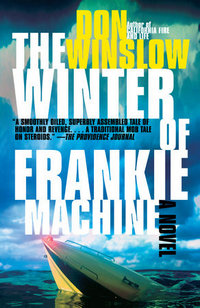
The Winter of Frankie Machine

The Winter of Frankie Machine by Don Winslow

Not a good night to be out on the open ocean.

Too much swell and chop, and the roll coming out of the storm keeps working the boat back toward the coast.

Frank hacks it out about ten miles into the ocean anyway. He fished these waters hundreds of times as a kid. He knows every current and channel and he knows just where he wants to dump the bodies so if they ever come to shore, it’ll be in Mexico.

The federales will figure it’s a dope deal gone bad, and put about two minutes’ work into solving the case.

Still, it’s a bitch out here tonight, with the wind and rain and the roll, and Frank’s biggest fear is that he’ll run into a Coast Guard vessel that will stop him and want to know what kind of jackass is taking a boat out on a night like this.

I’ll just play stupid, Frank thinks.

Which shouldn’t be hard, given my track record tonight.

His neck hurts from the wire. But pain is good, he figures, seeing as how by all rights he shouldn’t be feeling anything.

Page 5 of 6

Powered by WordPress & Theme by Anders Norén