Month: December 2023 Page 2 of 5

The Grandcritter’s First Festivus

Shunning the commercialization of Christmas*/Hanukkah/Kwanzaa/Santaween/Chrismukkah, we’re again celebrating Festivus (for the rest of us) here at The Irresponsible Reader. But this time, we’re doing something extra special—my Grandcritter is joining us as I share with him the wonders of the day.

And no…this isn’t just an excuse for a proud grandparent to show you all pictures of this adorable guy. You’re just going to have to take my word for that.

Let’s begin our observance!
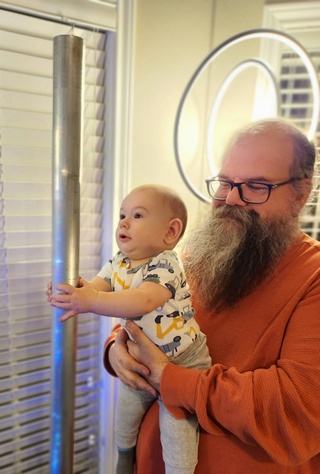
Festivus PoleWe start by setting up the Festivus pole. See how he’s taking in the very high strength-to-weight ratio (because it’s a mighty fine pole) and how he’s fascinated by it without any need for distracting tinsel. It’s very important to take in the simplicity.

And now, let the Airing of Grievances begin.

Airing of Grievances
I initially assumed that I’d be handling this myself, the kid’s not even a year old. So, sure he has a gripe or two, but they can’t be book-related, can they? Turns out they can.

The Grandcritter’s Grievances
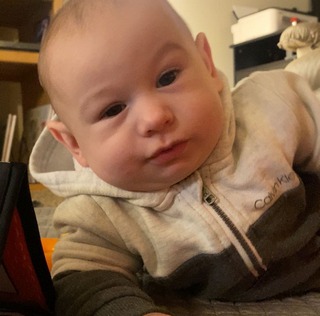
Aggrieved Grandcritter
bullet Board Books need to taste better! Sure, the texture is interesting and provides an interesting mouthfeel. But the taste is rather plain. Can’t we get something that tastes like food mixed into that coating on every page?

bullet Related to that, try as I might, I cannot fit an entire book into my mouth at once. I don’t know if it’s a me problem or a publishing/book design problem, but I think it’s the latter. I don’t know why, but I think it would be really satisfying if I could just get one to fit the whole way, you know?

(Grandpappy’s original idea for my Feat of Strength was to get a picture of me trying to pull this off, but Mommy wouldn’t let him. Apparently, he’s supposed to discourage that, not try to get me to do it. I’d make this a Grievance, too. But Mommy probably knows best, and Grandpappy says I should wait at least 13 years before pushing back like that in public.)

bullet I’ve got a beef with the people that make those “Indestructibles” books for people my age. Do they not understand how satisfying it is to rip a page in a book (and maybe to stuff it in your mouth)? That sound…that feeling of power…it’s so good. And then these mean grown-ups make it so my people can’t do that? It’s the worst. (also, Grandpappy says they’d do better selling multiple copies of books when adults replace the ones with missing pages)

bullet Lastly, my TBR is too huge! I’m never going to catch up at this point. Never mind the books that Mommy and Daddy have picked out for me, or that I might be interested in—do you have any idea how long the list that my Grandpappy has for me is??? Talk about Irresponsible…

Grandpappy’s Grievances

(Yes, some of these are only slightly revised from previous Festivus posts. This is to be expected, it’s not like the entire universe fixed itself after I threw up a few posts. I’ve got to keep up the pressure.)

bullet AI’s takeover of publishing, from covers to audiobook narrations to writing and illustrating! It’s just too much. This is about human creativity, not close approximations of it. Also, you’d think that people who publish/sell/read dystopian fiction and SF would know better than to give the reins of anything to an AI.

bullet I have a grievance with the book publishing/selling/marketing industry. It’s 2023, why are we still placing stickers on books? If we have to do that, why hasn’t Science come up with a sticker that doesn’t leave a gummy residue behind? C’mon, Science, if you can’t give us a cure for cancer, a pill so people with Celiac disease can eat bread, or an Oreo that will help me lose weight—at least you can give us stickers that don’t leave gunk on our books! Especially, especially when it covers the ISBN number for those of us trying to scan them.

bullet What’s worse than stickers are those things that look like stickers, but aren’t. Just stupid, garish circles that have been printed on the cover and really only serve to obscure the image. What’s the point?

bullet I have a grievance with Movie/TV covers on books. C’mon people, this is stupid. Sure, it may help sell more copies of the books—but has any book been improved by one of these covers? No! Knock it off! And especially, stop it with sticking pictures of actors on books in a series that haven’t been adapted, just because some have (yeah, I’m looking at you, Longmire).

bullet Similarly, what’s up with publishers changing the look of series covers—and or the height of the books—in a series? I like when they match and I resent having to go buy second copies of the old ones to have a nice matching set. (which I generally avoid, but I think about doing it a lot).

bullet Whether it’s from a mainstream publisher, indie press, or a self-pubbed book, we have the technology and (theoretically??) the education so there’s no reason for there to be missing/extra punctuation or misspelled words in books. We all understand human error, some are going to slip through, but…

Obviously, this doesn’t apply to book blog posts. No one paid for these.

bullet I have a grievance with the Book Blogging Community. There are way too many good book bloggers out there to keep up with. Some of you need to write less often! Also, you make the rest of us look bad.

bullet I’ve got a grievance with running out of places to put books and bookshelves that aren’t like a bag of holding or TARDIS and can’t take an increasing number of books. So…physics, I guess. Yeah, that’s right, Laws of the Physics, I’m calling you out. Get your act together!

bullet And what’s more…I lost my train of thought. Still, I managed to get a little off my chest, and that felt good.

And now, the Feats of Strength

Time for Feats of Strength
This was tricky to capture in a photo, but I think you can make it out…The Grandcritter is lifting my The Lord of the Rings Illustrated hardcover. Yes, one corner is resting on (read: digging into) my arm, but he’s picked up the other end on his own. All 3.54 lbs. of it–with one hand, mind you.
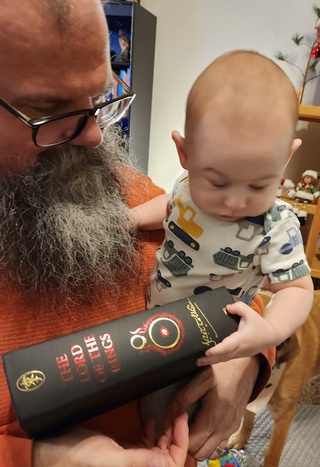
Feat of Strength

Let’s see how the rest of you do with your feats.

I hope you enjoyed this bit of fluff and regardless of what holidays/festivals you may or may not celebrate that you have a happy one!

* I’ve gotten a little feedback about this—it’s pretty clear I’m a Christian. So why do I do a Festivus post instead of something about Christmas? While I do think that believers have the liberty to celebrate the Nativity if they desire to, I’m ambivalent toward the day, and hesitant to make a big deal out of it. So, I don’t. If you’re curious, I thought this episode of The Heidelcast did a decent job of articulating many of the issues (without getting nasty about it).

On the other hand, Festivus is just silly fun. Hope you don’t mind…

Happy Festivus

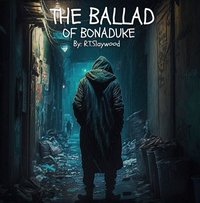
The Ballad of Bonaduke—Episode 42: Meaningful by R. T. Slaywood: Lesson One

The Ballad of BonadukeThe Ballad of Bonaduke—
Episode 42: Meaningful

by R.T. Slaywood

DETAILS:
Series: The Ballad of Bonaduke, #42
Format: Kindle Vella Story
Read Date: December 22, 2023

The Story So Far…

A drunken Michael Bonaduke decides to use a grift (with maybe some sort of magic/magic-like “help”) to win on a scratch-off lottery ticket so he has money to buy more to drink. He pulls off whatever he did, gets his money and some booze and stumbles off into the darkness to drink himself into oblivion so he can start again the next day. He’s hit by dark memories (probably what’s driving him to the drinking) of fire, pleading, and screaming. There’s going to be a price to pay for his grift, and he’s trying to be ready.

He’s abducted by some representatives of a mysterious group who subject him to a test—if he passes, everything will be explained to him (and hopefully the reader, too). He passes—and is brought somewhere for answers, or maybe training, or maybe another test. Time will tell (or things are going to get really annoying). Answers aren’t quick to come—but the mysteries and questions keep piling up.

Things get hairy and Bonaduke leaves and finds himself back in the neighborhood he started from. He takes refuge in a homeless encampment shortly before a police raid. He’s apprehended and finds himself an interrogation room and shortly escapes after using his grift (but with results he didn’t quite intend). He finds himself by a group of squatters who seem to have strapped a woman to a chair for reasons that can’t be good. He attempts to rescue her before he even realizes what he’s doing, and seems to have succeeded—well, the two of them got away from the group anyway—breathing but bruised. They make their way to a fast-food taco joint and Bonaduke really needs to refuel to keep going. He tries, but fails to get food because he keeps passing out. Thankfully, the clerk is the same guy from the liquor store and he both recognizes him and gives him first aid. The woman (Zero) wakes up and shows some abilities of her on as she helps them escape from her captors who’ve tracked her down. One thing leads to another—Zero and Bonaduke’s magics don’t mix well (at least until they understand what each other can do?), and they end up in a video-game race against the squatters in a tricked-out version of Eric (the clerk’s) car. Note, I said video-game race, not a video-game-style race. They’re actually in one. When dumped back into reality, he’s surrounded by bruised and broken bodies (of people and cars). And then he gets into a supernatural fight and survives…just.

Or maybe not. But he gets better. And then his new…friends? Acquaintances? People who keep popping up in his life?…start explaining exactly what’s going on to him.

What’s Meaningful About?

I said nothing happened in the last episode, but man…it was action-packed compared to this one. They drive, they talk, they have some lousy fast food, then drive and talk some more.

But that’s okay. Because what they talk about is important: Alan gives Bonaduke a quick version of his origin story, starts to explain Omnicrat and their activities, and what he, Om, and Zero are trying to do. Better yet, he gives Bonaduke a better understanding of how magic interacts with the world and people.

So, what did I think about Meaningful?

This is the talkiest that Slaywood’s been yet–hardly any narrative, either. (or so close it doesn’t matter). It’s a lot to take in, really–not too much, but a lot–and it’s going to be one of those episodes you bookmark so you can come back and reference it later when you see some of this in action.

There’s part of me that wants to compare some of what we saw in earlier episodes to what we’re told here, too–just to see how the “in action” compares to the “theory.” But I think I’ll hold off on that for now, to see how things play out a little (and frankly, Vella isn’t easy to flip back and forth through quickly and I’m not in the mood to put up with that), I’ll just assume that Slaywood is being internally consistent (and if not, I really don’t care–the path he’s on is good enough that I’m fine with him diverging a bit from earlier stuff)

This is really good to see, I’m glad we’re starting to get some of the world explained to us. Things are starting to gel.


4 Stars

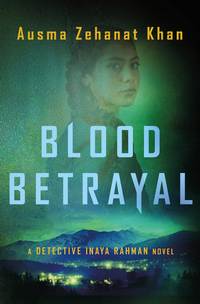
Blood Betrayal by Ausma Zehanat Khan: A Pair of Potential Hate Crimes are Almost Too Much for the Communities and the Investigators

Blood BetrayalBlood Betrayal

by Ausma Zehanat Khan

DETAILS:
Series: Blackwater Falls, #2
Publisher: Minotaur Books
Publication Date: November 07, 2023
Format: Hardcover
Length: 293 pg.
Read Date: December 8-12, 2023
Buy from Bookshop.org Support Indie Bookstores

What’s Blood Betrayal About?

On one night, there were two police shootings in the Denver area. One is the shooting of a possible innocent bystander/possible fleeing suspect in a drug raid. The other is the shooting of a vandal by an officer who (claims? he) mistook a can of spray paint for a gun.

Both of the officers were white, and the men who died were young minorities. Both cases will call for the Community Response team to investigate, neither case will be easy for them (and not just because their limited resources will be stretched by simultaneous investigations of a charged nature).

So let’s deal with these in the order we learn about them…

Case 1

Harry Cooper isn’t a fantastic cop—nor is he a bad one. He’s a solid, middle-of-the-road officer, and has been one for years—and now is near retirement. He’s never used his weapon before, but while pursuing some vandals on foot, he fires a warning shot in the air. Then he’s sure he sees a weapon in the hand of the vandal facing him. So he shoots to kill.

It seems like a tragic mistake, but as he’s part of Sheriff Grant’s force, Lt. Seif seizes the opportunity to do a thorough investigation—to ensure that’s all it was, and to maybe get more intel to help his case against Grant.

A number of things start to not add up—mostly around the “vandal.” He’s not one. He’s an art student who isn’t even from Blackwater Falls. He’s taking part in a legitimate street art contest, for one, not someone tagging random private property. Secondly, Seif thinks the physical evidence may point to something bigger. But he’s just not sure what. He wants Inaya Rahman to lead the charge on this.

Case 2

But Inaya has other concerns. She left Chicago after being assaulted by a number of fellow officers, we learned last time. So when one of those officers shows up on her family’s doorstep, she’s disturbed (to understate it). John Broda has come to her for help—his son is a patrol officer in Denver assigned to help a drug raid on a marijuana dispensary that was known to sell harder drugs, too. In the midst of it, a potential suspect was shot. Officer Kelly Broday was arrested for murder, without saying he shot Mateo Ruiz, he is saying he’s responsible for his death.

John Broda wants her to investigate and clear Kell, and in return, John will give Inaya the evidence he needs to close her last case from her days in Chicago.

She starts to look into things in exchange for the evidence, but she’s soon convinced that Kell was set up—possibly by a gang within the Denver Police. But she can’t figure out if someone wanted Ruiz dead (or why), or if it all has to do with the officer. Or is it both?

Meanwhile, the communities both young men belonged to start to organize and protest—particularly the Hispanic neighborhood Ruiz was from—and the Police Department isn’t responding calmly. Time is of the essence for this investigation.

Everything Else

Which is just a pithy way of saying “Everyone’s Personal Lives and the FBI’s Investigation into the Blackwater Falls Sheriff.” We learn more about every member of the Community Response team (and the civil rights attorney they ally with), and whatever arcs we saw or got hints of in the first book progress nicely (well, at least for the reader—I’m making no promises about how the characters feel).

Those aren’t the important parts of these books, but the more we get invested in these characters, the more compelling we’re going to find how the cases impact them and their lives. As a plus, they’re all really interesting characters so the arcs make for good reading.

As far as the FBI Investigation goes? Well…it’s still a thing. I’m not sure how much more I can say.

So, what did I think about Blood Betrayal?

It’d be easy to write this series off as some sort of “woke” thing where a racially diverse group of police investigators find hate crimes everywhere. Especially when white cops kill black and Latino men. That would be a grave error, however. Khan writes complex stories that cannot be reduced to a simple, one-line explanation, never mind a label or two.

In Blackwater Falls we got one murder that led to the uncovering of a web of more crime and corruption. Here we have two murders that end up being about so much more—both cases are about as complex as the one from Blackwater Falls, but the way that Khan weaves the two stories together (if only because the investigators are the same) makes this an even more complex novel. We get two great crime stories for the price of one. Yes, I think one of the cases was easier for the reader to figure out—possibly too easy. But the way that the clues, motives, and solution were revealed more than made up for that. And the other case? You’re never going to guess the solution until Khan shows it all.

But better than that is the way Khan shows (again) how crimes like this can impact entire communities, and the tensions that result and build up (possibly spill over) between those communities and the police rings so true that you could believe it happening today.

But Khan’s not just good at the big, social commentary—the impact that these killings have on the families is obviously bigger than anyone wants to imagine. And, as she did in the previous novel, Khan shows the grief, confusion, anger, and the other emotions that strike a family at this time with sensitivity and keen observation. Over the last few years, I’ve started noticing this part of a police procedural, and I really appreciate it when the author does it well. Khan’s one of the best around in this aspect.

Throw in some strong writing and great characters to all this? You’ve got yourself a winner. One of the best sequels that I read this year. You’d be doing yourself a favor if you grabbed the two books in this series up and doing so soon.


4 Stars

This post contains an affiliate link. If you purchase from it, I will get a small commission at no additional cost to you. As always, the opinions expressed are my own.
Irresponsible Reader Pilcrow Icon

WWW Wednesday, December 20, 2023

I almost didn’t get any reading done yesterday, a very uncommon event. I did find myself early to something, so I was able to read most of the inaugural issue of Grimdwarf Magazine, and I can see this becoming a regular part of my reading rotation.

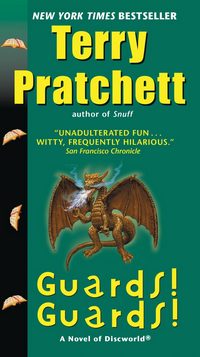
The other thing I wanted to mention is that the other day as I was packing to go to work, I grabbed the Guards! Guards! and put it in my coat pocket. I can’t remember the last Mass Market Paperback I read. It’s so convenient! I love a good hardcover, and ebooks are so essential now. But wow…I miss MMPs. We need a resurgence of them.

This meme was formerly hosted by MizB at A Daily Rhythm and revived on Taking on a World of Words—and shown to me by Aurore-Anne-Chehoke at Diary-of-a-black-city-girl.

The Three Ws are:

What are you currently reading?
What did you recently finish reading?
What do you think you’ll read next?

Easy enough, right?

What are you currently reading?

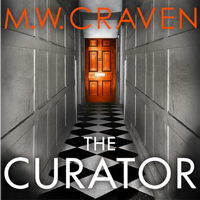
I’m reading Guards! Guards! by Terry Pratchett, and am shaking my head at how I stopped reading this series years ago. My current audiobook is the haunting The Curator by by M.W. Craven, John Banks (Narrator) on audiobook.

Guards! Guards!Blank SpaceThe Curator

What did you recently finish reading?

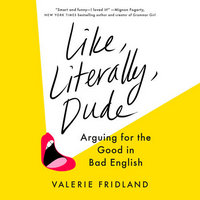
The last book I finished was Mislaid in Parts Half-Known by Seanan McGuire, I talked it up yesterday. The fascinating, entertaining, and often convincing, Like, Literally, Dude: Arguing for the Good in Bad English by Valerie Fridland, narrated by the author and several others was my last audiobook.

Alexandra Petri's US HistoryBlank SpaceLike, Literally, Dude

What do you think you’ll read next?

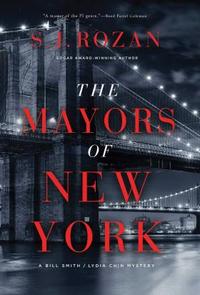
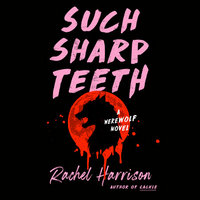
My next book should be The Mayors of New York by S. J. Rozan (I am so looking forward to it) and my next audiobook should be Such Sharp Teeth by Rachel Harrison, Kristen Sieh (Narrator).

The Mayors of New YorkBlank SpaceSuch Sharp Teeth

Are you reading anything that’s making this holiday season happy? Or are you preparing to air a grievance?

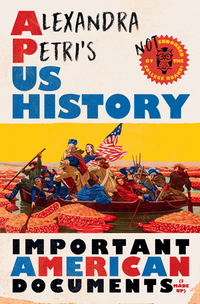
Alexandra Petri’s US History: Important American Documents (I Made Up): A Mixed Bag That Features Plenty of Tasty Treats

Alexandra Petri's US History: Important American DocumentsAlexandra Petri’s US History:
Important American Documents
(I Made Up)

by Alexandra Petri

DETAILS:
Publisher: W. W. Norton & Company
Publication Date: April 11, 2023
Format: Hardcover
Length: 324 pg.
Read Date: December 8-14, 2023
Buy from Bookshop.org Support Indie Bookstores

What’s The Inside Cover Flap of Alexandra Petri’s US History Say?

A witty, absurdist satire of the last 500 years, Alexandra Petri’s US History is the fake textbook you never knew you needed!

As a columnist for the Washington Post, Alexandra Petri has watched in real time as those who didn’t learn from history have been forced to repeat it. And repeat it. And repeat it. If we repeat history one more time, we’re going to fail! Maybe it’s time for a new textbook.

Alexandra Petri’s US History contains a lost (invented!) history of America. (A history for people disappointed that the only president whose weird sex letters we have is Warren G. Harding.) Petri’s “historical fan fiction” draws on real events and completely absurd fabrications to create a laugh-out-loud, irreverent takedown of our nation’s complicated past.

On Petri’s deranged timeline, John and Abigail Adams try sexting, the March sisters from Little Women are sixty feet tall, and Susan Sontag goes to summer camp. Nearly eighty short, hilarious pieces span centuries of American history and culture. Ayn Rand rewrites The Little Engine That Could. Nikola Tesla’s friends stage an intervention when he falls in love with a pigeon. The characters from Sesame Street invade Normandy. And Mark Twain—who famously said reports of his death had been greatly exaggerated—offers a detailed account of his undeath, in which he becomes a zombie.

What did I think about Alexandra Petri’s US History?

There are 76 pieces in this collection–not all are going to be winners. The odds against that are just too great. The tricky thing is (obviously) the ones I consider winners aren’t necessarily going to be the ones that you identify as winners–that’s probably because you have more refined tastes than me. I’m okay with that (and you should be, too). But I assumed that going in, so the question is: are there enough that you’re going to find funny to make reading all of them (or at least starting all of them before occasionally deciding to move on) worth it?

Absolutely.

Some of these start strong and then peter out–like some Saturday Night Live sketches. Some start strong and build from there. Some are duds from the beginning. And a few (to go back to SNL) leave you wanting Matt Foley to yell about the van down by the river one or two more times.

A few of the pieces that had me laughing were:

  • the spider in a certain Northhampton church who took umbrage at some of Edwards’ imagery
  • a poem about the other guy who rode the night Paul Revere did, but his name is hard to rhyme
  • a conversation about writing the song that became the tune for The Star-Spangled Banner
  • an abridgment of The Scarlett Letter
  • the man who bought his wife yellow wallpaper trying to get a refund
  • what would Gatsby have been like if Hemingway wrote it?
  • someone from Sun-Made trying to get Lorraine Hansbury to strike up a partnership
  • Build-a-Bear’s attempt to commemorate 9/11

I really could’ve gone on there, but I think between that and the above quotation, you get an idea. I could’ve come up with a similar list of ones that didn’t work for me–but why bother?

If any of the above topics/ideas seem like something you’d enjoy, you’re likely to have fun with over half of this book. When Petri is funny, she’s hilarious. When she’s not…well, there are words on the page that you can definitely read. Her highs are so high and her lows are…still above sea level. I don’t think anything was “bad” here, just some pieces that I really didn’t care for.

I’m glad I read this. You’ll probably be, too. I do recommend this, as long as you go in with open eyes.


3 Stars

This post contains an affiliate link. If you purchase from it, I will get a small commission at no additional cost to you. As always, the opinions expressed are my own.
Irresponsible Reader Pilcrow Icon

Mislaid in Parts Half-Known by Seanan McGuire: One of McGuire’s Best (no matter what series). A Magical Novella

Is it cheating to call a Fantasy Novella “Magical”? Isn’t that part of the definition?


Mislaid in Parts Half-KnownMislaid in Parts Half-Known

by Seanan McGuire

DETAILS:
Series: Wayward Children, #9
Publisher: Tordotcom
Publication Date: January 9, 2024
Format: eARC
Length: 160 pg.
Read Date: December 13-14, 2023 
Buy from Bookshop.org Support Indie Bookstores

Continuity Counts

By and large, the Wayward Children books can be read in any order—sure, things will mean more if you read them in order of publication (so far, anyway). It’s easier that way to catch allusions, understand the depth of relationships, come close to tracking what Sumi is talking about, etc. But you can get away with skipping around.

But you really need to read this one after Lost in the Moment and Found. It’s the closest thing to a direct sequel that we’ve had in this series. It’s also kind of a follow-up to Where the Drowned Girls Go (and, as always, touches on several others).

This is largely Part II of Antsy’s story—the story is shared by a group of the students (my favorites in the series) on one of those quests they’re not supposed to undertake—and whoops, I’ve started writing the next section.

What’s Mislaid in Parts Half-Known About?

Antsy is having a hard time adjusting to life at Eleanor West’s School for Wayward Children, almost as much trouble as she’d be having adjusting to anywhere else on Earth. Part of that comes from not being as honest about her circumstances as she could’ve been—understandably so, I think—which just made everything worse.

Still, there are signs that things may get better, helped a little by Antsy being able to find anything for people. Then Seraphina (who can get anyone—with one or two exceptions—to do what she wants) decides to use her abilities on Antsy to get her to find her Door.

Ansty, Sumi, and some others (I’m not going to name them to keep your interest piqued) manage to slip away using Antsy’s ability to find things and her knowledge of how Doors work, eventually getting back to the Shop Where the Lost Things Go. Which wasn’t exactly where Antsy wanted to be—and she learns that things there hadn’t gone as expected when she left and a whole new quest develops.

Not About Jim Morrison’s Band

When I wrote about Lost in the Moment and Found earlier this year, I said:

This entry would be a worthwhile read for fans if only for this one thing—we learn more about the Doors and how they work. I’m not going to go into it, obviously, nor am I going to promise that every question you had about the Doors will be answered—actually you’ll likely end up with new questions, but they’ll be informed questions.

That’s true here, too. In fact, we learn so much about them that I almost don’t want to learn anything more about Doors for another 8+ books so they don’t get too demystified. McGuire being McGuire, I know that if she reveals a whole lot more in the next book, I’ll end up repeating everything I said prior to this sentence—and I’ll be happy and equipped with more questions.

Regardless—what we do learn here is fantastic. It both makes utter sense—in the way that maybe we all should’ve guessed it already (maybe some did)—in terms of storytelling, worldbuilding, and more. I wonder what (some of) the students understanding this is going to do to things going forward. If anything.

Future Continuity

Speaking of things going forward, something major is on the way for Eleanor West. It’s been hinted at before, but so many things in this book point to it happening soon (but in Wayward Children-time, it could take 3-4 novellas for us to get to “soon”). I’m eager to see it, as much as I’m dreading what it might mean.

One Quick Character Note

Every protagonist of these novellas—and a significant chunk of the supporting characters—has been wonderful. With the exception of Seraphina and her crew*, I like all the students we’ve met at the School and want to know more about them all.

* I’m waiting for McGuire to decide it’s time to humanize them so we readers will root for even them, and we’ll feel bad for not doing so earlier.

But…from the moment we met her, Sumi’s been a favorite of mine. I should probably use the definite article there, actually. So I’m not unbiased when I say that in Mislaid in Parts Half-Known she is glorious, but she really is. She’s funny, she’s loopy, she’s brave, and she’s wise. Hard as that last one might be to believe. She’s also rather clever and displays that at the end.

The main parts of the story belong to Antsy and a couple of other characters—but Sumi stole every scene she was in and I really just want a few in a row featuring her.

So, what did I think about Mislaid in Parts Half-Known?

This is not my favorite Wayward Children book, but it’s close. There aren’t one or two big emotional moments like there typically are in these (at least not that hit me…your results may vary). But there were a handful of small emotional moments that worked so well—in terms of what happened to someone, how it impacted the other characters, and the way that McGuire wrote them—that I don’t care. It might even be better this way.

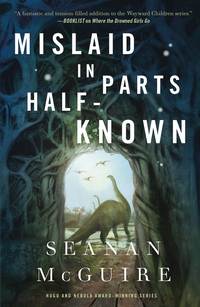
The worlds we saw were wonderful—really, you could set an entire fantasy trilogy in them without reference to any other. The world hinted at on the cover, for example, could easily sustain a 1,500-page trilogy full of whimsy and danger.

There’s probably more humor and smile-inducing moments here than several of these books combined sport. Which was a nice bit of fresh air (in a series that really doesn’t need it, but that doesn’t mean it’s not welcome).

Naturally, there are characters we’re not likely to see again due to the nature of these books, and I’m going to miss them. Although the endings they got were well deserved and well executed.

I almost always walk away from a Wayward Children book feeling satisfied and a little in awe of McGuire—I think that feeling is larger this time just because of the number of emotional and story notes she managed to hit, the storylines she was able to incorporate and resolve, the ones she just moved forward, and…everything else in 160 pages. It shouldn’t be possible. This book (like most in the series) is bigger on the inside.

A few paragraphs back, I said that this wasn’t my favorite in the series—but at the moment, I’m having trouble understanding why (but I’m going to trust my earlier impulse). But it is so, so, so good. I’m having trouble coming up with adequate adjectives at this point.

Go get this in January. Order it now (and/or request it from your library). If you haven’t read these books yet, go. At a bare minimum, get the first, Every Heart a Doorway, and then Lost in the Moment and Found, so you can be ready for this one when it’s released. You can catch up on the others later.

Disclaimer: I received this eARC from Tor Publishing Group via NetGalley—thanks to both for this opportunity. The opinions are all mine.

4 1/2 Stars

This post contains an affiliate link. If you purchase from it, I will get a small commission at no additional cost to you. As always, the opinions expressed are my own.
Irresponsible Reader Pilcrow Icon

MUSIC MONDAY: Christmas (Baby Please Come Home) by Darlene Love

Music Monday
Music Monday’s originated at The Tattooed Book Geek‘s fantastic blog and has shown up here and there since then.

The Irresponsible Reader Metallica Logo

REPOST with an Update: Some of the Guidance I Received on Giving Terry Pratchett Another Try

I’ve decided to postpone today’s post…I’d finish a paragraph and think of two or three more I needed to write. Which I think will prove to make me happier about the end result, but I have to get some sleep. So…let’s take another look at this, with a quick update at the end.


Last week, I asked for some advice on where I should start with Discworld books, since my attempts with reading The Colour of Magic and The Light Fantastic didn’t really leave me wanting more.

I received some good input, and thought I’d pass some of it along (if only so there’s a central location for me to come back to later for reference).

The overall consensus was that I picked a couple of bad ones to start with. But beyond that,

bullet Mike Finn (you should read his blog, by the way), said (in part):

Here’s the best map I know of for showing the reading order of the various Discworld subgroups.

https://upload.wikimedia.org/wikipedia/commons/thumb/1/12/Discworld_Reading_Order_Guide_3.0_(cropped)

My favourites are the Watch novels and the Witches novels.
The Watch novels start with Guards! Guards!
The Witches novels start with Equal Rites.

If you read those two and still don’t like Pratchett then he’s probably not for you.

bullet K.R.R. Lockhaven (you should read his books, by the way) admitted:

I…um…have to admit that I haven’t actually read ALL of them. Most, though. I’m partial to the City Watch books, starting with Guards! Guards! Maybe Small Gods would be good, too. It’s a standalone.

bullet Lockhaven also pointed me to Fiction Fans podcast’s “Bonus Episode: Which Discworld Book Should You Read First?” It was an interesting chat–the episode notes include:

They… don’t really give a straight answer. But they DO know which book you should NOT read first. You’re welcome.

Possible First Reads:
Wyrd Sisters (if you like witches)
Reaper Man (if you like Death)
Small Gods (if you want a good standalone with religious satire)
Hogfather (if you like Christmas)
Monstrous Regiment (if you want a good standalone with scathing social commentary)
Going Postal (if you like con artists)

bullet wyrdsis (an account name that suggests they might know a thing or two about the series), chimed in with:

…I got really into it with the Witches (starting with Equal Rites), and Ankh Morpork City Watch (starting with Guards! Guards!), then Hogfather, Thief of Time, The Truth, the von Lipwig series….etc

bullet David Frew sent me to

A DISCWORLD PRIMER*

*or, why should I read this thing that everyone keeps going on about?

by Micah @rincewind.run (another account name that suggests they might know a thing or two about the series).
bullet Gary Hayenga chipped in:

The first two novels are very different than the subsequent novels. As the previous commenter mentioned there are several sub-series set on the Discworld. Based on the other things you’ve posted about liking here I would recommend that you start with The Watch series, starting with Guards! Guards!. The second book in that series is even better.

I’m about 1/3 of my way through Guards! Guards! and I think I might be seeing what everyone else sees in Pratchett. Or maybe I’m seeing something else, maybe I’m still learning. Regardless, I am having a blast. I’m re-reading passages just for fun, or because I think I might have missed a joke because I was distracted by another. I know that I’ve read the passage where Carrot’s father tells him he’s not a dwarf more times than is necessary. But I kind of want to go read it again now that I’ve mentioned it.

Thank you all for your help, I think it’s paying off!

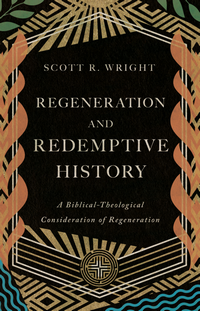
Regeneration and Redemptive History by Scott R. Wright: Recalibrating Our Understanding on an Important Distinctive

Regeneration and Redemptive HistoryRegeneration and Redemptive History:
A Biblical-Theological Consideration of Regeneration

by Scott R. Wright

DETAILS:
Publisher: Reformed Forum
Publication Date: September, 2023
Format: Paperback
Length: 214 pg. 
Read Date: November 19-December 2, 2023
Buy from Bookshop.org Support Indie Bookstores

What’s Regeneration and Redemptive History About?

Not too surprisingly, this book shares the outlook outlined in the booklet I talked about a few weeks ago, Unfolding Redemption: Exploring the History and Order of Salvation, and can be seen as an example of the kind of thinking and theological investigation set forth there. In this particular case, Wright looks at the doctrine of regeneration from both the historia salutis and the ordo salutis perspectives.

He begins with a historical survey of the development of the doctrine from the Reformation to the present and then surveys a particular Redemptive Historical outlook on the doctrine. Continuing the surveys, he then considers the Biblical witness to regeneration in the Pentateuch, the Wisdom literature, the Prophets, the Gospels, and then the Epistles. From those surveys, he offers some conclusions, titled “The Eschatological Character,” before moving on to apply this to some practical areas–theology, preaching/teaching, worship, and so on.

What’s the Point?

Why should anyone care about this?

The historia salutis perspective I mentioned before focuses on the objective work done by the Lord Jesus Christ to redeem his people, the eschatological significance of regeneration, and so on. The ordo salutis perspective focuses on the work of the Spirit to apply Christ’s work to the individual believer and what changes come from that.

There’s a shift in the way that Reformed teachers and writers talked about Regeneration around the time of the Synod of Dordt–largely necessitated by the response to the Remonstrants at the Synod, and it came to characterize Reformed soteriology. This shift prioritized the ordo salutis consideration over the historia salutis (in some cases eliminated the latter). This shift would be well and good if the first generations of Reformers had their emphasis wrong, and (particularly) if the Scriptures shared the priority.

Wright talks about it in terms of scope–from a broad view of the changes wrought in regeneration to a narrow, individualistic perspective. That’s probably the best way to summarize things.

Wright’s Historical Survey establishes that shift (although most people who’ve read a decent amount of pre- and post-Dordt will have noticed) and then his Biblical Surveys will either demonstrate that the Scriptures don’t prioritize the ordo over the historia on this point or will at least call into question that idea.

Wright is careful–and (in my view) correct–to not discount what the Reformed church has taught on the ordo salutis aspects of Regeneration. But his concern is that we’ve lost sight of the richness of our inheritance from Scripture and the Reformers. If nothing else, we shouldn’t let detractors focus our energies the way they have. This is why we should care–if he’s (at least largely) correct, we need to work on adjusting our understanding of the scope of Regeneration.

Wright is not alone in this, he draws from and builds on the work of Vos, Ridderbos, Gaffin, and others as they’ve tried to re-emphasize historia salutis in general, and his debt to them is evident.

So, what did I think about Regeneration and Redemptive History?

I think it’s tricky to convey what I think about this book. Maybe I’m wrong, but it feels slippery in my mind. Let’s see what comes out when I try, shall we?

Let’s start with some positives: I am so glad to see a book-length treatment of the idea–and it answered some questions I had on the topic (nothing pressing, and it turns out I was on the right track with my assumptions–or at least Wright’s track). It will be a fantastic resource for myself and many others–if nothing else, it’ll be a good reference/review, particularly in regard to the surveys. The historical material, the conclusion, and the “Theological Implications” chapter had some really good material that I know I’ll draw upon.

The downsides, on the other hand, are hard to ignore–every chapter should’ve been 30-50% longer. He really needed to develop some of his ideas a bit more thoroughly. “Needed” may have been too strong there, but I think it’s appropriate. I think his writing is clear enough that the reader can take the next few steps on their own, feeling confident that they’re headed in the same direction–but it’d have been helpful if he’d provided a little more for us. This isn’t (just) my typical greed for more of what I like, I think it’d serve the material better.

But the big downside for the purposes of this blog–because I want to talk about the book as an experience–this book is too dry, and the prose is a little clunky. Yes, this a revised version of Wright’s dissertation, and that’s probably the root of it. I’ve read other dissertations turned into books and have run into this before (I’ve also, thankfully, run into authors who’ve spent more time revising their books to make them pleasant reading experiences). Does this make or break the book for me? No–because the meat is there and it’s good and valuable. It just means that there’s a lot of gristle to this steak.

Do I recommend this book? Heartily. Just go into it with open eyes, knowing you’ll benefit from it, but you won’t particularly enjoy the read.


3.5 Stars

Irresponsible Reader Pilcrow Icon

Saturday Miscellany—12/16/23

Late again…but I have a good excuse. I was meeting a prospective/probable new member of the household, a sweet lab/boxer mix. So…this takes a back seat.

Odds ‘n ends about books and reading that caught my eye this week. You’ve probably seen some/most/all of them, but just in case:
bullet On the Difficulty of Giving Books as Gifts
bullet The Most Scathing Book Reviews of 2023—from BookMarks. I’m feeling much better about all my negative reviews.
bullet The best book covers of 2023 are the ones you’ll never see: The most interesting book cover designs are often left on the cutting room floor.
bullet 10 Things We Learned in 20 Years of Writing Mysteries—from the writers behind “Cleo Coyle”
bullet Ian [Rankin]’s end of year round-up: 2023
bullet Kevin Hearne also posted a Year-end roundup
bullet FALL BACK TO READING SERIES – Featuring Lee Goldberg—Goldberg shares Non-Fiction and Fiction recommendations
bullet The Biggest Literary Stories of the Year: 50 to 31—(at least according to LitHub)
bullet How about some more Year-End Best Of lists? (in no particular order). Several of my TBR reads are here and not enough things that I have read are, oh and the TBR has been made longer by these, too.
bullet CrimeReads’ The Best Crime Novels of 2023—Some great ones here (and in the Honorable Mentions!)
bullet The 139 Best Book Covers of 2023
bullet My Ten Favourite Reads of 2023—from Grab This Book
bullet FanFiAddict’s The Bookwyrm’s Best Reads of 2023
bullet Also from CrimeReads, The Best Debut Novels of 2023
bullet Also from FanFiAddict, Charlies Top Reads of 2023
bullet Top Five Powerful Books I Read In 2023—Stephen continues his trend of categorizing his lists in the best way
bullet And one more from FanFiAddict, Lord TBR’s Top Reads of 2023
bullet Rethinking the End of Year Book List—What better way to follow those up than with a reconsideration of the idea?
bullet How do You Measure a Year in Reading?—I’ve read this a couple of times now, and will probably do it a couple of more
bullet Maybe the Greatest Fantasy Standalones Ever—Not content with just looking at 2023, Peat Long tackles the Entirety of Human History
bullet Ideas For 2023 Book Gifts—for the second week in a row, I’m starting on the same topic I began on. I’d like to say I’m clever enough to keep this up, but we all know better.

A Book-ish Related Podcast episode (or two) you might want to give a listen to:
bullet Fully Booked Best Middle-Grade Books of 2023 with Zach Weinersmith—before digging into Kirkus Review’s Best Middle Grade books of the year, the episode features a chat with Weinersmith about Bea Wolf, Beowulf, and MG books in general. I really enjoyed this one

Bookstore Sign reading, Book Math: Buying the series means you really only bought 1 book

Page 2 of 5

Powered by WordPress & Theme by Anders Norén