Month: May 2024 Page 2 of 6

Highlights from April: Lines Worth Repeating

Highlights from the Month
This is two months in a row where I’ve posted this in its closing days. I’m going to (try to) finish the May version this weekend. I know I’m the only one who cares, but it niggles at the back of my mind. There’s no theme this month, which is fine, but I enjoy it when one emerges. I’m babbling for the sake of babbling here it seems, like Skulguggery below I’ve lost track of this, so I’m just going to get on with things.
The Faceless Ones

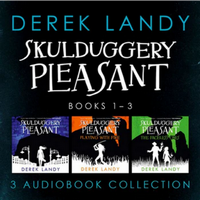
Skulduggery Pleasant: The Faceless Ones Trilogy by Derek Landy

They both got out and opened the bonnet. “Well,” her mother said, looking at the engine, “at least that’s still there.”

“Do you know anything about engines?” Stephanie asked.

“That’s why I have a husband, so I don’t have to. Engines and shelves—that’s why man was invented.”

Stephanie made a mental note to learn about enginges before she turned eighteen. She wasn’t too fussed about the shelves.

“Am I going mad?”

“I hope not.”

“So you’re real, you actually exist?”

“Presumably.”

“You mean you’re not sure if you exist or not?”

“I’m fairly certain, I mean I could be wrong. I could be some ghastly hallucination, a figment of my imagination.”

“You might be a figment of your own imagination?”

“Stranger things have happened. And do, with alarming regularity.”

Every solution to every problem is simple. It’s the distance between the two where the mystery lies.

Her parents wanted her to find her own way in life. That’s what they’d said countless times in the past. Of course, they’d been referring to school subjects and college applications and job prospects. Presumably, at no stage did they factor living skeletons and magic underworlds into their considerations. If they had, their advice would probably have been very different.

“What does a clue look like?” Tanith whispered.

Stephanie fought the giggle down and whispered back. “I’m looking for a footprint or something.”

“Have you found one yet?”

“No. But that’s probably because I haven’t moved from this spot.”

“Maybe we should move, pretend we know what we’re doing.”

“Skulduggery,” the tall man said eventually, his voice deep and resonant, “trouble follows in your wake, doesn’t it?”

“I wouldn’t say follows,” Skulduggery answered. “It more kind of sits around and waits for me to get there.”

“I want you all to know, ” Skulduggery said, “that we are the first line of defense. In fact, we’re practically the only line of defense. If we fail, there won’t be a whole lot that anyone else will be able to do. what I’m trying to say, is that, failure at this point, isn’t really the smart move to make. We are not to fail—do I make myself absolutely clear? Failure is bad. It won’t help us in the short term, and certainly won’t do us any favors in the long run. And I think I’ve lost track of this speech, and I’m not too sure where it’s headed, but I know where it started and that’s what you’ve got to keep in mind.”

“Cheer up everyone, since we’re all going to die horribly anyway, what’s there to be worried about?”

“I’m placing you under arrest for murder, conspiracy to commit murder and, I don’t know, possibly littering.”


You'd Look Better as a Ghost

You’d Look Better as a Ghost by Joanna Wallace

…I’m beginning to realize I’ve never given grief the respect it deserves. Drawing no distinction between strong, weak, rich or poor, it plows through everyone’s lives the same, leaving identical mounds of emotional debris behind.

Raw Dog

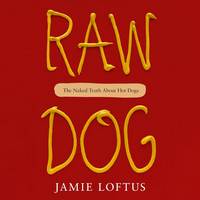
Raw Dog by Jamie Loftus

Hot dogs are the kind of American that you know there is something deeply wrong with but still find endearing.


Dietrich

Dietrich by Don Winslow

Big John was face down in a sphere of dried blood. Someone put two in the back of his head. “Natural causes?” Dietrich thinks, “you get two bullets in the head, naturally you’re going to die.”

They say that water is the most powerful erosive force in the world, it wears away rock, it cuts canyons. But sorrow, too, erodes. You see so much sadness on this job. it wears you down year after year, murder after murder, heartbreak after heartbreak. It washes away joy, carries it downstream like silt. But slowly, you don’t see it happening, you don’t really feel it, and then one day you wake up and you realize you no longer have the capacity for happines.

Woman in White

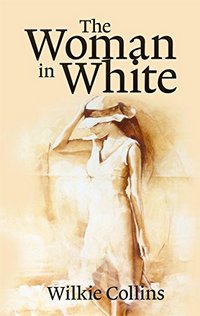
Woman in White by Wilkie Collins

But the Law is still, in certain inevitable cases, the pre- engaged servant of the long purse…

Shall I confess it, Mr. Hartright?— I sadly want a reform in the construction of children. Nature’s only idea seems to be to make them machines for the production of incessant noise.

Some of us rush through life, and some of us saunter through life. Mrs. Vesey SAT through life. Sat in the house, early and late; sat in the garden; sat in unexpected window-seats in passages; sat (on a camp-stool) when her friends tried to take her out walking; sat before she looked at anything, before she talked of anything, before she answered Yes, or No, to the commonest question…

A mild, a compliant, an unutterably tranquil and harmless old lady, who never by any chance suggested the idea that she had been actually alive since the hour of her birth. Nature has so much to do in this world, and is engaged in generating such a vast variety of co-existent productions, that she must surely be now and then too flurried and confused to distinguish between the different processes that she is carrying on at the same time. Starting from this point of view, it will always remain my private persuasion that Nature was absorbed in making cabbages when Mrs. Vesey was born, and that the good lady suffered the consequences of a vegetable preoccupation in the mind of the Mother of us all.

The best men are not consistent in good—why should the worst men be consistent in evil?
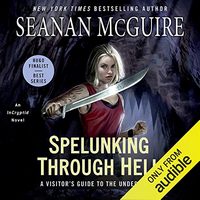

Spelunking Through Hell

Spelunking Through Hell by Seanan McGuire

… when you’re already talking about people who have twenty-eight words for “wound” but only two for “friend,” you don’t want to deal with them when they get cranky.
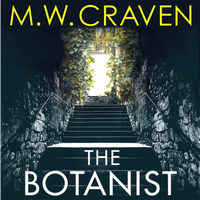

The Botanist

The Botanist by M.W. Craven

‘I didn’t want you thinking I’d panicked. I didn’t want you thinking less of me.’

Poe was lost for words. ‘Why would I think less of you?’ he said eventually. ‘You’d just found your father’s corpse. There was a bullet hole in his head. If you can’t panic then, when can you?’

Poe had optimistically hoped that Stahl’s flat might be like a grease-spattered kettle — filthy on the outside but sparkling on the inside. He was wrong. if anything, the interior was worse than the exterior.

The discoloured carpet was littered with crushed beer cans, vodka bottles and containers from what looked like every takeaway in Plaistow. A teetering stack of empty pizza boxes reached for the tobacco-stained ceiling like a cardboard stalagmite. Scattered rodent droppings made it look as though someone had dropped a packet of raisins.

And the smell … It was somehow both cloyingly sweet and acrid. Although Poe could smell vomit, urine and faeces, the overriding smell was stale alcohol. It seemed Stahl had hit rock bottom, then taken the elevator down a few more floors.

Poe’s eyes began to sting. Flynn put a tissue over her mouth and nose, didn’t even try to hide her disgust.

‘It’s the maid’s week off,’ Stahl said.

Douglas Salt was too tall for his build. If he’d been four inches shorter he might have got away with it, but at six-foot-five he just looked weird, like he’d been put through a pasta machine. He had compensated as best he could. His face was tanned and symmetrical and his teeth were whiter than snow. Poe suspected his tan came out of a bottle, surgeons had sculptured his face, and his teeth had been bleached until they were down to the quick. His hair was ordered and neat. He wore cream chinos, a polo shirt and, despite being indoors and in his own home, he had a pink jumper slung over his shoulders. For some reason, he reminded Poe of American cheese.

(Image by DaModernDaVinci from Pixabay)

BLOGIVERSARY REPOST: Gone Tomorrow by Lee Child

To commemorate the 11th Blogiversary of The Irresponsible Reader, I’m reposting the first six books I blogged about this week. This was apparently the first book I discussed here—something I don’t remember looking up until I prepped this.


Gone Tomorrow (Jack Reacher, #13)Gone Tomorrow by Lee ChildSeries: Jack Reacher, #13
My rating: 4 of 5 stars

4.5 out of 5 really. Not sure why I’m holding that .5 out, but let’s say it wasn’t perfect — just so, so close.

On the one hand, this was a typical Jack Reacher novel* — Reacher sees a wrong that needs righting, a question that needs answered, someone who needs a little help, a little vengence that needs meting out, and he takes care of business, period. On the other hand — this was more intense, had more twists and turns, with higher (personal) stakes than your typical Reacher novel.

So, I guess it was a typical Reacher novel — just turned up to 11.

It’s really hard to say much about this Gone Tomorrow without spoiling the whole thing. But I’m going to try a bit: From the outset, it’s hard to tell who Reacher is working for until a little over halfway through the book (I think–didn’t take notes); everyone (everyone) lies to him about all sorts of things — but there’s enough truth mixed into the lies that I didn’t just spoil anything there; the violence (at least on Reacher’s part) is a bit more concentrated than usual, but once it starts…whoa, Nelly.

The biggest difference in this one is the looming specter of various counter-terrorism agencies and entities, functioning in the full protection and powers given by the Patriot Act and so on. Reacher and other characters in this book aren’t reticent to voice their complaints with these powers and the curtailment on citizen rights, honestly, to an extent that surprised me. While Reacher’s not directly in opposition to these agencies (he never would be that), his purposes and theirs do not directly align. Which gives an extra layer of danger for him — if Reacher’s not careful, he can disappear like he’s never existed before.

Basically the only other thing I can say without spoiling the crap out of this is simply: With Gone Tomorrow, Child, once again, shows that he and Reacher are the best around.

——-

* And a typical Jack Reacher novel is a great read, so don’t take this characterization as a complaint.

BLOGIVERSARY REPOST: Christ Of The Bible And The Church’s Faith by Geoffrey Grogan

To commemorate the 11th Blogiversary of The Irresponsible Reader, I’m reposting the first six books I blogged about this week. We’ll start here.


Christ Of The Bible And The Church
Christ Of The Bible And The Church by Grogan, Geoffrey
My rating: 2 of 5 stars

It’s tough to know what to say about this, it’s a wholly carefully-written, exhaustive, entirely orthodox look at Christ as set forth in Scripture and in the doctrines of the Church. It’s an apologetic for the Faith once delivered as well as an explanation of it.

However, wow. It just didn’t work for me at all. The points I liked, I’ve seen better developed, better explained elsewhere. His most evangelical moments seemed half-hearted and perfunctory (although I don’t think they were, it just struck me that way). He is far too concerned with unbelieving scholarship, and does not respond to critics with as much force and thoroughness as he ought. There’s just doesn’t seem to be much heart to this work.

Your results may vary, certainly any book carrying the cover blurbs on it that this does would catch my eye, and I’d expect to be well worth the time, but this just didn’t work for me.

Towel Day ’24: One Closing Item (Indulge a Grandpappy)

Towel Day

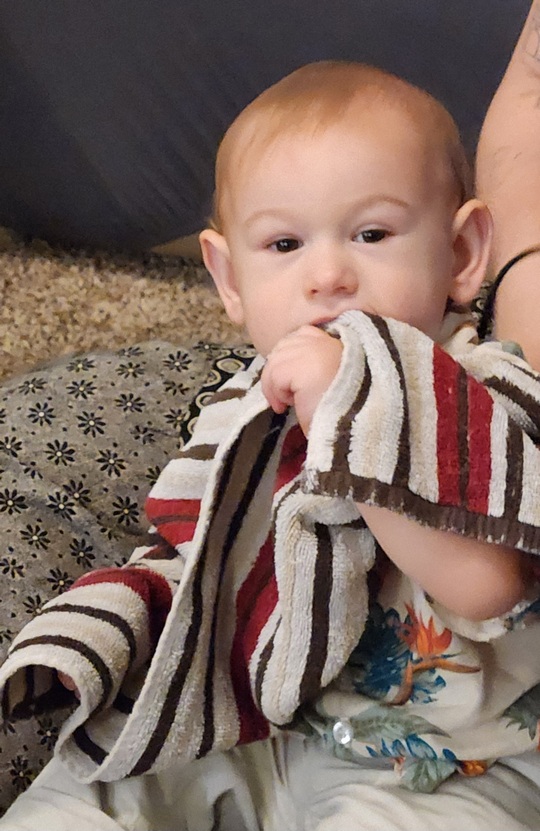
Grandcritter Towel Day '24
The indoctrinationtraining has begun…the kid’s got promise.

Saturday Miscellany—5/25/24

Happy Towel Day (in case you haven’t seen me talk about that yet somehow)! Also Happy Geek Pride Day and whatever the appropriate greeting is for The Glorious Twenty-Fifth of May (for those who celebrate that).

Think I covered everything there.

Today was also Read a Book Day at the local Farmer’s Market (which really wasn’t advertised too well, IMHO), based on the number of authors present and people who seemed to be paying attention to them. I did get to check in with someone I met at the Library Book Faire last month, Nathan Keys (who will be appearing here soon) and met another nice fantasy author, J. Brandon Lowry, who will hopefully be making an appearence here sometime.

My daughter and I did get to check out the Nampa Library’s Bookmobile there—which is pretty cool, and had a better selection than you’d expect from a van. It’s absolutely the kind of vehicle someone should use to kidnap me. It’d be incredibly easy to do.

Odds ‘n ends about books and reading that caught my eye this week. You’ve probably seen some/most/all of them, but just in case:
bullet Donnelly Public Library transitions to ‘adults only’—as a result of a new law in Idaho, a small town public library has to resort to not allowing minors admittance. Brilliant job by the state legislators and governor.
bullet Handheld Press founder Kate Macdonald reveals reasons behind indie’s closure
bullet Hart Hanson On Screenwriting Vs. Novel Writing
bullet Austin Grossman Talks Fight Me—it’s been too long since I read Grossman, it’s nice to have a reminder
bullet Rob Parker tweeted about this great thing he and his wife are doing—running ‘Become An Author’ after school clubs. Love this.
bullet Speaking of Tweets, Joe Abercrombie’s tweet from Monday seems impossible.
bullet Five Reasons Why You Should Read
bullet Five Nonfiction Books For Fantasy Lovers—Daniel Meyer dropped by JamReads to provide this list
bullet Should We Judge Older Books By Modern Standards?—Cee Arr asks an important question
bullet CrimeBookJunkie turned 9 yesterday—if you’re not reading that blog, you’re missing out

A Book-ish Related Podcast episode (or two) you might want to give a listen to:
bullet Fiction Fans Episode 139: Author Interview: The Grimoire, the Gods, and the Girl by K.R.R. Lockhaven—a good convo about the book/trilogy as a whole. And the way I found out the book had been published. Eeep. I really should’ve posted something about that sooner. (also, it probably means that my beta read comments are even more overdue than I knew.)
bullet Tea Tonic & Toxin Nero Wolfe Mystery Series / The League of Frightened Men—Ira Brad Matetsky drops by to talk Nero Wolfe.

This Week’s New Releases that I’m Excited About and/or You’ll Probably See Here Soon:
bullet Way of the Wizard by Michael Michel—”A fast-paced, epic fantasy with wizard gangs, bloodthirsty unicorns, and philosopher giants.”
bullet The Mountain Mystic by Russell W. Johnson—Sheriff Mary Beth Cain tackles a cold case that gets a burst of heat. Oooooh, this looks good.
bullet The Seminarian by Hart Hansen—’Xavier ”Priest’ Priestly is a snarky former seminarian turned private investigator. Dusty Queen is a hard-as-nails professional stuntwoman and freelance bodyguard. When Dusty’s girlfriend suddenly disappears, a woman in a strange blue wig tries to assassinate Priest, and a twelve-year-old boy shows up claiming to be his son, the two friends are thrown into a maelstrom of intrigue and high-stakes violence that’s as convoluted and dangerous as it is hilarious.” Hanson’s first novel, The Driver, impressed me. I expect this will, too.
bullet How to Become the Dark Lord and Die Trying by Django Wexler—”Groundhog Day meets Deadpool in Django Wexler’s no-holds-barred, laugh-out-loud fantasy tale about a young woman who, tired of defending humanity from the Dark Lord, decides to become the Dark Lord herself.”
bullet Swiped by L.M. Chilton—”A clever and darkly hilarious thriller/romantic comedy about a young woman who must unmask a serial killer that everything thinks is her, all before her best friend’s wedding”

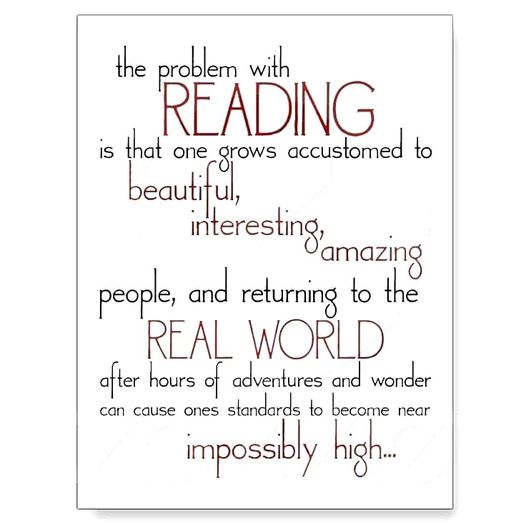
The problem with reading is that one grows accustomed to beautiful, interesting, amazing people, and returning to the real world after hours of adventures and wonder can cause one's standards to become near impossibly high...

Towel Day ’24: Scattered Thoughts about Reading The Hitchhiker’s Guide to the Galaxy Trilogy

(updated and revised this 5/25/24)

Towel Day
I’ve been trying for a few years now to come up with a tribute to Adams. This isn’t quite what I had in mind, but it’s a start. In my mind, this is a work in progress, but I’m posting it anyway. Next year’s version will be better—or at least more complete.


Some time in 7th or 8th grade (I believe), I was at a friend’s house and his brother let us try his copy of the text-based Hitchhiker’s Guide game, and we were no good at it at all. Really, it was embarrassing. However, his brother had a copy of the first novel, and we all figured that the novel held the keys we needed for success with the game (alas, it did not help us one whit). My friends all decided that I’d be the one to read the book and come back in a few days as an expert.

I fell in love with the book almost instantly and I quickly forgot about the game. Adams’ irreverent style rocked my world—could people actually get away with saying some of these things? His skewed take on the world, his style, his humor…and a depressed robot, too! It was truly love at first read. As I recall, I started re-reading it as soon as I finished it—the only time in my life I’ve done that sort of thing.

It was one of those experiences that, looking back, I can say shaped my reading and thinking for the rest of my life (make of that what you will). Were my life the subject of a Doctor Who or Legends of Tomorrow episode, it’d be one of those immutable fixed points. I got my hands on the next three books as quickly as I could (the idea of a four-volume trilogy was one of the funniest ideas I’d encountered up to that point), and devoured them. I do know that I didn’t understand all of the humor, several of the references shot past me at the speed of light, and I couldn’t appreciate everything that was being satirized. But what I did understand I thought was brilliant. Not only did I find it funny, the series taught me about comedy—how to construct a joke, how to twist it in ways a reader wouldn’t always expect, and when not to twist but to go for the obviously funny idea. The trilogy also helped me to learn to see the absurdity in life.

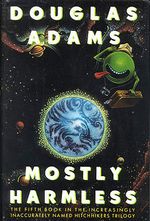
Years later when the final volume (by Adams) was released, I’d already cemented what I thought about the books from these frequent re-reads. I’m not sure that <b>Mostly Harmless</b> changed things much (except for making me think for the first time that maybe I didn’t want him to write more in this series). His non-Hitchhiker’s work illustrated that he was capable of making you see things in a new light–either with a smile or a sense of regret—even when he wasn’t writing the trilogy, even when he was writing non-fiction. It was never the setting or the genre—it was Adams.

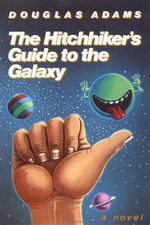
But here on Towel Day—as with most of the time I talk about Adams (but I need to change that), it comes down to where I started—the Trilogy. I read the books (particularly the first) so many times that I can quote significant portions of them, and frequently do so without noticing that I’m doing that. I have (at this time) two literary-inspired tattoos, one of which is the planet logo* featured on the original US covers. In essence, I’m saying that Adams and the series that made him famous have had an outsized influence on my life and are probably my biggest enduring fandom. If carrying around a (massively useful) piece of cloth for a day in some small way honors his memory? Sure, I’m in.

So, Happy Towel Day You Hoopy Froods.

* I didn’t know it at the time, but Adams didn’t like that guy. Whoops.

Towel Day ’24: Some of my favorite Adams lines . . .

(updated 5/25/24)

Towel Day

There’s a great temptation here for me to go crazy and use so many quotations that I’d get in copyright trouble. I’ll refrain from that and just list some of his best lines . . .*

* The fact that this list keeps expanding from year to year says something about my position on flirting with temptation.

The Hitchhiker's Guide to the Galaxy

The Hitchhiker’s Guide to the Galaxy

Time is an illusion. Lunchtime doubly so.

This must be Thursday. . . I never could get the hang of Thursdays.

“You’d better be prepared for the jump into hyperspace. It’s unpleasantly like being drunk.”

“What’s so unpleasant about being drunk?”

“You ask a glass of water.”

(I’m not sure why, but this has always made me chuckle, if not actually laugh out loud. It’s just never not funny. It’s possibly the line that made me a fan of Adams)

He had found a Nutri-Matic machine which had provided him with a plastic cup filled with a liquid that was almost, but not quite, entirely unlike tea.

In those days spirits were brave, the stakes were high, men were real men, women were real women and small furry creatures from Alpha Centauri were real small furry creatures from Alpha Centuari. And all dared to brave unknown terrors, to do mighty deeds, to boldly split infinitives that no man had split before . . .

“Look,” said Arthur, “would it save you a lot of time if I just gave up and went mad now?”

The ships hung in the sky in much the same way that bricks don’t.

For a moment, nothing happened. Then, after a second or so, nothing continued to happen.

<

blockquote>“Space,” [The Guide] says, “is big. Really big. You just won’t believe how vastly, hugely, mindbogglingly big it is. I mean, you may think it’s a long way down the road to the chemist’s, but that’s just peanuts to space, listen…”

He attacked everything in life with a mix of extraordinary genius and naive incompetence, and it was often difficult to tell which was which.

He felt that his whole life was some kind of dream and he sometimes wondered whose it was and whether they were enjoying it.


The Restaurant at the End of the Universe

The Restaurant at the End of the Universe

It is a curious fact, and one to which no one knows quite how much importance to attach, that something like 85 percent of all known worlds in the Galaxy, be they primitive or highly advanced, have invented a drink called jynnan tonnyx, or gee-N-N-T’Nix, or jinond-o-nicks, or any one of a thousand or more variations on the same phonetic theme. The drinks themselves are not the same, and vary between the Sivolvian “chinanto/mnigs” which is ordinary water served at slightly above room temperature, and the Gagrakackan “tzjin-anthony-ks” which kills cows at a hundred paces; and in fact the one common factor between all of them, beyond the fact that the names sound the same, is that they were all invented and named before the worlds concerned made contact with any other worlds.

Reality is frequently inaccurate.

Life is wasted on the living.


Life, The Universe and Everything

Life, the Universe, and Everything

The Hitchhiker’s Guide to the Galaxy has this to say on the subject of flying. There is an art, it says, or rather, a knack to flying. The knack lies in learning how to throw yourself at the ground and miss.

(It goes on for quite a while after this—and I love every bit of it.)

“One of the interesting things about space,” Arthur heard Slartibartfast saying . . . “is how dull it is?”

“Dull?” . . .

“Yes,” said Slartibartfast, “staggeringly dull. Bewilderingly so. You see, there’s so much of it and so little in it.”


So Long, and Thanks For All The Fish

So Long, and Thanks for All the Fish

Of course, one never has the slightest notion what size or shape different species are going to turn out to be, but if you were to take the findings of the latest Mid-Galactic Census report as any kind of accurate guide to statistical averages you would probably guess that the craft would hold about six people, and you would be right. You’d probably guessed that anyway. The Census report, like most such surveys, had cost an awful lot of money and told nobody anything they didn’t already know—except that every single person in the Galaxy had 2.4 legs and owned a hyena. Since this was clearly not true the whole thing eventually had to be scrapped.

Here was something that Ford felt he could speak about with authority. “Life,” he said, “is like a grapefruit.”

“Er, how so?”

“Well, it’s sort of orangy-yellow and dimpled on the outside, wet and squidgy in the middle. It’s got pips inside, too. Oh, and some people have half a one for breakfast.”

“Is there anyone else out there I can talk to?”

Arthur had a swordfish steak and said it made him angry. He grabbed a passing waitress by the arm and berated her. “Why’s this fish so bloody good?” he demanded, angrily.

“Please excuse my friend,” said Fenchurch to the startled waitress. “I think he’s having a nice day at last.”


Mostly Harmless

Mostly Harmless

A common mistake that people make when trying to design something completely foolproof is to underestimate the ingenuity of complete fools.

Fall, though, is the worst. Few things are worse than fall in New York. Some of the things that live in the lower intestines of rats would disagree, but most of the things that live in the lower intestines of rats are highly disagreeable anyways, so their opinion can and should be discounted.


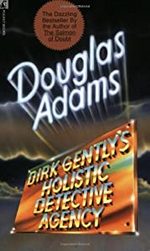
Dirk Gently's Holistic Detective Agency

Dirk Gently’s Holistic Detective Agency

There is no point in using the word ‘impossible’ to describe something that has clearly happened.

If it looks like a duck, and quacks like a duck, we have at least to consider the possibility that we have a small aquatic bird of the family anatidae on our hands.

Let’s think the unthinkable, let’s do the undoable. Let us prepare to grapple with the ineffable itself, and see if we may not eff it after all.

(I’ve often been tempted to get a tattoo of this)


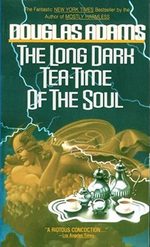
The Long Dark Tea-Time of the Soul

The Long Dark Tea-Time of the Soul

There are some people you like immediately, some whom you think you might learn to like in the fullness of time, and some that you simply want to push away from you with a sharp stick.

It can hardly be a coincidence that no language on earth has ever produced the expression, ‘As pretty as an airport.’

The impossible often has a kind of integrity to it which the merely improbable lacks.

She stared at them with the worried frown of a drunk trying to work out why the door is dancing.

It was his subconscious which told him this—that infuriating part of a person’s brain which never responds to interrogation, merely gives little meaningful nudges and then sits humming quietly to itself, saying nothing.

As she lay beneath a pile of rubble, in pain, darkness, and choking dust, trying to find sensation in her limbs, she was at least relieved to be able to think that she hadn’t merely been imagining that this was a bad day. So thinking, she passed out.


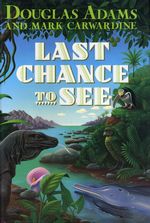
The Last Chance to See

The Last Chance to See

“So what do we do if we get bitten by something deadly?” I asked.

He looked at me as if I were stupid. “You die, of course. That’s what deadly means.”

I’ve never understood all this fuss people make about the dawn. I’ve seen a few and they’re never as good as the photographs, which have the additional advantage of being things you can look at when you’re in the right frame of mind, which is usually around lunchtime.

I have the instinctive reaction of a Western man when confronted with sublimely incomprehensible. I grab my camera and start to photograph it.

Human beings, who are almost unique in having the ability to learn from the experience of others, are also remarkable for their apparent disinclination to do so.

The aye-aye is a nocturnal lemur. It is a very strange-looking creature that seems to have been assembled from bits of other animals. It looks a little like a large cat with a bat’s ears, a beaver’s teeth, a tail like a large ostrich feather, a middle finger like a long dead twig and enormous eyes that seem to peer past you into a totally different world which exists just over your left shoulder.

One of the characteristics that laymen find most odd about zoologists is their insatiable enthusiasm for animal droppings. I can understand, of course, that the droppings yield a great deal of information about the habits and diets of the animals concerned, but nothing quite explains the sheer glee that the actual objects seem to inspire.

I mean, animals may not be intelligent, but they’re not as stupid as a lot of human beings.


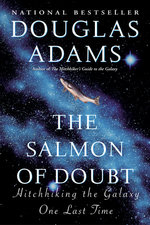
The Salmon of Doubt

The Salmon of Doubt: Hitchhiking the Galaxy One Last Time

We are stuck with technology when what we really want is just stuff that works.

I’ve come up with a set of rules that describe our reactions to technologies:
1. Anything that is in the world when you’re born is normal and ordinary and is just a natural part of the way the world works.
2. Anything that’s invented between when you’re fifteen and thirty-five is new and exciting and revolutionary and you can probably get a career in it.
3. Anything invented after you’re thirty-five is against the natural order of things.


And a couple of lines I’ve seen in assorted places, articles, books, and whatnot

I love deadlines. I love the whooshing noise they make as they go by.

A learning experience is one of those things that says, “You know that thing you just did? Don’t do that.”

The fact is, I don’t know where my ideas come from. Nor does any writer. The only real answer is to drink way too much coffee and buy yourself a desk that doesn’t collapse when you beat your head against it.

Solutions nearly always come from the direction you least expect, which means there’s no point trying to look in that direction because it won’t be coming from there.

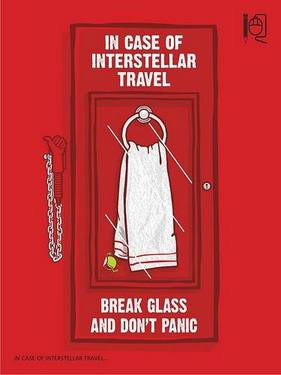
Towel Day ’24: Do You Know Where Your Towel Is?

(updated and revised this 5/25/24)

Towel Day

The Hitchhiker’s Guide to the Galaxy has a few things to say on the subject of towels.

A towel, it says, is about the most massively useful thing an interstellar hitchhiker can have. Partly it has great practical value. You can wrap it around you for warmth as you bound across the cold moons of Jaglan Beta; you can lie on it on the brilliant marble-sanded beaches of Santraginus V, inhaling the heady sea vapors; you can sleep under it beneath the stars which shine so redly on the desert world of Kakrafoon; use it to sail a miniraft down the slow heavy River Moth; wet it for use in hand-to-hand-combat; wrap it round your head to ward off noxious fumes or avoid the gaze of the Ravenous Bugblatter Beast of Traal (such a mind-bogglingly stupid animal, it assumes that if you can’t see it, it can’t see you); you can wave your towel in emergencies as a distress signal, and of course dry yourself off with it if it still seems to be clean enough.

More importantly, a towel has immense psychological value. For some reason, if a strag (strag: non-hitch hiker) discovers that a hitch hiker has his towel with him, he will automatically assume that he is also in possession of a toothbrush, face flannel, soap, tin of biscuits, flask, compass, map, ball of string, gnat spray, wet weather gear, space suit etc., etc. Furthermore, the strag will then happily lend the hitch hiker any of these or a dozen other items that the hitch hiker might accidentally have “lost”. What the strag will think is that any man who can hitch the length and breadth of the galaxy, rough it, slum it, struggle against terrible odds, win through, and still knows where his towel is is clearly a man to be reckoned with.

Hence a phrase that has passed into hitchhiking slang, as in “Hey, you sass that hoopy Ford Prefect? There’s a frood who really knows where his towel is.” (Sass: know, be aware of, meet, have sex with; hoopy: really together guy; frood: really amazingly together guy.)

Towel Day, for the few who don’t know, is the annual celebration of Douglas Adams’ life and work. It was first held two weeks after his death, fans were to carry a towel with them for the day to use as a talking point to encourage those who have never read HHGTTG to do so, or to just converse with someone about Adams. Adams is one of that handful of authors that I can’t imagine I’d be the same without having encountered/read/re-read/re-re-re-re-read, and so I do my best to pay a little tribute to him each year, even if it’s just carrying around a towel.

In commemoration of this date, here’s most of what I’ve written about Adams. I’ve struggled to come up with new material to share for Towel Day over the years, mostly sticking with updating and revising existing posts. But I do have a couple of new things coming today. But let’s start with the old material. A few years back, I did a re-read of all of Adams’ (completed) fiction. For reasons beyond my ken (or recollection), I didn’t get around to blogging about the Dirk Gently books, but I did do the Hitchhiker’s Trilogy:
bullet The Hitchhiker’s Guide to the Galaxy
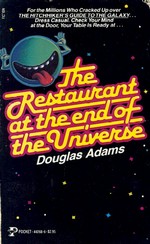
bullet The Restaurant at the End of the Universe
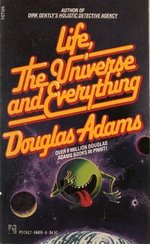
bullet Life, The Universe and Everything
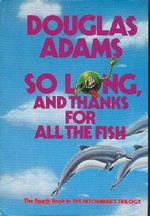
bullet So Long, and Thanks For All The Fish
bullet Mostly Harmless
bullet I had a thing or two to say about the 40th Anniversary of The Hitchhiker’s Guide to the Galaxy
bullet I took a look at the 42nd Anniversary Illustrated Edition of The Hitchhiker’s Guide to the Galaxy

I should also point to a posts I wrote about Douglas Adams’ London by Yvette Keller and 42: The Wildly Improbable Ideas of Douglas Adams edited by Kevin Jon Davies—both are great ways of illing-out one’s understanding of Adams and his work. I have to mention the one book that Adams/Hitchhiker’s aficionado needs to read is Don’t Panic by Neil Gaiman, David K. Dickson and MJ Simpson. If you’re more in the mood for a podcast, I’d suggest The Waterstones Podcast How We Made: The Hitchhiker’s Guide to the Galaxy—I’ve listened to several podcast episodes about this book, and generally roll my eyes at them. But this is just fantastic. Were it available, I’d listen to a Peter Jackson-length version of the episode.

I’ve only been able to get one of my sons into Adams, he’s the taller, thinner one in the picture from a few several years ago.
(although I did get he and his younger siblings to use their towels to make themselves safe from the Ravenous Bugblatter Beast of Traal a few years earlier:)

You really need to check out this comic from Sheldon Comics—part of the Anatomy of Authors series: The Anatomy of Douglas Adams.

Lit in a Nutshell gives this quick explanation of The Hitchiiker’s Guide:

TowelDay.org is the best collection of resources on the day. One of my favorite posts there is this pretty cool video, shot on the ISS by astronaut Samantha Cristoforetti.

Even better—here’s an appearance by Douglas Adams himself from the old Letterman show—I’m so glad someone preserved this:

Love the anecdote (Also, I want this tie.)

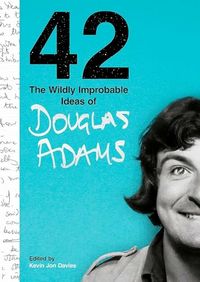
42: The Wildly Improbable Ideas of Douglas Adams edited by Kevin Jon Davies: A Tribute in Miscellany, Ephemeron, Bits and Bobs

42: The Wildly Improbable Ideas of Douglas Adams42: The Wildly Improbable Ideas of Douglas Adams

edited by Kevin Jon Davies

DETAILS:
Publisher: Unbound
Publication Date: September 19, 2023
Format: Hardcover
Length: 299 pg.
Read Date: May 11-23, 2024
Buy from Bookshop.org Support Indie Bookstores

What’s 42: The Wildly Improbable Ideas of Douglas Adams, Anyway?

from The Publisher:

When Douglas Adams died in 2001, he left behind 60 boxes full of notebooks, letters, scripts, jokes, speeches and even poems. In 42, compiled by Douglas’s long-time collaborator Kevin Jon Davies, hundreds of these personal artefacts appear in print for the very first time.

Douglas was as much a thinker as he was a writer, and his artefacts reveal how his deep fascination with technology led to ideas which were far ahead of their time: a convention speech envisioning the modern smartphone, with all the information in the world living at our fingertips; sheets of notes predicting the advent of electronic books; journal entries from his forays into home computing – it is a matter of legend that Douglas bought the very first Mac in the UK; musings on how the internet would disrupt the CD-Rom industry, among others.

42 also features archival material charting Douglas’s school days through Cambridge, Footlights, collaborations with Graham Chapman, and early scribbles from the development of Doctor Who, Hitchhiker’s and Dirk Gently. Alongside details of his most celebrated works are projects that never came to fruition, including the pilot for radio programme They’ll Never Play That on the Radio and a space-inspired theme park ride.

Douglas’s personal papers prove that the greatest ideas come from the fleeting thoughts that collide in our own imagination, and offer a captivating insight into the mind of one of the twentieth century’s greatest thinkers and most enduring storytellers.

A Few Short-Comings (only one of which is of any substance)

Not every piece of handwriting is transcribed—and no, I’m not referring to the more than a dozen examples of his signature (an interesting evolution to be sure). The majority of bits of handwriting are printed under, next-to, or following to make them legible. But not all—and there are a few things that I can’t quite suss out. And if you’d ever seen my handwriting, you’d know that I can figure out what a lot of messy writing says.

The other drawbacks are that the chapters covering Dirk Gently (in the various books) and The Last Chance to See (radio program and book) are too short. I could’ve used twice the material on both of those.

I Didn’t Expect to Get Misty-Eyed

Throughout the book are letters written by people who knew Adams to him, describing their relationship, what he meant to them, and how his death affected them. The first one, by Stephen Fry, is used as the foreword and threw me—I didn’t realize I was going to have an emotional experience while reading the book.

These were wonderful and heartfelt and make the reader feel close to someone they’ve only admired from afar. Sure, it’s a parasocial relationship at best (for almost everyone who reads the book), but especially reading those letters, it feels far less “para.”

An Overly Specific Suggestion

Do not read this book while recovering from abdominal surgery.

It is large (8.5″ X 11.9″ X 1.2″). For a book, it is heavy (roughly 4 pounds). There is no comfortable way to hold this book while reclining if you cannot rest it on your stomach.

That said, the large size, the high-quality paper, and the full-color pages are a wonderful way to present this material, and I wouldn’t have it any other way.

So, what did I think about 42: The Wildly Improbable Ideas of Douglas Adams?

So, really, at this point, should I be allowed to rate books related to Douglas Adams? Probably not. But, this is my blog, so I get to set the rules.

There were some things that I’m not sure why Davies included, a couple of things I didn’t appreciate as much as I should’ve (some older British pop culture references/names that I’m too American to get/recognize). But by and large, I was captivated and entertained. I bet Davies had a blast compiling this and it couldn’t have been easy cutting some material (although I bet there was a bunch that he wondered why anyone hung onto in the first place).

While I (semi-) joked about the Dirk Gently and Last Chance to See chapters being too short, they really were the most interesting to me. I’ve read many, many things about THHGTTG over the years, and have seen a good amount about his career and education before then. but I’ve come across very little about these others—so I learned more, got more insight, and whatnot. I really could’ve read chapters that were three times as long on both counts.

Truth be told, the book could’ve been three times as long and I’d have been happy, too. Sure, you’d need a weightlifting belt to carry it around that way, so maybe it’s best that Davies stopped when he did.

You need to read Adams thoughts on the future of books—specifically ebooks. Other than the amount of money going to authors…he nailed it. You get great insight into how his mind worked by seeing early drafts (and the way he’d write to himself to keep going when it got difficult).

I found this to be mind-bogglingly delightful. Which is pretty much what I expected, true. But there’s expecting to appreciate a book and then getting to experience it and discover that you were right. It’s is kind of a doubling of pleasure.

If you’re a fan of Adams, you’re going to find at least one thing here that will interest you more than you anticipated. If you’re a big fan of Adams, you’re in for a treat. He was the hoopiest of hoopy froods, and this book gives you a glimpse into just how hoopy that is.

Disclaimer: I contributed to the crowd-funding to get this book published (my name’s right there on p. 314), so who knows if that makes me biased. But then again…when am I not?


5 Stars

This post contains an affiliate link. If you purchase from it, I will get a small commission at no additional cost to you. As always, the opinions expressed are my own.
Irresponsible Reader Pilcrow Icon

I Did a Thing: Tough Questions from Witty & Sarcastic Book Club

Witty & Sarcastic Book Club Presents Tough Questions
Over the past couple of months in my Saturday Miscellanies, I’ve linked to the new series of interviews with Book Bloggers over at Witty & Sarcastic Book Club called Tough Questions.

I was forc—er, subjected t—er, graciously invited to participate in this and my responses were posted on Monday. If you’ve ever wondered what my memoir would be called, what I might call this blog if I rebranded, what my favorite is to read (the answer may surprise you), or other things. Or if you just want to read something on a pink background. Give it a look-see!

Caveat lector: This post does contain what might be the most controversial opinion that I’ve ever put on teh IntraWebs.

Also, if you’re not following the blog or following Jodie on various social media platforms, now would be a good time to start.

Irresponsible Reader Pilcrow Icon

Page 2 of 6

Powered by WordPress & Theme by Anders Norén