

This is a few weeks late–but I think these lines are worth it.
Personally, this was one of the more enjoyable lists to compile in this series. Hope I’m not alone.
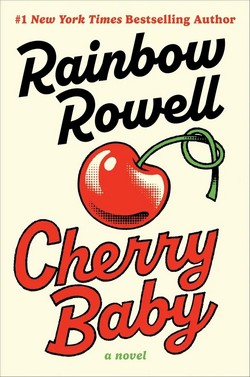
Cherry Baby by Rainbow Rowell
The tears on Cherry’s cheeks were fat.
In the months after Tom left—and the months after it became clear that he wasn’t coming home—Cherry’s tears had changed.
There were days when her eyes felt so full, the tears ran in rivulets. She’d swear that crying had never felt that way before—that before, she’d cried drops, and now, she cried streams. There must be some science to it, one sort of crying for transient pains and another sort for crippling grief.
Cherry should mind her own business… But the point of holidays—the point of family—was to mind everyone’s business.
A fat girl can’t wait for boys to pluck her like a flower or find her on the beach like a seashell.
Cherry had never been Cinderella. She’d always been the prince chasing down what she wanted. (She’d been a witch, enchanting apples.) She’d had to reach for things. For love. For attention.
Cherry had trusted Tom. She’d taken him for granted—she’d thought that she was supposed to. She’d believed they were a settled question.
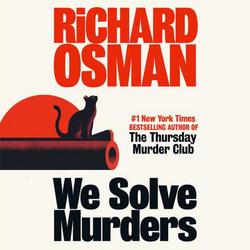
We Solve Murders by Richard Osman
“If someone does try to shoot me this week, do you have to dive in front of the bullet?”
“That’s the idea,” says Amy, without conviction. “Though that’s mainly in films.”
It’s hard to dive in front of a bullet, in Amy’s experience. They go very fast indeed.
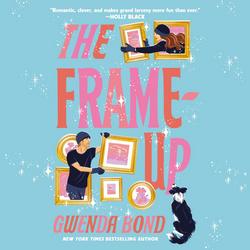
The Frame Up by Gwenda Bond
Memory was a House that always seemed to win, rewriting history for either maximum escape or maximum pain.
When she took the dog to the local shelter, they’d said, “Her owner died. We can’t keep her from escaping, she’s a Houdini.”
“Is it a kill shelter?” she’d asked, a last-ditch. It had been.
So then she had a dog.
Yet, in the lowest, quietest moments of life, a dog made you feel redeemable. If a dog loved you, you must not be all bad.
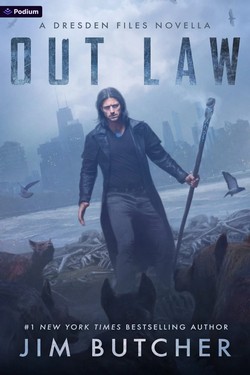
Out Law by Jim Butcher
…relax, kid,” Bear said quietly. “I’ve been doing this a long, long time. I’m better at avoiding trouble than most. And if I can’t, I can at least promise you a glorious death.”
Fitz grimaced at her and said, “I know you mean that to be reassuring.”
Bear grinned. “Like the wizard said—this is the job, kid. Make peace with it.”
I’ve been through a lot. Some of the scars show. I do not look like a pleasant person. I have resting wizard face, which is to say I often look like I have had it up to here with everyone’s nonsense.

Book of Spores edited by Frasier Armitage, Eleni Argyró, Adrian M. Gibson & Ed Crocker
“On the Magic of Mushrooms: An Introduction” by Eleni Argyró
Stories are psychedelics in narrative form, and writers the shamans, healers, diviners, mediators, priests. With each word, the folds of readers’ brains expand, the doors of their perceptions open, and the fabric of reality shifts to encompass new ways of thinking, seeing, and believing.
“Farlen and The Tower of Decay” by Ryan Kirk
“You’ve got the look about you. I’ve seen it before, and it tells me you aren’t likely to see the sunrise.”
“But if I do, they’ll sing songs about me long after death eventually claims my soul.”
The stranger stared a moment longer, then shrugged and turned away, as though he’d just been in conversation with a ghost.
“The Fungitive” by Tom Bookbeard
So, make no mistake, starting my day with a guy grinding a bowie knife into my palm before I’ve flicked on my espresso machine isn’t high up on my list of morning routines.
“A Serious Track” by Krystle Matar
He was especially watchful over Eddie, because he saw— like most adults around us saw— that Eddie desperately needed someone to be especially watchful over her. From the time we were kids, she had a distance in her, a kind of distance that gave the impression that she’d just as soon disappear into the aether if you took your eyes off her for too long. A distance that drew people in, made them want to lean close and catch ahold of her before she vanished.
“A Serious Track” by Krystle Matar
I was too young to know that Uncle Victor’s supper club was at least thirty years out of fashion— too young to understand that it was mostly gold leaf and overly wrought, a pretender’s attempt at approximating wealth. It was a child’s understanding of luxury, built on the assumption that if it glittered, it must be glamorous. In that way, I was the perfect audience for Uncle Victor’s display. With my child’s covetous perspective, I wanted to touch every gilded chair, every sparkling lamp, every crystal cut candle holder on every gleaming wooden table. I wanted to sink into that place, to become a feature of it, wanted to be the sort of person who commanded so many beautiful things, empty though they were.
I remember wondering what living in Washaw must have been like, with all those nice lawns and clean alleyways and freshly painted front doors, what it must have been like to live a life where being busy was optional, where you could just hide from the world and the weather when a storm was brewing. Back in the Flats, our streets were always busy, rain or shine, because no one had the luxury of waiting for the clouds to clear in the interest of staying dry.
A gun has a habit of betraying the slightest tremor as the metal pieces clunk together, but my hands were always steady when I was doing dangerous things, no matter how much my heart raced or my breath rattled or stomach twisted itself into knots.
“The Road to Fungaddicticon” by DB Rook
Simeon was lost to the shrooms. Had he been straight- headed, he would argue he was found, but his drooling, slackened face and his ebbing pulse would have you believe otherwise.
Near-death experiences, hallucinogenics, mile after mile of hard travel, not to mention radiation and bacterial infections, had somewhat disheveled them.
“The Toadstool Witch” by Greta Kelly
Juliote didn’t cry the words, for a woman only wept for a hope that had been betrayed. And it had been many years since Juliote had felt the taste of hope on her tongue. She didn’t scream the words either, for all that her voice was hoarse it had no fight left in it. No, Juliote’s was the voice of a person utterly devoid of anything but jagged-edged desperation. The kind that drove people to crossroads at midnight to treat with nameless devils.
“A Dangerous Donation” by Emma L. Adams
…she of all people knew that deeming a situation ‘impossible’ was usually an admission of a failure of imagination rather than a statement of fact.
“The Book of Hries” by M. J. Kuhn
The rest of the work was done without my hand. Instead of leaning on the piousness of priests, I leaned on man’s hubris. Honestly, of the two, it’s always been the much sturdier cane.
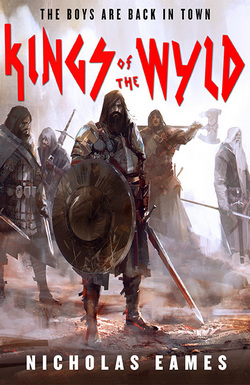
Kings of the Wyld by Nicholas Eames
“They used to call us the Kings of the Wyld, remember?”
“Yeah, they did. When we were twenty years younger. When our backs didn’t ache every morning and we didn’t wake up five times a night to piss. But time did what it does best, didn’t it? It beat us up. It broke us down. We got old, Gabriel. Too old to do the things we used to, no matter how good we were at doin’ ‘em.”
No king meant no law; no guards to keep the peace or discourage violence before it got out of hand. No taxes meant no one to clean gutters or lay down stone for roads, and so Clay and Gabriel sloshed through what they hoped was mud as they passed through the wide-open gates into the city whose parents had hired a prostitute as a babysitter and never come home.
He suddenly wished he were elsewhere, anywhere—or petter yet someone else entirely. A simple man doing simple things. A cobbler, maybe. Cobblers rarely, if ever, made enemies of vengeful immortals, or so he figured.
They had a saying up north: *the coin that broke the dragon’s back*. It was derived from the idea that a dragon hoarding one trinket too many might drown beneath the weight of its own avarice, and it meant—or at least Clay thought it meant—that even the mightiest of things (dragons, for example) had a point at which even the smallest detail could signify their doom.
They had a similar saying down south: *the straw that broke the camel’s back*—though why you’d put a piece of straw on a camel’s back was, to Clay, an utter mystery. They were a curious people, southerners.
Clay smiled like a man who’d won first place in a “Whose Life Sucks the Most” contest.
What was it about fathers, Clay wondered, that compelled so many of them to test their children? To insist that a daughter, or a son, prove themselves worthy of a love their mother offered without condition?
Someone, probably Gabriel, had once told him that to be courageous you had to first know fear. As Clay saw it, he would need a reserve of courage in the hours to come that demanded more fear than he had ever known, and so he let the horror of what they were about to face wash over him, soak into him, clamp around his soul like an iron fist, and squeeze…
A battle, as relayed by a poet, is a glorious thing, full of heroic stands, daring charges, and valiant sacrifice. But a battlefield, as experienced by some poor bastard mired in the thick of it, is something different altogether.
The word clusterfuck came to mind.
Matrick plied his knives like a parade drummer, his rhythm so fast his enemies didn’t know he’d murdered them until their god asked them if they took milk in their tea.
Bloody Rose by Nicholas Eames
“We all have our rituals,” he said, without taking his eyes off the action below. “Necessary vices that enable us to conquer our fear. Or, if not conquer it, then to at least pile furniture against the door while we duck out the back. It’s not enough to survive what we do, Tam. We must also endure it.”
“What’s the difference?” she asked.
“One concerns the body, the other the mind. Every battle has a cost,” he said quietly. “Even the ones we win.”
Tam didn’t fully understand what he meant, but decided to pretend she did, and nodded sagely. “So what’s your vice?” she wondered.
“Love,” said Freecloud, flashing his jaguar smile. “And I suspect one day it will kill me.”
She glowered like a gargoyle with an incontinent pigeon perched on its head.
You didn’t get to be the villain of one story, she supposed, unless you were the hero of another.
Some people knew how to kill a conversation. Cura, on the other hand, could make it wish it had never been born.

Go Gentle by Maria Semple
It’s a thing Stoics do: meditate on worst-case scenarios. Which is not about working yourself into a neurotic doom loop. It’s about preparing for things not to go your way. So when they inevitably don’t, you can say, “I expected that.”
Think of it as inoculation against emotional extremes. Because who needs those?
Having a teenage daughter is like Choose Your Own Adventure, a constant set of junctures in the road. She’s in a mood? How do you respond? Do you snap? Do you sympathize? I chose my go-to: ignore.
I stepped into the grand entry. The walls were plaster, the color of cream, and enriched by an exuberance of gold molding. Crystal chandeliers danced abundantly from on high. Underfoot, polished wood floors inlaid with marble. If Liberace had a mood board, this would be it.
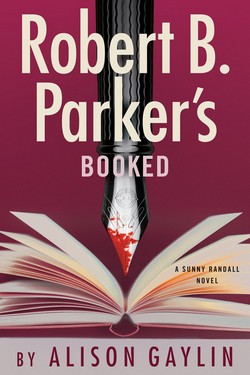
Booked by Alison Gaylin
He smiled. “One of the many things I like about you, Sunny,” he said, “is that you get things without my having to explain them.”
I smiled back. “That’s possibly the most patronizing compliment I’ve ever received.”
“Hey, it’s from the heart.”
“You must have been in a constant state of terror,” I said.
“You want to know the truth?” Blake said. “I don’t remember him at all.”
“You don’t?”
“Not from when I was little.” Blake sliced off another hunk of sausage and shoved it into his mouth. Then he put the rest back into the bag, dropped it on the backseat, and returned his hands to the steering wheel as he finished chewing. “It’s funny,” Blake said. “People always say little kids are resilient, but it’s just that their brains aren’t fully formed. They can’t remember shit, which is a blessing.”
I looked at him. “I bet you’re right,” I said.
“I’m pretty sure I am.” Gently, he placed the knife on the dashboard. The sun glinted off the blade. “Resilient,” he said. “That’s just a word to make bad parents feel better.”
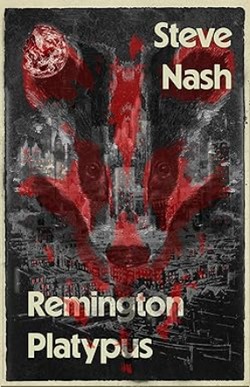
Remington Platypus by Steve Nash
‘But that’s the thing about evil. You can try, but you can never properly clip its wings.’

(Image by DaModernDaVinci from Pixabay)
Read Irresponsibly, but please Comment Responsibly