Author: HCNewton Page 127 of 628

The Quarter Year Crisis Book Tag ’24

The Quarter Year Crisis Book Tag
I’ve seen this on various blogs, but can’t seem to find the creator, so I can’t credit them. I’d like to, if anyone knows who did it.

I saw this over at Peat Long’s Blog, Biblio Nerd Reflections, and Chasing Destino (and, apparently, did it myself last year), and thought it was worth a shot. Three weeks later, here we are…

How many books have you read so far?

86 is what the ol’ spreadsheet says. Which is larger than I expected, I’ve gotta say (even after subtracting a handful of board books, picture books, etc., that’s still better than I’d have guessed).

Have you already found a book you think might be a 2024 favourite? If not, what was your favourite book you read that wasn’t quite five stars?

Smoke Kings by Jahmal Mayfield , City on Fire by Don Winslow, and The Tainted Cup by Robert Jackson Bennett are the front-runners so far.

Smoke KingsBlank SpaceCity on FireBlank SpaceThe Tainted Cup

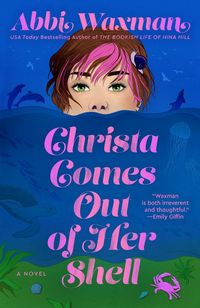
I’ve got Christa Comes Out of Her Shell by Abbi Waxman coming up this week (probably), I assume it’ll be in the running, too.

Christa Comes Out of Her Shell

Any 1-star books / least favourite book of the year?

America Fantastica by Tim O’Brien is a title that begs for someone to say it’s not that fantastic. And it isn’t. Not really that good–and I kept waiting for it to raise to the level of mediocre, at least. As I tried to describe.

America Fantastica

Most read genre so far?

Mystery/Crime/Thriller. Which will come as no surprise to anyone who is not me. I figured it might be on top, but I thought that Fantasy would be a lot closer so far this year. Which probably says a lot about how much reflection I’ve given to things.

1st Quarter Genre Chart

A book that surprised you?

Several of them, really. But I’m going to have to give this one to the 2024 InCryptid novel, Aftermarket Afterlife–McGuire does things in this story I didn’t think she’d do in this series. I was caught way off-guard more than once. Literally stunned.
Literally gif

Aftermarket Afterlife

A book that’s come out in 2024 already that you want to read but haven’t yet?

Ugh. So many of them. The four that come to mind (and I’m sorry to everyone who should have a book that comes to mind, but didn’t).
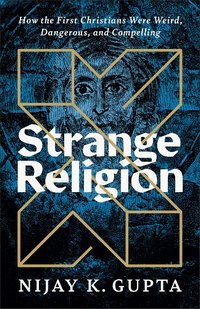
The Ballad of Sprikit The Bard (And Company) by Seán O’Boyle, Strange Religion: How the First Christians Were Weird, Dangerous, and Compelling by Nijay K. Gupta, The World Entire by Jo Perry, City in Ruins by Don Winslow (but I have to read City of Dreams first).

The Ballad of Sprikit The Bard (And Company)Blank SpaceStrange ReligionBlank SpaceThe World EntireBlank SpaceCity in Ruins

One goal you made that you’re succeeding at

To read more for and to post more in the Grandpappy’s Corner series.

One goal you made that you need to focus on

All of the others would fit. Catching up on my To-Be-Written stack is my primary focus at the moment.

(not that anyone but me can tell that, I’ll note)

New to you Bloggers/Booktubers/ Bookstagrammers/Booktokers for 2023 you recommend?

bullet Hair Past a Freckle
bullet The Quill to Live
bullet Burt’s Library

As per usual, I’m not tagging anyone in particular, but I’m curious–what’s the first of the year been like for you?

Namaste Mart Confidential by Andrew Miller: A Pair of Unlikely P.I.s Search for a Missing Woman

I’ve talked recently about how easily distracted I am—how much trouble I’ve had focusing on things—I’m pretty sure that this post reads like the product of that. Hopefully, it makes enough sense to be worth your while.


Namaste Mart ConfidentialNamaste Mart Confidential

by Andrew Miller

DETAILS:
Publisher: Runamok Books
Publication Date: May 1, 2024
Format: ARC
Length: 246 pg.
Read Date: April 4-9, 2024
Buy from Bookshop.org Support Indie Bookstores

What’s Namaste Mart Confidential About?

It seems (especially in film and novels) that Los Angeles is filled with people who’ve moved their to start their lives. That’s certainly the case for Richie Walsh, a stand-up comedian trying to build his audience and act, and Adam Minor, an aspiring novelist. While they wait for their artistic careers to take off, they need to pay their bills—and so they get jobs at the greatest grocery store in the country to be employed at (as far as I can tell, anyway—I’ve never known anyone to have such a good gig while working at one).

Some time back, however, the two of them stumbled upon a kidnapper and rescued his latest victim—getting them some attention from the local media and starting a side gig for them: Unlicensed Private Eyes. They’ve had a few successful cases, nothing as headline-worthy as their first however, and then entered a dry spell.

They’re pulled out of it when a co-worker’s mother hires them. She runs a few lingerie stores (higher-end stuff), and one of her top employees has gone missing. Shayla Ramsey has had a troubled past—escaping from the frying pan of a polygamous marriage to the fire of addiction on the streets of L.A. She’s put her life on the right track—and now she’s vanished, with both parts of her past equally likely to have pulled her back in.

Neither grocery store clerk could expect—or be prepared for—where the trial for Shayla takes them. But readers are going to have a blast going along for the ride.

A Real Kitchen Sink Novel

What doesn’t this book have, really? First off—and it’s easy to forget this, but you shouldn’t—it’s noir. Then you have a slice of L.A. life in 2013, and boy does it feel like it. There’s some comedy. There’s some satire. There’s commentary on the rise (and growing acceptance, it seems) of polygamous LDS groups*. There’s some drama. There’s some over-the-top action movie-style gunfights. There’s a splash of politics. There’s more than a little commentary on the nature of celebrity. There’s some actual sweetness through one of the smaller arcs. You’ve got Armenian mobsters. Ex-actors turned business executives. Ex-actors turned artists. Grocery store clerks and very odd customers (just that part of the novel alone could be turned into a decent sitcom). A strange Scientology-esque group.

* I read three novels that featured them last year alone. An odd trend in crime fiction.

This is not an exhaustive list—and I know that once I publish this post, I’m going to think of other things I could’ve included.

But the important thing to know going in—it all works. This jumble of seemingly incompatible ideas/topics that Miller brings to the table fit together in a way that feels natural. It’s like one of those cooking competition shows where the contestants are handed a bunch of ingredients that no one in their right mind should put together and they make something that gets that gets the approval of experienced chefs and restauranteurs. Miller ain’t getting chopped for this meal.

Anger

At one point in the show Justified, Winona tells her ex-husband, “Raylan, you do a good job of hiding it. And I s’pose most folks don’t see it, but honestly, you’re the angriest man I have ever known.” That line came to my mind a few times while reading this book—I don’t know that Adam or Richie are quite as angry as Raylan—but they’re noticeably younger than him. Unless something happens to them in the next decade or two (you know, presuming they survive this novel), I do think they might attain that high mark.

Adam says he wants to pursue this case for a different reason—and that might be true (he certainly believes it), but it seems to me that his life as a whole is driven by anger. Anger at his family for the way he was raised, the religion he was inculcated in, and the way they responded to him rejecting their faith and way of life. This spills over to an anger at any religion—or pseudo-religion/cult. It frankly gets in his way, and makes this case (and probably others, as well as other aspects of his life) much more difficult. Richie’s anger (more on that in a moment) may put them in immediate jeopardy a time or two, but I’d wager that Adam’s chip on his shoulder about religion/religious beliefs is a bigger detriment/hindrance to the duo.

I should probably add that while Adam thinks he’s angry at his family and their religion, I actually think he’s angry at God for not existing. Or at least not existing and behaving the way that Adam expects him to.

Richie’s anger is a little easier to see—there are no tears of this clown to be seen, just a violent streak that can be seen from miles away. Miller doesn’t give us as much insight into it as we get with Adam’s—but we may get more examples of it in action. Richie is definitely more honest with himself about the outward expression of this (although he might underestimate his ability to control it).

So, what did I think about Namaste Mart Confidential?

Based on his short story in Jacked, this was not the novel I expected from Miller. But I don’t know what he could’ve written that would’ve made me think he (or anyone else) would produce something like this book.

Anytime I hear “unlicensed private investigators,” my mind goes to the fantastic FX show, Terriers and while Adam and Richie aren’t Hank and Britt, I could see Adam becoming Hank-like with another decade or more experience (I think Richie’s already a better P.I. than Britt). The designation allows Miller to take advantage of all the P.I. tropes he wants to—and to keep these guys strictly amateur. So they do not have to follow all the rules a licensed P.I. would have to and make dumb mistakes and act like renegade escapees of a cozy novel. It’s definitely a best-of-both-worlds kind of situation and a great choice by Miller.

I cannot tell—and I’d hesitate to speculate—if Miller has a lot he wants to say about religion and faith, or it it just fit the plot and the character of Adam. I’d buy either explanation (or both). I would like to see Adam and Richie back in action in a story that didn’t have that much/anything to do with religion to see how Adam acts when he doesn’t have something like that to bounce off of, I think it’d be interesting to see the contrast.

This is a very L.A. novel—even if you disregard the Hollywood-adjacent portions (although it would be difficult to do). This book wouldn’t function the same way were it set in Chicago, Dallas, Boston, or Orlando. It would take someone better at analyzing these things—or at least in describing them—to tell you why. But these events need L.A. (with a quick detour to Mexico), and I relish things like that. By and large, Spenser, Elvis Cole, Madison Kelly, or Kinsey Millhone can take place just about anywhere. But Lydia Chin/Bill Smith, August Snow, Annie McIntyre, or Adam Minor/Richie Walsh need their geography*. I’ll read any of those at any chance I get, clearly, but there’s something distinctive about those tied into their cities like that.

* Obviously, they can travel outside their typical bailiwick, but then you’ve got the duck-out-of-water thing going on.

I seem to be jumping around a little bit in this section (and perhaps the entire post), because there are just so many aspects of this novel that I want to talk about and I’m not certain how to link them all together—and which ones I have time and space to cover. It may be a bit hyperbolic to say I could open this book up to any random page and find something I could talk about for at least a paragraph or two—but only a bit. It’s not often I think that in a P.I. novel—and I love it.

Miller nails the pacing of this novel. The circuitous path our duo takes to track Shayla fits both their strengths and weaknesses. The dangers they face feel genuine—and their lack of ability to really cope with some of that danger endears them to me more than when they’re being competent (not that I don’t enjoy them doing their job well, too). Familiar and unexpected all at once—Miller tackles this novel like a pro, and I can’t wait to see what he does next. (although if he wants some suggestions, I’d point him to the short story I talked about a few paragraphs back)

If you’re in the mood for a gritty P.I. novel with a lot of zip, look no further than Namaste Mart Confidential.

Disclaimer: I received a copy of this ARC from the publisher, without any expectation that I would write about it—but how could I not?


4 1/2 Stars

This post contains an affiliate link. If you purchase from it, I will get a small commission at no additional cost to you. As always, the opinions expressed are my own.
Irresponsible Reader Pilcrow Icon

Grandpappy’s Corner: Tiny Hands Hymns, Tiny Hands Prayers, and Tiny Hands Promises edited by Hannah Duguid Estes, illustrated by Jessica Hiatt: A Great Set of Starter Devotional Reads

Grandpappy's Corner Tiny Hands Books

Tiny Hands Hymns

Tiny Hands Prayers

and

Tiny Hands Promises

edited by Hannah Duguid Estes, illustrated by Jessica Hiatt

DETAILS:
Publisher: P & R Publishing
Publication Date: October 25, 2023
Format: Board Book
Length: 16 pg. (each)
Read Date: April 27, 2024

What are the Tiny Hands About?

These are little board books that serve as beginning devotional materials—training wheels for young worshippers, if you will.

Tiny Hands Hymns

These are the first stanzas/verses of some of the best hymns around (and easiest to learn, too): “Holy, Holy, Holy,” “Be Thou My Vision,” “Amazing Grace,” “This Is My Father’s World,” “Great Is Thy Faithfulness,” “Come, Thou Fount of Every Blessing,” “Crown Him with Many Crowns,” and Thomas Ken’s doxology.

On the opposite pages are fitting illustrations, with some accent illustrations on the pages with text.

Buy from Bookshop.org Support Indie Bookstores

Tiny Hands Prayers

These are a selection of prayers—translated by Iain Duguid (Professor of Old Testament at Westminster Theological Seminary), from various portions of Scripture to serve as models of prayer.

They include: Mary’s prayer from Luke 1, Hannah’s from 1 Samuel 2, a prayer based on Daniel’s Prayer from Daniel 9:4-19, a prayer based on Ephesians 3:14-19, David’s prayer from Psalm 130, The Lord’s Prayer from Matthew 6, and the prayer of the saints from Revelation 19, and the Aaronic benediction from Numbers 6.

Again, opposite each is an appropriate illustration, with some accent illustrations on the pages with text.

Buy from Bookshop.org Support Indie Bookstores

Tiny Hands Promises

This is a collection of covenant promises from the Old and New Testaments to introduce and remind even the littlest members of the covenant of what God has promised them. These, too, are translated by Iain Duguid.

They are Isaiah 43:1-3; John 10:27-28; Matthew 7:7-11; 2 Corinthians 12:9; James 1:5; 1 John 1:9, 7*; Philippians 1:6; and Revelation 21:3-5.

*I’m not sure I get why he ordered them this way.

Yet again, opposite each is an appropriate illustration, with some accent illustrations on the pages with text.
Buy from Bookshop.org Support Indie Bookstores

Let’s Talk about the Art for a Minute

I’ve apparently appreciated Hiatt’s work as a cover designer on a few books (The Wonderful Works of God by Herman Bavinck, Things Unseen by J. Gresham Machen, and Struck Down but Not Destroyed by Pierce Taylor Hibbs), but illustrating board books calls for a slightly different skill set. Still, the illustrations remind me of those covers.

I think these are great. Bright and cheerful, without being cartoonish or silly (I have nothing against those kinds of illustrations, but they’re not fitting for the subjects).

How are they to Read Aloud?

They’re fine—although I can’t imagine that anyone, even those who can’t carry a tune, not singing the hymns instead of reading them.

The translations (I’d be tempted to call them paraphrases, but the books say translations—and I don’t know enough to contradict that) are foreign-feeling for people who are familiar with/have memorized the relevant portions from the AV, ESV, NASB, etc. Once you get past that feeling, there’s nothing about the text that’s difficult or odd to read—and they seem easy enough for young children to comprehend (to some degree).

What did the Little Critter think of Them?

Okay, I haven’t had the chance to read these with him, but his Momma has. She reports that he likes Tiny Hands Hymns, because she sings them, and he really responds well to singing. He doesn’t really seem to care about the others one way or another. That fits his personality—but doesn’t really reflect on the books, if you ask me.

So, what did I think about the Tiny Hands books?

I think they’re a great idea—and overall, I am pleased with the execution. I do recommend them without hesitation.

I have some questions about some of the technical bits of translation, verse choices, and whatnot—not so much that I have a problem with the books, I’d just like someone good with the original languages to sit down with me and walk through these.

But for a young child? I think they’re well done and would be great resources for regular use.


4 Stars

This post contains an affiliate link. If you purchase from it, I will get a small commission at no additional cost to you. As always, the opinions expressed are my own.
Grandpappy Icon

Saturday Miscellany—4/27/24

For U.S.-types, Happy Independent Bookstore Day!! Be sure to venture forth and take advantage of the fun in your area. I actually have 3 choices to go to today (and, yes, I’m tempted to hit all three, but time and money prevent that). This month has not been good for my To Be Read mountain, and I don’t think today will help a lot.

(non-U.S.-types should go and visit your local indie shop, too.)

Odds ‘n ends about books and reading that caught my eye this week. You’ve probably seen some/most/all of them, but just in case:
bullet A novel experience: Why small bookstores are thriving in Canada—this seems to be a good day to celebrate those stores north of the border, too.
bullet There’s a revolution happening in children’s publishing—you can thank the book bans—the Law of Unintended Consequences has teeth
bullet Yes, It’s Okay to Throw Away a Book: We love acquiring, hoarding, and displaying books even more than we love reading them—That subtitle is a bit much, but the rest of the piece is worth a read. Unconvincing, I think.
bullet The literary romantic holiday that should replace Valentine’s Day.—this one also seems like a bit of a stretch, but I’m inclined to be swayed.
bullet Shakespeare and Fanfiction: Despite an enduring slice of audience that treats his work as precious and mythic, most Shakespeare fans have rarely met an adaptive concept they didn’t like.
bullet The Unexpected Resurrection of Harlan Ellison
bullet The Heyday of Pulp Fiction: Keith Roysdon on the heroes and villains of American pop culture, introduced to millions of readers in cheap magazines.
bullet Encyclopedia Brown: A Story for My Brother, Philip Seymour Hoffman
bullet How to Read More—Armed With a Book brings a fresh idea or two to this perennial topic.
bullet Brian Bilston is “fed up with people pointing out all the mistakes in my poetry” and responds with Pedants—absolutely worth the read.

To help talk about backlist titles (and just for fun), What Was I Talking About 10 Years Ago Week?
It looks like whatever was distracting me from blogging in April 2014 started to wane, and I managed to note the publication of a few books that looked promising (I read at least 3 of them—all 3 winners)
bullet The Dragon Business by Kevin J. Anderson
bullet Attack The Geek: A Ree Reyes Side-Quest by Michael R. Underwood
bullet The Thousand-Dollar Tan Line by Rob Thomas and Jennifer Graham
bullet Heaven’s Queen by Rachel Bach
bullet Dawn’s Early Light by Pip Ballantine and Tee Morris

This Week’s New Release that I’m Excited About and/or You’ll Probably See Here Soon:
bullet Next of Kin by Samantha Jayne Allen—Annie McIntyre’s third adventure finds her looking into a client’s family history and stirring up dust that causes problems for her and the client in the present. Looking forward to diving into this one.

I do not know how to give alt text for this, sorry. Follow the link and maybe the original post does

Grandpappy’s Corner: Along Came a Radioactive Spider by Annie Hunter Eriksen, Lee Gatlin (Illustrator): The Man Behind Spidey’s Look (and more!)

Grandpappy's Corner Along Came a Radioactive Spider

Along Came a Radioactive Spider:
Strange Steve Ditko and
the Creation of Spider-Man

by Annie Hunter Eriksen , Lee Gatlin (Illustrator)

DETAILS:
Publisher: Page Street Kids
Publication Date: August 1, 2023
Format: Hardcover
Length: 32 pg.
Read Date: April 20, 2024
Buy from Bookshop.org Support Indie Bookstores

What’s Along Came a Radioactive Spider About?

It’s right there in the title—subtitle, really, I guess. This is an unauthorized biography (we’re told at one point that Ditko would hate a book about him, so there’s no chance of an authorized one) of Spider-Man’s co-creator, Steve Ditko, written for the older picture book reader.

It covers his childhood and a little of his comic book career up to Spider-Man and then Doctor Strange. Following that, we get two text-heavy pages talking about Ditko in a bit more detail (for the parents, I’m guessing).

Let’s Talk about the Art for a Minute

Gatlin has a very distinctive style that I wish I knew how to describe. I’ve seen his work here and there on the internet (I don’t think it ever had his name attached, sadly), but I’ve never seen this much in one place at a time.

You’re never in doubt as to what he’s drawing, but realism isn’t really what he’s going for. There’s an energy, a mood, a feeling of movement to all his drawings that I find really appealing—and I imagine young readers/those-read-to will find compelling as well.

I assumed that when the book covered people like Spider-Man or Doctor Strange that he’d go for a Ditko-feel to the art, just to pay homage or show the reader what Ditko produced. But he didn’t—at least not too much—there’s a distinct look to most of that art to separate it from the rest of the book, but it’s just a different flavor of Gatlin (which is perfectly fine, I’m just trying to describe things in my own meager way).

I’m planning on spending more time just looking at the illustrations, catching what I missed the first couple of times—and I don’t imagine I’ll be the only one.

So, what did I think about Along Came a Radioactive Spider?

I really do wonder how many children will care about this—they may like Spider-Man or Doctor Strange, but will they care about the story of the man who drew them and helped create them? I’m just not sure.

Now, their parents and grandparents are going to love this—and probably want more. And yes, this could be a fun non-Marvel Cinematic Universe way to introduce a child to a couple of comic book heroes, and that’s probably the idea behind most people buying this book.

Or I could be wrong—that’s just a guess on my part. I’d like to be wrong.

For a biography of a little-known figure who has altered superhero history the way that few have, this is a great read. And the right reader is going to delight in it. I’d have liked it to be twice the length—but the subject and the medium don’t really allow for that, so I got over that pretty quickly.

This is apparently a companion book to With Great Power: The Marvelous Stan Lee from the same creators—I’ve got to get my hands on that one.

3.5 Stars

This post contains an affiliate link. If you purchase from it, I will get a small commission at no additional cost to you. As always, the opinions expressed are my own.
Grandpappy Icon

WWW Wednesday, April 24, 2024

No time for an intro or anything, let’s just drive

This meme was formerly hosted by MizB at A Daily Rhythm and revived on Taking on a World of Words—and shown to me by Aurore-Anne-Chehoke at Diary-of-a-black-city-girl.

The Three Ws are:
What are you currently reading?
What did you recently finish reading?
What do you think you’ll read next?

Seems easy enough, right? Let’s take a peek at this week’s answers:

What are you currently reading?

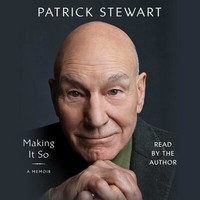
I’m still reading (and making oddly slow progress in) Woman in White by Wilkie Collins and the short story collection, Takeout Sushi by Christopher Green. I’m listening to Making It So by Patrick Stewart on audiobook.

Woman in WhiteBlank SpaceBlank SpaceTakeout SushiBlank SpaceMaking It So

What did you recently finish reading?

I last finished Shami Stovall’s Time-Marked Warlock, a dynamite soon-to-be-released Urban Fantasy and the audiobook, Lost Talismans and a Tequila by Annette Marie, read by Teddy Hamilton, Cris Dukehart.

Time-Marked WarlockBlank SpaceLost Talismans and a Tequila

What do you think you’ll read next?

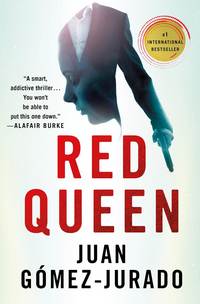
My next book should be the promising-looking Red Queen by Juan Gómez-Jurado and my next audiobook should be Spelunking Through Hell by Seanan McGuire, read by Emily Bauer.

Red QueenBlank SpaceSpelunking Through Hell

Tell me what you’re reading.

Oh, also, Bookstooge, try to restrain your Collins I-told-you-so.

Great Minds on Small Things by Matthew Qvortrup: Philosophers Addressing Ordinary Life

Great Minds on Small ThingsGreat Minds on Small Things:
The Philosophers’ Guide to Everyday Life

by Matthew Qvortrup

DETAILS:
Publisher: Duckworth Books
Publication Date: October 5, 2023
Format: eARC
Length: 224 pg.
Read Date: March 21-29, 2024

What’s Great Minds on Small Things About?

In 1764, Voltaire published Dictionnaire philosophique. In 1957, Roland Barthes published Mythologies. In 1987, Quiddities: An Intermittently Philosophical Dictionary was published by W. V. Quine. Taking a little something from all of these (and others), in 2023, Matthew Qvortrup brought us Great Minds on Small Things: The Philosophers’ Guide to Everyday Life.

This is a (brief) survey of what philosophers from Plato to George Santayana, and several points between (and a little spillover on either side) have to say about topics that aren’t usually thought of as subjects of philosophical meditation. More like things discussed over beers with coworkers and friends, pontificated on by stand-up comics, or things that people mutter about on social media between photos of sandwiches or cats.

Rather than the meaning of life, the source of ethics, the nature of the will, or social contracts, Qvortrup collects thoughts on things like artichokes, smoking, hiccups, sports, sports, and more sports. Told with a little bit of humor and a clear familiarity with the thinkers and writers he’s covering and quoting, Qvortrup’s survey is both entertaining and educational.

The Breadth of Topics

Qvortrup hits on so many things–here’s a (very non-exhaustive) list that I compiled to give you a taste (the categories are mine, Qvortrup lists things alphabetically). The things I didn’t jot down are just as varied and strange, let me add.

Food/Drink
bullet Artichoke
bullet Beer
bullet Breakfast
bullet Cheese
bullet Coffee
bullet Quiche
bullet Radishes
bullet Tea
bullet Tomato Juice
bullet Wine

Inventions
bullet Boilers
bullet Cars
bullet Ships
bullet Telephone

Pets
bullet Cats
bullet Dogs


Activities
bullet Baseball
bullet Basketball
bullet Dancing
bullet Football*
bullet Being Lazy
bullet Marriage
bullet Smoking
bullet Sneezing
bullet Tennis
bullet Wrestling

Human Bodies
bullet Excrement
bullet Farting
bullet Hiccups
bullet Laughter
bullet Penis
bullet Ticklishness
bullet Urination
bullet Winking
bullet Wiping (no, really)
bullet Yawning

* Sorry, Americans, he means “soccer.”

And, sure, while this is about everyday things, Qvortrup does interact with some of the deeper thinkers in (mostly Western) history, and does end up brushing up against some of their deeper thoughts and categories–so, he includes a glossary to help readers like me get through it all.

One Problem with the Tone

Yes, I enjoy writers mixing humor (mild or otherwise) with deeper or controversial topics. Even just a lighter touch to writing is a winner for me. And Qvortrup makes this whole thing really amusing.

Sometimes, however, I had a hard time telling when he was exaggerating for humorous effect or just making a joke and when he was conveying actual information in a whimsical way. It doesn’t take away the enjoyment from the reading–it just makes it hard to know what you can repeat in conversation or cite in writing (you know, if you’re the kind of person who does that.)

So, what did I think about Great Minds on Small Things?

I had a great time reading this book–it’s a great mix of light reading with some interesting perspectives–and can easily be used as a launching point to further reading or research. “So-and-so used baseball to describe X economic principle, I want to see how that actually works out beyond this quick summary.” “Hanna Arendt’s personal story seems interesting, especially how it is expressed in Topic Y.” It’s also just fun to think about names you’ve read about (or maybe read) debating the type of breakfast that’s best for productivity or enjoyment of life.

I do think it’s best to dip in and out of the book, and not read from cover-to-cover the way I did. When I return, it will be to look at particular topics (not necessarily the ones I listed above).

My major complaint is the brevity of the book–I don’t think most of the entries needed to be longer, I just wanted more entries. Some letters only have one thing listed. Sure, it has to be difficult to find everyday things that philosophers have opined about, but now that Qvortrup has shown us some, it’s hard to believe there isn’t more to see.

Pick this one up, folks, you’ll have a good time.


3.5 Stars

Disclaimer: I received a copy of this book from Duckworth Books via NetGalley—thanks to both for this.
Irresponsible Reader Pilcrow Icon

Time-Marked Warlock by Shami Stovall: A Mulligan-Equipped PI

Time-Marked warlock Tour Banner

Time-Marked WarlockTime-Marked Warlock

by Shami Stovall

DETAILS:
Series: Adair Finch, #1
Publication Date: June 2024 (or August, depending who you ask)
Format: e-ARC
Length: 402 pg.
Read Date: April 15-16, 2024
Buy from Bookshop.org Support Indie Bookstores

What’s Time-Marked Warlock About?

Until a few years ago, the names of warlocks Adair and Carter Finch were famous among the magic community. Private eyes who helped law enforcement as well as private clients dealing with cases large and small—they were pretty close to superheroes. Then they took that one job that put them against an opponent they weren’t ready for, things went wrong, and Carter died.

Adair’s magic couldn’t help. He couldn’t even track down everyone who was responsible, so he couldn’t get revenge. So…he went home and retreated from life. He became an asocial hermit, doing little more than existing.

Then one pre-dawn morning, a twelve-year-old girl pounds on his apartment door. Her mother always told her that if she was in real trouble to track down Adair or Carter Finch. They weren’t close friends by any means, but they did know each other—enough so that her name makes Finch pay attention. Bree’s mother was a witch and her father is a warlock, but not in the same league as Finch. Bree tells Finch that her mother has been murdered and her father kidnapped—and she needs his help to rescue her father and get justice for her mother.

Finch is not inclined to do anything but close the door on her face and get back to not interacting with anyone. But he can’t turn down her appeal—so he agrees to go to the crime scene (if only so he can determine that she misunderstood what she saw, and that her father actually was the murderer).

The scene isn’t what he expected—Bree might have been right. Also, the police detective on the scene knew Finch before he “retired” and neither really appreciated the other. Det. Jenner really rubs Finch the wrong way on the scene.

Between their less-than-pleasant interaction, Bree pulling on his heartstrings just right, and what Finch noticed at the scene of the crime, Finch decides to take the case, wrap it up quickly, and get back to wasting away as soon as he can.

Finch

Let’s get this out of the way real quick: Frequently reminded me of (James J.) Butcher’s Huntsman, Leslie Mayflower (and several other retired/depressed heroes, but Mayflower is most recent in my mind, so he gets name-dropped). Is he the Huntsman? No—he’s far less inclined to leave a trail of bodies in his wake.* for one thing. But he gives a similar vibe.

* We can argue some other time about how inclined Mayflower really is. Roll with it for now.

He’s clearly angry at himself. He’s reticent to put himself out there emotionally (or any other way). He’s not ready to let anyone else down again (assuming he really did). But something about Bree creates a crack in his defensive shell, and it’s great to see purpose emerge from where he’d trapped it down. He’s a different guy by the end of the book (probably like what he was years ago)—he’s not totally where he should be, but he’s on the road to recovery. As the series continues, i look forward to seeing how he grows/recovers.

Bree Blackstone

I don’t know how any UF reader is supposed to read her full name and not think of Harry Dresden. Maybe we’re supposed to—surely we are right?

Anyway…if Bree doesn’t melt your heart right off. If you’re not rooting for her to get the answers she seeks and maybe a touch of the retribution she longs for—and to save her dad…there’s something wrong with you—go listen to some Whos down in Whoville sing some Christmas songs until your heart is the right size.

She is so frightened by everything—there’s a real parallel to Finch there. But she’s determined to get the help she needs to save her dad and get the bad guy who killed her mom. And if Finch is the way to get both of those, she’ll get him to help her.

Naturally, along the way she picks up a pretty hefty case of hero-worship. Finch doesn’t see it for what it is right off—but he eventually does, and knows he’s not worthy. Watching him balance helping her, fending off (or trying to) her fangirling over him, and teaching her what she needs to know to be safe in the magic world is a great balancing act.

Bree is really well-conceived and executed by Stovall, and will become one of your favorite characters of the year.

Kullthantarrick the Sneak

Kull is a trickster spirit that Finch calls up to help with a little something along the way—she’s largely around for comic relief—but she also helps Bree to learn some things about the nature of magic, spirits, and the like that she hasn’t learned from her parents yet. Yes, her role is to help make worldbuilding infodumps entertaining. She’s well-used that way.

Any spirit of mischief—from Mercy Thompson’s Coyote to the Wizard in Rhyme’s Max to Al MacBharrais’s Buck, or…okay, I’m drawing a blank here—can be a lot of fun. You just set them loose to create havoc and sit back and watch. And Kull is great at that.

But that’s not all she is—she wants to be a human, she’s seen and done enough as a spirit, and she wants the human experience now. That adds a little depth to her—there’s also an affection that develops between her and Bree that adds even more shades of depth to what could’ve been a disposable character that ends up being so much more.

Really well done there.

The Magic System(s)

I don’t know how much to say here. This world has a handful of magic systems at play—there’s one for witches—like Bree’s mother and (presumably) her. There’s another one for warlocks—it’s similar and not necessarily mutually exclusive to the witch system. And there are some others, too.

One way that Finch uses his abilities (that other warlocks like Bree’s father can’t) is that he has some ability with time. It’s in the title, I feel I can give a vague description here. He’s constantly noting the time whenever anything happens. If he “marks” the time, within any 24-hour period he can return to the marked time—retaining the memories and knowledge gained, but getting to start over. Bree compares it to a save point in a video game.

This is brilliant—and so good to see in action. There’s part of me that wondered if it’d feel like a cheat—killing tension and so on. Or if it’d just be some Groundhog Day-riff good for comedy and that’s it. If you’ve ever played—or watched someone play—an intense video game with a save point, you know that’s not enough to keep someone from getting stressed out about almost dying/dying within the game. Sure they can take another try (or several), but the tension is still there. It works that way for this book (especially if it looks like Finch might not reset in time). And yes, there’s some weatherman Phil-esque humor, but not as much as other authors might have indulged in.

All in all, Stovall nailed this part of Urban Fantasy.

So, what did I think about Time-Marked Warlock?

Three great characters (not even counting the antagonists), an even better magic system, and a decent plot with a satisfying central villain. I don’t know what else to ask for in a UF novel.

The pacing was on-target—even when revisiting the same day or events over and over, Stovall was able to keep it fresh. She also knew when to say “they did X again” and when to show it. The action scenes worked well. The villain(s) were believable, had compelling motivations, and were enough of a threat to all involved to keep the reader’s interest.

There were supporting characters—including villain(s) that ended up not being as terrible as you might initially think—that were just as fully drawn, and you could generate a little sympathy for some of the people associated with the murder once you realized how they were being used, too.

There’s a good setup for further books in the series, too.

I really can’t think of much that Stovall could’ve done better—this scratched my UF itch, and I bet it’ll do the same for you, too. Keep your eyes peeled for the release and get your hands on this when you can.


4 Stars

My thanks to The Write Reads for the invitation to participate in this tour and the materials—including the ARC—they provided.

BOOK SPOTLIGHT: Time-Marked Warlock by Shami Stovall

This morning, I’m very pleased to welcome The Write Reads Blog Tour for Shami Stovall’s Time-Marked Warlock. In addition to this Spotlight, my post about the book will be coming along soon. Today is the beginning of the Tour, so check out https://twitter.com/WriteReadsTours over the next week and change to see other people saying (probably) great things about the book. But for now, let’s learn a little bit about the book, shall we?

Time-Marked warlock Tour Banner

Book Details:

Title: Time-Marked Warlock by Shami Stovall
Genre: Urban Fantasy
Release date: June 2024
Length: 402 pages
Time-Marked Warlock Cover

About the Book:

Adair Finch is the most powerful warlock in the world, and one of the best private investigators for hire. He has dealt with corporate vampires, murderous werewolves, and even fae royalty. Everything was perfect until he lost one case—the case where he also lost his brother.

So Finch retired. From magic. From PI work. From everything.

Bree Blackstone, a twelve-year-old witch, doesn’t know or care about any of that except Finch’s reputation. In the middle of the night, she bangs on Finch’s door. Her mother has been murdered, and now the assassin is after Bree as well.

Reluctantly, Finch agrees to help, only to discover something sinister has been brewing in town while he ignored the world… He’ll need to dust off all his old skills and magic before it’s too late.

Book Links:

Goodreads

About the Author:

Shami StovallShami Stovall is a multi-award-winning author of fantasy and science fiction. Before that, she taught history and criminal law at the college level, and loved every second. When she’s not reading fascinating articles and books about ancient China or the Byzantine Empire, Stovall can be found playing way too many video games, especially RPGs and tactics simulators.

Author Links:

Website ~ Twitter/X ~ Facebook

My thanks to The Write Reads for the invitation to participate in this tour and the materials they provided.

Cultural Christians in the Early Church by Nadya Williams: Same Song, Older Verses

It’s done. It’s not good—or what I wanted it to be—but it’s done. Finally.


Cultural Christians in the Early ChurchCultural Christians in the Early Church:
A Historical and Practical Introduction
to Christians in the Greco-Roman World

by Nadya Williams

DETAILS:
Publisher: Zondervan Academic
Publication Date: November 14, 2023
Format: Paperback
Length: 207 pg.
Read Date: January 7-14, 2024
Buy from Bookshop.org Support Indie Bookstores

What’s Cultural Christians in the Early Church About?

First, let’s define “Cultural Christian”—for Williams, they’re “individuals who self-identify as Christians, but whose outward behavior, and, to the extent that we can tell, inward thoughts and motivations are largely influenced by the surrounding culture rather than by their Christian faith and teachings of Jesus.” It’s easy to find examples of these types of Christians today—and many ministers will talk about the struggle to minister in some areas (like the Bible Belt) because of this phenomenon. But clearly, from the title of this book, Williams holds they were present in the Early Church.

She has three reasons for writing (or reading) this book—the first is to combat the idea that the Early Church was too spiritual and correct to have to deal with these individuals—and because of that we can have some problematic ideas about the Church today. Secondly, because of our historical ignorance, we can fail to see how the Early Church was influenced by the culture around them. Third, if we see how the Early Church is susceptible to this, and that we are, too—we can more easily see the need to push beyond Cultural Christianity to the genuine article.

To pursue these aims, Williams considers Early Church History (the first five centuries A.D.) in three eras:

  • “Part 1 focuses on cultural Christians in the New Testament era and considers sins resulting from Christians’ culturally inspired treatment of property, food and drink, and sexuality.”
  • “Part 2 moves past the New Testament period and considers apostasy, the gendered nature of sin, and the sin of self-care among cultural Christians in the second and third centuries CE.”
  • “part 3 looks at the shifts that occurred after Constantine’s conversion, when Christianity went from being a persecuted minority to a privileged minority, and eventually, a privileged majority religion in the empire. How did the conversion of Constantine change the story of cultural Christianity in the church? The answer, we will see, is the rise of new forms of cultural Christianity, which were not possible when the Christians were a persecuted minority.”
  • Average Believers

    Most books that I’ve read on or around these years in Church History focus on the heavyweight theologians and Church Leaders of the time—those people whose names we still recognize, who played significant roles in the development of Creeds and Dogmas, etc. And yes, Williams does cite and discuss some of them.

    But her focus is on average believers—people like you (probably) and me. People who will never be cited in a history text, people that few will know existed 10 years after we die. But people who leave records, or who will be talked about (at least in aggregate) by others.

    Again, this is not to say that the “big names” of history are ignored—for one thing, it’s frequently through them that we have records of, and access to, the average person. But to get a real flavor of what life is like we don’t just need the theological tracts and creeds, we need to know what people ate, wore, did for a living, and so on.

    So, what did I think about Cultural Christians in the Early Church?

    I absolutely loved this book and have brought it up in casual conversation a lot over the last couple of months (and repeatedly tossed out drafts of this post because I didn’t like it enough).

    Because this book isn’t just a history, it’s about the current Church, too. How we are susceptible to the same—or similar—foibles. Frequently, the reader can see this just by reading the historical portions and reflecting (it usually doesn’t take deep reflection). But Williams will also focus on parallels, or draw out clear lines of comparison. This is a call to the reader to think about their own beliefs and practices and to examine them—are they based on Scripture or are they based on the culture around us?

    While we may think that we are removed from the world of the early church, the nature of human sinfulness has not changed. The stories of these early Christians, therefore, are surprisingly familiar and convicting, if only we look closely. While it is at times jarring to admit, their stories are our stories too.

    We have the same feet of clay as our forefathers did—and the same challenges to overcome. Thankfully, we have the same Savior. This book helps us to remember that—and I encourage everyone to pick this up (and not just so you don’t have to hear me do it in person).


    4 Stars

    This post contains an affiliate link. If you purchase from it, I will get a small commission at no additional cost to you. As always, the opinions expressed are my own.
    Irresponsible Reader Pilcrow Icon

    Page 127 of 628

    Powered by WordPress & Theme by Anders Norén