Music Monday’s originated at The Tattooed Book Geek‘s fantastic blog and has shown up here and there since then.


Music Monday’s originated at The Tattooed Book Geek‘s fantastic blog and has shown up here and there since then.

I’ve decided to postpone today’s post…I’d finish a paragraph and think of two or three more I needed to write. Which I think will prove to make me happier about the end result, but I have to get some sleep. So…let’s take another look at this, with a quick update at the end.
Last week, I asked for some advice on where I should start with Discworld books, since my attempts with reading The Colour of Magic and The Light Fantastic didn’t really leave me wanting more.
I received some good input, and thought I’d pass some of it along (if only so there’s a central location for me to come back to later for reference).
The overall consensus was that I picked a couple of bad ones to start with. But beyond that,
Mike Finn (you should read his blog, by the way), said (in part):
Here’s the best map I know of for showing the reading order of the various Discworld subgroups.
My favourites are the Watch novels and the Witches novels.
The Watch novels start with Guards! Guards!
The Witches novels start with Equal Rites.If you read those two and still don’t like Pratchett then he’s probably not for you.
K.R.R. Lockhaven (you should read his books, by the way) admitted:
I…um…have to admit that I haven’t actually read ALL of them. Most, though. I’m partial to the City Watch books, starting with Guards! Guards! Maybe Small Gods would be good, too. It’s a standalone.
Lockhaven also pointed me to Fiction Fans podcast’s “Bonus Episode: Which Discworld Book Should You Read First?” It was an interesting chat–the episode notes include:
They… don’t really give a straight answer. But they DO know which book you should NOT read first. You’re welcome.
Possible First Reads:
Wyrd Sisters (if you like witches)
Reaper Man (if you like Death)
Small Gods (if you want a good standalone with religious satire)
Hogfather (if you like Christmas)
Monstrous Regiment (if you want a good standalone with scathing social commentary)
Going Postal (if you like con artists)
wyrdsis (an account name that suggests they might know a thing or two about the series), chimed in with:
…I got really into it with the Witches (starting with Equal Rites), and Ankh Morpork City Watch (starting with Guards! Guards!), then Hogfather, Thief of Time, The Truth, the von Lipwig series….etc
David Frew sent me to
*or, why should I read this thing that everyone keeps going on about?
by Micah @rincewind.run (another account name that suggests they might know a thing or two about the series).
Gary Hayenga chipped in:
The first two novels are very different than the subsequent novels. As the previous commenter mentioned there are several sub-series set on the Discworld. Based on the other things you’ve posted about liking here I would recommend that you start with The Watch series, starting with Guards! Guards!. The second book in that series is even better.
I’m about 1/3 of my way through Guards! Guards! and I think I might be seeing what everyone else sees in Pratchett. Or maybe I’m seeing something else, maybe I’m still learning. Regardless, I am having a blast. I’m re-reading passages just for fun, or because I think I might have missed a joke because I was distracted by another. I know that I’ve read the passage where Carrot’s father tells him he’s not a dwarf more times than is necessary. But I kind of want to go read it again now that I’ve mentioned it.
Thank you all for your help, I think it’s paying off!

Regeneration and Redemptive History:DETAILS: Publisher: Reformed Forum Publication Date: September, 2023 Format: Paperback Length: 214 pg. Read Date: November 19-December 2, 2023

Not too surprisingly, this book shares the outlook outlined in the booklet I talked about a few weeks ago, Unfolding Redemption: Exploring the History and Order of Salvation, and can be seen as an example of the kind of thinking and theological investigation set forth there. In this particular case, Wright looks at the doctrine of regeneration from both the historia salutis and the ordo salutis perspectives.
He begins with a historical survey of the development of the doctrine from the Reformation to the present and then surveys a particular Redemptive Historical outlook on the doctrine. Continuing the surveys, he then considers the Biblical witness to regeneration in the Pentateuch, the Wisdom literature, the Prophets, the Gospels, and then the Epistles. From those surveys, he offers some conclusions, titled “The Eschatological Character,” before moving on to apply this to some practical areas–theology, preaching/teaching, worship, and so on.
Why should anyone care about this?
The historia salutis perspective I mentioned before focuses on the objective work done by the Lord Jesus Christ to redeem his people, the eschatological significance of regeneration, and so on. The ordo salutis perspective focuses on the work of the Spirit to apply Christ’s work to the individual believer and what changes come from that.
There’s a shift in the way that Reformed teachers and writers talked about Regeneration around the time of the Synod of Dordt–largely necessitated by the response to the Remonstrants at the Synod, and it came to characterize Reformed soteriology. This shift prioritized the ordo salutis consideration over the historia salutis (in some cases eliminated the latter). This shift would be well and good if the first generations of Reformers had their emphasis wrong, and (particularly) if the Scriptures shared the priority.
Wright talks about it in terms of scope–from a broad view of the changes wrought in regeneration to a narrow, individualistic perspective. That’s probably the best way to summarize things.
Wright’s Historical Survey establishes that shift (although most people who’ve read a decent amount of pre- and post-Dordt will have noticed) and then his Biblical Surveys will either demonstrate that the Scriptures don’t prioritize the ordo over the historia on this point or will at least call into question that idea.
Wright is careful–and (in my view) correct–to not discount what the Reformed church has taught on the ordo salutis aspects of Regeneration. But his concern is that we’ve lost sight of the richness of our inheritance from Scripture and the Reformers. If nothing else, we shouldn’t let detractors focus our energies the way they have. This is why we should care–if he’s (at least largely) correct, we need to work on adjusting our understanding of the scope of Regeneration.
Wright is not alone in this, he draws from and builds on the work of Vos, Ridderbos, Gaffin, and others as they’ve tried to re-emphasize historia salutis in general, and his debt to them is evident.
I think it’s tricky to convey what I think about this book. Maybe I’m wrong, but it feels slippery in my mind. Let’s see what comes out when I try, shall we?
Let’s start with some positives: I am so glad to see a book-length treatment of the idea–and it answered some questions I had on the topic (nothing pressing, and it turns out I was on the right track with my assumptions–or at least Wright’s track). It will be a fantastic resource for myself and many others–if nothing else, it’ll be a good reference/review, particularly in regard to the surveys. The historical material, the conclusion, and the “Theological Implications” chapter had some really good material that I know I’ll draw upon.
The downsides, on the other hand, are hard to ignore–every chapter should’ve been 30-50% longer. He really needed to develop some of his ideas a bit more thoroughly. “Needed” may have been too strong there, but I think it’s appropriate. I think his writing is clear enough that the reader can take the next few steps on their own, feeling confident that they’re headed in the same direction–but it’d have been helpful if he’d provided a little more for us. This isn’t (just) my typical greed for more of what I like, I think it’d serve the material better.
But the big downside for the purposes of this blog–because I want to talk about the book as an experience–this book is too dry, and the prose is a little clunky. Yes, this a revised version of Wright’s dissertation, and that’s probably the root of it. I’ve read other dissertations turned into books and have run into this before (I’ve also, thankfully, run into authors who’ve spent more time revising their books to make them pleasant reading experiences). Does this make or break the book for me? No–because the meat is there and it’s good and valuable. It just means that there’s a lot of gristle to this steak.
Do I recommend this book? Heartily. Just go into it with open eyes, knowing you’ll benefit from it, but you won’t particularly enjoy the read.

![]()
Late again…but I have a good excuse. I was meeting a prospective/probable new member of the household, a sweet lab/boxer mix. So…this takes a back seat.
Odds ‘n ends about books and reading that caught my eye this week. You’ve probably seen some/most/all of them, but just in case:
On the Difficulty of Giving Books as Gifts
The Most Scathing Book Reviews of 2023—from BookMarks. I’m feeling much better about all my negative reviews.
The best book covers of 2023 are the ones you’ll never see: The most interesting book cover designs are often left on the cutting room floor.
10 Things We Learned in 20 Years of Writing Mysteries—from the writers behind “Cleo Coyle”
Ian [Rankin]’s end of year round-up: 2023
Kevin Hearne also posted a Year-end roundup
FALL BACK TO READING SERIES – Featuring Lee Goldberg—Goldberg shares Non-Fiction and Fiction recommendations
The Biggest Literary Stories of the Year: 50 to 31—(at least according to LitHub)
How about some more Year-End Best Of lists? (in no particular order). Several of my TBR reads are here and not enough things that I have read are, oh and the TBR has been made longer by these, too.
CrimeReads’ The Best Crime Novels of 2023—Some great ones here (and in the Honorable Mentions!)
The 139 Best Book Covers of 2023
My Ten Favourite Reads of 2023—from Grab This Book
FanFiAddict’s The Bookwyrm’s Best Reads of 2023
Also from CrimeReads, The Best Debut Novels of 2023
Also from FanFiAddict, Charlies Top Reads of 2023
Top Five Powerful Books I Read In 2023—Stephen continues his trend of categorizing his lists in the best way
And one more from FanFiAddict, Lord TBR’s Top Reads of 2023
Rethinking the End of Year Book List—What better way to follow those up than with a reconsideration of the idea?
How do You Measure a Year in Reading?—I’ve read this a couple of times now, and will probably do it a couple of more
Maybe the Greatest Fantasy Standalones Ever—Not content with just looking at 2023, Peat Long tackles the Entirety of Human History
Ideas For 2023 Book Gifts—for the second week in a row, I’m starting on the same topic I began on. I’d like to say I’m clever enough to keep this up, but we all know better.

A Book-ish Related Podcast episode (or two) you might want to give a listen to:
Fully Booked Best Middle-Grade Books of 2023 with Zach Weinersmith—before digging into Kirkus Review’s Best Middle Grade books of the year, the episode features a chat with Weinersmith about Bea Wolf, Beowulf, and MG books in general. I really enjoyed this one


The Ballad of Bonaduke—DETAILS: Series: The Ballad of Bonaduke, #41 Format: Kindle Vella Story Read Date: December 15, 2023

I felt one step closer to knowing what was going on, however I was a long way off from having enough information to decide if I wanted to throw in my hat with these guys.
A drunken Michael Bonaduke decides to use a grift (with maybe some sort of magic/magic-like “help”) to win on a scratch-off lottery ticket so he has money to buy more to drink. He pulls off whatever he did, gets his money and some booze and stumbles off into the darkness to drink himself into oblivion so he can start again the next day. He’s hit by dark memories (probably what’s driving him to the drinking) of fire, pleading, and screaming. There’s going to be a price to pay for his grift, and he’s trying to be ready.
He’s abducted by some representatives of a mysterious group who subject him to a test—if he passes, everything will be explained to him (and hopefully the reader, too). He passes—and is brought somewhere for answers, or maybe training, or maybe another test. Time will tell (or things are going to get really annoying). Answers aren’t quick to come—but the mysteries and questions keep piling up.
Things get hairy and Bonaduke leaves and finds himself back in the neighborhood he started from. He takes refuge in a homeless encampment shortly before a police raid. He’s apprehended and finds himself an interrogation room and shortly escapes after using his grift (but with results he didn’t quite intend). He finds himself by a group of squatters who seem to have strapped a woman to a chair for reasons that can’t be good. He attempts to rescue her before he even realizes what he’s doing, and seems to have succeeded—well, the two of them got away from the group anyway—breathing but bruised. They make their way to a fast-food taco joint and Bonaduke really needs to refuel to keep going. He tries, but fails to get food because he keeps passing out. Thankfully, the clerk is the same guy from the liquor store and he both recognizes him and gives him first aid. The woman (Zero) wakes up and shows some abilities of her on as she helps them escape from her captors who’ve tracked her down. One thing leads to another—Zero and Bonaduke’s magics don’t mix well (at least until they understand what each other can do?), and they end up in a video-game race against the squatters in a tricked-out version of Eric (the clerk’s) car. Note, I said video-game race, not a video-game-style race. They’re actually in one. When dumped back into reality, he’s surrounded by bruised and broken bodies (of people and cars). And then he gets into a supernatural fight and survives…just.
Or maybe not. But he gets better.
Um. On the one hand, not much happens. But it’s the way that not much happens that’s the interesting bit. Alan and Om deal with the lock that Bonaduke had flexed his magic on in the last episode. The results are better read than explained.
Then the injured Bonaduke and his two associates climb the apartment building’s stairs to the roof where they encounter, once again, something better read than explained.
Like I said, not much happens.
That opening quotation speaks for me–both in context and at the end of the episode. Still, we get so much information here about magic and how it works in general (and some more details about Bonaduke in particular), that I am comforted and pleased. I need someone to reciprocate Bonaduke’s opening up and a good follow-up to what Om told us still–but we’re so close to being given enough to grasp the magic system.
We also learn a lot more about the various players.
Sure, I could belly-ache (again)* about how it took 41 episodes to get this. But why? We got it. The explanations we had to assume were forthcoming have started to arrive. Also, the plot inches along a bit–and we get one of the best visuals in the series so far (followed shortly by one of the most disturbing).
* Same goes for the grammar and spelling.
Great closing. Possibly Slaywood’s best yet.

![]()
I know I’ve been disorganized this year, but how did it take me so long to finish this? (I did start it the day after I closed it). Oh well, here it is anyway.
The Last Devil to DieDETAILS: Series: The Thursday Murder Club, #4 Publisher: Pamela Dorman Books Publication Date: September 19, 2023 Format: Hardcover Length: 422 pg. Read Date: September 28-29, 2023

… it might be nice for the Thursday Murder Club to have a new project that moved at a gentler pace than usual. Something a bit less murdery would be quite a novelty.
What a nice thought—and for a minute, it looked possible.* But no reader expected it to continue, and it doesn’t. In fact, the murder strikes pretty close to home—a character the reader had met recently, but who had strong ties to Stephen and Elizabeth. Which, of course, is how the Thursday Murder Club gets involved. Since the reader does know him, though, we’re invested from the get-go.
* And I’d absolutely read that.
The Club encounters art forgery, a different group of drug smugglers, and some people who make others they’ve faced down seem downright cuddly. (not all of them, obviously, these retirees have faced off with some scary people) The path they have to follow to find the killer—and the object their friend died over—is probably the twistiest they’ve gone down yet.
Yes, there is the “less murdery” case as well—a fellow resident of Coopers Chase is getting fleeced by an online romantic interest, but he can’t see it. So the Club takes it upon themselves to expose the fraud to protect him before he’s totally broke (and maybe get a little of the money back).
Life continues, whatever you do. It’s a bulldozer like that.
This series has always featured death—not just murder. Given the age and health of the protagonists—and the community they live in—it’s a constant presence. But not just death, going on, grieving, learning to cope with the absence of a loved one—and maybe not learning.
We’ve watched Joyce, for example, grieving for her husband from Day 1. Everyone since that time has lost people that were important to them, talked about losing others, and so on. It’s one of the dominant themes of this series.
In The Last Devil to Die, dominant seems to be an understatement. Osman doesn’t let you get away from it—not in a mawkish, maudlin, or over-the-top manner. It’s just there, it’s what the characters are facing and dealing with in a variety of ways (even some of the bad guys!). It doesn’t leave you (too?) despondent, however. There’s hope, there’s life, there’s a tomorrow for the living. It is a bulldozer.
I’ve always been impressed with the way that Osman treats these subjects, he’s at his best in this installment.
So, all in all, I ’ve had a lovely Boxing Day, and am going to fall asleep in front of a Judi Dench film. All that’s missing is Gerry working his way through a tin of Quality Street and leaving the wrappers in the tin. Irritating at the time, but I’d give everything I own to have him back. Gerry liked the Strawberry Delights and Orange Crémes, and I liked the Toffee Pennies, and if you want to know the recipe for a happy marriage it is that.
That’s the thing about Coopers Chase. You’d imagine it was quiet and sedate, like a village pond on a summer’s day. But in truth it never stops moving, it’s always in motion. And that motion Is aging, and death, and love, and grief, and final snatched moments and opportunities grasped. The urgency of old age. There’s nothing that makes you feel more alive than the certainty of death.
This summer, when I did the Mid-Year Freak Out Book Tag, I said that while no book had made me cry this year, I figured something would by the end of the year. I didn’t think it would be a cozy mystery that did it. Almost twice.
But I was laughing—or at least chuckling—within a couple of pages both times. And it didn’t feel like emotional whiplash or like he was undercutting the seriousness of what elicited the tears or almost tears. Osman was just honestly portraying these characters in all their aspects which brings laughter and tears.
I’ve talked a lot about this book’s “downer” parts. Let me assure you that the comedy is great—watching Ron try to understand his son making Cameos, for example. Other things with Ron, too, actually. I’m having trouble coming up with examples—well, Joyce is a reliable source of humor, obviously. Everyone is, as you know if you’ve read one of these books (and if you haven’t, but are reading this post…there’s your homework, go pick up the first one and thank me later). I’m having trouble coming up with other specific examples that I can use in this post, sadly. But they’re there, I assure you.
As always, the characters are Osman’s strong suit. Our regulars are in fine form, as are the some returning characters (including some I was pleasantly surprised to see), and the new characters are great additions to the cast (however temporary some of them might be). They all practically jump off the page fully formed and it’s hard to ask for more.
The online fraud story goes pretty much like you expect it to—this isn’t a Mrs. Plansky’s Revenge kind of thing. But it was very satisfying. The murder mystery, which is theoretically why people pick this book up, on the other hand…I have mixed feelings about it. But I can’t explain that reaction. Osman knows how to construct a mystery, the red herrings are perfect, the suspects are wonderfully designed, and the reveals and wrap-up were done almost perfectly. I can’t think of a single problem with it. But the entire time I was reading it, something just didn’t click.
I want to stress that this is my only issue with the book—sadly, it’s the A story. Maybe it’s the fact that it didn’t feel like it always. Maybe it’s because everything else in the novel was so good and so emotionally strong, that the mystery couldn’t compete. Maybe the book was just too crowded with storylines and this one didn’t have as much time to develop as it needed? It’s also (very likely) just me. I also thought it was pretty easy to guess the killer’s identity—but the motive and the reveal were so well done that I didn’t care. Also, the herrings were red enough that I doubted my guess more than once.
That ineffable quibble aside, this is the best book in the series thus far. I couldn’t put it down—from the “are you kidding me?” beginning through the emotional body-blows over the course of the book, up to the strong conclusion, and all points in between, Osman kept me guessing, kept me invested, and kept me wondering how he could be so good at this.
I don’t need to tell fans to get this (they’ve probably all read it by now), but I can encourage new readers to catch up.

This post contains an affiliate link. If you purchase from it, I will get a small commission at no additional cost to you. As always, the opinions expressed are my own.
![]()
Hopefully this isn’t the only thing I post today, but I’m having trouble wording, y’know?
This meme was formerly hosted by MizB at A Daily Rhythm and revived on Taking on a World of Words—and shown to me by Aurore-Anne-Chehoke at Diary-of-a-black-city-girl.
The Three Ws are:
What are you currently reading?
What did you recently finish reading?
What do you think you’ll read next?
Easy enough, right?
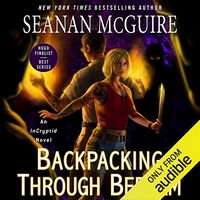
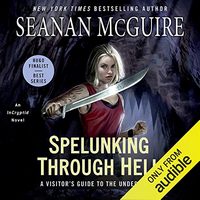
I’m reading (and frequently enjoying) Alexandra Petri’s US History: Important American Documents (I Made Up) by Alexandra Petri and the ARC for Mislaid in Parts Half-Known by Seanan McGuire. I’m also listening to Gone, Baby, Gone by Dennis Lehane, Jonathan Davis (Narrator) on audiobook.
I just finished Ausma Zehanat Khan’s Blood Betrayal—a very solid sequel—and Imaginary Numbers by Seanan McGuire, Emily Bauer (Narrator) on audio. I liked it more the second time around.
On the advice of some of you, my next book should be Guards! Guards! by Terry Pratchett. I think I’ll try Like, Literally, Dude: Arguing for the Good in Bad English by Valerie Fridland, narrated by the author and several others as my next audiobook.
![]()
The MOST Powerful Christmasby JCM Berne
DETAILS: Series: Hybrid Helix Publication Date: The Gnost House Publication Date: December 10, 2023 Format: eBook Length: 58 pgs. Read Date: December 9, 2023

“Can I buy you a drink?”
Rohan hung his head and weighed his options. I could give the predictable, yet overly pedantic response, and say, ‘I don’t know, can you?’ But I think I’ve beaten that joke to death. Then brought it back to life and killed it again.
I could also just refuse, but I don’t want to be rude. Do I?
Or I could let this guy buy me a drink and get pulled into some incredibly sad story of tragedy or revenge or something else where only my help can restore justice or protect his species or save his planet and then I wind up losing another eye fighting someone else’s fight.
Hold on, was this guy talking to me in English?
It’s not often that a Christmas story starts with an opening line like that. Particularly not one starring Santa Claus himself. But isn’t it about time that more do?
Santa has been sent to Rohan for some advice. He’s disillusioned with the whole Christmas thing–or at least his role in it. He’s tired of the creed, the commercialization, the spoiled kids getting more spoiled and the poor kids getting very little, if anything. He’s tried drinking, and other non-St. Nick-like activities to help his spirits, but it’s just no use. He even found a Gideon Bible in a hotel room, and that just made it all worse (but provides a good line about Nakatomi Tower).
Rohan realizes that Christmas is in trouble–and hero that he is, comes up with a way to save the day, help out millions of children, and even bring back a twinkle to Santa’s eye and some merriness to his dimples. IF the two of them–and some friends–can pull it off.
One thing I really appreciate about most modern takes on Santa is the explanations for how he can gain entrance to a home (particularly those with small and/or non-existent Chimneys) and make it to every home in one night. Well, I appreciate the good ones–I get judgemental about others.
I particularly enjoyed the way Berne’s Santa gives Rohan and the rest a peak behind the curtain and spells out his magic. There’s enough logic and science-y gobbledygook mixed in to make it work. It’s playful and yet consistent with the world of Hybrid Helix.
Kris smiled. “You like to make jokes.”
“It’s my one character flaw. Also excessive humility. And counting.”
I’m not saying that JCM Berne is up there with Irving Berlin or Johnny Marks (yet, anyway), but he does fit right in with the number of Jewish writers do a great job of capturing the essence of Christmas.
Ultimately, this is like one of those sit-com Christmas specials where Santa is brought before Judge Harold T. Stone, gets held over for psychiatric care, and strange things start to happen. Or when Tim Taylor and his family hear footsteps on the roof and some bells jingling.* It’s a cute time of holiday cheer and reflection on what the civic holiday means (and how it does/doesn’t match the lifestyle urged by its namesake). Apparently, it is canonical, so completists will want to get their hands on it–I am curious to see how/if anything that happens here shows up in future novel.
* I don’t know if either of those actually happened, but you catch my drift.
Along with the holiday cheer, you get some of that patented snappy-Berne dialogue, which is fun to read no matter the topic, a bit of Rohan in action, and North Pole-inspired ingenuity that’s as good as anything that Sarah Smith/Barry Cook or Clay Kaytis ever produced (Berne’s Santa is worthy of both of them, too). I think I would’ve preferred a little more superhero action “on screen,” but I think it fits better for it to happen off the page to keep the focus on the holiday-antics (also, it would’ve made this a novella rather than a short story).
It’s fun, it’s quick, it’s free…and this time of year, we can all use a little of all three.

![]()
I have to follow up yesterday’s post with this one. Not every picture book is written for kids, some are for all-ages, some are for an older audience. Playing with the format in this way really draws me in. You should check these out.
I meant to buy/read a couple of things this year that would fit here, but I haven’t for whatever reason (mostly buying books for the other list, I guess). So this is really just a slightly edited version of last year’s.
Goodnight Brewby Ann E. Briated, Allie Ogg (Illustrator)
It’s a simple idea–parody Goodnight Moon, replacing the items in the child’s bedroom with the things found in a brewery. Throw in a little educational bit in the end, and you’ve got yourself a fun read for adults.
![]()
P Is for Pterodactyl: The Worst Alphabet Book Everby Raj Haldar, Chris Carpenter, Maria Beddia (Illustrator)
This is funny stuff, good artwork, and correct–but not actually helpful–information. “S is for Seas” and “H is for Heir” for sure–but try using those for spelling something.
My full post about the book.
![]()
A Die Hard Christmas: The Illustrated Holiday Classicby Doogie Horner, JJ Harrison (Illustrator)
The premise: Take Die Hard one of the greatest action films ever made, one of the greatest Christmas movies ever made, and an all-around pop culture touchstone, then turn it into a (NOT for kids) rhyming picture book. A great holiday tradition.
My full post about the book.
![]()
Go the F*** to Sleepby Adam Mansbach, Ricardo Cortés (Illustrator)
There’s not a parent alive that can’t relate to the frustration of the parent in this book. This goes firmly in the “it’s funny because it’s true” arena. The art looks more like something drawn for adult audiences (but not too much) than the rest of this list, which leans toward the kind of thing you’d find in a kid’s book.
![]()
The ABCs of Metallicaby Metallica, Howie Abrams, Michael Kaves (Illustrator)
This one might be good for kids, but I don’t know how much they’d appreciate it. It will appeal to Metallica fans who can be lighthearted about their fandom. Some nice info, cute rhymes, and fun ways to come up with something for every letter. The illustrations are great and (like the text) are kid-friendly and adult-friendly, too.
My full post about the book.
![]()
Mommy Has A Tattooby Phil Padwe
This is actually aimed at a young audience, and probably should’ve gone on that list. But my wife bought this a few years ago, and I typically think of it with the rest of the books on this list. The child at the center of the book is freaked out by seeing (a nice looking) tattoo sleeve on a man in the neighborhood, his mom assures him that tattoos are okay and nothing to be afraid of–utlimately showing him her own ink. It’s a cute book.
![]()
The Adventures of the Princess and Mr. Whiffle: The Thing Beneath The Bed by Patrick Rothfuss, Nate Taylor (Illustrator)
Rothfuss calls this “a dark twist on the classic children’s picture-book. I think of it as Calvin and Hobbes meets Coraline, with some Edward Gorey mixed in.” I love the twist here. The art’s cute–deceptively so–and the story is great. I’d gladly read a handful of these.
![]()

Brock Poulsen is another writer I recently met at the Boise Library!’s Book Faire, I’m very glad he took a few minutes to chat with me then and now. Hope you enjoy this look at writing in Idaho.
Before we get into things, why don’t you give the reader a brief introduction to you and your work.
Hi reader! I’m a genre writer, with stories that run the gamut from fantasy to sci-fi to horror. My main series is called Bizarre Frontier, and it’s my take on a weird western. There’s plenty of magic and lots of monsters, inspired by the folklore of the American west. Five books are out so far, with more on the way! My other stories have appeared in anthologies and online magazines, and I have a collection of short horror stories that was recently released on November 25th.
This seems like a good time to plug the new book—what’s it called, where can people pick it up, etc?
It’s called Gathering Shells and Other Stories, available at godless.com or at Amazon.
What brought you to Idaho in the first place? What is it about Idaho that keeps you here?
I moved to Idaho about 6 years ago, to bring us a little closer to my wife’s family. We’d always enjoyed our visits before moving here, and we stay because it’s beautiful, and the food and people are wonderful!
I think you might be the first to mention the food in relation to this question. I’m tempted to ask several follow-ups about that, but this isn’t that kind of blog. But you’ve got me wondering where you like to tie the feed-bag on (note how cleverly I adopt a Western figure of speech while talking to a Weird Western writer).
Oh, one of my favorite topics! Thai Basil in Meridian is a favorite. If it were financially and physiologically viable, I would replace all the liquids in my life with their yellow curry. It is a triumph of flavor.
I also love getting banh mi from the Baguette Deli, and have eaten an absurd number of tacos from Fiesta Chicken. I’m sure I could go on, but writers aren’t really known for being overly verbose, right?
🙂 Thai Basil has been on our “we should try that” list for a while. I think their yellow curry is in my near-future. Thanks!
Are you tied into some sort of local author/bookish group/culture? If so, tell us about it and how it helps you as an author.
I’m a proud member of the Idaho Writer’s Guild, and I love attending their events. I’ve met several good friends there, and I love getting together and inspiring each other. They host great events with fantastic guests, and I think they’ve helped me become a better writer.
Not surprisingly, you’re not the first to mention IWG. What kind of events do they hold. What are some of the ways they’ve helped you become that better writer? In short, I guess, why should someone in the area check them out?
Writing can feel very lonely, and the social aspects of the IWG are great for counteracting that at least a little bit. Being around other writers is great for working out wrinkles in your story, talking about the craft and logistics, and generally encouraging each other to stick with it. They’ve also had more structured meetups where successful writers have come to talk about some of the more technical and business aspects of being an indie writer. They have helped me get a better grasp on things like advertising and building an audience.
What kind of events in the area do you attend—either to sell/promote your books or to network with authors? Are there any outside of this area that you hit regularly and wish we had something like it here?
I’ve been attending a Creative Writing group at the Cole and Ustick library, which has been awesome for meeting other motivated writers. I’m trying to do more promotion and selling at local events, including the recent Boise Book Faire and the upcoming Krampus Con.
Did the Library’s Faire live up to your expectations? That is, if you had any. Did you learn (from your experience or talking to others) what to do more of or not to do at your next event? In general, what was your experience like? Have you attended Krampus Con (either as an author or just an attendee)–what’s it like? I’ve often wondered, but haven’t fit it into my schedule.
I really wasn’t sure what to expect at the Book Faire, but I loved hanging out with other indies from around the valley. One of my favorite parts was when I had a pretty in-depth conversation about my book series with a nine-year-old girl. She asked such great questions, and it was an absolute delight. That young lady’s parents should be proud of what a sharp literary mind she’s developed.
The tricky thing about local events–and about selling books in general–is getting my stuff in front of the right audience. The stories I write fit into some specific niches, so it’s about finding the right people, which is a challenge.
What’s the breakdown of your audience—do you have a strong local base, or are your readers from other parts of the world?
I have readers spread out all over the world, mostly in the United States, but I’ve sold books to people in Europe as well. I’d love to connect with more local readers, because those in-person connections are amazing. Talking about stories with passionate readers is a thrilling, life-affirming experience, and I love it.
Do you think there are particular challenges or advantages to being a writer in the Treasure Valley? (possibly both)
Writing has the advantage of being a very mobile activity. I can do it from essentially anywhere, and people can access my work from all over the world. Treasure Valley is a smaller market than some, but I think the people here are no less excited about reading. Our library system is amazing, also, which is so good for writers and readers alike.
Do you bring Idaho (or some sort of Idaho-sensibility, assuming one exists) to your work? Whether or not anyone else sees it, can you look at some aspect of your writing and think “That’s Idaho” or “I would do ____ differently if I was a Kentuckian or from Illinois?”
do think my weird westerns have, probably unavoidably, a spirit of the American west that exists strongly in Idaho. My characters are brave and adventurous, they don’t back down from challenges, and they care deeply about their fellow human beings. Those are qualities that I love to see Idaho live up to.
One final question, is there a book (or two…or 18, if you get really carried away), that embodies Idaho/the Idaho spirit to you to recommend to my readers?
This doesn’t have a direct Idaho connection, but Six-Gun Snow White by Catherynne M. Valente was an excellent western take on the Snow White story. Another recent favorite was A House with Good Bones by T. Kingfisher, a scarier book about the perils of returning home, and the way our past can reach into our present.
Interesting picks…I like the thinking behind them (I’ve been meaning to check out that Valente for a while, thanks for the reminder)
Thanks for your time and participation! Hope you enjoyed it!
It was a pleasure, thanks for reaching out!
Readers, be sure to check out the work of Brock Poulsen. His Horror and Weird Westerns look like they could scratch a particular itch or two.

Powered by WordPress & Theme by Anders Norén