Music Monday's originated at The Tattooed Book Geek's fantastic blog and has shown up hither, thither, and yon since then.
![]()

Music Monday's originated at The Tattooed Book Geek's fantastic blog and has shown up hither, thither, and yon since then.
![]()
Fantasy with Friends is a weekly meme hosted by the good people over at Pages Unbound. Fantasy with Friends poses questions each Monday about fantasy, either as a genre as a whole or individual works.
This week’s prompt is:
As with many things, my favorite is the one I’m reading or most recently read. I’ve read so many Dresden Files recently that that’s my answer for now. The Fae Courts that Harry has to navigate (and now represents one of) are a great setup, ripe with drama; to learn (as we do in drips and drabs) what the Courts are up to—and aren’t telling people about—and the details about their inner-workings are just delicious.
But I have a large soft-spot for Toby McGuire’s world, too. And the…oh, wait, the prompt says favorite, not favorites.
What aspects of the Fae are important in a depiction? The impossible beauty, the power (obviously), the inability to lie (and the ever-so-fun ways they devise to deceive with the truth, or carefully selected portions of it), and the danger of iron.
It’s tough to say if I prefer “traditional representations” or something unique. Because I honestly don’t know anymore what’s a “traditional” representation anymore. Everything I can think of falls into unique.* But I’d probably say something unique anyway. That’s the fun thing, isn’t it? Butcher’s take on Wizards, Fae, Vampires, Werewolves, etc. are different than Faith Hunter’s, Drew Hayes’ or Patricia Briggs’. Or, let’s focus on fae: Seanan McGuire’s, Patrick Rothfuss’, and Heather Fawcett’s couldn’t be more different—throw in George MacDonald and you might as well be talking completely different species. It’s great to see the commonalities that all of these share, and the distinctives, too. The idiosyncrasies of each depiction are where the magic lays. You take the “traditional” approach, shave off those aspects you aren’t interested in (or don’t help the story you’re trying to tell), add whatever bits of contemporary feel you want…and bang. You’ve got yourself a wonderful world for story telling.
* This means, as soon as I hit “Schedule” on this post—or, at best, within 24 hours of this posting, I’ll think of at least a half-dozen things I should’ve said here about traditional representations.
I’m sure some of the other posts in response to this prompt will be more thoughtful. I’m looking forward to reading them. Do you have responses to this? (either for the comment section below or from your own post)
![]()
The Goodness of God in the Gift of Scripture: 20 Meditationsby Uche Anizor
DETAILS: Publisher: Crossway Publication Date: January 13, 2026 Format: eARC Length: 224 pg. Read Date: December 21, 2025

This is a brief devotional book—twenty short readings—primarily based on Psalm 119, discussing gifts God communicates through his word.
I really feel like I should have more to say there, but I don’t know how to get into it. The Table of Contents should give you a decent idea of what to expect:
Introduction: Our Good God and the Grace of Scripture
Chapter 1: The Gift of Blessedness
Chapter 2: The Gift of Purity
Chapter 3: The Gift of No Shame
Chapter 4: The Gift of a Wonderful Counselor
Chapter 5: The Gift of Fear
Chapter 6: The Gift of Salvation
Chapter 7: The Gift of Fruitfulness
Chapter 8: The Gift of Warnings
Chapter 9: The Gift of Peace
Chapter 10: The Gift of Understanding
Chapter 11: The Gift of Sight
Chapter 12: The Gift of Nourishment
Chapter 13: The Gift of Strength in Affliction
Chapter 14: The Gift of True Truth
Chapter 15: The Gift of Freedom
Chapter 16: The Gift of Life
Chapter 17: The Gift of Joy
Chapter 18: The Gift of Wisdom
Chapter 19: The Gift of Righteousness
Chapter 20: The Gift of Hope
Epilogue: Opening the Gift
Anizor ends each chapter with selections (not all the same length) from topically appropriate hymns. I’m unfamiliar with all those he picked, but they seemed to be good choices. There’s a concluding thought on the way to react to the chapter’s material. And there are some prayers for the reader’s use at the end of the book, as well.
Given the nature of the book as a devotional, these are all nice touches and help the project. I do wonder occasionally if those end-of-chapter suggested responses could’ve shown a little more trust for the reader, they seemed a little obvious.
My biggest problem with this book is self-inflicted. I didn’t do a thorough enough job of reading the description—the title refers to the “Gift of Scripture” and I focused on that over the part of the description, saying that each reading “focuses on an individual gift that God communicates through his word, such as warnings and wisdom that bring repentance. Readers will explore themes including righteousness, hope, freedom from shame, strength in affliction, and more.” Not that I have a problem with any of that—I absolutely do not. I just went into the book looking for material on the gift of Scripture, not the rest.
The book does an okay job of that frequently, but it’s not the overwhelming theme. It just makes the book feel unfocused. And the lack of focus hurts.
It’s a fine book, I liked the additional material at the end of the chapter and the Epilogue. I just think it could’ve been better—and if it focused on the theme as expressed in the title, I think it would’ve been that much stronger. Still, readers going into it for the right things—looking for what the book really is—will find themselves rewarded.
Disclaimer: I received this eARC from Crossway via NetGalley in exchange for this post—thanks to both for this.

This post contains an affiliate link. If you purchase from it, I will get a small commission at no additional cost to you. As always, the opinions expressed are my own.
![]()
Odds ‘n ends about books and reading that caught my eye this week. You’ve probably seen some/most/all of them, but just in case:
The Lost Art of Reading an Actual Book: What happens when people stop reading books? We’re starting to see what a postliterate society looks like—and it’s very lame.—worth the read just for the metaphor about eating your kids’ Halloween candy.
9 Classic Crime Stories That Have Just Entered the Public Domain in 2026—CrimeReads talks about some BIG titles that are now Public Domain.
Mort Walker, Beetle Bailey, and the decline and fall of newspaper comics
100 Years of ‘The Murder of Roger Ackroyd’: Adrian McKinty celebrates the centenary of Agatha Christie’s groundbreaking detective novel.
Is Fantasy Still Not Taken “Seriously” in Some Circles?—this week’s Fantasy with Friends had a lot of good input, (as I predicted). Go read the participants.
Let’s talk about “grimdark”—some good musings on Grimdark (which is being applied to broadly lately)
Letting Stories Linger—yes.
From Service to Storytelling: Local Vet Publishes Fantasy Novels—a nice little story about a local writer that I hope to make the acquaintance of soon. (at least in print)
26 Short Classics to Meet Your Goal of Reading More Classics in 2026—This could be a handy list
It’s all Your Fault: Book Reviewers who Influence My Reading—The gloves come off, and Jodie calls out book reviewers who deliberately destroy TBR pile progress. Vile folks that you should check out.
Speaking of destroying TBR progress, these Best of ’25 lists should set yours back a bit:
Sifa Elisabeth’s Best Books of 2025
Ganesh’s (Pippin Took) top reads of 2025 (his reasoning behind The Kaiju Preservation Society is very sound)
Jo Linsdell’sBest Reads of 2025
Celeste’s Favorite Books Published in 2025 and Favorite Backlist Books of 2025 show some great taste and burden me with some new titles
My Top 5: Books Read In 2025—For Books Sake pulls of the Herculean task of limiting it to 5!
TCL’s Best of the Best List for 2013-2025!—this is something I could never do…and props to Davida for pulling it off. And the madness is spreading, as Carol takes a stab at it: Best of the Best: 2015 to 2025

My favorite sentence/passage/phrase (or two) that I read this week :
“The Governor was obviously the kind of person who received as much spiritual contentment from berating others as a cold man does from a bowl of soup.”—She Who Became the Sun by SHelley Parker-Chan (so, so much is said in that one sentence)

To help talk about backlist titles (and just for fun), What Was I Talking About 10 Years Ago This Week?
Somehow, these posts didn’t make the transfer to the new domain, so they look a little strange.
The Witch with No Name by Kim Harrison
The Absconded Ambassador by Michael R. Underwood
And I mentioned the releases of: The Last Dream Keeper by Amber Benson and Steal the Sky by Megan E. O’Keefe

This Week’s New Releases that I’m Excited About and/or You’ll Probably See Here Soon:
Through Gates of Garnet and Gold by Seanan McGuire—Nancy returns to Eleanor West’s school on a mission–the world behind her Door is in peril, and her friends may be their last hope. Like just about every book in this series, this one blew me away, as I noted recently.
Fairest Hunter by M.K. Felix—a retelling of Snow White and Robin Hood. Should be a fun mashup.
The Charmed Library by Jennifer Moorman—”A cozy, Hallmark-esque rom-com, The Charmed Library invites readers to escape to a world where words come alive and book boyfriends leap off the page.” Go read what the Witty & Sarcastic Book Club had to say about it.
Ms. Marvel: Remnants of the Past by Saadia Faruqi—Kamala Khan is off to Pakistan on a hunt for a magical artifact. ‘Nuff said.


Finally, we’re at the end of my 2025 wrap-up. Thanks for sticking with me for so long! (assuming you have). I’ve taken to considering this genre apart from everything else when I put together my Favorites Lists, or just about everything else would get ignored. Even if I went with a Top 20 instead of a Favorite 10, maybe 5 books from the previous lists would’ve made it along with all of these. Maybe.
Once again, I’ll note that I limit my lists to things I read for the first time. Yes, there are some author names on here that have been on a couple of these lately. Under half the list. It wouldn’t surprise me if any of these showed up in the years to come. I might have to retire some authors from consideration. Maybe this list should be renamed “S.A. Cosby, M.W. Craven, and some others.”
As always, re-reads don’t count for these lists.
(in alphabetical order by author)
King of Ashesby S.A. Cosby
This was a twisted, gripping, read about a group of siblings trapped (and shaped) by a shared trauma from their childhood. Now adults, they find themselves trapped in a deal with a local gang of drug dealers, and the only way out may be to become worse than them. Told with Cosby’s signature style and humanity, this will leave you in a daze.
The Final Vowby M.W. Craven
This is a lighter book than the last couple of Poe and Tilly novels–but that doesn’t make it less compelling to read. Just a little more fun, and probably won’t leave you haunted and unable to get a good night’s sleep right away. It definitely sets a new direction for the series. But none of that matters. This is M.W. Craven at the top of his game–he sets a puzzle worthy of Poe and Tilly, puts some big obstacles in their way, and let’s the reader sit back and revel in it. Who could ask for more?
Everybody KnowsMy original post
This is one of the best and starkest depictions of human depravity and the dangers those who dare to stand against it will face. The only thing that makes this experience entertaining is Harper’s prose and fantastic pacing. It left me speechless.
Don’t Tell Me How to DieMy original post
This is a devilishly clever story that’s also emotionally effective. I mean, part of the book’s premise is that the protagonist’s mother died young. Early in the novel, we flashback to that, and I got choked up. I knew the woman was dead before I started the book, and it still got me. Just imagine what the book did to me by the end. As far as the rest of the story goes–the less I say, the better it is for a potential reader. But it’s a doozy–a new kind of story for Marshall Karp and just as good (if not better) as his previous best.
Where the Bones LieMy original post
Kolakowski brings us a little L.A.-noir here with this book–a former Hollywood fixer gets a shot at a new life when someone hires him to find out why her father died many years ago. The interplay between the protagonists is great to read, the mystery is compelling, and the contemporary California-ness of the setting is so real (geographically, environmentally, and in the entertainment industry). It’s a really strong work from Kolakowski.
The Broken Detectiveby Joel Nedecky
My original post
We move from L.A.-noir to Winnipeg-noir, which is a thing (apparently). This tale of broken detectives hunting for one particular broken woman in the midst of crime, corruption, and the worst of humanity grabs you in the first couple of pages and won’t let go until a couple of days after you finish. It’s one of the most satisfying endings I read last year, too.
Second Lies the SonMy original post
Here’s another haunting read–Matt Phillips is one of those writers that I just want to read the prose of. The plot and characters don’t matter as much to me as the experience of reading Phillips. But, he always comes through with characters and plot that matter as much as you want, too. This is a fast, lean novel that will leave you moved (disturbed might be a better word) and chewing on it for days.
Dark Neon & Dirtby Thomas Trang
My original post
And now we’re back to L.A.-noir…Trang’s debut is the kind of assured, nervy book that is a delight to find. You’ve got dirty (or at least compromised) cops, professional thieves, and a collection of coincidences that entwine them in more ways than they find comfortable. The diallogue is fantasitc. The whole things feels like a slick Winslow novel as cool as Miami Vice was at its height.
One Death at a Timeby Abbi Waxman
My original post
Abbi Waxman’s first mystery novel proves (to me, anyway) that she can write anything. The mystery portion of the novel is really well done; the characters are well-designed and well-executed, the relationships between them are strong and obvious—you like the people you’re supposed to like enough that you wish you sat around the room with them, watching them go back and forth Also, it’s funny. That’s a one-two-three combination that I’ll always enjoy and recommend.
The Bang-Bang Sistersby Rio Youers, Kristen Sieh (Narrator)
My original post
This rollicking adventure captures the spirit of music and live performance (and inter-band dynamics) as…well, any rock novel I can think of. There’s a serial killer equal to Francis Dolarhyde; a violent, kill-or-be-killed, “game” as nasty as Chain-Gang All-Stars; and three great women characters with all the style, skill, and general badassery as The Deadly Viper squad–all in a book with the violence level equal to—if not greater than—Kill Bill, Vol. 1. It’s got the pacing of a classic rock song—with occasional bursts of speed metal–it’s fast, it’s furious, it’s bloody, it’s raw emotion, it’s dangerous. It is so much fun. It is Rock and Roll.
A few books that almost made this list, and I want to be sure to mention:
Mississippi Blue 42 by Eli Cranor; Medusa Protocol by Rob Hart, Righteous Trash by Nick Kolakowski; and The World Entire by Jo Perry.
![]()
I’m excited talk about today’s release of (literary local) M.K. Felix’s Fairest Hunter. I’ve chatted with her a couple of times, and this sounds like a fun take on Snow White and Robin Hood both. I’m happy that I can finally own it (and very likely read it in the next 7 months at the rate I move). Here’s a little more about it to get you interested.
Title: Fairest Hunter by M.K. Felix
Title: The Favored’s Curse, Book One
Format: Hardcover/Paperback/eBook
Length: 353 pg.
US Publication Date: January 9, 2026

A rebellious huntress. A cursed prince. A coup to change it all.
Rowena:
The king spreads darkness with his words, and when he asks me to kill his own son, it’s the final tipping point for me. Guess that solves the issue of how to overthrow the tyrant. We’ll put Prince Alvor on the throne. Except, the Alvor before me is not the same one I knew growing up. This Alvor, well he’s entirely too alluring. He keeps tearing my walls down, reminding me that I’m not the only one who needs to fight for this kingdom.
Alvor:
With one glance into Rowena’s eyes, something changed. She has magic, and the more I reconnect with her, the more I’m sure she’s the key to saving our kingdom. But time is not on our side. I need to claim the throne before my father drives our kingdom into the ground with his greed. The only problem? I’m not ready to let Rowena sacrifice herself for me or my people. Especially not after she broke my curse and rekindled the sparks in my heart.
Hardcover ~ Paperback ~ eBook ~ Free Companion Novella: Lady Scarlett

Idaho mom writing clean ✨FANTASY✨
Website ~ Instagram ~ Facebook ~ Linktree
![]()

Back when I started this site, I knew the content would be largely “genre”-oriented. I’d have wagered the content would be roughly 1/3 Mystery/Detective fiction, 1/3 Urban Fantasy, and slightly less than 1/3 SFF, with “non-genre” fiction, humor, and non-fiction being enough to make my one-thirds just an approximation (honestly, if you asked me what I read regularly, that’s pretty much how I’d describe it today). Actual numbers show that’s wrong—it’s typically almost 40% Crime/Thriller Fiction, the rest of fiction is around 30% combined. This is just a long-winded way to get to these two points: because Crime Fiction takes such a big chunk of my reading, it gets its own “Favorite” list, but none of the others really garner enough numbers for their own. This year, however, the numbers are a bit more even gross-genres, but…the practice has been set. We’ll see what next year brings.
When it comes to this particular list of favorites this year, I just couldn’t get lower than 11 (I’m thankful I made it lower than 24). But as this is a catch-all, I figure I can be a little loose with the numbers. So here’s my list of 11 favorite non-Crime Fiction Novels of 2024. Hopefully, you will find something here to tempt you.
As always, re-reads don’t count—only the works that were new to me.
(in alphabetical order by author)
The Goblin EmporerTo say I was daunted by the incredibly detailed pronunciation guide and information about names before the novel is to put it mildly, but that went away almost immediately. This is a wonderful work–such an intricate web of courtly manners and rules (written and unwritten), a murder plot, a coup or two, and some geeky engineers. Okay, that’s a bad way to try to describe this. I read this a couple of months ago, and already want to re-read it. Once I got into this novel I didn’t want to leave.
Light from Uncommon Starsby Ryka Aoki
Words fail me as I try to talk about this contemporary Fantasy about a woman whose way out of a Faustian bargain depends on her damning others. And it turns out that I really liked this woman, and hoped she’d get that last soul. Just not the one she’s decided to use to fulfill the bargain, because this one should be protected and nurtured. Oh, and there’s a bunch of aliens on the run from an intergalactic conflict.
This book made me happy–it delighted me in the description of music, in fact. It broke my heart. It made me tense. It filled me with hope. There might be books on the lists this week that are better technically, but I’m not sure any of them worked on my heart the way that this one did.
Anxious PeopleOf this books that made me laugh this year, this is probably in the top 3. It’s also the book that probably made me think of fatherhood more than any other. And marriage. And all the ways we can let each other down, and the hope that exists for the next time when we don’t.
It’s Backman, so you know he’ll be funny. You know he’ll tug at your heartstrings. You know he’ll make you think. He does that, and more–because he throws in some small town cops, a bank robbery that went wrong, and a bunch of hostages. If I stopped reading after this one in February, I’d have called 2025 a good year for reading (although I’d have been so bored for the remaining 10 months, it’s good I didn’t).
A Drop of CorruptionMy original post
This is simply a perfect follow-up to The Tainted Cup–new strangeness to explore in this world, new depravities to be seen, new political machinations to watch, new opportunities for Ana Dolabra’s brilliance (and strange way of seeing the world) to shine–yet entirely of a piece with the first book. A Drop of Corruption is another fantastic mystery/fantasy hybrid. Like so many of the others on this list, superlatives fail me.
Five Broken Bladesby Mai Corland
I love the set-up to this book–a bunch of killers of varying in strengths and modus operandi are brought together for one joint-job. And one of them is a traitor. And the reader doesn’t know (but we can guess, and will) who the traitor is, why they’re doing it and more.
I liked this one so much that I bought the hardcovers for the rest of the trilogy right after finishing. I never do that.
I’ve seen some criticisms of the work–and some of them have merit. But while I was reading it? I was so taken in that I didn’t notice any of them. And now? I don’t care about any of the criticism, I had so much fun with this book that you could tell me that I’m the only one in the world who likes it and I’d be fine with it. (I’d also know you were lying, but that’s okay)
DoggedThis is a violent, grisly novel about an empire on the brink of ruin–and the devastation this wreaks on the populace. It is also one of the most heartwarming tales I’ve read this year about loyalty, determination, and doing what’s right for those important to you.
The central character just might be the character of the year for me–she embodies so much of what I love in a noble warrior character.
This book made my month in December–and I read a lot of books that I really enjoyed. But while I was reading this one, almost everything I’d read last year paled in comparison (including every other item on this list).
It sucks you in, it tells a perfect story in an almost perfect way–and makes you want more. I don’t want a sequel, it’s a wonderful stand-alone. I just want a half-dozen books just like it.
Mushroom BluesMy original post
A Police Procedural set in a world with Earth-like technology and laws. However, it’s inhabited with humans and a sapient, humanoid, fungal species. Basically, humanoid Mushrooms. It’s hard to explain.
The mystery/police procedural part of this was great. The alternate world was outstanding. The worldbuilding is top-notch. The primary and secondary characters were drawn so wonderfully. The motives for the crimes (and the crime fighting) were complex and messy—and almost entirely understandable. The genre-hybrid of this feels entirely natural to an extent that you can almost wonder why anyone hasn’t been approaching these genres in a similar fashion for decades.
Gibson’s scheduled to get a sequel out this year. I’m going to be at the front of the line for it.
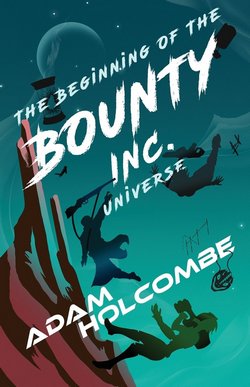
Bounty Inc.My original post
This book is a space opera/SF adventure. With intrigue, action, strangeness, betrayal, and more. It’s what you expect from this kind of book—and it delivers that well. But I can also describe it as a wholesome, found family, cozy-ish, feel-good novel at its core. With an earnest spirit that reaches every corner of the book.
Is the big romantic arc entirely predictable? Yes. Is it effective, sweet, and wholly satisfying? Yup. Will you get gut-punched by what happens to some of these characters? Yup. (I didn’t say it was cozy, I said it had that heart, bad things happen). Will you cheer at parts of the action? Yes. Will you be dismayed by some of the twists? Yup. Will you want this pretty long book to be longer? YUP.
Satisfying on several levels. Fantastic action. Strange alien species. And entertaining on every page.
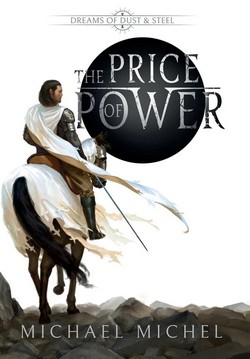
The Price of PowerMy original post
I read four books this year that I might have described as “one of my favorite fantasy novels” at one point. It’s a hotly competitive rank apparently. This is one of those. And that thumbnail review is still true.
This is a gritty, intense read following four primary characters (and a couple of others nearby each of them). The world it sets up and introduces us to is teetering on the brink of civic upheaval and all-out war. And something tells me those’ll be the easier problems to deal with. Book three releases in a couple of weeks not and my anticipation level is high.
My Documentsby Kevin Nguyen
My original post
This is a timely work about the complete internment of Vietnamese-Americans following some terrorist strikes. It is chilling. It’s occasionally joyful (usually as a precursor something utterly absent of joy, but also as a reminder of its importance).
This is a powerful, haunting, (purposefully) uncomfortable read that will also charm you. It’s been residing in a corner of my mind since I read it, and I keep almost making references to it when talking to others about current events as if it’s something in our shared cultural moment. It’s impact is going to last a while in my mind–and I’d recommend you let it impact yours, too.
The Amazing Twin Chicken Freedom FightersMy original post
This is either brilliant or the ravings of a madman. Possibly both.
It is absurd in every way. It’s hilarious on several levels–from very low-brow to philosophical riffs. Sole plays with narrative, meaning, reality…and I don’t know what all, really. If I was pursuing some sort of English degree right now, I’d be using this (and the promised sequel) as the foundation for a few papers.
It can also be read as twisted fun–you’d be missing a lot, but you’d have a great time.
A few books that almost made this list and I want to be sure to mention:
Parable of the Sower by Octavia E Butler, The Bright Sword by Lev Grossman, Bones & Betrayals: Silence of the Dead by Andi Ewington & Erica Marks, Grace and Henry’s Holiday Movie Marathon by Mathew Norman, Futuristic Violence and Fancy Suits by Jason Pargin, and How to Become the Dark Lord and Die Trying by Django Wexler.
![]()
Head & Shoulders used to tell us that, “You never get a second chance to make a first impression.” That’s true for wearing dark shirts, and it’s especially true for books. Sometimes the characters will hook the reader, sometimes the premise, sometimes it’s just knowing the author—but nothing beats a great opening for getting a reader to commit.

Ask anyone who has a dog and they’ll tell you that their dog is the best. Really, truly, the best dog in the world. Theirs is the best dog that ever lived, ever, ever, in the history of the known universe.
“But what if the person has two dogs, three dogs, eight dogs?” you ask.
Well, each one is still the best.
That’s how it feels. They are all the best dogs. You need to say “best” to be expressing what you feel about your dog.
Yeah, it’s not logical.
from All the Best Dogs by Emily Jenkins

Powered by WordPress & Theme by Anders Norén
My Favorite Theology/Christian Living Books of 2025
By HCNewton
On January 11, 2026
In News/Misc., Theology/Christian Living
It’s finally time to wrap these lists, with my favorites in Theology and Christian Living (and related things). There’s some overlap in some of these titles, which just shows what kinds of things I was thinking about this year, I guess. I didn’t read as many books along these lines as I expected to/usually do–mostly because the ones I did read took some work to get through (and I had too many “project reads”). But these would’ve floated to the top in any year.
As always, re-reads don’t count for these lists.
(in alphabetical order by author)
by Michael P. V. Barrett
Barrett writes brief devotional meditations on some Old Testament passages (I’m not sure how brief because I read electronically, but they didn’t take terribly long to read). Which is good enough for a book–but Barrett writes with a depth that I don’t think I’ve come across in a devotional before. He gets to the heart and the nitty-gritty of the passages he looks at–and writes in a way that the reader will find application for their life, understanding of the passage, and a new/renewed reason to worship and serve the One who bought them.
The only thing that impressed me–almost every week–as much as the content was Barret’s ability to accomplish it so briefly.
by Mitchell L. Chase
My original post
I personally benefited from Chase’s definition of “wisdom” and how to find it in Scripture. I really appreciated his unwillingness to make Proverbs, Ecclesiastes, Song of Songs, and James the epicenter of his discussion, but to look for it throughout the Scriptures (see above). Tackling the topic of wisdom from a Redemptive Historical point of view rather than a Systematic perspective (which is what I’m used to, as I expect most are), really helped me to see the breadth of it—and even to help with my Systematic understanding of it (as it should).
All in all, this is a truly helpful and insightful read.
Why the Love of Money Is the Root of Racism and How the Church Can Create a New Way Forward
by Malcolm Foley
I’ve tried on at least four occasions to write a post about this book, and keep failing. I’m going to keep trying, but in the meantime, I’ll just say that this is one of the best books I read in 2025 regardless of genre/topic. Foley starts with Ida Wells’ point tying racism to money, and expands on that. He traces the connection between the love of money (which we know to be the root of all sorts of evil) and racism/racism-friendly policies and attitudes throughout U.S. History–particularly after the Civil War. And how the Church, to her shame, participates in those.
Then he points the way forward–using a variety of theological tools. Including the Westminster Larger Catechism’s teaching on the Eighth Commandment. It’s inspiring, it’s convicting, it’s full of hope.
by Carmen Joy Imes
My original post
Is this the most rigorous, robust work that I’ve ever read on The Church? No. Is this the most technical, theological work I’ve come across? No. Did this take a lot of effort to get through? No (and what a relief). Is this perhaps the most passionate work on the subject I’ve read? Yes. Is it perhaps the most persuasive about the need for individual believers (particularly in an individualist culture) to be involved with the Church? Also, yes.
It’s warm, it’s approachable, it’s learned in a non-off-putting way. Imes is a great guide through the topic and a fun companion through the stroll. She pointed out some things I hadn’t thought of before—and helped me grasp a couple of texts that I’ve struggled with for years.
by C. S. Lewis
There’s a lot of this book that I disagree with–but I appreciate the way that Lewis got to his conclusions. I also admit that Lewis might be closer to right than I am on those points. But the opening letter on prayer is one of the best things I’ve read on the topic, and while the rest of the book doesn’t reach those heights, I truly enjoyed and benefited from considering them. This is one of those books by him I hadn’t gotten around to reading in the past until my little Lewis-immersion project last year. It won’t be the last time.
by Zacharias Ursinus
As this is written by one of the chief authors of the Heidelberg Catechism, it’s impossible to get a more authoritative take on it. This is essentially the director’s cut of the catechism. Sure, we all know the answers, but how’d you get to that answer? Well, you think like so….
This is a treasure for anyone trying to understand and use the Heidelberg Catechism for personal use or for trying to raise the generation to follow.
by Drew Poplin
My original post
I hate the fact that books decrying the sin (or, in Poplin’s argument, heresy) of racism need to be written now. But the need for them is pretty clear to anyone in the American Church. This brief (perhaps too brief) book is a compelling read, calling racism what it is, an attack on God and His creation. Convicting, and hopefully convincing. It’s well worth the time to read.
by O. Palmer Robertson
Did this floor me as much as the first volume of this set (on the Gospels) did? Nope. But am I going to study Acts or Paul’s letters without consulting this in the future? Bigger nope. Robertson first traces the development of revelation and the Church’s understanding of it through Acts, then he spends the bulk of the book watching Paul’s themes develop and change over the course of his career–never contradictory, never inconsistent, but starting with certain emphases that develop into new ones given the events of his life and the needs of the Church throughout the First Century. It’s really a handy book to work through and to keep on hand for future use.
by Mikel Del Rosario
My original post
Del Rosario’s approach to the subject alone could put him on this list–let’s take an in-depth look at two passages and see what Jesus is claiming for himself in both. Let’s consider what the original audience heard–and seek to understand that by the way they reacted. Then let’s consider the implications of both. Del Rosario writes clearly and compellingly. The text—even when it gets technical—is straightforward and approachable by people who aren’t historical scholars.
Not only does reading this help buttress the confidence a reader has in the passage and Jesus’ claims in them, but Del Rosario gives his readers a model to follow when they come across similar passages.
by Cornelius Van Til
My original post
This is some pretty clear writing from a man widely considered not to be terribly clear all the time. Some of the commandments don’t get the same level of attention as others–and it makes sense given who Van Til is and his own driving focus.
It’s a very sound introduction, in line with the bulk of the Reformed stream of thought on the Law and its usage from the time of the Reformation forward. But a little more approachable given the length and the fact it was written in the 20th Century.