Author: HCNewton Page 161 of 609

Grandpappy’s Corner: Little Aiden – A Love Book for Toddlers by Albert and Anna Choi, Bettina Braskó (Illustrator): Will Make You Say, “Awwww.”

I’m posting about the two books (so far) in the Little Aiden series today, which is turning into a bigger challenge than I expected. The two books are pretty similar in terms of style, quality, etc. So, yeah, the second post might sound a lot like the first—occasionally I’m just going to copy and paste. Sorry about that. But they should be different enough to justify your time as well as mine.


Little Aiden - A Love Book for Toddlers

Little Aiden – A Love Book for Toddlers

by Albert and Anna Choi, Bettina Braskó (Illustrator)

DETAILS:
Series: Little Aiden 
Publisher: Mytogo Publishing
Publication Date: May 22, 2023
Format: eBook
Length: 41 pg.
Read Date: June 10, 2023

What’s Little Aiden – A Love Book for Toddlers About?

This book is basically someone* narrating a day in Aiden’s life (or a bunch of activities over a few days), assuring him of their love in all the things he’s up to—when he’s being brave, when he’s being calm, when he’s sad, anxious, scared, and so on. All throughout the day and with a promise that this love will continue.

*Presumably his mother, given the art—although you could make the case that it’s from the point of view of the dad seeing both of them. It really doesn’t matter.

Let’s Talk about the Art for a Minute

The art is as adorable and eye-catching here as it was in the other Little Aiden book. Fantastic expressions, great background illustrations, etc. These are going to be very fun for a toddler—and whoever is reading with the toddler—to stop and talk about.

Braskó’s use of Aiden’s teddy bear is fantastic, once I saw what she did on the “Brave” illustration I had to go back through the whole book just looking for what was going on with the bear. (adding the rest of the toys to the mix on the “Confident” page was great, too)

I like her use of the first Little Aiden book here—that was such a nice touch. I wonder how many toddlers will notice?

Be sure to check out some of the samples on Braskó’s website.

How is it to Read Aloud?

I don’t mean this in a bad way—but this isn’t going to do much for the adult reader. It’s a simple and repetitive text. You don’t get to do any fun rhymes, tongue twisters, silly voices, or goofy noises (well, maybe a couple). And it’s okay, because it’s not that kind of book.

It’s the kind of book that’s intentionally repetitive—this is how you can help the child learn. It’s written simply for the same reason. Short and clear sentences that make it easy to grasp the point.

It’s also the kind of book that’s easy to stop reading to discuss—what Aiden is doing, the art, what his Teddy Bear is doing (alongside or in contrast to Aiden), or whatever. And that’s where the engagement for the adult reader is going to come in.

And, hey, some of the pages serve as a good reminder to the adult that it’s okay for the toddler to be frustrated and angry—because it’s really easy for parents/caretakers to forget that sometimes. It’s good for us to vocalize that.

So, what did I think about Little Aiden – A Love Book for Toddlers?

This is just so sweet. There’s some fun to be had (primarily from Braskó’s art, because the text is earnest), but it’s largely warm and sweet reminders of a parent’s affections.

It just made me melt, it’ll likely do the same for you.

It’ll be a great springboard for a parent/grandparent/caregiver to use to talk about all the different ways and times they love the toddler they’re reading with—and who can’t use something like that?

Another heartily recommended book from this series.


4 Stars

Grandpappy Icon

Grandpappy’s Corner: Little Aiden – A Feelings Book for Toddlers by Albert and Anna Choi, Bettina Braskó (Illustrator): Nothing Less than Feelings

I’m posting about the two books (so far) in the Little Aiden series today, which is turning into a bigger challenge than I expected. The two books are pretty similar in terms of style, quality, etc. So, yeah, the second post might sound a lot like the first—occasionally I’m just going to copy and paste. Sorry about that. But they should be different enough to justify your time as well as mine.


Little Aiden - A Feelings Book for Toddlers

Little Aiden – A Feelings Book for Toddlers

by Albert and Anna Choi, Bettina Braskó (Illustrator)

DETAILS:
Series: Little Aiden 
Publisher: Mytogo Publishing
Publication Date: December 17, 2022
Format: eBook
Length: 41 pg.
Read Date: June 10, 2023

What’s Little Aiden – A Feelings Book for Toddlers About?

There’s one simple point to this book:

It is okay to have feelings.

It’s the first sentence and that sentiment is repeated fourteen times over the book as we follow Aiden through a bunch of scenarios where he’s feeling things that kids can identify with. Scared, tired, happy, playful, silly, helpless, and more.

Let’s Talk about the Art for a Minute

Little Aiden’s expressions are clearit’s a piece of cake to tell what he’s feeling, even for a little one just trying to put words to facial expressions.

But I think Braskó’s real strength is in the rest of the illustrationswhat’s Aiden’s body doing with the feeling? What’s going on around him? Is there a mess? Does he have toys? How’s he interacting with his environment? Those really help fill out the ideas of the book.

These are going to be very fun for a toddlerand whoever is reading with the toddlerto stop and talk about. “He’s sure a messy eater, isn’t he? What’s that on the floor there next to his sippy cup? What’s that on his face?”

The illustration that goes with embarrassed is probably my favorite (and that probably says something about my maturity level).

Be sure to check out some of the samples on Braskó’s website.

How is it to Read Aloud?

I don’t mean this in a bad waybut this isn’t going to do much for the adult reader. It’s a simple and repetitive text. You don’t get to do any fun rhymes, tongue twisters, silly voices, or goofy noises (well, maybe a couple). And that’s okay, because it’s not that kind of book.

It’s the kind of book that’s intentionally repetitivethis is how you can help the child learn. It’s written simply for the same reason. Short and clear sentences that make it easy to grasp the point.

It’s also the kind of book that’s easy to stop reading to discussthe feeling in question, the art, or whatever. And that’s where the engagement for the adult reader is going to come in.

And, hey, some of the pages serve as a good reminder to the adult that it’s okay for the toddler to be frustrated and angrybecause it’s really easy for parents/caretakers to forget that sometimes. It’s good for us to vocalize that.

So, what did I think about Little Aiden – A Feelings Book for Toddlers?

Feelings can be scarysometimes a toddler isn’t sure why they’re having the emotional reaction they are, sometimes a toddler can see the adults around them reacting to the toddler’s emotions in a way that can be frightening or off-putting, sometimes a toddler doesn’t like the way an emotion makes them feel. It doesn’t do much good to assure the toddler that it doesn’t get much better sometimes as an adult.

But what you can assure them of is that it’s okay to feel things. The Chois have given toddlers a handy and helpful book to tell them this. As they read and re-read it with someone they trust they can examine these feelings and get the reminderor get the lessonthat it’s okay to feel emotions.

How to react to those emotions is a talk for a different timebut for now, it’s about being okay with having and feeling them.

I heartily recommend this book.


4 Stars

Grandpappy Icon

I Was On a Thing: Let Me Tell You a Story – Episode 140

Let Me Tell You a Story Podcast
Once again, I have Podcasted—I’m still not sure if that’s the right conjugation?—I have Podcast? I have committed Podcast? I have appeared on a podcast, I guess is the way to put it.

A while ago, Friend of the Blog, Becky Lyles who took part in A Q&A About Writing in Idaho earlier this year—and will appear here at least once more this summer, invited me onto the podcast she does with her husband. It’s called Let Me Tell You a Story, and you should check it out. I’ve listened to a dozen or so episodes, and they’re all very pleasant chats. It seemed strange to me to get the invitation—they typically interview authors or people who have done/are doing something interesting with their lives—usually a combination of those. And I…well, am not that.

But whatever, I went for it.

The official description of the episode is:

We often invite authors to talk with us on this podcast, but today we’re speaking with one of the many people authors value the most—readers! H.C. Newton is not only an avid, and I mean avid reader, he hosts a blog and a website called The Irresponsible Reader that’s all about books and their authors.

They had me over to their home and we spent a little less than an hour chatting about my reading habits, the blog, and whatnot. And then (unless it was cut because they wanted something more coherent), I monologued a bit at the end. In that monologue, you can see why I tank most job interviews (I left off about half of my mental outline—outlining while talking is a bad idea).

Regardless, I had a great time doing it and I hope most of their subscribers don’t spend too much time wondering why Steve and Becky inflicted me on their ears. Give it a listen and maybe subscribe to Let Me Tell You a Story. And while you’re at it, give it an extra listen for me, because I just cannot do that.

It’s Great to Suck at Something (Audiobook) by Karen Rinaldi: The Book Isn’t Quite Proof of the Title, But…

It's Great to Suck at SomethingIt’s Great to Suck at Something:
The Unexpected Joy of Wiping Out and What It Can Teach Us About Patience, Resilience, and the Stuff that Really Matters

by Karen Rinaldi

DETAILS:
Publisher: Simon & Schuster Audio
Publication Date: May 07, 2019
Format: Unabridged Audiobook
Length: 7 hrs., 15 min.
Read Date: June 12, 2023


What’s It’s Great to Suck at Something About?

The Publisher’s Description is:

When was the last time you tried something new? Something that won’t make you more productive, make you more money, or check anything off your to-do list? Something you’re really, really bad at, but that brought you joy?

Odds are, not recently. We live in a time of aspirational psychoses. We humblebrag about how hard we work and we prioritize productivity over happiness. Even kids don’t play for the sake of playing anymore: they’re building blocks to build the ideal college application. We’re told to be the best or nothing at all. We’re trapped in an epic and farcical quest for perfection and it’s all making us more anxious and depressed than ever.

This book provides the antidote. (It’s Great to) Suck at Something “shows how joy and growth come from risking failure and letting go of perfectionism” (The Wall Street Journal). Drawing on her personal experience sucking at surfing (a sport Karen Rinaldi’s dedicated nearly two decades of her life to doing without ever coming close to getting good at it) along with philosophy, literature, and the latest science, Rinaldi explores sucking as a lost art we must reclaim for our health and our sanity and helps us find the way to our own riotous suck-ability. Sucking at something rewires our brain in positive ways, helps us cultivate grit, and inspires us to find joy in the process, without obsessing about the destination. Ultimately, it gives you freedom: the freedom to suck without caring is revelatory.

My description would be—Rinaldi is a devoted surfer. That doesn’t mean that she’s a good one—she has witnesses and video evidence to back that up. But she doesn’t care—she still loves it. In fact, she’s learned a lot about herself—and probably about the way people tick—from being a lousy surfer, and now she has some good advice to share about being lousy at things (and continuing to do them). She weaves this advice with a semi-meandering recounting of her surfing career in the pages of this book.

A Quick Word About the Narration

Rinaldi’s narration on this was really good—I’d listen to her narrate another book easily. Maybe it’s easier because it’s her book and she knows the emotions she’s trying to evoke—but I’ve heard enough authors not know how to do that for me to really believe it.

So, what did I think about It’s Great to Suck at Something?

I should start by saying that I’m 100% on board with Rinaldi’s central thesis and think it’s something that more people need to embrace and practice. I just have problems with most of the rest of the book.

We’ve all been to those “meetings that could’ve been an email,” right?* As I was listening I kept thinking—this is a book that could’ve been an article. Maybe a series of them. Or a few blog posts. But it had no business being a book.

Of course, not at my current job. I’m talking exclusively about previous positions.

Or at least not this book. If this had been sold as a “memoir of a lousy but committed surfer with some advice you can apply to your own passions/hobbies.” It would’ve been fine. The book wasn’t about the benefits of sucking at things, it was about a big part of Rinaldi’s life, and through it she offered some observations on the human condition—some of which she can offer footnotes to.

The book really didn’t need the turn to spirituality it took toward the end. It was very out of place.

Trim the personal anecdotes to anecdotes/illustrations, amp up the advice (and the reasons for it) and you’ve got a decent, albeit shorter, book. But as it is, it’s hard for me to say that a reader or listener isn’t wasting their time.


2 Stars

This post contains an affiliate link. If you purchase from it, I will get a small commission at no additional cost to you. As always, the opinions expressed are my own.

PUB DAY REPOST: 100 Places to See After You Die by Ken Jennings: The Tour Guide No One Wants, But Everyone Needs

100 Places to See After You Die100 Places to See After You Die:
A Travel Guide to the Afterlife

by Ken Jennings

DETAILS:
Publisher: Scribner Book Company
Publication Date: June 13, 2023
Format: eARC
Length: 304 pg.
Read Date: May 24-26, 2023


What’s 100 Places to See After You Die About?

Ken Jennings provides a handy tour guide through one hundred visions of the afterlife for the modern reader. Complete with tips on places to see, areas to avoid, local lingo, bits of trivia, dining tips, and so on, it’s just the kind of thing you’re going to want to peruse before you shuffle off this mortal coil, so you know where to go.

The book is broken down into: Mythology, Religion, Books, Movies, Music and Theater, and Miscellaneous. Then (alphabetically) Jennings looks at a variety of afterlife locales in each category.

For example, the Books section covers:

Aslan’s Country • The Bridge • The Cemetery • The Empyrean • The Five Lessons • Half-Life • The Inbetween • Inferno • The Kingdom • King’s Cross • Mansoul • The Null • Pandemonium • Paradiso • The Parish • Purgatorio • Riverworld • The Third Sphere • The Time Bubble • The Undying Lands • The Valley of the Shadow of Life*

* From Lewis’ The Chronicles of Narnia and The Great Divorce; O’Connor’s story “Revelation”; Saunders’ Lincoln in the Bardo; Milton’s Paradise Lost; Albom’s The Five People You Meet in Heaven; Dick’s Ubik; Sebold’s The Lovely Bones; Dante’s The Divine Comedy; Twain’s “Captain Stormfield’s Visit to Heaven”; Rowling’s Harry Potter; Moore’s Jerusalem; King’s Revival; O’Brien/O’Nolan’s The Third Policeman; Farmer’s Riverworld; Matheson’s What Dreams May Come; Oliver’s The Time Bubble; and Tolkien’s The Lord of the Rings.

Jennings describes each place with wit, humor, Dad Jokes, puns, irreverence, and plenty of facts.

Dancing Through a Minefield

It’s one thing to talk about places like Valhalla, Hades, The Bad Place, Bill & Ted’s Bogus destination, or Futurama‘s Robot Hell in a light-hearted or flippant fashion. It’s an entirely different can of worms to discuss the LDS Three Kingdoms of Glory, Jannah, Jahannam, Ariel Toll Houses/Telonia, and so on—in the same tone.

I will not say that Jennings was able to fully succeed in discussing the afterlives described in some major religions in an unoffensive manner. Primarily because I’m not an adherent of any of the religions he discussed, so my tolerance for that is really high. Had he tackled something I believe in, I very well could’ve been at risk of insult.

That said, I think he did okay. Yes, he walks close to irreverent. But he maintains a decent degree of respect. The humor largely comes from the way he describes the beliefs not at the expense of an article of faith.

Still, some people might want to skip over a chapter or two if they’re worried about getting their toes stepped on. (but those people probably aren’t going to be reading this book in the first place)

A Few Highlights

Ohhh, there are just so many.

The Books section was my favorite—followed closely by Movies and Television—this is the kind of thing I blog about, think about, and so on, so it makes sense that those sections resonated with me most. The Books section, in particular, discussed portions of those works in ways I could really sink my teeth into.

But there were multiple highlights in each section—I learned a lot about D&D, I couldn’t help singing “Ghost Riders in the Sky” during that chapter, I think he pointed out a good plot hole in It’s a Wonderful Life (I don’t know, maybe he’s not the first), I loved the discussion of Bosch’s paintings, and so on.

The chapter on The Good Life was fantastic—a great systemization of the series’ take on the afterlife (and several characters). The chapter on Nirvana was sublime.

Books, movies, mythologies, songs, etc. that I’ve never heard of, much less, read/watched/listened to/studied were described in enough detail that I could appreciate those chapters and maybe even develop an interest in following up on.

Problems/Quibbles/Things That Didn’t Work for Me

Um. Hold on, I’ll think of something.

oh! Here’s a problem: the eARC came with the typical “don’t quote from this version until verified by the published edition” warning—but it was more pronounced than usual. I really want to use samples throughout this post, but I can’t. (and I wouldn’t have even without this warning, because I know things get tweaked in the final stages).

Actually, I do have a legitimate gripe. There are no footnotes—or even endnotes*—for anything that Jennings says. Most of what the book contains could fall into the category of “General Knowledge” (at least for people who know anything about The Good Place, Dante, or the religion of the Maori). But I wouldn’t have minded a point in the right direction to learn some more details, context, or background on many, many, many things Jennings wrote about.

* It’s been decades since I haven’t asked why a book uses endnotes when footnotes exist, and yet I’d have liked to have them in this book more than the nothing we got. That’s how much this bothers me.

I Can’t Help Pondering…

Given the argument of Planet Funny: How Comedy Took Over Our Culture by Ken Jennings, I wonder about his approach to the subject of the afterlife. Sure, even Planet Funny was frequently funny as it critiqued the overuse of humor in our culture, but for his next book to take this tone, seems to undercut the work.

Or maybe it just shows that even as he can look with clear eyes at some of the weaknesses of our culture, he’s part of it and is subject to the influences. It’s almost like he’s human.

So, what did I think about 100 Places to See After You Die?

This section is going to be shorter than usual because I think I’ve pretty much answered the question already.

From the “throwaway lines” to the big ideas, this was a delight from start to finish. I thoroughly enjoyed this approach to the subjects—quick hits that tell you the essentials and make you smile while telling them.

Jennings’ style is one I aspire to, and can’t say enough good things about.

I can’t think of a reason not to give this 5 Stars, but my gut tells me not to. So I’ll knock it down to 4 1/2 (which isn’t a big deal since Goodreads, NetGalley, etc. won’t let me use 1/2 stars, I’ll round up). It’s educational, it’s entertaining, and it’s thought-provoking. You can’t go wrong with this.

Disclaimer: I received this eARC from Scribner via NetGalley in exchange for this post and my honest opinion—thanks to both for this.


4 1/2 Stars

This post contains an affiliate link. If you purchase from it, I will get a small commission at no additional cost to you. As always, the opinions expressed are my own.

The Knight Revenant by Adam Holcombe: You Do NOT Mess Around with This Old Lady

The Knight RevenantThe Knight Revenant

by Adam Holcombe

DETAILS:
Series: Chronicles of Gam Gam
Publisher: Bounty Ink Press
Publication Date: May 30, 2023
Format: eBook
Length: 29 pg.
Read Date: June 10, 2023

What’s The Knight Revenant About?

Gam Gam had been at this (this being necromancy in an official capacity) for twenty-two days, four hours, and thirty-four minutes, after having graduated top of her class from the mage’s academy in Capital City

…and has taken it upon herself to take care of a revenant that had been disrupting travel between two cities.

The revenant tries to unleash its aggression on her, and she simply slaps it down like it’s nothing but a petulant child, scolding it a bit, and then trying to reason with it patiently like only a grandmother can. The revenant plays its part in this pantomime and throws a tantrum. This continues for a few days until a new target presents itself for the spirit.

And then Gam Gam has to show it who’s boss.

What did I think about The Knight Revenant?

This short story is a great point of entry for the series/world of Gam Gam. Is it necessary to read this before the novella? Nope. I actually think it works better as a follow-up to the novella (even though it takes place first), so you get some backstory for characters you already like. But that’s probably because I read them that way.

Gam gam gets some fantastic lines here. Had I been on the fence about her before, she’d have earned a fan from the way she dealt with the revenant—both as a foe and then later on. We get to see her heart, her spunk (although it feels cliché and possibly condescending to talk about an older woman having spunk…but it’s a great word to describe her attitude), and her humor.

And we get to see her power…Gam Gam is not to be taken lightly. What she did in the novella was probably a greater display of raw power. But something about the way she counters the relevant struck me as more impressive. Maybe it’s the banter + the magic rather than just the magic. Holcombe is quick to show the reader that magic can only do so much and that the frailties of age can get the best of even a professional necromancer.

The last scene? (Spoiler ahead in the next 2 sentences) I got a big “Vincent and The Doctor” vibe from it. And now I’ll forever see Tony Curran as this character when I think of him in the future.

This was a quick, fun companion piece for the novella (in whatever order you want to read them). It solidified my commitment to jump on the next adventure of Gam Gam with all possible haste, too.


4 Stars

REPOSTING JUST CUZ: Beyond Authority and Submission by Rachel Green Miller: Starting-Point for a Discussion the Conservative Church Should’ve Already Had

originally posted 10/27/19
I feel compelled to repeat the disclaimer I threw on a book last week—and I should probably throw this on a lot of theologically-oriented works. This is another one of those works that I feel really unqualified to discuss. So, know that this is from the perspective of an opinionated and semi-(formally)educated reader and occasional armchair theologian. Not the reflections of an ordained minister or professional theologian.

Beyond Authority and Submission

Beyond Authority and Submission: Women and Men in Marriage, Church, and Society

by Rachel Green Miller

Paperback, 259 pg.
P&R Publishing, 2019

Read: September 22-29, 2019

Contrary to what popular culture states, women and men are not from different planets. We’re complementarymore alike than different. Without denying the differences, we need to stop defining women as the polar opposite of men and vice versa. Such divisive definitions create and encourage unnecessary conflict and set up unrealistic and unbiblical expectations for how women and men should behave.

Paul frequently refers to fellow believersboth men and womenas co-laborers. The word he uses, sunergos, means “a companion in work.” As we will see in the next sections, co-laborer captures the sense of what we were created to be and what we are called to be in Christ.

I can’t get where this is controversialI’m definitely not the kind of guy to say “in this day and age” when it comes to this kind of thing, so please don’t hear me saying that. In any day and age where someone’s thinking is shaped more by the Bible than it is by the surrounding culture (either of the moment or by some version of a historical point of view). I don’t get where this is controversial. Sadly, it is. But as long as that’s Rachel Green Miller’s controlling thought (and I firmly believe it is), I’m on board with this book.

So I should say at the outset, I’ve appreciated Miller’s writing for years now and am very sympathetic to Miller’s general perspective on the issues she tackles in the book. I came into it expecting a useful and beneficial book for those wading through issues relating to the relation of the sexes to each other from a Christian worldviewand I got it. I didn’t expect a book to settle arguments, or a panacea to problems churches/ministries/individuals are having on this frontwhich is good, because she doesn’t try.

After setting the stage for what she wants to discuss in the book, Miller goes on a brief historical survey of views of men and women in the Greco-Roman World and Victorian Era (which she posits have more of an influence on conservative Christianity than we realize), and then she looks at First, Second and Third-Wave Feminism and how the Church has reacted to each. I think her book would be better served if this section were expanded and depended less on secondary sourcesbut given space limitations, I can live with it. From there she explores Biblical teaching on the Nature of Men and Women, how the two should relate in marriage, the Church, and society. In these chapters, she tries to show how current understandings are (too) frequently largely molded by a reaction to a political movement or values imported from a historical context (that needed Biblical reform). Each section here could be a book unto itselfand maybe should bebut Miller’s treatment is a good starting point for discussion.

If you see the book as thata starting point for conversation, with a lot of very helpful things to bear in mind, this is a very commendable and worthwhile read. If you’re thinking of it as definitive in any sense of the word (and I think Miller would warn against that herself), the book will not come close to living up to expectations.

Miller critiques both the foundation of the worldviews she disagrees withancient pagan cultures or recent/contemporary naturalistic views. Latter feminism, as well as godless patriarchal views, are her targetsas are the ways those presuppositions or their expressions are imported into the Church.

Where I think this book stumbles is in the positive case for what she believes. Miller is very clear on what she’s not trying to say (though many aren’t paying attention to this), she’s also clear on what she disagrees with (no one would deny this)but she’s too unclear about what she’d like people to think. I think I just did the same thing hereso I’m going to resort to metaphor. Most of what I talk about here is fiction, so I’m going to employ that for a minute. If Andy Carpenter, Eddie Flynn and Mickey Haller (various fictional defense attorneys) have taught me anything, it’s that while it’s all well and good for a defense attorney to poke holes in a prosecution’s case, what will really turn a jury around is a good alternative suspect, someone to blame, to hold accountable for whatever crime is in question. Miller’s done a great job in showing problems with the prosecution’s case, and we know she doesn’t want us to find her client guiltybut I don’t have anyone else to hold accountable/punish for the crime.

Now, the problems with that metaphor are plain enough, but I think my point is clear (clearer than I could’ve made it earlier). For what it’s worth, I think she’s dead to rights on what she’s not wanting to say, and by and large, she’s right on what she’s critiquing. I just wish I had a clearer notion of what she wants readers to think in a positive sense. Also, while I agree that we need to do more than talk about the relationship between the sexes in terms other than “authority” and “submission” we still need to have clear ideas about how those roles should function (if we’re going to understand the Bible), and Miller should have addressed that.

This book has, regrettablyyet not at all unsurprisinglykicked up a hornet’s nest of controversy. Sadly, it seems that most of the reviewers have dug into two hard-and-fast camps: the “this is a load of drivel that Miller and P&R should be ashamed about” camp on the one hand, and the “this is the greatest thing since the Institutes” camp on the other. Neither is even close to right. This is a good book (with clear flaws) and deserves to have its good points, flaws, and pushes to conversation discussed without vitriol. Sadly, I can’t see that happening, which is probably why books like this are needed.

Honestly, if we can’t deal charitably with each other on this kind of thing, how can we expect a lost and dying world to listen to us at all?

I know that more than a few reviewers have taken issue with the way that Miller treats some of the sources she’s citing and critiquingand there were a couple of times I wondered if she and I had read the same article/chapter/book, because I didn’t come away from it with the same ideas she did. At timesand more often than should be acceptableshe comes across as saying that “Writer X is problematic on these issues and therefore everything they’ve ever said about them is wrong.” I don’t think that’s her intention, but I do think that she gives that impression. But on the whole, I think there’s a lot of straining at gnats by her critics when it comes to her treatment of sources.

I think I’ve lost the thread a bit here. Such is the nature of the tempest in the conservative Christian teapot, that I can’t really think about the content of the book without thinking about the reaction to it. I wish I’d found/made the time to write about this book before I read about it. That’s on me.

Let me try to get back on track. I liked this book. It made me re-examine a lotand will probably continue to do so as I mull on what she has to say (and I’ll probably find a lot to disagree with ultimately, and a lot to agree withas it ought to be). How much of what I think about how women and men should interact with each other (in the home, Church and society) comes from Scripture and how much from the culture? How much of what I think it means to be a man or what it means to be a woman has more to do with Ancient Greek culture or the Victorians? (more than it should). The core of the message should be heard and weighed, and hopefully, after the hubbub has died down a bit, we can start to deal with it.

The Bible testifies to our unity. We don’t have one Bible for men and a different one for women. The armor of God isn’t just for men, and the fruit of the spirit doesn’t apply only to women. No, we have one Bible for us all, and most of the Bible’s commands apply to all of usmale or female, old or young, rich or poor, servant or master.

It’s important to emphasize that when God made humanity in His image, He did so by making a man and a woman. Women are as much made in the image of God as men are. Men don’t have more of God’s image because of their masculinity. We are equal in worth, but we’re not the same. We are different, but we are also interdependent. We were created to complement each other, and we need each other.

Tolle Lege.


4 Stars

Saturday Miscellany—6/10/23

If anyone sees this today and then sees me at the event I’m at this afternoon. The image at the bottom is totally coincidental and is in no way a commentary on what I think this afternoon will be like.

(but, yeah, I will be).

Also, because I seem to be in that kind of mood: For the record, I only picked up one link here from Peat Long’s Friday Five–the others in common we found independently from one another. He doesn’t do all my research.

Enough of that…here’s the miscellany:

Odds ‘n ends about books and reading that caught my eye this week. You’ve probably seen some/most/all of them, but just in case:
bullet Every Country’s Highest-Rated Book by a Local Author—an impressive bit of data analysis.
bullet The Battle of the Book Cover: Britain vs America—The folks at Electric Lit rank a few recent US and UK covers of the same books.
bullet The release S.A. Cosby’s much-anticipated new book this week brings with it a couple of great interviews. This one with Friend of the Blog, Nick Kowlakowski, and this one with Maris Kreizman.
bullet M.W. CRAVEN on his new thriller FEARLESS—Craven talks about the origins of his new novel, Fearless (coming soon!), and the series it launches.
bullet Lit Hub has several Summer Reading lists for those of you still considering yours, among them are: The Ultimate Summer 2023 Reading List Or, the Count of Melty Crispo and The 28 Novels You Need to Read This Summer: The Lit Hub Staff Recommends Books for Beaches, Benches, Backyards, and BBQs
bullet Or, if you’re trying to help out a younger reader build their list Library Reads: Summer Reading Recommendations for Middle Grade & Teen Readers—(if you happen to be a younger reader yourself reading this Miscellany, let me know, I’m glad to know you exist)
bullet 63 Best Historical Fiction Books Ever Written
bullet Do You Ever Stop and Think About Paragraphs?—Yes. Ever since a professor wrote about worrying about my “anemic little paragraphs” blowing away in the wind on a paper. (think I still got a B on it) But I like seeing other people stop and do it, too.
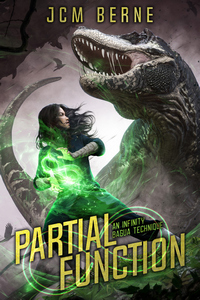
bullet Author Interview: JCM Berne, author of “Wistful Ascending”—Eclectic Theist has a good Q&A with Berne.
bullet Does Everyone Need to Have a Love of Reading?—No, and Pages Unbound does a good job answering why. Just don’t tell my kids or grandkid that I said that 🙂
bullet Having Read vs Reading—I may have to adopt this myself.
bullet Why Do I Give Books 4 Stars Instead of 5 Stars?—a great job trying to explain what can feel like a slippery difference.
bullet Witty and Sarcastic Bookclub Presents: The Hero’s Journey and Modern Fantasy—Beth Tabler from Before We Go Blog, David (Book Meanderings) from FanFi Addict, Peatlong from Peat Long’s blog, and Filip Magnus from The Grimoire Reliquary join Jodie for a discussion. Earlier in the week I called this “the only blog post you need to read this week.” Here at the end of the week, I agree with myself.

A Book-ish Related Podcast episode (or two) you might want to give a listen to:
bullet Fiction Fans Author Interview: Death in Fine Condition by Andrew Cartmel—Cartmel talks about his new series for a bit, and convinces me that I should move it up on the TBR pile

This Week’s New Releases that I’m Excited About and/or You’ll Probably See Here Soon:
bullet All the Sinners Bleed by S. A. Cosby—”The first Black sheriff in a small Southern town faces a questionable shooting, a Confederate pride march, and a serial killer.” That’s good enough for me. I was sure I’d ordered this, but I seem to have forgotten to. I’ll have to wait until next week to have it sitting neglected on my shelf. But man, it looks so good.
bullet Charm City Rocks: A Love Story by Matthew Norman—”When a single dad meets the former rock-star crush of his youth, everything they thought they knew about happiness and love is thrown into chaos in this hopeful, heartwarming romantic comedy.”
bullet Death in Fine Condition by Andrew Cartmel—the first in a new series, The Paperback Sleuth. Cordelia is a rare paperback collector/dealer who burgles an elusive set from one of the most dangerous men in London. Things ensue.

Just in case things get boring, I'm bringing a book.

The Ballad of Bonaduke—Episode 24: Circles without Center by R. T. Slaywood: That’s Not What I Expected At All

The Ballad of BonadukeThe Ballad of Bonaduke—
Episode 24: Circles without Center

by R.T. Slaywood

DETAILS:
Series: The Ballad of Bonaduke, #24
Format: Kindle Vella Story
Read Date: June 8, 2023

My grift had brought me here. Call it luck, call it destiny, hell call it bad stuff I was done running away. Done hiding. Done. I clenched my jaw and pulled open the disabled sliding door that I somehow knew would be unlocked.

The Story So Far…

A drunken Michael Bonaduke decides to use a grift (with maybe some sort of magic/magic-like “help”) to win on a scratch-off lottery ticket so he has money to buy more to drink. He pulls off whatever he did, gets his money and some booze and stumbles off into the darkness to drink himself into oblivion so he can start again the next day. He’s hit by dark memories (probably what’s driving him to the drinking) of fire, pleading, and screaming. There’s going to be a price to pay for his grift, and he’s trying to be ready.

Before then, he gets himself drunk and we get some of his tragic backstory. As he ponders this, he decides to use some of his ill-gotten-gains to buy more booze and walks into a liquor store robbery. He foils it in some sort of magical fashion, gets some more to drink, and heads off to the park to drink until he’s arrested (probably for the failed robbery). At least that’s his plan, but it gets interrupted by being hit by a car. He wakes up on some sort of short, metal bed and is unsure what’s going on. It turns out that some group is subjecting him to a test—if he passes, everything will be explained to him (and hopefully the reader, too). He passes—and is brought somewhere for answers, or maybe training, or maybe another test. Time will tell (or things are going to get really annoying). Answers aren’t quick to come—but the mysteries and questions keep piling up.

Things get hairy and Bonaduke leaves and finds himself back in the neighborhood he started from. Taking refuge in a homeless encampment, Bonaduke has to make some decisions. He starts to get his thoughts in order when the police begin a raid at the camp. During the raid, he’s apprehended by…well, we need to find out. But first, the interrogation kicks off—Bonaduke tries to work his grift to get him out, and while that effort starts off promisingly…it didn’t quite go the way he’d intended.

What’s Circles without Center About?

Not much. Bonaduke starts to wonder what’s going on with his grift, it’s not working like he’s used to–but maybe that’s because he doesn’t understand it.

He then walks into the building his grift brought him to and finds something neither the reader or he expected.

So, what did I think about Circles without Center?

I have no idea…I didn’t dislike it. But I’m not convinced that I have enough to form an opinion on. I need more to go on.

If the goal was to get me to click on the next episode–it worked. The only reason that I didn’t immediately go forward is that I needed to get some sleep. I really want to see what Bonaduke walked into.


3 Stars

The Friday 56 for 6/9/23: Chain-Gang All-Stars by Nana Kwame Adjei-Brenyah

The Friday 56This is a weekly bloghop hosted by Freda’s Voice.

RULES:
The Friday 56 Grab a book, any book.
The Friday 56 Turn to Page 56 or 56% on your ereader. If you have to improvise, that is okay.
The Friday 56 Find a snippet, short and sweet.
The Friday 56 Post it.

from Page (55 and) 56 of:
Chain-Gang All-Stars

Chain-Gang All-Stars by Nana Kwame Adjei-Brenyah

We work. My work is my life. I pray for work. I hate my work. I need my work. I pull/push meat for the buzzing saws.

I halve the body.

The saw eats gladly.

Two halves a body.

I have a body.

I halve a body.

I do the same. I do the same.

The saw goes like God told it not to stop. All us on the line work like this. The saw is strong and hot.

Do the job. Do it right.

Page 161 of 609

Powered by WordPress & Theme by Anders Norén