Author: HCNewton Page 175 of 623

PUB DAY REPOST: 100 Places to See After You Die by Ken Jennings: The Tour Guide No One Wants, But Everyone Needs

100 Places to See After You Die100 Places to See After You Die:
A Travel Guide to the Afterlife

by Ken Jennings

DETAILS:
Publisher: Scribner Book Company
Publication Date: June 13, 2023
Format: eARC
Length: 304 pg.
Read Date: May 24-26, 2023


What’s 100 Places to See After You Die About?

Ken Jennings provides a handy tour guide through one hundred visions of the afterlife for the modern reader. Complete with tips on places to see, areas to avoid, local lingo, bits of trivia, dining tips, and so on, it’s just the kind of thing you’re going to want to peruse before you shuffle off this mortal coil, so you know where to go.

The book is broken down into: Mythology, Religion, Books, Movies, Music and Theater, and Miscellaneous. Then (alphabetically) Jennings looks at a variety of afterlife locales in each category.

For example, the Books section covers:

Aslan’s Country • The Bridge • The Cemetery • The Empyrean • The Five Lessons • Half-Life • The Inbetween • Inferno • The Kingdom • King’s Cross • Mansoul • The Null • Pandemonium • Paradiso • The Parish • Purgatorio • Riverworld • The Third Sphere • The Time Bubble • The Undying Lands • The Valley of the Shadow of Life*

* From Lewis’ The Chronicles of Narnia and The Great Divorce; O’Connor’s story “Revelation”; Saunders’ Lincoln in the Bardo; Milton’s Paradise Lost; Albom’s The Five People You Meet in Heaven; Dick’s Ubik; Sebold’s The Lovely Bones; Dante’s The Divine Comedy; Twain’s “Captain Stormfield’s Visit to Heaven”; Rowling’s Harry Potter; Moore’s Jerusalem; King’s Revival; O’Brien/O’Nolan’s The Third Policeman; Farmer’s Riverworld; Matheson’s What Dreams May Come; Oliver’s The Time Bubble; and Tolkien’s The Lord of the Rings.

Jennings describes each place with wit, humor, Dad Jokes, puns, irreverence, and plenty of facts.

Dancing Through a Minefield

It’s one thing to talk about places like Valhalla, Hades, The Bad Place, Bill & Ted’s Bogus destination, or Futurama‘s Robot Hell in a light-hearted or flippant fashion. It’s an entirely different can of worms to discuss the LDS Three Kingdoms of Glory, Jannah, Jahannam, Ariel Toll Houses/Telonia, and so on—in the same tone.

I will not say that Jennings was able to fully succeed in discussing the afterlives described in some major religions in an unoffensive manner. Primarily because I’m not an adherent of any of the religions he discussed, so my tolerance for that is really high. Had he tackled something I believe in, I very well could’ve been at risk of insult.

That said, I think he did okay. Yes, he walks close to irreverent. But he maintains a decent degree of respect. The humor largely comes from the way he describes the beliefs not at the expense of an article of faith.

Still, some people might want to skip over a chapter or two if they’re worried about getting their toes stepped on. (but those people probably aren’t going to be reading this book in the first place)

A Few Highlights

Ohhh, there are just so many.

The Books section was my favorite—followed closely by Movies and Television—this is the kind of thing I blog about, think about, and so on, so it makes sense that those sections resonated with me most. The Books section, in particular, discussed portions of those works in ways I could really sink my teeth into.

But there were multiple highlights in each section—I learned a lot about D&D, I couldn’t help singing “Ghost Riders in the Sky” during that chapter, I think he pointed out a good plot hole in It’s a Wonderful Life (I don’t know, maybe he’s not the first), I loved the discussion of Bosch’s paintings, and so on.

The chapter on The Good Life was fantastic—a great systemization of the series’ take on the afterlife (and several characters). The chapter on Nirvana was sublime.

Books, movies, mythologies, songs, etc. that I’ve never heard of, much less, read/watched/listened to/studied were described in enough detail that I could appreciate those chapters and maybe even develop an interest in following up on.

Problems/Quibbles/Things That Didn’t Work for Me

Um. Hold on, I’ll think of something.

oh! Here’s a problem: the eARC came with the typical “don’t quote from this version until verified by the published edition” warning—but it was more pronounced than usual. I really want to use samples throughout this post, but I can’t. (and I wouldn’t have even without this warning, because I know things get tweaked in the final stages).

Actually, I do have a legitimate gripe. There are no footnotes—or even endnotes*—for anything that Jennings says. Most of what the book contains could fall into the category of “General Knowledge” (at least for people who know anything about The Good Place, Dante, or the religion of the Maori). But I wouldn’t have minded a point in the right direction to learn some more details, context, or background on many, many, many things Jennings wrote about.

* It’s been decades since I haven’t asked why a book uses endnotes when footnotes exist, and yet I’d have liked to have them in this book more than the nothing we got. That’s how much this bothers me.

I Can’t Help Pondering…

Given the argument of Planet Funny: How Comedy Took Over Our Culture by Ken Jennings, I wonder about his approach to the subject of the afterlife. Sure, even Planet Funny was frequently funny as it critiqued the overuse of humor in our culture, but for his next book to take this tone, seems to undercut the work.

Or maybe it just shows that even as he can look with clear eyes at some of the weaknesses of our culture, he’s part of it and is subject to the influences. It’s almost like he’s human.

So, what did I think about 100 Places to See After You Die?

This section is going to be shorter than usual because I think I’ve pretty much answered the question already.

From the “throwaway lines” to the big ideas, this was a delight from start to finish. I thoroughly enjoyed this approach to the subjects—quick hits that tell you the essentials and make you smile while telling them.

Jennings’ style is one I aspire to, and can’t say enough good things about.

I can’t think of a reason not to give this 5 Stars, but my gut tells me not to. So I’ll knock it down to 4 1/2 (which isn’t a big deal since Goodreads, NetGalley, etc. won’t let me use 1/2 stars, I’ll round up). It’s educational, it’s entertaining, and it’s thought-provoking. You can’t go wrong with this.

Disclaimer: I received this eARC from Scribner via NetGalley in exchange for this post and my honest opinion—thanks to both for this.


4 1/2 Stars

This post contains an affiliate link. If you purchase from it, I will get a small commission at no additional cost to you. As always, the opinions expressed are my own.

The Knight Revenant by Adam Holcombe: You Do NOT Mess Around with This Old Lady

The Knight RevenantThe Knight Revenant

by Adam Holcombe

DETAILS:
Series: Chronicles of Gam Gam
Publisher: Bounty Ink Press
Publication Date: May 30, 2023
Format: eBook
Length: 29 pg.
Read Date: June 10, 2023

What’s The Knight Revenant About?

Gam Gam had been at this (this being necromancy in an official capacity) for twenty-two days, four hours, and thirty-four minutes, after having graduated top of her class from the mage’s academy in Capital City

…and has taken it upon herself to take care of a revenant that had been disrupting travel between two cities.

The revenant tries to unleash its aggression on her, and she simply slaps it down like it’s nothing but a petulant child, scolding it a bit, and then trying to reason with it patiently like only a grandmother can. The revenant plays its part in this pantomime and throws a tantrum. This continues for a few days until a new target presents itself for the spirit.

And then Gam Gam has to show it who’s boss.

What did I think about The Knight Revenant?

This short story is a great point of entry for the series/world of Gam Gam. Is it necessary to read this before the novella? Nope. I actually think it works better as a follow-up to the novella (even though it takes place first), so you get some backstory for characters you already like. But that’s probably because I read them that way.

Gam gam gets some fantastic lines here. Had I been on the fence about her before, she’d have earned a fan from the way she dealt with the revenant—both as a foe and then later on. We get to see her heart, her spunk (although it feels cliché and possibly condescending to talk about an older woman having spunk…but it’s a great word to describe her attitude), and her humor.

And we get to see her power…Gam Gam is not to be taken lightly. What she did in the novella was probably a greater display of raw power. But something about the way she counters the relevant struck me as more impressive. Maybe it’s the banter + the magic rather than just the magic. Holcombe is quick to show the reader that magic can only do so much and that the frailties of age can get the best of even a professional necromancer.

The last scene? (Spoiler ahead in the next 2 sentences) I got a big “Vincent and The Doctor” vibe from it. And now I’ll forever see Tony Curran as this character when I think of him in the future.

This was a quick, fun companion piece for the novella (in whatever order you want to read them). It solidified my commitment to jump on the next adventure of Gam Gam with all possible haste, too.


4 Stars

REPOSTING JUST CUZ: Beyond Authority and Submission by Rachel Green Miller: Starting-Point for a Discussion the Conservative Church Should’ve Already Had

originally posted 10/27/19
I feel compelled to repeat the disclaimer I threw on a book last week—and I should probably throw this on a lot of theologically-oriented works. This is another one of those works that I feel really unqualified to discuss. So, know that this is from the perspective of an opinionated and semi-(formally)educated reader and occasional armchair theologian. Not the reflections of an ordained minister or professional theologian.

Beyond Authority and Submission

Beyond Authority and Submission: Women and Men in Marriage, Church, and Society

by Rachel Green Miller

Paperback, 259 pg.
P&R Publishing, 2019

Read: September 22-29, 2019

Contrary to what popular culture states, women and men are not from different planets. We’re complementarymore alike than different. Without denying the differences, we need to stop defining women as the polar opposite of men and vice versa. Such divisive definitions create and encourage unnecessary conflict and set up unrealistic and unbiblical expectations for how women and men should behave.

Paul frequently refers to fellow believersboth men and womenas co-laborers. The word he uses, sunergos, means “a companion in work.” As we will see in the next sections, co-laborer captures the sense of what we were created to be and what we are called to be in Christ.

I can’t get where this is controversialI’m definitely not the kind of guy to say “in this day and age” when it comes to this kind of thing, so please don’t hear me saying that. In any day and age where someone’s thinking is shaped more by the Bible than it is by the surrounding culture (either of the moment or by some version of a historical point of view). I don’t get where this is controversial. Sadly, it is. But as long as that’s Rachel Green Miller’s controlling thought (and I firmly believe it is), I’m on board with this book.

So I should say at the outset, I’ve appreciated Miller’s writing for years now and am very sympathetic to Miller’s general perspective on the issues she tackles in the book. I came into it expecting a useful and beneficial book for those wading through issues relating to the relation of the sexes to each other from a Christian worldviewand I got it. I didn’t expect a book to settle arguments, or a panacea to problems churches/ministries/individuals are having on this frontwhich is good, because she doesn’t try.

After setting the stage for what she wants to discuss in the book, Miller goes on a brief historical survey of views of men and women in the Greco-Roman World and Victorian Era (which she posits have more of an influence on conservative Christianity than we realize), and then she looks at First, Second and Third-Wave Feminism and how the Church has reacted to each. I think her book would be better served if this section were expanded and depended less on secondary sourcesbut given space limitations, I can live with it. From there she explores Biblical teaching on the Nature of Men and Women, how the two should relate in marriage, the Church, and society. In these chapters, she tries to show how current understandings are (too) frequently largely molded by a reaction to a political movement or values imported from a historical context (that needed Biblical reform). Each section here could be a book unto itselfand maybe should bebut Miller’s treatment is a good starting point for discussion.

If you see the book as thata starting point for conversation, with a lot of very helpful things to bear in mind, this is a very commendable and worthwhile read. If you’re thinking of it as definitive in any sense of the word (and I think Miller would warn against that herself), the book will not come close to living up to expectations.

Miller critiques both the foundation of the worldviews she disagrees withancient pagan cultures or recent/contemporary naturalistic views. Latter feminism, as well as godless patriarchal views, are her targetsas are the ways those presuppositions or their expressions are imported into the Church.

Where I think this book stumbles is in the positive case for what she believes. Miller is very clear on what she’s not trying to say (though many aren’t paying attention to this), she’s also clear on what she disagrees with (no one would deny this)but she’s too unclear about what she’d like people to think. I think I just did the same thing hereso I’m going to resort to metaphor. Most of what I talk about here is fiction, so I’m going to employ that for a minute. If Andy Carpenter, Eddie Flynn and Mickey Haller (various fictional defense attorneys) have taught me anything, it’s that while it’s all well and good for a defense attorney to poke holes in a prosecution’s case, what will really turn a jury around is a good alternative suspect, someone to blame, to hold accountable for whatever crime is in question. Miller’s done a great job in showing problems with the prosecution’s case, and we know she doesn’t want us to find her client guiltybut I don’t have anyone else to hold accountable/punish for the crime.

Now, the problems with that metaphor are plain enough, but I think my point is clear (clearer than I could’ve made it earlier). For what it’s worth, I think she’s dead to rights on what she’s not wanting to say, and by and large, she’s right on what she’s critiquing. I just wish I had a clearer notion of what she wants readers to think in a positive sense. Also, while I agree that we need to do more than talk about the relationship between the sexes in terms other than “authority” and “submission” we still need to have clear ideas about how those roles should function (if we’re going to understand the Bible), and Miller should have addressed that.

This book has, regrettablyyet not at all unsurprisinglykicked up a hornet’s nest of controversy. Sadly, it seems that most of the reviewers have dug into two hard-and-fast camps: the “this is a load of drivel that Miller and P&R should be ashamed about” camp on the one hand, and the “this is the greatest thing since the Institutes” camp on the other. Neither is even close to right. This is a good book (with clear flaws) and deserves to have its good points, flaws, and pushes to conversation discussed without vitriol. Sadly, I can’t see that happening, which is probably why books like this are needed.

Honestly, if we can’t deal charitably with each other on this kind of thing, how can we expect a lost and dying world to listen to us at all?

I know that more than a few reviewers have taken issue with the way that Miller treats some of the sources she’s citing and critiquingand there were a couple of times I wondered if she and I had read the same article/chapter/book, because I didn’t come away from it with the same ideas she did. At timesand more often than should be acceptableshe comes across as saying that “Writer X is problematic on these issues and therefore everything they’ve ever said about them is wrong.” I don’t think that’s her intention, but I do think that she gives that impression. But on the whole, I think there’s a lot of straining at gnats by her critics when it comes to her treatment of sources.

I think I’ve lost the thread a bit here. Such is the nature of the tempest in the conservative Christian teapot, that I can’t really think about the content of the book without thinking about the reaction to it. I wish I’d found/made the time to write about this book before I read about it. That’s on me.

Let me try to get back on track. I liked this book. It made me re-examine a lotand will probably continue to do so as I mull on what she has to say (and I’ll probably find a lot to disagree with ultimately, and a lot to agree withas it ought to be). How much of what I think about how women and men should interact with each other (in the home, Church and society) comes from Scripture and how much from the culture? How much of what I think it means to be a man or what it means to be a woman has more to do with Ancient Greek culture or the Victorians? (more than it should). The core of the message should be heard and weighed, and hopefully, after the hubbub has died down a bit, we can start to deal with it.

The Bible testifies to our unity. We don’t have one Bible for men and a different one for women. The armor of God isn’t just for men, and the fruit of the spirit doesn’t apply only to women. No, we have one Bible for us all, and most of the Bible’s commands apply to all of usmale or female, old or young, rich or poor, servant or master.

It’s important to emphasize that when God made humanity in His image, He did so by making a man and a woman. Women are as much made in the image of God as men are. Men don’t have more of God’s image because of their masculinity. We are equal in worth, but we’re not the same. We are different, but we are also interdependent. We were created to complement each other, and we need each other.

Tolle Lege.


4 Stars

Saturday Miscellany—6/10/23

If anyone sees this today and then sees me at the event I’m at this afternoon. The image at the bottom is totally coincidental and is in no way a commentary on what I think this afternoon will be like.

(but, yeah, I will be).

Also, because I seem to be in that kind of mood: For the record, I only picked up one link here from Peat Long’s Friday Five–the others in common we found independently from one another. He doesn’t do all my research.

Enough of that…here’s the miscellany:

Odds ‘n ends about books and reading that caught my eye this week. You’ve probably seen some/most/all of them, but just in case:
bullet Every Country’s Highest-Rated Book by a Local Author—an impressive bit of data analysis.
bullet The Battle of the Book Cover: Britain vs America—The folks at Electric Lit rank a few recent US and UK covers of the same books.
bullet The release S.A. Cosby’s much-anticipated new book this week brings with it a couple of great interviews. This one with Friend of the Blog, Nick Kowlakowski, and this one with Maris Kreizman.
bullet M.W. CRAVEN on his new thriller FEARLESS—Craven talks about the origins of his new novel, Fearless (coming soon!), and the series it launches.
bullet Lit Hub has several Summer Reading lists for those of you still considering yours, among them are: The Ultimate Summer 2023 Reading List Or, the Count of Melty Crispo and The 28 Novels You Need to Read This Summer: The Lit Hub Staff Recommends Books for Beaches, Benches, Backyards, and BBQs
bullet Or, if you’re trying to help out a younger reader build their list Library Reads: Summer Reading Recommendations for Middle Grade & Teen Readers—(if you happen to be a younger reader yourself reading this Miscellany, let me know, I’m glad to know you exist)
bullet 63 Best Historical Fiction Books Ever Written
bullet Do You Ever Stop and Think About Paragraphs?—Yes. Ever since a professor wrote about worrying about my “anemic little paragraphs” blowing away in the wind on a paper. (think I still got a B on it) But I like seeing other people stop and do it, too.
bullet Author Interview: JCM Berne, author of “Wistful Ascending”—Eclectic Theist has a good Q&A with Berne.
bullet Does Everyone Need to Have a Love of Reading?—No, and Pages Unbound does a good job answering why. Just don’t tell my kids or grandkid that I said that 🙂
bullet Having Read vs Reading—I may have to adopt this myself.
bullet Why Do I Give Books 4 Stars Instead of 5 Stars?—a great job trying to explain what can feel like a slippery difference.
bullet Witty and Sarcastic Bookclub Presents: The Hero’s Journey and Modern Fantasy—Beth Tabler from Before We Go Blog, David (Book Meanderings) from FanFi Addict, Peatlong from Peat Long’s blog, and Filip Magnus from The Grimoire Reliquary join Jodie for a discussion. Earlier in the week I called this “the only blog post you need to read this week.” Here at the end of the week, I agree with myself.

A Book-ish Related Podcast episode (or two) you might want to give a listen to:
bullet Fiction Fans Author Interview: Death in Fine Condition by Andrew Cartmel—Cartmel talks about his new series for a bit, and convinces me that I should move it up on the TBR pile

This Week’s New Releases that I’m Excited About and/or You’ll Probably See Here Soon:
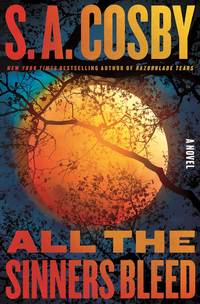
bullet All the Sinners Bleed by S. A. Cosby—”The first Black sheriff in a small Southern town faces a questionable shooting, a Confederate pride march, and a serial killer.” That’s good enough for me. I was sure I’d ordered this, but I seem to have forgotten to. I’ll have to wait until next week to have it sitting neglected on my shelf. But man, it looks so good.
bullet Charm City Rocks: A Love Story by Matthew Norman—”When a single dad meets the former rock-star crush of his youth, everything they thought they knew about happiness and love is thrown into chaos in this hopeful, heartwarming romantic comedy.”
bullet Death in Fine Condition by Andrew Cartmel—the first in a new series, The Paperback Sleuth. Cordelia is a rare paperback collector/dealer who burgles an elusive set from one of the most dangerous men in London. Things ensue.

Just in case things get boring, I'm bringing a book.

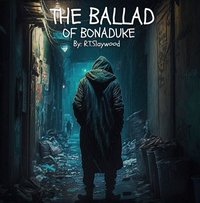
The Ballad of Bonaduke—Episode 24: Circles without Center by R. T. Slaywood: That’s Not What I Expected At All

The Ballad of BonadukeThe Ballad of Bonaduke—
Episode 24: Circles without Center

by R.T. Slaywood

DETAILS:
Series: The Ballad of Bonaduke, #24
Format: Kindle Vella Story
Read Date: June 8, 2023

My grift had brought me here. Call it luck, call it destiny, hell call it bad stuff I was done running away. Done hiding. Done. I clenched my jaw and pulled open the disabled sliding door that I somehow knew would be unlocked.

The Story So Far…

A drunken Michael Bonaduke decides to use a grift (with maybe some sort of magic/magic-like “help”) to win on a scratch-off lottery ticket so he has money to buy more to drink. He pulls off whatever he did, gets his money and some booze and stumbles off into the darkness to drink himself into oblivion so he can start again the next day. He’s hit by dark memories (probably what’s driving him to the drinking) of fire, pleading, and screaming. There’s going to be a price to pay for his grift, and he’s trying to be ready.

Before then, he gets himself drunk and we get some of his tragic backstory. As he ponders this, he decides to use some of his ill-gotten-gains to buy more booze and walks into a liquor store robbery. He foils it in some sort of magical fashion, gets some more to drink, and heads off to the park to drink until he’s arrested (probably for the failed robbery). At least that’s his plan, but it gets interrupted by being hit by a car. He wakes up on some sort of short, metal bed and is unsure what’s going on. It turns out that some group is subjecting him to a test—if he passes, everything will be explained to him (and hopefully the reader, too). He passes—and is brought somewhere for answers, or maybe training, or maybe another test. Time will tell (or things are going to get really annoying). Answers aren’t quick to come—but the mysteries and questions keep piling up.

Things get hairy and Bonaduke leaves and finds himself back in the neighborhood he started from. Taking refuge in a homeless encampment, Bonaduke has to make some decisions. He starts to get his thoughts in order when the police begin a raid at the camp. During the raid, he’s apprehended by…well, we need to find out. But first, the interrogation kicks off—Bonaduke tries to work his grift to get him out, and while that effort starts off promisingly…it didn’t quite go the way he’d intended.

What’s Circles without Center About?

Not much. Bonaduke starts to wonder what’s going on with his grift, it’s not working like he’s used to–but maybe that’s because he doesn’t understand it.

He then walks into the building his grift brought him to and finds something neither the reader or he expected.

So, what did I think about Circles without Center?

I have no idea…I didn’t dislike it. But I’m not convinced that I have enough to form an opinion on. I need more to go on.

If the goal was to get me to click on the next episode–it worked. The only reason that I didn’t immediately go forward is that I needed to get some sleep. I really want to see what Bonaduke walked into.


3 Stars

The Friday 56 for 6/9/23: Chain-Gang All-Stars by Nana Kwame Adjei-Brenyah

The Friday 56This is a weekly bloghop hosted by Freda’s Voice.

RULES:
The Friday 56 Grab a book, any book.
The Friday 56 Turn to Page 56 or 56% on your ereader. If you have to improvise, that is okay.
The Friday 56 Find a snippet, short and sweet.
The Friday 56 Post it.

from Page (55 and) 56 of:
Chain-Gang All-Stars

Chain-Gang All-Stars by Nana Kwame Adjei-Brenyah

We work. My work is my life. I pray for work. I hate my work. I need my work. I pull/push meat for the buzzing saws.

I halve the body.

The saw eats gladly.

Two halves a body.

I have a body.

I halve a body.

I do the same. I do the same.

The saw goes like God told it not to stop. All us on the line work like this. The saw is strong and hot.

Do the job. Do it right.

A Few More Quick Questions With…D.I. Jolly

I talked about D.I. Jolly’s BaIT earlier this afternoon, and now I’m pleased to bring you this Q&A with him. I’m particularly grateful to him for this because I sent them the questions under the mistaken impression that we’d previously discussed doing a Q&A. He graciously replied quickly anyway.

Could you take a moment or two to introduce yourself to my readers? What set you on the path to writing, describe your path to publication, genre choices, and so on?
My name is D.I. Jolly, I’m a South African author living in Germany. I first wanted to be a writer when I was about seven years old and played a video game called Gabriel Knight, where the titular character was an author and just the coolest person I could imagine, so I decided I would be him when I grew up.

I currently have seven published books, five novels and two short story collections. When I moved to Germany is started a writing group called Poetry Club, and in the last seven years I’ve written over 270 short stories for this event, and all the ones that aren’t in the published collections are uploaded onto my website. So, if anyone is interested in dipping a toe into my writing you can read over a hundred short stories for free on my site.

When it comes to genre, my aim is always to use it as a story telling element. Rather than a setting. So, with Mostly Human, I used the elements of lycanthropy to display mental health and bipolar disorder. With Counting Sheep, the sci-fi elements are there to create an exaggerated environment of capitalism and consumerism, the two key themes of that novel. With Bait, I wanted to have what is seen now as a cliched paranormal romance novel, but focus on themes of consent rather than lust.

What was the genesis of Bait—both the story and the themes (assuming they didn’t pop up together in your mind)?
As I said, the main theme for me in Bait is consent. I had often joked that I could just write a romance novel and publish it on the Inkitt platform and get thousands of reads no problem. And I joked about it so much that I was challenge to put my money where my mouth was. So, I did, and in researching what was the current focus and trends in romance, I noticed something I really didn’t like. Something called ‘soft consent’. For those who don’t know, soft consent is when a book is written in the first person and the reader is in their head, so even though a character is saying “no, no, no, get off me.” The reader knows that in their head the character is thinking, “actually yes I want you.”

Now, I’m not here to shame anybody, your fantasies are yours, enjoy them. But what bothered me was that a lot of the audience for these kinds of books on those kinds of platforms are younger teenagers. And I saw a pattern of the snake eating its own tail, in that, an adult with experience and understand would write a soft consent novel to live out their fantasy. Absolutely fine. That would then get read by a teenager who learns something about themselves and expresses it in their own book. But now you’ve lost the experience and some of the understanding behind that kind of story. That then gets read by another teenager who does the same thing, and now it’s just focused on the sex and lacking consent but being displayed as, ‘this is what love looks like’.
And I wanted to throw a wrench into that spiral. So, I wrote Bait and made sure to show that consent was vital and very important, that consent could still be very sexy, and that consent taken away was traumatic. Both sexually and in the case of not listening to your partner while they’re in crisis.

And low and behold it got hundreds of thousands of reads on Inkitt, and was so popular that the digital rights were licensed by Inkitt and published on their pay to read app Galatea, and the publishing company TinPot acquired the print rights and put it out into the world.

I picked up a nod or two to your Mostly Human books—does this take place in the same world? If so—these werewolves seem different from Alex and the rest. Am I wrong about that? Or do you have multiple species wandering around the world (which is kind of cool), and do you plan on having them intersect?
They are different worlds in my head, but I did just want to put Easter Eggs to my other books in the story. Mostly for my own entertainment but also just to have a little nod to people who maybe go from Bait to reading some of my other books. I like the idea of someone who loved Bait diving into Mostly Human and going. “Ooooooooooohh!”

Jessica is a big personality. I know people like her and they can (fully unintentionally) take over a room/conversation in a moment—was it a challenge to keep her as a secondary character and/or keep her from taking over most scenes she’s in?
Because Bait is written in the first person and Jessica is always preserved not given her own perspective it actually made it very easy to have her be a big personally but not stealing the story. Having the boundary walls of not getting her own point of view, made it safer in a way to let her steal the scenes she was in, and to really be herself. It was also a lot of fun to write.

You’ve got a few books now under your belt—I’ve often heard that writers, or artists in general, will forget hundreds of positive reviews but always remember the negative. What’s the worst thing that someone’s said about one of your books, and has it altered your approach to future books?
There is a two-star review of my first book A Guy A Girl and A Voodoo Monkey Hand that is about 2 pages long, that point by point breaks down everything I apparently did wrong.

There is also a review of Mostly Human with the line. “…and the author didn’t really know what Thai Chi was.” Which always makes me think. “I don’t think you know what a joke is.” But hey. It’s still a four-star review. But these are the comments that live rent free in my head.


Is there a genre that you particularly enjoy reading, but could never write? Is there one you’re dying to try?
I read a lot of classics, Russian and Japanese literature. Which goes from brutal to psychedelic realism. Which I really enjoy reading but really don’t think I could write in that way. The way I think and tell stories doesn’t lend itself to that sort of world building and descriptions.

here’s a game we play around here, called “Online Bookstore Algorithm”. What are 3-5 books whose readers may like BaIt?
I’ve been told that if you enjoyed the Twilight series, you’d really like Bait. There is a very popular book on the Galatea app called Millennium Wolves, and those readers would also get behind Bait I believe. Otherwise, I don’t know, Vampire Academy? Or the Sookie Stackhouse books.

What’s next for D.I. Jolly, author?
I wrote a dark psychological thriller called Blurred Lines that I’m currently shopping around. I’m also working on a new novel Milton (working title) which is a family comedy drama. That I’m really enjoying working on. I’m waiting for a video game to be announced that I can finally tell people which game I wrote the story for, which is exciting. Poetry Club is still on going, the last Monday of every month, so there will be some new short stories going live on my website the next day. Yeah, lots of things going on, and they’re all writing.

Thanks for your time—and thanks for Bait, and hope you have plenty of success with it.
Thank you, me too.


I’m Sending Some Mixed Messages about BaIT by D.I. Jolly (and picked up some from BaIT, too)

A little later this afternoon, I’ll be posting a Q&A with the author!


BaITBaIT

by D.I. Jolly

DETAILS:
Publication Date: February 21, 2023
Format: eBook
Length: 240 pg.
Read Date: April 14-15, 2023


What’s BaIT About?

Amber is a few short months away from leaving high school behind, going to college, and studying to become a teacher. It will be difficult saying goodbye to her best friend, Jessica, who is moving across the country, and to her boyfriend (and almost certain future husband), Frankie, who is also moving out of state for college—but she’s going to be okay. She has a plan, she’s got her hunk of a boyfriend, and life is looking good. Her future’s so bright, she’s gotta wear shades.

Until one day when a young man comes into the coffee shop that she’s working in and takes her breath away. He’s gorgeous, he’s shy, and she can’t stop thinking about him. It’s not just her, Jessica, is almost as smitten—but Bastian (as they learn he’s called) really only seems interested in Amber.

What neither girl realizes that beyond their giggling lusting and certainty about true love—Bastian coming into their lives brings threats and complications that they didn’t know existed. It’s not long before Amber is involved in ages-old struggles between werewolves and vampires, werewolves and werewolves, and a father and son. None of these characters will move on unchanged.

Worldbuilding

This is the best part of the book, period. The particular take on Werewolves here (and to a lesser extent, Vampires) really worked for me. There’s a little bit of the flavor of The Marrok from the Mercy Thompson series—but there’s group of elders instead of just Bram (and many other differences, but like I said—flavor).

There’s reason to think that this exists in the same world as his Mostly Human books. But it feels like the werewolves are organized differently (for lack of a better term). This raises some questions: are there multiple types of lycanthropes in this world and different types of lycanthropic magics? Has Jolly changed the way he thinks about them in this world? Has he just been inadvertently inconsistent? I ask about this in a Q&A with Jolly that will go up in an hour or so, but I haven’t read his response yet. So go see what he said to get a better take on this paragraph.

There’s also this Djalia-esque place/plane of existence where Bastian communicates with some people who I won’t identify. That was an excellent touch and proved to be a good way for Bastian to develop.

Even the concept of soulmate is an intriguing addition to this world—and if it had been presented differently, I might not have the concerns I’m about to talk about.

Consent

Vague spoilers ahead. Feel free to skip to the next section header.

This novel was pitched to me as “a Paranormal YA-Romance novel focusing on the theme of consent”. This is not my typical cup of tea, but I’ve read enough of all of those to be interested in Jolly’s take on them (especially in combination). When I wrote about his Mostly Human 2, I talked about wanting to see a Lad Lit novel by him, and this might be something in that direction. So I went for it.

First, this is not what I’d call YA. NA/New Adult—sure. But that’s not what I want to talk about.

There is a storyline that comes up later in the book all about consent in the ways you typically think about that storyline. Impaired judgment tied to underage drinking (not for a second saying it’s deserved or excusable, just painting the scene) and some jerk not bothering to get consent (or care about it in the first place). It’s dealt with well, Jolly is really good here. I do wonder if the punishment fits the crime, but hey…when you deal with werewolves and vampires (even if you don’t know it), things happen.

If that’s all that happened, I’d wonder why it was described as “about consent” because while it’s a vital storyline, it happens relatively late in the novel.

I can’t help but wonder, however, how the novel undercuts what it wants to say about consent. Throughout the novel Amber, Jessica, Frankie, and Bastian are really careful along those lines, and everyone is open and honest about their desires. But there’s this magic whammy of the Soulmate at work. Where Amber and Bastian are tied together emotionally, physically, and supernaturally before they know each other.

Can Amber and Bastian truly be said to consent to anything? It’s definitely not an informed consent. Had the whole soulmate thing grown out of their bond, or enhanced what happened naturally, that’d be fine. But truly they had no agency here—they chose to spend time together, to love each other, to be intimate with each other, and so on. But could they have made any other choice? I can’t buy it.

I might have missed something. I might be misinterpreting something—I absolutely am open to that. But for now…ick.

So, what did I think about BaIT?

This is a tough one to write. Jolly and I have interacted a bit over the years and I like him as much as you can like someone you’ve emailed with a couple dozen times. I enjoy his writing on the whole and look forward to seeing new books by him. And I have no doubt that there are people who are really going to get into this book and want more like it. And more power to them.

I am not one of those people.

It’s not just the consent issue (although that’s part of it). It’s not that I’m a prude and this book is definitely (and almost aggressively) “sex-positive” (although both are true, I’ve read and enjoyed more graphic work since this book).

Some of what put me off were the intensity of every thought and emotion expressed—it really felt like everything said, thought, or felt by the characters in their teens and twenties should’ve been accompanied by 5+ exclamation points. The pacing of the relationships, personal growth and change, and the story felt off and too accelerated to be believable.

I really think that this book plays into his strengths (it’s very much along the lines of the parts of Mostly Human 2 that I thought were the most successful). There are some great moments (Frankie witnessing werewolves changing and realizing what he was seeing, for example). There were some promising characters. Again, I really liked the Elders council idea. But for every “pro” in this book, I had two or three “con”s.

I’m not—very carefully and deliberately—saying, “don’t read this book.” I’m saying, “go into it with open eyes.” It’s a book that feels to me like it needs—like its primary characters—to grow up and mature a bit.

Disclaimer: I received a copy of this book from the author in exchange for this post and my honest opinion.

This post contains an affiliate link. If you purchase from it, I will get a small commission at no additional cost to you. As always, the opinions expressed are my own.

Highlights from May: Lines Worth Repeating

Highlights from the Month
I was shocked as I put this together that I only had one selection from The Winter of Frankie Machine, but all the other bits only work in context (and you might argue the same of this one). At the same time, I assure you I exercised restraint with both Russo and Harrow (and, yes, I typed that Russow and Harro initially).
The Winter of Frankie Machine

The Winter of Frankie Machine by Don Winslow

He finds the boat, the Becky Lynn. The name tells the story—two guys finally get their wives’ permission to buy a boat together and name it after both wives so they don’t get jealous. Not of each other, of the boat.

Which never works, Frank thinks.

Women and boats mix like…

Women and boats.


Straight Man

Straight Man by Richard Russo

I couldn’t understand her failure to grasp what was happening. It was my opinion, then and now, that two people who love each other need not necessarily have the same dreams and aspirations, but they damn well ought to share the same nightmares.

One of the nice things about our marriage, at least to my way of thinking, is that my wife and I no longer have to argue everything through. We each know what the other will say, and so the saying becomes an unnecessary formality. No doubt some marriage counselor would explain to us that our problem is a failure to communicate. But to my way of thinking, we’ve worked long and hard to achieve this silence, Lily’s and mine, so fraught with understanding.

The student newspaper contains a lot more humor, though most of it is unintentional. Except for the front page (news) and the back page(sports), the campus rag contains little but Letters to the Editor, which I scan first for allusions to myself and next for unusual content. Which in the current climate is any subject other than the Unholy Trinity of insensitivity, sexism, and bigotry, which the self-righteous (though not always literate) letter writers want their readers to know they’re against. As a group they seem to believe that high moral indignation offsets, and indeed outweighs, all deficiencies of punctuation, spelling, grammar, logic, and style. In support of this notion, there’s only the entire culture.

There’s no bad side of the tracks in Railton, also no good side. The rule is, the closer you get to the tracks, the worse.

You may not believe me, but I’ve always liked you, Hank. You’re like a character in a good book–almost real, you know?

The world is divided between kids who grew up wanting be their parents and those like us, who grow up wanting anything but. Neither group ever succeeds.

Perhaps no man should possess the key to his wife’s affections, what makes and keeps him worthy in her eyes. That would be like gaining unauthorized access to God’s grace, we would not use such knowledge wisely.


The Rhythm of Time

The Rhythm of Time by Questlove with S.A. Cosby

Kasia spun around on her work stool to face him. There was tape on the bridge of her glasses, but they weren’t broken. Kasia called it an affectation.


Sunbolt

Sunbolt by Intisar Khanani

“Justice served with a side of pineapple. That’s what I’m here for.”

“Do you ever worry about anything?” I ask him, dropping into a chair. I eye the table sadly. It has been cleared and no further refreshments have been set out.

“My next bottle of wine,” Kenta says with mock seriousness. “When I’ll meet my heart’s companion.”

I snort. “Aren’t they the same thing?”

I slam against the wall, collapsing in a heap on the floor. Now would be a good time to black out, I think groggily. But I don’t.


The Manifestor Prophecy

The Manifestor Prophecy by Angie Thomas

Dad hates books about magic. He calls them “fabricated tales written for profit.” Technically, all fiction books are fabricated tales written for profit, but I let the dude have his moments.


This Bird Has Flown

This Bird Has Flown by Susanna Hoffs

So what if the lyrics were a bit on the nose. Isn’t that the great thing about songs? They give voice to thoughts, and feelings, and urges one might hesitate to reveal some other way.

“Have you ever noticed that there are way more sad love songs than happy love songs?” I said after a silence.
“No,” she signed, ” but I’ve done a tally. I suspect you’re right though.”
Which might explain why I haven’t come up with anything great yet song-wise. But I am trying. I’m beginning to think happiness as an emotion is an anathema to song writing.

Did I just use “anathema” correctly? It’s one of those words that can suddenly feel wrong. Like “pulchritude.”

“Music is a conspiracy. It’s a conspiracy to commit beauty.” — Jose Antonio Abreu

To calm myself, I imagined my future creative life in Oxford with Tom, my very own Rochester. Except not rich. Or arrogant. Or twice my age.

“Life is but a dream. Except it’s a lucid dream and you’ve got the oars… Okay, so maybe you’re in some tiny, wooden rowboat in the middle of a great, big ocean. But you can still steer the thing. You can go anywhere, do anything.”


The Once and Future Witches

The Once and Future Witches by Alix E. Harrow

“Oh.” Juniper feels the hot flare in the line between them, fierce and defiant. Is that what mother’s love is like?a thing with teeth?

“What, like fate?” It’s the first thing Agnes has said since they stepped outside, and both her sisters flinch from the venom of it. “Like destiny?” Fate is a story people tell themselves so they can believe everything happens for a reason, that the whole awful world is fitted together like some perfect machine, with blood for oil and bones for brass. That every child locked in her cellar or girl chained to her loom is in her right and proper place.

She doesn’t much care for fate.

An officer arrives twice a day to hang a pail of something whitish and congealed inside her cell. Grits, Juniper thinks, or the aggrieved ghost a grit might leave behind if it was murdered in cold blood.

It hurts even to think it. They came back for me. She feels something snap in her chest, as if her heart is a broken bone poorly set, which has to break again before it can heal right.

The problem with saving someone, Bella thinks, is that they so often refuse to remain saved. They careen back out into the perilous world, inviting every danger and calamity, quite careless of the labor it took to rescue them in the first place.

That evening Miss Lee feeds them a cabbage-and-ham stew which Juniper doubts has done more than meet a ham once in passing.

She thinks how very tiresome it is to love and be loved. She can even risk her life properly, because it no longer belongs solely to her.


Questland

Questland by Carrie Vaughn

She chuckled nervously. “Yeah, I suppose we all like to think we’ll be Captain America, but most of us are just on the street trying to dodge falling buildings.”

“Why not be Captain America?” I said, too tired to be angry but too annoyed to keep my mouth shut. “He was just a guy on the street, at the start.”


Iron Gold

Iron Gold by Pierce Brown

A new wound can take a body. Opening an old one can claim a soul.

“It is my duty as a free man to read so I’m not blind being lead around by my nose.”

The mind is its own place, and in itself can make a heaven of hell, or a hell of heaven.

I feel like a kid who wished for a lizard and woke up to a dragon sitting on the lawn.

“I know it may be impossible to believe now, when everything is dark and broken, but you will survive this pain, little one. Pain is a memory. You will live and you will struggle and you will find joy. And you will remember your family from this breath to your dying days, because love does not fade. Love is the stars, and its light carries on long after death.”

(Image by DaModernDaVinci from Pixabay)

Book Blogger Hop: What Would the Title of Your Autobiography Be?

Book Blogger Hop


This prompt was submitted by Billy @ Coffee Addicted Writer:

What would the title of your autobiography be?

This is a tough one, beyond thinking that I’d ever write an autobiography. Still, I enjoyed trying to come up with something fitting. Here are a few scattered ideas that I’ve gathered over the last few days:

bullet The Irresponsible Reader—hey, I’ve got a brand (of sorts), lean into it, right?
bullet …That Reminds Me of Something I Read—I’ve started noticing how often I can derail a conversation into being about something I read, something I remember my conversation partner mentioning reading lately, some book I’ve seen on a blog somewhere that the conversation reminds me of. If I were to write an autobiography, it’d end up being filled with these kinds of things. It’s probably the best title I can think of.
bullet A Life In Books—it feels a bit pretentious and would be better for a librarian, bookseller, or prolific writer.
bullet Pax, Amor, et Lepos in Iocando—this is a reference to one of my favorite children’s books, the name of my little-used personal blog, and what I hope I focus on
bullet I Can’t Imagine Anyone Wants to Read this, But… —self-deprecation may be the kiss of death in an Autobiography title, but it’s honest.

What would you call your life story?

Page 175 of 623

Powered by WordPress & Theme by Anders Norén