Author: HCNewton Page 187 of 609

2023 Plans and Challenges

Finally it’s time to stop looking at 2022 (as fun as that’s been) and to start focusing on 2023.
2023 Plans and CHallenges
Typically, I’m reticent to get into calling my shots, as it were, too much anymore—there’s a project from 2020 still hanging over my head to point out the problems with me doing that. I’m sure there are older abandoned (or “paused”) projects, too —I just don’t want to go spelunking through the archives to find more personal failures (minor, to be sure, but technically failures).

I do have things I want to accomplish here over the next 12 months for a variety of reasons—and listing them like this helped last year (although, you’ll see a lot of echoes here from that post. But most of those echoes are of a “continue doing this” nature). So, here’s what I’m going to shoot for around here in the next 12 months.
bullet Continue that Literary Locals Project!
bullet Cut down on my Goodreads Want-to-Read list and the unread books that I own (a perennial project, but I made some strides last year)—at least two of the Book Challenges this year should be a fun way to help.
bullet I’m going to finish my Classic Spenser series and maybe find another Classic to do a project read-through. We’ll see about that. (This is a repeat from last year, but it’s nagging at me)
bullet I’m going to continue to be picky in the Book Tours I participate in. I still like Tours, they expose me to things I wouldn’t normally read—and I’m going to keep doing them. But if I’m picky, it helps me focus on other things.
bullet Similarly, I’m doing fewer Book Challenges. I like the ones I’ve picked out—but they’re concrete things, no more of these “Read as Many of X as You Can” challenges. They don’t move the needle one bit for me as far as picking books—I read as many as I’m going to anyway, just with a count. But Challenges with specific targets can be fun. I’ll talk about those in a minute.
bullet Try to interview more authors (maybe others, too?), and get better at that, too. The Literary Locals series is helping with that.
bullet I have one other new feature that I’ll be debuting soon(ish). I’m excited about it, but need a couple of more things to happen before I tell you anything.

2022 Book Challenges


Goodreads Challenge
Goodreads Challenge
My oldest son taunted me into upping my annual goal to 250 this year. I’ve topped that the last 7 years, so I feel pretty good about meeting that. I’d kept my goal lower because 200 seemed realistic—and anything above it was just gravy. Ultimately, I really don’t care if I hit it—or beat it.

Well, okay, I don’t care that much.


12 Books
I did this one last year, and it really expanded my reading. This year looks like it’ll do the same. There are 2 books I’d had on my list of “should probably read” and 1 book that I’d never heard of before, but instantly wanted to read as soon as it was recommended. The rest? I’m looking forward to reading them, but I’m relatively certain I wouldn’t have picked on my own. BTW, I could use one more recommendation to finalize this list.
12 Books Challenge


2022 While I was Reading
While I Was Reading
I’ve done this one for the last few years—and Ramona’s done a great job of stretching me. And will continue to do so—this year’s categories look like a lot of fun, too.


Your TBR Reduction Book Challenge

Your TBR Reduction Book Challenge
I really appreciate the way this one is put together, and it’s pretty easy—just 1 book a month and my TBR should go down by at least 12. This was pretty helpful last year, and I expect the same this year. I’ve actually already knocked off the January stretch goal, and should have the actual goal done next week.


Beat the Backlist Reading Challenge;
Beat the Backlist Reading Challengee
I’ll be pairing this one with my Goodreads Want-To-Read goal and the TBR Reduction challenge as much as I can. It’s really just a way to trick myself into doing better at both of those. I’ve seen a few people do this lately, and it seemed like a good idea. Still, I’m not a glutton for punishment—I’m only going for the 24-prompt version.


20 Books of Summer
I’ll also undoubtedly do the 20 Books of Summer Challenge…that’s been pretty fun. And I can easily combine it with 2 or 3 of the above challenges, to be super-productive.


That’s everything I have planned, I can’t wait to see what unplanned things happen around here. Hope you’re around to join in the fun!


(Image by Clker-Free-Vector-Images from Pixabay)

PUB DAY REPOST: Emily Wilde’s Encyclopaedia of Faeries by Heather Fawcett: Journaling Her Investigation into the Hidden Ones of the North

Emily Wilde's Encyclopaedia of FaeriesEmily Wilde’s Encyclopaedia of Faeries

by Heather Fawcett

DETAILS:
Series: The Emily Wilde Series, Book One
Publisher: Del Rey
Publication Date: January 10, 2023
Format: eARC
Length: 336 pg.
Read Date: December 19-21, 2022
Support Independent Bookstores - Visit IndieBound.org

What’s Emily Wilde’s Encyclopaedia of Faeries About?

Emily Wilde is a dryadologist. Imagine, if you will, what post-Darwin scientists and naturalists were doing for the study of plants and animals in the late nineteenth/early twentieth centuries; or what Carter and the rest were doing in Egypt; but dryadologists are studying fairies (oh, in this world, they are as real as the tomb of Tutankhamun—she’s not a literary theorist). Humans have been dealing with fairies for centuries, but what we know about them is really limited. Mostly left to legends, tales told around the fire or in an inn—where a third or fourth-hand account is rare and as close to an eyewitness as most people will ever get. Emily and her counterparts throughout the world are seeking to bring that to an end. She has a position at Cambridge but is hoping her current project is the kind of thing that will secure her tenure and allow her to further her research.

Her project is the first comprehensive Encyclopedia of Fairies (hence the title). She could publish what she has now and probably receive scholarly acclaim—and tenure. But she’s driven. She’s a completist. And, to be honest, she has a little bit of an ego and she wants more than probable acclaim. So she rents a small shack in a Norwegian village for a few months to try to find, interact with, and document the least-understood fairies in the world. The northern Hidden Ones (both the common and regal varieties) are powerful and secretive. They don’t interact much with humans—and when they do, it’s generally bad for the humans. If Emily can be the first to get any scholarly research done, it will definitely put her on the map.

Sadly, as good as she is at dealing with and understanding Fairy, Emily is bad with humans. She has no people skills, is aware of it, and doesn’t care. But in this inhospitable climate, she really needs help to survive—much less to learn a lot about the Hidden Ones.

Thankfully (?), soon after her arrival, a colleague/competitor—and her only friend—gatecrashes her trip and takes up residence in her shack with her. Wendell Bambleby is the very picture of a Victorian gentleman-scholar. He’s a charmer, and soon has the villagers eating out of his hand. He’s also pampered and demanding (would probably have been considered a bit of a dandy at the time)—and has a really hard time not wrapping his head around things like cooking for himself, working to keep the fire burning, etc. He’s decided that he’s going to collaborate with Emily (not really caring if she agrees) and that their work in Norway will be the thing to help him reclaim some academic respectability following a scandal.

He may be under a cloud, but Wendell has connections and can open doors for Emily to get her the audience she really needs. So she accepts his proposal to collaborate, assuming she’s going to do almost all of the work.

Things ensue. I really can’t say more than that.

Poe

The first fairy that Emily meets is a young brownie—she ends up referring to him as Poe. It’s great to see her in action with him. it shows that she does know what she’s doing—we don’t just have to take her word for it (not that we have any reason to think she’s lying, but it’s good to know).

Poe really ends up showing us so much about Emily—and other characters, too. He’s ultimately so integral and important to the novel—and in a very real sense, not important to the plot in any way. But through his interactions (both that the reader sees on the page and those that happen “off-screen”) with various characters, so much of the plot becomes possible and the reader gains a whole lot of insight. Really, he was well, and cleverly, used by Fawcett. I can’t say it better without spending a few hundred spoiler-filled words, but the more I think about him, the more impressed I am by Fawcett.

Knowing More than Emily

Around the time—probably a little before—I figured out that the story of the novel isn’t really what you think it is, I figured out a couple of things that Emily is utterly blind to for a very long time.

Knowing more than a protagonist can be frustrating—I spend a lot of time yelling at detectives in mystery novels in particular. But sometimes, it can be fun watching them catch up to the reader. Fawcett’s able to draw humor from us knowing things that Emily doesn’t. It also helps us empathize with both Emily and other characters as we see her work through various situations and conversations.

And then, when Emily catches up with the reader—and reality—it’s all the more satisfying. Most/all of what we know that she doesn’t really wouldn’t be that believable if we learned it when she does. We get to spend many pages urging, “Come on, come on, come on…open your eyes/pay attention/etc.” And then, finally, cheer when she does. It’s the closest many readers will get to the position of a sportsball fan yelling at their TV to communicate to someone in a stadium miles/states away.

Slamming on the Brakes

I did have one significant problem with this book. As part of her research—part of her life, really—Emily specializes in stories about faeries. She shares some of them as part of her journal. It makes sense, they serve both the character and the overall novel. They’re truly fitting.

However.

It was like slamming the brakes on. Everything that had been building, all the tension, the momentum, the development, and so on all came to a rapid stop. And then picked up again after the stories. It reminded me of a time in Kevin Hearne’s Hammered when everything stopped for some of the characters to tell stories. As fun as those stories were, it really made that novel hard to get through (that series went on for 6 more books, two spin-off series, and a number of novellas and short stories—so the jarring stop was obviously not too catastrophic).

If the transition to them had been smoother—or maybe they had been more spread out. Just something, I probably wouldn’t have mentioned them—or I’d have talked about what a great way it was for us to get an understanding of the Northern Fairies without an infodump. Instead, it came across as a stumble—one that the novel recovered from nicely. But in the moment, it really bugged me.

So, what did I think about Emily Wilde’s Encyclopaedia of Faeries?

Stick with me for a minute—I could tell from the opening pages that this was a well-composed and well-structured novel full of fantastic world-building. But it took longer for me to move beyond appreciation and admiration for what was being done to really care about it. I did, though, the book started out slowly and picked up momentum as it went—and as it did, I got more and more invested (and my appreciation and admiration increased, too). Somewhere around the mid-point, maybe a little later, I was as invested as is possible and only my notes tell me it took time for that.

I think I just used too many words to say—it’s a slow burn of a novel in almost every conceivable way. Not unlike Emily’s rented shack—it takes a while for a fire to really start heating the place, but once it has time, it’s nice and toasty warm.

There’s a lot I’d like to talk about, but I’m not sure how. I can see later installments being easier, but so much of the novel is about beginnings. To really talk about it would be to discuss the last 20% of the novel. And no one wants me to do that.

Just because of my own prejudices, I could spend a few paragraphs on her dog, Shadow, too. As much as he deserves them, I’m going to leave it with “he’s a very good boy.” I hope to see more of him in the books to come, too.

This book is rich in character, story, world-building (and world-revealing), magic, and subtlety. I’m not sure if you can be rich in subtlety, but Fawcett pulls that off. This is absolutely something I recommend and imagine the next few months are going to be filled with people gushing over this. Readers of this post might as well get in line now to be one of those gushing.

Disclaimer: I received this eARC from Random House Publishing Group – Ballantine, Del Rey via NetGalley in exchange for this post—thanks to both for this opportunity.


4 Stars

This post contains an affiliate link. If you purchase from it, I will get a small commission at no additional cost to you. As always, the opinions expressed are my own.

LITERARY LOCALS: A Q&A About Writing in Idaho with Cate Lawley (a.k.a. Kate Baray)

Literary Locals logo
I took a quick break from these posts for a couple of weeks during the holidays and while I was focusing on wrapping up 2022, but now I’m back with a quick Q&A with Cate Lawley.

Lawley was actually the first to get back to me with answers for this post, and I’m really grateful for that. I’ll be dipping my toes into her work and that of her nom de plume in the next couple of weeks, she (they?) have some really good-looking stuff.


Before we get into things, why don’t you give the reader a brief introduction to you and your work.
Author bio for Cate Lawley:
Cate Lawley writes humorous, action-filled mysteries that frequently contain a paranormal twist. And when she’s writing as Kate Baray, she writes page-turning urban fantasy with relatable characters.

When she’s not tapping away at her keyboard or in deep contemplation of her next fanciful writing project, she’s sweeping up hairy dust bunnies and watching British mysteries.

Cate is from Austin, Texas (where many of her stories take place) but has recently migrated north to Boise, Idaho, where soup season (her favorite time of year) lasts more than two weeks.

She’s worked as an attorney, a dog trainer, and in various other positions, but writer is the hands-down winner. She’s thankful readers keep reading, so she can keep writing!

Contact basics:
www.CateLawley.com
https://www.facebook.com/katebaray

Are you a native Idahoan? What brought you to Idaho in the first place? What is it about Idaho that keeps you here?
I’m from Texas. Family brought me here. I love the weather, the beauty of the state, and the wonderful friends I’ve made since coming here.

Are you tied into some sort of local author/bookish group/culture? If so, tell us about it and how it helps you as an author. If you’re not, is there a reason for it?
I belong to several local author groups in the Boise area. The Idaho Writers Guild, the local chapter of Romance Writers of America, and a few smaller groups. I enjoy the community of it. Sharing knowledge and resources, as well as the friendships I’ve made with like-minded people.

What kind of events in the area do you attend—either to sell/promote your books or to network with authors? Are there any outside of this area that you hit regularly and wish we had something like it here?
Locally, I attend a variety of events. Whenever a topic piques my interest, I’ll attend a presentation, and I also enjoy socially oriented meetings. The local RWA chapter also has a yearly retreat that I sometimes attend.

Nationally, I try to attend NINC’s conference in Florida and Romance Author Mastermind in Houston, but they’re specialized events and not something I’d expect locally. Sometimes it’s good to leave so I can come back and appreciate Boise all the more for being gone. = )

I’m trying to capture an idea of what the literary community is like in the area, could you mention a couple of the specific events? What kind of things grab you?
Idaho Writers Guild just had its annual membership meeting with more than 60 Idaho writers in attendance. Dinner, games, and giveaways = ) I also meet regularly with a group of writer friends for coffee and a writing chat.

What’s the breakdown of your audience—do you have a strong local base, or are your readers from other parts of the world?
I write fairly niche genre fiction under three different pen names: urban fantasy, paranormal cozy mystery, and steamy paranormal romance. My audience is primarily US, but also in other English-speaking countries (UK, AU, CA). I don’t target locally or expect to find a voracious market for my work in the local area.

Is there a particular reason you don’t expect a voracious market locally?
I write in very niche genres. While I’m sure I have readers in the area, the population is relatively small and statistically isn’t likely to have a large percentage of vegan vampire-loving cozy mystery readers (to reference one particular series.)

Do you think there are particular challenges or advantages to being a writer in the Treasure Valley? (possibly both)
Advantages: A warm, welcoming writing community! I arrived in Boise with no local contacts four years ago, and I’ve met so many amazing people almost exclusively through various writing communities in the area.

Do you bring Idaho (or some sort of Idaho-sensibility, assuming one exists) to your work? Whether or not anyone else sees it, can you look at some aspect of your writing and think “That’s Idaho” or “I would do ____ differently if I was a Kentuckian or from Illinois?”
I have a “world” (interconnected series) that is Boise but with magic. I’ve written those series to incorporate my experiences, with each of the main characters as new(ish) transplants. My books don’t tend to be setting-heavy, but there are some Boise-specific bits sprinkled in.

Which series is that? I’d be curious to see how you work Boise in. I’ve read a couple of Boise-based series lately, and have fun picking out the things they mention (and the things they use poetic license on).
My Cursed Candy (Cate Lawley) world takes place in Boise. From Cursed Candy Mysteries: Cutthroat Cupcakes, Twisted Treats, and Fatal Fudge. From the related series, Furry Fairy Holiday Hijinks series: Candy Cane Conspiracy and Sugar Plum Ploy.

Thanks for your time and participation! Hope you enjoyed it!
Thanks! Cate


Literary Locals logo

Early Grave by Paul Levine: Lassiter v. Friday Night Lights

(Paul Levine participated in a Q&A about this book after I posted this, you should check it out)

Early GraveEarly Grave

by Paul Levine

DETAILS:
Series: Jake Lassiter, #15
Publisher: Herald Square Publishing
Publication Date: January 10, 2023
Format: eARC
Length: 372 pg.
Read Date: December 28-29, 2022
Support Independent Bookstores - Visit IndieBound.org

What’s Early Grave About?

Jake and his former teammate Tank are at a High School Football game—Tank’s son, Rod (also Jake’s godson), is making his debut and the two older men are beyond excited. On the opening play, Rod takes a hard hit, and Jake (who suffers from CTE) is concerned that the concussion protocol isn’t being followed, but before they can do anything, play resumes and Rod takes another hit—one he does not get up from.

The two men rush to the field and help the medical professionals until Rod can be taken to a hospital. Rod’s moment of glory has been turned into the worst day of their lives—and it’ll be worse when Tank’s wife/Rod’s mother is informed (no one had told her that Rod was playing football). He’s going to live, but it’s impossible to say whether he’ll walk again—or be able to do much at all.

Jake wants blood—so he sues the school, certain he can get around the waiver Tank signed, and seeks an injunction from the court to suspend High School contact football games until it can be proven that all schools have taken steps to ensure the game is safer.

Tackling Football

No one can blame Jake for the first part of his suit—although many doubt he’ll be able to get around the waiver (Victoria Lord gives him some help on that). But the second part feels like career suicide—he becomes a laughing stock in town, on local radio, in the legal community, and on social media.

I need to stop for a minute and talk about the social media parts—throughout the book, there’ll be news updates on the case which triggers Twitter responses (possibly other sites, but they feel like tweets to me). They are hilarious, in a funny-‘cuz-it’s-true way. This is precisely how the Internet would respond to a lawyer doing this. Levine did a great job on this front.

On a more serious front—if Jake pulls off a miracle here, that will suggest there’s something wrong with the game. If people aren’t being careful enough at the local level, what about college? What about the NFL? Powerful groups and people don’t want this to come anywhere near a courthouse, there’s just too much to lose. Jake finds himself, his associates, and his clients the target of many less-than-ethical endeavors to keep the case from progressing.

The legal aspects of this case are hard enough, but when you throw in the threats, intimidation, and money flying around to stop it? Things get even uglier.

Counseling

Jake and Melissa are in counseling—she’s discovered he’s been hiding medical issues, and who knows what else, from her. The trust is broken and she’s concerned about their future. Their engagement may be on the rocks. Melissa doesn’t have much to do in the primary story, so this is the main interaction we get with her. Through their counseling sessions, we get to see a lot of introspection and some flashbacks to Jake’s childhood.

I don’t know that they add a lot to the story, but these scenes do a great job of exploring parts of Jake’s character we probably wouldn’t be able to see otherwise—once he stops joking around defensively, that is.

Is This is the End?

Given Lassiter’s health, readers had to expect that he couldn’t keep going forever—I even asked about that back in 2020 when Levine participated in a Q&A, he said,

Lassiter told me he retired after “Bum Deal” in 2018. But when his beloved nephew Kip gets indicted for taking other kids’ SAT exams as an imposter, well, what choice did he have but to get back in the courtroom? [that’d be Cheater’s Game] I suspect Jake has one more case in him.

This might be that one more case—it’s being marketed as the last book in the series, anyway. Early Grave certainly feels like it’s the end—in several ways.

Still, since at least the days of Holmes and The Reichenbach Falls, we all know that authors have a tendency to change their minds about ending things. I’m not sure I’d close the book on this series, you never know what Levine might do. If nothing else, there’s room for books between the previously published adventures.

So, what did I think about Early Grave?

It’s probably just as dangerous for an author like Levine to mess around with something like Football as it is for an author to mess with a character’s pet dog or cat. There are some things you just don’t threaten. But Levine (and Lassiter) dance along that nasty third rail with aplomb and panache—throw in some good personal plot lines and some ominous actions from the other side and you’ve got yourself the makings of a solid thriller.

Like with most legal thrillers, the best parts of this novel happen in the courtroom—the reader is treated to great tension, some genuine comedy, and some clever reveals. The lawyers, legal assistants (for the defense), and the judge are just what’s needed for Levine to make this aspect of the novel really sing.

Jake’s a long-established maverick—and he acts like one with witnesses, his opposition, even his clients, and the law. All while dealing with his own ongoing medical issues—you have to wonder at times if Jake should’ve had a second chair just in case he doesn’t survive until the verdict is pronounced. But it’s that maverick nature that’s got him this far in life—and this far in the series, so you know that’s exactly what the readers want.

The conclusion to the case is satisfying—maybe a little credulity-stretching, but at that point, who cares? What happens after that shows Levine’s intentions for the character in pretty definite terms (with a little wiggle room, all that someone like Jake Lassiter needs). The whole thing is about as satisfying as you could want.

My only regret is that I haven’t managed to go back to the beginning so that I can feel the cumulative weight of this series coming to an end. That said, these books are designed to be read as stand-alones, and there’s no reason this couldn’t be the first installment that someone picks up.

Disclaimer: I received this novel from Saichek Publicity in exchange for this post and my honest opinion.


4 Stars

This post contains an affiliate link. If you purchase from it, I will get a small commission at no additional cost to you. As always, the opinions expressed are my own.

Highlights from December: Lines Worth Repeating

Highlights from the Month
Since high school, I’ve collected quotations like philatelists collect tiny bits of paper. In every book I read I scratch out copies of far too many quotations for me to use in my posts. Last year, I was inspired by Witty and Sarcastic Book Club’s annual Quotables: Words that Stuck with Me post, but there’s no way that I could just do an annual version, it’d be far too long.

So, I started a monthly (usually) version. They’re likely my favorite posts each month (at least in the top 3 in any given month). I don’t know how many of my readers dig these, but I do, so they’re sticking around.

Here are the lines from December that really stuck with me.

Radio Radio

Radio Radio by Ian Shane

Yeah, there’s no question. This woman thinks that I am a moron. The sad thing about that is that I’ve been presenting her with plenty of evidence that I am. I’ve gone from being “interesting charming guy” to Boo Radley in less than six seconds. I’ve lost my focus and my home court advantage. I need to get my cool back in short order.


The Twist of a Knife

The Twist of a Knife by Anthony Horowitz

“Moxham was strikingly beautiful, the sort of place that turns up in jigsaw puzzles or Harry Potter films.”


Sacrifices

Sacrifices by Jamie Schultz

He chambered a round.

“For ghosts?” Karyn asked.

“I ain’t willing to rule out bullets just on principle alone. They might work, and I got nothing else.”

“Plus, it makes you feel better.”

“That, too.”

“If I live through this, you’re a lifesaver,” she said to Bobby.

“You sure this is a good idea?” Nail asked.

Anna gave him a bland look. “It’s been months since we were in the same area code as a good idea. This is just what we’re stuck with.”


Secrets Typed in Blood

Secrets Typed in Blood by Stephen Spotswood

Want to see a prosecutor salivate? Had them a slam-dunk case that’ll generate good press for everyone who touches it.

To ensure that, I’d slipped out to use the facilities and, instead of powdering my nose, placed calls to The Times, The Associated Press, and the New York City Office of Reuters. I decided to save Time Magazine for the morning, they were a weekly after all, and could wait.

My boss rolled her eyes. Well, really just one eye, the false one remained more or less glaring at me.

In the kind of stories that Holly wrote, someone was always having a shock and the blood drains from their face. I’d never seen it happen in real life, not until that moment. In a blink, our client’s face went the sickly pale of cabbage and corpses.

“It’s possible,” she said. “Though it would be rather imprudent.”

“Three murders under his belt? I don’t think our guy is the prudent type.”


Pet

Pet by Akwaeke Emezi

“Well, I suppose one could see how you could see that. Only if you don’t know what a monster looks like, of course.”

What does a monster look like? Jam asked.

Her mother focused on her, cupping her cheek in a chalky hand. “Monsters don’t look like anything, doux-doux. That’s the whole point. That’s the whole problem.”

“Angels aren’t pretty pictures in old holy books, just like monsters aren’t ugly pictures. It’s all just people, doing hard things or doing bad things. But is all just people, our people.”


Midnight Blue-Light Special

Midnight Blue-Light Special by Seanan McGuire

There’s something to be said for keeping your friends around you when things get bad. It may not be good for their life expectancies, but it’s sure as hell easier on the heart.

When you decide to be the immovable object standing in front of the unstoppable force, you’d better pray that you’re right about being immovable, and they’re wrong about being unstoppable.


Scattered Showers

Scattered Showers by Rainbow Rowell

Kindred Spirits

Elena couldn’t remember the first time she saw a Star Wars movie . . . in the same way she couldn’t remember the first time she saw her parents. Star Wars had just always been there. There was a stuffed Chewbacca in her crib.

The original trilogy were her dad’s favorite movies—he practically knew them by heart—so when Elena was little, like four or five, she’d say they were her favorite movies, too. Because she wanted to be just like him.

And then, as she got older, the movies started to actually sink in. Like, they went from something Elena could recite to something she could feel. She made them her own. And then she’d kept making them her own. However Elena changed or grew, Star Wars seemed to be there for her in a new way.

Winter Songs for Summer

Summer was curled into a ball on her dorm room floor.

Or as close as she could get to a ball.

She wasn’t one of those girls who could collapse into nothing. She was curled into more of a boomerang shape. A miserable boomerang.

She should probably move onto the bed, but it felt more pathetic to lie on the floor, and the floor was closer to her speakers.

She had a small, all-in-one stereo with a dual cassette player and a radio and a three-CD carousel. It was her prize possession; she’d saved up for six months to buy it.

In the old days, when Summer wanted to listen to one song over and over, she’d have to hit rewind on the tape deck and then guess when to stop. Or sometimes she’d make a tape with the same song dubbed over and over—that was time-consuming.

Now she could put in a CD and press repeat track, and listen to the same song infinitely without ever getting up—without ever having to shift out of her misery.

It had really revolutionized this breakup.

“Happy songs are the saddest thing to listen to when you’re unhappy,” the guy said matter-of-factly. “That’s just physics.”

“That’s not physics.”

“They break your heart because they make you think about the last time you were happy.” He took another bite. “Also, don’t argue with me about physics. I’m a physics major. What’s your major?”

“Secondary education.”

“Okay, I won’t argue with you about that.”


E.B. White on Dogs

E.B. White on Dogs edited by Martha White

I like to read books on dog training. Being the owner of dachshunds, to me a book on dog discipline becomes a volume of inspired humor. Every sentence is a riot.

I can’t quite figure out why I am so busy all the time; it seems silly and is against my principles.

(Image by DaModernDaVinci from Pixabay)

My Favorite Theology/Christian Living Books of 2022

My Favorite Theology/Christian Living Books of 2022
Finally, we’re at the end of my 2022 wrap-up. Thanks for sticking with me for so long! (assuming you have). At a certain point this year, it felt like I was reading a set all around similar/related ideas. The Kapic-Noble-Horton-Zahl books weren’t written in that way, but they hit me that way. I can’t think of one anymore without the others—that’s not the entire reason they all made my favorites list, but I can’t deny there’s a link. The rest are varied enough to show that I didn’t have tunnel vision all year.

As always, re-reads don’t count for these lists.

(in alphabetical order by author)

What is Christianity?What is Christianity?

by Herman Bavinck, Gregory Parker, Jr. (Translator)

My original post
These are two short works by the noted Dutch Theologian newly translated into English. Bavink is clear and convincing without being combative in this pair of brief apologetic pieces. Typically for him, he displays a catholicity in his approach—he’s clearly Reformed Protestant, but he doesn’t disparage other views. I don’t know he accomplishes all he does in so few pages—there’s a lot of subtle theological and apologetic work, here. But there’s also a lot that’s just easy to digest, clear and helpful. Bavinck gives his readers a Christ-centered, Christ-focused definition and description of Christianity (you’d think that’d be a given, but…). As Warfield put it, “We cannot imagine how the work could be done better.”

4 1/2 Stars

In the Fullness of TimeIn the Fullness of Time: An Introduction to the Biblical Theology of Acts and Paul

by Richard B. Gaffin, Jr.

I haven’t written about this yet, and I’m pretty intimidated to try. I loved every second of it—I felt like I was a beginning student and at the same time, like I was understanding texts with a depth I’m not accustomed to. There’s a lot of depth to Gaffin’s thinking—as one expects every time you read the man—but I thought this work was a bit easier to work through than some of his shorter works. There’s a strong focus on Pentecost and what it means for the rest of New Testament theology (as there should be). Gaffin also sketches out a way to approach Paul’s theology that’s so helpful you wish that it was at least twice as long so he could develop it more and give more examples (although everything in the book is sufficient, I’m just greedy). I’m likely returning to this book this year.

5 Stars

In Divine CompanyIn Divine Company: Growing Closer to the God Who Speaks

by Pierce Taylor Hibbs

My original post
A great work on prayer. Grounding our need for it not in our limitations or sense of need. Nor in the command to do so. Instead, Hibbs focuses on the nature of God as a communicative God and us as His image bearers. Hibbs being Hibbs, this is one of the better-written books on this list.

4 Stars

Recovering Our SanityRecovering Our Sanity: How the Fear of God Conquers the Fears that Divide Us

by Michael Horton

My original post
Horton seeks to address several issues facing contemporary American Christians through the filter of the fear of God—the basic thesis is that if we are maintaining that fear as we ought, it’s easier to maintain a proper perspective on our problems and concerns (as real and as valid as they are). There’s a lot of wisdom in these pages, a lot to chew on (and a handful of things to disagree with).

4 Stars

You're Only HumanYou’re Only Human: How Your Limits Reflect God’s Design and Why That’s Good News

by Kelly M. Kapic

My original post
Kapic seeks to apply the doctrine of Creation to remembering that we are created with limits—and, as such, we need to be dependent on one greater than us to help us when we are pushed beyond those limits. There’s a freedom in this realization—we can’t do it all and need to cut ourselves (and others) some slack. Although Kapic states it better than that. The book is a great combination of careful theology and careful application. It’s challenging and reassuring.

4 Stars

What Are Christians For?What Are Christians For?: Life Together at the End of the World

by Jake Meador

My original post
Meador wants to address American (specifically) and Western (generally) politics from a confessional and Natural Law perspective. He challenges positions and foundations of the Right and the Left calling us all to something deeper and better. And more Biblical. This is a careful book, one that I’m not convinced I completely understood on a first read, but I really appreciated what I did glean from it.

4 1/2 Stars

The Imputation of Adam's SinThe Imputation of Adam’s Sin

by John Murray

My original post
This is a very brief work—but as is typical for John Murray, he doesn’t need a lot of words to make his point. He focuses his arguments for the Imputation of Sin on a careful look at Romans 5:12-19. This book is typical Murray—crisp, clear, concise, and convincing. Sure, there’s the drawback that his prose is dry and empty of all personality. The book doesn’t need them (and I’d think it strange to read Murray with it). It’s easy to see why it’s still so heavily used this many years after publication.

4 Stars

You Are Not Your OwnYou Are Not Your Own: Belonging to God in an Inhuman World

by Alan Noble

My original post
American Christians are too prone to think of themselves as their own, Noble seeks to remind us that (in the words of the Heidelberg Catechism), “I am not my own, but belong with body and soul, both in life and in death, to my faithful Saviour Jesus Christ.” Noble points the believer to recalibrate their understanding of human nature—particularly redeemed human nature—to begin to understand what being the possession of Christ means to our life, our future, our identity. Noble’s writing flows—he’s engaging, compassionate, and relatable. It’s easy to understand even the more complex points he’s making, and his illustrations give the reader plenty to hang on to. Noble’s diagnosis and advice were sound—they seemed to match up with the world around us and the problems we see. More importantly, he points to the One whose grace, mercy, and care offer any true hope and help in this broken and dying world.

4 1/2 Stars

Christ of the Consummation:Christ of the Consummation: A New Testament Biblical Theology Volume 1: The Testimony of the Four Gospels

by O. Palmer Robertson

My original post
This is the first of a three-part exercise in applying the method of Biblical Theolgy for the New Testament as outlined by Vos. This volume focuses on the Gospels (obviously) and is a treasure from beginning to end. It’s not “here’s a whole new way to read/think about the Gospels”—and Robertson would be the last to want something like that. Instead, this is a “here’s a way to profitably consider the way these things were revealed” and “here’s how the Gospels build upon one another and build up each other.” It’s one of those books that mid-way through, you’re already trying to figure out when you can schedule a re-read.

5 Stars

Low AnthropologyLow Anthropology: The Unlikely Key to a Gracious View of Others (and Yourself)

by David Zahl

My original post
Zahl’s concern is the way we think about human nature—our anthropology—not in some academic sense (or just that), but how, individually, what we believe about human nature impacts the way we live and think. A Low Anthropology remembers that we are dust, we are broken, we suffer, in short—we aren’t perfect. This is an engaging, frequently humorous, and grace-filled look at human frailty and how remembering we are that way (and that others are, too).

4 Stars

Saturday Miscellany—1/7/23

Running a little late today, it’s been a weird day. (also, I have a bumper crop of links today)

Odds ‘n ends about books and reading that caught my eye this week. You’ve probably seen some/most/all of them, but just in case:
bullet Last week, I linked to a short list of the new works that have entered the Public Domain this week. Here’s a couple of better lists from Duke’s Center for the Study of the Public Domain and LitHub
bullet Please, let this be the strangest story in publishing for the year. I’m not sure I can take anything worse. A romance author returned to social media after faking her own death in an apparent book-promotion ploy: ‘I simply want my life back’. Michael Gallagher’s substack has a good overview and some responses from the author
bullet AI-Narrated Audiobooks at Apple Books, reports The Guardian and The Verge
bullet Yesterday was Sherlock’s Birthday: Happy 169th Birthday, Sherlock Holmes—I particularly enjoyed reading how they came up with the date.
bullet What Can We Learn from Barnes & Noble’s Surprising Turnaround?: Digital platforms are struggling, meanwhile a 136-year-old book retailer is growing again. But why?
bullet 37 Years Later, We’re Still Living the Nightmare of White Noise
bullet Good Company: Mickey Haller and the Enduring Appeal of ‘The Lincoln Lawyer’
bullet What I’ll Be Doing In 2023—Benedict Jacka outlines the way the rest of the year will (hopefully) go, featuring the release of his new series!
bullet Are we really going to start disinfecting our used books?really??
bullet And a few more (probably the last?) Best of/Year in Reviews for 2022:
bullet The damppebbles Top Ten(ish!) of 2022
bullet 2022 in Review: Reading Stats & Year in Review—Reader Voracious goes crazy with the stats
bullet Goodbye 2022! The best reads of my year plus stats!—from Runalong the Shelves
bullet The Orangutan Librarian shares My Reading Stats for 2022 – A Bookish Overview!
bullet Bookforager’s 2022 Progress Report
bullet Top 10 Books Read In 2022 from Peat Long’s blog. You should also check out the 2022 Peaties
bullet Reader@Work’s Year in Review: A Look Back at 2022
bullet Mike Finn’s My Twelve Best Reads in 2022
bullet Kerri McBooknerd’s 2022 Reading Wrap Up
bullet Best Reads of 2022 —from Jo Linsdell
bullet In case you’re looking for inspiration for 2023, here’s a few ideas:
bullet My 2023 Bookish Intentions—from Never Judge a Book by its Cover
bullet Fi’s Bibliofiles sets out to Slay the Series
bullet A Look Ahead at 2023—for Reader@Work
bullet The Case for Touching All Your Books
bullet Quenby Olson has given us all a justification for collecting unread books
bullet 5 Middle Grade Books For Adults
bullet Top 10 Humorous Science Fictions for 2023
bullet My Love Affair with Words

A Little Help for Our Friends:
bullet Caffinated Beverages—the new online home for Jeremy Billups art and books. Check it out!

This Week’s New Releases that I’m Excited About and/or You’ll Probably See Here Soon:
bullet The Thing in the Snow by Sean Adams—”a thought-provoking and wryly funny novel—equal parts satire and psychological thriller—that holds a funhouse mirror to the isolated workplace and an age of endless distraction.”
bullet Courage under Fire : Under Siege and Outnumbered 58 to 1 on January 6 by Steven A. Sund—the former Chief of the Capitol Police talks about the fateful day

Lastly, I’d like to say hi and extend a warm welcome to Aditi Kundu, who followed the blog this week. I hope you enjoy the content and keep coming back.

Triptych (Audiobook) by Karin Slaughter, Michael Kramer: A Rough Way to Start a Series

TriptychTriptych

by Karin Slaughter, Michael Kramer (Narrator)

DETAILS:
Series: Will Trent, #1
Publisher: Books on Tape
Publication Date: August 11, 2006
Format: Unabridged Audiobook
Length: 13 hrs., 15 min.
Read Date: January 3-5, 2023
Support Independent Bookstores - Visit IndieBound.org

What’s Triptych About?

I’m going to start off by saying it took me far, far, far too long to figure out how the title was appropriate. I cannot express how clueless I felt once the light bulb went on. I should stress that I wasn’t sitting around pondering it—and had essentially forgotten the title. I’m pretty sure I’d have sussed it out earlier. The more I think about it, however, the less I think it’s appropriate—Polyptych would be better—Tetraptych or Quadriptych would be even more accurate. But who even knows those terms anymore?

Anyway, there’s a serial killer/rapist afoot in the Atlanta area—the ages, races, and socio-economic status are varied enough that the typical pattern doesn’t fit. The novel shows the hunt for the killer from three overlapping perspectives (with a fourth for a significant portion of the book, too).

The first is from APD Homicide Detective Michael Ormewood, who might be a perfectly adequate detective (it’s hard to tell at the beginning, but you have to assume he is). He is a terrible person however. I know the two aren’t related, but…ick. You want the killer to be stopped, but you really don’t want him to be the one who stops him. So, it’s nice that an agent from the Georgia Bureau of Investigations, Will Trent, comes along to consult on the murder investigation Ormewood’s involved with—and shows him that it’s connected to others.

The second perspective is that of an ex-con, who has been out for only a few months. You can’t help but like him—in sharp contrast to Ormewood—but he’s a convicted murderer and is a registered sex offender, so it’s hard to generate a lot of sympathy for him. The part of the novel focused on him includes so much backstory you’d be well within your rights to forget that you’re supposed to be worried about a killer in the present. He’s clearly reformed (but honestly, doesn’t remember committing the crime he’s convicted of), he’s a rare success story for the Criminal Justice system—sadly, the world isn’t going to recognize that anytime soon. Connecting him to the present case takes a long time, but proves to be pretty important.

The third perspective is that of Will Trent. I don’t know if this was supposed to be a stand-alone, or if the whole point of the novel was to introduce Trent as central character of the series. In the end, that was the result, though. Trent’s an oddball of a detective—but he’s incredibly good at what he does. Eventually he, and his on-again-off-again lover/lifelong best friend (a detective in Vice with an ugly history with Ormewood) start to put the pieces together.

Alllllmost DNFed

I didn’t like this novel much at all—and was pushing myself through it for at least the first half. Why? I don’t know—I just wasn’t in the mood for any other audiobook I had my hands on, I guess. Kramer’s narration, Slaughter’s style, the characters, and the experience as a whole, just left a sour taste in my mouth.

Eventually, while I still didn’t enjoy the book, I got to the point that I was going to listen just to see how the ex-con’s storyline ended up. Still, I almost returned this to the library at least eight times before that point (and once or twice after).

When Trent’s perspective took over, I enjoyed it enough to start thinking about getting book 2. Also, I wanted to see how Slaughter took this particular book and turned it into a series that’s gone on into eleven books (as of later this year) and spawned a TV series.

The Narration

Kramer does a capable job, I guess, but it just didn’t work for me. I’ve listened to other books by him before (have only written about one of them, though) and I’ve felt the same way. His name didn’t trigger anything for me, but that voice and delivery sure did.

Kramer has a list of credits that can only be described as “enviable,” and keeps getting work—so clearly I’m in the minority when it comes to him. His name isn’t enough to keep me from listening to a book—but it sure won’t convince me to give something a try if I’m on the fence about it.

So, what did I think about Triptych?

Huh. What do you know? I said pretty much everything I have to say already.

I actually think I’d have been better off walking away from it. The ending was satisfying and my curiosity about the ex-con was satiated. But I’m not happy with myself about it.

Trent and his friend (or whatever), Angie, are interesting enough that I do think I’ll come back for another ride, but I don’t think this is the beginning of a beautiful friendship. They’re the reason the book gets that 1/2 star.


2 1/2 Stars

This post contains an affiliate link. If you purchase from it, I will get a small commission at no additional cost to you. As always, the opinions expressed are my own.
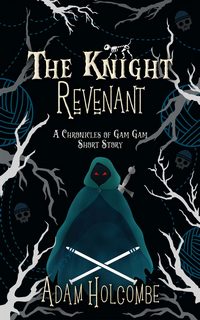
The Friday 56 for 1/6/23: Pieces of Eight by Peter Hartog

The Friday 56This is a weekly bloghop hosted by Freda’s Voice.

RULES:
The Friday 56 Grab a book, any book.
The Friday 56 Turn to Page 56 or 56% on your ereader. If you have to improvise, that is okay.
The Friday 56 Find a snippet, short and sweet.
The Friday 56 Post it.

from Page 56% of:
Pieces of Eight

Pieces of Eight by Peter Hartog

I positioned myself behind the chair next to Deacon, my hands resting on its curved back. Beyond the windshield, Empire City blurred, blended streaks of shifting colors without beginning or end. Night had long fallen, soaking the world beneath a snowy abstract blanket where truth slept with lies and deceit. So many thoughts crowded my mind vying for my attention: the Flynns, the One, Pop, Ivan and the bratva, Jack, Mahoney, my feelings for Charlie.

And Leyla.

“It is of the highest importance, therefore, not to have useless facts elbowing out the useful ones,” I quoted quietly.

I shook my head in bemusement. Sir Arthur Conan Doyle had been right. My brain-attic was near capacity. Questions bounced around in my mind, banging off of dusty facts, clues, details and other minutiae, a vast amorphous jumble that up until now, had formulated little to no answers.

My Favorite Crime/Mystery/Detective/Thriller Fiction of 2022

2022 Favorite Crime Fiction
I read 114 books I put in the category of “Mystery/Detective Fiction/Crime Fiction/Thriller” last year (and there are a couple of multi-genre novels that could beef that number up a bit), so I have to consider it apart from everything else when I put together my Favorites Lists, or just about everything else would get ignored. Even if I went with a Top 15-20 instead of a Favorite 10, maybe 2-3 books from the previous lists would’ve made it along with all of these.

I had a hard time writing up this post—not because I had a hard time picking the list this year (thankfully). Partially because I’m tired of doing these little snippets at this point in the week, but mostly because I want to write a thousand words or so on each one (and probably spend time re-reading huge chunks of each of these books in order to do that properly), so keeping myself to a paragraph or so is really difficult. I ended up borrowing liberally from things I’ve written here and elsewhere just to make sure this list was able to be posted before Feb. 26th.

Once again, I’ll note that I limit my lists to things I read for the first time. I’d be willing to guarantee anyone reading this page will enjoy at least 6 of these (which six will vary from reader to reader, however). I’m tempted to say that all the listed books are guaranteed for everyone, but people’s tastes are too varied, so I’ll hedge my bet. Try these, and you’ll be glad you did.

(in alphabetical order by author)

Bye Bye BabyRobert B. Parker’s Bye Bye Baby

by Ace Atkins

My original post
It’s really no surprise that Atkins’ final Spenser novel makes this list—Spenser is one of my all-time favorites, and the decade that Atkins spent at the helm included several of the best novels in this long-running series (this is the 50th novel!!). He also helped legions of fans deal with Parker’s death by doing such a capable job. This book evokes some of Parker’s best early novels while remaining wholly original and compelling—true to both authors. It’s a great way for Atkins to go out.

4 1/2 Stars

Double TakeDouble Take

by Elizabeth Breck

My original post
In my original post, I said that it felt like Breck wrote this novel for me—I’m not that delusional, but it resonated with me in so many ways that she might as well have. Madison Kelly was one of my favorite discoveries of 2021 and her sophomore adventure solidified my impression of her. Madison’s tough, smart, lucky (and knows how important that is), and committed. Brisk and assured writing. A nice bit of sleuthing to find a pretty clever crime (committed by some people who really shouldn’t ever get into criminal activity—and some who seem born to it). Featuring the kind of ending where you find yourself leaning forward as you read, because somehow that helps you get to what happens next faster; you don’t hear the music/people/animals around you; and your eyes move just too slowly.

4 1/2 Stars

Racing the LightRacing the Light

by Robert Crais

My original post
We leave one of my newest PI obsessions to go back to one of my oldest—Elvis Cole. This is the best use of this character in years, and I loved every second of it. Like the best Cole novels, it starts as a missing persons case before turning into something far more complicated and deadly. But Cole is able to keep his focus on the victim (while finding justice for the wrongs he encounters). Joe Pike doesn’t get as much “screen time” as he has been lately, which makes every second that he’s around so much more effective—he owns one of the best moments of the book (and barely does anything in it). Racing the Light will no doubt be considered one of the pivotal moments in the series and I can’t wait to see what comes after this point.

5 Stars

The BotanistThe Botanist

by M.W. Craven

My original post
The last note I made on this novel was, “the last 30 pages made me happier than almost anything else this year.” And thinking back on those pages right now still makes me almost giddy. While Poe and Tilly are vital to the novel—ultimately, this novel is about the secondary characters—victims, suspects, and the killers. The primary case is brilliant on every front—the method of murder, the way that the method is finally discerned by the good guys, and then the way the case is closed? It’s all a thing of beauty (in the dark, warped way that Crime Fiction is to fans of the genre). I’m on the verge of babbling now, so I’m going to leave this and move on to the next novel on the list.

5 Stars

Don't Know ToughDon’t Know Tough

by Eli Cranor

My original post
I was blown away by this novel. I read it in May and I’m not convinced I’ve wholly recovered. It’s a story about faith, family, and (American) football. I can’t tell you which is more important to any character in this novel at any point (but I’d lean toward the latter for just about all of them). The prose is gorgeous and visceral, the story is intense and heart-breaking–it’s about a high school coach and a star player trying to keep their heads above water in the middle of a murder they’re both connected to. I can easily sound like I’m over-hyping this, so I’m not going to go on the way I want to. I’ll simply say that Cranor’s work is just gut-wrenching, beautiful, and powerful. And not to be missed.

5 Stars

MovielandMovieland

by Lee Goldberg

My original post
This series started off strong and keeps getting stronger. The overall arc of the series is a rookie detective (who got promoted earlier than she should have) learning how to be a good, maybe great, detective. Eve Ronin makes mistakes, she learns from many of them, but her instincts are on point and she eventually gets her criminals. If she can learn to do it without burning every bridge in sight and unintentionally antagonizing everyone she works with, she’ll get there faster. This is likely the last case her partner will work and he gives it everything he’s got—while imparting every bit of hard-earned wisdom to her as he can—and boy howdy, does he shine here. This is likely the best thing by Goldberg that I’ve read—and I’ve been a fan for a long time.

4 1/2 Stars

ReconstructionReconstruction

by Mick Herron

My original post
Dead Lions by Herron would’ve been on this list, but I don’t let myself use one author more than once, so the spot goes to Reconstruction. Possibly because I spent far more time with this than I do with most books on a first read. Herron got everything right with this book. None of the primary characters are who you think they are at the beginning—most are far worse people than you think (including the ones you have a bad impression of—they’re even worse than you imagine). Which doesn’t stop them all from being some of the best designed and executed characters you’ll run into. The plot is like an onion (or a parfait, to appease Donkey)—you keep peeling back layer after layer after layer until the very end—and each layer is practically perfect and delicious (making it more like a parfait, now that I use that word). The narration is sneakily hilarious and dark. One of my earliest reads of the year and it set the bar high for the next 11 months.

5 Stars

The Self-Made Widow The Self-Made Widow

by Fabian Nicieza

My original post
The premise of this sequel is fantastic—what’s a detective to do when they know who the killer is, but they’re not sure how or why the murder was committed. In fact, in the beginning, Andi’s the only one sure the victim was murdered at all. Kenny takes some time out from the documentary he’s making about the events of the previous novel to help Andi out (and hopefully to get another book, documentary, whatever out of it all). Andi’s up against someone as smart as her this time, and it’s going to take more than just Kenny’s help to crack the case. Told in Nicieza’s fantastic style this is a sure-fire winner.

5 Stars

The Bullet That MissedThe Bullet That Missed

by Richard Osman

My original post
This third book in The Thursday Murder Club series is about two things—the new case the Club decides to look into (mostly so Joyce can meet some local TV personalities) and fallout from the last book–on multiple fronts. As much as I enjoy this series for the lightness and joy it brings—the looming danger that arises as a side effect of their recent success was great. By all means, let’s let things get serious. Elizabeth’s husband, Stephen, steals this novel, however. He shines brighter than ever—and is in worse shape than ever before. This series is ultimately about grief and living in its shadow—that shadow seems larger than ever, and it’s just going to get bigger.

5 Stars

Family BusinessFamily Business

by S. J. Rozan

My original post
This was the first novel I read in 2022, and it stuck with me throughout the year. I was shocked—and very pleased—by the actions of a long-term character. The narration was as good as Rozan has ever given us. Once again, Rozan takes us into the depths of Chinatown’s Organized Crime and does so in a way that no one expects. Lydia’s at her cleverest when it comes to solving the crime here—even if she might not be that wise when she reveals it. The relationship between Lydia and Bill has taken on new depths, and remains one of the best relationships in detective fiction. Family Business just made me happy from beginning to end.

4 Stars

I want to mention really briefly the books that almost made the list—tied for 11th, I guess you’d say. (fatigue and trying to keep this list from getting too long prevents me from just making my Favorites list long enough to contain them—preventing Reader Fatigue is more important than my own).
bullet Hell of a Mess by Nick Kolakowski
bullet Roses for the Dead by Chris McDonald (the other two parts of this trilogy could easily be substituted for this one)
bullet Blood Sugar by Sascha Rothchild
bullet Jacked, edited by Vern Smith
bullet Killer Story by Matt Witten
(links will take you to my original posts about them)

Page 187 of 609

Powered by WordPress & Theme by Anders Norén