Author: HCNewton Page 199 of 623

The Friday 56 for 1/20/23: The Hero Interviews by Andi Ewington

The Friday 56This is a weekly bloghop hosted by Freda’s Voice.

RULES:
The Friday 56 Grab a book, any book.
The Friday 56 Turn to Page 56 or 56% on your ereader. If you have to improvise, that is okay.
The Friday 56 Find a snippet, short and sweet.
The Friday 56 Post it.

from Page 56 of:
The Hero Interviews

The Hero Interviews by Andi Ewington

Gwenyn: …These bastards are a heroic pain in the arse. My turnip crop is ruined! How am I supposed to recover from this?”

Me: “I—I don’t know…”

Gwenyn: “That’s not even the worst part of it. The worst part is knowing that while I’m here picking up the pieces of our life, the ‘heroes’ responsible are probably patting each other on the back as they head off to celebrate their success by getting blind drunk in the nearest tavern!”

Me: “I’m sorry—”

Gwenyn: “Why are you apologising? It’s not your fault; you’re not one of those hero types, are you? It’s not your mess that was left here to rot. What am I supposed to do with a giant Dragon corpse? You think I’ve got it bad now, just wait another week—the stench from that thing will be almost unbearable. We’ll be forced to move away until the next summer at the earliest—that’s a large portion of our coin for the season lost to these so-called heroes.”

REPOSTING JUST CUZ: The King of the Crows by Russell Day: Prescient. Gripping. Haunting. Unpredictable. What stories should be.

Things have gotten away from me today, so I don’t have anything new to share. But I’ve been thinking a lot about this book this week (I think about this book frequently, to be honest, but several times a day this week), so I figured I’d try to get others thinking about it, too. If you haven’t read this yet, you should strongly consider doing so, as I argue below. Incidentally, re-reading this now serves as a really good argument for me to adopt the current format of my posts using section headers and whatnot (I’d been rethinking them last week, but after this post? They’re sticking around)

King of the Crows

King of the Crows

by Russell Day

Kindle Edition, 456 pg.
Fahrenheit Press, 2020

Read: April 28-May 9, 2020

… for me at least, the first week of the Lockdown was the worst.

Knowing it had happened to me. I hadn’t escaped, I wasn’t one of the lucky ones. Lucky to be safe or lucky to be dead. Take your pick. I was neither.

That right there gives you a pretty good idea what kind of light and fluffy read this is going to be.

There are two timelines in this story—the primary focuses on a post-pandemic London, while the other shows what happened to a couple of the characters mid-pandemic (with plenty of material describing what the pandemic was like for others). In the primary timeline, Europe is a disaster—a “wasteland”—and eight years after the Outbreak, it’s beginning to put itself back together. But it’s going to take a long, long time to recover from this. Don’t let the fact that “eight years after” this fictional outbreak is 2028 bother you at all.*

* Good luck with that. I’ll get back to this in a bit.

I’m not going to try to list all the various ways that Day uses to tell this story: I’m certainly going to forget several. So here’s a partial list: here’s a third-person 2028 narrator describing a police investigation, a first-person perspective on the same investigation; a first-person account of that same detective’s life during the Outbreak; selections from a screenplay made about a group of Londoners during the Outbreak; selections from the Outbreak-memoir of one of those Londoners; and third-person narration of the same (N.B.: these three will vary in telling ways); redacted 2028 prison correspondence about the Outbreak; excerpts from scholarly works on aspects of the Outbreak (including a very illuminating work on the slang of the time); graffiti from 2021; internet message boards. Day weaves these together to tell his story, build the world, and help you to understand it. Frequently, I read something from the 2028 timeline, and understood it—only to find a new depth to it several pages later after getting another piece of the puzzle from 2020/2021. It’s hard to juggle that many narrative forms/voices/perspectives/calendars as a reader or a writer—Day pulled it off better than I did (any problems I had following things I attribute to myself, and it was pretty easy to clear out my misunderstanding with a minimum of backtracking*). It definitely helps paint the picture of the scope and variety of effects the sickness had on the world more efficiently than a consistent first- or third-person narrative would be able to.

* This would be easier in hardcopy than on an e-reader in my opinion. But that’s just a guess.

There are times (several of them) when I felt that the characters were getting lost amongst the plot and worldbuilding and sickness. But when I stopped and thought about it—and eventually got to the point where I didn’t have to—I realized I had a pretty solid idea about who these people were and was more invested in them than I expected. I thought there was so much going on that the people were getting hidden, but really, Day’s work was subtle—working in the characters into my subconscious like you give a dog its medicine. Normally, this isn’t something I require (or would like)—and it’s not Day’s usual M. O. (quite the opposite), but I think this approach really fit the novel and the story/world.

“They weren’t zombies,” he says, softly. “Don’t call them zombies.”

No one who was involved in the Outbreak for real uses the zee word.

So exactly what was the sickness?

I remember reading a couple of years ago about these ants that would succumb to a fungus which would short-circuit their brain and make them do certain things before killing them—or something like that, vague memories here. Then there were stories about parasites controlling the host’s actions—both of these stories had their 15 seconds of fame on social media around the same time (I may be messing the details up a little bit, but I’m not writing history here).

In Day’s world, one of these kinds of parasites will reside—asymptomatically, I should stress—in cats, who would pass it on to humans. Skipping the details, the humans would get very sick and then, survivors would maybe succumb to a psychosis that would make them violent. This sickness, HV-Tg (Human Variant-Toxo gondii), in a little more than a year would kill more than 20 million in Europe (at least 33% of France’s population) Et voilà!—an easy to believe pandemic that results in Zombie-like people wandering around.

Now, if one of those who’d “switched” and become violent infected you during an assault, well, you were likely to succumb. There were enough of these (“psychos” or “Gonzos”), and the sickness was so widespread, that the police and military couldn’t keep up, that civilians were forced to take action and defend themselves, their family and neighbors. People quickly forming into gang-like associations for mutual protection. It was a literal kill-or-be-infected (and likely killed) situation.

One such association became known as The Crows or The Kings of the Crows. They developed a legendary status mid-and post-Outbreak—and are the subjects of the memoir and film mentioned above. One of their number who happened to survive (and gain notoriety enough to get a publishing deal for a memoir) is the subject of the 2028 investigation. They survived the worst of the worst in one of the hardest-hit cities. They did so via means and methods that many (including their own) would find deplorable, but under circumstances that not only permitted, but required, those actions.

We also see what happens to an American in Paris for work when the Outbreak reaches the point that International travel is canceled (particularly to the U.S.). Her allies will never be considered the Kings of anything, and the contrast between how she survives to what the Crows do is pretty striking.

In 2028…eh…you know what? You should read that for yourself. I’m going to say something I’ll regret.

The biggest killer in those days wasn’t the disease or the psychos, it was stupidity.

However, it has been pointed out by many historians, logic was one of the first casualties of the Outbreak.

Some of the best moments of this book have nothing to do with advancing the plot, they’re little bits showing what the world of the Gondii-pandemic looks like. The man telling the story about taking his girlfriend to the ER because of a burn—how they were treated, and how she became infected. The soldiers coming back from a Middle East deployment being completely unprepared for what had happened to their home country. The mother and son who traveled with the Crows for awhile.

Ultimately, it’s not the story you think you’re getting…or is it? The marketing tag line is, “Ocean’s Eleven meets 28 Days Later.” It is, all things considered, a good, catchy line. I’m not sure it’s all that accurate a description of the novel (but it’s not inaccurate). What it is, really slides up on you—and when you see it it feels like it was obvious all along (even if you wouldn’t have said that 20 pages earlier). There’s a straightforward crime story at the heart of this novel—it’s just surrounded by so many layers, that you can miss it—there’s the sickness, there’s the horrible social and political context (both mid- and post-Outbreak), there’s what the characters are going through otherwise—and the whole thing is drenched in social commentary about 2020 society, e.g., sexism, economics, medical care.

And that’s not even touching the context we’re reading it in now. I truly wonder what I’d think of this book if I’d read it last Fall. I’d still like it, I’d still be impressed by it—but I don’t know if it would resonate with me the same way. There’s almost nothing about Gondii that’s comparable to COVID-19. But the way that people and governments respond—well, that’s pretty different, too. but if you can’t see what’s going on around us reflected in this novel? You’re not paying attention. That Day appears so prescient says something about his skill and observation (and a lot about Western culture, too).

I can see why people cling to the idea that the Gonzos were trying to tell us something. Something’s out there trying to get a message through: there’s a plan. Compared to the idea that it was all just chance, it’s a comfort of a type. Chance doesn’t care and can’t be appeased and can’t be reasoned with. Chance means it could all happen again.


5 Stars

WWW Wednesday, January 18, 2023

I am having the hardest time staying awake this week, which is messing with my reading a bit, but I’m so tired that I don’t care (which is a strange feeling for me, normally that’d get me stressed out). I know it doesn’t matter—this is a hobby, not a paying gig—it’s just an observation.

This meme was formerly hosted by MizB at A Daily Rhythm and revived on Taking on a World of Words—and shown to me by Aurore-Anne-Chehoke at Diary-of-a-black-city-girl.

The Three Ws are:

What are you currently reading?
What did you recently finish reading?
What do you think you’ll read next?

Easy enough, right?

What are you currently reading?

I’m reading the captivating while creepy and unnerving (and likely to get nastier-sounding adjectives before I’m done) The Perception Of Dolls by Anthony Croix, edited by Russell Day and am listening to the strangely charming  Ms. Demeanor by Elinor Lipman, Piper Goodeve (Narrator) on audiobook.

The Perception Of DollsBlank SpaceMs. Demeanor

What did you recently finish reading?

Last week, I finished Seanan McGuire’s Lost in the Moment and Found and A Drink Before the War by Dennis Lehane, Jonathan Davis (Narrator) on audio. Both were everything I hoped for.

Lost in the Moment and FoundBlank SpaceA Drink Before the War

What do you think you’ll read next?

My next book should be The Hero Interviews by Andi Ewington—I’m going to need a lighter read after my current novel, and this should fit the bill. My next audiobook should be Half-Off Ragnarok by Seanan McGuire and Ray Porter, Emily Bauer (Narrators) as I continue revisiting this series.

The Hero InterviewsBlank SpaceHalf-Off Ragnarok

What’s getting your attention lately?

PUB DAY REPOST: Killer Story by Matt Witten: A Desperate Reporter Works to Solve a Sensational Murder

Be sure to check out this Q&A with Matt Witten—it’s a great one!


Killer StoryKiller Story

by Matt Witten

DETAILS:
Publisher: Oceanview Publishing
Publication Date: January 17, 2023
Format: eARC
Length: 320 pg.
Read Date: December 26-27, 2022
Support Independent Bookstores - Visit IndieBound.org

What’s Killer Story About?

While studying journalism in school, Petra acted as a counselor for a high school journalism camp. In that role, she met and befriended a young girl named Livvy Anderson. Over the years since then, the two forged a strong friendship—almost like sisters. At some point though, the relationship faltered—in college, Livvy started posting videos online spouting (in Petra’s view) extreme right-wing politics, hateful speech, and the like. For example, she defended a star football player accused of raping a woman on campus by trashing her reputation and exposing personal details. Rather than pushing back or even arguing with her friend, Petra chilled communication, assuming it was a phase, and focused on her own work.

And it might have been a phase if Livvy hadn’t been killed. The murder was fairly sensational—it happened while Livvy was recording a video (but she paused the recording so no one saw it or the murderer). The accused killer was acquitted—and most of the country (including Petra) assumed it was a travesty of justice and that he got away with it. The Court of Public Opinion definitely found him guilty.

Years later, Petra has found herself (like most young print journalists) bouncing around from newspaper to newspaper, trying to stay employed. She’s now at a major Boston newspaper and thinks that life is stable—the subjects of her stories might not be that glamorous, but she’s working, and the big story is around the corner.

Until she’s laid off. She panics at this point—her boyfriend (who moved cross-country with her for this job, changing the course of his career) isn’t going to put up with the lack of stability much longer, and it’s going to only get harder getting a job at the rate she’s going. So she throws out a mad pitch to her editor—what if she could definitively prove who killed Olivia Anderson? She tells him this story isn’t just the kind of thing for the paper—it’d make a great podcast.

Visions of the kind of revenue that Serial and similar podcasts could bring to the paper, not to mention the publicity of this kind of story, he gives her two weeks to firm up the story, start producing the podcast, and they’ll see what happens.

Petra heads off to find the evidence she pretended to have during that meeting—and hopefully much more.

The Journalism of this Novel

I’ve talked before about how I’m a sucker for a novel about a driven journalist—typically a print journalist, too. I’m always ready, willing, and able to embrace and fall into the romance of the crusading reporter. Or just one who does the job well, without a crusade.

But those kinds of stories are getting harder to tell and to believe in our current media landscape. Not just because print journalism is dying (for worse or for worser). It’s definitely not the track that Witten takes here. Petra is desperate and acts desperately—she lies to her editor at every turn, overstating her case and the evidence she has at each step of the way. Almost every fictional reporter* cuts a corner here and there and bends a rule and the truth in pursuit of the story and/or the truth. Even thosPetra amputates corners and forces the truth about her actions into positions only the most experienced yogi can handle—at least when it comes to what she tells her editor, coworkers, the police, her boyfriend, and so on.

* Lawyers, please note that I’m not saying anything about the methods of actual reporters or the companies they work for. Please don’t sue me.

When it comes to her actual reporting, however—in print, podcast, and elsewhere—Petra is much more honest. Bowing to editorial pressure she may say something earlier than she should* and while she never lies, she sure edges close to it. Her scripts feature incredibly well-chosen words—true, but open to interpretation.

* There are a few hundred words I could write about other journalistic ethical moves here, but I’d be getting sidetracked.

The journalism—both in print and in the podcast—we see here is very likely what fills our screens and earbuds. It’s sensationalistic, click-driven, and not necessarily all that honest. It’s depressing to think about, and it’s not great to read about if you think about it in those terms—but it makes for a thrilling (and realistic) read. Still, I think I need to go watch Deadline – U.S.A. or something to restore my faith in humanity.

The Alt-Right Depiction

Thanks to Livvy’s online persona, even now, she has a good number of fans. Many of those fans are not happy about Petra’s podcast—and make that displeasure well known online. At least one goes further than that. Between them and Livvy’s videos (and other online activities), Witten has to walk a careful line—he needs to depict them in an honest and believable way without turning them into a convenient punching bag for a reader or character to spend a lot of time venting about their politics (perhaps even himself). Or, to go in the other direction, too.

I really appreciated the restraint he showed in this regard, it’d be easy to slip here, but on the whole, he simply reports on the views espoused—sure, it’s clear that Petra and her colleagues (and many of the witnesses that talk about it) disagree with Livvy and her fans/defenders, but with only one exception, we don’t get details their differences with the alt-right views.

That exception comes from Petra having to do a deep dive into their activities and to try to interact—so it comes about organically. Even then, Witten doesn’t let Petra go too far.

I mention this to say that readers shouldn’t let the politics involved in the book dissuade them—it’s there, but it’s just part of the atmosphere. And it’s fairly evenly handled, and I can’t imagine many readers having a problem with it.

So, what did I think about Killer Story?

Early on in the novel, I made assumptions (as you do) about the kind of story that Witten was telling and what kind of things the reader should expect from the plot and characters. I was wrong on just about every point. It was a very different kind of story, the characters ended up going in directions I wouldn’t have guessed (Petra’s editor, boyfriend, and best friend were probably the exceptions to this), and every theory I had about the killing was wrong.* And the result is a richer, deeper, and more satisfying novel than what I thought I was going to get (and I anticipated this being a good one!).

* Well, almost. I did have the motive and killer right for a chapter or two, but Witten and Petra got me off of that path.

Witten’s story in last year’s Jacked was one of the higher points in a collection full of high points, and this novel solidified my appreciation for his writing. Before I got to the point where I realized that the novel wasn’t telling the story that I thought it was and shifted my expectations, I spent a good deal of time not liking the book—but I couldn’t stop reading it or thinking and talking about it when I wasn’t reading it. It was just too well done. It got under my skin. Actually, it’s still there—I can’t stop thinking about Petra and her choices. I even emailed Witten to ask a couple of questions I had about some points—points that I think the reader could have divergent opinions on, but I wanted his authorial take on it. I’ve never done this before. But I had to know—and even having his take on them, I’m chewing on it.

I’m going to be haunted by Killer Story for a bit—in the best way. If you’re looking for a mystery you can sink your teeth into and chew on, look no further.


4 Stars

Disclaimer: I received a copy of the eARC of this novel from the author in exchange for this post and my honest opinion. This did not impact my view and the above is my honest opinion.

This post contains an affiliate link. If you purchase from it, I will get a small commission at no additional cost to you. As always, the opinions expressed are my own.


LITERARY LOCALS: A Q&A About Writing in Idaho with James T. Lambert

Literary Locals logo
I talked about James T. Lambert’s first book, Aether Powered, last month–and he participated in a Q&A about it and his writing in general (both the book and his answers are well-worth your time). Now he’s back with some thoughts about the writing life in Southwest Idaho and some related things, too. I had a blast with this one, I hope you do, too.


Before we get into things, why don’t you give the reader a brief introduction to you and your work.
My name’s Jim Lambert, but I write under James T. Lambert (my real name, lol) for that sweet, sweet Star Trek cred. I have read a lot of science fiction and fantasy for a long time. I always loved reading. I saw a NaNoWriMo poster up in a game shop back in (I think) 2009 and thought that would be fun. But it was already November 15th so… next year (NaNo runs from 11/1 to 11/30 with a goal of writing a 50,000 word novel in that time). Next year I did a little better. I was only a week late. In 2011 I remembered it on 11/3. “I’m a fast typist. I can catch up. Now what am I going to write about?” Yeah, pretty silly.

But I came up with an idea and made it to 50,000 words (barely). I did it for several more years, ending up succeeding four times early on, then falling apart in 2016. I didn’t get anything substantial written for several years, but this year is my ‘Year of Getting Stuff Done.’ Last year I finished polishing a novel from 2014, and Indie published it in January. That was Aether Powered, a ‘modern steampunk’ novel. I also did some work on a non-fiction book and with my co-author we put The Tao of Trek out in March. I Indie published a science fiction novel, Proxies, in August. My next book comes out mid-November: Steam Opera, a more traditional steampunk novel. I’ve got another science fiction novel ‘in the pipe’ for next year, Relics of War.

You can find my books through my website http://jamestlambert.com/ or directly through my Amazon author page http://amazon.com/author/james.t.lambert.

What brought you to Idaho in the first place? What is it about Idaho that keeps you here?
I’m not a native. My family moved here in 1976 when I was between third and fourth grade. I grew up in Meridian, took a job in Bend, Oregon for a couple of years before moving back to Boise. I like a lot of things about Boise. It’s a small city, so you get the advantage of a city, but not nearly as many of the disadvantages. It’s clean, the people are friendly, and it’s safe. Well, all mostly. It’s a rough world and that affects everywhere. But I do like running into people I know all over town.

I had to grin at “Well, all mostly.” It’s easy to forget both the friendly and safe parts if you spend too much time online (and easy to forget the “mostly” part, too). What’s one thing that you find yourself telling people who aren’t familiar with Idaho about the state (after the obligatory “we do more than grow potatoes here”)?
That we’re in the Pacific Northwest and that’s where most of the hops for beer for the US comes from. Yeah, strange factoid, but I’m a craft beer guy so I like that one. I often mention the geographic isolation of Boise. We’re 300 miles from the next ‘major’ city (Salt Lake City). 400 miles from Portland and 500 from Seattle. Other than the string of cities right next to us (Nampa, Caldwell, Meridian, Eagle, etc) we’re a long way from anywhere. That has a lot of impact on us. There’s not nearly as much ‘through traffic’ since anyone going somewhere on the ‘other side of us’ is going to be best off flying and skipping the 700 miles to get from Portland to SLC. It really depends on what the person I’m talking to is interested in. If they like the outdoors, there’s a lot of good stuff here. Fishing, the same. Major concerts? Not so much. Book tours? Not so much. Conventions? Yeah, there’s a few, but being isolated makes it tough for people to come here.

Are you tied into some sort of local author/bookish group/culture? If so, tell us about it and how it helps you as an author. If you’re not, is there a reason for it?
At one time, early in learning to write novels, I was in five critique groups and a member of the Idaho Writers’ Guild. I’m still a member of one of those critique groups and I’ve recently rejoined the Idaho Writers’ Guild after a few years out. I’m on the board of directors and hope to help make the Guild more valuable to its members. I’m in the Boise Speculative Writers Support Group, where we compare notes and encourage each other. I’ve also been involved with the NaNoWriMo community here and attended some of the writing-related (and science fiction/fantasy-related) conventions in the area or nearby.

I think it’s important for everyone to ‘find their tribe’ and surround themselves with supportive people interested in the same things you are. I have many friends from the writing community I can ask for help or for recommendations for things like editing, proofreading, beta readers, and publishing. My good friend, fellow writer, co-author, freelance editor, and partner in publishing I met in my critique group. Another of my good friends came from that group and she’s also a partner in publishing. We formed a group called Bert Books, https://bertbookspub.com/, since we all (at one time) had last names with ‘Bert’ in them. A member of the critique group when I joined, but who has since moved away, just finished proofreading my latest book. A friend from the Spec Fic Support Group will be joining me on the board of directors. When we all pull together, we can do just about anything we set our minds to.

What kind of events in the area do you attend—either to sell/promote your books or to network with authors? Are there any outside of this area that you hit regularly and wish we had something like it here?
There used to be a science fiction/fantasy/etc convention, Fandemonium, which has since missed several years. I enjoyed going there and meeting with genre authors and going to panels and talks about writing for that fanbase. I’m still friends with the founder.

I go the Idaho Writers’ Guild annual conference, which doesn’t focus on my genre, but has a lot of great material.

A new annual event Boise Books and Brews, began this year and I’m part of the group organizing it.

I missed out on the Boise Comic Arts Festival this year, but plan to catch it in the future.

I made it to the Nampa Festival of the Arts and had a booth there.

Idaho Writers’ Guild schedules author networking events.

Some of the local libraries schedule author events (I should be at one in Eagle in December). (clearly, there’s a gap between when he responded and now…be sure to come back to The Irresponsible Reader to learn all about the events you could’ve attended months ago)

I attend a few conventions outside the area, mostly ones that specialize in my genre. A particular favorite is LTUE (Life, The Universe, And Everything), which happens in Provo Utah, is inexpensive, and has a wide variety of topics covered. Another is Fyrecon, which is now a virtual convention, which I’ve attended every year since they started. Missoula has Miscon, a long-running genre con with amazing guests. In the past they’ve had George R.R. Martin, Patrick Rothfuss, and Christopher Paolini. FanX in Salt Lake City, Rose City ComicCon and Emerald City ComicCon are all big events with tens of thousands of fans.

I’d like the strong program of LTUE, the dedication of Fyrecon, the guest list of Miscon, and the big crowds of the comic cons to happen more often in our area.

I heartily recommend the Library’s Comic Arts festival (I spend more there than I budget for every year, it seems) and am glad I saw you at the Nampa Arts festival this year. The Books and Brews event looked great—glad to hear it’s going to be an annual thing. Outside of sales (can’t minimize their importance), what for you is the best part of these events (Books and Brews/Nampa Arts/Library events) where you can interact with readers/browsers? Are you picking up enough readers at events like these to justify them, or is this a long-term plan—if you keep showing up, people will pay attention?
I like meeting people (although as an introvert it wears me down some) and it’s an opportunity to find out what readers are reading. When I’m asking about what they like to fit them with one of my books I’m also finding out what they like in general and getting a sense if that would be a good fit for me to write. I’d like to think I’m getting some regular readers from being there and being friendly with folks, but it’s hard to gauge. I plan on continuing to do these since it’s the only way to get that in-person feedback. Economically it’s not bad either. Eliminating the extra expenses of resellers means I can make more money per sale even if I lower prices a little. It’s not a perfect system and there’s definitely limitations to how much you can sell at an in-person event, but I like it for now. I do keep in mind the advice I’ve heard “would I be better off writing?” Big name authors (Brandon Sanderson for example) have to balance going to a convention every weekend with getting new books written. His big Kickstarter talked about how the pandemic prevented him from touring and gave him enough time to do four extra novels. I remember Terry Pratchett saying he quit his day job when it was costing him money to go to work instead of staying home and writing. My goal isn’t to be a speaker and make money from appearances, I want to write some books and have people buy those. I do want to be well known enough that I can go to some of the cons and hang out with the ‘cool kids’ but if that doesn’t happen I’ll hang out with the cool kids I already hang out with, lol.

What’s the breakdown of your audience—do you have a strong local base, or are your readers from other parts of the world?
I’m just getting started, so my main audience is family and friends (many from the writing community) so far. I’ve had a few sales overseas, the UK, Australia, and Germany for example, but I’m still building my audience and getting ramped up. I’ve done stand-alone books so far, so I haven’t been able to take advantage of the series readers returning to the next book in the series. My next book kicks off a trilogy, and some of my stand-alone books have the potential to turn into series, so that may change in the future.

Fair enough—so, let’s tweak things a bit. Based on what you know from your local contacts, how would you expect/hope things to go and how are you working to that end? Or do you have a plan yet?
I don’t have a firm plan for an end game. I’m at the ‘get some books out there’ stage. I figure people can’t buy my books if I don’t have any out there to buy. So I’m building my backlist. That being said I am doing some things to try and get some readers involved. I’m advertising on Amazon. I’m planning on getting some series going. I’m planning on publishing some short stories that are in a series. I hope that will give people a series to link into and since they are shorts maybe make it easier to write a new one on a faster schedule. Maybe even get involved in Vella and publish some things through there. Mostly I need to work on getting some regular sales so I know I’m doing things right and then just keep moving in that direction. One specific thing I haven’t gotten rolling yet is an email list and newsletter. I know they are important and effective, but I’ve just not gotten them going.

Do you think there are particular challenges or advantages to being a writer in the Treasure Valley? (possibly both)
With our geographic isolation (nearest big city is SLC, and the next three nearby ones are over 8 hours away by car) it’s not easy to jump over to a convention or event outside the valley. I’ve driven to Seattle for one day visits twice to see authors who are my particular favorites (Lois McMaster Bujold once and Terry Pratchett {GNU} once). We do get some ‘big’ authors here at times. I saw Margaret Atwood at BSU.

This same problem combined with a relatively small population leads to more niche interests having smaller representation. I’ve an interest in Steampunk, but we only had a dozen or so active steampunk fans in the area. The club for it eventually faded away.

But if you do find your ‘tribe’ here it’s much more likely you can get involved in activities with people who ‘get’ you. You aren’t one of dozens trying join a particular group, but probably someone that group is trying to seek out.

Of course, if you appreciate isolation and a distraction-free environment we have lots of natural areas close by where you can sit and write until your laptop battery runs out. And then switch to pen and paper! Several groups have sponsored retreats to cabins in nearby areas where a small group can isolate and really dig into their writing.

I definitely get the small population leading to small representation and how that impacts things here. When I brush up against someone with similar likes in the area, I’m always surprised (not sure why, but I am). A few years ago, when Scalzi was at the Boise Library! my reaction was kept bouncing between “I can’t believe this many people turned out” and “Of course he’s this popular.” If you were new to the area, how would you go about finding a tribe here? Google?
Google is a great place to start. Facebook is another, as it allows creations of groups. I’m interested in boardgames and there’s a Boise Area Boardgaming Enthusiasts group on FB. The Library used to have a club registry (last time I looked at it was pre-Google) so they probably still have something like it. The Boise Weekly has an events calendar which can get you to an event where people interested in your topic are going to be. I remember way back in the 80’s when a local comic book store owner did a talk at the library he had a signup sheet for forming a local club. He just waited for the first person who called interested in how the club was going and put them in charge. I was the second person, lol. We started a Science Fiction club that lasted a decade or so and many of the people from it are still friends. Offering to do a community education class on something you are interested in will bring in some people to meet. Once you meet a few people you can ask them for introductions or information about more.

Do you bring Idaho (or some sort of Idaho-sensibility, assuming one exists) to your work? Whether or not anyone else sees it, can you look at some aspect of your writing and think “That’s Idaho” or “I would do ____ differently if I was a Kentuckian or from Illinois?”
I do steal settings from around me. I have a partially completed book where the beginning is all set in an unnamed city which I used Boise as a model for. Characters visit 8th street to have coffee, go to a Rave at the Mardi Gras, and visit a local library.

I’m almost finished with a short story set in downtown Boise featuring Meriwether Cider, the Idanha, and the Owhyee Plaza. Okay, and the Chinese Tunnels under downtown.

I’d probably use locations from whatever place I was living. When I visited my hometown in 2011 I was doing a NaNo project and visited a coffee shop that made a big impression. I used it as a setting for a short story I wrote later.

I’m sure some of my language, colloquialisms and such, are based from Idaho, or at least the Pacific Northwest, but I don’t think my stories have much flavor from here beyond using real locations for models or as settings.

One final question, is there a book (or two…or 18, if you get really carried away), that embodies Idaho/the Idaho spirit to you to recommend to my readers?
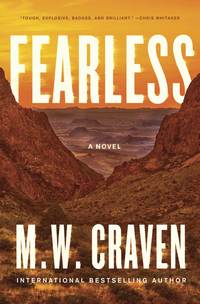
Oh, that’s tough. Hmmm. A friend wrote Fearless about the guy who started Fearless Farris Stinker Stations, that’s pretty Idaho.

My friends Troy Lambert, Danielle Parker, and Marlie Harris all wrote some stuff that is set in Idaho.

Troy and Dani each wrote a novella which ended up combined in Incidents in Idaho. They are in the same universe, our Monster Marshals stories. One is set in Boise during a snow storm in July. The other in a mine (Troy has a deep background in mining history (yeah, I know what I did there)).

Troy and Marlie wrote a story collection called Into The Darkness about evil spirits in mines and in reservoirs in Idaho. So that one really has Idaho ‘spirits’ lol.

I haven’t read a lot of books that are set in Idaho and give a deep feel for the state. I know some authors who write stuff set here, but it’s not really in a genre I read. A former Idaho Writer’s Guild president I knew wrote a book about Bogus Basin history I enjoyed.

So I don’t have any I strongly recommend for their Idaho-ness, but the Monster Marshals stories are good. And Into the Darkness is good if you like horror (not my favorite genre, but they submitted some to the critique group I am in so I did read most of it. I might have beta read it later too, it’s been a few years, so memory is a bit fuzzy).

Thanks for your time and participation! Hope you enjoyed it!


Literary Locals logo

Blackwater Falls by Ausma Zehanat Khan: The Very Model of a Modern American Procedural

Blackwater FallsBlackwater Falls

by Ausma Zehanat Khan

DETAILS:
Series: Blackwater Falls, #1
Publisher: Minotaur Books
Publication Date: November 7, 2022
Format: Hardcover
Length: 371 pg.
Read Date: January 10-12, 2023
Support Independent Bookstores - Visit IndieBound.org

She’d thought to herself many times that the town was too shiny, too perfect, a vision of Americana, with fern-green pastures unfurling north of the reservoir, and pickup trucks and ranches that spoke of a vanished dream: the hardworking people of the heartland.

But there were hate crimes and harassment in this heartland, communities who lived at the mercy of their employers, and vigilantes and cops who were there to make them obey. In Chicago, the exercise of power was naked and direct; she knew that all too well. Blackwater’s old-fashioned gentility masked its insistence on the status quo, an insight that made her uneasy.

What’s Blackwater Falls About?

Well, I could put this in a very bare-bones way—a pair of detectives take over a murder investigation in a small town outside of Denver. There’ve been a number of complaints about the Sherriff, so Denver PD has sent them. One high school girl has been killed, and there are rumors of two others that are missing. The detectives deal with local roadblocks, an antagonistic Sherriff’s department, and some internal troubles as they search for answers.

This is not a new idea to Police Procedurals—at all. And for good reason—that’s the makings of a good story. But…let’s put some meat on those bones and see what Khan does that makes this novel stand out.

Detective Imaya Rahman has recently moved from Chicago to Denver, following some professional failure and personal trauma (it’s initially unclear what both were). She’s part of the Community Response Unit—which is assigned to any case calling for police accountability, particularly in cases involving overpoliced communities/areas. The unit was formed following the protests of 2020, and Rahman was involved in police oversight back in Chicago, it was a natural fit. The murder victim—a Syrian refugee—was a member of the same mosque that Rahman and her family attends (her father’s a criminal defense attorney, and her younger sisters attend a local college, I’m not sure what her mother does other than worry about getting her daughters married), and was discovered in that mosque. Her body was posed and displayed in a way that seemed to invoke both Christ’s crucifixion and the Virgin Mary. Between the victim, the building, and the imagery—this screams hate crime. And the tensions between the Sherriff’s Department and the (largely immigrant) Muslim community in the area are at a boiling point.

Enter CRU and Det. Rahaman, in particular. Her partner was a former trauma therapist who moved into criminal psychology, bringing valuable insights and profiling abilities. Before joining the CRU, Det. Catalina Hernandez had worked for years on the border helping immigrants with legal and medical aid. With her eye for detail, her ability to relate to the immigrant population of Blackwater Falls, and her people skills; and Rahman’s investigative instincts and shared background with the victim’s families—they’re the ideal team for this case.

There’s no dearth of suspects—there’s an evangelical megachurch in town where the preaching is as frequently anti-Muslim and anti-immigrant as it is pro-Christ. There’s the Disciples, a Christian motorcycle club—they appear to be the enforcers of the outlook of said megachurch (and make an aggressive appearance at the victim’s home the day of her body’s discovery). There’s the private (and very white) school the victim attended, where she’d been harassed and assaulted for her race, her apparel, and her success. Part of that success was getting a coveted internship at a local tech firm that she’d recently been fired from. Lastly, her father had been part of a movement to organize a union at the plant he worked at—and management’s response was both aggressive and seemingly targeted at the families of the organizers.

It seemed like a large suspect pool when I was reading it, but having typed it all out just now, it seems even more daunting.

As I said earlier, the Sherriff’s department is hostile—naturally because no one likes being pushed off a case, and possibly because there’s a good reason for them to be removed. At the same time, they seem awfully well-informed about what’s happening in the investigation (as do some of the potential suspects)—does the CRU have a leak?

The Subplots/Worldbuilding

Yeah, even with all of that going on, Khan is able to work in a handful of subplots—some of which serve the story, some establish the characters, and some help build the foundation of a series. It doesn’t feel over-stuffed and nothing is given short shrift. I’m not going to go into them all at this point because I don’t want this post to get too long, so I’ll be vague here.

This is a fantastic world here (well, okay, it’s a horrible world because it’s pretty realistic—but it’s a fantastic world for the purposes of an ongoing series. I’m pretty sure that the entities that proved to have nothing to do with the murder will be seen again in relation to a future crime.

The tensions and problems within the CRU will give all the characters opportunities for growth and development as that Unit becomes better (or devolves into uselessness).

Over the course of the case, Rahman and Hernandez form an alliance (and possible budding friendship) with a local attorney and minority rights activist—the potential for mutual aid and clashes within this group of women alone is enough to fuel readers’ imaginations for a few books.

Also, you have to account for Rahman’s backstory, family, and potential romantic entanglements that we’ve only scratched the surface of in this book, it’s going to take a few more to really explore all of this. And I’m sure the other members of the team could have similar arcs as well.

Culture Clashes

Blackwater Falls is a pretty diverse community at the present (but not historically)—you’ve got the families that have made this community over the generations—largely white, Protestant (of various types), and moderately-to-very affluent. There’s a new Muslim community appearing—Rahman’s family, Syrian refugees, and significant numbers of Somalis—largely brought into do blue-collar work. Denver’s CRU itself is pretty diverse.

The key to both success when it comes to this case and for the health of the community is understanding each other to some extent. Khan makes this point subtly throughout, but you can’t walk away from the book without it making an impression. The detectives struggle to overcome their lack of understanding of parts of the communities, cultures, and religions in the town, as do the citizens/residents, the suspects, and (I think I can say without spoiling anything) even the killer is tripped up by not really understanding things. The lack of mutual respect and awareness will destroy this unit and community until bridges are built—and used.

For the way she handles this theme alone, Khan deserves a kudos or two.

So, what did I think about Blackwater Falls?

I think I’ve tipped my hand already here. I was very impressed by this book—I’ve seen a lot of people talk about how a good police procedural can be written post-George Floyd. Here’s the answer. Khan tackles the struggles of a police department trying to do the job they’ve always done while making slow changes and resisting others—the CRU’s lieutenant (who I’ve ignored solely for reasons of space up until now) is the poster child for this. There are outside voices wanting these changes to happen more rapidly and others decrying the entire idea—and these detectives are stuck in the middle while trying to stop a murderer.

Is this a template for others? No. But it’s a shining example that the subgenre can survive and thrive. Possibly even drawing new readers in, too.

The character work—both major and minor—is fantastic, there’s not one of them that couldn’t walk off the page as a living, breathing person. The pacing is tight. The tension is organic and ratchets up throughout just the way it should. The mystery(ies) are well-plotted and executed. Khan left a giant red herring for readers to be distracted by, wondering why the detectives weren’t following one line of investigation—and my notes are full of my grumbling about it, smug in knowing that I’d figured out a significant part of the case (and maybe the killer’s identity) hundreds of pages ahead of them. And as I called it a red herring, I clearly couldn’t have been more wrong, but I didn’t give up on it until I had to.

Right now, I have this sense that there are a point or two that I intended to make that I’ve completely forgotten about—and I feel bad about that, because this is one of those books that you can really sink your teeth into. At the same time, I have a sense that I’m nearing the “said too-much” line, so I’ll leave this here and not try to think of those neglected points.

This is a great procedural in the way it embraces the defining traits and pushes them in new ways, it’s a great character study, a good commentary on several issues facing the country—and it’s a pretty solid mystery, too (can’t forget that). I’m more than eager to see where this series goes next. Get your hands on this one, friends.


4 1/2 Stars

This post contains an affiliate link. If you purchase from it, I will get a small commission at no additional cost to you. As always, the opinions expressed are my own.

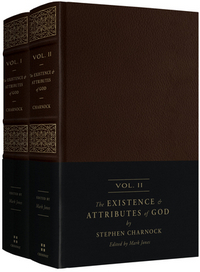
The Hope of Life After Death: A Biblical Theology of Resurrection by M. Jeff Brannon: A Good Intro to an Oft-Neglected Area

The Hope of Life After DeathThe Hope of Life After
Death: A Biblical Theology
of Resurrection

by M. Jeff Brannon

DETAILS:
Series: Essential Studies in Biblical Theology
Publisher: IVP Academic
Publication Date: November 14, 2022
Format: Paperback
Length: 172 pg.
Read Date: December 18-25, 2022
Support Independent Bookstores - Visit IndieBound.org

…the resurrection of Jesus changes every other day, from now and into eternity. For those who are united to Christ, their future is the future of their Savior, and this reality changes everything.

What’s The Hope of Life After Death About?

Unlike most books about the resurrection from the dead—this isn’t an apologetic work, nor does it focus on Paul’s theology of resurrection, instead Brannon states (fitting with this series) that he wants to take a look at the idea of resurrection from Genesis to Revelation, looking at the shadows, prophecies and promises contained in the Old Testament and the reality demonstrated and guaranteed in the New.

He’s primarily thinking of the resurrection of the believer—although that involves (and is grounded upon) the resurrection of Christ. The resurrection of the believer is such a vital doctrine, that believers should have a better understanding of it—but the amount of literature (both on the academic and popular levels) about it pales in comparison to other areas of Christian doctrine.

One of the hallmarks of biblical theology is the progressive revelation of God’s redemptive plan, which unfolds throughout the Old Testament. In Genesis 3:15 God’s promise that the offspring of the woman will crush the head of the serpent represents an implicit promise of resurrection. In Psalm 49:7-15 the psalmist is convinced that God will redeem his people from death and take them to himself. Isaiah prophesies that God will swallow up death forever (Is 25:7-8) and that there will be a bodily resurrection for God’s people (Is 26:19). All of this reaches its Old Testament climax with Daniel’s prophecy of physical resurrection for both the redeemed and the unredeemed, one to everlasting life and the other to shame and everlasting contempt (Dan 12:1-3). The Old Testament teaching on resurrection sets the stage for God’s revelation in the New Testament, when the lights are turned on.

The Old Testament

The best part of this book was the survey of the Old Testament material—over five chapters—Creation, the Fall, the Pentateuch and Historical Books, the Writings, and the Prophets—Brannon spends about half of the book examining the part of the Bible that’s less-often considered for our understanding of the doctrine.

I don’t know how many times I’ve read or heard that the Old Testament is silent or vague on the idea of bodily resurrection. Brannon puts that assertion to rest easily.

But more importantly, this survey is a great cause for comfort and reassurance for the believer. This idea, this hope, has been before believers of all ages and we can cling to it as believers have for centuries. We have this hope explained in clearer terms—with the lights on, to continue Brannon’s metaphor—so it’s easier to cling to that hope.

So, what did I think about The Hope of Life After Death?

My focus in this book has been on the themes of creation life, death as the result of the fall, and the hope of resurrection life in redemption. The resurrection of Jesus means that the new age, the age of resurrection, has been inaugurated. While life had been promised, prophesied, and pictured in the old covenant, the resurrection of Jesus marks the beginning of the fulfillment of the curse of death being undone through resurrection life.

That’s the argument of the book in a nutshell, and what a great argument it is—one to really relish and depend on.

Brannon is clear and helpful here, and these are ideas we all need to spend time with and have a better understanding of. This is a solid way to start with that.

I do wonder if he could’ve gone a little deeper with a few chapters—I thought it was the easiest book in this series to read, and that’s not just Brannon’s style, I think it was that his approach didn’t require as much thought as others in the series did. I’m not certain about that point, however—and I don’t mean to complain about it. It was just the sense I had while reading the book

It was a good, helpful, and useful book about important and neglected teachings—maybe I wanted it to be a little better, but it’s definitely good. I do recommend it.


3 Stars
This post contains an affiliate link. If you purchase from it, I will get a small commission at no additional cost to you. As always, the opinions expressed are my own.
Saturday Miscellany—1/14/23

I don’t know about the rest of you, but my 2023 reading has started off strong. If things keep up at this rate 2023 is going to be fantastic (I don’t expect it, but it’d be nice).
Odds ‘n ends about books and reading that caught my eye this week. You’ve probably seen some/most/all of them, but just in case:
bullet 5 Ways To Be a Healthier Reader in 2023
bullet It turns out that people don’t want a coloring book based on a novel about domestic abuse.—I’ve never read Hoover, but I’ve watched a little of back and forth about her work lately. My jaw dropped, though, when I saw that there was going to be a coloring book based on the book. I’m so glad things worked out this way.
bullet So I was wrong last week when I predicted I was at the end of the 2022 wrap-ups that I wanted to share. Here are two more:
bullet 2022 : The ones that got away—I liked this idea enough that I almost came up with my version, but decided it’d be too depressingly long.
bullet My end of year stats for 2022: late, of course.—love the graphs…
bullet In Search of New Reading Rituals
bullet What to expect in 2023, according to science fiction—what a fantastic idea…
bullet Between Utopia and Dystopia: the Mixtopian Borderlands—Mixtopian is a word I’m going to be adding to my vocabulary (maybe? I mean, I hope to…it’s a nifty category)

This Week’s New Releases that I’m Excited About and/or You’ll Probably See Here Soon:
bullet Everybody Knows by Jordan Harper—the author’s name should be enough, but if you need more…”a “black-bag” publicist tasked not with letting the good news out but keeping the bad news in” tries to discover who gunned down her boss.
bullet Emily Wilde’s Encyclopaedia of Faeries by Heather Fawcett—A charming and cozy(ish) Victorian Fantasy, that I really can’t sum up in a sentence or two. Maybe you’d be better off reading my post about it from last month.
bullet Early Grave by Paul Levine—Jake Lassiter’s last case has him facing off against High School Football. It’s a heckuva ride, as I talked about earlier this week.
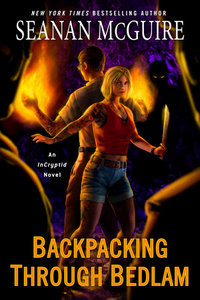
bullet Lost in the Moment and Found by Seanan McGuire—I’d say this wasn’t your typical Wayward Children book, but is there a typical one? I just finished this last night and it’s likely one of my favorites in this series. Heart-wrenching, tense, and full of beautiful sentences—with a couple of nice cameos from books in the series.

Lastly, I’d like to say hi and extend a warm welcome to Blue Bell and jason Lee who followed the blog this week. I hope you enjoy the content and keep coming back.
Should You Buy Books Flowchart

The Ballad of Bonaduke—Episode 12: Whose There? by R. T. Slaywood: A Family Reunion

Had to take a couple of weeks off when things got busy on the homefront, but I’m back now (and apparently my 1-2 weeks became a month and change. That wasn’t my intention).

The Ballad of BonadukeThe Ballad of Bonaduke—
Episode 12: Whose There?

by R.T. Slaywood
DETAILS:
Series: The Ballad of Bonaduke, #12
Format: Kindle Vella Story
Read Date: December 2, 2022

“May I come in?” She asked from bluish lips that flashed a pair of pointed teetch as she spoke. I felt like a rabbit in the presence of a snake.

Or a fly to a spider

The Story So Far…

A drunken Michael Bonaduke decides to use a grift (with maybe some sort of magic/magic-like “help”) to win on a scratch-off lottery ticket so he has money to buy more to drink. He pulls off whatever he did, gets his money and some booze and stumbles off into the darkness to drink himself into oblivion so he can start again the next day. He’s hit by dark memories (probably what’s driving him to the drinking) of fire, pleading, and screaming. There’s going to be a price to pay for his grift, and he’s trying to be ready.

Before then, he gets himself drunk and we get some of his tragic backstory. As he ponders this, he decides to use some of his ill-gotten-gains to buy more booze and walks into a liquor store robbery. He foils it in some sort of magical fashion, gets some more to drink, and heads off to the park to drink until he’s arrested (probably for the failed robbery). At least that’s his plan, but it gets interrupted by being hit by a car. He wakes up on some sort of short, metal bed and is unsure what’s going on. It turns out that some group is subjecting him to a test—if he passes, everything will be explained to him (and hopefully the reader, too). He passes—and is brought somewhere for answers, or maybe training, or maybe another test. Time will tell (or things are going to get really annoying).

What’s Whose There About?

Before the conversation started in the last episode can bear any fruit, there’s a knock at the door. Before the door is opened, Bonaduke feels a chill—at first you think it’s the kind of chill someone gets when they’re nervous/worried—and he is both, but there’s more. It’s a physical chill that he’ll feel a lot of (and more intensely) as the episode goes on. It’s a relative he hasn’t seen in more than a decade—who apparently is one of the people who put him in this situation. Or maybe she’s just working with the people who abducted him—I’m not sure yet (although I lean toward the latter).

She delivers some bad news and some conditions to the others in the apartment, messes around with Bonaduke (she is not warm and fuzzy to her relative), and leaves. One of the men in the apartment leaves, and the other tells Bonaduke that it’s time to give him that explanation he has been waiting for (the reader, too).

Naturally, that’s when the episode ends.

So, what did I think about Whose There?

We start to get some answers here, and more are promised. Of course, we get new questions, too. Regardless, this is the best episode in quite a while. Things happen, a little more supernatural ability is thrown around, and it looks like the story is about to go somewhere.

Okay, the editing on this one was just bad. Distractingly and annoyingly bad. It happens (I know that better than anyone). But ick.

Regardless, I enjoyed this one, and am eager for the next.


3 Stars

The Friday 56 for 1/13/23: Lost in the Moment and Found by Seanan McGuire

The Friday 56This is a weekly bloghop hosted by Freda’s Voice.

RULES:
The Friday 56 Grab a book, any book.
The Friday 56 Turn to Page 56 or 56% on your ereader. If you have to improvise, that is okay.
The Friday 56 Find a snippet, short and sweet.
The Friday 56 Post it.

from Page 56 of:
Lost in the Moment and Found

Lost in the Moment and Found by Seanan McGuire

On the other side of the door, where the shop should have been, a jungle stretched all the way to the horizon, fat, round-trunked trees dripping with vines and flowers, their twisting branches reaching for the sky like the spread fingers of enormous hands. Something moved in the deep foliage, and brightly colored birds perched on the vines, clacking their beaks and calling to each other at the sight of her.

It wasn’t possible. It wasn’t logical. It wasn’t real. It couldn’t be real.

Antsy stepped through the door. Only one foot; she was at least clever enough to leave her other foot solidly on the wooden floor of the thrift store. One of the vast, bright-petaled flowers was close enough for her to lean over and pluck it before retreating back through the door and closing it behind her. The flower didn’t disintegrate when pulled into the thrift store. It remained in her hand, bright and blooming, petals almost the same color as a good, ripe watermelon.

She stared at it, trying to understand how this could be happening.

Page 199 of 623

Powered by WordPress & Theme by Anders Norén