Author: HCNewton Page 211 of 610

The Art of Prophecy by Wesley Chu: Will Simply Blow You Away

The Art of ProphecyThe Art of Prophecy

by Wesley Chu

DETAILS:
Series: The War Arts Saga, #1
Publisher: Del Rey
Publication Date: August 8, 2022
Format: Hardcover
Length: 528 pg.
Read Date: August 19-24, 2022
Support Independent Bookstores - Visit IndieBound.org

What’s The Art of Prophecy About?

Briefly (cuz, boy howdy, I could go on and on and on about this): There’s a prophesied Champion who will save his kingdom from the Eternal Khan, but he’s a spoiled brat who is not as skilled a warrior as he believes—and he’s even less skilled than he needs to be. But that’s okay, because the prophecy is broken—or wrong. The greatest living practitioner of magically-enhanced war arts has decided to take over his training and protection. Two incredibly dangerous women from very different backgrounds and for very different reasons have decided he needs to die.

Taishi

Taishi is almost certainly my favorite new character of 2022*. She’s elderly—exactly how old, I don’t think we’re told. In her prime, she fought the Eternal Khan to a stalemate more than once. Somewhere along the line, she lost the use of one of her arms. Her age and the loss of her arm have slowed her down and made her less effective. But not so slow that anybody but her can tell. She’s practically a force of nature. Since then, she’s pretty much retired but is strongarmed into checking in on Jian’s training. It’s hard to say what she’s less-impressed with—him or the work of his expert trainers—she’s spreading the scorn all around.

* Sure, it’s possible the next four months will bring someone better across my path, but not really likely.

She’s opinionated, set in her ways, cantankerous, and stubbornly determined. Pity those who try to get in her way. Once she determines that she needs to shepherd and educate Jian, nothing (including Jian) is going to stand in her way.

Taishi’s voice—both in dialogue or as it comes across in the narration—is strong, sardonic, and sarcastic. I loved every second of her point-of-view chapters (seeing her through other characters’ eyes was just as good, though). I was mildly annoyed every time the point-of-view changed, while still being curious about the other arcs.

Wuxia

Wuxia is my new word for the month—from at least one article online (so it must be true), I’m not a total novice when it comes to this genre—I watched the first two Kung Fu Panda movies with my kids when they first came out. But that’s it. So I don’t know how much of this story/world is Chu using or playing with or subverting the conventions of the genre. But it looks like he’s using several of them, and seems to be having fun with them (at least he’s getting the reader to have fun).

I can say that I’m pretty curious about the genre now—and intend to keep an eye out for more opportunities to expose myself to it.

Obviously, one of the defining characteristics of wuxia is the martial arts, and what’s the point of a martial-arts-based fantasy without fight scenes? The Art of Prophecy delivers those in spades. Maybe even by the bucket. I’ve always enjoyed Chu’s fight scenes, but these make the stuff in the Tao books look basic. They’re just fantastic—and littering them with the quips from the point-of-view character (either expressed or kept internal) made them all the better. I could read these all day.

So, what did I think about The Art of Prophecy?

I don’t know that I can really express how excited I am about this book. The last time I was this enthusiastic about a Fantasy novel was Kings of the Wyld, and I’ve read some really good Fantasy since then. But this is a whole different level.

I’m going to leave it at that—if I went into the kind of depth I want to, I’d either spend another week or so trying to get it all out (or would never finish because I was dissatisfied with it). I could do a couple of hundred words on the nature of prophecy and free will in this universe alone (and someone smarter than me had better do that soon)—or even the importance of honor, role, and manners (do not try to cut in line around these people). So I’m going to go shallow with this post—this is a great premise—and the execution of the premise is as great. The world-building is fascinating, and the history that’s hinted at is some of the best I can remember. I loved every one of these characters (none as much as Taishi, but that’s nothing against the others) and feel like I could’ve read a version of this book that was 50% longer just for more time with them. Probably the best action scenes I’ve read this year. It’s too long to read in a single sitting, but it’s the kind of book you want to read in one.

Stop wasting time reading about it, start reading The Art of Prophecy.


5 Stars

This post contains an affiliate link. If you purchase from it, I will get a small commission at no additional cost to you. As always, the opinions expressed are my own.

20 Books of Summer 2022: Wrap-Up

20 Books of Summer
So today, I completed the 20 Books of Summer Challenge, as hosted by Cathy at 746 Books.

Or maybe it was Friday. If you count finishing the reading*, then it was Friday. Either way, I’m done.

And I typically do.

This is my third attempt at this challenge—one year, I finished only because I re-defined the deadline (in the U.S. we colloquially consider Labor Day as the end of Summer). Last year, I didn’t finish writing about the books until September (well, okay, I still haven’t written about one of them. Don’t ask me why, I can’t explain it). But this year—I put forth a list of 20 books, read that list, and posted about that list between June 1 and August 29.

I call that a win. Even better—I enjoyed all of them. Well, at least I appreciated the writing or storytelling of a few. I didn’t dislike any of them, anyway. Still, it’s a win.

Works for me.

✔ 1. The Deepest Grave by Harry Bingham (my post about it)
✔ 2. Condemned by R.C. Bridgstock (my post about it)
✔ 3. Payback by R.C. Bridgstock (my post about it)
✔ 4. Persecution by R.C. Bridgstock (my post about it)
✔ 5. AMORALMAN: A True Story and Other Lies by Derek DelGaudio (my post about it)
✔ 6. Against All Odds by Jeffery H. Haskell (my post about it)
✔ 7. One Decisive Victory by Jeffery H. Haskell (my post about it)
✔ 8. With Grimm Resolve by Jeffery H. Haskell (my post about it)
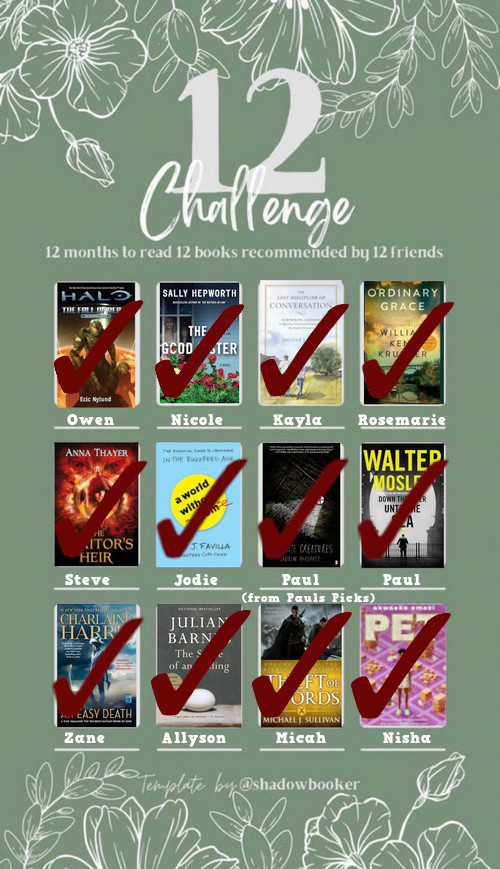
✔ 9. A World Without Whom: The Essential Guide to Language in the Buzzfeed Age by Emmy J. Favilla (my post about it)
✔ 10. Composite Creatures by Caroline Hardaker (my post about it)
11. Divine and Conquer by J.C. Jackson (my post about it)
✔ 12. Mortgaged Mortality by J.C. Jackson (my post about it)
✔ 13. The Ghost Machine by James Lovegrove (my post about it)
✔ 14. Roses for the Dead by Chris McDonald (my post about it)
✔ 15. A Wash of Black by Chris McDonald (my post about it)
✔ 16. Whispers in the Dark by Chris McDonald (my post about it)
✔ 17. Down the River unto the Sea by Walter Mosely (my post about it)
✔ 18. Crazy in Poughkeepsie by Daniel Pinkwater (my post about it)
✔ 19. Ghost of a Chance by Dan Willis (my post about it)
✔ 20. The Border by Don Winslow (my post about it)

(also, this is the first year that I didn’t end up making any substitutions along the way).
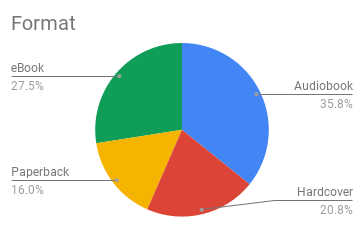
20 Books of Summer '22 Chart

Down the River Unto the Sea by Walter Mosley: The Re-Birth of a Detective

Down the River Unto the SeaDown the River Unto the Sea

by Walter Mosley

DETAILS:
Series: King Oliver, #1
Publisher: Mulholland Books
Publication Date: February 19, 2018
Format: Hardcover
Length: 322 pg.
Read Date: August 26, 2022
Support Independent Bookstores - Visit IndieBound.org

I like detective novels. The dick is either smarter, braver, or just luckier than his nemeses. He, or even she, works pretty much alone, sticking out his jaw whenever there’s a blow coming. If he gets arrested that’s okay. If some pretty young thing needs sex, it’s probably not the right time for him, or her, just then.

The literary PI usually takes on one case at a time and he stays on the trail until it is solved, whether or not justice is done.

Sometimes I liked to pretend that I was a detective out of a book.

What’s Down the River Unto the Sea About?

Ten years ago, for reasons he’s still unsure about, King Oliver was framed for a crime that ruined his career as an NYPD Detective, destroyed his marriage, and put him in jail for months.

Today, he’s keeping a PI agency afloat with his teenage daughter as an admin assistant. He’s really never recovered psychologically (aside from some scarring, he seems okay physically) from his incarceration and the accusation. His daughter and the work are what keep him going.

When he receives a letter from his accuser, offering to help him clear his name—everything changes. He has a glimmer of hope, a renewed sense of purpose—and a new client. This client works for a defense attorney—he’d been representing a convicted cop killer and had vowed to free him. Suddenly, the attorney has changed his mind and is going to tank the case. The convict is a journalist/activist who claims to have been acting in self-defense, and this associate believes him. She wants Oliver to discover what changed the attorney’s mind—but more importantly, she wants help clearing the journalist.

Oliver agrees to look at the files but makes no further promises. He’s quickly intrigued by some of what he reads and It’s not long before he starts working the case as well as working to clear his name. The letter has changed everything for him.

Melquarth Frost

Before he was framed, Oliver arrested Mel Frost, and earned his respect from the way Oliver treated him during the arrest and trial. After Frost’s release, he came to thank Oliver and the two have struck up a strange near-friendship over chess games and the occasional meal.

Oliver realizes he’s not going to be able to handle everything in these investigations—particularly when things get dicey, so he hires Mel to help him.

Mel fills the Hawk/Joe Pike/Bubba Rogowski/Nate Romanowski role—he’s dangerous, he’s skilled, and really has no moral compunctions about anything. He is aware of it, and knows he should follow a different path—and attempts, but will resort to his former ways in a heartbeat.

I’m Such a Sucker

Shortly after that opening quotation, Oliver cites Tecumseh Fox. Fox was the protagonist of a short-lived series by Rex Stout, alongside Nero Wolfe. Elizabeth Breck gets big bonus points from me for her frequent citations of Wolfe, but a Tecumseh Fox reference is a heckuva deep cut. If I hadn’t already decided that I really liked Oliver, this would’ve pushed me over the edge. Not only am I a sucker for Stout, but referring to a 3-book series that ended in 1941 really underscores Oliver’s description as being someone who reads a lot.

So, what did I think about Down the River Unto the Sea?

I was born to be an investigator. For me it was like putting together a three-dimensional, naturalistic puzzle that in the end would be an exact representation of the real world.

I really enjoyed this book—most of the plot seemed pretty predictable, but I never minded for a second because of the execution. Also, there were a couple of twists that caught me flat-footed. I don’t mind if everything plays out as you’d pretty much expect as long as the writer delivers a good story and characters (I know if I get on the freeway headed west, I’ll end up on the Pacific Coast. I just want a smooth drive with maybe a couple of interesting sights and snacks along the way)—and there are few as good at that as Walter Mosely.

This wasn’t really an origin story, this was more of a renaissance, a reawakening. Now that King Oliver is back—he’s invested in life, his career, and people again—further books in the series are going to have a different feel, a different focus, and I can’t wait to see where Mosely takes this character.


3.5 Stars


20 Books of Summer

This post contains an affiliate link. If you purchase from it, I will get a small commission at no additional cost to you. As always, the opinions expressed are my own.

Crossway Short Classics: Schaeffer, Spurgeon, Chalmers

Crossway Short Classics SeriesCrossway Short Classics Series

DETAILS:
Publisher: Crossway Books
Format: Paperback
Read Date: July 2022

Some Thoughts on the Series as a Whole

The point of this series is to take classic short works—sermons, tracts, articles—package them attractively, edit a bit (modernize language, eliminate footnotes, tweak grammar, etc.) and make them widely available. Each is given a short introduction to help the reader get the context and a bit of information about the author.

I think this is a great idea, and I don’t know how I didn’t hear about this until a few weeks ago. I do hope they put out new books in the series (at least one of the books on the original list isn’t out yet, but they did publish one not on that list, so maybe they exchanged the titles).

I wonder a bit about the cover design—I wonder if the floral theme is a bit off-putting (Evangelical publishers usually reserve that for books marketed for women, and I don’t get the impression that this series is designed for that).

I don’t want to try to cover the whole series in one post, so I’m going to do this in chunks. This is the second in the series of posts I’ll be doing.

The Lord's Work in the Lord's Way and No Little PeopleThe Lord’s Work in the Lord’s Way and No Little People

by Francis Schaeffer, Ray Ortlund (Foreward)

DETAILS:
Publication Date: May 30, 2022
Length: 90 pg.
Read Date: July 31, 2022
Support Independent Bookstores - Visit IndieBound.org

I’ve never read a sermon (in this case, two) by Schaeffer before, so I was pretty curious. I’ve read a couple of books by him, but there’s a big difference in genres.

I appreciated the content and found it helpful. But for a man who is capable of pretty profound thought, I thought these were a little shallow.

3 Stars

Encouragement for the DepressedEncouragement for the Depressed

by Charles H. Spurgeon, Randy Alcorn (Foreward)

DETAILS:
Publication Date: October 12, 2020
Length: 100 pg.
Read Date: July 31, 2022
Support Independent Bookstores - Visit IndieBound.org

It’s well documented that Spurgeon battled depression through much of his career, so if there’s someone who can speak to the topic with authority, it’s him. These two sermons are pretty helpful.

The first, which bears the name of this slim volume is far superior and is well-named. Not only is it encouraging for the depressed, but there’s plenty of encouragement for those with weak and struggling faith.

The second sermon, “The Minister’s Fainting Fits,” is directed primarily (obviously) toward ministers and preachers. It’s not bad, but it’s hard to relate to or find a lot that’s applicable to most readers of a series like this.

3.5 Stars

The Expulsive Power of a New AffectionThe Expulsive Power of a New Affection

by Thomas Chalmers, John Piper (Foreward)

DETAILS:
Publication Date: October 12, 2020
Length: 72 pg.
Read Date: July 31, 2022
Support Independent Bookstores - Visit IndieBound.org

I was a little disappointed by this one—Chalmers is regularly held up as a model of the best of Presbyterianism, and this sermon is regularly talked about as his best.

Now, I liked every bit of the sermon, I loved the argument and Chalmer’s perspective. I thought the language was a little stilted and the sermon left me a little cold. (those sentences seem contradictory when I read them, but they work in my mind). The central premise of this—that the love of God, in Christ, overpowers and pushes out the sinful inclinations and affections we’re born with. It’s an important emphasis, and one we would all do well to focus on.

This is one of those reads that in retrospect, I think I might not have been in the right headspace for—I’d also read a lot that day, and by the time I got to it, my mind might have been done. I expect when I revisit it, I’ll get more from it and think better of it.
3.5 Stars

This post contains affiliate links. If you purchase from them, I will get a small commission at no additional cost to you. As always, the opinions expressed are my own.

Saturday Miscellany—8/27/22

I’ve got a hort list this week—it must be near the end of the month.

I’ve had three nights this week where I’ve shrugged off my plans (including writing) and just read—it hurt the blogging, but it was good for the reader. Hopefully, I get back on track next week.

Odds ‘n ends about books and reading that caught my eye this week. You’ve probably seen some/most/all of them, but just in case:
bullet Game of Thrones effect fires up reissues of ‘lost’ fantasy fiction classics: With big-budget TV series about to hit streaming services, publishers hope a string of cult novels will find a new audience
bullet The Organization of Your Bookshelves Tells Its Own Story
bullet How to read the longest classic books—Strategies/tips for tackling those big, intimidating classics
bullet Almost Two Centuries of Impossible Crimes: Locked Rooms in Detective Fiction—Another good piece from CrimeReads on Locked-Room Mysteries
bullet Finally, we have a Confess, Fletch Trailer—I’m mildly apprehensive, but I’m in.
bullet The 50 Best Fictional Dragons, Ranked: Thousands of Years of Dragon Lore, from the Rig Veda to Beowulf to the Hobbit—As with every list like this, there are omissions, odd inclusions, and dubious ranking. Still a good list.

This Week’s New Releases that I’m Excited About and/or You’ll Probably See Here Soon:
bullet Hell of a Mess by Nick Kolakowski—The fourth Love & Bullets installment—and this time, it’s full novel. This heist-in-a-hurricane is a wild ride, and nothing but fun. As I said (less succinctly) recently.
bullet Soul Taken by Patricia Briggs—Wulfe is missing, and for some reason, Mercy has to find him rather than celebrate his disappearance.
bullet The Marauders, the Daughter, and the Dragon by K.R.R. Lockhaven—A sweet and humorous Fantasy about Pirates (who aren’t really Pirates), a Father and Daughter relationship on the rocks, a dragon, and what happens when you throw all of them in the way of a power-hungry politician. (I should have a link to a full post from me on it, but I haven’t finished it yet)

Lastly, I’d like to say hi and extend a warm welcome to Zsolt Zsemba, who followed the blog this week. I hope you enjoy the content and keep coming back.

The Friday 56 for 8/26/22: Down the River unto the Sea by Walter Mosely

The Friday 56This is a weekly bloghop hosted by Freda’s Voice.

RULES:
The Friday 56 Grab a book, any book.
The Friday 56 Turn to Page 56 or 56% on your ereader. If you have to improvise, that is okay.
The Friday 56 Find a snippet, short and sweet.
The Friday 56 Post it.

from Page 56 of:
Down the River unto the Sea

Down the River unto the Sea by Walter Mosely

“Your mother sent me, Jacob.”

“She did?” One eye opened wide while the other strained for sight.

“You okay?”

“They hit me. They hit me hard.”

“Did you steal that money?”

“Are you going to take me home?”

From the looks of him I would have said he was midtwenties, but he spoke like and had the manner of a child.

“Not right this minute, but if you answer my questions truthfully, I’ll do my best to prove you innocent.”

That’s when he started crying.

Firefly: The Ghost Machine by James Lovegrove: All They Ever Wanted

The Ghost MachineThe Ghost Machine

by James Lovegrove

DETAILS:
Series: Firefly, #3
Publisher: Titan Books
Publication Date: May 4, 2021
Format: Hardcover
Length: 334 pg.
Read Date: August 24-25, 2022
Support Independent Bookstores - Visit IndieBound.org

What’s the Front-Inside Flap Say?

I’m going to say too little or too much if I try to describe the setup, so I’ll just appropriate this from the Book Jacket:

Some hot property
Mal’s crew desperately need another payday, but not desperately enough to transport a Blue Sun flightcase to Badger, no questions asked, when the area is swarming with Alliance spacecraft equally keen to regain the stolen property. Yet Jayne refuses to miss out, and sneaks the case aboard Serenity.

Lucid Dreams
Within hours of secreting the case Jayne suddenly finds himself back on the Cobb homestead with his brother Matty miraculously cured of the damplung. Wash is at the controls of the highest-spec cruiser money can buy, the billionaire head of a ‘verse-spanning business empire. All of the crew but River are soon immersed in vivid hallucinations of their deepest desires, while their bodies lie insensible on the ship.

Fantasies gone sour
Wash’s empire begins to crumble; the Cobb ranch is under attack by merciless bandits. As everyone’s daydreams turn nightmare, Serenity floats on a crash course towards a barren moon, with only River standing between the crew and certain oblivion.

The Firefly-ness of it All

In this series so far, Lovegrove has walked a tightrope of making enough references to ground this in the television series while just telling good stories in this ‘verse and keeping it from being a Ready Player One-esque reference-fest. He does a great job of that here, too—some of the references are so subtle that I had to go back and double-check (and I loved those all the more). It’s entirely possible I missed a few of the subtle ones, which bugs me.

At the same time, we’ve got plenty of Badger, a nice amount of Niska, and some Reavers. Good references to the canon and foreshadowing of the movie. Firefly fans should be well satisfied.

The Niska appearance filled me with dread for what lay ahead—as it should. The way Lovegrove caught me off-guard and left me very happy.

So, what did I think about The Ghost Machine?

I hate the premise. There’s just something about it that bugs me—most of the action takes place in dreams, and those stories always seem pointless. Longer-running TV Shows frequently resort to this, and I almost never really like those episodes either.

That said? The execution redeemed the stupid premise. I particularly enjoyed the Simon and Kaylee dreams, and thought the Zoë one was brilliantly done (her nightmare version was the best). I have no complaints about the others, either, but those three stood out. The whole thing felt like a justification for a chance to let River shine—and who’s going to complain about that?

I do think that the first couple of chapters seemed to lean too hard into the Firefly patois, to the point of beating the reader over the head with it. But then it settled down, or I acclimated to it. I don’t remember having that issue with the first two books in this run, which made it really stand out to me. But other than that, Lovegrove stuck to making me happy to be in this world again.

Like I always say when I read one of this series, I don’t know why it takes me so long to get to the next one—I have four more sitting on my TBR-shelves. These books are too much fun to delay reading them.

Ignore the premise, enjoy slipping into the psyches of the characters, and relish a little more time in the Black with the crew of Serenity.


3 Stars

20 Books of Summer
Your TBR Reduction Book Challenge

This post contains an affiliate link. If you purchase from it, I will get a small commission at no additional cost to you. As always, the opinions expressed are my own.

PUB DAY REPOST: Hell of a Mess by Nick Kolakowski: A Whole Bunch of Plans that Don’t Come Together

I also did a Q&A with the author about this book, give it a look!

Hell of a MessHell of a Mess

by Nick Kolakowski

DETAILS:
Series: Love & Bullets, #4
Publisher: Shotgun Honey Books
Publication Date: August 26, 2022
Format: eARC
Length: 234
Read Date: August 1, 2022
Support Independent Bookstores - Visit IndieBound.org

What’s Hell of a Mess About?

Well, isn’t that a tricky question? There is too much. Let me sum up. There are multiple people who start off intending to commit one crime and end up doing something entirely different.

Fiona’s been hired to steal something, and it’s a timely thing (and she’s not deterred by much), so despite an impending hurricane, she goes for it. Sure, the Inside Man tries to wave her off, but, again—she’s not deterred by much. Which is a shame—she should’ve paid attention to either the weather or the Inside Man. She ends up with a price on her head and multiple people around the city.

While she’s busy, Bill’s trying to prep for the storm in the home they’re squatting in when some police break in looking for the man who lives there. One thing leads to another, and they kidnap Bill, believing he can lead them to the millions his former employer had hidden away.

Thankfully. that assassin they thought Fiona killed at the end of A Brutal Bunch of Heartbroken Saps survived—readers knew that, but Fiona and Bill didn’t. Not only did he live, but he’s been keeping tabs on them. He’s been trying to live a different—less lethal—life and he has a chance to help them. Will he be enough?

(I have no idea if the above makes any sense—trying to cram it into three brief paragraphs doesn’t do the plot any favors. In the non-condensed version, it works. Trust me.)

The Unnamed Assassin

Up to the point where it looked like Fiona killed him (maybe a little sooner), I thought that the hitman who was sent after Bill in the first book was the protagonist. His is the only first-person perspective we get through the series—almost like he’s relaying what he knows and hears about this crazy couple while he’s dealing with his own problems like they’re a diversion for him.

His personal arc is very different from theirs—they claim to be trying to get out and live a straight life, if only they get one more decent score to set them up. The unnamed assassin is going a different path, he’s still a violent criminal, but like Jules Winnfield, he’s looking for something more. There are lines he won’t cross anymore (he seems to be making those rules up on the fly, but at least he has them.

As you can probably tell, I find it difficult to articulate his development and role in the series—but using him (sparingly, on the whole) and his arc throughout in juxtaposition to Fiona and Bill adds a layer to these books that few authors would have utilized, but make the whole thing better.

Be sure to check out my Q&A with Kolakowski (posting later today) for more about him.

Unanswered Questions

The thing that really kicks off the Fiona storyline is her stumbling across something she wasn’t expecting while discovering the thing she came to steal wasn’t there. Her discovery of the other nefarious action—and the way she prevented it from being completed*—is what starts the manhunt for her, more than the attempted heist. If she’d just walked away, I think it’s likely no one would’ve come after her.

* It is so tricky to discuss this obliquely.

Then when it comes time for Fiona to go save Bill, that storyline is dropped. Which is actually fine and good, because ultimately what it’s replaced by is more interesting. But in the back of my mind couldn’t stop asking—and, a week later, still can’t—what happened? What led up to Fiona’s discovery? What happened after she and the unnamed killer ran off to rescue Bill?

Typically, leaving these threads hanging would annoy me enough that I’d downgrade a novel over it—but Kolakowski pulls it off. If you’re going to abandon a plotline, this is the way to do it.

That said, I’d pony up twice the typical Shotgun Honey novella price today to get Love & Bullets #5 if it picks up right after this to tell the rest of that story. Maybe thrice.

So, what did I think about Hell of a Mess?

The previous three installments were novellas, but this is a novel, clocking in at 50-100 pages longer than the rest. And it didn’t feel like it at all. It was the same adrenaline-fueled, not-quite-frenzied pace and was over before I was ready for it to be. My daily schedule kept this from being a one-sitting read, but I think I could’ve done it in one sitting without realizing it.

This is pulpy fun. There’s action, there’s heart, there’s comedy (some subtle, some absolutely not), there’s a lot of violence, and you can’t forget the bunch of heartbroken saps that are at the center of things. They’re crooks and killers that really seem like decent people when you stack them up next to the nastier crooks and killers they can’t stop encountering. In the middle of all that chaos (and you can’t forget the chaos of the storm), there’s hope, forgiveness, and love. And who can’t use a little of that?

I don’t know if Kolakowski is going to come back to these characters in the future—I’d be content with what he’s given already, but I also know that I’d jump on any future installments, too. I encourage you to do the same.

4 1/2 Stars

This post contains an affiliate link. If you purchase from it, I will get a small commission at no additional cost to you. As always, the opinions expressed are my own.

These Dog Days Aren’t Over

(Updated and Revised 8/26/22)

It’s National Dog Day, the annual celebration of “all dogs, mixed breed and pure. Our mission is to help galvanize the public to recognize the number of dogs that need to be rescued each year and acknowledges family dogs and dogs that work selflessly each day to save lives, keep us safe and bring comfort.” So it seemed like a good day to post another version of this.

These Dog Days Aren't OverThis was a hard post to come up with a name for‡, essentially this post came from a comment not too long ago about being hesitant to read books about animals if the reader doesn’t know if they survive the book. I get that, I absolutely do. I still bear the scars of Where the Red Fern Grows and Marley and Me (sure, that wasn’t that long ago, but the wound still stings). So, for readers like my correspondent, here are some perfectly safe books prominently featuring dogs!

I plan on updating this when I can remember to, so by all means, chime in with comments about Dogs I’ve forgotten about/haven’t yet!

Non-Fiction

bullet The Particulars of Peter by Kelly Conaboy—this is a collection of humorous essays giving Conaboy the opportunity to rave about her dog, Peter. In her eyes, Peter is a perfect dog, and as you read this, you’ll be tempted to agree. (my post about it)
bullet Olive, Mabel & Me by Andrew Cotter—Cotter’s charming book describes his life with the two dogs that rocketed to international stardom (and brought him along). (my post about it)
bullet My Life as a Dog by L. A. Davenport—Davenport’s short little book about the relationship between the author and his dog, Kevin, a black and tan, pure-bred dachshund. It focuses on what the two of them did over two days and then a weekend selected from the years they spent together. (my post about it)
bullet Dogtology: Live. Bark. Believe. by Jeff Lazarus—Humans are so obsessed with their dogs, we’ve devoted so much time, energy, and work into them that it’s become a religion, with humans essentially worshipping their pets. This book is a look at that devotion and the rituals and beliefs that accompany it. It’s technically humor, but a lot of it seems pretty on-target. (my post about it)
bullet What the Dog Knows: The Science and Wonder of Working Dogs by Cat Warren—Warren basically covers three topics: there’s the science and history of using working dogs (of all sorts of breeds, not to mention pigs(!), birds, and even cats) to find cadavers, drugs, bombs, etc.; there’s the memoir of her involvement with cadaver dogs via her German Shepherd, Solo; and anecdotes of other cadaver dogs and trainers that she’s encountered/learned from/watched in action. (my post about it)
bullet What the Dog Knows Young Readers Edition by Cat Warren, Patricia J. Wynne—The above book adjusted for younger readers, with some great illustrations. It’s not dumbed-down, just adjusted. (my post about it)

Fiction

bullet Mace Reid K-9 Mystery series by Jeffrey B. Burton—A Dog Trainer/Cadaver Dog Handler and his dogs get involved in serial killer cases. Warning: Like many heroes in action novels, most of Mace’s dogs get beat up/injured. Some pretty badly. (my posts about them)
bullet Suspect by Robert Crais—One of my all-favorite books, a cop with PTSD gets assigned to the K-9 Unit and works with a dog fresh from Afghanistan combat. (my post about it) The pair also plays a major role in The Promise.
bullet Pug Actually by Matt Dunn—Doug, a loyal pug, plays cupid for his owner. This is a cute rom-com with a charming canine narrator. (my post about it)
bullet Stepdog by Nicole Galland—A love story where the major impediment to happily ever after is her dog (a gift from her ex). (my post about it)
bullet Noodle and the No Bones Day by Jonathan Graziano, Dan Tavis (Illustrator)—This picture book relates the origin of the Internet Craze and the wonderful, photogenic pug behind it. (my post about it)
bullet Oberon’s Meaty Mysteries by Kevin Hearne (Audiobooks narrated by Luke Daniels)—Oberon, the scene-stealing Irish Wolfhound from The Iron Druid Chronicles narrates this series of novellas (my posts about them).
bullet Neah Bay series by Owen Laukkanen—Lucy is a dog who is trained by prisoner Mason Burke, who has to track her down when he gets out. She’s a service dog for Marine Vet Jess Winslow. Lucy connects the two humans in her life and helps to keep them safe when a corrupt deputy comes after Jess. (my post about them)
bullet I Thought You Were Dead by Pete Nelson—I’m not sure how to sum this one up in a sentence. It’s a pretty typical novel about a troubled writer with a romantic life and family in shambles. But his dog is the thing that makes all the difference. (my post about it)
bullet Chet and Bernie books by Spencer Quinn—Bernie Little is a PI in Phoenix. Chet’s his four-legged partner and the series narrator. It’s too fun to miss. (my posts about them)
bullet The Right Side by Spencer Quinn—”a deeply damaged female soldier home from the war in Afghanistan becomes obsessed with finding a missing girl, gains an unlikely ally in a stray dog, and encounters new perils beyond the combat zone.” (my post about it)
bullet Woof by Spencer Quinn—The beginning of an MG series about a with a penchant for trouble and her dog. (my post about it)
bullet Andy Carpenter books by David Rosenfelt—Andy Carpenter is New Jersey’s best defense lawyer and a devoted dog owner. He helps run a rescue shelter, too—and almost every client he takes as some sort of connection with a dog. These books aren’t dog-centric like the others on this list, but they’re dog-heavy. (my posts about them)
bullet The K-Team books by David Rosenfelt—a spin-off from the Andy Carpenter series. This features a PI team made up of Andy’s wife/investigator, Laurie; the near super-heroic Marcus; and Corey Douglas, a freshly-retired K-9 officer. His canine partner, Simon Garfunkel, comes along, too. Simon Garfunkel doesn’t play a giant role in the books, but he gets at least one good action scene per book. (my posts about them)
bullet Voyage of the Dogs by Greg van Eekhout—SF for all ages about a team of dogs on a long-distance space flight. (my post about it)

Supportive Roles

These dogs aren’t as significant a presence in their books as the prior group, but they’re important enough to mention.
bullet Mouse from The Dresden Files by Jim Butcher. (my posts about them)
bullet The Midnight Plan of the Repo Man by W. Bruce Cameron and the sequel Repo Madness by W. Bruce Cameron(my posts about them)
bullet Edgar from the Washington Poe books by M. W. Craven. (my posts about them)
bullet Rutherford from The TV Detective series by Simon Hall (my posts about them)
bullet Oberon from the Iron Druid Chronicles by Kevin Hearne. (my post about them)
bullet Ruffin from the I. Q. series by Joe Ide. (my posts about them)
bullet Dog from the Walt Longmire books by Craig Johnson (my posts about them)
bullet Purvis (and Beau) from The Good Kill by John McMahon (my post about it)
bullet Trogdor from The Golden Arrow Mysteries by Meghan Scott Molin (my post about them)
bullet Mingus from The Drifter by Nicholas Petrie (my post about it)
bullet Herbert and Daisy from Adult Assembly Required by Abbi Waxman (my post about it)

Books with paws on both sides of the line

Some books that belong on this list, but might be a bit too close to not fitting on it for some readers
bullet Lessons From Lucy by Dave Barry—there’s a strong “my beloved dog is old and will die soon-vibe throughout this (it’s the whole point), so some may want to avoid it. But the focus is on what Barry is learning from his aging but still full-of-life dog. (my post about it)
bullet Dead is … series by Jo Perry—the canine protagonist in these mystery novels is a ghost, so there’s a dog death involved. But we meet her as a ghost, so she won’t die (again) in the series. (my posts about them)
bullet Dogtripping: 25 Rescues, 11 Volunteers, and 3 RVs on Our Canine Cross-Country Adventure by David Rosenfelt—For various and sundry reasons, the Rosenfelts decide to move their home and dog shelter from California to Maine. As anyone who’s had to get a dog (or a toddler) into their vehicle for a drive across town can imagine—getting 25 dogs moved across the country is a logistical nightmare. In Rosenfelt’s capable hands, if “tragedy plus time equals comedy,” “nightmarish logistics plus time” does, too. The shelter specializes in senior dogs, so not every dog mentioned or featured lives, but that’s not the focus of the book. (my post about it)
bullet Lessons from Tara by David Rosenfelt—a sort-of-sequel to the above. Inspired by the death of their dog, Tara, the Rosenfelt’s now operate a no-kill shelter for senior dogs. This is the story about the origins and day-to-day of that life. There’s discussion of Tara’s death, and he has to cover the end of days for dogs, but it’s not the focus of the book. One some will want to avoid, but you probably shouldn’t. (my post about it)


‡ I brainstormed this a bit with my family, and wanted to share some of those titles that didn’t make the cut, just because I enjoyed their creativity:
bullet These Dogs Didn’t Go To Heaven/Not All Dogs Go to Heaven implies these dogs aren’t wonderful creatures, and that’s a solid loser
bullet No Kleenex Required too vague, and not necessarily true, they’re just not required because of a death
bullet The Best Bois
bullet Books Where the Author isn’t A Heartless Bastard (Looking at You, Marley and Me) too long, and boy howdy, does it seem my son has bigger issues with the book than I did
bullet Books that Even PETA Would Be Okay With
bullet Books for the Vegan in You suggests the dog books I don’t mention are in favor of eating them…
bullet Paw Patrol I’m almost confident my daughter’s boyfriend suggested as a joke, for his sake I’m assuming it was
bullet Pawfect Dog Stories I refuse to resort to that kind of joke

(Images by S K from Pixabay and josmo from Pixabay

A Few (more) Quick Questions with…K.R.R. Lockhaven

Life keeps interrupting me when I try to write my post about K.R.R. Lockhaven’s new book, The Marauders, the Daughter, and the Dragon, the first in his new trilogy, The Azure Archipelago. So, I’m going to post this today just to get a little something up about the book. Hopefully, I can get my post up tomorrow, so check back if you’re curious (or just to help my pageview count).

We did a similar Q&A for his first novel, The Conjuring of Zoth-Avarex: The Self-Proclaimed Greatest Dragon in the Multiverse last year–and Lockhaven interviewed me for his series on Humor in Books, and Other Places, Too!. Some of what he says here echoes and/or builds off of things he’s said in those.


Talk about the genesis of this novel a little bit. Can you pinpoint where it came from? What was it about the idea that grabbed your focus?
I’ve been thinking about trying a nautical fantasy for quite a while. I’m fascinated by pirates, sailing ships, and tropical locales, and I’ve been wanting to create my own fantasy world, so I made my own little magical archipelago.

The idea for the main plot is very personal. Unfortunately, the relationship between my dad and I has been really rocky for the past several years because of a deep political divide. He became obsessed with…a certain political figure, and it made dealing with him very difficult. We’re in a much better place now, and I feel that writing this book may have helped me in that regard. But anyway, the basic plotline involves a tumultuous relationship between the main character, Azure, and her father. The split between the two ends up sending her on a mission across the islands to ultimately try to save his life. I wanted to focus on the difficulties that an ideological divide can create in families, as I know A LOT of us have been there. My goal was to show that love can heal damn near anything, and that common ground can be found with the right treasure map (okay, that was extremely cheesy, but I’m leaving it in!)

When talking about writing The Conjuring of Zoth-Avarex, you said the floodgates opened and you embraced the silliness. The tone of The Marauders, the Daughter, and the Dragon is very different from TCoZA. Yes, the humor is still there—and frequently juvenile—but this isn’t a comedy. There’s an earnestness to the characters and plot, the story and characters are more important than the laughs. Is that more natural for you or did you have to reign it in a little? Or given the subject, did that not really enter your mind?
Thank you for this question! I’d love to talk about this real quick. The subject is something I’ve thought about a lot.

When I’m reading, I’m really drawn to moments that resonate emotionally. I haven’t always trusted myself as an author to make that kind of thing work, though. I did a lot of time thinking about where I wanted to go with my writing, and came to the conclusion that I needed to go in a more earnest, and hopefully emotionally resonant, direction. I trusted myself to do that effectively this time because the subject matter of this book was so emotionally meaningful to me. I still fully embrace the silliness, but it’s no longer the main point. Many of my (favorite) characters have mirthful spirits, and that kind of joyous levity is very important to me. I’ll probably always have an element of that in my writing. Maybe it’s just semantics, but I like to think of myself as having traded in humorous fantasy for fantasy with humor.

Where did Elijah come from? Is he your attempt to bring Marvin the Paranoid Android into Fantasy, or was that just me reading into things? His demeanor is so different from everyone else’s—Pratt is confident, driven, and full of bluster; Azure has that determined optimism; the Marauders are full of their intentional romanticism; and then there’s Elijah’s defeatist outlook. He really stands out.
That wasn’t exactly my intention, but there are undeniable similarities between Elijah and Marvin. Elijah is more hopeful, though, and his negativity is directed only at himself. I’m not really sure where the idea came from, to tell the truth. I knew I wanted a reanimated skeleton character, as it’s such a cliché part of pirate-themed entertainment, but I wanted him to be completely different than people might expect him to be. I went with self-deprecating because I always find that to be endearing in people I know in real life.

A sidekick named Robin, really? Did you have your shame surgically removed?
Shame? What’s that?

I actually didn’t think of that angle until quite a few chapters were written. face palm Robin’s origin story started in a different book that will likely never see the light of day. After The Conjuring of Zoth-Avarex, I wrote two sequels, but I ended up deeming both of them not good enough to put out there. They had their moments, and I actually like them quite a bit, but they were just more non-stop silliness and references. Anyway, Robin was a very minor character in these little snippets from other worlds that I wrote. I loved her so much that I eventually transported her into the MD&D world. And she’s more of a sister than a sidekick, anyway. If she heard you call her a sidekick she would probably threaten to peck out your eye 🙂

Setting aside the tone/tenor/etc. idea for a moment, how was the process of writing The Marauders, the Daughter, and the Dragon different from TCoZA? Did having that under your belt give you a confidence boost? Or did you find a whole new batch of issues/problems to work through?
The writing flowed fantastically. I loved writing in this new world, and the subject matter just poured out of me. There were challenges in regard to creating a new fantasy world, but those are fun challenges. Everything one would take for granted in a book set on Earth has to be created and thought through. It was also challenging to strike a balance between the emotional through line and the humor. I wanted the main plot to feel serious and urgent, but not so much so that fun along the way would feel out of place.

Since this book is so different from TCoZA, let’s play “Online Bookstore Algorithm” again: What are 3-5 books whose readers may like The Marauders, the Daughter, and the Dragon?
This is always the hardest question to answer! I feel like it’s almost obligatory when talking about fantasy books with humor, but I do think that readers of Terry Pratchett might enjoy the spirit of my book. I’m not completely sure about this next one, but possibly readers of The Princess Bride, too? Again, I believe it shares the same spirit of adventure and fun. Also The Part About the Dragon Was (Mostly) True by Sean Gibson and Duckett and Dyer: Dicks For Hire by G.M. Nair.

How’s the rest of the trilogy going for you? Any word on when we can expect that? Have you decided what’s next, or are you too deep in the weeds on The Azure Archipelago to get serious about that?
I’m sending in Book 2 for the first round of edits in a few days! It is due to be published January 20th, 2023. I think I’m going to put the title out into the world for the first time right here… It will be called (with 93% certainty) The Foundling, the Heist, and the Volcano. These titles are wordy! Book 3 will be out a few months after that.

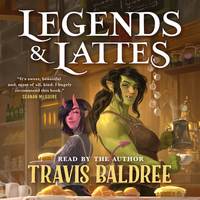
I actually have become way too serious about what’s next, as I’m currently trying to write Book 3 and this new project at the same time. another face palm My new idea was heavily inspired by Legends and Lattes by Travis Baldree. It’s a standalone cozy fantasy set in the same world as my trilogy, but having almost nothing to do with it. I’m very excited about it, and I love it already.

Thanks for your time—and thanks for The Marauders, the Daughter, and the Dragon, I can’t wait to see what’s next and hope it finds its audience.
Thank you! These questions were challenging and fantastic! It’s so cool to talk about my little world with someone who has really dived into it! Your support means a lot to me 🙂


Page 211 of 610

Powered by WordPress & Theme by Anders Norén