Author: HCNewton Page 214 of 623

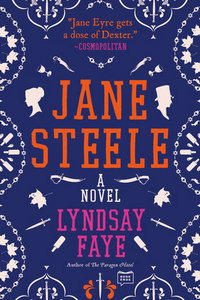
Jane Steele by Lyndsay Faye: Reader, She Murdered Him. Er, Them.

Jane SteelJane Steele

by Lyndsay Faye

DETAILS:
Publisher: G.P. Putnam's Sons
Publication Date: March 14, 2017
Format: Paperback
Length: 420
Read Date: October 14-17, 2022
Support Independent Bookstores - Visit IndieBound.org

Few among us are aware of how much blood the human body contains—surging in thick waves should it chance to be spilt.

I had spilled it, meanwhile, and therefore drastic measures were required.

[redacted] was felled by a strangely skilful blow—as if I had studied the act, when in fact I had simply decided that he should stop being alive. He gurgled a disbelieving shriek, eyes ablaze with wrath and fear, looking perversely more alive than ever, each muscle taut with severest alarm. He even got halfway to his feet, reaching for me, rich gore soaking the fateful ledger.

Then his lips bubbled crimson, his blazing eyes hardened, and he slumped forward over the desk. His fingers, so graceful in life, twitched like the poisonous insect he was; his back ceased to shudder.

I cocked my head and gauged his condition: dead.

What’s Jane Steele About?

I got really long-winded in my first draft on this point and bored myself—if I can’t keep my interest, there’s no way I’m going to keep yours. So, because I’m a giver, I’m going appropriate the description from the Publisher’s site:

A sensitive orphan, Jane Steele suffers first at the hands of her spiteful aunt and predatory cousin, then at a grim school where she fights for her very life until escaping to London, leaving the corpses of her tormentors behind her. After years of hiding from the law while penning macabre “last confessions” of the recently hanged, Jane thrills at discovering an advertisement. Her aunt has died and her childhood home has a new master: Mr. Charles Thornfield, who seeks a governess.

Burning to know whether she is in fact the rightful heir, Jane takes the position incognito and learns that Highgate House is full of marvelously strange new residents—the fascinating but caustic Mr. Thornfield, an army doctor returned from the Sikh Wars, and the gracious Sikh butler Mr. Sardar Singh, whose history with Mr. Thornfield appears far deeper and darker than they pretend. As Jane catches ominous glimpses of the pair’s violent history and falls in love with the gruffly tragic Mr. Thornfield, she faces a terrible dilemma: Can she possess him—body, soul, and secrets—without revealing her own murderous past?

The Jane Eyre of it All

There are a couple of ways to talk about Charlotte Brontë’s work relating to this book. First, the novel is Jane Steele’s favorite novel. She makes frequent mention of it, plot points, and even when she buys a new copy. Jane is very aware of how events in her life parallel Eyre’s, and while the two women share responses to some things—ultimately, they’re very different people.

But my primary focus is from the perspective of the reader. The book was marketed as “what if Jane Eyre was a serial killer?” and “Jane Eyre + Dexter.” And that’s not wrong, but I think it’s more than that. Another way to put it is that this isn’t in the same vein as Pride and Prejudice and Zombies. The account of Steele’s life—broadly viewed—does follow the same outline as Eyre’s (the question can, and should, be asked how much of this is real and how much is a projection by the narrator). Also, I’m not crazy about the serial killer tag. She’s a vigilante who has killed enough to get the label “serial.” But it’s not ever presented as something she’s driven to do from within (although that might be a coverup by the first-person narrator).

But basically, it’s the same rough outline, with a lot of significant differences. The Flight of Gemma Hardy and Re Jane are closer re-tellings of Jane Eyre.

So, what did I think about Jane Steele?

In the end, not only is it a strange little love story and a little bit of a thriller, but there’s some reflection on humans as storytelling creatures. Not just in the stories we set down—Jane Eyre and Jane Steele for example—but the stories we tell ourselves and each other. There’s an essay to be written there by a more insightful blogger than I.

Faye did a good job of making most/many of the characters have Twenty-First Century sensibilities while walking around Nineteenth-Century London. Some authors can’t pull it off, but Faye did. The pacing is quick. The writing is crisp and clever, and there’s a humor to this that you might not expect (but is really the only way this is palatable)—after distancing the work from Dexter earlier, the humor of the novel really does match the Showtime version at its best. I wouldn’t change a thing about any of the characters, and really do regret that the nature of this story pretty much eliminates a sequel, because I’d like to revisit them (but a sequel would really be a bad idea).

I came for the Jane Eyre aspect, got hooked by the characters, and stayed for Faye’s prose and story. This ended up as far better than I expected and pretty different than what I thought I was getting into. I was glad to see it (don’t get me wrong, the Eyre stuff is great, but it’s just the icing on this tasty cake) and heartily recommend this to you.


4 Stars

This post contains an affiliate link. If you purchase from it, I will get a small commission at no additional cost to you. As always, the opinions expressed are my own.

REPOSTING JUST CUZ: The Essential Trinity by Brandon D. Crowe and Carl R. Trueman, eds.

(the title’s not entirely true…there’s another re-run because I couldn’t stay awake Saturday to finish a new post. But there’s no event correlating with selecting this book. I’ve got three books to post about in the Sunday evening slot, hopefully you’ll see one of them here next week.)


The Essential Trinity The Essential Trinity: New Testament Foundations and Practical Relevance

by Brandon D. Crowe and Carl R. Trueman, eds.

Paperback, 273 pg.
Inter-Varsity Press, 2016

Read: July 31 – August 14, 2016

As far as consistency of quality amongst edited volumes goes, Crowe and Trueman have assembled one of the stronger line-ups I’ve read in a while — men from a spectrum of persuasions of Evangelical-ish thought have given the Church fourteen articles (approximately 20 pages each) to deepen our thinking about the Trinity. The aim was for a volume that “eschews overly technical discussion and focuses attention on the importance of the doctrine for every Christian.”

In Part 1, the articles look at the “trinitarian contours of every corpus of the New Testament, along with a chapter reflecting on the Old Testament roots of trinitarian doctrine.” If there are weak chapters in the volume, they’re in this part — but they aren’t that weak, either. Crowe’s chapter on Matthew is excellent, but the chapters on the Mark, Luke-Acts and John aren’t far off that Mark. Brian S. Rosner’s chapter on “Paul and the Trinity” is worth the price of the book. The chapters on the rest of the epistles are very helpful (particularity Hebrews). Mark S. Gignilliat’s article, “The Trinity and the Old Testament: real presence or imposition?” is very helpful and insightful — and as an added bonus, it’s the most stylistically entertaining and engaging piece in the book.

Benjamin Gladd’s chapter exploring Daniel’s influence on Revelation’s view of the Trinity is the biggest mental workout you’ll get in the book. I appreciated the material covered and the argument Gladd makes, but I’m going to have to read it a few more times before I think I have a good handle on it.

Part 2 addresses the importance of the Trinity for everyday living — many would say the doctrine is impractical and only belongs in Statements of Faith and academia. The authors here show the fallacy of that. It begins with a brief, but excellent, description of the doctrine by Scott R. Swain. Carl Trueman has the next chapter, “The Trinity and prayer,” which is probably as valuable as Rosner’s — it’s actually about more than prayer, but the material specifically on prayer is great — hugely indebted to John Owen (but not uncritically so). Robert Letham’s chapter on “The Trinity and worship” also draws deeply from Owen; if he doesn’t move you to worship as you understand the work of the Trinity in it, you aren’t paying attention (I probably have more problems with some of what he says than anything else in the book). Michael Reeves, typically, made me chuckle in his chapter on preaching — but he did more than that, too.

Timely, convicting, thoughtful and inspiring, this examination of the Trinity in Scripture and Life should be a great benefit to any believer ho reads it. It may not be the easiest thing read all year (but really, it’s not that difficult), but it’ll be one of the most rewarding.

—–

4 Stars

Saturday Miscellany—10/29/22

My wife, kids, kid-in-law, dogs, and work all demanded (and were gladly given) a little more time and attention this week, so reading, blogging, and reading blogs took a hit. I did manage to see a few things for this post–and then got some help from Peat Long’s Friday Five.

Odds ‘n ends about books and reading that caught my eye this week. You’ve probably seen some/most/all of them, but just in case:
bullet Libraries Can Unite a Lonely, Divided Nation—they probably won’t, but wouldn’t it be nice?
bullet Mike Craven: Crime writer motivated by cancer survival—a nice profile of one of my favorites
bullet A Horse Girl, a Hobbit, a Wanderer: On Picking Up Hobbies From Books
bullet Most generic thriller plan…—The Orangutan Librarian shares a plan for a “a generic thriller with an awful twist.”
bullet On the Use and Abuse of Dragons
bullet Next Month, keep an eye out for Small Press Great Stories, a nifty-looking event put together at Runalong The Shelves
bullet What I Miss about How I Read as a Child

This Week’s New Releases that I’m Excited About and/or You’ll Probably See Here Soon:
bullet Fahrenzine: Welcome To Hollywood by Russell Day & Saira Viola—Fahrenheit Press isn’t giving any details about about this story, but I haven’t gone wrong yet with blindly trusting Fahrenheit or Day (I keep meaning to try Viola, but haven’t managed to yet). Honestly, you could tell me that Russell Day is doing an Austen pastiche and I’d probably love it. Very curious about this one.
bullet No Plan B by Lee Child and Andrew Child—this is the third book in the “hand-off Reacher to little brother” project. Hopefully, it’s a lot stronger than the second (or first).

Lastly, I’d like to say hi and extend a warm welcome to unclearer and Gina (thanks for the mention, by the way) who followed the blog this week. I hope you enjoy the content and keep coming back.
A Book is not just a book. It is sanity, it is happiness, it is a teacher, it is a therapist, and a best friend

The Ballad of Bonaduke—Episode 6: Rat in a Maze by R. T. Slaywood: I Feel Like I’m Lost in a Maze with This, but I Like It

The Ballad of BonadukeThe Ballad of Bonaduke—
Episode 6: Rat in a Maze

by R.T. Slaywood

DETAILS:
Series: The Ballad of Bonaduke, #6
Format: Kindle Vella Story
Read Date: October 27, 2022

I spent an uncomfortable amount of time pulling out the IV before standing up and rushing the door. The world spun upwards, and the floor hit my face.

The Story So Far…

A drunken Michael Bonaduke decides to use a grift (with maybe some sort of magic/magic-like “help”) to win on a scratch-off lottery ticket so he has money to buy more to drink. He pulls off whatever he did, gets his money and some booze and stumbles off into the darkness to drink himself into oblivion so he can start again the next day. He’s hit by dark memories (probably what’s driving him to the drinking) of fire, pleading, and screaming. There’s going to be a price to pay for his grift, and he’s trying to be ready.

Before then, he gets himself drunk and we get some of his tragic backstory. As he ponders this, he decides to use some of his ill-gotten-gains to buy more booze and walks into a liquor store robbery. He foils it in some sort of magical fashion, gets some more to drink, and heads off to the park to drink until he’s arrested (probably for the failed robbery). At least that’s his plan, but it gets interrupted by being hit by a car. He wakes up on some sort of short, metal bed and is unsure what’s going on.

What’s Rat in a Maze About?

Bonaduke tries to escape from wherever exactly he is while learning what he can about it. It turns out that he’s going to be tested for something (he’s not told what) and if he passes, someone will explain everything. The test is…hard to explain without giving any details. Essentially he ends up taking a “Kirk passing the Kobayashi Maru” sort of approach. We’ll have to see how that works out for him in Episode 7.

So, what did I think about Rat in a Maze?

I don’t have a lot to say about this episode, but what I do have is complimentary.

I have nothing but questions at this point—and I think that’s the point. I liked what we got here, and am possibly more intrigued by this story than I have been so far. I’ve been fighting the temptation for a day to push on and ignore my schedule.


3.5 Stars

The Friday 56 for 10/28/22: The Sense of an Ending by Julian Barnes

The Friday 56This is a weekly bloghop hosted by Freda’s Voice.

RULES:
The Friday 56 Grab a book, any book.
The Friday 56 Turn to Page 56 or 56% on your ereader. If you have to improvise, that is okay.
The Friday 56 Find a snippet, short and sweet.
The Friday 56 Post it.

from Page 56 of:
The Sense of an Ending

The Sense of an Ending by Julian Barnes

My mother nodded away as she took all this in.

“You see, I was right.”

“How’s that, Ma?”

“He was too clever. If you’re that clever you can argue yourself into anything. You just leave common sense behind. It’s his brain unhinged him, that’s why he did it.”

“Yes, Ma.”

“Is that all you’ve got to say? You mean you agree?”

Not replying was the only way to keep my temper.

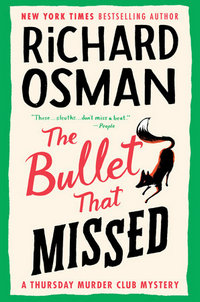
The Bullet That Missed by Richard Osman: Chickens (Start to?) Come Home to Roost

The Bullet That MissedThe Bullet That Missed

by Richard Osman

DETAILS:
Series: Thursday Murder Club, #3
Publisher: Pamela Dorman Books
Publication Date: September 20, 2022
Format: Hardcover
Length: 337 pg.
Read Date: October 17-19, 2022
Support Independent Bookstores - Visit IndieBound.org

“It’s the people, in the end, isn’t it?…It’s always the people, You can move halfway around the world to find your perfect life, move to Australia if you like, but it always comes down to the people you meet.”

What’s The Bullet That Missed About?

Consequences, largely.

But that doesn’t tell you much. So let me expand a bit. The end of the book seemed to tie up everything with two nice and tidy bows. But you know what they say about appearances…

In The Man Who Died Twice, the Thursday Murder Club basically ripped off a International Criminal and got away with it. Well, almost. It turns out that a competitor (we’ll call him the Viking) of that criminal has evidence of their theft. The Viking tries to use that evidence to blackmail Elizabeth into killing the other criminal. She resists until the Viking turns it into an offer she can’t refuse.

Meanwhile, Joyce has picked the next case for the Club to look into. Years before, a local news anchor had gone missing and is presumed dead. Over her protests, everyone is sure she wants to look into the case because she wants to meet some people on TV, but the case is interesting enough that they’ll go along with it. Whatever her motives, it is an interesting case and gives the Club a lot to do (and, yes, they get to meet a local celebrity or two along the way).

The case brings Ibrahim into contact with Connie Johnson, the crime boss the Club had helped put away. She hasn’t forgotten him or Ron—and has grim plans for both of them upon her release (which she’s sure isn’t long off). But in the meantime, for her own amusement, she plays along with Ibrahim and helps out.

Murdering a criminal, solving an old missing persons case (that may be a murder), and tangling with an imprisoned drug lord. That’s a lot to squeeze into 337 pages, but there’s more: add in some romance/potential romance, some new friends and old, and Joyce’s continued experiments with Instagram, and you’ve got yourself a novel.

Stephen!

Elizabeth’s husband, Stephen, has been a rock for her throughout this series. He’s had a few good moments when it comes to both story and comedy—and heart, most importantly, the heart—but he’s largely been a supporting character. An important one, but supporting, nonetheless.

But he gets to shine in The Bullet That Missed. He’s thrust into the middle of one of the stories from the beginning, and plays a significant role throughout this storyline. In retrospect, I think I should’ve anticipated this happening at some point, but I hadn’t. It was so good to see this.

There’s a dark side to anything involving Stephen, too. We know from the beginning that he’s struggling with dementia. We all know too well that there’s only one direction for people dealing with that. So every time we see the character—or see Elizabeth thinking about him—the reader is confronted with this reality. As hard as some of the situations the Club faces in this book are—nothing is as hard (for characters or readers) than to see this progression.

Elizabeth seems so strong, so capable—frequently inscrutable and almost omniscient—but when it comes to Stephen, she is so vulnerable, so human (and now Joyce, too but always Stephen first). I have a blast reading über-competent Elizabeth, but I love vulnerable Elizabeth, and Stephen’s where she comes from.

The Heart of this Series

I have to be vague here, but I think I can get across what I want without ruining anything.

That quote I opened with is, ultimately, what this series is about—it’s what gets people hooked on it. The four members of The Thursday Murder Club—and their particular brand of friendship—is so appealing. There’s a chemistry and a warmth to them that inevitably attracts others, they want to be part of it. In the first book, they draw in such disparate people as a middle-aged Detective Chief Inspector, a Police Constable not quite used to the quieter locale, and a pretty shady Polish immigrant. You see something similar in the next book, too. The Bullet that Missed trumps them all—and the band of “Thursday Murder Club Irregulars” that they can now call on is pretty remarkable. It’s even drawn in Joyce’s daughter—not that they’ve ever been at odds, but you can tell their relationship could be better at first (and likely still could), and it’s getting stronger now.

That’s the more impressive part—not only are people drawn in by these characters because they want to spend time with them and help them (even if they’re being pressured, bullied, or blackmailed into it)—their lives are enriched by it. As are the lives of the Murder Club—everyone benefits.

This crosses generations, interests, professions, criminal records, ethnicities, national origins, classes, education levels—you name it. Sure, this is a cozy kind of “blue sky” outlook. But who doesn’t want to live in a world like that? Who doesn’t want to at the very least want to spend some time reading about a world like that? Even if it’s marred by murder, the occasional betrayal, and grief—it’s an optimistic antidote to loneliness and…I don’t know, the ineffable “everything else” that defines contemporary life.

So, what did I think about The Bullet That Missed?

The downside to everything I just said is that I wonder if we don’t have too many players in this book—we’ve got the core four, the extended circle of friends, Stephen, kids, a grandchild, old contacts, new friends, romantic interests, foes old and new. I felt like we didn’t get quite enough time with our protagonists. But I don’t want to lose a moment with the others…maybe Osman should take a page from Galbraith and start putting out a thousand pages at a time. (NOTE: That is absolutely a joke. I would eagerly read it, should he publish it, but I don’t want it.) That hurt the book a little for me, but there wasn’t a moment of this novel I didn’t find wholly charming and delightful.

In sum: the biggest problem with this book was all the new good stuff crowded out the old good stuff. Not the worst problem to run into.

The mystery was great—I got suckered by a red herring or two (and even when I suspected something was a red herring, I ignored that likelihood). The character work was typically fantastic. The conclusion was a knock-out and everything that happened after the killer’s reveal is even better. I’m firmly in raving fanboy mode now, so let me wrap-up.

Basically, this is a the literary equivalent of a cozy blanket and a nice up of tea—if you don’t feel better while reading it, I’ll be shocked. Yes, in this series (as in real life) grief and sorrow are around the corner—potentially great tragedy, too. for now, the Thursday Murder Club has nothing but a great time to offer you in The Bullet That Missed. Highly recommended.


5 Stars

This post contains an affiliate link. If you purchase from it, I will get a small commission at no additional cost to you. As always, the opinions expressed are my own.

Flight Risk by Cherie Priest: Two Missing Persons Bring the Team Back Together for this Winning Sequel

Flight RiskFlight Risk

by Cherie Priest

DETAILS:
Series: Booking Agents Series, #2
Publisher: Atria Books 
Publication Date: November 15, 2022
Format: eARC
Length: 320 pg.
Read Date: October 20-21, 2022
Support Independent Bookstores - Visit IndieBound.org

What’s Flight Risk About?

Grady and his daughter lose their dog while visiting Mt. Rainer—but never fear, they find him—much to their relief. They’re not at all relieved by the fact that when he’s found, he’s carrying a human leg in his mouth. While it’s a different jurisdiction, it’s soon determined that the (probably dead) man missing a leg is/was a Seattle resident, so Grady handles that end of the investigation.

At the same time, Leda is approached by a man to find his sister. This is a major step up for Leda’s psychic consulting—since the news coverage stemming from the events in Grave Reservations, she’s been hired to find a few missing things (mostly successfully), but a person that’s been gone for a month is a significant case. She takes it on with some hesitation, and several caveats toward the brother that she might not find anything, and he might not like what she is able to find.

Naturally, there’s a connection between both missing persons, and Grady and Leda team up again.

Leda’s having a hard time making headway, at first, with her case, and calls in the woman who’d offered to mentor her for some help. Almost immediately the medium demonstrates that this was a wise choice and that she’s the real deal. As she works with Leda, providing a nudge or two, she hints that Leda may discover other abilities as she grows as a psychic—which will be interesting to watch, for sure.

Det. Grady Merritt

Flight Risk features a lot more of Grady on his own (still plenty of Grady with Leda and Grady with everyone else, don’t worry) doing police work. It’s good to see him plugging away at things and interacting with his partner (who I hope we get more time with in the future—Sam and Niki would be a fun team-up).

He doesn’t strike me as a super-cop like Bosch or Ballard—but he’s the kind you hope our police departments are full of—decent guys who are dedicated to their jobs, driven by curiosity and a sense of duty. He just happens to be pretty lucky and he now has a psychic friend who can lend a hand. I enjoy reading about this kind of police detective*, it gives me hope.

* I’m still devouring books about Bosch, Ballard, Washington Poe, and other super-cops, don’t get me wrong.

Niki

Leda’s best friend Niki is, of course, back. In Grave Reservations, Niki essentially pushed Leda to take risks, to persevere in the investigation, and so on. Then, when she accompanied Leda and Grady when they were investigating, she could be relied upon to go a little further than Leda, and would carry the comedic weight in her scenes.

Here in Flight Risk, she has the same roles. But Leda’s more confident now and doesn’t need her friend egging her on quite as much either on-stage or in her office. She is still a little more “out there” when she rides along with Grady and her friend, but I think she’s more restrained there, too.

I might be a little off here, and if I revisit this next year, I’ll wonder what I was thinking here. But right now, Niki seems to be the weak link in this book, not bringing quite enough to the plot or to the comedy. A toned-down Niki is more grounded, more realistic—absolutely. But if she’s not being Lula to Leda’s Stephanie Plum, I’m not sure what purpose she’s serving. I should stress, I don’t think Priest shouldn’t have her around, nor do I want her to be as goofy as Lula (the world doesn’t need another one)—but we just need her to be a little less restrained.

The Law of Interconnected Monkey Business

So, anyone who’s read a mystery novel before will be pretty sure that there’s a tie between Grady’s and Leda’s cases are going to be connected. Obviously, if you read the above section or the description on the back of the book or on the online store of your choice, you’ll know that, too.

That’s not what I want to talk about—it’s the way that Priest combined these two cases and got Leda and Grady to work together again. I honestly expected that this series would be Grady bringing cases to Leda, either on his own or because he’s instructed to, when the SPD comes up against a tough case. But that’s clearly not going to be the case.

There’s going to be flexibility—even possibly some times when Grady comes into things pretty late in the game (I can’t see leaving the police out of a book entirely). The fact that Priest stayed away from the structure of the first book already is an encouraging sign and shows that this isn’t going to be a cookie-cutter kind of series, but that she’s going to bring something new each time.

So, what did I think about Flight Risk?

I have to say this one was a tough one to write about—I almost felt like I could copy and paste what I said about Grave Reservations here. If you liked that novel, you’ll dig this one—having introduced the characters and world, Priest (and the readers) can focus more on the mysteries, and the book is better for it.

The mysteries were well-designed and executed, with the psychic clues/impressions/whatever along the way pointing Grady and Leda in the right direction, but not giving them so much that they don’t have to work out things for themselves (with one notable exception). This is the way to do a Psychic Detective novel. The red herrings and false trails were particularly well-done and I enjoyed seeing our protagonists dealing with them.

We got a better sense of all the supporting characters, as one would expect/hope, and I enjoyed them all. This is really a pleasant little universe that Priest has given us and I hope we get to hang out with these characters for a good while to come.

Flight Risk would be a good introductory novel for this series as well as a pleasant continuation for those who read Grave Reservations—it’s light(ish) fun with a dash of the supernatural to enliven the mystery, the combination of police and amateur detectives working together is a tried and true way to make things entertaining—and Priest uses it well. This novel hit the spot for this reader, and I look forward to another case or two soon. I definitely recommend this one to you.

Disclaimer: I received this eARC from Atria Books via NetGalley in exchange for this post that reflects my honest opinion—thanks to both for this.

This post contains an affiliate link. If you purchase from it, I will get a small commission at no additional cost to you. As always, the opinions expressed are my own.

WWW Wednesday, October 26, 2022

For the second week in a row, I find myself spinning my wheels and staring at blank screens when it comes time to work on posts here. It’s starting to get to me. Hopefully by the time this posts, that sentence will be out-of-date, but I’m not counting on it. I’ve been reading and listening to plenty of things to give me material to write about, as you can see in this WWW Wednesday!

This meme was formerly hosted by MizB at A Daily Rhythm and revived on Taking on a World of Words—and shown to me by Aurore-Anne-Chehoke at Diary-of-a-black-city-girl.

The Three Ws are:

What are you currently reading?
What did you recently finish reading?
What do you think you’ll read next?

Easy enough, right?

What are you currently reading?

I’m reading the genre-bending debut, The Veiled Edge of Contact by James Brayken, and am listening to the new Cassie Dewell novel, Treasure State by C.J. Box, Christina Delaine (Narrator), on audiobook.

The Veiled Edge of ContactBlank SpaceTreasure State

What did you recently finish reading?

I just finished Julian Barnes’ The Sense of an Ending—and will be chewing on it for some time—and The Vexed Generation by Scott Meyer, Luke Daniels (Narrator) on audio.

The Sense of an EndingBlank SpaceThe Vexed Generation

What do you think you’ll read next?

My next book should be the second Frost Files installment, Random Sh*t Flying Through the Air by Jackson Ford, (a few years too late for my taste) and my next audiobook should be the second Greywalker novel, Poltergeist by Kat Richardson, Mia Barron (Narrator).

Random Sh*t Flying Through the AirBlank SpacePoltergeist

How are you coasting into November?

REPOSTING: The Warm Glow of Acceptance…

This came up on my Facebook memories today, and I had no recollection at all of writing a post with this title. So I had to re-read it (I rarely do that). I now remember all the events I talked about and it brought a smile to my face, so, here it is again—hopefully, someone out there is half as amused by it as I was.

(and if you aren’t, simply return the unused portion and our customer service agents will issue you a full refund)


As usually happens when I have a solid—maybe ambitious—plan for a week’s worth of posts, something came up this weekend that was far more important than this blog. So that plan is shattered (can’t wait to see what I’m able to recover). But something that happened this morning that gave me enough material to put something up today.

Last week, a friend sent me a Facebook Message: “Achievement unlocked! 😊” She’d been identified as a “Top Fan” of the blog’s Facebook page. And you know the competition is fierce. 🙄 It is kind of cool that the algorithm took a break from warping minds, selling things, and stoking division in the country to recognize that a friend of mine was supportive. It is a little strange to think that anyone could be considered a “fan” of me (excepting the two canines who live here).

Then, the next day, I saw that meme I used in the last Saturday Miscellany post. Two days in a row of unexpected positive feedback. I’d planned on making a jokey post about this last week, but got hung up on looking for a meme or gif of Mabel Mora asking, “We have fans?”. So I never got around to it.

This brings us to this morning. Sure, it was fun that my friend got a badge declaring her my fan. It warmed my heart and made me laugh to see Slaywood’s pic. But this morning, someone left a comment on a five-month old post that made my heart soar. This guy, John, really looked down deep into the recesses of my soul and took a look around. And, he gets me. He really, really gets me.

Egotistical and irrelevant…as the youths say*: I feel seen.

* …or did not that long ago, right?

I do this for my own sense of fun, but feedback like this really makes it all worthwhile…

Book Blogger Hop: Bookshelves Bow

Book Blogger Hop


This prompt was submitted by Billy @ Coffee Addicted Writer:

Are any of your bookshelves bowing because of too many books?

Um…are any of my bookshelves bowing because of too many books?

My shelves? Bowing because of too many books? Er, well…

Do bears bear?

Do bees be?

Do flies fly?

Do ducks duck?

Do math majors multiply?

Do eggs get laid?

Does Spock beam up?

Er, yeah. All of them are—except for those I bought in the last 4 months, anyway (and maybe a couple of those have started).

Today's post is brought to you by a grant from David Addison and The Blue Moon Detective Agency.
Are your shelves nice and flat?

Page 214 of 623

Powered by WordPress & Theme by Anders Norén