Author: HCNewton Page 263 of 610

WWW Wednesday, October 27, 2021

The wheels have really come off of my plans for the week–boh in terms of writing and reading. Real Life can be such a drag, you know? But we’re at the mid-point, and hopefully, I can recover a bit. And if not? At least I’m spending some time with these good books that I’m about to talk about in this WWW Wednesday.

This meme was formerly hosted by MizB at A Daily Rhythm and revived on Taking on a World of Words—and shown to me by Aurore-Anne-Chehoke at Diary-of-a-black-city-girl.

The Three Ws are:

What are you currently reading?
What did you recently finish reading?
What do you think you’ll read next?

Easy enough, right?

What are you currently reading?

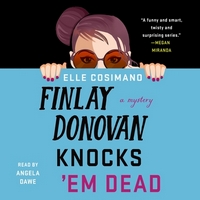
I’m reading the third DetectiveEve Ronin thriller, Gated Prey by Lee Goldberg, and am listening to book about a woman on the other side of the law, Finlay Donovan Is Killing It by Elle Cosimano, Angela Dawe (Narrator) on audiobook.

Gated PreyBlank SpaceFinlay Donovan Is Killing It

What did you recently finish reading?

I just finished Stephan Pastis’s Squirrel Do Bad, a MG Graphic Novel, and Dark Arts and a Daiquiri by Annette Marie, Cris Dukehart (Narrator), another adventure for Tori and her mystik pals on audio.

Squirrel Do BadBlank SpaceDark Arts and a Daiquiri

What do you think you’ll read next?

My next book should be Dust & Grim by Chuck Wendig—which might be a bit too much MG in one week for me, but library due dates are calling the shots, you know? My next audiobook should be Fallen by Benedict Jacka, Gildart Jackson (Narrator), as I get close to wrapping up this re-read through the series.

Dust & GrimBlank SpaceFallen

How are you spending the last week of October?

Squirrel Do Bad by Stephen Pastis: The Misadventures of Butterfly Girl

Squirrel Do Bad

Squirrel Do Bad

by Stephan Pastis
Series: Trubble Town, #1

Paperback, 287 pg.
Aladdin, 2021

Read: October 25-26, 2021
Grab a copy from your local indie bookstore!

Always remember—even the smallest thing you do can have big consequences.

What’s Squirrel Do Bad About?

Wendy the Wanderer is a little girl who desperately wants to travel the world, but her over-protective father has other ideas. He’s so focused on safety and caution, he carries an umbrella at all times (for example). But when Dad has to leave town for a while on business, Wendy just might get to do a little exploring, if she can get around her babysitter.

This isn’t a challenge, as the sitter is too focused on her phone to notice pretty much anything. So, Wendy heads out to explore her hometown, Trubble Town. A fitting name, for her at least.

She tries to befriend a squirrel, Squirrely McSquirrel, but is out of nuts. So gives him a little bit of a Mooshy. A Mooshy is a dangerous concoction for a human, much less a squirrel, it’s a “steaming cup o’hot chocolate shoved chock-full with forty marshmallows.” The levels of hyperactivity that this induces in Squirrely can’t really be described, it can only be depicted in graphic terms, really. He also becomes pretty addicted to them—but the destruction wreaked was so great that no one is permitted to give him any.

It’s at this point that things get out of control. The chaos that ensues features a police officer driven by hatred of squirrels, a mayor who refuses to work, a strange town obsession with statues, a would-be nut-themed superhero, a vegetarian squid, civic-minded moles, a lot of dynamite, and too many other things to enumerate. It’s the kind of mad-cap pandemonium that appeals to the little kid in us all (especially the middle-grade target audience).

The big questions addressed are: will Squirrely stay out of trouble? Will Wendy be able to keep all this from her father? Will anyone learn anything?

Pearls Before Swine-Verse

On page 56, Larry the Crocodile appears as Squirrely’s lawyer. Planting this firmly in the same world as Pastis’s comic strip, Pearls Before Swine. But Larry’s the only character that I recognized, it’s not Pearls. The humor’s different than the comic—it’s suited for kids, with a different tone, and a different aim.

Art Style

If you’ve read Pearls, you’ll have noticed the slightly sloppier style, with bolder lines that Pastis uses when one of his characters is drawing—the art’s a lot like that (except for a panel or two at the end). But essentially, it looks a lot like Pearls without Pig and Rat, etc.

So, what did I think about Squirrel Do Bad?

Wendy learns a little about chaos theory and begins to see herself as the butterfly that starts the storm. Which is helpful and maybe a little unhealthy, too. Still, she learns the meaning of her father’s words before he left (see the opening quotation).

The storytelling reminds me of the kind of stories my kids would write/tell when they were little—something that starts off kind of fun and then gets stranger and stranger and stranger. This is both an observation and a warning for people who want structure and logic to their stories—that’s not going to be around.

It’s silly. There is some real sweetness to it. It’s weird. It’s a lot of fun. Pretty much what you’d expect. Give it a shot, or let your kid give it a shot.


3 Stars

2021 Library Love Challenge

This post contains an affiliate link. If you purchase from it, I will get a small commission at no additional cost to you. As always, opinions are my own.

The Warm Glow of Acceptance…

As usually happens when I have a solid–maybe ambitious–plan for a week’s worth of posts, something came up this weekend that was far more important than this blog. So that plan is shattered (can’t wait to see what I’m able to recover). But something that happened this morning that gave me enough material to put something up today.

Last week, a friend sent me a Facebook Message: “Achievement unlocked! 😊” She’d been identified as a “Top Fan” of the blog’s Facebook page. And you know the competition is fierce. 🙄 It is kind of cool that the algorithm took a break from warping minds, selling things, and stoking division in the country to recognize that a friend of mine was supportive. It is a little strange to think that anyone could be considered a “fan” of me (excepting the two canines who live here).

Then, the next day, I saw that meme I used in the last Saturday Miscellany post. Two days in a row of unexpected positive feedback. I’d planned on making a jokey post about this last week, but got hung up on looking for a meme or gif of Mabel Mora asking, “We have fans?”. So I never got around to it.

This brings us to this morning. Sure, it was fun that my friend got a badge declaring her my fan. It warmed my heart and made me laugh to see Slaywood’s pic. But this morning, someone left a comment on a five-month old post that made my heart soar. This guy, John, really looked down deep into the recesses of my soul and took a look around. And, he gets me. He really, really gets me.

Egotistical and irrelevant…as the youths say:* I feel seen.

* …or did not that long ago, right?

I do this for my own sense of fun, but feedback like this really makes it all worthwhile…

The Church: An Introduction by Gregg Allison: Tries to Do Too Much and Falters

The Church: An Introduction

The Church: An Introduction

by Gregg Allison
Series: Short Studies in Systematic Theology

Paperback, 164 pg.
Crossway, 2021

Read: October 10, 2021
Grab a copy from your local indie bookstore!

What’s The Church: An Introduction About?

Allison starts with a good Introduction, sketching the ambiguity of the current English term “church”—driving home the need for a book like this. He then spends two chapters with the foundation—outlining both the relationship between the Trinity and the Church and then with a broad overview of the Scriptural doctrine of the Church.

Then he moves into the bulk of the book:

I will present the church in terms of its local expression according to the following topics: identity, leadership, government, ordinances or sacraments, ministries, and future. For each topic, the first section—mere ecclesiology—presents the common ground shared by most churches throughout history. This aspect addresses the essence, or core, of the church’s identity, leadership, government, ordinances or sacraments, ministries, and future. The second section—more ecclesiology—describes how this essence expresses itself in the actual identity, leadership, government, ordinances of sacraments, ministries, and future of particular churches.

So, what did I think about The Church: An Introduction?

In summary, ecclesiology properly begins with a consideration of the doctrine of God. Specifically, it is grounded in Trinitarian theology, which leads to this conclusion: There is one people of God, who from eternity past has graciously elected all those who will believe in him by faith and walk with him in obedience, worship, love, and service. This one people of God consists of two aspects: the people of Israel in old covenant relationship with him and the people of the church in new covenant relationship with him. Specifically in regard to this second aspect, the church is the body of Christ and temple of the Holy Spirit. As the body, the church submits to its head, celebrates its diversity of people and gifts, lives out its siblingship in all purity, and portrays and fosters its unity by participation in the Lord’s Supper. As the temple of the Holy Spirit, the church in which he dwells is birthed, empowered, gifted, directed, sent, and sanctified by the Spirit.

The first couple of chapters got me excited for the book, and then after that, each chapter annoyed me more. He totally squandered that start—the “Mere” portions of the chapters were generally decent, but far too short. The “More” portions on the other hand…didn’t belong in a book like this (for the most part)—to get into all my problems would involve getting into the nitty-gritty of the arguments. They seemed to be what he wanted to write about more than the “Mere” bits and aren’t really introductory ecclesiology.

Also, and this is just one of those things, one chapter felt like it was written in response to my pastor’s sermon that day—each point seemed to be counter one of his (or vice versa). I was already having issues with the book, but that might have been the straw that broke the camel’s back for me. (not that I think my pastor is infallible, it was just bad timing—and a bad take on the text)

If this was the first book in the Short Studies in Systematic Theology that I’d read, I probably wouldn’t have come back for more. But, as it’s the fifth, I can keep going, trusting that this was a fluke.

In the end, I think this book tried to do too much. It tried to be all things to all people rather than embracing a confessional point of view as well as getting hung up on the structure, and ends up not accomplishing much at all. Focusing on and fleshing out the “More” portions would’ve made for a better read, a more profitable read, and a less problematic read. File this one under “don’t bother.”


2 Stars

This post contains an affiliate link. If you purchase from it, I will get a small commission at no additional cost to you. As always, opinions are my own.

Happy Birthday, Archie!

My annual tribute to one of my favorite fictional characters (if not my all-time favorite). I’ve got to do an overhaul to this soon, but it is slightly updated and tweaked from last year.

On Oct. 23* in Chillicothe, Ohio, Archie Goodwin entered this world—no doubt with a smile for the pretty nurses—and American detective literature was never the same. He’s the narrator (and, I’d argue protagonist) of the questionably named Nero Wolfe mysteries. While the eccentric and overweight genius might be what brings people to the series, it’s Archie’s wit, attitude, and snappy narrative voice that brings people’s back.

* About 34 years ago, no matter what year it is that you read this.

When my aunt first gave me a Nero Wolfe book to read, she sold me on the Wolfe character, but when I read it, I wasn’t so sure that I liked the guy. But his assistant? He was cool. Sure, it didn’t take me long to get into Wolfe, but Archie’s always been my favorite. Since I was in Middle School, if I was suffering a slump of any kind (reading, emotional, physical), time with Archie Goodwin could get me out of it. There were a few years that when I got sick, I’d grab a Nero Wolfe novel to help me get through it (along with the Vitamin C and Chicken Noodle soup), and you can’t tell me it didn’t work. Noted critic Jacques Barzun says it well:

If he had done nothing more than to create Archie Goodwin, Rex Stout would deserve the gratitude of whatever assessors watch over the prosperity of American literature. For surely Archie is one of the folk heroes in which the modern American temper can see itself transfigured. Archie is the lineal descendant of Huck Finn.

While Archie’s about as far from a teetotaler as you can get, to commemorate his birthday, I’m toasting him in one of the ways I think he’d appreciate most—by raising a glass of milk in his honor.

Who was Archie? Archie summed up his life like this:

Born in Ohio. Public high school, pretty good at geometry and football, graduated with honor but no honors. Went to college two weeks, decided it was childish, came to New York and got a job guarding a pier, shot and killed two men and was fired, was recommended to Nero Wolfe for a chore he wanted done, did it, was offered a full-time job by Mr. Wolfe, took it, still have it.” (Fourth of July Picnic)

Long may he keep it. Just what was he employed by Wolfe to do? In The Black Mountain he answers the statement, “I thought you was a private eye” with:

I don’t like the way you say it, but I am. Also, I am an accountant, an amanuensis, and a cocklebur. Eight to five you never heard the word amanuensis and you never saw a cocklebur.

In The Red Box, he says

I know pretty well what my field is. Aside from my primary function as the thorn in the seat of Wolfe’s chair to keep him from going to sleep and waking up only for meals, I’m chiefly cut out for two things: to jump and grab something before the other guy can get his paws on it, and to collect pieces of the puzzle for Wolfe to work on.

In Too Many Women, he’s a bit more concise and describes himself as the:

heart, liver, lungs and gizzard of the private detective business of Nero Wolfe, Wolfe being merely the brains

In Black Orchids, he reacts to an insult:

…her cheap crack about me being a ten-cent Clark Gable, which was ridiculous. He simpers, to begin with, and to end with no one can say I resemble a movie actor, and if they did it would be more apt to be Gary Cooper than Clark Gable.

Over at The Thrilling Detective, he’s described this way:

If Goodwin hadn’t gone to work for Wolfe, he’d certainly have his own agency by now (and temporarily does, in one novel). Far more of the traditional eye, Goodwin is a tough, handsome guy with a photographic memory, a .32 under his well-tailored suit (and sometimes an extra .38 in his overcoat pocket), and a well-developed appreciation for the ladies. And, in the opinion of more than a few cops, officials and stuffed-shirt executives, a mouth that ought to be nailed shut permanently. (Wolfe isn’t immune either – part of Goodwin’s job, as he sees it, is needling the fat man into taking cases, if only to make sure the bills get covered.) He’s not the deductive genius that Wolfe is, but a smart and tenacious op with a good right hook, and a decent and personable man. Most of all, in his narration of the books, he’s a helluva storyteller; it’s his view of the world, and his interaction with Wolfe, that keeps us coming back for each new mystery.

The Archie Goodwin FAQ is less succinct but does a good job of laying out the facts.

I’m not the only Archie fan out there:

  • Someone pointed me at this post, The Wit and Wisdom of Archie Goodwin. There’s some really good stuff here that I was tempted to steal, instead, I’ll just point you at it.
  • Robert Crais himself when writing an introduction to a Before Midnight reprint, devoted it to paying tribute to Archie—one of the few pieces of anything written that I can say I agree with jot and tittle.

In case you’re wondering if this post was simply an excuse to go through some collections of Archie Goodwin quotations, you wouldn’t be totally wrong…he’s one of the fictional characters I like spending time with most in this world—he’s the literary equivalent of comfort food. So just a couple more great lines I’ve quoted here before:

I would appreciate it if they would call a halt on all their devoted efforts to find a way to abolish war or eliminate disease or run trains with atoms or extend the span of human life to a couple of centuries, and everybody concentrate for a while on how to wake me up in the morning without my resenting it. It may be that a bevy of beautiful maidens in pure silk yellow very sheer gowns, barefooted, singing “Oh, What a Beautiful Morning” and scattering rose petals over me would do the trick, but I’d have to try it.

I looked at the wall clock. It said two minutes to four. I looked at my wrist watch. It said one minute to four. In spite of the discrepancy, it seemed safe to conclude that it would soon be four o’clock.

Description:I shook my head. “You’re flattering me, Inspector. I don’t arouse passions like that. It’s my intellect women like. I inspire them to read good books, but I doubt if I could inspire even Lizzie Borden to murder.”

She turned back to me, graceful as a big cat, and stood there straight and proud, not quite smiling, her warm dark eyes as curious as if she had never seen a man before. I knew damn well I ought to say something, but what? The only thing to say was ‘Will you marry me?’ but that wouldn’t do because the idea of her washing dishes or darning socks was preposterous.

“Indeed,” I said. That was Nero Wolfe’s word, and I never used it except in moments of stress, and it severely annoyed me when I caught myself using it, because when I look in a mirror I prefer to see me as is, with no skin grafted from anybody else’s hide, even Nero Wolfe’s.

If you like Anglo-Saxon, I belched. If you fancy Latin, I eructed. No matter which, I had known that Wolfe and Inspector Cramer would have to put up with it that evening, because that is always a part of my reaction to sauerkraut. I don’t glory in it or go for a record, but neither do I fight it back. I want to be liked just for myself.

When a hippopotamus is peevish it’s a lot of peeve.

It was nothing new for Wolfe to take steps, either on his own, or with one or more of the operatives we used, without burdening my mind with it. His stated reason was that I worked better if I thought it all depended on me. His actual reason was that he loved to have a curtain go up revealing him balancing a live seal on his nose.

It helps a lot, with two people as much together as he and I were, if they understand each other. He understood that I was too strong-minded to add another word unless he told me to, and I understood that he was too pigheaded to tell me to.

I always belong wherever I am.

Saturday Miscellany—10/23/21

Wow, I’m about 2 hours behind schedule for the day…so I’m not going to try to come up with anything to lead off this week’s post.

Well, maybe a little…I tend to share a meme or something like that with these posts, just stuff I stumble upon. This week, author R.T. Slaywood created one that made my day–had to be used (as self-aggrandizing as it may be).

Odds n ends about books and reading that caught my eye this week. You’ve probably seen some/most/all of them, but just in case:
bullet Will supply chain issues affect the books you want? Depends on what you’re reading.—that last line is a bit ominous, do we have to go through this again? Might be time to buy stock in a bidet company.
bullet Another Pandemic Surprise: A Mini Indie Bookstore Boom—Nunc hoc in marmore non est incisum
bullet PW’s best books of 2021—Is it really time to start these already???
bullet Serial Thinking—I would not have put First Things on my list of places to look for solid takes on the Chet & Bernie books, but John Wilson delivers that, a thoughtful take on “genre” vs. “literary” fiction, and thoughts on the making of serialized fiction—in one short piece.
bullet Goodbye To Goodreads—I absolutely get why authors would abandon the site–outside of opportunities to market themselves anyway. But how many times does it have to be said? Reviews–especially amateur ones–are for readers, not writers. (there are plenty of other reasons to avoid Goodreads, and I’m not trying to defend the site, this just seems silly)
bullet Audiobook History, or: Why Audiobooks Matter!
bullet 8 Things to Do While Listening to Audiobooks—Nunc hoc in marmore non est incisum
bullet A Thank You to The Write Reads Gang—one of those posts that can’t be said often enough.
bullet Do you use bookmarks? I do, just not actual ones. Here are some weird/random things I (and my daughter) use!—there are some very odd things in this list (can’t imagine some are that good for the binding, either)
bullet Books to Video Games—I’m not a gamer, but a couple of my kids are, but I thought this was interesting. While I’ve seen (and purchased as gifts) several books adapted from games, I can only think of a couple of books that have been adapted to games–The Hitchhiker’s Guide to the Galaxy and Below the Root (oh, and the obligatory Sherlock Holmes/Nancy Drew—every medium has to have them). The age of both of those games suggests how much of a gamer I am.
bullet Why I’m Keeping My Book Blog
bullet Common Problems Book Bloggers Have and How To Solve Them—good advice
bullet 5 Things I Look for Before Following a Book Blog
bullet Don’t be a Stranger: How to Make Connections in the Book Blogging Community
bullet To All The Books I Didn’t Buy,—loved this.

This Week's New Releases That I’m Excited About and/or You’ll Probably See Here Soon:
bullet It’s a Wonderful Woof by Spencer Quinn—The first (novel-length) holiday Chet and Bernie book is a great bit of fun. I enthused about it recently.
bullet Best in Snow by David Rosenfelt—Andy’s dog, Tara, literally digs up a new case for him in this holiday themed novel. I talked about it a little a couple of weeks ago
bullet title by soandso—The eBook release of the Audible Original. Shining Smith #2 features a road trip, a handful of battle scenes and some surprising character developments. I had a little to say about it earlier this week.
bullet The Last Time She Died by Zoë Sharp—first in a new series has a heckuva hook. Not one I can do justice to in a sentence or so, better just click the link.
bullet Dust & Grim by Chuck Wendig—half of the reason I’m interested in this book is to see how Wendig can write for MG audience. The other half is that it takes place in a monster mortuary—which just sounds fun.

Lastly I’d like to say hi and extend a warm welcome to Carol who followed the blog this week. Don’t be a stranger!

The Friday 56 for 10/22/21: The Conjuring of Zoth-Avarex: The Self-Proclaimed Greatest Dragon in the Multiverse by K.R.R. Lockhaven

The Friday 56This is a weekly bloghop hosted by Freda’s Voice.

RULES:

The Friday 56 Grab a book, any book.
The Friday 56 Turn to Page 56 or 56% on your ereader. If you have to improvise, that is okay.
The Friday 56 Find a snippet, short and sweet.
The Friday 56 Post it

from Page 56 of:
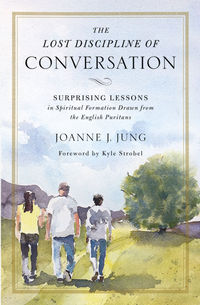
The Conjuring of Zoth-Avarex

The Conjuring of Zoth-Avarex: The Self-Proclaimed Greatest Dragon in the Multiverse by K.R.R. Lockhaven

Marian moved the group along. “She’s a talker,” she whispered to them as they snuck away.

At the next cubicle over, they found a man in his late thirties peeking over the wall.

“This is Dan,” Marian said.

“You guys haven’t seen a green-headed duck around here, have you?” Dan’s eyes darted around the room.

“No.”

“Dan is afraid that a duck is somewhere out there watching him.” Marian made the statement as if it was an everyday, normal thing.

Book Blogger Hop: Dressing up as a Book Character?

This prompt was submitted by Julie @ JadeSky:

Would you ever consider dressing up as a book character? If so, which one?

I guess it depends on what the dressing up is for. Halloween? Nah, it’s not my thing.

But sure, I’ve thought about cosplaying at various conventions as a book character (and would probably only do that rather than TV/Movie character). I could probably pull off a Tolkein-esque dwarf or maybe one of the guys from Saga in Kings of the Wyld. I’d actually planned an Arthur Dent cosplay for a local convention that ended up getting canceled, and was pretty close to coming up with an Ebenezar McCoy (from The Dresden Files) costume for Day 2 of that con. Maybe one day…

What about you?

Catch-Up Quick Takes: Out of House and Home; Word by Word; Scarface and the Untouchable; Yearbook; Is This Anything?

The point of these quick takes posts is to catch up on my “To Write About” stack—emphasizing pithiness, not thoroughness. Here are some recent-ish audiobooks (and one left-over from 2020!).


Out of House and Home

Out of House and Home

by Drew Hayes, Kirby Heyborne (Narrator)
Series: Fred, The Vampire Accountant, #7
Unabridged Audiobook, 11 hrs., 11 min.
Tantor Audio, 2021
Read: September 29-30, 221
Grab a copy from your local indie bookstore!

(the official blurb)
Wow, it’d been almost ten months since I’d listened to a Fred, the Vampire Accountant book. After a pretty steady diet of them for a while, the break was a little strange.

Anyway, the wedding’s behind him, so there’s another new challenge for Fred—someone’s coming for him, and the House of Fred. This isn’t new, but the openness, brazenness, and intensity of the attacks are.

Fred has to be his most creative to get through this challenge with both his ethics and clan intact. Not to mention his life.

For reasons that make sense (and make some of the drama possible), Krystal was not around for most of this book. That bugged me, I’d have liked to have seen a bit more about married life between the two. Oh, well, there’s time for that to come.

Gentle humor, just enough action to keep you going, and a bunch of pleasant characters. The seventh installment of this series proves there’s plenty of life left in this story of the undead.
3.5 Stars

Word by Word

Word by Word: The Secret Life of Dictionaries

by Kory Stamper
Unabridged Audiobook, 9 hrs., 48 min.
Random House Audio, 2017
Read: September 16-20, 2021
Grab a copy from your local indie bookstore!

(the official blurb)
If you’ve ever wondered how a dictionary—at least Merriam-Webster dictionaries—is produced, this is the book for you. If you hadn’t but the idea sounds pretty good now that you know a book like that exists (like I was), good news. Kory Stamper’s book will satisfy.

As the blurb says,

She explains why small words are the most difficult to define, how it can take nine months to define a single word, and how our biases about language and pronunciation can have tremendous social influence. And along the way, she reveals little-known surprises—for example, the fact that “OMG” was first used in a letter to Winston Churchill in 1917.

I found her discussion about trying to refresh the definition of “bitch” in the twenty-first century, with all the history and varied usage to pair nicely with John McWhorter’s chapter on the word in Nine Nasty Words. I’d love to hear the two of them discuss it.

There’s some humor, some scholarship, and word-nerd fun. It’s an entertaining and enlightening book.
3.5 Stars

Scarface and the Untouchable

Scarface and the Untouchable: Al Capone, Eliot Ness, and the Battle for Chicago

by Max Allan Collins and A. Brad Schwartz, Stefan Rudnicki (Narrator)
Unabridged Audiobook, 18 hrs., 36 mins
HarperCollins Publishers, 2018
Read: June 14-21, 2021
Grab a copy from your local indie bookstore!

(the official blurb)
There is a lot of de-mythologizing in this history of Capone and Ness—not just of some of the myths that surrounded them during the 1920s and 30s—but of many of the “de-mythologizing” works that have been written about them since. According to Collins and Schwartz, both men—especially Ness—have been the victim of so much revisionist history that it’s almost impossible to really get at what these two did and were like.

Still, the authors think they’ve got it—or at least closer to it than others due to their research methods, etc. Hopefully, they have—I don’t know. They did tell a pair of compelling stories about Capone, Ness, and how they both rose to notoriety—and kept it.

I do think a text version of this would work a little better—I had a hard time tracking some of the not-as-important names/dates/events. It could be me, and probably is. I don’t think it was Stefan Rudnicki’s fault at all—he did a great job with the work (and it was nice to hear him doing something other than Alex Bledsoe novels).

3 Stars

Yearbook

Yearbook

by Seth Rogen (and a whole lot of other people)
Unabridged Audiobook, 6 hrs., 13 min.
Random House Audio, 2021
Read: September 7-8, 2021
Grab a copy from your local indie bookstore!

(the official blurb)
Simply put, this is a collection of stories from Rogen’s life—from doing stand-up as a teenager to his work on TV and in movies. There’s—no surprise at all—a lot of references to and stories about drug use.

I’m not a huge Rogen fan—have enjoyed some of his work, but not most of it. I have always appreciated his ability to tell a story in interviews, though, and that’s what we get here. Great literature? Nope. Insightful look into the human condition and/or the Entertainment Industry? Nope. Silly fun? Yup. I can’t imagine anyone picking up a Rogen book looking for more than the last option, anyway. So you get what you expect.

This was definitely a book to listen to on audio—listening to Rogen tell these stories adds a bit of humor and flavor to it that I think just reading it wouldn’t deliver.
3 Stars

Is this Anything?

Is This Anything?

by Jerry Seinfeld
Unabridged Audiobook, 6 hrs., 15 min.
Simon & Schuster Audio, 2020
Read: December 15-16, 2020
Grab a copy from your local indie bookstore!

(the official blurb)
Jerry Seinfeld keeps the notebooks he writes his jokes in and has always done so. Which made compiling this collection possible. This is a collection of what Seinfeld considers his best material.

It’s organized by decade, with a little narrative added to discuss his career/family. But it’s primarily joke after joke after joke after joke. As I recall, SeinLanguage was essentially the same thing, but the last time I read that was in the 1990s, and my copy is in a box. So I can’t verify that.

I’m not sure audio was the best method for me. It felt like listening to a comedy album recorded in a studio rather than in front of an audience. It just felt strange to hear it all without laughter or other audience reaction—or his reaction to the audience. Also, I think it’d work better taken in parts—not the whole 6 hours in a clump (I guess 2 clumps).

Still, it’s material from one of the best around—it’s an entertaining time.

3 Stars

2021 Library Love Challenge 2021 Audiobook Challenge

This post contains affiliate links. If you purchase from any of them, I will get a small commission at no additional cost to you. As always, opinions are my own.

The Ninja’s Blade by Tori Eldridge: The Ninja Daughter is Back in a Darker Thriller

The Ninja’s Blade

The Ninja’s Blade

by Tori Eldridge
Series: Lily Wong, #2

Paperback, 317 pg.
Agora Books, 2020

Read: August 4, 2021
Grab a copy from your local indie bookstore!

What’s The Ninja’s Blade About?

I have abandoned this post five times since early August because of this section—I’ve written three that were too detailed (and therefore too long to read) and two that were too vague (and therefore too, well, vague to be any good). So, fine. I give up. Here’s what’s on Eldridge’s website about it:

In THE NINJA’S BLADE, Lily Wong―a Chinese-Norwegian modern-day ninja―has more trouble than she was bargaining for when controlling grandparents arrive in Los Angeles from Hong Kong at the same time she goes undercover in the dangerous world of youth sex trafficking. As she hunts for a kidnapped prostitution victim, a missing high school girl, and a sociopathic trafficker, the surviving members of a murderous street gang hunt for her.
Life would be easier if Lily knew who to trust. But when victims are villains, villains are victims, and even family is plotting against her, easy is not an option. All Lily can do is follow the trail wherever it leads: through a high school campus polarized by racial tension or the secret back rooms of a barber/tattoo/brothel or the soul-crushing stretch of Long Beach Boulevard known as The Blade.
She relies on her ninja skills to deceive and infiltrate, rescue and kill―whatever is necessary to free the girls from their literal and figurative slavery. If only those same skills could keep Lily’s conniving grandparents from hijacking her future.

Words Matter

I could not stop thinking about Robert B. Parker’s Ceremony/Taming a Seahorse/ Hundred-Dollar Baby and any number of similar books by him (and others) featuring P.I.s looking for particular prostitutes. Many of these I’d considered treating the women in question with sensitivity and respect. But I’m starting to think they could’ve done better.

Of course, whatever social workers the P.I.s encountered weren’t the same people Lily encountered. Lily was told in no uncertain terms that it’s not child/teen prostitution, but commercial sexual exploitation, and if she wanted to get anywhere with that agency, she’d adjust her language. Not only is it a language thing—but it reframes the activity. And the criminal culpability of those involved.

You can see its effect on Lily from that point on in the novel, if anything it probably made her more determined.

Lily’s Personal Life

Ask Peter Parker, it’s hard being a vigilante without your family finding out. The Ninja Daughter showed Lily’s skill in keeping that from her family, but it wasn’t easy. Add in trying to date—something Lily hasn’t successfully done since the night her sister died—and you’ve yet another bit of trouble.

Lily finds herself liking Daniel, but can’t make herself make time for him. Until her grandparents intervene, and suddenly, there’s one more plate for Lily to keep spinning.

But the fact that her grandparents are involved in her life is the big thing—they’ve come to visit from Hong Kong to check up on their business. Lily’s mother runs the LA/American branch of the family’s corporation.

Their presence changes—at least temporarily—the dynamic between Lily and her mother. Instead of the fairly antagonistic relationship we saw last time, there’s an alliance of sorts. Lily becomes as much of the supportive, obedient daughter as she can. Her mother’s stress level is through the roof, feeling like every decision she makes and has made—personal and professional—is being weighed and found wanting. So Lily does what she can to take the pressure off—she spends time with them, allows them to meddle in her life (rather than her mom’s), and so on.

I really appreciated this—mutual affection, familial bonds, and so on were present in The Ninja Daughter, but we got to see them in action here. It keeps Ma from being merely an obstacle to Lily’s mission and turns her into a character (that is frequently an inadvertent obstacle to Lily’s mission, sure—but that’s different).

The Fallout From The Ninja Daughter

Lily’s character is defined by her reaction to the trauma and guilt over her sister’s murder. But in The Ninja’s Blade, she has a fresh batch of trauma to deal with. The events of The Ninja Daughter have done some significant damage to her psyche (to paint with a broad brush, Eldridge does a better, and more subtle job of depicting it—don’t let my need for pithiness fool you).

She doubts herself, second-guesses her choices, makes costly errors, and this causes problems for her in the midst of battle (literal or figurative)—and for what Lily’s trying to do, this could be fatal. It’s also making things difficult for her outside of her work.

It’s not like she can seek out a counselor or anything—it’s not like she can tell a lot of people what caused the trauma. So it’s up to Lily—with some help from Stan and Aleisha at the shelter—to work through this.

So, what did I think about The Ninja’s Blade?

Eldridge here takes what was a strong adventure series with heart and a social conscience and improves it here—adding psychological depth, more layers to the protagonist, developing the characters of those around her, and showing that there are real risks and consequences for the protagonist. This isn’t a Reacher-like series, things that happen to Lily matter and will have a lasting impact on the character.

I really enjoyed this book—there’s enough humor and action to make sure this stays entertaining, and the darkness and complexity of the world add weightiness to the novel so that it doesn’t become a disposable thriller.

I strongly recommend this one to you and think it would serve alright as a jumping-on point, but I think you’d be better off jumping back to the prior novel. But starting with this one and then backtracking would work, too. Just do yourself a favor and pick these up.

20 Books of Summer '21

This post contains an affiliate link. If you purchase from it, I will get a small commission at no additional cost to you. As always, opinions are my own.

Page 263 of 610

Powered by WordPress & Theme by Anders Norén