Author: HCNewton Page 268 of 610

BOOK SPOTLIGHT: The Chronicles of Iona: Exile by Paula de Fougerolles

I’m very pleased and excited today to welcome The Blog Tour for the first in Historical Fiction Trilogy, The Chronicles of Iona by Paula de Fougerolles: Exile. This Tour Stop consists in this little spotlight post and then my take on the novel coming along in a bit. Let’s start by learning a little about this novel, okay?

The Chronicles of Iona: Exile Tour Banner

Book Details:

Book Title: The Chronicles of Iona: Exile by Paula de Fougerolles
Publisher: Careswell Press
Release date: May 25, 2012
Format: Ebook/Paperback
Length: 394 pages
Chronicles of Iona: Exile

Book Blurb:

The Chronicles of Iona: Exile tells the story of the Irish monk and Scottish warrior, Saint Columba and Aedan mac Gabran, who would band together to lay the foundation of the nation of Scotland.  They were a real-life 6th-century Merlin and King Arthur and their story has never been told.

The book begins in 563 A.D.  The Roman Empire is long gone, freeing the region of Scotland from the threat of imperial rule but opening it to chaos from warring tribes vying for control. Columba, a powerful abbot-prince, is exiled from Ireland to the pagan colony of Dal Riata on Scotland’s west coast for an act of violence. There he encounters Aedan, the down-and-out second son of the colony’s former king, slain by the Picts.

Together, this unlikely pair travels the breadth of a divided realm, each in search of his own kind of unity.  Their path is fraught with blood feuds, lost love, treachery, dark gods and monsters, but also with miracles and valor.  Beset on all sides, their only hope is to become allies—and to forge a daring alliance with the pagan Picts.

How Columba overcame exile and a crisis of faith to found the famous monastery of Iona (one of the greatest centers of learning in Dark Age Europe) and, from it, the Celtic Church in the British Isles; and how Aedan avenged his father’s death and became, against all odds, the progenitor of Scottish kings and the greatest warlord of his age, begins here.

For both, what begins as a personal imperative becomes a series of events that lead to the foundation of Iona and the kingdom of Scotland—events that literally change the world.

Purchase Links:

Amazon ~ Goodreads

About the Author:

Paula de FougerollesPaula de Fougerolles has a doctorate from the Department of Anglo-Saxon, Norse and Celtic, University of Cambridge, and has taught and published in the field. She has lived and traveled extensively throughout Scotland and Ireland, including a prestigious year-long Thomas J. Watson Fellowship in which she criss-crossed Europe in search of the physical remains of the so-called Dark Ages—research which ultimately led to this award-winning historical fiction series. To learn more, visit www.pauladefougerolles.com.


My thanks to The Write Reads for the invitation to participate in this tour and the materials they provided.

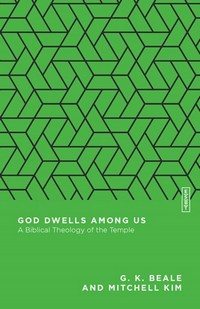
The Path of Faith by Brandon D. Crowe: Covenant and Law for Believers from Genesis to Revelation

The Path of Faith

The Path of Faith:
A Biblical Theology of
Covenant and Law

by Brandon D. Crowe
Series: Essential Studies in Biblical Theology

Paperback, 169 pg.
IVP Academic, 2021

Read: September 12-19, 2021
Grab a copy from your local indie bookstore!

What’s The Path of Faith About?

In his Introduction Crowe previews the book as a whole:

The topics of covenant and law are complex and have often been debated, but I’m not interested in getting bogged down in technical debates. Instead, in this book I make four key points.

  1. All people are obligated to obey their Creator.
  2. Though he did not have to, from the beginning God freely entered into a covenant with humanity to offer a reward upon the condition of perfect obedience.
  3. Only Jesus perfectly obeys God’s law, which is necessary for eternal life. Eternal life is granted by grace through faith on the basis of Christ’s work.
  4. Even though we can’t perfectly obey God’s law, the law continues to guide us in how we should live. Obedience to God’s law is still required. And yet obedience is not a burden but the path of blessing.

These are four landmarks to maintain your bearings in the discussion that follows, and they also serve as a handy summary of the book.

From there, the book traces the development of those concepts from Genesis to Revelation and at all points in between—as every book in this series has done/likely will do.

Relation between Old and New Covenant

Obviously, as he’s working through Redemptive History as it progresses, he begins with the Old Covenant—but always keeps the New Covenant in view, as the goal of the Old. I was particularly struck by the way he did this in Chapter 5, “The Prophets: Remind, Reprove, Renew.” I noted a few times how helpful the discussion there was at pointing at the differences between the two covenants, while stressing the continuity of the two.

I didn’t realize (but admittedly should have assumed) that that chapter was merely the foundation for a lot of the chapters to follow—particularly in Chapter 9, “The New Covenant in Practice: Hebrews Through Jude.” Which was just dynamite, and was probably my favorite chapter in the book. It wasn’t necessarily “more practical” than the rest of the book—but its focus on what what The Path of Faith looks like for believers in a post-apostolic age makes it more obviously applicable to contemporary believers.

I should add that a lot of the material in that chapter came from/was similar to Crowe’s The Message of the General Epistles in the History of Redemption: Wisdom from James, Peter, John, and Jude—and I feel compelled to recommend that book at this time (I didn’t do a post on it when I read it back in 2015, or I’d point you to that).

Revelation

Revelation fittingly concludes the biblical canon by echoing earlier Scripture, highlighting the completed work of Christ and sketching a vision for the future. Revelation wrestles with the ambiguities and difficulties of this age but doesn’t leave the plot dangling. Revelation proclaims that Christ rules, and his people will be vindicated. Revelation is an immensely practical book that provides guidance for living today.

That last sentence is going to strike more than a few readers as odd—but it shouldn’t. While the previous chapter was my favorite, this one took a lot more thought and reflection—and was more striking for me. Believers in the twentieth and twenty-first centuries are not used to reading Revelation for reasons other than “cracking the code” and figuring out the eschatological message of the book. Which isn’t to say that’s not important—but as Crowe argues, the book is more practical than that.

It’s crucial that we recognize and heed Revelation’s calls to faithfulness in life. We go astray if we think of Revelation as a fatalistic book of predictions. Revelation does not teach us to shut our eyes and sing, Que Será, Será (“whatever will be, will be”). Instead, Revelation provides motivation for faithful covenant living in the present, in light of God’s promises about the future.

This means Revelation is not only about the future; it’s about the entire age of the church, from the first coming of Christ to his second coming. It doesn’t focus only on the last few years of world history; it’s about every era of the church’s history. It’s about things that are persistently true. As one helpful book on Revelation puts the matter, “[Revelation] is a book for every age. It is always up to date.”

Given that reminder about the purpose of Revelation, Crowe’s able to point to the call for faithfulness, the motivations to perverse and the promise of the consummation of the covenants at the end.

So, what did I think about The Path of Faith?

It has been a while since I’ve read a book in this series—primarily because the outline was getting a bit repetitive, and it was causing me to glaze over a bit. It’s been long enough and (based solely on recollection without looking at a prior volume to compare) I think Crowe approaches it with a just-noticeable tweak to the standard outline that I was able to appreciate what he was saying without struggling to differentiate this work from the others.

Even without that gap for myself, I found this to be one of the (if not the) strongest volumes in the series—Crowe is able to deliver on explaining his summary from the introduction, explaining and expanding on them in each era of Redemptive History so that those of us living in the New Covenant age can profit from what was written for our benefit in the Old and seeing what our Covenant Head accomplished for us and for our salvation.

This is a great work on the ideas of Covenant and Law and I strongly encourage you to give it a read.


4 Stars

This post contains an affiliate link. If you purchase from it, I will get a small commission at no additional cost to you. As always, opinions are my own.

Saturday Miscellany—9/25/21

A short list this week, but a pretty diverse one. Should be something for just about everyone here—maybe 2-3 somethings.

Odds n ends about books and reading that caught my eye this week. You’ve probably seen some/most/all of them, but just in case:
bullet Why Noir and Science Fiction Are Still a Perfect Pairing
bullet A New Book and a New Press—Sara Gran describes the launching of her new press and some of what got her to this point—for those who like behind-the-scenes publishing talk
bullet Five Mystery Novels to Read If You Love Hulu’s Only Murders in the Building—No, I am not linking to this just for an excuse to talk about how much I’m enjoying the show (but seriously, if you have the means..watch it). This list of books is promising—one I’ve read, one I’m waiting for from the library…and the rest? Hmm……
bullet The Don Winslow Book Club September 21 Edition—good lookin’ stuff.
bullet The Music of The Band by Nicholas Eames—a look at how Eames used the music of different eras to create his dynamite fantasy world (and a couple of nice Spotify playlists to boot)
bullet Here’s Why I’m Ditching Goodreads And Switching To Storygraph — And Why You Should Too—I’m less impressed with Storygraph, but I do see the appeal. What about you? (yes, you)
bullet My Favourite Authors By Category—this is an inventive way to frame the discussion (one that would cripple me were I to try it, but I love seeing others pull this kind of thing off)
bullet Why do I read so much?—well, yeah. I’d add (at least), because it’s there.
bullet Blogging Struggles: How Do Bloggers Stay Motivated?
bullet Do Hype, Book Buzz, and High Expectations Affect Your Reading Experience?—they have to, at least a little, right? Carol takes a deep dive into this question.

This Week's New Releases That I’m Excited About and/or You’ll Probably See Here Soon:
bullet Daughter of the Morning Star by Craig Johnson—the novel that last year’s so clearly indicated was coming is now here. Walt looks into death threats against a High School Athlete. I should be picking up my copy this afternoon, and I may set aside my current read for a day or two for it.

Lastly I’d like to say hi and extend a warm welcome to Inspired who followed the blog this week. Don’t be a stranger.

Book Blogger Hop: “Traditionally” vs. Self-Pub/Indie

Book Blogger Hop


This prompt was submitted by Julie @ JadeSky:

Are you more willing to read traditionally published books than self-published (indie) books? Or do you not have a preference?

Are you more willing to read traditionally published books than self-published (indie) books? Or do you not have a preference?
I don’t have a preference, really—other than a handful of times a year when someone/multiple someones (including me) is doing a celebration of Indie books/publishers/authors/genres when I think about it a bit more. I really don’t spend that much time thinking about where a book comes from.

I’m not sure if that’s a good thing or not—I think I could argue both ways.

There’s an important twist on that question: Am I more likely to read traditionally published books than self-published (indie) books? And the answer to that is, yes, I’m absolutely more likely to—because I’m exposed to them more, I see the advertisements for them, they show up in various algorithms more, etc. Outside of blogs and social media, I’m not going to hear a lot about self-pubbed/indie books. If that word-of-mouth kind of thing is positive, or if it comes from someone like Fahrenheit, Red Dog, Down & Out Books, etc., I’ll grab it. But I’m far more likely to hear about a book, and therefore pick it up and read it, if it’s traditionally published.

What about you?

Once Upon a Time in Hollywood by Quentin Tarantino is a thing that I read

Once Upon a Time in Hollywood

Once Upon a Time in Hollywood

by Quentin Tarantino

Mass Market Paperback, 400 pg.
Harper Perennial Paperback, 2021

Read: September 22-23, 2021
Grab a copy from your local indie bookstore!

What’s Once Upon a Time in Hollywood About?

This is novelization—and retooling (as I understand)—of Tarantino’s 2019 movie. It follows two days (with typical Tarantino flashbacks and flashforwards for many of these characters) in the lives of a few people in 1969 Hollywood. A former TV star who had his shot at movie fame, and missed—he’s now a traveling bad guy (“heavy”) guest star on TV shows. His stunt double/gofer/driver, notorious for getting away with murder (and is somehow possibly the most sympathetic character. Also, Sharon Tate, Squeaky Fromme, and Charlie Manson.

The Packaging

I trust whoever put this book together got a nice bonus—or at least a good bonhomie slap on the back—it’s so well done. The whole thing is a throwback—the cover style looks like a movie novelization from the 70s/early 80s, with stills from the film. Inside you get a lot of the full-page advertisements for novels (and novelizations) that were era-appropriate and common in the back of Mass Market Paperbacks at the time.

It was a nice little treat.

So, what did I think about Once Upon a Time in Hollywood?

Eh…I’m not sure. I guess I should say that I didn’t watch the film—outside of the writer/director—there was nothing about it that appealed to me. I only picked this up out of curiosity about Tarantino as a prose-writer. That colored my appreciation of the novel for sure. It’s not surprising at all that a movie that didn’t appeal to me resulted in a novel that left me unmoved.

I’m glad I got to see what Tarantino was like as a novelist. I know what he’s like as a screenplay writer and director. And this was different—but similar. Had this been anyone else writing, I’d have commented on how well they capture the Tarantino-vibe. There are so many (seemingly?) aimless stories shared by characters that can only come from him (or someone trying to rip him off).

There’s also this nice recurring thing where a story is being told—characters introduced, etc.—that turns out to be the characters and story of the pilot episode that the has-been actor is shooting. Sort of a novelization within a novelization. That was neat—and there’s so much more going on in that story and with those characters than is possible for a 1969 TV Western, that I give myself a little slack

But as for the novel itself? Eh, I don’t know. I guess I think I understand the point—I just don’t see where they were stories that need to be told. It wasn’t a bad novel, and I don’t resent the time I spent reading it (as I frequently do with books that don’t work for me)—and I enjoyed bits of it quite a lot. But I’ve got nothing to say good or ill about it. Put this down as the most tepid of 3 stars.


3 Stars

This post contains an affiliate link. If you purchase from it, I will get a small commission at no additional cost to you. As always, opinions are my own.

10 Reasons You Should Read When Sorrows Come (& And With Reveling) by Seanan McGuire

When Sorrows Come

When Sorrows Come

by Seanan McGuire
Series: Toby Daye, #15

Hardcover, 304 pg.
DAW, 2021

Read: September 15-16, 2021
Grab a copy from your local indie bookstore!

“Look, I know we’re a feudal system and everything, but we’re living in a modern world,” I said, exasperated. “My underwear has elastic. I have a phone. We can talk like normal people. No one’s going to take points off the final score if we stop sounding like we gargle with bad BBC dramas.”

“Yes, but where’s the fun in talking like normal people?” asked Aethlin. “Half the time I’m a King of Faerie. The other half, I’m standing in line at Tim Hortons and some asshole in a hockey uniform has just taken the last sour cream glazed. We have to wallow in the aesthetic when we get the chance.”

“I will overthrow your kingdom myself,” I threatened genially. Not genially enough: several of his guard reached for their swords. High King Aethlin sighed and raised a hand for them to stop.

“Your reputation precedes you, Sir Daye. Could you please not make jokes about sedition?”

“Yeah, sorry,” I said.

I am just not capable of doing my typical post about this book, period. Instead, I’m going to give you a list of reasons why you should read When Sorrows Come. But first…

The Dust Jacket Flap

Because it feels wrong to start talking about a book without some sort of description, here’s the information from the flap:

It’s hard to be a hero. There’s always something needing October “Toby” Daye’s attention, and her own desires tend to fall by the wayside in favor of solving the Kingdom’s problems. That includes the desire to marry her long-time suitor and current fiancé, Tybalt, San Francisco’s King of Cats. She doesn’t mean to keep delaying the wedding, it just sort of…happens. And that’s why her closest friends have taken the choice out of her hands, ambushing her with a court wedding at the High Court in Toronto. Once the High King gets involved, there’s not much even Toby can do to delay things…

…except for getting involved in stopping a plot to overthrow the High Throne itself, destabilizing the Westlands entirely, and keeping her from getting married through nothing more than the sheer volume of chaos it would cause. Can Toby save the Westlands and make it to her own wedding on time? Or is she going to have to choose one over the other?
Includes an all-new bonus novella!

The (only?) Reason to Not Read When Sorrows Come

bullet You haven’t read the first fourteen Toby Daye novels—or you didn’t like them. The former I completely understand, the number of supposedly great series that I don’t have time for is large enough that I can sympathize. The latter? I can accept that people like you exist, but I don’t know if I can ever understand it

10 Reasons to Read When Sorrows Come

(In no real order whatsoever)
bullet If you’ve read books 1-14, reading this is a no-brainer, and you probably don’t need to be reading this.
bullet You get to see an incredibly Canadian knowe. How Canadian? Think Alpha Flight, The Kids in the Hall, Bob & Doug McKenzie, poutine, Tim Horton’s coffee, and extraordinarily polite people saying “eh”. That’s how Canadian I’m talking about.
bullet Getting to see the Luidaeg terrify a whole new cast of characters.
bullet The fun in seeing who actually shows up to see the wedding. (Hint: Just about everyone)
bullet The chance to see if Toby can make it through her wedding without bleeding all over her wedding dress.
bullet You can see what you-know-who from A Killing Frost is up to.
bullet You get to see Toby channel Harry Bosch:

Everyone matters. If there’s one thing I’ve learned from how hard Evening and her ilk have tried to convince me I don’t matter it’s that everyone matters. The alternative is a world where no one matters, and since I know that isn’t true, “everyone” is the only option we have left.

bullet Quentin gets a jaw-dropping makeover.
bullet A hint about a new squire…
bullet You need some joy.

And With Reveling

I’ve never talked about one of the bonus novellas that come with a Toby Daye novel, for reasons too complicated to get into (and frankly boring to me). But I have to say something about this one.

First, this is my biggest complaint in this volume—it shouldn’t be a novella. It should be the last chapter (or chapters) of When Sorrows Come. At the very least, an extended epilogue. It should not be read separately from the novel, and the novel shouldn’t be read without out it.

Essentially, it’s about the wedding reception. Toby and Tybalt relaxing, enjoying their friends and loved ones. Receiving gifts, blessings, and well-wishes—including one gift for Toby that made me laugh out loud. And another that

I absolutely loved it. It was the thick, buttercream frosting on the perfect cake of the novel.

A Final Thought about When Sorrows Come

I mentioned joy earlier because, on the eve of its release, Seanan McGuire tweeted:

…the purpose of this book is joy. I wrote it in 2020. I needed joy. Very, very badly.

I need joy even more now. And if I can’t make it for myself, I can damn well give it to my imaginary friend.

So you can pan the book for being simple, but I have no regrets. I needed joy. I think you need joy too.

Hopefully, McGuire got enough joy to keep going from what she gave her Imaginary Friend—I know she provided this fan with some, I imagine I’m not alone.


5 Stars

This post contains an affiliate link. If you purchase from it, I will get a small commission at no additional cost to you. As always, opinions are my own.

WWW Wednesday, September 22, 2021

The last two weeks have basically been full of me staring at my laptop screen, unable to get words to come out. That’s an exaggeration of sorts, but it sure doesn’t feel like it. What’s worse, is that I’m excited about just about everything I’ve been trying to write about.

That’s one of the nice things about these WWW Wednesday posts, they require very little thought. Also, they’re fun to do apart from their ease. So, I”m going to give myself a little reprieve, schedule this and then catch some shut eye and try again tomorrow.

This meme was formerly hosted by MizB at A Daily Rhythm and revived on Taking on a World of Words—and shown to me by Aurore-Anne-Chehoke at Diary-of-a-black-city-girl.

The Three Ws are:

What are you currently reading?
What did you recently finish reading?
What do you think you’ll read next?

Easy enough, right?

What are you currently reading?

I’m reading Once Upon a Time in Hollywood by Quentin Tarantino, because I’m more curious than I should be about his prose and am listening to Marked by Benedict Jacka, Gildart Jackson (Narrator) on audiobook.

Once Upon a Time in HollywoodBlank SpaceMarked

What did you recently finish reading?

I just finished Paula de Fougerolles’s The Chronicles of Iona: Exile, a piece of historical fiction, and the fascinating Word by Word: The Secret Life of Dictionaries by Kory Stamper on audio.

The Chronicles of Iona: ExileBlank SpaceWord by Word

What do you think you’ll read next?

My next book should be The Case of the Missing Firefly by Chris McDonald and my next audiobook should be The Thursday Murder Club by Richard Osman, Lesley Manville (Narrator).

The Case of the Missing FireflyBlank SpaceThe Thursday Murder Club

What’ve you been reading this week?

BOOK BLITZ: The Forgotten Gun by John Reid

This morning I’m pleased to host a Book Blitz for John Reid’s The Forgotten Gun—the first book in the DCI Steve Burt Mystery series—to celebrate its publication today.

The Forgotten Gun Blitz Banner

Book Details:

Book Title: The Forgotten Gun by John Reid
Series: A DCI Steve Burt Mystery
Publisher: Austin Macauley Publishers
Release date: August 31, 2021
Format: Ebook/Hardcover/Paperback
Length: 210 pages

The Forgotten Gun

Book Blurb:

A Metropolitan Police detective about to be dismissed is given a second chance by his old boss, who is now a police commander. He’s given a new unit to run and two misfit detectives to assist him. All three know their status is temporary.

Their first case together is an impossible double murder. Each murder is identical. Both victims are expertly shot in the head from long range, but the post-mortems reveal no bullets were used in the shootings. The CSI teams calculate that in both cases there was no place for the marksman to have fired from, unless suspended over busy roads.

Although it’s a case apparently impossible to solve, DCI Steve Burt reluctantly agrees to investigate with his new team. Their enquires lead them into the murky world of greed, corruption, fraud and money laundering, but they are no nearer solving the murders. The team is stumped until the DCI meets a retired army major and a WW2 veteran who unwittingly hold the keys to solving these impossible murders.

Purchase Links:

Amazon UK ~ Amazon US ~ Goodreads

About the Author:

John ReidThe author was born in Scotland and after serving in the army embarked on a career in industry and commerce. He has worked in several different sectors of business mostly in senior roles and latterly as CEO of a large international data capture company.

He retired for the first time in 1995 but continued to work as a consultant helping new businesses become established. In 2018, he finally retired from business life to become a full-time author. John lives in the UK and Portugal with his wife and they have two grown-up sons.

John has used the DCI Steve Burt series to get involved with Sense, a great charity that supports anyone living with complex disabilities. Sense helps people communicate and experience the world. They, like John, believe that no one, no matter how complex their disabilities, should be isolated, left out, or unable to fulfill their potential.

My thanks to Love Books Group for the invitation to participate in this Blitz.

Love Books Group

The Irresponsible Reader Rambles about His Library Card

Library ShelvesIf you were to ask if I supported public libraries, I’d reflexively say, “yeah, of course.” What book nerd doesn’t? I reflexively vote yes on various bonds for them when they come up*, I use them all the time—and don’t remember a time when I didn’t (Literally. I’m pretty sure Carter was in office and I would have struggled with a Dick and Jane tome), when I have the opportunity, I can spend an hour or so just wandering around one soaking in the atmosphere. But it’s not something I really thought about—and I didn’t realize how deep my attachment to “my” library was until a couple of weeks ago.

* well, I reflexively support them and then research a bit before I vote, if you want to get technical.

After COVID restrictions lightened up around here (and they were in place far longer than I expected), local libraries started doing nutty things like looking at expiration dates and residency qualifications again. This meant my card, which should have been renewed last year, was set to expire.

And I really wish it hadn’t.

See, last year when we were forced to move, we had choices of what city to move to—there were three that really wouldn’t have affected our commute to work and left us near enough to our church so we could still be a part of it. I jokingly (mostly) told my wife I liked the house we bought better than another one we looked at the same night because it was in the same city as our last home and I wouldn’t have to change libraries (there were other reasons, I should add, and we picked the right house).

As we were preparing to move in, I made the necessary calls to get the utilities switched over and learned something—while our address is in the same city, our public utilities are paid to another city. We’re closer to its water lines, and so on. And therefore…not in my library’s district. So, despite my careful planning, I had to switch libraries.

So what? Well, for starters—other than a couple of additional computers, the decor in the kid’s section, and the shuffling of a couple of categories (note: shuffling, not expanding—possibly it’s contracting), the library I had to switch to looks just like it did when I worked there in High School. I’m pretty sure the tables and chairs are the same ones I cleared a few times a week. When I mentioned that to a friend she told me, “that’s almost impressive,” and she’s not wrong. But that was so long ago George W. Bush was primarily known as one of the owners of the Texas Rangers or as “The President’s son” (if he was known at all). Yeah, it was that long ago. But the lack of change, the lack of—at the very least—expansion of any kind, says something about the state of that particular library (and of the kind of support it receives from the city). More importantly, the collection of books wasn’t that impressive in range or size back then and sure isn’t now.

I should note, the area libraries have this great collaborative agreement and it’s really not going to affect much about what books I can check out physically or electronically, so that’s good. Still, when I got the news that it was time to change, I was surprised at how disgruntled it made me.

I reflexively ascribed it to a silly sentimentality (what kind of sentimentality isn’t silly?) So I thought about the grounds for that sentimentality. My (former) library is where I’d been going for a couple of decades, and like any good Hobbit, I’m not big on change. Also, it was where I took my kids on a near-weekly basis for most of their lives—where I’d exposed them to more books than I could purchase for them (which is saying something), where I’d tried to show them just how wide and varied interests and knowledge could be. We’d taken part in the summer activities—my daughter even volunteered for a summer there. I’d even won my first Kindle Fire from them—which revolutionized my reading (and content for this blog). From comics to non-fiction, DVDs to hard-to-find classic novels, audiobooks to educational programs—it was a major source of all of those things for our family. We’d all been excited a few years back when it moved into a nicer, larger, more modern home and quickly made it a place we enjoyed being in, too.

Basically, all the things I frequently link to in Saturday Miscellanies about why public libraries matter and are important to contemporary society? That’s what I found in my former library—and really don’t see a lot of signs of in the “new” one.

It’s been a couple of weeks since I made the switch—and it’s impacted my life minimally. Sure, I had to type in my new card number into Overdrive, and it messed with the holds I had. But…that’s about it. Although, when I’ve gone to the “old” library to pick up things, it feels a little strange, like I’m just visiting, it’s no longer “my” library. I’m sure this will pass, and I’ll only remember that it’s not actually “my” library when I have to renew my card every couple of years.

More than anything else, my reaction showed me how deep my attachment to the library was, and re-invigorated it a bit. I should really be more self-aware. I also think I should be a bit more active in that support, somehow. More on that later, I hope…

Header image by Clker-Free-Vector-Images from Pixabay

Meadowlark by Greg Ruth, Ethan Hawke: A Gritty Father-Son Story

Meadowlark

Meadowlark:
A Coming-of-Age Crime Story

by Greg Ruth, Ethan Hawke

Hardcover, 245 pg.
Grand Central Publishing, 2021

Read: September 18, 2021
Grab a copy from your local indie bookstore!

What’s Meadowlark About?

Things aren’t going well for Cooper—a little prank leads his father to stop by his mother’s house on his way to work. When his father learns that Cooper’s been expelled from school, he drags him along with him to work.

Cooper’s dad, Jack “Meadowlark” Jackson used to be a boxer of some local renown, but that was then. He’s now a prison guard—one respected by his peers and even most prisoners. But Cooper still thinks of him largely as a hero figure. the boxer whose poster hangs on his bedroom wall.

While Jack gets to work in a prison tower, Cooper hangs out with the Warden—clearly a grandmotherly figure in his life. It seems like a pretty okay kind of day, actually. And then an alarm sounds. Several fights have broken out in various parts of the prison—the guards spread out to imposing order, and in the midst of chaos, three prisoners go missing.

It’s after this that things really start to go south.

The book then focuses on Cooper and Jack trying to make their way through the ensuing bedlam while they deal with their relationship. Being the father of a teen boy brings a certain level of difficulty, especially if there’s trouble between the custodial mother and the father. The violence—horrible violence—of the day creates a heightened atmosphere for their necessary (and rather touching) conversations.

What about the Art?

You can’t talk about a graphic novel without focusing on the graphic part of it, right? Which is really a shame because I’m not equipped for it.

Ruth’s art is exactly what this story needs—as usual, I don’t know how to describe the art, but the pencil work—sort of rough and heavy—fits both the action and the characters. The sort of sepia-coloring says Texas to me—and makes the setting ring true.

I did appreciate the not-at-all-subtle use of Ethan Hawke as Jack, it added a little extra flavor.

So, what did I think about Meadowlark?

This seems like the kind of story that S. A. Cosby or Jordan Harper would write—a mix of family drama and crime.

The emotions and family dynamic felt real, relatable—and was even touching. The violence and criminal behavior were just as visceral—and disturbing. You put them together with some compelling artwork and you’ve got yourself a winner.

I’d have liked a touch more depth—but given the medium, I’m not sure you could get too much deeper (without needing another hundred pages or so)—so I’m not holding that against it too much.

There’s a lot to commend in this graphic novel, and very little to complain about. I see that Hawke and Ruth have collaborated on an earlier graphic novel and I need to track that down.

2021 Library Love Challenge

This post contains an affiliate link. If you purchase from it, I will get a small commission at no additional cost to you. As always, opinions are my own.
Page 268 of 610

Powered by WordPress & Theme by Anders Norén