Author: HCNewton Page 269 of 610

The Wonderful Works of God by Herman Bavinck: A Modern Classic Worth Its Weight in Gold

I must be insane for even trying this one…what can I possibly say about this? But it’s been over a month since I finished this, and I’ve got to pull the trigger on this now before I overthink it any more than I already have.


The Wonderful Works of God

The Wonderful Works of God

by Herman Bavinck

Hardcover, 549 pg.
Westminster Seminary Press, 2021

Read: January 3-August 8, 2021

Thus the confession of the trinity is the sum of the Christian religion. Without it neither the creation nor the redemption nor the sanctification can be purely maintained. Every departure from this confession leads to error in the other heads of doctrine…We can truly proclaim the mighty works of God only when we recognize and confess them as the one great work of Father, Son, and Spirit.

In the love of the Father, the grace of the Son, and the fellowship of the Holy Spirit is contained the whole salvation of men.

What’s The Wonderful Works of God About?

Over a century ago, Herman Bavinck gave the world a gift when he abridged his magnum opus, Reformed Dogmatics (a four-volume set) into one volume—simplified for the laity. It was translated into English in the 1950s and published under the title Our Reasonable Faith. In 2019, that same translation was re-typeset and republished as The Wonderful Works of God (a better translation of the original title) with a new translation of Bavinck’s Foreword—which was left out of the original English edition, for some reason.

And wow—what a treasure this is. Over 24 chapters—none that are terribly long—Bavick covers all the necessary topics—Revelation (General and Special), Scripture, the Nature of God, the Trinity, Creation, Sin, Redemption, Eschatology, and so on. You can read each chapter in one sitting pretty easily, but they’re deep enough that you might not want to.

Strengths and Weaknesses

It’s my habit to talk about strengths/highlights of a book along these lines, as well as things I think the author could’ve done better at. When it comes to Bavinck (or the writer of any systematic theology), I’d be punching above my weight as a reader and as a blogger to do that. Instead, I’m limiting myself to the experience of reading the work.

I’ll talk more about the strengths in the next section. As for weaknesses? One of the best parts of this book is that it’s primarily positive/constructive–here’s how the Church has understood and developed its ideas about X. He rarely spends time critiquing/criticizing a teaching or a group. When he does, he does so effectively (for example, see his comments on Chiliasm). I would’ve liked to have seen a bit more of that–I’m all for following a writer/teacher down a path, I just like a little warning when I’m about to stray off of it while I’m at it.

So, what did I think about The Wonderful Works of God?

Under the title of Magnalia Dei, the wonderful works of God, I wish to give a simple explanation of the Christian faith in a book of modest scope, as confessed by the Reformed churches (Gereformeerde Kerken) in all times and lands.

Many contemporary readers will roll their eyes at the “simple explanation” and “modest scope” that Bavinck mentions in the first paragraph of this Foreword. But really, it kind of is. Ambitious and complex would describe his Dogmatics. Contemporary readers being flummoxed has more to do with educational standards and the other ways we’ve let our minds rot.

I should stress—by “simple” I don’t mean easy, I just mean not that complex. This is readable by anyone who’s willing to put a little work into it, Bavinck’s point is being something that anyone can understand and profit from it.

The book is steeped in Scripture and you can sense it on every page—following that Bavinck will explain the catholic* understanding of the doctrine—and then narrows the focus of the chapter to a Reformed understanding. It’s a pastoral work, a compassionate work, and one that will repeatedly point to the Gospel as well as the Majesty of the Triune God.

* Catholic=universal, that is. Small “c” catholic, not capital “c.”

While I’d recommend people put the effort into Reformed Dogmatics this is a far easier place to start reading Bavinck. (I made the mistake of coming at those works in the wrong way). There’s plenty to chew on in these pages, but it’s nothing to be daunted by. I’ve read a few single-volume systematics like this—none compare to the depth, clarity, and usefulness of this one.

If you’ve yet to read this, it’s time to fix that.


5 Stars

Saturday Miscellany—9/18/21

Odds n ends about books and reading that caught my eye this week. You’ve probably seen some/most/all of them, but just in case:
bullet The Surprisingly Big Business of Library E-books—This feels like a problem…
bullet 30 cool indie bookstores across the country that you’ll want to check out—You know those people who tour the US to visit every MLB Ballpark or something? Lists like this make me want to try my version of that. If only I had the time, means, and willingness to leave my house that much…
bullet Mystery in the Mountains: 10 Novels Set in the High Country of the American West—On the other hand, I have almost zero desire to visit any of the locations mentioned here outside the pages of a novel (which is a shame, because it’d be pretty easy for me).
bullet I really wasn’t trying to turn these posts into Tori Eldridge-fests, but she’s clearly doing what she can to get her name–and the name of her new book out there–and doing so with interesting articles, so…
bullet Stories Behind Our Names
bullet Binge-Worthy Characters in Books and on the Screen
bullet Robert Crais shared a pic of the first draft of his next book—fans will be happy to see this, people interested in writers’ process should check it out to see his revision notes, etc.
bullet 10 Memorable Roald Dahl Quotes to Live By—Dahl’s 103 birthday was this week, Bookstr noted the day with this fun collection
bullet What makes a good book?—HiuGregg shares some musings
bullet 5 SFF Books Featuring Middle-Aged or Elderly Heroines Who Still Kick Ass
bullet One Key Reason to Read the Book Before the Movie—Yes. (also, some good reasons to watch first…but they pale in comparison)

This Week's New Releases That I’m Excited About and/or You’ll Probably See Here Soon:
bullet When Sorrows Come by Seanan McGuire—The 15th (!) Toby Daye novel sees her get married, find a coup, and thinking about her future more than we’re used to. I will post something gushy about it soon. Loved it.
bullet True Dead by Faith Hunter—Jane goes back to New Orleans for reasons personal and regal in her 14th (!) novel. I talked more about it not that long ago
bullet The Ninja Betrayed by Tori Eldridge—Lily visits Hong Kong, where I expect things will get a little hairy.
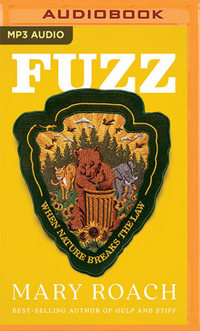
bullet Fuzz: When Nature Breaks the Law by Mary Roach—Roach’s books always look interesting, but I haven’t gotten around to trying one. This one could change that.
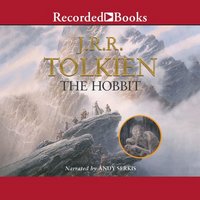
bullet The Fellowship of the Ring / The Two Towers / The Return of the Kingby J.R.R. Tolkien, Andy Serkis (Narrator)—New audiobook editions of The Trilogy were released this week with Serkis narrating. I’ve been kicking myself for a couple of years for not carving out time to re-read these books. I’m going to spend some Libro.fm credits to fix that.

Lastly I’d like to say hi and extend a warm welcome to Tarahaddasa and Inspired who followed the blog this week. Don’t be a stranger, and use that comment box, would you?

The Friday 56 for 9/17/21: Headphones and Heartaches by Wesley Parker

The Friday 56This is a weekly bloghop hosted by Freda’s Voice.

RULES:
The Friday 56 Grab a book, any book.
The Friday 56 Turn to Page 56 or 56% on your ereader. If you have to improvise, that is okay.
The Friday 56 Find a snippet, short and sweet.
The Friday 56 Post it

from Page 56 of:
Headphones and Heartaches

Headphones and Heartaches by Wesley Parker

We share a long hug, and I apologize for being so moody lately.

“You’re a teenager. I’d have you committed if you weren’t.” She pecks me on the forehead and all is well in our house again. “I was thinking, you start school and your new job on Tuesday, so what would you say about getting a hotel and spending the weekend in New York City?”

“Are you serious?”

She frowns. “No, I enjoy getting your hopes up and crushing them. Of course I’m serious.”

PUB DAY REPOST: Stalker Stalked by Lee Matthew Goldberg: Who Watches the Watchers? Who Stalks the Stalkers?

Stalker Stalked

Stalker Stalked

by Lee Matthew Goldberg

eARC, 245 pg.
All Due Respect, 2021

Read: September 7, 2021

What’s Stalker Stalked About?

Lexi Mazur is a pharmaceutical sales rep who has a habit of sampling her products in addition to drinking pretty heavily. When her boyfriend of about a year breaks up with her, things get worse. Her pill uptake and drinking increase, and she escapes into Reality Shows like The Real Housewives of ______, and her new obsession (literally), Socialites. She’d been heavily invested in those shows before—it was a bone of contention with her ex—but she sunk to pathological levels after the break-up.

Soon, Lexi begins showing up at locations that she knows one or more of the stars of Socialites will be, trying to put herself in a situation where their paths will cross, in the belief that it’s all it will take for them to befriend her. Once they’re friends, her life will improve and she’ll get a bit of the glamorous life they have—maybe even a role in the show.

She has some reason to think that this behavior will work—it has been the foundation (and eventual doom) of her romantic relationships.

Yeah, Lexi is a stalker—she just has a new outlet for these impulses. Her behavior and substance abuse spiral to new depths. We get some details about her prior issues and behaviors, but the novel primarily documents her descent to rock bottom.

That would be enough for most authors, but here’s where Goldberg throws in the plotline that makes Stalker Stalked stand out. In the midst of all the above, Lexi starts to sense that someone is watching her. Stalking her. Is it one of her exes? Is it someone from Socialites? Is it just her imagination, maybe a side-effect of some of the medication she’s abusing?

And then the threats begin…

Low-Hanging Fruit?

Lexi’s story aside (as much as you can do that kind of thing in this book), this book is a sharp satire and critique of TV Reality Shows.

As I read it, I wondered occasionally about Goldberg picking a target that’s too easy. Where’s the challenge in taking shots at Reality Shows?

As easy a target they might be, it’s a target that seems to demand this kind of attention and examination. The cultural impact of this kind of shows—and the social media influencer accounts (and wanna-be social media accounts) that tell the same kind of fictions—is large enough, disturbing enough, that we need as many artists in as many possible media to put them under the microscope.

Looking at this phenomenon through Goldberg’s lens something jumps out at me (and I realize that I’m probably fifteen years behind other people on this insight), this kind of reality shows provide a socially acceptable form of stalking for the masses. How many people think they’re getting a special kind of insight into the lives of these stars? A special, private, view of their day-to-day life? How many unbalanced viewers like Lexi are out there learning that this is an appropriate way to live and take the license to do the same but for people who aren’t on TV?

So, what did I think about Stalker Stalked?

I didn’t like Lexi—at all—for the majority of the novel. I wouldn’t have described myself as terribly invested in what was going on with her or in her well-being. She’s just unsympathetic, unpleasant—the kind of character that most novels would have cast as the villain (one you may ultimately find sympathy for).

As much as I wasn’t able to get invested in her as a character, I couldn’t stop reading. Something about the novel—and I really should be able to put my finger on what it was, but I can’t—gripped me like a Lee Child or Nick Petrie thriller. Compelling doesn’t quite express it—I had to know what was coming next. Lexi was like the proverbial car wreck that you can’t take your eyes off of. Also, I was pretty curious about some of the people around Lexi, how were they going to fare in the face of her problems.

Eventually, however, I started pitying Lexi. I started understanding how she got where she is and how she was tumbling toward rock bottom.

Stalker Stalked is a gripping read, a tragedy that you can’t look away from—that you can’t get enough of. It’s disturbing and thought-provoking. You’re going to want to get your hands on it.


4 Stars

Disclaimer: I received this eARC from Down & Out Press via NetGalley and Lori Hettler of The Next Best Book Club in exchange for this post—thanks to all of them for this.

Headphones and Heartaches by Wesley Parker: Sweet, Honest, Heartbreaking, and Heartwarming

You know how sometimes just the right book comes at just the right time? A book you don’t realize you needed until it had done its job on your psyche? As you’ve probably guessed, that’s what Headphones and Heartaches was for me. So, yeah, this is going to be a rave. It’s also going to be shorter than I want it to be, but that’s only because this won’t ever get posted if I keep tweaking and rewriting it (this was supposed to go up seven days ago).


Headphones and Heartaches

Headphones and Heartaches

by Wesley Parker

Kindle Edition, 324 pg.
2021

Read: September 2-6, 2021
Grab a copy from your local indie bookstore!

“One day you’re gonna look back and realize these are the best days of your life.”

I’m living in a foster home while my mother is getting treatment for a heroin addiction. If these are the best days, maybe I should just give up now.

What’s Headphones and Heartaches About?

Percy Martin is sure that the social worker he meets next to his mother’s hospital bed means well. But Percy’s not interested in what he’s offering, Percy trusts that he can do better on his own than any foster situation that Alex can put him in. When they meet, no one’s sure that Percy’s mother will survive her latest overdose, and Alex’s hands are tied.

So he makes Percy an offer—stick with this foster parent a year, and Alex will do what he can to reunite Percy and his mom. There’s an earnestness about Alex, and (he won’t really admit this to himself) Percy just wants a break from it all—so he accepts the offer.

Alex brings him to Grace Wilson*. A kind, gracious, waitress who has decided the right thing to do is open her heart and home to a teen who needs both. Percy’s life is changed forever immediately.

* I should devote 3-4 paragraphs to her, but I don’t have the time, but she’s a great character.

He has food—and never has to worry about where the next meal is coming from. She helps him get money—and learn to manage it. He learns to sleep on a bed. He makes friends—real friends. He falls for a girl. He—and he says this several times—has a chance to be normal.

And he loves it. How could you not?

But he’s torn—because the cost of all of this change is the relationship with his mother. He feels he’s abandoned her, taken away her motivation to change, removed his support from her when she needs him the most. Is having a better life worth that?

Opium’s Victims

Percy’s mom, Wanda, is never made out to be the villain of the piece. Never. She is deeply flawed, and Percy doesn’t flinch from that. But she’s also the one constant in his life and has clearly done what she can to be a mother and provider to him. She clearly loves him.

But her addiction runs her life, she battles it, but not effectively, and that has consequences for both of them.

One of Parker’s most successful moves is showing that the statistics and reports about the opioid epidemic underreports its victims. It’s not just Wanda—it’s Percy. It’s Grace. It’s Percy’s friends. If Wanda had other family or friends, they would be in that number. And it’s likely that the turmoil, emotional upheaval, and financial impact goes beyond Grace and Percy’s friends to their friends and family…and so on. Percy thinks he can even see the toll this takes on the Judge dealing with his foster care. Yes, Wanda is the primary victim, and addicts like her ought to be the focus of the efforts to combat the epidemic—but not the sole focus.

Headphones, Comedy Albums, and Mixtapes

The 3.5mm jack connects my favorite artists right into my soul like an IV, securing my hopes and dreams that wither under the assault of everyday life. They’ve been there on the nights when the heat wasn’t, at the dinner table when the food wasn’t, reminding me that better times would come, even if they couldn’t give me an estimated arrival date.

Percy finds refuge from his circumstances in movies (VHS tapes he can buy at pawn shops and the like) and music (largely pirated from public library offerings). Music is the one he talks more about, and he has strong opinions about it—while also having very eclectic tastes.

What kind of strong opinions? Aside from Rob Sheffield or Nick Hornby’s creation, I haven’t seen anyone with such detailed specifications for putting together a mixtape—and I loved watching him obsess about things like that. He has much more to say on the subject of wired headphones than I quoted above—and who cares that much about those? I could go on, but you get the idea.

Along the same lines…what he and Grace say about comedy albums? I didn’t realize other people felt that way about them, too. I really would like to see a second edition of the book (or a companion book) containing essays Percy writes for English class about things like comedy albums and their impact on his life, and various topics related to music/music appreciation. Just based on what he says in this book, they’d be fantastic.

It’s things like this that transform Percy from a pitiable kid in hard circumstances to a rounded character that you can develop an emotional bond with. Parker truly nailed this kind of thing.

Categorizing

By and large anymore, it seems that if the book is about a teenager, it must be a Young Adult novel. But it doesn’t seem as if this is being marketed as one. Would it work for a YA audience? Sure. Well, at least I think it would. But really it works for anyone who likes a good coming-of-age tale.

Percy is a teen—and his emotions swing widely and quickly as such. But anyone who is, or who can remember, what that’s like will easily be able to appreciate that. At the same time, thanks to his hard life, he has a certain perspective that gives a layer of maturity to his thinking—so snooty “adult” readers don’t have to sully themselves with something like a book written for teens.

So, what did I think about Headphones and Heartaches?

On Wheel of Fortune there’s always one guy that keeps asking for letters even though it’s clear to everyone else what the answer is. I feel like that guy right now, because in my heart I know the answer, I’m just hoping that it’s the wrong one.

With only a couple of exceptions, the adults that Percy meets after his mother’s overdose are almost too good to be true. I’d be tempted to call them all Mary Sues/Marty Sues. But part of it is that for Percy, these are responsible, caring, adults trying to help him—it’s easy to see why Percy would largely describe them in glowing terms. And even then, the adults aren’t boring—they’re interesting, funny, and inspirational.

But the exceptions? Boy howdy, they are definitely not too good (nor are they too bad to be realistic…). But let’s not focus on them

But Percy and his classmates, playmates in flashbacks, and friends are absolutely well-rounded and developed—as they’re (largely) the focus of the book, that’s the important part. They sound like, think like, and feel like teens (with varying degrees of maturity). They’re some of the better teen characters I remember reading.

You take characters like that and put them out into the world, and you’ve got yourself a good start to a novel. Add in a compelling story—and an emotional depth that fits the characters, and you’ve got a knockout. This is what Parker has delivered.

As the end neared, I jotted a note,”I am going to end up crying.” And while I didn’t technically weep, there were several moments as I finished the book that I came awfully close to it. Those moments were all over the map, I should add—heartbreaking, tragic, heartwarming, and just sweet. Parker just doesn’t get you with human grief and anger, he gets you with the wonderful moments, too.

This is a sweet book, a touching book—an occasionally hilarious book (with some truly cringe-worthy beats)—I guess it’s best summed up as a very human book. Parker got me to feel all sorts of things for these characters, to a degree I didn’t expect or was prepared for.

This is a special one, reader. You’d do yourself a favor if you picked it up.


5 Stars

This post contains an affiliate link. If you purchase from it, I will get a small commission at no additional cost to you. As always, opinions are my own.


How to Slay a Dragon by Cait Stevenson: A Historical Approach to Major Fantasy Tropes

How to Slay a Dragon

How to Slay a Dragon:
A Fantasy Hero’s Guide
to the Real Middle Ages

by Cait Stevenson

Hardcover, 188 pg.
Tiller Press, 2021

Read: September 14-16, 2021
Grab a copy from your local indie bookstore!

From the Back of the Book

I tried to come up with my own summary, and it kept coming out like those horrible paraphrases you turned in to your teacher after basically sitting down with an encyclopedia for ten minutes—technically not plagiarism (at least not to a sixth-grader’s mind), but not really original work.

Instead, let’s just see what the back of the book says:

Grab your magical sword and take the place of your favorite fantasy character with this fun and historically accurate how-to guide to solving epic quests.

What should you ask a magic mirror? How do you outwit a genie? Where should you dig for buried treasure? Fantasy media’s favorite clichés get new life from How to Slay a Dragon: A Fantasy Hero’s Guide to the Real Middle Ages, a historically accurate romp through the medieval world. Each entry presents a trope from video games, books, movies, or TV—such as saving the princess or training a wizard—as a problem for you to solve, as if you were the hero of your own fantasy quest. Through facts sourced from a rich foundation of medieval sources, you will learn how your magical problems were solved by people in the actual Middle Ages.

Divided into thematic subsections based on typical stages in a fantastical epic, and inclusive of race, gender, and continent, How to Slay a Dragon is perfect if you’re curious to learn more about the time period that inspired some of your favorite magical worlds or longing to know what it would be like to be the hero of your own mythical adventure.

So, what did I think about How to Slay a Dragon?

It’s a great concept—fantasy readers (and writers, I assume) are frequently talking about authenticity and if X technology or practice really fits with an era. Or how would you really go about doing Y? We’ve needed something like this book for years.

It’s just clever—it’s not just about the topics that Stevenson addresses, it’s how the topics are dealt with. There’s a great deal of wit in the setup and explanation of each one—and the way they flow from subtopic to subtopic. Jumping from person to person, location to location, and so on could seem erratic or jarring, but she makes it feel like it flows naturally.

I love her voice—I honestly wish I wrote the way Stevenson does. It’s not just the humor, it’s the way she approaches an idea. It’s the kind of prose that if I decided to get serious about writing that I’d want to study emulate.

Yet…this was one of those strange, I can’t explain it at all, the whole is less than the sum of its parts reads for me. It impressed me on all fronts, and yet I was bored almost the entire time. Until the last 40 pages or so, I’d eagerly pick it up and dive in, and then my mind would start wandering within a page or so.

It absolutely could be just what was going on for me this week, it’s likely just me—I fully expect after I post this and look around at what others say that I’m going to see a lot of raving. But I just can’t do that.

I’m sticking with the 3 stars because of the sum of its parts and because one of the first notes I made was, “if she keeps this up, she’s got a lock on 4+ stars.” Otherwise, this would be 2 stars.

By all means, fill up the comment section with ways I’m wrong about this one.


2 1/2 Stars

2021 Library Love Challenge

This post contains an affiliate link. If you purchase from it, I will get a small commission at no additional cost to you. As always, opinions are my own.

WWW Wednesday, September 15, 2021

Assembling furniture always takes a lot longer than it should, right? Last night, I got a desk halfway assembled when I noticed I’d switched a couple of legs in step 2. So had to disassemble it, redo that part and then complete the desk. Then, when I got to the last step, I realized that I’d actually had the legs in the right spots earlier, they were just backward—sooo back to the beginning one more time. I got it finished, and am just ignoring the extra parts…

This is just to say, that I didn’t have time to get anything scheduled last night, but here’s a quick WWW Wednesday!

This meme was formerly hosted by MizB at A Daily Rhythm and revived on Taking on a World of Words—and shown to me by Aurore-Anne-Chehoke at Diary-of-a-black-city-girl.

The Three Ws are:

What are you currently reading?
What did you recently finish reading?
What do you think you’ll read next?

Easy enough, right?

What are you currently reading?

I’m reading two books at the moment: the whimsical history, How to Slay a Dragon: A Fantasy Hero’s Guide to the Real Middle Ages by Cait Stevenson, and the new Toby Daye novel, When Sorrows Come by Seanan McGuire. I’m also listening to Broken Soul by Faith Hunter, Khristine Hvam (Narrator) on audiobook.

How to Slay a DragonBlank SpaceWhen Sorrows ComeBlank SpaceBroken Soul

What did you recently finish reading?

I just finished Spencer Quinn’s It’s a Wonderful Woof (a little more Christmas in September) and Bound by Benedict Jacka, Gildart Jackson (Narrator) on audio.

It's a Wonderful WoofBlank SpaceBound

What do you think you’ll read next?

My next book should be Pug Actually by Matt Dunn (because I apparently can’t go more than one novel lately without a dog on the cover) and my next audiobook should be Word by Word: The Secret Life of Dictionaries by Kory Stamper on audiobook which looks like a nerdy kind of fun.

Pug ActuallyBlank SpaceWord by Word

Hit me with yours, they’re always inspirational.

PUB DAY REPOST: True Dead by Faith Hunter: Playing the Long Game

True Dead Banner


True Dead

True Dead

by Faith Hunter
Series: Jane Yellowrock, #14

eARC, 384 pg.
Ace, 2021

Read: August 30-September 1, 2021

What’s True Dead About?

Jane and the rest of the Yellowrock Clan are headed for New Orleans after a little excitement near her new home. There are two things that bring her to her old hunting grounds and her “freebie house.”

The first is a new, looming threat to her as Dark Queen, Master of New Orleans, and pretty much every Mithran in North America—at least those who are her loyal subjects. It’s a threat that has roots in ancient vampires, magic that Jane hasn’t encountered before, and possibly a tie to the “liver eaters” of the Cherokees. It’s going to take more than a couple of sliver stakes, shotgun blasts, and a wicked grin to take care of things.

The second reason to head for New Orleans is much more pleasant—almost as elaborate, it should be added. Jane’s strengths are best displayed in combat, figuring out what supernatural threat is out there, and that sort of thing. But social events, diplomatic moves, and things like that? Not what anyone thinks of when they think Jane Yellowrock. For good reason. Thankfully, she now has a staff.

While dealing with new supernatural forces set against her and the big social event, something more immediate is plaguing Jane. She’s unable to control her shifts—she’ll wake as the cat, or in half-shifted form. She won’t be able to change back when she wants to—and Beast isn’t doing much better with it than Jane is.

All in all, Jane’s got her hands (or paws) full.

Beast

Beast gets some great moments—possibly better than Jane. She has her own agenda at points and is keeping secrets still.

I feel like I should have more to say about Beast here, but I really don’t. Mostly because I wouldn’t be able to avoid spoilers. Also, I’m not sure when I’d shut up.

Simply put, she’s a delight.

Leo’s Long Game

Over the course of the book, Jane learns some things, pieces together a few more, and makes a couple of good guesses about what she calls Leo’s long game. What she comes up with helps her—and the reader—to see her arrival in New Orleans and most of what she’s done in various situations for Leo in a new light.

It’s not as drastic as some other UF series have been when the chief protagonist learns that changes their understanding of pivotal moments in the series—but it is pretty significant. You won’t be able to think of the series and Jane’s adventures in quite the same way again—you’ll have a richer, more nuanced idea.

I’m so glad she did that.

So, what did I think about True Dead?

This thing started off with a bang—a killer first chapter that had everything a Yellowrock fan would want. When I saw the heading reading “Chapter 2,” I stopped cold. How had she fit all that into a chapter? I seriously thought I was wrapping up Chapter 3 at that point. Sure, Hunter’s chapters tend to be longer than many of the things I read, but anyway you cut it—Chapter 1 gets things rolling in a big way.

It didn’t stop from there—the hits keep coming, Jane’s sharper than she’s been in a couple of books. Not that I’m complaining about the books, but Jane’s been going through a lot lately—and now that’s fairly settled. She’s adjusted (at least more adjusted) to her new role and position. So now when trouble is on the horizon, she can throw herself at it.

And, boy howdy, does she. There are a few scenes that feel like vintage Jane—sure, given her new status she ends up dealing with things in a very non-vintage way. Long-time fans will enjoy seeing Old School Jane.

But New School Jane has more than a few surprises up her sleeve, and as fun, as it is to take a nostalgic look at how Jane dealt with problems, it’s more fun to see the way Jane deals with them now.

True Dead felt like a gift to the reader—not just because we get to see Jane tooling around New Orleans again with a vamp killer in hand, but because of everything else. The new challenges are great—and watching all the members of Clan Yellowrock rise to them is just as great. There’s a lot of joy, some sweetness, a little romance (and a little of the stuff that accompanies romance), we get to see some old friends–including a couple of pleasant surprises. And there are some very unpleasant surprises, too. Like every good writer of a long-running series, Hunter knows how to put her readers through the emotional wringer.

What it sets up for book 15? Ohh boy, I already can’t wait.

In the meantime, get your copy of True Dead as soon as you can. If you’ve read this far in this post and don’t know Jane Yellowrock? Fix that and thank me later.


My thanks to Let’s Talk! Promotions for the invitation to participate in this tour and the materials (including the book via NetGalley and Berkley Publishing Group) they provided.

GUEST POST: Reading Nook Ideas for Book Lovers

The friendly people over at Siege Media dropped by the other day with a post full of ideas for people putting together a reading nook–or those who might want to do that. Check out the nice intro they provided and then follow the links to their longer piece and all various mood boards they have to go with it. There are some great ideas there.


Now that many of us are working from home, we need a dedicated spot in the house to retreat after a long day. Why not carve out one specific area as a reading nook? All you need is a chair, a few comfy pillows, and a place to stack your books!

Those who are a little more on the creative side, however, may prefer some design inspiration for their nooks. If you’re a bibliophile, what better way to create a reading nook than centering it around books?

You can start by modeling your space after a genre. The fantasy genre, for example, can inspire a certain look and feel of your reading nook, such as a mysterious attic, or magical closet (any Narnia or Harry Potter fans?). You could add interior design details to mimic the story, such as celestial decor, glass jars full of “magical sand,” and candles or string lights for an evening glow.

If you have children, creating a reading nook for them can be twice the fun. Consider bright, mood-boosting colors, wall decal illustrations, and hanging quotes from their favorite authors (you can’t go wrong with Dr. Seuss!). The goal is to create a playful, fun environment that encourages the kids to read and use their imagination.

Lastly, if you prefer decorating the reading nook after an inspiring author, think of something that reminds you of their style or writing method. Ernest Hemingway, for example, has a minimalist, nautical style that recurs throughout several of his books. You could incorporate maritime decor into your nook and use neutral colors such as teal and gray.

Still need inspiration? Check out the infographic below and see more reading nook ideas from Angi.Hemingway-Inspired Reading Nook


If you want to see this image full-sized, just click here. And then be sure to read the longer post on Angi.

Nine Nasty Words by John McWhorter: Reading This Book Aloud Will Fill Your Swear Jar in a Hurry

Nine Nasty Words

Nine Nasty Words:
English in the Gutter:
Then, Now, and Forever

by John McWhorter

Hardcover, 270 pg.
Avery, 2021

Read: September 2-6, 2021
Grab a copy from your local indie bookstore!

What’s key is that the stock of curses is ever self-refreshing, The fashions change, as always and everywhere, but what persists is taboo itself, a universal of human societies. What is considered taboo itself differs from one epoch to another, but the sheer fact of taboo does not. Language cannot help but reflect something so fundamental to our social consciousness, and thus there will always be words and expressions that are shot out of the right brain rather than gift-wrapped by the left one.

What’s Nine Nasty Words About?

McWhorter looks at nine of the “bigger” profanities in English (with some asides to discuss related words), tracing their history, evolution, varying definitions, and contemporary usage. He points out periods where they were verboten, periods where they were perfectly acceptable—and what made them profane again.

The flow of the book comes from this thesis*:

On that matter of evolution, profanity has known three main eras—when the worst you could say was about religion, when the worst you could say was about the body, and when the worst you could say was about groups of people. The accumulation of those taboos is why “just words” like h***, s***, and n***** respectively harbor such sting.

I don’t know how accurate that is, but it kind of makes sense—and it works pretty well as a framework for the book, too.

* The book uses the actual words, I wimped out and elided them.

The chapter headings give you a pretty good idea of what the book covers and shows how the framework is used (with the addendum at the end):

1 D*** and H***: English’s First Bad Words
2 What Is It About F***?
3 Profanity and S***
4 A Kick-A** Little Word
5 Those Certain Parts.
6 Why Do We Call It “The N-Word”?
7 The Other F-Word
8 Being in Total Control, Honey!
9 A M************ Addendum

So, what did I think about Nine Nasty Words?

I largely enjoyed this book, I find the history and evolution of English fascinating—and while I try to eschew the use of profanity, I’ve found the development of those words very interesting—and I can appreciate a clever and inventive use of them in art.

This was a great look at those words—in particular, I enjoyed McWhorter’s demonstration of how the words function as various parts of speech, as well as the varying nuances of meaning. It was a clever mix of entertainment and education.

McWhorter has a great style, too, throughout the book he sprinkles little gems like:

To understand how language changes without allowing a certain space for serendipity is to understand it not at all.

The [N-]word is indeed twenty-first-century English’s Voldemort term,

The chapters on slurs—”words about groups of people”—mixed in a bit too much contemporary social commentary for my taste, but I’m pretty sure most people won’t agree.

On the whole, this was a great mix of entertainment and education, I doubt this is the definitive work on the subject (and McWhorter would likely agree), but it’s a solid work and I’m glad I read it.


3 Stars

2021 Library Love Challenge

This post contains an affiliate link. If you purchase from it, I will get a small commission at no additional cost to you. As always, opinions are my own.
Page 269 of 610

Powered by WordPress & Theme by Anders Norén