Author: HCNewton Page 270 of 610

Holier Than Thou by Jackie Hill Perry: We Can Trust God Because of His Holiness

Holier Than Thou

Holier Than Thou:
How God’s Holiness Helps
Us Trust Him

by Jackie Hill Perry

Paperback, 168 pg.
B&H Books, 2021

Read: September 5, 2021
Grab a copy from your local indie bookstore!

I don’t remember the day I thought about it and i my coffee was iced or warm. What I know is that what I thought, and what I thought of, I wanted an answer for: “If God is holy, then He can’t sin. If God can’t sin, then He can’t sin against me. If He can’t sin against me, shouldn’t that make Him the most trustworthy being there is?”

What’s Holier Than Thou About?

The impetus for this book came from that above thought—although as she notes, one of the goals of the book is to remove that “if” from the phrase “If God can’t sin.” If He, and He alone, is really worthy of that trust—how should that impact our lives? What a “blessed” assurance it is to understand and embrace God’s holiness as an intrinsic part of His nature and to then remember his promises are “Yea, and amen.”

On the one hand, that might seem kind of obvious, nothing worth writing a book about. But if you stop and think about that for a minute, what all the implications of it are, how it can (and should) shape our lives? That’s when you remember that that profundity is often hidden in simplicity.

From this jumping-off point, Perry spends the five chapters looking at the holiness of God from various perspectives—as a characteristic of God, as His moral perfection, as His transcendence—what the implications of God’s holiness mean that when it comes to sinful men, and (in a great angle) what it would mean for Creation and Humanity if God were not holy. Then she follows that up with two chapters on the sanctification of believers—how we reflect that Holiness.

The Gospel

One thing that I found reassuring and impressive throughout the book was that while the point of the book was to remind us about the holiness of God, how He should be seen as perfect in distinction to the fallen humanity we see all around us. She never uses that as a way to induce fear and despair, never tells the reader to give up—or to pull themselves up by their own bootstraps to a makeshift righteousness (a futile effort, anyway). Instead—she points to the Gospel. There is always the promise of Christ’s work for His people, His redemption in the midst of this—our only hope.

Sanctification

The other strength of this book is the way that Perry uses two chapters to address the believer’s response to God’s holiness in their own.

The first chapter is what will separate her from most books on the topic—following John Owen, she talks about sanctification as the immediate* work of the Spirit through the work of rebirth/regeneration and the changing the nature of the believer.

* that is, “acting or being without the intervention of another object, cause, or agency;” not “instant.” (definition from Merriam-Webster.com).

That established, she can then move in the next chapter to the transformation of the believer through beholding the Holy One of Israel, believing in Him, and thus becoming like Him as we follow His ways.

Keeping the horse before the cart on this topic is so essential, and so often overlooked.

The Cover

This isn’t something I usually address, but I have to take a moment to talk about the cover design—it’s just brilliant. It may be difficult to see in the thumbnail above (it probably is, but I have the paperback sitting next to me, so it’s impossible for me to not pick up the details on the .png file), but there’s this faux-distressed, bent cover, well-read/reread look to it. The book looks like I’ve read it a few dozen times—and carried it with me for a couple of moves, probably had it stacked under something for a few months.

I absolutely love it (sure, when I pulled it out of the box, I was initially annoyed when I saw the condition it seemed to be in, before I realized it was supposed to look beat up and worn).

So, what did I think about Holier Than Thou?

God’s holiness is essential to His nature and fundamental to His being. His holiness is what makes Him good, and loving, and kind, and faithful. Without holiness, God wouldn’t be beautiful, and so because of it, He is eternally attractive. Think about the opposite of it being present in Him and you may see my point. If He were sovereign, but wicked, with no inner righteousness to restrain His hand, I wouldn’t be surprised if the world was no more. If He had all power without love, our refusal to love Him back would result in cosmic abuse or maybe a million more floods with no rainbow to promise His relent. If He were an unholy God, what would salvation even mean? What is deliverance to a self-centered “savior”? Thankfully, our God is incomprehensibly holy and therefore completely beautiful in all of His ways and works. This is why we are invited to worship Him as such, and in so doing, we become just as beautiful as He is.

This is a terrific review or refresher on this vital topic. It can also serve as a wonderful introduction to it for those who need one. And for everyone, using the works Perry footnotes and alludes to would be a great way to follow up on this book.

For myself (and this is why I’m rating this low for a book I just described as “terrific”), I didn’t learn much—if anything. It felt like a retread of a lot that I’ve read before. It could’ve been a little deeper and still qualified as a retread. There’s nothing wrong with that, but it’s near-underwhelming.

However—her starting point for this book really impressed me, although I’d have preferred another chapter or two working out that idea after the rest of the book. But it’s Perry’s prose, her style, her near-lyrical* descriptions and depictions of ideas, events, and concepts—that kept me going. There are paragraphs that demand to be re-read—and occasionally to read aloud—I absolutely loved this aspect of her writing, and it’s going to be why I gladly recommend this to others, why I’d likely buy it for others, and why I’ll likely be quick to buy her next book.

* How not-at-all-surprising for a poet and hip-hop artist to have lyrical prose.


3.5 Stars

This post contains an affiliate link. If you purchase from it, I will get a small commission at no additional cost to you. As always, opinions are my own.

Saturday Miscellany—9/11/21

I feel a little weird posting this today, but maybe some of you will want a break from all the anniversary coverage. And if you don’t? Well, this will be here later.

Odds n ends about books and reading that caught my eye this week. You’ve probably seen some/most/all of them, but just in case:
bullet The Book Biz Tries to Avoid Supply Chain Disruptions—this is only going to get worse for a while…
bullet Publishers, Amazon Move to Dismiss Booksellers’ Antitrust Suit
bullet The third Lily Wong novel comes out next week, so Tori Eldridge is getting a little publicity going, for example:
bullet Tori Eldridge: Going to Hong Kong—how a recent trip inspired the setting for the third novel.
bullet Things Get Personal for Lily Wong—a good interview with Eldridge
bullet Michael Connelly Can’t Stop Chasing Leads—a niece piece on the master
bullet Richard Osman: ‘No one’s born a crime writer. I write crime because I read it’—an interview with the man behind The Thursday Murder Club (and several other things)
bullet The American Rivals of Sherlock Holmes: Nick Rennison on the early days of American detective fiction and the sleuths who competed with Sherlock Holmes for mystery readers.—I’d maybe heard of one of these before, but I think I’m conflating him with someone else (and later). I’m willing to bet most of you would say something similar, which says something about how the rivalries went.
bullet This One’s Too Large, This One’s Too Small: Is There a Perfect Shape for Books?—I really feel like I’m starting to mention too many Molly Templeton pieces lately. But I really don’t see myself stopping. This is one of those things I wish I’d written.
bullet The Best 4 Apps to Keep Track of the Books You Own—huh. Have you heard of any of these? Used one?
bullet What determines reading speed?—I don’t remember seeing this one on Paul’s Picks (and I thought I’d at least glanced at everything there), so I’m glad it was spotlighted this week by The Write Reads.
bullet The D&D Connection: Authors and TTRPGs- What You May Have Missed—I talked about this series last week, here’s a nice wrap-up post with the links to them all.
bullet The NetGalley Shelf app – Grrrrrrr—I suspected NetGalley’s app wouldn’t be that great, Fictionophile kindly confirmed that.

A Book-ish Related Podcast Episode (or two) you might want to give a listen to:
bullet Blood Brothers Episode 66 with Janice Hallet and Miranda Jewess—a fun discussion with the author of The Appeal (a book I’m really looking forward to being available over here) and her publisher.

This Week's New Releases That I’m Excited About and/or You’ll Probably See Here Soon:
bullet Robert B. Parker’s Stone’s Throw by Mike Lupica—Jesse Stone returns in a sold entry for the series, I talked about it recently.
bullet The Hawthorne Legacy by Jennifer Lynn Barnes—One of the more pleasant surprises of 2020 to me was how much I enjoyed The Inheritance Games, I’m excited to see how this sequel carries on.
bullet Miss Kopp Investigates by soandso—The Seventh Kopp Sisters novel finds them post-WWI and me two behind.

The Friday 56 for 9/10/21: Suburban Dicks by Fabian Nicieza

The Friday 56This is a weekly bloghop hosted by Freda’s Voice.

RULES:
The Friday 56 Grab a book, any book.
The Friday 56 Turn to Page 56 or 56% on your ereader. If you have to improvise, that is okay.
The Friday 56 Find a snippet, short and sweet.
The Friday 56 Post it

from Page 56 of:
Suburban Dicks

Suburban Dicks by Fabian Nicieza

Since he could barely afford water now, much less weed, Kenny hadn’t spoken with Terry in two years. He parked on West State Street in front of a few houses that almost looked habitable. He walked through the park toward the statue of John Roebling, where they’d agreed to meet.

Terry strolled toward him. He walked with a limp now and had gained at least fifty pounds. The gold front teeth were also new and they kicked up a spark of sun. “The famous Kenneth Lee, in the hood,” he said with a smile. They shook hands. “How’s your brother?”

“Married with a kid. Selling life insurance. We don’t talk much. How the hell have you stayed out of jail?” Kenny asked.

“Always run faster, man.”

“With the limp?”

“Ah, got shot in the ankle,” said Terry. “Never fixed up right. Still run faster than any piece of bacon in this slaughterhouse.”

Kenny wasn’t sure if it was the greatest use of slang he’d ever heard or the worst.

Book Blogger Hop: Synopsis vs. Cover

Hey, look, after 1.5 years of meaning to get around to it, I’ve finally dipped my toe into the Book Blogger Hop. I generally find the topics interesting, but have over-thought my responses. By imposing a strict time-limit on myself for answering the question, I figure I can join in the fun.


This prompt was submitted by Julie @ JadeSky:

Are you more likely to choose to read a book based on the synopsis, or the cover?

98.6% of the time, I’m choosing to read a book based on the synopsis. Covers lie and/or mislead. Well, synopses do, too, I guess. But really, those are the exceptions (and those who produce those need to be punished). Whether it’s the official inside-the-jacket-flap/back-of-the-book/author-or-publisher-website synopsis, an elevator pitch I hear on podcast interview with an author, or a blogger’s version of the synopsis–it’s knowing what the book is about more than whatever picture is on the front that’s going to get me to read a book.

At the same time–outside of getting a recommendation from a blogger/author/etc. it’s going to come down to the cover to get my attention and get me to read the synopsis (even if it’s just the author’s name on a cover).

What about you?

COVER REVEAL: Always the Dead by Stephen J. Golds

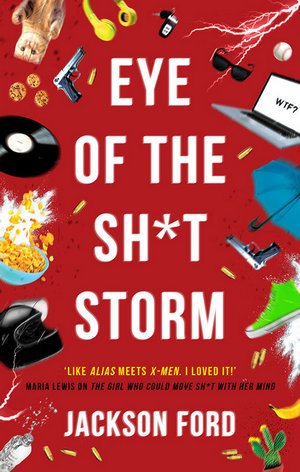
Welcome to The Irresponsible Reader’s part in the Cover Reveal for Always the Dead by Stephen J. Golds! Before we get to the striking cover down below, I’ve got a few words to share about the book.
Book Blurb

Los Angeles, California. 1949.

Scott Kelly is a World War Two Marine veteran and mob hitman confined to a Tuberculosis sanatorium suffering from consumption, flashbacks and nightmares from his experiences in The Battle of Okinawa and a botched hit for Bugsy Siegel.

When his movie actress girlfriend disappears, he bribes his way out of the sanatorium to search for her.

What follows is a frantic search, a manic murder spree, stolen contraband, and a briefcase full of cash.

A story that stretches from the war torn beaches of Okinawa, all the way to the playground of the rich and famous, Palm Springs, California.

An exploration into the depths of L.A crime, PTSD and twisted love, this is a semi-fictional novel based around the disappearance of Jean Spangler.


And now…

The Cover

Always the Dead

Once again, Red Dog Press wows with a cover. They’ve got to have one of the better batting averages for covers out there, right?

As good as the cover is, I’m betting the interior of the book is better–you can pre-order this now at: Red Dog Press.

.


My thanks to Red Dog Press for the invitation to participate in this reveal and the materials they provided.

Red Dog Press

Stalker Stalked by Lee Matthew Goldberg: Who Watches the Watchers? Who Stalks the Stalkers?

Stalker Stalked

Stalker Stalked

by Lee Matthew Goldberg

eARC, 245 pg.
All Due Respect, 2021

Read: September 7, 2021

What’s Stalker Stalked About?

Lexi Mazur is a pharmaceutical sales rep who has a habit of sampling her products in addition to drinking pretty heavily. When her boyfriend of about a year breaks up with her, things get worse. Her pill uptake and drinking increase, and she escapes into Reality Shows like The Real Housewives of ______, and her new obsession (literally), Socialites. She’d been heavily invested in those shows before—it was a bone of contention with her ex—but she sunk to pathological levels after the break-up.

Soon, Lexi begins showing up at locations that she knows one or more of the stars of Socialites will be, trying to put herself in a situation where their paths will cross, in the belief that it’s all it will take for them to befriend her. Once they’re friends, her life will improve and she’ll get a bit of the glamorous life they have—maybe even a role in the show.

She has some reason to think that this behavior will work—it has been the foundation (and eventual doom) of her romantic relationships.

Yeah, Lexi is a stalker—she just has a new outlet for these impulses. Her behavior and substance abuse spiral to new depths. We get some details about her prior issues and behaviors, but the novel primarily documents her descent to rock bottom.

That would be enough for most authors, but here’s where Goldberg throws in the plotline that makes Stalker Stalked stand out. In the midst of all the above, Lexi starts to sense that someone is watching her. Stalking her. Is it one of her exes? Is it someone from Socialites? Is it just her imagination, maybe a side-effect of some of the medication she’s abusing?

And then the threats begin…

Low-Hanging Fruit?

Lexi’s story aside (as much as you can do that kind of thing in this book), this book is a sharp satire and critique of TV Reality Shows.

As I read it, I wondered occasionally about Goldberg picking a target that’s too easy. Where’s the challenge in taking shots at Reality Shows?

As easy a target they might be, it’s a target that seems to demand this kind of attention and examination. The cultural impact of this kind of shows—and the social media influencer accounts (and wanna-be social media accounts) that tell the same kind of fictions—is large enough, disturbing enough, that we need as many artists in as many possible media to put them under the microscope.

Looking at this phenomenon through Goldberg’s lens something jumps out at me (and I realize that I’m probably fifteen years behind other people on this insight), this kind of reality shows provide a socially acceptable form of stalking for the masses. How many people think they’re getting a special kind of insight into the lives of these stars? A special, private, view of their day-to-day life? How many unbalanced viewers like Lexi are out there learning that this is an appropriate way to live and take the license to do the same but for people who aren’t on TV?

So, what did I think about Stalker Stalked?

I didn’t like Lexi—at all—for the majority of the novel. I wouldn’t have described myself as terribly invested in what was going on with her or in her well-being. She’s just unsympathetic, unpleasant—the kind of character that most novels would have cast as the villain (one you may ultimately find sympathy for).

As much as I wasn’t able to get invested in her as a character, I couldn’t stop reading. Something about the novel—and I really should be able to put my finger on what it was, but I can’t—gripped me like a Lee Child or Nick Petrie thriller. Compelling doesn’t quite express it—I had to know what was coming next. Lexi was like the proverbial car wreck that you can’t take your eyes off of. Also, I was pretty curious about some of the people around Lexi, how were they going to fare in the face of her problems.

Eventually, however, I started pitying Lexi. I started understanding how she got where she is and how she was tumbling toward rock bottom.

Stalker Stalked is a gripping read, a tragedy that you can’t look away from—that you can’t get enough of. It’s disturbing and thought-provoking. You’re going to want to get your hands on it.


4 Stars

Disclaimer: I received this eARC from Down & Out Press via NetGalley and Lori Hettler of The Next Best Book Club in exchange for this post—thanks to all of them for this.

WWW Wednesday, September 8, 2021

I’ve read a couple of killer books in a row, the kind of reads that I’m intimidated to try to write about, you know? Anything I say will be a disservice. But that’s a problem for another time, now, it’s time for the check in that is WWW Wednesday!

This meme was formerly hosted by MizB at A Daily Rhythm and revived on Taking on a World of Words—and shown to me by Aurore-Anne-Chehoke at Diary-of-a-black-city-girl.

The Three Ws are:

What are you currently reading?
What did you recently finish reading?
What do you think you’ll read next?

Easy enough, right?

What are you currently reading?

I just started Suburban Dicks by Fabian Nicieza, which I’ve been looking forward to for a while, and am listening to the fairly amusing Yearbook by Seth Rogen (and a supporting cast) on audiobook.

Suburban DicksBlank SpaceYearbook

What did you recently finish reading?

I just finished Lee Matthew Goldberg’s Stalker Stalked, which was just stunning, and the unimpressive Robert Ludlum’s The Treadstone Exile by Joshua Hood, Ron Butler (Narrator) on audio.

Stalker StalkedBlank SpaceThe Treadstone Exile

What do you think you’ll read next?

My next book should be a little Christmas in September with Best in Snow by David Rosenfelt and my next audiobook should be Bound by Benedict Jacka, Gildart Jackson (Narrator).

Best in SnowBlank SpaceBound

Hit me with your Three W’s in the comments! (no, really, do it!)

PUB DAY REPOST: Robert B. Parker’s Stone Throw by Mike Lupica: The Twentieth Jesse Stone Novel Shows this Series Still has Plenty of Life in It

Stone's Throw

Robert B. Parker’s Stone’s Throw

by Mike Lupica
Series: Jesse Stone, #20

eARC, 336 pg.
G.P. Putnam’s Sons, 2021

Read: August 17-18, 2021
Grab a copy from your local indie bookstore!

What’s Stone’s Throw About?

The mayor of Paradise is found dead at the site of a contentious land deal—it’s one of the most sought-after properties in Paradise, and the City is preparing to weigh in and deciding which of two buyers get to put a casino on it—while several citizens are trying to block the sale at all. The mayor is clearly sympathetic to the anti-sale voices, but it doesn’t look like he’s going to be able to do anything to stop it going forward.

And then he apparently commits suicide on that piece of real estate. Jesse’s not so sure about the suicide part, however, it doesn’t make sense to him for several reasons—his friendship with the mayor is just one of them (the fact that the left-handed man seemingly used his right hand to shoot himself would be another).

Jesse just has to decide who has the most motive to kill him—one of the buyers? The seller? The anti-sale group?

Then the leader of the conservation movement goes missing, and his girlfriend is worried. Then it turns out that Wilson Cromartie—Crow—is working for one of the casino builders. He and the Paradise Police Department have a very shaky history—his criminal past (all beyond the statute of limitations) makes Jesse dis-inclined to trust him, no matter how much assistance he rendered in finding a missing girl later. Is Crow on the side of angels this time, or could he be behind the mayor’s death?

In a case that clearly calls for someone to “follow the money” there’s so much of it flying around that it’d be easy to get lost trying that, there are no easy answers for Jesse and the rest of the PPD.

Molly

From the beginning of the series, Molly Crane has been one of the highlights of the books and of the Paradise Police Department. She’s loyal, competent, and has a big heart. She’s stood by Jesse when things were at their worst for him—covering for him as much as she could. She’s almost too perfect—except for the one time she slept with Crow. That’s pretty much the only time she’s done something wrong.

And since then—at least once per book*—Jesse has brought that transgression up. Every author—Parker, Brandman**, Coleman, and now Lupica—has had Jesse throw this in her face regularly. It’s always bothered me that it’s so constant, so frequent—the woman beats herself up for it, she’s been so good to Jesse, and this is how he treats her?

* As far as I remember, I could be wrong about that, I doubt there’s been more than 2 books without it.

** I honestly remember so little about the Brandman novels, I only assume he followed suit.

And now, Crow is back—and he and Molly interact a bit, both with others around and one-on-one. Without getting into anything, I hope that this allows Molly to get past this act of infidelity—and that Jesse stops bringing it up. Really, there’s an opportunity for closure here, and I hope Lupica takes it.

Talkin’ Baseball

I always liked that Parker wrote Jesse as someone who became a cop not because he had the drive to see justice done, to serve and protect, etc.—but because he had to re-evaluate his life after his baseball career-ending injury and then came to the career in law enforcement.

Parker treated this well, in a “road not taken” kind of way. Coleman did a good job with it—although Blind Spot was more about being part of a team, more than the sport. But Lupica? Lupica really knows how to write about this part of Jesse’s life. He has Jesse think about this a lot in the first chapter and I put in my notes, “this is the best passage in Lupica’s Parker books.” And then it comes up later in the book, too. I don’t know if it’s all the sports books in Lupica’s past, just a better insight into the mindset of the baseball player, or what—but this book has the best usage of Jesse’s former career that this twenty-book series has had.

So, what did I think about Stone’s Throw?

I wasn’t crazy about this at the beginning—it was always good, but I didn’t get sucked in right away. I also wasn’t crazy about the way that Crow was being used—it reminded me of the way that Parker took some of the danger away from Vinnie Morris, Bobby Horse, and Chollo after their initial appearances. But it started to grow on me the further I got into it—and by the last half, I was invested as I could’ve hoped to be.

And even if I wasn’t—just being back in Paradise with Jesse, Suit, and Molly is good enough.

Lupica’s got the voices down, he understands Paradise, he gets the cast of characters right and this book feels like he’s been writing Stone novels for more years than he has—I had to remind myself that this is only his second time with this series. I’d have easily believed this is the fifth.

Whether you’re new to Jesse Stone, or you’ve been reading them since the beginning, this is a novel that will entertain you and leave you looking forward to the next one.

Disclaimer: I received this eARC from PENGUIN GROUP Putnam via NetGalley in exchange for this post—thanks to both for this.


4 Stars

This post contains an affiliate link. If you purchase from it, I will get a small commission at no additional cost to you. As always, opinions are my own.
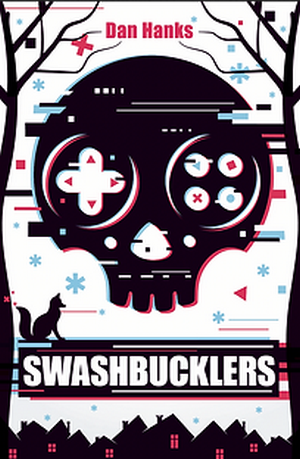
The Genius’ Guide to Bad Writing by R.T. Slaywood, R.C. Martinez: For Those Who Are Curious About Writing Worse

The Genius' Guide to Bad Writing

The Genius’ Guide to Bad Writing

by R.T. Slaywood, R.C. Martinez

Kindle Edition, 39 pg.
2021

Read: September 4, 2021

It’s time to disappoint your readers!

What’s The Genius’ Guide to Bad Writing About?

A guide for the writer who is tired of success and wants to reclaim their lives from answering the siren call of fortune and fame that comes to every author. Slaywood and Martinez have a 10-Step program guaranteed to ruin a novel or two and stop a career dead in its spot.

Obviously, this is a satire—although I can think of more than a few authors that seem to have found this book before its publication (I’m going to assume it slipped through a wormhole and was delivered to them years ago). I’ll be nice and not name names here, but I think Slaywood and Martinez are owed some money if they could figure out how to collect it.

The “Illustrations”

I thought the idea behind this was clever and well-executed. They picked up a half-star from me for this. It reminded me of the footnotes in Heads You Lose by Lisa Lutz, David Hayward, but with a different flavor.

Formatting

The formatting on part of this is a little iffy—it largely is going to depend on what device you use to read it. My Paperwhite was fine but it was irritating to read on my phone (I’d wager my Fire Tablet would’ve been okay, but maybe not as nice as my Paperwhite—I’m just too lazy to charge the thing for this post). But the amount of irritation is minimal, this is just a caveat lector (mostly inspired by an online review that seemed overly irritated).

The Table of Contents is just wonky and ugly, but I’m 60% sure it’s supposed to be. And even if I’m wrong, it’s the Contents, if you’re spending enough time on a 39-page book to get worked up about a poorly formatted Table of Contents, you really need to ask yourself some questions about your priorities.

So, what did I think about The Genius’ Guide to Bad Writing?

It bothers me greatly to write something so brief, but with 39 pages, there’s not a lot to say unless I give a line-by-line commentary.

It is intended to be a brief work, and I don’t hold the length against it. I enjoyed what is there, while I do think I’d be happier on a bang-for-my-buck level if the book was twice as long. Unless the authors were just on fire, more than twice as long would’ve gotten tiresome (see: The White Man’s Guide to White Male Writers of the Western Canon).

This is a quick, fun read that’ll bring a grin to the face of readers. Take a few minutes and enjoy yourselves.


3.5 Stars

True Dead by Faith Hunter: Playing the Long Game

True Dead Banner


True Dead

True Dead

by Faith Hunter
Series: Jane Yellowrock, #14

eARC, 384 pg.
Ace, 2021

Read: August 30-September 1, 2021

What’s True Dead About?

Jane and the rest of the Yellowrock Clan are headed for New Orleans after a little excitement near her new home. There are two things that bring her to her old hunting grounds and her “freebie house.”

The first is a new, looming threat to her as Dark Queen, Master of New Orleans, and pretty much every Mithran in North America—at least those who are her loyal subjects. It’s a threat that has roots in ancient vampires, magic that Jane hasn’t encountered before, and possibly a tie to the “liver eaters” of the Cherokees. It’s going to take more than a couple of sliver stakes, shotgun blasts, and a wicked grin to take care of things.

The second reason to head for New Orleans is much more pleasant—almost as elaborate, it should be added. Jane’s strengths are best displayed in combat, figuring out what supernatural threat is out there, and that sort of thing. But social events, diplomatic moves, and things like that? Not what anyone thinks of when they think Jane Yellowrock. For good reason. Thankfully, she now has a staff.

While dealing with new supernatural forces set against her and the big social event, something more immediate is plaguing Jane. She’s unable to control her shifts—she’ll wake as the cat, or in half-shifted form. She won’t be able to change back when she wants to—and Beast isn’t doing much better with it than Jane is.

All in all, Jane’s got her hands (or paws) full.

Beast

Beast gets some great moments—possibly better than Jane. She has her own agenda at points and is keeping secrets still.

I feel like I should have more to say about Beast here, but I really don’t. Mostly because I wouldn’t be able to avoid spoilers. Also, I’m not sure when I’d shut up.

Simply put, she’s a delight.

Leo’s Long Game

Over the course of the book, Jane learns some things, pieces together a few more, and makes a couple of good guesses about what she calls Leo’s long game. What she comes up with helps her—and the reader—to see her arrival in New Orleans and most of what she’s done in various situations for Leo in a new light.

It’s not as drastic as some other UF series have been when the chief protagonist learns that changes their understanding of pivotal moments in the series—but it is pretty significant. You won’t be able to think of the series and Jane’s adventures in quite the same way again—you’ll have a richer, more nuanced idea.

I’m so glad she did that.

So, what did I think about True Dead?

This thing started off with a bang—a killer first chapter that had everything a Yellowrock fan would want. When I saw the heading reading “Chapter 2,” I stopped cold. How had she fit all that into a chapter? I seriously thought I was wrapping up Chapter 3 at that point. Sure, Hunter’s chapters tend to be longer than many of the things I read, but anyway you cut it—Chapter 1 gets things rolling in a big way.

It didn’t stop from there—the hits keep coming, Jane’s sharper than she’s been in a couple of books. Not that I’m complaining about the books, but Jane’s been going through a lot lately—and now that’s fairly settled. She’s adjusted (at least more adjusted) to her new role and position. So now when trouble is on the horizon, she can throw herself at it.

And, boy howdy, does she. There are a few scenes that feel like vintage Jane—sure, given her new status she ends up dealing with things in a very non-vintage way. Long-time fans will enjoy seeing Old School Jane.

But New School Jane has more than a few surprises up her sleeve, and as fun, as it is to take a nostalgic look at how Jane dealt with problems, it’s more fun to see the way Jane deals with them now.

True Dead felt like a gift to the reader—not just because we get to see Jane tooling around New Orleans again with a vamp killer in hand, but because of everything else. The new challenges are great—and watching all the members of Clan Yellowrock rise to them is just as great. There’s a lot of joy, some sweetness, a little romance (and a little of the stuff that accompanies romance), we get to see some old friends–including a couple of pleasant surprises. And there are some very unpleasant surprises, too. Like every good writer of a long-running series, Hunter knows how to put her readers through the emotional wringer.

What it sets up for book 15? Ohh boy, I already can’t wait.

In the meantime, get your copy of True Dead as soon as you can. If you’ve read this far in this post and don’t know Jane Yellowrock? Fix that and thank me later.


My thanks to Let’s Talk! Promotions for the invitation to participate in this tour and the materials (including the book via NetGalley and Berkley Publishing Group) they provided.

Page 270 of 610

Powered by WordPress & Theme by Anders Norén