Author: HCNewton Page 272 of 610

Catch-Up Quick Takes: The Authorities; A Man With One of Those Faces; The Vigilante Game; Wild Sign

The point of these quick takes posts is to catch up on my “To Write About” stack—emphasizing pithiness, not thoroughness. I’ve had themes for most of these lately, this one really doesn’t have a theme. Just books I can’t seem to find time to write about, I guess. I really wanted to do lengthier posts about these (and have drafts started on them), but it’s just not going to happen.


The Authoritie

The Authorities

by Scott Meyer, Luke Daniels (Narrator)
Unabridged Audiobook, 9 hrs., 49 min.
Audible Studios, 2015
Read: May 26-28, 2021

(the official blurb)
This is a comedic police procedural with a dash of SF. A beat cop who ends up featured on a very embarrassing viral video gets the opportunity to capitalize on his inadvertent fame by becoming the face of an oddball group of crime fighting experts assembled by a tech guru to revolutionize policing.

This screams TV movie as backdoor pilot to an 80s TV show. I could see this as a pretty long-running series. I’m guessing the sales weren’t there–or maybe Meyer didn’t have a second novel in him (maybe it was a stand-alone all along?)–because there hasn’t been a follow-up. With something that feels so much a kick-off to a series, the fact that there’s nothing more takes a little of the shine off the ending. Just a little.

I enjoyed this–decent mystery, great cast of suspects–great cast of characters period–fun set up, solid (and goofy) execution. Lots of fun.

The narration on this was done by Luke Daniels, who I am an unabashed fan of, I’m not going to waste anyone’s time talking about what a great job he did with this one, because it’s obvious.
3 Stars

A Man With One of Those Faces

A Man With One of Those Faces

by Caimh McDonnell, Morgan C. Jones (Narrator)
Series: The Dublin Trilogy, #1
Unabridged Audiobook, 11 hrs., 11 min.
McFori Ink Ltd, 2018
Read: May 12-17, 2021

(the official blurb)
I did a Media Res post about this audiobook, and it was as fun as it seemed at the time. It’s another comedic crime novel–there are a couple of cops running around, but the focus is on a couple of civilians who should absolutely not be the focus of a crime novel. Which is what makes it work.

Looking ahead, my least favorite character (actually, I had a hard time liking him at all) seems to be the focus of the series. It makes me reticent to carry on, but curiosity might get the better of me.

But as a stand-alone? This works so well–a solid thriller but told with wild characters. It’d be really easy to edit this just a little and remove all the humor and end up with a pretty gripping thriller novel, but with the humor? I really strongly recommend this.

The narration is really well done, although the voice choice for Bunny McGarry irritated me–and I probably would’ve disliked the character anyway but it really didn’t help.
3.5 Stars

The Vigilante Game

The Vigilante Game

by Meghan Scott Molin
Series: The Golden Arrow Mysteries, #3
Kindle Edition, 267 pg.
2020
Read: March 4-8, 2021

(the official blurb)
MG has so much to accomplish in this book–she has to get her bestie out of jail, uncover the vigilante running around as The Golden Arrow, keep the Hooded Falcon movie on track, and secure her career in comics–oh, and maybe embrace adulthood and a real relationship.

It was…fine. It was enjoyable, a little mad-cap, and frequently sweet. While better than the second novel, I don’t think it achieved the levels of the first novel. I had such high hopes for this series–and I’m not saying I’m disappointed by the way it ended, because Molin wrapped up everything nicely and sent our characters off with happy endings. but I was underwhelmed. Still glad I read the series, just not as glad as I expected.

3 Stars

Wild Sign

Wild Sign

by Patricia Briggs
Series: Alpha and Omega, #6
Hardcover, 368 pg.
Ace, 2021
Read: March 17-22, 2021
Grab a copy from your local indie bookstore!

(the official blurb)
My first reaction to the setup for this novel was An Answer to a Question No One Asked…

In the end, I like what the book did for the relationship between Bran and Leah (and hopefully gets rid of some of the “ew” factor from Burn Bright). It didn’t wow me, but I really enjoyed my time in this world again.

I’m sensing a trend here in the Mercy-verse, for the longest time, Vampires were the major threat, then we dabbled with the Fae, but it didn’t stick as much as it could’ve–now we’ve had a couple of novels in both series where witches are behind all/most of the trouble. I wonder what the end game is…

3 Stars

This post contains affiliate links. If you purchase from any of them, I will get a small commission at no additional cost to you. As always, opinions are my own.

A Reason to Live by Matthew Iden: Back to the Beginning with Marty Singer

A Reason to Live

A Reason to Live

by Matthew Iden
Series: Marty Singer, #1

Kindle Edition, 312 pg.
Thomas & Mercer, 2015

Read: August 6-7, 2021
Grab a copy from your local indie bookstore!


Earlier this year, I read the eighth book in this series, Chasing the Pain, and enjoyed it enough that I had to go back to the first book and read the whole series.

“What’s your first move?”

“We’ve narrowed it down to Michael Wheeler or the rest of humanity,” I said. “So let’s start with Wheeler.”

What’s A Reason to Live About?

Twelve years ago, Detective Marty Singer investigated a murder. A police officer was in the home of a woman he’d been harassing and shot her. Singer didn’t believe his story and arrested him, and worked as hard as he could to put the cop away. It didn’t work, he was acquitted and then disappeared. In the ensuing years, this has haunted Marty.

Now, that woman’s daughter, Amanda, has tracked him down—she’s being stalked, harassed by someone—and all the evidence points to it being the man who killed her mom.

So she comes to the detective she learned to trust all those years ago—she needs his help to keep her alive. The downside is that Marty recently retired from the force so that he could focus on cancer treatment. But there’s no reason to tell Amanda that—Marty feels he owes her (and her mother) a debt he can’t repay, so he’ll do the next best thing—keep her alive.

The Big C

I’d been treating cancer like it was the flu, an inconvenience that I’d have to put up with temporarily. Except cancer wasn’t just a sore throat and a fever, and chemo wasn’t just a shot in the arm. Cancer wasn’t a bump in the road—it was the road, and I’d better make plans to treat it that way. My life, as I knew it, had changed for good.

Sure, there’s a murdering stalker out there, but the “Big Bad” of this novel is Marty’s cancer. It casts a looming shadow over everything, it affects the way that Marty can work—how he can investigate, protect, and defend.

I don’t know how many books will feature this struggle—I hope we get a couple more. I do know, thanks to starting the series where I did, that it’s not a constant presence in the series. I just hope that it sticks around for a bit—it’s refreshing seeing someone have to deal with things like this.

Amanda

Amanda’s face was animated, happy. I realized I wanted it to stay that way. Why? Was it feelings of guilt from a job poorly done more than a decade ago? I’d probably done worse things to more people over the years and I wasn’t hustling to make amends with them. Was it paternal? Misplaced feelings for a kid I’d never had? Maybe. But the real reason was closer at hand. It didn’t take much imagination to wonder what I’d be doing right now, how I would feel, if she hadn’t had the guts to walk up to me

It almost feels like a creepy thing for Marty to find a reason to live in Amanda, but it’s not. As he says in the quotation—it’s like he found the daughter he never had—and he gets to do something for her that he couldn’t do twelve years earlier—identify and then stop her mother’s killer.

Add in the fact that Iden made her sweet and supportive, a nice person with a good heart, and obviously, readers will get invested in her quickly and will frequently be on the edge of their seats to see if Marty can keep her safe.

So, what did I think about A Reason to Live?

And what became clear to me in that infinite moment is that, ironically, a man with cancer has more options than one that doesn’t. Having already stared my own mortality in the face, I couldn’t really be threatened with death.

When you have a thriller where the protagonist really can’t be threatened? That adds a little something

Of course, Marty’s lying to himself—there are threats that would make him stop everything—but as long as he believes he can’t be threatened, it does give him more options and adds a little something to the novel. Throw in the complications of his varying amounts of energy and stamina with the added complication of learning how to act without a badge to back him up.

Sure, some of the tension was eased because I knew the outcome for most of the characters, I knew the relationships that were being created here—just knowing that the series goes at least eight books tells you a lot right there.

Still, it was a gripping read, and a good introduction to Marty and Amanda and Marty’s retired life. A fast, enjoyable novel—it’s easy to see why the series has been going as long as it has been. You should check it out.


3 Stars

20 Books of Summer '21

This post contains an affiliate link. If you purchase from it, I will get a small commission at no additional cost to you. As always, opinions are my own.

A Beginner’s Guide to Free Fall by Andy Abramowitz: The best and the worst things in life are sudden

A Beginner's Guide to Free Fall

A Beginner’s Guide to Free Fall

by Andy Abramowitz

Kindle Edition, 396 pg.
Lake Union Publishing, 2020

Read: August 9-11, 2021
Grab a copy from your local indie bookstore!

The Opening

Four months from now, on a secluded beach in Turkey, Davis Winger, who came thousands of miles to start over, will drop his towel and paperback on the sand, wade into the sea, and end up under the tire of a Hyundai that has just come screeching over an embankment. He will be trapped under that car, pinned to the seabed with one final breath crowding his lungs. Time enough to lament that his daughter might now grow up without him; that he might never hear words of forgiveness from the woman he adored, and betrayed; that he might not live to build the roller coaster that his six-year-old had dreamed up from a storybook and that he had spent the summer engineering into reality. Constructing that ride, harnessing his daughter’s giddy vision into a set of blueprints, was his best shot at winning back the people he loved and hurt and lost. The promise of redemption was slipping away. All alone and far from home, he’ll reach for the surface as the sea encloses.

That autumn day was coming. But today it was still spring, a mild Saturday in May, and when Davis awakened next to his wife in the charmingly overgrown Baltimore neighborhood of Mount Washington, he was still gainfully employed and still welcome in his own home.

With an opening like that, how do you follow it up? No really, how do you? How do you get your readers to care about your protagonist and what he’s going through when you know this is what he’s headed for?

Well, enough of that…let’s get on with the post.

What’s A Beginner’s Guide to Free Fall About?

Davis Wagner has one of those jobs that you have a hard time believing people actually have, but clearly, someone does. He designs amusement park rides, like roller coasters. Which is cool enough—but he’s witty, friendly, compassionate, has a great daughter, a wonderful wife, and so on. He’s close with his sister, his father, and his father’s…partner, I guess. (she’s lived with him for years, so girlfriend doesn’t seem to fit…)—Davis’s mother ran off with her therapist when he and Molly were young, leaving them to be raised by their father.

But we know from the opening paragraph above, that this charmed life doesn’t stay charmed—after introducing the reader to this family, Abramowitz starts dismantling Davis’s life—after an accident (that Davis bears no responsibility for), his career is on the line; after something that Davis bears all the responsibility for, his marriage is in shambles and doesn’t look like it’ll recover. The only thing that Davis has left is his relationship with his young daughter in the summer before her first-grade year.

In the (apparently) four months he has left on Earth, can Davis build on the foundation of his relationship with his daughter to save his marriage and career?

There are other plotlines, sure, but this is the focus of the book and the weakness of it drags down the rest.

Molly Winger— Not Pictured

The high school yearbook was basically Davis’s personal photo album, but when Molly graduated three years later, below her photo it read: “Molly Winger—Not Pictured.” And the thing is, she was pictured. Her photo was right there, above the words “Not Pictured.” That was the essence of Molly. Seen yet somehow undetected. There but unaccounted for. Actually, she preferred it that way.

I just loved that idea—well, I mean, it’s depressing as all get out when you think about what that says about Molly—but it’s a great image.

Molly’s still pretty undetected. She writes for an independent newspaper—one limping along financially—as if there weren’t another kind—primarily writing features, but really doing whatever she has to help keep it afloat. She’s dating someone years younger than her, and in no way right for her (or she for him)—she’s smart, literate, cultured. He’s in his mid-twenties, and when he’s not working, he’s playing video games or watching horror movies with his “boys.”

While her brother is trying to put his life back together, Molly stumbles upon a series of articles that will help her confront her own demons, help her readers, and maybe get her detected by people.

I’m glad I read this book if only for the Molly storyline/storylines—Abramowitz was at his strongest here. A character you can sympathize with, chuckle at, and hope for.

Sibling Rivalry

At some point years before we meet them, Davis and Molly started playing this game—Davis would call her out of the blue, and they’d pitch horrible ideas for businesses to each other. For example, a store that sells concert T-shirts for bands that you wouldn’t want to wear in public—Hanson, Sheena Easton, Julian Lennon, Spin Doctors, and so on.

It’s one of those things that makes the most sense in terms of siblings—a running joke that they may not be able to remember the origins of, but it’s something they’ll always do. When you stop and think about it, it’s really sweet.

If you don’t stop and think that much and just read the ideas? They’re hilarious.

Tom Petty

Similarly, Davis amuses himself by working Tom Petty song titles into his conversation around or about one character. It’s a strange way of showing affection, but it works. Sure, I think it’d get annoying in real life—but it’s exactly my kind of humor.

So, what did I think about A Beginner’s Guide to Free Fall?

It took me a long time to be able to care about Davis and his woes, much less his attempts at rehabilitation. I just couldn’t shake the opening paragraph. But I eventually came around and appreciated that part of the novel (which is good, because it’s the majority).

Still, I’d have probably DNFed this if Molly wasn’t around—the character and what she does in the novel are its saving graces.

Abramowitz can write a sentence—I really enjoyed the voice, the way he told the story (well, after the opening), and the themes he explored. I laughed and was moved, and thought a little about life. A Beginner’s Guide to Free Fall is worth the time and effort, you’ll enjoy it.


3 Stars

20 Books of Summer '21

This post contains an affiliate link. If you purchase from it, I will get a small commission at no additional cost to you. As always, opinions are my own.

20 Books of Summer 2021: Wrap Up

20 Books of Summer
One summer.

Three months.

93 Days.

20 books.


I really didn’t think I’d get it done on time after seeing where I was in July. But here I am with almost 27 hours to go and I’ve finished the 20 Books for Summer Challenge for 2021. After a June that was less-than-productive (well, okay, I read nothing), and a July that got me less than halfway home, I expected I was going to have to fudge things like last year by going with Labor Day as a cutoff. But nope, I pulled off an according-to-Hoyle completion.

20 books down, cleared off a lot from my Mt. TBR (including things I bought in 2018!), not a stinker in the bunch (two of them flirted with it, though)—and a nice, warm sense of accomplishment to boot. Now, that’s books read, not posted about. I guess that’s my challenge for September, I think I have ten of them done, however, so it’s not that daunting.

Here’s the list:

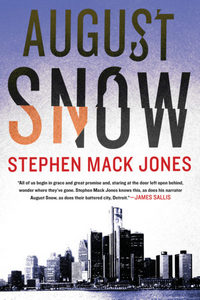
✔ 1. A Beginner’s Guide to Free Fall by Andy Abramowitz
✔ 2. The Dead House by Harry Bingham
✔ 3. The Run-Out Groove by Andrew Cartmel
✔ 4. Love by Roddy Doyle
✔ 5. The Ninja’s Blade by Tori Eldridge
✔ 6. Small Bytes by Robert Germaux
✔ 7. A Reason to Live by Matthew Iden
✔ 8. Twice Cursed by J. C. Jackson
✔ 9. The Dime by Kathleen Kent
✔ 10. Dead Man’s Grave by Neil Lancaster
✔ 11. The Magnificent Nine by James Lovegrove
✔ 12. The Mermaid’s Pool by David Nolan
✔ 13. All Together Now by Matthew Norman
✔ 14. The Good Byline by Jill Orr
✔ 15. Sir Thomas the Hesitant and the Table of Less Valued Knights by Liam Perrin
✔ 16. Fools Gold by Ian Patrick
✔ 17. Know Your Rites by Andy Redsmith
✔ 18. The Far Empty by J. Todd Scott
✔ 19. August Snow by Stephen Mack Jones
✔ 20. In Plain Sight by Dan Willis

20 Books of Summer '21 Chart August

Opening Lines: The Dime by Kathleen Kent

Zowie, I haven’t done one of these since January 2020?!?!


We all know we’re not supposed to judge a book by its cover (yet, publishing companies spend big bucks on cover design/art). But, the opening sentence(s)/paragraph(s) are fair game. So, when I stumble on a good opening (or remember one and pull it off the shelves), I’ll throw it up here. Dare you not to read the rest of the book.

from The Dime by Kathleen Kent:

From my position in the hallway—on my ass, head pressed against the door frame, legs drawn up with my gun held two-handed against my sternum—I try to recall the layout of the room: three sets of bunk beds, four corpses sprawled across bloodied sheets, my partner, shot three times, lying motionless next to the nearest bunk, and, somewhere in there, one lunatic, a screaming infant in one hand and a semiautomatic pistol in the other. The last time I sneaked a look around the open doorway, he fired at me, the bullet knocking a crater in the wall opposite. He followed up by threatening to shoot the baby and then himself.

I’ve been a cop for five months, one week, and nine and a half hours.

There was a great deal of effort in stopping at that point, the first chapter is just dynamite.

Love by Roddy Doyle: Pull Up a Stool, Order a Pint, Listen In on This Conversation

Love

Love

by Roddy Doyle

Hardcover, 327 pg.
Viking, 2020

Read: August 19-20, 2021
Grab a copy from your local indie bookstore!

—Well, that was how it felt, he said. —Like we’d never been apart.

—But—.

—I know, he said. —I know. We’d never been much together. But I’m talking about feelings here, not facts. Feelings. The feel of the thing.

It sounded like something he’d said before. More than once.

What’s Love About?

Joe and Davy are men in their 50s—in their 20s, they were drinking buddies, spending every weekend together at as many Dublin pubs as they possibly could. Eventually, they grew out of it. Davy moved to England with his wife. Joe settled down, too.

Now they see each other once or twice a year when Davy comes over to visit his father. It’s really the only time Davy drinks anymore. And, boy howdy, do they drink a lot.

This novel takes place over the course of one night/early morning, starting after dinner when they have a couple of drinks. Joe has a story he wants to tell Davy, he needs to unburden himself. Davy has something he needs to talk about, too, but he won’t let himself.

And that’s the novel—the two going from pub to pub, having a couple of drinks, and moving on. Sometimes out of choice, sometimes because they got a little too loud and are asked to leave. They walk a bit, sober up a touch (while continuing their conversation), and find a new pub to have a pint or two in before being asked to leave.

And if that doesn’t sound that interesting to you, have you ever listened to a couple of Irish people telling stories?

The Title

In the cleverly titled book, The Four Loves, C. S. Lewis posits that there are four different types of love and spends some time describing each.* Others have come up with different numbers, different categories. Which is just to say that the concept of “love” is a tricky one to nail down. To borrow Justice Stewart’s phrase, most of us know it when we see it, and most of us settle for that.

* It’s beside the point, but I feel compelled to list them: Affection (storge), Friendship (philia), Romantic (eros), Charity (agape).

All this is to say, it’s really impossible to know precisely what the title refers to—there are several types of love displayed in this book, and I can see some people trying to argue for which one is most fitting.

After a little thought, I’ve decided that Doyle is referring to them all (and I don’t think that’s a cop-out). It’s about two men struggling—and aided by several of the pints in the cover image—to find ways to talk about love.

Feelings

There is a reason why men don’t talk about their feelings. It’s not just that it’s difficult, or embarrassing. It’s almost impossible. The words aren’t really there

That’s from the beginning of the book, Davy’s narration noting the difficulty that Joe’s having getting his story started. It’s seen a few times after that (I should point out that at least Joe is trying, Davy’s avoiding it entirely).

Which is where beer comes in, I guess. Joe never quite expresses himself the way he wants—Davy doesn’t help that much, really—but he gets asymptotically close. The number of pints they consume to get him to the point where he gets close is enough to make my liver sick. Part of the enjoyment of this novel is watching these two try to get the words right.

—The drink is funny, though, isn’t it? You see things clearly but then you can’t get at the words to express them properly.

—Or somethin’.

—Or somethin’, yeah.

Conventional wisdom suggests that two women wouldn’t need that much alcohol—or any, really—to achieve the same ends, if not do a better job of expressing and understanding the emotions being discussed. I expect that wisdom is right (but wouldn’t die on that hill)—and the ensuing novel might be less entertaining. Still, I’d like to see someone give it a shot.

So, what did I think about Love?

—It’s a thing abou’ gettin’ older, he said. —At least, I suppose it is. So many memories, you know. It become, harder to separate wha’ happened from wha’ might’ye happened an’ wha’ didn’t happen but kind o’ seemed to.

He was looking at me.

—Is it? he asked.

—Is memory reliable? I said. —Is that wha’ you mean?

—I think so, yeah. yeah.

This is a novel about love—obviously—and old friends, memory, nostalgia, the power of reminiscing, aging, dealing with the past (whether it happened or not), family, forgiveness, trust…and a few more things, too. All discussed in the story that Joe’s telling and the stories that Davy isn’t telling.

When I read this in a couple of years, it wouldn’t surprise me if I come up with a different list of subjects.

But in a sense, it really doesn’t matter what you think the novel is about—it can be enjoyed and chewed on just with the surface. A couple of old friends talking.

Doyle’s dialogue is as strong as it ever was. The dialect makes it jump off the page, you don’t so much read this book as hear it with your eyes.* It is funny, it is tragic, it’s heartbreaking, it’s wistful, and occasionally silly. It runs the gamut—both for the characters and the reader.

* Yeah, I know, I know. Roll with it, will you?

If you haven’t read Doyle before—this is a pretty good ice-breaker. If you know his work, this is exactly what you expect (a little closer to the feel of The Barrytown Trilogy than A Star Called Henry or Paddy Clarke Ha Ha Ha). His idiosyncratic punctuation and approach to dialogue tags and paragraphs might cause you to stumble at first—but once you catch on, you won’t even notice it.

It’s like you’re sitting there on a night on the town with these two, just catching up with old friends and enjoying the conversation with them (even if you’re not holding up your end). And who doesn’t think that sounds like a fun time?


4 Stars

20 Books of Summer '21

This post contains an affiliate link. If you purchase from it, I will get a small commission at no additional cost to you. As always, opinions are my own.

Faith Among the Faithless by Mike Cosper: An Example of Being Faithful (while Stumbling) in a Hostile World

Faith Among the Faithless

Faith Among the Faithless:
Learning from Esther How
to Live in a World Gone Mad

by Mike Cosper

Kindle Edition, 208 pg.
Thomas Nelson, 2018

Read: August 8, 2021
Grab a copy from your local indie bookstore!

What’s Faith Among the Faithless About?

This is hard to sum up briefly, but I’m going to give it a shot—we live in a compromised age, society is changing, shifting—it’s difficult to predict what the next few years are going to look like, but one thing is certain: Western Culture, particularly that of the U. S., isn’t going to look anything like it did before. How is the Christian to react?

Many hold up Daniel as the model of how to behave in a culture hostile to the Faith. Cosper thinks he’s the wrong model

…there’s a problem with looking to Daniel: Most of us aren’t a Daniel. In fact, we are far from it. As much as we recognize that our culture is in decline, we also kind of . . . like it. Christians in general consume as much mass media and are as addicted to pornography, as likely to divorce, as consumeristic, and as obsessed with social media as the rest of our world. Again: we’re immersed in a secular age, and it’s had a profound effect upon us…while [Daniel is] a great model of faithfulness, I’m not sure he’s the best reference point for most of us.

Instead, he suggests we look to Esther.

…her story is more complicated than [the storybook versions we’re used to]. And much darker. It’s less VeggieTales and more Game of Thrones, with a lot more sex, murder, and impaling than the usual version of the story would imply. (There’s actually quite a bit of impaling.) Mordecai and Esther’s motivations are sometimes murky and sometimes blatantly self- serving.

As in Esther’s day, the Church is compromised, we’ve taken on a lot of the World’s values, and we should look for people in the Bible who find themselves in that situation rather than men like Daniel.

Esther’s story reveals a way forward in a culture where people of faith find themselves at the margins of society. She neither clutches for power nor seeks self- protection. Instead, she faces reality, embraces weakness, and finds faith, hope, and help from a world unseen…Her story is also an invitation to those whose faith, convictions, and morality are less than they wish they were.

When we examine Esther, we see that

…the story is a reminder that God doesn’t abandon his people, no matter how dark their circumstances, how compromised their hearts are, or how hidden he may seem.

So Cosper examines the Biblical account, retelling the story in a very non-Sunday School way and uses that to illustrate the situations that believers may find themselves in and how we can learn from Esther and Mordecai (both positively and negatively) in our cultural moment.

I’m going to end up writing twenty thousand words if I don’t cut myself short, so I’m going to do that.

So, what did I think about Faith Among the Faithless?

Whatever happens in the years and decades to come, we can be sure that faithfulness looks pretty much like it did three thousand years ago. Sometimes it looks like Daniel: a steady path of spiritual formation and obedience. But sometimes, and perhaps more often than not in the world we occupy today, it looks more like Esther: a path of awakening, risk, vulnerability, and, ultimately, hope.

This book is told in an easy, breezy style—full of wit, and wisdom. Cosper knows how to communicate engagingly and clearly. I walked away thinking Cosper would be a fun guy to talk books, TV, and The Bible with. But that style doesn’t belie the seriousness of the material, this is a high-stakes situation, and he’s fully aware of that. But Cosper uses his style to connect to the audience, not to sugarcoat anything.

It’s clear that Cosper has done his research on the book—I wish he’d shared more of his homework in footnotes for the reader. Not necessarily to check his work, but to expand on it—to get a greater appreciation for what he summarized.

Do I agree with every jot and tittle? Of course not. But there’s a lot to appreciate here, and more to chew on, to reflect on, and to learn from. There’s hope in the darkness—and Cosper is good to point the reader to it. It’s not because we’re morally strong and faithful like Daniel, nor does it come from the weakness that characterized Esther’s early life and then the ways she found to do the right thing. The hope of the book of Esther is that the Lord is faithful when we are not, and he will provide for His people.

I do recommend this book, it’ll entertain you and then make you think as well as pray.


3.5 Stars

This post contains an affiliate link. If you purchase from it, I will get a small commission at no additional cost to you. As always, opinions are my own.

Saturday Miscellany—8/28/21

Okay, I think I’ve got the whole reading and listening adjustment to the new job handled, now I’ve got to figure in blogging—which, as you may have noticed, isn’t going as well as it has in the past. Am sure I’ll figure something out, but that “to write about” pile is growing. If anyone knows of an app that allows me to just think about a post rather than having to sit and type, please mention it in the comments!

Odds n ends about books and reading that caught my eye this week. You’ve probably seen some/most/all of them, but just in case:
bullet Barnes & Noble Climbs Back
bullet Is failure the new literary success?—this is an interesting little trend.
bullet André 3000 Joins Cast of ‘White Noise’ Adaptation—Wait, what? Someone’s adapting White Noise? I’m having a hard time wrapping my mind around that—it feels like the moment has passed for it to feel relevant to movie audiences, but I’m hopefully wrong (still, Noah Baumbach’s probably a good guy to do it).
bullet The ‘Twilight’ romance no one talks about: Bella fell for Forks and its forests. That fantasy transformed the town’s reality.—I can’t believe I’m linking to something about Twilight, but it’s not often you can see so clearly the impact of a book on something.
bullet The Most Translated Books From Every Country in the World—huh. The U.S. entry on this list is embarrassing, but this is an interesting list.
bullet Psychological Thriller Book Covers: What Makes A Good Thriller Cover?—Matt Witten summarizes the research he did while working on the cover for his psychological thriller. As I (almost always) say about this kind of piece: I find this stuff fascinating.
bullet In Stephen Mack Jones’ novel ‘Dead of Winter,’ August Snow and Detroit star—a nice profile of Jones, probably my favorite new-to-me writer in 2021.
bullet Decisions Are Hard: Picking What to Read Next—I think we’ve all been there
bullet What are the Best Audiobook Apps in 2021?—This is a great overview of the better available apps. ‘Tho I’d quibble with the description of Chirp’s app as being “stable” is a bit pie-in-the-sky (or maybe that’s iPhone vs Android).
bullet Why Libraries Matter
bullet This week’s Let’s Talk Bookish prompt was a good thought-provoker about Blogger Identity Crises (and, as usual, it was too much thought for me to find time to actually do something like writing about it), these posts in response caught my eye:
bullet Blogging Insecurity from Thoughts Stained With Ink
bullet A Blogger Identity Crisis
bullet Reasons Why I Love Reading

This Week's New Releases That I’m Excited About and/or You’ll Probably See Here Soon:
bullet Not Awkward by Matthew Hanover—right before his wedding, Scott ends up stuck at his ex’s house while her family sits shiva for her dad. I blogged about it recently and asked Hanover a few questions about it, too.

Lastly I’d like to say hi and extend a warm welcome to Mahmoud Dualeh who followed the blog this week. Don’t be a stranger, and use that comment box, would you?

The Friday 56 for 8/27/21: Fools Gold by Ian Patrick

The Friday 56This is a weekly bloghop hosted by Freda’s Voice.

RULES:
The Friday 56 Grab a book, any book.
The Friday 56 Turn to Page 56 or 56% on your ereader. If you have to improvise, that is okay.
The Friday 56 Find a snippet, short and sweet.
The Friday 56 Post it

from 56% of:
Fools Gold

Fools Gold by Ian Patrick

Then it comes, a torchlight being shone into the front of our car. I start sitting up showing my hands as the door gets opened.

“What the fuck are you doing on my drive?” The voice asks from behind the phone torch that’s shone in my face. I keep my hands where he can see them.

From his shadow he’s a big lump and he must have company.

“We were just leaving.” I say as he lowers the torch. My eyes adjust, I smile at him.

“Give me the car keys or I’ll introduce you to my favourite hammer.” As if to emphasise the point he shows the claw hammer he’s brandishing in his shovel sized hand.

“You’re the boss, mate, now here’s the keys and lets not get stupid.”I move to get the keys and then I hear Nines.

“Why don’t you shift your fucking heap of shit motor mate and let us leave?” Nines’ pistol is aimed at the guy who hadn’t noticed him move due to his concentration on me.

These Dog Days Aren’t Over

(Updated and Revised again)
It’s National Dog Day, the annual celebration of “all dogs, mixed breed and pure. Our mission is to help galvanize the public to recognize the number of dogs that need to be rescued each year and acknowledges family dogs and dogs that work selflessly each day to save lives, keep us safe and bring comfort.” So it seemed like a good day to post another version of this.

These Dog Days Aren't OverThis was a hard post to come up with a name for*, essentially this post came from a comment not too long ago about being hesitant to read books about animals if the reader doesn’t know if they survive the book. I get that, I absolutely do. I still bear the scars of Where the Red Fern Grows and Marley and Me (sure, that wasn’t that long ago, but the wound still stings). So, for readers like my correspondent, here are some perfectly safe books prominently featuring dogs!

I plan on updating this when I can remember to, so by all means, chime in with comments about Dogs I’ve forgotten about/haven’t yet!

Non-Fiction

bullet The Particulars of Peter by Kelly Conaboy—this is a collection of humorous essays giving Conaboy the opportunity to rave about her dog, Peter. In her eyes, Peter is a perfect dog, and as you read this, you’ll be tempted to agree. (my post about it)
bullet Olive, Mabel & Me by Andrew Cotter—Cotter’s charming book describes his life with the two dogs that rocketed to international stardom (and brought him along). (my post about it)
bullet My Life as a Dog by L. A. Davenport—Davenport’s short little book about the relationship between the author and his dog, Kevin, a black and tan, pure-bred dachshund. It focuses on what the two of them did over two days and then a weekend selected from the years they spent together. (my post about it)
bullet What the Dog Knows: The Science and Wonder of Working Dogs by Cat Warren—Warren basically covers three topics: there’s the science and history of using working dogs (of all sorts of breeds, not to mention pigs(!), birds, and even cats) to find cadavers, drugs, bombs, etc.; there’s the memoir of her involvement with cadaver dogs via her German Shepherd, Solo; and anecdotes of other cadaver dogs and trainers that she’s encountered/learned from/watched in action. (my post about it)
bullet What the Dog Knows Young Readers Edition by Cat Warren, Patricia J. Wynne—The above book adjusted for younger readers, with some great illustrations. It’s not dumbed-down, just adjusted. (my post about it)

Fiction

bullet Mace Reid K-9 Mystery series by Jeffrey B. Burton—A Dog Trainer/Cadaver Dog Handler and his dogs get involved in serial killer cases. (my post about it)
bullet Suspect by Robert Crais—One of my all-favorite books, a cop with PTSD gets assigned to the K-9 Unit and works with a dog fresh from Afghanistan combat. (my post about it) The pair also plays a major role in The Promise.
bullet
Pug Actually by Matt Dunn—Doug, a loyal pug, plays cupid for his owner. I haven’t actually read this yet, but as I heard that Dunn is thinking about a sequel, so I’m pretty sure Doug makes it.
bullet Stepdog by Nicole Galland—A love story where the major impediment to happily ever after is her dog (a gift from her ex). (my post about it)
bullet Oberon’s Meaty Mysteries by Kevin Hearne (Audiobooks narrated by Luke Daniels)—Oberon, the scene-stealing Irish Wolfhound from The Iron Druid Chronicles narrates this series of novellas (my posts about them).
bullet Neah Bay series by Owen Laukkanen—Lucy is a dog who is trained by prisoner Mason Burke, who has to track her down when he gets out. She’s a service dog for Marine Vet Jess Winslow. Lucy connects the two humans in her life and helps to keep them safe when a corrupt deputy comes after Jess. (my post about them)
bullet I Thought You Were Dead by Pete Nelson—I’m not sure how to sum this one up in a sentence. It’s a pretty typical novel about a troubled writer with a romantic life and family in shambles. But his dog is the thing that makes all the difference. (my post about it)
bullet Chet and Bernie books by Spencer Quinn—Bernie Little is a PI in Phoenix. Chet’s his four-legged partner and the series narrator. It’s too fun to miss. (my posts about them)
bullet The Right Side by Spencer Quinn—”a deeply damaged female soldier home from the war in Afghanistan becomes obsessed with finding a missing girl, gains an unlikely ally in a stray dog, and encounters new perils beyond the combat zone.” (my post about it)
bullet Woof by Spencer Quinn—The beginning of an MG series about a with a penchant for trouble and her dog. (my post about it)
bullet Andy Carpenter books by David Rosenfelt—Andy Carpenter is New Jersey’s best defense lawyer and a devoted dog owner. He helps run a rescue shelter, too–and almost every client he takes as some sort of connection with a dog. These books aren’t dog-centric like the others on this list, but they’re dog-heavy. (my posts about them)
bullet The K-Team books by David Rosenfelt—a spin-off from the Andy Carpenter series. This features a PI team made up of Andy’s wife/investigator, Laurie; the near super-heroic Marcus; and Corey Douglas, a freshly-retired K-9 officer. His canine partner, Simon Garfunkel, co mes along, too. Simon Garfunkeldoesn’t play a giant role in the books, but he gets at least one good action scene per book. (my posts about them)
bullet Voyage of the Dogs by Greg van Eekhout—SF for all ages about a team of dogs on a long-distance space flight. (my post about it)

Supportive Roles

These dogs aren’t as significant a presence in their books as the prior group, but they’re important enough to mention.
bullet Mouse from The Dresden Files by Jim Butcher. (my posts about them)
bullet The Midnight Plan of the Repo Man by W. Bruce Cameron and the sequel Repo Madness by W. Bruce Cameron(my posts about them)
bullet Edgar from the Washington Poe books by M. W. Craven. (my posts about them)
bullet Rutherford from The TV Detective series by Simon Hall (my posts about them)
bullet Oberon from the Iron Druid Chronicles by Kevin Hearne. (my post about them)
bullet Ruffin from the I. Q. series by Joe Ide. (my posts about them)
bullet Dog from the Walt Longmire books by Craig Johnson (my posts about them)
bullet Purvis (and Beau) from The Good Kill by John McMahon (my posts about them)
bullet Trogdor from The Golden Arrow Mysteries by Meghan Scott Molin (my post about them)
bullet Mingus from The Drifter by Nicholas Petrie (my post about it)

Books with paws on both sides of the line

Some books that belong on this list, but might be a bit too close to not fitting on it for some readers
bullet Lessons From Lucy by Dave Barry—there’s a strong “my beloved dog is old and will die soon-vibe throughout this (it’s the whole point), so some may want to avoid it. But the focus is on what Barry is learning from his aging but still full-of-life dog. (my post about it)
bullet Dead is … series by Jo Perry—the canine protagonist in these mystery novels is a ghost, so there’s a dog death involved. But we meet her as a ghost, so she won’t die (again) in the series. (my posts about them)
bullet Lessons from Tara by David Rosenfelt—Inspired by the death of their dog, Tara, the Rosenfelt’s now operate a no-kill shelter for senior dogs. This is the story about the origins and day-to-day of that life. There’s discussion of Tara’s death, and he has to cover the end of days for dogs, but it’s not the focus of the book. One some will want to avoid, but you probably shouldn’t. (my post about it)


  • I brainstormed this a bit with my family, and wanted to share some of those titles that didn’t make the cut, just because I enejoyed their creativity:
    bullet These Dogs Didn’t Go To Heaven/Not All Dogs Go to Heaven implies these dogs aren’t wonderful creatures, and that’s a solid loser
    bullet No Kleenex Required too vague, and not necessarily true, they’re just not required because of a death
    bullet The Best Bois
    bullet Books Where the Author isn’t A Heartless Bastard (Looking at You, Marley and Me) too long, and boy howdy, does it seem my son has bigger issues with the book than I did
    bullet Books that Even PETA Would Be Okay With
    bullet Books for the Vegan in You suggests the dog books I don’t mention are in favor of eating them…
    bullet Paw Patrol I’m almost confident my daughter’s boyfriend suggested as a joke, for his sake I’m assuming it was
    bullet Pawfect Dog Stories I refuse to resort to that kind of joke

(Images by S K from Pixabay and josmo from Pixabay

Page 272 of 610

Powered by WordPress & Theme by Anders Norén