Author: HCNewton Page 275 of 610

Catch-Up Quick Takes: The Data Detective; All Creatures Great and Small; The Miracle Pill

The point of these quick takes posts is to catch up on my “To Write About” stack—emphasizing pithiness, not thoroughness. This time we’re looking at some recent Non-Fiction Audiobooks.


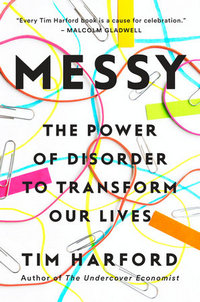
The Data Detective: Ten Easy Rules to Make Sense of Statistics

The Data Detective: Ten Easy Rules to Make Sense of Statistics

by Tim Harford
Unabridged Audiobook, 10 hrs., 24 min.
Penguin Audio, 2021
Read: May 19-21, 2021
Grab a copy from your local indie bookstore!

(the official blurb)
On the one hand, Hartford’s aim is to dispel the myth that “to really lie, you use statistics.” But part of what he ends up saying is that they are pretty handy tools for (at least) misleading people. So I’m not sure the book’s as successful as it could’ve been.

But what Hartford really does is show how to interpret statistics, to look behind the headlines and look at what the studies (or whatever) were looking into, what were they asking? And then to take the results reported in the news (or wherever) to use them to better understand things.

It’s basically a guide to teach yourself critical thinking skills—something we could all use more of. I really enjoyed it, and probably need to read/listen to it a few more times to really internalize it.
3 Stars

All Creatures Great and Small

All Creatures Great and Small

by James Herriot, Christopher Timothy (Narrator)
Series: All Creatures Great and Small, #1
Unabridged Audiobook, 15 hrs., 41 min.
Macmillan Audio, 1999
Read: May 17-19, 2021
Grab a copy from your local indie bookstore!

(the official blurb)
I read this series back in junior high—I remember liking them, I remember eventually getting to the point that I wondered if mother cows/sheep/horses always had problems delivering, and…well, that’s about it really.

I didn’t remember how much drinking there was, or the interpersonal stuff between Herriot and the vet he worked for, or the silliness of some of the other interactions he had with people. Which is a shame—because that was just so much fun.

There were some really moving parts, too—I probably skimmed over them in my youth, but I enjoyed dwelling on them now.

This was a sweet book, and it’s easy to see why people have been reading this series for years—and will probably continue to do so. I’m coming back for more as soon as I can.
3 Stars

The Miracle Pill

The Miracle Pill

by Peter Walker
Unabridged Audiobook, 7 hrs., 58 min.
Simon & Schuster Audio UK, 2021
Read: May 3-4, 2021
Grab a copy from your local indie bookstore!

(the official blurb)
So, basically, here’s the thing the book is pushing: moving more improves our health. Little things like walking and riding bikes—and sitting less—will do wonders to help our health in ways we can’t imagine. Essentially, he argues that if we could take an expensive pill that would have the same impact, we all would. So why not do the free, natural thing?

Walker addresses several different ways that sedentary life can have an adverse impact on health and the ways that movement (walking, cycling, etc.) can reverse that. He talks about the small changes (that hopefully lead to larger changes) that can make dramatic improvements. Walker experiments on himself to illustrate some points, which is always fun.

It gets a little old and repetitive from time to time. But it’s good to review this stuff and a quick and entertaining listen. Give it a shot.
3 Stars

2021 Library Love Challenge 2021 Audiobook Challenge

This post contains an affiliate link. If you purchase from it, I will get a small commission at no additional cost to you. As always, opinions are my own.

Firefly: The Magnificent Nine by James Lovegrove: The Hero of Canton Lives!

I could go on for a long time about all sorts of details about this book while still avoiding spoilers, but I’m going to force myself to be brief. However long this ends up being, just know, it’s probably about 1/4-1/3 the length I wanted it to go.


Firefly: The Magnificent Nine

Firefly: The Magnificent Nine

by James Lovegrove
Series: Firefly, #2

Hardcover, 384 pg.
Titan Books, 2019

Read: July 27-28, 2021
Grab a copy from your local indie bookstore!

“If” he said, and he repeated the word for emphasis, “if I go along with this entirely hare-brained idea, which’ll most likely end up gettin’ us all killed, Jayne’ll be in my debt.”

“That he surely will.”

“And I’ll have this to rub his nose in for months to come.”

“Again, yes.”

Mal crooked one corner of his mouth. “Then what the heck? I’m in. Just tell me this: when did a shipload of criminals, desperadoes, and fugitives become such a bunch of do-gooders?”

Inara had the answer. “When their captain showed them how.”

What’s The Magnificent Nine About?

Fourteen years ago, Temperance Jones walked out of Jayne Cobb’s life without warning. They’d been partners in crime for some time—and in a few other ways, too. Now, while Serenity and her crew are between jobs, Temperance (now using McCloud as a last name) sends Jayne a message—her town’s water supply is being held hostage by a local gang called the Scourers. If they aren’t stopped, her small town, like many others on the planet already—will fall to this group and what little water they have will come at too steep a price.

Mal’s not interested in helping, but the rest of the crew remembers how not long ago, they did something similar for Inara’s friend Nandi—and that went okay, right? (well, eventually). So they convince the Captain that this is the right thing to do.

It was probably when Wash almost didn’t out-maneuver a heat-seeking missile—which still resulted in Serenity being disabled for days—that everyone realized that this was going to be harder than defending Nandi’s ranch. But now, they had to find some way to stop the Scourers to save Temperance’s town and their own lives.

Oh, and somewhere along the way, someone needs to do some thinking about why the not-quite-fourteen-year-old daughter of Temperance is named Jane.

Random Observations

I’m not going to let myself fully geek out about this book, but some of the highlights and/or things I’d like to spend a lot of time discussing include:
bullet River got to talk to more cows!
bullet Shepherd Book’s Christianity was a little more pronounced than I’m used to (and they actually explicitly called it “Christianity”–it was always clear that’s what it was, but no one ever used the C-word in the show/movie)
bullet While trying to fly the ship away from the missile, Wash remembered the words of “his Zen Buddhist flight instructor”: You are a leaf on the wind. I almost threw the book away at that point, why do that to me?
bullet River defended Serenity using blades and guns—and was (again) the hero of the moment.
bullet Wash and Zoë have some great moments together. Zoë has some pretty good moments that have nothing to do with Wash, too.
bullet The Chapter titles (one of those things I never pay enough attention to) are even pretty fun: “The Inevitable Bar Brawl” and “Landmines of an Improvised and Somewhat Homespun Nature,” for example.
bullet Jayne described talking to River as “a radio and the signal keeps hopping, changing channels at random.” Hard to beat that.

So, what did I think about The Magnificent Nine?

This is just so much fun. Lovegrove captures the feel of the show and the voices of the characters so, so, so well that it’s impossible not to enjoy the book if you liked Firefly.

Is there anything else to say, really? This was a satisfying, entertaining, and nostalgic ride with Serenity, with the bonus of getting some good focus on Jayne Cobb—and maybe seeing him in a better light than you’d be tempted to otherwise.


3.5 Stars

20 Books of Summer '21

This post contains an affiliate link. If you purchase from it, I will get a small commission at no additional cost to you. As always, opinions are my own.

WWW Wednesday, August 11, 2021

So, it’s a little too early to really know how things are going to change with the new job as far as time for books and audiobooks—but I can tell you how it’s going this week. I’ve found about the same time to read—it’s shifted and in different sized chunks. So that’s a relief. But audiobook-time has taken a dive, maybe this week I’ll be able to finish the not-very-long book that I started Friday. In the midst of all the personal upheaval, one thing has remained constant—it’s time for WWW Wednesday!

This meme was formerly hosted by MizB at A Daily Rhythm and revived on Taking on a World of Words—and shown to me by Aurore-Anne-Chehoke at Diary-of-a-black-city-girl.

The Three Ws are:

What are you currently reading?
What did you recently finish reading?
What do you think you’ll read next?

Easy enough, right?

What are you currently reading?

I’m reading The Dead House by Harry Bingham, the next novel in one of those series that I keep getting distracted from, and I’m listening to The Deep Blue Alibi by Paul Levine, William Dufris (Narrator) on audiobook—switching narrators from the first book threw me a little, but am enjoying it (when I can listen).

The Dead HouseBlank SpaceThe Deep Blue Alibi

What did you recently finish reading?

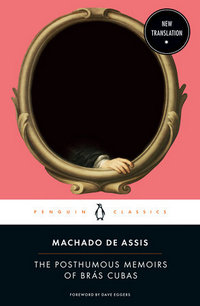
I just finished Andy Abramowitz’s A Beginner’s Guide to Free Fall and Black Arts by Faith Hunter, Khristine Hvam (Narrator) on audio.

A Beginner’s Guide to Free FallBlank SpaceBlack Arts

What do you think you’ll read next?

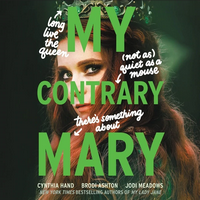
My next book should be The Far Empty by J. Todd Scott and my next audiobook (assuming I ever finish The Deep Blue Alibi) should be Burned by Benedict Jacka, Gildart Jackson (Narrator).

The Far EmptyBlank SpaceBurned

Hit me with your Three W’s in the comments! (no, really, do it!)

Book Snob Book Tag

Book Snob Book Tag
I was tagged by Esther at Cozy with Books to tackle this Book Tag, which was awfully nice of her because this was a lot of fun to do. As far as I can tell, this tag originated over on the Booktube channel Tia and All the Books a few years ago.

Adaptation Snob: Do you always read the book before watching the film/TV show?

Almost always. Sometimes I watch a thing and then discover it’s an adaptation, which leads me to the source material—like Vagrant Queen or Justified. If there’s something I’m interested in, I’ll try to read the source material first, but I can’t always do that—I was able to with Stumptown and Dash & Lily’s Book of Dares. That’s actually what originally lead me to The Dresden Files, now that I think about it.

Occasionally, I’ll be interested in an upcoming adaptation and hold off on the source material, though. I knew Game of Thrones would have to tweak the source material—there’s just no way that it couldn’t. So I waited until after Season One to read any of it. I wanted the show to be able to exist in my mind aside from the book. I purposely didn’t want to be saying, “oh, that was different in the book” every few minutes. Then I was able to be able to put the books in a different mental category as I dove in. Basically, “Baelor” (Season 1, Episode 9) floored me.

That doesn’t happen often, though. Generally, I’m “book first” and maybe the other stuff later.

Format Snob: You can only choose 1 format in which to read books for the rest of your life. Which one do you choose: physical books, eBooks, or audiobooks?

The answer I want to give: Physical Books. There’s the history, the tradition, the paper, the smells, the weight of a book in your hands—the example of Samuel T. Cogley that got implanted in my brain at an early age…

Actual answer: If we’re talking the rest of my life, I’ve gotta go with eBooks. I only have so much space to store them (and I get hives thinking about downsizing what’s already there, as much as I should do that). But most importantly, my eyesight is getting worse and worse, and there’s only so much that medical science/my wallet can do for that. Eventually, reading a physical book is going to be more trouble than it’s worth. Resizing font size (and font) as needed is the best way to deal with that.

Ship Snob: Would you date or marry a non-reader?

I’d better not date a non-reader, my wife would not approve.

I guess the answer to this would depend on what you define as a reader. By the standards of book bloggers, I did not marry a reader (although she’s had a couple of atypical years where she did). By the standards of almost everyone else she and I know, I did.

The better question to ask is: would I marry someone who doesn’t support and indulge my reading/book hoarding and isn’t willing to put up with me talking about books and what I’m currently reading. And that would be a hard no. Thankfully, the love of my life isn’t that kind of person—in fact, she encourages and enables my addiction. It probably keeps me out of her hair.

Genre Snob: You have to ditch one genre – never to be read again for the rest of your life. Which one do you ditch?

That’s a no-brainer. Over the course of my life, I’ve only dabbled in Horror. I’ve appreciated most of those, but even the best of those haven’t made me say, “You know what? I need to read things like that.” Given a lot of what I read, that might seem odd to some people (and occasionally does to me, too), I can only shrug.

Uber Genre Snob: You can only choose to read from one genre for the rest of your life. Which genre do you choose?

I’m sure any reader of this blog for more than 2 weeks can sing along with this answer: Mystery/Detective/Crime Fiction. Every month and/or year, when I look at my stats, this genre accounts for at least a third of what I read. And that’s only because I ignore a lot of titles/authors*.

* I ignore a lot of titles/authors in other genres, too, due to time constraints.

I have to admit, it’s kind of a cheat to say that, though. A half-way decent (never mind really good) Crime Fiction Novelist can use any genre to produce their work—I’ve read Humorous Crime (Dave Barry’s stuff, or Ken Levine, or Duncan McMaster); Ghosts in Crime (Jo Perry’s Charlie and Rose books); Zombies in Crime (The King of Crows); Westerns (William DeAndra’s Lobo Blacke/Quinn Booker mysteries, Hockensmith’s Holmes on the Range books); SF Crime (The Stainless Steel Rat, The Caves of Steel); Crime in Fantasy Worlds (Dragon Precinct, Eddie LaCrosse books); YA Crime (Robert B. Parker wrote a couple; the Digby & Zoey books); the romance between Spenser and Susan, Kenzie and Gennarro, Elvis Cole and Lucy Chenier, and even the “when will they just admit what we’ve known since halfway through The Cuckoo’s Calling” of Cormoran and Robin beats just about every Romance novel I’ve ever read (Digby & Zoey, too, now that I’m thinking about it).

Community Snob: Which genre do you think receives the most snobbery from the bookish community?

There’s part of me that wants to say anything that diverges from a progressive social worldview, no matter the motivation behind it. Buuuuut that’s a little too serious for this kind of thing.

I guess the snobbery would be directed to Romance (I might have unintentionally brushed against it above). At least in the circles that I find myself in. There’s talk about/appreciation for SF, Fantasy, Crime, Urban Fantasy—and YA versions of all of those. People will nod to classics and talk about some commercial literary fiction, and so on. Steampunk, Westerns, Non-Fiction of all sorts, too, make the occasional rounds. But almost nothing about Romance.

But I’m willing to bet that in Romance-heavy bookish communities, there’s a snobbery about other genres—and I’m betting the numbers in those Romance-leaning communities are pretty significant, so their snobbery is nothing to shrug off.

I took a writing class a few years ago from one of the more commercially/critically successful local authors, who all but said that SF/Fantasy/Crime Fiction were wastes of time and not worthy of his attention. He said this after I’d submitted one assignment that was SF (but before he read my piece). He gave begrudging compliments about it and even managed to give a suggestion or two that helped it.

Basically, if you look for snobbery somewhere you’re likely to find it. People are garbage.

Snobbery Recipient: Have you ever been snubbed for something that you have been reading or for reading in general?

(Curiously, most of the blog versions I’ve seen of this Tag don’t have this prompt, but it was part of the original, and I thought it’d be fun to think about)

First, this question reminded me of a bit from the late Bill Hicks. You’ve got to watch the first two minutes of this:

If you’re not in the mood to take 2 minutes of your time to watch that, here’s a version of it that I lifted from JR’S Free Thought Pages. But you should watch the original instead of reading—it’s far superior. His timing and his expressions are chef’s kiss worthy).

I was in Fyffe, Alabama last year. After the show, I went to a Waffle House. I’m not proud of it, I was hungry. And I’m eating, I’m alone and I’m reading a book, right? Waiter walks over to me:

“Hey, what you readin’ for?”

Is that like the weirdest $#!% question you’ve ever heard? Not what am I reading, but what am I reading … for.

“Well, $#!% damn it, you stumped me. Why do I read? Hmm … I guess I read for a lot of reasons, and the main one is … so I don’t end up being a $#!% waffle waiter.”

But then, this trucker in the next booth gets up, stands over me and goes:

“Well, looks like we got ourselves a reader.”

What the $#!% going on here? It’s not like I walked into a Klan rally in a Boy George outfit, $#!% damn it. It’s a book!

I remember in Middle School/High School, getting a little flack for non-required reading (especially when I was supposed to be doing homework)—but generally, that quickly switched to a compliment from whoever gave the flack. But in college and after? Yeah, either from reading “popular fiction” (okay, I remember one would-be intellectual in high school who did that), fiction in general, religious books, and so on. But generally, I tune that out and turn the page (literally). But occasionally, it still gets under my skin.

I remember Felicia Day saying somewhere that’s the best thing about an e-Reader, no one knows what you’re really reading—and if you’re reading trash, you can just fib and say you’re chewing through Proust or whatever. Maybe that counts as another vote for the eBook question earlier.

Conversely, reading something specifically or in general is a great way to invite the right kind of people to talk to you. As that meme says, it’s like having a book recommend people to you.

wow…I got carried away there, didn’t I?


As usual, I’m not tagging anyone in this—but I’d like to see what you all have to come up with. Although I will tag Esther to add that last prompt, “Snobbery Recipient,” to her post, I’m curious how she’d respond.

PUB DAY REPOST: Paper & Blood by Kevin Hearne: Like the Spanish Inquisition, Nobody Expects a Turtle Dragon Spider.

Paper & Blood

Paper & Blood

by Kevin Hearne
Series: Ink & Sigil, #2

eARC, 304 pg.
Del Rey Books, 2021

Read: July 31-August 3, 2021
Grab a copy from your local indie bookstore!

What’s Paper & Blood About?

Al MacBharrais gets a message from an apprentice Sigil Agent—her teacher went to investigate an oddity in Australia and didn’t return—a nearby Agent went looking for her and hasn’t returned either. She’s (rightly) worried and needs help. She’s close to taking her exams, but she’s not at the point she’d need to be to take on whatever it was that seems to have captured—or killed—two veteran Agents.

Al and the hobgoblin in his service, Buck Foi, hitch a ride with a Fae to deliver them to Melbourne. Al also asks if a message can be delivered to the Iron Druid, Atticus O’Sullivan (now going by the alias Connor Molloy). If whatever this is has proved too much for two Sigil Agents, he knows that he and the apprentice are going to need all the help they can get.

Connor and his two dogs—Oberon (it’s been too long since I got to spend time with him, even if we only get a little bit of his speech) and Starbuck—join Al, Buck, and Ya-ping (Shu-hua’s apprentice) and they head to a hiking trail that was the last known location to find hikers screaming and fleeing from some sort of monster. There are injuries and casualties—and a monster unlike anything they’ve seen and/or read about. It’s not long before they decide that this monster is likely just the first thing they’ll have to deal with to find the Agents—and it’s probably going to get much more dangerous. Eventually, Nadia—the manager of Al’s print shop and battle seer—joins in the search when she starts getting visions of the danger they’re headed toward.

The Iron Druid Chronicles Postscript

This series is a spin-off of the Iron Druid Chronicles and functions very well in that way. But it frequently felt like Connor/Atticus was about to take over the focus of this book—just with Al’s narration rather than Connor’s first-person. That never happened, I just wondered a few times if it would.

At the same time, Paper & Blood served as a sequel to Scourged, or maybe it’d be more accurate to say that it was a belated epilogue to it. The more time that goes by the less satisfied I’ve become with the conclusion of Scourged and where it left Atticus and Oberon. This is the ending they needed, and even if I didn’t think Al, Buck, etc. were fully entertaining on their own, I’d be glad I read this for the Connor material.

I do hope that he can drop into this series from time to time, still—I’m not ready to say goodbye forever. But if I have to, this is the note I want to go out with.

Secondary Characters

In addition to those I mentioned above, there’s a local police officer, a couple of familiar faces from the Iron Druid Chronicles, and the return of someone from Ink & Sigil—it’s tough to describe without ruining the effect Hearne’s going for. But let me just say that something that I thought was a throwaway line in that book comes back and means so, so much more than I could’ve guessed (am pretty sure Al would say the same). Hearne is able to take these characters—new and established—and make you care about what they’re facing in no time flat. I’ve always been impressed in his skill in that and, if anything, he’s getting better at it than he was when Hounded first came out.

And, the monsters, too. I guess I should talk about them—Hearne let his very fertile imagination go crazy with these strange hybrid creatures (like the Turtle Dragon Spider that I mention in the headline)—it was great to see in action, and horrible to imagine.

Paper and Ink

Along the way, Al gives lessons about/tributes to the making and uses of both paper and ink in his narration. These little vignettes are just golden. They cement Al’s calling as a Sigil Agent—one who deals in ink and paper as their stock in magical trade—and capture the romance of these things that readers depend on just as much as the Agents do. Even in our world, these things are used to make magic and I appreciate Hearne reminding us of that.

So, what did I think about Paper & Blood?

There’s just so much to like about this book that it’s hard to know where to start. There’s the Glaswegian dialect that, like Ink & Sigil, the narration is written in (or at least a flavor of it)—Hearne gives us a nice Author’s Note describing it, too.

Next, I’d talk about the perspective that an elderly protagonist is able to approach things in—he has wisdom and experience that your typical UF narrator doesn’t. Something in the way that MacBharrais and the rest are able to use to defeat the final monster that gives him an idea about how to combat his curse—I’m assuming we’ll get to see it in action soon (I’m not sure how long Hearne plans this series, but I’m pretty sure it’s about over as soon as Al takes care of the curse). I don’t know if it’ll work or not, but I like that Hearne seems to be finding a way to resolve things that doesn’t fit the typical UF mold. Just the fact that Al is able to start making this plan says a lot about him. I should really spend a couple of paragraphs talking about what makes Al unique, but I don’t have the time.

There’s also all the fun of the supporting characters and what they bring to the story—again, something I should spend more time on, but I’d end up spoiling something—but while there’s nothing wrong with the main plot (killing monsters and trying to find the Agents), it’s these secondary characters and plots that make this so much fun.

There’s really just so much to commend about this book that I can’t list it, so I’ll just say that this is a must-read for anyone who enjoyed Ink & Sigil to any degree—this shows what Hearne can do in this world now that it’s established—and/or IDC. I don’t know that this is the best jumping on point—but if you do, you’re not going to regret it (your life would just be easier if you read the first book before this, though).

Hearne’s one of the best around, and this just cements this—go pick up Paper & Blood now.


4 Stars

Disclaimer: I received this eARC from Random House Publishing Group – Ballantine via NetGalley in exchange for this post—thanks to both for this.

This post contains an affiliate link. If you purchase from it, I will get a small commission at no additional cost to you. As always, opinions are my own.

In Ten Years by Ian Shane: They’re Perfect For Each Other…But Can They Make It Work? Do They Even Want to Try?

In Ten Years

In Ten Years

by Ian Shane

eARC, 261 pg.
2021

Read: July 23-26, 2021

What’s In Ten Years About?

In 2000, two Denver University students meet in such a way that practically guarantees Jack will have one of dullest (and probably worse than just dull) twenty-first birthdays. Liz unintentionally contributed to that but also did everything she could to make up for that. After this, she decides that the two of them are going to be great friends.

After spending a couple of chapters in 2000, we see them again in 2009—and it turns out that Liz’s plan to be great friends worked. They’ve become incredibly close, the Two Musketeers. They’re so close that everyone (including every romantic interest they ever have) assumes they have/are/want to be involved. The idea never really lodges with either of them—and they don’t understand why no one believes them.

We catch up to them in 2018. At some point, they’ve made that pact that you’ve seen in countless sitcoms and movies, if they’re not married by _____ time, they’ll marry each other.* In this case, it’s when Jack turns 40 (he’s a little younger than her, so at that point, they’ll both be 40), and in 2018 that’s a year away.

* The scene where the pact is made is just about perfect, I should add.

Both of them try to treat the pact as a joke—while hoping the other forgot about it. But neither did and despite the preposterous notion—they both kind of take it seriously. They can’t imagine not growing old together, why not?

And then one of them starts to realize that their interest in the pact isn’t because of a drunken promise, pragmatism, or the lack of a better option—but there just might be something right about the whole idea, a reality that’s been before them all along.

Supporting Characters

I’d intended on spending a few paragraphs talking about both Jack and Liz, and after a couple of failed attempts, I realized I couldn’t do either justice without just recapping the whole novel. So, instead, let’s talk about the other characters.

I wasn’t that far into the 2018 part when I made a note about, “Of course they end up together, everyone else they know is horrible.” Which was a little harsh, but essentially true—that’s up to and including their closest friends. Thankfully, that didn’t stay that way—sure, their friends didn’t make a great first impression, but as I got to spend some more time with them, I ended up liking them. They also proved to be good friends to Jack and Liz.

But when it comes to other romantic interests or dalliances? The reader can understand the appeal of (most) of the people they’re interested in—at least initially. But you don’t spend time thinking, “yeah, Person X would really be a good long-term partner for them.” I might have appreciated it more had I actually considered anyone to be a rival for Liz or Jack. But maybe after a few chapters, I’d already ruled out anyone who wasn’t Jack or Liz for the other.

I’m not sure it matters, ultimately. But what Shane did give each character plenty of frogs of various sides and coloring to kiss so that they’d inevitably discover their Prince/Princess.

The supporting characters, from college roommates to overbearing and overly-inquisitive mothers, to Russian hockey players to waitresses in a bar or inappropriate former students are well-written, they all stand out as pretty well-rounded (at least as much as someone who’s only around for a few paragraphs can be).

The Dialogue

I talked about this a little in the Q&A with Shane, and you should read what he said about writing it. My favorite part of this novel was the dialogue. Jack has some great lines when he’s upset or angry with someone, for example.

But what really won me over was the interaction with Jack and Liz—either when they’re being silly about something or when they’re talking about something serious. This is fitting for a contemporary When Harry Met Sally-esque story, Harry and Sally talking to each other is what made viewers fall for the pair, and Shane hits some Ephron-level interchanges with Jack and Liz.

So, what did I think about In Ten Years?

There are a few other highlights that I really don’t have the time or space to get into, I’d recommend checking out the aforementioned Q&A with Shane that I posted yesterday to catch a few other selling points for this book.

The novel is just funny—humor that arises from the situations and the characters’ inherent and reflexive wit and charm. It’s in the way they react to situations, and not because silly and madcap things happen around or to them (well, sure, there’s a little bit of that). Shane’s voice is part of it, too—but mostly it’s because these are smart, funny people who express that.

I can’t get into it without ruining anything, but there’s a chapter in the 2009 portion of the book that is my favorite chapter of 2021—it was so painful, and yet so funny. Shane was careful not to go too far in either direction, which would’ve blunted the impact. Instead, he’s able to portray the emotionally damaging circumstance and let the character’s wit and the ridiculousness of the situation keep it from being maudlin. The rest of the book is just as good, and just as balanced.

In Ten Years ticked just about every box that I can think of as a reader. I both couldn’t wait to find out what happened and didn’t want to get to the end because I was having such a blast. There’s a fresh-feeling take on a tried-and-true story (two, I’d argue), characters I genuinely liked, dialogue that I’d frequently reread a time or to before moving on, and a great mix of emotion and laughs. I wasn’t even 20% through the book when I noticed I was highlighting and making notes too often—had I stopped there, I had more things than I could squeeze into a post. I can only imagine how massive my notes collection would’ve been had I not made a conscious effort to stop. There was just so much that I wanted to remember about this book.

I know that I’m going to be talking about this book in January when I look back on the best of 2021, and I probably won’t be alone.


5 Stars

A Few (More) Quick Questions with…Ian Shane

In Ten YearsI’d fully intended for my post about In Ten Years by Ian Shane to go up this morning along with this Q&A. But as is so often the case with a book that I absolutely loved, I just don’t like what I’ve managed to write about it—and even then, I’m only half-done with my outline.

But I want to start talking about this book and hopefully convince some of my readers to read itor at the very least, to buy it. It comes out on August 17, but don’t wait until then to order it. So, let’s start with the synopsis from Shane’s website, so you’ll have a general idea what we’re talking about in a couple of the questions. Then I’ll dive in with this great Q&Awell, the Qs are passable, the great stuff comes in the As.

Jock Jack and socially awkward Liz weren’t likely to become best friends, but they’ve had each other’s back since college. On a night both of their romantic lives implode, they make a pact; if they aren’t married in ten years, they will marry each other. With a year left before their deadline, Jack and Liz make a mad dash to find “The One” while navigating a minefield of modern dating complications.

Despite their friends’ efforts to convince them that it’s a terrible idea, Jack and Liz devise an unconventional life partnership plan. However, a face from the past and hidden jealousies and feelings neither one will ever admit threatens their friendship.


Your male protagonist, Jack, is a former college hockey player, and now plays with a bunch of other men in their thirties. I don’t think I’d ever read a hockey scene before—as far as I can tell, you capture both the feel of a game and feel of being on the stakes realistically. Is this first-hand knowledge, or the product of research? How do you decide to let this be Jack’s “thing”?

First off, I’m a huge hockey fan. Skill level be damned; if I find a hockey game on TV, there’s a better than average chance that the next three hours of my life have just been planned. Growing up in southern Indiana, there wasn’t a huge youth hockey movement there, so I never played the game. However, a good friend of mine in college, Turner, did. I had pieced together things he talked about over the years and wrote a draft of the pick-up game scene. I sent it to Turner, and he told me my description was about ninety percent accurate. He gave me some notes on what I needed to change.

I live in Denver now, and it’s a huge hockey town. The University of Denver has a rich tradition of winning championships. It just seemed too perfect to have him be a hockey player.

You’ve called this “a contemporary When Harry Met Sally,” was that the goal, or did that just come out once you started writing? How did you land on doing your take on the “if we’re not married by X…” story?

The idea for the story hit me when I found an article online about marriage pacts and platonic marriages, and I thought it was good fodder for a story. I originally planned for In Ten Years to be a novella, just focusing on the present-day storyline. The more I thought about the story, the more of a background of who these people were and how they became friends. As I was writing their backstories, I knew that there would have to be three eras of their lives, just like When Harry Met Sally, so I decided to run with it. I even name-checked the movie in the first part just for the fun of it.

I also wanted to put in some of the more modern means for dating, which didn’t exist when When Harry Met Sally came out. There’s a chapter devoted to Tinder and one that makes fun of speed dating.

Speaking of When Harry Met Sally, what’s your favorite Nora Ephron work (novel, screenplay, essay, etc)?

Not to sound like an uneducated rube, but I’m not that well versed in her work . . . so I’ll stick with When Harry Met Sally.

It’s hard to beath WHMS anyway, no matter how versed you are.

You used dual perspectives here, for the first time, I believe. What were the specific challenges of telling your story that way? How was it writing from the female Point of View? Are you going to be returning to one/both of those in the future?

Yes, this is my first time. Not too long before I wrote In Ten Years, I read Nick Spalding’s hilarious book, Dry Hard, and I loved the multiple narrations. I really wanted to give it a try. It was challenging to arrange the story so Jack and Liz could alternate chapters. Some chapters could have easily been told from either’s point of view, but others had to be from a specific character. I pantsed this book more than plotting it, so it was challenging to make sure I had the proper balance.

Writing from the female point of view was a bit challenging. My first draft was designed to be as light on Liz as possible, and then I would present it to a female beta and get some feedback. The response was . . . polite. She gave me some pointers on things women would never say.

I also ignored the paradigm that two different characters would not think and talk alike. I figured since Liz and Jack had been a massive part of each other’s lives for almost twenty years, their phraseology would blend.

I absolutely loved this dialogue. How do you approach a scene (especially a Liz/Jack scene)? How many rewrites does it take to get something right? Do you sit around talking to yourself so you can hear it? Or do you just know?

Thank you very much. Dialogue is where I start with a book. I treat the early writings almost like a screenplay. I love witty banter. As I’ve mentioned before, I’m a huge fan of Aaron Sorkin, and I want to bring that kind of level dialogue to my writing. As I’m writing dialogue, I write responses as I wish I would say in real life, but it wouldn’t be the right thing to say for most people I talk to. The case with Jack and Liz is that they have been around each other for so long, they bypass social convention and just say it like it is.

I’ve also been known to talk out dialogue as it’s forming in my mind. Before the pandemic, I took public transportation to work, and I would be inspired to work out dialogue with many people around. I would put on my headphones, record on my phone, and act like I was on a call.

As far as rewriting, it takes time to figure out the right words. Again, going back to my Sorkin devotion, I want the words to play like music. I’ll read it aloud, and I’ll listen to it with Word’s “Read Aloud” tool to get the rhythm right. It’s amazing how you can punch up a line of dialogue just by making a minor adjustment.

You’ve got a memoir coming out shortly, can you tell us a little about that? Do you have anything else in progress?

Being the guy who wrote two novels centered around music, it should come as no surprise that my memoir will be based on songs that have been important to my life with stories from my life. As the pandemic started, I was having a hard time writing fiction. Hearing nothing but COVID was stifling my mojo. In Ten Years had already been written and I was going to release it last June, but the last part of the story was supposed to take place in the spring of 2020. I shelved In Ten Years until I could figure out what I wanted to do with it. I took a lot of time researching elements that happened in the years in the backstory, so it wasn’t as simple as just shifting the dates.

A very close friend suggested that if I can’t write fiction, I should write non-fiction to keep the muscle memory. It started a blog series titled, Sundry Notes of Music. It started off like Songbook by Nick Hornby, which was approached by a music critic, then it evolved into my version of Al Young’s musical memoir, Drowning in the Sea of Love. Sundry Notes of Music will have stories about lost loves, my first trip to Europe, and how I started writing my first book.

I’m also plotting a sequel to my first novel, Radio Radio, but that’s way into the future.

Thanks for your time and for In Ten Years—I loved it, and hope you have a lot of success with it.

Thank you so much for reading it and the kind words.


Why I Still Believe by Mary Jo Sharp: Mark 9:24 Lived Out

Why I Still Believe

Why I Still Believe:
A Former Atheist’s Reckoning
with the Bad Reputation
Christians Give a
Good God

by Mary Jo Sharp

Kindle Edition, 240 pg.
Zondervan, 2019

Read: August 1, 2021

What’s Why I Still Believe About?

For the sake of time, let me lift this from Sharp’s website:

With fresh and thoughtful insights, Why I Still Believe offers a spiritual narrative that presents relevant answers to haunting questions like:

  • Isn’t there too much pain and suffering to believe?
  • Is it okay to have doubt?
  • What if Jesus’ story is a copy of another story?
  • Is there any evidence for Jesus’ resurrection?
  • Does atheism explain the human experience better than Christianity can?
  • How can the truth of Christianity matter when the behaviors of Christians are reprehensible?

At once logical and loving, Sharp reframes the gospel as it truly is: the good news of redemption. With firmly grounded truths, Why I Still Believe is an affirming reminder that the hypocrisy of Christians can never negate the transforming grace and truth of Christ.

Sharp presents herself—warts and all—and her struggle with doubts, and some of what she’s found to address them. I want to stress what the description says about “a spiritual narrative”—that’s what this book is, and along the way, that narrative will touch on those bullet points. I’m not sure what the claim about “reframing the gospel” is about—how does it need “reframing” to be “the good news of redemption”? And as important as a reminder along those lines would be, this is more of an assertion about the hypocrisy of believers being unable to negate anything than it is a reminder (or defense of the faith for it).

Ultimately, I think this is a story about a woman being let down by the shepherds of Christ’s Church—she needed help, she needed guidance, she needed pastoral care and aid in finding the answers that she needed. In the absence of that shepherding, she had to help herself.

So, what did I think about Why I Still Believe?

The chapters that follow are snapshots of my experience in the church and how those experiences shaped me and my beliefs. If you feel the ever-present tension of the beauty of salvation alongside the ugliness of human hypocrisy and evil, you’re not alone. If you are uncomfortable in the church but feel the risk of commitment calling, this book is for you. It is for those who’ve wondered if they’ve been left a cosmic orphan, and wondered again if there’s more to this unshakeable longing to belong. I can’t promise any tidy endings, but there’s still an irresistible Hope.

I’m not going to talk about all the problems I have with what Sharp presented, but there were many. The above quotation is the concluding sentences of the Introduction. Set against those goals, I think she succeeds—she shows that the reader who matches those qualifications isn’t alone, she doesn’t deliver any tidy endings (and the tidy things she does present aren’t really that tidy), and she does assert that there’s an irresistible Hope. What she doesn’t do is give much of a reason for faith against the tension between the beauty of salvation and the ugliness; she doesn’t assure anyone that there’s every reason to commit to Christ’s Bride despite the weaknesses and personal discomfort—nor does she tell the reader much about the Hope she asserts to point to.

What we do get is an honest account of one woman’s stumbling through life, looking for the certainty of faith, looking for answers the Church should provide “to anyone who asks you for a reason for the hope that is in you” (1 Peter 3:15), and who doesn’t find much. Yet there’s still faith to be found, which is commendable, it is relatable—it is good to know that as we stumble along the path that we’re not alone.

There’s value in this, but that’s not what the book promised, so I can’t get that excited about what it delivered. There’s not a lot of apologetics, there’s not a lot of Bible, there’s not a lot of biblical justification for assurance—there’s almost no Gospel. There are some arguments for the existence of a Deity, but not for the Triune God of the Christian Scriptures. There’s some arguing about some facts about the Resurrection of Christ—but not about what that means.

A lot of what’s labeled (by others or itself) “Evangelicalism” today is really some sort of “Moralistic Therapeutic Deism”—and that’s about as close as we get to Christianity in these pages. Although, I’m not convinced Sharp actually delivered that much of anything “Moralistic”—Therapeutic Deism is about it. I’m not saying Sharp isn’t an orthodox believer—I’m just saying that I don’t see much along those lines in this book.

Here I said I wasn’t going to get too deep into my problems—and I really haven’t, but I’ve gotten further along the path than I meant to. So I’m going to stop.

When it came to assigning the nearly-obligatory Stars, I was torn—just what do I rate this? I ended up looking at my own definition of my ratings, and read: “Don’t bother. It’s not bad per se, it’s just not good.” That about sums it up for me.

Can someone read this and benefit? I can’t say that there’s no chance of it, I’m just not sure what grounds there would be for claiming it’s useful. The dross to gold ratio doesn’t give me a reason to recommend this.


2 Stars

Saturday Miscellany—8/7/21

I was on the cusp of establishing a new reading/writing schedule that would work for me and I just threw it out the window–my last day for my employer of 5+ years was yesterday. For the next few weeks, my commute to my new gig promises to be a giant pain in the tuchus (I hope I’m not too Protestant to use that word), but I think that I’ll have a longer lunch break. What this means for my reading/audiobook listening is up in the air.

But that’s something to tackle over the next couple of weeks. For now, let’s dive into this very miscellaneous miscellany:

Odds n ends about books and reading that caught my eye this week. You’ve probably seen some/most/all of them, but just in case:

bullet A Brief History of Summer Reading: We rarely talk about spring books or winter reading. What is it about summer that inspired a whole genre of its own?—If you subscribe, haven’t read your free article for the month, or use enough browsers to dodge the paywall, this is a great way to spend a couple of minutes (and, yes, you shouldn’t dodge…I shouldn’t, either)
bullet Maybe You Can Have Too Many Books in Your TBR Pile
bullet Typos, tricks and misprints: Why is English spelling so weird and unpredictable? Don’t blame the mix of languages; look to quirks of timing and technology—in a different world, where I followed up on a scholarly whim or two from college, I’d be producing things like this. Instead, I get to geek out over those who do.
bullet The Silver Age of Essay—excerpted from the Introduction to a collection that I’ll aspire to—but probably won’t get around to—reading.
bullet SA Cosby: ‘The holy trinity of southern fiction is race, class and sex’—great interview with Cosby. I’m ready to order his work-in-progress right now.
bullet 7 Music Novels to Shape Your Summer Soundtrack—I don’t understand music novels…I just don’t. The two art forms shouldn’t work. But I’ll read and reread and reread a good one. What about you? Anyone read anything off this list? (I haven’t yet)
bullet In the New Era of Social Distancing, It’s Time to Revisit the Genius of Monk: Who’s overreacting now?—sure, this is about the TV show. But Monk’s great enough that I don’t care. And the novels by Lee Goldberg fit what’s said here, and I’ve now turned this bullet point into something about reading, so the uptight voice in my head can shut up.
bullet This Is Why I Love J.R.R. Tolkien – And You Should Too—I appreciate Tolkien, but nowhere as much as Strasser does. But maybe I should.
bullet Books That Made Me Cry Like A Lil’ Baby—I wouldn’t have expected to find any of these books on this list (although, I (inexplicably) haven’t read Bloody Rose, but I can see Eames doing that to me), but I get what Chilcottharry is saying.
bullet Words Have Power — Neurodivergence in Fiction—I’ve linked to a couple of the early pieces in the Neurodivergence in Fiction series (and I feel awkward about dropping the Monk link above given what they said about the show), and you should read them all. But I wanted to call attention to this new entry by Friend of the Blog, Jodie from Witty and Sarcastic Bookclub.
bullet What is Grimdark to Me? by Clayton W. Snyder—Snyder’s post makes me want to read more Grimdark.

This Week's New Releases That I’m Excited About and/or You’ll Probably See Here Soon:
bullet Bodacious Creed and the Jade Lake by Jonathan Fesmire—in this sequel to the very odd Western-Zombie-Steampunk novel, Creed goes to Chinatown to investigate what (I think) we’d call sexual exploitation aided by technology. Even if I got the wrong idea from the synopsis, this is sure to be a good read.
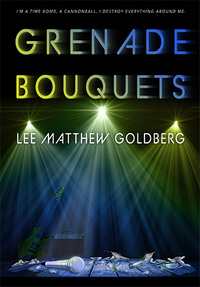
bullet Grenade Bouquets by Lee Matthew Goldberg—the sequel to the 90’s grunge tribute/coming-of-age novel Runaway Train, tells the continuing story of Nico as she tours with a band over the summer. I should have had the foresight to put this on my 20 Books of Summer list, so I could dive in.

Lastly I’d like to say hi and extend a warm welcome to Angela, Cristina Monica @ Hit or Miss Books, Amy and Anketsu who followed the blog this week. Don’t be strangers—introduce yourselves in the comments below, maybe pick up another reader?

The Friday 56 for 8/6/21: All Together Now by Matthew Norman

The Friday 56This is a weekly bloghop hosted by Freda’s Voice.

RULES:
The Friday 56 Grab a book, any book.
The Friday 56 Turn to Page 56 or 56% on your ereader. If you have to improvise, that is okay.
The Friday 56 Find a snippet, short and sweet.
The Friday 56 Post it

from Page 56 of:
All Together Now

All Together Now by Matthew Norman

Michelle is in her swimsuit; a pair of goggles hang around he, neck, “Can we go in the pool?” she asks. Before Blair can answer Kenny enters. He’s wearing his swimsuit, too, but it’s on backward and his goggles are wrapped upside down around his forehead “We gotta go in the pool!”

“At least somebody came to party,” says Cat.

Martin takes a theatrical sip of his awful drink. “I’m on it,” he says. “Hon, hang with your friends. Michelle, Kenny, it’s cannonball time.” Michelle and Kenny cheer… Martin leaves to change into his suit while Cat throws grapes in the air from a giant fruit bowl for the twins to try to catch in their mouths.

“That’s kind of a choking hazard, Cat,” says Blair. “Oh, honey, don’t eat floor grapes.”

“Is your mommy always like this?” Cat asks the twins. She throws a grape up for herself, and it bounces off her nose.

“Like what?” asks Kenny.

“Such a mom?”

Page 275 of 610

Powered by WordPress & Theme by Anders Norén