Author: HCNewton Page 280 of 628

The Friday 56 for 11/5/21: The Man Who Died Twice by Richard Osman

The Friday 56This is a weekly bloghop hosted by Freda’s Voice.

RULES:
The Friday 56 Grab a book, any book.
The Friday 56 Turn to Page 56 or 56% on your ereader. If you have to improvise, that is okay.
The Friday 56 Find a snippet, short and sweet.
The Friday 56 Post it

from Page 56 of:
The Man Who Died Twice

The Man Who Died Twice by Richard Osman

A nurse walks into the room to fill Ibrahim’s water jug, and the friends fall silent and nod their thanks. She leaves.

“I am conventionally handsome,” says Ibrahim.

“Not at the moment you’re not,” says Ron.

“So you need us to look out for him?” asks Joyce. “Like bodyguards?”

“Hardly bodyguards, Joyce,” says Elizabeth.

“We’re guarding his body,” says Ron.

“All right, bodyguards then, Ron, as you wish.” Ron nods.

“Yep, I do wish.”

A Few Quick Questions with…K.R.R. Lockhaven

Earlier today, I posted my thoughts about K.R.R. Lockhaven’s novel, The Conjuring of Zoth-Avarex: The Self-Proclaimed Greatest Dragon in the Multiverse, a book I strongly recommend. The author was gracious enough to spend some time responding to some Qs that I posed, I hope you enjoy his As as much as I did.


I typically ask about what led someone to being a writer, but you talked about a little in your recent guest post here. So instead—what led to you being a firefighter? Other than giving you more of an income than novelist will likely provide, how does it affect your writing? Is Jake you putting yourself in the novel?
That’s a tough question, since my memory is patchy at best. But I think the seed of the idea was planted when I read The Sirens of Titan by Kurt Vonnegut. There’s a line in that book; “I can think of no more stirring symbol of man’s humanity to man than a fire engine.” Reading that awakened something in me, and eventually led to me try to become a firefighter. It was probably a little of that, and a little of wanting a job that was considered “cool,” because I felt/feel very uncool.

Jake, a firefighter character from my book, is actually modeled after one of my coworkers who is this big, fun-loving guy who is nice to everyone and loves to pull pranks. I am much closer in personality to the main character, Harris, who is meeker and much more unsure of himself.

All authors have more ideas running around in their head than they can possibly develop—what was it about this idea that made you commit to it?
The fire department I work for is at a nuclear site in eastern Washington State. It’s a place that suffers from…bureaucracy issues. As a writer, I have long wanted to satirize the entire site in some way, but I could never find an angle I liked. Early on in my writing “career” I wasn’t writing fantasy, but I always felt a pull to start writing it. Then one day it just hit me—what if, instead of being a nuclear site that once made atomic bombs, there was a magical site, hidden away by the government, that tried to conjure a dragon? I was immediately taken with the notion, and the ideas really started flowing. There was no turning back from that point.

There’s a tricky element to the tone—keeping it fun and funny while maintaining the threat represented by Zoth-Avarex intact. Did that come naturally, was that something you had to work on over multiple drafts to make sure it worked?
Tone is a very tricky thing! I have to admit that it wasn’t something I thought of when writing the first draft, but I have learned a lot about it since then. My brother was the first to point out to me some of the initial inconsistencies with the tone. I went back through everything with that in mind, and tweaked it to what it is now. I think the fact that Silvia, the woman the dragon captures, is made to feel as comfortable as a prisoner can feel (like “a guest without leaving privileges”), helps to give it enough immediacy to be compelling (hopefully), but not a life-or-death, this-isn’t-fun-anymore, feel.

It’s hard to pick just one or two things to focus on to ask about that don’t involve spoiling the whole book…but I want to talk about Eddie for a minute. Where did that character come from? How do you keep yourself from letting a character as fun as that from taking over the novel?
I’m glad you liked him! He was loosely based on an old curmudgeon of a firefighter I worked with early in my career. Sometimes I feel like an imposter when I get credit for dreaming up a character like that, when I really had an inspirational embarrassment of riches at my job. He is a larger-than-life kind of guy who I was lucky enough to get to hang out with for a while.

I love a novel with comic footnotes. Can you talk a little about the choice to use that technique—in general, and how you decide when to use a footnote to deliver the joke rather than keeping it in the text?
I love footnotes, too! I recently read Jonathan Strange and Mr. Norrell by Susanna Clarke, and I thought the footnotes really expanded on the world of the book.

I wish I could explain the decisions, but it was mostly done by feel. I thought footnotes could be used to expand the world of the Site, too, and to get a into Zoth-Avarex’s history and psyche. In the end, I deleted a ton of footnotes. Many just weren’t funny, and having too many of them distracted from the story too much. Some of my favorite parts of the book are in the footnotes, though. Like the thing with the rise and fall of an entire civilization that went on for almost two pages. That was fun to write.

What was the biggest surprise about the writing of The Conjuring of Zoth-Avarex itself? Either, “I can’t believe X is so easy!” or “If I had known Y was going to be so hard, I’d have skipped this and watched more TV.”
The biggest surprise I found when writing the book is that I could actually write comedy. I wasn’t sure if I had it in me, to tell the truth. Among my group of friends, I’m probably the least funny of the bunch, but on the page, I have to admit that I have at least some comic ability. I was very hesitant to admit that, though. I mean, I made myself laugh with my goofball shit, but I didn’t know how others would receive it. It has taken a lot of positive feedback and some good reviews to convince me that maybe I don’t completely suck.

Let’s play “Online Bookstore Algorithm” (a game I made up for these Q&As). What are 3-5 books whose readers may like The Conjuring of Zoth-Avarex?
Another tough one! I know every author thinks their book is so unique, but I do have a hard time coming up with comparable titles. I am no Terry Pratchett, or Douglas Adams, but I do think that people who enjoyed The Hitchhiker’s Guide to the Galaxy or anything by Pratchett might get a kick out of my book. Also anyone who grew up reading Tolkien, or just fantasy in general, and would like to see the genre lovingly skewered. One recent, semi-comparable title is The Part About the Dragon Was (Mostly) True by Sean Gibson.

What’s next for K.R.R. Lockhaven, author?
I was lucky enough to recently sign a three book deal with Shadow Spark Publishing, and they are going to publish my humorous hopepunk nautical fantasy trilogy. Book one, tentatively titled Marauders, Daughters, and Dragons, is slated to come out in the summer of 2022. The series will take place on another world, but will still be within the Zoth-Avarex multiverse (wink wink). My writing has made a slight shift toward the more heartfelt and serious, but there is still a lot of foul-mouthed fun, like a shit-talking bird companion, a reanimated skeleton with confidence issues, and a group of failed pirates who just want to sing and have adventures.

Thanks for your time—and thanks for The Conjuring of Zoth-Avarex, I had a blast with it and I hope you have plenty of success with it.
Thank you very much! I’m so glad you enjoyed my book. This interview was really fun! The questions were tough, and unique, and you really made me think. I loved it.


The Conjuring of Zoth-Avarex: The Self-Proclaimed Greatest Dragon in the Multiverse by K.R.R. Lockhaven: So Preoccupied with Whether They Could, They Didn’t Stop to Think If They Should…

The Conjuring of Zoth-Avarex

The Conjuring of Zoth-Avarex:
The Self-Proclaimed Greatest
Dragon in the Multiverse

by K.R.R. Lockhaven

Kindle Edition, 306 pg.
BookBaby, 2021

Read: October 23-25, 2021
Grab a copy from your local indie bookstore!

“We’ve had years and years of preparations to ensure everything will run smooth. We have learned from the mistakes of the past and will use that knowledge to make better mistakes in the future. Er. . . to avoid those mistakes altogether.”

What’s The Conjuring of Zoth-Avarex About?

Harris Reed is fresh out of magical training school and arrives at the Site to begin his career as a conjurer—he couldn’t be more excited about it. He’d grown up on fantasy literature and movies, and in college finds out that so much of what he’d dreamed about is actually true. Not only that, he can be part of the incredibly secret world.

What he discovers is a corporate culture that basically mimics that which is in the mundane world (Harris would use the adjective “Muggle,” he’s that kind of nerd). Petty rivalries, careerists focused on climbing the ladder, budget issues, inter-department squabbles, and a devotion to bureaucracy over the well-being of the employees—or common sense.

Harris and his fellow graduates have been brought to the Site to add some last-minute power to a long-term project set to launch on their second day of work, which sounds exciting to them all.

What they don’t know is that the project is summoning a dragon into this world from another universe. To you and I, this might sound as dumb as John Hammond’s plan for a park full of dinosaurs, but the managers of the Site (and the U. S. Military, which expects to be the eventual recipient of said dragon) don’t see it that way. It turns out that, in comparison, Hammond looks like a safety-conscious genius—it takes less than one sentence for the dragon to show that the humans have no control over him. He kills one staff member, snatches a woman that Harris knew from school, and flies off.

Zoth-Avarex takes Silvia to the top of the Space Needle and makes it his base. He brought Silvia along because he needs a princess in addition to his treasure. There’s no threat implied to her (as long as she doesn’t try to escape)—he basically wants to keep her safe and pamper her. It doesn’t keep this from being a horrible experience for her, but it sure could be much worse.

On their first day, Harris has befriended (or tried to) Siliva, her fiancé, and her sister. The three of them quickly realize that Management and the military are going to be of little use in getting Silvia back, and decide to take matters into their own hands in the tradition of fantasy protagonists everywhere. They get support and a little guidance from Silvia and Harris’s direct supervisor, as well as a long-term employee who’s got his heart set on retirement.

Eddie

One of the first people that Harris meets on campus is a conjurer just days away from retirement. He’s named Eddie, but might as well be named Dr. Perry Cox. Eddie’s a legend on the Site for some heroics back in the ’70s but is now an iconoclastic grump. The kind of guy every office has one or two of—they’ve been around forever and understand the way things work in ways that management doesn’t. They also don’t care about anything anymore and aren’t afraid to show it. He gives the new hires a hard time but actually gives good advice and assistance.

I personally love to get to know those figures and try to learn as much as I can from them (and have likely taken on that role a time or two), maybe that’s why Eddie resonated with me so much. He was hands-down my favorite character—he’s one of those supporting characters that could overshadow the protagonists if used too much, but Lockhaven doesn’t let that happen. Which is probably good, too much of him could’ve hurt the novel.

Footnotes

I am a sucker for a good (generally comedic) use of footnotes in novels—it’s not something I see often, but when I do, there’s a high correlation between their presence and a novel I enjoy.* Lockhaven nails the practice—they give him an added vehicle for jokes and help add to the reader’s understanding of the world and some characters. He also includes one note that’s so long could be a Steinbeck-ian intercalary chapter. It takes a certain audacity to try that, and it paid off.

* See Lisa Lutz, Thomas Lennon, Josh Bazell.

Satire

The book is primarily a fantasy adventure, but throughout—sometimes more pronounced than others—it’s also a workplace satire. As such it’s a winner—even if the fantasy storylines and broader comic bits didn’t work, I’d be pretty positive about this book for the workplace satire alone.

Like Harris, Lockhaven is pretty clearly someone who has drunk deeply from Fantasy fiction. At once he celebrates tropes, themes, and ideas from all sorts of Fantasy—and pokes fun at them. If he just ridiculed them (as several tropes and themes deserve), it’d likely come across as mean-spirited and wouldn’t be that entertaining. If all he did was unleash his favorite tropes to use in telling his story, it’s be unoriginal and clichéd. Mixing avoids the pitfalls and makes for an entertaining read.

So, what did I think about The Conjuring of Zoth-Avarex?

“Well, Bill, I know the answer to life is simply to live with love. Well, actually it’s forty- two, but you humans can’t comprehend that.” The dragon paused wistfully. “I know the best things in life are free. But the birds and bees can have all of that. I need gold! Gold! And to hang here with my beautiful maiden. That’s all I want in this crazy mixed-up world.”

It’s de rigueur when talking about a humorous work of Fantasy or SF to invoke Pratchett, Adams, and Asprin, and it’s de rigueur when I talk about that kind of fiction that I go out of my way to not do that. It’s easy this time because I find them completely inapplicable. On the other hand, TCoZA:TSPGDitM brought to mind: John Scalzi (I’m thinking Agent to the Stars and The Android’s Dream), Scott Meyer (Magic 2.0 series), Joe Zieja (Epic Failure Trilogy), and Eoin Colfer (Highfire). You put those works in a blender and pulse for 30 seconds and you’re going to get something akin to this book.

* Actually, does anyone Asprin anymore? I probably need to update my references.

This would be an easy book for me to go on too long about—I’d love to spend a few paragraphs on Zoth-Avarex alone. But it’s best experienced rather than being told about.

Most of the Independently published Humorous/Light Fantasy that I’ve come across hasn’t worked for me—at least not as much as I wanted it to. Either on the humor front or the story front. But Lockhaven nailed it, I’m happy to say. I laughed—audibly and hard—a couple of times, I chuckled and grinned a lot. I thought the relationships between the characters worked well, and I enjoyed the characters you’re supposed to enjoy and was annoyed by the ones that are supposed to bother you. This is largely one of those novels whose journey is more important than the destination—but I enjoyed the way Lockhaven wrapped things up, too.

In short, I had a lot of fun with this and expect that you will, too. Give this one a try.


4 Stars

This post contains an affiliate link. If you purchase from it, I will get a small commission at no additional cost to you. As always, opinions are my own.

WWW Wednesday, November 3, 2021

Here we go, the first WWW of November.

This meme was formerly hosted by MizB at A Daily Rhythm and revived on Taking on a World of Words—and shown to me by Aurore-Anne-Chehoke at Diary-of-a-black-city-girl.

The Three Ws are:

What are you currently reading?
What did you recently finish reading?
What do you think you’ll read next?

Easy enough, right?

What are you currently reading?

I’m reading The Appeal by Janice Hallett, it is unlike any crime novel that I’ve ever read. I’m listening to Shadow Writes by Faith Hunter, Khristine Hvam (Narrator) on audiobook for my monthly check-in with Jane Yellowrock.

The AppealBlank SpaceShadow Rites

What did you recently finish reading?

I just finished Chuck Wendig’s creepy and goofy Dust & Grim and The Case of the Missing Marquess by Nancy Springer, Katherine Kellgren (Narrator) on audio–which was fun but left me wanting a bit more.

Dust & GrimBlank SpaceThe Case of the Missing Marquess

What do you think you’ll read next?

My next book should be another dose of septuagenarian fun with The Man Who Died Twice by Richard Osman and I have no idea what my next audiobook will be, I’m not feeling incredibly inspired by anything I”m seeing.

The Man Who Died TwiceBlank Space???

Hit me with your Three W’s in the comments!

90s Music Book Tag

90s Music Book Tag
I’ve seen this on various blogs, but can’t seem to find the creator, so I can’t credit them. I’d like to if anyone knows who did it. I saw this first at Read to Ramble, put it on my “do this tag list,” and promptly forgot about it. Then I was reminded of it on Witty and Sarcastic Book Blog—and it took me over a year to get around to it. I liked the category she added so I used it, and seconds before hitting “Publish” decided to add one of my own.

Also, just for fun, I added the music videos. Might as well sample a bit of the tunes we’re talking about, right?

What’s My Age Again – Blink 182

At what age did you discover your love of reading?

I’ve talked here before about the family vacation where I was such a pain in the keister that my parents had to stop and find a place to get me a couple of books so I’d be tolerable to be in the car with (Encyclopedia Brown, Boy Detective and Sugar Creek Gang: Screams in the Night—unleashing my Mystery/Detective obsession), which is when I was 7. But I’d been reading like crazy before then, I just didn’t think about it as a thing.

All Star – Smash Mouth

What is your favorite genre?

Is anyone expecting me to say anything but Mystery/Detective/Crime? It’s no contest, really, as it’s never less than a third of what I read in any given month.

Breakfast at Tiffany’s – Deep Blue Something

What’s your go-to reading snack/drink?

I don’t think I typically snack while reading—probably occasionally, but not enough to have a go-to snack (if this were a TV Tag, on the other hand…). A go-to drink? Probably water, I guess, really just whatever is witin reach. Coffee, hot tea, even a beer or a single-malt.

I did a post a few years ago, Pairing Potent Potables with your Perusals of Prose, where I talked about matching what you drink with what you read. Maybe I should revisit that sometime.

Give It Away – Red Hot Chili Peppers

What book do you ALWAYS recommend to people?

I don’t know that there’s one book that I’d always recommend—not in a “one book to rule them all” sense, anyway. It varies based on who I’m talking to, their interests, and the genre we’re talking about.

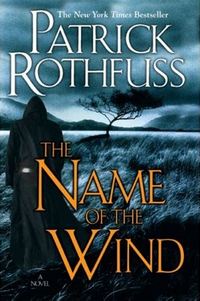
But…I guess Jane Eyre, The Golden Spiders, Early Autumn, The Name of the Wind*, Ender’s Game, Red Rising, Dead Beat, The Rook, Dawn Patrol, Kings of the Wyld would likely top the list of fiction. On the non-fiction front, it’d likely be How the Irish Saved Civilization, Christianity & Liberalism, The Bruised Reed, How to Think, or The Pleasures of Reading in an Age of Distraction.

* Unless I think they’re going to be someone who whines about book 3.

I’ve never understood the appeal of RHCP—so I used “Bedrock Anthem” instead.

…Baby One More Time – Britney Spears

A book or series you have read more than once?

If I actually responded to this prompt, it’d turn this tag into the longest post I’ve ever done. Every title I listed after the last prompt would work here.

Tearin’ Up My Heart – N’Sync:

A book that broke your heart to finish?

Marley and Me: Life and Love With the World’s Worst Dog by John Grogan. Nothing else needs to be said.

Crush – Jennifer Paige

Who was your first bookish crush?

I don’t know, really. This is a topic I always stumble on in these tags. Maybe Sally Kimball? Turtle Wexler or Eilonwy, daughter of Angharad (and so on) would be likely candidates, too. Yeah…Eilonwy is probably it.

Smells Like Teen Spirit – Nirvana

A book that you read as a teen that you still love today?

Well, there are just so many. I’m not sure if that says that my tastes are adolescent. It just might. Jane Eyre again, the Gideon Oliver series, The Oathbound Wizard, Magic Kingdom For Sale-Sold!, I think I was a teen when I read the bulk of the Fletch and Flynn novels. I’m sure I could go on, but who’s paying attention at this point?

Hurt – Nine Inch Nails

What book do you love that deals with heavier subjects?

This is another question that could end up with too many answers. I’m going to limit it to Dennis Lehane’s Gone, Baby, Gone. This was my introduction to Lehane and the series and it hit me like a ton of bricks—I distinctly remember a couple of years after it was released my wife and I renting the audiobook for a road trip from a truck stop (a practice I’d all but forgotten about until I started this sentence), and both of us were on the verge of tears and laughing at each other for being self-conscious about it. There’s child abandonment, addiction, child abduction, police corruption, and while dealing with those topics (and others) honestly—it’s exciting, gripping, and frequently fun.

Superman’s Song – Crash Test Dummies

What’s your favorite superhero book?

It’s Superman! by Tom De Haven. This version of Superman’s origins, set in the 1930s, felt like the perfect modern take on the classic version of the hero. It felt 100% Golden Age Superman and completely fresh at the same time.


As usual, I’m not tagging anyone in this—but I’d like to see what you all have to come up with.

October 2021 in Retrospect: What I Read/Listened to/Wrote About

October in a nutshell: 31 books, 8,079 pages (or the equivalent), 3.5 average—even with more 3 Stars than I’ve had in a dog’s age. All the 3s make me feel better about things, I’ve wondered if I was being too free with 4’s lately. All said, I’m pretty satisfied with this month—I’m terrified by the number of things I haven’t written about, though. I should read some bigger books to help me catch up.

So, here’s what happened here in October 2021.
Books Read

Nothing Like I Imagined (Except for Sometimes) See Her Die Beast Boy Loves Raven
3 Stars 3 Stars 3 Stars
What God Has to Say about Our Bodies Dead Mercy Pug Actually
4 Stars 4 Stars 3.5 Stars
Pure How to Resist Amazon and Why The Ninja Betrayed
4 Stars 3 Stars 4 Stars
But For The Grace A Good Day for Chardonnay The Church: An Introduction
4 Stars 4 1/2 Stars 2 Stars
Tear It Down Grenade Bouquets Based on a True Story
4 1/2 Stars 3 Stars 3 Stars
Abandon All Hope Junkyard Bargain Everything Happens
3 Stars 3 Stars 3 Stars
Dark Heir The Case of the One-Eyed Witness Breaking Silence
4 1/2 Stars 3.5 Stars 3 Stars
Bodacious Creed and the Jade Lake The Trinity and the Bible Dark Arts and a Daiquiri
3.5 Stars 5 Stars 3 Stars
The Conjuring of Zoth-Avarex Squirrel Do Bad Finlay Donovan Is Killing It
4 Stars 3 Stars 3.5 Stars
Gated Prey Dust & Grim Fallen
4 1/2 Stars 3 Stars rating305 Stars
The Glorious Feast of the Gospel
3 Stars

Still Reading

Things Unseen The Appeal

Ratings

5 Stars 2 2 1/2 Stars 0
4 1/2 Stars 4 2 Stars 1
4 Stars 6 1 1/2 Stars 0
3.5 Stars 4 1 Star 0
3 Stars 14
Average = 3.5

TBR Pile
Mt TBR October 21

Breakdowns
“Traditionally” Published: 12
Self-/Independent Published: 19

Genre This Month Year to Date
Children’s 0 (0%) 2 (1%)
Fantasy 2 (6%) 18 (7%)
General Fiction/ Literature 4 (13%) 17 (7%)
Horror 0 (0%) 0 (0%)
Humor 2 (6%) 7 (3%)
Mystery/ Suspense/ Thriller 11 (35%) 98 (39%)
Non-Fiction 2 (6%) 17 (7%)
Science Fiction 2 (6%) 17 (7%)
Steampunk 1 (3%) 1 (0%)
Theology/ Christian Living 4 (13%) 30 (12%)
Urban Fantasy 3 (10%) 44 (17%)
Western 0 (0%) 0 (0%)

Review-ish Things Posted

Other Things I Wroteotherwriting (and a few things others wrote)

Other than the Saturday Miscellanies (2nd, 9th, 16th, 23rd, and 30th), I also wrote:

What about you, how was your month?

Dust & Grim by Chuck Wendig: Fairies and Foxfolk and Florgs, Oh My

Dust & Grim

Dust & Grim

by Chuck Wendig

Hardcover, 368 pg.
Little, Brown Books for Young Readers, 2021

Read: October 28-29, 2021
Grab a copy from your local indie bookstore!

“We’re a funeral home for monsters,” Vivacia said

Viv!” Dustin said, scandalized.

“Fine. The supernatural,” the woman corrected. To Molly, in a lower voice, she said: “Monster is a bit of no-no word. We prefer not to use it, and they certainly prefer us not to use it. But we need common ground here, and I hope it helps you to understand.”
“Monsters,” Molly said, repeating the no-no word.

“The supernatural,” Viv corrected again.

“The nonstandard citizens,” Dustin said sharply.

What’s Dust & Grim About?

After thirteen-year-old Molly’s father died, her uncle comes to her and tells her about her (late) mother and older brother—Molly’s parents split right after she was born and she’d never known anything about them. Her father had never been a good provider—or much of a parent in any other way. She needs money for costuming school (and room and board, too) and her long-lost family has an ongoing business of some sort.

So Molly introduces herself to her brother, Dustin, and makes an ultimatum: she wants half of everything or to take part in the business. Dustin and his mother’s friend, Vivian (who has taken on the role of mentor/guardian) aren’t keen on either option (or on Molly in general, if truth be told).

Through sheer pluck, determination, and a happy accident or two, Molly learns that the family business is as a funeral home/cemetery caretakers for supernatural creatures. Not only that, but a malevolent magic-user is running around the cemetery ruining the eternal rest of those interred there (which could have cataclysmic effects).

With the help of a band of non-standard citizens—as delightfully creepy and goofy as you could want—the siblings have to figure out how to get along and stop this threat.

The Non-Standard World

Mollllllly,” the forest whispered in return.

She shuddered. “That’s weird. You should stop that!”

Sorrrrry,” the forest answered.

Well, at least it’s a polite menacing voice.

It’s hard to describe briefly the non-standard world we’re introduced to—through the cemetery, the group helping Molly and Dustin, and others that they interact with. It’s sort of like Gaiman’s Neverwhere or Aaronovitch’s demi-monde. But the Pixar version.

Just a few examples: there’s a Foxperson shapeshifter, which is pretty much what it sounds like; the above talking forest (at least, that’s her theory at the time); a vampire that can compete with Fred, the Vampire Accountant for the Most Milquetoast Vampire in Literature; and a Florg, a childlike extra-dimensional being, who is probably the most dangerous being in the book, who is pacified with cheese crackers and by attempting to be funny (think Dave Bautista’s Drax, but not at all).

I hope there’s a sequel just to spend more time in this world.

So, what did I think about Dust & Grim?

“What kind of poison?” Dustin asked.

Marsha chimed in: “Mucus-thorn and mire-berry.”

“Is that, like, some kind of alt-folk band?” Molly asked.

“Not as bad as that,” Ember said, grinning like, well, a fox. “But as poisons go? Pretty flappin’ bad.”

Dust & Grim was just silly, creepy, wholesome fun. You’ve got some great creatures. You’ve got a nice sibling-dynamic. Some genuinely funny lines. Molly’s cosplaying is great, I love the choice to ground her character in that. And a creative story.

But most of all, you get to young characters who learn who they are, find ways of fulfilling their dreams that they didn’t expect to find, and a strong sense of family—and what that means. Not in some “we have to find a wholesome message for MG readers” kind of way, but in a way that would work for these characters no matter the intended audience.

I don’t want to spend too much time trying to talk about this, it’s just a fun read that should be enjoyed that way.

3 Stars

2021 Library Love Challenge

This post contains an affiliate link. If you purchase from it, I will get a small commission at no additional cost to you. As always, opinions are my own.

The Trinity and the Bible: On Theological Interpretation by Scott R. Swain: A Demanding and Rewarding Look at a Fundamental Doctrine

The Trinity and the Bible

The Trinity and the Bible:
On Theological Interpretation

by Scott R. Swain

Hardcover, 131 pg.
Lexham Press, 2021

Read: October 17-24, 2021
Grab a copy from your local indie bookstore!

Scriptural Trinitarianism is not unformed, inchoate Trinitarianism. As the self-revelation of the Triune God through his authorized and anointed prophets and apostles, scriptural Trinitarianism is the primary discourse of Trinitarian theology: normative, fluent, and eloquent. Ecclesiastical Trinitarianism, the Trinitarian theology of the churchs sermons, hymns, confessions, and creeds, is the secondary discourse of Trinitarian theology. Ecclesiastical Trinitarianism, at its best, is the attempt to represent the “grammar” of Scripture’s primary Trinitarian discourse in new settings and on new occasions, not to refine or develop what would otherwise be unrefined and undeveloped without it but to promote the church’s greater fluency in reading Scripture’s primary Trinitarian discourse and in responding to that discourse in its own eloquent expressions of prayer, proclamation, and praise of the Triune God.

What’s The Trinity and the Bible About?

I’m going to keep this short, because I’m sure that if I try to really get into the material, I’m only going to show how ill-equipped I am to discuss it in a meaningful fashion.

Rather than one overarching topic, this is a collection of papers that seek to show both how the Bible reveals the Trinity and how the Trinity shapes our reading of the Bible.

Swain describes the book in his introductory chapter:

Some of [the chapters] began as formal academic lectures; all of them have been published previously in various books and journals, The first and second chapters address the broader hermeneutical framework of Trinitarian biblical exegesis as well as the reception of one particular instance of such exegesis in North American Reformed and evangelical theology. The final three chapters address different aspects of Trinitarian theology by means of exegetical attention to different forms of New Testament literature, including Gospel, Epistle, and apocalyptic.

The Table of Contents, to match up with Swain’s description, is:

1. (Re)turning to the Subject: Trinity and Biblical Interpretation
2. The Bible and the Trinity in Recent Thought: Review, Analysis, and Constructive Proposal
3. B. B. Warfield and the Biblical Doctrine of the Trinity: A Historical Experiment
4. God’s Lordly Son: Mark 12:35–37 and Trinitarian Christology
5. Heirs through God: Galatians 4:4–7 and the Doctrine of the Trinity
6. To Him Who Sits on the Throne and to the Lamb: Hymning God’s Triune Name in Revelation 4–5
7. Seven Axioms: On the Trinity, the Bible, and Theological Interpretation

So, what did I think about The Trinity and the Bible?

Theological interpretation of Scripture prepares us for the vision of the Triune God by cultivating our capacities for spiritual perception and by attuning our affections to the intelligible and adorable good that the Triune God is. But theological interpretation of Scripture is more than mere preparation for this happy vision. Like the Israelite spies who tasted the grapes of Eschol before entering the Promised Land, theological interpretation of Scripture enables us to participate in this happy vision in advance by helping us perceive traces of God’s Triune glory in God’s good creation and by serving faith’s grasp of God’s Triune glory in the mediate adumbrations and attestations of that glory in the prophetic and apostolic scriptures (2 Cor 4:6).

This is not an easy read, even at 131 pages, it took several hours for me to get through it (honestly, after reading the first chapter, I wondered if I should limit myself to one chapter a week).

But it was worth the effort, every bit of it. Like a lot of the more scholarly theological books I read, I was reminded frequently while reading that I’m not an academic and this is above my weight class. But it wasn’t inaccessible, just difficult and required a little commitment.

But like the best academic theology, there were moments of the most doxological writing—or doxology-inspiring writing (or a mix). There are paragraphs and paragraphs that I wish I could commit to memory, so I could use them at the drop of my hat in conversation and in prayer.

The “Seven Axioms: On the Trinity, the Bible, and Theological Interpretation” (Chapter 7), in particular, are the kinds of things that everyone needs to learn and I think I’m going to read a few times over the next few weeks/months and really internalize.

I strongly recommend this to anyone who wants to solidify their understanding of the Trinity and wrestle with Scriptural texts, theology, and history for that.


5 Stars

This post contains an affiliate link. If you purchase from it, I will get a small commission at no additional cost to you. As always, opinions are my own.

Saturday Miscellany—10/30/21

Odds n ends about books and reading that caught my eye this week. You’ve probably seen some/most/all of them, but just in case:

bullet The most brilliant bookshops in the world—Also known as “a bunch of places I’ll never step foot in (and Powell’s).” But the pics make me want to be a world-traveler.
bullet 5 Things You Didn’t Know About People Who Are Passionate About Books—The statistic in the first paragraph is hard to swallow, so I’m not sure about the facts, but it’s interesting anyway.
bullet Is Amazon Changing the Novel?
bullet 1-Star Reviews of My Favorite Novels—Matthew Norman looks at some reviews his favorites have received—which helps him put negative revews he’s received in perspective.
bullet Shop Talk: Michael Koryta Writes 1500 Words and Gets to Ring the Bell—I really love this series by Cranor, and this look at Koryta’s process is just great.
bullet I haven’t watched Ted Lasso (though I want to), but still dug this thread by Scott Lynch about a character’s reading choices (not just for the fantastic description of The Da Vinci Code.
bullet A Bookworm’s WORST NIGHTMARES!!—don’t read this post late at night if you want to sleep.
bullet The Things I’ve Heard: Confessions of an Audiobook Narrator

A Book-ish Related Podcast Episode (or two) you might want to give a listen to:
bullet Author Stories Podcast Episode 1179: Lee Child And Andrew Child Talk Jack Reacher—the Jack Reacher authors talk about the process behind the first two collaborations and more

This Week's New Releases That I’m Excited About and/or You’ll Probably See Here Soon:
bullet Gated Prey by Lee Goldberg—the third Eve Ronin novel continues to impress. I had a little to say about it earlier this week.
bullet Better Off Dead by Lee Child and Andrew Child—Reacher in the Southwest—that’s all I know, more than I need to know to pick it up.
bullet Grave Reservations by Cherie Priest—Priest’s new series featues travel agent who’s an “inconsistent psychic” and a Police Detective working on a cold case.
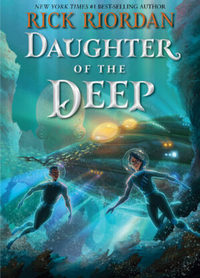
bullet Daughter of the Deep by Rick Riordan—Riordan leaves his mythology-based work for a contemporary 20,000 Leagues Under the Sea. Color me curious.

The Friday 56 for 10/29/21: See Her Die by Melinda Leigh

The Friday 56This is a weekly bloghop hosted by Freda’s Voice.

RULES:
The Friday 56 Grab a book, any book.
The Friday 56 Turn to Page 56 or 56% on your ereader. If you have to improvise, that is okay.
The Friday 56 Find a snippet, short and sweet.
The Friday 56 Post it

from Page 56 of:
See Her Die

See Her Die by Melinda Leigh

(a rare, lighter moment in the middle of a murder investigation)

“I’ll be right in. Give me two minutes to check in with Marge.” Rounding her desk, she planted her butt in her chair.

Todd all but bounced out of the room.

Marge walked in with a vat-size mug of coffee in her hand.

Bree waved a hand toward the doorway. “Is he always this obnoxiously bright-eyed this early in the morning?”

“Yes, but you’re also unusually grumpy.” Marge set the coffee on the desk. “You look like you need this.”

“Bless you, Marge.” Bree inhaled the steam, then took a long swallow. “I need a bigger mug.”

“That would be the whole pot.”

Page 280 of 628

Powered by WordPress & Theme by Anders Norén