Author: HCNewton Page 281 of 628

Abandon All Hope by Scott Spires: A Cynic and an Idealist Stumble Through Life

When I scheduled the A Few Quick Questions with…Scott Spires post and said, I’d get this post up “in a little bit”, I didn’t realize that a transformer was about to blow a couple of blocks away from me, making it pretty difficult to finish/proofread/schedule this post. At least it was the same day. 🙂


Abandon All Hope

Abandon All Hope

by Scott Spires

eARC, 214 pg.
Auctus Publishers, 2021

Read: October 13-15, 2021
Grab a copy from your local indie bookstore!

What’s Abandon All Hope About?

Set in the 1990s, this novel follows Evan—a cynical writer for an educational software company, Eldritch EduWare (a name that must’ve been the cause of problems for the marketing team—while being fairly apt). He actually commutes to the suburbs to work there, which is a nice twist. Evan doesn’t have a lot of drive or ambition, but he seems to like his life—maybe he could be happier, but he’s comfortable.

One day he encounters Eric, a college dropout. Convinced of his own insight, Eric eschews fiction, music, and the history of philosophy—he doesn’t want anyone else’s ideas. His are pure, new, and will enrich the lives of any who read his book—as soon as he finishes it. To pay the bills, Eric works a succession of temporary jobs, each disastrous in their own way.

Evan is intrigued by Eric, and makes an effort to check in on him from time to time (even trying to hire him for Eldritch at one point), but their storylines are fairly divergent. But common elements are there—we see them socialize (a little bit), muse on art and life, interact with family, colleagues, and supervisors, and so on.

He’s Making a List…

A technique that Spires falls back on often while describing things is the list. For example:

The basic building unit of the bad suburbs was the box. Boxes of various sizes and colors, of concrete, glass, steel and brick, big and small boxes arranged upright and sideways, black, white, gray, brown and transparent boxes, boxes stuck together like Legos or separated by swathes of asphalt, boxes with yards of grass or yards of concrete, could be seen everywhere as you looked out the train window.

Strip malls, mini-malls, and shopping centers alternated with identikit housing developments that bore fanciful names, like Avalon Estates, Balmoral-on-the-Lake, Provence-in-the-Woods, and Renaissance Acres: names that inadvertently highlighted their aesthetic failings.

That’s a lot of dense text that doesn’t say a whole lot—it’s frequently an effective technique. But I think Spires could’ve used a few less and been better for it—a list transitioning to a list transitioning to a list gets a bit mind-numbing. I largely enjoyed the writing, but this was a drawback.

A Scrambled Don Quixote

I typically make a point of not reading anything an author says in our Q&A before I write my post about their book. I’m not sure why I did this time, but if I hadn’t, I wouldn’t have seen his remark about this being a

Don Quixote in reverse – that is, with the somewhat cynical Sancho Panza character being the lead, and the idealistic Don Quixote figure being the secondary protagonist.

There’s part of me that kicked myself for not picking up on that—Spires wasn’t being subtle. At one point, Eric actually equates Evan to Quixote (I was too busy rolling my eyes at the conversation the two characters were having to pick up on it).

Now that I’ve chewed on it a bit now, I can see it to a degree. It’s not one of those insights that opens a fount of meaning to the text—nor is not having it a barrier to understanding the novel*. But it adds some dimension and depth to your understanding.

* He says with only a slightly defensive tone.

So, what did I think about Abandon All Hope?

In the mid-90s, there was a trend of indie movies in the Richard Linklater vein featuring characters who would unburden themselves to each other of their respective philosophical/aesthetic/political takes. This felt a whole lot like those to me. That’s not an evaluation, it’s just an observation.

This novel featured a large cast of unsympathetic and unlikeable characters acting in pretty unsympathetic and unlikeable ways, I’m not sure that there was any growth or development in the primary characters—their circumstances changed, but I think they remained the same (although there are signs that Eric and Evan might be on the verge of growth at the end). But that pretty much describes everyone I know. It might not be what we expect (want?) out of fictional characters, but it’s a pretty solid description of humanity.

This is one of those cases where I think the whole is less than the sum of its parts. A lot of the moments in this book were great–amusing, insightful, interesting—and the same goes for most of the characters. But Spires didn’t combine these moments and characters into a successful overall narrative.

I think overall he might have tried to accomplish too much. If say, Spires cut Evan out entirely (or significantly—just give us his interactions with Eric), in order to spend more time at Eric’s work (maybe requiring more characters there), and I can see my enjoyment of this increasing. Then write another novel about Evan trying to make his way in the world while writing his treatise, I should add. The strength of this book lies in the depictions of these two characters and their career/employment/lack thereof, as the US seems to be in a cultural shift regarding these things at the moment, it’s particularly thought-provoking and relevant on these matters.

Your results may vary, of course. I can think of a couple of people who’d likely disagree (possibly pretty strongly) with me if they picked up the book. I do recommend it for an intriguing experience, and hopefully, in your case something more.

Disclaimer: I received a copy of this novel from the author in exchange for this post and my honest opinion. I thank him for it.


3 Stars
This post contains an affiliate link. If you purchase from it, I will get a small commission at no additional cost to you. As always, opinions are my own.

A Few Quick Questions with…Scott Spires

In a little bit here, I’ll be giving my take on Abandon All Hope, but before I do that, I thought I’d post this Q&A that Spires was kind enough to participate in with me.

Before we dive in, you might want to read a blog post he wrote about the book, too: Behind ABANDON ALL HOPE.


Describe your path to publication with this.
I actually wrote it in two chunks: the first half all the way back in 2002-03, and the other half in 2019-20 (yes, I set it aside for about 16 years). When I finished it, I knew that as an unagented author I had no chance of being published by one of the major publishing houses, so I concentrated on small presses. I got various laudatory rejections – of the type “we like your book but we’re not going to publish it” – which was frustrating but kept me going due to the positive feedback. Finally Auctus Publishers, a small press based in the Philadelphia area, accepted it in March of this year.

All authors have more ideas running around in their head than they can possibly develop—what was it about this idea that made you commit to it?
I liked the idea of having characters coming from similar backgrounds but having completely different approaches to life. Basically, it’s realism vs. idealism, one of the eternal themes. Also, I was intrigued by the idea of writing Don Quixote in reverse – that is, with the somewhat cynical Sancho Panza character being the lead, and the idealistic Don Quixote figure being the secondary protagonist.

It’s hard to pick just one or two things to focus on to ask about that don’t involve spoiling the whole book…but I want to talk about Vic for a bit. Where did the character come from? He seems to be the only well-adjusted character in the novel (that may not be the best word…he’s the one who has it all together), was that the intent? (did I miss something in him?). Also, post-High Fidelity, record shop owners seems to be more popular in fiction than they are in reality—what’s your pet theory for that?
I agree that Vic is the most “together” character, in the sense that he’s figured out a path in life that suits him, and doesn’t suffer from the feeling of alienation that afflicts most of the other characters. I can’t say that it was my conscious intent to make him that way. To the extent he has some basis in reality, he’s a grad-school dropout who became an entrepreneur, and I’ve known a number of people like that. As for record-shop owners being more popular in fiction than in reality, I don’t quite agree with you on that. Vinyl has been undergoing a big resurgence in the last decade or so, and there have been quite a few physical outlets selling it, although they have to contend with a lot of pressure from online sellers. Vinyl is much more fashionable now than it was in the 1990s, when both High Fidelity and my book are set.

Evan’s tenure as a Temp seemed too specific to be simply the product of someone’s imagination—did you spend a season of life doing this kind of thing, or did you have friends whose lives you plundered for material? How fictionalized were these? Any you decided that you couldn’t use?
Most of the work-related episodes in the book are based on my own personal experience. For example, I had precisely the kind of phone-survey job that Evan does in Chapter 5, and Eric’s office job draws heavily on my own job experience with a fairly well-known company that shall remain nameless. Of course, I modified this material to fit the story I wanted to tell – my own office job wasn’t nearly as deadly or traumatic as the one in the book!

What was the biggest surprise about the writing of Abandon All Hope itself? Either, “I can’t believe X is so easy!” or “If I had known Y was going to be so hard, I’d have skipped this and watched more TV.”
Well, I did watch more TV (so to speak), because I hit a roadblock when I was first writing it, and put aside the manuscript for a short while, which turned into a 16-year break! My basic problem was the lack of a theme, focus, or clear plotline when I started writing it. I had my characters and episodes, but nothing to hold them together. It was only in 2019 when I sat down with this old material and resolved to finish the book that I figured those things out. So I suppose the biggest surprise was that I actually managed to finish writing the book. If you had told me five or ten years ago that I would finish it and get it published, I would have been greatly surprised!

Let’s play “Online Bookstore Algorithm” (a game I made up for these Q&As). What are 3-5 books whose readers may like Abandon All Hope?
Obviously, as already mentioned, High Fidelity by Nick Hornby. Record collecting as a quest for meaning, and as a way to avoid growing up.
The Elementary Particles by Michel Houllebecq. Another 1990s classic, with contrasting, related protagonists trying to make sense of the world in their very different ways.
The Moviegoer by Walker Percy. A fictional excursion into existentialism, with a strong regional flavor (New Orleans in this case).
Finally, this is cheating a bit, but I must mention “Forlesen” by Gene Wolfe. It’s a long short story or novella, not a complete novel, but it’s highly relevant because it’s a poignant, fantastical take on the inanities of office life, which figure so strongly in Abandon All Hope.

What’s next for Scott Spires, author?
I don’t know exactly, but I’m contemplating a couple of projects. One is a “photonovel,” a story that combines text with photographs. The other is a collection of novellas. I think the novella is a great form, but since it’s caught in a kind of limbo between short stories and novels, it’s difficult to publish as a free-standing work. But I think a book of three or four novellas would work very well.

Thanks for your time—and thanks for Abandon All Hope</b?, and I hope you have plenty of success with it.


Gated Prey by Lee Goldberg: Starts Off with a Bang and Doesn’t Let Up

Gated Prey

Gated Prey

by Lee Goldberg
Series: Eve Ronin, #3

Kindle Edition, 255 pg.
Thomas & Mercer, 2021

Read: October 26-27, 2021
Grab a copy from your local indie bookstore!

“The people who live in these places think the gates protect them from all the crime and misery that’s out there, but it doesn’t. It just locks them in with it.”

“You think whatever happened came from within the gates?”

“I don’t know where it came from, that’s your job. But I’m sure there’s as much evil inside these gates as there is outside of them. Maybe more.”

What’s Gated Prey About?

LASD Detectives Eve Ronain and Duncan Pavone are in the midst of a sting operation when the novel opens—to trap a home invasion team, the pair are pretending to be a well-moneyed couple who’d make pretty easy marks to lure the team in. They go out daily to shop a little—making sure to flash a lot of cash—and then go back to their McMansion in a gated community to wait. Duncan’s loving the excuse to sit around all day and watch movies, while it’s driving Eve crazy to not be active.

The LASD has tried traditional investigational methods, but they just haven’t worked—no one can figure out how the team is getting past the security gates, much less who they are, and how they select their targets.

The trap works and the LASD chalks it up as a win. But Eve’s uncomfortable with the number of questions (and possible accomplices) that remain about it. Also, there are indications that Eve still has enemies within the department—and they might have prevented backup that Eve and Duncan needed from acting to keep them safe.

That’s not the only crime Eve and Duncan encounter behind the protective gates—while trying to close the home invasion case, the pair pick up another assignment. It’s not covered in the publisher’s description, and I’m not sure how to talk about it without giving away too much. So let’s just say that it will underscore that “Maybe more” from my opening quotation.

Eve Off-the-Clock

“You’re doing it again,” Duncan said.

“Doing what?”

“Obsessing over your case to the point of exhaustion. You need a life and some sleep. You can’t physically, mentally, or emotionally sustain being relentless.” “

I’m only doing it now because we’ve got a ticking clock on this one.”

“You’ve done it on every case we’ve had.”

“You make it seem like years. We’ve only been working together for a few months. It hasn’t been that long.”

But like Duncan, readers know if the two had been working together longer, she’d be doing the same thing. This is not a good way to live—it’s not healthy, and if Eve doesn’t learn how to take her foot off the gas, she’s going to burn out or make some big mistakes—likely both. But this is the kind of character I love reading about. Yes, I do hope that she learns how to balance things a bit—for the sake of character development, I think it’d be interesting. But until she does? I’m going to love watching her burn herself out.

Eve spends so much time working over the course of the novel that there’s almost no time for anything but her work. We do get to see most of Eve’s family, but very briefly—and the most we see is of her sister, thanks to Lisa’s work in the ER. I’d have liked a bit more time with her, she humanizes Eve, but that’s not always possible in every book.

Conversely, I thought it was good to have a scaled-down presence of Eve’s mom (especially with Eve’s agent being able to carry the water of “supporting character annoyingly-fixated on the superficial”). I find Jen an amusing and important part of the series, but man, a little of her goes a long way.

Duncan “Dunkin’ Donuts” Pavone

I’m not sure if I should use the nickname in that section header, I’m not sure if Goldberg used it this time. But, eh, I like it. I made so many notes while reading that were variations of “love this character.”

While he remains the wise and largely-comic-relief figure he’s been, there’s a darkness to Duncan we haven’t really seen before, expressed in a couple of different ways. There’s a certain invulnerability that his fast-approaching retirement date gives him that allows him to give this side a free rein—Duncan notes repeatedly that his career is over, he has nothing to lose. I really wouldn’t want him as an enemy (not that I want any, I have to say, but really not him).

We also get some insight into his reason for retirement—one of those things I hadn’t questioned. He was introduced to us in Lost Hills as being on the verge of retirement, and that’s just how I’ve thought about him. But now I want to know more about what got him to this point.

She’s Still Learning

Eve’s only been a homicide detective for a few months, and she still has a lot to learn. Not just the lessons that Duncan’s trying to teach her about overworking and getting along with colleagues.

But she’s still learning how to be a detective—she doesn’t know basic routines and procedures. She embarrasses herself in front of a morgue attendant and in an autopsy—nothing horrible, just the kind of stumbling people make when they’re new at something. Some of what she does within the Sheriff’s department is a little more than embarrassing—and will likely come back to haunt her, but again, that’s realistic growing pains.

It’s not often that we get to see this kind of thing in police procedurals—especially with the central/titular character. And this approach is a treat.

So, what did I think about Gated Prey?

“…I just got lucky.”

Duncan leaned against the wall and looked at her. “It isn’t luck, Eve. It’s instinct. You’re a natural at this. What you haven’t learned yet is how to do it without making enemies.”

I’ve gone on too long at this point—and there’s so much that I still wanted to talk about: the ongoing role of the media (both news and entertainment) in Eve’s life and career—not to mention at least one fellow detective; the politics within and outside the LASD and how that impacts their investigation; personnel changes within the Department; and racial and economic prejudices that the security gates seem to magnify.

Also, while Duncan (especially) and Eve have always seemed to have some fun meals—there are three references to food that almost induced a between-meal DoorDash order on my part. Don’t read this on an empty stomach, folks.

Great characters all around, a couple of gripping cases, and a breakneck pace—all par for the course for this series. If you haven’t jumped on the Eve Ronin train—now’s the time. I literally organized my reading schedule the last couple of weeks so that I could start this as soon as it was delivered to my Kindle, and it was worth it. You want to get your hands—and eyes*—on this, readers.

* Or ears, come to think of it, Nicol Zanzarella does a great job with the audiobook narrations for these books.

4 1/2 Stars

This post contains an affiliate link. If you purchase from it, I will get a small commission at no additional cost to you. As always, opinions are my own.
Daughter of the Morning Star by Craig Johnson: A Cheyenne boogeyman, A Recalcitrant Teen Sports Star, and a Wyoming Sheriff

Daughter of the Morning Star

Daughter of the Morning Star

by Craig Johnson
Series: Walt Longmire, #17

Hardcover, 322 pg.
Viking, 2021

Read: September 28-29, 2021
Grab a copy from your local indie bookstore!

“Everybody thinks the dead of the night is the scary time, but it’s not. The time of danger for the living is the time of change, from day into night or night into day, when the world isn’t sure what it is or what it wants to be.”

What’s Daughter of the Morning Star About?

Midway through the last novel, Next to Last Stand, Walt and Henry stop by a High School Girl’s Basketball game to watch Lolo Long’s niece, Jaya “Longshot” Long, do what she does best. But they don’t stop by to enjoy the game, really, they’re there because Lolo wants help. Jaya’s been receiving death threats and there’s only so much an aunt can do (even if that aunt is a Tribal Police Chief).

This is where we pick up now—the threats are real, repeated, and don’t seem to be a prank. Adding to the danger is the fact that Jaya’s older sister disappeared the prior year under suspicious circumstances. There’s no need to think the two are linked, but Walt has to consider the possibility.

If nothing else, Lolo hopes that bringing Walt into the investigation(s) will draw attention to him—he tends to get people watching and talking about his escapades, and hopefully, his involvement will get enough people interested in what’s going on to generate some leads.

There are plenty of suspects—on the reservation and off—for both the threats and the disappearance, so Walt and Henry have their hands full.

A Recurring Question

“I’m sorry, but I don’t believe in the things you believe in, Henry.”

He nodded. “I know that, but I respect your belief in humanity, if for only one reason.”

“What’s that?”

“It makes you very resolute.”

“Is that a compliment?”

“Sometimes.”

There is a strong possible supernatural thread running through this novel. I’m not going to do justice to explaining the particular spirits that are suspected to be at work in this book, but there’s a real sense of hazard around them. And a lot of what Walt encounters during these events cannot be easily explained by something other than a spiritual force.

Of course, this isn’t the first time that this concept has been explored in the Longmire books. I don’t have hard numbers on it (I expect someone on the Internet does), but I’d guess that it’s a little less than one-half of them that feature this in a significant way.

And for all his protesting (see above), I’m not so sure that Walt doesn’t believe most of what Henry does. If your actions are an expression of your beliefs, he sure seems to. Not simply his actions over the course of this novel, there’s just about every other novel in the series—look at everything involving Virgil White Buffalo, for example (but there are several other pieces of evidence). Given both his background, what his wife believed, and his lack of knowledge about the details of Cheyenne beliefs, I can believe that Walt’s hesitant to claim that belief, but he sure does walk the walk.

Of course, there’s this observation Walt makes:

Funny how your attitude about spirituality could change when the chips were down.

A Sobering Beginning And Unfortunate Coincidence

In the midst of all the media coverage surrounding the search for Gabby Petito this summer, one of the things I frequently saw was people listing the statistics surrounding the numbers of missing Native American women every year.

The Acknowledgements in the front of this book listed similar statistics regarding missing and murdered Native American women, which are partially where Johnson drew the idea for this novel from. These numbers are repeated in the text itself, too.

This isn’t the first time that Johnson has used Walt’s case to comment on something in the news (or something that should be), but an accident of timing made this novel particularly germane.

Missing Friends

The downside to a Longmire book that takes place outside of Absaroka County is that most of the Sheriff’s department and the residents of Durant aren’t in the book. We didn’t get Sancho, Ruby, or Lucian (for example). And Vic was largely absent as well—but was well used for little time she was around.

I get the need to have Walt do things outside of Durant/Absaroka County to prevent Durant from becoming Murder Central, U.S.A. (it’s likely the most murder-filled town/county in Wyoming), but I really wish it didn’t involve leaving so many of the characters out of the books.

Here’s hoping that #18 brings them all back.

So, what did I think about Daughter of the Morning Star?

I thought some of the basketball material in the book (particularly the further in the novel we got) was a little eye-roll-inducing. It was just too much for a cynical guy like me. But somehow Johnson made it work.

There’s a lot said about hope in Daughter of the Morning Star–mostly about its absence. But, as hope tends to do, it shows up in the unlikeliest of places and in the midst of the darkest times. When this book is finished, there’s no happily ever afters promised (as usual for this series), but there’ve been moments of triumph, and maybe a dawning of hope for some.

This is really the most entertaining Longmire book in quite a while. When Johnson is on his game, he’s great. And that’s what we got here. Readers new and old will find a lot to be satisfied with here.


4 Stars

This post contains an affiliate link. If you purchase from it, I will get a small commission at no additional cost to you. As always, opinions are my own.

WWW Wednesday, October 27, 2021

The wheels have really come off of my plans for the week–boh in terms of writing and reading. Real Life can be such a drag, you know? But we’re at the mid-point, and hopefully, I can recover a bit. And if not? At least I’m spending some time with these good books that I’m about to talk about in this WWW Wednesday.

This meme was formerly hosted by MizB at A Daily Rhythm and revived on Taking on a World of Words—and shown to me by Aurore-Anne-Chehoke at Diary-of-a-black-city-girl.

The Three Ws are:

What are you currently reading?
What did you recently finish reading?
What do you think you’ll read next?

Easy enough, right?

What are you currently reading?

I’m reading the third DetectiveEve Ronin thriller, Gated Prey by Lee Goldberg, and am listening to book about a woman on the other side of the law, Finlay Donovan Is Killing It by Elle Cosimano, Angela Dawe (Narrator) on audiobook.

Gated PreyBlank SpaceFinlay Donovan Is Killing It

What did you recently finish reading?

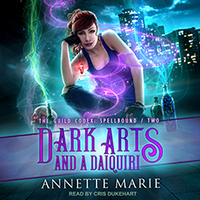
I just finished Stephan Pastis’s Squirrel Do Bad, a MG Graphic Novel, and Dark Arts and a Daiquiri by Annette Marie, Cris Dukehart (Narrator), another adventure for Tori and her mystik pals on audio.

Squirrel Do BadBlank SpaceDark Arts and a Daiquiri

What do you think you’ll read next?

My next book should be Dust & Grim by Chuck Wendig—which might be a bit too much MG in one week for me, but library due dates are calling the shots, you know? My next audiobook should be Fallen by Benedict Jacka, Gildart Jackson (Narrator), as I get close to wrapping up this re-read through the series.

Dust & GrimBlank SpaceFallen

How are you spending the last week of October?

Squirrel Do Bad by Stephen Pastis: The Misadventures of Butterfly Girl

Squirrel Do Bad

Squirrel Do Bad

by Stephan Pastis
Series: Trubble Town, #1

Paperback, 287 pg.
Aladdin, 2021

Read: October 25-26, 2021
Grab a copy from your local indie bookstore!

Always remember—even the smallest thing you do can have big consequences.

What’s Squirrel Do Bad About?

Wendy the Wanderer is a little girl who desperately wants to travel the world, but her over-protective father has other ideas. He’s so focused on safety and caution, he carries an umbrella at all times (for example). But when Dad has to leave town for a while on business, Wendy just might get to do a little exploring, if she can get around her babysitter.

This isn’t a challenge, as the sitter is too focused on her phone to notice pretty much anything. So, Wendy heads out to explore her hometown, Trubble Town. A fitting name, for her at least.

She tries to befriend a squirrel, Squirrely McSquirrel, but is out of nuts. So gives him a little bit of a Mooshy. A Mooshy is a dangerous concoction for a human, much less a squirrel, it’s a “steaming cup o’hot chocolate shoved chock-full with forty marshmallows.” The levels of hyperactivity that this induces in Squirrely can’t really be described, it can only be depicted in graphic terms, really. He also becomes pretty addicted to them—but the destruction wreaked was so great that no one is permitted to give him any.

It’s at this point that things get out of control. The chaos that ensues features a police officer driven by hatred of squirrels, a mayor who refuses to work, a strange town obsession with statues, a would-be nut-themed superhero, a vegetarian squid, civic-minded moles, a lot of dynamite, and too many other things to enumerate. It’s the kind of mad-cap pandemonium that appeals to the little kid in us all (especially the middle-grade target audience).

The big questions addressed are: will Squirrely stay out of trouble? Will Wendy be able to keep all this from her father? Will anyone learn anything?

Pearls Before Swine-Verse

On page 56, Larry the Crocodile appears as Squirrely’s lawyer. Planting this firmly in the same world as Pastis’s comic strip, Pearls Before Swine. But Larry’s the only character that I recognized, it’s not Pearls. The humor’s different than the comic—it’s suited for kids, with a different tone, and a different aim.

Art Style

If you’ve read Pearls, you’ll have noticed the slightly sloppier style, with bolder lines that Pastis uses when one of his characters is drawing—the art’s a lot like that (except for a panel or two at the end). But essentially, it looks a lot like Pearls without Pig and Rat, etc.

So, what did I think about Squirrel Do Bad?

Wendy learns a little about chaos theory and begins to see herself as the butterfly that starts the storm. Which is helpful and maybe a little unhealthy, too. Still, she learns the meaning of her father’s words before he left (see the opening quotation).

The storytelling reminds me of the kind of stories my kids would write/tell when they were little—something that starts off kind of fun and then gets stranger and stranger and stranger. This is both an observation and a warning for people who want structure and logic to their stories—that’s not going to be around.

It’s silly. There is some real sweetness to it. It’s weird. It’s a lot of fun. Pretty much what you’d expect. Give it a shot, or let your kid give it a shot.


3 Stars

2021 Library Love Challenge

This post contains an affiliate link. If you purchase from it, I will get a small commission at no additional cost to you. As always, opinions are my own.
The Warm Glow of Acceptance…

As usually happens when I have a solid–maybe ambitious–plan for a week’s worth of posts, something came up this weekend that was far more important than this blog. So that plan is shattered (can’t wait to see what I’m able to recover). But something that happened this morning that gave me enough material to put something up today.

Last week, a friend sent me a Facebook Message: “Achievement unlocked! 😊” She’d been identified as a “Top Fan” of the blog’s Facebook page. And you know the competition is fierce. 🙄 It is kind of cool that the algorithm took a break from warping minds, selling things, and stoking division in the country to recognize that a friend of mine was supportive. It is a little strange to think that anyone could be considered a “fan” of me (excepting the two canines who live here).

Then, the next day, I saw that meme I used in the last Saturday Miscellany post. Two days in a row of unexpected positive feedback. I’d planned on making a jokey post about this last week, but got hung up on looking for a meme or gif of Mabel Mora asking, “We have fans?”. So I never got around to it.

This brings us to this morning. Sure, it was fun that my friend got a badge declaring her my fan. It warmed my heart and made me laugh to see Slaywood’s pic. But this morning, someone left a comment on a five-month old post that made my heart soar. This guy, John, really looked down deep into the recesses of my soul and took a look around. And, he gets me. He really, really gets me.

Egotistical and irrelevant…as the youths say:* I feel seen.

* …or did not that long ago, right?

I do this for my own sense of fun, but feedback like this really makes it all worthwhile…

The Church: An Introduction by Gregg Allison: Tries to Do Too Much and Falters

The Church: An Introduction

The Church: An Introduction

by Gregg Allison
Series: Short Studies in Systematic Theology

Paperback, 164 pg.
Crossway, 2021

Read: October 10, 2021
Grab a copy from your local indie bookstore!

What’s The Church: An Introduction About?

Allison starts with a good Introduction, sketching the ambiguity of the current English term “church”—driving home the need for a book like this. He then spends two chapters with the foundation—outlining both the relationship between the Trinity and the Church and then with a broad overview of the Scriptural doctrine of the Church.

Then he moves into the bulk of the book:

I will present the church in terms of its local expression according to the following topics: identity, leadership, government, ordinances or sacraments, ministries, and future. For each topic, the first section—mere ecclesiology—presents the common ground shared by most churches throughout history. This aspect addresses the essence, or core, of the church’s identity, leadership, government, ordinances or sacraments, ministries, and future. The second section—more ecclesiology—describes how this essence expresses itself in the actual identity, leadership, government, ordinances of sacraments, ministries, and future of particular churches.

So, what did I think about The Church: An Introduction?

In summary, ecclesiology properly begins with a consideration of the doctrine of God. Specifically, it is grounded in Trinitarian theology, which leads to this conclusion: There is one people of God, who from eternity past has graciously elected all those who will believe in him by faith and walk with him in obedience, worship, love, and service. This one people of God consists of two aspects: the people of Israel in old covenant relationship with him and the people of the church in new covenant relationship with him. Specifically in regard to this second aspect, the church is the body of Christ and temple of the Holy Spirit. As the body, the church submits to its head, celebrates its diversity of people and gifts, lives out its siblingship in all purity, and portrays and fosters its unity by participation in the Lord’s Supper. As the temple of the Holy Spirit, the church in which he dwells is birthed, empowered, gifted, directed, sent, and sanctified by the Spirit.

The first couple of chapters got me excited for the book, and then after that, each chapter annoyed me more. He totally squandered that start—the “Mere” portions of the chapters were generally decent, but far too short. The “More” portions on the other hand…didn’t belong in a book like this (for the most part)—to get into all my problems would involve getting into the nitty-gritty of the arguments. They seemed to be what he wanted to write about more than the “Mere” bits and aren’t really introductory ecclesiology.

Also, and this is just one of those things, one chapter felt like it was written in response to my pastor’s sermon that day—each point seemed to be counter one of his (or vice versa). I was already having issues with the book, but that might have been the straw that broke the camel’s back for me. (not that I think my pastor is infallible, it was just bad timing—and a bad take on the text)

If this was the first book in the Short Studies in Systematic Theology that I’d read, I probably wouldn’t have come back for more. But, as it’s the fifth, I can keep going, trusting that this was a fluke.

In the end, I think this book tried to do too much. It tried to be all things to all people rather than embracing a confessional point of view as well as getting hung up on the structure, and ends up not accomplishing much at all. Focusing on and fleshing out the “More” portions would’ve made for a better read, a more profitable read, and a less problematic read. File this one under “don’t bother.”


2 Stars

This post contains an affiliate link. If you purchase from it, I will get a small commission at no additional cost to you. As always, opinions are my own.

Happy Birthday, Archie!

My annual tribute to one of my favorite fictional characters (if not my all-time favorite). I’ve got to do an overhaul to this soon, but it is slightly updated and tweaked from last year.

On Oct. 23* in Chillicothe, Ohio, Archie Goodwin entered this world—no doubt with a smile for the pretty nurses—and American detective literature was never the same. He’s the narrator (and, I’d argue protagonist) of the questionably named Nero Wolfe mysteries. While the eccentric and overweight genius might be what brings people to the series, it’s Archie’s wit, attitude, and snappy narrative voice that brings people’s back.

* About 34 years ago, no matter what year it is that you read this.

When my aunt first gave me a Nero Wolfe book to read, she sold me on the Wolfe character, but when I read it, I wasn’t so sure that I liked the guy. But his assistant? He was cool. Sure, it didn’t take me long to get into Wolfe, but Archie’s always been my favorite. Since I was in Middle School, if I was suffering a slump of any kind (reading, emotional, physical), time with Archie Goodwin could get me out of it. There were a few years that when I got sick, I’d grab a Nero Wolfe novel to help me get through it (along with the Vitamin C and Chicken Noodle soup), and you can’t tell me it didn’t work. Noted critic Jacques Barzun says it well:

If he had done nothing more than to create Archie Goodwin, Rex Stout would deserve the gratitude of whatever assessors watch over the prosperity of American literature. For surely Archie is one of the folk heroes in which the modern American temper can see itself transfigured. Archie is the lineal descendant of Huck Finn.

While Archie’s about as far from a teetotaler as you can get, to commemorate his birthday, I’m toasting him in one of the ways I think he’d appreciate most—by raising a glass of milk in his honor.

Who was Archie? Archie summed up his life like this:

Born in Ohio. Public high school, pretty good at geometry and football, graduated with honor but no honors. Went to college two weeks, decided it was childish, came to New York and got a job guarding a pier, shot and killed two men and was fired, was recommended to Nero Wolfe for a chore he wanted done, did it, was offered a full-time job by Mr. Wolfe, took it, still have it.” (Fourth of July Picnic)

Long may he keep it. Just what was he employed by Wolfe to do? In The Black Mountain he answers the statement, “I thought you was a private eye” with:

I don’t like the way you say it, but I am. Also, I am an accountant, an amanuensis, and a cocklebur. Eight to five you never heard the word amanuensis and you never saw a cocklebur.

In The Red Box, he says

I know pretty well what my field is. Aside from my primary function as the thorn in the seat of Wolfe’s chair to keep him from going to sleep and waking up only for meals, I’m chiefly cut out for two things: to jump and grab something before the other guy can get his paws on it, and to collect pieces of the puzzle for Wolfe to work on.

In Too Many Women, he’s a bit more concise and describes himself as the:

heart, liver, lungs and gizzard of the private detective business of Nero Wolfe, Wolfe being merely the brains

In Black Orchids, he reacts to an insult:

…her cheap crack about me being a ten-cent Clark Gable, which was ridiculous. He simpers, to begin with, and to end with no one can say I resemble a movie actor, and if they did it would be more apt to be Gary Cooper than Clark Gable.

Over at The Thrilling Detective, he’s described this way:

If Goodwin hadn’t gone to work for Wolfe, he’d certainly have his own agency by now (and temporarily does, in one novel). Far more of the traditional eye, Goodwin is a tough, handsome guy with a photographic memory, a .32 under his well-tailored suit (and sometimes an extra .38 in his overcoat pocket), and a well-developed appreciation for the ladies. And, in the opinion of more than a few cops, officials and stuffed-shirt executives, a mouth that ought to be nailed shut permanently. (Wolfe isn’t immune either – part of Goodwin’s job, as he sees it, is needling the fat man into taking cases, if only to make sure the bills get covered.) He’s not the deductive genius that Wolfe is, but a smart and tenacious op with a good right hook, and a decent and personable man. Most of all, in his narration of the books, he’s a helluva storyteller; it’s his view of the world, and his interaction with Wolfe, that keeps us coming back for each new mystery.

The Archie Goodwin FAQ is less succinct but does a good job of laying out the facts.

I’m not the only Archie fan out there:

  • Someone pointed me at this post, The Wit and Wisdom of Archie Goodwin. There’s some really good stuff here that I was tempted to steal, instead, I’ll just point you at it.
  • Robert Crais himself when writing an introduction to a Before Midnight reprint, devoted it to paying tribute to Archie—one of the few pieces of anything written that I can say I agree with jot and tittle.

In case you’re wondering if this post was simply an excuse to go through some collections of Archie Goodwin quotations, you wouldn’t be totally wrong…he’s one of the fictional characters I like spending time with most in this world—he’s the literary equivalent of comfort food. So just a couple more great lines I’ve quoted here before:

I would appreciate it if they would call a halt on all their devoted efforts to find a way to abolish war or eliminate disease or run trains with atoms or extend the span of human life to a couple of centuries, and everybody concentrate for a while on how to wake me up in the morning without my resenting it. It may be that a bevy of beautiful maidens in pure silk yellow very sheer gowns, barefooted, singing “Oh, What a Beautiful Morning” and scattering rose petals over me would do the trick, but I’d have to try it.

I looked at the wall clock. It said two minutes to four. I looked at my wrist watch. It said one minute to four. In spite of the discrepancy, it seemed safe to conclude that it would soon be four o’clock.

Description:I shook my head. “You’re flattering me, Inspector. I don’t arouse passions like that. It’s my intellect women like. I inspire them to read good books, but I doubt if I could inspire even Lizzie Borden to murder.”

She turned back to me, graceful as a big cat, and stood there straight and proud, not quite smiling, her warm dark eyes as curious as if she had never seen a man before. I knew damn well I ought to say something, but what? The only thing to say was ‘Will you marry me?’ but that wouldn’t do because the idea of her washing dishes or darning socks was preposterous.

“Indeed,” I said. That was Nero Wolfe’s word, and I never used it except in moments of stress, and it severely annoyed me when I caught myself using it, because when I look in a mirror I prefer to see me as is, with no skin grafted from anybody else’s hide, even Nero Wolfe’s.

If you like Anglo-Saxon, I belched. If you fancy Latin, I eructed. No matter which, I had known that Wolfe and Inspector Cramer would have to put up with it that evening, because that is always a part of my reaction to sauerkraut. I don’t glory in it or go for a record, but neither do I fight it back. I want to be liked just for myself.

When a hippopotamus is peevish it’s a lot of peeve.

It was nothing new for Wolfe to take steps, either on his own, or with one or more of the operatives we used, without burdening my mind with it. His stated reason was that I worked better if I thought it all depended on me. His actual reason was that he loved to have a curtain go up revealing him balancing a live seal on his nose.

It helps a lot, with two people as much together as he and I were, if they understand each other. He understood that I was too strong-minded to add another word unless he told me to, and I understood that he was too pigheaded to tell me to.

I always belong wherever I am.

Saturday Miscellany—10/23/21

Wow, I’m about 2 hours behind schedule for the day…so I’m not going to try to come up with anything to lead off this week’s post.

Well, maybe a little…I tend to share a meme or something like that with these posts, just stuff I stumble upon. This week, author R.T. Slaywood created one that made my day–had to be used (as self-aggrandizing as it may be).

Odds n ends about books and reading that caught my eye this week. You’ve probably seen some/most/all of them, but just in case:

bullet Will supply chain issues affect the books you want? Depends on what you’re reading.—that last line is a bit ominous, do we have to go through this again? Might be time to buy stock in a bidet company.
bullet Another Pandemic Surprise: A Mini Indie Bookstore Boom—Nunc hoc in marmore non est incisum
bullet PW’s best books of 2021—Is it really time to start these already???
bullet Serial Thinking—I would not have put First Things on my list of places to look for solid takes on the Chet & Bernie books, but John Wilson delivers that, a thoughtful take on “genre” vs. “literary” fiction, and thoughts on the making of serialized fiction—in one short piece.
bullet Goodbye To Goodreads—I absolutely get why authors would abandon the site–outside of opportunities to market themselves anyway. But how many times does it have to be said? Reviews–especially amateur ones–are for readers, not writers. (there are plenty of other reasons to avoid Goodreads, and I’m not trying to defend the site, this just seems silly)
bullet Audiobook History, or: Why Audiobooks Matter!
bullet 8 Things to Do While Listening to Audiobooks—Nunc hoc in marmore non est incisum
bullet A Thank You to The Write Reads Gang—one of those posts that can’t be said often enough.
bullet Do you use bookmarks? I do, just not actual ones. Here are some weird/random things I (and my daughter) use!—there are some very odd things in this list (can’t imagine some are that good for the binding, either)
bullet Books to Video Games—I’m not a gamer, but a couple of my kids are, but I thought this was interesting. While I’ve seen (and purchased as gifts) several books adapted from games, I can only think of a couple of books that have been adapted to games–The Hitchhiker’s Guide to the Galaxy and Below the Root (oh, and the obligatory Sherlock Holmes/Nancy Drew—every medium has to have them). The age of both of those games suggests how much of a gamer I am.
bullet Why I’m Keeping My Book Blog
bullet Common Problems Book Bloggers Have and How To Solve Them—good advice
bullet 5 Things I Look for Before Following a Book Blog
bullet Don’t be a Stranger: How to Make Connections in the Book Blogging Community
bullet To All The Books I Didn’t Buy,—loved this.

This Week's New Releases That I’m Excited About and/or You’ll Probably See Here Soon:
bullet It’s a Wonderful Woof by Spencer Quinn—The first (novel-length) holiday Chet and Bernie book is a great bit of fun. I enthused about it recently.
bullet Best in Snow by David Rosenfelt—Andy’s dog, Tara, literally digs up a new case for him in this holiday themed novel. I talked about it a little a couple of weeks ago
bullet title by soandso—The eBook release of the Audible Original. Shining Smith #2 features a road trip, a handful of battle scenes and some surprising character developments. I had a little to say about it earlier this week.
bullet The Last Time She Died by Zoë Sharp—first in a new series has a heckuva hook. Not one I can do justice to in a sentence or so, better just click the link.
bullet Dust & Grim by Chuck Wendig—half of the reason I’m interested in this book is to see how Wendig can write for MG audience. The other half is that it takes place in a monster mortuary—which just sounds fun.

Lastly I’d like to say hi and extend a warm welcome to Carol who followed the blog this week. Don’t be a stranger!

Page 281 of 628

Powered by WordPress & Theme by Anders Norén