Author: HCNewton Page 369 of 624

BOOK SPOTLIGHT: Hiding in Plain Sight by Eoghan Egan

I CANNOT believe that I didn’t schedule this to post this morning. It does no one any good in my drafts folder. Very sorry to Eoghan Egan and Love Books Tours for this.

Today we are celebrating the release of Hiding in Plain Sight by Eoghan Egan. The official launch is on the 11th of January in Ireland and you are cordially invited. As I don’t think I have any readers who could make it, we’ll just focus on the book itself with some information about the book and the author. You are (I assume) also cordially invited to purchase it anytime.

Book Details:

Book Title: Hiding in Plain Sight by Eoghan Egan
Release date: January 4, 2020
Format: Ebook/Paperback
Length: 347 pages

Book Blurb:

The stunning debut from Ireland’s hottest new crime writer

A vicious serial killer roams the Irish Midlands, with his sights set on the next victim.

A successful businessman has found the perfect recipe for getting away with murder.

No bodies, no evidence.

No evidence, no suspect.

High art and low morals collide when graduate Sharona Waters discovers a multi-million euro art scam in play. She delves in, unwittingly putting herself on a direct trajectory with danger as the killer accelerates his murder spree.

When Sharona gets drawn into the killer’s orbit, she peels away his public persona and exposes the psychopath underneath. Suddenly, the small town has no hiding place…

About Eoghan Egan:

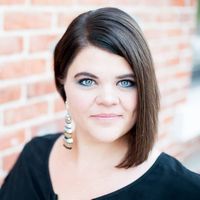
Eoghan Egan

A native of Co. Roscommon, Eoghan studied Computer Programming in college, works in Sales Management & Marketing, but his passion for reading and writing remains.

Eoghan’s work got shortlisted for the 2018 Bridport Short Story Prize, and Listowel’s 2019 Bryan McMahon Short Story Award Competition. His novel was a contender in literary agent David Headley’s opening chapter Pitch Competition, and during March 2019, Eoghan’s entry won Litopia’s Pop-Up Submission.

A graduate of Maynooth University’s Creative Writing Curriculum, and Curtis Brown’s Edit & Pitch Your Novel Course, Eoghan’s novel Hiding in Plain Sight – the first in a crime fiction trilogy based around the Irish Midlands – will be available in paperback and audio on January 11th 2020.

Eoghan Egan’s Social Media:

Twitter ~ Facebook ~ Instagram ~ Website

My thanks to Love Books Group for the invitation to participate in this tour.

Love Books Group

Dreyer’s English by Benjamin Dreyer: A delightful guide to style, grammar, spelling and other things English Language-related that you didn’t realize you wanted to know.

Dreyer’s English

Dreyer’s English: An Utterly Correct Guide to Clarity and Style

by Benjamin Dreyer

Hardcover, 269 pg.
Random House, 2019

Read: December 27-30, 2019
Grab a copy from your local indie bookstore!

The English language…is not so easily ruled and regulated. It developed without codification, sucking up new constructions and vocabulary every time some foreigner set foot on the British Isles—to say nothing of the mischief we Americans have wreaked on it these last few centuries-and continues to evolve anarchically. It has, to my great dismay, no enforceable laws, much less someone to enforce the laws it doesn’t have.

Benjamin Dreyer isn’t the enforcer he wishes existed, but he’s close to one—especially for Random House. This book isn’t a book of those laws, rules or regulations—it’s about what one copy editor thinks that would-be editors, authors, and everyone else should know about grammar, sentence construction, punctuation, and. . . you know what? The official blurb does a more concise job of describing the book than I could. Let’s cheat a little and use it:

We all write, all the time: books, blogs, emails. Lots and lots of emails. And we all want to write better. Benjamin Dreyer is here to help.

As Random House’s copy chief, Dreyer has upheld the standards of the legendary publisher for more than two decades. He is beloved by authors and editors alike—not to mention his followers on social media—for deconstructing the English language with playful erudition. Now he distills everything he has learned from the myriad books he has copyedited and overseen into a useful guide not just for writers but for everyone who wants to put their best prose foot forward.

As authoritative as it is amusing, Dreyer’s English offers lessons on punctuation, from the underloved semicolon to the enigmatic en dash; the rules and nonrules of grammar, including why it’s OK to begin a sentence with “And” or “But” and to confidently split an infinitive; and why it’s best to avoid the doldrums of the Wan Intensifiers and Throat Clearers, including “very,” “rather,” “of course,” and the dreaded “actually.” Dreyer will let you know whether “alright” is all right (sometimes) and even help you brush up on your spelling—though, as he notes, “The problem with mnemonic devices is that I can never remember them.”

And yes: “Only godless savages eschew the series comma.”

Chockful of advice, insider wisdom, and fun facts, this book will prove to be invaluable to everyone who wants to shore up their writing skills, mandatory for people who spend their time editing and shaping other people’s prose, and—perhaps best of all—an utter treat for anyone who simply revels in language.

As one who enjoys a good language-revel, I fell in love with this book almost instantly. I had to force myself to stop jotting down notes because I’d be reading this thing until March if I wrote down everything I wanted to (I have a list of page numbers, though, to go back and glance at while I write this and/or want to do a quick revisit of the book). I’m glad that I’m bone tired and don’t have a lot of time here, because I could easily spend a few thousand words on this book if I let myself. But circumstance prevents me from that and protects you from enduring it (we’ll pretend you’d endure it to preserve my ego, you’d likely just decide it was too long and go to the next link on your list). I think this is coherent enough to post. I’ll let you decide.

Dreyer clearly had fun writing this—there’s a joie de mot/langue* that permeates this book and its infectious. Each page is filled with humor as well as semi-/quasi-/actually technical discussions about writing/reading, making this a book that will appeal to both your mind and funny bone.

* There’s a good chance that l’Académie française is going to hire someone to assassinate me for those neologisms. Whoops.

I’m not going to try to encapsulate the book (hence the use of the blurb), but I want to highlight a few things that stood out to me.

Over the last two years, I’d estimate I’ve read about 50 pages on the interrobang. That number didn’t increase at all with this book. In the chapter discussing punctuation he eventually gets to the interrobang and states, “Neither will we discuss the interrobang, because we’re all civilized adults here.” Reader, I laughed hard at that.

There’s so much of this book that authors need to read—were I richer, I’d require any author who asks me to read this book to evaluate it by these standards. For example, I can’t agree more with his oft-voiced complaint about italics that go on for more than a sentence (“For one thing, italics weary the eye; for another, multiple paragraphs of text set in italics suggest a dream sequence, and readers are always keen to skip dream sequences.” or “tend to convey Lengthy Interior Monologue or Something Else I Probably Don’t Want to Read.”). Do you know how many authors I want to send that to? (I’m including books I loved there, but most books I didn’t)

That reminds me, another thing I’d like to send to many, many authors I’ve read over the last five years:

…I swear to you, a well-constructed sentence sounds better. Literally sounds better. One of the best ways to determine whether your prose is well-constructed is to read it aloud. A sentence that can’t be readily voiced is a sentence that likely needs to be rewritten.

A good sentence, I find myself saying frequently, is one that the reader can follow from beginning to end, no matter how long it is, without having to double back in confusion because the writer misused or omitted a key piece of punctuation, chose a vague or misleading pronoun, or in some other way engaged in inadvertent misdirection. (If you want to puzzle your reader, that’s your own business.)

My life would be easier (and this blog much more chipper) if more authors were concerned about that.

A number of times, he’ll deliberately place an error in the text so he can call it out a paragraph or two (or pages) later to demonstrate how easy it is to make that faux pas and how hard it may be to catch. I loved every one of these and thought it was a brilliant idea.

He has lists of commonly misspelled words, notes on the way to get around Proper Nouns (or things that look like them, but aren’t), as well as bullet-point rants about pet peeves and actual problems that should prove to be an invaluable resource for students and writers of any level. I’m probably going to grab an e-copy of this so I can have it on my phone for easy reference.

The book is so fun, it’s spawned a game! How many books can say that?

While he is laughing at language, how it’s used/abused, and so on—Dreyer never discourages anyone from writing. He also mocks himself/his book a lot. It’s hard not to like a smart guy making wisecracks about himself.

With apologies to Dave Barry, Kevin Hearne and Delilah S. Dawson, this was probably the funniest thing I read in ’19 (and I cracked up a lot at those three). I laughed, I chuckled, I grinned, I think I might have even guffawed at this book (maybe even chortled). I can’t stop quoting it.

[People are] not, I’ve discovered, apt to be dissuaded from their prejudices by the evidence of centuries of literate literary usage or recitations from the bracingly peeve-dismantling Merriam-Webster’s Dictionary of English Usage. And they’re certainly not likely to be moved by the suggestion that English is in a constant state of evolution and that if our great-grandmothers ever caught us using the noun “store” when what we should have said was “shop” or using “host” as a verb, they’d wash our mouths out with soap. Well, I concede with a shrug, if the English language itself is notoriously irregular and irrational, why shouldn’t its practitioners be too?

As a practitioner, you might want to be less irregular and more rational. If so, Benjamin Dreyer has given you an excellent guide to find your way out of that. I loved it, if you’re even a little bit of a language geek, you will, too.

5 Stars

This post contains an affiliate link. If you purchase from it, I will get a small commission at no additional cost to you. As always, opinions are my own.

A Few Quick Questions With…Shellie Bowdoin

While I didn’t love Find Your Weigh as much as one might have hoped, I’m still very pleased to have the author, Shellie Bowdoin, participate in a quick Q&A about the book, so you can get a perspective on the book straight from the source.

You talk a little about this in the book, but tell us a little bit about the path to deciding to write this – what was it that made you decide it was time to write this book?
                     When I first started my own weight journey that eventually resulted in the book, Find Your Weigh, I was learning so much about myself and about food and I wanted to share it with others. That’s when I started my blog, The FABulous Journey. After a year of blogging, I realized that I had written so much that it was time to put it all together in one place. I wanted others to experience the same kind of freedom that I found after years of struggling with food.
What led you to combine general health/wellness material with Biblical material? Is there a danger of losing an audience? Do you think a reader can profit from the book while skipping the Biblical material?
                     When I first started blogging about the food/mind connection with food, I wrote from the general wellness perspective. And, for that time in my life, I felt satisfied with dispensing knowledge. However, as a Christian, I began to feel that I was neglecting an essential aspect of my journey. Eventually, I decided that I could no longer speak about one and ignore the other, because frankly I see this as a problem that a lot of Christians experience with our weight. We go to God with everything in our lives, except our weight.

I definitely believe non-Christian readers can gain considerable value from the book. The practical concepts of the book are well-researched and applicable to all. Essentially, our weight is the result of our behavior with food, which is informed by our beliefs; no matter what those beliefs may be.

What’s your background in both aspects (theology/wellness) that made you the person to write this book?
                     I have served as foreign missionary for the past 25 years and I have a masters degree in ministry, so I have the biblical background to present the spiritual concepts in the book. I am also a normal woman who has struggled with a food fixation for years, which makes my message real and relatable.
What you leave out is almost as important as what you put into a book, what kinds of things did you end up not putting in the book? How hard was the decision to not cover certain things?
                     This is actually the second edition of Find Your Weigh. In the first version, I talked a lot more about the fitness aspect. While I still feel it’s important, I didn’t want to alienate readers or make them think, “I can’t do that.” Because if truth be told, we’ve all been in that place where we try to convince ourselves that we just don’t have that special something that others do or that we’re flawed with food. Are we all different? Yes. That’s why people have to figure out what makes them tick with food and then develop habits that are tailored and suited for their lives and realities. I believe EVERYONE can do that.
What’s the one (or two) book/movie/show in the last 5 years that made you say, “I wish I’d written that.”?
                     I absolutely loved, “The Help.” I grew up in the South and I got it all. It takes awesome talent to shine a light on injustice and make people feel the pain of it.
What was the biggest surprise about the writing itself? Either, “I can’t believe X is so easy!” or “If I had known Y was going to be so hard, I’d have skipped this and watched more TV”.
                     “Wow, has this whole process been considerably harder than I could have imagined! I bit it off in pieces. First, I wrote the first edition of the book; then I wrote the 9-session Bible Study with a pilot group; then I rewrote the whole book; then came the video scripts for the study and finally the narration of the audiobook. But, all of that paled in comparison to the task of marketing and preparing the project for release. It’s one thing to put your heart and soul into something; it’s entirely another to entrust it to others. It has been an emotional journey for me and I have learned a lot along the way.
Thanks for your time—and thanks for Find Your Weigh, I enjoyed it, and hope you have plenty of success with it.

Find Your Weigh by Shellie Bowdoin: A No-Nonsense, but not overly-demanding, approach to Eating right/Weight loss

Find Your Weigh

Find Your Weigh: Renew Your Mind & Walk In Freedom

by Shellie Bowdoin

eARC, 239 pg.
2020

Read: December 21-23, 2019

Grab a copy from your local indie bookstore!

It’s that time when people are hitting the gym, starting diets, and doing all the sorts of things you do at the beginning of the year to “improve” themselves (seriously, having a hard time getting a parking spot at the gym). So it’s also the time for books on exercise, eating well, wellness in general to come out, enter Find Your Weigh. Bowdoin combines sage advice about eating/food/etc. with spiritual guidance.

When it comes to the Food aspects of the book, this is really good. Bowdain doesn’t try to impress with a lot of statistics, research articles and so on. Instead, she talks about her own experiences and then applies what she learned from them to provide examples for the book. Which isn’t to say that she didn’t do her homework, it’s there, but she doesn’t shove it in the reader’s face.

She covers things like honest expectations, mental blocks, habit formation, and the way to approach it all wisely. She does it in a friendly outgoing voice. She’s full of encouragement. She’s got plenty of tips and tricks to help you think about your weight and the effective ways to deal with it. There’s just so much here that is commendable that it’s hard to get into it all without making anyone getting the book on their own moot.

I’ll admit, if I’d known Bowdoin was going to try to bring the Bible into this, I’d have passed on the book. I have little patience for “Christian” diet books. It’s not that I don’t think the Bible is silent on health/diet/etc., but you’re not going to get much more than a pamphlet out of it, unless you’re going to trace themes about feasting, celebration, prayer, fasting, contentment, and so on then apply them via good and necessary consequence.

But, Bowdoin did bring the Bible up, so I feel compelled to address it. If she used the Scriptures correctly once, I didn’t notice it. And I’m not talking about holding/teaching a disputed idea from an unclear text. I’m talking about wholescale violence to the text and context she cites from. For example, Romans 7 is not about “learned helplessness” or the struggle against impulses to eat less-than-healthy food, it’s about the mortifying of sinful flesh; the discipline in Hebrews 12 is not self-discipline, but correction from our Heavenly Father; and so on.

If you ignore the Biblical citations/applications (and it’s easy to do, I wish I had), this is a really good book. It’s full of the voice of experience, compassion, and common sense. Written in a way that will likely draw you in, and help you to see how you can eat/act healthier. At the very least, it’s worth a glance (and probably more). This isn’t a once-sized-fits-all approach, but a toolbox that will have a lot of what you need to deal with the problem at hand.

Disclaimer: I received a copy of this book from the author in exchange for this post and my honest opinion.


3 Stars

This post contains an affiliate link. If you purchase from it, I will get a small commission at no additional cost to you. As always, opinions are my own.

My Favorite Crime/Mystery/Detective/Thriller Fiction of 2019

Once I settled on dividing this chunk of my reading out for its own list, I knew instantly half of the books that’d make it before I even looked at my reading log. After my first cut (which was pretty hard), I had 20+ candidates for the other 5 spots. Whittling those down was difficult, but I’m pretty comfortable with this list. That doesn’t mean the other 90 or so books I read in this family of genres were bad—most were really good and worth the time (sure, a handful should be missed, but let’s forget about them). But these are the crème de la crème.

Not all of these were published in 2019—but my first exposure to them was. As always, I don’t count re-reads, or almost no one could stand up to Stout, early Parker, etc. and my year-end lists would get old fast.

I should say that I was a little worn out by the time I composed a lot of this and ended up borrowing heavily from my original posts. Hope you don’t mind reruns.
(in alphabetical order by author)

Deep Dirty TruthDeep Dirty Truth

by Steph Broadribb

My original post
Lori is kidnapped by the same Mob that wants her dead, giving her basically two choices—do a job for them or else they’re coming for JT and Dakota. Nothing about this book went the way I expected (beginning with the premise), it was all better than that. I had a hard time writing anything about this book that I hadn’t said about the first two in the series. Broadribb’s series about this tough, gritty bounty hunter (who is not close to perfect, but she’s persistent, which is easier to believe) started off strong and remains so.

4 Stars

ThirteenThirteen

by Steve Cavanagh

My original post
One of the best serial killer antagonists I can remember reading. A breakneck pace. An intricately plotted novel. An already beloved protagonist. Genuine surprises, shocking twists, and a couple of outstanding reveals make this fourth Eddie Flynn novel a must-read (even if you haven’t read any previous installments).

5 Stars

Black SummerBlack Summer

by M. W. Craven

My original post
It’s hard to avoid hyperbole in a Best-Of post like this, it’s harder still when talking about this book. But I just did some math, and Black Summer is in the top 1% of everything I read last year—the writing, the plot, the pacing, the tension, the protagonists, the villain(s), the supporting characters are as close to perfect as you’re going to find. The first note I made about this book was, I’m “glad Craven gave us all of zero pages to get comfy before getting all morbid and creepifying.” It’s pretty relentless from there—right up until the last interview, which might elicit a chuckle or two from a reader enjoying watching a brilliant criminal get outsmarted. It’s dark, it’s twisted, and it’s so much fun to read.

5 Stars

An Accidental DeathAn Accidental Death

by Peter Grainger, Gildart Jackson (Narrator)

My original post
Grainger’s DC Smith couldn’t be more different than Craven’s DS Poe if he tried, and these two books feel so different that it seems strange to talk about them at the same time. What’s the same? How easily they get the reader invested in their protagonists. How easily they get you plunged into their world and caring about what they care about. Grainger has a nice, subtle style (with even subtler humor) that made this novel sheer pleasure to read (well, listen to, in this case).

4 Stars

Dead InsideDead Inside

by Noelle Holten

My original post
When I was about halfway through this novel, I wrote, “While I’m loving every second of this book, I’m having a hard time shaking the bleak outlook on life and humanity that seems to be part and parcel of this novel…Seriously, read a few pages of this book and see if you’re not willing to replace humanity as the apex predator with something careful and considerate—like rabid pit bulls or crack-smoking hyenas.” This is not an easy read thanks to the characters and circumstances, later I wrote, “This isn’t the cops dealing with a larger-than-life genius serial killer—rather, it’s the everyday reality for too many. Just this time tinged with a spree killer making a grim circumstance worse for some. It’s a gripping read, a clever whodunit, with characters that might be those you meet every day. As an experience, it’s at once satisfying and disturbing—a great combination for a reader. You won’t read much this year that stacks up against Dead Inside and you’ll join me in eagerly awaiting what’s coming next from Holten.” I can’t put it better than that.

5 Stars

Deception CoveDeception Cove

by Owen Laukkanen

My original post
I heard someone describe this as Laukkanen writing fan-fic about his dog Lucy. Which is funny, and pretty much true. From the setup to the execution and all points in between, Deception Cove delivers the goods. Anyone who read just one of his Stevens and Windermere books knows that Laukkanen can write a compelling thriller with great characters. In these pages, he shows that in spades—you take a couple of characters that could easily be cardboard cutouts and instead makes them three-dimensional people with depth, flaws, and a relatability—and throw them into a great thriller. What more could anyone want? A wonderful dog. Guess what? He’s got one of those, too. Leaving the reader wanting little more than a sequel.

4 Stars

HackedHacked

by Duncan MacMaster

My original post
Duncan MacMaster is a new (for me) go-to author if I need someone to break me out of a gloomy mood because of books like this. Clever, well-plotted, and filled with more laughs than some “Humor” books I read this year. It also features what’s probably the best secondary character from 2019. Take out the humor (for the sake of argument here, don’t you dare do that really) and this is still a smartly-plotted and well-executed mystery novel. Adding in the humor makes this a must-read.

4 1/2 Stars

The ChainThe Chain

by Adrian McKinty

My original post
There was enough hype around this that I can see where some of my blogger acquaintances were let down with the reality. But McKinty’s breakout novel absolutely worked for me. The tension is dialed up to 11, the pacing is relentless, the stakes are high enough that the reader should make sure their blood pressure prescriptions are filled. The Chain is as compelling and engrossing as you could want. It’s a near-perfect thriller that doesn’t let up. Winslow calls it “Jaws for parents.” He’s right—I can’t imagine there’s not a parent alive who can read this without worrying about their kids, and reconsidering how closely to track their movements and activities.

4 1/2 Stars

Black MossBlack Moss

by David Nolan

My original post
This is one of those books that the adjective “atmospheric” was invented for. There’s an atmosphere, a mood, an undercurrent running through this book. Hopelessness surrounds the so many of these characters. Wretched also works to describe the feeling. You really don’t notice the time you spend in this book, it swallows your attention whole and you keep reading, practically impervious to distractions. Yes, you feel the harsh and desolate atmosphere, but not in a way that puts you off the book. The mystery part of this book is just what you want—it’s complex, it’ll keep you guessing and there are enough red herrings to trip up most readers. As far as the final reveal goes, it’s fantastic—I didn’t see the whole thing until just a couple of pages before Nolan gave it to us. But afterward you’re only left with the feeling of, “well, of course—what else could it have been?” And then you read the motivation behind the killing—and I don’t remember reading anything that left me as frozen as this did in years. There’s evil and then there’s this. This is a stark, desolate book (in mood, not quality) that easily could’ve been borrowed (or stolen) straight from the news. Nolan’s first novel delivers everything it promises and more.

5 Stars

The Power of the Dog The CartelThe Power of the Dog / The Cartel

by Don Winslow

My original post about The Power of the Dog, The Cartel should be up soon.
There’s simply no way I can talk about one of these without the other, so I won’t. This is a fantastic story about a DEA Agent’s obsessive drive to take down one of the most powerful, deadly and successful Mexican Drug Cartels around, as well as a devastating indictment of the U.S.’s War on Drugs. Despite the scope and intricacy of the plot, these are not difficult reads. Despite the horrors depicted, they’re not overwhelming. In fact, there are moments of happiness and some pretty clever lines. Which is not to say there’s a light-hand, or that he ever treats this as anything but life-and-death seriousness. They’re not easy, breezy reads— but they’re very approachable. I don’t know if there’s a moment that reads as fiction, either—if this was revealed to be non-fiction, I would believe it without difficulty. I will not say that he transcends his genre to be “Literature,” or that he elevates his work or anything—but I can say that Winslow demonstrates the inanity of pushing Crime Fiction into some shadowy corner as not worthy of the attention of “serious” readers.

5 Stars

Books that almost made the list (links to my original posts): Flight of the Fox by Gray Basnight, Who Killed the Fonz? by James Boice, Killer Thriller by Lee Goldberg, Going Dark/Going Rogue by Niel Lancaster (can’t pick between the two), You Die Next by Stephanie Marland, The Killing State by Judith O’Reilly, Dead is Beautiful by Jo Perry, Standing in Another Man’s Grave by Ian Rankin, Paper Son by S. J. Rozan, and How To Kill Friends And Implicate People by Jay Stringer.

BOOK BLITZ: Humor That Works by Andrew Tarvin

 
The Missing Skill for Success and Happiness at Work
Self-Help, Personal Development
Published: April 2019
Publisher: Page Two
 photo add-to-goodreads-button_zpsc7b3c634.png
If you want to increase team productivity, relieve stress, and be happier at work, you could hire a bunch of workplace consultants, invest in scream therapy, and put Pharrell Williams on repeat—or you could just read Humor That Works.
Written by Andrew Tarvin, the world’s first Humor Engineer, this a business book on humor. No, that’s not an oxymoron. It really is a business book and it really is about getting better results by having more fun. Because people who use humor in the workplace are more productive, less stressed, and happier. No joke; sources included.
The goal is not to make you funnier—though that may be a side effect—but to make you effective-er. You’ll learn to develop a personal humor habit that’s not about spitting wisecracks or telling the funniest stories, but a way of seeing work in an energizing new way. You’ll build on some of the most important business skills for today’s work environment, develop techniques for leveraging humor, and take action to improve your work immediately. And you’ll have fun doing it.
There will be stories about grandmas who text, multiple mentions of milkshakes, and exactly seven references to zombies. Oh, and there will be puns. (You’ve been warned.) Looking for success and happiness at work? Discover the missing skill of Humor That Works.
About the Author
Andrew Tarvin is the world’s first humor engineer, teaching people how to get better results while having more fun. Combining his background as a project manager at Procter & Gamble with his experience as a stand-up comedian, he reverse-engineers the skill of humor in a way that is practical, actionable, and gets results in the workplace. Through his company, Humor That Works, Andrew has worked with more than 35,000 people at over 250 organizations, including Microsoft, the FBI, and the International Association of Canine Professionals. He is a bestselling author; has been featured in The Wall Street Journal, Forbes, and FastCompany; and his TEDx talk has been viewed more than three million times. He loves the color orange and is obsessed with chocolate.
Contact Links
Purchase Links
 
RABT Book Tours & PR

My Favorite Theology/Christian Living Books of 2020

I read a lot of good, inspirational, thoughtful and devotional work this year, but these were the ones that stuck out in my mind. I’d encourage the careful reading of all of them.

(in alphabetical order by author)

None GreaterNone Greater: The Undomesticated Attributes of God

by Matthew Barrett

I haven’t had a chance to write about this book yet, but it’s great. Barrett provides a wonderful tool to introduce believers of all ages/background to the main attributes of God to shape belief and practice. It’s a corrective, but not scoldy. It’s deep, but not hard to understand. It appreciates mystery and doesn’t try to overexplain anything but it also grapples with what we’re given to understand. I’ll say more in a week or two, but for now, just know it’s one of the best things I read last year.

4 Stars

Reformed Dogmatics, Volume 1: Theology ProperReformed Dogmatics, Volume 1: Theology Proper

by Geerhardus Vos, Richard B. Gaffin, Jr. (Translator and Editor)

My original post
Yeah, it’s only a picture of one of the volumes (but they all pretty much look alike). This set concisely, yet comprehensively, discusses the major theological loci in a way that’s scholarly and yet warm and practical.

5 Stars

Saving the Reformation: The Pastoral Theology of the Canons of DortSaving the Reformation: The Pastoral Theology of the Canons of Dort

by W. Robert Godfrey

My original post
This look at the Synod of Dort, as well as the Canons produced by it, is well-researched, careful, encouraging and pastoral—this is not dry and dusty history, nor dry and dusty doctrine. This book, like the Synod it focuses on, seeks to defend, protect and further the cause of the Protestant Reformation, the Gospel itself. As such, it succeeds and you’d do well to study it.

5 Stars

 Grace Worth Fighting ForGrace Worth Fighting For: Recapturing the Vision of God’s Grace in the Canons of Dort

by Daniel R. Hyde

My original post
Is a fantastic companion to the previous book. Hyde focuses on the Canons themselves and what they’re getting at, showing how Church History developed those ideas to this point and how the Reformed church built on them. I didn’t expect anything to beat the Godfrey volume in this year where we got multiple books (thanks to the Canons’s anniversary), but this one did. it’s warm, pastoral and approachable. Anyone over 13 should have no problem with it. Sure, some of the topics will leave some scratching their heads and pondering for a while, but that’s because these are weighty, thought-provoking topics, not because of Hyde’s text. I may have read a better theological book this year, but I can’t think of it off the top of my head. This is simply excellent—rich theology, rich application, solid history, smartly writing, occasionally stirring.

5 Stars

Beyond Authority and SubmissionBeyond Authority and Submission: Women and Men in Marriage, Church, and Society

by Rachel Green Miller

My original post
This book made me re-examine a lotand will probably continue to do so as I mull on what she has to say (and I’ll probably find a lot to disagree with ultimately, and a lot to agree withas it ought to be). How much of what I think about how women and men should interact with each other (in the home, Church and society) comes from Scripture and how much from the culture? How much of what I think it means to be a man or what it means to be a woman has more to do with Ancient Greek culture or the Victorians? (more than it should). The core of the message should be heard and weighed, and hopefully, after the hubbub around its publication has died down a bit, we can start to deal with it.

4 Stars

Theological Retrieval for EvangelicalsTheological Retrieval for Evangelicals: Why We Need Our Past to Have a Future

by Gavin Ortlund

My original post
A fantastic mix of theory and practice—showing why and how Evangelicals should mine the treasures of the past to shape the theology of today and tomorrow.

4 Stars

The Imputation of the Active Obedience of Christ in the Westminster StandardsThe Imputation of the Active Obedience of Christ in the Westminster Standards

by Alan D. Strange

I was sure I’d written a post about this book, and was embarrassed to discover that I hadn’t—I somehow let this not be included in the November Retrospective, too. This is why I don’t get paid for this blog, folks.

Anyway, Strange packs a lot into this 176 page tome. It is dense. But somehow, it’s also an easy read. He explores the historical debate—particularly around the Westminster Assembly—around this doctrine and explains why the Standards express things the way they do. Then he applies it to contemporary debate in a straightforward manner. Pound for pound, possibly the most helpful book I’ve read this year.

4 Stars

Grace & GloryGrace and Glory: Sermons Preached in the Chapel of Princeton Theological Seminary

by Geerhardus Vos

My original post
This is exactly what a collection of sermons ought to be—the language is clear, precise and almost lyrical. You can almost hear them as you read them. Solid theology, warm application and gospel-centered. My only problem with this collection is that it was so short.

5 Stars

Books that almost made the list (links to my original posts for those I wrote about): The Future of Everything: Essential Truths about the End Times by Willaim Boekestein, The Whole Armor of God: How Christ’s Victory Strengthens Us for Spiritual Warfare by Iain M. Duguid, Rediscovering the Holy Spirit: God’s Perfecting Presence in Creation, Redemption, and Everyday Life by Michael S. Horton, The Prayers of Jesus by Mark Jones, and Baptism: Answers to Common Questions by Guy M. Richard.

Saturday Miscellany—1/5/20

For some entirely predictable reason, most of what I saw this year was a look back at 2019 or a look ahead to 2020, so you’ll see a real theme to these odds ‘n ends over the week about books and reading that caught my eye. You’ve probably seen some/most/all of them, but just in case:

  • What’s Happening In 2020?—Michael Connelly’s Facebook page gives his fans plenty to look forward to.
  • The Best Books of 2019: Debut Fiction—from CrimeReads, some of these look really good. I only read one of these, Magic for Liars, and while I wouldn’t have put it on this list, it’s worth your time. American Spy keeps popping up on my radar, not sure why I haven’t tried it yet.
  • The #damppebbles Top Ten (sort of!) of 2019—Second only to my whim, Emma’s responsible for a lot of what I read last year, so it’s not surprising that I think this is a great list. I’ve only read her top pick, but have heard nothing but raves about the rest. And her top pick? She’s absolutely right.
  • My Top 20 Books of 2019—The Tattooed Book Geek shows us all up with a Top 20 that looks fantastic.
  • Raven’s Yearly Round Up 2019 and Top 10 Books—Raven Crime Reads finds some of the best-looking stuff.
  • Char’s Horror Corner lists her Top Ten Novels of 2019, Ten Story Collections/Anthologies of 2019, and Top Ten Novellas of 2019—she reads a lot of stuff that I wouldn’t (and probably vice versa), but when we happen to read the same thing we usually end up echoing each other’s thoughts. So if you like your fiction a bit further on the creepier/horror-ish side than I do, you’ll love these lists.
  • If you’ve plundered the above lists (and what I posted the last couple of weeks) for TBR material, you’ll want to read Find More Time to Read—from Sarah Anne Carter and Super Readers Share Their Best Tips to Read More in 2020—from the Goodreads blog
  • Book Stress—This post seems like a good thing to bear in mind after everything else I’ve posted so far. Also, I’m glad that The Read Writes link to his blog this week, if for no other reason than I love the blog design.

    This Week’s New Releases I’m Excited About and/or You’ll Probably See Here Soon:

  • Lost Hills by Lee Goldberg—a new series from Goldberg about a rookie homicide detective learning the job. It’s waiting not-so patiently on my Kindle and I’m tempted to skip a couple of things so I can get to it faster.
  • A Beginner’s Guide to Free Fall by Andy Abramowitz—I’ve been waiting since 2015 for something new from Abramowitz, and this family drama looks like it’ll be worth the wait.

Lastly, I’d like to say hi and extend a warm welcome to Lou des Anges, Don Jimmy Reviews, and Žygimantas Krungolcas for following the blog this week. Don’t be a stranger, and use that comment box, would you?

My Favorite Non-Crime Fiction of 2019

Like last year, while trying to come up with a Top 10 this year, I ran into a small problem (at least for me). Crime/Thriller/Mystery novels made up approximately half of the novels I read this year and therefore dominated the candidates. So, I decided to split them into 2 lists—one for Crime Fiction and one for Everything Else. Not the catchiest title, I grant you, but you get what you pay for.

These are my favorites, the things that have stuck with me in a way others haven’t—not necessarily the best things I read (but there’s a good deal of overlap, too). But these ten entertained me or grabbed me emotionally unlike the rest.

Anyway…I say this every year, but . . . Most people do this in mid-December or so, but a few years ago (before this blog), the best novel I read that year was also the last. Ever since then, I just can’t pull the trigger until January 1. Also, none of these are re-reads, I can’t have everyone losing to books that I’ve loved for 2 decades that I happened to have read this year.

Enough blather…on to the list.

(in alphabetical order by author)

A Man Called OveA Man Called Ove

by Fredrik Backman, Henning Koch (Translator)

My original post
I’ve been telling myself every year since 2016 that I was going to read all of Backman’s novels after falling in love with his My Grandmother Asked Me to Tell You She’s Sorry. The closest I got was last year when I read his first novel, A Man Called Ove (and nothing else). It’s enough to make me resolve to read more of them, and soon. The story of an old, grumpy widower befriending (against his will, I should stress) a pretty diverse group of his neighbors. It’s more than that thumbnail, but I’m trying to be brief. The story was fairly predictable, but there’s something about the way that Backman put it together that makes it perfect. And even the things you see coming will get you misty (if not elicit actual tears).

5 Stars

Dark AgeDark Age

by Pierce Brown

My original post
When I started reading this, I was figuring that Pierce Brown’s Red Rising Saga was on the downward trend. Boy, was I wrong. Dark Age showed me that time after time after time after time . . . Entertaining, occasionally amusing, stress-inducing, heart-wrenching, flat-out captivating. It was brutal and beautiful and I can’t believe I doubted Brown for a minute.

5 Stars

Here and Now and ThenHere and Now and Then

by Mike Chen

My original post
One of the best Time Travel stories I’ve ever read, but it’s so much more—it’s about fatherhood, it’s about love, it’s about friendship. Heart, soul, laughs, and heartbreak—I don’t know what else you want out of a time travel story. Or any story, really. Characters you can like (even when they do things you don’t like), characters you want to know better, characters you want to hang out with after the story (or during it, just not during the major plot point times), and a great plotline.

4 1/2 Stars

Seraphina's LamentSeraphina’s Lament

by Sarah Chorn

My original post
Chorn’s prose is as beautiful as her world is dark and disturbing. This Fantasy depicts a culture’s collapse and promises the rebirth of a world, but getting there is rough. Time and time again while reading this book, I was struck by how unique, how unusual this experience was. As different as fantasy novels tend to be from each other, by and large, most of them feel the same as you read it (I guess that’s true of all genres). But I kept coming back to how unusual this feels compared to other fantasies I’ve read. The experience of reading Seraphina’s Lament isn’t something I’ll forget any time soon.

4 1/2 Stars

No Country for Old GnomesNo Country for Old Gnomes

by Delilah S. Dawson and Kevin Hearne

My original post
Having established their off-kilter world, strong voice, and approach to the stories of Pell, Dawson and Hearne have come back to play in it. The result is superior in every way that I can think of. I lost track of how many times I said to myself while reading something along the lines of, “how did they improve things this much?” These books are noted (as I’ve focused on) for their comedy—but they’re about a lot more than comedy. The battle scenes are exciting. The emotional themes and reactions are genuine and unforced. And tragedy hits hard. It’s easy to forget in the middle of inspiring moments or humorous aftermaths of battle that these kind of novels involve death and other forms of loss—and when you do forget, you are open to getting your heart punched.

(but mostly you laugh)

4 1/2 Stars

Twenty-one Truths About LoveTwenty-one Truths About Love

by Matthew Dicks

My original post
It’s an unconventionally told story about a man figuring out how to be a businessman, husband, and father in some extreme circumstances. The lists are the star of the show, but it’s the heart behind them that made this novel a winner.

5 Stars

State of the UnionState of the Union: A Marriage in Ten Parts

by Nick Hornby

My original post
This series of brief conversations held between a married couple just before their marriage counseling sessions. At the end of the day, this is exactly what you want from a Nick Hornby book (except the length—I wanted more, always): funny, heartfelt, charming, (seemingly) effortless, and makes you feel a wide range of emotions without feeling manipulated. I loved it, I think you will, too.

4 1/2 Stars

The SwallowsThe Swallows

by Lisa Lutz

My original post
This is not my favorite Lutz novel, but I think it’s her best. It has a very different kind of humor than we got in The Spellman Files, but it’s probably as funny as Lutz has been since the third book in that series—but deadly serious, nonetheless. Lutz puts on a clinic for naturally shifting tone and using that to highlight the important stories she’s telling. From the funny and dark beginning to the perfect and bitingly ominous last three paragraphs The Swallows is a winner. Timely and appropriate, but using tropes and themes that are familiar to readers everywhere, Lutz has given us a thrilling novel for our day—provocative, entertaining, and haunting. This is one of those books that probably hews really close to things that could or have happened and you’re better off hoping are fictional.

5 Stars

PostgraduatePostgraduate

by Ian Shane

My original post
This has the general feel of Hornby, Tropper, Norman, Weiner, Russo (in his lighter moments), Perrotta, etc. The writing is engaging, catchy, welcoming. Shane writes in a way that you like reading his prose—no matter what’s happening. It’s pleasant and charming with moments of not-quite-brilliance, but close enough. Shane’s style doesn’t draw attention to itself, if anything, it deflects it. It’s not flashy, but it’s good. The protagonist feels like an old friend, the world is comfortable and relaxing to be in (I should stress about 87.3 percent of what I know about radio comes from this book, so it’s not that). This belongs in the same discussion with the best of Hornby and Tropper—it’s exactly the kind of thing I hope to read when I’m not reading a “genre” novel (I hate that phrase, but I don’t know what else to put there).

4 1/2 Stars

The Bookish Life of Nina HillThe Bookish Life of Nina Hill

by Abbi Waxman

My original post
This is a novel filled with readers, book nerds and the people who like (and love) them. There’s a nice story of a woman learning to overcome her anxieties to embrace new people in her life and heart with a sweet love story tagged on to it. Your mileage may vary, obviously, but I can’t imagine a world where anyone who reads my blog not enjoying this novel and protagonist. It’s charming, witty, funny, touching, heart-string-tugging, and generally entertaining. This is the only book on this particular list that I know would’ve found a place on a top ten that included Crime Novels as well, few things made me as happy in 2019 as this book did for a few hours (and in fleeting moments since then as I reflect on it).

5 Stars

Books that almost made the list (links to my original posts): Not Famous by Matthew Hanover, Circle of the Moon by Faith Hunter, Maxine Unleashes Doomsday by Nick Kolakowski, In an Absent Dream by Seanan McGuire, The Rosie Result by Graeme Simsion, and Lingering by Melissa Simonson

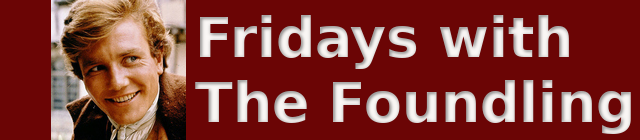
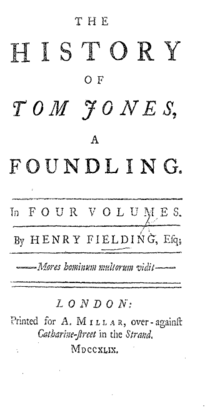
Fridays with The Foundling: An Introduction

Fridays with the Foundling
(yeah, I know, I typically hate using actor’s images when it comes to discussing the source material…but, w/o Finney, I’m not doing this)

https://www.gutenberg.org/ebooks/6593My history with Tom Jones goes back to 1995 when we watched it in class for a Survey of British Literature class. It was the week before finals, and the professor thought we all (him included) could use a little less to do, and there was no way we could’ve fit the novel into our schedule. To be fair, he interrupted the movie frequently for us to learn a little about the novel.

And, really, who cares? We got to watch the 1963 classic.

But like with all good movies adapted from a book, all it really made me want to do is read the book. If for no other reason than it being one of the first things in English that is considered a novel. It literally defined the convention of what a novel is. I’ve attempted to follow through and read the book several times. But I’ve never managed to get too far into it. The reasons vary, but I’ve just not made this particular summit. One obstacle I do remember stumbling over repeatedly is the length. I’d start reading and decide there was no way I could finish the tome before it was due back at the library. Don’t ask me why it took me until 2019 to come up with the solution: buy a copy.

So, I’m going to approach it differently this year. Every Friday, I’m going to read 4 chapters. Then post about those the next week. The chapters are pretty short, so I should be able to accomplish this with little difficulty.

Now, I reserve the right to abandon this and just finish the whole thing if I really get into the story and just can’t wait for the next regularly-scheduled reading session.

Anyone else ever read this thing? Any thoughts?

Page 369 of 624

Powered by WordPress & Theme by Anders Norén