Author: HCNewton Page 400 of 633

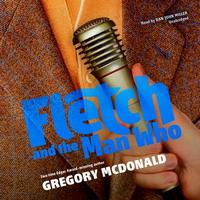
Fletch and the Man Who (Audiobook) by Gregory McDonald, Dan John Miller: Mcdonald and Fletch at their Best

Fletch and the Man WhoFletch and the Man Who

by Gregory McDonald, Dan John Miller (Narrator)
Series: Fletch, #6 (#8 Chronologically)Unabridged Audiobook, 6 hrs., 14 min.
Blackstone Audio, 2018
Read: May 14 – 18, 2019

“Good morning,” Fletch said. “As the governor’s press representative, I make you the solemn promise that I will never lie to you. Today, on this bus, we will be passing through Miami, New Orleans, Dallas, New York, and Keokuk, Iowa. Per usual, at midday you will be flown to San Francisco for lunch. Today’s menu is clam chowder, pheasant under glass, roast Chilean lamb, and a strawberry mousse from Maine. Everything the governor says today will be significant, relevant, wise, to the point, and as fresh as the lilies in the field.” …

“Is it true you saved Walsh Wheeler’s life overseas?” Fenella Baker asked.

“That’s another thing,” Fletch said. “I will never evade any of your questions.” He turned the microphone off and hung it up.

I think this is my favorite Fletch novel (that spot may actually bounce between this and Fletch’s Fortune), and I could practically recite portions of this with Miller’s narration while driving. This doesn’t mean I didn’t catch anything new, it just means that I enjoyed this time through immensely.

An old Army buddy (and C.O.) of Fletch’s calls him up for a favor — his father, Caxton Wheeler, is running for an unnamed party’s presidential nomination and has just had to fire their long-term press secretary, could Fletch step in? Minutes before Fletch arrives at the hotel the campaign is using a young woman plunged to her death from one of the rooms on the higher floors (later shown to be the candidate’s room). Fletch’s first job is to discover if she jumped or was pushed — and then to make sure that it had nothing to do with the campaign.

Sadly, it appears she was pushed — and she was associated with the campaign. Even worse, it seems like she’s the latest in a string of dead women near the campaign. Giving Fletch a quandary. He needs to figure out who is doing this killing (assuming it’s one person), insulate the candidate — and keep anyone else (i.e. the press) from printing the facts.

Fletch as an obstacle/opponent/facilitator (all at the same time) of the press in any shape is just a lot of fun. His instincts, training, and inclination is to dig into a story, find the facts on his own, and run the story. His new job is to feed information to reporters, keep them from doing any fact-finding on their own, and to hide aspects of the story. It is so fun to watch him struggle in this role.

Particularly because one of the reporters on the press bus is Freddie Arbuthnot, someone who might be a better reporter than Fletch. She’s certainly more employable than he is — as she’s a crime reporter, her presence on the campaign tells Fletch a lot about how serious this string of murderers is. Also, she’s a whole lot of fun as a character, so the reader gets something out of it, too.

Speaking of returning characters, we get Alston Chambers again — I need to do a better job of tracking his career path, but I think he’s moved up in the world a bit since we saw him last, so good for him. Alston served with Fletch under Walsh Wheeler and provides some vital information for his friend. He’s also just a great guy for Fletch to talk to and bounce things off of, helping both the character and reader to process what’s going on.

So who are the recipients for Mcdonald’s critique/satire? There are so many — tabloids (particularly the mid-80s version of them), politics, the press’ political coverage (about the horse race, not the ideas/work), pressures on a candidate (Wheeler is given drugs to wake up, keep him going and then to go to sleep because there’s no way that he could do that naturally with the pressures/pace of the campaign). Given his target-rich environment, the book could’ve been twice as long just to give Fletch the opportunity to tilt at a few more windmills and wouldn’t have lost much of its punch. Like I said with Fletch’s Moxie, it seems like his satire is even more on-point now than it was thirty years ago. Which really shouldn’t be the case.

I appreciated the fact that Mcdonald left party names out of this, and none of Wheeler’s policies can be easily labeled as belonging to one of the major parties. Anyone can read him as being one of their own (or, if they’re so inclined, one of the other guys). There’s not targeting or critique of a particular party, just the entire process.

At one point, inspired by a conversation he has with Fletch, Wheeler has a moment of statesmanship (a no-no for a candidate, Fletch is told) where he talks about the ways that technology is connecting the planet and helping share information in ways unthinkable generations earlier, and talks about how it will increase in that way. Essentially predicting the Internet as we know it. Granted, it’s a more utopian vision of the Internet rather than the dumpster fire it frequently is. But Wheeler/Mcdonald has a vision for what today is in a way that no mystery writer in 1983 should’ve.

Caxton Wheeler and his driver, Flash, will show up in a Flynn book that takes place sometime before this. They’re not there a lot, but I remember the first time I read that and it blew my mind (that was my second Flynn novel and I’d yet to find Confess, Fletch so I had no idea the universes were linked) while in Middle School.

Dan John Miller is great yet again — I’ve got nothing new to say about him. I need to track down some of his other narrations, see what I think of them.

Mcdonald shifts gears with his writing and the series after this, and I really, really wish he wouldn’t have. A few more books in the vein of Fortune, Moxie, and The Man Who would’ve been a boon to his readers, and would’ve solidified Mcdonald amongst the all-time greats. I’m sure he had his reasons, but from my vantage point (now and for the last couple of decades), he shouldn’t have. In the meantime, this work is a great mystery, fantastic commentary on politics and the media, and even a bit of prescience — bundled together with Mcdonald’s sharp prose, winning dialogue and characters that demand to be re-read. I can’t recommend Fletch and the Man Who highly enough.

—–

5 Stars
2019 Cloak & Dagger Challenge

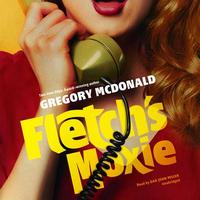
Fletch’s Moxie (Audiobook) by Gregory McDonald, Dan John Miller: Fletch Solves a Very Hollywood Murder in Key West

Fletch’s Moxie (Audiobook)Fletch’s Moxie

by Gregory McDonald, Dan John Miller (Narrator)
Series: Fletch, #5 (#8 Chronologically)

Unabridged Audiobook, 5 hrs., 51 min.

Blackstone Audio, 2018

Read: April 24 – 29, 2019

So in the last book, we met Moxie Mooney while Fletch was still a working journalist. They’d known each other for some time at this point, and it might have been just about the last time they saw each other until now, sometime following Fletch’s Fortune (when his tax problems were taken care of and he could return to the States), although she had visited him in Italy shortly before this.

Moxie’s decided she needs Fletch’s help with something, she’s got some sort of problem that needs investigating, and who better? When Fletch arrives on the movie set for her current project in Florida, he’s just in time to help her with a brand-new problem. She’s appearing on a (pre-taped, thankfully) TV interview with her business manager—the only people on the set (or near enough the set) are Moxie, her manager, and the interviewer. So when the manager is killed with a knife to the back, there aren’t a whole lot of suspects.

Fletch jumps to action and gathers a lot of information (as only he can) before the police really even know what’s going on, including an in-depth interview (that doesn’t look like one) with the widow. He then whisks Moxie away to the home of a business associate in Key West, to keep her out of the spotlight while he can do some digging into both of her problems.

Great plan, that doesn’t account for two things: 1. Moxie’s father, the illustrious stage and film actor, Frederick Mooney—known more now for a constant state of drunkenness is visiting her, too, and has to come along; 2. Moxie tells the director and most of the cast where she’s staying and they arrive, too. Having a cast of movie stars past and present staying in one house tends to attract a bit of attention—especially when they’re associated with an unsolved murder.

One thing Fletch has done recently is buying enough stock in GCN (Global Cable News—a CNN-like entity) that executives take his phone call and pay attention to his news tips. This turns out to be pretty advantageous and helps with some of his research—this will prove fruitful for future books, too.

Fletch investigates the murder in the way he does best—by talking to people and interviewing them without their realizing it and making phone calls. I just love watching him work. It’s an intricate problem and Fletch’s solution is quite clever.

This particular book gives McDonald a chance to do two things—better explore Moxie’s character (who might be a richer character than Fletch, but not one you could base a series on) and lampoon Hollywood and its approach to the art/business of movie-making. Almost everything he talks about in this 1982 book is still prevalent — and maybe moreso.

I have nothing new to say about Dan John Miller—he’s a really good narrator and perfect for the series. I assume at this point, I’ll hear his voice in my head for at least part of the time I think about this character in the future.

This isn’t my favorite Fletch book, but it’s one of the best and a great showcase for both the character and McDonald. Amusing, insightful, smart and fun—hard to ask for more.

—–
4 Stars
2019 Cloak & Dagger Challenge

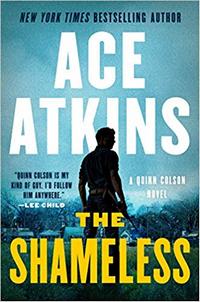
The Shameless by Ace Atkins: Tibbehah County’s Dark Past, Present and Future Combine for Atkins’ Strongest Novel Yet

The ShamelessThe Shameless

by Ace Atkins
Series: Quinn Colson, #9
Hardcover, 446 pg.
G.P. Putnam’s Sons, 2019

Read: July 23 – 24, 2019

This just feels like too much of a novel to do an adequate job with. It’s been a week and a half (at the time of writing), and I’m still thinking about this book and everything Atkins did in it. I’m honestly not up to the task of doing it right. But I’ll give it a shot, with the up-front caveat that I’m missing a lot. You just need to read this.

Twenty years ago, when Quinn was in High School, a student a couple of years older than him went missing in the woods while hunting—and everyone came out in droves to look for him. For weeks the town, the media, and the Sheriff’s Department (under Quinn’s uncle) devoted every waking hour to finding him. They eventually found his body near his rifle and ruled it a suicide. But no one was satisfied with that finding. Now, two New York journalists have arrived to re-open the case, look at things from a new perspective, and hopefully come up with enough material (and, better, a satisfying conclusion) for the next season of their podcast about missing people.

Quinn’s new wife, Maggie, had been the boy’s girlfriend and initially helps the podcasters out a lot. The boy’s family isn’t united about this new search for answers, but most people are willing to help (while being suspicious of the two). A lot of old secrets, old prejudices, and unanswered questions and qualms are brought forth from the recesses of the collective memory of the community. A tragedy that had shaken the county decades previously is doing the same thing again.

These two are in town for months, stirring up trouble, stirring up gossip, stirring up emotions (sometimes intentionally, sometimes not), and generally being a distraction for Quinn. He’d frankly love to devote energy, time and attention to solving a cold case, but there’s a bigger, more dangerous, and frankly, very contemporary threat—Senator Jimmy Vardaman. Vardaman’s been on the fringes (and frequently closer) to the problems around Tibbehah County for quite some time, but now he’s running in the gubernatorial primary and is doing much better than expected. If he wins this, he’s a shoo-in for the actual election. Tapping into a false sense of nostalgia for the Mississippi that never was, a healthy dose of racism, and empty platitudes—and a healthy dose of Syndicate cash—Vardaman’s doing better than anyone expected.

There are a number of crimes that Quinn strongly believes are tied to Vardaman, but he can’t find enough proof. Every time he comes close, something prevents it from happening—he has a few opportunities here to bring Vardaman down before primary and devotes all his energy toward them. One of the strongest themes running through this novel is the intersection of crime and politics, and how that affects both enterprises. Too often (in fiction and reality), politics boils down to the influence of and lust for money and power—which is pretty much what crime (particularly the more organized forms of it) is. Vardaman’s not the only example this series or this novel has of it, but he’s the current exemplar in Atkins’ world.

Meanwhile, Fannie Hathcock is still running the show when it comes to illicit materials and licit (but not fully-clothed) women in Tibbehah County. Recent events have left things shaky for her, and Vardaman’s ascent (and those he owes favors to) will make things shakier. We don’t see much of what that means in this book, but I think we will soon. I don’t think Fannie is a woman to be taken lightly—the power structures on both sides of the law may be less-than-welcoming to a woman—and I don’t expect her to go quietly (if she goes at all).

My biggest complaint is about Boom Kimbrough. Yes, Quinn’s best friend and staunchest ally (no offense to Maggie or Lillie), is a presence throughout—but is absent from the major story, and his subplot doesn’t get that much space. Boom’s primarily recovering from—to some extent—the events of The Sinners, and that’s about all we see from him. He and Caddy spend a lot of time together, but if he has more than one conversation with Quinn, I’d be surprised. I should’ve taken notes on that front (but who’d have thought I’d have to?). I assume we’ll see more of him in future books—I just don’t want to wait.

Using the podcast—and the stir it creates—to revisit many of the characters’ storylines, see how they got to where they are now (possibly to look at them in a different light)—is a brilliant move and Atkins uses it very effectively. There are moments recalled because of this podcast that I’d forgotten about or hadn’t seen in relation to the greater story arcs. Also, it’s a great way to help the reader see that other parts of the county may not see Quinn’s actions the same way the reader has. By using the podcast, Atkins is able to create drama with this as well as avoiding several dull information dumps.

Something that I don’t particularly enjoy—but respect and appreciate—is the way things ended. I’ve seen several people call it a cliff-hanger of an ending. I don’t really see it that way, but I can see where they’re coming from. Now, I’m not going to get into the details for obvious reasons (for one, I’m not a monster), but I can say that it was a very noir ending. Which fits, this is a dark series—fun, sometimes funny—but a real Southern noir. This is Colson at the noirest, particularly the last chapter. It was a perfect ending to a great book—so don’t take my not particularly enjoying as a complaint. I’d prefer an ending where justice triumphs, evil is vanquished, and Quinn rides off into the sunset. That ain’t the world we live in, that’s not the world of Tibbehah County, and this novel is better at showing us than the others have been (not that things like a tornado wiping out huge parts of the county are exactly rainbows and unicorns, either).

Can this be read as a jumping-on point? I actually think it can—it easily serves as a “Where We Are Now/Where We Have Been” novel. But just know that you’re going to want to go back and read the others to understand everything talked about (much of which is alluded to, rather than explained—the way you’d talk to an old friend about something that happened four years ago). Obviously, the best thing to do is get The Ranger and work your way up to this point, but this would be the best jumping-on point since The Ranger.

The Shameless is the longest novel in the series, easily the most ambitious, and very possibly the best (I can’t think of a better one, but I’d have to re-read them. Which isn’t a bad idea, actually.). It feels like a change in the series—which is hard to describe without spoiling, but if Chapter One was Quinn’s struggles against Stagg, Chapter Two would be everything up to this book until Stagg went to prison, and then Chapter Three is whatever comes after The Shameless. Something tells me this small-town sheriff is missing the days when his biggest problem was Stagg.

I really can’t recommend this enough—Quinn Colson and Ace Atkins are some of the best in the genre today and The Shameless is the best proof of that.

—–
5 Stars

2019 Library Love Challenge2019 Cloak & Dagger Challenge

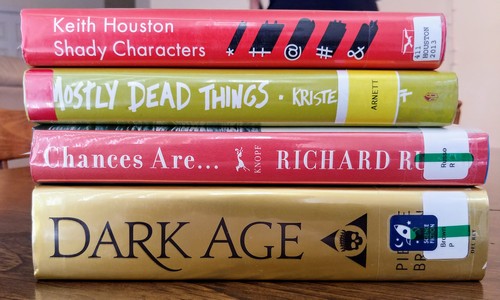
Library Haul 8/3/19, My Eyes are Bigger than My Stomach

Sometimes it really hurts when most of your Library Hold list becomes available at the same time.

Case in point:

That’s my library haul for today. 1,654 pages of reading ahead of me—1,410 pages of which are due back on 8/17. Sure, that’s a very doable number, but at least a thousand of those pages are going to be slow work. Oh, and there’s the new Robert Crais book that should be arriving in my mailbox Tuesday (and you know I can’t let that sit around unread).

Honestly, it’s not that big of a problem (and a great problem to have!), but man…I look at that stack and just feel tired. Anyone else ever do this to themselves?

Saturday Miscellany—8/3/19

A very diverse batch for ya this week, but there are some gems here among the odds ‘n ends over the week about books and reading that caught my eye. You’ve probably seen some/most/all of them, but just in case:

    This Week’s New Releases I’m Excited About and/or You’ll Probably See Here Soon:

  • Chances Are . . . by Richard Russo—this seems out-of-the-norm for Russo, but should still be worth the read
  • Dark Age by Pierce Brown—another installment in the Red Rising saga, this one is huge and looks good. A little daunting, really.

Lastly, I’d like to say hi and extend a warm welcome to lindajacksonblog and Self Development for following the blog this week.

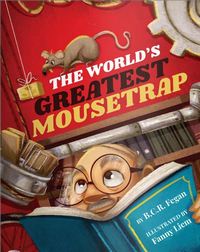
The World’s Greatest Mousetrap by B.C.R. Fegan, Fanny Liem: A Cute Little Story about a Bookshop under Siege

The World's Greatest MousetrapThe World’s Greatest Mousetrap

by B.C.R. Fegan, Fanny Liem (Illustrator)

Kindle Edition, 44 pg.
TaleBlade, 2019
Read: June 4, 2019


I can’t believe I did this, but I noticed a couple of months ago that there was a new B.C.R. Fegan book out and since TaleBlade didn’t offer one to me, I ponied up a little cash for it. Clearly, TaleBlade’s following a tried and true business model, get someone hooked on some free samples and they’ll pay for more (and I’ll happily do it again).

This is the story of Reginald, a pleasant-seeming bookstore owner who loves to read in quiet when not selling books. One day he hears a mouse in his shop and goes about setting a series of traps, each more complicated than the last, to catch it. He can’t have a little animal ruining his peaceful reading time. The mouse is cleverer than any outside of animation or children’s literature so it evades the traps — up to and including a Rube Goldberg-esque device—leading to calamities for Reginald and his customers. Whatever will Reginald do? How will he enjoy a book?

Maybe it’s just me, but the text seems a bit denser than is typical for a Fegan book. Not dense as in complicated, don’t worry, this is still picture book territory. But there seems to be more of it—a more involved story than usual. That’s not good or bad—just an observation. I didn’t find it as full of whimsy as usual, but it’s an okay story.

Liem’s illustrations are beautiful, incredibly detailed, and will likely keep young readers captivated. I’m not sure if it’s different in the hard copy or not, but it seems to me that they don’t always sync properly with the text—sometimes depicting events the text hasn’t gotten to for a couple of pages. That bothered me a bit, but it’s not a deal-breaker.

A charming little tale, but didn’t seem to have the typical Fegan magic. Which isn’t to say it’s a bad book, just not a great one. Not every hit has to be a home-run or triple, a good on-base single gets the job done, and that’s what we have here (and probably a month’s worth of sports analogies for me). A cute little book that will be a favorite of some kids, I have no doubt, but that didn’t have the magic some of Fegan’s others do. I recommend it, but I know he’s done better, so get those, too.

—–
3 Stars

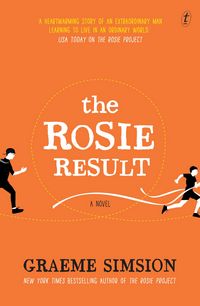
The Rosie Result by Graeme Simsion: The Last Volume of the Trilogy Recovers most of the Magic of The Rosie Project

The Rosie ResultThe Rosie Result

by Graeme Simsion
Series: Don Tillman, #3Hardcover, 376 pg.
Text Publishing, 2019
Read: July 16 – 19, 2019

So I loved The Rosie Project Simsion’s tale of a geneticist who is probably on the Autism spectrum, but has never been diagnosed, setting out to find a romantic partner in the most scientific way he can. It was charming, funny, and hit all the right emotional notes. If you haven’t read it, go do so now. The sequel, The Rosie Effect, about the early days of Don and Rosie’s marriage had a lot of the same traits but fell short on the story and heart. Which gave me a lot of pause when I saw a third volume was coming out a few months ago. But curiosity got the better of me, and I picked up a copy from the Library.

Phew! Simsion’s remembered what made Project so successful. It’s not quite as good, but it’s close enough for me.

Don and Rosie move back to Australia after a decade-plus in NYC. He’s returned to his university, Rosie’s got a major research position. They didn’t consult their son about the move, that’s causing all the problems associated with someone on the verge of adolescence being moved thousands of miles away from everything he’s ever known. To complicate things, Hudson’s a lot more like his dad than even Don realized. Incredibly intelligent, opinionated, precise, overly literal, socially awkward and stubborn. Throw a kid like that into a new school, new country, with no friends or teachers who know him—especially when he’s unhappy—and you have a recipe for disaster.

Which is precisely what Don and Rosie have on their hands. Hudson’s school is on the verge of expelling him but is willing to make allowances for someone diagnosed with Autism—while taking them out of the mainstream classes and educational path. Neither of his parents are all that interested in that course and begin working with Hudson on ways to fit in.

To add to that, Don’s fallen victim to the outrage culture of contemporary universities by answering a question about skin tone straight-forward and matter-of-factly with no thought of political/social connotations of his words. It was, of course, caught on video and has put his entire career in jeopardy. Rosie is dealing with a boss who seems to favor another member of the team she’s nominally leading and blatant misogyny from the boss and that team-member.

Don decides to take a leave of absence from his job (handing a victory to those wanting his head, but protecting his job so he can return after the dust settles) and sets out to help Hudson in a strategic fashion like he had done for himself on various fronts. With help from family and friends, he sets out to help Hudson gain some friends, become able to participate in group sports, dress like a normal kid, and essentially fit in.

There are lots of ups and downs along the way—Hudson does grow, but not in all the ways Don wants or expects. Don does, too—even making a friend who’s into homeopathy and against vaccines (even if he’s committed to showing her the error of her ways).

I do wish Rosie had been a bigger presence in this book, that’s my biggest complaint, really. Not just because her name is in the title, but she’s Hudson’s mom and Don’s wife. She should’ve had more to do in the story rather than being relegated (for reasons the story allows for) to a supporting character.

The basic theme of the book is about embracing who you are and finding a balance between fitting in with society and compromising who you are—if you’re on the Spectrum or not. In addition to having a lot of humor and heart, the overall tone is hopeful, oddly optimistic. It’s a great, heartwarming read that will remind readers why they loved the character of Don Tillman and will provoke a lot of thought while providing a great amount of entertainment.

—–

4 Stars

2019 Library Love Challenge Humor Reading Challenge 2019

July 2019 Report

July in a nutshell: 24 books, 6757 pages (roughly 1400 more than June). There were a couple of stinkers here, but mostly really good books, 3.6 average — 3 of them were 5-star!

I’m a bit frustrated with how behind I’m getting, 3-4 book posts a week just isn’t enough. I may have to grab a couple of 800 page books to slow down the pace so I can catch up 🙂

Still, all things considered, it was a good month around here between reading some great stuff, having a lot of fun with #IndieCrimeCrawl, and some great interaction with readers both here and elsewhere on teh IntraWebz.

Anway, here’s what happened here in July.

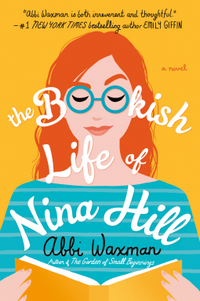
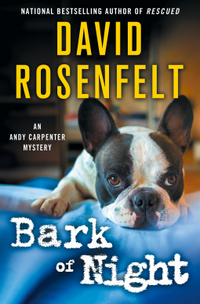
 Finest Sh*t! The Bookish Life of Nina Hill Bark of Night
3.5 Stars 5 Stars 4 Stars
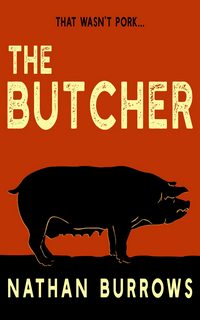
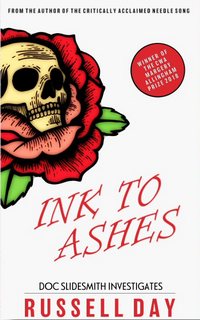
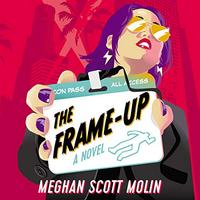
The Butcher Ink to Ashes The Frame-Up (Audiobook)
3.5 Stars 4 Stars 4 Stars
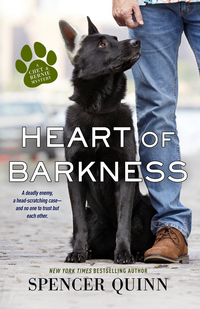
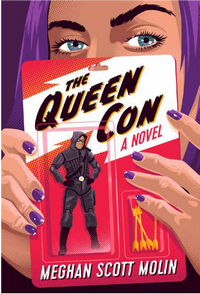
Heart of Barkness Gravity The Queen Con
4 Stars Still Deciding 3.5 Stars
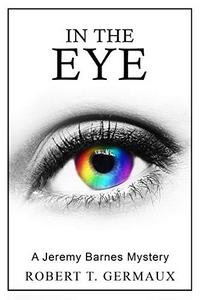
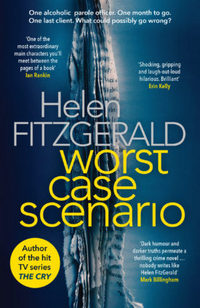
In the Eye Worst Case Scenario The Blue Zones Solution (Audiobook)
3 Stars 4 Stars 2 Stars
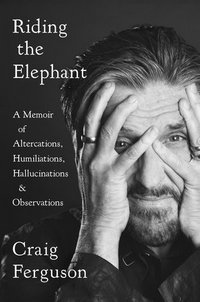
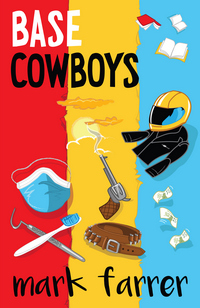
Riding the Elephant The Rosie Result Base Cowboys
3 Stars 4 Stars 3 Stars
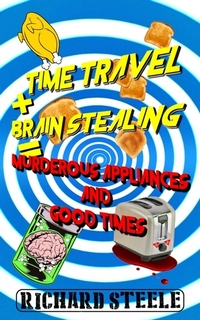
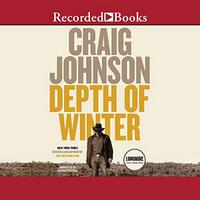
Time Travel + Brain Stealing = Murderous Appliances and Good Times The Depth of Winter (Audiobook) The Shameless
Still Deciding 3 Stars 5 Stars
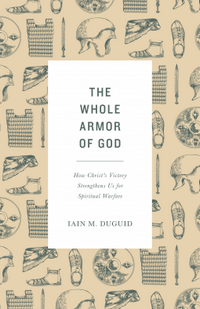
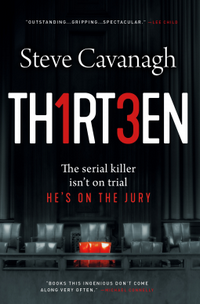
Nightfall The Whole Armor of God Thirteen
4 1/2 Stars 3.5 Stars 5 Stars
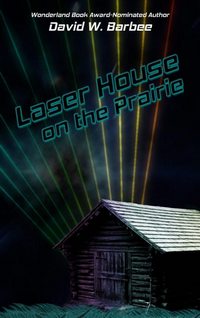
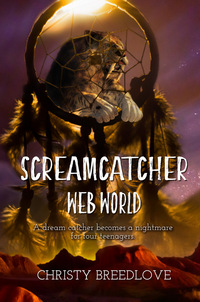
Laser House on the Prairie Screamcatcher Ashes of Honor (Audiobook)
3.5 Stars 3.5 Stars 4 1/2 Stars

Reformed Dogmatics, Volume 4: Soteriology Heaven on Earth The Bitterest Pill

5 Stars 3 2 1/2 Stars 0
4 1/2 Stars 2 2 Stars 2
4 Stars 6 1 1/2 Stars 0
3.5 Stars 7 1 Star 0
3 Stars 4
Average = 3.6


Physical Books: 1 Added, 2 Read, 24 Remaining
E-Books: 2 Added, 5 Read, 20 Remaining
Audiobooks: 3 Added, 2 Read, 6 Remaining

2019 Library Love Challenge

2019 Library Love Challenge

  1. The Blue Zones Solution(Audiobook) by Dan Buettner, Joe Barrett
  2. Riding the Elephant by Craig Ferguson
  3. The Rosie Result by Graeme Simsion (link forthcoming)
  4. The Depth of Winter (Audiobook) by Craig Johnson, George Guidall
  5. The Shameless by Ace Atkins (link forthcoming)

While I Was Reading 2019 Challenge

✔ A memoir or biography of a favorite celebrity: Riding the Elephant by Craig Ferguson
✔ A book written by a comedian: Riding the Elephant by Craig Ferguson
✔ A book with your favorite animal on the cover or in the title: Heart of Barkness by Spencer Quinn

LetsReadIndie Reading Challenge

#LetsReadIndie Reading Challenge

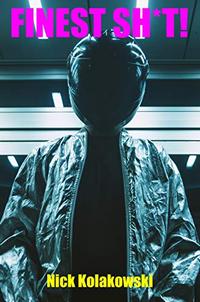
  1. Finest Sh*t!: Deviant Stories by Nick Kolakowski
  2. The Butcher by Nathan Burrows
  3. Ink to Ashes by Russell Day
  4. Gravity by Maggie Lynch (link forthcoming)
  5. In the Eye by Robert Germaux
  6. Worst Case Scenario by Helen Fitzgerald
  7. Base Cowboys by Mark Farrer
  8. Laser House on the Prairie by David W. Barbee (link forthcoming)
  9. Time Travel + Brain Stealing = Murderous Appliances and Good Times by Richard Steele (link forthcoming)
  10. Nightfall by Matt Cowper (link forthcoming)
  11. Screamcatcher by Christy J. Breedlove (link forthcoming)
2019 Cloak & Dagger Challenge

2019 Cloak & Dagger Challenge

  1. Finest Sh*t!: Deviant Stories by Nick Kolakowski
  2. Worst Case Scenario

  3. The Butcher by Nathan Burrows
  4. Ink to Ashes by Russell Day
  5. In the Eye by Robert Germaux
  6. Worst Case Scenario by Helen Fitzgerald
  7. Base Cowboys by Mark Farrer
  8. The Depth of Winter (Audiobook) by Craig Johnson, George Guidall
  9. The Shameless by Ace Atkins (link forthcoming)
  10. Bark of Night by David Rosenfelt
  11. The Frame-Up (Audiobook) by Meghan Scott Molin, Andrea Emmes
  12. Heart of Barkness by Spencer Quinn
  13. The Queen Con by Meghan Scott Molin (link forthcoming)
  14. Thirteen by Steve Cavanagh
Humor Reading Challenge 2019

Humor Reading Challenge 2019

  1. Riding the Elephant by Craig Ferguson
  2. The Rosie Result by Graeme Simsion (link forthcoming)
2019 Cloud of Witnesses Reading Challenge

2019 Cloud of Witnesses Reading Challenge

    Nothing this month.

How was your month?

The Blue Zones Solution (Audiobook) by Dan Buettner, Joe Barrett: Uninspiring tales about efforts to prolong longevity

The Blue Zones Solution (Audiobook)The Blue Zones Solution: Eating and Living like the World’s Healthiest People (Audiobook)

by Dan Buettner, Joe Barrett


Unabridged Audiobook, 7 hrs., 5 mins.
Blackstone Audio, Inc., 2015
Read: July 12 – 16, 2019

As part of some medical education I’m getting, The Blue Zones was recommended to me. I couldn’t find an easily accessible copy of it, but my library did have one of the follow-ups, The Blue Zones Solution on audio. So I gave it a whirl.

There are a couple of aspects to the beginning of this book, he does a quick pass through over some of the “Blue Zones” from his first book (areas with above-normal centenarian population) to extract some common principles. This was too-much of a follow-up on what he’d already done to be a benefit to those who hadn’t read the first book. He also detailed ways his foundation tried to create Blue Zones in the US following these principles for communities that requested it.

Something bothered me about the way that was carried out, but I can’t articulate it without having the book in front of me to point to specific passages.

Lastly, he talks about ways you can create mini-Blue Zones in your home. Most of the advice given here is better delivered in other sources (like say, How Not to Die by Michael Greger).

Most of the support for the principles—especially as described here, is anecdotal, and the mantra “Correlation does not imply Causation” that was pounded into my head in college kept running through my mind. Maybe the original book would’ve convinced me—this did not. There was certainly a cornucopia of anecdotes (and a couple were hard to follow from chapter to chapter, to be honest, but that might be due to my lack of interest).

One of the principles is a commitment to/participation in religious practices. Religious activity is recommended without any regard for the truth involved. That bothers me tremendously. His later treatment of “Adventists” as a group equivalent to an ethnicity or population of a city/island/geographic area—and again, it was only the lifestyle habits, not the premises, presuppositions, and beliefs that undergird those habits that were encouraged. Selling the tree without the root isn’t going to produce much fruit or shade.

I don’t have any strong opinions about this as an audiobook, although I found Barrett’s pronunciation of “plantain” annoying (however correct). But so much of the benefit of the book depends on looking at the PDF that came with it. That’s where some of the data and all of the recipes are. So much of the useful part of the book isn’t in the audio. That’s not a deal killer, but as I was pretty down on the book already, it didn’t help.

The book didn’t do anything for me at all. I’m just not the audience for it, maybe if I’d read the first book and was curious about applying the lessons, I’d be interested. But I just didn’t see the point of this one.

—–

2 Stars

2019 Library Love Challenge

WWW Wednesday, 31-July-2019

Welcome to WWW Wednesday! Something I’m really enjoying as I find myself falling further and further behind with posts.

This meme was formerly hosted by MizB at A Daily Rhythm and revived on Taking on a World of Words — and shown to me by Aurore-Anne-Chehoke at Diary-of-a-black-city-girl. I had fun with this last week, thought I’d try again.

The Three Ws are:

What are you currently reading?
What did you recently finish reading?
What do you think you’ll read next?

Easy enough, right?

What are you currently reading?

I’m about 19% into an eARC for Robert B. Parker’s The Bitterest Pill by Reed Farrel Coleman, Coleman’s 6th Jesse Stone novel. It’s off to a great start. And I’m less than an hour away from finishing Ashes of Honor by Seanan McGuire, with Mary Robinette Kowal narrating.

What did you recently finish reading?

Yesterday, I tore through Laser House on the Prairie by David W. Barbee, and today, I managed to polish off Screamcatcher by Christy J. Breedlove.

What do you think you’ll read next?

I’m not sure what my next audiobook will be, I should probably figure that out before my commute tomorrow. My next book will probably be Chances Are . . . by Richard Russo. I just got word that it’s waiting for me at the library.

Hit me with your Three W’s in the comments!

Page 400 of 633

Powered by WordPress & Theme by Anders Norén