Author: HCNewton Page 405 of 633

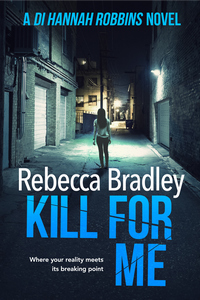
Kill for Me by Rebecca Bradley: Compelling seems an inadequate word to describe this Police Procedural

Kill for MeKill for Me

by Rebecca Bradley
Series: DI Hannah Robbins, #5

Kindle Edition, 275 pg.
2019

Read: June 20 – 22, 2019

           …it had happened the way he planned it and there was no use crying over a perfect plan. The one surprise was how well it had all gone. How easy it had been to manipulate people. Like pieces on a chess board they had done as he told them to. They’d moved where he told them to move and done as he’d told them to do. He felt powerful and it was a feeling he liked and could get used to…

He could create a vicious circle where the police could never catch up . . . and he was pulling the strings but not a single strand of his DNA was left at the scene. It was priceless.

Pure genius. He was a genius.

There were enough people in the world who were more interested in saving themselves than anything else that they would do as he told them to.

There were some fun times ahead.

So like the last DI Hanna Robbins book I read — The Twisted Web — so much of the success of Kill for Me comes down to the hook. Obviously, how well she delivers on the promise of the hook is as essential, but without that hook, who’s going to read on?

As you can see above, it’s a great hook — our nameless “He” puts this single mother in a no-win situation. He’s manipulated her daughter’s school, compromised her communication with the outside world and has her daughter. All he requires her to do is kill someone, and then her daughter will be returned. Once he’s done with her, he moves on to someone else. And someone else. And someone else. Each time, the lever he uses to pry his victim into action is different — the life of a daughter, threatening to expose wrongdoing and ruining the life of a spouse as well as his victim, threatening to use falsified pictures of a child, and so on. Rather than risk whatever he’s threatening — “saving themselves” (or someone else) — these victims will do “anything else. . . he told them to.”

Murder by proxy. Spree killing by proxy, really. What starts off as killing for some dark purpose quickly evolves into killing because of the thrill gained by manipulating others — being a puppet master who happens to have deadly puppets

It’s gripping. It feels plausible. It feels like a story in the news from next week.

Does Bradley deliver? Yes. Not in the way I expected things to go once I got to the quotation above, but in a way that was so much better. This is the third novel of Bradley’s I’ve read in the past ten months. Each one had a fantastic premise, a hook as shiny and sharp as anyone could want — and each time she uses that hook to reel in her readers in the manner of a seasoned pro. I’m not going to say more than that so I don’t risk giving something away.

I wasn’t crazy about the Epilogue — it was an efficient way to wrap up what needed to be wrapped up, take care of remaining details, etc. If she hadn’t written it up in a nice summary fashion like she did, it would’ve taken a chapter or two. But it felt rushed, too compressed and perfunctory. It did what needed to be done, but in a way that left me unsatisfied. It’s a small thing compared to the rest of the book, but Bradley didn’t do the novel any favors with that.

As effective as Bradley is with premises (and following through with them), she’s great with the emotional core of the story and characters. I wonder from time to time if she doesn’t give enough space to the “procedural” part of “police procedural” (in at least two of the three books by her that I’ve read). In this book in particular there were two lines of inquiry that I thought Hannah and her team could’ve — should’ve — done better with. Thanks to a recent binge-watch with my wife, I had visions of DCI Gill Murray eviscerating Hannah for leaving them untouched. But the reader will either not notice those points, or won’t care, because Bradley will suck you into the innermost thoughts and feelings of the victims and the police investigating the crimes (and, in some ways, with the killer). I sympathized and empathized with each of these victims — understanding why they felt they had no choice but to dance to the wicked tune he was playing, turning themselves into the kind of monster they couldn’t imagine ever being.

The same is true for Hannah Robbins and her team — you see the turmoil caused by this case, the way it gets under their skin — as well as personal and professional crises/upheaval changes for Hanna, her right hand man, and others. I’m still trying to suss out all the various plotlines, character arcs and motivations when it comes to the police thanks to coming to this series so late — but I’m very interested in the way a couple of them play out. One thing along those lines that Hannah seems to think has been resolved, has almost certainly not been resolved and will blow up in a book or two, and I’m very curious about it.

Whether we’re talking about new characters or established ones, victim or police trying to help them — Rebecca Bradley infuses these characters with enough genuine emotion, authentic desire and undeniable and relatable reactions to the madness surrounding them that she can do pretty much what else she wants and readers will follow.

In addition to writing compelling stories, Bradley seems to have many things to say about our mobile devices, social media, personal security and the way these three ideas need to be carefully reevaluated by ourselves and others needing some sort of court order (it seems) to reconsider the way we utilize this new technology.

I’m finding myself becoming a real fan of Rebecca Bradley and DI Hannah Robbins both, and this book is a large part of why. Compelling doesn’t seem to be an adequate adjective for these books and this author. Fans of police procedurals should get their hands on these books right off. This would be a great jumping on point for a new reader, and a great maintenance fix for people familiar with Hannah Robbins and her brand of investigation.

—–

4 Stars

LetsReadIndie Reading Challenge 2019 Cloak & Dagger Challenge


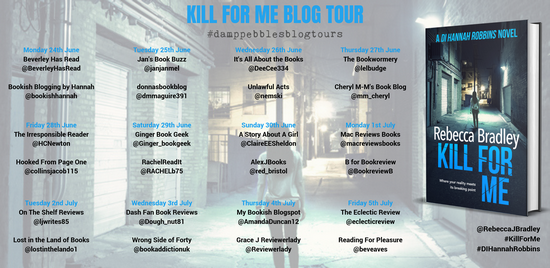
My thanks to damppebbles blog tours for the invitation to participate in this tour and the materials (including a copy of the novel) they provided.

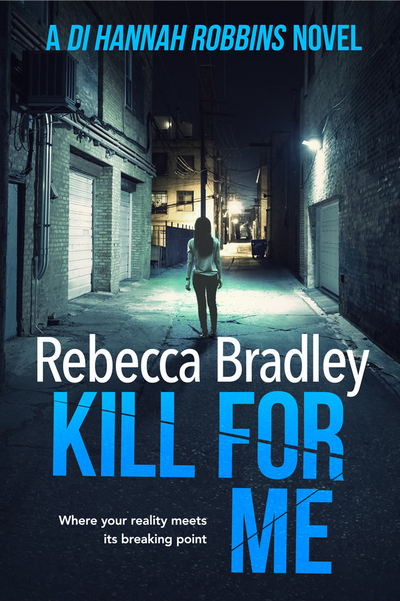
BOOK SPOTLIGHT: Kill for Me by Rebecca Bradley

Today I welcome the Book Tour for the gripping and powerful Kill for Me by Rebecca Bradley. Along with this spotlight post, I’ll be giving my take on the novel here in a bit. But before I get to talking about the book, let’s start by learning a little about this here book, okay?

Book Details:

Book Title: Kill for Meb by Rebecca Bradley
Release date: February 14, 2019
Format: Ebook/Audiobook
Length: 275 pages

Book Blurb:

A deadly game. An unstoppable killer. The perfect alibi.

Lucy Anderson is late collecting her daughter from nursery. A mistake that could prove fatal.
Her daughter is gone and there is only one way Lucy can get her back. The ransom is simple, she has to kill someone…

And this is just the beginning. A deadly game with a domino effect has started as the real killer forces others to do his bidding.

Can detective inspector Hannah Robbins find the killer’s next puppet before they’re forced to strike or will this be the case where her opponent has found the perfect way to kill?

Pick up Kill For Me for impossible choices and moral dilemmas and see where you would fall.

For fans of Peter James and Angela Marsons

About Rebecca Bradley:

Rebecca BradleyRebecca Bradley is a retired police detective. She lives in the UK with her family and her two cockapoo’s Alfie and Lola, who keep her company while she writes. Rebecca needs to drink copious amounts of tea to function throughout the day and if she could, she would survive on a diet of tea and cake while committing murder on a regular basis, in her writing of course.

She writes the DI Hannah Robbins police procedural series and has also released a standalone novel, Dead Blind, about a cop who acquires prosopagnosia, also known as face blindness.

To receive a free novella sign up to her readers’ club and you will be able to download the prequel to Hannah Robbins series. Find it on the blog at rebeccabradleycrime.com You’ll also be provided exclusive content and giveaways.

Rebecca Bradley’s Social Media:

Twitter ~ Facebook ~ Website ~ Instagram ~ Amazon Author Page

Purchase Links:

Amazon UK ~ Amazon US


My thanks to damppebbles blog tours for the invitation to participate in this tour and the materials (including a copy of the novel) they provided.

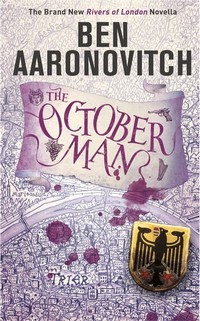
The October Man by Ben Aaronovitch: Meeting Peter Grant’s German Counterpart

The October ManThe October Man

by Ben Aaronovitch
Series: The Rivers of London, #7.5

Hardcover, 208 pg.
Subterranean Press , 2019
Read: June 19 – 21, 2019

So about the time that the one German Magic Practitioner hears that Nightengale has taken on an apprentice in Peter Grant, she decides that it’s time for Germany to do the same — keeping the playing field level, and all — she finds that apprentice in a second generation police officer, Tobias Winter. We meet Tobias a few years into things when he’s called away from leave time to investigate something that may be supernaturally related.

He recognizes vestigia right away — although I think the manner of death would be a pretty big tip off, no matter what. A mysterious fungal rot that covers him in precisely the way that fungus doesn’t cover people. I can’t do justice to how creepy it sounds when Tobias narrates it for us — you’ll have to read it.

Tobias is teamed up with Vanessa Sommer, a local police officer who knows the area, knows a bit about the particular fungus, and is super-curious about magic. Naturally, there’s an encounter with a River or two, and an interesting take on regional history — because this is a Rivers of London novel, what else are you going to get?

It’s a quick read with great story and the kind of people that Aaronovich fills his books with — these just happen to speak German and look at things in a different way from Peter and those he usually runs with — Tobias isn’t as funny as Peter, but he’s amusing to read and handles things in ways that Peter doesn’t. Still, at the end of the day, Peter’d be happy getting the same result (and probably would be jealous how little property damage that Tobias inflicts before wrapping up the investigation).

We’ve been given glimpses of what Nightengale and his fellows got involved in during WWII, but here we get more details — from the German point of view. It’s always been clear that happened wasn’t pretty — but I didn’t realize just how devastating it was until now. It’s also interesting to see just how significant it was for Nightengale to make Peter an apprentice. He essentially kicked off an international magical arms race (of sorts). Don’t get me wrong, the main point of this book is to be introduced to new characters, to see how magic is dealt with somewhere that isn’t London — but man, what we learn about things in London is fascinating.

I don’t know how this qualifies as a novella — even a “long novella,” as I’ve seen it marketed. I have several novels within reach of me right now that are smaller than this. It’s a semantic thing, but book nerds are supposed to be into words — so I don’t get it. Two hundred eight pages does not mean novella to me. If someone can explain it (or point to where Aaronovitch or Subterrerean Press explained it already), I’d appreciate it. Just to scratch that intellectual itch.

Aside from what to call this book, I enjoyed it. Tobias is an good character, he’s no Peter Grant, but he’s not supposed to be (in either Aaronovitch’s mind or the German practitioners’). I’d like he and Peter or he and the Nightengale to brush up against each other — or to have extended contact (like FBI Agent Reynolds and the Folly have had). If Aaronovitch decides on writing another novella/novel/adventure with him, I’d jump on it. But I’m not going to be waiting expectantly — if he doesn’t want to write another (or sales don’t justify it), I can be satisfied with just this much that we’ve been given here.

This’d be a great jumping on point for someone who wants to get a feel for the Rivers of London and Aaronovitch’s style. It’s also a great way for devoted fans of that series to dabble in something new, get a fresh perspective and realize that Peter Grant’s world is smaller than he realizes — while enjoying a creative and fun story.

—–

3 Stars

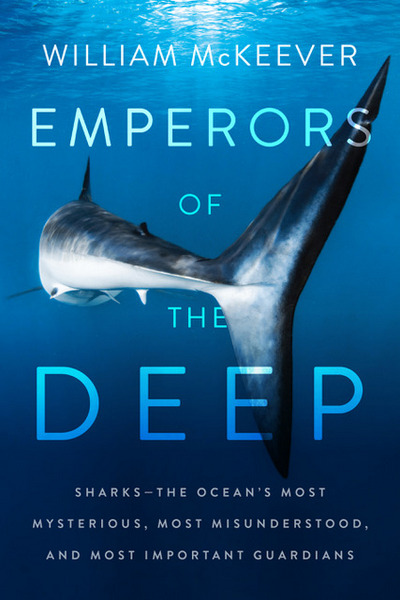
BOOK SPOTLIGHT (and Giveaway!): Emperors of the Deep by William McKeever

Today I’m pleased to welcome the Book Spotlight Tour for Emperors of the Deep by William McKeever. Who doesn’t find sharks fascinating?. Check out the information about the book or just scroll down to the end of the post and enter the givewway — or just go buy it.

Book Details:

Book Title: Emperors of the Deep by William McKeever
Publisher: Harper Collins
Category: Adult Non-Fiction
Release date: June 25, 2019
Format: Ebook/Hardcover/Audiobook
Length: 320 pages
Content Rating: PG-13 + M (Intense underwater moments and descriptions of interactions with Sharks both in diver and hunting situation)

Book Blurb:

In this remarkable groundbreaking book, a documentarian and conservationist, determined to dispel misplaced fear and correct common misconceptions, explores in-depth the secret lives of sharks—magnificent creatures who play an integral part in maintaining the health of the world’s oceans and ultimately the planet.

From the Jaws blockbusters to Shark Week, we are conditioned to see sharks as terrifying cold-blooded underwater predators. But as Safeguard the Seas founder William McKeever reveals, sharks are evolutionary marvels essential to maintaining a balanced ecosystem. We can learn much from sharks, he argues, and our knowledge about them continues to grow. The first book to reveal in full the hidden lives of sharks, Emperors of the Deep examines four species—Mako, Tiger, Hammerhead, and Great White—as never before, and includes fascinating details such as:

  • Sharks are 50-million years older than trees;
  • Sharks have survived five extinction level events, including the one that killed off the dinosaurs;
  • Sharks have electroreception, a sixth-sense that lets them pick up on electric fields generated by living things;
  • Sharks can dive 4,000 feet below the surface;
  • Sharks account for only 6 human fatalities per year, while humans kill 100 million sharks per year.

McKeever goes back through time to probe the shark’s pre-historic secrets and how it has become the world’s most feared and most misunderstood predator, and takes us on a pulse-pounding tour around the world and deep under the water’s surface, from the frigid waters of the Arctic Circle to the coral reefs of the tropical Central Pacific, to see sharks up close in their natural habitat. He also interviews ecologists, conservationists, and world-renowned shark experts, including the founders of Greenpeace’s Rainbow Warrior, the head of the Massachusetts Shark Research Program, and the self-professed “last great shark hunter.”

At once a deep-dive into the misunderstood world of sharks and an urgent call to protect them, Emperors of the Deep celebrates this wild species that hold the key to unlocking the mysteries of the ocean—if we can prevent their extinction from climate change and human hunters.

Purchase Links for Emperors of the Deep:

Amazon ~ Barnes & Noble
Add to Goodreads

Book Trailer:

MBS_TRAILER_04052019_2 Min from Wmckeever on Vimeo.

(Vimeo tells me it might not show correctly, if that’s the case, click here to watch the trailer. It’s one of the best looking book trailers you’ve ever seen — you really should watch it)

About William McKeever:

William McKeever

William McKeever is a writer and documentary Filmmaker. He is the founder of Safeguard the Seas, an NGO dedicated to ocean conservation. He is the producer and director of the forthcoming feature-length documentary Man Bites Shark.

Connect with the author: Website ~ Twitter ~ Facebook ~ Instagram

GIVEAWAY:

Win a copy of Emperors of the Deep (1 winner / open to USA only)

(ends July 20, 2019)

a Rafflecopter giveaway

https://widget-prime.rafflecopter.com/launch.js

(if the Rafflecopter script isn’t working, just click here — it’s not as pretty, but it works)

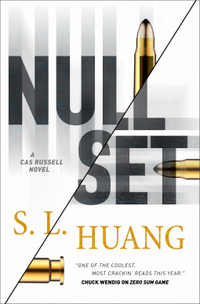
Null Set by SL Huang: Cas Russell — the world’s most violent mathematician — gets proactive fighting crime.

Null SetNull Set

by SL Huang
Series: Cas Russell, #2

eARC, 288 pg.
Tor Books, 2019

Read: June 17 – 19, 2019

In the aftermath of Zero Sum Game, Cas and her associates are seeing the fallout from taking down those telepaths who’ve been reigning in expressions of human corruption, and it’s not pretty. So, she takes it upon herself (with a little help from her friends) to fight crime in LA — à la that rich guy in Gotham, that lawyer in Hell’s Kitchen, or the sole survivor of the Cavendish ambush of the Texas Rangers. She’s making a difference, but not as much as she wants, until she decides to take a more proactive approach.

I’ll skip the details, but what she comes up with (and talks her team into helping with) is a combination of technology, psychology and her genius. It’s so successful that every major criminal figure in LA would happily kill her several times over if they only knew what she was doing and who was doing it. Of course, many of these people are former/potential future customers. This little dance she does, while trying to get the goods on one player in particular, is a whole lot of fun to watch.

It’s also fascinating watching Cas’ develop a conscience, and then let it take her in ways that bring her into conflict with her team. They go along with her, but with reservations. In many ways, she’s grown from the woman we met in the opening of Zero Sum Game — but in so many ways she hasn’t. The heavy drinking she indulges in/retreats to testifies to that.

One thing that happened at the end of the previous novel was that a telepath triggered something in her — how much of an effect this had, or whether it was time, or something else (probably a combination of the three) has loosened something in her subconscious. Memories — partial, confusing, scattered — are coming back to her — from a time that Cas had given up on ever remembering. The memories come back, unbidden, at the worst possible times and make her vulnerable when she needs to be focusing. They also point to mysteries, questions and so many unknown things that Cas decides she’s not going to acknowledge that this is problematic for her, her work and those who depend on her.

My problem is that I think Huang overestimated how interested people were in Cas’ background and trying to learn about it/deal with it. Maybe it just feels that way to me because I can’t muster up the level of enthusiasm that the novel seems to want me to have, and everyone else will be hanging on every word. What Cas is going through has roots in the conclusion to Zero Sum Game and in her murky past. Instead of dealing with the memories and issues they raise, she spends most of the novel running from the problems, not in denial, just in a refusal to work through them — until she can’t any more (and even then . . . ). If I knew her better, if I was given more of a reason to be curious about her past, I think this could be a very interesting plot line But we don’t, and we’re not — and I had a hard time getting above the level of mild interest in this part of the novel. Which isn’t good — because this is what the novel really wants to talk about, not Cas’ innovative solutions to fighting crime.

For people who haven’t read Taylor Stevens’ Michael Munroe novels, this paragraph won’t do much for you. You should read those, by the way, if you like Cas Russell. In the second book in this series, The Innocents, Stevens takes Munroe — her complicated, almost impossible to believe, hyperviolent protagonist with a self-destructive bent (hmmm, who does that sound like?) — and has her deal with some of her problems, taking a deep dive into her psyche at the risk of the job she’s taken on — and the innocents she’s supposed to be rescuing/saving. I’d liked Munroe in her first book, and continued to, but I struggled getting through that book — but once Munroe had dealt with (in some way) what was getting to her, she was a stronger and more interesting character. I cannot tell you how often while reading Null Set that I thought back to The Innocents. True, very different books, different problems plaguing the protagonists — but their reactions to the issues and how they intend to deal with the problems raised, remind me greatly of each other. I’m hoping what comes next for this series is as strong as it was for Stevens’.

Everything else about this novel was just as absorbing and captivating as Zero Sum Game. The supporting characters were, if anything, more interesting than they were last time — and the two new characters in Cas’ circle were welcome additions. The ethical dilemma posed by Cas’ actions was pretty interesting, and a good twist on the similar conundrum posed in (and, arguably, less clear — although, I’m with Checker in not seeing it that way). The characters’ reactions to her plans (and carrying them out) seemed authentic and not just something to create drama. If Huang had wanted to and just dialed back the A-Story and dialed up the B-Story, I’d have been more enthusiastic about this — probably as much as I was about Zero Sum Game, maybe moreso.

And you just cannot beat Huang’s combination of math and fight scenes — others dabble in it, but most don’t go as far (they’re probably not that good at math) or do it as well. I don’t know why these scenes work so well for me, but I just love them. Think of River Tam wielding a gun in “War Stories” — but if she was able to tell you what she was doing and why without sounding a little . . . well, River-like. I’m not doing a great job of describing it, but it’s hard. But if Huang decided she just wanted to publish a novella or two that really just consisted of fight scenes without a whole lot of plot? I’d be all over them. Nothing against plot or characters, but sometimes they just get in the way.

I did like Null Set — just not as much as I expected to, or wanted to. But I’m still in for more of this series. What Huang’s set up for the next novel (or more) — really has my interest. The possibilities for book three have really got my curiosity churning. Having (somewhat/largely) dealt with these issues around Cas, the door is wide open for what comes next — I literally can’t wait. This isn’t what I wanted from the second Cas Russell novel, but it’s good — and will likely be a strong foundation to build on. Recommended.

Disclaimer: I received this eARC from Macmillan-Tor/Forge via NetGalley in exchange for this post — thanks to both for this.

—–

3.5 Stars

A Few Quick Questions With…Brian VanDongen

This post is a team effort: the good people over at iREAD Book Tours provided the questions, Brian VanDongen provided the answers, I provided the . . . er, well, intro? I really want to read this book after reading this, hopefully you have the same reaction.

What made you write a book about play?
I feel that there is a “play deficit” in today’s society. For children, with the reduction of recess in schools in favor of more classroom time to focus on standardized testing and the increased “professionalization” of youth sports, free play is diminishing. As a recreation professional, I know the value that free play has on everyone’s life. I wrote this book to try to reframe the value of play and provide helpful stories and tips on how to live more playfully, and why living playfully will help people live a better life.
How did you get those stories about play for the book?
Fortunately, there are a lot of great organizations and initiatives for play across the country and around the globe. These organizations are very willing to share their stories and successes, because they want people to live more playfully, too!
Did you have a favorite story you came across during your research?
Wow, that’s a tough question. All the stories are great in their own right. I particularly enjoyed learning about an exhibit in the Children’s Museum of the Lowcountry, where children used real tools to build things. I’m sure you’re thinking, “real tools for kids!? Wouldn’t someone get hurt?” Well, yes, but it may not be who you think!
Seems dangerous.
As I note in the book, in two chapters, there’s a difference between risky play and dangerous play. But through risky play, children learn how to assess and manage risk, a key adult, real-world skill.
Do you have a favorite place to play?
Being in New Jersey, it’s easy to find places to play. We have mountain ranges with beautiful trails (including part of the Appalachian Trail) and gorgeous beaches. You’re not far from a place to play. Of course, the world can be your playground if you look hard enough!

—

Read the book in question, Play to Live: Life Skills and Joy Through the Natural Talent to Play by Brian VanDongen.

My thanks to iREAD Book Tours for the invitation to participate in this tour and the materials they provided.

BOOK SPOTLIGHT: Play To Live: Life Skills and Joy Through the Natural Talent to Play by Brian VanDongen

Today I’m pleased to welcome the Book Spotlight Tour for Play to Liveby Brian VanDongen. I think this book good — especially for parents of kids who are about a decade younger than my youngest, but I can’t fit in to my schedule (at least not quickly enough to help out with the tour). Still, I thought it was potentially useful and wanted to help spread the word about it. So we’ve got this here spotlight and then a little later this morning a A Few Quick Questions with the author. But first, check out the information about the book and the givewway — or just go buy it. Either way…

Book Details:

Book Title: Play to Live: Life Skills and Joy Through the Natural Talent to Play by Brian VanDongen
Publisher: BVDPlays
Category: Adult Non-Fiction
Release date: April 30, 2019
Format: Ebook/Paperback
Length: 119 pages
Content Rating: G

Book Blurb:

Play To Live: Life Skills and Joy Through The Natural Talent To Play by author Brian VanDongen takes you back to your childhood to remind you about what being a child is all about. Playing! We all have those fond childhood memories of growing up playing with our friends in social settings. Developing social skills and learning how to handle friendships and relationships.

What we didn’t realize at the time was that those skills we learned for the building blocks which lay the foundation for the rest of our lives. What are our children learning right now? How are they playing now and what part are we playing in how our children interact with the world around them.

For many children, their idea of play and playing now consists of talking to friends online and playing with electronic devices, staying safe indoors, and not venturing further than their own small safe world which we have created.

Inside Play To Live you’ll discover:

  • Understanding what it means to play.
  • Where play has gone and what has changed?
  • How playing inside the box promotes the simplicity of play.
  • Why risky play is not the same as dangerous play. Are we too overprotective?
  • That climbing up the slide is just as important as sliding down.
  • Getting muddy outside and rediscovering nature is imperative.
  • That play is serious business and so much more.

Inside Play To Live: Life Skills and Joy Through The Natural Talent To Play you’ll read about case studies and reports followed by tips, tricks, and information to help you. If you would like to rediscover what it means to play, then grab a copy of Play To Live right now!

Purchase Links for Play to Live:

Amazon ~ Apple Books
Add to Goodreads

About Brian VanDongen:

Brian VanDongen

Brian is a life-long “parks and rec kid.” Now, he is a parks and recreation professional.

Brian has created, designed, and implemented transformational recreational programming for thousands of residents. ​ Through his work as a park and recreation professional, Brian helps people play and find their natural talent to play.

He believes everyone has that talent, but it is sometimes hard to find, or even suppressed in today’s society. ​ Fortunately, play at its most basic level is easy, fun, healthy, and desirable. That playful talent just needs to be unleashed.

Brian has helped thousands of people find their natural talent to play and become happier and healthier people through the power of play.

Connect with the author: Website ~ Twitter ~ Facebook ~ Instagram

GIVEAWAY:

Win a signed copy of Play to Live: Life Skills and Joy Through the Natural Talent to Play (1 winner / open to USA only)

(ends July 13, 2019)

a Rafflecopter giveaway

https://widget-prime.rafflecopter.com/launch.js

(if the Rafflecopter script isn’t working, just click here — it’s not as pretty, but it works)

My thanks to iREAD Book Tours for the invitation to participate in this tour and the materials they provided.

Saturday Miscellany – 6/22/19

Runnin’ late — been running late all week, really. No time for an intro, really. Go directly to the links, do not pass go, do not collect $200. The odds ‘n ends over the week about books and reading that caught my eye. You’ve probably seen some/most/all of them, but just in case:

    This Week’s New Releases I’m Excited About and/or You’ll Probably See Here Soon:

  • The Girl Who Could Move Sh*t with Her Mind by Jackson Ford: — A mouthy and fun psychokinetic is on the run for her life — and her friends’, too. I had a blast with this one, as I said here.
  • FKA USA by Reed King — I’ve seen a ton of ads for this one, and the premise/tone intrigue me (go read the link, I’m not going to try to summarize in a sentence). Not sure, I’ll like it, but I’m quite curious.

Lastly, I’d like to say hi and extend a warm welcome to Thomas Neil for following the blog this week.

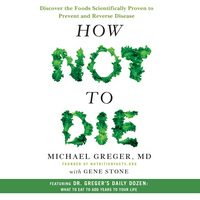
How Not to Die by Michael Greger M.D. FACLM, Gene Stone: I Didn’t Want to Enjoy This Book . . .

How Not to DieHow Not to Die: Discover the Foods Scientifically Proven to Prevent and Reverse Disease

by Michael Greger M.D. FACLM, Gene Stone


Unabridged Audiobook, 17 hrs., 9 min.
Macmillan Audio, 2015
Read: June 3 – 12, 2019

           Health nuts are going to feel stupid someday, lying in hospitals dying of nothing.
                                        — Redd Foxx
           Be careful about reading health books. You may die of a misprint.
                                        — Mark Twain

I hate, really hate — and frequently resist — talking about books like this here. But I spent so much time listening to this book, I felt I had to. I do not possess the time, knowledge, or resources to really dig into this book and its claims. I’m only commenting as someone who listened to the material once — I’m not a medical expert by any means. I’m just a guy whose doctor recommended this book and who is taking classes/guidance from a couple of dieticians who think a lot like Dr. Gregor (but have disagreed with some of his conclusions), and is trying to learn from it. At the same time, I ran into those lines I quoted above in High School and I don’t know if I’ll ever forget them — they’re good to keep in the back of your mind with ideas like this — errors are costly, and death is inevitable — you can delay it, but it’s coming.

I’ve seen this book described as veganism without the ideology. That’s not a bad way to put it. I’ve seen someone else say it’s a tool to help them do vegetarianism/veganism better and to understand it more. That’s probably not bad. Gregor and Stone describe their approach as “evidence-based nutrition” (but it’s not like there are a lot of people out there arguing against evidence, are there?). But I’m getting ahead of myself.

Following the introduction wherein Gregor gives his personal background into the idea of nutrition and medicine — initially from his family’s experience and then what he learned in med school and after. He then lays out his complaints against the US medical industry’s lack of education/emphasis on nutrition and its use in treatment/prevention of disease. I’m all in on that idea — if we are what we eat, most Americans are processed junk with only trace amounts of plant elements in our make up.

From there the book is essentially divided into two sections — the first focuses on the Top 15 Causes of Death in the U.S. The authors go through each of the 15 (Heart Disease, various Cancers, Mental Health, High Blood Pressure, Diabetes, and so on). The chapter will begin by looking at how the disease operates and how diet/exercise can play a role in worsening the condition and then how diet/exercise can aid in the treatment — or at least alleviate the symptoms — of each.

In Part 2, Gregor turns to answer the inevitable question, “Well, what do you eat?” He has developed a “Daily Dozen” approach — eating X amount of things like berries, nuts, beans, cruciferous vegetables, spices, etc. He explains the origins of this Daily Dozen (there’s a handy app version of this that I’ve been using for a couple of months to help track/guide my eating, by the way). And then looks at each — what health benefits can be gained from a whole foods, plant-based diet by category, and also specifics. For example, he’ll tell you all the ways that X amount of goji berries can help you, or the ways that Y amount of kale, quinoa, or apples will give you a boost — and so on.

It’s a lot to take in, and will certainly provoke thoughts. He’s quick to point out when researchers that disagree with his conclusions seem to cherry pick their results/findings/studies — and the biases of the researchers/funding. But they doesn’t do as thorough a job of demonstrating his counter-examples are free from that. It seems simplistic pretty often to take this approach without a large grain or two of salt (just kidding…that much sodium would incur the wrath of the authors). They do stress frequently the need to make some of these diet changes in consultation with your doctors, and not to just run off and do it — but it’d be pretty easy to disregard the warning and go off on your own guide-less.

As far as an audiobook goes . . . there are pluses and minuses. Greger himself reads the book — making it of a piece with his videos, etc. — and you can easily understand why he was in demand as a public speaker. He’s got great delivery and his personality shines through the reading. I may be the only one who hears it this way, but if you ask me — he delivers 98% of these lines (both the factual lines, and the little bit of snark or playfulness included) just as Wil Wheaton would. His voice has a Wheaton-esque quality, too. Which works for me — it wouldn’t for everyone, I know. The downside is that it’s just too much to take in via audio — there’s just so much thrown at you that you can’t get it all on a listen. The audiobook is a great way to introduce yourself to this book, but you’re going to need the hard copy for reference.

Gregor and Stone make some powerful arguments, and have convinced me of a lot — but I’m clinging to a bit of skepticism. But it’s a good starting point for re-evaluating your personal diet and priorities when it comes to food. How Not to Die is entertaining, informative and potentially life-altering. Hard to ask for more from a book.

—–

4 Stars
2019 Library Love Challenge

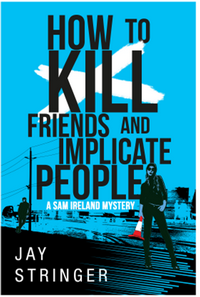
How to Kill Friends and Implicate People by Jay Stringer: Girl Meets Boy on a Crime Spree

Two days in a row where I use denouement in a post. Odd streak. Pretty sure I can guarantee I won’t go for three, though. Sorry for the babbling that’s about to ensue.

No, I’m not really, it’s what happens when I get excited.
—

How To Kill Friends And Implicate PeopleHow To Kill Friends And Implicate People

by Jay Stringer
Series: Sam Ireland Mysteries, #2
Kindle Edition, 404 pg.
Thomas & Mercer, 2016
Read: May 30 – 31, 2019

I can’t pretend that everybody I’ve killed has been a bad egg. I can’t even say they all had it coming. But you want the real truth? We could all be said to have it coming. Write down the worst things you’ve ever done. Just the top ten. The silent little moments of guilt sitting at the back of your eyes in the bathroom mirror.

Did you break someone’s heart? Were you a bad husband or wife? Lousy mother or father? Was there a time you stole some money from the till at work? Maybe you just cheated on a test. We’ve all done things. One day, these things might come to the attention of the wrong person, and you get me knocking on your door.

Morals have to be flexible when you’re self-employed. Sometimes I can turn jobs down if I think they’re shady, but I’ve still got bills to pay.

This is coming a couple of weeks later than I intended to write it — mostly because I was trying to get my thoughts in order (yeah, also busy, tired, etc., etc. — but largely the getting my head wrapped around it bit). I didn’t know how it could live up to it’s predecessor and then knowing it, I had a hard time knowing how to compare the two; I couldn’t decide what was safe to talk about; I’m not sure what I can say about the ending; one of the events of this novel shocked me in ways authors almost never succeed at, and I’m still recovering (this is a good thing — but I still kind of hate Stringer for it). Frankly, I’m not sure I’ve decided any of these things, but I don’t want to not talk about this anymore.

One of the best parts of Ways to Die in Glasgow was the three first-person narrator structure, and I wondered how Stringer was going to approach this one, given that two of those narrators were unavailable. I was happy to see that he simply replaced them with another two — and relieved that it was as successful, if not more so, in these pages.

I couldn’t help thinking of the opening to Fletch (one of my favorite first chapters ever) as I got into this one. In Fletch, Alan Stanwyk hires Fletch to kill him — supposedly to prevent him from dying a painful death from a rare form of cancer. This job offer sends Fletch off on a great investigation that results in an ending Stanwyk couldn’t have predicted. Here, a businessman who makes Stanwyk look ethical, named Alex Pennan hires hitman Fergus Fletcher* to pretend to kill him. He’s done some very bad things, and some very, very bad people are going to want to do very, very, very bad things to him — the only escape is to die (but not really). Fergus knows this is a bad idea — but it’s such a bad idea that he’s interested.

* A connection I just now made — wow, I’m dense sometimes

Fergus is at something of a crossroads — he’s not sure that being a hitman is the right thing for him anymore. It’s not like he’s received “a swift, spiritual kick to the head that alters your reality forever” or anything — but it’s similar. He’s lost the taste for it, he’s making sloppy mistakes. Maybe, just maybe, not killing someone would be a great way to get out of the business.

Alex and Fergus are our two new narrators — and they have very different takes on their deal, and how things unfold. This alone would be worth reading — but it gets better, because I haven’t talked about Sam Ireland — part-time PI, part-time bicycle messenger, and all around great character — our other narrator yet. Alex’s wife knows he’s up to something sketchy, and hires Sam to prove that he’s having an affair. Also, Sam and Fergus have recently met on a dating app (neither is incredibly up front about their careers for their own reasons). So you see — things are getting even more interesting.

Now, add in the very, very bad people that Alex wants to fool, the people that employed Fergus while he made some sloppy mistakes, some crooked cops, one very not-crooked cop, Alex’s wife, Fergus’ family, a footballer, a couple of shady politicians, a best-selling crime novel that keeps showing up everywhere, and a few other folks — and you’ve got yourself a Grade-A Kerfuffle of Epic Proportions. I really can’t say more than that — but I want to, it’s a great roller-coaster of a ride that you’ll enjoy while you hang on for dear life.

Alex is a great character — he’s thoroughly convinced that he’s smarter than he is — which doesn’t mean he’s not going to get away with his plan. He’s got big dreams and will do anything — anything — to achieve them. But, wow, he’s such a lousy person — you find yourself spending a lot of time hoping that Fergus messes up and actually kills him. Fergus, meanwhile, is objectively a reprehensible person — he’s a very successful hitman, after all — you should want him dead or rotting away in prison. But you won’t — you’ll be cheering him on, hoping he gets the chance to figure out his next career steps.

And Sam? If you’ve read, Ways to Die in Glasgow, you know all you know everything you need to about Sam.

I want to devote a post or two to Sam’s brother and his cockamamie thoughts and observations on comic books. But to do that, I’d end up ruining the reading experience, so I’ll keep my powder dry. But Phil made me rethink Jor-El’s efforts to save Kal-El and Krypton, and made me laugh audibly while doing so. His ideas are intriguing to me, and I wish to subscribe to his newsletter.

While I’d never pretend to be able to predict everything that happens in various books — to an extent, you kind of can after awhile. Right? Even when we say to each other “I never saw X coming” — in retrospect, you usually can see where X came from. The number of stunning, out of left field, I cannot believe Author Y did that moments are few and far between — maybe a dozen in the past five years. I know the only one that comes to mind in recent memory is John Mars’ Her Last Move which left me a reeling for days last November. Stringer did that to me here, I so strongly disbelieved what I’d read that I re-read a particular passage four times before moving on — only to come back a couple of pages later to try it a couple of more times. Surely it had to be what a pretty unreliable narrator perceived to have happened, not what really happened.

For those of you keeping score — this is the book that got me in a hopeful and cheery mood moments before Noelle Holten shattered it. But don’t infer from that an ending that doesn’t exist — this is one of the most complex denouements I can remember — following shortly after one of the more exciting climaxes I’ve read this year. I remember walking into another room to read the last 15 percent or so, because I could not — would not — tolerate any distractions. Not that my kids and dog were being more distracting than usual, but it was that kind of ending (and really, my dog’s half-pug, so simply breathing is frequently a distracting behavior…). It’s that kind of a read — you will laugh; you may find yourself rooting for the boy in his crime spree to get the girl; you will find your jaw hanging open (even is — especially if — you’re not the type of person to do that); you will (at the very least want to) cancel/rearrange plans to make time to read; you will wish your reading speed was a little faster so you can find out what happens when Sam tries to (ahem, well); you will find yourself writing/speaking in italics more than you’re accustomed to when discussing the novel. It’s just that kind of read.

I know Stringer has a non-Sam Ireland book coming out soon, but I sincerely hope that he’s not done with her. I’m not ready to be.

—–

4 1/2 Stars

✔ Read a book with “how to” in the title.

2019 Cloak & Dagger Challenge

Page 405 of 633

Subscribe via Email

Enter your email address to subscribe to The Irresponsible Reader and receive notifications of new posts by email.

Powered by WordPress & Theme by Anders Norén