Author: HCNewton Page 429 of 633

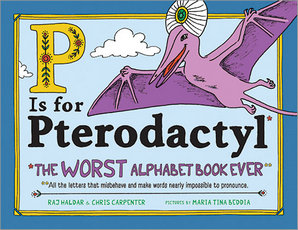
P Is for Pterodactyl: The Worst Alphabet Book Ever by Raj Haldar, Chris Carpenter, Maria Beddia: Twisted, Fun and even Educational

P Is for PterodactylP Is for Pterodactyl: The Worst Alphabet Book Ever

by Raj Haldar, Chris Carpenter, Maria Beddia (Illustrator)


Hardcover, 40 pg.
Sourcebooks Jabberwocky, 2018
Read: December 20, 2018

One of the first books printed in the American colonies was The New England Primer, filled with catchy lines like “In Adam’s Fall / We Sinned All.”

Since that time, many alphabet-type books have been published in the same — or similar — vein. One of the latest is P Is for Pterodactyl, which carries the subtitle, The Worst Alphabet Book Ever which doesn’t seem that complimentary, but when it includes lines like:

“J is for Jai Alai.

or

“E is for Ewe.”

or even

“U is not for You.”

and maybe you start to think there’s a little truth in advertising.

It’s actually an amusing book with some examples of the oddities and vagaries of English spelling/pronunciation that will stick with you. I’m not crazy about some of the selections (V’s a good example), but by and large, I really liked each “for” that the authors selected.

The artwork is great — it compliments the text well and will help keep shorter attention spans focused.

For everyone who enjoyed BNL’s “Crazy ABC’s”, this Picture Book entertains as well as educates. I’m not sure how well it’d work for the 7-and-under crowd, but for older elementary kids — and adults who just want a chuckle, this book will be just the ticket. I had a fun time reading it — as did my whole family. Unlike most of the picture books I post about here, you’ll note that this one doesn’t carry any kind of disclaimer — I bought this one after seeing a couple of pieces about it online, and am glad I did. I imagine you will be, too.

—–

4 Stars

2019 Reading Goals/Plans/Expectations

All this needs to be taken with a grain of salt, obviously. Maybe a salt lick. Remembering all too well the poet’s lines:

           But Mousie, thou art no thy-lane,
In proving foresight may be vain:
The best laid schemes o’ Mice an’ Men
          Gang aft agley,
An’ lea’e us nought but grief an’ pain,
          For promis’d joy!

So, I’ve got 6 Reading Challenges in the hopper — I looked at a number of others, but these are the ones that clicked with me. Last year was the first that I really got into Reading Challenges, and appreciated the way they made me think about what I was reading (and outside of maybe 3 or 4 books, they didn’t direct my reading).

Additionally, I’m going to focus on bringing down the number of books in my Physical and Electronic TBR Pile/Mound/Heap (33 and 21, respectively, not counting review copies). Those numbers aren’t as big as some people’s, I realize. But that’s 2 months and change of reading if I read nothing else. This is a personal challenge, that I’m dubbing The Reader Who Went up a Mountain but Came down a Hill. We’ll see how well that works.

I’m also going to finish off my Rebus-catch up, I’m going to try to read the rest of the DC Fiona Griffiths (although I’ve been saying that for 2 years now), and I want to read every Fredrik Backman novel I can get my hands on. Actually accomplishing these three would only chip away two books from the above mountain…

But mostly, I’m going to focus on “Serendipity and Whim” like Alan Jacobs talks about. By all means feel free to throw suggestions at me.

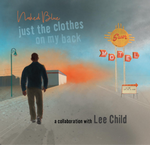
Just the Clothes on My Back – a collaboration with Lee Child by Naked Blue: Jack Reacher Rocks

Jut the Clothes on My BackJust the Clothes on My Back – a collaboration with Lee Child

by Naked Blue
Series: Jack Reacher


CD, 10 tracks
Bluetick Records, 2018

Mutual fans/friends Naked Blue and Lee Child collaborated on this album — 10 songs from Jack Reacher’s point of view. Well, 9 from his POV and 1 (“Reacher Said Nothing”) that could be the soundtrack for about 90% of the books.

I’ve listened to this album a lot since it came out and I’ thoroughly enjoy it. I think it does a great job capturing the “inner essence” of Reacher (a concept he’d probably boggle at) and delivering it with some great bluesy-rock/Americana tunes. Even if you’re not Reacher-obsessed, or you don’t think about the character the songs hold up just fine — you don’t even have to know anything about the album to appreciate it. But if you are a Reacher fan, you’ll enjoy it a lot more.

“Just the Clothes on My Back” and “Big Man” do great jobs of encapsulating Reacher’s approach to life. “Killing Floor” and “Blessed or Cursed,” are almost as good. All of them have great tunes that get into your head and threaten to take up earworm-like residence.

It’s not all about the action-hero side of Reacher. “The Midnight Line” does a great job of capturing a chapter (or part of one) with the allusions and euphemisms for sex and “Sanctuary,” also does a fine job of recreating the kind of scene in a Reacher book that I skim. This doesn’t mean they’re bad songs, in fact, they’ll be selling points for many. They just don’t work for me.

As for “Reacher Said Nothing”? An almost entirely instrumental piece (with some vocals by Lee Child himself) — how that hasn’t become my ringtone is beyond me. Just love that song.

Now, Jennifer Ferguson Smith might not seem the ideal person to give musical voice to the 6’5″, 210–250 lbs., ex-MP with a 50″ chest, but she somehow pulls it off. The vocals are great — I don’t really know how to describe someone’s singing voice, so I’m not going to try. They match the rootsy-bluesy-rock well. I don’t know if it’s helpful to anyone, but she reminds me of Amy Rigby.

A great album for fans of Reacher. An album that should earn Naked Blue some new fans/listeners. A good album just in and of itself. Give it a whirl.I’m going to give it 4 stars, but based on the way that music like this tends to grow on me, if you ask me in 6-9 months, I’ll probably rate it higher.

—–

4 Stars

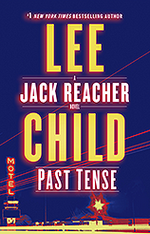
Past Tense by Lee Child: If this wasn’t a Reacher book, I’d probably like it more…

Past TensePast Tense

by Lee Child
Series: Jack Reacher, #23


Hardcover, 382 pg.
Delacorte Press, 2018

Read: December 6 – 7, 2018
Shorty and Patty are a young couple from a rural Canadian community on their way to New York City to sell off some beloved possessions in order to make enough money to go to Florida and start their lives. Which sounds like a great idea (assuming they’re not ripped off in NYC) — if only they’d ever done basic maintenance on the car they’re driving. They end up breaking down outside a small town in New Hampshire, nowhere near a decent city.

The owners of a newly refurbished hotel outside town take pity on them and rent them a room for a little cheaper than they should and offer to help with getting their car going again — they even invite them to dinner their first night with them. Yes, I said first night — home repairs aren’t doing the job, so they have to call a tow truck/mechanic to fix the car — which is going to pretty much wipe the couple out. But what choice do they have?

Still, something doesn’t seem right about the whole thing. Shorty’s a trusting guy and rolls with everything that happens, but Patty smells something. She thinks a lot — incidentally, she thinks a lot like Reacher. Which is annoying when you’re reading a book starring Reacher that you get a clone. But it’s good for her and Shorty and just might end up saving their lives. It’d be better for the both of them if she had any of Reacher’s skills other than his ability to analyze a situation, but, I guess you take what you can get.

Meanwhile, Jack Reacher comes into the same town those two are stranded outside of. He was passing near by and on a lark decides to stop in Laconia, his father’s birthplace. He’s never met anyone from that side of the family, and his father said almost nothing about his childhood experiences there. So Reacher’s a bit curious about the town — he doesn’t even know if there might be a cousin or three around. It turns out that finding anything about his family is almost impossible in the official records — and there’s a decent chance that there’s no one around who knows anything about them that’s not in the official records.

While that’s going on, in the middle of the night Reacher encounters an attempted sexual assault and, ahem, dissuades the attacker. This attacker doesn’t press charges or anything, but it turns out that he’s connected to a significant crime family in the Northeast. Reacher is informed about this and is encouraged to leave town soon by a former MP turned local law enforcement officer that he’s become acquainted with. Reacher doesn’t like to be told what to do — by anyone — and there’s something about his father’s past that has him more curious than he’s been before and wants to track that down.

These two stories run independently of each other, while happening very near each other. Reacher does come to the hotel and asks a couple of questions about his quest about the same time that Patty’s getting suspicious, but the two don’t cross paths.

Now, I didn’t right down the page number when Reacher’s story intersects with Shorty’s and Patty’s — but I do know that it hadn’t happened by page 245 (of 382). Which is pretty astounding, and is definitely a new way to bring Reacher into the main events of a novel. I doubt it’s a trick Child can pull off again, but I’d like to see him try. If he doesn’t show up, bad things will happen — and will likely continue to happen — but it’s hard to say just how bad it’d all be. But Reacher does show up, and he does his usual thing, and many more people live than otherwise would have. Which isn’t to suggest that no one dies after he shows up, it’s just that most of them aren’t the people that seemed likely to die 30 pages earlier.

There’s little violence until the end of the book (there’s Reacher’s dissuasion, and two other minor — by Reacher’s standards — fights), but once the fighting starts, it doesn’t stop until there’s a whole lot of violence and bloodshed. Tension and unease that’s been mounting slowly over the whole book, are unleashed – and most of the last twenty percent (or so, I’m just guessing) of the novel is as violent and action-packed as you could hope for. Once that switch is flipped, it’s on.

This wasn’t my favorite Reacher novel — by far — but it was a really engrossing read. I enjoyed it — and really think if Jack Reacher hadn’t been the fly in the ointment for the people trying to manipulate and hurt Shorty and Patty, I think I’d have enjoyed this much more. But I expect more from Lee Child than I do other writers, and this time, I just don’t think he pulled it off. I’m willing to bet he does better next year, and I’ll content myself with that hope.

—–

3.5 Stars2018 Library Love Challenge

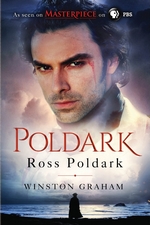
Ross Poldark by Winston Graham: A decent read, but it’s not for me.

Ross PoldarkRoss Poldark

by Winston Graham
Series: The Poldark Saga, #1


Paperback, 379 pg.
Sourcebooks Landmark, 2015 (originally published 1945)

Read: December 27 – 28, 2018

Ross Poldark, the scandalous son of a minor land-owner, comes back from serving the Crown in the War for American Independence to find his father dead, his estate in disrepair, and the woman who he’d hoped to wed engaged to someone else (a formerly close friend, actually). Understandably, he’s about to throw in the towel on life, but instead he starts putting things together.

He bullies his fathers’ (and now his) servants into getting to work restoring the house and lands, and hires some new help and even rescues a poor little girl being picked on by some nearby children and brings her into his house as a kitchen maid. He has to fight and then pay off her abusive father for the privilege, but does so. He takes care of his tenants, and is soon seen as half-one of them half-landowner. He starts a new mine with some other people in the area, doing a lot to help the local economy.

There’s some legal drama, a touch of medial as well, a malicious criminal presence, too — but it’s hard to take any of these seriously, and they are all dispatched quickly. In fact, that’s pretty much par for the course for everything — a problem arises and is resolved soon. There’s no real book-length plot to this novel — there’s no central or driving conflict. You might be able to make the case that it’s a story of Ross finding contentment and/or happiness after the way his homeland welcomes him. But I’m not sure I can buy that.

There is just so much wrong with the love story involving Ross that I’m not going to touch it. I get that it’s a different time, different standards, and everything, but he’d be locked up today for what happens — and rightly so. Frankly, all of the romances are a bit . . . off. Nothing that Austen would touch, for sure. One of the Brontë sisters might have, though.

This book feels like someone was convinced the only proper kind of book for a British person to write is one that Austen, a Brontë, or Dickens could have written — so he combined the three influences into one. But Graham isn’t one of those. He’s a passable writer of limited imagination. Every so often he’ll write a passage — a small paragraph to a page or so in length — that strikes me like he’s realized he hasn’t done anything “writerly” for a bit and dashes something off that fits the bill. Then he gets back to his usual story telling for 5-10 pages until he repeats the process. This isn’t to suggest he’s a bad writer, it’s just usually decent prose with odd splashes of flair.

It’s hard to describe any of the characters except in reference to Ross — and would end up spoiling a lot of the book to do so. I found them all relatively two-dimensional and without a lot of growth or development. What change there is in most of them is hard to believe, or at least happens off-screen and without explanation. The maid that Ross brings in is the easiest to see grow and develop, and we almost get a real sense of who she is — but I’m not sure I can say that.

Ross Poldark isn’t a bad book — but there’s nothing about it that grabbed me. I did grow to be a bit interested in two of the characters, and was pleased to see things go well for them. I’m not driven to pursue things to the next book much less eleven more, however. I can see the appeal — I think — that this book and/or this saga would have for some, but it’s not for me. But for people who like semi-romantic historical epics, you’d be well served by trying this. I probably sound more negative than I really am — I’m more indifferent than anything else.

—–

3 Stars
2018 Library Love Challenge

✔ Read a book recommended by one of your parents (in-laws count).

2018 While I Was Reading Challenge

I finished this challenge last night (the other reading challenges I participated in this year were just “how many of X can you read?, so there’s no real end point). When I signed up for this last year, I thought it’d be no trouble whatsoever (except the poetry thing), and I’d just finish this by reading what I’d normally read. I was almost right. But not really.

I had to go hunt down about half the titles here — and even that didn’t go right. I tracked down one book (that I ended up enjoying) for “Read a book with a child narrator” that turned out to have a child protagonist and a third-person narrator. Thankfully, I had read a book that qualified about 5 months earlier, and didn’t think of using it for the list. Similarly, I re-read/listened to Robin Sloane’s Sourdough because I couldn’t think of anything else to work for “favorite food in the title,” and sourdough’s close enough to a favorite that I could live with it. Then a month later than I got a book tour review request for Mr. Pizza (which was incredibly accurate). So with patience, I might have been able to handle it all without much effort (except the poetry).

I’m doing this challenge again next year, because I did it, but I’m planning it better — I have things in mind for about half of the items already, and am pretty sure I can fill the rest of it out with little effort. But I’m not waiting until the Fall before I get serious about it.

✔ Read a book that takes place in one day: The United Smiths of America by Jon Voss
✔ Read a memoir or biography of a musician you like: So Let It Be Written by Mark Eglinton
✔ Read a collection of poetry: Dog Songs by Mary Oliver, John Burgoyne
✔ Read an audio book with multiple narrators: Ways to die in Glasgow by Heather Wilds, Napoleon Ryan
✔ Read a self published book: Profane Fire at the Altar of the Lord by Dennis Malley
✔ Read a book you received as a gift: The Crescent and the Cross by Kurt Scheffler
✔ Read a book about a historical event you’re interested in (fiction or non): The War Outside My Window: The Civil War Diary of LeRoy Wiley Gresham, 1860-1865 by Janet Elizabeth Croon, ed.
✔ Read a book written by an author from the state where you grew up: Arsenal by Jeffery H. Haskelll/Twisted Magics by J. C. Jackson
✔ Read a book recommended by one of your parents (in-laws count): Ross Poldark by Winston Graham (link forthcoming)
✔ Read a book with your favorite food in the title: Mr. Pizza by J. F. Pandolfi
✔ Read a book with a child narrator: Picket Town by Chris von Halle
✔ Read a book you chose based on the cover: Know Me from Smoke by Matt Phillips

Saturday Miscellany – 12/29/18

Sure, local/state governments had problems, small businesses were hurt, 911 centers weren’t able to operate, but the real victim of the CenturyLink outage was my blogging plans for the week. Well, okay, maybe not. But it sure seemed terribly inconvenient at the time. While it was a slow posting week, I did get a lot of reading done — I should wrap up work on my last reading challenge for 2018 today (knocked off another one yesterday), and nailed down a lot of plans for the next few weeks (I somehow have found myself committed to 8 books in January. Which isn’t that many, really, but it seems daunting). Hope your [insert preferred holiday name] week was good in whatever way you spent it.

Here’s the smattering of odds ‘n ends over the week about books and reading that caught my eye. You’ve probably seen some/most/all of them, but just in case:

Lastly, I’d like to say hi and extend a warm welcome to february87 and Ontheminds for following the blog this week.

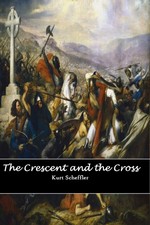
The Crescent and the Cross by Kurt Scheffler: An Uneven But Ultimately Satisfying Historical Fiction

The Crescent and the CrossThe Crescent and the Cross

by Kurt Scheffler


ebook
2014

Read: December 20 – 24, 2018


I normally reserve disclaimers for the end of a post — but I’m going to start this post with one. I’ve met Kurt Scheffler, he seems like a good guy. He has taught every one of my children, is currently teaching two of them, and will be teaching one for the next three years. He’s beloved in my house and the impact that he’s had on my kids is almost incalculable. Also, one of my kids bought this for me — not in a “hey, here’s an easy way to get brownie points” kind of move; but a “I know someone who wrote a book, my dad likes books, I should combine those things” kind of way. So basically, I’m trying to say that I have every reason to airbrush what I’m about to say, but I’m going to try to not do that. Also, no parent wants to see one of their kid’s teachers use the word “whoring” that much.

This is the story of The Battle of Tours (in 732) and events leading up to it, told through the lives of people close to Charles Martel and Charles on the one hand and a couple of the leaders of the Muslim forces involved in the Arab invasion of France. Specifically, that’s Charles, his longtime friend, his sons, his mistress, and some children who are adopted by a close associate and are practically part of his household; and then the son of the Caliph and Abderrahman.

It’s your typical historical fiction, blending historical events and fictionalized events into one narrative. I really liked some of the characters a lot, and the ones I had no patience for were the one’s the book doesn’t want you to enjoy. I’m not convinced that I didn’t like them for the same reasons I wasn’t supposed to like them — it wasn’t their less-than-savory characteristics, but their portrayal. But still, that’s better than many novels are able to pull off.

I’m not going to try to summarize the plot more thoroughly than that, or talk about any of the particular characters — this post would quickly become too long to bother with. The story takes awhile to coalesce — it almost feels like the novel couldn’t decide what it was going to be about for the first half — it started trying to be X, then it became Y, then Z and quickly A, B, and finally settling on being C (I might have exaggerated a bit there, the book might have settled on B). That’s how it felt, I should say. In retrospect, I don’t think that was the case, it was simply taking it’s time (arguably too much) setting the stage and establishing the characters before launching into the major story.

That said, I found myself enjoying each version of the story the novel gave us along the way, and when it seemed to shift into a different story, I was disappointed to leave X, Y or Z — at least until I got into the new version. Scheffler can tell a story, that’s clear. He’s skilled at sucking you in and feeling what he wants you to.

I do have a few quibbles with the book — I’ll only talk about a few. My notes are full of question marks when we got a historical particular, I just wasn’t sure if he got the timing on some things correct. There’s a lot of anachronisms — for example, Pascal’s wager a few centuries early (sure, someone could’ve said it before Pascal — but it seemed a bit off); some statements about equality that sounded like Martin Luther King, Jr.’s rough drafts; and people holding opinions/values that I just can’t accept given the time (mostly benign things, I should add, like a noblewoman baking as a hobby). The villains might as well be wearing black hats and twirling mustaches, while the “heroic” characters are subtly drawn and live in the gray — I just wish the villains got the same treatment. Practically every character is very aware of the historical significance of the struggle they’re part of — particularly when it comes to the ultimate (and impending) battle between Charles Martel’s and Abderrahman’s armies. I don’t doubt that sometimes individuals understand how vital a role they play in the grand scheme of things, but this seemed a bit overkill (or this is a case of one of the greatest conglomerations of narcissists ever).

There’s redemption, personal reformation, romance, action against a sweeping historical backdrop — there’s something for almost everyone here. Could this book have been better? Yes. Given the themes, the scope, the characters, the setting — there’s a lot more that Scheffler could’ve done here. Also, it would’ve been very easy to make this incredibly dull and/or hack-y. Scheffler avoided that — and I’m very happy about that. In the end, we’re left with something in the middle — an entertaining work with a few problems. You’ll keep turning the pages to see what he does with the characters, but you’ll wonder a little about the background and details. At worst (or best?) this’ll spur you to further reading on the history of the period after reading Scheffler’s fictional take. Really can’t complain about that, right? I’m glad I read it.

—–

3 Stars

✔ Read a book you received as a gift.

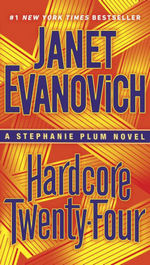
Hardcore Twenty-Four by Janet Evanovich: A Swing-and-a-Miss from a Typically Reliable Source

Hardcore Twenty-FourHardcore Twenty-Four

by Janet Evanovich
Series: Stephanie Plum, #24

Mass Market Paperback, 275 pg.
G.P. Putnam’s Sons, 2017
Read: December 25, 2018

I dropped Lula off at the office and went to my parents’ house to mooch lunch. They live five minutes from the office, five minutes from Morelli’s house, and a time warp away from me. Even when my mom gets a new refrigerator or buys new curtains the house still feels precisely the same as when I was in school. It’s equally comforting and disturbing.

At this point the series feels a lot like Stephanie’s childhood home — they all feel the same, which is comforting and disturbing for the reader. This book ended up serving as a prime example of that.

I was feeling pretty good early on, when Connie was giving Stephanie a couple of new FTA’s to go pick up — they seemed equally interesting and potentially amusing. There’s a man who got upset by the poor service he received at a coffee shop and shot up a few cars in the parking lot, and a “pharmaceutical activist” who was arrested after blowing up a meth lab he was using in an abandoned building.

Actually, the travails of the slippery fifty-two year old who threw a tantrum and his eccentric wife is a pretty fun storyline. But the story of Zero Slick gets derailed right away by antics around his political activism and then leads into the major plot-line of the novel about a potential Zombie-outbreak — that both Zero and Lula seem to be overly focused on. That ties into a series of crimes where heads are being stolen from corpses at the various undertakers in town.

Yup. Zombies. Oh, and Diesel shows up. I was so glad that he wasn’t around anymore, it actually took some effort to remember who he was. Throw in an online boyfriend for Grandma Mazur and things are overfull with the zaniness.

I spent so much of the book just wanting it over — I did appreciate the story-line about the shooter — and a couple of other FTA’s that Stephanie picked up. I liked almost everything about Morelli for a change. The Ranger flirtation (and things beyond it), not to mention the Diesel flirting, the Zombie story (even when Evanovich tries to ground it in reality), and the Mazur stories just didn’t work for me. A little too crazy, a little too would=be comedic, without success.

I like the series, as often as I grumble about it — but this was beyond grumbling. I honestly had a hard time remembering why I keep reading these. They used to be funny, now I settle for amusing and almost charming. But I know Evanovich is capable of more, and I hope she gets back to form soon – even if it’s a diminished form. I’ll be back for Look Alive Twenty-Five, but my anticipation will be muted.

—–

2 1/2 Stars

A Few Quick Questions With…Matt Cowper

Very happy to have done this Q&A with Matt Cowper, who describes himself as, “Unbranded author trying to write sentences that read good.” Back in August of 2017, I posted about his Double Lives and today (unless I messed up the scheduling), I posted about his newest book — The World Savers, the first book in his series The Elites. I hope you enjoy this, and that you’ll go back and read those posts (or skip the posts, and read his books, I guess. But first, at least click on the links to the post, so I can get the ego boost from page views),

As always, I kept this short and sweet, because I’d rather he work on his next book than take too much time with me, y’know?

Clearly, super-heroes are your niche. What is it about them that captures your imagination?
I’ve always read comic books, from way back when I was a young’un with an allowance, and could only afford one or two issues at a time!

In my grizzled old age of 33, I still enjoy cape-and-cowl adventures. They’re a break from a “normal” book, that is one with black words on a white page, with no images. I read in a variety of genres, but I can only read a “normal” book for about an hour before those endless words, all arranged in the same manner, start to blur together.

Then I open a graphic novel, and BAM – it’s like Dorothy stepping from the drab gray of her home to the dazzling colors of Oz.

It’s a refreshing experience after being a Serious Adult reading Tomes of Great Importance.

(Not that comics can’t be of Great Importance. See: Alan Moore.)

And superheroes appeal to me as a writer because, as I mentioned above, I’m familiar with the tropes. The standard writing advice is, “Write what you know.” Well, I’ve read hundreds of comics and graphic novels in my lifetime, everything from your standard “superhero battles supervillain” stories to the “deconstruction” style stories. I’m comfortable in the world of caped crusaders.

If you can without spoiling anything — talk to me about Blaze. Where did he come from and why did you pick him for your other narrator? (Nightstriker is an obvious choice — who doesn’t want to write Batman?)
What?! You think Nightstriker is a stand-in for Batman?! I thought no one would figure that out! 🙂

Blaze is the yin to Nightstriker’s yang. Blaze is young and inexperienced, Nightstriker is the grizzled veteran. Blaze’s power is potentially limitless, while Nightstriker has no powers. Blaze has a family, and he develops a love interest, while Nightstriker is a loner.

Having these two characters as POVs, rather than just sticking with one of them, allowed me to (hopefully!) create some interesting conflicts, as well as show certain aspects of the fictional world that would be missed if I only used one POV.

And I don’t think it’s a major spoiler to say that, as the novel (and the Elites series) progresses, each character will help the other change and grow. Blaze will become more adept at using his powers, while Nightstriker will soften his hard-edged approach, and so on.

As for the specific inspiration for Blaze, I don’t really have one character or idea I can point to. Readers may associate him with the Human Torch, but Blaze is far different from the confident ladies’ man, Johnny Storm.

This is tonally different than your Johnny Wagner books — was that a conscious choice before you started, or something that developed as you got into the characters/story? How did the difference in tone affect your writing?
Yes, writing “The World Savers” in this manner was a conscious choice.

The Johnny Wagner novels are much wackier, and Johnny is the typical anti-authority PI. He’s suspicious of superheroes, and for good reason; the version of the Elites that appear in these novels don’t do themselves any favors.

And Dak, Johnny’s God Arm…well, he’s in a class of his own!

By contrast, the new Elites in “The World Savers” aren’t meant to be satirical. They’re legitimate superheroes, though they still have plenty of flaws.

There is some humor and wackiness in “The World Savers,” but overall the novel has a serious tone.

I don’t think the tonal differences affected my writing efficiency or satisfaction. If you establish at least a rough plan beforehand, the novel’s proper tone should develop just fine.

What’s the one (or two) book/movie/show in the last 5 years that made you say, “I wish I’d written that.”?
“Metabarons.”

It’s a massive graphic novel created by two raving lunatics. No, seriously – no one could come up with this unless their minds existed in a different dimension than us normal schlubs.

It takes every sci-fi trope in the history of mankind, boils them all in a giant intergalactic pot, then spills them out onto the starways for the unworthy to gawk at.

In sum: it’s really good and you should read it.

It’s on my list! Thanks.

I’ve often heard that writers (or artists in general) will forget hundreds of positive reviews but always remember the negative — what’s the worst thing that someone’s said about one of your books, and has it altered your approach to future books?

My debut novel, “The Clerk” was one of those “small” literary works, as opposed to a comic book-style tale featuring copious explosions and giant floating fortresses.

Several reviewers disliked the novel’s “excessive” sexuality. This baffled me, because I thought I’d glossed over most of the sexy sex!

I learned that a writer has to be mindful of his audience. Some readers don’t care if there’s sex on every page, with the characters swearing like sailors, while others will stop reading if they encounter a single “F” word.

Some writers have created their own content rating systems, or placed disclaimers in their book descriptions, to help readers ascertain if the novels fit their sensibilities.

I’ve considered implementing one or both of these options, but haven’t moved forward with anything yet.

Thanks for taking the time to answer these, and I hope that The World Savers finds all sorts of success!
Thanks, bub! *snikt*

Page 429 of 633

Powered by WordPress & Theme by Anders Norén