Author: HCNewton Page 592 of 634

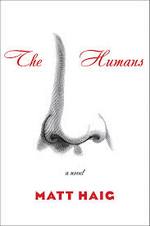
The Humans by Matt Haig

The HumansThe Humans

by Matt Haig
Hardcover, 304 pg.
Simon & Schuster, 2013
Read: Feb. 4-6, 2014

A couple of years back, I remember enjoying Haig’s The Radley’s about a family of vampires who’ve stopped feeding on humans, and have (mostly) assimilated into everyday society. It was fun, quirky, and had a lot more to offer than I’d have guessed. So when I stumbled onto this at the library, I had to grab it (and shame on me for not keeping an eye out for more by him).

The concept’s pretty simple: a brilliant mathematician has just made a break-through that puts humanity far, far ahead of where an alien race thinks they ought to be in terms of development based on how emotional and violent we are as a race. So, they send one of their own to kill him, take on his form and eradicate any and all people who might have knowledge of this breakthrough. Along the way, said assassin starts to understand and even appreciate humanity’s quirks and tries to stop the killing. Along the way we are treated to his observations about humanity. For example,

…I was able to work out that what humans may have lacked in physical attractiveness, they made up for in gullibility. You could tell them anything in a convincing-enough voice and they would believe it. Anything, of course, except the truth.

Basically, the key rule is, if you want to appear sane on Earth, you have to be in the right place, wearing the right clothes, saying the right things, and only stepping on the right kind of grass.

Or this description of browsing a bookstore:

Understandably, humans need to know what kind of book they are about to read, because time is money and money costs time and there’s no time like the present and all of that. They need to know if it is a love story. Or a murder story. Or a story about aliens. Perhaps the book they have in their hands is a war story. It wouldn’t be a surprise.
There are other questions too that humans have in bookstores. Such as, is it one of those books they read to feel clever, or one of those they will pretend they never read in order to stay looking clever? Will it make them laugh or cry? Or will it simply force them to stare out of the window watching the tracks of raindrops? Is it a true story? Or is it a false one? Is it the kind of story that will work on their brain or one which aims for lower organs? Is it one of those books that ends up acquiring religious followers or getting burned by them? Is it a book about mathematics or — like everything else in the universe — simply because of it? And also, of course, there is the ultimate, all-important questions: does it have a dog in it?

(amen to that last question)

A lot of these observations reminded me of the classic article, “Body Ritual among the Nacirema,” that social science undergrads have chuckled at for decades. And, at a point they got a little tired — but by the point that the book threatened to become an endless series of “here’s another way humans are odd” riffs, the story took over, and the characters became more than a collection of quirks. Which isn’t to say that the alien stopped having the observations, they were just mixed in with enough plot and character development that they became seasoning.

Another danger for the reader is that you could easily get so busy chuckling at things like a partial list of inventions that humans don’t know how to handle: “the atomic bomb, the Internet, the semicolon”; or the observation that a cat “was very much like a dog. But smaller, and without the self-esteem issues.” that you can let the poignant and thoughtful things slip by. This was not unlike Scalzi’s Redshirts in that way (it was on my mind because I was reading this when the news was released about the Redshirts TV adaptation).

Funny, moving, profound (not as profound as it wants to be, I don’t think — but close), look at what it means to be human, what it means to live, to love and why we bother with any of it.

—–

4 1/2 Stars

Hell Hole by Chris Grabenstein

Hell Hole (John Ceepak Mystery, #4)Hell Hole

by Chris Grabenstein
Hardcover, 304 pages
Published July 22nd 2008 by Minotaur Books
Read: Feb. 9, 2014

The fourth Ceepak/Boyle Mystery was a pleasant change of pace, while keeping the essence of the series intact. When he’s not patrolling with Ceepak, Danny Boyle is mentoring a spunky new part-time summer officer, Samantha Starky. The two respond to a noise complaint — a group of soldiers between Iraq deployments, celebrating a bit too loudly. While Boyle and Starky are convincing them to quiet down, their Sergeant gets a call, he needs to go identify a body in a nearby town — apparently one of the team has committed suicide. Danny’s not going to let anyone this drunk drive, so they take him to the scene. Here’s where things get going.

First, the sloppy CSI from Ceepak and Boyle’s first major case is on the scene; and there’s something about what he’s seeing that doesn’t set right with Danny. This being the 21st century, he uses his phone to snap a few pictures so he can think about it. When that doesn’t do the trick, he shows the pictures to Ceepak — who not only shares Danny’s sentiment, he can point to what was wrong in the pictures. No longer a suicide, yet out of their jurisdiction, the two have to get creative to find a way to solve this murder (while never wavering from Ceepak’s rigid code of honor and honesty).

Naturally, things aren’t that easy — there are distractions, celebrities, a US Sentator/Presumptive GOP Presidential candidate, local thieves — and some major drama on the personal front for Ceepak. There’s more to Sea Haven’s best cop than his Boy Scout attitude, his military past and devotion to Law & Order, and we get a healthy helping of that now.

Yes, yes, yes there are a few thing in retrospect that bother me: our heroes don’t have as many roadblocks to investigating a crime outside their jurisdiction that the should, and the external assistance that came along at the end was just a leeeetle too easy. But in the moment, Grabenstein sold it. And that’s what counts.

Hell Hole does feature one of the scariest sentences I’ve ever read: “They make an awesome tofustrami sandwich.” Seriously? Tofustrami is a thing?

As fun add these boss are, we see real evil on them. We see a deep kind of evil here — and the seeds are planted for a truly dark next adventure. Hell Hole has your standard Grabenstein balance of comedy and drama, serious and light, heart and suspense. Things strike closer to home than usual for our characters this time, and that just makes everything better.

—–

4 Stars

null
sorry for going off-message (well, a little sorry) — but this kind of thing is important.

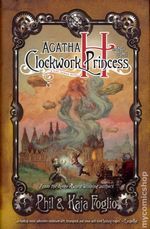
Dusted Off: Agatha H and the Clockwork Princess by Phil Foglio and Kaja Foglio

Agatha H and the Clockwork PrincessAgatha H and the Clockwork Princess

by Phil Foglio and Kaja Foglio
Hardcover, 461 pg.
Night Shade Books, 2012
Read: May 6-8, 2012

What a delightful read! All the strengths of the comic–but augmented and amplified–and, sadly, all of the weaknesses. But since the balance is so far to the “strength” side…who cares?

The last 1/4 (or so) of the book–like the source material–is just too convoluted for my taste, too many balls in the air at once. Still, I had an easier time following it in prose, so I’m not complaining too much.

If you haven’t yet–go read the comic (www.girlgeniusonline.com) tout de suite. Then go read the novels (not that I need to say that if you’ve read the comic)

Can’t wait for the next installment!

—–

4 Stars

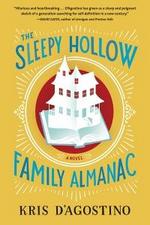
Dusted Off: The Sleepy Hollow Family Almanac by Kris D’Agostino

The Sleepy Hollow Family AlmanacThe Sleepy Hollow Family Almanac

by Kris D’Agostino
Paperback, 352 g.
Algonquin Books, 2012
Read from May 13-14, 2012

blech. I feel like I’ve read this book 3 times this year (see also: Flatscreen: A Novel and The Fallback Plan). Each time I’ve been disappointed. What a waste of talent (the dude can write, sure).

Oh, and I think that people who write blurbs for un-funny books that promise “hilarity” or something along those lines should be excessively fined–maybe imprisoned.

—–

2 Stars

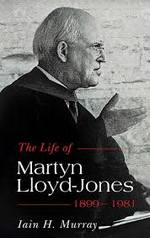
The Life of Martyn Lloyd-Jones – 1899-1981 by Iain H. Murray

The Life of Martyn Lloyd-Jones - 1899-1981The Life of Martyn Lloyd-Jones – 1899-1981

by Iain H. Murray
Trade Paperback, 496 pg.
Banner Of Truth, 2013
Read: Jan. 12 – Feb. 9, 2014

This is a frequently flawed book, and at times it was only a sense of duty/politeness to the person who eagerly pressed it into my hands that I persevered. But in the end, I couldn’t help but walk away awed at both the man and the book that tried to summarize his life (yet, I don’t think you’ll see me picking up the two-volume version this was condensed from anytime soon).

The first fifty or so pages, recounting his youth, medical school/early practice, and conversion — and even the beginnings of his ministry — were pretty tedious, and more often than not, far too detailed.

Once Murray was able to focus on his first years of ministry in Wales, and his eventual move to Westminster Chapel, the book took off. It’s clear that the hand of the Lord was upon his ministry, and gave him much evident fruit. It’s impossible to disagree with Murray’s explanations for Lloyd-Jones’ success, and I can only imagine ministers would benefit from reading this with an eye for how to reform their own work. Throughout the chapters detailing his pastoral work — particularly the chapter “Sundays in the 1950s” — Murray’s affection for, and devotion to, Lloyd-Jones threatens to overwhelm the narrative, and at times it seems that “the Doctor” could do nothing wrong. I remarked during that chapter that I wasn’t sure if I was reading biography or hagiography, which may seem a bit harsh. But really, Murray became a rabid fanboy here.

The chapters devoted to the controversies over Evangelical unity, conflict with Graham, Packer and Stott (and names that didn’t register with me) were again, far too detailed for my taste — but it’s understandable, I think. Murray was trying to set the record straight on certain issues/incidents, to make sure the historical record gets Lloyd-Jones’ perspective on them (particularly when others, claiming to speak on his behalf, got it wrong). Not having a dog in those fights, my eyes glazed over more than I liked, but I sure didn’t go back and re-read to make certain I didn’t miss anything. Murray is able here to critique Lloyd-Jones a bit in these chapters, which was good to see.

The final chapter, depicting the final three years of his life, as his cancer was gaining the upper hand, was moving, inspirational and convicting. Lloyd-Jones continued to preach when able, to correspond with and advise younger ministers, write and start Murray on his biography — spurred on by the knowledge that his death was near. Lloyd-Jones spoke of paying attention to death, dying the right way — with an eye to the glory he was going to, and anticipating it. No way that I try to summarize will do it justice, just read it for yourself. You might want to keep a Kleenex™™ handy. This chapter made all the stuff I’d grumbled and trudged through worth it.

Not Murray’s best — but obviously a work of love for the subject. Can’t imagine a little of that won’t rub off on the reader.

—–

4 Stars

Saturday Miscellany — 2/8

Odds ‘n ends over the week about books and reading that caught my eye. You’ve probably seen some/most/all of them, but just in case:

    This Week’s New Releases I’m Excited About and/or You’ll Probably See Here Soon — with a side of being annoyed with myself:

  • Cress by Marissa Meyer — the latest in the SF/Fairy Tale mashup series. This one snuck up on me — I’m #58 on my library’s reserve list. siiiiigh
  • Broken Homes by Ben Aaronovitch — Argh. I know I pre-ordered this months ago. I know it. Just can’t prove it. Should’ve been reading it by now. Anyhow, this Apprentice Magician/British Policeman series is great, so looking forward to this one.

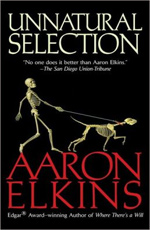
Unnatural Selection by Aaron J. Elkins

Unnatural Selection (Gideon Oliver Mystery, #13)Unnatural Selection

by Aaron Elkins
Hardcover, 288 pg.
Berkley Hardcover, 2006
Read: Dec. 26-27, 2014

So Gideon and Julie are off to the Scilly Isles in the UK for Julie to attend an ecology conference. While she’s busy talking about ways to save the world, Gideon plans on some sightseeing, hanging out in a museum doing some volunteer work, enjoying life.

But, no surprise here, Gideon stumbles onto a bone that doesn’t belong there. And we’re off to the races with the Skeleton Detective.

Elkins doesn’t come up with an excuse for Mr. and Mrs. Lau to come along to Julie’s conference, but thankfully, there are a couple of British policemen to fill his skeptical-then-fawning shoes. Which is not a knock on everyone’s favorite FBI Agent, it’s his role in the books, I get that. I enjoy him, even when the role gets tired. Anyway, the local constabulary are a fun pair.

Elkins clearly did some research on cadaver (et cetera) dogs, and he was eager to share it. Yeah, it was info-dumpy, which generally turns me off. But, Elkins made his dog expert pretty entertaining — and hey, it was about dogs. Ended up enjoying those bits.

Amusing characters, interesting puzzle, a new location, and Elkins’ writing is always enjoyable — put that all together for a thoroughly entertaining book. This wasn’t the greatest mystery I’ve read, or even the best of this series, but it was fun. That’s good enough.

—–

3 Stars

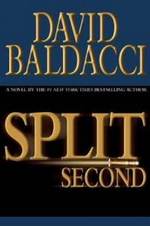
Split Second by David Baldacci

Split Second (Sean King & Michelle Maxwell, #1)Split Second

by David Baldacci
Series: King & Maxwell, #1

Hardcover, 416 pages
Published August 31st 2003 by Warner Books
Read: Jan. 21-22, 2014

This is the pilot novel for the King and Maxwell series. It reads so much like a TV pilot that I almost have to think of it that way — introducing our characters, learning their back-stories, how they get together as a team, and set off on a new set of adventures. It might as well have an image of Stephen J. Cannell tearing a page out of his typewriter at the end.

Sean King is a former Secret Service Agent, turned lawyer when the presidential candidate he was guarding was assassinated right next to him. Eight years later, Michelle Maxwell is guarding another candidate, who’s kidnapped from under her nose. With the clock on her career winding down, Maxwell throws herself into the search — as well as looking for help and guidance from the one former agent who’d understand what she’s going through.

There’s an okay chemistry between the characters — it looks briefly like romance would be in the air, but they turn from that pretty quickly. Maxwell and King settle into an burgeoning friendship as they search for the candidate, sift through lies, rumors, half-truths, and conspiracies that have been building for decades leading up to the kidnapping.

I won’t say I was grabbed by the plot at any point — and actually, I found most of the crimes in question to be pretty far-fetched. But it was good enough (just) to keep me turning the pages. Sometimes, that’s enough.

Like with many TV pilots, it’s hard to tell what the rest of the series is going to be like, but I liked this enough to try the next one. I just hope it’s a little more grounded.

—–

3 Stars

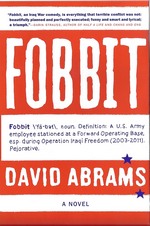
Fobbit by David Abrams

FobbitFobbit

by David Abrams
Paperback, 384 pg,
Grove Press, Black Cat, 2012
Read: Jan. 23-25, 2014

I enjoy a good satire — no matter if the target is one I identify with or oppose, a good satire is a treat. Fobbit didn’t totally work for me as a satire, but it came close.

As the cover says, a Fobbit is someone stationed at the Forward Operating Base during the Iraq war. The novel follows a handful of Fobbits as they try to survive their deployment while accomplishing as much as The Powers That Be allow them to (which includes a surprising number of PowerPoint presentations).

Staff Sergeant Gooding of Public Affairs attempts to keep various media outlets appraised of events, but before he can, he has to run everything up the flagpole — beginning with the impossibly political Lt. Col. Harkleroad. By the time Harkleroad and his superiors get done massaging/mangling the presentation of the facts to suit their needs, CNN, etc. have already discovered the reality, ran their stories, and moved on to something else.

On the other end of things, Sgt. Lumely is on the front-lines, but has to endure the inept command of Capt. Abe Shrinkle, who’s probably just as dangerous to his men as Iraqi insurgents (if not more). Lt. Vic Duret is Shrinkle’s commander, and he’s as frustrated trying to minimize Shrinkle’s damage.

Fobbit starts slow, and builds slower — but, eventually (and organically), the plot picks up and the lives of these poor Fobbits spiral out of control. Then it stopped feeling like a “eat your veggies” kind of read, and one that I could enjoy.

Fobbit‘s not as pointed as Catch-22, or as laugh-out-loud funny as Mash: A Novel About Three Army Doctors — as much as it wants to be in that company. But it’s honest, upfront, and feels authentic.

This is a satire of the circumstances these soldiers found themselves in, about the way the war was being fought, not about whether it should be or not. As nearly as possible, it’s an a-political book — pro-Operation Iraqi Freedom or anti- — it can be appreciated for what it is. Well-written, with characters that are a little more human than satire necessitates, and a world more grounded than expected.

—–

3 Stars

Page 592 of 634

Powered by WordPress & Theme by Anders Norén