Category: A-B Page 14 of 23

Authors A-B

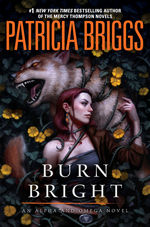
Burn Bright by Patricia Briggs

I had this pretty much ready to go yesterday and the day before that, but I didn’t like what I’d written — it’s not like I disagreed with myself (I’m funny that way), but I just had gone off on a tangent and ended up writing about things I didn’t care that much about, and ignored the things I’d been thinking about since I read the book. This isn’t exactly what I meant to talk about, nor is it as clear as I wanted things to be — but it’s close enough. Hope someone gets something out of it.

Burn BrightBurn Bright

by Patricia Briggs

Series: Alpha and Omega, #5

Hardcover, 308 pg.
Ace, 2018

Read: March 7 – 8, 2018

Anna was her father’s daughter, and her father believed in science and rational thinking. She’d been a werewolf for years now, and she still tended to think about it from a scientific viewpoint, as though lycanthropy were a virus.

Faced with a wall of briar-thorned vines straight out of a Grimms’ fairy tale, she’d never had it brought home so clearly that what she was and what she did was magic. Not Arthur C. Clarke magic, where sufficient understanding could turn it into a new science that could be labeled and understood. But a “there’s another form of power in the universe” magic. Something alien, almost sentient, that ran by its own rules-or none. Real magic, something that could be studied, maybe, but would never rest in neatly explainable categories.

I appreciated this look into Anna’s thinking. It matches up with what we’ve seen of Mercy’s take on magic, but not completely, underscoring the differences in t heir personalities and way of looking at the world.

Burn Bright takes place on the heels of Silence Fallen — Bran’s not back yet and Charles is handling things. At least as much as Leah will let him. We’ve known for quite some time that Bran’s pack is full of misfits, wolves that need extra care and attention that they probably couldn’t get elsewhere — particularly older werewolves, the type who are nearing the point where they can’t keep control. Asil is a prime example of this — but now we learn that Asil actually is an example of an older wolf who’s doing just fine and that there are a half-dozen or so living near the Marrock, but that don’t come into town or have much at all to do with anyone not Bran, Charles or a small number of specific individuals.

Now, while the Marrock is gone, someone is targeting these wolves — and all signs point to someone within the pack. Can Charles, Anna and others protect these pack members from this new threat? Can they identify the traitor in their midst, and will Charles have to kill someone he trusted to preserve the safety of all the wolves?

One thing I noticed last year doing my re-read of the Mercy and Alpha & Omega books was just how comfortable I felt in these books — that holds true here, too. It doesn’t matter about the peril being faced by Charles and Anna (or any of the rest of the pack), reading this book was a nice, relaxing time with old friends. Agatha Christie or Dorothy Sayers, she’s not, but Briggs sure writes a cozy novel. I cannot put my finger on why — if it’s something in Briggs’ style, her voice, the stories, a combination of the three — but it doesn’t matter. As long as she does that, she’ll have loyal readers.

This was a very talk-y story (and maybe all the Charles and Anna stories skew this way, but this seemed a bit more pronounced). More than once I asked “Do we need to tell this story now? Can’t we come back and chat about this later, you know, after everyone is safe?” Of course, the answer is now, and we need all the talk-y bits to get the understanding and information necessary to defeat the bad guys. Still, the author and readers know this, but Charles, Anna and the rest don’t know that and I wish they displayed a greater sense of urgency.

Most of the talk-y portions were discussing the wildlings being targeted by the mysterious (and well-armed) forces at work here. Which at least pays off in the readers getting to know them — which I greatly appreciate. The other person we get to know better is Leah, Bran’s wife and his wolf’s mate. Between these books and the Mercy novels we’ve gotten to know here a bit, but this novel fills that knowledge out. Between Leah and Chrissy (Adam’s ex- in the Mercy books) Briggs displays a real talent in writing women that you cannot stand or trust, but have enough sympathy for that you can’t just hate. They’re manipulative, conniving, and self-promoting in ways that are clearly meant to set your teeth on edge — but there’s something very vulnerable about them, too.

There’s a reveal or two later in the book that seem inevitable — only because that’s how stories work, even when (especially when?) everything is pointing in one direction, but there’s no way an author of any experience would go with something so obvious. It’s hard to get more specific while not giving away the details — but those reveals ended up leaving me dissatisfied only because I called them so early. It feels like when you’re watching a police procedural and identify the killer when the guest star makes their appearance in the first 10 minutes — sure Castle might be charming, Bones’ intern might be delightfully quirky, or Rizzoli might have some sort of compelling side-story, but the mystery part of the story is a disappointment because how is Morgan Fairchild not going to be the killer?

But the focus of the book is on the relationship between Charles and Anna, their mutual trust, the way they help each other in ways no one else can. That part of the novel is rock solid, and as long as Briggs delivers that, who’s going to complain?

I thoroughly enjoyed this one, don’t misunderstand me. And the more I learn about Bran’s pack in Montana, the more I like it and the more I want to know. Asil, as always, was a joy. But . . . the more I think about Burn Bright the less satisfying it seems, the slighter it feels. I’m glad I read it, I’ll likely gladly read it again — and I look forward to the next adventure with these two. But I think Briggs could’ve — and should’ve — done better.

—–

3.5 Stars

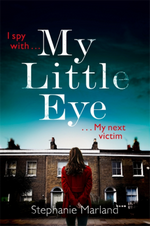
My Little Eye by Stephanie Marland

My Little EyeMy Little Eye

by Stephanie Marland
Series: Starke & Bell, #1

eARC, 351 pg.
Trapeze Books, 2018

Read: March 9 – 12, 2018

They say I was dead for three thousand and six seconds. They say that when I woke I was different, but I don’t know if that’s true. What I do know is that my world became a different place once every one of those precious seconds had expired.

No matter how gripping the prologue might have been, when those’re the first words you get from a character’s POV, you sit up and pay attention.

The Lover is a serial killer just beginning to plague London, and a semi-distracted DI Dominic Bell with his team are making little progress in apprehending him (he’s trying his level best not to be distracted by the press and the brass won’t let him leave his last operation in the dust). Given that the Lover’s technique is improving as the time between kills is decreasing, the pressure is mounting for Bell and the police. One group dissatisfied with their achievements are the members of True Crime London — a group of True Crime aficionados from (duh) London. Some of them have decided to take matters into their own hands so they’ll investigate these crimes themselves — some for the thrill, some to show up the Police, some to draw attention to the fact that the Police are understaffed and underfunded. Clementine has her own reasons — she’s spent some time studying these people as part of her doctoral work in psychology; she hopes to get a better understanding of online communities through this group and she has a theory about “crowd-sourcing justice” she’d like to establish.

We meet both groups (through Dom’s POV and Catherine’s) as they begin to look into the third victim of The Lover. The race is on (even if only one group realizes there’s a race) to find and put a stop to The Lover. I wouldn’t mind more time getting to know the individuals in the respective teams as this goes along — we do get to know some of the people involved in the investigation a bit, but this book focuses on Dom, Clementine and their hunts — everyone else doesn’t matter as much. I could talk a little more about the context for Dom, Clementine and the hunt for the killer — but you don’t want to know more until you get into this book.

The killer? We learn exactly as much as we need to in order that we know that the right guy has been taken care. He is not the most interesting character in the novel — I guess he might be, but Marland didn’t give us enough detail. This is such a great change from serial killer novels that dwell on the obsessions/fetishes/compulsions/methods of the killer, that seem to relish the opportunity to revel in the depravity. Marland shows us enough to be disturbed and utterly sickened by him, to believe that he’s capable of the heinous acts he’s guilty of — and no more. I’m not saying everyone has to write a serial killer this way, but I love that approach.

The protagonists are far more interesting — possibly more damaged even — than the killer. They are wonderfully flawed characters and repeatedly — and I do mean repeatedly — do things that readers will not want them to — because it’s unwise, stupid, dangerous, unethical, immoral, or all of the above. And as much as I was saying “No, no, don’t do that,” I was relishing them do that because it meant great things for the book. At times it’s almost like Marland wants you to not like Dom or Clementine, maybe even actively dislike them. Set that aside, because you will like them, because they are the protagonists hunting for a serial killer; because despite themselves they are likeable characters; and because they’re so well written, with so many layers, and nuances that it’s impossible for Marland to fully explore them and you want to know more. Both are in the middle of professional and personal crises as the book opens — and all of those crises are going to get worse before we leave them (yeah, Dom’s professional life is in worse shape than Clementine’s and Clementine’s been in crisis since just before those 3,006 seconds, so they’re not exactly parallel).

Sometimes the police investigation and the True Crime London’s investigation dig up the same information at about the same time, but on the whole the two follow very different approaches — one more methodical, careful and predictable. The other is haphazard, reckless and (at times) criminal. But both get results, and for the reader, we get a full-orbed view of the investigation which is almost as engrossing as the protagonists carrying it out.

The book is able to say a lot about online communities, True Crime (and some of those who love it as a genre), public acts of grief, criminal investigations and the media — and even a little about memory. All while telling a great story.

While I enjoyed the whole thing, the last quarter of the book was full of surprises that kept me leaning forward in my chair and completely glued to my screen as the plot raced from shock to shock to reveal to [redacted]. There’s a reveal that took me utterly by surprise, but made sense when you stopped and thought about it. There’s another reveal at the end that seemed fitting but wasn’t what you expected — and it followed an event that I never would’ve predicted. Oh, and that last sentence? I can’t tell you how many times I swiped my Kindle screen trying to get what comes next, unwilling to believe that was it.

I was a fan (almost instantaneously) of Marland’s alter ego’s Lori Anderson and that series. My Little Eye has made me a fan of the author — Broadribb, Marland, whatever names she’s publishing under, it’s an instabuy. This book got its hooks into me straightaway and didn’t let go, I resented work and family as they distracted me (however good or pressing the reason) from Clementine and Dom’s quests. I can confidently say that I’ve not read a mystery novel like this one — and that’s not easy this many decades into my love of the genre. I have no idea how Marland’s going to follow this one up — there’s no way that book 2 is a repeat of My Little Eye, but beyond that? No clue what she’ll be able to do. I don’t care — I just want to read it soon.

Disclaimer: I received this eARC from Orion Publishing Group via NetGalley in exchange for this post — thanks to both for this.
N.B.: As this was an ARC, any quotations above may be changed in the published work — I will endeavor to verify them as soon as possible.

—–

4 1/2 Stars

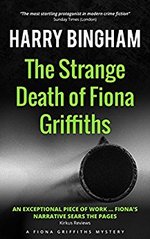
The Strange Death of Fiona Griffiths by Harry Bingham

The Strange Death of Fiona GriffithsThe Strange Death of Fiona Griffiths

by Harry Bingham
Series: Fiona Griffiths, #3

Kindle Edition, 470 pg.
Sheep Street Books, 2015

Read: February 16 – 17, 2018


From the instant that it was mentioned in Love Story, With Murders that Fi Griffiths had signed up for a course in Undercover work, every reader knew that she’d end up doing some deep undercover work soon. Thankfully, Bingham didn’t make us wait too long because here comes both the course and the assignment. But before we get to the assignment, Fi gets this wonderful reality check after her course:

I’m tasked to process paperwork on a couple of cases that are coming to court. Someone assigns me to help on a team that is developing advice on how to avoid thefts from vehicles. The first of our meetings takes an hour and forty minutes and the gist of our advice will be, ‘Lock your car and hide your valuables.’ Or, to simplify further, ‘Don’t be a bloody idiot.’

I suggest that as a slogan and everyone looks at me.

I just loved that. Anyway, this seems like a perfect idea — there’s a real sense in which everyday life is an undercover assignment for Fi, letting her do it as part of her job seems like a no-brainer. Not that her superiors really understand that, but her readers do.

The case started off as a simple payroll fraud investigation — a clever and ambitious fraud, make no mistake, but not the kind of things that excites any police detective (especially one like Fi). But then, she ties one suspicious death into this crime — and then a particularly gruesome murder as well. These discoveries are enough to get The Powers That Be to take this seriously enough to put Fi and another officer undercover as payroll clerks to infiltrate this scheme. Eventually, Fi is recruited by the people they’d hoped recruit her and the game is afoot. Fi does things that will surprise the reader as much as they do to her targets in her efforts to bring some justice to the situation.

At some point, Fi is going over the results of her work thus far with our friend, DCI Jackson, and her handler from Organized Crime

Brattenbury says, ‘Fiona, this is remarkable work. You—’

Jackson interrupts him. ‘Don’t flatter her. She’ll cock everything up. Or start shooting people.’

Which is essentially the outline for every Fiona Griffiths novel, really.

Watching Fi go deeper into her cover and into the fraud activity is gripping — and also very different from the earlier books. Fiona doesn’t get to spend as much time with the dead as she likes, she can’t have their pictures on display without ruining her cover. It doesn’t stop her from doing what she can along those lines, but it gives Strange Death a different feel from its predecessors.

Fi’s investigation of the deaths isn’t the focus of this novel, it’s her undercover work — how she does it, how she embodies her cover, how as her cover she contributes to the community, how she learns things that can help her (both the fictional her and the real). Like too many who go undercover, Fi arguably gets too close to her targets (it’s not much of an argument, really), and lines between the detective and the felonious payroll clerk blurred more than they should’ve. The same kind of focus, the same kind of attachment she makes to the victims in the other books (and cases we don’t have record of) is brought to the people and work she encounters here.

At the same time, Fi’s desire — need — for the emotional, familial and romantic connections she’s made has never been stronger. Those things that she wanted, so she can be more like a citizen of “Planet Normal,” act as an anchor to reality in a way that has to surprise her. Not only that, she forges new relationships as DC Griffiths through these events. Minor spoiler: the Fiona Griffiths that emerges from this assignment is a noticeably different, more well-rounded, and changed in other (less pleasant) ways.

It was good to see DCI Jackson at work again. The other police officers (particularly Brattenbury and his team) were more interesting than we’ve gotten before. The same could and should be said for the other supporting characters we encounter in these pages — criminal and civilian alike. I hope that Bingham is able to find ways to bring many of these characters back in future novels (or he can just give us new characters that are as well constructed, but I like so many of these I’d prefer to see them).

I’m a sucker for undercover cop stories — since the first time I saw Ken Wahl’s Vinnie Terranova (when I was too young to be seeing such things) and what his work did to him. This was no exception — and a strong sample of the type. This story of Fiona Griffiths’ UC work is just as gripping, just as surprising as you could want and a sure sign that this character is more than a one-trick pony (if anyone was still wondering) and that Bingham is a writer to watch.

—–

4 1/2 Stars

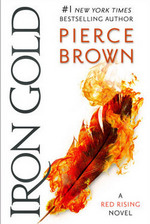
Iron Gold by Pierce Brown

Iron GoldIron Gold

by Pierce Brown
Series: Red Rising, #4

Hardcover, 600 pg.
Del Rey Books, 2018

Read: February 5 – 13, 2018

. . . We didn’t prepare for this.”

“How do you prepare for a kick in the balls?” I say. “You don’t. You suck it up.”

“That supposed to inspire me?. . .

Darrow’s words about the mission he and the Howlers are ill-prepared for also apply to readers of Pierce Brown books. At some point, you have to suck it up and keep moving. I typically considered Brown’s writing to be full of gut-punches, but Darrow’s anatomical metaphor applies, too. Yeah, we love the books, and Brown makes sure the experience is almost as harrowing for the readers as it is for the characters.

After President Snow dies, after Tris finishes with the Factions, after The Matrix reboots, after The Emperor Dies and the teddy bears sing, “Yub nub, eee chop yub nub,” what happens? (well, thanks to J. J. Abrams, we have an idea about that last one) Iron Gold lets us see what happens 10 years after the events of Morning Star.

The Republic is still at war, trying to finish off the remnants of the old order — the Senate isn’t rubber stamping Darrow’s requests and that is proving problematic. The people are tired of the bloodshed and want the focus to move to strengthening the fledgling government. Driving Darrow to a last-ditch and dramatic gesture. The lives of the Reds on Mars is technically better, they’re technically free, but things aren’t much better — in fact, they may be less safe. Criminals on Lune are doing well, but those who served during the War are still trying to deal with the trauma they survived. Meanwhile, on the far end of the solar system, some exiles from Lune are looking to regain some prominence. Brown jumps around from story to story, between various perspectives, surveying the wreckage of the Society and the birth of the Republic.

Each character is as well-drawn, and fully developed, as sympathetic as those who came before in the series — even those who are critical of Darrow/the Republic (if not downright opposed to it). This is a more complicated world than the one we last saw. I’m going to keep things pretty vague and not go further than this, because half of the joy of this book is in the exploration.

Jumping from perspective to perspective, between storylines that have almost nothing to do with each other make for a lesser novel than the previous books in the series. When I was following a character — their story was gripping, I was interested and invested — but the instant the perspective shifted? It was all about the new story/perspective and I pretty much forgot about the previous. Darrow’s story was the exception, but I attribute that to my long-standing connection to Darrow, Sevro and the rest. I loved the conclusion of Darrow’s story — because of what it means for Darrow and the rest, and what it means for the next book in the series (saga?).

I’m glad we got this look at the aftermath of the Rising — if we were going to get anything at all — it seems right for things to be this way. I wasn’t as invested in this novel as I was in the previous ones, but I’m just as invested in this world. I hope the next one will grab me better, but until then I wait on tenterhooks and with hope that Darrow and the rest will deliver the goods. This is not the place to jump on the series — go back toe Red Rising and start from the beginning, it’s worth it. For those who’ve been with man from his harrowing beginning through his even more harrowing and devastating triumphs, this is a must read.

—–

4 Stars

2018 Library Love Challenge

Love Story, With Murders by Harry Bingham

Love Story, With MurdersLove Story, With Murders

by Harry Bingham
Series: Fiona Griffiths, #2

Kindle Edition, 449 pg.
Sheep Street Books, 2016

Read: January 4 – 8, 2018

For me, these things aren’t only about finding the killers, but about giving peace to the dead. It’s not primarily a question of justice. The dead don’t care about that. The murder investigation, arrest and conviction are just part of the funeral rite, the final acts of completion. Gifts I bring the dead in exchange for the peace they bring me.

The peace of the dead, which passeth all understanding.

DC Fiona Griffiths continues her efforts to act normal, maybe even feel normal, getting along with her boyfriend and staying out of trouble with her superiors. Basically, things are going as well as they possibly can following the events of Talking to the Dead. But we know that’s going to come to an end, otherwise, this would be a really dull series. It comes to an end when Fiona and a colleague stop off on their way home to look at a case of illegal rubbish. In this particular case, the rubbish is a body part in a chest freezer. It’s a significant enough body part to make the detectives sure they’re looking for something more serious than illegal rubbish.

Over the next few days, the police are able to find some more of the woman, as well as start to understand how long ago she was killed and dismembered — which leads to an identification. Shortly thereafter, the police find pieces of a fresher corpse in the same area. While most detectives look for connections between the victims and hunt for clues to identify the killer, Fi begins learning more about the victims as individuals (not that she’s alone in this, it’s just she’s alone in her approach), what their lives were like, and what would lead someone to kill them. Fi investigates things in a way no other fictional detective — private or police — does. I’m not sure I can express it clearly, but when you read it, you’ll notice. When she starts to put the pieces together about what was going on the whole time, I was flummoxed — it’s nothing like where I expected things to go.

Aside from that are the relationships with her boyfriend, family and fellow police officers. The romance between Buzz and Fi is very strange, but sweet. She’s dealing with a different superior for these investigations. It’s not just Fi up to the same antics with a different boss — similar antics, yes, but Fi understands herself better now, and is able to do what she does in a way that her superiors are able to accept and use. As for her family? I’m not even going to try to talk about it.

Some people are better as corpses. They’re easier to like.

On the one hand, I really like watching Fi’s subconscious at work, making the connections, deductions, and guesses she needs to be making to solve the crime/find what she’s looking for, while she interprets it as “the dead” talking to her. Well, that’s one way to read it, anyway. It really could be that there’s something on the verge of supernatural going on. I like the hint of ambiguity that Bingham has given this world and Fi’s understanding of what’s going on.

I was, I don’t want to say surprised, but it was something like it by the ending. Maybe I’ve just been reading too many Mysteries lately with pretty ambiguous endings, but this one had a very satisfying ending with most of the loose ends tied up. This doesn’t mean that everything ended happily (for want of a better term), but that Fi’s fully able to satisfy her curiosity and need to know (at least about those things that came up in her professional life — her personal life is only slightly more settled by the book’s end than it was when it started).

A murder mystery — with, yes, a love story — that had some fantastic character moments, a really strong puzzle, all very well told. Fiona Griffiths impresses again. This is the best kind of sequel — the same kind of things that filled the first book in the series, but seen differently by everyone (including the protagonist) and with different results — Fi’s grown a bit (I want to stress “a bit,” she’s still basically the same person, which is good, I don’t want everything to be “normal” for this character), and is building on the events from the previous novel, not just repeating them. I’m truly annoyed with myself for waiting so long to get back to this series, and will not make the same mistake.

—–

4 Stars

My Favorite Fiction of 2017

Is he ever going to stop with these 2017 Wrap Up posts? I know, I know…I’m sick of them. But I’ve already done most of the work on this one, I might as well finish…Also, it was supposed to go up Friday, but formatting problems . . .

Most people do this in mid-December or so, but a few years ago (before this blog), the best novel I read that year was also the last. Ever since then, I just can’t pull the trigger until January 1. Also, none of these are re-reads, I can’t have everyone losing to my re-reading books that I’ve loved for 2 decades.

I truly enjoyed all but a couple of books this year (at least a little bit), but narrowing the list down to those in this post was a little easier than I expected (‘tho there’s a couple of books I do feel bad about ignoring). I stand by my initial ratings, there are some in the 5-Star group that aren’t as good as some of the 4 and 4½-Star books, although for whatever reason, I ranked them higher (entertainment value, sentimental value…liked the ending better…etc.). Anyway, I came up with a list I think I can live with.

(in alphabetical order by author)

In The StillIn The Still

by Jacqueline Chadwick
My original post

Chadwick’s first novel is probably the most entertaining serial killer novel I’ve ever read. Without sacrificing creepiness, suspense, horror, blood, guts, general nastiness, and so on — she gives us a story with heart, humor and humanity. The second novel, Briefly Maiden is arguably better, but I liked this one a teensy bit more — and I’m genuinely nervous about what’s going to happen in book 3 (not that I won’t read it as soon as I possibly can).

4 1/2 Stars

The Hangman's Sonnet Robert B. Parker’s The Hangman’s Sonnet

My original post

How do you possibly follow-up 2016’s Debt to Pay, especially with that ending, without dramatically altering the Jesse Stone flavor? I’m still not sure how Coleman did it, but he did — Jesse’s dealing with Debt to Pay in a typically self-destructive way, but is keeping his head mostly above water so he can get his job done, mostly by inertia rather than by force of will. Reflexes kick in however, and while haunted, Jesse can carry out his duties in a reasonable fashion until some friends and a case can push him into something more.

Coleman’s balancing of long-term story arcs and character development with the classic Jesse Stone-type story is what makes this novel a winner and puts this one on my list.

4 1/2 Stars

A Plague of GiantsA Plague of Giants

by Kevin Hearne

This sweeping — yet intimately told — epic fantasy about a continent/several civilizations being invaded by a race nobody knew existed is almost impossible to put into a few words. It’s about people stepping up to do more than they thought possible,more than they thought necessary, just so they and those they love can survive. It’s about heroes being heroic, leaders leading, non-heroes being more heroic, leaders conniving and failing, and regular people finding enough reason to keep going. It’s everything you want in an epic fantasy, and a bunch you didn’t realize you wanted, too (but probably should have).

5 Stars

Cold ReignCold Reign

by Faith Hunter

My original post
Hunter continues to raise the stakes (yeah, sorry, couldn’t resist) for Jane and her crew as the European Vamps’ visit/invasion gets closer. Am not sure what’s more intriguing, the evolution in Jane’s powers or the evolution of the character — eh, why bother choosing? Both are great. The growth in the Younger brothers might be more entertaining — I appreciate the way they’ve become nearly as central to the overall story as Jane. I’m not sure this is the book for new readers to the series, but there are plenty before it to hook someone.

5 Stars

Once Broken FaithOnce Broken Faith

by Seanan McGuire
My original post

Poor planning on my part (in 2016) resulted in me reading two Toby Daye books this year, both just excellent, but this one worked a little bit better for me. Oodles and oodles of Fae royalty and nobility in one spot to decide what they’re going to do with this elf-shot cure leading to a sort-of closed room mystery (it’s just a really big, magical room) with peril on all side for Toby and her found family.

5 Stars

A Monster CallsA Monster Calls

by Patrick Ness
My original post

There were so many ways this could’ve been hacky, overly-sentimentalized, brow-beating, or after-school special-y and Ness avoids them all to deliver a heart-wrenching story about grief, death, love, and the power of stories — at once horrifying, creepy and hopeful.

4 1/2 Stars

Black and BlueBlack and Blue

by Ian Rankin
My original post

Rankin kicked everything into a higher gear here — there are so many intricately intertwining stories here it’s hard to describe the book in brief. But you have Rebus running from himself into mystery after mystery, drink after drink, career-endangering move after career-endangering move. Unrelenting is the best word I can come up with for this book/character/plot — which makes for a terrific read.

5 Stars

SourdoughSourdough

by Robin Sloan
My original post

This delightful story of a programmer turned baker turned . . . who knows what, in a Bay Area Underground of creative, artisanal types who will reshape the world one day. Or not. It’s magical realism, but more like magical science. However you want to describe it, there’s something about Sloan’s prose that makes you want to live in his books.

Do not read if you’re on a low carb/carb-free diet. Stick with Sloan’s other novel in that case.

4 1/2 Stars

The Hate U Give (Audiobook)The Hate U Give

by Angie Thomas, Bahni Turpin (Narrator)

My original post

This was a great audiobook –and I can’t imagine that the text version was as great, I just didn’t have time for it. It’s the story about the aftermath — socially, personally, locally, nationally — of a police shooting of an unarmed black male as seen through the eyes of a close friend who was inches away from him at the time.

I think I’d have read a book about Starr Carter at any point in her life, honestly, she’s a great character. Her family feels real — it’s not perfect, but it’s not the kind of dysfunctional that we normally see instead of perfect, it’s healthy and loving and as supportive as it can be. The book will make you smile, weep, chuckle and get angry. It’s political, and it’s not. It’s fun and horrifying. It’s . . . just read the thing. Whatever you might think of it based on what you’ve read (including what I’ve posted) isn’t the whole package, just read the thing (or, listen to it, Turpin’s a good narrator).

5 Stars

The ForceThe Force

by Don Winslow
My original post

There may be better Crime Fiction writers at the moment than Don Winslow, but that number is small, and I can’t think of anyone in it. In this fantastic book, Winslow tells the story of the last days of a corrupt, but effective (in their own corrupt and horrible way), NYPD Task Force. Denny Malone is a cop’s cop, on The Wire he’s be “real police” — but at some point he started cutting corners, lining his pockets (and justifying it to himself), eventually crossing the line so that he’s more “robber” than “cop.” Mostly. And though you know from page 1 that he’s dirty and going down, you can’t help get wrapped up in his story, hoping he finds redemption, and maybe even gets away with it.

But the book is more than that. In my original post I said: “This book feels like the love child of Tom Wolfe’s The Bonfire of the Vanities and Nicholas Pileggi’s Wiseguy. You really feel like you understand how the city of New York is run — at least parts of it: the police, elements of the criminal world, and parts of the criminal justice system. Not how they’re supposed to run, but the way it really is. [Winslow] achieves this through a series of set pieces and didactic pericopes.”

A police story, a crime thriller, a book about New York — oh, yeah, possibly the best thing I read last year.

5 Stars

There were a few that almost made the list — almost all of them did make the Top 10 for at least a minute, actually. But I stuck with the arbitrary 10 — these were all close, and arguably better than some of those on my list. Anyway, those tied for 11th place are: <

Skyfarer by Joseph Brassey (my original post), Deep Down Dead by Steph Broadribb (my original post), Briefly Maiden by Jacqueline Chadwick (yes, again) (my original post), The Twisted Path by Harry Connolly (my original post), Bound by Benedict Jacka (my original post), The Western Star by Craig Johnson (my original post), The Brightest Fell by Seanan McGuire (see? Another Toby Daye) (my original post), The Blinds by Adam Sternbergh (my original post), Hunger Makes the Wolf by Alex Wells(my original post).

My Favorite 2017 New (to me) Characters

A few weeks ago, I started to describe someone as one of the best characters I met this year. Which got me to thinking about and honing this list. I’m limiting myself to characters I met this year, otherwise I don’t think there’s be much room for anyone — Spenser, Hawk, Scout, Harry Dresden, Toby Daye, Ford Prefect etc. wouldn’t really allow anyone else to be talked about. These might not be my favorite people in their respective books (although most are), but they’re the best characters in terms of complexity, depth and story potential I doubt I’d like most of them in real life (and can’t imagine that any of them would enjoy me), but in novels? I can’t get enough of them.

(in alphabetical order by author)

  • Aimee de Laurent from Skyfarer by Joseph Brassey (my post about the book)– she’s smart, she’s driven, she’s compassionate, she’s powerful, she’s fallible. She also flies around in a spaceship and does magic.
  • Lori Anderson from Deep Down Dead by Steph Broadribb (my post about the book)– She’s more than Stephanie Plum without the Lucy Ricardo DNA. She’s a tough lady, a dedicated mom, and more. This bounty hunter will impress you with her guts, get your sympathy with her plight, and make you cheer as she bests her opponents (I should probably add “make you wince as she takes some brutal beatings).
  • Ali Dalglish from In the Still by Jacqueline Chadwick (my post about the book)– Ali is a certified (and possibly certifiable) genius. She’s a criminal profiler working in Vancouver, BC after nearly a couple of decades away to raise her kids. But when a serial killer’s victim is found near her home, she’s drug back into the professional world she left with the investigation. She has the most creative swearing this side of Malcom Tucker, a fantastic and fast mind, a jaded look at life, and a sense of humor that’s sure to please. Early in In the Still, she asks questions of a police officer in a public forum and pretty much ruins the poor guy — it’s one of the best scenes I read all year. If you can read that far in the book and not become a Ali fan at that point, there’s something wrong with you. If I was ranking these, I’m pretty sure she’d be #1.
  • Nick Mason from The Second Life of Nick Mason by Steve Hamilton (https://wp.me/p3z9AH-2NI)– A convicted non-violent criminal gets released early from an Illinois prison only to find himself in a different type of prison to work off his debt for being released, making him lose the “non-” in front of violent. He’s a great character, on the verge (always on the verge) of redemption and falling further.
  • Dervan du Alöbar from A Plague of Giants by Kevin Hearne (my post about the book is forthcoming) — I could’ve named about half of the point-of-view characters from this book, but Dervan eked out a win. He’s a widower in mourning. A former soldier, wounded in duty, turned scholar, turned . . . well — that’s a long story. There’s something about his coming to grips with the new reality, his new vocation, his self-awareness and growth in his personal life just really clicked with me. He’s basically an unqualified fantasy hero, forced to step up and play a role in saving civilization (which actually describes many people in this book, but that’s for another day).
  • Isaiah Quintabe from IQ by Joe Ide (my post about the book)– South-Central LA’s answer to Sherlock Holmes. We meet IQ early in his career and, via flashbacks, see him begin to develop the gifts that will make him the super-detective he’s destined to become. He’s such a great take on this character, I can’t believe no one beat Ide to the punch.
  • Anci from Down Don’t Bother Me by Jason Miller (my post about the book) — yeah, her dad, Slim, is the series start and protagonist. He’s the one that goes trough all the hardship, the beatings, the investigative moves, not his 12-year-old daughter (who isn’t a young Veronica Mars clone, or Rae Spellman). But Anci is the heart and soul of the books — she’s why Slim goes to work in this field, and why he comes back. She’s smarter and wittier than any 12-year-old has any right to be (but believably so), she’s Slim’s conscience, and his reason for doing what he does.
  • LeAnne Hogan from The Right Side by Spencer Quinn (my post about the book)– comes back from Afghanistan after near-fatal injuries, and isn’t fit for the civilian life she’s thrown back into. She begins to deal with her grief and anger while hunting for the child of a dead friend with the help of a stray dog. She’ll break your heart.
  • John Rebus from Knots & Crosses by Ian Rankin (my post about the book)– Wow. How do I sum up Rebus? 2017 was the 30th anniversary of Rebus’ creation and the first year I read him. He’s a wonderful, complex character. He smokes too much, he drinks too much, he ignores the rules and regulations (and maybe even the laws) in his ongoing effort to forget about himself and his life by pouring himself into his work. Tenacious with a capital “T”, he may not be the smartest police detective you ever read, but he makes up for it through not giving up (although he’s pretty smart — especially when not drinking).
  • Hob Ravani from Hunger Makes the Wolf by Alex Wells (my post about the book)– Tough does not begin to describe this biker. She’s all about surviving on this planet that’s not at all conducive to survival — from the environment, to the economics, to the politics — there’s just nothing on the planet that wants her or her fellow Ghost Wolves to survive. But somehow she does.

Opening Lines – Dead Beat

We all know we’re not supposed to judge a book by its cover (yet, publishing companies spend big bucks on cover design/art). But, the opening sentence(s)/paragraph(s) are fair game. So, when I stumble on a good opening (or remember one and pull it off the shelves), I’ll throw it up here. Dare you not to read the rest of the book.

On the whole, we’re a murderous race.

According to Genesis, it took as few as four people to make the planet too crowded to stand, and the first murder was a fratricide. Genesis says that in a fit of jealous rage, the very first child born to mortal parents, Cain, snapped and popped the first metaphorical cap in another human being. The attack was a bloody, brutal, violent, reprehensible killing. Cain’s brother Abel probably never saw it coming.

As I opened the door to my apartment, I was filled with a sense of empathic sympathy and intuitive understanding.

For freaking Cain.

from Dead Beat by Jim Butcher

Deep Blue Trouble by Steph Broadribb

Deep Blue TroubleDeep Blue Trouble

by Steph Broadribb
Series: Lori Anderson, #2

Kindle Edition, 320 pg.
Orenda Books, 2017

Read: November 18 – 20, 2017


I really could just say, “You know that book that I (and just about everyone else) was so excited about a few months back? Well, the sequel is out now, and it’s just as good, if not better. Everything I wrote before still applies.” That’d be cheating, and not 100% accurate, but close enough I could do it with a clear conscience.

But let’s see if we can give it a bit more justice…

When we left Lori, she was agreeing to work with an FBI Agent to bring someone in, in exchange for this, he’ll help exonerate JT from the crimes he’s been accused of. Lori has brought this particular escaped con in before — Gibson “The Fish” Fletcher, a thief and convicted murderer — and Agent Monroe assumes that should give her a leg up. This hunt takes her from coast to coast (and coast to coast), and even across the border. I’d like to think that her career before these last two cases was a whole lot more benign, because what she goes through in the couple of weeks recorded in these two novels is probably more than most people go through in their lives.

Lori brings a PI she worked with before to track Fletcher in to help with some background, and Monroe hooks her up with a group of bounty hunters that he has experience with. Lori and her PI get along well, and work together even better. The bounty hunters, on the other hand, just don’t seem to want to work with Lori. The contrast between the people she’s allied with in this hunt is striking and helps the reader get a real grasp of Lori’s character. Every other character in this book deserves some discussion — well, most of them do — but I can’t do that without ruining the book. Let me just say that I’d be glad to see everyone that survives this book intact in the future — and maybe even some of those that don’t.

This case is primarily Lori using her brain (and her PI’s) to get her man — yeah, there’s some fisticuffs, some gunplay — but this is about Lori being smarter than anyone else in the case. Similarly, in Deep Down, Lori takes some real physical punishment, but this time the punishment is more mental and psychological — she doesn’t escape without some serious bruising (at least…), but primarily it’s the emotional stress and punishment she’s given while on the hunt for Fletcher that will take its toll.

In Deep Down the threat to Dakota was obvious and immanent — this time out, it’s more abstract, theoretical. Lori’s used a little money she just made to send her to camp. But if Lori can’t keep JT out of prison (or worse), getting him as a donor to help treat Dakota’s leukaemia is going to be near impossible. This is a nice change — you can’t have Dakota in constant peril, nor can you have Lori constantly distracted by her. Don’t get me wrong, I don’t want her to disappear, or be conveniently occupied all the time, but the reader needs it occasionally.

As for JT? Well, being in prison in a state where one of the major crime lords has a hit out on you isn’t exactly easy. We don’t get the flashbacks to his training Lori as much, but Lori is constantly returning to his lessons for guidance — so his presence is felt throughout the book, even if he’s locked up the whole time. That training is what ultimately helps her — even if she has to ignore a good chunk of it, naturally, watching her decide when to ignore his training is painful, because she picks bad times and ways to do so. Lori is keeping something from JT — which is going to come back to bite her. I get why she’s doing it, and can sympathize — but I know she’s a fictional character and I know what usually happens to fictional characters who do this kind of thing. Am truly hoping that Broadribb is going ti zag here when we all expect her to zig — but even if she zigs, I expect the execution of it to be better than my imagination.

It may seem like a little thing, or at least a strange thing to comment on in a post like this — but I really appreciated the way that Broadribb worked in a recap of Deep Down Dead to the opening pages here. It’s a lost art anymore, and I just wanted to take a second and say way to go.

One minor criticism: it was much easier to tell that this was a book written by a Brit writing an American.

This was a fast thriller, with a story that propels you to keep reading — you’ll read more than you should per sitting, because you just can’t put it down. Broadribb writes like a seasoned pro, with panache and skill. Lori remains one of my favorite new characters for this year, and the rest of the cast of characters are just about as good. I can’t wait to see what Broadribb puts poor Lori, JT and Dakota through next.

—–

4 Stars

Summer Knight (Audiobook) by Jim Butcher, James Marsters

Summer Knight (Audiobook)Summer Knight

by Jim Butcher, James Marsters (Narrator)
Series: The Dresden Files, #4
Unabridged Audiobook, 11 hrs and 12 mins
Buzzy Multimedia Publishing Corp., 2009

Read: August 23 – 25, 2017


So, we get more information on the White Council (not just the vague references in the first couple of books and our buddy Morgan the Warden), as well as our introduction to the Fae Courts. Throw in everything we learned about Marcone in book 2, vampires in book 3, and what we’re about to learn in book 5 and we’ll have fully established the world of Harry Dresden. And wow, what a world.

But I’m getting ahead of myself. We start off with dealing with the war Harry was tricked into instigating in the last book, he’s got assassins after him — but thankfully, Billy’s got his back. A friendship has developed between Harry, Billy and the rest of Billy’s pack since Fool Moon which is pretty cool to see. Even if Harry’s too blinded by his obsessive need to cure Susan’s vampirism to see things like friendship, self-destructive lifestyle, and whatnot. Billy’s also minding the store for Harry and has made an appointment for him to meet with a new client.

Harry doesn’t want a new client — but he’s about run out of money and is looking at the business end of evictions soon, so he’d better. He doesn’t want this new client either, for reasons you can read/listen to for yourself, but she doesn’t leave him much of a choice.

Before he can get too carried away with dealing with this, he has to attend a meeting of the White Council — where he will be a major topic of conversation, thanks to the vampire war. Which isn’t going too well for the Wizards. We meet some great characters at this meeting, including Harry’s [spoiler] and mentor, Ebenezar McCoy. McCoy is a hoot — Marsters (no surprise) nails his character, by the way — he’s just one of those guys you like from the moment you meet him on the page and your appreciation for him only increases. In the end, the Council basically puts Harry to a test — if he doesn’t pass, they hand him over to the vampires; if he does, things continue on the way they are now — and if he dies in the process, well, that’ll be inconvenient. The test, naturally, involves him taking the above client he doesn’t want.

In a nutshell, a member of one of the Fae Courts has been killed and Harry has a couple of days until the Summer Solstice to find out who did it. Otherwise, the balance of power between the Courts will shift and war break out. A war that’ll pretty much decimate the planet’s climate in ways that Al Gore couldn’t imagine. Which is a bad thing for us humans. So pretty much, Harry has to solve a murder, stop a war/save the earth, while dodging assassins, skeptical wizards, and who knows what else or he’ll be tortured and killed by vampires after being abandoned by his people. In just a couple of days.

Oh, and a long-lost (and assumed dead) person from Harry’s past shows up in the middle of all this, too.

No big deal, right? Poor, poor Harry. It’s a fun adventure (for the reader), the mystery story is decent, the adversaries are fantastic — and the new characters (even those we never see again, sniff) are great additions to what’s just a great cast.

I mentioned the friendship of Billy and Harry earlier — we get a lot of it in this book, Billy’s along for most of the adventure, and he’s really turning into someone Harry can count on. Karrin Murphy gets some great action, too — and Harry finally clues her into what’s going on re: Fae, Vampires, White Council, etc. You know, keeping the promise he made to himself at the end of book 2. Well done, Dresden. I can’t fail to mention Toot Toot — he’s come a long way since we met him in Storm Front, in no small way thanks to Harry.

I’m talking about an audiobook now, so I really should say something about James Marsters’ work. I’m just going to sound like a broken record, though, if I do. I’m trying to think if I wasn’t that impressed with anything, or if there was something in particular that I thought he did well, and I can’t come up with anything. I really enjoyed his Bob in Summer Night — nothing different in the characterization, I don’t think, but it just came to life in a particular way. Also, he captured the very strong sense of fatigue, of being at the end of his rope that so defined Harry in these pages.

This wasn’t my favorite book — although I really enjoyed it on the whole — and really relished reliving the establishment of the Council and Courts in the series. While I thoroughly enjoyed the stuff in Wal-Mart (for example), it went on too long and wasn’t worth it to the story. There were a few too many moments like that in this book for my taste — fun in and of themselves, but ultimately, time wasted, so I’ll knock this down a star. Also, it proves that as much of a mindless fan-boy I can tend to be about this series, I’m a little discerning. A little.

—–

4 Stars

Page 14 of 23

Powered by WordPress & Theme by Anders Norén